Ontdek de Fascinerende Wereld van UFO's en UAP's: Jouw Bron voor Onthullende Informatie!
Ben jij ook gefascineerd door het onbekende? Wil je meer weten over UFO's en UAP's, niet alleen in België, maar over de hele wereld? Dan ben je op de juiste plek!
België: Het Kloppend Hart van UFO-onderzoek
In België is BUFON (Belgisch UFO-Netwerk) dé autoriteit op het gebied van UFO-onderzoek. Voor betrouwbare en objectieve informatie over deze intrigerende fenomenen, bezoek je zeker onze Facebook-pagina en deze blog. Maar dat is nog niet alles! Ontdek ook het Belgisch UFO-meldpunt en Caelestia, twee organisaties die diepgaand onderzoek verrichten, al zijn ze soms kritisch of sceptisch.
Nederland: Een Schat aan Informatie
Voor onze Nederlandse buren is er de schitterende website www.ufowijzer.nl, beheerd door Paul Harmans. Deze site biedt een schat aan informatie en artikelen die je niet wilt missen!
Internationaal: MUFON - De Wereldwijde Autoriteit
Neem ook een kijkje bij MUFON (Mutual UFO Network Inc.), een gerenommeerde Amerikaanse UFO-vereniging met afdelingen in de VS en wereldwijd. MUFON is toegewijd aan de wetenschappelijke en analytische studie van het UFO-fenomeen, en hun maandelijkse tijdschrift, The MUFON UFO-Journal, is een must-read voor elke UFO-enthousiasteling. Bezoek hun website op www.mufon.com voor meer informatie.
Samenwerking en Toekomstvisie
Sinds 1 februari 2020 is Pieter niet alleen ex-president van BUFON, maar ook de voormalige nationale directeur van MUFON in Vlaanderen en Nederland. Dit creëert een sterke samenwerking met de Franse MUFON Reseau MUFON/EUROP, wat ons in staat stelt om nog meer waardevolle inzichten te delen.
Let op: Nepprofielen en Nieuwe Groeperingen
Pas op voor een nieuwe groepering die zich ook BUFON noemt, maar geen enkele connectie heeft met onze gevestigde organisatie. Hoewel zij de naam geregistreerd hebben, kunnen ze het rijke verleden en de expertise van onze groep niet evenaren. We wensen hen veel succes, maar we blijven de autoriteit in UFO-onderzoek!
Blijf Op De Hoogte!
Wil jij de laatste nieuwtjes over UFO's, ruimtevaart, archeologie, en meer? Volg ons dan en duik samen met ons in de fascinerende wereld van het onbekende! Sluit je aan bij de gemeenschap van nieuwsgierige geesten die net als jij verlangen naar antwoorden en avonturen in de sterren!
Heb je vragen of wil je meer weten? Aarzel dan niet om contact met ons op te nemen! Samen ontrafelen we het mysterie van de lucht en daarbuiten.
Newly Discovered Super-Earth ‘Ross 508b’, Located Just 37 Light-Years Away, May Possess Potential to Support Life
Many of us have asked themselves, "Are we alone in this universe?" While humanity does not yet have definitive answers to this question, scientists are continuously on the search for indicators that could hint to the existence of extraterrestrial life.
And what better way to begin than by looking for other Earth-like planets that may be capable of supporting life?
There has recently been a considerable influx of study into exoplanets, albeit the reason for these investigations varies across organisations. Some are simply looking for an answer to the alien life mystery, while others are looking for a second home for us Earthlings.
We may have some good news for all you exoplanet fans now. The Subaru Strategic Program, launched in 2007 to deliver remarkable scientific results utilising Japan's Subaru Telescope, has assisted in the discovery of a super-Earth skimming the outskirts of a red dwarf star's habitable zone, just 37 light-years from our home planet!
Home away from home?
The recently discovered Ross 508 planetary system is depicted schematically. The green region indicates the habitable zone (HZ), which is a region on the planet's surface where liquid water can exist. A blue line represents the planetary orbit. The planet is expected to be closer than the HZ (solid line) during more than half of its orbit and within the HZ (dashed line) for the remainder.
(Astrobiology Institute)
Named Ross 508b, this 'super-Earth' is a rocky world with a mass around four times that of our Earth.
And a year on Ross 508b lasts for just 11 Earth-days! This, of course, means that its orbit is not very large — which is understandable because red dwarfs are a lot smaller than the Sun that centres our solar system.
But their smaller sizes mean that their gravitational fields are also not as expansive as the Sun's. Therefore, Ross 508b revolves around it at a distance of just 5 million kilometres. Considering Mercury, for comparison, the planet is about 60 million kilometres from the Sun. The short distance between this super-Earth and its red dwarf begs the question: how could it possibly be deemed habitable? Well, the Ross 508b's orbit is elliptical, meaning it isn't always as close to the star, and pretty much dips in and out of the habitable zone.
A planet like this may be able to retain water on its surface. Whether or not water or life actually thrives there is still up for debate and some serious research.
The relationship between red dwarfs and habitable planets
Three-quarters of the stars in the Milky Way galaxy are red dwarfs smaller than the Sun and such stars are abundant in the solar neighbourhood. Because of this, they are crucial targets in humanity’s hunt for neighbouring extrasolar planets and extraterrestrial life.
However, red dwarfs are cooler than other types of stars and emit less visible light, which makes studying them challenging.
What makes this find even more special is that it is the first exoplanet to be found by the Subaru Strategic Program using the infrared spectrograph IRD on the Subaru Telescope (IRD-SSP).The team at Astrobiology Center in Japan developed IRD specifically to search for red dwarf-orbiting exoplanets like Ross 508b. It relies on a planet-hunting technique that looks for minute deviations in the velocity of a star to infer a planet orbiting it.
It wouldn't be a stretch to assume that the Subaru Telescope could bestow us even better candidates for habitable planets around red dwarfs.
"It has been 14 years since the start of IRD's development. We have continued our development and research with the hope of finding a planet exactly like Ross 508b,"said Tokyo Institute of Technology's Professor Bun'ei Sato, the principal investigator of IRD-SSP.
This study has opened doors for future observations to confirm the possibility of life around low-mass stars.
Problem Solved! Voyager 1 is no Longer Sending Home Garbled Data!
Earlier this year, the teams attached to the Voyager 1 mission noticed that the venerable spacecraft was sending weird readouts about its attitude articulation and control system (called AACS, for short). The data it’s providing didn’t really reflect what was actually happening onboard. That was the bad news. The good news was that it didn’t affect science data-gathering and transmission. And, the best news came this week: team engineers have fixed the issue with the AACS and the data are flowing normally again.
The AACS is an important part of Voyager 1. It’s the machinery that keeps the spacecraft’s antenna pointed at Earth. Without it, all that valuable science data would get lost in space. The issue was really with the AACS’s data—it was garbled, and that left the team in the dark (so to speak) about the exact nature of the spacecraft’s health and activities.
Sussing out the Voyager 1 Problem
It turns out that it was a “networking problem” similar in spirit to something IT professionals might face here on Earth. Essentially, the AACS was sending telemetry data all right, but it was routing it to the wrong computer. Worse, it was a computer that had failed years ago. That actually corrupted the data, which led to the strangely garbled messages the ground-based crew received. It took a while for the team to figure out the problem, and it wasn’t clear why AACS suddenly began routing data to the wrong computer. Chances are, it received a faulty command from another computer. That implies there’s a problem somewhere else that they’ll have to solve. But, so far, the issues are not a threat to the spacecraft.
According to Suzanne Dodd, Voyager’s current project manager, once the engineers figured out that the old, dead computer might have been part of the problem, they had a way forward. They simply told the AACS to switch over sending to the correct computer system. “We’re happy to have the telemetry back,” said Dodd. “We’ll do a full memory readout of the AACS and look at everything it’s been doing. That will help us try to diagnose the problem that caused the telemetry issue in the first place. So we’re cautiously optimistic, but we still have more investigating to do.”
The ongoing issue with AACS didn’t set off any fault protection systems onboard the spacecraft. If it had, Voyager 1 would have gone into “safe mode” while engineers tried to figure out what happened. During the period of garbled signals, AACS continued working, which indicated that the problem was either upstream or downstream of the unit. The fact that data were garbled provided a good clue to related computer issues.
Solar System Explorations
This aging and still-valuable spacecraft has been exploring the outer parts of the solar system since its launch in 1977, along with its twin sibling, Voyager 2. They each traveled slightly different trajectories. Both went past Jupiter and Saturn, but Voyager 2 continued on to Uranus and Neptune. They’re both now outside the solar system, sending back data about the regions of space they’re exploring.
Where is Voyager 1? As of August 30, 2022, it is well outside of and above the plane of the Solar System. It will cross the Oort Cloud and head out to the stars. Courtesy NASA/JPL.
Voyager 1 flew past Jupiter in March 1979, and Saturn in November 1980. After its close approaches to those two gas giants, it started a trajectory out of the solar system and entered interstellar space in 2013. That’s when it ceased to detect the solar wind and scientists began to see an increase in particles consistent with those in interstellar space.
These days, Voyager 1 is more than 157.3 astronomical units from Earth and moving out at well over 61,000 km/hour. It’s busy collecting data about the interstellar medium and radiation from distant objects. If all goes well and it doesn’t whack into anything that could destroy it, the spacecraft should continue sending back data for nearly a decade. After that, it should fall silent as it travels beyond the Oort Cloud and out to the stars.
Ancient Aliens: Irish Myth Exposes Extraterrestrial Technology
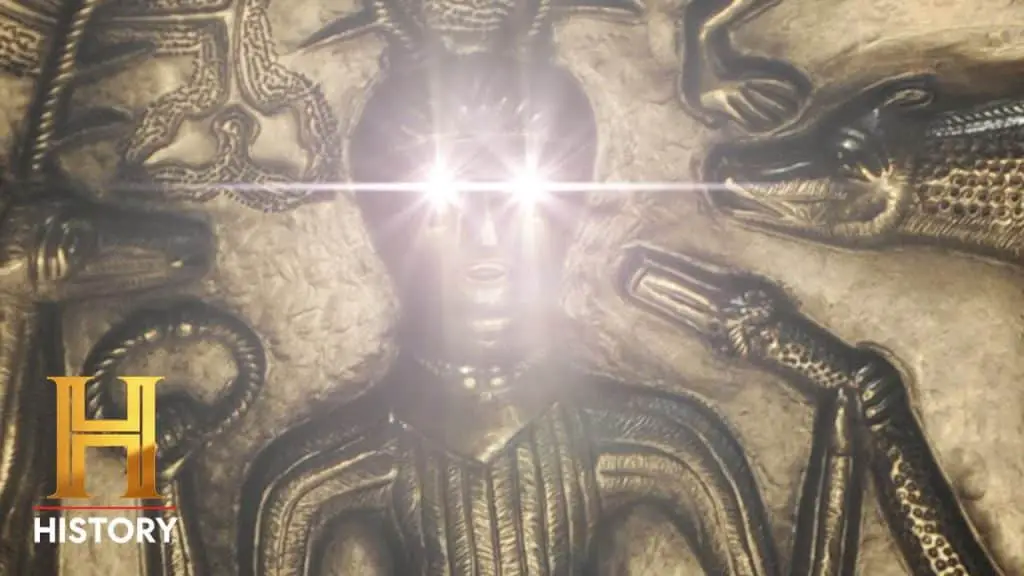
Ancient Astronaut Theorists believe “The Shining Ones” used magical powers stemming from extraterrestrials, in this clip from Season 18, “The Shining Ones.”
Nuns Reveal Hidden Truth About Roswell ‘UFO Crash’
A contemplative religious community in New Mexico compares the 1947 incident to ‘something far more compelling and amazing’ that occurred 2,000 years ago.
The Roswell Poor Clares live a Eucharistic life in New Mexico. (photo: Courtesy of the Roswell Poor Clares)
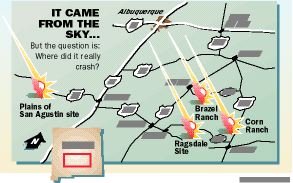
ROSWELL, N.M. — It was 75 years ago, in July 1947, when press reports surfaced that a crashed “flying saucer” had been recovered near Roswell, New Mexico.
The ‘Roswell Daily Record’ reports on the unusual incident. | Public domain(Photo: Public domain)
Days later, an official denial came from the same source that had initially confirmed the capture, namely, the U.S. military.
In those few days the template was set for the modern unidentified flying object (UFO) phenomenon — reports followed by counter-reports, sightings by official explanations, cries of disinformation, talk of alleged cover-ups accompanied by the insistence on various “proofs” that “we are not alone.”
What are Catholics to make of all this?
Jimmy Akin is a convert to the Catholic faith and a Register contributor. He is also a popular apologist for the Catholic faith and host of the podcast Jimmy Akin’s Mysterious World. Speaking to the Register, he was clear that, based on his research, “the most likely explanation of the Roswell incident is that a Project Mogul balloon chain crashed.”
Akin explains that Project Mogul was a top-secret U.S. Army Air Forces effort to monitor Soviet nuclear testing. He says that since the project was classified, “there was a cover-up that initially included a story about the U.S. military recovering one of the ‘flying discs’ that had just been in the news a couple of weeks earlier due to the Kenneth Arnold sighting (one of the first post-war alleged encounters with ‘flying saucers’) which launched the UFO craze. When this story backfired, they — the U.S. military — quickly walked it back, but they couldn’t tell anyone what had really happened due to the classified nature of the project.”
“The seed was planted,” he said, “and after the case was rediscovered in the 1980s, people have been fascinated with it ever since.”
And people continue to be.
“With UAP (unidentified aerial phenomena,aka UFOs), we may actually be dealing with extraordinary phenomena of various origins despite similar characteristics,” said Paul Thigpen, author of Extraterrestrial Intelligence and the Catholic Faith: Are We Alone in the Universe With God and the Angels? (TAN Books). Speaking to the Register, he said that “the extra-terrestrial hypothesis — the notion that we are encountering non-human intelligences from locations in this universe beyond Earth — best accounts for many UAP. The diabolical hypothesis (that they are demons) best accounts for some UAP reports, especially some of the so-called ‘alien abductions’ that demonstrate clear parallels with what the Church knows as demonic encounters.”
Thigpen posits other possibilities for the origins of UFOs: ultra-terrestrials. These, he says, are “non-human intelligences that share our planet as their home, largely hidden from us. This would include entities that have presented themselves in various forms throughout history, such as ancient mythological creatures, faerie folk …” He also alluded to two other possible explanations for certain kinds of UFOs/UAPs: ultra-dimensional beings. He says that these “originate from other dimensions of existence altogether that at times intersect with our own; or time-traveling humans from our future. Such realities would not lie beyond the creative wisdom and power of our omniscient, omnipotent Creator. If they do exist, he has made them and he sustains them in existence.”
In 1947, Roswell started a modern mania with its reports of crashed “aliens” and has been the global center of attention for such matters ever since. What is less well known is that, one year after the incident, and with much less publicity but much greater significance, that same city welcomed its first contemplative community, namely, the Poor Clare Monastery of Our Lady of Guadalupe.
They are the true center of an ongoing Roswell “incident.
It was in November 1948 that a small group of Chicago-based Poor Clares set out for New Mexico. They were responding to the urgent invitation of Archbishop Edwin Byrne of Santa Fe, who desired to found a new monastery in his archdiocese. He wanted “praying nuns” to encircle his vast archdiocese with their lives of prayer and penitence. No doubt, since its founding, the Roswell community has blessed the local community. The monastery has also founded or restored six “daughter” monasteries: five in the United States (two in Virginia; one in Los Altos Hills, California; one in Belleville, Illinois; and the latest in Chicago) and one in the Netherlands.
The 1947 Roswell incident, and the endless books, movies and fevered speculation it spawned, have brought few closer to Christ. By contrast, the 1948 founding of the Poor Clare Monastery of Our Lady of Guadalupe, without fanfare, without media, has done more to bring souls to Our Lord than we or the sisters shall know this side of eternity. One wonders what, if anything, do these contemplative nuns make of Roswell’s ongoing notoriety?
Speaking to the Register, the monastery superior, Mother Mary Angela, has a certain reluctance in sharing thoughts on the events of July 1947. She feels, perhaps wisely, “not fully informed about the events, nor on the results of the investigations that have taken place.” She added that the community have never really sought “to be informed, although we are naturally interested in what is said to have taken place in our locality.”
However, Mother Mary Angela goes on to add that “something happened” — but like the rest of the world, the community has no idea what exactly that was.
“We don’t know if there was a cover-up or a withholding of information, or for what reason information might have been withheld. We do understand that there has been serious scientific investigation as well as a great deal of lightweight commercialization of whatever event occurred.”
She pointed out that the truth of what happened may never be known now that the primary participants in the events are likely dead. “Much will remain uncertain and murky,” she said, “but it makes no difference in the way we are called to live our lives today. We don’t need to know. Through natural law and divine Revelation, we already have all we need to know in order to make good decisions today, to live a good life — a great life — right now.”
“We strive to live in the present moment,” she continued, “rooted in reality and the possibilities of response that can only be achieved in the present moment, not an unknown past (the Roswell ‘incident’) or an unknown future. For us as contemplatives, there is no compelling reason to fix our attention on the matter for very long. Something far more compelling and amazing occurred in a desert land very like Roswell some two millennia ago. Simple shepherds in the fields outside Bethlehem were easily able to identify the flying objects in the sky as heralds of the most significant ‘incident’in the history of mankind: The Hope of the World lay in a manger — and now at this moment is really present on our altar in the Blessed Sacrament. We want with all our hearts to keep our gaze fixed on him, on Jesus, the Firstborn of All Creation!”
Greek Goddess Rhea: Mother of the Gods & Queen of the Titans
Rhea is one of the most important ancient Greek gods. Although a Titan, she was responsible for both the birth and survival of the most famous Greek Gods such as Zeus and Hera. However, today while people with even a passing knowledge of Greek mythology know many Greek gods’ names, Rhea rarely gets the respect she deserves. Learn more about Rhea, Mother of the Gods, and Queen of the Titans.
Rhea in Mythology
Most major Greek gods have long and complicated histories. Most of the Titans on the other hand do not; they’re usually little more than narrative devices used to introduce more important gods. Rhea is interesting because she sits somewhere in between. She plays an important enough role to receive more characterization than the other Titans, but she doesn’t appear in many myths.
The family tree of the gods is a complicated and incredibly incestuous one. Greek mythology begins with the two primordial parents, Uranus and Gaia. Uranus represented the sky while Gaia represented the Earth. Greek mythology gets incredibly complicated, with different ancient historians and poets giving different takes on the same old tales. For the sake of simplicity, we will focus on Hesiod’s telling, naming other versions where and when applicable.
Uranus and Gaia (depending on the version) had quite a few children together. The most important were the 12 (or 13) Titans: Oceanus, Coeus, Crius, Hyperion, Iapetus, Cronus and the Titanides- Theia, Rhea, Thermos, Mnemosyne, Phoebe, and Tethys.
In addition to the Titans, they had various monsters together, such as the Cyclopes, the Hecatoncheires (three massive 50-headed, hundred-handed giants), giants, Meliae (nymphs), and the Erinyes (also known as the Furies, female gods of vengeance).
In the most common versions of the myth, such as Hesiod’s, Uranus feared his children would rise up against him, and so he imprisoned them. Uranus was right to be worried. As soon as he came of age, his youngest son, Cronus, rebelled, and overthrew Uranus with the help of his mother.
In doing so, he became king of Titans and freed his siblings. To celebrate, Cronus married his sister, Rhea. Rhea and Cronus would go on to have an infamously antagonistic marriage.
Thus followed the age of the Titans. The Titans were the gods prior to the Olympians, and ruled over land, sea, and sky together. Of all the Titans, Cronus and Rhea were the most important. Despite being brother and sister, they had children, and Rhea gave birth to the first Olympians: Zeus, Hades, Poseidon, Hestia, Demeter, and Hera.
This was not a happy coupling though. Both Gaia and Uranus warned Cronus that history would repeat itself. He would be overthrown by his children, like his father before him. Knowing from his own history that simply imprisoning his children was no guarantee of safety, Cronus opted for eating his offspring instead.
Perhaps unsurprisingly Rhea did not take well to Cronus devouring her babies. Rhea teamed up with both Gaia and Uranus to hatch a plan to save the youngest child, Zeus. Rhea fled and gave birth to Zeus in a cave on the island of Crete. She then tricked Cronus with a rock wrapped in swaddling, which he quickly gobbled up.
Rhea hid her favorite son in a cave on Mount Ida, one of the two Greek sacred mountains. There, he was protected by the Kouretes and the Dactyls, two warrior races who worshipped the Titans. Zeus would later grow up and start the Titanomachy, the ten-year war between the Olympian gods and the Titans.
Aside from her role in raising Zeus, there are two other pre-Titanomachy myths that involve Cronus and Rhea. The first takes part while Zeus was still hidden away in Crete.
In this story, Rhea caught Cronus enjoying some time with his mistress Philyra (an Oceanid). Upon being discovered, Cronus panicked, transformed into a horse, and fled. His transformation into a horse in mid-coitus caused Philya to give birth to Chiron, usually mentioned as the first and greatest centaur.
The second myth focused on Rhea and Cronus is a story of married Greek gods actually working together for a change. In this story, the children of Oceanus take control of Mount Olympus at an early age and start to rule as the first gods. Cronus and Rhea can’t abide by this and decide to fight them. Ultimately, they throw them back into the ocean they came from. In this myth, Rhea is portrayed as a skilled wrestler.
Rhea after the Titanomachy
The Titanomachy ends with Zeus hurling his mighty lightning bolt at the Titans, defeating them and sending them plummeting into Tartarus (the part of the underworld saved for the wicked). However, it has never been clear exactly which Titans ended up in Tartarus besides Cronus.
Of the male Titans, it seems Oceanus remained free because he had helped the Olympians in their fight. It also seems apparent that the female Titans were allowed to remain free.
Rhea certainly remained free following the Titanomachy, since she crops up in several different myths. She is usually portrayed as having a somewhat antagonistic relationship with Zeus’ wife, her daughter Hera. Rhea had a habit of turning up to save her grandchildren.
Apollo was the bastard son of Zeus and Leto (Zeus’s previous wife and/or mistress). Hera, the goddess of childbirth, refused to attend Apollo’s birth out of jealousy/ spite, leaving Leto in agony. Rhea chose to attend the birth in Hera’s stead. As the original goddess of motherhood, Rhea’s presence eased Leto’s suffering.
Later, Dionysus (another bastard son of Zeus) was inflicted with madness by the spiteful Hera. When Dionysus’s mother died, Rhea took him under her wing and raised him. She later cured his madness and gifted him an amethyst that prevented drunkenness.
Rhea also made an important appearance in the story of Hades and Persephone. In most versions of the story, such as the Homeric Hymns, it is Rhea who visited Demeter after Persephone's kidnapping and persuaded her to meet with the Olympians to find a solution.
However, in one Orphic version of the myth, Rhea’s role was much more unpleasant. In this version, Zeus wished to marry his mother. Rhea refused his incestuous advances and transformed into a snake to escape him. This did little to deter Zeus, who responded by also taking the form of a serpent and raping his mother. Persephone is the result of this rape.
According to the Orphic myth, after Persephone’s birth, Rhea transformed and became Demeter. It could be that this version of the myth is an attempt to explain Rhea’s decreased prominence in Greek mythology after a certain point.
Etymology of the name Rhea
No one is entirely sure where the name Rhea comes from, but there are several popular theories. Some ancient etymologists believed Rhea came from the old Greek words for ground or earth. Some modern scholars have also supported this theory, pointing to the traditional connection between the portrayal of mother gods and the earth.
Other Greeks, such as Plato, pointed towards a different origin word for Rhea. Plato claimed Rhea was the feminine version of the Greek word rheō, for flow, discharge, or stream. The thought process here was that women sustain their babies through the flow of breast milk and experience the flow of blood during the menstrual cycle.
We will likely never know for certain the true etymology. Most modern etymologists support the flow theory, which is the one put forward in A Greek-English Lexicon .
Rhea and her Historical Twin Cybele
Ancient civilizations had a habit of adopting and/or bastardizing each other’s’ gods and mythology. As these civilizations interacted, they would take aspects of the religions they liked and incorporate them into their own.
Cybele is a prime example of this. Once her own entity, originating from Anatolia, by the 4th century BC, Rhea and Cybele's names were being used interchangeably in Greek literature and worship. As such, the attributes and depictions of the two goddesses became almost completely indistinguishable.
Both are usually depicted as wearing a tall crown or veil and sitting on a throne, surrounded by lions. When not sitting on a throne they are usually either riding a lion or on a chariot drawn by lions. Although both are depicted as mother gods, there are two important differences.
First, in her own mythology, Cybele was the Phrygian Great Mother, a universal mother. Rhea, on the other hand, was only ever portrayed as the mother of gods, not a universal mother. The Greeks had other mother deities on top of Rhea, like Gaia, Hera, and Demeter.
Second, their origins are very different. Cybele started her life as a hermaphrodite god called Agdistis. The other Phrygian gods feared Agdistis and cut off their male genitalia, creating the female mother god Cybele. The severed genitalia then grows into a beautiful young man from Phrygia named Agdistis. Cybele fell in love with Agdistis, but he was unfaithful so she drove him mad, causing him to castrate himself.
Although Cybele and Rhea are often closely linked, no part of Cybele’s hermaphrodite origin or love story with Agdistis ever made it into Rhea’s mythology. As time went on people simply tended to forget Cybele’s unique history, and she became synonymous with Rhea.
The Cult of Rhea
In general, the Titans didn’t get their own cults in ancient Greece and were not worshipped. They simply functioned as a genealogical origin story for the Olympian gods, whom the Greeks did worship. Rhea, however, is slightly different. Although she does not appear to have had a strong cult of her own, she does appear to have been worshipped, especially early on.
Rhea was first worshipped in Crete, the site of Zeus’ birth. Her worship here was loud, raucous, and rhythmic. Worshippers would dance to the sound of the tympanon (a large drum) to provoke religious ecstasy. The loud and energetic worship of Rhea is often connected to her role in raising Dionysus, whose worshippers were similarly enthusiastic.
The Greeks often called Rhea the “Mother of Gods” or Meter Theon . Several temples in ancient Greece appear to have been dedicated to Meter Theon . A Greek traveler and geographer from the second century AD named Pausanias mentioned temples located in Attika, Arkadia, Corinth, Olympia, and Athens dedicated to her. Besides her own temples, her role in birthing and then protecting the Olympians meant that statues of her often stood in the sanctuaries of other gods.
Conclusion
Rhea’s importance to Greek mythology cannot be underestimated. She played a major role not just in the birthing of the Olympian gods but also in the Titanomachy and the overthrow of the old gods. Next to Cronus, she is also one of the very few Titans who actually received any characterization and appears to have been the only Titan with her own loyal worshippers.
Rhea is also a rare example of positive female representation in Greek mythology. She is portrayed as the ultimate mother, betraying her cruel spouse to ensure the survival of her children. Hera the Olympian mother god is often portrayed as being cruel and jealous; however, Rhea is never portrayed in that way. Rhea repeatedly comes to the aid of the grandchildren that Hera seeks to punish.
Rhea truly deserved her name Meter Theo , Mother of the Gods.
Top image: Woman and lion drawing, representative of Rhea.
Study Shows Humans and Neanderthals Interbred Primarily in the Near East
Study Shows Humans and Neanderthals Interbred Primarily in the Near East
Multiple research projects have proven that Neanderthal DNA can be found in the genome of modern humans. This likely happened as a result of many interbreeding events that took place in the various locations where Neanderthals and early modern humans shared resources and living space. But researchers tracing the twisting pathways of human evolution don’t have to rely exclusively on genetic studies to learn about interbreeding between Homo sapiens and Neanderthals. Anatomical studies of prehistoric skeletal remains can also disclose valuable information about this fascinating aspect of human genetic history, as has now been demonstrated by a new study just published in the journal Biology.
In this innovative research project, a team of geneticists and anthropologists from North Carolina State and Duke Universities in the United States and the University of Witwatersrand in South Africa analyzed the facial structure of more than 300 modern human and Neanderthal skulls, which had been recovered from different locations in Asia, Europe, and Africa. The purpose of the analysis was to search for signs of Neanderthal influence on human facial anatomy, which would result from interbreeding events.
Some of the ancient skulls did in fact show evidence of human and Neanderthal interbreeding. The cumulative results of this anatomical comparative analysis suggest that much of the interbreeding took place in the Near East, a region ranging from North Africa eastward to Iraq. This sharing of genetic material would have occurred between approximately 50,000 and 40,000 years ago, when Paleolithic-era (Old Stone Age) modern humans lived at the same time as and in some of the same regions as the Neanderthals.
How Interbreeding Evolution is Reflected in the Face
"Ancient DNA caused a revolution in how we think about human evolution," Steven Churchill, co-author of the new study and a professor of evolutionary anthropology at Duke University, explained in a North Carolina State University press release announcing the results of the comparative facial structure study. "We often think of evolution as branches on a tree, and researchers have spent a lot of time trying to trace back the path that led to us, Homo sapiens . But we're now beginning to understand that it isn't a tree—it's more like a series of streams that converge and diverge at multiple points."
In this instance, the “multiple points” referenced would be marked by both place and time. The migratory movements of both early modern humans and Neanderthals would have determined when and where the convergences took place, and consequently when and where the possibilities for interbreeding were most abundant.
"The picture is really complicated,"Churchill explained."Modern Asian populations seem to have more Neanderthal DNA than modern European populations, which is weird because Neanderthals lived in what is now Europe. That has suggested that Neanderthals interbred with what are now modern humans as our prehistoric ancestors left Africa, but before spreading to Asia. Our goal with this study was to see what additional light we could shed on this by assessing the facial structure of prehistoric humans and Neanderthals."
At the species level, changes in facial morphology (facial shape and development) can be a reflection of changes in genetic makeup. Both types of changes occurred as a result of early modern humans and Neanderthals interbreeding .
Map of western Eurasia showing areas and estimated dates of possible Neandertal–modern human hybridization (in red) based on fossil samples from indicated sites.
"By evaluating facial morphology, we can trace how populations moved and interacted over time,"noted Ann Ross, a professor of biology from North Carolina State University and another co-author of the new study."And the evidence shows us that the Near East was an important crossroads, both geographically and in the context of human evolution ."
The scientists used data on cranial and facial morphology obtained from the recovered remains of 233 prehistoric (early modern) humans, 83 modern humans, and 13 Neanderthals. They compared measurements taken from similar facial structural features, to see if signs of interbreeding were evident. Other factors that might have caused changes in facial features were accounted for, to make sure that any revealing features identified could be definitively linked to Paleolithic-era interbreeding.
"We found that the facial characteristics we focused on were not strongly influenced by climate, which made it easier to identify likely genetic influences,"Ross said. "We also found that facial shape was a more useful variable for tracking the influence of Neanderthal interbreeding in human populations over time. Neanderthals were just bigger than humans. Over time, the size of human faces became smaller, generations after they had bred with Neanderthals. But the actual shape of some facial features retained evidence of interbreeding with Neanderthals."
The researchers weren’t sure if their anatomical comparisons would produce significant results. But their study revealed many clear links, which were especially notable in skeletons that had been collected in the Near East region where Asia, Africa, and Europe converge. This would have been a crossroads for early modern humans leaving Africa, regardless of what direction they were heading. If they bred with Neanderthals in the region, they could have later carried Neanderthal DNA to other parts of the world, such as Asia, where humans carrying Neanderthal genetic materials have been found.
Reconstruction of a Neanderthal woman’s face but reconstructions are not enough; we need more skulls from prehistory to determine more about primary Neanderthal-Sapiens’ interbreeding sites.
The researchers do acknowledge some limitations in the scope of their study. Their comparison included just six variables, reflecting the overall size and shape of the face and the shape of the eye socket and nasal openings. Also, only a relatively small number of the skulls studied showed obvious indications of a Neanderthal genetic influence, and many that did were from individuals who’d lived long after the proposed Neanderthal-modern human breeding events.
Nevertheless, the researchers believe their study “shows the utility of analyzing facial morphology for the information it may contain about population relationships and potential Neanderthal–modern human interbreeding.”
In two cases it was clear the samples they examined were either intermediate between Neanderthals and modern humans or emerged from an evolutionary branch that included both early modern humans and Neanderthals. One of these represented Middle Paleolithic early modern humans from the Near East, while the other represented early modern humans who lived in the Upper Paleolithic period in the Near East and Northeast Africa.
“While caution should be used in interpreting the results of analyses based on small sample sizes, these results could be considered consistent with the Near East being a substantial locus of Neanderthal–modern human hybridization,” the authors stated in their Biology journal study.
The scientists hope to address the small sample size issue in subsequent research. "To build on this, we'd like to incorporate measurements from more human populations, such as the Natufians, who lived more than 11,000 years ago on the Mediterranean in what is now Israel, Jordan and Syria," Churchill said.
Additional research certainly won’t disprove the new findings that identify the Paleolithic Near East as a key early modern human-Neanderthal interaction point. But they could provide additional evidence that will reveal more detailed information about the specifics of various interbreeding events.
Top image: Neanderthals or Homo Sapiens or both cooking animal meat over a bonfire, and the latest study shows the greatest Neanderthal and Homo sapiens interbreeding occurred in the Paleolithic Near East.
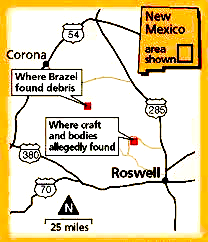
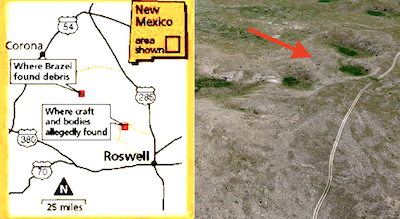
On Scene, UFO Crash Site, Verified by Military Documents & Secondary Reports, We Get Footage!
Small town in New Mexico outside Roswell about 100 miles that most people haven’t heard of. Its called Corona New Mexico and in 1946 a Flying Saucer crashed with Occupants in the middle of the desert. Roswell gets all the publicity but this location has a Verified UFO crash site with Miltary documents an secondary reporting to back it up. Seven witnesses saw a fireball fall from the sky also and this isn’t too far from White Sands either. Billy the Kid got into a gun fight here also and there is a lot of rich history in this town. We fly over the site with an Aerial Camera in 4K HDTV and on scene with a gopro, EMF detector and geiger counter.
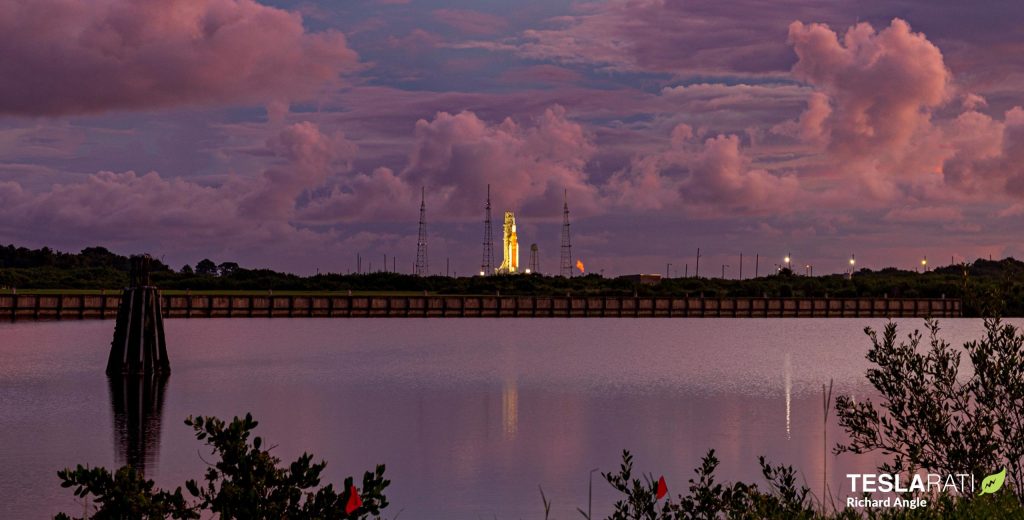
NASA has scrubbed the first attempted launch of its Space Launch System (SLS) Moon rocket after running into multiple issues, one of which could not be solved in time.
The delay is bad news for the tens to hundreds of thousands of tourists who traveled to Cape Canaveral, Florida to witness the launch in person. Worse, by NASA’s own implicit admission, there’s a good chance the main problem SLS encountered could have already been dealt with and rectified in advance of the launch attempt if the space agency had finished testing the rocket earlier this summer.
Ultimately, that omission turned the first SLS launch attempt into more of a continuation of the rocket’s first four wet dress rehearsal (WDR) attempts, none of which ended as expected. NASA engineers will now have to decide how to proceed and whether the SLS rocket can be made ready in time for another launch attempt on September 2nd or 5th. If not, the next opportunity could be weeks away.
As far as SLS test operations go, the August 28/29th launch attempt was fairly ordinary, with the rocket running into multiple issues – a few minor, a few significant, and one identical to a previous problem. The first problem – a hydrogen leak near the SLS rocket’s base – came after a risk of lightning delayed the start of propellant loading by more than an hour. A very similar, if not identical, hydrogen fuel leak had already occurred during official wet dress rehearsal testing in April and July.
That leak was fixed on the fly by properly chilling all related systems, and propellant loading was eventually completed – albeit a few hours late thanks to inclement weather. Shortly after, there were reports of a crack that needed careful analysis. Only later did NASA specify that the suspected crack was in the rocket’s foam insulation rather than its structures, the latter of which could have been a catastrophic problem.
Around the same time, the true showstopper of the day occurred when NASA attempted to chill the SLS Core Stage’s four RS-25 engines, all of which flew several times aboard reusable Space Shuttle orbiters. Three engines performed (mostly) as expected, flowing a bit of liquid hydrogen fuel to cool themselves down, but one – engine #3 – was never able to make progress toward the optimal temperature needed for ignition (~5°C/~41°F). After hours of remote troubleshooting attempts, no progress had been made, and NASA ultimately decided to scrub the launch attempt at T-40 minutes to liftoff.
Over the course of four separate wet dress rehearsal attempts in April and June 2022, NASA was never able to test the core stage’s engine chill capabilities. In a post-scrub press conference, Jim Free – NASA’s Associate Administrator of the Exploration Systems Development Division – revealed that all four engines were warmer than intended, further confirming that skipping a fully nominal wet dress rehearsal was likely a mistake. Clear and present evidence aside, Free stated that he and other executives still believed skipping that test was the right decision, claiming that ending explicit WDR testing reduced the number of times the rocket needed to be moved on its transporter.
Making the situation even harder to explain, Artemis I Mission Manager Mike Sarafin revealed in the conference Q&A that Boeing had changed the design of parts of the SLS engine chill (bleed) system after the Core Stage finally conducted a nominal static fire test at Mississippi’s Stennis Space Center. Completed in March 2021, the SLS rocket then sat inside NASA’s Kennedy Space Center, Florida Vehicle Assembly Building (VAB) for a full year before attempting its first wet dress rehearsal tests at the launch pad.
The first round of three WDRs were not as smooth as NASA expected and instead uncovered three relatively small issues: a hydrogen leak, a single faulty upper stage valve, and problems with a ground supply of nitrogen gas. Those small issues led NASA to roll SLS back to the VAB for repairs, incurring a minimum multi-week delay that stretched into two months. SLS also failed to complete a fourth WDR attempt in July 2022, but NASA decided to overlook the rocket parts and phases of preflight operations that were never actually tested as planned, one of which was the engine chill system.
If NASA cannot fix the RS-25 chill system within the next few days, it will be forced to roll the entire rocket and mobile launch platform back to the VAB to – at a minimum – replace its flight termination system (FTS). The US Eastern Range requires that all rocket FTS systems be tested no more than 15 days before launch, and NASA was able to secure special permission for a gap of up to 25 days. However, because Boeing’s Core Stage design places the FTS system in a location that is reportedly inaccessible at the pad, the entire SLS rocket will need to roll back to the VAB to have its FTS systems “retested” after that period.
As a result, NASA’s SLS launch debut will be delayed by several weeks (at best) if it can’t recycle for another attempt on September 2nd or 5th. The next window runs from September 20th to October 4th, but the SLS rocket took 10 days to go from its latest rollout to first launch attempt – a figure that doesn’t include the time required to remove the rocket from the pad, roll it back to the VAB, and conduct any necessary repairs or tests while back in the bay. If NASA can’t fix the engine problem at the pad by September 3rd or 4th, the true delay could be more like 4-6 weeks.
With any luck, that won’t happen, but it’s clear that a lot of stress and discomfort could have been avoided if NASA had gone into its first launch attempt knowing that its SLS rocket was truly ready.
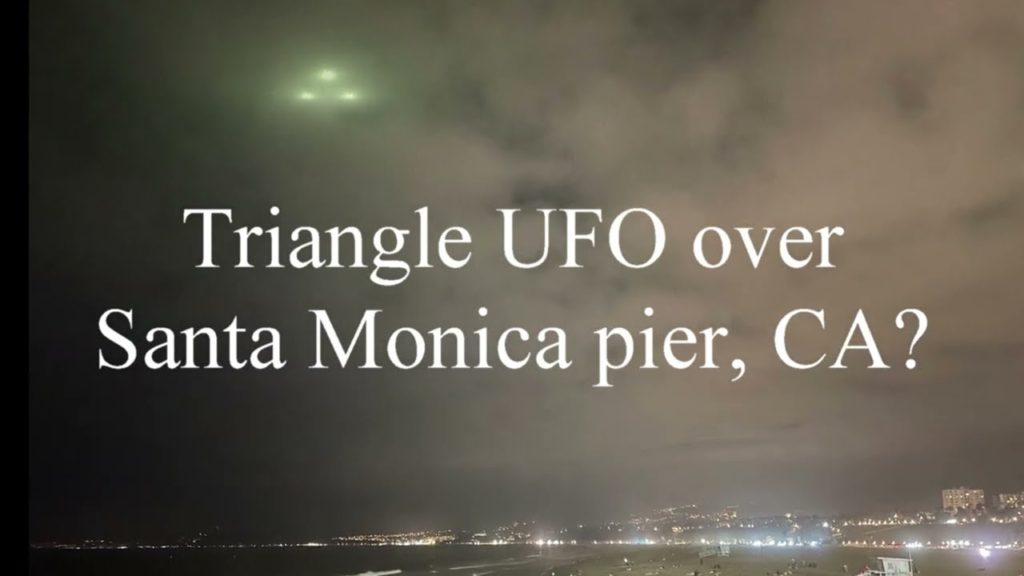
New MASSIVE triangle UFO sighting over Santa Monica Pier – MUST SEE
These amazing 4 UFO videos were filmed from Santa Monica pier in California on 27th August 2022. It shows a group of people that are witnessing and recording a triangular shaped craft (a possible TR-3B) over the coast.
What do you think about these UAP sighting? I’ve notices some inconsistencies in the the recordings on the phones of the witnesses and the actual movements of the phones. Let me know your thoughts below!
You can watch all four videos in the Youtube video below!
Meer van UFO'S of UAP'S, ASTRONOMIE, RUIMTEVAART, ARCHEOLOGIE, OUDHEIDKUNDE, SF-SNUFJES EN ANDERE ESOTERISCHE WETENSCHAPPEN - DE ALLERLAATSTE NIEUWTJES


 Newly Discovered Super-Earth ‘Ross 508b’, Located Just 37 Light-Years Away, May Possess Potential to Support Life