Ontdek de Fascinerende Wereld van UFO's en UAP's: Jouw Bron voor Onthullende Informatie!
Ben jij ook gefascineerd door het onbekende? Wil je meer weten over UFO's en UAP's, niet alleen in België, maar over de hele wereld? Dan ben je op de juiste plek!
België: Het Kloppend Hart van UFO-onderzoek
In België is BUFON (Belgisch UFO-Netwerk) dé autoriteit op het gebied van UFO-onderzoek. Voor betrouwbare en objectieve informatie over deze intrigerende fenomenen, bezoek je zeker onze Facebook-pagina en deze blog. Maar dat is nog niet alles! Ontdek ook het Belgisch UFO-meldpunt en Caelestia, twee organisaties die diepgaand onderzoek verrichten, al zijn ze soms kritisch of sceptisch.
Nederland: Een Schat aan Informatie
Voor onze Nederlandse buren is er de schitterende website www.ufowijzer.nl, beheerd door Paul Harmans. Deze site biedt een schat aan informatie en artikelen die je niet wilt missen!
Internationaal: MUFON - De Wereldwijde Autoriteit
Neem ook een kijkje bij MUFON (Mutual UFO Network Inc.), een gerenommeerde Amerikaanse UFO-vereniging met afdelingen in de VS en wereldwijd. MUFON is toegewijd aan de wetenschappelijke en analytische studie van het UFO-fenomeen, en hun maandelijkse tijdschrift, The MUFON UFO-Journal, is een must-read voor elke UFO-enthousiasteling. Bezoek hun website op www.mufon.com voor meer informatie.
Samenwerking en Toekomstvisie
Sinds 1 februari 2020 is Pieter niet alleen ex-president van BUFON, maar ook de voormalige nationale directeur van MUFON in Vlaanderen en Nederland. Dit creëert een sterke samenwerking met de Franse MUFON Reseau MUFON/EUROP, wat ons in staat stelt om nog meer waardevolle inzichten te delen.
Let op: Nepprofielen en Nieuwe Groeperingen
Pas op voor een nieuwe groepering die zich ook BUFON noemt, maar geen enkele connectie heeft met onze gevestigde organisatie. Hoewel zij de naam geregistreerd hebben, kunnen ze het rijke verleden en de expertise van onze groep niet evenaren. We wensen hen veel succes, maar we blijven de autoriteit in UFO-onderzoek!
Blijf Op De Hoogte!
Wil jij de laatste nieuwtjes over UFO's, ruimtevaart, archeologie, en meer? Volg ons dan en duik samen met ons in de fascinerende wereld van het onbekende! Sluit je aan bij de gemeenschap van nieuwsgierige geesten die net als jij verlangen naar antwoorden en avonturen in de sterren!
Heb je vragen of wil je meer weten? Aarzel dan niet om contact met ons op te nemen! Samen ontrafelen we het mysterie van de lucht en daarbuiten.
Pentagon releases more UFO files: "Speechless after these observations"
By Stefan Becket
Washington— The Pentagon on Friday released a new batch of 64 files related to UFOs, or UAPs, unveiling a second tranche of records that includes a 2025 first-hand account from an intelligence officer about an experience that left him "virtually speechless."
The files, which President Trump ordered to be made public in an executive order earlier this year, can be viewed on the Pentagon's UFO website. Friday's tranche includes six PDF files, seven audio files and 51 video files. The videos show footage of UAPs, or unidentified anomalous phenomena, from military aircraft, with each clip accompanied by a detailed description.
The release comes two weeks after the Pentagon uploaded the first group of documents, photos and videos to the new site. Those files included declassified pages from the FBI's UFO case files, reports of strange encounters by military pilots, diplomatic cables about incidents around the world and photos from NASA missions.
What's in the new files?
The 51 videos included in the second release include the type of grainy infrared footage captured by military cameras and sensors that has become familiar over the past several years.
In the description accompanying the videos, the Pentagon noted that the footage was requested by House lawmakers in March. The videos were found by the All-domain Anomaly Resolution Office, or AARO, the military office responsible for investigating UAP encounters. The Pentagon noted that "[m]any of these materials lack a substantiated chain-of-custody," and the descriptions note when and where they were likely taken.
One notable video appears to show the moment a fighter jet shot down an unidentified object over Lake Huron in 2023, a high-profile incident that came after a Chinese spy balloon traversed the U.S., leading to heightened fears of UAPs. Later reports indicated that the object might have been a balloon operated by a hobbyist group.
A declassified video showing the moment a fighter jet took out a UAP over Lake Huron in 2023.Pentagon
Many of the videos capture encounters that happened in U.S. Central Command's area of responsibility between 2018 and 2023, including over the Persian Gulf.
A video from 2022, which does not have a location listed, shows multiple spherical objects going in and out of the water near a submarine.
The most striking document is an account by a currently serving "senior intelligence officer" who detailed his experience investigating UFO sightings in late 2025 onboard a military helicopter. The officer wrote that he and the crew had "a series of close UAP encounters lasting over an hour" as they investigated previous sightings.
"In the distance, we saw countless orange orbs swarming in all directions against the backdrop of the mountain. The display lasted several minutes before fading," the officer wrote. "[T]he pilots and I (using the naked eye) observed two large orbs flare up side by side, close to the helicopter — stationary and just above the rotor disk to our right. They were oval-shaped, orange with a white or yellow center, and emitted light in all directions."
The officer said that he and the crew "were virtually speechless after these observations."
The audio files include recordings from NASA astronauts during the Apollo and Mercury missions about observations they made while in space, including objects described as "fireflies" and "snowflakes." The Pentagon notes that NASA "later determined that the 'fireflies' are attributable to frozen condensation separating from the spacecraft body. The white, green-hued appearance of this phenomenon results from sunlight reflecting off frozen condensation."
Pentagon releases more UFO files: "Speechless after these observations". CBS News
US government declassifies dozens of additional UFO files, including strange military videos
The Department of Defense has declassified another batch of images and recordings related to UFO/UAP sightings, bringing the total to roughly 220 newly released files.
Four unidentified anomalous phenomena (UAP) were spotted over the water in Iran in 2022, this newly declassified military video claims.
(Image credit: Department of Defence)
Editor's note: On Friday (May 22) the Department of Defense released a second trancheof UFO files, adding another 60 documents to its ongoing database. These include new videos from the military, and documents dating back to the 1970s. This article, originally published May 8, has been updated as Live Science reviews the files for possible items of interest.
UFOs have come to Washington again — this time, in a newly released tranche of more than 150 previously classified documents that cover nearly 80 years of alleged sightings.
Available to read today (May 8) on the Department of Defense website, the 162 newly declassified documents, photos, and videos cover reports of UFOs and UAP (unidentified anomalous phenomena, the government's preferred name for such sightings today) dating back as far as 1947.
The reports come from agencies across the government, including the Department of Defense (DOD), the FBI and NASA. The NASA offerings include images, audio files and transcripts of Apollo-era astronauts reporting anomalous sightings in space. However, most of these materials have been available for decades and never resulted in any compelling answers.
Here are the released videos from Pentagon's first batch of UFO files
"The materials archived here are unresolved cases, meaning the government is unable to make a definitive determination on the nature of the observed phenomena," DOD representatives wrote on the agency's website. "This can occur for a variety of reasons, including a lack of sufficient data."
Are there any aliens?
Due to the poor data quality, the reports do not contain any compelling evidence of alien intelligence.
While NASA has not weighed in directly on the newly declassified files — save for a statement of support from Administrator Jared Isaacman — the space agency's official position remains that UAP are real but they have nothing to do with aliens.
"Are there any data supporting the idea that UAP are evidence of alien technologies?
"No," NASA's official UAP webpage states. "Most UAP sightings result in very limited data, making it difficult to draw scientific conclusions."
Indeed, NASA conducted its own independent investigation into UAP sightings in 2022 and 2023 and found no evidence of alien activity, again pointing to low-quality data among the alleged sightings.
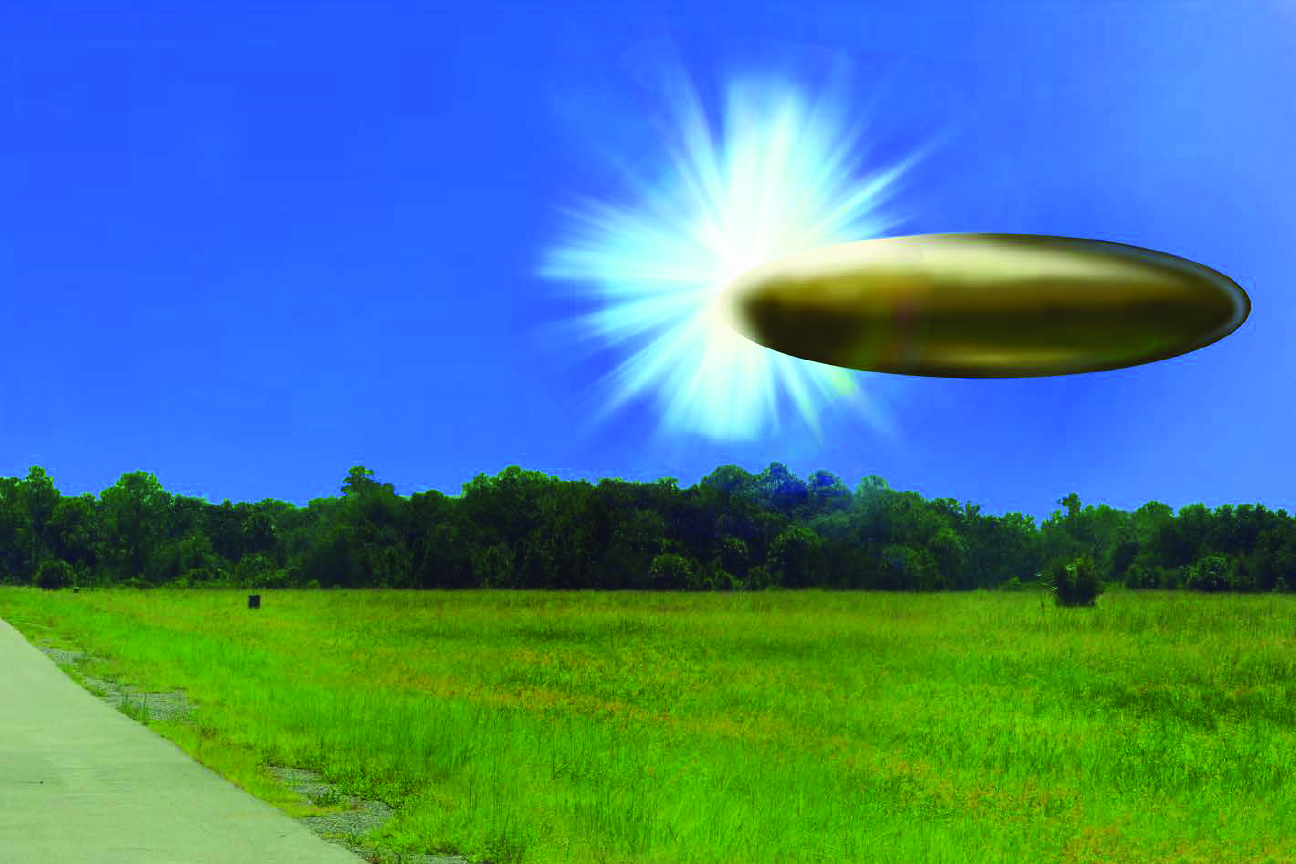
A composite image of a field where an alleged UAP sighting of an "ellipsoid bronze metallic object materializing out of a bright light in the sky" took place in 2023. The FBI has added a sketch of what this ellipsoid might look like.
(Image credit: NASA)
What did the NASA astronauts see?
Some of the most interesting documents, from a historical perspective, are files related to UFO sightings reported by NASA astronauts in the 1960s. They include a transcript and audio recording of two NASA astronauts reporting an unidentified object in Earth orbit during the 1965 Gemini VII mission.
Just four hours into the flight on Dec. 5, 1965, astronauts Frank Borman and Jim Lovell reported seeing a "bogey" (military slang for an unidentified aircraft) out their spacecraft window, which Borman describes as "hundreds of little particles going by."
When NASA ground control pressed Borman on whether it could be a piece of the recently detached rocket booster, the astronauts said no, maintaining that they could see the booster in a separate part of orbit. The Gemini spacecraft soon drifted away from the object, never to see it again.
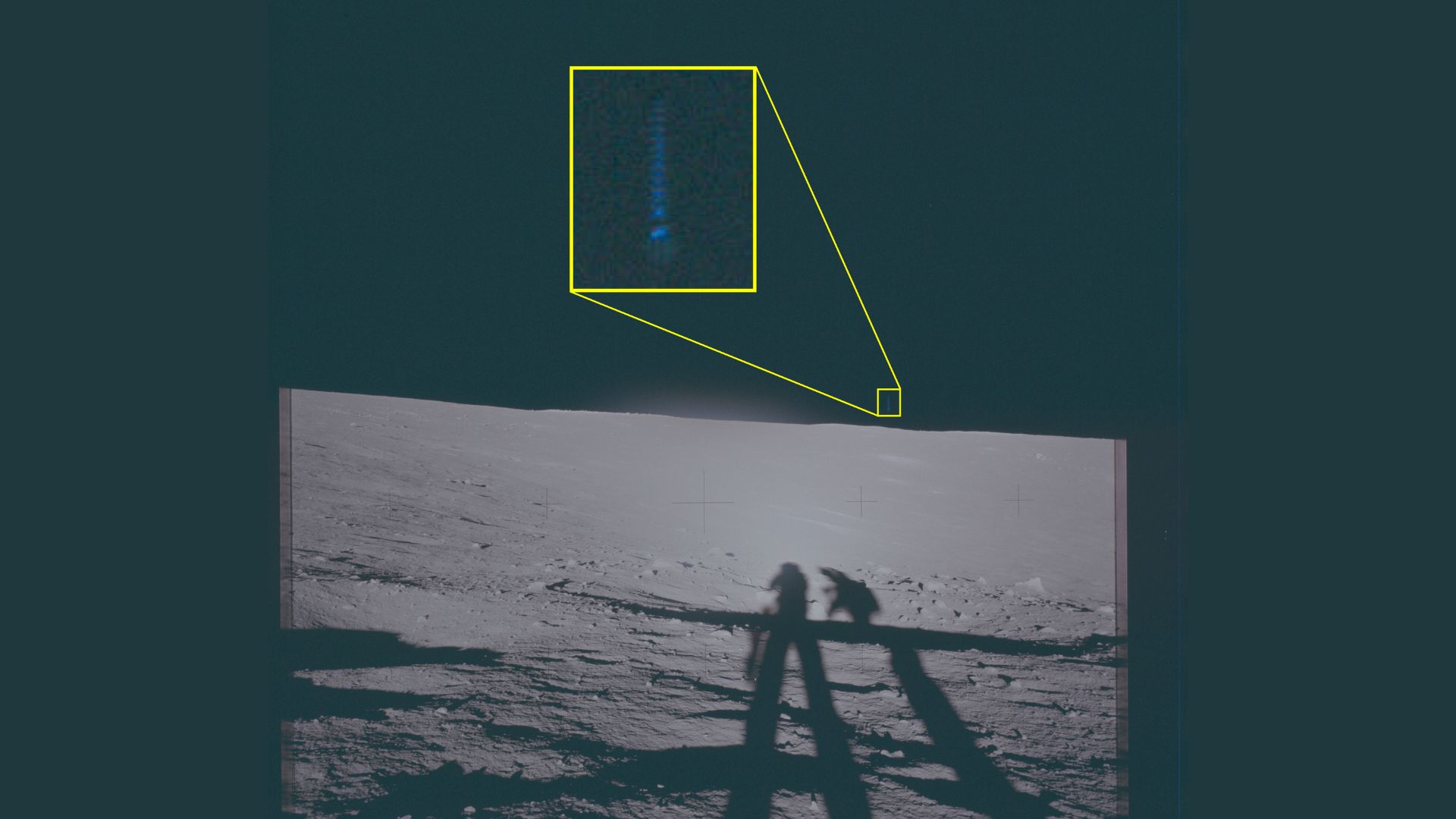
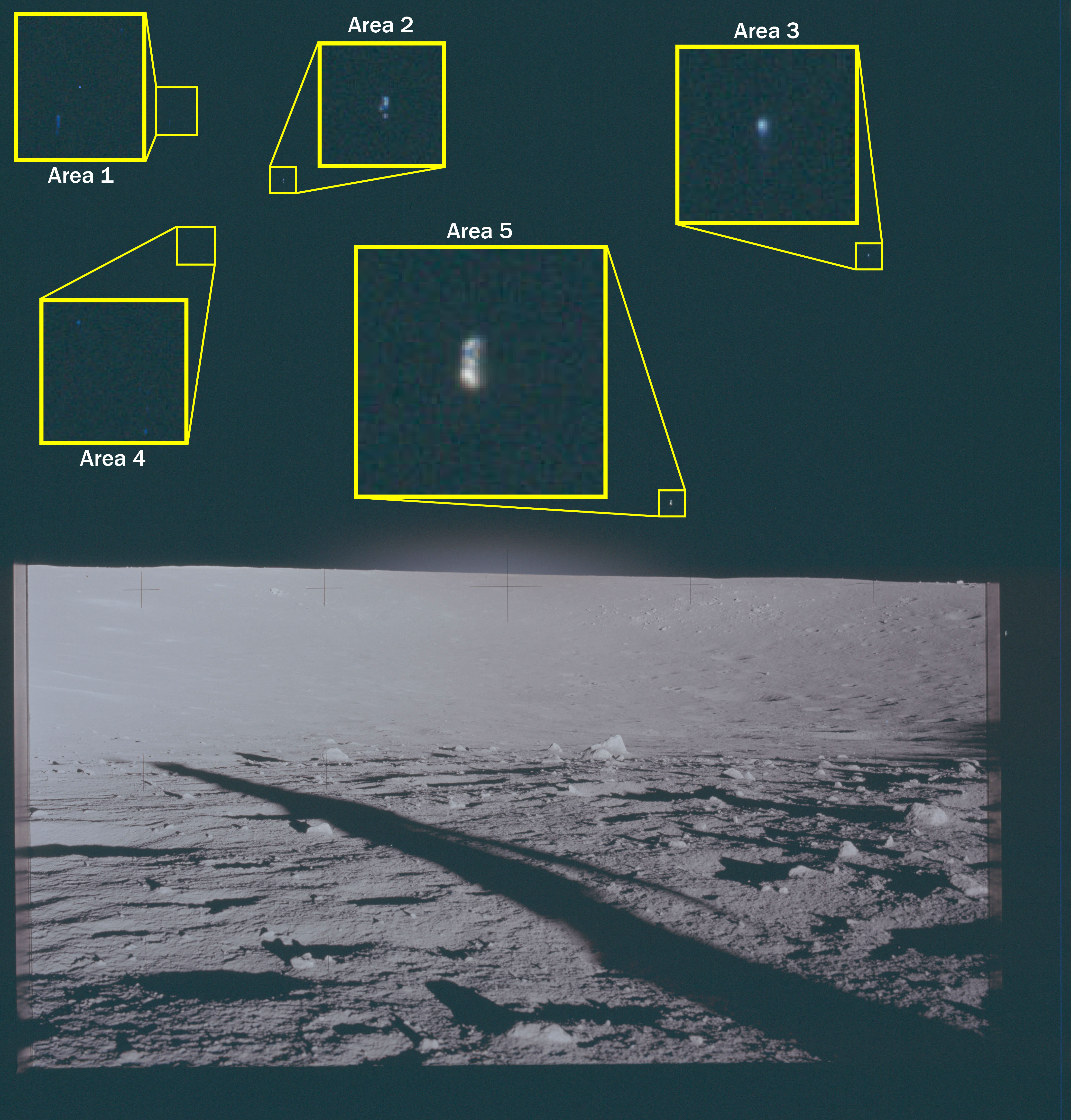
A photo of the moon taken by Apollo 12 astronauts shows unidentified lights in five different regions of the sky.
The files also include photos and transcripts from the Apollo 11, Apollo 12 and Apollo 17 missions, in which astronauts describe seeing various unidentified "flashes" and "particles of light" on the moon. These cases, like the others, remain unresolved due to a lack of sufficient data.
The underlying files have been available in public archives for decades. However, some newly released images from the Apollo 12 mission show zoomed-in boxes to highlight anomalous phenomena on the moon.
What are UAP?
So, if they're not aliens, what are UAP? According to a 2022 DOD investigation, most UAP sightings can be explained by birds, optical illusions, poor-quality photographs and foreign surveillance technology.
Many UAP files remain classified not due to the object sightings themselves, but because of the sensitive military technology used to record them, according to NASA.
The DOD plans to release additional declassified UAP documents every few weeks for the near future.
Editor's note:This article was updated at 12:30 p.m. ET on May 22 to link to the second tranche of declassified files.
RELATED
The Top 10 UFO Encounters Revealed From the Second Wave of Pentagon Declassified Files
The Great Pyramid of Khufu, the largest and most impressive surviving monument from the ancient world, has long remained an enigma to scholars. One reason is its remarkable resistance to damage from events such as earthquakes, which has helped it endure for thousands of years without significant structural issues.
Now, researchers say they finally understand the ancient technological factors behind the pyramid’s resilience throughout time.
According to new research, the unique frequency at which the pyramid vibrates during earthquakes contrasts significantly with the sands of the Giza plateau on which it rests. This, a new study in Scientific Reports argues, along with the massive structure’s shape and internal design, has all played a part in helping ensure its longevity.
A Marvel of the Ancient World
Khufu’s Pyramid, often simply called the Great Pyramid, is the oldest of the Seven Wonders of the Ancient World and the sole surviving example. Scholars have maintained a fascination with Giza’s monumental megastructures since antiquity, and debate over the mystery of its construction continues into the present day.
Completed during Egypt’s Old Kingdom (2600–2450 BCE), the Great Pyramid raises a significant question about the structural qualities that have contributed to its longevity. Addressing this aspect of one of the greatest engineering feats of the ancient world, researchers Mohamed ELGabry and colleagues Ayman Hamed, Sakuji Yoshimura, Hesham M. Hussein, Mohamed Maklad, and Asem Salama now say a combination of factors, which include the internal features within the pyramid, all contribute to its success at surviving events that have damaged smaller, more structurally sophisticated monuments in Egypt.
Using Sound to Solve an Ancient Mystery
To help them determine the factors that contribute the most significantly to the longevity of Khufu’s Pyramid, the research team began with an ambient noise survey, which involved horizontal-to-vertical spectral ratio analysis at more than three dozen locations throughout the ancient structure, which included chambers within the pyramid, construction blocks, and adjacent soil.
Their approach was not only successful but also revealed surprising insights into the pyramid’s construction, the team says.
Among the most significant discoveries, the team says they found that the pyramid “exhibits uniform fundamental frequencies (2.0–2.6 Hz) with an average of ~ 2.3 Hz across all structural elements,” revealing an extraordinary consistency in terms of the structure’s dynamic characteristics.
Also important, they say, is that the frequency band the pyramid’s structural components exhibit contrasts sharply with the surrounding soil. This is important because it limits the amplification of resonance through interactions between the stone assembly of the structure and its surrounding soil, which the team identifies as “a key mechanism protecting the monument during seismic activity.
Finally, although the team identifies an increase in seismic amplification with respect to the structure’s height, they also found that it “diminishes substantially within the pressure-relieving chambers,” which they interpret as an indication of “how their geometry actively reduces seismic response.”
Ancient Earthquake Impact Reduction
As a final consideration, the team also examined the pyramid’s subsurface foundation, where they calculated the structure’s vulnerability to seismic events.
After determining a very low value, the team concludes that the pyramid’s foundation has an “excellent bearing capacity and minimal earthquake-induced risk,” noting that, in addition to the monument’s resilience over time, its unique structural properties will likely protect it from future damage.
“The low seismic vulnerability index estimated for the foundation soils suggests that any future earthquakes are likely to produce only limited damage to the main pyramid body,” the team reports in their study.
Arguably, the team’s most significant finding is that the pyramid’s ancient builders possessed an exceptionally advanced understanding of the engineering properties behind the stone used in its construction.
“These findings present compelling quantitative evidence that ancient Egyptian architects possessed profound geotechnical understanding, optimizing structure design and site characterization to assure millennial-scale stability against seismic hazards,” the team reports.
Micah Hanks is the Editor-in-Chief and Co-Founder of The Debrief. A longtime reporter on science, defense, and technology with a focus on space and astronomy, he can be reached atmicah@thedebrief.org. Follow him on X @MicahHanks, and at micahhanks.com.
Why the Great Pyramid Still Confuses Scientists 🏺 | Egypt’s Unsolved Mystery!
Even Modern Engineers Can't Explain This... (The Great Pyramid Mystery)
“We are moving beyond artificial intelligence that thinks,” Scopelliti writes. “We are entering an era of intelligence that perceives.”
Synthetic Senses
These technologies were first applied in the medical field to help people with disabilities. For example, some AI systems can convert sound into touch, light, or movement, allowing deaf people to understand audio information in new ways. Researchers are developing retinal and neural implants to help restore sight to people who are blind. Another concept known as haptic technology allows people to feel touch from afar by recreating the sensation in real time.
Researchers are developing technologies that Scopelliti calls e-noses and e-tongues to mimic the sensations of smell and taste using digital systems. These tools turn signals from smells and tastes into data that can be studied, saved, and recreated. These sensations, which have been historically difficult to replicate, are now becoming programmable.
“For the first time in history, our senses are no longer confined to biology,” Scopelliti writes. “They can be synthetic, digitized, transmitted, and re-engineered.”
Scopelliti points out that these changes demonstrate that machines are moving from simply recording data to actually sensing the world around them. These technologies are beginning to blur the boundary between biological perception and machine interpretation.
The Impending Surveillance Problem
Today’s AI can predict how someone feels by analyzing their voice, facial expressions, or body language. New wearables and surrounding systems might soon be able to sense changes in mood, focus, or intention from very subtle signals. These tools could help doctors detect mental health risks early, help teachers notice when students lose focus, and enable workplaces to adjust to reduce cognitive overload.
The book also examines the risks associated with these new technologies. Scopelliti says that companies and AI systems are increasingly tracking and recording sensory and emotional data, raising new privacy and ethical concerns. Collecting emotional data raises ethical questions about who owns the information, how people can use it, and how others might misuse or manipulate it.
“As these signals are captured and analysed, new questions emerge,” Scopelliti writes. “Who owns your emotional state? Can your reactions be predicted, and influenced, without your knowledge? What happens when environments adapt to shape your behaviour in real time?”
These concerns are more than theoretical. AI can already track small changes in a person’s voice, skin conductance, or movement and use this data to personalize content and influence their decisions. Scopelliti gives examples of systems that have evolved from simple observation to actively shape people’s choices through this type of emotional data.
Protecting Perceptual Rights
Scopelliti introduces the idea of “perceptual rights” or protections meant to shield people from AI systems that can influence how we feel. He argues that whoever controls what we sense can also shape what we believe. “That makes perception the next frontier of power,” Scopelliti warns.
Scopelliti argues that people have a basic right to accurately perceive reality and that society should recognize and protect that right. “The right to perceive — to see what is real, to feel what is true — is not a luxury,” he writes. “It is the foundation of humanity in free societies.
“We once built machines to extend our physical capabilities,” Scopelliti concludes. “Now we are building systems that extend, and potentially redefine, our senses.”
Austin Burgess is a writer and researcher with a background in sales, marketing, and data analytics. He holds an MBA, a Bachelor of Science in Business Administration, and a data analytics certification. His work focuses on breaking scientific developments, with an emphasis on emerging biology, cognitive neuroscience, and archaeological discoveries.
RELATED VIDEOS
Will Artificial Intelligence Destroy Humanity?
Experts tested what AI would do to save itself. Here's what happened.
The End of Biology: Why AI Is Evolution's Final Form
US government releases UFO sighting reports - 'Orbs swarming in all directions'
Rebecka Pieder
US fighter jet shoots down UFO in newly-declassified footage
The Pentagon has released scores of UFO files, with descriptions of reported sightings of orbs, discs and fireballs spanning 80 years.
Witnesses described seeing "green orbs, discs and fireballs" dating as far back as 1948, the files show. More recently, a senior US intelligence officer said he saw "countless orange orbs swarming in all directions" last year, rendering him "speechless".
The fresh batch of materials includes a half dozen documents, a handful of audio recordings and 51 videos, including one of an Unidentified Flying Object (UFO) being shot to bits. The circumstances are unexplained.
The files are the second set released after an order this year from US President Donald Trump.
The Pentagon uploaded the first set of 161 files on 8 May, promising there would be more to come. The second was released on Friday.
One of the documents is a 116-page Armed Forces Special Weapons Program report from 1948-1950 that said witnesses had recounted 209 sightings of unidentified objects - orbs and other objects the US government now calls "unidentified anomalous phenomena" (UAP).
The report includes accounts of a series of sightings and investigations in Sandia, New Mexico, where witnesses described how UFOs manoeuvred, flew away and disappeared but then exploded.
In another document, the unnamed "senior US intelligence officer" provided his first-hand account of seeing phenomena from a military helicopter in 2025 at a location listed as the "western United States".
He described spotting mysterious "orange orbs flaring up and down" when investigating "loud thuds heard in the mountains" on a test range where others had spotted UFOs in the preceding days.
The "series of close UAP encounters" lasted for more than an hour, he said. The UAP were "super-hot", low to the ground and moving at high speed.
"They were oval-shaped, orange with a white or yellow centre, and emitted light in all directions," the officer reported. He said the swarm appeared to coalesce as they flared up and down for several minutes, "forming a distinct triangle before vanishing".
He said he did not take any photos because he was too focused on "assessing what it was and whether it posed a threat".
The files do not draw any definitive conclusions about the existence of extraterrestrial life or provide any evidence of alien technology. US officials have said that people could decide for themselves what they show.
Following the first release of files, Trump wrote that "with these new Documents and Videos, the people can decide for themselves, 'WHAT THE HELL IS GOING ON?' Have Fun and Enjoy!"
US Department of Defense
A view from the Moon during the Apollo 12 mission in 1969, where unidentified phenomena are highlighted and enlarged
Most of the videos disclosed on Friday feature grainy footage captured by US military infrared cameras between 2018 and 2023.
In an accompanying description, the Pentagon explained that members of Congress requested the videos in March but that many lacked a "substantiated chain of custody", meaning they could have been tampered with at some point.
One of those videos purportedly shows the shooting-down of a blurry object by a US fighter jet. A description says it happened over Lake Huron in February 2023, around the time that a Chinese surveillance balloon traversed the US, spurring increased scrutiny of UFOs.
The Biden administration ordered the destruction of several unidentified objects at the time, among them what officials described as an octagonal structure with strings attached, which was shot down over Lake Huron near the Canadian border.
Video of another orb says it shows a spherical UAP zooming over the Yellow Sea in 2022.
It's unclear whether the releases of the UFO files have done much to satiate the curiosity of legions of UFO researchers, official and otherwise.
"Let keep digging!" Congressman Tim Burchett, a Republican from Tennessee, wrote in a post on X thanking Trump. Burchett has previously advocated for more transparency on UFO sightings.
When the first tranche of files was made public, he said they represented a "drop in the bucket" compared to what was to come. "I would say 'Holy Crap' is coming."
The Pentagon said additional files will be released on "a rolling basis"
RELATED
The Top 10 UFO Encounters Revealed From the Second Wave of Pentagon Declassified Files
The CIA's Wild West era of mind control, bioweapons and secret human testing is back in the spotlight as lawmakers prepare to revisit the notorious MKUltra program decades after the agency destroyed most of the files.
AJ Gentile, host of The Why Files, who has built a massive audience dissecting UFO lore, government secrecy and hidden history, said Americans have forgotten just how disturbing the CIA's MKUltra experiments really were.
'People versus power, that's what it is,' he told the Daily Mail. 'I don't like authority, I don't like corruption, and I don't like our rights being violated.'
Among the programs Gentile highlighted was Operation Sea-Spray, a covert 1950 experiment in which the CIA released bacteria over San Francisco to study how vulnerable US cities would be to biological attacks.
'They sprayed… they covered San Francisco with bacteria,' Gentile said. 'They did it in New York, too.'
The conversation also turned to the death of CIA scientist Frank Olson, who plunged from a New York hotel window in 1953 after being secretly dosed with LSD by colleagues connected to MKUltra.
Olson's death has long fueled speculation that the government covered up what really happened during the agency's early mind control experiments.
'If nothing happened, why did President Ford give them money and make them sign an NDA?' Gentile said of the government's later settlement with Olson's family.
AJ Gentile, host of The Why Files, who has built a massive audience dissecting UFO lore, government secrecy and hidden history, said Americans have forgotten just how disturbing the CIA's MKUltra experiments really were
A hearing on MKUltra was previously set for May 13, but had been rescheduled days before.
However, former CIA officer James Erdman testified in front of the Senate last week, claiming US intelligence officials seized '40 boxes of JFK and MKUltra files' that were being processed for declassification.
House Oversight Committee members Anna Paulina Luna of Florida and Eric Burlison of Missouri are standing by the whistleblower's claims that the CIA took secret files and marched into CIA headquarters in Virginia to demand the return of the files.
The meeting took place after lawmakers gave the agency just 24 hours to both preserve and relinquish the troves of data.
Burlinson said on X: 'We went to deliver a message, and that message is that this is a new era. This president is demanding disclosure, and we wanted assurances that they are understanding of that and on the same page.'
'That message was received, and we expect to be able to see all of the files for JFK and [MKUltra], etc, and we await these actions.'
The CIA's formative years in the 1950s through the 1970s often drew on a similar 'Wild West' ethos.
Faced with an entirely new global frontier of espionage, operatives frequently relied on rugged individualism, covert sabotage, and swashbuckling field tactics reminiscent of Western folklore.
Pictured is Dr Frank Olson with his wife Alice and their children (L-R) Eric, Lisa and Nils
Gentile highlighted a Church Committee investigation from the 1970s, which exposed decades of intelligence abuses involving surveillance, chemical testing and covert experimentation within the CIA. 'It will make you angry,' he said of the report.
He said the hearing immediately raised red flags for him because the majority of MKUltra documents were deliberately destroyed decades ago.
'It's gone, they were destroyed,' he said. 'So that's why the hearing, to me, is… you've heard the expression, limited hangout? It sounds like a limited hangout to me.'
The term 'limited hangout' refers to the release of partial truths meant to distract from deeper secrets, a concept long associated with intelligence agencies and political scandals.
The CIA officially launched MKUltra in 1953 under director Allen Dulles, with the stated goal of developing techniques for mind control and interrogation during the Cold War.
Thousands of pages later revealed that the agency experimented with LSD, hypnosis, sensory deprivation and psychological abuse, often on unsuspecting Americans.
The program, conducted from 1953 to 1964, aimed to develop procedures and drugs for interrogations, weakening individuals and forcing confessions through brainwashing and psychological torture.
Gangster James 'Whitey' Bulger, a former organized crime boss, was used as a test subject in 1957 while an inmate at the Atlanta penitentiary. He explained he was one of eight convicts in a panic and paranoid state while in MKUltra
Pictured are scientists administering mind-altering drugs in the CIA experiments
A total of 144 projects were carried out under MKUltra during that period, highlighting the vast scale of the CIA's secret experimentation program.
Gentile said one of the most disturbing cases tied to the program remains the death of CIA scientist Frank Olson, who plunged from a New York hotel window in 1953 after being secretly dosed with LSD by colleagues connected to MKUltra.
Olson was one of at least eight men given LSD on November 19, 1953, as part of an MKUltra experiment, Paul Vidich, Olson's nephew, previously told the Daily Mail.
In statements made during a 1977 hearing about the activities of the CIA, according to Gottlieb, a 'very small dose' of LSD was added to the bottle of Cointreau, which was served after dinner.
In the days that followed, Olson became paranoid, barely ate and even threw away his wallet, identification badge and money after believing his boss, Vincent Ruwet, had instructed him to do so.
Olson was scheduled to travel to a mental health facility on November 27. At approximately 2.45am on November 28, 1953, Ruwet received a call from Dr Sidney Gottlieb reporting that Olson had died.
Olson's body was later found outside the Statler Hotel, where he had been staying on the 13th floor.
Operation Sea-Spray was a covert 1950 CIA experiment in which bacteria were released over San Francisco to study how vulnerable American cities would be to biological attacks
Pointing to the government's handling of the case after Olson's death, Gentile said: 'If nothing happened, why did President Ford give them money and make them sign an NDA?'
President Gerald Ford formally apologized to the Olson family in 1975 and invited them to the White House after revelations emerged about the CIA's role in Olson's drugging.
Gentile said the Church Committee findings became even darker when investigators uncovered evidence of continued biological warfare development despite public promises from the government that such programs had ended.
He referenced Operation Sea-Spray, a covert 1950 CIA experiment in which bacteria were released over San Francisco to study how vulnerable American cities would be to biological attacks.
For one week in September of 1950, the US Navy sprayed massive amounts of bacteria into the air two miles off the coast of San Francisco, California.
This secret biological warfare experiment aimed to learn how vulnerable large US cities like San Francisco would be to a biowarfare attack by terrorists.
The bacteria used were Serratia marcescens, which can cause respiratory issues and meningitis, and Bacillus atrophaeus, which can be lethal to immunocompromised individuals. At the time, the Navy believed these bacteria were harmless to humans.
But after inhaling thousands of bacterial spores, 11 people checked into Stanford Hospital near San Francisco with very rare, serious urinary tract infections that doctors ultimately determined were caused by the experiment.
'They covered San Francisco with bacteria,' Gentile said. 'They did it in New York, too.'
Reports have suggested that the CIA may have been involved in 'open air' biological warfare tests in streets and tunnels in the New York City area in 1955 and 1956, according to an analysis of CIA records released in 1979 by the Church of Scientology.
Gentile also pointed to Plum Island, the controversial government research facility off the coast of New York, while discussing theories surrounding Lyme disease and Cold War bioweapons research
A four-month investigation found the CIA allegedly acquired equipment for covert experiments involving the release of unidentified substances through aerosol devices hidden inside suitcases and the exhaust system of a modified 1953 Mercury sedan, according to the Church Committee report.
Gentile also pointed to Plum Island, the controversial government research facility off the coast of New York, while discussing theories surrounding Lyme disease and Cold War bioweapons research.
'Eric Traub was brought in to create that facility,' he said, referring to the German scientist accused of overseeing Nazi biological warfare research during World War II.
Traub later worked with the US government after the war as part of America's recruitment of former German scientists during the early Cold War.
Health and Human Services Secretary Robert F Kennedy Jr has also suggested Lyme disease may have originated from a failed US bioweapons program in the 1970s tied to research at Plum Island.
Plum Island is an 840-acre island off the northeastern coast of Long Island, New York, and home to the Plum Island Animal Disease Center, a government lab used since the 1950s to study infectious animal diseases.
However, the Department of Homeland Security has repeatedly said Lyme disease was never studied at the facility.
Gentile said public distrust toward intelligence agencies is rooted in decades of secrecy that many Americans either never learned about or dismissed as conspiracy theories.
'Most Americans don't know what MKUltra is,' he said. 'We think everybody does, because we like this stuff. But my neighbors, if I say that to my neighbors, they won't know what that is.'
He also claimed programs tied to psychological manipulation never truly disappear once they begin.
'Once a program starts, it never really stops,' Gentile said. 'Psychic spies or MKUltra, it just never stops.'
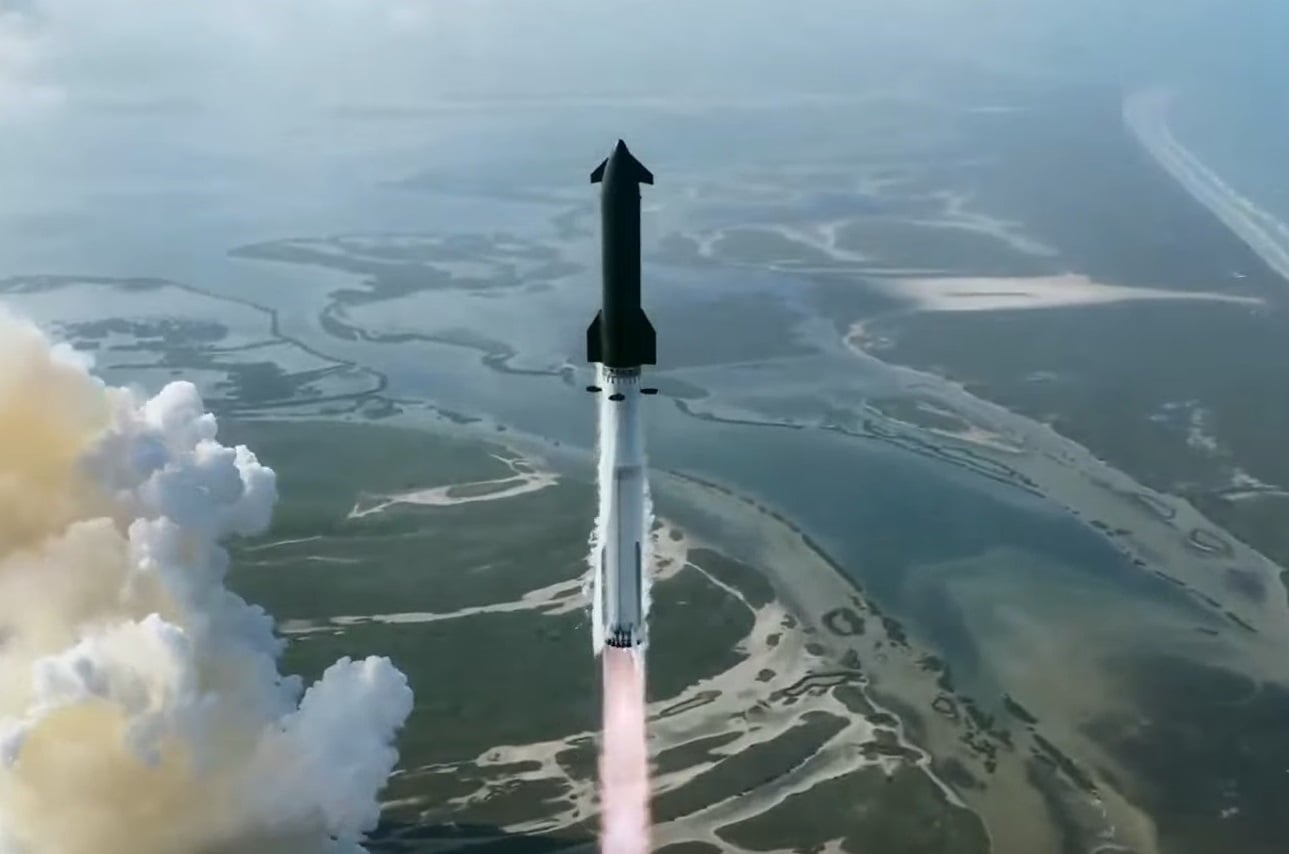
SpaceX's Starship V3 rocket rises from its Texas launch pad. (SpaceX via X)
SpaceX's next-generation Starship V3 rocket got off to a glorious start for its first test flight, and although not all of its engines fired fully according to plan, SpaceX CEO Elon Musk said the mission "scored a goal for humanity."
This was the 12th Starship launch, but the first one since SpaceX completed a thorough redesign of the rocket's Super Heavy first-stage booster, the second stage (known as Ship), the Raptor rocket engines and the launch facilities at SpaceX's Starbase in south Texas.
Super Heavy lit all 33 of its Raptor V3 engines at liftoff, and successfully sent Ship on its way over the Gulf of Mexico. But after stage separation, Super Heavy shut down its engines prematurely. As a result, the booster tumbled through the atmosphere to an uncontrolled but safe splashdown in the gulf. SpaceX had planned for a controlled splashdown but hadn't planned to recover the booster, so it was no great loss.
Only five of the six Raptor engines on the second-stage Ship remained lit for the next phase of the test flight. "I wouldn't call it a nominal orbital insertion but ... it's within bounds," SpaceX commentator Dan Huot said.
During the coast phase of the mission, SpaceX had to pass up an opportunity to try relighting one of the engines in space. It was, however, able to follow through with the deployment of 20 satellite simulators, plus two "Dodger Dog" satellites that were modified to test new technologies for SpaceX's Starlink V3 satellites.
One of the modified satellites captured video looking back at Ship as it drifted away, and then transmitted the video back to Earth via SpaceX's Starlink network. Huot said the video monitoring procedure would come in handy for making in-space inspections of Ship's heat shield during future flights. "That's one we've been chasing for a while, so [it's] really cool to see it," he said.
About an hour after launch, Ship made a fiery atmospheric re-entry over the Indian Ocean. Onboard cameras showed the glow of superheated plasma surrounding the rocket stage, followed by occasional flashes of flame. In the moments just before splashdown, Ship fired up two of its Raptor engines — as opposed to the three that would typically be used for a landing — and flipped itself upright just in time for the end.
When the rocket hit the water, it burst into flames. Meanwhile, hundreds of SpaceX employees watching the webcast burst into applause. "USA, USA, USA!" they chanted.
"We guaranteed excitement at the beginning of the show, and I would say Starship delivered," mission commentator Jake Berkowitz said.
SpaceX CEO Elon Musk was quick to congratulate his team for "an epic first Starship V3 launch and landing."
"You scored a goal for humanity," he wrote in a posting to X.
SpaceX's team members emphasized that they didn't expect everything to go right the first time. "This is a flight test," Huot said. "We're trying to intentionally find where our limits are."
The day before, SpaceX had to postpone launch when a pin on the launch pad's quick-disconnect arm failed to release itself properly. Engineers made changes to the ground-system software and hardware — including some welding at the pad — to fix the issue for today's launch.
The 407-foot-tall Starship V3 is slightly bigger than the previous version of SpaceX's super-rocket, but the biggest changes are on the inside. Here are a few highlights of the redesign:
Streamlining the design of the methane-fueled Raptor V3 engines and increasing their liftoff thrust from 507,000 to 551,000 pounds per engine. Super Heavy is now capable of 18 million pounds of liftoff thrust, which makes it more than twice as powerful as the Apollo-era Saturn V or its modern-day successor, NASA's Space Launch System.
Putting an integrated hot-stage ring between the booster and the second stage, which is expected to streamline reusability.
Replacing the previous four stabilization fins on Super Heavy with three larger, heavier grid fins, which should improve control and durability.
Beefing up Starship's satellite deployer, which is nicknamed the "Pez Dispenser." The deployer is designed to deal out as many as 60 Starlink V3 satellites per mission.
Installing shorter "chopsticks" on the launch tower, which is expected to make it easier to catch Starship's stages when they fly themselves back to the launch pad.
Fortifying the base of the pad and improving the flame-diverter system, which should cut down on the time and energy required for post-launch refurbishment.
In the near term, SpaceX is banking on the Starship system to facilitate the expansion of its Starlink satellite broadband network — which is currently the only profitable part of the SpaceX's business, according to documents filed this week in preparation for the company's initial public offering.
A modified version of Starship is due to serve as the lunar lander for NASA's Artemis 4 mission, which is currently scheduled for as soon as 2028. NASA is already deep into preparations for an Artemis 3 mission that's aimed at testing the Starship lander and/or Blue Origin's Blue Moon lander in low Earth orbit next year.
NASA Administrator Jared Isaacman alluded to that mission today on SpaceX's webcast. "We're looking forward to meeting up next year in Earth orbit," he said.
In the longer term, Musk envisions creating a fleet of Starships that could transport thousands of spacefarers to settlements on Mars. SpaceX hasn't yet scheduled any Mars missions — but this week, crypto investor Chun Wang announced that he intends to be on Starship's first Mars flyby, whenever it takes place. "It will light the fire. It will ignite the imagination, and it will build the momentum," he said.
RELATED
WATCH: SpaceX successfully launches test flight of Starship V3 megarocket
Mission commander Chun Wang works on his laptop with Earth looming outside the window of SpaceX's Dragon capsule during the Fram2 mission in 2025. (Chun Wang / SpaceX via X)
Chinese-born cryptocurrency investor Chun Wang has become the latest deep-pocketed space enthusiast to set his sights on a trip around Mars. But first, he wants to take a ride around the moon on SpaceX's Starship. And SpaceX is willing to work with him.
Wang shared his ambition during a SpaceX webcast focusing on the first attempt to launch a next-generation Starship V3 rocket from SpaceX's Starbase in Texas for a test flight. The launch attempt had to be called off due to technical difficulties with ground equipment, but SpaceX could try again as soon as May 22.
During a lull in the countdown, the webcast team cut to an interview with Wang, who was speaking from Bouvet Island, a rugged nature reserve in the South Atlantic Ocean that's been called the world's most remote island. It was an apt setting for a conversation about Wang's out-of-this-world idea.
Wang already qualifies as a space traveler: Last year, he headed up a privately funded mission that sent him and three other crew members into polar orbit in a SpaceX Dragon capsule for three and a half days. SpaceX launch commentator Dan Huot said Wang is already back in line to take on "the first interplanetary mission on a Starship," even though the rocket is still in testing mode and hasn't yet made a single orbit around Earth.
"It's going to be a flyby mission of Mars," Wang said. "A lot of people are talking about how Mars will be like: 'We're going to fly to Mars, we're going to land on Mars, we're going to build a city on Mars.' But let's get this started with a flyby. ... It will light the fire. It will ignite the imagination, and it will build the momentum."
No timetable was given for the mission, but SpaceX said the round trip would take two years. Wang wasn't worried about getting bored during the cruise to and from the Red Planet. "This is actually my style of fireworks," he said. "I can stare at the map view on airplanes all the way from takeoff to landing. So I think I will enjoy the trip."
Wang was born in China in 1982 but became a citizen of Malta in 2023. He played a role in founding two cryptocurrency ventures, F2Pool and Stakefish, and his net worth was said to be somewhere around $300 million as of last year.
As a warmup for the Mars flyby, Wang said he intends to join California engineer/investor Dennis Tito and his wife, Akiko Tito, on a Starship trip around the moon. SpaceX says that weeklong mission would come within 200 kilometers (120 miles) of the lunar surface and advance the development of Starship's systems for deep-space, long-duration missions.
"Even though it's just a flyby, it will try a lot of things that have never been attempted before," Wang said of the round-the-moon mission.
In 2013, Tito proposed a 501-day mission that would send a man and a woman around Mars. At first, he suggested that he'd be willing to fund at least part of the mission, but a couple of months later he said that NASA would have to take the lead role in what he called a "philanthropic partnership with government." NASA demurred.
The next billionaire to look into leading a space mission beyond Earth orbit was Yusaku Maezawa, who made his fortune after founding Zozotown, Japan's largest online fashion mall. Maezawa teamed up with SpaceX in 2018 on a plan that would involve sending the billionaire and a crew of artists and performers around the moon on Starship. As part of the deal, Maezawa committed to paying SpaceX an undisclosed amount to support Starship's development. But he canceled his plans in 2024, citing delays in SpaceX's timeline.
"It's a developmental project, so it is what it is, but it is still uncertain as to when Starship can launch," Maezawa said at the time. "I can't plan my future in this situation, and I feel terrible making the crew members wait longer, hence the difficult decision to cancel."
Since then, NASA sent four astronauts around the moon for the Artemis 2 mission, which is said to have cost $4.1 billion.
Will Wang's plan for a Mars flyby go further than Maezawa's plan for a moon trip? Or will NASA have to be calling the shots (and paying most of the bills) for any mission that goes out that far? Maybe Wang should compare notes with Tito and Maezawa.
RELATED
Elon Musk delivers SpaceX update on Starship, Mars goals and more at Starbase
SpaceX Reveals CRAZY Starship Plan Involving Gigantic "Mini" Satellites!
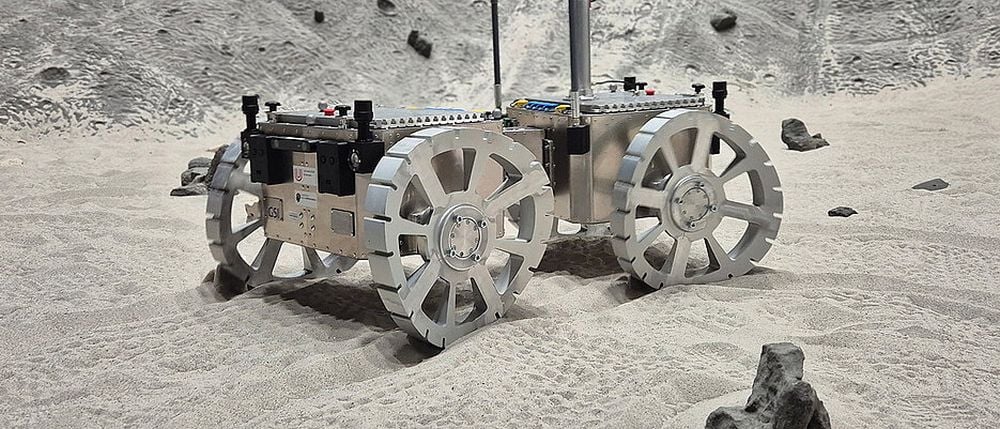
This rover has odd-shaped wheels that let it mimic the motion of a desert lizard that can sort of "swim" through sand. In testing, the wheels outperformed regular rover wheels when moving across sand. Image Credit: Marco Schmidt / Universität Würzburg
Nature forces lifeforms to adapt to its conditions. That is a basic fact behind natural selection. From that perspective, it makes sense for engineers to learn from creatures that have adapted.
This is true of robotics, as researchers use biomimicry to overcome problems. In the case of Mars rovers, we've relied on wheeled vehicles to traverse the planet's surface. Now German researchers are using an unusual animal's locomotion system to inform the design of new rover wheels. The animal in question is called the sandfish skink. The sandfish skink is a species of lizard known for its ability to travel through sand as if its swimming.
A team of researchers at University of Würzburg have been working on rover wheels that mimic the sandfish's ability to swim through sand. Prof. Marco Schmidt leads the Embedded Systems and Sensors for Earth Observation (ESSEO) group at Julius Maximilian University of Würzburg. It's part of the VaMEx initiative of the German Aerospace Centre.
"Conventional wheel designs are often optimised for driving at low speeds and tend to slip, sink or get stuck on soft ground," says Amenosis Lopez, a researcher working with Professor Schmidt.
Since the new wheels don't really roll, they don't struggle as much, and outperform typical wheel designs in testing.
"The wheels mimic the animal’s characteristic interaction with the ground, generating both longitudinal and lateral forces," Lopez said. "The rover leaves sinusoidal tracks in the sand – this confirms that the intended swimming mechanism has been achieved."
“The experiments also provided us with clear pointers for improvements,” said Professor Schmidt. The first sandfish wheels were both narrower and heavier than conventional wheels, and they tended to slip and to sink into the sand. But the new design overcomes these problems by being both lighter and wider, leading to the improved performance on sand.
But Mars rovers have more than just sand to contend with. There's also rocky terrain, pebbled terrain, and mixed terrain. Making the sandfish wheels perform on all of these surfaces is a work in progress.
“Further refinements to the wheel surface are likely to further improve performance on mixed terrain,” the researchers explained.
The Rosalind Franklin rover is the ESA's next mission to Mars, and it's scheduled to launch in 2028. But since that rover design is already finalized, it won't use the swimming sandfish wheels.
Beyond that, the ESA is targeting another mission to the Martian surface in 2035. This is the most favourable launch date in the next decade because of Earth's and Mars' relative positions to each other. The ESA and its member states are in the very early stages of developing this mission, and as things stand now, the ESA has never successfully landed a spacecraft on Mars.
This future mission is aimed at developing key technologies for precision landings, so that will take priority. But if the ESA does succeed and successfully land a rover on Mars, there's a chance it will feature the sandfish wheels. By that time, the design should be perfected.
Wheel UFO seen in Mersin, Turkey, Making Laser Sounds When Moving, May 15, 2026, UFO UAP Sighting News.
Date of sighting: May 15, 2026
Location of sighting:Mersin, Turkey
Source: NUFORC
In Turkey last week an eyewitness noticed a wheel craft in the sky. Basically the wheel is a UFO disk on its side. Sightings of these wheel UFOs goes back to biblical times. In 593 BC Ezekiel was among the Jewish captives living in Babylon near he Kebar River when he saw the vision of a UFO wheel in the sky. So...wheel UFOs or disks on their sides...nothing new at all. History says so. And the sound this eyewitness describes of it moving fast, sounding like a laser in a movie...thats 100% proof this is a real alien craft.
Scott C. Waring - UFO Sightings Daily
Eyewitness states:
Lights on object, Aura or haze around object, Made a sound, Animals reacted Yo-yo shaped object with ring-like structure; rapid, zig-zag movement and circular flight pattern. At 9:00 PM, I went out to my balcony for some fresh air and noticed an object in the sky. I initially mistook it for a star, but just as I was about to turn away, it suddenly changed position with incredible speed, making a sound similar to a laser.I continued to watch it; it moved in a circular pattern before coming to a stop in one spot. The object resembled a "yo-yo" with a ring-like outer structure. I could not tell if the material was metallic or not, but the structure was distinct.
Meer van UFO'S of UAP'S, ASTRONOMIE, RUIMTEVAART, ARCHEOLOGIE, OUDHEIDKUNDE, SF-SNUFJES EN ANDERE ESOTERISCHE WETENSCHAPPEN - DE ALLERLAATSTE NIEUWTJES


 Pentagon releases more UFO files: "Speechless after these observations"