Ontdek de Fascinerende Wereld van UFO's en UAP's: Jouw Bron voor Onthullende Informatie!
Ben jij ook gefascineerd door het onbekende? Wil je meer weten over UFO's en UAP's, niet alleen in België, maar over de hele wereld? Dan ben je op de juiste plek!
België: Het Kloppend Hart van UFO-onderzoek
In België is BUFON (Belgisch UFO-Netwerk) dé autoriteit op het gebied van UFO-onderzoek. Voor betrouwbare en objectieve informatie over deze intrigerende fenomenen, bezoek je zeker onze Facebook-pagina en deze blog. Maar dat is nog niet alles! Ontdek ook het Belgisch UFO-meldpunt en Caelestia, twee organisaties die diepgaand onderzoek verrichten, al zijn ze soms kritisch of sceptisch.
Nederland: Een Schat aan Informatie
Voor onze Nederlandse buren is er de schitterende website www.ufowijzer.nl, beheerd door Paul Harmans. Deze site biedt een schat aan informatie en artikelen die je niet wilt missen!
Internationaal: MUFON - De Wereldwijde Autoriteit
Neem ook een kijkje bij MUFON (Mutual UFO Network Inc.), een gerenommeerde Amerikaanse UFO-vereniging met afdelingen in de VS en wereldwijd. MUFON is toegewijd aan de wetenschappelijke en analytische studie van het UFO-fenomeen, en hun maandelijkse tijdschrift, The MUFON UFO-Journal, is een must-read voor elke UFO-enthousiasteling. Bezoek hun website op www.mufon.com voor meer informatie.
Samenwerking en Toekomstvisie
Sinds 1 februari 2020 is Pieter niet alleen ex-president van BUFON, maar ook de voormalige nationale directeur van MUFON in Vlaanderen en Nederland. Dit creëert een sterke samenwerking met de Franse MUFON Reseau MUFON/EUROP, wat ons in staat stelt om nog meer waardevolle inzichten te delen.
Let op: Nepprofielen en Nieuwe Groeperingen
Pas op voor een nieuwe groepering die zich ook BUFON noemt, maar geen enkele connectie heeft met onze gevestigde organisatie. Hoewel zij de naam geregistreerd hebben, kunnen ze het rijke verleden en de expertise van onze groep niet evenaren. We wensen hen veel succes, maar we blijven de autoriteit in UFO-onderzoek!
Blijf Op De Hoogte!
Wil jij de laatste nieuwtjes over UFO's, ruimtevaart, archeologie, en meer? Volg ons dan en duik samen met ons in de fascinerende wereld van het onbekende! Sluit je aan bij de gemeenschap van nieuwsgierige geesten die net als jij verlangen naar antwoorden en avonturen in de sterren!
Heb je vragen of wil je meer weten? Aarzel dan niet om contact met ons op te nemen! Samen ontrafelen we het mysterie van de lucht en daarbuiten.
A view of DK-G South, facing north-west, from December 2023, highlighting the complexity of the standing architecture at Mohenjo-daro. Credit: Adam S. Green/Antiquity (2026). DOI: 10.15184/aqy.2026.10359
For decades, historians have generally agreed that the progress of small villages as they evolved into cities came at the price of widening inequality. A small group of leaders, kings and priests, would inevitably seize control of the wealth and the gap between rich and poor would grow.
But a new study at the University of York delves into the archaeology of the 4,000-year-old Mohenjo-daro, the Indus civilization's largest city, and shows the opposite was true. By analyzing house sizes across the ancient city, researchers found that Mohenjo-daro was not only more equal than its neighbors in Mesopotamia and Greece, but it actually became more egalitarian over time.
Entirely different
The lead author, Dr. Adam Green from the University of York's Department of Archaeology and Department of Environment and Geography, said, "Legacy data from the ancient city shows that as the city matured, the gap between the largest and smallest homes narrowed. In fact, by its later years, the wealth gap in this massive urban center had dropped to levels typical of the first farming villages.
"While ancient Egyptians were building pyramids for god-kings, and the Greeks were constructing massive palaces at Knossos, the people of the Indus were building something entirely different.
"Instead of gold-filled tombs and huge temples, Mohenjo-daro focused on sophisticated brick-lined drains and organized street layouts. Instead of allowing the perks of society to accumulate with a tiny elite, the city's amenities were widely distributed among the everyday households."
This was particularly true with regard to the distribution of the famous Indus seals, which were tools of business and trade. Indus seals were typically found in ordinary homes and not in public buildings, with no palaces to monopolize these tools of government.
It was evident that rather than a single ruler hoarding resources, the city's inhabitants worked together to ensure fair access to a good standard of life.
Investment in very practical things, like drainage and street maintenance, was also a sign of working collectively for the public good. The use of a standardized system of weights and measures across the region ensured that exchange remained fair for all citizens.
Mohenjo-daro and its excavation areas. Credit: Antiquity (2026). DOI: 10.15184/aqy.2026.10359
Rising productivity
The findings, published in the journal Antiquity, challenge the modern assumption that rising inequality is an unavoidable side effect of economic growth. Mohenjo-daro, the researchers say, stands as proof that a society can be technologically advanced and highly productive while also ensuring its prosperity is shared by the many, rather than the few.
Dr. Green said, "Mohenjo-daro is often cited as being famous for what it doesn't have, such as the absence of palaces for kings, gold-filled tombs, and no statues of rulers. But what it does have is so important.
"In the period when inequality appears to be lowest, productivity appears to rise. It challenges the idea that prosperity requires us to concentrate decision-making powers in the hands of the few.
"It is quite an interesting lesson for modern societies, as the Indus civilization demonstrates clearly that an urban society can be highly productive and inventive at scale, while also ensuring that resources and power are shared equitably. In fact, doing so may even have been essential to sustaining prosperity over the centuries."
Publication details
Adam S. Green et al, Inequality declined in the Bronze Age city of Mohenjo-daro, Antiquity (2026). DOI: 10.15184/aqy.2026.10359
Earth’s oceans ruled by aliens? Former US Admiral’s explosive claims sparks UFO debate
The existence of aliens is no longer confined to extra-terrestrial space. Now non-human intelligence rules Earth’s oceans, as claimed by a former US Navy Admiral.
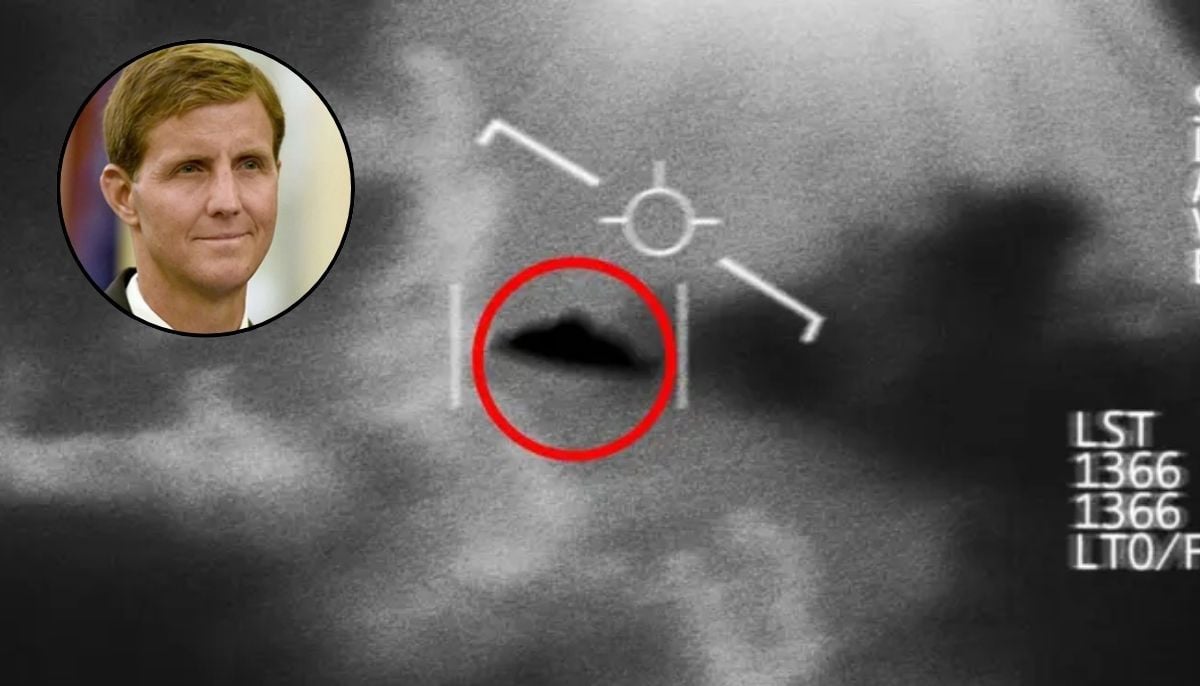
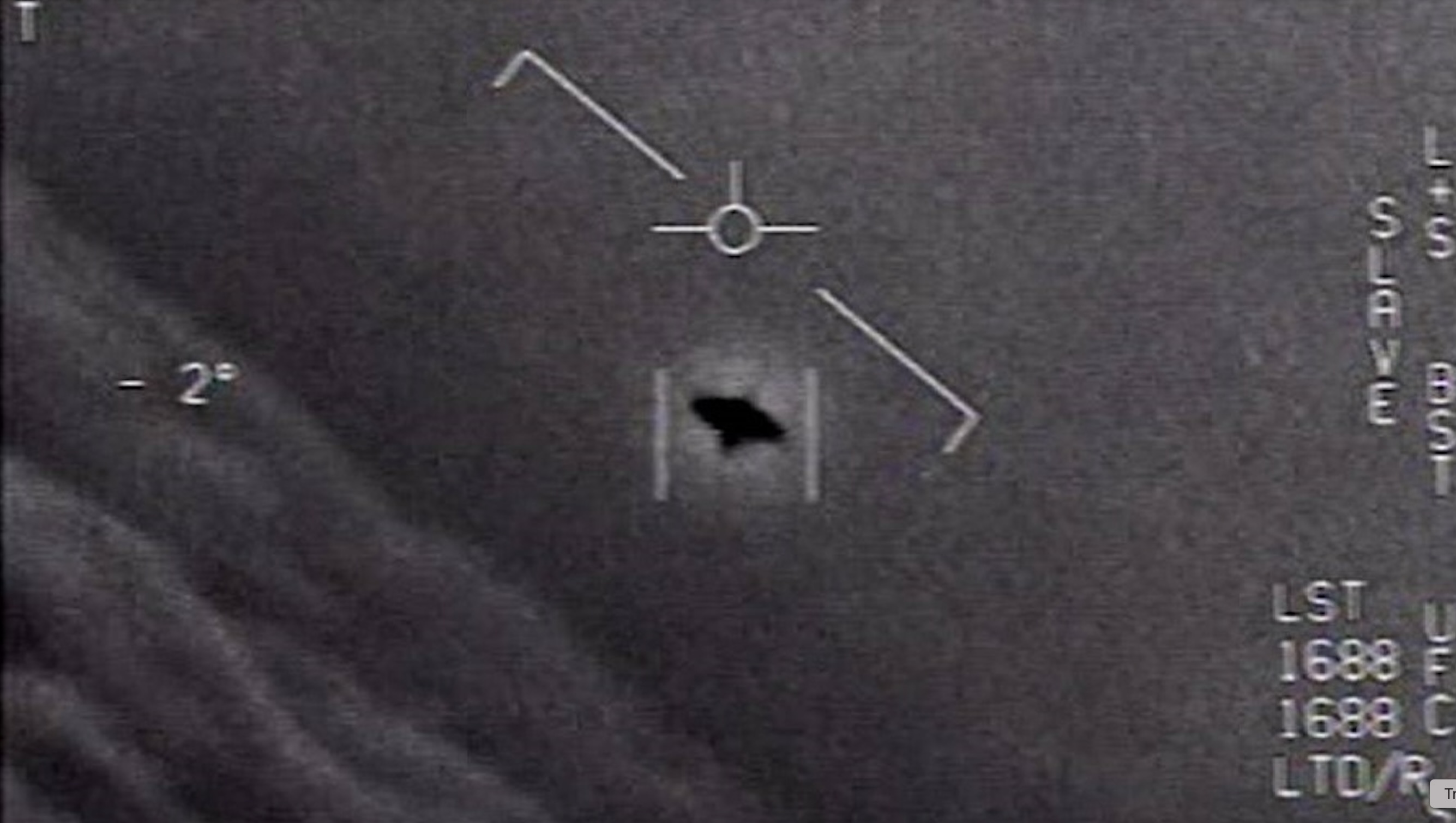
In a recent interview with Popular Mechanics, Tim Gallaudet recounted an experience when he saw a UFO sighting in 2015 from a Navy F/A‑18 aircraft on the US east coast, the incident is called a “Go Fast” sighting.
The video showed a fast-going object appearing little more than a white dash on the aircraft screen.
According to Gallaudet, the object was something different because the speed at which it was moving went against the laws of Physics.
“So far, we have not built anything that can go that fast in the water and does not change speed from water to air. Many have had super-fast acceleration and made right-angle turns. We have not yet been able to engineer vehicles that can do that,” Gallaudet explained.
Gallaudet also convinced that these crafts are impossible to be operated by humans. These are only controlled by high-order intelligence and do not belong to a natural world.
“They may come from Earth, but I don’t believe they belong to the plant and animal kingdoms as we know them,” Gallaudet told Popular Mechanics.
This is not the first time, Ex-US Navy Admiral has dropped such explosive claims. Earlier this month, ex-Oceanographer of the Navy with 32 years of service, issued a stark warning, stating, “We are being visited and surveillance by a higher order of intelligence, one we do not understand and whose intentions remain completely unknown.”
“It’s happening very frequently, in our airspace and in our waters,” he added.
He also linked unidentified submersible objects to aerial sightings and has testified before Congress in 2024 and 2026 for greater transparency on military sensor data.
RELATED VIDEOS
ALIENS CONTROL EARTH’S OCEANS? | Ex-US Navy Admiral Makes Shocking Claim | By Prashant Dhawan
The Admiral’s Warning: Are Aliens Hiding Beneath Our Oceans?
UFO Experts On Existence Of Underwater Alien Bases On Earth Probe | Shocking UFO Hearing LIVE | N18G
Ex-CIA expert claims there are 4 types of aliens recovered from UFOs including Reptilians
Former Pentagon-linked advisers Dr Hal Puthoff and Eric Davis have revived claims that US “crash recovery” programmes retrieved craft and 'at least four' alien species
A former CIA boffin has claimed that US agents investigating recovered UFO craft have identified four different types of alien species. In a new episode of theDiary of a CEOpodcast, Dr. Hal Puthoff, a former CIA-funded researcher and Pentagon’s Advanced Aerospace Weapon System Applications Program (AAWSAP) advisor said he had been told by “high-level sources” involved in such programmes that there are “at least four” distinct alien species linked to recovered craft.
When talking on the 'Diary of a CEO' podcast alongside Age of Disclosure director Dan Farrah, theformer CIA researcherwas asked for details on what aliens had been found.
“Four separate types,” he said.
Representation of a Grey, a Nordic, a Reptilian, and an Insectoids
He added: “Now I have not had direct access to that, but I believe the people I talked to, four separate types of life at least.” The “four types” described have been attributed publicly to Dr Davis, a longtime collaborator of Puthoff, Brobible reported.
At a 2025 UAP Disclosure Fund conference, Davis reportedly categorised the alleged beings as “Grays”; small, hairless figures with large eyes, “Nordics”; said to be human-sized and resembling Northern Europeans, “Insectoids”; described as tall, mantis-like humanoids, and “Reptilians”; portrayed as humanoid figures with scaly skin and tails.
Puthoff also claimed there has been a longstanding culture of secrecy around the subject.
Dr. Hal Puthoff
(Image: YOUTUBE)
This reportedly includes what he characterised as a CIA strategy of spreading disinformation designed to deter serious public interest in UFOs.
Separately, Davis has for several years asserted that he has examined “off-world” wreckage and biological material from craft he says “we couldn’t make ourselves”.
On the podcast, Dr. Puthoff also alleged there had been a “CIA meeting where people got together and said, ‘Okay, in order to not have people be pursuing this area, let’s go out of our way to spread what we would call now disinformation.'”
Chaos
The alien claims remain anecdotal and unverified in public. Neither Dr. Puthoff or Davis have produced physical evidence, such as photographs, independently testable materials, or biological samples, to support the specific classifications being discussed.
Furthermore, Puthoff’s comments were explicitly presented as secondhand information based on conversations rather than direct access.
ALIEN RACES EXPLAINED! | Alien Arrival: Preparing For Contact
"The question is what comes next, because this release raises more questions than it answers."
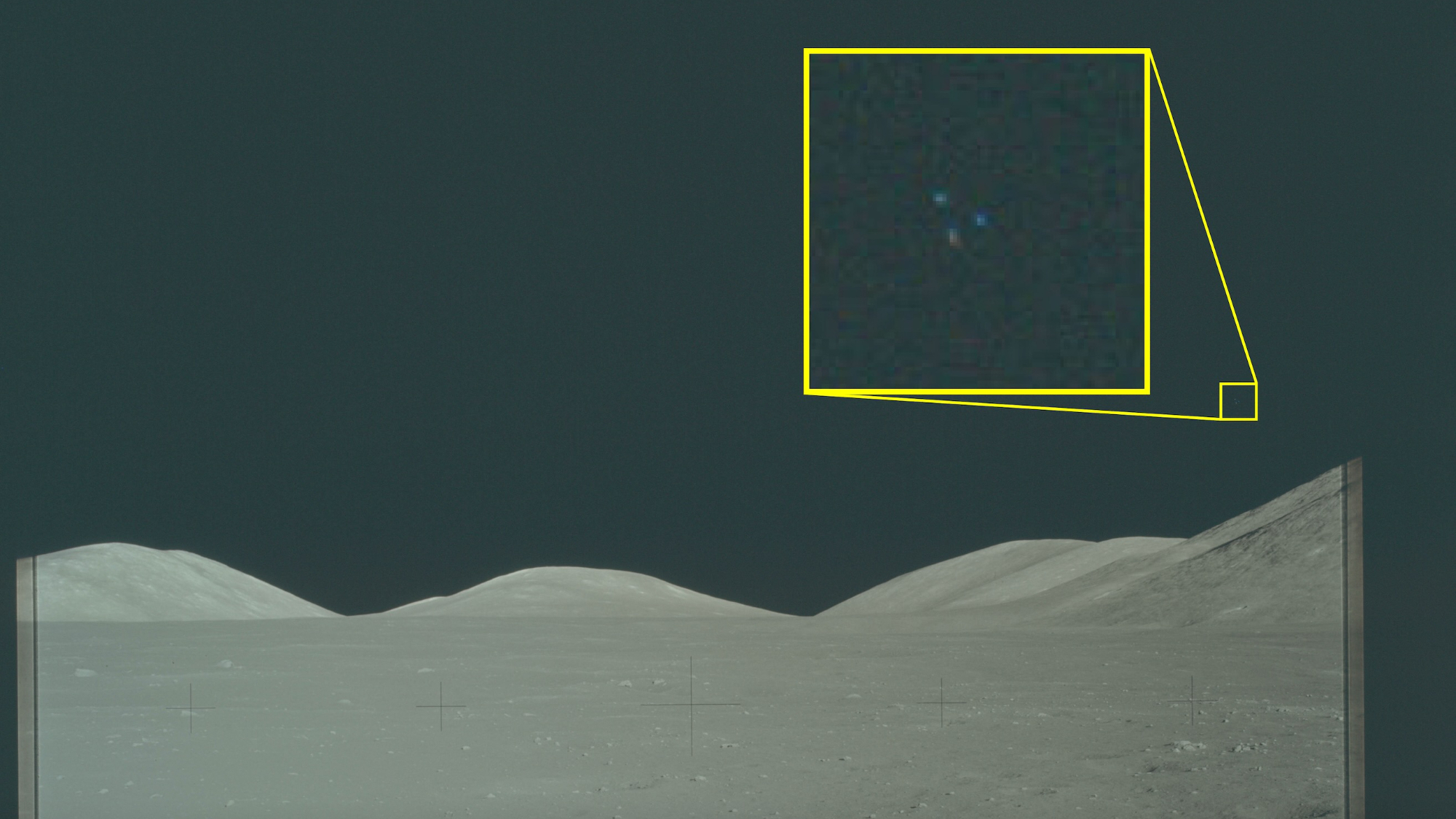
This image captured during NASA’s Apollo 17 moon mission in December 1972 contains three “dots” in a triangular formation in the lower right quadrant of the lunar sky that is clearly visible upon magnification of the image. (Image credit: NASA/DoD)
Earlier this month, the U.S. Department of Defense released what it termed "new, never-before-seen files" on unidentified anomalous phenomena (UAP), tagging it as a historic effort in transparency.
The UAP release came courtesy of the Trump administration's Presidential Unsealing and Reporting System for UAP Encounters, or PURSUE for short.
The posting involves 158 files — documents, photos and videos from NASA, the FBI, Defense Department, and State Department. Additional files are forthcoming, to be issued by the Department of Defense (DoD) "on a rolling basis." In a press statement, DoD Secretary Pete Hegseth remarked that his department is in lockstep with President Trump to bring unparalleled transparency regarding the government's understanding of UAP.
"These files, hidden behind classifications, have long fueled justified speculation — and it's time the American people see it for themselves," Hegseth said.
But just what are we seeing here? Space.com reached out to specialists to unravel what's behind sightings of UAP — or, as they used to be known, unidentified flying objects (UFOs).
WATCH ALL of the UFO Videos Released by the Pentagon
'A useful beginning'
For some, there is a "so what" — maybe a ho-hum — reaction to the UAP data release. Those familiar with UFO records, documents, or even astronaut sightings note that almost all of the "never-before-seen" files have long been known.
"I would view this first tranche as a useful beginning in what I hope becomes regular releases of documents not previously available, well documented sighting investigations and videos that aren't stripped of all necessary information," said Mark Rodeghier, president and scientific director of the J. Allen Hynek Center for UFO Studies.
Many of the FBI and other government files were already available, Rodeghier said, but fewer redactions and centralized access are still valuable.
"They allow researchers to check details more carefully and better reconstruct how official agencies received, evaluated and sometimes simply filed away UFO reports," Rodeghier added.
"Short videos and unresolved case summaries can be intriguing, but without the supporting metadata, investigative history and analysis, they are hard to evaluate," he said. "The real test will be whether future tranches provide complete case files, not just provocative fragments. True transparency means context, not just clips."
"Recent government UAP disclosures have been valuable. They have confirmed that the public and the media regard this phenomenon as a matter of genuine importance," Powell said.
"But redacted files and the absence of credible scientific evaluation are not answers. They are a mandate," said Powell. "Academia and the scientific community can no longer afford to leave this field to institutions that operate in secrecy. The science of UAP must be conducted in the open, by those whose obligation is to the scientific evidence," he said.
Pentagon's UFO chief testifies at Senate hearing
More questions than answers
Also taking on "does it matter and who cares" is Alejandro Rojas, a consultant for Enigma Labs, a group appraising UAP via the use of cutting-edge technology and social intelligence.
"The UAP transparency movement didn't start with this administration," said Rojas. "It's been building in Congress for several years, driven by bipartisan oversight and persistent public pressure. What we're seeing now is the continuation of that effort, not the origin of it," he said.
As for the recent DoD release, "it feels somewhat unfinished," Rojas said. "There are many cases with minimal context, missing sensor data, and little accompanying analysis, as if the priority was getting something out the door rather than something useful."
But imperfect data released publicly, Rojas added, is still more valuable than perfect data sitting in a vault. "Even a messy dataset reveals patterns over time, and every case added to the public record is one more data point researchers and citizens can work with. The question is what comes next, because this release raises more questions than it answers," he said.
Missing: context and data
On the lack of context and data, Rojas said that, for any meaningful scientific analysis, you need more than a grainy infrared clip and a one-paragraph summary.
"These reports are largely missing the basics — coordinates, sensor parameters, altitude, speed confirmation. Many cases appear to have been flagged as UAP simply because there wasn't enough data to identify them, rather than because they exhibited genuinely anomalous behavior," said Rojas.
"That's not a criticism of the release," he added, "it's just the reality of what we're working with. Real analysis requires real data, and hopefully future releases include more of it."
Enigma Labs has built a website offering anyone — researchers, journalists, curious members of the public — the opportunity to search and explore these files as they come out, rather than hunting through a government portal.
"We're also collecting public sighting reports and giving people a community to discuss and analyze what's being released," Rojas added. "The goal is to make this process as open and accessible as possible, because transparency only works if people can actually find and use the information."
'Not alone in the cosmos' - Fmr. Pentagon UFO hunter says US government hides evidence
Real and inexplicable phenomena
For the first time in history, the White House and a number of government agencies "have acknowledged that there is a real and inexplicable phenomena occurring on a global basis that demands attention," said Michael Gold, president of Redwire Space, a space and defense company focused on advanced technologies.
Gold has experience delving into uncanny oddness in the skies. He served on NASA's UAP Independent Study Team that ran from 2022 to 2023. He said he's particularly grateful that the DoD (which the Trump administration has unofficially rebranded the Department of War) and NASA acknowledged that the object in the Apollo 17 imagery was real and unknown.
"The most powerful words in science are 'I don't know,' and I appreciate NASA and the Department of War being modest enough to acknowledge when a good explanation doesn't currently exist," said Gold. "Acknowledging anomalies is the first step to discovery, and is how scientific progress is made."
Gold emphasized that it's important to acknowledge the unprecedented nature of the White House's treatment of UAP. "I would like to compare the White House release to similar actions by prior administrations, but I can't, since there are none," he said.
The Trump administration and the agencies involved, Gold said, "should be applauded for supporting transparency despite what I'm certain were incredible and historic challenges to not just releasing information, but even just treating the UAP issue with the seriousness that it deserves."
Hellfire missile smacks 'UFO' and 'bounces right off,' revealed at US congressional hearing
Beginning, not an ending
In his 2024 testimony before Congress, Gold urged NASA to conduct a review of its archives for UAP.
"Another recommendation I made to Congress and supported by the NASA UAP Independent Study Team was for UAP to be added to NASA's Aviation Safety Reporting System [ASRS]," said Gold.
ASRS provides the U.S. Federal Aviation Administration with confidential data relative to safety anomalies. ASRS has provided the federal government with hundreds of thousands of confidential reports and has successfully operated for years, Gold said.
If UAP were added to the anomalies that ASRS collects, Gold said, every commercial pilot, crew member, and even passengers could act as sensors for UAP, providing a treasure trove of data.
"I hope that more files will be released soon that will show even more definitively anomalous behavior," Gold concluded. "I expect we are at the beginning, not an ending, of a very important moment in the history of science."
RELATED
Have There Been UFO Sightings In Space? | Full Alien UFO UAP Documentary
Rising sea levels are already putting millions at risk of flooding – but a study now warns that land subsidence is making the danger even greater.
Earth's sinking cities are slipping towards sea level at an alarming rate, experts from the Technical University of Munich have warned.
A study showed that subsidence more than doubles the rate of sea level rise for some areas of the coastline.
To make matters worse, researchers say that this affects the largest and most densely populated cities more than anywhere else.
Between rising seas and sinking land, heavily urbanised areas of coast experience a relative sea level increase of about 6mm per year on average.
That is three times more than the global average for relative sea level rise, which stands at 2.1mm per year.
Likewise, land subsidence roughly doubles the absolute sea–level rise of 3.15mm per year, which measures the actual increase in volume and height of the ocean.
Lead researcher Dr Julius Oelsmann, of Technical University of Munich, says that this can 'significantly amplify the effects of climate–driven sea–level rise'.
Scientists have found that land subsidence is doubling the rate at which the water level rises in some of the world's biggest cities, putting millions at risk of flooding. Pictured: Rate of uplift (red) and subsidence (blue) in coastal areas
Jakarta is the world's fastest–sinking city, subsiding at a rate of 13.7mm per year. This puts the megacity's 42 million residents in extreme danger of flooding. Pictured: Flooding in Jakarta following heavy rain in 2024
As the climate gets hotter, melting glaciers and the expansion of warming water are gradually raising the level of the world's oceans.
'If we want to understand sea–level rise along coastlines and respond effectively, we must not only observe the ocean but also the land itself,' Dr Oelsmann says.
This is because a mixture of human activity and natural forces is combining to sink some of the world's biggest cities into the ocean.
The biggest factors driving this subsidence are excessive groundwater and oil extraction, which remove underground resources that previously stabilised the surface.
Dr Oelsmann points out that the 'sheer weight of cities' is also driving urban areas below sea level.
As cities grow larger and taller, heavier buildings are constructed, which compacts the ground beneath and slowly sinks the city relative to its surroundings.
Combined with climate–change–driven sea level increase, urban areas are seeing the waterline rise a lot faster than the rest of the world.
In the UK, the US, and Europe, areas of the coastline are sinking into the sea due to land subsidence. This is leading to a significantly faster rate of relative sea level increase
Earth's sinking cities
Prominent subsidence hot spots include:
Jakarta (–13.7 mm/year)
Tianjin (–13.5 mm/year)
Bangkok (–8.5 mm/year)
Lagos (–6.7 mm/year)
Alexandria (–4 mm/year)
Countries where relative sea levels are rising the fastest include Thailand, Bangladesh, Nigeria, Egypt, China, and Indonesia, where the ocean is getting seven to 10 millimetres higher each year.
The US, the Netherlands, and Italy also experience exceptionally rapid increases, with relative sea levels rising by around four to 5mm per year.
Due to the strong influence of city size, many countries also featured intense 'hot spots' of subsidence.
The 42 million residents of Jakarta, Indonesia, the world's most populous city, are in particular peril as the megacity slips towards the ocean at a rate of 13.7mm per year.
This is closely followed by Tianjin, China, home to 13.8 million people, which is seeing 13.5mm of subsidence per year.
Similarly, Bangkok, Lagos, and Alexandria are all experiencing well above average rates of subsidence with 8.5, 6.7, and 4mm per year, respectively.
Even within cities, the different rates of subsidence meant that one neighbourhood might be falling towards the ocean while others rise out of it.
In Jakarta, for example, some parts of the city are sinking at a staggering 42mm per year, while other regions actually see uplift.
Densely populated urban coastal regions are experiencing around 6mm of relative sea level increase per year (red regions)
This means that millions of people in some of the world's biggest cities are being put at risk of severe flooding.
Even if their homes don't fall completely below sea level, every millimetre of relative sea level increase creates a bigger risk that storms or extreme weather will lead to severe floods.
Studies estimate that nearly half of the city could be inundated and uninhabitable by 2050 if sea levels continue to rise at the current rate.
These dense, urban regions stand in stark contrast to Scandinavia, where natural geological processes are gradually lifting the land out of the sea.
During the last Ice Age, these northern latitudes were weighed down with vast ice sheets that pushed the land into the ocean, much like coast megacities do today.
As these ice sheets have retreated, that weight was removed, and the land masses are still 'rebounding' towards a stable position.
That means, even as absolute sea levels increase, the relative sea level in Finland and Sweden is actually getting lower each year.
Unfortunately for the rest of the world, there are no geological processes to pull cities back out of the water.
However, the researchers point out that proper city planning can dramatically slow the rate of subsidence.
Co–author Professor Florian Seitz, of the Technical University of Munich, says: 'In many large coastal cities, groundwater extraction is a major driver of land subsidence.
'This means that local political and water–management decisions can make a significant difference.'
In Tokyo, Japan, for example, subsidence rates once exceeded 10cm per year, reaching peaks of 24cm per year in the worst areas.
However, through government intervention and the introduction of new water sources, those rates were dramatically reduced.
'Improved groundwater management, stricter regulation of withdrawals, or targeted recharge of aquifers can at least slow subsidence rates and, in some cases, largely halt them,' says Professor Seitz.
Global sea levels could rise as much as 1.2 metres (4 feet) by 2300 even if we meet the 2015 Paris climate goals, scientists have warned.
The long-term change will be driven by a thaw of ice from Greenland to Antarctica that is set to re-draw global coastlines.
Sea level rise threatens cities from Shanghai to London, to low-lying swathes of Florida or Bangladesh, and to entire nations such as the Maldives.
It is vital that we curb emissions as soon as possible to avoid an even greater rise, a German-led team of researchers said in a new report.
By 2300, the report projected that sea levels would gain by 0.7-1.2 metres, even if almost 200 nations fully meet goals under the 2015 Paris Agreement.
Targets set by the accords include cutting greenhouse gas emissions to net zero in the second half of this century.
Ocean levels will rise inexorably because heat-trapping industrial gases already emitted will linger in the atmosphere, melting more ice, it said.
In addition, water naturally expands as it warms above four degrees Celsius (39.2°F).
Every five years of delay beyond 2020 in peaking global emissions would mean an extra 8 inches (20 centimetres) of sea level rise by 2300.
'Sea level is often communicated as a really slow process that you can't do much about ... but the next 30 years really matter,' said lead author Dr Matthias Mengel, of the Potsdam Institute for Climate Impact Research, in Potsdam, Germany.
None of the nearly 200 governments to sign the Paris Accords are on track to meet its pledges.
RELATED VIDEOS
These Cities Are One Disaster Away From Total Collapse
By 2100, These Cities Will Be Underwater - According to Science
Delhi, Mumbai, New York & Mexico City Are Sinking | Reports by NASA-ISRO | Vantage on Firstpost | 4K
Scientists have managed to hatch live chicks from a fully artificial egg – marking a de–extinction breakthrough that paves the way for resurrecting long–dead species.
Experts at Colossal Biosciences, the company planning to bring back the woolly mammoth, have created the first ever shell–less incubation system that mirrors a natural egg 'as much as possible'.
The team were able to take early bird embryos, place them into an artificial shell and incubate them for 18 days while they developed.
Once the chicks were ready, they hatched from their cosy home and are now living happy, healthy lives.
The company said the development marks a critical milestone for their plans to de–extinct the South Island giant moa – an enormous bird that stood at 11.8ft (3.6 metres) tall and weighed 507lbs (230kg).
It also provides a 'stepping stone' for the eventual development of an artificial womb.
Colossal Biosciences said: 'This device changes everything. We're showing the world that we can grow this whole bird in an incubator outside of an eggshell.
'It's a complete game–changer. Life finds a way.'
Experts have created the first ever shell–less incubation system that mirrors a natural egg 'as much as possible'
The artificial egg features a 'window' on the top, allowing for real–time visibility into every stage of embryonic development
The artificial egg device consists of a 3D–printed strong outer shell structured like a lattice to provide protection and rigidity.
Within this layer is a silicone–based membrane that allows oxygen to diffuse into the system.
Over the last 40 years there have been several attempts to create artificial eggs, but they required supplementation with large volumes of pure oxygen which caused DNA damage and impacted long–term animal health.
The permeable membrane of this new design allows oxygen to naturally transfer from the atmosphere into the egg.
This mirrors the real–life process of oxygen entering eggshells through microscopic pores.
'How do we replicate nature but also improve upon it?' Colossal said. 'This is the first time the core engineering problem of artificial eggs has been solved.'
The artificial egg also features a 'window' on the top, allowing for real–time visibility into every stage of embryonic development.
Colossal said its device is compatible with standard commercial incubators, is manufacturable at scale and is adaptable to eggs at any size.
One of the chicks emerging from its artificial egg. Colossal said it marks a de–extinction breakthrough that paves the way for resurrecting long–dead species
Once the chicks were ready, they hatched from their cosy home and are now living happy, healthy lives
The artificial egg
Strong outer shell provides protection and rigidity
Inside this is a permeable membrane which allows oxygen to diffuse into the system
'Window' on the top allows real–time visibility into every stage of embryonic development
To begin the process, experts collected real chicken eggs right after they had been laid.
An embryology team thoroughly examined each egg and selected the embryos that looked most likely to hatch.
They then cracked the egg open very gently and transferred the contents into the artificial egg, which was then placed in an incubator.
Scientists 'sprinkled' in a nutrient that helped the embryo continue to develop. Roughly 18 days later the chick started tapping against the egg to indicate it was ready to hatch.
After hatching, all chicks were put in groups and eventually moved to a 'graduation pen' outside before being relocated to a large farm.
Colossal said its design could also benefit endangered animals at a time when more than half of bird species are in decline.
'Imagine a future where we have hundreds or thousands of eggs in laboratories growing critically endangered species,' it said.
'These are the stepping stones that an artificial womb will be built on.'
The device consists of a 3D–printed strong outer shell structured like a lattice to provide protection and rigidity
Colossal said its device is compatible with standard commercial incubators, is manufacturable at scale and is adaptable to eggs at any size
How the artificial egg was used to hatch a live chick
Collect real chicken eggs right after they have been laid
Embryology team thoroughly examine each egg and select those that look most likely to hatch
Crack the egg open very gently and transfer the contents into the artificial egg
Artificial egg is placed in incubator. Scientists 'sprinkle' in a nutrient that helps the embryos continue to develop
18 days later the chick starts tapping against the egg to indicate it is ready to hatch
Chicks put in groups and eventually move to a 'graduation pen' outside before being relocated to a large farm
The company said its plan to bring back the South Island giant moa has presented an incubation challenge unlike any other species in their portfolio.
Moa eggs are estimated to have been approximately 80 times the volume of a chicken egg and roughly eight times the volume of an emu egg, placing them entirely beyond the capacity of any available avian surrogate.
No living bird is large enough to serve as a host. A size–scaled artificial egg, therefore, is critical for the de–extinction of this species.
Colossal Biosciences will use genes extracted from moa bones to engineer modern birds until they very closely resemble the extinct species, which disappeared from New Zealand roughly 500 to 600 years ago.
This is the same technique that was used to transform grey wolves into animals closely resembling dire wolves.
The edited embryos will then be placed into an artificial egg to develop and eventually hatch.
'We've created a novel shell–less culture system that is fully scalable and biologically accurate,' said Professor Andrew Pask, chief biology officer at Colossal. 'It's a new system designed for long–term, healthy avian embryo development.
'The genome is the blueprint, but without a place to build, it's meaningless. The artificial egg gives us that platform: controlled, scalable, and completely independent of a surrogate.'
The company said the development marks a critical milestone for their plans to de–extinct New Zealand's South Island giant moa – an enormous bird that stood at 3.6 metres (11.8ft) tall and weighed 230kg (507lbs)
The moa went extinct in the 15th century due to hunting and forest clearing by the first Māori settlers. Colossal Biosciences said restoring this megafauna species will help restore New Zealand's ecosystem
Some outside experts have cautioned that there is no published scientific paper along the announcement, which limits scientific scrutiny. However, others hailed the advance as an 'impressive act of bioengineering'.
Carles Lalueza–Fox, director of the Museum of Natural Sciences of Barcelona and a specialist in DNA recovery techniques, said: 'Colossal has succeeded in developing an artificial egg, something for which there are no comparable precedents.
'The most significant breakthrough lies in the permeability of the membrane, which allows gases (oxygen and carbon dioxide) to pass through.'
Alongside the moa, he said the device could be used to de–extinct other birds such as the Carolina parakeet.
Dusko Ilic, Professor of Stem Cell Sciences at King's College London, said: 'Recreating an extinct species such as the moa would require far more than an incubation platform, including accurate genome reconstruction, appropriate development, physiology, behaviour, welfare and ecological context.
'Even then, the result would likely be an engineered proxy rather than a true restoration of the extinct species.
'The most credible translational value may therefore lie in applications such as embryo rescue, endangered bird conservation and controlled generation of genome–edited avian lines, particularly if it proves reproducible, scalable and compatible with normal long–term health, rather than in de–extinction itself.'
Inside the ambitious plan to 'de–extinct the Dodo': How scientists are using stem cell technology to bring back the extinct species
It's one of the most famous extinct animals of all time, ruthlessly hunted to extinction by humans in just a few decades.
US startup Colossal Biosciences, based in Dallas, Texas, is using stem cell technology and genome editing to create a modern approximation of the species.
At a cost of over $225 million (£180 million), it is 'de–extincting' the dodo more than 350 years after it was wiped out from Mauritius by European explorers.
Scientists have already achieved the monumental feat of sequencing the full genome of the extinct species, from bone specimens and other fragments.
The next step is to gene–edit the skin cell of a close living relative, which in the dodo's case is the Nicobar pigeon, so that its genome matches that of the extinct bird.
RELATED VIDEOS
How Scientists Are Bringing Extinct Animals Back to Life | FULL DOCUMENTARY
Bringing the Dodo Back From Extinction
Top DNA Geneticists are Building REAL Jurassic Park by 2030 | Forrest Galante
Trump posts mysterious AI images featuring an Alien and Cosmic War
An unusual post, shared by US President Donald Trump on his social media accountTruthSocialand reposted by Donald J Trump Posts TruthSocial , appeared to show an gray humanoid alien in handcuffs being escorted beside the President and his security personnel. No explanation was provided regarding the purpose or meaning of the AI-generated image.
Many believe the post may be referencing the recent release of UFO-related files connected to the US Department of Defense, commonly known as the Pentagon UFO disclosures.
One day the public is told that members of Congress have witnessed things during classified briefings that they cannot openly describe, and the next day the President is sharing an image of himself walking beside an alien figure. It blurs the line between entertainment, speculation, and a subject many people believe deserves serious attention.
Like the Pentagon UFO files themselves, this AI-generated image does not represent true disclosure. To many observers, it feels more like political theater surrounding one of the biggest questions in human history. If there is genuine truth behind the UFO phenomenon, the public deserves transparency and seriousness rather than symbolism and viral spectacle.
For decades, UFO sightings, encounters, and unexplained reports have often been mixed with media sensationalism, distraction campaigns, or psychological narratives. Some even speculate that imagery like this could be preparing the public for future narratives involving staged extraterrestrial scenarios or a so-called “fake alien invasion.”
Those theories intensified further after another images posted on Trump’s Truth Social account appeared to depict a large-scale space conflict connected to the US “Space Force.”
Such images are rarely posted without purpose, they often carry a deeper message, one we may soon begin to understand.
RELATED VIDEOS
Donald Trump posting an AI-generated image of himself standing alongside a handcuffed alien
Trump Posts AI Image of Himself Firing Missiles From Space | The View
Donald Trump’s ‘Alien In Chains’ Post Sparks WILD UFO Conspiracy Frenzy | WATCH
VIRAL | Trump walks with ‘CAPTURED ALIEN IN CHAINS' In Truth Social post, Netizens react: ‘The abs’
The second phase of the Trump Administration's UFO disclosure is underway, with officials saying the next batch of files is expected to be released 'very soon.'
Chief Pentagonspokesperson Sean Parnell announced Monday on X that the materials are currently 'actively being processed' for publication.
The first release, published on May 8, included never-before-seen photos, videos and government documents tied to unidentified anomalous phenomena, also known as UAPs.
Lawmakers previously noted that the initial disclosure was only the beginning, teasing that far more explosive material remained hidden from the public.
Tennessee Representative Tim Burchett, one of Congress’ most outspoken advocates for UFO transparency, fueled speculation after the May 8 release by claiming: 'The 1st drop will be big, but in comparison to what is coming, they will be a drop in the bucket.'
'I would say "Holy Crap" is coming,' Burchett added.
The surreal image, shared on Trump’s Truth Social account, showed the president and his security detail escorting the extraterrestrial figure across the tarmac while armed military personnel looked on.
The President and bodyguards flank the handcuffed extraterrestrial at a US military base, in the image posted on Truth Social Sunday
News of the second release flooded social media, where one user said: 'Finally! The government's processing UFOs faster than my laptop processes a software update.
'Either we're getting disclosure or the world's longest episode of coming soon. Either way, grab your tinfoil hat, things are getting interesting.'
Others, however, are not sold on the notion that the files will be released soon.
One X use posted: 'The phrase "actively being processed" is classic government doublespeak, suggesting momentum while committing to absolutely nothing, keeping the UFO hype alive without releasing a single page.
'It's the perfect way to acknowledge public curiosity without ever having to deliver, turning transparency into an endless process rather than an event.'
Burchett also made similar statements in a video posted on Monday, suggesting the files could be withheld.
'The problem we have right now is that the Deep State's fighting a president on release. And he kept his word,' he told Morell Media.
'I suspect some of our not-so-friendly comrades in some alphabet agencies are slow-walking a lot of information. It's about power, it's about control. That's kind of what runs Washington.'
Above the horizon of the lunar surface, as viewed from the landing site of Apollo 12 in 1969, an area of interest points to unidentified phenomena. This image was released on May 8
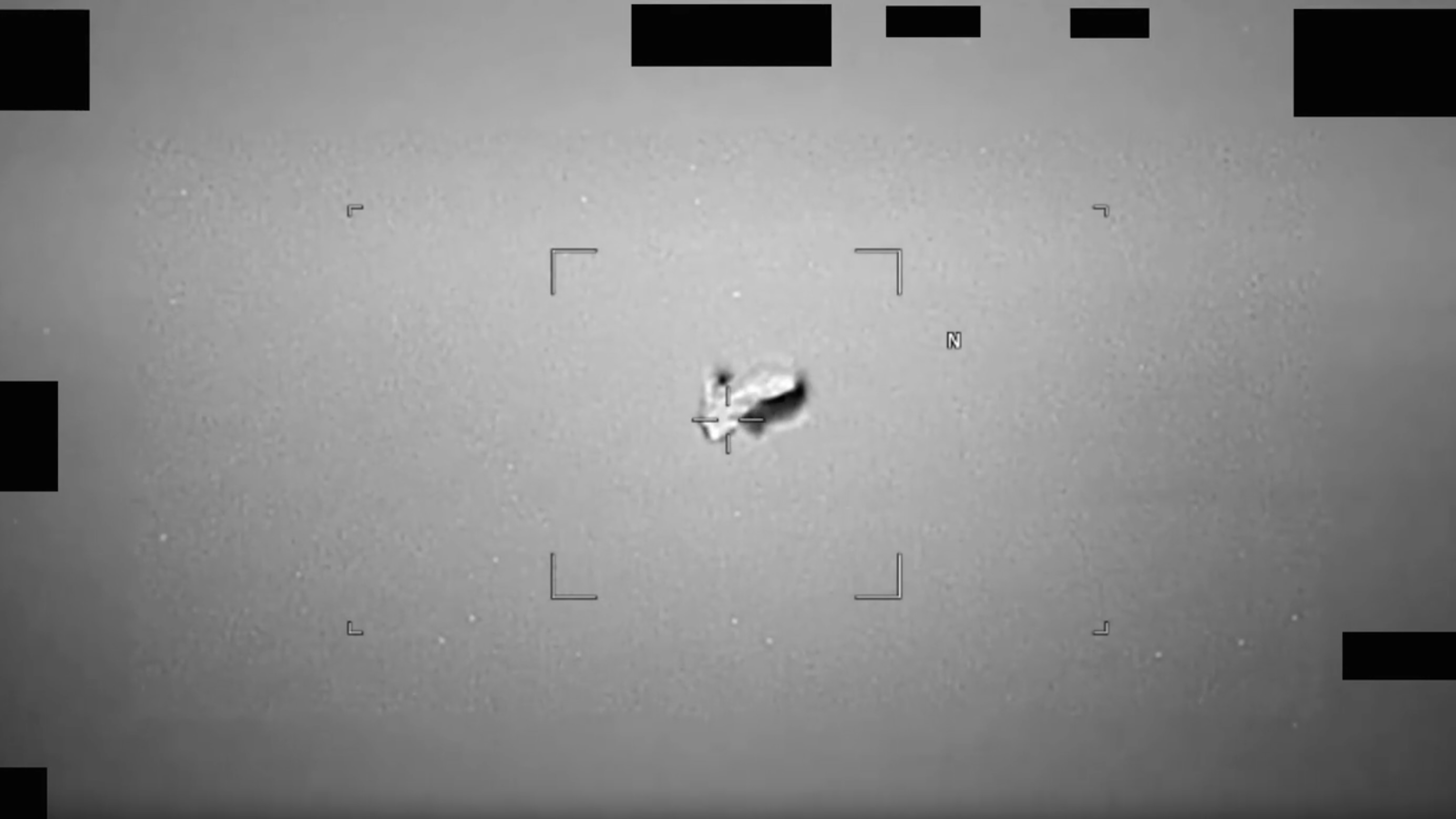
A reported sighting of a UAP in Japan, resembling a football, from a 2024 US military video. This image was released on May 8
The release of the first batch was teased the evening of May 7 by Florida Representative Anna Paulina Luna, who posted cryptic messages suggesting it would happen the next day at 8am ET.
The documents were made public months after the President ordered the Secretary of War, Pete Hegseth, to declassify government records related to UFOs and alleged extraterrestrial activity.
Among the most striking materials were images and transcripts linked to NASA's Apollo 12 and Apollo 17 missions. One photo taken from the lunar surface appears to show three unexplained dots hovering in the dark sky above the moon.
The disclosure also included FBI images from New Year's Eve 1999 that appear to show unidentified objects near US military aircraft, along with photographs captured by military pilots allegedly showing fast-moving objects streaking past planes mid-flight.
A bizarre glowing object resembling an 'eight-pointed star' streaking across the sky was among the most chilling videos released in Friday's bombshell UFO disclosure.
The eerie infrared footage, captured by US military personnel in 2013, appears to show something darting through the darkness with uneven, shape-shifting arms.
Interest surrounding the disclosures intensified after Luna, chair of the House Oversight Task Force on Declassification, previously said dozens of military UFO videos remained hidden from the public.
One image released in the first batch appeared to show a bright circular object within a military targeting reticle, although officials said the description should not be interpreted as confirmation of the object's nature or significance
Luna had requested the release of 46 classified UAP videos earlier this year, including footage allegedly captured near military bases, war zones and restricted airspace.
The Pentagon missed an April deadline to release the materials, later attributing the delay to what officials described as a clerical issue.
Officials have not confirmed whether the second phase will include additional videos, radar data, pilot testimony or classified intelligence assessments.
RELATED VIDEOS
🔴LIVE | Top Shocking UFO Videos Disclosed by Donald Trump!
LIVE: Trump Admin Drops Bombshell UFO Files! Shocking Alien Evidence Testimony Revealed RIGHT NOW
UFO Files LIVE: 6-Feet Big UFO Landed in Philadelphia, Trump Releases Shocking 170 Alien Files
For almost a decade, scientists have been baffled by a series of mysterious blue flashes emerging from deep space.
Since the first lit up astronomers' telescopes in 2018, only 14 of these strange pulses have been detected, making them some of the rarest astronomical events on record.
Now, a group of scientists think their origin lies in the unlikely collision between a black hole and an ultra–hot sun.
LFBOTs come and go astonishingly fast, reaching their dazzling peak and fading into oblivion over days compared to the weeks or months of most stellar explosions.
Strangely, they also maintain their unique blue glow over the entire course of their brief display, which suggests they must be extremely hot the whole time.
Lead author of a new paper investigating these flashes, Dr Anya Nugent, from Harvard & Smithsonian, says this makes them 'unlike anything we have observed before'.
However, Dr Nugent now believes that LFBOTs' origins are just as violent, unusual, and unlikely as their spectacular effects.
Scientists have been baffled by mysterious blue flashes emerging from distant galaxies for almost a decade. Now, researchers say they could be caused by black holes hitting bright stars. Pictured: A blue flash coming from AT 2024wpp, a galaxy 1.1 billion light–years from Earth
In their pre–print paper, Dr Nugent and her co–authors examine the kinds of galaxies that the few confirmed blue flashes have been seen in.
By measuring the rates of star formation, mass, and levels of metallic elements in these galaxies, the researchers paint a picture of how LFBOTs might form.
This data suggests that they could be caused by ultra–dense objects like black holes or neutron stars colliding with an exceptionally bright sun called a Wolf–Rayet star.
Wolf–Rayet stars begin their lives as one part of a binary star system, in which two stellar giants orbit around a central point.
As these stars creep closer together, the larger of the two starts to feast on its neighbour's outer layers.
If they are just the right size, the 'donor' star's outer hydrogen layer is stripped away without destroying it completely, leaving the bright helium core known as a Wolf–Rayet star.
At the same time, the cannibal grows so fat on hydrogen stolen from the donor that it collapses under its own enormous bulk.
The star collapses inwards and detonates in a supernova explosion that leaves behind a stellar remnant, in the form of a black hole or neutron star.
Known as Luminous Fast Blue Optical Transients (LFBOTs), these lights burn faster and up to 100 times brighter than anything else scientists have seen (artist's impression)
Scientists now say that LFBOTs may emerge from Wolf–Rayet stars, a massive class of stars that form when a black hole strips away the sun's outer hydrogen layer. Pictured: A Wolf–Rayet star 15,000 light–years from Earth that is 30 times the mass of the sun
What are Luminous Fast Blue Optical Transients?
Luminous Fast Blue Optical Transients (LFBOTs) are among the strangest and rarest phenomena in the universe.
They appear as exceptionally bright flashes of light that reach a peak and fade within a matter of days.
At their brightest, they can be over 100 times more powerful than the biggest known stellar explosions.
Although they are mainly blue, their emitted light also contains ultraviolet, infrared, X–ray, and radio wave radiation.
Since they are so rare and fleeting, scientists have a very hard time trying to understand what might be causing them.
That black hole continues to feed on its neighbour until, over hundreds of thousands of years, it falls into the stellar core and destroys it, triggering an LFBOT.
Co–author Professor Brian Metzger, of Columbia University, told the Daily Mail: 'When the compact object plunges into the Wolf–Rayet star, it can rapidly accrete the stellar [material] and release a huge amount of gravitational energy.
'Some of that energy drives powerful outflows or jets, which then collide with material around the star.
'That interaction can produce a very hot, bright flash of light on a short timescale.'
Wolf–Rayet stars are ideal candidates for producing LFBOTs for a few critical reasons.
First, the light from LFBOTs doesn't show the telltale signature of elemental hydrogen, which suggests they should come from stars that have lost their hydrogen layer.
Wolf–Rayet stars are also massive and dense, which allows the black hole to feed as fast as possible and produce a colossal burst of light.
Finally, Professor Metzger adds: 'They can also have dense material around them from earlier episodes of mass loss, which gives the explosion something to crash into and helps power the observed emission.'
When a black hole falls into its neighbouring Wolf–Rayet star, the destruction releases a massive burst of energy which briefly appears as LFBOT, such as this one spotted by NASA in 2023
Previously, scientists had thought that the bright surge of light could either come from an unusual type of supernova explosion or from a large star being torn apart by gravitational forces.
However, the LFBOTs that scientists have seen don't come from galaxies where either of these would be likely.
These galaxies either tend to have a rate of new star formation that is either too fast or too slow to fit with known types of supernovae.
Additionally, the black hole collision theory also helps to solve the biggest mystery surrounding these blue flashes.
LFBOTs are often found in the very outer reaches of their host galaxies, far away from the densely packed galactic centre.
For example, one flash was spotted breaking out from a region some 55,000 light–years away from its galaxy's core.
Another known as 'The Finch', found by NASA in 2023, was spotted on its own more than 50,000 light–years from the nearest spiral galaxy.
This is extremely unusual because, if they are being triggered by stars, you would expect to see them more often in regions where stars are the most tightly packed.
Scientists had thought that the bright surge of light could come from an unusual type of supernova explosion, but the galaxies where LFBOTs are found don't match those where these explosions are likely
Dr Nugent says: 'We think it's because their progenitors must have received a "kick" to push them out of their birthsite and away from these regions in their host galaxies.
'Stars can get strong kicks from supernova explosions, and if LFBOTs do indeed come from compact object–Wolf–Rayet star mergers, it is more than likely that the star that created the compact object underwent a supernova that gave the binary system the kick.'
The researchers admit that, since the number of LFBOTs is still so small, this is far from a 'closed case'.
Many more observations will be needed before scientists can be absolutely certain what is triggering these bizarre explosions.
However, they expect that the Vera C. Rubin Observatory and its newly started decade–long Legacy Survey of Space and Time should help provide those answers.
Black holes are so dense and their gravitational pull is so strong that no form of radiation can escape them - not even light.
They act as intense sources of gravity which hoover up dust and gas around them. Their intense gravitational pull is thought to be what stars in galaxies orbit around.
How they are formed is still poorly understood. Astronomers believe they may form when a large cloud of gas up to 100,000 times bigger than the sun, collapses into a black hole.
Many of these black hole seeds then merge to form much larger supermassive black holes, which are found at the centre of every known massive galaxy.
Alternatively, a supermassive black hole seed could come from a giant star, about 100 times the sun's mass, that ultimately forms into a black hole after it runs out of fuel and collapses.
When these giant stars die, they also go 'supernova', a huge explosion that expels the matter from the outer layers of the star into deep space.
RELATED VIDEOS
🚨 Scientists Are Baffled: Strange Signals Keep Coming From Deep Space!
Mysterious Blue Flashes From Deep Space Leave Scientists Completely Stunned
Unraveling the Mystery of Bright Blue Flashes from Space
An enormous asteroid with the potential to destroy an entire city will skim past Earth this evening.
Astronomers say the space rock, called 2026 JH2, is up to four times the size of a London bus and will get 'as close as you can without hitting'.
It is expected to zoom by our planet at an estimated distance of around 56,000 miles (90,000km) at 10:23pm BST.
This is exceptionally close – the equivalent of just a quarter of the distance between us and the moon.
Estimates place the size of the space rock between 52 and 115ft (16 and 35 metres) in diameter, and it is racing towards Earth at around 20,000mph (32,000 kmph).
Despite having enough mass to wipe out a city, simulations suggest there is no chance of impact for at least the next 100 years.
While it will be too faint to see with the naked eye, it may be visible through amateur telescopes under dark sky conditions. But for those without access to stargazing equipment, you can still watch the unusually close encounter.
Astronomers in Italy will be sharing a livestream of the flyby, recorded through a telescope, on The Virtual Telescope Project's YouTube channel. The broadcast will start at 8:45pm BST.
This illustration shows the orbit of asteroid 2026 JH2 (grey) relative to Earth's orbit (light blue). Its oval–shaped orbit takes it nearly as far out as Jupiter
Thankfully, simulations suggest there is no chance of an impact for at least the next 100 years (stock image)
People in the UK will have the best chance of spotting asteroid 2026 JH2 from dark–sky locations with a clear northern horizon.
Around closest approach, it should be moving through the region of Ursa Major, fairly high in the sky.
Binoculars probably won't be good enough unless they are very large. However, it should be visible with small telescopes.
It will look like a faint moving dot, rather than a dramatic streak.
The asteroid was first discovered on May 10 by astronomers at the Mount Lemmon Observatory near Tucson in Arizona.
Data suggests it likely circles the sun every 3.7 years on an oval–shaped orbit that takes it nearly as far out as Jupiter.
The size of the asteroid is an estimate based on the amount of light reflecting off its surface, which means that measurements cannot be entirely certain.
If the asteroid is made of a particularly dark or unreflective material, then it could be nearer to the higher end of the estimate range or potentially even larger.
2026 JH2 is expected to zoom by our planet at an estimated distance of around 56,000 miles (90,000km) tonight
Estimated to be between 16 and 35 metres (52 to 115ft) across, 2026 JH2 is a similar size to the 20–metre Chelyabinsk meteor (pictured), which exploded with 30 times the energy of the atomic bomb dropped on Hiroshima
Asteroid 2026 JH2
Estimated size:16 to 35 metres (52 to 115ft) in diameter
Closest pass to Earth: 56,000 miles (90,000km)
Time of closest pass:May 18th 10:23pm (BST)
Risk of hitting Earth: None
How to watch live: Astronomers will be sharing a livestream of the flyby, recorded through a telescope, on The Virtual Telescope Project's YouTube channel. The broadcast will start at 8:45pm BST.
However, even at the lower end of its estimated range, the asteroid still carries a huge destructive potential.
'It's the kind of thing that would ruin a city quite efficiently, if it hit,' Mark Norris, from the University of Lancashire, told New Scientist.
Experts say if 2026 JH2 did strike Earth, it would cause an event comparable to the Chelyabinsk meteor.
In 2013, an 18–metre (59ft) meteor exploded over the city of Chelyabinsk in Russia, near the border with Kazakhstan.
The resulting explosion was 30 times more powerful than the atomic bomb dropped on Hiroshima, producing a shockwave that travelled twice around the world.
Directly beneath the explosion, 28 miles (45km) above the ground, the heat was so intense that people were left with burns and retinal damage.
Around 1,500 people were injured and over 3,600 homes were damaged, even though only 0.05 per cent of the original rock made it to the ground.
With a potential size up to 35 metres (115ft) in diameter, 2026 JH2 has the potential to be even more destructive – possibly even ranking it as a 'city killer' size asteroid.
However, although the asteroid will pass extremely close to the planet, it poses no threat whatsoever to Earth.
Thanks to careful study by the network of planetary defence telescopes, astronomers are able to make very precise calculations of asteroids' orbits
The next sizable space rock that will get this close to Earth will likely be the 'God of Chaos' asteroid, 99942 Apophis, which will fly within 20,000 miles (32,000 km) of Earth on April 13, 2029.
After Apophis, the next major flyby will be from 2024 YR4, also known as the 'city killer' asteroid, which will zoom past the moon at a minimum distance of around 13,200 miles (21,200 km) in 2032.
POTENTIAL METHODS FOR ELIMINATING THE THREAT OF AN ASTEROID
DART is one of many concepts of how to negate the threat of an asteroid that have been suggested over the years.
Multiple bumps
Scientists in California have been firing projectiles at meteorites to simulate the best methods of altering the course of an asteroid so that it wouldn't hit Earth.
According to the results so far, an asteroid like Bennu that is rich in carbon could need several small bumps to charge its course.
'These results indicate multiple successive impacts may be required to deflect rather than disrupt asteroids, particularly carbonaceous asteroids,' researchers said.
Nuke
Another idea, known simply as 'nuke', involves blowing up a nuclear explosive close to the asteroid.
However, this could create smaller but still potentially dangerous fragments of rock that could spin off in all directions, potentially towards Earth.
Ion Beam Deflection
With Ion Beam Deflection, plumes from a space probe's thrusters would be directed towards the asteroid to gently push on its surface over a wide area.
A thruster firing in the opposite direction would be needed to keep the spacecraft at a constant distance from the asteroid.
Gravity tractor
And yet another concept, gravity tractor, would deflect the asteroid without physically contacting it, but instead by using only its gravitational field to transmit a required impulse.
Professor Colin Snodgrass, an astronomer at the University of Edinburgh said: 'There have been a few concepts suggested, such as a 'gravity tractor' to slowly tow an asteroid away instead of pushing it with a kinetic impactor.
'But the kinetic impactor is definitely the simplest technology to use on the sort of timescale that is most likely to be of concern for this size of asteroid, i.e. years to decades warning time.'
RELATED
A “City Killer” Asteroid Is Heading Back Toward Earth… Here’s What NASA Says
City-Killer Asteroid Passes Earth Monday — Could Consequences Be More Terrifying Than We Think?
Meer van UFO'S of UAP'S, ASTRONOMIE, RUIMTEVAART, ARCHEOLOGIE, OUDHEIDKUNDE, SF-SNUFJES EN ANDERE ESOTERISCHE WETENSCHAPPEN - DE ALLERLAATSTE NIEUWTJES


 How a 4,000-year-old city defied history's 'rules' by becoming more equal as it became more successful