Ontdek de Fascinerende Wereld van UFO's en UAP's: Jouw Bron voor Onthullende Informatie!
Ben jij ook gefascineerd door het onbekende? Wil je meer weten over UFO's en UAP's, niet alleen in België, maar over de hele wereld? Dan ben je op de juiste plek!
België: Het Kloppend Hart van UFO-onderzoek
In België is BUFON (Belgisch UFO-Netwerk) dé autoriteit op het gebied van UFO-onderzoek. Voor betrouwbare en objectieve informatie over deze intrigerende fenomenen, bezoek je zeker onze Facebook-pagina en deze blog. Maar dat is nog niet alles! Ontdek ook het Belgisch UFO-meldpunt en Caelestia, twee organisaties die diepgaand onderzoek verrichten, al zijn ze soms kritisch of sceptisch.
Nederland: Een Schat aan Informatie
Voor onze Nederlandse buren is er de schitterende website www.ufowijzer.nl, beheerd door Paul Harmans. Deze site biedt een schat aan informatie en artikelen die je niet wilt missen!
Internationaal: MUFON - De Wereldwijde Autoriteit
Neem ook een kijkje bij MUFON (Mutual UFO Network Inc.), een gerenommeerde Amerikaanse UFO-vereniging met afdelingen in de VS en wereldwijd. MUFON is toegewijd aan de wetenschappelijke en analytische studie van het UFO-fenomeen, en hun maandelijkse tijdschrift, The MUFON UFO-Journal, is een must-read voor elke UFO-enthousiasteling. Bezoek hun website op www.mufon.com voor meer informatie.
Samenwerking en Toekomstvisie
Sinds 1 februari 2020 is Pieter niet alleen ex-president van BUFON, maar ook de voormalige nationale directeur van MUFON in Vlaanderen en Nederland. Dit creëert een sterke samenwerking met de Franse MUFON Reseau MUFON/EUROP, wat ons in staat stelt om nog meer waardevolle inzichten te delen.
Let op: Nepprofielen en Nieuwe Groeperingen
Pas op voor een nieuwe groepering die zich ook BUFON noemt, maar geen enkele connectie heeft met onze gevestigde organisatie. Hoewel zij de naam geregistreerd hebben, kunnen ze het rijke verleden en de expertise van onze groep niet evenaren. We wensen hen veel succes, maar we blijven de autoriteit in UFO-onderzoek!
Blijf Op De Hoogte!
Wil jij de laatste nieuwtjes over UFO's, ruimtevaart, archeologie, en meer? Volg ons dan en duik samen met ons in de fascinerende wereld van het onbekende! Sluit je aan bij de gemeenschap van nieuwsgierige geesten die net als jij verlangen naar antwoorden en avonturen in de sterren!
Heb je vragen of wil je meer weten? Aarzel dan niet om contact met ons op te nemen! Samen ontrafelen we het mysterie van de lucht en daarbuiten.
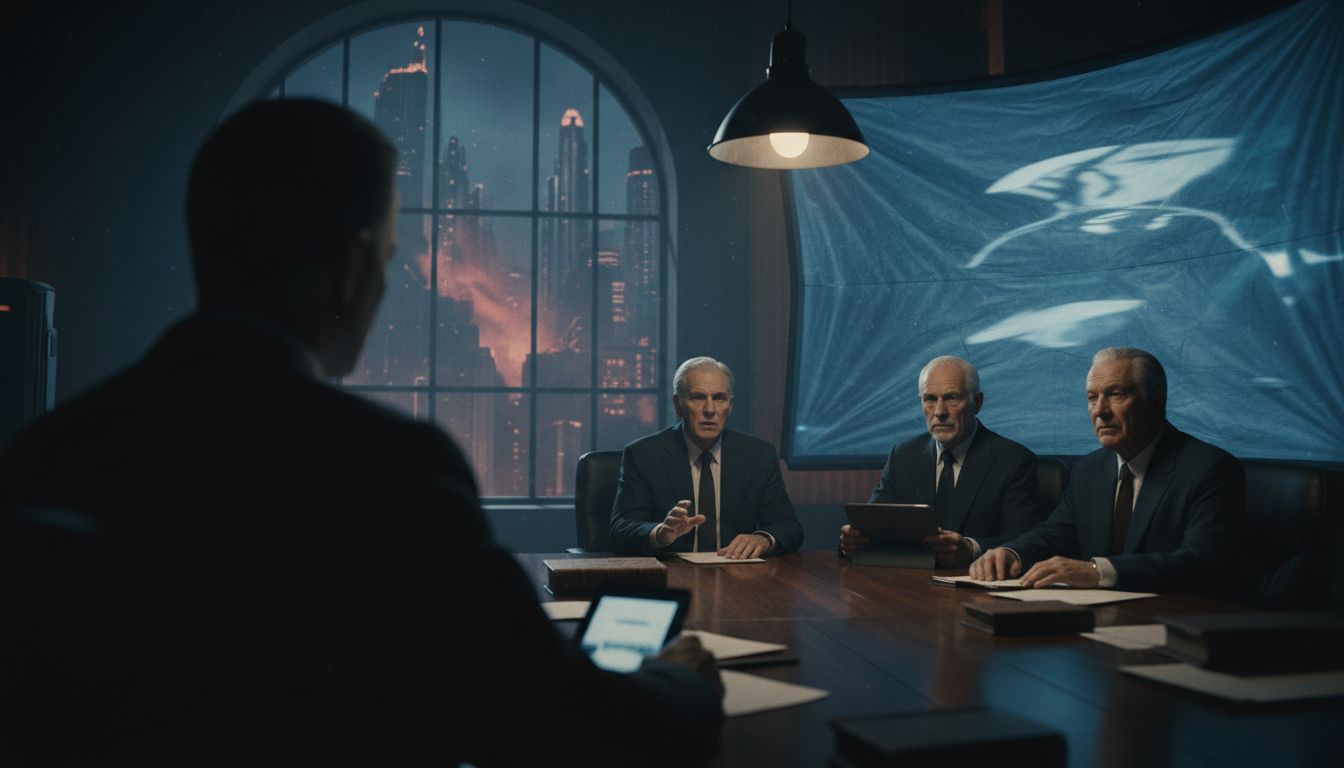
Government Insiders Share a Dire Message About UFOs in 'The Age of Disclosure' Sneak Peek [Exclusive] - Collider
The streaming platform Prime Video is set to release a documentary titled *The Age of Disclosure* later this year, and a Collider exclusive preview reveals that the film will feature a group of former government officials warning that the forthcoming public release of UFO and unidentified aerial phenomena (UAP) data could have “profound security and societal implications.” In the brief footage shown, the insiders describe the situation as “dire,” suggesting that evidence long hidden from the public—and potential threats associated with advanced aerial technologies—are finally being brought to light.
The documentary’s participants include a retired Pentagon analyst, a former senior official from the Office of the Director of National Intelligence, and a whistle‑blower who worked on the UAP Task Force. While the preview does not disclose their names, each speaks in measured terms about the depth of the classified material they encountered. One source, who asked to remain anonymous for fear of retaliation, said, “We have been tracking objects that demonstrate flight capabilities well beyond any known platform, and the implications for national security are not just speculative.” Another former intelligence officer warned that “the public narrative, if not carefully managed, could cause widespread panic and erode trust in our institutions.”
The timing of the documentary aligns with a series of recent developments that have moved UAPs from the fringe to the mainstream of national‑security discourse. In 2023, the Office of the Director of National Intelligence released a 144‑page report acknowledging 144 incidents of unidentified aerial phenomena, many of which remained unexplained. Congressional hearings in 2024 led to the establishment of a permanent UAP oversight committee, and the Department of Defense declassified several infrared videos of “unidentified aerial objects” that exhibited hypersonic speeds and abrupt maneuvering. These steps have spurred a surge in public interest, but they have also raised questions about how much information will be released and what safeguards will be put in place.
Experts outside the government caution that the stakes are indeed high. Dr. Michael S. Griffin, a former director of the National Aeronautics and Space Administration’s (NASA) UAP research program, told *The Washington Post* that “any disclosure must balance transparency with the need to protect sensitive technology and avoid giving adversaries a playbook.” Security analysts echo this sentiment, noting that some of the observed phenomena could represent foreign hypersonic weapons or experimental platforms that, if disclosed, would reveal capabilities of both the United States and potential rivals. The insiders featured in *The Age of Disclosure* argue that the current “information vacuum” is more dangerous than a controlled release, because speculation fills the void with misinformation.
While the documentary promises to present “never‑before‑seen footage” and “first‑hand accounts” from those who worked inside the system, the preview also hints at a broader narrative about how governments worldwide have handled the phenomenon. The film reportedly examines case studies from the 1950s Project Blue Book to the modern UAP Task Force, drawing parallels between past secrecy and present-day challenges. By framing the upcoming disclosure as a pivotal moment, the filmmakers appear intent on prompting a public conversation about accountability, scientific inquiry, and the need for a coordinated international response.
As the release date approaches, policymakers, scholars, and the general public will be watching closely to see whether *The Age of Disclosure* can bridge the gap between classified knowledge and open dialogue. Whether the documentary’s “dire” warning translates into concrete policy changes remains uncertain, but the convergence of media attention, legislative momentum, and insider testimony suggests that the UAP conversation is moving from the periphery of defense briefings to the center of public discourse.
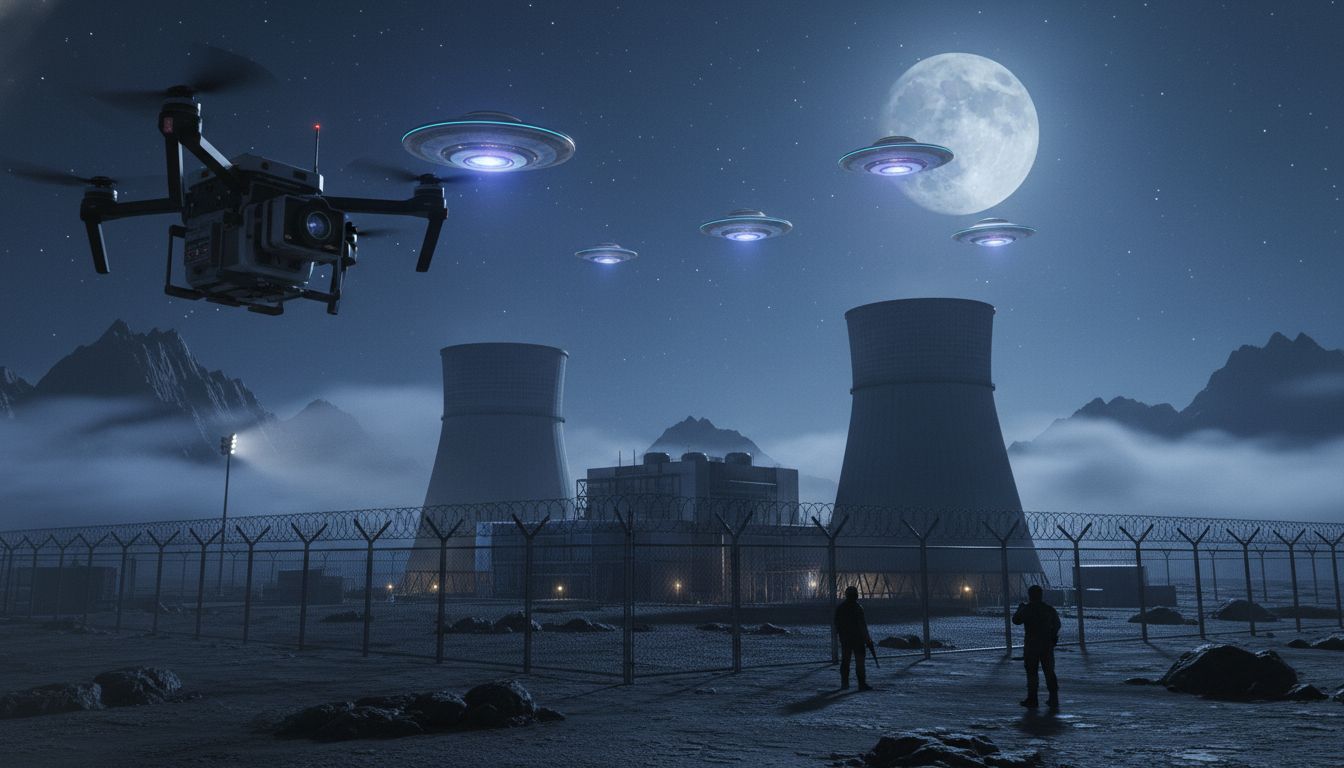
UFO Activity Near Nuclear Sites Gains Peer-Reviewed Validation - Ancient Origins
Recent peer‑reviewed research has added a measure of scientific rigor to a phenomenon that has long hovered on the fringe of mainstream discourse: the repeated observation of unidentified aerial phenomena (UAP) in the vicinity of nuclear facilities. The study, which appeared in a respected interdisciplinary journal earlier this month, systematically catalogues more than two dozen documented incidents spanning the United States, Europe, and Asia. Its authors argue that the concentration of sightings near power plants, enrichment sites, and weapons depots is statistically significant and merits focused investigation by both civilian and governmental bodies.
The research team, led by Dr. Elena Martínez of the Institute for Aeronautical Studies, compiled data from declassified government reports, eyewitness testimonies from plant personnel, and radar logs obtained through Freedom of Information Act requests. “When you map these events, a clear clustering emerges around high‑security, high‑energy installations,” Martínez explained in an interview. “It is not a random distribution; the pattern persists across decades and across different geopolitical contexts.” The paper notes that many of the encounters involve objects that exhibit flight characteristics—such as instantaneous acceleration, hypersonic speeds, and the ability to hover without visible propulsion—that are inconsistent with known aircraft or atmospheric phenomena.
The findings echo a body of anecdotal evidence that has been circulating among ufologists and former military personnel for years. Notable cases include the 1980s “Roswell‑style” lights observed over the Palo Verde Nuclear Generating Station in Arizona, the 2004 radar lock‑on at the European Organization for Nuclear Research (CERN) that triggered a temporary shutdown of a particle accelerator, and the 2010 visual encounter reported by a guard at the South Korean nuclear power plant, which was later corroborated by multiple infrared cameras. While none of these incidents have been definitively linked to extraterrestrial technology, their recurrence near sites that store or generate vast amounts of energy has prompted speculation about possible motivations—ranging from scientific curiosity to surveillance of humanity’s most potent power sources.
Ancient Origins, the popular science outlet that highlighted the study, emphasized the shift from speculative reportage to academically vetted analysis. “The peer‑review process serves as a filter, ensuring that the data meet rigorous standards of verification and reproducibility,” the site’s editorial team wrote. “This does not prove the existence of alien craft, but it does compel the scientific community to take the pattern seriously and allocate resources for systematic monitoring.” The article also referenced a recent briefing by the U.S. Department of Defense, in which the Pentagon acknowledged ongoing efforts to assess UAP threats to critical infrastructure, citing the need for “enhanced sensor coverage and inter‑agency data sharing.”
Policy experts caution that the implications of the study extend beyond curiosity. Dr. Samuel Reed, a security analyst at the Center for Strategic Energy Studies, warned that “if an unknown technology can approach a nuclear facility undetected, it raises legitimate concerns about potential sabotage, espionage, or unintended interference with reactor operations.” Reed advocates for a coordinated response that includes upgraded airspace monitoring, transparent reporting mechanisms for plant staff, and a dedicated research task force that bridges the gap between aerospace engineering and national security. Meanwhile, legislators in several states have introduced bills requiring utilities to report any anomalous aerial activity to the Federal Energy Regulatory Commission within 24 hours.
The peer‑reviewed validation of UAP sightings near nuclear sites marks a turning point in a debate that has long been characterized by anecdote and conjecture. By grounding the discussion in systematic data collection and statistical analysis, the study invites both the scientific establishment and policymakers to move beyond dismissive attitudes and consider concrete steps to safeguard critical infrastructure. As Dr. Martínez concludes, “Our goal is not to sensationalize but to illuminate a genuine knowledge gap. Understanding what is happening in our skies, especially over facilities that power the modern world, is essential for both scientific progress and public safety.”
Chen Dong, Chen Zhongrui, and Wang Jie have been on the Tiangong station since April, completing science experiments, carrying out space walks, and living in zero gravity, as part of China's Shenzhou 20 mission.
At some point before the trio officially handed over the station to the next crew, the collision occurred.
It left a noticeable mark on the space vehicle's hull, leading the team to fear their craft may have also sustained internal damage that could endanger their flight home.
Their replacements had already arrived at the space lab after taking off in their own rocket on October 31.
The two crews will now have to comb through the spacecraft to check for any critical problems before attempting to use the vessel again. The next return data has not yet been released.
It's the second time this year that astronauts has been stranded in space due to a problem with their space capsule, taking place just seven months after NASA's Suni Williams and Butch Wilmore were rescued from the International Space Station (ISS).
Astronauts Chen Dong, Chen Zhongrui, and Wang Jie (Pictured) have been stranded on the Chinese space station Tiangong until their return vehicle can be repaired
Shenzhou 20, seen launching in April, was scheduled to go back down to Earth on Wednesday, but it's believed that space junk damaged the return craft
Chinese officials are unsure what struck the spacecraft, but the damage is believed to have been caused by space debris, which is basically junk floating around the Earth from older space missions and rocket launches.
This could include anything from bits from broken satellites and dropped tools from spacewalks to giant pieces of discarded rocket parts.
This floating garbage is moving around the planet at incredible speeds of up to 17,000mph, the average velocity for objects in low Earth orbit.
This can be a real hazard for manned spacecraft, similar to driving through a hailstorm of bullets.
However, experts at NASA think there could be over half a million smaller pieces too small to track easily.
'The impact analysis and risk assessment are underway,' officials at CMSA said, according to CNN.
However, the agency did not provide any details on how long it might take the crews of Shenzhou 20 and 21 to check the ship and repair whatever damage was done.
China's Tiangong space station (Pictured) was launched in 2021 and orbits about 250 miles above Earth
It's bad news for seafood lovers, as dangerous microplastics have been found in the meat of the American lobster for the first time.
Scientists at Dalhousie University analysed the flesh of 16 male and female lobsters found in major fishing regions in Canada's east coast.
They found the tiny toxic particles in every one of the creatures, which are a popular food exported around the world.
Five years ago, scientists found microplastics in the larvae of American lobsters, but this is the first study to find them in the flesh of adults.
The experts say there's an 'urgent need' for continued research and monitoring of lobsters and their microplastic consumption at the site.
'The presence of microplastics in lobster muscle tissue has potential implications for the overall health of lobsters, seafood consumers and various stakeholders,' they say.
'[We need] to fully comprehend the transport and fate of microplastics within marine organisms, the environment and on human health.'
Scientists have found microplastic contamination in the muscle tissue of edible American lobster (Homarus americanus, pictured)
Graphical abstract from the study: Interestingly, the smaller the lobster tail the higher the concentration of microplastics
In the lab, the researchers examined edible muscle tissue from the tails of 16 American lobsters (Homarus americanus).
The creatures, representing both sexes and a mix of sizes, were caught in four major commercial fishing zones off of Nova Scotia, the eastern Canadian province.
Around 60 per cent of Nova Scotia's lobster is exported to buyers in the US, although other important markets include Asia and Europe.
The team used a special dye that makes microplastics glow under a microscope, allowing them to see tiny specks of plastic light up like 'small stars'.
They also used a technique called 'raman spectroscopy' that acts like a chemical fingerprint for each particle to identify each type of plastic embedded in flesh.
Worryingly, all the lobsters examined contained 'internalized microplastics' in their tail muscle tissues, 'possibly originating from the digestive tract'.
On average, the team found six to seven microplastic particles in a single gram of meat (one gram is equivalent to about three pea-sized blobs).
They found the average size of plastic particles was 3.65 micrometres or 0.003 of a millimetre – about 30 times thinner than the width of a human hair.
The researchers analysed the flesh of lobsters caught in four commercial fishing areas off of Nova Scotia, the eastern Canadian province. Interestingly, there were significantly higher microplastic concentrations in lobsters from the south-west area ('site 1')
Microplastics in lobsters
Polyethylene vinyl acetate - used footwear, packaging, and medical applications
Polyester - known for its use in the textiles industry
Polysulfone - involved in making electrical equipment, in vehicle construction and medical technology
Interestingly, there were significantly higher microplastic concentrations in lobsters from the south-west zone ('site 1'), although it's unclear why.
In this area, lobsters tended to have shorter tails, but did not have a significantly smaller total weight relative to other lobsters.
Smaller tails may be to due to microplastic ingestion causing reduced feeding and metabolic rates.
The scientists then identified the various plastic specks as polyester clothing fibres, industrial adhesives and marine-grade plastics.
The most abundant polymer identified was polyethylene vinyl acetate, found in everything from footwear to surfboards and shower curtains.
Also abundant were polyester (used to manufacture clothing, home furnishings, carpeting) and polysulfone (used for electrical equipment, in vehicle construction and medical technology).
Already, ingested microplastics have been shown to reduce feeding efficiency and increase mortality rates in various crustaceans, but microplastics will inevitably end up in the human body as we are at the top of the food chain.
The human health risks of ingesting microplastics and other human-made particles are understudied, but have been linked to cancer, DNA damage and cellular damage.
This image reveals the percentage of different-sized microplastics in micrometres (μm) from lobsters collected at four different sites in Nova Scotia waters
'Microplastics have been detected in human body tissues, including blood, placenta and brains,' the team conclude.
'Their presence in humans has raised concerns regarding potential health effects, such as cardiovascular disease, diabetes, infertility, premature births, and various types of cancers.'
Scientists warned at the time that the foreign fragments travel 'from the ocean to our kitchen table' before being consumed by humans in restaurants and homes.
Microplastics are ubiquitous, having already been found in bottled water, salt, milk, sugar, beer, honey, beef, chicken, veggie burgers and tofu.
Microplastic pollution harms lobster larvae, 2020 study finds
Microplastic fiber pollution in the ocean impacts larval lobsters at each stage of their development, a 2020 study found.
The tiny fibres affect the animals' feeding and respiration, and they could even prevent some larvae from reaching adulthood, said the authors at the Bigelow Laboratory for Ocean Sciences in Maine.
The youngest lobsters didn't consume microplastics but they were plagued by fibres accumulating under the shells that protect their gills.
In experiments where the larvae were exposed to high levels of fibers, the youngest larvae were the least likely to survive.
More mobile and agile, the older lobster larvae did not accumulate fibers under their shells but they did ingest the particles and keep them in their digestive systems.
This could be problematic for lobster larvae coming of age in the ocean.
Ontdek de waarheid over Jezus Christus Jezus Christus is een centrale figuur in het christendom en zijn levensverhaal vormt de basis van het Nieuwe Testament in de Bijbel. Afhankelijk van je geloof kan Jezus worden gezien als de Messias of als een historische figuur (of beide). Hoewel de Bijbel inzicht biedt in zijn leven, zijn er weinig historische verslagen uit zijn tijd bewaard gebleven. Hierdoor staan niet-kerkelijke historici voor uitdagingen bij het vinden van informatie over Jezus buiten religieuze teksten. Desondanks hebben de afgelopen decennia geleid tot interessante ontdekkingen. Sommige historici steunen Bijbelse verhalen, terwijl andere een heel ander verhaal vertellen.
Bekijk de volgende foto's en teksten om te ontdekken wat historici hebben ontdekt over het leven van Jezus Christus.
Hoewel er buiten de Bijbel weinig bronnen zijn die naar Jezus verwijzen, legt historicus André Chevitarese uit dat een handvol auteurs vergelijkbare details over zijn leven hebben vastgelegd.
Bronnen De meest bekende schriftelijke verslagen zijn afkomstig van Flavius Josephus, een Joodse geleerde uit de eerste eeuw n.Chr. In zijn werk 'Joodse Oudheden' vermeldt Josephus Jezus tweemaal.
Verschijning De Britse onderzoeker Richard Neave, specialist in forensische wetenschappen, gebruikte zijn expertise om het gezicht van een gemiddelde volwassene uit de tijd waarin Jezus leefde te reconstrueren. Het resultaat was een donkere man met kort haar, een schril contrast met de manier waarop Jezus normaal gesproken wordt afgebeeld: als een blanke man met lang haar en blauwe ogen.
Standpunt over homoseksualiteit Een vaak over het hoofd gezien feit is dat de Bijbel niet vermeldt dat Jezus homoseksualiteit veroordeelde. Sterker nog: hij heeft het er nooit over gehad.
Verjaardag Hoewel Kerstmis op veel plaatsen op 25 december wordt gevierd, is het opvallend dat het Nieuwe Testament niet specifiek de dag van Jezus' geboorte vermeldt.
Jezus werd niet geboren op 25 december Onderzoek doet vermoeden dat de geboorte van Jezus waarschijnlijk plaatsvond tussen mei en november, de warmste maanden in Israël.
De wijzen uit het oosten Toen de drie wijzen uit het oosten de ster zagen die de geboorte van Christus aankondigde, begonnen ze aan hun reis naar Bethlehem. Onderzoekers hebben hun waarschijnlijke route opnieuw getraceerd en vastgesteld dat het ze ongeveer twee jaar zou hebben gekost om hun bestemming te bereiken. Dit betekent dat ze Jezus niet kort na zijn geboorte in de stal hebben kunnen bezoeken.
Ster van Bethlehem Astronomen vermoeden dat de ster die de geboorte van Jezus aankondigde het resultaat zou kunnen zijn van een samenvoeging tussen Saturnus en Jupiter. Deze astronomische gebeurtenis vond plaats in het sterrenbeeld Vissen in 7 v.Chr.
Nazareth De stad Nazareth was niet echt van belang en relatief klein. Het wordt zelfs speels bekritiseerd in het Evangelie volgens Johannes. In deze context zegt de apostel Filippus tegen Nathanaël dat de Messias in Nazareth is gezien, waarop Nathanaël antwoordt: "Kan er uit Nazareth iets goeds komen?"
Carrière De Griekse term voor Jezus' beroep is 'tekton'. Hoewel 'timmerman' de vaak gebruikte vertaling is, verduidelijken geleerden dat de term ambachtslieden en bouwers omvatte. Het is waarschijnlijker dat Jezus als metselaar werkte.
Rijkdom Zijn afstamming gaat terug tot koning David, een figuur die in de Bijbelse geschiedenis bekendstond om zijn aanzienlijke rijkdom. Verschillende aspecten van Jezus' leven wijzen er ook op dat zijn familie relatief welgesteld was.
Stabiel De misvatting dat Jezus arm was, komt waarschijnlijk voort uit het feit dat hij in een stal werd geboren. Dit was echter voornamelijk te wijten aan ongelukkige omstandigheden. Precies toen Maria's weeën begonnen, vond er een volkstelling plaats in Bethlehem, wat leidde tot een toestroom van mensen uit de omgeving naar de stad. Omdat alle herbergen al bezet waren, had het echtpaar geen andere keuze dan onderdak te zoeken in een stal, zodat Maria kon bevallen.
Kleren Tijdens zijn kruisiging zou Jezus gekleed zijn geweest in een kenmerkende tuniek die in die tijd doorgaans door rijkere mensen werd gedragen. In de Bijbel staat dat de soldaten zelfs onderling vochten om wie zijn kleren mocht houden.
Vervulde profetieën uit het Oude Testament over Jezus Er zijn mensen die de leringen die aan Jezus worden toegeschreven eerbiedigen, maar die het idee verwerpen dat God hem deze leringen op een goddelijke manier heeft gegeven.
Een filosoof en humanist Christelijke atheïsten zien Jezus niet als de zoon van een almachtige godheid. Ze beschouwen hem daarentegen als filosoof en humanist.
Het heilige boek van de islam In de Koran, het heilige boek van de islam, wordt Jezus vaker genoemd dan de profeet Mohammed. Over Jezus wordt 25 keer gesproken, terwijl Mohammed slechts vier keer wordt vermeld.
Profeet In de islam wordt Jezus erkend als profeet, hoewel hij niet als de zoon van God wordt beschouwd. Interessant is dat er naast het graf van Mohammed in Medina (Saoedi-Arabië) een graf voor Jezus Christus is aangewezen.
Goddelijke woede Tijdens de opnames van Mel Gibsons film 'The Passion of the Christ' uit 2004 werden twee mensen door de bliksem getroffen. Een van hen was Jim Caviezel, de acteur die Jezus speelde in de film.
Nog meer bliksem... Een 20 meter hoog Jezusbeeld naast een kerk in Monroe, Ohio, werd door de bliksem getroffen, waardoor het in vlammen opging en volledig werd verwoest.
Broers en zussen Volgens historische verslagen had Jezus vier broers en minstens twee zussen. Zijn broers heetten Jakobus, Jozef, Judas en Simon. Er zijn theorieën die stellen dat deze broers mogelijk zonen van zijn vader uit een eerder huwelijk waren of zelfs neven en nichten. In de Bijbel wordt Jezus' broer Jakobus (foto) op tragische wijze gestenigd.
Veroordeling Na 15 jaar opgravingen hebben archeoloog Amit Re'em en zijn team met succes het Paleis van Herodes opgegraven. Dit paleis, gelegen in het westen van Jeruzalem, wordt van oudsher gezien als de plek waar Jezus ter dood werd veroordeeld.
Getrouwd? Een verbazingwekkende oude tekst uit de 9e eeuw n.Chr. werd door historici geverifieerd en in 2012 aan het publiek onthuld. Dit document, soms ook wel het 'verloren evangelie' genoemd, doet vermoeden dat Jezus getrouwd was. De tekst bevat ook verwijzingen naar de naam Maria, waardoor sommigen speculeren dat zijn vrouw Maria Magdalena zou kunnen zijn geweest.
Zwaarte van het kruis Bewijsmateriaal toont aan dat Jezus waarschijnlijk alleen het horizontale deel van het kruis, het zogeheten 'patibulum', droeg. Vanwege de 27 kilogram die het ongeveer woog, sleepte hij het kruis waarschijnlijk mee in plaats van het op zijn rug te dragen.
De kruisiging In tegenstelling tot het gangbare beeld dat men heeft, doet historisch begrip vermoeden dat Jezus niet via zijn handen, maar via zijn polsen werd gekruisigd. Als zijn handen waren gebruikt, zouden ze waarschijnlijk door zijn lichaamsgewicht zijn afgescheurd en zou hij zijn gevallen.
De kruisiging Hoewel hij theoretisch gezien enkele dagen na de kruisiging had kunnen overlijden, stierf Jezus ongeveer zes uur na het begin ervan. De kruisiging vond plaats rond 9.00 uur 's ochtends en hij overleed rond 15.00 uur 's middags.
Dood Historici hebben kunnen opmaken dat Jezus' dood waarschijnlijk in 30 of 33 n.Chr. plaatsvond. Aanwijzingen uit verslagen over figuren zoals Pontius Pilatus en Tiberius doen vermoeden dat het waarschijnlijker is dat hij in 33 n.Chr. stierf.
In his book Reincarnation and Biology, Ian Stevenson documented 75 cases of people with birthmarks and defects on the head and neck, which he believed might be linked to past lives. Stevenson’s cases with 19 similar cases found in a systematic review by Laura Borges Kirschnick and her colleagues. Stevenson’s reports were much longer and more detailed than those found in journal publications (averaging 9 pages vs. 2.1 pages). Additionally, the cases in the journals didn’t represent the same variables Stevenson used in his research.
Reincarnation research is unusual because it relies heavily on books rather than just journal articles. Stevenson’s books are considered key resources in this field, and literature reviews should include books alongside journal papers. Finally, a trustworthiness scale is suggested to help researchers evaluate reincarnation case studies.
Ian Stevenson (October 31, 1918 – February 8, 2007) was a Canadian-born American psychiatrist, the founder and director of the Division of Perceptual Studies at the University of Virginia School of Medicine. He was a professor at the University of Virginia School of Medicine for fifty years.
Ian Stevenson
Stevenson began studying children who claim to remember previous lives— an endeavor that will surely be remembered as the primary focus of his life’s work—almost by accident.
Recently in this journal, Laura Borges Kirschnick and colleagues published a review of birthmarks and birth defects of the head and neck region in reincarnation cases, following the 2020 PRISMA guidelines for systematic reviews. (Source)
Birthmarks and birth defects have different causes, and many of these causes are not fully understood. Some people believe that certain birthmarks might come from past lives, even though this idea sounds strange.
In a study of newborns in Thailand, which is often studied for reincarnation, the most common birthmarks were Mongolian spots (66.7%) and sebaceous gland hyperplasia (60.9%). The most common vascular birthmarks were salmon patches (36%), while infantile hemangiomas (1.1%) and port wine stains (0.7%) were much rarer.
Birthmarks thought to be linked to reincarnation are mostly large spots and moles, sometimes lighter or darker than the skin around them, and areas without hair, especially on the head. Birth defects that seem connected to reincarnation are usually very rare types.
Reincarnation is a debated idea, but it seems interesting in cases where birthmarks match the location and look of fatal wounds or scars on people who have died. Some people also remember details about the lives of these deceased individuals, which adds to the belief in reincarnation. Additionally, they may show behaviors, emotions, and personality traits similar to those who have died, making the idea feel even more real.
The main researcher on this topic was Ian Stevenson from the University of Virginia. He spent the latter part of his career studying what he called “cases of the reincarnation type.”
In 1997, he published a large two-volume work called Reincarnation and Biology, focusing on physical differences in these cases. This study included reports of 225 cases from places like Asia, Africa, North America, and Europe. Most of the birthmarks and defects matched fatal injuries, but some were related to other scars, like earring holes or tattoos. A few were linked to marks made after death, which is a common practice in South Asia.
Ian Stevenson outlines his views on evidence for life after death in this video from 2004, emphasizing that his findings go beyond the accounts of children who claim to remember past lives.
Stevenson identifies six significant sources of evidence for life after death:
Apparitions: He refers to these as “hallucinations of the mentally well.” These are experiences where individuals claim to see or sense the presence of someone who has died. Stevenson considers these phenomena important in the discussion of life after death.
Near-Death Experiences (NDEs): He mentions experiences of individuals who come close to death but survive. These experiences have gained significant public interest, as many report profound and transformative insights during such moments.
Statements from the Dying: Stevenson points out that those who are nearing death often make comments or express thoughts that deserve attention. These statements may reflect insights or awareness beyond the ordinary understanding of life.
Possession Experiences: He describes instances where a person’s personality seems to disappear, replaced by the characteristics of another individual. This phenomenon raises questions about the nature of identity and consciousness.
Mediumship: Stevenson discusses people who claim to communicate with the deceased. He refers to these deceased individuals as “discarnate personalities.” He believes that some mediums can relay credible messages from those who have died, suggesting a form of continued existence after death.
Vivid Dreams: Finally, he intends to share accounts of significant dreams experienced by a colleague, which he believes provide additional evidence supporting the idea of life after death.
Ian Stevenson wrote a synopsis, Where Reincarnation and Biology Intersect, that contained color photographs of some of the marks and defects along with far fewer pages than the two-volume set (Stevenson, 1997b). Cases with such lesions continued to be found, and several of us, led by Ian, later published a paper of additional birthmark/birth defect cases that included two American cases (Pasricha et al., 2005). (Source)
He was interested in how certain children acted. He wrote a paper about fears, called phobias, that many of these children had, often connected to how they said they died in a past life. In his study of 387 cases, he found that 36% of the children showed these fears. These fears often appeared when the kids were very young, sometimes even before they talked about their past lives.
For example, he mentioned a baby girl in Sri Lanka who was so scared of baths that three adults had to hold her down to give her one. By six months old, she was also afraid of buses. Later, she talked about the life of another girl who had died after stepping back to avoid a bus and falling into floodwater. Ian observed that the fears often lessened as the children stopped discussing their past lives, but this didn’t always happen.
Stevenson wrote about children’s play in a study he did. He found that in 278 cases, nearly a quarter of the children played in ways that connected to lives they described, even though these lives were different from their families and had no role models. For example, one boy played as a biscuit shopkeeper so much that he fell behind in school, while a girl in India enjoyed sweeping and even cleaned up after her younger brothers, surprising her Brahmin parents.
Ian also looked at Burmese children who said they lived as Japanese soldiers during World War II. Many of these kids showed behaviors that were unusual in Burma but typical of Japanese soldiers, like wanting to wear Japanese clothes instead of traditional Burmese attire and preferring raw fish over spicy Burmese food. Some also displayed traits like being hardworking and, like the soldiers, being cruel.
Ian believed this research was very important because it suggested there might be a third factor in how personalities develop. He pointed out that not all unusual behaviors can be explained by genetics or the environment alone; he thought some personality traits of the deceased people might have influenced the children in ways that couldn’t be easily explained.
Question: If reincarnation were widely accepted, how would it change the world?
Ian Stevenson answered:It would lessen guilt on the part of parents. They wouldn’t have as much of a burden that, whatever goes wrong with a child is all their fault, either through genes or mishandling during the child’s infancy. People themselves would have to take more responsibility for their own destinies. . . . I don’t expect any great moral transformation. On my first trip to India I met a respected Indian monk, a swami. I told him I had come out to see what evidence there was in India for reincarnation. He remained silent for a long, long time. Then he said, ”We here in India regard it as a fact that people are reborn, but, you see, it doesn’t make a difference because we have just as many rogues and villains in India as you have in the West.” (Source)
Cube UFO over Ulm, Germany on Google Earth map, its cloaked! Plz confirm! UAP paranormal news 📰
Date of discovery: Nov 4, 2025
Location of discovery: Elm, Germany
Coordinates: 48°22'52.0"N, 9°59'17.0"E
Hey guys, I just found this today and it’s kind of mind-boggling stuff. This UFO cube is like something out of Star Trek and it’s just absolutely amazing. The cube itself is bigger than a city block and it has an circular opening doorway that I believe ships can come and go as they want now it appears to be green only because it’s cloaked from the top so anything flying over we’ll see greenish fields of grass. They won’t see anything else greenish fields of grass or trees, but from the bottom viewed, they see nothing but sky and clouds so depending which side the person is looking at it Changes the cloaking color of this craft but it is 100% there and I hope you confirm it and see it for yourself on Google Earth. 🌍
Round city with a square in the middle on Mars. It’s 50 miles across, UFO UAP sighting news
I found this round city with a square in the middle on Mars. It’s 50 miles across. I was using a NASA Mars map, which does not give me coordinates, but I'm sure if you look at my video, it will lead you directly to this 50 mile disk on Mars. It's an amazing achievement in both its size and its existence on Mars. Only a highly evolved species with advanced spacefaring capabilities could land a craft that big on Mars.
Huge UFO in crater with tunnels on planet Venus, alien tech of the ancients, UAP paranormal news
Date of discovery: Oct 27, 2025
Location of discovery: Planet Venus
Source: NASA Venus map
Now this map has no coordinates to give me and has no names of craters, so I'm just searching for alien tech...like structures, ships, faces, ect. And I found this huge oval alien ship landed in this deep area of Venus. Over the top of the ship is many small tunnels, about 5-6, which look like a single bridge going over the ship from one side of the hole to the other. Clearly made for transporting from place to place and they are using the ship as a permanent structure. Watch the video below and tell me your thoughts not he comment section of the video.
The interstellar object racing through our solar system has been caught unexpectedly picking up speed as it moves away from the sun and closer toward Earth.
NASA has confirmed a small extra 'kick' moving the mysterious visitor dubbed 3I/ATLAS off its predicted path, which can't be explained by the sun's gravity.
The sun contains almost all of the solar system’s mass, meaning its weight pulls all the planets together in a predictable motion scientists can measure, but these new movements by 3I/ATLAS appear to defy our laws of gravity.
The object, which many scientists claim is a comet, set a record as the fastest space rock entering the solar system ever detected by humans at more than 130,000mph.
After reaching its closest point to the sun on October 29, known as perihelion, its speed has now soared to approximately 152,000mph.
While NASA believes the sun's gravity is mainly responsible for the speed boost, scientists are having a harder time figuring out what has caused 3I/ATLAS to noticeably shift away from our home star.
If it were an ordinary comet, the heat of the sun would be causing the icy cold space rock to melt and shoot out jets of gas trapped inside, potentially pushing the comet in a different direction.
However, Harvard physicist Avi Loeb has revealed that astronomers are still awaiting evidence that 3I/ATLAS has released anywhere close to enough gas to prove the object is really a comet.
3I/ATLAS (pictured) has exhibited unique features, including an anti-tail, extreme color changes, and an extremely unusual course through our solar system
The interstellar visitor has unexpectedly changed course as it picked up speed during its perihelion with the sun in late October
3I/ATLAS is now just six weeks from reaching its closest point to Earth, and Loeb added that not detecting a cloud of gas coming from the object would be a clear sign that this latest speed boost was powered by an extraterrestrial rocket engine.
NASA's latest readings found the mystery push got significantly weaker in the days after 3I/ATLAS reached its perihelion with the sun, but it was still noticeable and unrelated to the star's gravitational pull.
For a natural space rock to pull off this strange maneuver, scientists examining the NASA data have estimated that 3I/ATLAS would have had to suddenly lose at least 13 percent of its total mass as it approached the sun.
That's the only way enough of the comet would have been transformed into a gas that blasted the object away like a thruster on a spacecraft.
If this happened while 3I/ATLAS was hiding in the sun's blind spot from our viewpoint on Earth, a huge cloud of dust and gas from that event would have formed around the rock.
In December, the James Webb Space Telescope will look for this giant cloud around 3I/ATLAS.
However, Loeb has noted that 3I/ATLAS showed little evidence of shedding enough of its mass as it got closer to the sun last month.
'If 3I/ATLAS is not enshrouded in a much more massive gas cloud after perihelion than it had in the months preceding perihelion, then its recent non-gravitational acceleration must have resulted from a different cause than cometary evaporation,' Loeb said on Wednesday.
The supposed comet, 3I/ATLAS, mysteriously turned blue as it approached the sun on October 29, unlike normal comets which turn red
Loeb added that there are now 10 strange anomalies that science can't completely explain when it comes to the interstellar visitor's trip through the solar system.
The latest oddities that point to the object possibly being an extraterrestrial craft of some kind took place as 3I/ATLAS neared our sun.
Unlike a typical comet, which would have changed color to red, 3I/ATLAS quickly began to shine brighter than normal space rocks and also turned blue.
That's when its course suddenly shifted beyond gravity's control, which NASA has just confirmed for the first time on Tuesday.
It's also incredibly massive, weighing approximately 33billion tons, which Loeb said doesn't make sense because there isn't enough rocky material in interstellar space to have created such a structure naturally.
While fellow scientists have concluded that the massive object formed in a distant solar system on the other side of the Milky Way galaxy, its strange chemical makeup is still raising serious questions about its origins.
Unlike comets that formed in our solar system, which are mainly composed of ice and water, scans have shown that 3I/ATLAS is an odd mixture of nickel and carbon dioxide.
Loeb has theorized that 3I/ATLAS could be a nuclear-powered 'mothership,' which would explain how it could get unusually bright if it were generating its own light.
Also, its nickel shell, which originally turned the object green, could be a sign of an alien intelligence using the valuable metal as a protective coating against the extreme heat of approaching our sun, just like humans do with manmade space probes.
Meer van UFO'S of UAP'S, ASTRONOMIE, RUIMTEVAART, ARCHEOLOGIE, OUDHEIDKUNDE, SF-SNUFJES EN ANDERE ESOTERISCHE WETENSCHAPPEN - DE ALLERLAATSTE NIEUWTJES


 Government Insiders Share a Dire Message About UFOs in 'The Age of Disclosure' Sneak Peek [Exclusive] - Collider