Naar de inhoud

UFO'S of UAP'S, ASTRONOMIE, RUIMTEVAART, ARCHEOLOGIE, OUDHEIDKUNDE, SF-SNUFJES EN ANDERE ESOTERISCHE WETENSCHAPPEN - DE ALLERLAATSTE NIEUWTJES

UFO's of UAP'S in België en de rest van de wereld
akke.beakke.be
Ontdek de Fascinerende Wereld van UFO's en UAP's: Jouw Bron voor Onthullende Informatie! Ben jij ook gefascineerd door het onbekende? Wil je meer weten over UFO's en UAP's, niet alleen in België, maar over de hele wereld? Dan ben je op de juiste plek! België: Het Kloppend Hart van UFO-onderzoek In België is BUFON (Belgisch UFO-Netwerk) dé autoriteit op het gebied van UFO-onderzoek. Voor betrouwbare en objectieve informatie over deze intrigerende fenomenen, bezoek je zeker onze Facebook-pagina en deze blog. Maar dat is nog niet alles! Ontdek ook het Belgisch UFO-meldpunt en Caelestia, twee organisaties die diepgaand onderzoek verrichten, al zijn ze soms kritisch of sceptisch. Nederland: Een Schat aan Informatie Voor onze Nederlandse buren is er de schitterende website www.ufowijzer.nl, beheerd door Paul Harmans. Deze site biedt een schat aan informatie en artikelen die je niet wilt missen! Internationaal: MUFON - De Wereldwijde Autoriteit Neem ook een kijkje bij MUFON (Mutual UFO Network Inc.), een gerenommeerde Amerikaanse UFO-vereniging met afdelingen in de VS en wereldwijd. MUFON is toegewijd aan de wetenschappelijke en analytische studie van het UFO-fenomeen, en hun maandelijkse tijdschrift, The MUFON UFO-Journal, is een must-read voor elke UFO-enthousiasteling. Bezoek hun website op www.mufon.com voor meer informatie. Samenwerking en Toekomstvisie Sinds 1 februari 2020 is Pieter niet alleen ex-president van BUFON, maar ook de voormalige nationale directeur van MUFON in Vlaanderen en Nederland. Dit creëert een sterke samenwerking met de Franse MUFON Reseau MUFON/EUROP, wat ons in staat stelt om nog meer waardevolle inzichten te delen. Let op: Nepprofielen en Nieuwe Groeperingen Pas op voor een nieuwe groepering die zich ook BUFON noemt, maar geen enkele connectie heeft met onze gevestigde organisatie. Hoewel zij de naam geregistreerd hebben, kunnen ze het rijke verleden en de expertise van onze groep niet evenaren. We wensen hen veel succes, maar we blijven de autoriteit in UFO-onderzoek! Blijf Op De Hoogte! Wil jij de laatste nieuwtjes over UFO's, ruimtevaart, archeologie, en meer? Volg ons dan en duik samen met ons in de fascinerende wereld van het onbekende! Sluit je aan bij de gemeenschap van nieuwsgierige geesten die net als jij verlangen naar antwoorden en avonturen in de sterren! Heb je vragen of wil je meer weten? Aarzel dan niet om contact met ons op te nemen! Samen ontrafelen we het mysterie van de lucht en daarbuiten.

Archief

Unusual object near Earth turns out to be dead Soviet satellite

Unusual object near Earth turns out to be dead Soviet satellite

The Universe is full of mysteries. But the most interesting ones sometimes have a perfectly rational origin. Harvard astronomer Avi Loeb, known for his unusual hypotheses, has once again surprised the scientific community. This time, he suggested that the recently discovered second neighbor of Earth may not be an asteroid, but a lost relic of Soviet cosmonautics.

The Zond-1, lost 60 years ago, may turn out to be a quasi-satellite of Earth. Illustration generated by Copilot AI

Mysterious quasi-satellite

In August, astronomers discovered object 2025 PN7, a small body temporarily orbiting the Sun in an orbit similar to Earth’s. Such objects are called quasi-satellites. However, Loeb offered a sensational explanation: it could be the remnant of the Soviet Zond-1 mission, launched to Venus in April 1964. The spacecraft, which was supposed to be the first landing module on Venus, disappeared into the depths of space due to technical malfunctions.

Restored photo of the Soviet spacecraft Zond-1. Photo: Wikipedia, processed by Copilot AI

To prove his theory, Loeb and his colleague Adam Giberd recreated the flight path of Zond 1. Comparing it with the orbit of 2025 PN7, the researchers concluded that they could be related. According to their version, the spacecraft, while attempting to reach Venus, entered a solar orbit and now, half a century later, has returned to Earth as a “secondary moon.” An alternative explanation is that it is the upper stage of the launch vehicle that carried Zond 1 into space.

Space relics

This idea is not as fantastical as it seems. In 2020, object 2020 SO, initially mistaken for an asteroid, turned out to be the upper stage of the Centaur rocket from NASA’s Surveyor 2 mission, launched in 1966. For more than 50 years, this man-made ghost traveled through the Solar System before it was identified.

Loeb suggests a simple way to test the hypothesis: conduct a spectral analysis of 2025 PN7. The chemical composition of the object’s surface will instantly reveal its origin: natural or technological. If it is indeed “Sonda-1,” we will have a unique opportunity to study an artifact from the early space age that has made a remarkable return home.

Earlier, we explained in detail about such things as quasi-satellites and where to look for them.

{ https://universemagazine.com/en/articles-en/ }

Hoe vind je dit bericht?
Geschreven door peter om 23:15 Stuur door

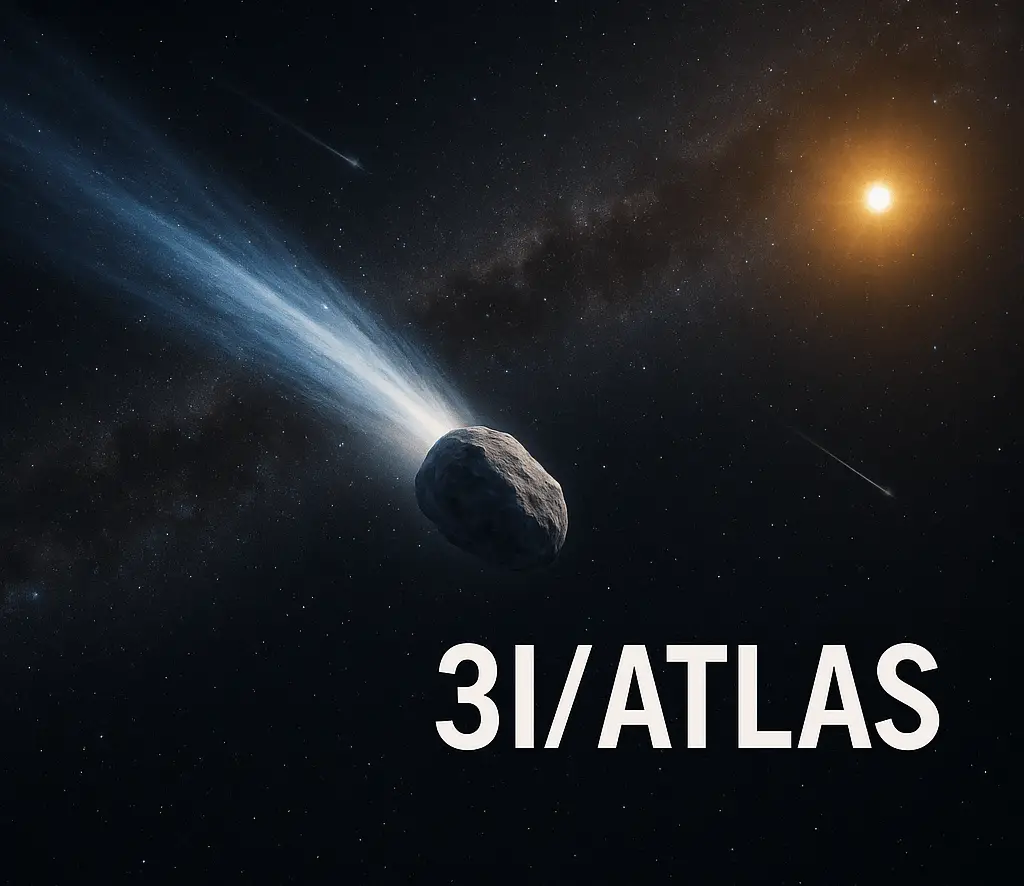
3I/Atlas: The Mysterious Interstellar Visitor That Sparked a Debate Between Science and Alien Theories

3I/Atlas: The Mysterious Interstellar Visitor That Sparked a Debate Between Science and Alien Theories

3IAtlas.png

3I/Atlas: The Mysterious Interstellar Visitor Stirring Scientific Debate

When the faint glow of a fast-moving object appeared in telescopic images earlier this year, astronomers realized they were witnessing something extraordinary — an interstellar visitor entering our solar system for only the third time in recorded history. Designated 3I/Atlas, this enigmatic body has reignited debate about the origins of such cosmic travelers and whether any might be more than just natural debris.

A New Interstellar Arrival

Before 3I/Atlas, only two interstellar objects had been confirmed: 1I/‘Oumuamua in 2017 and 2I/Borisov in 2019. Unlike ordinary comets from the distant Oort Cloud, interstellar bodies arrive on hyperbolic orbits — their speeds too high for the Sun’s gravity to capture.
3I/Atlas entered the solar system at roughly 130,000 miles per hour (210,000 km/h), a velocity that immediately marked it as an outsider. Its discovery excited astronomers and observers alike, not only for what it might teach us about other star systems, but also for its peculiar behavior and composition.

Avi Loeb’s Controversial Hypothesis

Harvard astrophysicist Professor Avi Loeb, known for proposing that ‘Oumuamua might have been alien technology, once again drew public attention by suggesting that 3I/Atlas could also be of artificial origin.
Loeb urged NASA to release high-resolution images reportedly taken by the Mars Reconnaissance Orbiter and the James Webb Space Telescope, arguing that the data could clarify whether the object is natural or something more remarkable.

He has rated the possibility of alien technology at 4 out of 10 — not a firm claim, but enough to call for scientific transparency:

“The politics of the day should not sabotage science. They have the data. They should share it with scientists,” Loeb said in an interview.

The MUFON Panel: A Scientific Counterpoint

A detailed discussion hosted by MUFON (Mutual UFO Network) brought together astronomer Mark D’Antonio and astrophotographer Greg Cisco, who both argued that 3I/Atlas appears to be a comet, not a spacecraft.
Their reasoning rests on several observational facts:

  • No artificial structure has been detected — only a bright, diffuse coma typical of comets.
  • No measurable acceleration (the “rocket effect” seen in active comets) has yet been confirmed.
  • The object’s chemical composition includes carbon monoxide, carbon dioxide, cyanogen, and nickel — elements common in cometary materials, though in unusual ratios.
  • An apparent “forward-pointing tail” is explained by a known optical effect called an anti-tail, caused by the geometry of the Earth, comet, and Sun.

Cisco noted that anti-tails have been recorded many times before and are purely a matter of perspective. D’Antonio added that the presence of nickel without iron, while unusual, does not necessarily imply a technological source — only that this comet formed under different conditions than most known comets.

What Makes 3I/Atlas Unique

Despite skepticism toward alien theories, 3I/Atlas remains scientifically fascinating. Its path through the solar system is highly unusual — entering almost parallel to the planetary plane, an orientation estimated to occur by chance only once in 200,000 events (0.0005% probability).
This rare geometry means the object’s approach offers astronomers a chance to study interstellar materials under different light and gravitational conditions.

Moreover, its chemical profile stands out: higher concentrations of carbon dioxide and nickel than seen in most comets suggest it formed in a colder or metal-richer environment, possibly in the outer regions of another star system.

Debunking the Myths

As 3I/Atlas gained attention, social media filled with sensational claims — that it was accelerating faster than light, that it had six headlights, or that it was a cylindrical mothership photographed near Mars.
Experts swiftly debunked these stories. The “cylinder” image, for example, was simply a time-exposure streak captured by the Perseverance Rover’s camera, not a solid object. And no object with mass can move at the speed of light without turning into pure energy — a basic consequence of Einstein’s relativity.

The Call for Open Data

Professor Loeb’s insistence on releasing all available imagery reflects a broader tension in modern science: public access versus institutional control. Loeb argues that withholding high-resolution data prevents independent researchers from performing peer review and slows discovery.
Whether or not NASA is truly delaying data for political reasons, his call highlights the importance of transparency in astronomical research, especially for events that stir global curiosity.

Expert Consensus: Probably a Natural Visitor

After extensive analysis, both D’Antonio and Cisco concluded that 3I/Atlas behaves like a natural comet. Its brightness, tail structure, and lack of obvious propulsion or structure point to natural origins. They each rated the probability of an alien spacecraft as 1 out of 10, compared with Loeb’s more generous 4.
Their conclusion echoes the cautious approach of mainstream astronomy: intriguing anomalies don’t automatically imply extraterrestrial technology.

Why 3I/Atlas Still Matters

Even if it proves entirely natural, 3I/Atlas provides a window into the chemistry of other solar systems. By studying its dust and gas emissions, astronomers can infer how distant planetary systems evolve, what materials form their planets, and how often solid bodies are ejected into interstellar space.

Objects like ‘Oumuamua, Borisov, and Atlas may be the first of many interstellar visitors we’ll encounter as survey technology improves. Each one carries clues about the wider galaxy — perhaps even precursors to future discoveries of genuine alien artifacts.

Conclusion

3I/Atlas reminds us that science often thrives in the space between mystery and evidence. While Avi Loeb’s provocative theories keep public imagination alive, the data so far paints a more grounded picture: a rare, unusually bright interstellar comet gliding past our Sun before disappearing into the void once again.

Whether natural or not, 3I/Atlas challenges us to look deeper, question boldly, and share knowledge openly — the true spirit of exploration that drives humanity’s search for understanding in the cosmos.

{ https://www.latest-ufo-sightings.net/ }

Hoe vind je dit bericht?
Geschreven door peter om 22:44 Stuur door

The mystery surrounding the interstellar visitor in our solar system has deepened after scientists spotted it making an unexpected maneuver as it approached the sun.

NASA's Jet Propulsion Laboratory (JPL) has recorded the object, largely believed to be a comet, displaying 'non-gravitational acceleration' as it reached its closest point to the sun on October 29.

Simply put, that means it appears to have been pushed by a mysterious force as it moves around the sun.

This push could not be explained by gravity, so something else appears to be speeding up the comet and nudging it off its expected path, which some scientists believe could be a sign the object is a spacecraft with its own engine.

According to the JPL readings, the interstellar object, known as 3I/ATLAS, experienced two main parts in this mysterious maneuver around our sun, one that pushed it away from the star and one which nudged it slightly to the side.

Most scientists have continued to call it an ordinary comet from a distant solar system with a unique chemical makeup that makes it appear different from space rocks that formed inside our solar system.

Harvard physicist Avi Loeb noted that most comets get a little push when their ice turns to gas and shoots out like a jet as they approach the sun, called the 'rocket effect.'

However, 3I/ATLAS is showing way more of a push than expected, adding to the growing list of strange occurrences astronomers have witnessed as the visitor swings around the sun.

The comet has been seen accelerating beyond the natural power of gravity as it moves around the sun

The comet has been seen accelerating beyond the natural power of gravity as it moves around the sun

It made its closest approach to the sun on Wednesday, as seen by NASA spacecraft

It made its closest approach to the sun on Wednesday, as seen by NASA spacecraft

The object has also been getting much brighter as it nears the sun, and did it approximately 7.5 times faster than normal comets.

Moreover, most comets turn red because their surface is so cold that they absorb blue light and bounce back mostly red light, just like a cold piece of metal glows red when you start heating it.

In the case of 3I/ATLAS, however, astronomers have watched the alleged comet turn bluer than the sun as it reached perihelion, its closest point to the star.

There still could be a natural explanation for these abnormalities, as Loeb said the comet might be losing a huge amount of mass as ice boils off violently during its journey.

To create this kind of color change, 3I/ATLAS would need to have lost about 10 percent of its weight in just one month, causing a giant cloud of gas around it, which telescopes should see in November and December.

However, Loeb said that the non-gravitational push and blue coloring could also come from a hot engine and artificial light beaming from inside the object.

'The observed features are surprising but could be explained in both natural or artificial scenarios,' Loeb told the Daily Mail on Friday.

'The blue color could be a signature of ionized carbon monoxide or a hot engine. The non-gravitational acceleration could be a result of cometary evaporation or technological propulsion,' the professor explained.

3I/ATLAS is expected to make its closest approach to Earth on December 19

3I/ATLAS is expected to make its closest approach to Earth on December 19

3I/ATLAS is widely thought to be a comet, but scientists like Professor Avi Loeb maintain that unusual clues point to the object being a spacecraft

3I/ATLAS is widely thought to be a comet, but scientists like Professor Avi Loeb maintain that unusual clues point to the object being a spacecraft

Loeb has called the latest strange readings from 3I/ATLAS the ninth anomaly detected as the object makes its way through our solar system.

The scientist said his first clue that something wasn't adding up was the sheer brightness of the object while it was still far away from our planet and the sun.

It also developed a backward 'anti-tail' that was facing the sun before it reached perihelion.

However, it then swiftly shifted to a normal tail behind the supposed comet as it moved closer, which some have suggested could be a sign of a spacecraft engine reversing thrust.

Its strange course taking it close to three planets and its unique chemical combination of nickel and carbon dioxide have all contributed to a growing belief that 3I/ATLAS is not a floating space rock.

Before discovering the ninth oddity, Loeb calculated that the odds of all these strange occurrences happening at the same time were one in 10,000,000,000,000,000 (that's ten quadrillion).

Loeb previously told the Daily Mail that those in the scientific community who have dismissed the more extraordinary possibilities are more concerned with being right and avoiding criticism than alerting the public to a potentially world-changing event.

'Here we are talking about a potential for something that could affect humanity in the future in a dramatic way, and so you shouldn't apply the same approach of being as conservative as possible,' Loeb explained.

{  https://www.dailymail.co.uk/sciencetech/index.html }

Hoe vind je dit bericht?
Geschreven door peter om 22:24 Stuur door

X-59 Super-Quiet Supersonic Aircraft Makes Its First Test Flight

X-59 Super-Quiet Supersonic Aircraft Makes Its First Test Flight

The X-59 low-boom supersonic aircraft flies over California's Mojave Desert. (Credit: Lockheed Martin)The X-59 low-boom supersonic aircraft flies over California's Mojave Desert. (Credit: Lockheed Martin)

In partnership with NASA, Lockheed Martin Skunk Works has executed the first test flight of the X-59 quiet supersonic aircraft. This week's first flight was subsonic, but eventually the plane will demonstrate technologies aimed at reducing sonic booms to gentle thumps.

"We are thrilled to achieve the first flight of the X-59," OJ Sanchez, Skunk Works' vice president and general manager, said in a news release. "This aircraft is a testament to the innovation and expertise of our joint team, and we are proud to be at the forefront of quiet supersonic technology development."

Acting NASA Administrator Sean Duffy called the X-59 "a symbol of American ingenuity."

"The American spirit knows no bounds. It's part of our DNA – the desire to go farther, faster and even quieter than anyone has ever gone before," he said. "This work sustains America's place as the leader in aviation and has the potential to change the way the public flies."

The X-59 has been in the works for seven years, and is meant to blaze a trail for low-boom supersonic flight. Commercial supersonic flights over U.S. territory were banned in 1973 due to noise concerns, but in June, a presidential executive order called for lifting the ban.

The spiky X-59 prototype is 99.7 feet (30.4 meters) long with a wingspan of 29.5 feet (9 meters) and an expected top speed of Mach 1.4. The plane took off from Skunk Works' facility in Palmdale, Calif., at 8:14 a.m. PT Oct. 28 and made a 1-hour, 7-minute flight that ended at nearby Edwards Air Force Base, Aviation Week reported. Pilot Nils Larson reportedly took the plane to 12,000 feet and conducted basic handling checks at speeds of up to 250 knots while circling the base.

Lockheed Martin said the X-59 "performed exactly as planned, verifying initial flying qualities and air data performance on the way to a safe landing at its new home."

The plane's design – including its needle nose, shockwave-smoothing fuselage and top-mounted engine – is meant to minimize the intensity of a sonic boom. In the months ahead, Skunk Works will continue to lead the initial test campaign, working with NASA to expand the X-59's flight envelope and execute transonic and supersonic test flights. In later stages of the test program, NASA will operate the X-59 to measure its sound signature and gauge community acceptance.

Other companies are already going ahead with their own commercial supersonic projects. Boom Supersonic has conducted faster-than-sound tests of its subscale XB-1 aircraft and is targeting 2027 for the first flight of its full-scale Overture jet. Boom Supersonic says its jets will cruise high enough to make such flights "boomless" for people on the ground. Meanwhile, Spike Aerospace is developing a low-boom supersonic business jet called the S-512 Diplomat.

Two other startups – Aerion and Exosonic – had been working on concepts for supersonic aircraft but were forced to shut down due to a lack of funding.

{ https://www.universetoday.com/ }

Hoe vind je dit bericht?
Geschreven door peter om 22:33 Stuur door

Brutally Horrifying and Harrowing Real-Life Accounts from Halloweens Past!

Brutally Horrifying and Harrowing Real-Life Accounts from Halloweens Past!

Brutally Horrifying and Harrowing Real-Life Accounts from Halloweens Past

All of us are familiar with Halloween, even if we don’t celebrate it. For most people, it is a fun night of the year where people get dressed up in all manner of spooky costumes and attend parties, or gather a group of friends to watch scary movies, and, for the younger ones, venture outside Trick-or-Treating, collecting vast amounts of sweets and candy. There are, though, many accounts on record that are far from fun, and that have made Halloweens past, at least for those involved, a truly scary occasion.

While we will look at some of the more paranormal encounters shortly, it is perhaps best to start with some of the darker accounts on record, many of which were thought to be Halloween pranks but were found to be anything but. On October 15th, 2015, for example, the body of Rebecca Cade was found hanging from a fence in Ohio. For hours, people walked by assuming it was a Halloween display, until it was discovered to be real. Her injuries made it clear she had been murdered.

A similar incident occurred the previous year, on October 29th, 2014, in Long Island, New York. Witnesses saw a man drag a decapitated body into the street and kick the head to the opposite curb. Many mistook it for a Halloween stunt and continued on with their day until someone tried to move the body out of traffic and realized it was genuine. Police later identified the victim as 66-year-old professor Patricia Ward. She had been killed by her 35-year-old son, Derek, who reportedly had a history of mental illness and lived with her. After the killing, he died by suicide by stepping in front of a train.

headless.jpg

There are many more similar Halloween encounters. For example, a 42-year-old woman in Delaware died by suicide on Halloween, hanging herself from a tree in her front yard. Her body remained there for five days because neighbors assumed it was part of the holiday decorations. In a similar case in Los Angeles, residents of an apartment building passed what they believed was a disturbingly realistic prop with severe facial damage; after several days, they discovered it was a man who had died by suicide from a gunshot. In 2012, in Pennsylvania, a 9-year-old girl was shot in the shoulder and arm by a relative who, in the dark, mistook her black-and-white Halloween costume for a skunk. In 1992, 16-year-old exchange student Yoshihiro Hattori was fatally shot while trying to attend a Halloween party. He and a friend went around to the back of the house upon arrival, leading the homeowner, Rodney Peairs, to mistake them for intruders and shoot Hattori.

As well as these accidental deaths and bodies mistaken for props, there have also been some dark, brutal murders committed on Halloween. On Halloween night in 2012, for example, Rebekah Gay answered the door to her mother’s fiancé, John White, a church minister in Michigan. He killed her, hid her body in nearby woods, then returned to dress her three-year-old son in his costume and drive him to his father’s home. White even asked his congregation to pray for Rebekah’s safe return. Her body was found about 20 hours later. He was convicted of her murder and later died by suicide in prison. White had a long history of violence against women. In 1981, he invited 17-year-old Theresa Etherton to see a racetrack he had built in his basement and then attacked her; she escaped, and he served two years in prison. In 1994, he killed a woman with whom he was having an affair and left her body in a wooded area. Because prosecutors could not prove intent, he was convicted of manslaughter.

Another chilling case occurred in 2011 in British Columbia. Eighteen-year-old college student Taylor Van Deist left home dressed as a zombie to meet a friend for trick-or-treating. She texted that she thought someone was following her and was later found near railroad tracks with serious injuries; she died in the hospital shortly afterward. Matthew Foerster was arrested, confessed during questioning, and was sentenced to life in prison for her murder.

Arguably, one of the most horrific Halloween crimes occurred on Halloween night in 1974, in Pasadena, Texas, when Ronald Clark O’Bryan laced candy with cyanide after he had taken out a huge life insurance policy on his own children. He dished out the poisonous sweets to his son, Timothy, his daughter, and several other children in the area. Timothy was the only one who ate the candy, tragically dying a short time later. O’Bryan was arrested and charged with his murder and was executed for his crimes a decade later.

While these accounts are indeed tragic and horrifying, there are others on record that are seemingly paranormal in nature.

Without a doubt, one of the strangest accounts to have unfolded around Halloween occurred in Provincetown, Massachusetts, in 1939, when multiple residents of the town reported having unsettling encounters with a “tall figure” wearing black clothes, and, according to some witness statements, had “glowing eyes”.

With Halloween approaching, Provincetown was beginning to quieten down as many of the “summer tourists” had left for the usual abodes in various places across America. On this particular evening, a local woman, Mary Costa, was walking past the town hall when something suddenly leaped out of the nearby bushes. According to the report she made later, this figure was at least eight feet tall, and had “pointed silver ears and glowing blue eyes”. This strange entity stared at Mary for several seconds before suddenly jumping, almost directly upwards, eventually disappearing. As soon as it had done so, Mary turned and saw the dim lights of a local coffee shop window, and she immediately ran towards it. She burst inside and blurted out what had happened to her. Several of the men inside the coffee shop immediately ran outside to see if there was any sign of the attacker, but their efforts were in vain.
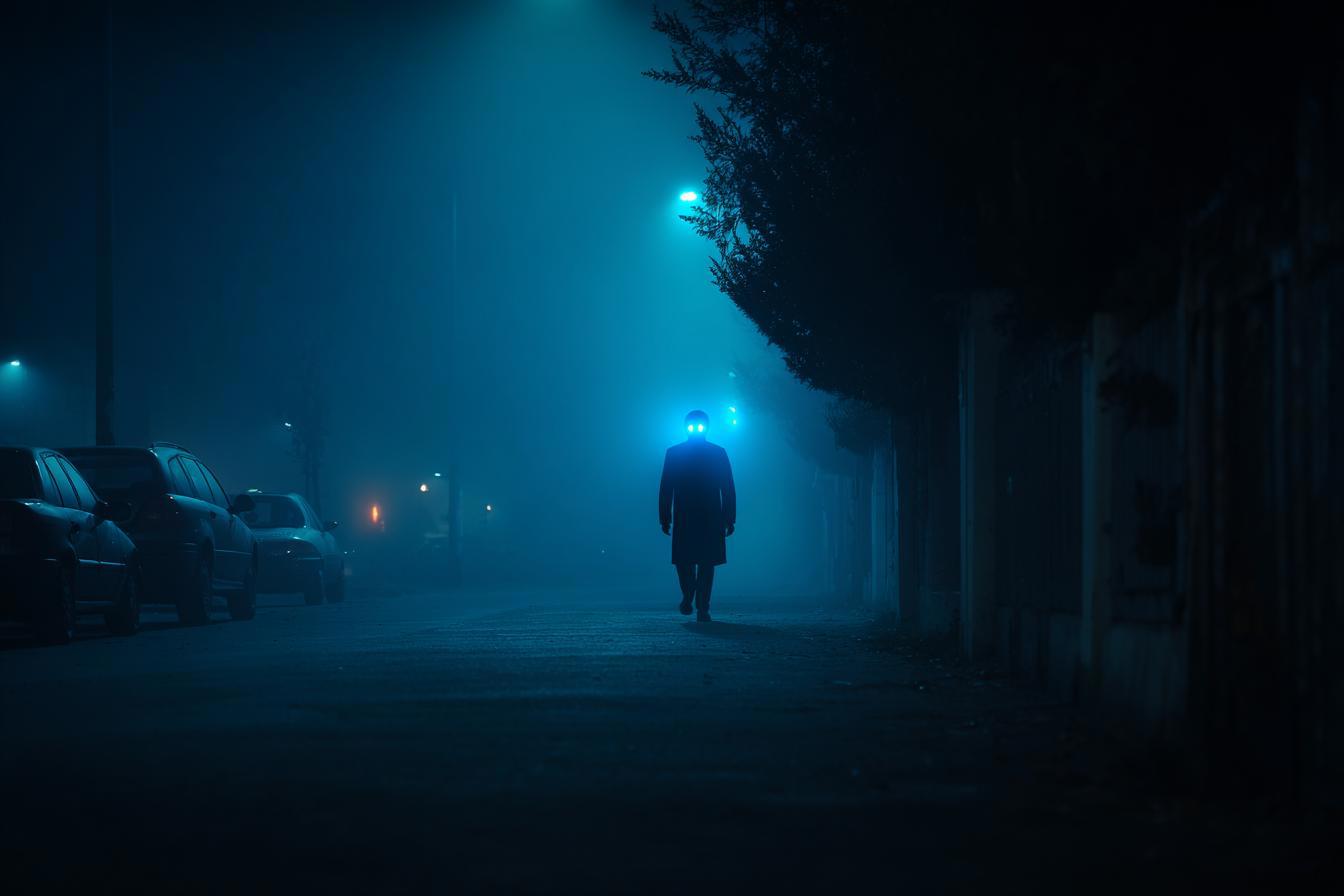
blue-eyes.jpg

Mary reported the incident to the local police, who recorded the incident but did little to follow it up in any serious way. However, during the days that followed, more and more reports of an almost identical nature were made to the police, forcing them to take this strange prankster more seriously. All of the details in each of the reports resonated with each other; the figure dressed in black from head to toe; it wore some kind of cape that covered its head and back, it had glowing eyes, which some witnessed reported as red, while others claimed they were a silver-blue color; it had pointed ears, and perhaps strangest of all, a “weird buzzing” sound often accompanied this menacing figure, a sound that some witnessed likened to a fly or a bee. Of even greater intrigue, this figure seemingly had the ability to leap at least ten feet into the air.

In fact, the police had their own encounter with this bizarre figure around the same time the reports began to increase. On the night in question, they received a call that the figure had been spotted in the playground of a local school. The school premises were surrounded by a tall fence, and the police saw an opportunity to trap and apprehend the culprit. Four police officers arrived at the school a short time after receiving the report, each with a flashlight in one hand and their gun in the other. Not long after they entered the school grounds, they saw the bizarre figure in front of them caught in their flashlight beams, with one officer stating that instead of a face, the figure had a “silver painted mask”. The officers ordered the figure to freeze or they would shoot. Rather than doing so, however, the curious entity leaped into the air, clearing the tall fence with ease.

As the reports increased, so did the media coverage of the encounters, and in turn, many different monickers were bandied around. Some referred to the attacker as The Provincetown Phantom, while others called him the Devil of the Dunes. Others still named him The Phantom Fiend, or The Black Phantom. However, it was The Black Flash that stuck, and quickly, all references to the bizarre encounters used this name.

Perhaps one of the strangest aspects of the reports made to the police was that on several occasions, they received reports of encounters with the Black Flash from two different locations at the same time. This suggested to police that there very well could be more than one menace to deal with, and, over the years, some researchers have even pondered if some kind of portal or teleportation device was utilized, making The Black Flash either an eccentric scientist-type figure, or something more supernatural in nature. Indeed, one particular report from a local teenager perhaps suggests just this. He claimed that he was making his way home from the library when the Black Flash appeared out of nowhere right in front of him. Most terrifying of all, though, the witness insisted that the figure had “spat blue flames” towards him from its mouth.

Despite this last report, although unsettling, none of the encounters were violent. More often than not, this figure simply leaped out of somewhere (although witnesses could rarely establish just where the figure had leaped from) in an effort to scare the witness. It would then simply leap into the air and disappear, with most encounters with the Black Flash lasting no longer than a few seconds. One witness, Charles Farley, even fired his gun at the figure, certain that he had hit it. However, rather than drop to the ground, the figure simply “laughed” back before leaping over a tall fence and disappearing into the night. Does this suggest some kind of bulletproof body armor, or is it another sign that the Black Flash has more of an otherworldly quality to it than many might wish to believe?
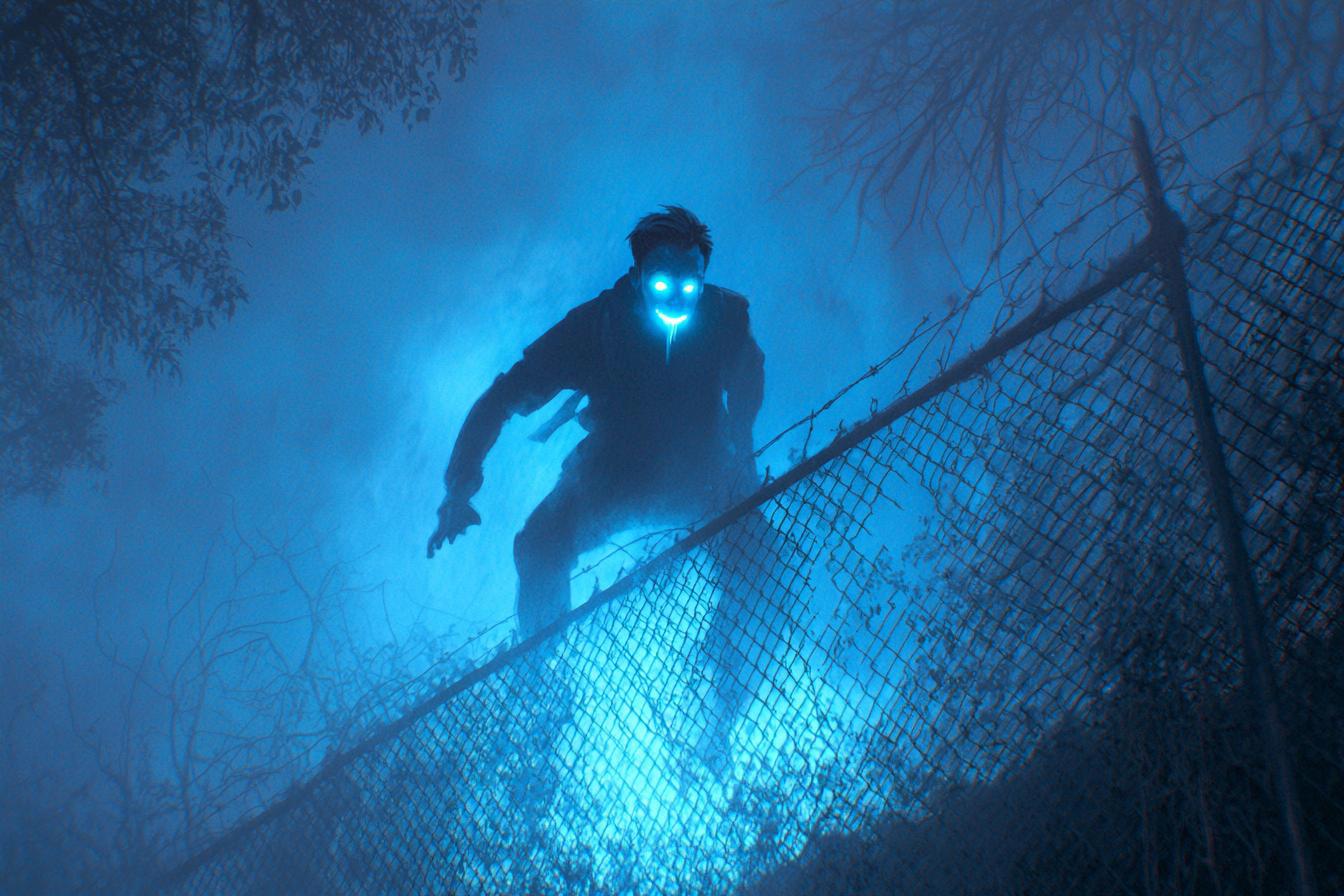
blue-eyes-3.jpg

It is hard to ignore the similar details of the Black Flash encounters to those of Spring-Heeled Jack, who terrorized Victorian England a century earlier. This strange figure would often leap out of nowhere in an effort to startle people, with many of the witnesses stating it had glowing red eyes and blue flames coming from its mouth. Moreover, Spring-Heeled Jack had remarkable leaping ability, able to clear high fences and even two-story buildings in one jump. Although most of the sightings of Spring-Heeled Jack had slowed as the nineteenth century neared its close, there were tentative sightings in the early 1900s and 1940s, and even speculative reports from as recently as the 1970s. Might we consider that there is some kind of connection between Spring-Heeled Jack and the Black Flash of Provincetown, and if so, just what might that connection be?

Whatever the truth, sightings and reports of the Black Flash slowed dramatically as November unfolded, with at least one researcher, Theo Paijmans, claiming they ceased entirely. However, there are odd reports of this strange menace in the years that followed, with the last (known) reported sighting taking place one cold evening in December 1945. The account is detailed in the book Passing Strange by Joe Citro (it can also be found in Robert Cahill’s New England’s Mad and Mysterious Men), and states that on the night in question, four children from the Janard family were outside in the front yard when they suddenly noticed a strange figure heading in their direction coming out of the fog. Although their parents were not at home, they immediately ran inside the house to take cover from the menacing creature.

Suddenly, the sound of the doorknob of the front door being turned reached their ears as the Black Flash tried to gain entry to the property. For several minutes, each of the doors and windows rattled temporarily as the creature tried all potential points of entry. While three of the children hid behind furniture, the oldest boy, Allen, proceeded to fill a bucket with hot water. He then ventured up to the second floor of the property, opened the window, and peered outside. There, directly below him, was the Black Flash. He tipped the water out, watching as it drenched its target. The figure let out a “startled gasp” before it ran off back into the fog.

If we return to the previously mentioned Robert Cahill for a moment, when he traveled to the region decades later to speak with witnesses, he learned of the account of a local pool shark named Eight Ball Eddie. According to what Cahill learned, Eddie was dismissive of the sightings, convinced that the Black Flash was nothing but a man in costume. However, one evening as Eddie was returning home, he encountered the Black Flash for himself. Eddie, still insistent that the figure was merely a “tall man”, stood there looking at the figure, which wore a black hood and had glowing, silver eyes. After several moments, Eddie ordered the figure to get out of his way. The figure, though, lunged toward Eddie and struck him across the face, forcing Eddie to fall to the ground. At this point, Eddie was beyond unsettled by the incident, and after dragging himself to his feet, he turned and ran as fast as he could. The next morning, Eddie still had a “red handprint” where the figure had struck him.

There were, as we might imagine, many explanations put forward in the months and years that followed. Before we look at some of those, though, it is worth our time exploring the year 1939, in general, and how the entire New England area experienced a series of bizarre events. In January, for example, a bizarre “sea monster” washed up on the shore near Wood End. Although it was officially ruled to be a “decomposing basking shark”, many people claimed it bore a remarkable resemblance to an aquatic creature witnessed in 1886 by George Reedy. Whatever the truth, this was just the first of the bizarre events in the region that year. For example, it would eventually come to light through an annual police report that cases of “dog bites and stray cats” had reached an “all-time high” in 1939. Then, in September 1939, several arson attacks occurred, for which a local 40-year-old man was later arrested. In short, the mindset of the people of Provincetown was geared toward something out of the ordinary. Of course, whether this played a part in the sightings of the Black Flash that unfolded in October and November of that year remains very much open to debate.

One suggestion put forward was that the Black Flash was nothing more than four teenagers who were playing a Halloween prank on the town that carried on too long, by the Chief of Police, Anthony Tarvers. He even claimed that he knew the identity of one of the teenagers, although none of these statements were part of an official police press release. He claimed that the boys split into two groups of two, and then one stood on top of the other’s shoulders, using a black cape to cover themselves and using a flour sifter as a makeshift mask. It is interesting to note that he promised to speak with the teenager’s parents, and shortly after he made that statement, the sightings came to an abrupt stop.

The explanation, though, has several holes that can’t be ignored. Perhaps one of the most glaring of these is how the boys – if that is what they were – managed to scale such heights on one leap? Moreover, how did they manage to overpower their potential captors (on several occasions) without being uncovered? Even more glaring, how did the “boys” manage to withstand being shot from close range, and even stranger, how did they manage to pull off the illusion of glowing red or silver eyes and blue flames from the mouth?

With all of these questions in mind, we might consider whether Tarver was simply wide of the mark in his assessment, or whether that statement, an unofficial one, remember, was one he made to simply calm the townsfolk, as well as create the determination that the local police force had succeeded in stopping the infamous Black Flash.

It isn’t just strange creatures lurking in the shadows that have taken place on or around Halloween. On Halloween night 1963, for example, in the small town of Trancas in Argentina, three sisters witnessed a strange, otherworldly object up close. On the night in question, the three sisters were settling down at the Moreno family home, with Argentina and Jolie having traveled from the town of Rosario to see their sister, Yolanda, as well as their parents. They each had their young children with them, and each of their husbands was away on military service. On this evening, following the sudden failure of the electric generator, the family had eaten their evening meal earlier than usual, before settling down in their bedrooms not long after.

At around 9 pm, however, the live-in domestic worker, 15-year-old Dora Guzman, suddenly ran to the main part of the house, claiming there were “strange lights” moving along the railroad outside of the house. The sisters’ parents remained asleep, while Jolie was in the middle of feeding her baby. Argentina and Yolanda ventured to where Dora was, immediately noticing the look of concern on her face, something which was unusual in itself. When they asked her to explain to them what she had seen, she stated that there were some kind of “machines” near the tracks. There was frequent guerrilla activity in the area, and the two sisters contemplated whether that was what Dora had seen. Quietly and cautiously, the two sisters opened the front door of the property and, along with Dora, ventured outside to investigate.

With one sister holding a flashlight and the other a small handgun, the three young women made their way toward the railroad tracks, keeping themselves hidden within the crops. They could see the strange lights moving in the distance; now and then, a strange “beam” would shoot upwards into the night sky. They began to question if there had been a train crash or if a guerrilla group had targeted a passing train. Then, they saw what seemed to be “human silhouettes” moving close to the lights, causing them to stop their approach immediately. They remained where they were for several moments before deciding to carefully continue towards the tracks. The closer they got, they could eventually see that the lights were connected to a solid object – the underside of a disc-shaped craft. The craft appeared like one disc on top of the other, with a green beam of light running in between them, creating a “tunnel” effect. After several moments' pause, they decided to move closer.

Moments after they did so, however, a pair of “dim greenish” lights appeared directly in front of them. Moreover, they were heading in their direction. To begin with, despite the surreal nature of the events they had witnessed, they contemplated if the lights belonged to one of the farm workers’ (Rodriguez’s) pick-up trucks, but before they could contemplate anything more, the three young women were completely enveloped within the green glow. It was at this point that the trio looked upwards, immediately noticing a huge disc hovering directly over them. Everything around them, including their clothes and faces, glowed green. The craft turned slowly in the air as it continued to hover overhead. From this angle, the three witnesses could see several windows or portholes on the underside of the craft.
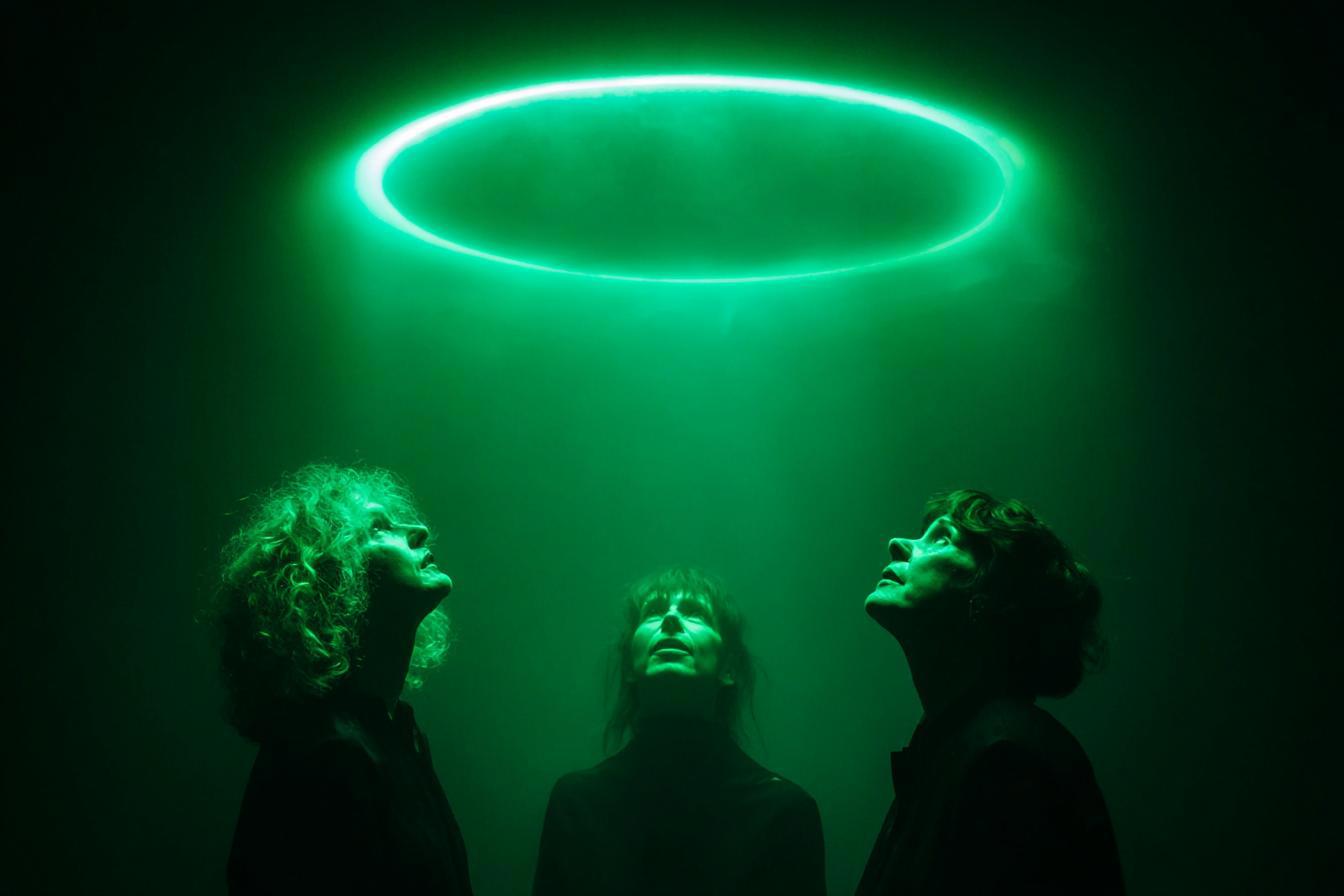
green-light.jpg

Then, a beam of “solid light” emerged from the middle of the craft’s underside and stretched to the ground, a light that the witnesses later described as somehow “solid”. Several moments later, Yolanda stepped forward and placed her hand into the strange light. The other two looked on as the light simply went straight through her hand, as opposed to stopping on it as a “normal” light would. Yolanda also stated that although she didn’t feel any pain when her hand was in the light, she could feel distinct heat coming from it. Then, without warning, the beam began upwards, back towards the craft. As it did so, the three young women became aware of a strange mist that had appeared directly underneath the object, each particle glowing green and seemingly visible in the glow of the light. This strange fog-like mist began to grow thicker as the three witnesses continued to stare at it in awe. It was several moments before the two sisters noticed that Dora appeared to be in some strange trance.

The two sisters did their best to free Dora of the apparent spell she was under, but she continued to stare blankly at the mist above her. Then, the green glow was replaced by a bright orange, while above them, several yellow lights were now spinning on the underside of the aerial vehicle. Also at this point, the craft began to rock from side to side before a sudden burst of flames appeared, the force of which forced all three of the young women to the ground.

By now, they feared they were under attack, and so quickly staggered to their feet and ran back to the house. Although they ran as fast as they could, they occasionally looked back to see if the object was following them. Although it wasn’t, it did appear to be moving over the farmland, as if carrying out some kind of visual survey of it. They were fast approaching the main house. However, just as they were about to go through the front door, the glow from the object suddenly vanished. They stopped and turned around, a little shocked that the object was nowhere to be seen, even though only a second earlier, it had clearly been moving across the land.

The three young women went inside the house, by which time, Dora had seemingly come out of her trance, and appeared to be suffering from delayed shock, screaming that she was burned. The sisters’ parents and their other sister all came running to the scene to see what had happened. Dora hadn’t been burned, but it took a considerable amount of time to calm her down. The sisters looked at the clock, realizing it was just after 10 pm, meaning the incident had lasted just short of an hour.

News of the incident soon spread, and with it came corroborating witnesses. One neighbor, for example, Francisco Tropiano, claimed that he witnessed strange lights over their home at around 10 pm on the night in question. He claimed they lit up the entire area before suddenly disappearing. Another witness, a local doctor, claimed he was driving his car when he witnessed “almost 50 strange lights” traversing the sky. Moreover, when investigators examined the area of the actual sighting, they discovered a “dusty white residue” that, when analyzed, showed it was not indigenous to the surrounding soil. This substance was only found at the alleged landing site and nowhere else.

Just what happened that Halloween night in Trancas in 1963 remains unexplained. Despite the three young women being asked repeatedly to speak of their encounter by various investigators and members of the press, they didn’t once waver from their version of events and, by and large, were considered reliable witnesses. And as bizarre as the encounter might have sounded, especially at the time, in the years that have followed, there have been many other witnesses to other UFO encounters that have described very similar details; the green glowing light, for example, or the solid, slow-releasing beam of light that came from the craft itself, not to mention the shape and dynamics of the craft.

Ultimately, while Halloween is a time for mischievous fun, watching horror movies with friends, attending parties, or even venturing to a scary location to “spook” themselves, on occasion, the pretend horror and frights are very real. Of course, while this is almost certainly just coincidence, after all, murders, accidental deaths, and even UFO sightings happen all year round, we should perhaps contemplate, if only in the back of our minds, if something about this time of year really does “thin the veil”, and perhaps influence humanity to act out such horrors, or simply unleash strange figures such as the Black Flash or strange vehicles from other worlds. It is certainly spooky food for thought, and perhaps something for us to keep in mind as we celebrate Halloween, both this year and in the future. Is it all fun and games? Not always.


{ https://mysteriousuniverse.org/ }

Hoe vind je dit bericht?
Geschreven door peter om 22:11 Stuur door

Could these mysterious flashes of light in 1950s photos be UFOs? Some researchers think so

Could these mysterious flashes of light in 1950s photos be UFOs? Some researchers think so


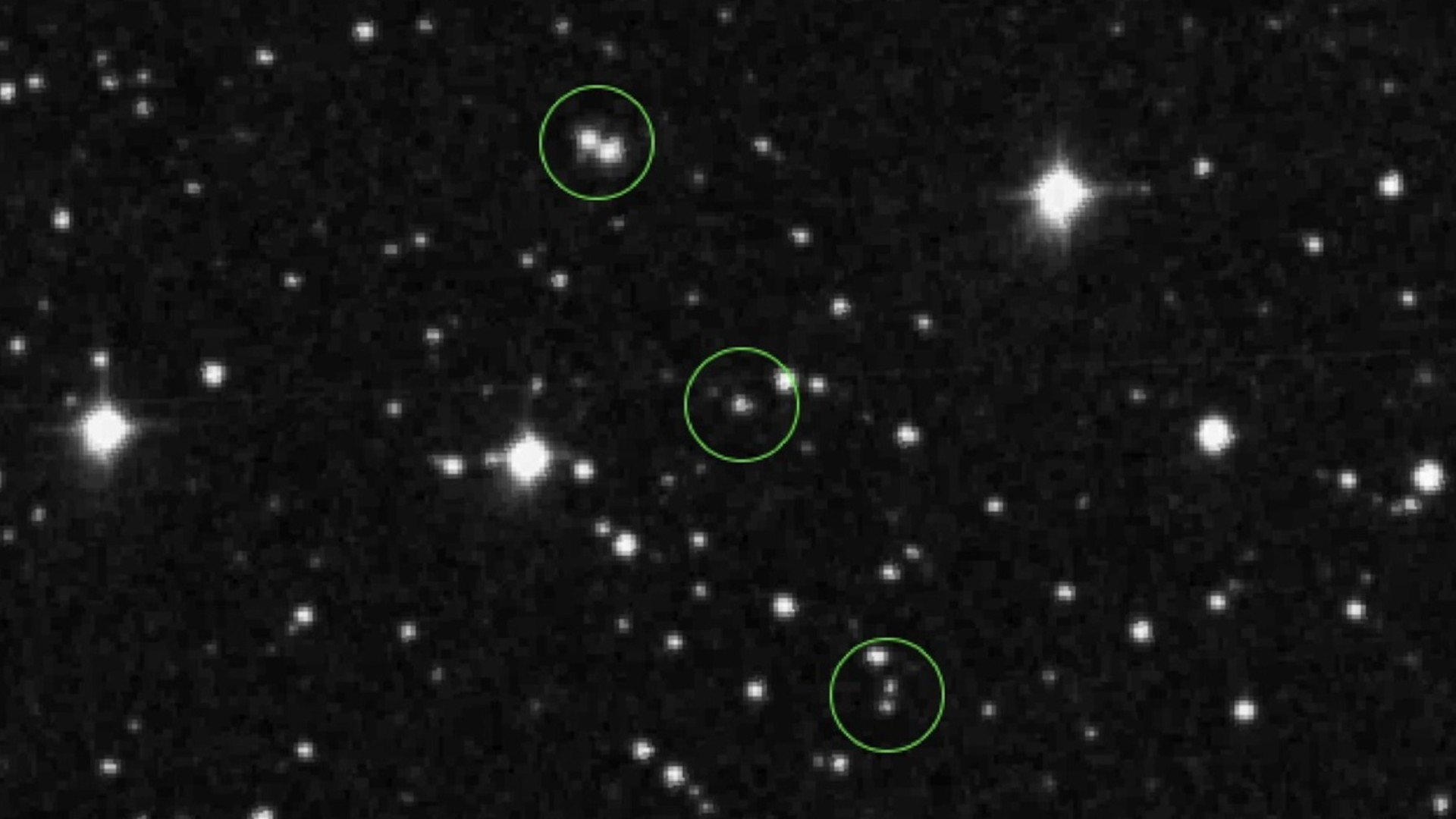
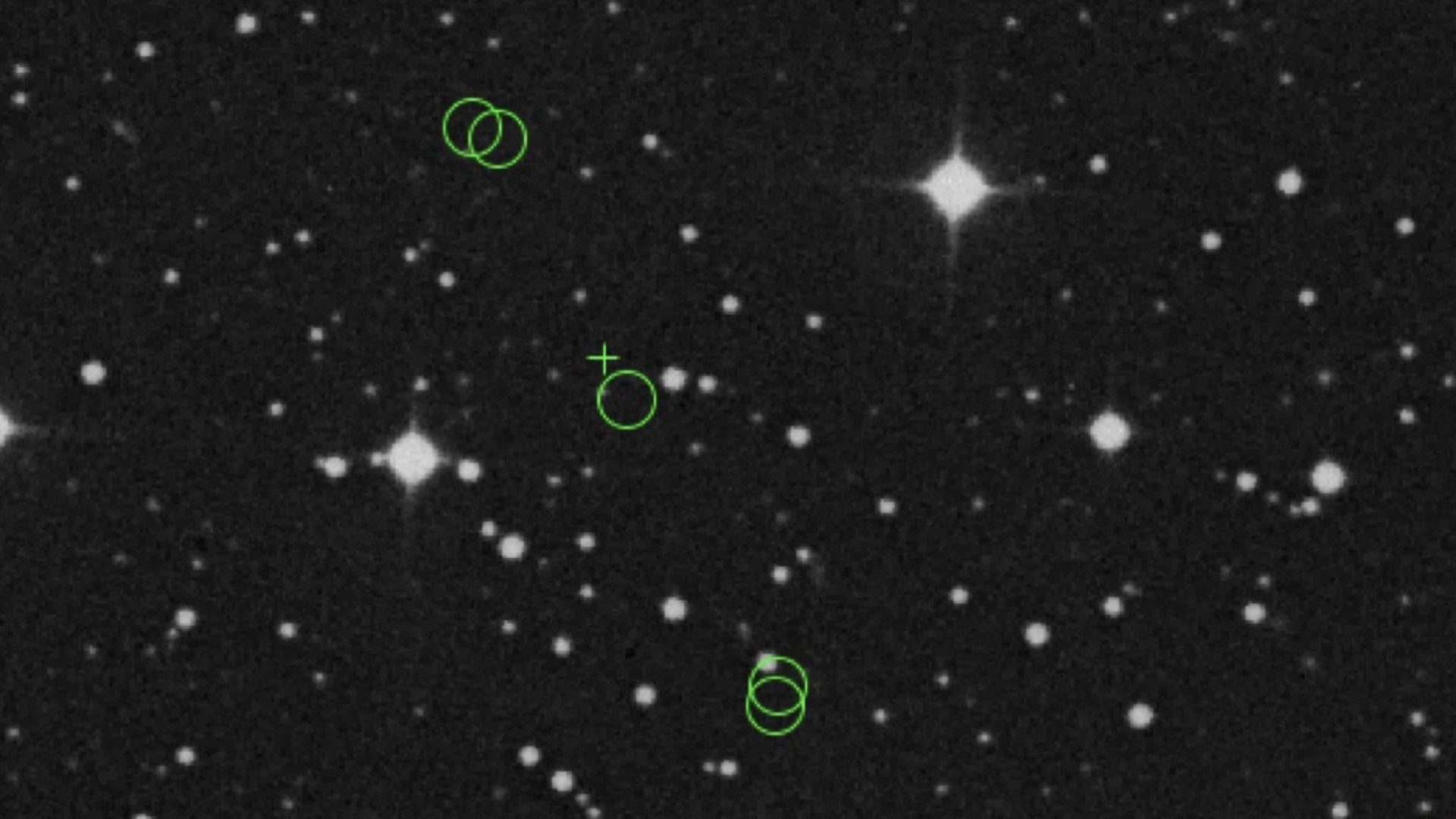
images of stars on a black background, with what appear to be other stars among them circled by dotted lines
Transients studied by the VASCO project, which attempts to pin down the sources for these mysterious flashes of light seen in archival sky survey photographs. 
(Image credit: Beatriz Villarroel et al 2025/CC BY 4.0 (DOI 10.1088/1538-3873/ae0afe))

In the 1950s, mysterious flashes of light were captured on photographic plates taken at the Palomar Observatory in California. Two new studies claim that these flashes were caused by reflective objects in high-Earth orbit connected to sightings of alleged unidentified anomalous phenomena (UAP), a new catch-all term for UFOs not only in the sky, but also in space or even that travel through water.

For the past few years, astronomers including Beatriz Villarroel, of Nordita, Stockholm University, have been scrutinizing photographic plates exposed in the years before the Space Age began, as part of the Vanishing and Appearing Sources during a Century of Observations (VASCO) project. The aim of VASCO is to use archival data, now digitized, to search for new astrophysical transients, which are objects that brighten or fade, sometimes dramatically. These objects can appear as a spot of light in one image of the sky or space, only to vanish in the next.

Villarroel and study co-author Stephen Bruehl, a professor of anesthesiology from the Vanderbilt University School of Medicine, say their data show a statistical correlation between these flashes of light and reported sightings of unidentified objects. “We speculate that some transients could potentially be UAP in Earth orbit that, if descending into the atmosphere, might provide the stimulus for some UAP sightings,” they write in one of the new studies.

You may like
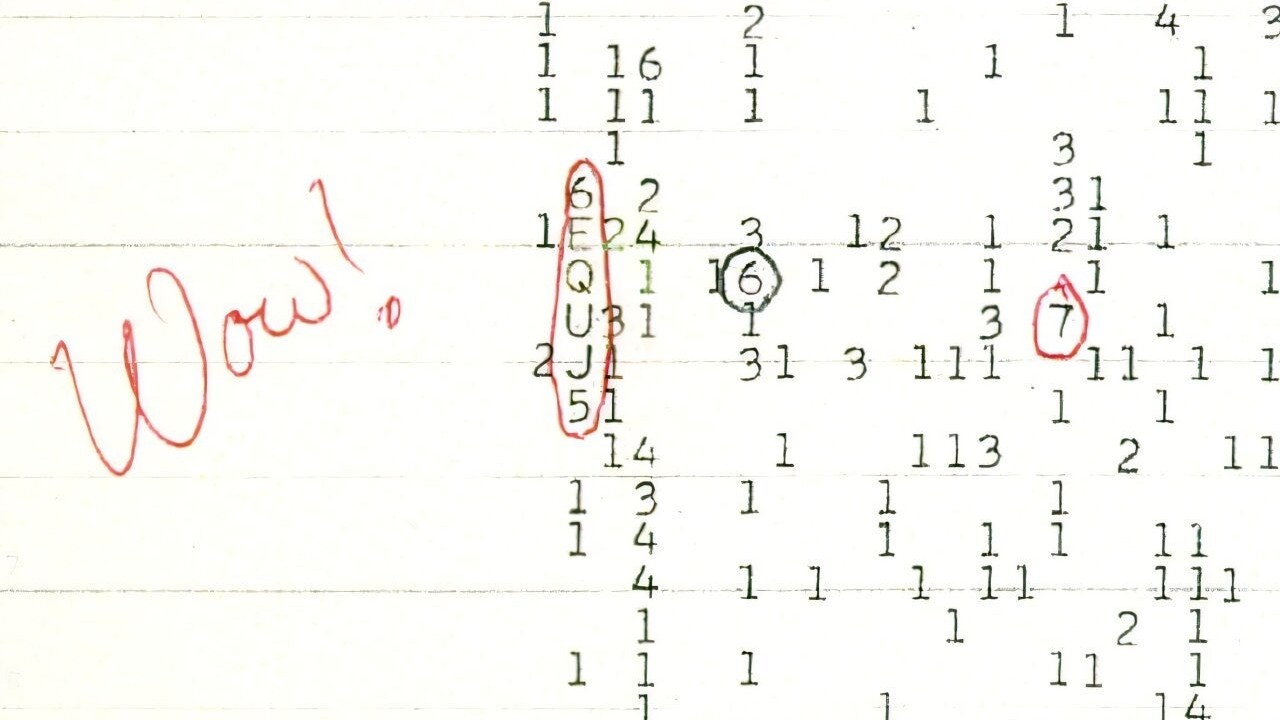
  • a chart of printed numbers with a red handwritten "wow!" in the left margin

That mysterious 'Wow! signal' from space? Scientists may finally know where it came from — and it's probably not aliens

  • An illustration shows a human-made signal passing between Earth and Mars

If aliens explore space like humans do, NASA scientists know where to look for their signals

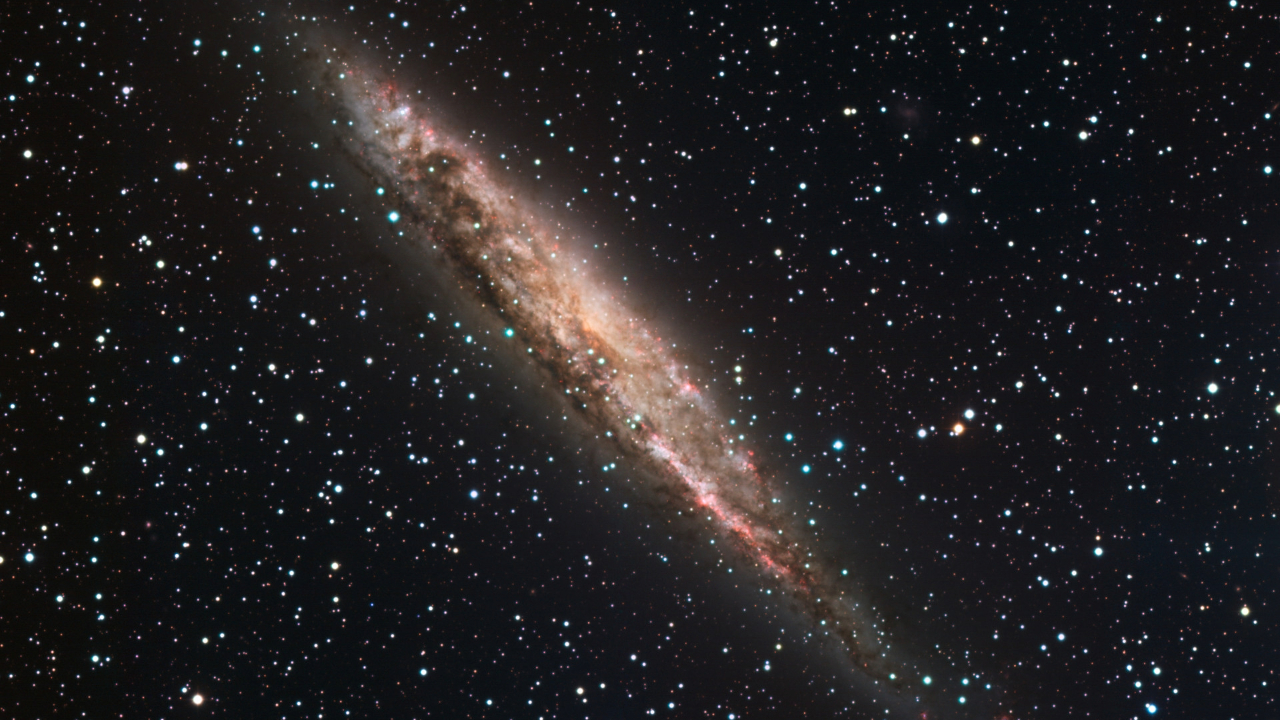
  • A spiral galaxy is tilted at a 45 degree angle amidst stars in space.

Scientists may have found a powerful new space object: 'It doesn't fit comfortably into any known category'


NASA UFO Report | Scientists Reveal First-ever Report On UnidentifiedAnomalous Phenomena | N18V

Pentagon's UFO report finds 21 alleged sightings that could not be explained

When VASCO launched, it had the stated aim of looking for stars that had vanished, which could for example signal a massive star collapsing into black hole without exploding as a supernova. VASCO could potentially also reveal new types of variable stars, active galactic nuclei, stellar flares or even brand new phenomena.

Sometimes the transients VASCO studies are unexplained, which has previously led Villarroel to a startling conclusion: that some of the objects detected on the plates are metallic objects in high Earth-orbit, before the launch of Sputnik 1 in 1957.

“Today we know that short flashes of light are often solar reflections from flat, highly reflective objects in orbit around the Earth, such as satellites and space debris, but the photographic plates analyzed in VASCO were taken before humans had satellites in space,” Villarroel said in a statement.

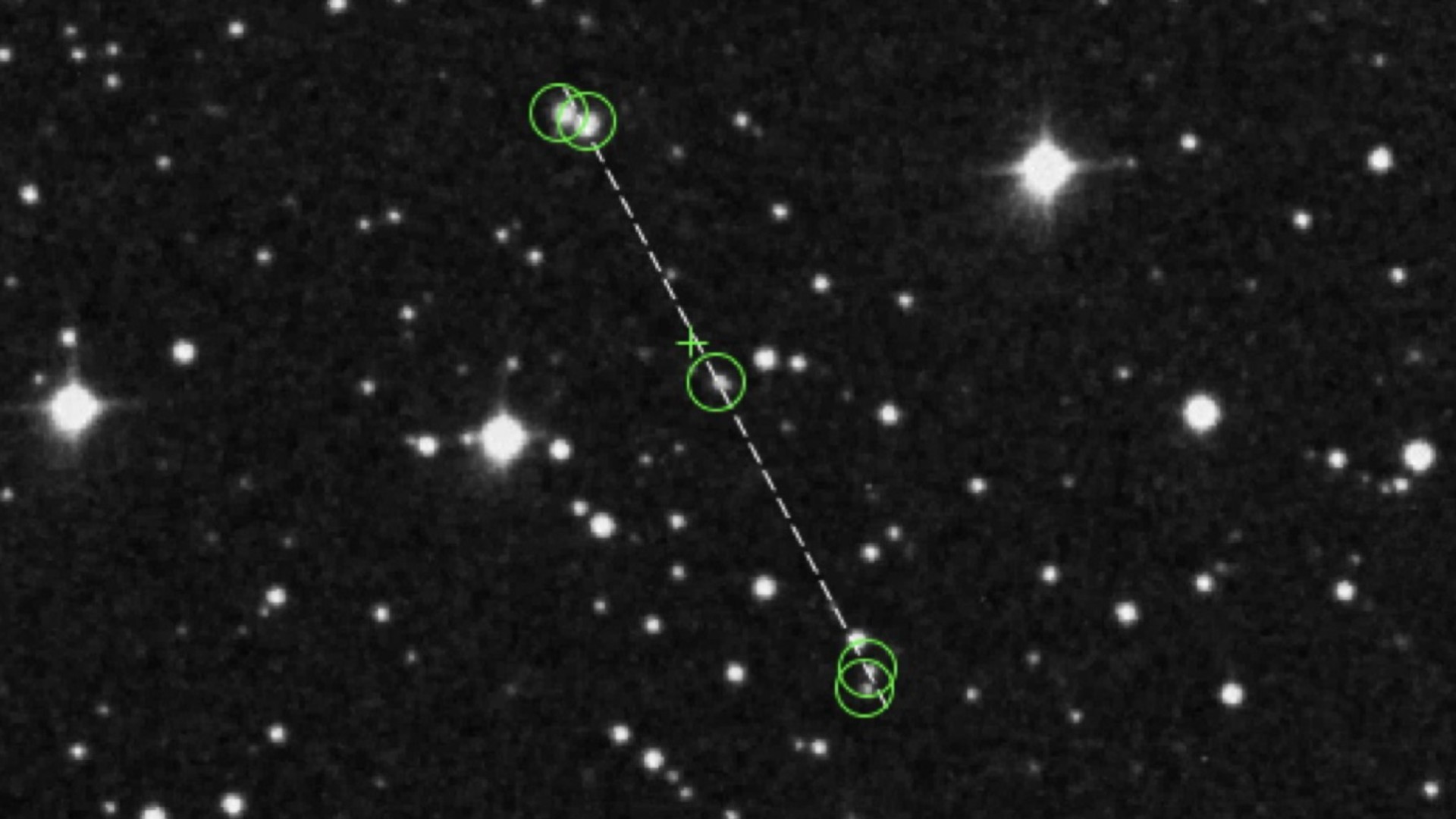
images of stars on a black background, with what appear to be other stars among them circled by dotted lines

Transients studied by the VASCO project, which attempts to pin down the sources for these mysterious flashes of light seen in archival sky survey photographs.  (Image credit: Beatriz Villarroel et al 2025/CC BY 4.0 (DOI 10.1088/1538-3873/ae0afe))

VASCO researchers analyzed 106,000 transients that look like stars that appeared and swiftly disappeared in a single exposure between the years 1951 and 1957. In particular, the appearance of the unidentified transients were 68% more likely to occur the day after a nuclear weapons test in Earth’s atmosphere than on other day, Bruehl added in the statement.

“The magnitude of the association between these flashes of light and nuclear tests was surprising, as was the very specific time at which they most often occurred – namely, the day after a test,” said Bruehl. “What they might represent is a very fascinating question that needs further investigation.”

In their study, Villarroel and Bruehl also found that the transients captured by the photographic plates increased by an average of 8.5% for each UAP sighting that was reported.

In a second study, which also included researchers from Algeria, India, Nigeria, Spain, Switzerland, Ukraine and the United States, they found that one anomalous transient coincided with a cluster of flying saucer sightings over Washington, D.C., on 27 July 1952. This particular transient, along with several others, was an instance where multiple flashes of light were seen along a narrow band. This, says Villarroel, suggests flat, reflective objects in motion high above Earth that were reflecting sunlight – a hypothesis supported by the fact that the number of mystery transients drops off in parts of the sky in Earth’s shadow, where sunlight can’t reach.

You may like

“You don’t get those kinds of solar reflections from round objects like asteroids or dust grains in space, which leave streaks during a 50-minute exposure, but only if something is very flat and very reflective and reflects the sunlight with a short flash,” said Villarroel.

images of stars on a black background, with what appear to be other stars among them circled by dotted lines

Transients studied by the VASCO project, which attempts to pin down the sources for these mysterious flashes of light seen in archival sky survey photographs.  (Image credit: Beatriz Villarroel et al 2025/CC BY 4.0 (DOI 10.1088/1538-3873/ae0afe))

Villarroel and Bruehl propose another possible explanation, however: that nuclear weapons tests triggered some unknown atmospheric phenomenon that went unnoticed at the time. But Villarroel and Bruehl are skeptical that such a phenomenon would stand still in the atmosphere for 24 hours between the weapons test and when the plate was exposed at Palomar in California. The transients do not seem to be particles of nuclear fallout that have drifted down onto the photographic plate either, since such particles would produce foggy, diffuse spots, not pinpoint, star-like objects.

The explanation Villarroel and Bruehl focus on most in their papers is that these transients are UAP of some kind. Their study connects the nuclear tests to sightings, which have been reported in the vicinity of nuclear sites for decades. "Significantly more UAP sightings were reported within nuclear weapons testing windows (test date + /- 1 day) than outside of testing windows," they report in their study.

There are, of course, many caveats. Critics have claimed that the transients could be photographic defects, or contamination, especially as the plates are quite old and were stored away for many decades before being digitized.

Villarroel and Bruehl perhaps also give too much credit to reports of UFO sightings. Their reported correlation of 8.5% between the appearance of the transients and flying saucer sightings is only relevant if it can be assumed those UAP sightings are credible in the first place. There may also be an observation bias – the 1950s were the heyday of UFO sightings, so it is perhaps not too surprising that there were sightings coinciding with the appearance of transients, since UAP sightings were reported on many different days.

Ultimately, correlation does not necessarily mean causation, and Villarroel and Bruehl do acknowledge this in their study.

In SETI, the search for extraterrestrial intelligence, researchers tend to assume that any unexplained phenomena isn’t aliens, and to exhaust every possible natural explanation before invoking an extraterrestrial one. This approach would be helpful here, although what those alternative explanations might be are not yet certain.

Because of the nuclear test-ban treaty there is, quite rightly, no way to test the hypothesis that the transients are related to atmospheric phenomena caused by nuclear explosions, of which there were at least 124 above the ground between 1951 and 1957.

For now, the discovery of the transients remains an intriguing puzzle. One possible way forward that has been suggested is to try and repeat the observations on the modern day sky. If geosynchronous satellites that we know about produce similar patterns of transients on photographic plates, then that would strengthen the hypothesis that the transients on the Palomar plates could depict metallic objects reflecting sunlight in high orbit.

The two studies are published in Scientific Reports and Publications of the Astronomical Society of the Pacific.

{ https://www.space.com/space-exploration }

Hoe vind je dit bericht?
Geschreven door peter om 21:58 Stuur door

Interstellar visitor reappears from the sun's shadow with baffling glow unlike natural comets

Interstellar visitor reappears from the sun's shadow with baffling glow unlike natural comets

A mysterious interstellar visitor has emerged from behind the sun, glowing in a way that has left scientists stunned.

The comet, which is not visible from terrestrial telescopes, appears to have unusual chemistry. It passed through solar conjunction with Earth - meaning it was hidden behind the sun - on October 21.

It is exciting for scientists because, unlike other comets, it does not orbit the sun.

The object, named as 3I/ATLAS, made its closest approach to it on Wednesday, observed by three NASA spacecraft.

Data showed that it brightened at a rate about seven times faster than typical comets as it reached the sun. 

Researchers who captured the observations noted: 'The reason for 3I/ATLAS's rapid brightening, which far exceeds the brightening rate of most Oort cloud comets at similar distances from the sun, remains unclear.' 

Even more puzzling, the comet now appears distinctly bluer, a reversal from its previously reddish hue.

Scientists speculate that the blue glow likely comes from gas emissions, including carbon molecules (C2) and other compounds, rather than just sunlight reflecting off dust. 

The object made its closest approach to the sun on Wednesday, as seen by NASA spacecraft

The object made its closest approach to the sun on Wednesday, as seen by NASA spacecraft

The study, conducted by researchers from the Lowell Observatory in Arizona and the US Naval Research Laboratory in Washington, DC, pulled data from the STEREO‑A (Solar TErrestrial RElations Observatory) and SOHO (Solar and Heliospheric Observatory).

They also used a weather satellite, called GOES‑19, carrying a coronagraph, a device which helped capture the comet's brightness and color while it was hidden behind the Sun from Earth-based telescopes.

It detected a glowing plume extending nearly 186,000 miles around the object, comparable to the carbon dioxide halo observed months earlier.

The satellite revealed that 3I/ATLAS is enveloped in a huge, fuzzy coma, roughly half as wide as the full moon. 

Ground-based telescopes had trouble observing 3I/ATLAS. At the same time, it was very close to the sun, but radio observations were able to detect emissions from the comet, showing it was producing huge amounts of water-related molecules. 

The production rate of these molecules increased sharply as the comet approached the Sun, following a pattern similar to the rapid brightening observed in optical images. 

The comet is expected to return to visibility in twilight and night skies during November and December, allowing ground-based telescopes to study it in much greater detail. 

Early analysis suggests 3I/ATLAS will emerge considerably brighter than before.

Its light was increasing at an unusually rapid pace, which could be due to its chemical make-up

Its light was increasing at an unusually rapid pace, which could be due to its chemical make-up

Scientists still do not fully understand why it brightened so fast, but it may be related to unusual activity from gases like carbon dioxide (CO2) and water (H2O), or unique properties of the comet's nucleus, such as its composition, shape, or structure. 

Observations from spacecraft also show that 3I/ATLAS has a large, fuzzy coma about half the size of the full moon, and its light is distinctly bluer than the sun, likely due to gas emissions from molecules like C2 and Amino groups, rather than just reflected sunlight from dust.

Its brightness increased much faster than typical comets, with a measured rate far exceeding the standard for Oort cloud comets, and the post-perihelion behavior remains uncertain; it could continue brightening, level off, or fade quickly. 

Harvard professor Avi Loeb, who has been studying the object for months, said: 'This unfavorable geometry, a possible hint of design, placed the comet within the fields of view of several space-based solar coronagraphs and heliospheric imagers, allowing continuous observation during its final approach to perihelion.' 


{ https://www.dailymail.co.uk/sciencetech/index.html }

Hoe vind je dit bericht?
Geschreven door peter om 21:07 Stuur door

Mysterious sounds echoing throughout Nevada's Lake Mead sparking fears of sinister forces

Mysterious sounds echoing throughout Nevada's Lake Mead sparking fears of sinister forces

Residents in Nevada have been scared after hearing thunderous and disturbing sounds echoing through the canyons around Lake Mead.

Dozens of reports have flooded in to local police near the Redstone Picnic Area, a popular spot for camping.

This area sits in the desert of Nevada, just a short 30-mile drive from Las Vegas and next to the iconic Hoover Dam.

However, the peace was broken by rumbling booms that sounded like a giant metal door groaning in the distance.

They boomed throughout the day last Tuesday, with videos capturing the noises being shared online.

Many viewers had speculated the sounds were caused by fracking, the process of injecting high pressure liquid into the ground to extract oil or gas, but the local gas company told the Daily Mail they were not carrying out any work at that time.

One woman posting the incident on social media said the sounds woke her up and scared her enough to call for help.

'I just called 911 and they said they'd gotten over 50 calls about it,' the witness posted on TikTok. 

Witnesses in Nevada recorded disturbing noises that were similar to construction equipment in the Lake Mead area this month, but the source could not be found

Witnesses in Nevada recorded disturbing noises that were similar to construction equipment in the Lake Mead area this month, but the source could not be found

Witnesses couldn't find the exact source of the echoing booms, but continued to suspect that it was coming from somewhere in the nearby valley, possibly tied to the Kern River gas pipeline that runs through the Lake Mead National Recreation Area.

One local on Instagram who tried to find the source claimed the answer was the sound of gas being released from the pipeline, like a massive pressure valve letting off steam.

Lake Mead near Hoover Dam at the Lake Mead National Recreation Area near Boulder City, Nevada, on June 26, 2022.

A file photo of the Lake Mead National Recreation Area near Boulder City, Nevada, on June 26, 2022. 

John Locher/AP

In a statement, the Kern River Gas Transmission Company confirmed to the Daily Mail that they did not release any gas from its pipelines on the dates in question.

According to the company, a request was filed for an 'on- and off-system balancing' on the Kern River Line on October 29, but this also appears unrelated to the sounds heard more than a week earlier.

This isn't the first time eerie sounds have been heard echoing through the region, with some claiming they've heard the wailing voices of ghosts along the Colorado River and unexplained footsteps coming from Hoover Dam. 

Some on social media claimed the noise was being caused by secret projects drilling underneath the Nevada desert.

'The noise was so powerful it rattled windows and shook the wildlife for miles,' one person on Instagram said. 

'The fact that it's in rhythm, and in intervals, makes me believe it's man-made. Sounds like a big jackhammer or something,' another Instagram user commented.

Lake Mead (Pictured) has become notorious for unusual and unexplained noises since the lake began to hit record-low water levels in recent years

Lake Mead (Pictured) has become notorious for unusual and unexplained noises since the lake began to hit record-low water levels in recent years

Before this month's disturbing sounds, there had been a string of reports over the years from campers and boaters around Lake Mead who heard strange rumbles and groans in the area.

This has been especially true since the early 2010s, when the water level at Lake Mead started dropping.

In 2022, as the lake hit record-low levels, visitors claimed to have heard loud metallic clangs and deep hums coming from the newly exposed shorelines.

Experts have mostly dismissed the noises as wind echoing through canyons, small earthquakes shaking rocks, or vibrations from the Hoover Dam and nearby construction sites.

However, some conspiracy theorists online have claimed that all the sounds rattling through this area are likely tied to classified government projects, with the mysterious Area 51 sitting just over 100 miles away.

The infamous base has been tied to extraterrestrial lore for decades, with UFO researchers and conspiracy theorists claiming that secret government experiments have been conducted at Area 51 since the 1950s.

Area 51 sits on the Nevada Test and Training Range (NTTR) and is less than 140 miles from the site of the new noises recorded at the Redstone Picnic Area.

'It's the construction of the underground city they are building [to] prepare for what's coming to Earth,' one person on TikTok alleged.

{ https://www.dailymail.co.uk/sciencetech/index.html }

Hoe vind je dit bericht?
Geschreven door peter om 20:41 Stuur door

The Milky Way as you've NEVER seen it before: Scientists reveal the largest low-frequency radio colour image of our galaxy ever created

Astronomers have released a spectacular new image of the Milky Way, providing a glimpse of our galaxy in unprecedented detail.

The photograph, which took 18 months and over 40,000 hours to construct, is the largest low–frequency radio colour image of the Milky Way ever assembled.

It captures the Southern Hemisphere view, revealing it across a wide range of radio wavelengths – or 'colours' of radio light.

And it provides astronomers with new ways to explore the birth, evolution and death of stars in our galaxy.

The stunning picture was created by astronomers from the International Centre of Radio Astronomy Research (ICRAR).

'This vibrant image delivers an unparalleled perspective of our galaxy at low radio frequencies,' Silvia Mantovanini, a PhD student at the Curtin University of ICRAR said.

'It provides valuable insights into the evolution of stars, including their formation in various regions of the galaxy, how they interact with other celestial objects, and ultimately their demise.'

Ms Mantovanini constructed the image with the help of supercomputers which processed and compiled data from two extensive surveys carried out by the Murchison Widefield Array telescope in Western Australia.

The new spectacular image of the Milky Way, providing a glimpse of our galaxy in unprecedented detail

The new spectacular image of the Milky Way, providing a glimpse of our galaxy in unprecedented detail

The photograph, which took 18 months and over 40,000 hours to construct, is the largest low-frequency radio colour image of the Milky Way ever assembled

The photograph, which took 18 months and over 40,000 hours to construct, is the largest low–frequency radio colour image of the Milky Way ever assembled

It provides astronomers with new ways to explore the birth, evolution and death of stars in our galaxy

It provides astronomers with new ways to explore the birth, evolution and death of stars in our galaxy

The astronomers focused on radio waves because they reveal a different part of the universe that visible light cannot show – allowing them to see through gas and dust clouds to observe the birth of stars and the structures of galaxies.

When compared to images constructed from visible light, the radio frequency photograph reveals the galaxy in much clearer, more colourful detail.

The new image offers twice the resolution, 10 times the sensitivity and covers twice the area compared to a previous radio wavelength image released in 2019.

This significant improvement in resolution, sensitivity and sky coverage allows for a more detailed and comprehensive study of the Milky Way, the team said.

Ms Mantovanini's research focuses on supernova remnants, the expanding clouds of gas and energy left behind when a star explodes at the end of its life.

Although hundreds of these remnants have been discovered so far, astronomers suspect that thousands more are waiting to be found.

The image allows them to distinguish between the gas surrounding new stars and that left behind by dead ones, revealing clearer patterns in the cosmic landscape.

'You can clearly identify remnants of exploded stars, represented by large red circles,' she said. 'The smaller blue regions indicate stellar nurseries where new stars are actively forming.'

Left: The centre of our Milky Way in radio colour. Right: The same area of sky as seen in visible light

Left: The centre of our Milky Way in radio colour. Right: The same area of sky as seen in visible light

Antennas from the MWA telescope, on Wajarri Country in Western Australia, which carried out the two extensive surveys

Antennas from the MWA telescope, on Wajarri Country in Western Australia, which carried out the two extensive surveys

 The image may also help unravel the mysteries surrounding pulsars in our Galaxy.

By measuring the brightness of pulsars at different GLEAM–X frequencies, astronomers hope to gain a deeper understanding of how these enigmatic objects emit radio waves and where they exist within our galaxy.

article image

Associate Professor Natasha Hurley–Walker from the same ICRAR team, who is the principal investigator of the GLEAM–X survey, emphasised how this is a big step forward in studying the Milky Way's structure. 

'This low–frequency image allows us to unveil large astrophysical structures in our Galaxy that are difficult to image at higher frequencies,' she said. 

'No low–frequency radio image of the entire Southern Galactic Plane has been published before, making this an exciting milestone in astronomy.'

The new image was published in the journal Publications of the Astronomical Society of Australia.

THE MILKY WAY'S OLDEST STAR

A star discovered in 2018 is thought to be one of the oldest in the Milky Way.

Scientists at the Instituto de Astrofísica de Canarias (IAC) in Spain believe that it might have formed about 300 million years after the 'Big Bang'.

IAC researcher Jonay González Hernández said: 'Theory predicts that these stars could form just after, and using material from, the first supernovae, whose progenitors were the first massive stars in the Galaxy.'

Researchers hope the star, known as J0815+4729, which is in line with the Lynx constellation, will help them learn more about the Big Bang, the popular theory about the galaxy's evolution.

IAC director Rafael Rebolo said: 'Detecting lithium gives us crucial information related to Big Bang nucleosynthesis. We are working on a spectrograph of high resolution and wide spectral range in order to be able to measure (among other things) the detailed chemical composition of stars with unique properties such as J0815+4729.'

RELATED

{ https://www.dailymail.co.uk/sciencetech/index.html }

Hoe vind je dit bericht?
Geschreven door peter om 22:48 Stuur door

Everything we know about 3I/ATLAS: The mysterious object speeding through our Solar System

Everything we know about 3I/ATLAS: The mysterious object speeding through our Solar System

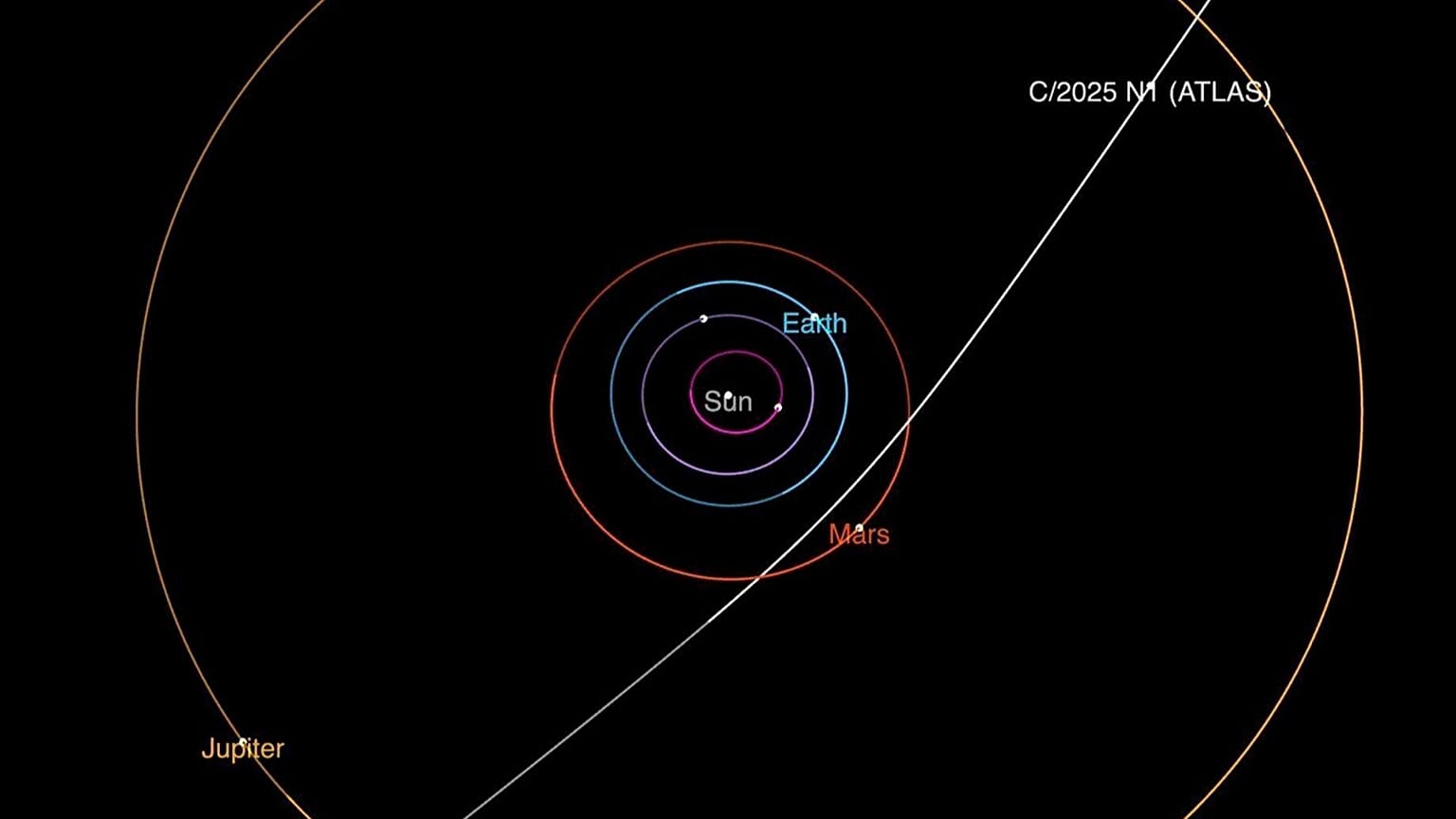
This diagram provided by NASA/JPL-Caltech shows the trajectory of interstellar comet 3I/ATLAS as it passes through the solar system.

Copyright Credit: NASA/JPL-Caltech/AP
By Theo Farrant

While most scientists believe it’s a natural comet, one Harvard astronomer has suggested its unusual features could hint at signs of alien technology.

On 1 July 2025, astronomers using the ATLAS (Asteroid Terrestrial-impact Last Alert System) survey telescope in Rio Hurtado, Chile, detected a faint, fast-moving object unlike anything seen before.

The discovery, officially named 3I/ATLAS (C/2025 N1), marks only the third confirmed interstellar object ever observed - after ʻOumuamua in 2017 and 2I/Borisov in 2019.

But what exactly is 3I/ATLAS, where is it going, and could this strange visitor from another star be more than just a comet?

What is 3I/ATLAS?

3I/ATLAS is largely believed to be a comet - it has a tail, is brightening as it approaches the Sun, and shows signs of dust and gas being released.

Its name was derived from its origins: “3” for the third interstellar object found, “I” for interstellar, and “ATLAS” for the telescope network that spotted it.

What makes it extraordinary is where it came from. Its speed and trajectory show that it’s not gravitationally bound to the Sun - meaning it must have originated in another star system and wandered into ours by chance.

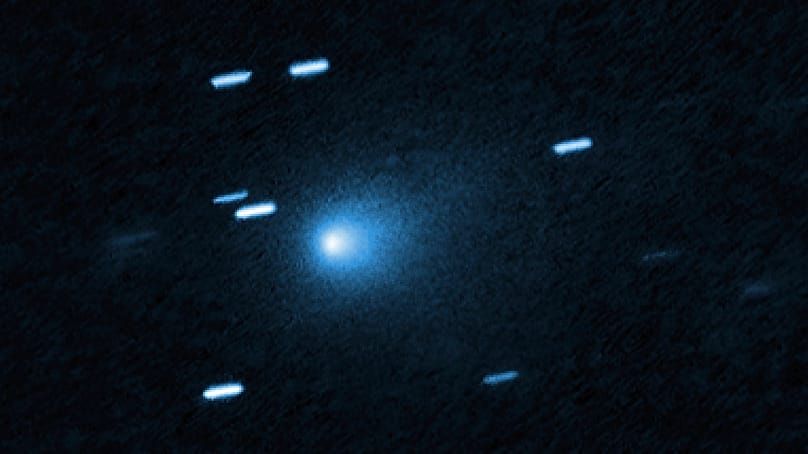
This NASA/ESA image shows interstellar comet 3I/ATLAS, captured by Hubble on 21 July 2025, from 277 million miles away.

This NASA/ESA image shows interstellar comet 3I/ATLAS, captured by Hubble on 21 July 2025, from 277 million miles away.  Credit: NASA/European Space Agency via AP

How fast is it travelling and where is it going?

According to astronomers, 3I/ATLAS is racing through space at more than 200,000 km/h (around 61 km per second), and its speed is increasing as it approaches the Sun.

It’s following a hyperbolic orbit, which means that it’s moving too quickly to be captured by the Sun’s gravity.

“It’s going to kind of cruise through the inner solar system – in between Mars and Earth’s orbit – and then it will fly past the sun," Con Stoitsis, comet and meteor director at the Astronomical Society of Victoria, told The Guardian.

"This one is on what we call a hyperbolic orbit. So it’s not gravitationally bound to the sun. It’s travelling much too fast, and so it will just fly out the other side of the solar system," he added.

According to NASA, the closest 3I/Atlas will come to Earth is about 270 million kilometres.

Could it be something more than a natural object?

For most astronomers, 3I/ATLAS is an exciting but natural phenomenon. But one prominent scientist - Professor Avi Loeb, a theoretical astrophysicist at Harvard University - has advocated the need for a closer examination of the object.

Through the Galileo Project, which investigates potential evidence of extraterrestrial technology, Loeb has been asking provocative, eyebrow-raising questions about 3I/ATLAS’s origin.

In a series of scientific essays published on Medium, he argues that scientists should still consider whether the object could be an alien technological - an artificial probe or artefact from another civilisation.

In one essay titled “Does 3I/ATLAS Generate Its Own Light?”, Loeb questioned whether its brightness might stem from self-luminosity rather than reflected sunlight - a property unlike any known comet.

“The hypothesis in question is that the recent interstellar visitor to our Solar System, 3I/ATLAS1-10, is a technological artefact, and furthermore has active intelligence. If this is the case, then two possibilities follow: first, that its intentions are entirely benign, and second, they are malign, or somewhere in between," he wrote in a paper titled “Is the interstellar object 3I/ATLAS alien technology?”

"The consequences, should the hypothesis turn out to be correct, could potentially be dire for humanity, and would possibly require defensive measures,” he warned.

NASA has firmly rejected Loeb's perspective.

“It looks like a comet. It does comet things. It very, very strongly resembles, in just about every way, the comets that we know,” Tom Statler, NASA’s lead scientist for solar system small bodies, told The Guardian.

Loeb has since acknowledged in a blog post that “the simplest hypothesis is that 3I/ATLAS is a comet,” clarifying that his goal was to challenge assumptions rather than make firm claims.

“Let us instead maintain our childhood curiosity and seek evidence rather than pretend to be the adults in the room that know the answers in advance,” he wrote.

Will we be able to see 3I/ATLAS?

The comet will reach its closest approach to the Sun around 30 October, coming within 1.4 au (about 130 million miles), just inside Mars’ orbit.

Its size and physical properties are still being studied, but NASA says it should become visible again through ground-based telescopes in early December, once it re-emerges from behind the Sun.

RELATED VIDEOS

{ https://www.euronews.com/just-in }

Hoe vind je dit bericht?
Geschreven door peter om 22:18 Stuur door

Meer van UFO'S of UAP'S, ASTRONOMIE, RUIMTEVAART, ARCHEOLOGIE, OUDHEIDKUNDE, SF-SNUFJES EN ANDERE ESOTERISCHE WETENSCHAPPEN - DE ALLERLAATSTE NIEUWTJES

↑ Terug naar de berichten