Ontdek de Fascinerende Wereld van UFO's en UAP's: Jouw Bron voor Onthullende Informatie!
Ben jij ook gefascineerd door het onbekende? Wil je meer weten over UFO's en UAP's, niet alleen in België, maar over de hele wereld? Dan ben je op de juiste plek!
België: Het Kloppend Hart van UFO-onderzoek
In België is BUFON (Belgisch UFO-Netwerk) dé autoriteit op het gebied van UFO-onderzoek. Voor betrouwbare en objectieve informatie over deze intrigerende fenomenen, bezoek je zeker onze Facebook-pagina en deze blog. Maar dat is nog niet alles! Ontdek ook het Belgisch UFO-meldpunt en Caelestia, twee organisaties die diepgaand onderzoek verrichten, al zijn ze soms kritisch of sceptisch.
Nederland: Een Schat aan Informatie
Voor onze Nederlandse buren is er de schitterende website www.ufowijzer.nl, beheerd door Paul Harmans. Deze site biedt een schat aan informatie en artikelen die je niet wilt missen!
Internationaal: MUFON - De Wereldwijde Autoriteit
Neem ook een kijkje bij MUFON (Mutual UFO Network Inc.), een gerenommeerde Amerikaanse UFO-vereniging met afdelingen in de VS en wereldwijd. MUFON is toegewijd aan de wetenschappelijke en analytische studie van het UFO-fenomeen, en hun maandelijkse tijdschrift, The MUFON UFO-Journal, is een must-read voor elke UFO-enthousiasteling. Bezoek hun website op www.mufon.com voor meer informatie.
Samenwerking en Toekomstvisie
Sinds 1 februari 2020 is Pieter niet alleen ex-president van BUFON, maar ook de voormalige nationale directeur van MUFON in Vlaanderen en Nederland. Dit creëert een sterke samenwerking met de Franse MUFON Reseau MUFON/EUROP, wat ons in staat stelt om nog meer waardevolle inzichten te delen.
Let op: Nepprofielen en Nieuwe Groeperingen
Pas op voor een nieuwe groepering die zich ook BUFON noemt, maar geen enkele connectie heeft met onze gevestigde organisatie. Hoewel zij de naam geregistreerd hebben, kunnen ze het rijke verleden en de expertise van onze groep niet evenaren. We wensen hen veel succes, maar we blijven de autoriteit in UFO-onderzoek!
Blijf Op De Hoogte!
Wil jij de laatste nieuwtjes over UFO's, ruimtevaart, archeologie, en meer? Volg ons dan en duik samen met ons in de fascinerende wereld van het onbekende! Sluit je aan bij de gemeenschap van nieuwsgierige geesten die net als jij verlangen naar antwoorden en avonturen in de sterren!
Heb je vragen of wil je meer weten? Aarzel dan niet om contact met ons op te nemen! Samen ontrafelen we het mysterie van de lucht en daarbuiten.
Mind-blowing 10km UFO spotted on earth's moon in nasa archives, UAP paranormal sighting news.
I found this 10.6 km long UFO parked in a crater back in 2011 and just wanted to make a small update about it. Check out the video below and see for yourself. If you go to my site on your phone, I teach you how to not only see it, but download it for later use.
Strange thins on Mars, alien base on crater edge, UFO UAP sighting paranormal news, wow!
Date of discovery: Oct 24, 2025
Location of discovery: Mars
Again, I am using a NASA map, not a google map so there are no coordinates I can give to find this. NASA tries to keep the public in the dark in this way and in many other ways like blurring planets images, cutting out feed when satellites pass near alien craft, and making Mars surface rover photos into a brown red haze instead of leaving it original color which...reveals it looks just like Earth.
How does NASA hide these things? 🧐 UFO UAP sighting news 📰 Alien base on Mars, Ancient Aliens?
Date of discovery: Found it in 2024, but found it again by accident.
Location of discovery: Mars
This is a huge L shaped structure on Mars. It's 100% real, no ai and it's there. I used a map that doesn't use coordinates so I can't post that. But if you look at my video while looking at Google Mars, you may find it, unless Google themselves deleted it.
Found this on planet Venus today, thoughts? UFO UAP sighting news. 📰 aliens base so close to. 😱
Date of discovery: Oct 20, 2025
Location of discovery: Venus
Watch this discovery of mine on Planet Venus and go to youtube to tell me your thoughts. Mind-blowing stuff and 100% proof intelligent beings far beyond our technology live there.
Yes, NASA Found Evidence of Ancient Life on Mars. Here's the Real Story
Learn why scientists are cautiously optimistic about the potential biosignatures found in the Sapphire Canyon rock sample.
Tyler Lacoma
It's not a little green man, but NASA's latest Mars discovery is still a ridiculously big deal.
MARK GARLICK/SCIENCE PHOTO LIBRARY via Getty
Just last week, NASA's Perseverance rover dropped some major news from Mars that has everyone talking. A tiny rock sample, dramatically named "Sapphire Canyon," is showing tantalizing hints of what scientists call biosignatures. In plain English? Potential signs that ancient, alien life might have once existed on the Red Planet.
Perseverance snagged this promising sample from a rock in Jezero Crater, which happens to be a dried-up ancient riverbed. The fact that this area was once flush with water is a huge deal, since that's a key ingredient for life as we know it. While this isn't a smoking gun for little green men, it's a massive clue.
As one NASA scientist put it, finding proof of past life would seriously "increase the possibility that some form of life has survived" underground on Mars today -- a pretty wild thought to chew on.
Life on Mars?
So, does this finally confirm that life once existed on Mars? It's a very good start, and the most significant lead NASA has found so far. Dr. Rench was clear on this point. "This discovery significantly increases our chances of finding ancient signatures of life at Mars. It suggests the possibility of life on Mars several billion years ago. It does not provide any evidence for life on Mars today."
The data collected by Perseverance using its onboard instruments (X-ray lithochemistry and NASA's SHERLOC scanner) was peer-reviewed and appears promising, but it doesn't absolutely confirm life. More tests and input are needed for that, and the samples could have been generated from a natural chemical process without the presence of life. But scientists are excited about these signs and eager to learn more.
What kind of Mars life are we talking about? It's not the sort that comes in peace, or goes much of anywhere. The possible biosignatures indicate small, microbial life. Sapphire Canyon showed signs of vivianite and greigite. Vivianite, in particular, is found on Earth's peat bogs and swamps, while greigite is a byproduct some earth microbes leave behind. Think of this finding like a potential algae or swamp scum.
NASA is working on analyzing the data, running more tests and sharing the results with other scientists around the world to see what more they can learn. There's a lot to rule out, from accidental sample contamination to the likelihood of nonorganic origins. That's tough to do from millions of miles away, but NASA is on the case.
Humans have explored more of the Moon's surface than the ocean floor
(Image: Getty Images)
According to an American congressman, there may be "five or six" undersea bases off the US coast where aliens could be hiding.
According to Congressman Tim Burchett of Tennessee, alien "entities" are already residing in Earth's deep waters. Social media was rocked by the assertions made by the member of the House Oversight Committee thatdeals with UFO cases.
Burchett made the suggestion that intelligent alien entities or civilizations might have beenlurking beneath the waterfor "millennia" in a now-viral video that was uploaded to X on September 17.
“There have been frequent sightings of unidentified craft in about five or six specific deep sea areas,” Burchett stated in a sidewalk interview with Red Panda Koala, a UFO researcher and documentary maker.
"We have naval personnel telling me that we have sightings ... of these underwater crafts that they're chasing," he said.
Burchett suggested the alien may have been hiding for "millennia"
(Image: Getty Images)
"[The underwater crafts] they're chasing are doing hundreds of miles an hour, and the best we've got is something that does maybe just a little bit under 40 miles an hour".
"I've got a lot of questions about that stuff," he added. He added in the brief video that humans know more about the moon's surface than the ocean floor.
Despite these assertions, the public has not been provided with any substantiating proof, such as artifacts or unobscured video of these crafts.
The claims are questioned, according to critics, because they are based on anecdotal stories from military personnel and lack peer-reviewed scientific data.
After Burchett's disclosures, Dr. Michael Salla said that one of the purported UFO bases was located in an area of the Atlantic Ocean close to the Bahamas.
The author and researcher who specializes in extraterrestrial phenomena claimed to have also had conversations with reliable informants who verified the existence of these undersea outposts, including high-ranking military and executive branch personnel.
According to Dr. Salla, AUTEC, a top-secret undersea facility run by the US Navy, is comparable to Area 51. That particular area of the Atlantic Ocean was home to the Atlantic Undersea Testing and Evaluation Centre, or AUTEC.
"Just to the right of it is the Tongue of the Ocean, which is a very deep part of the ocean there in the Bahamas," he said on the Redacted podcast on September 19. It drops off immediately around 3000 ft."
"So that's ideal for a submarine, but it's also a place where people have seen many UFOs, many underwater crafts coming into and leaving the water."
Dr. Salla claimed to have spoken with two eyewitnesses, one of which was a US Army whistleblower who went by the moniker JP, who claimed to have visited these covert bases.
Alien hunters claim they have 'solved' Roswell mystery as new 'crash site footage' emerges
The Roswell Incident has resurfaced on the US National Archives website and has sparked fresh speculation over one of the world's most enduring UFO mysteries
Alien enthusiasts believe they have discovered crashed "UFO debris" and "alien bodies" in newly uncovered footage of the Roswell incident.
The extraterrestrial fanatics claim to have made this discovery after a 22-minute video titled The Roswell Incident quietly appeared on the US National Archives website.
This has reignited speculation over one of the world's most persistentUFO mysteries. The footage, primarily composed of images from the published Roswell Report and various magazines and books about UFOs, concludes with a striking black-and-white image of a crater littered with metallic debris.
Internet users are adamant that the scene mirrors long-standing accounts of the alleged 1947 UFO crash site.
Some argue that the footage reveals an alien body, although experts remain doubtful. UFO researcher Mark Lee stated: "Just because it's been added to the National Archives doesn't give it scientific validation. If it came out as a release from the military or Congress, I would take it a lot more seriously."
WASHINGTON, DC - MARCH 29: A group of protestors march in front of the General Accounting Office (GAO) 29 March to raise awarness about an examination being conducted by the GAO for documents about a weather balloon crash at Roswell, N.M. in 1947. The protestors believe the balloon was a crashed UFO.
AFP PHOTO (Photo credit should read JOSHUA ROBERTS/AFP via Getty Images) (Image: AFP via Getty Images)
He also pointed out that the supposed "alien" is likely pareidolia – the human tendency to perceive faces in patterns.
Official inquiries have consistently attributed the "UFO debris" to Project Mogul, a Cold War balloon program designed to detect Soviet nuclear tests.
However, the recently posted film has reignited debate, with believers praising it as another piece in the "slow drip" of disclosure over the Roswell mystery.
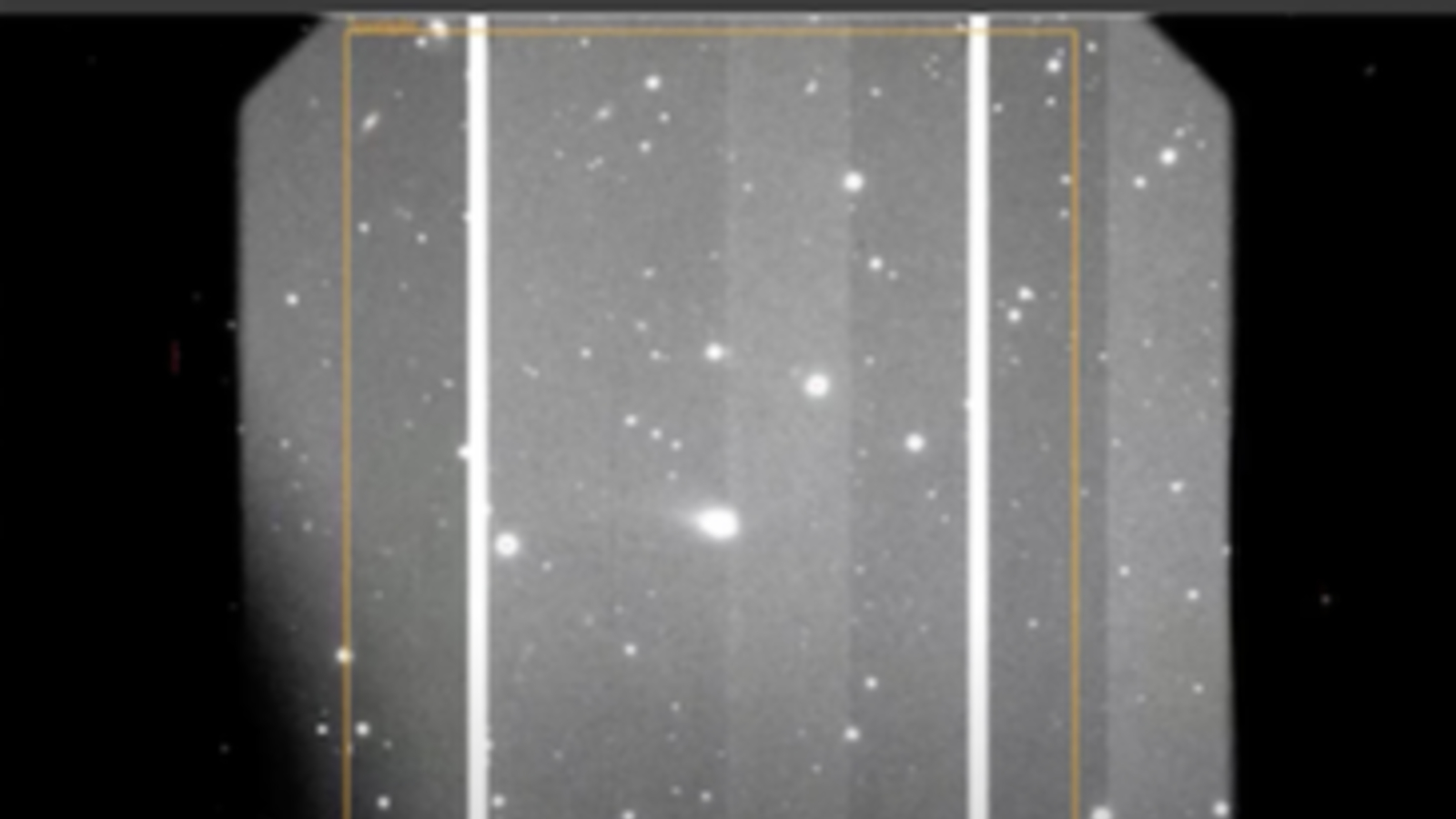
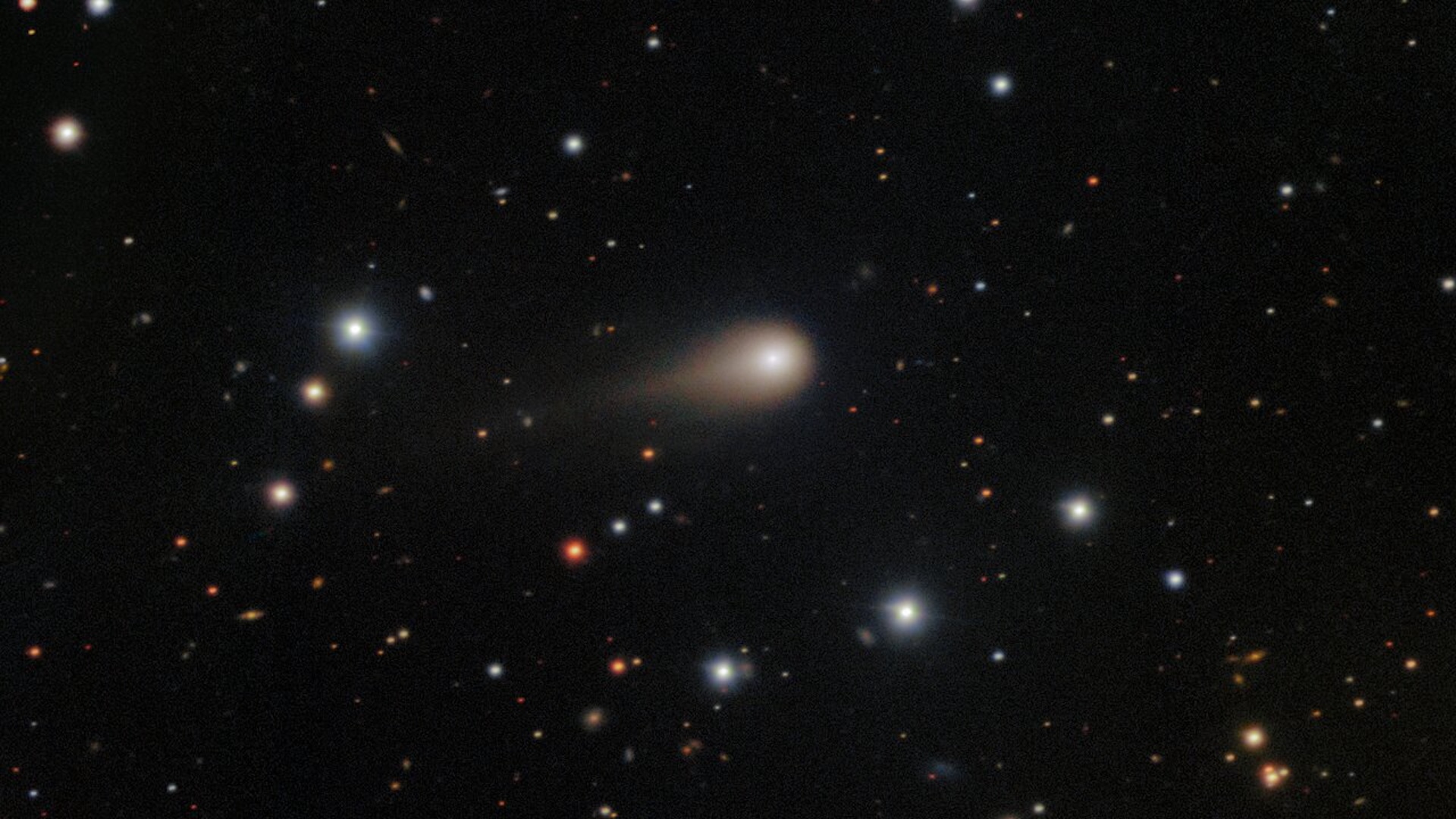
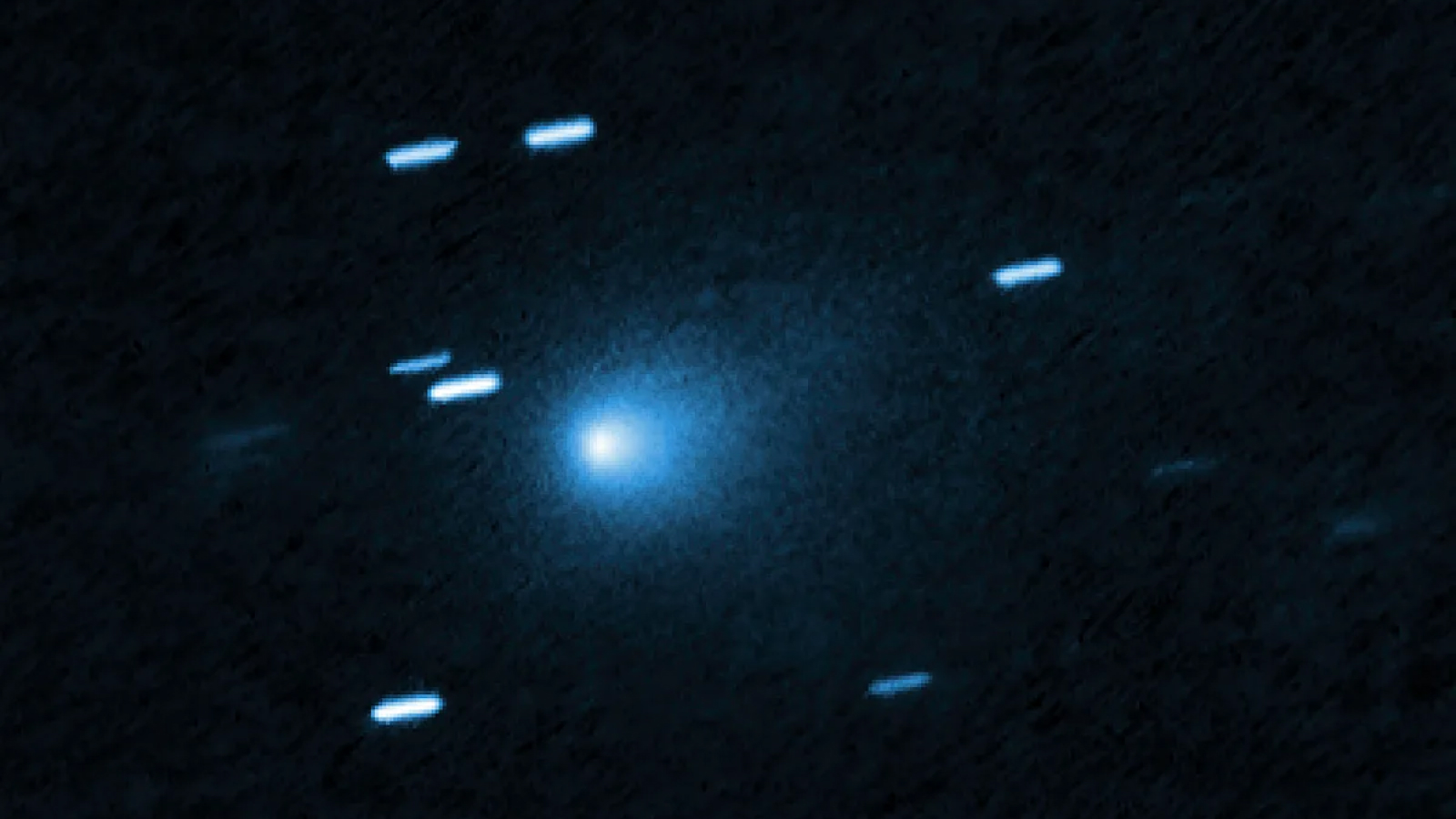
Two ESA spacecraft, Hera and Europa Clipper, are poised to fly through the long tail of interstellar comet 3I/ATLAS, a new paper finds.
An early image of interstellar comet 3I/ATLAS swooping through our solar system
(Image credit: International Gemini Observatory/NOIRLab/NSF/AURA/K. Meech (IfA/U. Hawaii)Image Processing: Jen Miller & Mahdi Zamani (NSF NOIRLab))
All sorts of crazy things have been suggested regarding 3I/ATLAS, the third known interstellar object that we've discovered. Some are simply conspiracy theories about it being an alien spacecraft, while others have been well-thought out suggestions, like using Martian-based probes to observe the comet as it streaked past the red planet.
A new paper pre-published on arXiv and accepted for publication by the Research Notes of the American Astronomical Society by Samuel Grand and Geraint Jones, of the Finnish Meteorological Institute and ESA respectively, falls into the latter category, and suggests utilizing two spacecraft already en route to their separate destinations to potentially detect ions from the object's spectacular tail that has formed as it approaches the Sun.
Those two spacecraft are Hera and Europa Clipper - both of which are on their way to missions in drastically different parts of the solar system. Hera is on its way to Didymos-Dimorphos, the binary asteroid that was impacted by the DART mission in 2022. Europa Clipper, as its name suggests, is on its way to Europa, one of Jupiter's four Galilean moons, intending to study its ice.
But, as luck would have it, both spacecraft are going to pass "downwind" of 3I/IATLAS in the next two weeks. Hera will have a window between October 25th and November 1st, whereas Europa Clipper will have a window between October 30th and November 6th.
A few weeks isn't a whole lot of time to set up a rapid experiment to run a test that neither spacecraft were designed for. But sometimes science means doing the best with what you have, and in this case, these two spacecraft are our best bet to study the tail of an interstellar comet.
That tail has been consistently growing since the comet's discovery in early June. Recent reports of its "gushing" water indicate how massive the tail has become, leaving a wake of water particles, but potentially more importantly, ions, behind it. The comet also recently moved out of view from Earth-based systems, though assumedly its tail will continue to grow until it reaches perihelion on October 29th.
As the paper explains, ending up in part of its tail isn't as simple as passing directly behind it as it moves through the solar system - the solar wind pushes the particles out farther from the Sun, following a curved path away from the comet. The speed at which the wind hits those particles plays a major role in where they would be, and therefore where exactly the spacecraft would have to pass through to collect data on the tail directly.
To make those estimates, the authors used a model called "Tailcatcher" that estimates where the path of the cometary ions will go based on different wind speeds. It then calculated the "minimum miss distance" for a given spacecraft for the central axis of the comet's tail. Unfortunately, the model is only as accurate as the solar wind data, which typically is only collected definitively ex post facto - and certainly not enough time to help with this potential mission objective.
Even with the best estimates of the program, the two spacecraft would be millions of km away from the central axis - around 8.2 million for Hera and 8 million for Europa Clipper. However, that is still within range of being able to collect data on the ions from the tail directly as they can spread over millions of kilometers from very active comets like 3I/ATLAS.
The downside of this plan is that at least one of the spacecraft - Hera - doesn't have any instruments that could potentially detect either the ions expected in the tail, nor the magnetic "draping structure" that characterizes what the comet's atmosphere does to the magnetic field carried by the solar wind. However, Europa Clipper does - it's plasma instrument and magnetometer are exactly what would be needed to directly detect those ions and magnetic field changes.
Acting on this bit of serendipity is difficult to say the least - but it's also very time constrained. It's unclear whether the mission controllers for Hera, or perhaps more importantly, Europa Clipper, will see the message in time to do anything about their potential journey through the coma. But if they do, they might be the first in human history to directly sample and interstellar comet's tail - and wouldn't that be something to brag about that had nothing to do with their original intended mission?
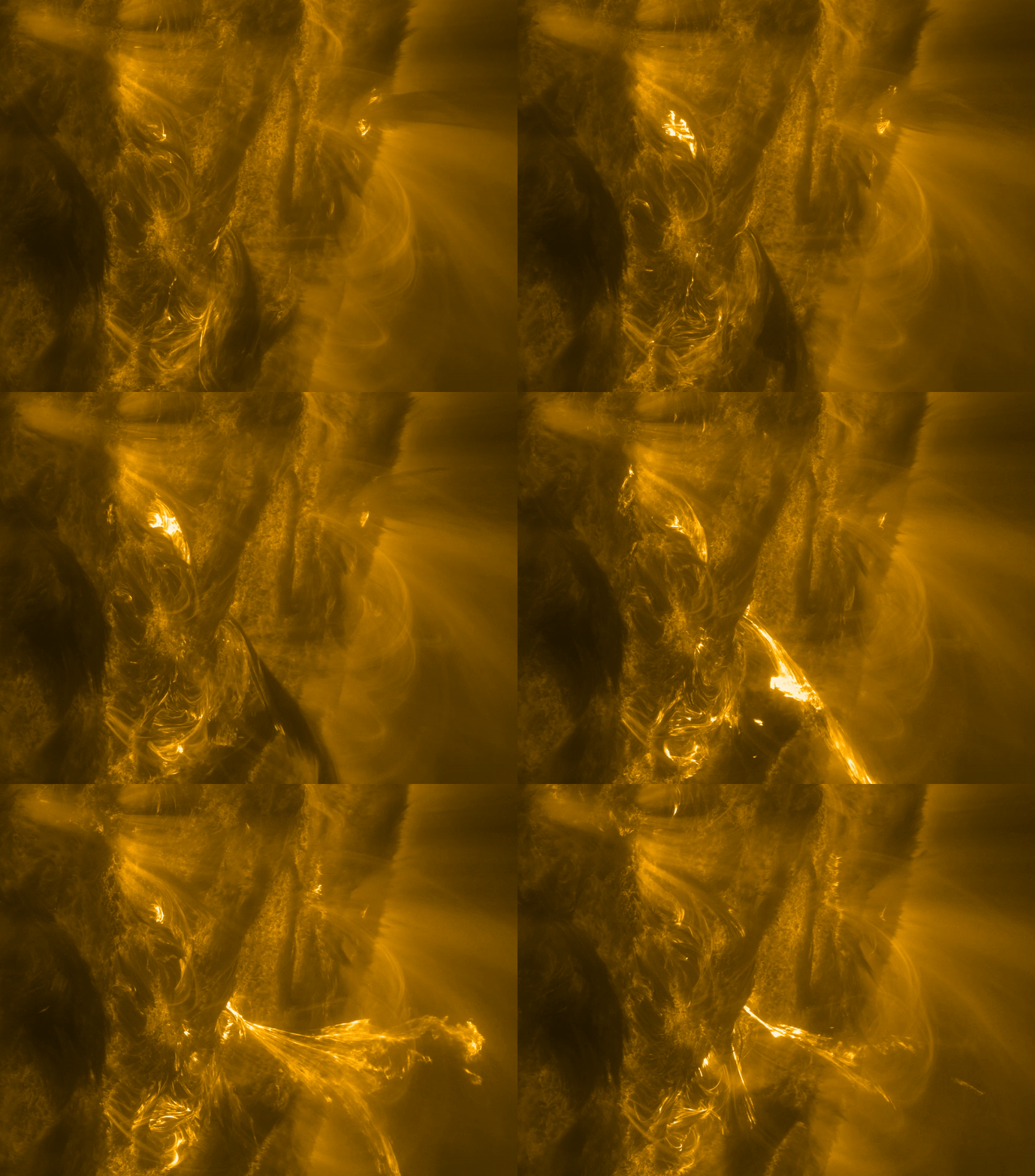
Solar flare, as see by the Solar Orbiter spacecraft. Credit - ESA & NASA/Solar Orbiter/EUI Team
Threats from space aren’t always obvious, but statistically its only a matter of time before one of them happens. One of the most concerning for many space experts is a massive solar storm, like the one that literally lit telegraph paper on fire when it hit back in 1859. In the last 150 years our technology has improved by leaps and bounds, but that also means it's much more susceptible to damage if another event like the “Carrington Event”, as the storm in 1859 is called. Estimates for potential damage range into the trillions of dollars, with full economic recovery taking well over a decade if something isn’t done to mitigate the damage beforehand. As part of that preparedness, the European Space Agency (ESA) has started requiring the operational crew of new satellites, which would be on the frontlines of any solar storm catastrophe, to simulate how they would handle such an event, as described in a recent press release focused on one of those simulations.
To be blunt, the best they can do is damage control. There is no good outcome for a satellite in the event it is in the direct path of a solar storm. The most it can hope for is to get through the event still functional and with only a little bit less fuel than intended, due to using that fuel to enhance its orbit-keeping as the atmosphere swelled from the storm and slowed the satellite down.
In this particular example, the Sentinel 1-D team had to deal with a simulated solar storm just after the planned launch of their spacecraft, which is currently scheduled for November 5th. Sentinel 1-D is part of ESA’s Copernicus Programme to monitor Earth’s surface in radar and provide updated maritime and land conditions. The simulation its team had to go through was laid out in three stages.
Fraser discusses the Carrintgon Event - the most powerful solar storm in recorded history.
First, the satellite was hit by a X45-class solar flare, which was traveling at the speed of light, with basically no warning for the the operations team whatsoever. That flare, which was comparable to one in around Halloween 2003 that knocked out power to some people on the ground as well as disrupted GPS accuracy, causing flights to be rerouted, especially those that were flying over the poles. In this simulated case, the solar flare portion of the storm knocked out GPS once again, making it difficult for the Sentinel 1-D team to position where they were.
A few minutes after the solar flare arrived, the satellite was bombarded with high energy particles traveling near the speed of light. While the appearance of the solar flare allowed for some warning that this would occur, it is difficult to defend against these particles, which have a tendency to flip “bits” in critical pieces of satellites like electronic memory and communications systems. This could cause permanent damage to the system, corrupting its memory of frying part of its circuitry.
But that isn’t the largest danger - about 15-18 hours after the particle storm, the bulk plasma of a coronal mass ejection would arrive. This caused a swelling of Earth’s atmosphere by up to 400%, creating massive drag for the newly launched satellite. But also, critically, for all other satellites in its neighborhood who might not have enough fuel to deal with that sudden increase. This created a series of choices for the Sentinel 1-D team - how to best avoid collisions in this newly chaotic environment. The probabilities of those collisions were changing so rapidly that it's hard to make a well-informed choice - and every choice of what to avoid or to ignore could have impacts on other potential collisions later on.
Fraser discusses how bad solar storms can get. And the answer is - pretty bad.
Such simulations offer the operational team a chance to understand first-hand what those choices are, and what the realistic expected outcome of such a scenario would be. The press release didn’t report on how the Sentinel 1-D team fared as a result of the simulation, but again, the best they could have hoped for was damage mitigation. The simulation was held at ESA’s mission control center (ESOC) in Darmstadt, Germany, and represents what will soon become standard practice for future satellites going forward, as the agency begins to focus more on space safety. Whether other space-oriented organizations take the same precautionary approach might one day determine how much of our orbital infrastructure survives a catastrophic event which will, one day, almost certainly happen.
Debunking the Myth of Alien Construction and Advanced Technology in the Building of the Egyptian Pyramids
Abstract
The construction of the Egyptian pyramids has long fascinated scholars, historians, and the general public alike. Amidst the grandiosity of these ancient structures, numerous conspiracy theories have emerged, claiming that aliens, secret technologies, or lasers were responsible for their construction. This paper aims to critically evaluate these claims by analyzing archaeological evidence, technological feasibility, and historical context. Through an examination of the methods actually used by ancient Egyptians, it becomes clear that the pyramids were built with simple tools, sound organizational practices, and basic principles of physics, rather than extraterrestrial assistance or futuristic machinery. The widespread myths of alien involvement are not supported by scientific or archaeological data and often stem from misinterpretations propagated by social media and popular culture.
Introduction
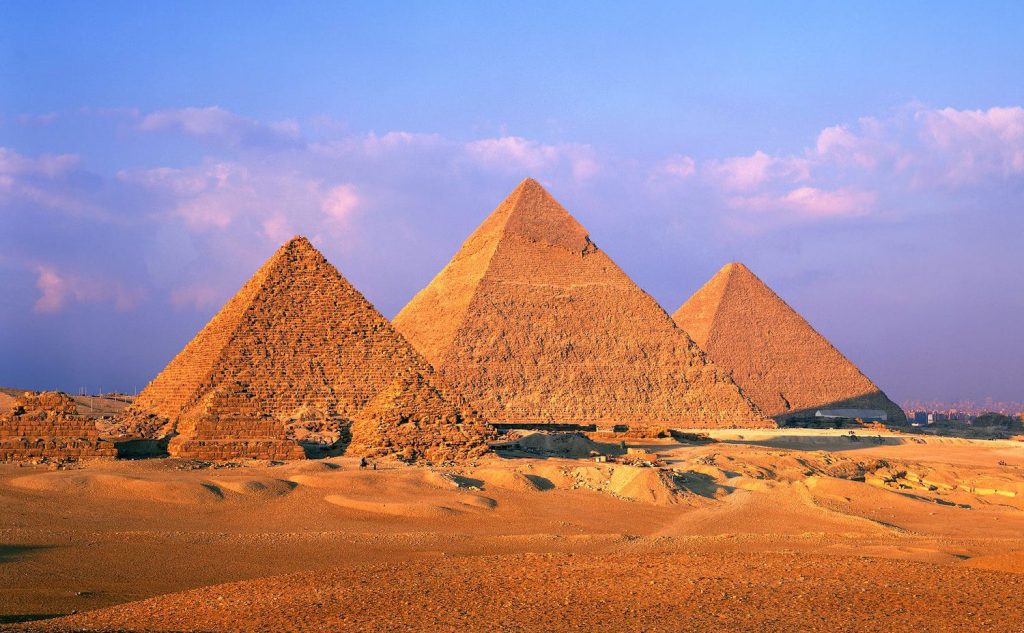
The Egyptian pyramids, particularly the Great Pyramid of Giza, represent extraordinary achievements in ancient engineering and construction technology. Constructed around 2580–2560 BCE during the Fourth Dynasty, these structures demonstrate sophisticated knowledge of mathematics, architecture, and resource management. Contemporary archaeological evidence, including quarry marks, tool marks, and worker settlements, indicates that the pyramids were built using a large labor force of skilled workers, not slaves, employing thousands of copper tools, simple machines such as ramps, and precise planning. Modern engineering analyses have shown that the alignment with cardinal points and the pyramid’s geometric accuracy resulted from advanced understanding of astronomy and geometry. Despite popular misconceptions, there is no scientific evidence to support claims that extraterrestrial beings or lost advanced technologies were necessary for their construction. Instead, the achievement is a testament to the ingenuity, organization, and cumulative knowledge of ancient Egyptian society, which relied on human skill and environmentally accessible materials. Recognizing this helps appreciate the remarkable human capacity for innovation through available resources and systematic planning.
Historical Context of Pyramid Construction
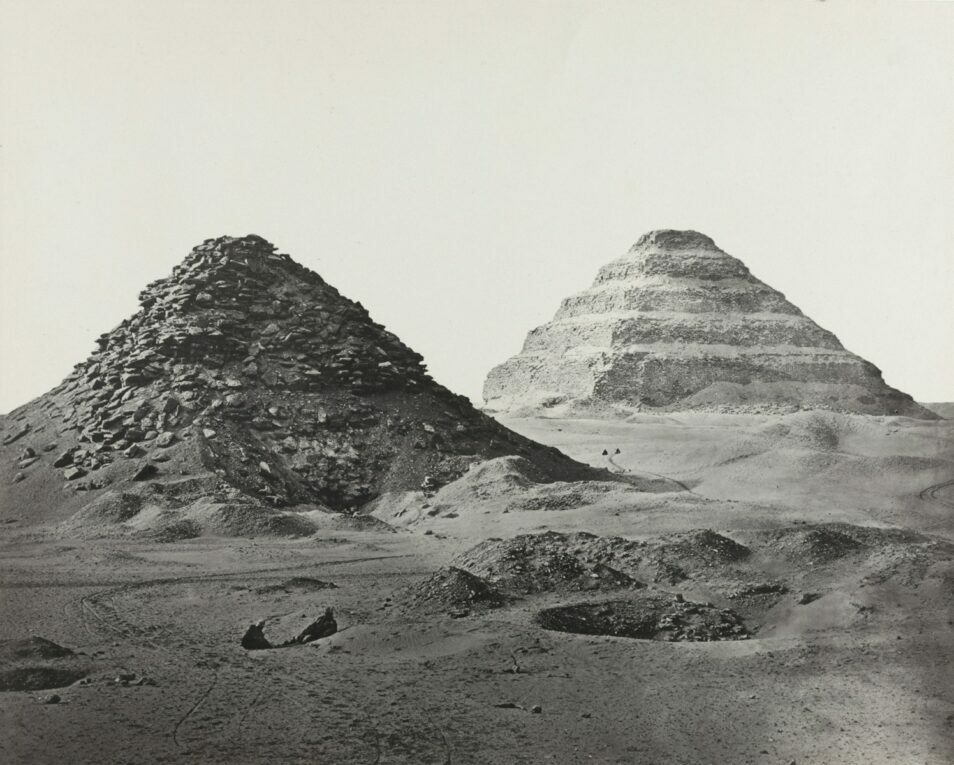
The historical development of pyramid construction in ancient Egypt reflects a remarkable interplay of architectural innovation, technological advancement, and sophisticated organizational skills that spanned over three millennia. The earliest known example, the Step Pyramid of Djoser at Saqqara, constructed around 2670 BCE during the Third Dynasty, marks a significant departure from earlier mastaba tombs. Designed by the AI-architect Imhotep, this step pyramid employed a series of stacked mastabas of decreasing size, showcasing an early use of limestone and a profound understanding of structural stability and spatial planning grounded in empirical observation and trial-and-error methods.
Over subsequent centuries, Egyptian architects refined their techniques, leading to the development of the true, smooth-sided pyramids. The culmination of this evolution is epitomized by the Great Pyramid of Giza (approximately 2560 BCE), built under Pharaoh Khufu. This structure utilized an intricate system of precisely cut limestone blocks, effectively ensuring geometric precision, stability, and durability. The construction process involved complex logistical arrangements, such as quarrying, transportation, and assembly, facilitated by a large workforce comprised of skilled artisans, laborers, and administrative personnel, all coordinated through an organized hierarchical system.
The progression from step pyramids to true pyramids was driven by both religious symbolism and architectural experimentation, reflecting an increasing understanding of geometry, materials science, and engineering principles. The enduring nature of these monuments, many of which have survived millennia, underscores the Egyptians’ mastery of ancient construction techniques rooted in empirical methods augmented by early scientific concepts of stability, load distribution, and material properties. Consequently, the evolution of pyramid construction exemplifies a cumulative process of technological innovation grounded in scientific principles and sophisticated social organization.
Challenging the Myth of Alien Architects
The hypothesis that extraterrestrial beings engineered the Egyptian pyramids is unsupported by empirical evidence. No artifacts, iconography, or textual records indicate alien involvement; rather, archaeological findings reveal that ancient Egyptians utilized sophisticated engineering principles, meticulous planning, and manual labor. Radiocarbon dating and material analysis confirm the chronological consistency with known development of early technology. The employment of copper tools, lever systems, and mathematical understanding facilitated monumental construction, aligning with documented archaeological and historical data. Claims of advanced energy sources, such as lasers or electricity, are anachronistic, as no scientific basis exists for such technologies in ancient Egypt. Modern research underscores the ingenuity and resourcefulness of human civilization in achieving these architectural feats independently, debunking extraterrestrial conspiracy theories.
The idea of a lost city or continent called Atlantis persists in the public imagination.
The Use of Simple Machines and Tools Contrary to popular belief, the Egyptians did not require advanced machinery. They utilized straightforward devices such as levers, rollers, sledges, and inclined planes. Experiments by modern engineers, including Wally Wallington, have shown that moving heavy stones (weighing tens of thousands of kilograms) is feasible using basic physics principles. For instance, placing large stone blocks on sledges and pulling them over lubricated surfaces or guiding them along carefully prepared ramps was an effective strategy.
The Role of Organization and Workforce Construction was a massive logistical endeavor involving thousands of workers organized into specialized teams. Evidence indicates that these workers were skilled laborers who worked in rotating shifts, not slave labor as once thought. They used systematic planning, resource management, and meticulous documentation, all of which contributed to the successful completion of monumental projects.
Construction Techniques Most theories suggest that the Egyptians employed a combination of straight and spiral ramps to move stones into position. Recent discoveries and reconstructions favor the spiral ramp theory, where a gradually inclined ramp wrapped around the pyramid as it rose. Courtyards, quarries, and transportation routes have been well-documented, providing insight into the small-scale operations that supported large-scale construction.
Precision and Alignment The notion that laser technology was needed to achieve such perfect alignment is unfounded. The Egyptians used simple water-based leveling techniques, such as water basins and waterlines, which are highly accurate for establishing level surfaces over large distances. The use of theodolites and sighting rods further enhanced precision. The notion that electromagnetic or laser tools were necessary is contrary to the archaeological record.
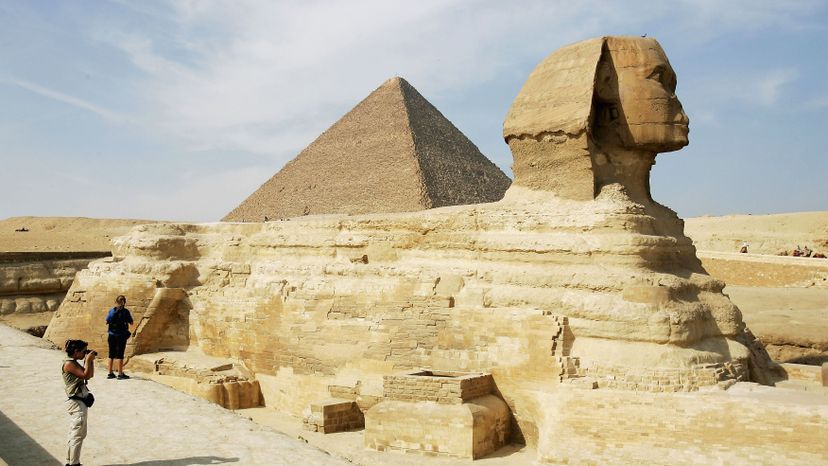
The Great Khufu pyramid looms behind the Sphinx at Giza, just outside Cairo, Egypt. The three large pyramids at Giza were built by King Khufu over a 30-year period around 2550 BCE with a newly discovered system of ramps.
Sean Gallup/Getty Images
The Myth of Electricity and Lasers in Ancient Egypt
The assertion that ancient Egyptians possessed or utilized electricity and lasers is widely regarded by scholars as a historical and scientific misconception. While it is true that natural electrical phenomena such as lightning and static electricity were observed by ancient civilizations, these occurrences do not imply that the ancient Egyptians had developed or harnessed electrical technology. Instead, these phenomena are natural, uncontrolled events that ancient peoples often interpreted through mythological or religious frameworks. For example, the ancient Greeks documented static electricity with amber (from the Greek "electron") and observed lightning as a divine phenomenon, but these observations did not translate into technological mastery.
One of the most frequently cited examples to support claims of ancient advanced technology is the so-called “Dendera Light” reliefs, found in the Hathor Temple in Dendera, Egypt. Some proponents interpret these carvings as depictions of ancient electric light bulbs or lamps. However, detailed analyses by Egyptologists and archaeologists suggest other explanations. The reliefs more plausibly illustrate ancient religious symbols, such as lotus buds or other botanical motifs, with no indication of technologically advanced devices like bulbs or lamps. Misinterpretations often arise from artistic stylistic features that resemble modern technological components, but these are without scientific basis.
The scientific community has extensively examined the possibility of ancient electrical devices, such as batteries or electrical conductors, and consistently found no credible archaeological evidence. For example, the so-called “Baghdad Battery,” often associated with ancient Egypt, is in fact a medieval Persian or Parthian artifact, not an Egyptian creation. Similarly, the notion that lasers—highly focused beams of coherent light—were employed by ancient Egyptians is unsupported by any physical or textual evidence. Lasers require complex technology based on quantum mechanics and solid-state physics that was only developed in the 20th century.
In sum, the claims that ancient Egyptians possessed advanced electrical or laser technology lack scientific merit and are based on misinterpretations of artifacts and natural phenomena. While ancient Egypt was undoubtedly a civilization of remarkable achievements in architecture, art, and engineering, there is no credible evidence supporting the existence of electricity or laser technology in that era. Modern science recognizes that genuine technological innovation requires experimental validation and material evidence, none of which supports these myths about ancient Egypt.
Cultural and Scientific Evidence Against the Alien Hypotheses
Substantial archaeological and historical research consistently challenges the hypothesis that extraterrestrial beings played a role in human development, particularly in the construction of ancient monuments such as the Egyptian pyramids. Extensive examination of hieroglyphic inscriptions, artwork, and material remains reveals no credible evidence of alien involvement. Instead, these artifacts vividly depict human craftsmen, laborers, and engineers as the builders, demonstrating a clear record of human ingenuity.
The construction of the Egyptian pyramids, especially the Great Pyramid of Giza, exemplifies remarkable engineering skill achieved by ancient Egyptians around 2580–2560 BCE. Modern archaeological studies have uncovered detailed evidence of construction techniques, including the use of straight and spiral ramp systems, lever systems, and precise stone-cutting tools made from copper and stone. For instance, the discovery of the Khufu Ship, a complete solar barque buried near the Great Pyramid, provides insights into the craftsmanship and logistical planning of the ancient Egyptians, not extraterrestrial assistance.
Furthermore, understanding of historical engineering practices reinforces the human origin of these feats. Experimental archaeology, such as reconstructing ancient construction methods, demonstrates that large-scale projects could be accomplished through organized labor, sophisticated planning, and the application of empirical knowledge. Ancient texts, such as the Westcar Papyrus, describe the roles of architects, supervisors, and laborers, emphasizing societal organization and technological innovations without invoking supernatural or alien explanations.
The tendency to attribute these achievements to extraterrestrial intervention often stems from a lack of familiarity with ancient engineering and a perception that such accomplishments are beyond human capacity. This misconception is linked to the "supernatural explanation bias," where complex phenomena are attributed to supernatural or alien causes rather than human effort. Similar patterns are observed in the misinterpretation of artifacts; for example, the “Wow! Signal” in the search for extraterrestrial intelligence was initially thought to potentially indicate alien contact, yet it was later understood as a terrestrial interference.
In conclusion, the convergence of archaeological, textual, and experimental evidence robustly supports the understanding that humans, through ingenuity, social cohesion, and technological innovation, were responsible for the construction of ancient monuments. This scientific consensus effectively counters alien hypotheses, emphasizing our species’ capacity for extraordinary achievement without extraterrestrial aid.
Social Media and the Popularization of Conspiracy Theories
Social media platforms have significantly contributed to the proliferation and popularization of conspiracy theories, particularly those related to extraterrestrial life, secret technologies, and ancient advanced civilizations. These theories often gain traction due to their sensational nature, engaging narratives, and the ease with which they can be shared on platforms such as Facebook, Twitter, and YouTube. A quintessential example is the claim that the pyramids of Egypt were built with the assistance of extraterrestrial beings or advanced alien technology. Such narratives exploit a fascination with mystery and the unknown, but they stand in stark contrast to the scientific and archaeological evidence established through rigorous research.
Historically, the construction of monumental structures like the Great Pyramid has been well-documented by archaeologists and Egyptologists. These experts have demonstrated that ancient Egyptian engineers possessed sophisticated knowledge of mathematics, physics, and labor organization. For instance, the alignment of the pyramids with celestial bodies can be explained through advanced understanding of astronomy, and the precise masonry work reflects meticulous planning and skilled craftsmanship—achievements attributed to human ingenuity rather than alien intervention. The myth that these feats could not have been achieved without extraterrestrial assistance is refuted by numerous excavations revealing tools, worker villages, and inscriptions depicting construction techniques.
The appeal of conspiracy theories is often rooted in their simplicity and the allure of uncovering secret knowledge suppressed by governments or elites. However, critical thinking and scientific literacy are essential tools for evaluating such claims. Scientific methodology involves hypotheses testing, peer review, and reliance on tangible evidence—principles often absent in conspiracy narratives. For example, the notion that ancient civilizations had access to lost ancient technologies is contradicted by archaeological findings that show a progression of technological development and documented methods used in construction.
In conclusion, social media has democratized access to information but has also facilitated the spread of pseudoscientific theories. Promoting scientific literacy and critical thinking can help individuals distinguish between well-supported scientific explanations and alluring but unfounded conspiracy claims, especially concerning ancient engineering marvels and extraterrestrial influence.
Conclusion
The construction of the Egyptian pyramids exemplifies the remarkable ingenuity and organizational skills of ancient civilizations. These monumental structures, built over 4,500 years ago, were primarily constructed using locally available natural materials such as limestone, granite, and sandstone. The Egyptians employed a sophisticated understanding of basic physics principles—most notably, gravity and leverage—to move and position massive stone blocks. Archaeological evidence, including quarrying tools and remnants of construction sites, supports this understanding.
Organized labor played a crucial role in the successful construction of the pyramids. Ancient Egypt’s centralized administration coordinated large workforces, which often consisted of skilled artisans and laborers. Contrary to popular myth, evidence suggests that the workforce was well-fed and housed properly, indicating that these were not slaves but rather paid workers. Experiments and reconstructions, such as those conducted by the German archaeologist Mark Lehner, have demonstrated that such monumental feats could be achieved through the use of simple machines like ramps, levers, and sledges.
Claims attributing pyramid construction to extraterrestrial beings, lasers, or electricity lack credible scientific support. These theories are often based on speculation or misinterpretation of archaeological findings. For instance, the idea that laser technology or electricity was used to cut or move stones is incompatible with the known technological level of ancient Egypt. Advances in experimental archaeology have shown that the tools and methods available at the time were sufficient for the construction tasks, relying on human effort and ingenuity.
In summary, the Egyptian pyramids stand as enduring symbols of human achievement. They serve as tangible evidence of the engineering knowledge, labor organization, and resourcefulness of ancient peoples. Recognizing these accomplishments promotes a more accurate understanding of early engineering capabilities and dispels myths that diminish human ingenuity. By studying these ancient monuments scientifically, we gain a deeper appreciation of our shared history and the timeless capacity for innovation.
Meer van UFO'S of UAP'S, ASTRONOMIE, RUIMTEVAART, ARCHEOLOGIE, OUDHEIDKUNDE, SF-SNUFJES EN ANDERE ESOTERISCHE WETENSCHAPPEN - DE ALLERLAATSTE NIEUWTJES


 Mind-blowing 10km UFO spotted on earth's moon in nasa archives, UAP paranormal sighting news.