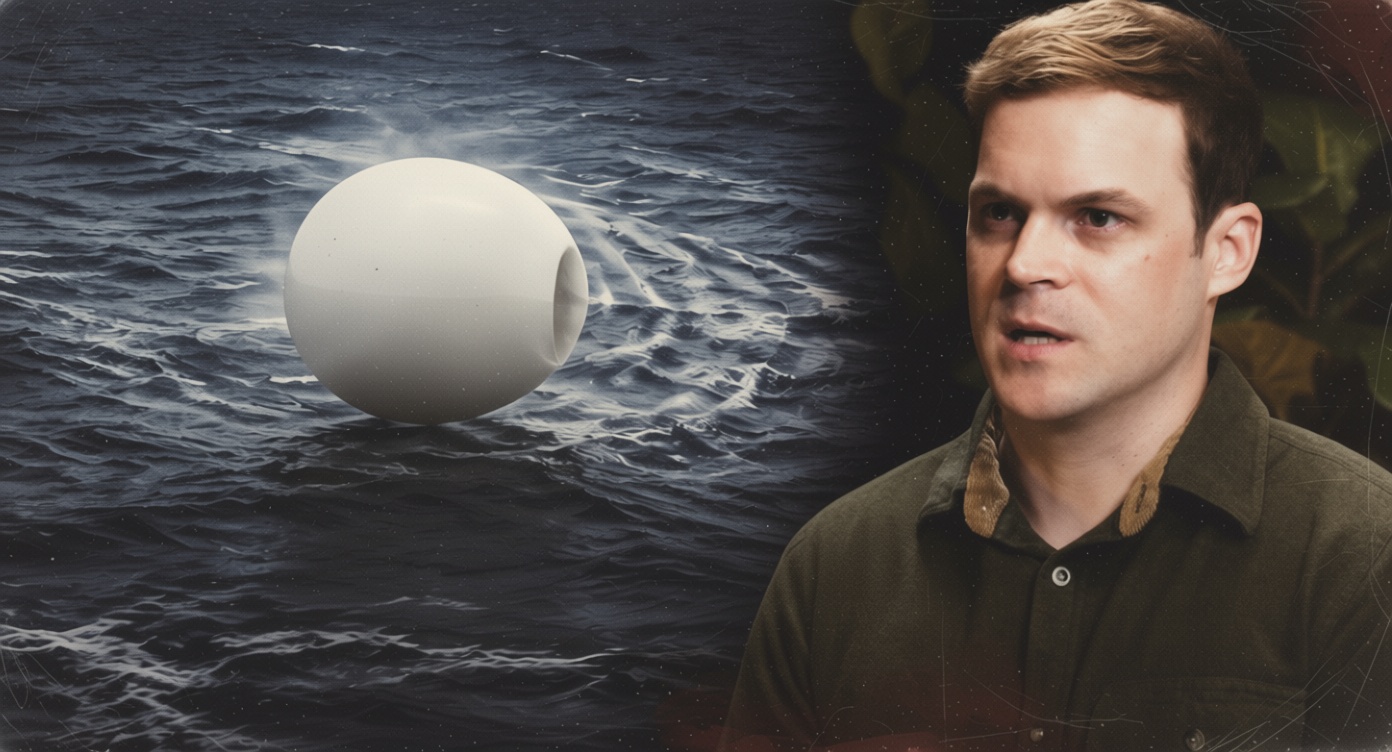
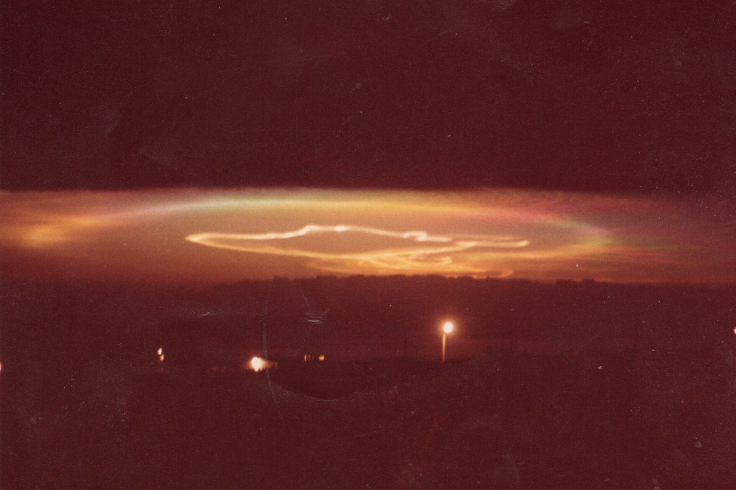
10 Mile Long Alien Base Found In Ocean Off Australia, Seeing is believing! UFO UAP Sighting News. 👽

10 Mile Long Alien Base Found In Ocean Off Australia, Seeing is believing! UFO UAP Sighting News. 👽
AI could 'kill all humans' by the end of the decade, Anthropic researcher warns – as he quits over 'out of control' superintelligence race
A researcher at a leading AI company has quit over concerns that big tech firms are in an 'out of control' race to build systems that could wipe out humanity.
Jacob Coxon has left Anthropic after spending the last three years training new AI models.
He claims that neither the firm behind the Claude system – nor ChatGPT creators OpenAI, where he previously worked – were 'acting responsibly' over the safety of AI.
And he even warned that artificial intelligence could 'kill all humans' by the end of the decade.
Posting on X, he said: 'I resigned from Anthropic today. I spent the last three years doing pretraining research at both OpenAI and Anthropic.
'Neither company is acting responsibly. They are racing straight to self-improving superintelligence and gambling with our lives.'

A researcher at Anthropic has quit over concerns that big tech firms are in an 'out of control' race to build systems that could wipe out humanity

In a series of tweets explaining his decision to leave Anthropic, Mr Coxon urged people to 'not underestimate the power' of AI – particularly if it becomes 'superintelligent'

In response to Mr Coxon, Evan Hubinger, Alignment Science lead at Anthropic, said that the firm believes AI has the potential to kill humans
In a series of tweets explaining his decision to leave Anthropic, Mr Coxon urged people to 'not underestimate the power' of AI – particularly if it becomes 'superintelligent'.
Superintelligence is the point at which an artificial system becomes more powerful than any individual, company or even nation.
'These will soon be superhuman systems that can hack anything, revolutionize any field overnight, and acquire real power and resources. We have all witnessed the progress in each of these domains, and progress is not slowing,' Mr Coxon said.
'The people building AI earnestly believe that it could kill us all by the end of the decade,' he said.
'This is not a marketing stunt. If anything, many executives and senior researchers will couch their phrasing in the press to sound sensible - but I hear the same people express fear privately. No other human activity poses this level of danger.'
According to Mr Coxon, this danger is 'well-understood' at Anthropic. However, the company is 'locked in a race to get there first'.
He explained: 'Accepting this race and entering the "endgame" is a hubristic gamble that should not be launched from a private company's [messaging system] Slack. Attempting to speedrun alignment should require extraordinary confidence that there are no better trajectories available.'
As an example, the researcher highlights the recent Hugging Face attack, which saw a firm hacked by OpenAI's rogue AI.
He said: 'Warning shots like the Hugging Face attack have made pacing agreements between U.S. labs more viable. I don't feel like we're on track to prevent a global race, which may require costly actions such as a temporary ban on improving model capabilities.'
To conclude, he urged fellow AI researchers to 'consider what the next few years will actually look like'.
Hollywood has long warned of the dangers of these technologies, in films such as The Terminator and its sequels.

Terminator Genisys, the fifth film in the series... Hollywood has long warned of technology's threat to humanity
Mr Coxon asked: 'Do you want to kick off a superintelligent RL [reinforcement learning] run without a rigorous understanding of its mind? Should you put your head down because "it's happening anyway" – or take this moment to call for different conditions?'
In response to the post, Evan Hubinger, Anthropic's AI safety lead, confirmed that the firm believes AI has the potential to kill humans.
On X, Mr Hubinger said: 'Jacob is correct here – we really do earnestly believe AI could kill all humans! I personally think it is >10% within the next decade. I believe Anthropic is trying its best, but we do not yet have a plan to solve alignment for superintelligence and are not clearly on track to.'
The news comes as Ed Davey claimed that Anthropic did not submit its latest model to the AI Security Institute for testing due to 'pressure from the Trump administration.'
Speaking at Prime Minister's Questions today, he cited a Financial Times report on the subject, and asked: 'Does the Prime Minister think it is acceptable for President Trump to undermine Britain's efforts to keep the world safe from dangerous AI?'
In response, Andy Burnham said that 'conversations with Anthropic will continue'.
He added: 'AI poses risks to our national security, but it also could be the source of solutions.'
Mr Coxon isn't the first expert to raise concerns over superintelligent AI in recent days.
His comments come shortly after Geoffrey Hinton – a Canadian researcher often referred to as the 'Godfather of AI' – warned that superintelligent systems could 'lead to human extinction'.
'We would be very foolish to develop superintelligence now, when there is no scientific consensus it can be developed safely and controllably,' Dr Hinton said.
'Losing control over AI smarter than ourselves could be catastrophic and could even lead to human extinction.'
Anthropic's Claude is one of the leading large language models (LLMs), which are trained by scraping vast amounts of text so they can understand and generate human-like language and responses to questions.
Unravelling the mystery of the Devil's Arrows: Study reveals how prehistoric builders hauled 25-tonne rocks 11 miles across Yorkshire to build the landmark 5,000 years ago
When it comes to ancient stone structures, Stonehenge is usually the first landmark to spring to mind.
But over in Yorkshire, another prehistoric monument has left scientists stumped for centuries.
The Devil's Arrows is a set of three huge stones near Boroughbridge, dating back around 4,500–5,000 years.
Each weighing around 25 tonnes and standing at almost 23ft (seven metres) tall, how the enormous stones got there has remained unclear.
Now, scientists from the University of York and Curtin University think they've cracked it.
Their new analysis suggests the stones were collected and transported from Brimham Rocks, about 11 miles (18km) away.
'Sites in southern England and Scotland receive considerable attention, but monuments like the Devil's Arrows have remained comparatively understudied despite their significance,' said Dr Jim Leary, from the University of York.
'We have now proved that Neolithic communities moved several 25–tonne stones 18km across Yorkshire, transforming a familiar site into an epic quest to create a sacred landscape.'

The Devil's Arrows are positioned across 174 metres on the western outskirts of Boroughbridge, and date back to roughly 2500–2000 BC, making them some of the oldest stone structures in the UK
The Devil's Arrows are positioned across 174 metres on the western outskirts of Boroughbridge, and date back to roughly 2500–2000 BC, making them some of the oldest stone structures in the UK.
Although they're slightly younger than Stonehenge, the stones are actually even taller, at almost 23ft (seven metres).
While the Devil's Arrows stand on Triassic Sherwood Sandstone, the stones themselves are made of Pennine Basin Millstone Grit.
This has raised questions about how they got to their location in Boroughbridge.
Some experts have argued they were hauled there by humans, while others are convinced they were transported by ice–age glaciers.
To settle the debate once and for all, the researchers analysed the minerals in the stones.
Dr Anthony Clarke, geochemist at Curtin University in Australia, said: 'Our research shows these stones weren't simply taken from the nearest available source – they were deliberately chosen from a challenging landscape 18 kilometres away.
'Plumpton Rocks, which is closer to the Devil's Arrows, had previously been identified as the probable source of the stones.

Their new analysis suggests the stones were collected and transported from Brimham Rocks (pictured), about 11 miles (18km) away

Although they're slightly younger than Stonehenge, the stones are actually even taller, at almost 23ft (seven metres)
'Our findings instead point to Brimham Rocks, showing that prehistoric builders transported these enormous stones significantly further than thought.
'Each stone weighs more than 25 tonnes, so moving them would have required incredible planning, coordination and engineering skill.
'This tells us prehistoric people placed real importance on the landscape itself. It wasn't just about convenience – the location the stones came from likely held meaning for them.'
While three stones remain today, historical accounts suggest the site once held at least five stones.
In the mid–16th century, Tudor antiquarian John Leland recorded a fourth standing stone, but decades later it was said to be missing.
In 1687, it was recorded that locals had broken up a fallen stone, using part of it to construct Peg Bridge over the River Tutt and taking the top segment to Aldborough manor.
Then, in the 19th century, antiquarian J.R. Walbran proposed that another fallen monolith had been recycled into the Battle Cross – an 18ft (5.5 metre) monument crafted in the 15th century to commemorate the 1322 Battle of Boroughbridge.
In the new study, the researchers were able to confirm Walbran's theory.

Location and appearance of the Devil’s Arrows on the western outskirts of Boroughbridge, Yorkshire. The insets show the alignment and spacing of the three surviving stones, along with scaled profiles of the Devil’s Arrows and the Battle Cross Monument. The bottom panels show photographs of the three surviving megaliths.
Credit: A. Clarke et al., Proceedings. Mathematical, Physical, and Engineering Sciences (2026)

While three stones remain today, historical accounts suggest the site once held at least five stones
Mineral fingerprinting proved that the medieval cross – which stands in Aldborough today – is a carved segment of a long–lost Devil's Arrow.
Justin Scully, General Manager for Fountains Abbey & Studley Royal and Brimham Rocks, said: 'The Devil's Arrows have inspired stories and sparked curiosity for generations.
'Local legend tells of the Devil standing on How Hill and hurling giant stone arrows towards Boroughbridge, only for them to fall short and land where they stand today.
'While the folklore remains a much–loved part of their story, it's wonderful to discover that the real journey of these stones is every bit as extraordinary.
'This fascinating research reveals a direct link between Brimham Rocks and the Devil's Arrows, connecting two remarkable Yorkshire landscapes in our care.
'We're incredibly grateful to the researchers for helping us uncover this new chapter in the stones' story and deepen our understanding of the people who shaped this landscape thousands of years ago.'
‘China’s Nostradamus’ makes 5 grim predictions for 2027
Het raast met 25.000 kilometer per seconde door de ruimte: Pas ontdekt object in ons eigen sterrenstelsel behoort tot het meest extreme dat wetenschappers ooit hebben gezien
Astrofysici hebben een object ontdekt dat met een recordsnelheid een extreme tocht door het centrum van de Melkweg maakt – en dat kan hun een heel nieuw inzicht geven in de mysterieuze wereld van een zwart gat.

Op deze afbeelding zie je sterren die rond het centrale zwarte gat van de Melkweg, Sgr A*, razen. De meeste zijn jong en heet, maar de oranje ster S301 valt om een bijzondere reden op.
© Max-Planck-Institute
Midden in de Melkweg is er een plek waar de sterren niet gewoon rond een zwart gat draaien – ze worden rondgeslingerd met snelheden die alle intuïtie tarten.
In het centrum staat Sagittarius A*, het superzware zwarte gat van ons sterrenstelsel. En tussen de sterren die zich in het enorme zwaartekrachtveld ervan wagen, hebben astrofysici van het Max Planck Institute for Extraterrestrial Physics in Duitsland nu een ster ontdekt die er duidelijk uitspringt.
Hij is namelijk sneller en extremer dan alle sterren die de onderzoekers tot nu toe hebben gezien.
De ster heet S301 en doet maar 8,7 jaar over een rondje om Sagittarius A*. Als hij het dichtstbij komt, haalt hij een snelheid van meer dan 25.000 kilometer per seconde – zo’n 8,5 procent van de lichtsnelheid.
Daarmee is S301 de snelste ster die astrofysici ooit in het sterrenstelsel hebben waargenomen.
En het is niet alleen de snelheid die hem interessant maakt.
S301 komt zo’n tien keer dichter bij het zwarte gat dan de ster S2, die wetenschappers al jaren gebruiken om Sagittarius A* te bestuderen en Einsteins relativiteitstheorie te testen.
Tijdens zijn nauwe passage komt S301 in een gebied terecht waar de rotatie van het zwarte gat de ruimtetijd zelf meesleept.
Die kleine invloed kan de baan van de ster op zo’n manier veranderen dat de wetenschappers dat kunnen meten. En zo kunnen ze mogelijk bepalen hoe snel Sagittarius A* roteert.
Als de onderzoekers zowel de massa als de rotatie van het zwarte gat kunnen meten, kunnen ze de volgende stap zetten: het testen van de zogeheten no-hair-theorie, die voorspelt dat het zwaartekrachtveld van een zwart gat slechts afhangt van enkele fundamentele eigenschappen.
Maar er is ook nog een andere mogelijke verklaring voor de wilde baan van S301, denken de Duitse onderzoekers.
De ster kan vroeger een partner hebben gehad. Als een dubbelstersysteem – sterren die bij elkaar worden gehouden door hun gezamenlijke zwaartekracht – te dicht bij Sagittarius A* kwam, kan het zwarte gat het paar uit elkaar hebben gerukt door de ene ster op te slokken en de andere weg te slingeren.
Hoe loopt het af? Die vraag houdt astronomen al decennialang bezig, want zal het heelal samentrekken tot niets of oneindig uitdijen? Onderzoekers hebben dit nu berekend – en de conclusie is dat de ondergang van het heelal weleens verrassend dichtbij kan zijn:
S301 komt eind 2031 weer dicht bij het zwarte gat. Dit is dus een belangrijke kans voor astrofysici om het effect van de rotatie van het zwarte gat nog duidelijker te zien.
En misschien gaan er in het centrum van de Melkweg nog wel meer sterren als S301 schuil.
A NASA Probe Is About To Enter A Mysterious Region Beyond The Solar System Where No Other Mission Has Explored
NASA’s New Horizons spacecraft is approaching a rare region near the edge of the solar system, but funding issues threaten future observations.

© Credit: NASA
NASA’s New Horizons spacecraft is nearing one of the most unexplored regions of the solar system, but two of its scientific instruments could be shut down before the probe reaches the boundary where the Sun’s influence begins to fade.
The spacecraft remains healthy and is expected to continue operating for decades, potentially into the 2050s. Yet a lack of funding for scientists analyzing its data has placed two key instruments at risk, threatening observations of a region no previous spacecraft has explored with the same scientific capabilities.
The timing is especially significant because New Horizons is approaching the heliospheric termination shock, where the solar wind slows as it encounters the surrounding interstellar environment.
When New Horizons launched from Earth, its primary goal was to explore Pluto, the distant dwarf planet located more than 5 billion kilometers away. The spacecraft first traveled toward Jupiter, using the giant planet’s gravity to accelerate while collecting images and scientific data from its moons, including Io, Europa, and Ganymede.
The probe reached Pluto in 2015, providing humanity with the first detailed observations of a world that had previously remained a distant mystery. The mission revealed a surprisingly active environment, with mountains, glaciers, atmospheric haze, and evidence of geological processes still shaping the surface.
NASA described the discoveries by stating: “Data from New Horizons clearly indicated that Pluto and its satellites were far more complex than imagined, and scientists were particularly surprised by the degree of current activity on Pluto’s surface.”
The agency also explained: “The atmospheric haze and lower than predicted atmospheric escape rate forced scientists to fundamentally revise earlier models of the system.”
After completing its Pluto flyby, New Horizons continued deeper into the outer solar system. In 2019, the spacecraft reached Arrokoth, a primitive two-lobed object located in the Kuiper Belt, offering scientists a rare view of material left over from the solar system’s formation.
New Horizons delivered this composite image of Kuiper Belt object Arrokoth when it flew by in January 2019.
Credit: NASA / Johns Hopkins University Applied Physics Laboratory / Southwest Research Institute / Roman Tkachenko
The spacecraft’s extended mission is now focused on studying the heliosphere, the enormous bubble created by the Sun that surrounds the solar system. This region defines the limits of the Sun’s influence and provides a natural laboratory for understanding how our cosmic neighborhood interacts with interstellar space.
Two instruments are central to these observations: the Solar Wind Around Pluto (SWAP) detector and the Pluto Energetic Particle Spectrometer Science Investigation (PEPSSI) instrument.
Although both instruments continue operating normally, the challenge comes from Earth-based funding. NASA has not provided approximately $2 million in support over the last two years for the researchers responsible for downloading, processing, and analyzing the scientific data.
Without this funding, New Horizons principal investigator Alan Stern warned that shutting down the instruments may become unavoidable.
These particles appear to influence conditions throughout the outer heliosphere. According to scientists involved with the mission, New Horizons has shown that pick-up ions dominate aspects of the solar wind beyond 10 astronomical units and shape conditions near the boundary that separates the solar system from interstellar space.
A petition supported by former NASA Chief Scientist James L. Green highlights that the spacecraft is equipped to collect measurements unavailable from the Voyager missions. Those observations could improve understanding of how the heliosphere shields the inner solar system from galactic cosmic rays, high-energy particles that represent a major challenge for future human exploration.
The possible shutdown of SWAP and PEPSSI has raised broader questions about how NASA manages spacecraft that continue operating long after their original missions.
Long-running missions can produce valuable scientific results, but they also require funding for researchers, operations teams, and data analysis. NASA must balance support for existing spacecraft with investments in future exploration programs.
NASA Administrator Jared Isaacman addressed the situation on social media, writing: “We have heard from a few members of the community on this and indicated we are looking into it. The big dollars were already invested in New Horizons, so generally supportive of generating high-quality scientific returns for low-dollar spend.”
He also noted that NASA regularly maintains missions beyond their initial design life while evaluating how resources can support future projects.
For New Horizons, the spacecraft itself remains fully operational and capable of continuing its journey into the outer solar system. The coming funding decision will determine whether scientists can keep collecting data during one of the most important phases of the mission.
The probe is moving toward a region where humanity has only limited knowledge, carrying instruments designed to reveal how the Sun’s domain ends and where interstellar space begins.
Former DISA contractor describes multiple UAP videos from MQ-9 feeds over East Asia
ILLUSTRATIVE RECONSTRUCTION // NOT EVIDENCE
A former Defense Information Systems Agency (DISA) contractor says he saw multiple unexplained objects on classified MQ-9 drone feeds while reviewing surveillance over East Asia, adding another firsthand account to the growing record of military personnel and contractors who say they encountered unidentified anomalous phenomena in secure government systems. According to the account, the objects appeared in spherical, elongated and luminous forms, and at least one displayed maneuvering that the witness described as highly unusual, including movement just feet above the ocean surface.
The report is notable not only for what it describes, but for where the material allegedly remains stored: on classified systems that, according to the account, could still contain footage relevant to congressional interest in UAP records. That detail matters because lawmakers have repeatedly pressed the Department of Defense and intelligence agencies for access to footage, sensor data and internal reports that may help determine whether such events are advanced foreign technology, sensor artifacts, or something still unexplained.
The former contractor, identified as Kevin Campbell, described watching live feeds from MQ-9 remotely piloted aircraft and seeing a series of objects that did not fit conventional expectations for aircraft, balloons or drones. He said the encounters included different shapes and light signatures, suggesting more than one event and more than one type of anomaly. One object, in particular, reportedly moved in a way that stood out from normal aerial behavior, including a low-altitude pass over open water that the witness said was far too close to the ocean to be consistent with ordinary flight.
Although the details remain unverified in public reporting, the account is framed as a direct observation from someone with access to sensitive imagery. That makes it especially relevant in UAP discussions, where one of the central questions has long been whether the most compelling evidence exists in classified military archives rather than in public releases.
MQ-9 aircraft are among the most capable reconnaissance platforms in U.S. service, carrying electro-optical, infrared and other sensors that can provide detailed imagery across wide areas. If anomalous objects were captured on those feeds, the footage would likely be of interest because it could include sensor metadata, time stamps and operational context that are often missing from public UAP clips. Such data can help investigators determine whether an object’s motion is real, how far away it was, and whether environmental conditions or camera effects could explain the sighting.
The fact that the videos are said to remain accessible on classified systems also raises the question of preservation. If the material has not been formally transferred into a public or congressional review process, it may still be sitting inside agency networks, unseen outside cleared circles. That creates a gap between the people who can view the footage and the lawmakers trying to assess what evidence actually exists.
The account arrives amid continuing pressure on the Pentagon and intelligence community to account for UAP records and to clarify what has been observed by military personnel, contractors and pilots. A heavily redacted government document included in the source material underscores how limited public access can be: much of the operational detail remains withheld, even when the underlying event is formally documented.
For UAP researchers and oversight officials alike, Campbell’s account adds to a recurring theme: some of the most consequential sightings may be trapped inside classified infrastructure. Whether the objects turn out to be advanced foreign systems, misidentified phenomena or something more unusual, the claims highlight the need for rigorous review of the underlying data, not just the anecdotes surrounding it.
'It's Not Necessarily Disturbing': Expert Claims Truth About UFO Files Disclosure Is 'Probably Good'

Religious studies professor Diana Pasulka argues that a genuine UFO files disclosure would not necessarily terrify the public, but says the reaction hinges on how people already view spirituality and reality
PHOTO Wikimedia Commons/GreyMan1234
Potential disclosure of information about UFOs and alleged non-human intelligence would not necessarily traumatise the public, religious studies professor Dr Diana Pasulka said, suggesting that people's existing beliefs about reality could influence how they respond.
Pasulka, a professor at the University of North Carolina Wilmington, made the comments on That UFO Podcast, hosted by Andy McGrillen, in an episode released on 4 September 2026. Her remarks address a recurring argument in UFO disclosure discussions that authorities might fear the public reaction to information about alleged non-human intelligence.
Speculation about a staged or gradual UFO disclosure has circulated for years, alongside congressional hearings, Pentagon briefings and the US government's release of UAP-related videos and records.
Pasulka has researched scientists, technologists and others interested in extraterrestrial intelligence for roughly six years, with that work forming part of the basis of her 2019 book American Cosmic.
Her latest book, The Others, UFOs, AI, and the Secret Forces Guiding Human Destiny, was published by St. Martin's Essentials on 28 July 2026.
Discussing whether disclosure could be psychologically overwhelming, Pasulka questioned the assumption that such an event would necessarily be disturbing. She suggested that people who have not previously considered questions about spirituality, evil or realities beyond the physical world might find such an announcement more unsettling.
'It's not necessarily disturbing,' Pasulka said. 'It's disturbing if you've never thought about these things before, but it's not disturbing for those who give it some thought.'
That is not to say Pasulka treats the subject lightly. She has spoken elsewhere about being genuinely shaken by parts of her research, describing experiences that unsettled her own understanding of the world.
Christianity shaped her childhood, and she has said her UFO fieldwork led her to revisit that faith after her research led her to believe that some people were reporting experiences they interpreted as encounters with something beyond the human.
Still, Pasulka's comments framed a potential disclosure as something that could prompt people to reflect on broader questions about existence. She floated a scenario in which a sitting president confirms the existence of non-human intelligence overnight, and suggested the shockwaves would not necessarily be destructive.
'I think that this kind of a, if disclosure happened and the president, you know, talked about it tomorrow, this would actually cause a lot of people to ask that question, like what's it all about? And that's probably good,' she said.
For Pasulka, that kind of jolt could push people who otherwise coast through life to actually stop and think about why they exist and where humanity fits into the wider picture. She suggested that such an announcement could lead some people to revisit religious beliefs or traditions.
Whether any such announcement is actually imminent remains an open question. The US government has released UAP-related reports, imagery and other records, while congressional hearings and calls for greater transparency have continued. None of those developments establishes the kind of disclosure Pasulka describes.
In the discussion, she did not provide a specific disclosure date or identify evidence of an imminent announcement. Her accounts of extraordinary experiences and interpretations of her research are her own accounts and should not be presented as independently established evidence of non-human intelligence.
What she is offering, essentially, is a psychological reframe: the fear of disclosure may reflect, in part, how people with different assumptions about reality interpret the prospect of non-human intelligence.
Whether that interpretation would hold if a government actually confirmed the existence of non-human intelligence is impossible to know in advance.
RELATED
Ancient Aliens Mars Theory: Bizarre Claims Suggest Metropolis Existed Next to Long-Lost Ocean

Television personality and UFO researcher Jason Martell claimed that an expansive extraterrestrial metropolis once flourished along the coastline of a long-lost ocean on Mars
Photo by Leo_Visions on Unsplash
Recent outlandish claims from a prominent UFO researcher suggest that a sprawling extraterrestrial metropolis once stood on the shores of a long-lost ocean on the red planet.
The Ancient Aliens Mars theory, promoted by television personality Jason Martell, focuses on the Cydonia region, where advocates argue strange hills are actually the crumbling remnants of a coastal settlement.
According to enthusiasts referencing NASA orbital imagery, a distinct topographical boundary separates elevated highlands from a smooth basin that allegedly held vast volumes of water millions of years ago.
Proponents claimed that landmarks such as the famous 'Face on Mars' and the D&M Pyramid mirror the strategic planning of historic Earth waterfront hubs like Venice and ancient Memphis.
Critics noted that the grand narrative relies entirely on subjective interpretations of historical, low-resolution photography rather than empirical sediment analysis.
Mainstream geologists firmly maintained that standard natural processes, including sweeping lava flows and millions of years of severe wind erosion, shaped the controversial Martian terrain without any intelligent intervention.
The renewed fringe discourse underscores a deep divide between alternative space speculation and rigorous planetary science.
The Cydonia region has been a focal point for extraterrestrial speculation since 1976, when the Viking 1 spacecraft captured an image of a mesa resembling a giant human face.
Several of the area's most discussed landforms, including the infamous 'Face on Mars', the D&M Pyramid and a structure known as the city complex, appear to align precisely along this proposed topographical boundary.
Martell, a regular guest on the History Channel television programme Ancient Aliens, argues that the specific arrangement of these Martian landforms mirrors the layout of waterfront cities built throughout human history.
He claims the giant face might have been intentionally constructed as a monumental viewing platform, designed to overlook both the water and the sprawling alien settlement.
In a recent blog post detailing the hypothesis, the researcher compared this speculative setup to famous Earth cities built along major coastlines. He cited bustling urban centres such as Venice, Alexandria, Amsterdam, Singapore, Dubai and Manhattan as modern examples of how civilisations naturally gravitate towards water.
He also pointed to ancient settlements like Memphis on the Nile and Ur beside the Euphrates, framing them as classic examples of an ingrained instinct to settle near vital planetary resources.
He argues that just as human civilisations built along coastlines for essential access to food, trade and transport, an ancient Martian race may have established a permanent settlement along the edge of a Martian sea.
The argument relies heavily on interpretations of grainy photographs, looking for geometric patterns that suggest intelligent design rather than natural rock erosion.
Mainstream scientists firmly insist the claims are nothing more than visual tricks and wishful thinking. They maintain that the entire argument rests on subjective interpretations of older imagery rather than any physical evidence, sediment analysis or detailed geological study.
Experts point out that the supposed shoreline was simply traced onto a satellite image by hand, lacking the corroborating topographical data needed to prove a body of water ever existed at that elevation.
Meanwhile, geologists explain that the flat, smooth basin is far more likely to have been formed by standard geological processes. Sweeping lava flows, ancient dust movement or millions of years of severe wind erosion provide a much more scientifically sound explanation for the terrain than a long-lost ocean.
Furthermore, geologists question the likelihood of an advanced civilisation constructing permanent monuments from easily eroded sedimentary rock.
Scientists also state that seeing complex buildings or human faces in distant rock formations is entirely down to pareidolia. This is a common psychological phenomenon where the human brain tricks itself into seeing familiar, recognisable shapes in random patterns of light and shadow.
Humanoid Robot Raises Alarm as 'Kung Fu Protocol' Activated After 'Gentle' Shove From Customer: 'It Broke the First Law of Robotics'

A viral video from a Russian electronics store has sparked jokes about a robot uprising after a humanoid machine appeared to launch kung-fu-style kicks at a customer who pushed it
PHOTO Drago Rapovac/Pexels
A humanoid robot has gone viral after appearing to launch a series of kung-fu-style movements at a customer who gently pushed it inside an electronics store in Saratov, Russia. The bizarre footage has prompted jokes about a potential robot uprising, with viewers joking that the machine had somehow activated a 'Kung Fu protocol.'
The video shows a customer in an electronics store approaching the humanoid robot before apparently pushing it. Almost immediately, the machine turns towards him and begins making sudden movements with its arms and legs.
In footage shared online, the robot appears to kick towards the customer before store employees intervene and appear to restrain or shut down the machine. The unusual sequence has rapidly circulated across social media, where users have been debating whether the robot genuinely reacted to the shove or whether the entire incident was staged.
Despite the dramatic appearance of the clip, there is no reliable evidence that the robot independently decided to attack the customer or that an autonomous 'Kung Fu protocol' actually exists.
Some viewers on Reddit have questioned the authenticity of the footage, with several suggesting that the incident may have been staged or deliberately demonstrated. One commenter claimed the video appeared to show a store worker activating something on the robot before it began its movements. Those claims have not been independently verified.
That uncertainty has not stopped the clip from becoming a viral talking point, particularly because the robot's movements resemble martial arts techniques rather than a conventional malfunction.
The footage has also revived references to Isaac Asimov's famous Three Laws of Robotics.
The fictional First Law states that a robot must not injure a human being or allow a human to come to harm through inaction. The viral clip has therefore prompted jokes that the machine had apparently ignored one of the most famous rules in science fiction.
Of course, Asimov's laws are fictional literary concepts rather than universal safety rules programmed into modern robots. Real-world humanoid robots are instead designed around engineering safeguards, software restrictions and risk-management systems that vary between manufacturers.
The incident nevertheless highlights a genuine concern surrounding increasingly capable humanoid robots: how should machines respond when humans interfere with them?
Robots designed to operate around people must be able to distinguish between ordinary contact, accidental collisions and potentially dangerous behaviour. They also need safeguards that prevent unexpected movements from injuring nearby people.
Shanghai's 2024 governance guidelines for humanoid robots, for example, called for manufacturers to ensure their machines do not threaten human security and recommended risk warnings, emergency-response systems and user training.
That makes viral incidents such as this particularly striking. Even if the Russian store footage ultimately proves to have been staged, it illustrates why physical AI systems require considerably more caution than software operating solely on a screen.
For now, there is no evidence that a humanoid robot has suddenly developed an independent desire to fight humans.
But the combination of a customer pushing a human-shaped machine, the robot apparently responding with kung-fu-style movements and employees rushing to intervene has created exactly the kind of footage the internet loves.
Some viewers have called it the beginning of the robot uprising, while others have dismissed the entire incident as an obvious stunt.