Ontdek de Fascinerende Wereld van UFO's en UAP's: Jouw Bron voor Onthullende Informatie!
Ben jij ook gefascineerd door het onbekende? Wil je meer weten over UFO's en UAP's, niet alleen in België, maar over de hele wereld? Dan ben je op de juiste plek!
België: Het Kloppend Hart van UFO-onderzoek
In België is BUFON (Belgisch UFO-Netwerk) dé autoriteit op het gebied van UFO-onderzoek. Voor betrouwbare en objectieve informatie over deze intrigerende fenomenen, bezoek je zeker onze Facebook-pagina en deze blog. Maar dat is nog niet alles! Ontdek ook het Belgisch UFO-meldpunt en Caelestia, twee organisaties die diepgaand onderzoek verrichten, al zijn ze soms kritisch of sceptisch.
Nederland: Een Schat aan Informatie
Voor onze Nederlandse buren is er de schitterende website www.ufowijzer.nl, beheerd door Paul Harmans. Deze site biedt een schat aan informatie en artikelen die je niet wilt missen!
Internationaal: MUFON - De Wereldwijde Autoriteit
Neem ook een kijkje bij MUFON (Mutual UFO Network Inc.), een gerenommeerde Amerikaanse UFO-vereniging met afdelingen in de VS en wereldwijd. MUFON is toegewijd aan de wetenschappelijke en analytische studie van het UFO-fenomeen, en hun maandelijkse tijdschrift, The MUFON UFO-Journal, is een must-read voor elke UFO-enthousiasteling. Bezoek hun website op www.mufon.com voor meer informatie.
Samenwerking en Toekomstvisie
Sinds 1 februari 2020 is Pieter niet alleen ex-president van BUFON, maar ook de voormalige nationale directeur van MUFON in Vlaanderen en Nederland. Dit creëert een sterke samenwerking met de Franse MUFON Reseau MUFON/EUROP, wat ons in staat stelt om nog meer waardevolle inzichten te delen.
Let op: Nepprofielen en Nieuwe Groeperingen
Pas op voor een nieuwe groepering die zich ook BUFON noemt, maar geen enkele connectie heeft met onze gevestigde organisatie. Hoewel zij de naam geregistreerd hebben, kunnen ze het rijke verleden en de expertise van onze groep niet evenaren. We wensen hen veel succes, maar we blijven de autoriteit in UFO-onderzoek!
Blijf Op De Hoogte!
Wil jij de laatste nieuwtjes over UFO's, ruimtevaart, archeologie, en meer? Volg ons dan en duik samen met ons in de fascinerende wereld van het onbekende! Sluit je aan bij de gemeenschap van nieuwsgierige geesten die net als jij verlangen naar antwoorden en avonturen in de sterren!
Heb je vragen of wil je meer weten? Aarzel dan niet om contact met ons op te nemen! Samen ontrafelen we het mysterie van de lucht en daarbuiten.
We often forget how wonderful it is that life exists, and what a special and unique phenomenon it is. As far as we know, ours is the only planet capable of supporting life, and it seems to have arisen in the form of something like today’s single-celled prokaryotic organisms.
However, scientists have not given up hope of finding what they call LUCA (Last Universal Common Ancestor, the ancestral cell from which all living things we know are descended) beyond the confines of our planet.
Since humans started dreaming about Martians, scientific understanding has changed significantly. The most recent vehicles to have traversed the Red Planet’s surface – the Perseverance and Curiosity rovers – have identified compounds and minerals that suggest its conditions may once have been habitable, but that is the extent of it.
Other nearby planets offer even less hope. Mercury is a scorched rock too close to the sun, Venus' atmosphere is dry and toxic, and the others in our solar system are either made of gas or very far from the sun. So, apart from Mars, the search for other forms of life is focused on satellites, especially those orbiting Jupiter and Saturn.
Europa and Enceladus – moons of Jupiter and Saturn, respectively – appear to have large oceans of water under a thick crust of ice that could potentially harbour organic molecules, the building blocks for the origin of life as we know it. These would be nothing like E.T. – they would look more like the simplest terrestrial single-celled organisms.
Looking further afield, more than 5,500 planets have been detected orbiting stars other than the sun. Only a few are considered potentially habitable and are currently being researched, but as Carl Sagan said in Contact, "the universe is a pretty big place. If it's just us, seems like an awful waste of space."
The prevailing belief until then was that life could only occur under the conditions where we saw multi-cellular organisms survive. Water, mild temperatures between 0⁰ C and 40⁰ C, pH in neutral ranges, low salinity, and sunlight or an equivalent energy source were considered essential for life.
However, in the mid-20th century, microbiologist Thomas D. Brock discovered bacteria living in the hot springs of Yellowstone National Park, where temperatures exceed 70⁰C. Though unrelated to the search for extraterrestrial life at the time, his discovery broadened its scientific possibilities.
Since then, organisms known as extremophiles have been found inhabiting a range of extreme conditions on Earth, from the cold of cracks in polar ice to the high pressures of the deep ocean. Bacteria have been found attached to small suspended particles in clouds, in extremely saline environments such as the Dead Sea, or extremely acidic ones, such as Rio Tinto. Some extremophiles are even resistant to high levels of radiation.
What was most surprising, however, was finding them inside ourselves.
In the 1980s, two Australian doctors, Barry Marshall and Robin Warren, began studying gastroduodenal ulcers. Until then, the condition had been attributed to stress or excess gastric acid secretion, which did little to help cure the condition.
Warren was a pathologist, and having identified bacteria in gastric biopsy samples from patients, he realized that they had to be considered a cause of the disease. However, he had to fight against the dogma that microorganisms could not grow in the highly acidic environment of the human stomach.
In 2005, Barry Marshall and Robin Warren received the Nobel Prize in Physiology or Medicine for their discovery of Helicobacter pylori and its role in gastric diseases, a discovery that revolutionized the field of gastroenterology.
H. pylori has an amazing array of factors that help it survive in hostile environments, such as flagella that allow it to surf stomach fluids to get close to the stomach wall, breaking through the protective mucus layer and attaching itself to it.
Using the enzyme urease, H. pylori degrades urea in the stomach into ammonia and CO₂, creating a higher pH microclimate that allows it to reproduce. As its numbers increase, it releases exotoxins that inflame and damage gastric tissue in the stomach. This is how ulcers eventually develop, as the underlying connective tissue is exposed to the acidity of the stomach.
Their discovery showed that even tucked away in our innards – in the walls of our stomachs, subjected to vinegar-like pH levels, total darkness, the violent movements of our digestive systems, harmful enzymes and churning tides of food – life is able to resist and proliferate.
The study of extremophile micro-organisms offers the hope that on other bodies in the solar system, or on one of the 5,500 known exoplanets, even in extreme conditions, the extraordinary phenomenon of life may be present. The Martians we dream of today might look more like H. pylori than anything else.
Intriguing 'autocatalytic' reactions appear to be far more common than scientists had thought.
Life requires repetition of chemical reactions. Describing the kinds of reactions and conditions required for self-sustaining repetition — called autocatalysis — could focus the search for life on other planets.
(Image credit: Betül Kaçar)
Self-sustaining chemical reactions that could support biology radically different from life as we know it might exist on many different planets using a variety of elements beyond the carbon upon which Earth's life is based, a new study finds.
On Earth, life is based on organic compounds. These molecules are composed of carbon and often include other elements such as hydrogen, oxygen, nitrogen, phosphorus and sulfur.
However, scientists have long wondered if alien life might evolve based on significantly different chemistry. For example, researchers have long speculated that silicon might also serve as a backbone for biology.
"It's important to explore these possibilities so that we have an idea of what all forms of life can look like, not just Earth life," study senior author Betül Kaçar, an astrobiologist, bacteriologist and evolutionary biologist at the University of Wisconsin-Madison, told Space.com.
A kind of chemical interaction that is key to life on Earth is known as autocatalysis. Autocatalytic reactions are self-sustaining — they can produce molecules that encourage the same reaction to happen again. Envision a growing population of rabbits. Pairs of rabbits come together, produce litters of new rabbits, and then the new rabbits grow up to pair off and make even more rabbits. It doesn't take many rabbits to soon have a lot more rabbits.
"One of the major reasons that origin-of-life researchers care about autocatalysis is because reproduction — a key feature of life — is an example of autocatalysis," Kaçar said. "Life catalyzes the formation of more life. One cell produces two cells, which can become four and so on. As the number of cells multiply, the number and diversity of possible interactions multiplies accordingly."
In the new study, researchers searched for autocatalysis beyond organic compounds. They reasoned that autocatalysis could help drive abiogenesis — the origin of life from lifelessness.
The scientists focused on what are called comproportionation cycles, which can generate multiple copies of a molecule. These products can be used as starting materials to help these cycles happen again, resulting in autocatalysis.
"Comproportionation is arguably unique because it is a single reaction that produces multiples of an output — it looks a lot like reproduction," study lead author Zhen Peng, an evolutionary biologist at the University of Wisconsin-Madison, told Space.com.
To find these reactions, the scientists analyzed more than two centuries of digitized scientific documents written in many different languages. "With effective language search and translation tools, we were able to design and conduct this first-of-its-kind assessment of the pervasiveness of autocatalytic cycles," study co-author Zach Adam, a geologist at the University of Wisconsin-Madison, told Space.com.
Ultimately, the researchers discovered 270 different cycles of autocatalytic reactions. "Autocatalysis may not be that rare, but instead it might be a general feature of many different environments, even those that are really different from Earth," Kaçar said.
Most of the 270 cycles did not employ organic compounds. Some centered around elements that are absent or exceedingly rare in life on Earth, such as mercury, or the radioactive metal thorium. A number of cycles likely only happen under extremely high or low temperatures or pressures.
The researchers even discovered four autocatalytic cycles involving noble gases, which only rarely if ever chemically react with other elements. If even a relatively inert gas such as xenon could take part in autocatalysis, "there is good reason to guess that autocatalysis occurs more easily in other elements," Peng said.
Only eight of these cycles were relatively complex ones made up of four or more reactions. Most of the 270 cycles were simple, each consisting of just two reactions.
"It was thought that these sorts of reactions are very rare," Kaçar said in a statement. "We are showing that it's actually far from rare. You just need to look in the right place."
The researchers noted that it's possible to combine multiple cycles together, even when they are very different from each other. This could lead to self-sustaining chemical reactions that generate a diverse range of molecules to produce a great deal of complexity.
"With so many basic recipes for autocatalysis on hand to draw from, a focus of research can now shift to understanding how autocatalysis, through comproportionation, may have more pronounced effects in shaping the chemistry of a planet," Kaçar said.
The scientists hope that future research can experimentally test this new cookbook they have created.
"The cycles presented here are an array of basic recipes that can be mixed and matched in ways that haven't been tried before on our planet," Peng said. "They might lead to the discovery of completely new examples of complex chemistry that work in conditions where carbon- or even silicon-based cycles are too either combusted or frozen out."
It remains uncertain how plausible these cycles are, the researchers cautioned. "It is not guaranteed that all the examples we collated can be run in a lab or be found on other astronomical objects," Peng said.
In addition to the implications this work might have for the search for life in the universe and understanding the origins of life, this research may have practical applications, such as "optimizing chemical synthesis and making efficient use of resources and energy," Adam said. "Another is for using chemical compounds for interesting tasks such as chemical computation."
The scientists detailed their findings Sept. 18 in the Journal of the American Chemical Society.
UFO smashes into US military plane in bizarre incident near Air Force training range
A UFO hit a US military jet in a bizarre incident near an Arizona Air Force training range. - the base has seen multiple sightings of mysterious objects over the years
The UFOs are known to be spotted across the Arizona skies
(Image: Getty Images/Science Photo Library RF)
A UFO has struck and damaged a US military jet near an Arizona Air Force training range.
The base is no stranger to UFO sightings, but a January 2023 incident saw a mystery object smack right into the cockpit canopy of a $63 million F-16 Viper, causing damage and grounding the fighter, as per Federal Aviation Administration documents first reported by the War Zone.
These papers describe the culprit as "an orange-white UAS," or "uncrewed aerial system," a term typically used for drones. That very day, three more run-ins with these UAS were reported.
Ex-Pentagon investigator Luis Elizondo spoke to News Nation recently, saying: "What I can tell you is that there has been a lot of activity, a lot of people reporting a lot of things out of Arizona, particularly on the border" with Mexico.
The FAA said it "documents Unidentified Aerial Phenomena (UAP) sightings whenever a pilot reports one to an air traffic control facility."
They added: "If supporting information such as radar data corroborates the report, the FAA shares it with the UAP Task Force. The Department of Defense All-Domain Anomaly Resolution Office serves as the centralized clearing house for UAP reporting impacting national security or safety."
Unidentified flying objects, known to travel in groups of up to eight, have been spotted darting across the Arizona skies, particularly near military air combat training sites. These sightings have been reported since January 2020.
757 similar incidents were recorded between May 2023 and June 2024(Image: Getty Images/Science Photo Library RF)
A whopping 757 similar incidents were recorded between May 2023 and June 2024, according to the Anomaly Resolution Office. Of these, 708 remain unresolved, with only 49 cases marked as "Case closed".
Following the 2023 Chinese spy balloon incident, procedures for dealing with such events have been significantly tightened. UFOs are now "clearly being passed through multiple U.S. military reporting streams," as per War Zone.
Ron Vitiello, a senior adviser for US Customs and Border Protection, has speculated that these enigmatic drones could be tools used by foreign cartels for espionage or smuggling operations. After all, drones have been known to transport up to 10 kilos of drugs at a time for cartels.
In a recent chat with "News Nation Prime", Vitiello suggested that cartels, with their seemingly "unlimited funding", might be using advanced technology not yet seen before.
"Maybe they've got technology that we're not used to seeing in the drone space," Vitiello mused. "That's part of their business model, to always be able to iterate and innovate, so that they can continue to sell their poison into the United States."
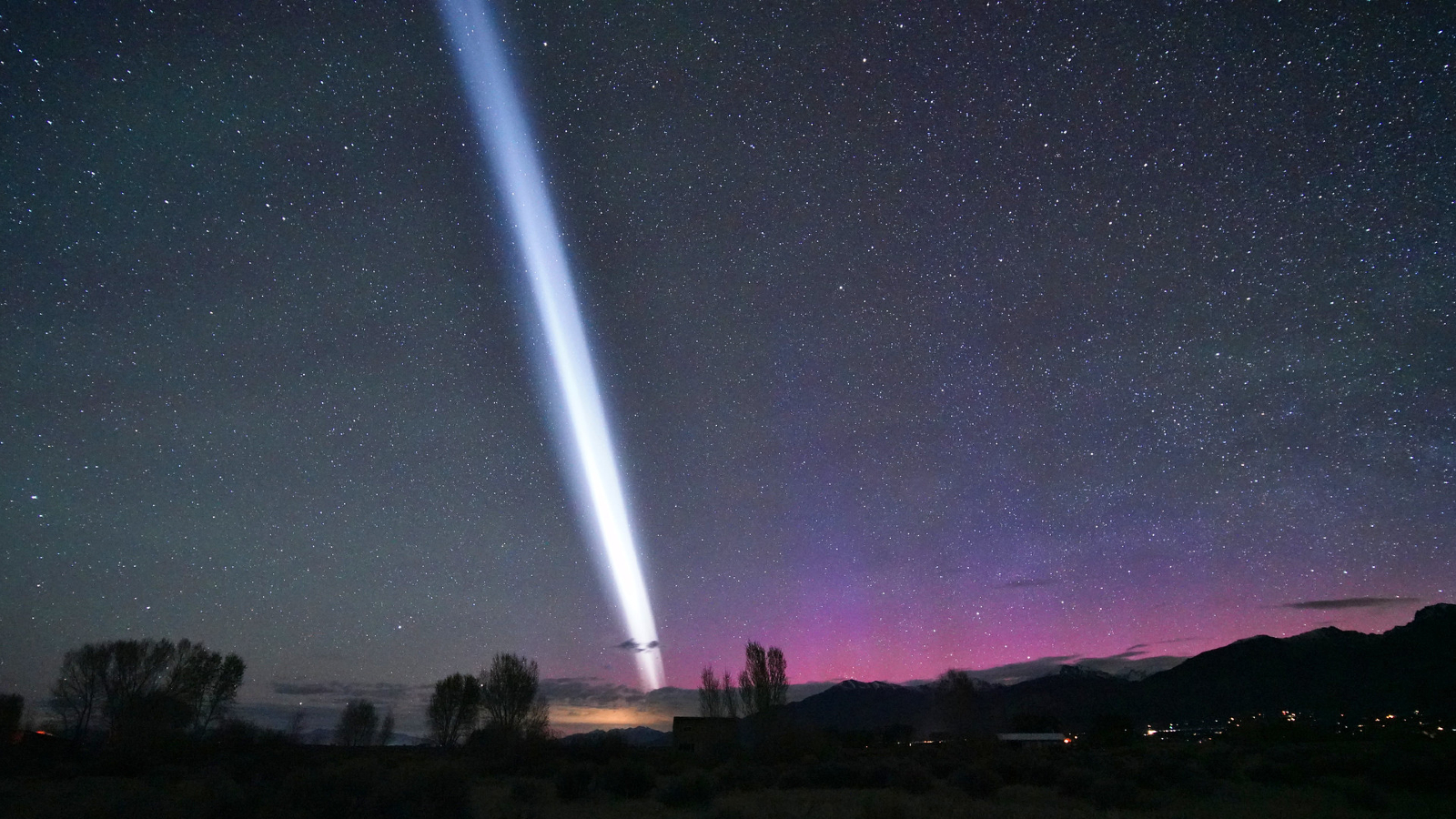
A recent launch of China's Zhuque-2E rocket triggered a giant white streak of light to appear above at least seven U.S. states after deploying six satellites into low-Earth orbit. The light show, which was visible in at least seven states, was the result of a "fuel dump," experts say.
The giant luminous streak was visible in at least seven different states and hung in the night sky for around 10 minutes.
(Image credit: Mike Lewinski)
A massive streak of white, aurora-like light recently appeared in the night sky above several U.S. states after a Chinese rocket released half a dozen satellites into orbit. The light show was triggered when the rocket dumped a new type of fuel into space before reentering the atmosphere, experts say.
The luminous streak appeared at around 1:24 a.m. ET on Saturday (May 17), hanging in the air for around 10 minutes before eventually fading away. It was photographed in at least seven states — Colorado, Idaho, Utah, Missouri, Nebraska, Washington and New Mexico — but may have been visible even further afield, according to Spaceweather.com.
Photographer Mike Lewinski snapped stunning shots of the streak from Crestone, Colorado (see above) and also managed to capture timelapse footage of the entire event. Meanwhile, photographer Jay Shaffer took a striking long-exposure photo of the streak in Taos County, New Mexico (see below).
In some places, the streak appeared alongside auroras that emerged during a G2-class geomagnetic storm, which was triggered earlier in the night when a cloud of charged particles ejected by the sun, known as a coronal mass ejection, slammed into Earth's magnetic field. As a result, many people who witnessed the streak assumed it was the aurora-like phenomenon known as STEVE, which creates long colored ribbons of light in the night sky.
However, what people actually saw was the aftermath of one of China's Zhuque-2E rockets, which launched from the Jiuquan Satellite Launch Center in northwest China at around 12:12 a.m. ET, according to Space News. The rocket released six satellites, each carrying various scientific instruments, before it burned up in Earth's upper atmosphere upon reentry.
The streak emerged during a geomagnetic storm, with auroras visible as far south as New Mexico. Several people mistook it as the aurora-like phenomenon known as STEVE. (Image credit: Jay Shaffer/Skylapser.com)
There was initially some confusion about exactly how the rocket created the stunning light show. "The white streak may have been a de-orbit burn, or perhaps a circularization burn for the deploying satellites," Spaceweather.com representatives wrote.
However, Jonathan McDowell, an astronomer at the Harvard and Smithsonian Center for Astrophysics who tracks satellite launches and reentries, later revealed on the social platform X that it was caused by a "fuel dump" at an altitude of around 155 miles (250 kilometers) before the rocket de-orbited. The ejected fuel, which trailed behind the rocket, froze into a ribbon of tiny frozen crystals that then reflected sunlight toward Earth's surface, making it shine in the night sky.
The Zhuque-2E rocket lifted off from the Jiuquan Satellite Launch Center at around 12:12 a.m. ET. (Image credit: LandSpace)
The Zhuque-2E rocket is a single-use orbital launch vehicle created by Chinese company LandSpace. It stands at around 160 feet (50 meters) tall and can launch up to 13,200 pounds (6,000 kilograms) of payloads into low-Earth orbit (LEO) — the region of space up to 1,200 miles (2,000 km) above Earth's surface, where the majority of Earth-orbiting satellites operate.
Unlike most rockets, which use hydrogen or kerosene-based fuels, Zhuque-2E uses a special hybrid of liquid oxygen and liquid methane, known as "methalox."
Methane is a desirable fuel source for rockets because it is easier to store and burns cleaner than hydrogen or kerosene. It can also potentially be produced on other planets, such as Mars, which makes it ideal for solar system exploration.
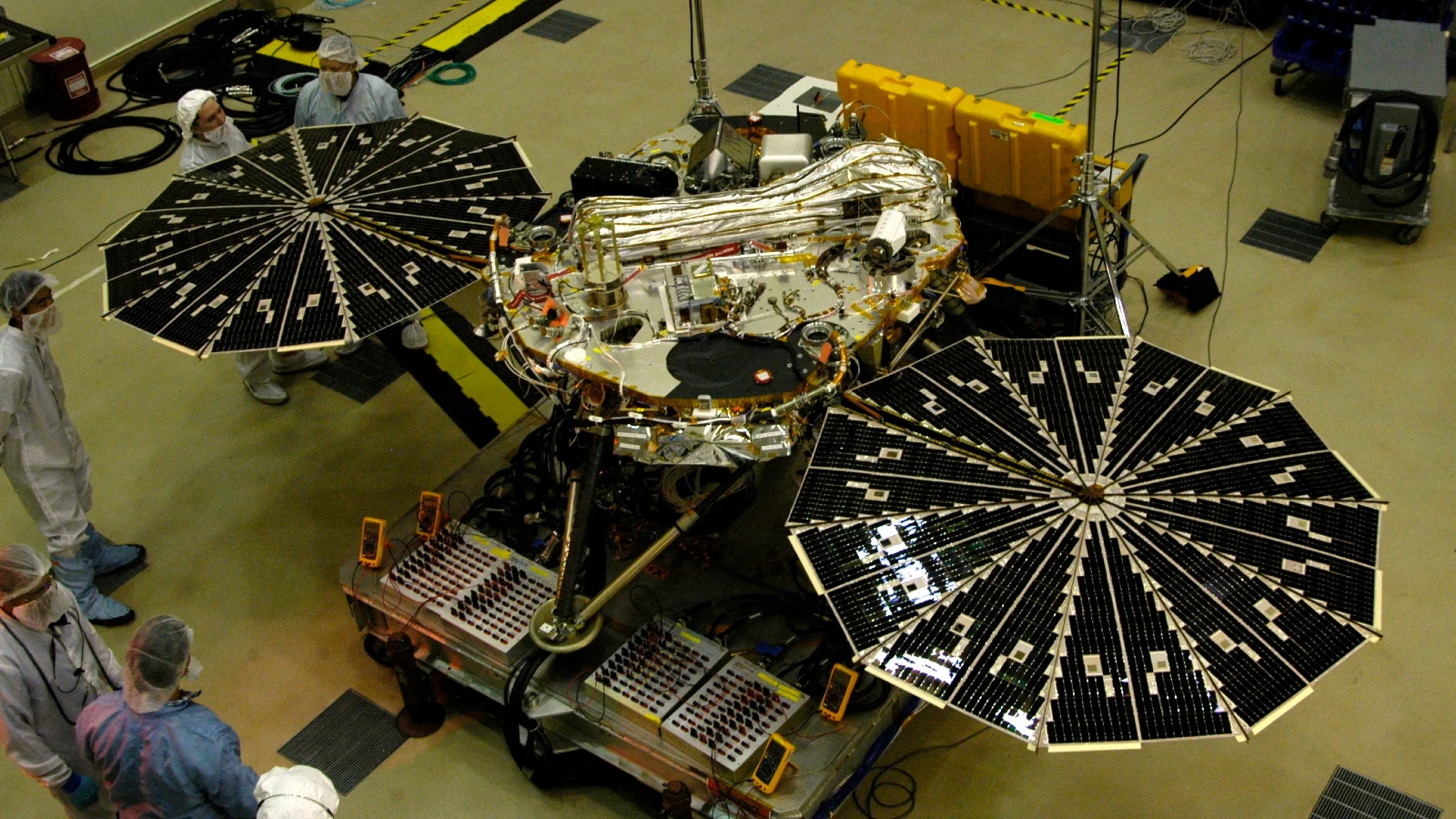
DNA analysis has revealed that 26 novel species of "extremophile" bacteria were lurking in a clean room that housed NASA's Phoenix lander before it was launched to Mars in 2007. The hardy microbes might be capable of surviving in space.
Researchers found 26 new species of bacteria in samples collected from the clean room used to house the NASA Phoenix Mars lander in 2007.
Dozens of never-before-seen species of "extremophile" bacteria were hiding in a NASAclean room used to quarantine a Mars lander before it was successfully launched to the Red Planet more than 17 years ago, a new study reveals.
NASA's Phoenix Mars lander touched down on the Red Planet on May 25, 2008, and spent 161 days (156 Martian days) collecting a variety of data, before suddenly going offline. Around 10 months before arriving on Mars, the lander spent several days inside a clean room at the Payload Hazardous Servicing Facility at Kennedy Space Center in Florida, before being launched from neighboring Cape Canaveral Space Force Station (then known as Cape Canaveral Air Force Station) on Aug. 4, 2007, according to Live Science's sister site Space.com.
Clean rooms are spaces where spacecraft and their payloads are quarantined before launches and upon reentry to Earth, in order to prevent environmental contamination by microbes and keep them free of potentially damaging particles, according to NASA. These spaces are sterilized, pressurized, constantly vacuumed and supplied with air via special filters that keep out 99.97% of all airborne particles. Anybody entering the room must wear an all-in-one "bunny suit" and have an air shower before entering.
But all of these measures still can't keep everything out. When researchers reanalyzed samples collected from the Phoenix lander clean room before, during and after the spacecraft was quarantined there, they found DNA from 26 novel species of bacteria. The team reported their findings in a study published May 12 in the journal Microbiome.
The newly described species all have genes that allow them to survive in extreme environments, such as the vacuum of space. (Image credit: Schulz et al. 2025)
Most of the newly described microbes displayed at least some characteristics that made them resistant to harsh environmental conditions, such as extreme temperatures, pressures and levels of radiation. Some had genes associated with DNA repair, detoxification of harmful molecules, and improved metabolism, and may even be able to survive the vacuum of space, the researchers wrote.
"Our study aimed to understand the risk of extremophiles being transferred in space missions and to identify which microorganisms might survive the harsh conditions of space," study co-author Alexandre Rosado, a microbiologist at the King Abdullah University of Science and Technology in Saudi Arabia, said in a statement. "This effort is pivotal for monitoring the risk of microbial contamination and safeguarding against unintentional colonization of exploring planets."
Clean rooms have to be constantly cleaned to reduce the number of microbes in them. However, it is impossible to keep everything out.(Image credit: NASA)
The newly described species made up just under a quarter of all the species identified in the room, most of which also had extremophile properties. This suggests spacecraft clean rooms could be an excellent place to search for more of these hardy microbes.
Finding new extremophiles is important because it can help researchers predict what potential extraterrestrial microbes might look like and how we can prevent them from contaminating Earth. Some of them also produce substances, such as biofilms, that have potential applications in medicine, food preservation and biotechnologies.
"Together, we are unraveling the mysteries of microbes that withstand the extreme conditions of space — organisms with the potential to revolutionize the life sciences, bioengineering, and interplanetary exploration," study co-author Kasthuri Venkateswaran, a retired senior research scientist at NASA's Jet Propulsion Laboratory, said in the statement.
Is the World Ready for a Catastrophic Solar Storm?
By Carolyn Collins Petersen
Outbursts from the Sun often "switch on" the northern and southern lights, and strong storms can cause damage to technology. Courtesy NASA.
Some 13,000 years ago, the Sun emitted a huge belch of radiation that bombarded Earth and left its imprint in ancient tree rings. That solar storm was the most powerful one ever recorded. The next strongest was the 1839 Carrington Event. It was spurred by a huge solar flare that triggered a powerful geomagnetic storm at Earth. The resulting "space weather" disrupted telegraph communications around the world. Today, as we move through this year's "solar maximum", a period of solar activity that occurs every 11 years, scientists want to prepare governments for the effects of severe solar storms.
In May 2024, Johns Hopkins Applied Physics Laboratory (APL) convened experts at a tabletop exercise designed to test governmental and tribal agency preparations for a strong solar storm like the earlier ones. Solar physicists, space agencies, satellite operators, grid owners, and many others have long known of space weather effects on advanced technologies. The exercise incorporated stakeholders at all levels of government and industry to improve our readiness for space weather events.
Space Weather Effects
When a geomagnetic storm strikes Earth, a number of things happen. Charged particles from the Sun are delivered by the solar wind. That smacks up against our magnetosphere, and those particles get caught up in lines of magnetic force, which results in a lovely display of northern and southern lights. An especially strong storm will cause, among other things, ground currents which can short out electrical power grids and disrupt ground-based communications. A strong bout of space weather can interfere with (or even destroy) satellites, threaten astronauts in space, disrupt radio communications, and degrade GPS performance. That affects navigation for trains, planes, ships, and cars, and affects cellular networks. Any of those disruptions can interrupt such everyday events as transferring money, making cell calls, and much more. In other words, much of our modern technology is at risk during space weather events.
Damage to transformers (right) caused by the 1989 solar storm.
Courtesy PSE&G.
As an example, in March 1989, a powerful solar outburst triggered a solar storm that resulted in a power outage in eastern Canada. Millions were left without electricity for about nine hours. A power plant in New Jersey was also damaged during the same storm. In 2024, another storm hit over the U.S. Mother's Day weekend, resulting in brilliant auroral displays across much of the world. The space weather event also affected some broadcast and radio signals, and some power companies took steps to safeguard their systems. It also affected some satellite communications. That was, by comparison to the 1989 and 1839, a relatively benign space weather event.
Thanks to lessons learned during prior events, electrical grid and satellite operators (among others) are now better prepared. But more needs to be done to supply early warnings so that governments, companies, and individuals can be ready. That's where the tabletop exercise at APL comes in handy.
How Ready Are We for Strong Space Weather?
Spaceweather understanding and predictions have come a long way since the dawn of the space age and the deployment of Sun-watching satellite missions. We do get more early warnings of outbursts, and past events have taught us to "harden" our technologies against geomagnetic storms. However, there are still gaps in agency and government preparedness for and responses to such events.
The tabletop session uncovered many steps necessary to respond when space weather strikes. "This exercise brought together space weather experts alongside those responsible for emergency management, response, and recovery,” said Ian Cohen, APL Exercise Science Lead. “This helped us scientists to not only provide awareness to these senior leaders, but also highlight the key research and observational gaps, as well as learn how to best communicate the complicated topics of space weather to decision-makers.”
Flares and outbursts on the Sun during the May 2024 Mother's Day storm.
Courtesy NASA/SDO.
In the "After Action Report" from the exercise, released this year, the attendees acknowledged that our preparation is better than in the past, but there are still crucial needs to fill. Among them are better coordination among agencies and other stakeholders to produce meaningful and understandable space weather notifications that outline the impacts on various pieces of infrastructure. The whole government needs to be involved in such coordination, and communication between agencies (such as between NASA and NOAA or NOAA and safety agencies). In addition, upgrades in forecasting and early warning are needed, along with more public education about the effects of space weather and how governments and institutions handle the results of such storms.
In an interesting twist of fate, the tabletop exercise began just as the Sun unleashed another burst of radiation and charged particles toward Earth. It resulted in the Mother's Day storm of 2024 and gave participants in the exercise a chance to go beyond simulated exercises and manage a real-world case of space weather effects on Earth.
Possible underwater base off the coast of Malibu: Vanished or Covered Up?
In 2014, a massive underwater anomaly was discovered off the coast of Malibu, California, near Point Dume. The discovery was brought to public attention by researchers Maxwell, Dale Romero, and radio host Jimmy Church of Fade to Black on the Dark Matter Radio Network.
The formation appeared highly unnatural, a plateau-like structure measuring approximately 1.35 miles by 2.45 miles, located 6.66 miles from shore. Most striking was a large, arch-like entrance framed by what looked like massive support pillars, measuring roughly 2,745 feet wide and 630 feet tall. The roof of the structure appeared to be an incredibly thick slab, about 500 feet, prompting speculation that it might be resistant to even nuclear-level impacts.
At the time, widespread speculation emerged over the true nature of the formation. Many questioned whether this was a secret underwater base, possibly used by the military or even extraterrestrials.
Despite mainstream media claims that it was simply a natural geological formation, skeptics pointed to its geometric features and scale as evidence of intelligent design. Eyewitness accounts of unidentified craft entering and exiting the ocean in the same region only added fuel to the mystery.
Revisiting the coordinates of this underwater anomaly on Google Earth reveals something even more curious, the structure appears to be gone. Instead, the area is now obscured by a blurred overlay, suggesting that the imagery has been deliberately censored.
Although the angle of approach to the structure differs between the 2014 and 2023 images on Google Earth, it's clearly evident that they depict the same location and if the formation was merely a natural feature, why hide it?
Here are the coordinates: 34°1'23.31"N 118°59'45.64"W
A man who spent 14 years with U.S. Customs and Border Protection (CBP) has shared a never-before-seen video of a UFO that was spotted in the Arizona sky. In his duties with the CBP, Army veteran Bob Thompson was part of the Tucson, Arizona sector’s special operations detachment mobile response team and was tasked with coordinating airspace along the border. During those 14 years, he reports witnessing numerous objects in the sky that he could not explain.
“I’ve seen orbs that were off in the distance. I’ve seen crafts that were cigar-shaped, I’ve seen triangles,” Thompson told Reality Check with Ross Coulthart on NewsNation. He added that he had personally spoken to “at least 100” border agents who had witnessed anomalous objects.
He gave one example where “small triangles that were flying over agents” that showed no visible means of propulsion. He also discussed “a very large triangle” that an agent who was near Yuma, Arizona out on patrol saw fly over him. “The way he described it was at least 100 feet maybe 50 to 100 feet wide, silent, flying right over him,” said Thompson.
One video Thompson and Coulthart discussed was taken in November 2019 by an infrared camera on a RC-26B surveillance aircraft that was tracking a group of people who had crossed the border illegally in the Buenos Aires National Wildlife Area. Thompson says that it appeared to show a UFO he says was almost shaped like a rubber duck. That UFO’s thermal signature also didn’t match known planes or drones.
Take a look at the footage of this rubber duck shaped UFO for yourself and see what you think.
“They seemed to think it was searching for something,” Thompson said.
In another video shot in May of 2021 and known as “La Bruja,” Bob Thompson says shows a shape that almost appeared humanoid in the Tohono O’odham Nation reservation.
The new never-before-seen UFO video that Thompson shared reveals a short, cylindrical object moving quickly without any visible wings or propellers, nicknamed “The Cigar.” That video was shot by a Customs and Border Patrol reconnaissance plane in the same vicinity where the rubber duck video was taken.
“There’s obviously something going on in Arizona along the border areas, more than just illegal immigration,” said Thompson. “No one likes to talk about it freely. I think it’s just still a taboo subject.”
Are all of these UFO sightings made by Bob Thompson and other U.S. Customs and Border Protection agents part of the ongoing mystery known as the “Phoenix Lights?” That’s what he and others are trying to find out.
According to a Federal Aviation Administration (FAA) report, a U.S. Air Force F-16 Viper fighter jet was damaged earlier this year by a UFO in a collision over Arizona. The force of the impact with the UFO reportedly cracked the jet’s canopy and forced the pilot to land.
The incident occurred on January 19, 2023 while the F-16 Viper was flying in restricted airspace over Gila Bend. No injuries were reported, but the fighter jet was grounded for repairs. The report states that the UFO collision occurred over the U.S. Air Force’s Barry Goldwater Range where the military conducts combat exercises, so there should not have been, as the FAA reported, a “orange-white UAS” (uncrewed aerial system) in the area.
DailyMail.com reports that the F-16 Viper collision is just one around two dozen incidents that have occurred in recent years within 100 miles of Luke Air Force Base, where many of the F-16 fighter jets using Barry Goldwater Range launch.
In February of 2024, CBS 5 News in Arizona reported there had been 22 incidents between October 2022 and June 2023 where Air Force fighter pilots reported seeing or colliding with UFOs.
“Maybe somebody was just out there trying to film, get a good shot of an F-16, or doing something they weren’t supposed to. On the other side of the coin, maybe it was a foreign entity or somebody trying to get some info,” said Mike Canada, chair of the unmanned aerial vehicle program at Prescott’s Embry-Riddle Aeronautical University.
Canada, who operated drones in Afghanistan and Iraq during a previous career, added that it would be difficult, if not impossible, for a consumer drone to reach the altitudes that were being reported over the Air Force’s Barry Goldwater Range.
“I’ve seen orbs that were off in the distance. I’ve seen crafts that were cigar-shaped, I’ve seen triangles,” Thompson said, adding that he had personally spoken to “at least 100” border agents who had witnessed anomalous objects.
“There’s obviously something going on in Arizona along the border areas, more than just illegal immigration,” Thompson stated. “No one likes to talk about it freely. I think it’s just still a taboo subject.”
Magnetic Shifts and Human Migrations Traced in Lake Chala, 150,000 Years Old
Deep in the green border of Kenya and Tanzania is a volcanic crater lake that quietly keeps an ancient geophysical journal. For thousands of years, Lake Chala has lain in a volcanic caldera, its calm waters hiding the seismic and geomagnetic theatrics playing out over deep time. Scientists drilling into its bottom sediments recently have revealed a 150,000-year history of Earth's magnetic oscillations—a finding that bridges planetary physics to early Homo sapiens migrations!
Lake Chala's location, shielded from raging rivers and floods, and a gentle runoff from the crater's surrounding ridges and forests, has resulted in sediment layers so undisturbed and linear that they are a virtual perfect geological timeline. Unlike most lake cores convoluted with flood sediments or seismic events, the sedimentary record in Lake Chala holds year-by-year histories, and it is thus an unrivaled platform for paleoenvironmental study.
It was here that Dr. Anita Di Chiara and colleagues from Italy's National Institute of Geophysics and Volcanology pulled out a core sample that is now a key to reconstructing the earth's ancient magnetic behavior. They’ve published their finds in the journal Geochemistry, Geophysics, Geosystems.
Reading the Magnetic Script of Earth
As volcanic ash and other sediment settle onto a lake bottom, they capture microscopic magnetic grains. These grains align themselves to the Earth's magnetic field of the day, behaving as tiny frozen compass needles. There have accumulated on top of each other in a vertical record of geomagnetic history over thousands of years—a chronology carefully deciphered by Di Chiara's group.
Whereas polar magnetic records are plentiful, equatorial information such as that of Lake Chala is scarce. And that is its value. Earth's magnetic field originates with the chaotic flow of its molten outer core, and whereas pole-based records show the wild oscillations and reversals, an equatorial view can show the more subtle, world-encompassing changes.
"Having an equatorial record is sort of special," Di Chiara said in an interview with Live Science. "It's a key piece in the puzzle."
Following the Magnetic Pulse of the Past
The Lake Chala sediment core chronicles six large geomagnetic excursions—periods during which Earth's magnetic field tottered, lost strength, or temporarily reversed without actually going through a complete pole reversal. One of these excursions is completely new to the geological record and provides new information on the unstable nature of Earth's core.
These outings are not innocent curiosities. The field protects the planet against solar wind—barrages of charged particles that can trouble satellites, radio communications, and even planetary climate patterns. When the field weakens, Earth lies open to enhanced cosmic radiation.
But how did these variations affect people living in and around Lake Chala in ancient times?
A Landscape Witness to Human Odyssey
Between 150,000 years ago and now, Lake Chala's sediments record a period of intense human transformation. It was the time the anatomically modern humans emerged, left Africa, and went on to fill Eurasia.
Although a magnetic anomaly may not have been detectable to early Homo sapiens, its environmental impact—alterations in climatic patterns, radiation flux, or even animal migration—would have quietly influenced the survival tactics and migrations of early human societies.
Meer van UFO'S of UAP'S, ASTRONOMIE, RUIMTEVAART, ARCHEOLOGIE, OUDHEIDKUNDE, SF-SNUFJES EN ANDERE ESOTERISCHE WETENSCHAPPEN - DE ALLERLAATSTE NIEUWTJES


 Life on Mars? It probably looks like something you'd find in your stomach