Naar de inhoud

UFO'S of UAP'S, ASTRONOMIE, RUIMTEVAART, ARCHEOLOGIE, OUDHEIDKUNDE, SF-SNUFJES EN ANDERE ESOTERISCHE WETENSCHAPPEN - DE ALLERLAATSTE NIEUWTJES

UFO's of UAP'S in België en de rest van de wereld
akke.beakke.be
Ontdek de Fascinerende Wereld van UFO's en UAP's: Jouw Bron voor Onthullende Informatie! Ben jij ook gefascineerd door het onbekende? Wil je meer weten over UFO's en UAP's, niet alleen in België, maar over de hele wereld? Dan ben je op de juiste plek! België: Het Kloppend Hart van UFO-onderzoek In België is BUFON (Belgisch UFO-Netwerk) dé autoriteit op het gebied van UFO-onderzoek. Voor betrouwbare en objectieve informatie over deze intrigerende fenomenen, bezoek je zeker onze Facebook-pagina en deze blog. Maar dat is nog niet alles! Ontdek ook het Belgisch UFO-meldpunt en Caelestia, twee organisaties die diepgaand onderzoek verrichten, al zijn ze soms kritisch of sceptisch. Nederland: Een Schat aan Informatie Voor onze Nederlandse buren is er de schitterende website www.ufowijzer.nl, beheerd door Paul Harmans. Deze site biedt een schat aan informatie en artikelen die je niet wilt missen! Internationaal: MUFON - De Wereldwijde Autoriteit Neem ook een kijkje bij MUFON (Mutual UFO Network Inc.), een gerenommeerde Amerikaanse UFO-vereniging met afdelingen in de VS en wereldwijd. MUFON is toegewijd aan de wetenschappelijke en analytische studie van het UFO-fenomeen, en hun maandelijkse tijdschrift, The MUFON UFO-Journal, is een must-read voor elke UFO-enthousiasteling. Bezoek hun website op www.mufon.com voor meer informatie. Samenwerking en Toekomstvisie Sinds 1 februari 2020 is Pieter niet alleen ex-president van BUFON, maar ook de voormalige nationale directeur van MUFON in Vlaanderen en Nederland. Dit creëert een sterke samenwerking met de Franse MUFON Reseau MUFON/EUROP, wat ons in staat stelt om nog meer waardevolle inzichten te delen. Let op: Nepprofielen en Nieuwe Groeperingen Pas op voor een nieuwe groepering die zich ook BUFON noemt, maar geen enkele connectie heeft met onze gevestigde organisatie. Hoewel zij de naam geregistreerd hebben, kunnen ze het rijke verleden en de expertise van onze groep niet evenaren. We wensen hen veel succes, maar we blijven de autoriteit in UFO-onderzoek! Blijf Op De Hoogte! Wil jij de laatste nieuwtjes over UFO's, ruimtevaart, archeologie, en meer? Volg ons dan en duik samen met ons in de fascinerende wereld van het onbekende! Sluit je aan bij de gemeenschap van nieuwsgierige geesten die net als jij verlangen naar antwoorden en avonturen in de sterren! Heb je vragen of wil je meer weten? Aarzel dan niet om contact met ons op te nemen! Samen ontrafelen we het mysterie van de lucht en daarbuiten.

Archief

Inside the Stargate Program: Remote Viewing, UFO Bases & the Secrets of Consciousness

Inside the Stargate Program: Remote Viewing, UFO Bases & the Secrets of Consciousness

ngcb1

Dr. Paul H. Smith, a former U.S. Army intelligence officer and one of the original participants in the top-secret Stargate Program, has long stood at the crossroads of military-grade psychic research and consciousness exploration. In a recent in-depth conversation, he peeled back the layers on hidden UFO bases, the evolution of remote viewing (RV), and what it means for our understanding of human perception and non-local consciousness.

From Intelligence Officer to Psychic Spy

Dr. Smith’s entry into the world of psychic intelligence began in the early 1980s when he was recruited under mysterious circumstances while stationed at Fort Meade. With a background in Middle Eastern analysis and linguistic proficiency, Smith had no idea that his next assignment would involve learning how to transcend space and time to gather intelligence using only his mind.

After passing a series of psychological and personality tests, he was introduced to Coordinate Remote Viewing (CRV), a structured technique originally developed by artist and psychic Ingo Swann and physicist Hal Puthoff at Stanford Research Institute (SRI). The methodology allowed individuals to “view” distant targets by accessing information beyond ordinary perception — a concept once relegated to science fiction.

Stargate, Soviet Threats, and the CIA’s Role

The military’s interest in remote viewing began during the Cold War when U.S. intelligence agencies learned that the Soviets were investing millions in psychotronic research. The CIA, initially skeptical, began supporting experiments at SRI after Swann successfully influenced a shielded device in a lab — an event that reportedly defied conventional explanation.

Dr. Smith explains that remote viewing was formally integrated into U.S. Army intelligence operations in the late 1970s. The Stargate Project became a classified unit tasked with gathering actionable intelligence, ranging from hostage situations to potential foreign threats — sometimes including unconventional targets like hidden underground facilities.

The Typhoon Submarine Case: Proving It Works

One of the most compelling examples of RV’s success was the prediction of the Soviet Typhoon-class submarine. Remote viewer Joe McMoneagle, working blind, described a massive submarine under construction with missile tubes located in front of the conning tower — a design detail that contradicted naval norms.

The National Security Council initially dismissed the session, but months later, the Typhoon sub was launched — exactly as described. Ironically, this success was not officially acknowledged, contributing to the misconception that remote viewing had no real-world impact.

Pat Price, Hidden UFO Bases, and a Mysterious Death

Another central figure in remote viewing lore is Pat Price, a former police commissioner turned psychic. His sessions — particularly those involving four suspected alien bases (Mount Hayes, Alaska; Australia; Africa; and Spain) — remain controversial. What’s extraordinary is that multiple remote viewers, including Dr. Smith himself, unknowingly corroborated Price’s earlier findings when tasked to view Mount Hayes years later.

Price described alien-like entities operating underground facilities, and even sketched craft eerily similar to what modern witnesses call “Tic Tac” UFOs. He later died suddenly under suspicious circumstances. According to Price’s daughter, he had warned that if anything happened to him, it would be the KGB — a plausible theory given that there is no known method to shield against psychic surveillance, making psychic operatives like Price high-value targets.

Consciousness as a Non-Local Phenomenon

For Dr. Smith, the implications of remote viewing go far beyond espionage. The practice suggests that consciousness may be non-local, capable of existing independently of time and space. This idea has philosophical and metaphysical ramifications, challenging materialist assumptions and opening new doors into the study of mind and existence.

Remote viewing has produced results that imply the viewer can “bilocate,” experiencing presence both in the viewing room and at the distant target — including locations as extreme as the far side of the Moon. In one such case, Smith and other trained viewers described an artificial underground cavity on the Moon containing manta-ray-shaped craft, potentially biological in nature and seemingly aware of being observed.

Psionics, Classified Programs, and the Future of Human Potential

As new whistleblowers like David Grusch and Jake Barber come forward, alleging the existence of recovered alien craft and so-called “psionic assets,” Dr. Smith remains cautiously open. He draws parallels between these new terms and the military’s older term psychoenergetics, which encompassed remote viewing and similar phenomena.

While the Stargate program was officially shut down in 1995, Smith and others believe interest in consciousness-based intelligence gathering never truly ended. Some former insiders, like Skip Atwater, have hinted at the existence of successor programs.

Dr. Paul H. Smith remains one of the most grounded and credible voices in the world of psychic phenomena. His experience spans not only military intelligence but also deep philosophical inquiry into the nature of mind, space, and perception.

If the implications of remote viewing are real — and according to Smith, they very much are — then humanity is only beginning to understand its own untapped potential. Whether for intelligence gathering, interstellar exploration, or expanding our comprehension of consciousness itself, remote viewing stands as one of the most fascinating and misunderstood tools of the modern age.


{ https://www.latest-ufo-sightings.net/ }

Hoe vind je dit bericht?
Geschreven door peter om 21:13 Stuur door

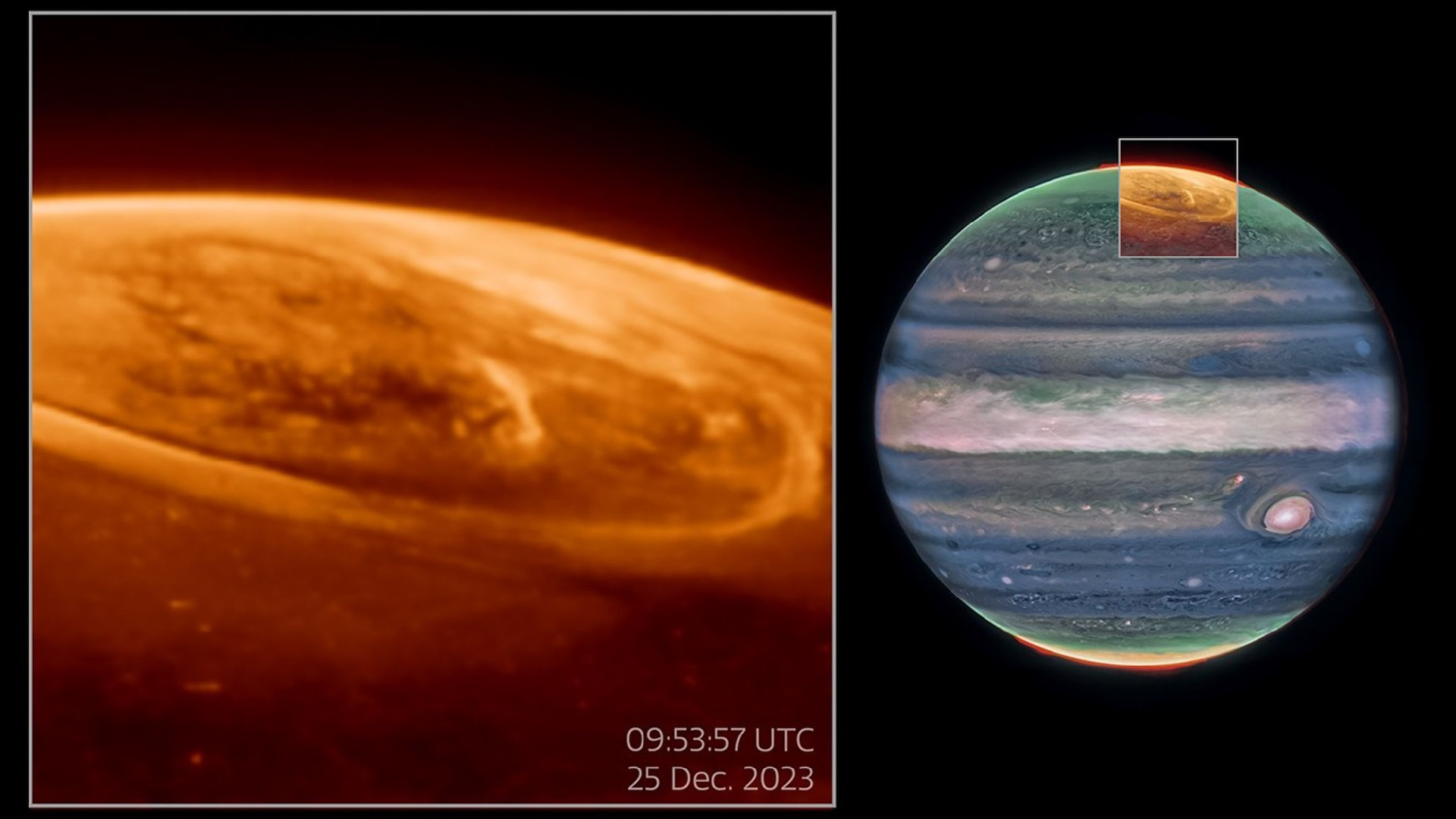
James Webb telescope reveals 'impossible' auroras on Jupiter that have astronomers scratching their heads

James Webb telescope reveals 'impossible' auroras on Jupiter that have astronomers scratching their heads

images showing auroras on Jupiter
JWST captured auroras on Jupiter "fizzing and popping with light" on Christmas Day 2023. (Image credit: NASA, ESA, CSA, STScI, Ricardo Hueso (UPV), Imke de Pater (UC Berkeley), Thierry Fouchet (Observatory of Paris), Leigh Fletcher (University of Leicester), Michael H. Wong (UC Berkeley), Joseph DePasquale (STScI), Jonathan Nichols (University of Leicester), Mahdi Zamani (ESA/Webb))

On Christmas Day in 2023, scientists trained the James Webb Space Telescope (JWST) on Jupiter's auroras and captured a dazzling light show.

The researchers observed rapidly-changing features in Jupiter's vast auroras using JWST's infrared cameras. The findings could help explain how Jupiter's atmosphere is heated and cooled, according to a study published May 12 in Nature Communications.

"What a Christmas present it was — it just blew me away!" study coauthor Jonathan Nichols, a researcher studying auroras at the University of Leicester in the UK, said in a statement. "We wanted to see how quickly the auroras change, expecting them to fade in and out ponderously, perhaps over a quarter of an hour or so. Instead, we observed the whole auroral region fizzing and popping with light, sometimes varying by the second."

You may like

Auroras form when high-energy charged particles, often released from the sun, slam into gases in a planet's atmosphere, causing the gas to glow. Jupiter's strong magnetic field scoops up charged particles such as electrons from the solar wind — and from eruptions on its highly volcanic moon Io — and sends them hurtling toward the planet's poles, where they put on a spectacle hundreds of times brighter than Earth's Northern Lights.

Related: 

In the new study, the team looked closely at infrared light emitted by the trihydrogen cation, H3+. This molecule forms in Jupiter's auroras when energetic electrons meet hydrogen in the planet's atmosphere. Its infrared emission sends heat out of Jupiter's atmosphere, but the molecule can also be destroyed by fast-moving electrons. To date, no ground-based telescopes have been sensitive enough to determine exactly how long H3+ sticks around.

But by using JWST's Near Infrared Camera, the team observed H3+ emissions that varied more than they expected. They found that H3+ lasts about two and a half minutes in Jupiter's atmosphere before being destroyed. That could help scientists tease out how much of an effect H3+ has on cooling Jupiter's atmosphere.

But the scientists don't have the full picture yet. They also found some puzzling data when they turned the Hubble Space Telescope toward Jupiter at the same time. Hubble captured the ultraviolet light coming from the auroras, while JWST captured infrared light.

"Bizarrely, the brightest light observed by Webb had no real counterpart in Hubble's pictures," Nichols said in the statement. "This has left us scratching our heads. In order to cause the combination of brightness seen by both Webb and Hubble, we need to have a combination of high quantities of very low-energy particles hitting the atmosphere, which was previously thought to be impossible. We still don't understand how this happens."

In future work, the researchers plan to study the source of this unexpected pattern using additional JWST data as well as observations from NASA's Juno spacecraft, which has been observing Jupiter from orbit since 2016.

RELATED VIDEOS

{ https://www.livescience.com/space }

Hoe vind je dit bericht?
Geschreven door peter om 23:31 Stuur door

10 Ways Artificial Intelligence Will Completely Change the World by 2030

10 Ways Artificial Intelligence Will Completely Change the World by 2030

In recent years, Artificial Intelligence (AI) has transitioned from a concept primarily seen in science fiction to a significant and ever-present aspect of our daily lives. This rapid evolution suggests that by 2030, AI will become as integral to human life and society as smartphones are today. A report from PricewaterhouseCoopers (PwC) supports this view, projecting that AI will contribute an impressive $15.7 trillion to the global economy by 2030.

This monumental shift indicates that the impact of AI on our world will be profound. To summarize, as AI continues to intertwine with various facets of life, it transforms not just technology but the very fabric of our existence, suggesting limitless possibilities akin to the way matter transforms into mind.

10 Ways Artificial Intelligence Will Completely Change the World

Let’s look at the future that AI has in store for us, good or worse.

1. HealthCare

AI has already revolutionized the healthcare sector by helping personalized delivery of care, building models that detect life-threatening diseases in their earlier stages, and assessing the treatment options’ risk and success rate.

Cancer patients will be the biggest beneficiaries of AI in the future. It is expected that five years down the road, AI will be controlling the usage of chemotherapy drugs related to dosage calculation and optimizing chemotherapy regimens. Clinical trials are going on using AI to calculate more accurate target zones for spinal radiotherapy that will result in swift and accurate treatment.

Similarly, there will be computer-aided detection (CAD) systems for diagnosis in general practice, leading to 70% reduction in misdiagnosis, preventing unnecessary surgeries, and offering more accurate remedial actions.

A New York University study found out that AI was better at finding breast cancers in women than human pathology, meaning that AI is seeing things the human eye can’t.

2. Shopping in 2030 would be Different

AI will significantly shape your shopping experience in 2030. This is one of the biggest changes we will see as clear evidence how artificial intelligence will change the world. More than 45% of supermarkets will be cashierless in 2030. You would walk into a store, grab what you want, and leave. No Lines, No checkouts. Amazon Go is already leading this transition by launching cashier-less convenience stores in 2020, while other chains like Walmart and Sam’s Club are soon to follow in their footsteps.

Augmented reality will be commonly used to simulate an in-person shopping experience. Customers can see how a product will look in their home in an interactive 360-degree experience. Shopify AR is an example of such a tool creating an immersive shopping experience.

Within 30 minutes after clicking on the order now button, a drone would have the product at your doorstep. Imagine watching a beautiful sunset on your porch with thousands of drones buzzing around delivering packages.

3. AI Backed Virtual Reality

Imagine a virtual world with endless possibilities, where you can meet, work, invest and play with other people around the globe, just using virtual glasses and a headset.

This is what Facebook (now Meta) is going all-in on. Metaverse will replace reality with computerized simulations. As per Zuckerberg, it is the next evolution of social connection where you will be able to share not just moments but experiences with other people.

By 2030, you will be able to attend concerts from your couch, work and have in-person virtual meetings with colleagues, do shopping, and invest in virtual real estate. While Metaverse will open the door to unfathomable opportunities, there may be social and ethical hazards that we will cover in another post.

4. Intelligent Banking

Banking in 2030 will be different; more sophisticated, efficient, and lucrative. Customer representatives will be replaced by chatbots, handling a multitude of requests in a short period, thus enhancing customer experience. Robo advisors will become the norm. They would become main game-changers for the banking industry, saving a lot of time for wealth managers and supplementing them in profitable decision-making.

AI will personalize customer experience to the extent that producing an ID in a Bank would no longer be required, and mere facial recognition will be used to verify and produce all of your account details.

5. Autonomous Self-driven Cars

Artificial intelligence (AI) and self-driving automobiles are the most complementary subjects in Technology. It is a life-and-death tussle between rival billionaires from Tesla to Aurora to AutoX.

There are six levels of automated vehicle driving systems. Currently, we are at level 2, and by 2030, we will achieve level 5 autonomy; complete driverless cars. By 2030, there will be 62.4 million self-driving cars in the market – up from 20.4 million in 2021. These cars are expected to account for about 12 percent of total car registrations by 2030.

6. Artificial Intelligence Will Change the World: Will Robots Be Everywhere?

Robotics is an exciting yet controversial field in AI. The total global stock of Robots will reach 20 million by 2030. According to Oxford Economics, these robots will be responsible for the loss of 20 million manufacturing jobs.

However, advances in AI would also mean that robots will play a more significant role in healthcare, construction, hospitality, farming, and entertainment. Disney Pictures engineers have already developed hundreds of robots to help them design animations. Amazon also doubled its robot workforce to 200,000 in 2021.

Similarly, robot-assisted surgeries would allow doctors to perform minimally invasive surgeries with more flexibility, precision, and control.

7. No more Need for Classrooms

AI-powered education systems will almost replace direct instruction by 2030. Adaptive learning software will be able to learn students’ preferences and past performance and then suggest areas of improvement where extra attention is needed. Adoption of Adaptive learning would mean that the role of teachers will change. The teacher will become a motivator, schedule designer, and student mentor. The agility of software would also mean that the academic curriculum would be reduced to 3 to 4 hours a day while the remaining time would be used to equip students with life skills or help them explore areas of personal interest.

8. Deep Fakes

AI will be used for manipulation. One such specious AI technology is Deep Fake. Deepfake technology uses someone’s behavior, like voice, face, typical facial expressions, or body movements, to deceptively create videos virtually identical to the original content. So, it will show real people saying or doing things they never said or did.

It is predicted that Deepfakes and AI imagery may account for 90% of all online videos by 2030. There will be intense competition to create and eliminate deepfakes in the future, as the technology will become easily accessible to everyone making it hard to distinguish authentic content from fake.

9. Massive Job Losses

AI will cause massive job displacement by 2030. The majority of quantitative or objective jobs, e.g., bookkeeping, customer service calls, receptionists, etc., will be replaced by AI. McKinsey Global Institute predicts that by 2030, around 45 million Americans (1/3rd of the total workforce) will lose their jobs to automation.

10. Privacy Issues

The greatest social risk of AI is Privacy Breach. As artificial intelligence evolves, it will amplify the ability to use personal information for commercial and political reasons.

Your autonomy as an individual will be greatly compromised as, on the one hand, governments will track their citizens as they move around, while businesses, on the other hand, will be monitoring your online behavior to serve you ads that resonate with your past surfing behavior. This grey area of AI has been heavily criticized and scrutinized by human rights activists. It is really hard to predict what the future holds, but one thing is for sure: AI is a big part of it.

RELATED VIDEOS

{ https://curiosmos.com/category/curious-lists/ }

Hoe vind je dit bericht?
Geschreven door peter om 22:31 Stuur door

Here Are 6 Incredible UFO Videos Filmed by the Military You Won’t Believe Are Real

Here Are 6 Incredible UFO Videos Filmed by the Military You Won’t Believe Are Real

In the wake of all that’s going on with the Navy, the Pentagon, and pilots admitting to encountering mysterious flying crafts while on different missions, people around the globe have regained interest in UFOs.

Millions of people around the planet believe in UFOs, and they argue that it is very likely that these unidentified flying vehicles are not from Earth.

And listening to everything Navy pilots and government officials have to say about these objects makes us want to believe these flying vehicles could come from a distant world.

Incredible UFO Videos

For example, in a recent interview with “Fox & Friends,” former Deputy Assistant Secretary of Defense for Intelligence Christopher Mellon said:

“We know that UFOs exist. This is no longer an issue. The issue is, why are they here? Where are they coming from, and what technology are we observing behind these devices?”

Shutterstock. Shutterstock.

Further evidence of their possible alien origin can be found in reports and testimonies of Navy pilots who reported encountering these objects daily.

Pilots who have seen UFOs argue the unidentified flying objects can do things that are not possible in this physical realm.

In other words, they can outmaneuver our most advanced military aircraft and seem to defy the laws of physics.

Video Evidence

Luckily for us, there’s evidence that supports the above.

In this article, we’ve gathered six extremely interesting videos recorded by the military.

Some of these videos have been declassified recently, while others are fairly recent.

Aguadilla Encounter

Homeland Security filmed a video a few are familiar with over Aguadilla in Puerto Rico.

While on a routine mission, a DHS aircraft spotted a UFO and recorded it using its thermal imaging camera.

What you will see in the video is an object that seems capable of traveling at night without lights, at times below tree-top altitude, at speeds approaching 100 mph, and apparently without risk of impacting objects as it passes by.

Chilean Navy Encounter

The U.S. Navy isn’t the only military branch to have come across UFOs. Back in 2014, a Chilean Navy Helicopter, an Airbus Cougar AS-532, was on a routine patrol, west of Santiago when pilots saw something odd in the sky.

The helicopter tired chasing the object for nearly ten minutes. The video you will see shows the Navy pilots attempting to chase down the UFO, and communicate with it. Despite trying to contact the unidentified object using multi-national, civilian bandwidth designed for this purpose, no one ever answered.

According to the pilots, the object they saw was a “flat, elongated structure” with “two thermal spotlights like discharges that did not coincide with the axel of motion.”

Mexican UFO Encounter

In 2004, the Mexican Air Force came across a fleet of unidentified flying objects.

Pilots on a routine mission in Mexican airspace encountered 11 flying objects flying in close proximity to them.

The objects were reportedly only visible using the IR-system but appeared invisible to the naked eye.

U.S. Navy F-18 UFO Encounter

This amazing footage was recorded by a F/A-18F Super Hornet and was released not long ago thanks To the Stars Academy of Arts and Science website.

The video, recorded on the Eastern coast of the United States, was filmed in 2015.

This footage was captured by a U.S. Navy F/A-18 Super Hornet using the Raytheon ATFLIR Pod that was being operated by a highly trained aerial observer and weapons system operator whom the government has spent millions of dollars to train.

U.S. Navy San Diego Coast Encounter

In 2004, a U.S. Navy F/A-18 Super Hornet encountered an unidentified flying object off the coast of  San Diego.

As noted by a report from the ‘To the Stars Academy of Arts & Science’, “footage comes with crucial chain-of-custody (CoC) documentation because it is a product of U.S. military sensors, which confirms it is original, unaltered, and not computer-generated or artificially fabricated.”

The Gimbal footage

This was one of the very first (actually the first) videos that have been through the official declassification review process of the United States government and have been approved for public release.

The footage was taken aboard a F/A-18 Super Hornet aircraft using the Raytheon Advanced Targeting Forward-Looking Infrared (ATFLIR).

In addition to the fascinating footage, the reaction of the pilots who spotted the UFO is extraordinary.


{ https://curiosmos.com/category/alien-theories/ }

Hoe vind je dit bericht?
Geschreven door peter om 22:02 Stuur door

Former Marine Witnessed Covert US Forces Loading UFO With Weapons

Former Marine Witnessed Covert US Forces Loading UFO With Weapons

In an unprecedented revelation, Michael Herrera, an ex-Marine, recalls how he and his five-member team allegedly witnessed an unidentified flying object that was being loaded with weapons, while on duty in Indonesia back in 2009. Their encounter was followed by a threatening confrontation with unknown US forces, marking a chilling incident in their military service.

Unusual Sighting during Humanitarian Mission

Herrera, who was stationed on a humanitarian mission following the catastrophic earthquake and tsunami in Sumatra, discloses how he and his unit encountered an octagonal, hovering craft purportedly crewed by undercover US forces. The extraordinary event occurred while they were safeguarding an aid supply drop outside Padang city in October 2009.

After 14 years of reticence, Herrera has decided to break his silence. Encouraged by new protections for UFO whistleblowers, he officially testified under oath in April before the government’s UFO investigative team, the All Domains Anomaly Resolution Office (AARO), and a Senate committee. Backing his claims, Herrera presented his spotless four-year service record and correspondence relating to the incident with a reluctant fellow witness who feared jeopardizing his life and family’s safety.

Validation of Peripheral Facts

Through its military sources, the Daily Mail confirmed some aspects of Herrera’s story. However, the 33-year-old Denver native lacks tangible proof or photographs of the actual incident.

Herrera’s journey as a Marine started straight after high school. Less than two years into his service, he was deployed to the Philippines with the 31st Marine Expeditionary Unit to assist with typhoon relief. When a 7.6 magnitude earthquake hit Sumatra on September 30, 2009, his 2nd Battalion, 5th Marines, 2nd Platoon from Echo Co. was dispatched to safeguard humanitarian aid drops around Padang city, plagued by local insurgent violence.

A massive UFO was loaded with weapons

During their mission, around October 8, Herrera and his team were heli-dropped at a clearing in Padang city’s northeast region. They climbed a ridge to their assigned positions for the supply drop, and that’s when Herrera spotted a peculiar object across the hill in the jungle.

Herrera narrates how he saw the object, as large as a football field, changing colors and emitting a peculiar hum. This octagonal craft with a pyramid top featured scales, sharp edges, and Vantablack-like panels. As Herrera and his team ventured closer, they were intercepted by eight unidentified men in all-black armor, wielding M4 rifles with high-end night vision attachments.

The Confrontation and Threat

Upon confrontation, the mysterious troops seized their weapons, scanned their military IDs, and loaded large containers onto a platform beneath the craft. The ship lifted off the ground, flashed lights of varying colors, and sped off silently at a remarkable speed. Shaken by the experience, Herrera and his team were ordered to retreat and not look back.

Back at their aid drop site, they faced reprimands from their artillery sergeant for returning early but kept mum about their unsettling encounter. Herrera recalls his fear and confusion, struggling with how to explain the situation.

UFO silence: Post-Incident Interrogation and Silencing

Once aboard the USS Denver, Herrera’s unit faced questions from an unrecognized rear admiral. Herrera’s camera’s memory card and battery, along with his comrades’ phones, went missing. Later in Okinawa, Japan, an unnamed Air Force lieutenant colonel warned Herrera against discussing the incident, sealing his silence with an NDA.

Herrera, who successfully served four years in the Navy and earned various medals, now leads a private security company, Valkyrie Eye. His public confession coincides with a recent claim from a former intelligence official about the US recovering and reverse-engineering crashed non-human spacecraft.


{ https://curiosmos.com/category/alien-theories/ }

Hoe vind je dit bericht?
Geschreven door peter om 21:23 Stuur door

Why Don't Titan's Seas Have Deltas?

Why Don't Titan's Seas Have Deltas?

Grainy monochrome satellite image of a river and its tributaries flowing into a sea. The image is grainy, with the liquid showing black and the ground in shades of grey and white. This image from NASA's Cassini spacecraft shows a vast river system on Saturn's moon Titan. Image Credit: NASA/JPL-Caltech/ASI

Titan, the largest moon of Saturn, looks more Earth-like on its surface than any other place in the Solar System. With its thick atmosphere and liquid methane rain, it has lakes, rivers, sand dunes and seas. But appearances can be deceiving and in other ways, Titan is in fact a very alien world. One baffling difference, recently discovered, is that Titan's rivers do not seem to form deltas when they reach the sea.

Titan is the largest moon of Saturn. It was discovered in 1655 by Christiaan Huygens, and was the 6th moon to be discovered after our own, and the 4 Galilean moons around Jupiter. It is the second largest moon in the Solar System, and orbits Saturn at an average distance of roughly 1.2 million kilometers. Although it is larger than Mercury, it has less than half as much mass. It also has a thick, cloudy atmosphere, and until a few decades ago, that was almost all we knew.

A breathtaking view of Titan's mysterious hydrocarbon seas, where rivers end in deep pits, challenging our understanding of planetary geology.

Similarities with Earth

When the Cassini mission arrived, we learned that Titan was surprisingly similar to Earth. It has an atmosphere thicker than our own and is the only place in the entire universe, outside of Earth, where we have observed the presence of free-running liquids on the surface. Despite the extreme cold, it has weather systems complete with rain falling from the clouds.

This rain, when it lands, rolls downhill to form streams and rivers, which eventually empty out into lakes and seas. Like on Earth, these rivers carve channels unto the ground, forming river beds, and they carry sediment.

But despite these similarities, they are still very different worlds. Titan is a place of extreme cold. Being so far from the Sun, it doesn't receive a lot of warming sunlight, and it doesn't have a massive molten iron core. At these temperatures, water is frozen so hard that it is just another kind of rock. The liquids raining from the sky and flowing on the surface? Super-chilled ethane and methane.

Hydrology

On Earth, water circulates around the planet in a cycle. Liquid water gives up some of its molecules to the atmosphere, driven out by their internal heat energy, in a process we call evaporation. The water vapour in the atmosphere circulates around the globe until it finds a region where the pressure is high enough, the temperature low enough, that it condenses into tiny droplets around nucleation sites: specks of dust or airborne bacteria. Sometimes these droplets stay liquid, and combine to form larger and larger droplets, sometimes they freeze into ice crystals, but either way we can see them from the ground as clouds. If the droplets get big enough, they start to fall, and we get precipitation (rain, snow, hail, depending on conditions).

If the rain falls from low enough that it doesn't simply evaporate again, it reaches land and wets the ground. Some soaks into the soil, the rest trickles down to form small streams, which in turn combine to form rivers, and eventually flow into the sea (or not! Some rivers in arid areas simply fade away, either soaking into the parched earth or evaporating away entirely). As rivers flow, they erode the ground beneath them, carving river beds, and transporting silt. This silt can be deposited wherever the flow is slow, and eventually builds up enough to change the course of the river. When this happens at a river mouth, the mouth begins to block up with silt and the river eventually breaks a new path around the blockage. Over enough time, this happens often enough that you are left with the classic triangular river delta formation.

But for some reason, this doesn't seem to happen on Titan!

Cassini

Titan's thick soupy atmosphere makes it hard to observe any of these features. None of this would be known without Cassini's synthetic aperture radar (SAR). Unfortunately liquid methane and ethane are completely transparent to the SAR instrument, so many of the details are inferred. We don't observe rivers or seas directly, but instead we see what they've done to the ground beneath: river beds cutting across the landscape, emptying to large basins that make up lake and sea beds.

Given that Deltas are formed from silt accumulated over very long times, blocking up river mouths and forcing rivers to find new paths, you might expect these formations to be easy to spot. But researchers studying Cassini mission data have not found them.

"It's kind of disappointing as a geomorphologist because deltas should preserve so much of Titan’s history," said Sam Birch, an assistant professor in Brown University’s Department of Earth, Environmental and Planetary Sciences. "We take it for granted that if you have rivers and sediments, you get deltas. But Titan is weird. It’s a playground for studying processes we thought we understood."

The hunt continues

To test his assumptions, Birch developed a numerical model to process similar data from a more familiar world: Earth. The model simulated what Earth's underwater features might look like to the same SAR instruments, if they were under liquid methane and ethane instead of water, and confirmed that river deltas should have been easily visible.

"If there are deltas the size of the one at the mouth of the Mississippi River, we should be able to see it," Birch said. "If there are large barrier islands and similar coastal landscapes like those we see all along the U.S. Gulf Coast, we should be able to see those."

But when Birch and his colleagues returned to the Cassini data they did not find the missing features: Only two rivers, near the South Pole of Titan, showed possible delta formations. By their count based on the Cassini data, only 1.3% of large rivers on Titan terminate in deltas, compared to almost all comparable rivers on Earth.

We're unlikely to know for certain what's going on until another mission can be sent to Saturn to study its moons more closely. But Birch and his team do have some ideas: Perhaps the sea level rises and falls fast enough that the sediments are regularly submerged, washing the silt away before it has time to form a proper delta. Or possibly strong winds and coastal currents are doing the same thing. After all, radar imaging has also revealed deep river channels cut into the sea beds themselves, another mystery that hasn't yet been solved.

As usual, it will take more data, and a lot more hard work from planetary scientists to find answers.

"This is really not what we expected," Birch said. "But Titan does this to us a lot. I think that’s what makes it such an engaging place to study."

{ https://www.universetoday.com/ }

Hoe vind je dit bericht?
Geschreven door peter om 20:47 Stuur door

Martian Resource Potential and Challenges for Future Human Activities

Martian Resource Potential and Challenges for Future Human Activities

mars-isru-750.jpg Artist's rendition of in-situ resource utilization on Mars. (Credit: NASA)

What steps can be taken to enhance in-situ resource utilization (ISRU) for future astronauts on Mars? This is what a recent study presented at the 56th Lunar and Planetary Science Conference hopes to address as an international team of researchers investigated the reasons, benefits, and challenges of conducting ISRU on Mars. This study has the potential to help astronauts, scientists, engineers, and mission planners develop new methods for enhancing the survivability of future Mars astronauts while also maximizing mission success.

Here, Universe Today discusses this incredible research with Dr. Christoph Gross, who is a postdoctoral researcher at Freie Universität Berlin (Free University of Berlin) and lead author of the study, regarding the motivation behind the study, specific locations on Mars for ISRU purposes, and the importance of ISRU in future crewed Mars missions. Therefore, what was the motivation behind the study?

Dr. Gross tells Universe Today, “The main motivation is the prospect that one day humans will set foot on Mars and will need resources to survive there. It may be feasible for short duration stays to bring everything to Mars (comparable to the lunar Apollo missions), but for long duration missions at least propellant and water/oxygen resources are needed to sustain the landed crews.”

Based on a 2024 study by the same researchers, the team discussed the benefits of growing food on Mars for future crewed missions. Based on the EDEN ISS project in Antarctica that operated from 2018 to 2022 and managed by the German Aerospace Center, the team estimated amount of area required to produce the necessary amount of food for one crewmember over one year was between 40 m2 to 65 m2 (430 ft2 to 700 ft2). Additionally, the team noted how growing plants on Mars could contribute to producing oxygen and removing carbon dioxide from the atmosphere.

The team also discussed various locations on Mars where resources could be exploited, including Juventae Chasma and Meridiani Planum, which the team notes possess hydrated minerals and uniform deposits, respectively. Juventae Chasma is a box canyon measuring 250 kilometers by 100 kilometers (155 miles by 62 miles) and located near the Martian equator just north of Valles Marineris, the latter of which is the largest canyon in the solar system. Meridiani Planum is a giant plain whose diameter stretches approximately 1,060 kilometers (659 miles) also located near the Martian equator and resides on top of hydrated sediments. But what other locations on Mars could be investigated for ISRU purposes?

“Our first study was in Juventae Chasma and more limited in Mawrth Vallis,” Dr. Gross tells Universe Today. “However, many places appear to be good candidates. Our investigations use remote sensing data from orbiting instruments. In Utopia Planitia, subsurface ice and salt deposits are suspected. However, remote sensing data is pretty sparse from this location, because the basin is so deep and the atmosphere thicker there, this makes the identification of specific minerals difficult.”

Dr. Gross continues, “Also, we try to find places which are also good candidates as landing sites, e.g. scientific interest, resources present, good location for transmissions to earth, good environmental conditions (not too extreme) etc. It also depends what kind of resources you are looking for. For example, larger impact craters could harbor important ore deposits too, depending on where they impacted (water-rich or water-poor substrate).”

ISRU involves using available resources to maximize mission success while also reducing the number of resources that are shipped from home. In the context of space exploration, this means astronauts on Mars would use available water from buried water ice for drinking, bathing, and producing oxygen from electrolysis. Since the atmosphere of Mars is incapable of having liquid water on its surface, buried water ice has become a target for future crewed mission plans.

Additionally, converting carbon dioxide, which is the dominant Martian atmospheric component, to oxygen using existing tools could reduce the amount of oxygen that is shipped from Earth. Finally, due to the harsh radiation that rains down on the Martian surface daily, Martian regolith could be used to cover habitats as a shield. Therefore, what is the importance of ISRU in future crewed Mars missions, and could it potentially lead to a self-sustaining settlement, someday?

“ISRU will make settlements self-sustaining one day,” Dr. Gross tells Universe Today. “There is no question about it. I think the fact that NASA demonstrated oxygen production with the MOXI experiment on the Perseverance rover shows in which direction the research is going. It will for sure not happen at once, but it will happen.”

Dr. Gross concludes, “I think it is important to note that many more exploration missions are needed since there are still so many question marks since we have only limited data from landed missions. This could be done with small and ‘cheap(er)’ scout missions that have specific tasks to discover and specify resource deposits.”

How will ISRU help enhance future crewed Mars missions in the coming years and decades? Only time will tell, and this is why we science!

  • As always, keep doing science & keep looking up!

RELATED VIDEOS

{ https://www.universetoday.com/ }

Hoe vind je dit bericht?
Geschreven door peter om 19:59 Stuur door

Glass Beads on the Moon Contain Material Dug Up from Deep Down

Glass Beads on the Moon Contain Material Dug Up from Deep Down

960px-mare_imbrium_si_map.jpg A massive, ancient impact on the Moon likelyexcavated material from deep in the mantle, and deposited glass beads on the surface. Image Credit: By Ferruggia Aldo - Own work, CC BY-SA 4.0, https://commons.wikimedia.org/w/index.php?curid=131912687

If we could peel back the Moon's cratered crust and examine its mantle, we might find answers to some foundational questions about the Solar System. We lack the technological capability to excavate the Moon's mantle, but Nature has a way. A massive, ancient impact excavated material from deep beneath the Moon's crust and left it on the surface for us to find. It could help confirm the Moon's origins.

The Giant Impact Hypothesis (GIH) is the widely accepted explanation for the origin of the Moon. It proposes that a massive protoplanet about the size of Mars, named Theia, slammed into Earth about 4.5 billion years ago. The impact melted Theia and some of Earth, sending the material into orbit around Earth. Eventually, some of it coalesced into the Moon. The GIH was first proposed in 1946 but didn't attract much interest until decades later, when the Apollo lunar samples generated renewed interest.

960px-artist's_concept_of_collision_at_hd_172555.jpg

This artist's illustration shows the protoplanet Theia impacting Earth more than 4 billion years ago.

Image Credit: By NASA/JPL-Caltech, Public Domain

The GIH says that the Moon formed primarily from the mantles of Earth and Theia. The lunar samples supported this idea because their isotopic ratios are similar to Earth's. However, surface rock has been exposed to space weathering and impacts for billions of years, altering its composition. What we need is a sample of the untouched mantle.

Ancient, massive impacts like the one that created the Imbrium Basin had the power to excavate material from the mantle and spread it around the crust near the impact site. China's Chang'e-5 mission returned its samples to Earth in 2020, and they contained glass beads. These beads are common near energetic impact sites, where the intense heat blasts rock and melts it into little pieces that land back on the ground near the site.

Normally, impact beads are made of crustal material. In new research, scientists from Curtin University, Nanjing University, and the Australian National University examined a large lunar bead from the Chang'e mission and found that it contains an unusually high level of magnesium oxide (MgO). This indicates that its parent rock is from the Moon's upper mantle.

The research, titled "A potential mantle origin for precursor rocks of high-Mg impact glass beads in Chang’e-5 soil," appears in Science Advances. The lead author is Chen-Long Ding from the School of Earth Sciences and Engineering at Nanjing University in China.

Evidence shows that all lunar rock contains glass beads. These beads are from lava eruptions and impacts and provide a collective record of lunar history. Samples from different sites on the Moon confirm this. However, the Chang'e 5 samples are different.

"The chemical compositions of most lunar impact glass beads reflect mixing of crustal components, including mare basalts, highlands rocks, and KREEP [from high concentrations of K, REE (rare earth element), and P]," the authors write in their research article. "However, a few glass beads in the soil from the Chang’e-5 mission have unusually high MgO contents that require distinct target compositions."

The young age of the glass beads indicates that they come from the impact melting of ultramafic rock, which generally contains higher amounts of MgO. "Of particular interest here is a group of glasses with MgO contents exceeding 18 wt% %," the authors write. "The high MgO concentrations clearly differentiate them from the local basalt and regolith at the Chang'e-5 landing site, which have MgO contents ~6.5 wt% %."

lunar-mantle-mgo.jpg

This figure from the research illustrates the high concentration of Magnesium Oxide in the Chang'e 5 glass beads in this study.

Image Credit: Ding et al. 2025, Science Advances.

Though these rocks could be from surface material, they don't appear similar to any of the Moon's known lithologies. "Alternatively, these high-Mg beads might be sampling the upper mantle brought to the surface by the Imbrium basin–forming event," the researchers write.

Professor Alexander Nemchin from the School of Earth and Planetary Sciences at Curtin University in Perth, Australia, is one of the study's co-authors. In a press release, Nemchin said, "These high-magnesium glass beads may have formed when an asteroid smashed into rocks that originated from the mantle deep within the Moon. This is exciting because we've never sampled the mantle directly before: the tiny glass beads offer us a glimpse of the Moon's hidden interior."

Professor Tim Johnson, also from Curtin's School of Earth and Planetary Sciences, is one of the paper's co-authors. Since the rocks' chemistry is so different from that of other lunar samples, they could've been excavated by a massive impact.

"One such event could be the formation of the Imbrium Basin, which is a huge crater formed more than 3 billion years ago," Professor Johnson said. "Remote sensing has shown the area around the basin's edge contains the kind of minerals that match the glass bead chemistry."

"This is a big step forward in understanding how the Moon evolved internally; if these samples really are pieces of the mantle, it tells us that impacts can excavate otherwise inaccessible mantle material to the surface," Johnson said.

While volcanism can produce similar types of glass beads, the authors explain why it's not likely that these beads are volcanic. The mission's sample includes other glass beads of various ages. For all of them to be volcanic, there must have been multiple volcanic eruptions in the region very early in the Moon's history. However, while impacts can spread their glass beads over a wide area, volcanoes don't have the same reach, and their glass beads tend to accumulate near the center of the eruption. There's no evidence of that accumulation. "Therefore, while the possibility of very young volcanism on the Moon is provocative, there is no geological evidence for this, and we interpret the high-MgO beads in the Chang'e-5 regolith to have an impact origin," they write.

These results can't confirm the Giant Impact Hypothesis. But they do support the idea that the Moon experienced a magma ocean phase during its formation, which the GIH predicts. This opens a window into the Moon's deeper interior that wasn't there before. Scientists will work with these results and see what they tell them about the Moon and the Solar System. The results may help them constrain lunar magma ocean crystallization models and determine whether the mantle is rich in olivine and pyroxene, as predicted.

"Understanding how the Moon’s interior is made helps us compare it to Earth and other planets," said co-author Professor Xiaolei Wang from Nanjing University. "It could even guide future missions, whether robotic or human, that aim to explore the Moon’s deep geology."

Press Release: 

Research: 

{ https://www.universetoday.com/ }

Hoe vind je dit bericht?
Geschreven door peter om 18:27 Stuur door

An Invisible Cosmic Force Swarming Earth?

An Invisible Cosmic Force Swarming Earth

In recent months, Earth has been experiencing a string of bizarre and unsettling phenomena. Massive power outages have struck Spain and Portugal, with similar blackouts occurring across the globe. Aircraft have inexplicably crashed or fallen from the sky. Lights - streetlamps, billboards, car headlights, even indoor lighting are flickering erratically, and the problem persists. 
invisible%20force%20swarming%20earth%20supernova.jpg

Power failures have disrupted air traffic control centers. Strange, unexplained noises have been heard coming from the sky. In parts of the U.S., blue rain has reportedly fallen. The Schumann Resonance, Earth’s natural electromagnetic frequency, has spiked dramatically. Most disturbing of all, now birds have been seen suddenly dropping dead, either mid-flight or while perched on power lines. 
It feels as if the planet is enveloped in a powerful, unseen force, an invisible energy field swarming the Earth, disrupting both man-made and natural systems. But where is it coming from? 
One theory suggests that we may be experiencing the delayed impact of a massive astronomical event that occurred thousands of years ago, such as a supernova, the cataclysmic explosion of a dying star. These cosmic blasts release enormous amounts of electromagnetic radiation, including gamma rays and X-rays, which can travel across space for thousands or even millions of years before reaching other celestial bodies, like Earth. 
Interestingly, some scientists have speculated that a gamma-ray burst from a distant supernova might have triggered the Ordovician mass extinction around 440 million years ago. If such radiation can wipe out entire ecosystems, could a similar event be silently influencing the strange phenomena we're seeing today? 
It might sound improbable, but what if Earth is now being bathed in residual energy from a long-past cosmic event, energy that is only just now arriving and interacting with our atmosphere and technology? 
And if that's true… could these strange occurrences be the early signs of something even more serious to come? 
Additional: MrMBB333, a well-known YouTuber, is also closely following these remarkable events. He shares daily live footage from around the world and often questions what is truly happening. In his latest video below he shares the mystery of the birds dropping dead while perched on power lines.
   

{http://ufosightingshotspot.blogspot.com/ }

Hoe vind je dit bericht?
Geschreven door peter om 18:06 Stuur door

This Man Who Hacked NASA Says Truth About Aliens Will Never Be Disclosed

Gary McKinnon Mexican alien mummy

This Man Who Hacked NASA Says Truth About Aliens Will Never Be Disclosed

In 2000, Gary McKinnon, a British Hacker who got so fed up with the government hiding information related to UFOs and free energy that he decided to hack the most secured servers of NASA and the Pentagon. McKinnon said that he had seen real photographs of UFOs in computer files at the Johnson Space Center Building. He even took a screenshot of one of the cigar-shaped UFOs in-between space and the Earth’s atmosphere. Unfortunately, it was removed from his computer after being seized.

Recently, MacKinnon shocked the UFO lovers with his “Ask Me Anything” post on Reddit where he explained how he hacked into various .gov/.mil networks in America.

Gary McKinnon Gary McKinnon Verification via Reddit/u/GaryMcKinnonOfficial

The post goes like this:

“I was arrested in March 2002 for ‘hacking’ into various .gov/.mil networks in America, looking for evidence of UFOs and ‘free energy.’ It wasn’t a clever hack, no fragmented packets to bypass firewalls or any of the glossy crap. I had a specific intention and, like any good sysadmin (which i was at the time) I wanted a simple process that would catch basic weaknesses, sometimes network-wide, with a simple script and a little creativity. It was cracking more than hacking.

As any sysadmin knows, the laziest solution is often the best;

In my effort to find solid proof that gov/mil knew about these crafts i followed information found in a book by the Disclosure Project, run by Steven Greer. In the book, Donna Hare (who was a NASA launch photographic specialist) said that in building 8 of Johnson Space Centre there was a lab set aside, especially for ‘airbrushing out’ UFOs from high-res sat imagery.

The tool I wrote scanned for local Administrator accounts on Windows PCs that had a password of either :

(same as user name)

password

(blank)

It was written in PERL (actually a compiled .exe so it would run on all NT machines, using PERL2EXE at the time) and scanned a class B in 8 minutes, the low-latency due to me running the scan on an already compromised machine on the same or another gov/mil network.

I found building 8 by reading the comment sections of the PCs via the command console, these fields are used for auditing and luckily NASA filled them all in, so i knew which PCs were in building 8.

There weren’t many machines in building 8 but one of the first I looked at had folders called ‘raw’ and ‘processed’, or ‘raw’ and ‘cleaned’ or ‘filtered’. The images averaged around 250MB and would have taken a long time at 5 minutes per megabyte on a 56K modem so, having remote control of the PC via a program called Remotely Anywhere I decided to view it live on the desktop, which was risky since they work odd hours at NASA!

The image was coming down very slowly via the Java-based Remotely Anywhere program so I cut the color to 4-bit (16 colors/shades) and the lowest res which was 640×480 I think, it may even have been 320×240.

The image slowly filled the screen and I could see blackness, superimposed upon which was a blue/white planet, and superimposed on that was a tubular form that was metallic white and had domes around its central circumference and at its ends. This thing had no rivets or seams and looked futuristic, though of course, with the low res and number of shades in the image detail was lacking.

This was my Eureka moment, Donna Hare’s lab was still in existence! I was waiting for this image to come down and planning on the fastest way to get all of the other images to me, and right when I was making my plans I saw the mouse cursor move to the bottom-right of the screen, right-click the network icon and choose disconnect. I’d been caught and disconnected, missing my chance to grab even a single image.”

Read also:

Gary Mckinnon who confirmed his identity via video verification has answered some of the most awaited questions of the UFO enthusiasts.

Question 1: After all your investigating what are your conclusions? Are govs in contact with UFOs? Have they reverse-engineered ufo tech? What are ET motives? What are government motives? In your opinion Is Steven Greer’s hypothesis right? Dolores Canons’ ideas right? Or someone else? Are there based on the moon?

Answer: Bottom line – I don’t know. All that I’m sure of is that they know they are there and that they are not Human. If you read Dolan’s ’12 documents that prove the government knows about aliens or some such title, it’s pretty plain no one knew where this tech was coming from.

Question 2: What do you think of the current (open) position of the government about the UAPs and its approach as a national security threat?

Answer: I think it’s the start of the alien false-flag psyop.

Question 3: Could you get on Nikola Tesla (free energy or zero point energy)?

Answer: That’s a big, phat LOL 🙂 Yes, apparently he was killed by the Office of Naval Intelligence for communicating with Martians and Venusians;

In all seriousness though, there is one device I replicated that is anomalous and would seem to defy the work-energy principle in physics. I did a short video on the effect back in 2012, all it does (i love the simplicity of it) is retard the counter-EMF in the standard inductor/magnet topology found in generators. If the rise-time of the counter-EMF is delayed there is no repelling on the way in or drag on the way out, so Lenz’s Law is ‘bent’. In a motor/generator like this, it runs faster and uses less power when we ask it to do work!

Question 4: Do you recall any details about the “ship to ship transfers” and “Non-terrestrial Officers”? Any ship names? During your legal ordeal did anyone indicate to you that you were being chased because of the UFO element rather than hacking in general?

Answer: No I remember none of the names, I did look a few up and none were Navy. No, as best I could learn the US mil/gov were really embarrassed and that drove them more than anything – ‘stoner hacks Pentagon’.

Question 5: Greer or Elizondo…. who do you trust more?

Answer: Greer academically and Elizondo in a bar fight

Question 6: Any interesting file names or anything extra you noticed that you saw but didn’t have time to actually open and look at?

Answer: Nope, but I did have an experience I still can’t explain, I only mentioned it once in an interview with Richard, scratch that, I did tell it on the Binnall of America podcast. I should add it to the intro post or something at the end, it’s interesting.

Question 7: Have you had any personal experiences with the phenomena? Also, what inspired you to head down the path to searching government databases?

Answer: I had a sighting when I was around 12. I decided to break the law because I thought it was immoral to be hiding the truth.

Question 8: You say up the thread ‘I think it’s the start of the alien false-flag psyop.’ So you believe in Steven Greer’s hypothesis about space Weapons and Von brown?

Answer: I believe in evidence and gov/mil will use anything to sway the populace. I believe what Carol Rosin told us about Von Braun.

Question 9: Do you think the Space Force was created for something more than the race amongst terrestrial powers?

Answer: I think that governments, the major ones at least, are all in it together. Governments are a facade, there is no left or right anymore, it’s all theatre put on to manipulate the masses into more control and less privacy.

Question 10: What names can be FOIA’d? The specific name of the file you clicked and which computer? I’m not a lawyer of course but those all would support a FOIA right?

Answer: Johnson Space Centre, building 8 is all I know. Donna Hare would have more useful info for FOIA, including the names of other employees.

Question 11: Have you ever personally witnessed a UFO/alien/something strange?

Answer: Only once, a red, glowing light that moved pretty fast from horizon to horizon, moving erratically left to right as it went on its path.

[Update] McKinnon on Mexican UAP hearings

Despite recent developments in the discussion of UFOs (Unidentified Flying Objects) and UAPs (Unidentified Aerial Phenomena), with Mexico’s congress reportedly being shown two alleged ‘non-human’ alien corpses and the White House acknowledging the issue of UFOs and UAPs, McKinnon remains skeptical about the likelihood of full disclosure. He believes that the truth about UFOs, UAPs, and aliens will never be revealed to the public.

He told the US Sun: “They will never tell us the truth… As usual, they said nothing, on balance. And when pressed they just repeated their non-committal statement. We’ll never get any truth from military institutions, which NASA is, regardless of the fact that it pretends to be a civilian institution.”

He said previously, “It’s a fact that there are objects we don’t understand flying around in our skies, it’s also a fact that there are scientific, intelligence and military departments that study these objects.”

NASA’s recent development int he UAP study  is very elusive says Representative Tim Burchett. Burchett who was one of the leading voices of the July 2023 hearing said that he left Thursday’s meeting with NASA “disappointed,” telling his followers in a video message to X, formerly Twitter, that the report “didn’t say a whole lot to me.”

“My colleague [Alabama Representative] Gary Palmer asked about classified stuff at NASA, and they said, ‘We don’t have anything classified,'” Burchett said regarding the meeting. And so, what I think they’ve done is, they sent these two folks in here, like the Pentagon did, that have very little knowledge of the issue,” Burchett continued. “So they can say they can hold up their hand before Congress and swear that they know nothing about the issue, and it doesn’t exist.”

Burchett said that he also pressed the NASA representatives about the testimonies that came out during July’s hearing, as well as videos of UAP that have been declassified and shared with the public.

“So anyway, didn’t get a lot from that, and I’m a little disappointed,” the congressman concluded…We’re probably going to have to get some more people from the Pentagon in there to tell us what exactly is going on…I just want the truth,” he added. “Give me the facts.”


{ https://howandwhys.com/ }

Hoe vind je dit bericht?
Geschreven door peter om 00:00 Stuur door

Meer van UFO'S of UAP'S, ASTRONOMIE, RUIMTEVAART, ARCHEOLOGIE, OUDHEIDKUNDE, SF-SNUFJES EN ANDERE ESOTERISCHE WETENSCHAPPEN - DE ALLERLAATSTE NIEUWTJES

↑ Terug naar de berichten