Ontdek de Fascinerende Wereld van UFO's en UAP's: Jouw Bron voor Onthullende Informatie!
Ben jij ook gefascineerd door het onbekende? Wil je meer weten over UFO's en UAP's, niet alleen in België, maar over de hele wereld? Dan ben je op de juiste plek!
België: Het Kloppend Hart van UFO-onderzoek
In België is BUFON (Belgisch UFO-Netwerk) dé autoriteit op het gebied van UFO-onderzoek. Voor betrouwbare en objectieve informatie over deze intrigerende fenomenen, bezoek je zeker onze Facebook-pagina en deze blog. Maar dat is nog niet alles! Ontdek ook het Belgisch UFO-meldpunt en Caelestia, twee organisaties die diepgaand onderzoek verrichten, al zijn ze soms kritisch of sceptisch.
Nederland: Een Schat aan Informatie
Voor onze Nederlandse buren is er de schitterende website www.ufowijzer.nl, beheerd door Paul Harmans. Deze site biedt een schat aan informatie en artikelen die je niet wilt missen!
Internationaal: MUFON - De Wereldwijde Autoriteit
Neem ook een kijkje bij MUFON (Mutual UFO Network Inc.), een gerenommeerde Amerikaanse UFO-vereniging met afdelingen in de VS en wereldwijd. MUFON is toegewijd aan de wetenschappelijke en analytische studie van het UFO-fenomeen, en hun maandelijkse tijdschrift, The MUFON UFO-Journal, is een must-read voor elke UFO-enthousiasteling. Bezoek hun website op www.mufon.com voor meer informatie.
Samenwerking en Toekomstvisie
Sinds 1 februari 2020 is Pieter niet alleen ex-president van BUFON, maar ook de voormalige nationale directeur van MUFON in Vlaanderen en Nederland. Dit creëert een sterke samenwerking met de Franse MUFON Reseau MUFON/EUROP, wat ons in staat stelt om nog meer waardevolle inzichten te delen.
Let op: Nepprofielen en Nieuwe Groeperingen
Pas op voor een nieuwe groepering die zich ook BUFON noemt, maar geen enkele connectie heeft met onze gevestigde organisatie. Hoewel zij de naam geregistreerd hebben, kunnen ze het rijke verleden en de expertise van onze groep niet evenaren. We wensen hen veel succes, maar we blijven de autoriteit in UFO-onderzoek!
Blijf Op De Hoogte!
Wil jij de laatste nieuwtjes over UFO's, ruimtevaart, archeologie, en meer? Volg ons dan en duik samen met ons in de fascinerende wereld van het onbekende! Sluit je aan bij de gemeenschap van nieuwsgierige geesten die net als jij verlangen naar antwoorden en avonturen in de sterren!
Heb je vragen of wil je meer weten? Aarzel dan niet om contact met ons op te nemen! Samen ontrafelen we het mysterie van de lucht en daarbuiten.
The humanoid Mantis Beings: Have they been here since ancient times?
What would you do if you suddenly felt an unseen presence, turned around—and found yourself face to face with a seven-foot-tall, insect-like entity? Since 2006, anglers along New Jersey’s Musconetcong River have reported startling encounters with just such a being: a towering, humanoid creature that closely resembles a praying mantis.
But these aren’t just fleeting sightings. Witnesses frequently describe deeply unsettling experiences: telepathic communication, a sense of their thoughts or memories being accessed, and profound physiological effects. Consistent patterns emerge—electronic devices glitch, the surrounding forest falls unnaturally silent, and a strange, low-frequency hum seems to vibrate through the air.
More intriguingly, these mantis-like figures aren’t limited to modern encounters. Strikingly similar forms appear in ancient art across the globe, from 8,000-year-old cave paintings to references in Egyptian iconography. Could these entities have been with us since the dawn of civilization?
Theories vary widely. Some suggest these beings are an advanced species of insectoid extraterrestrials, possibly master geneticists overseeing hybridization programs involving humanity. Others propose a more Earth-bound origin, perhaps they’re a secret lineage of evolved terrestrial insects, hiding in the shadows of time.
And then there’s the interdimensional hypothesis: that these creatures aren’t physical in the way we understand, but exist in a parallel state of reality, occasionally phasing into ours.
Some researchers have even speculated that geological fault lines, like those beneath the Musconetcong River, could serve as energetic gateways, allowing these entities to cross between dimensions.
One thing is clear: the Mantis beings are watching and they may have been here far longer than we’ve dared to imagine.
Aliens Among Us? 5 Scariest UFO Encounters Shared on Joe Rogan
5 Scariest Alien Stories Ever Told on the Joe Rogan Podcast
The Joe Rogan Experience has become a modern hub for controversial topics and mind-bending interviews—but few themes have captured attention like the chilling stories of alien encounters. Across several episodes, guests ranging from documentary filmmakers to Navy pilots have shared their firsthand experiences or investigations into unexplained phenomena. Here are five of the most frightening and compelling alien stories ever told on Joe Rogan’s podcast.
In a remote village in Rua, Zimbabwe, 62 schoolchildren aged 6 to 12 claimed they saw a silver, disc-shaped craft land near their school playground. Several described small humanoid beings with large black eyes and shiny black suits. Strangely, the beings were said to communicate telepathically, warning the children about environmental destruction.
Documentary filmmaker James Fox, initially skeptical, later worked on a film investigating the incident. He interviewed the now-adult witnesses—many of whom had never shared their stories due to fear of ridicule. Their detailed consistency and emotional reactions decades later offer one of the most credible UFO mass sightings in history.
Over a period of several days in January 1996, residents of Varginha, Brazil, reported seeing cigar- and disc-shaped objects flying erratically. But the most terrifying account came from three young women who claimed to encounter a strange creature with oily brown skin, red eyes, and a pungent odor of sulfur.
Witnesses say the Brazilian military captured the being and transferred it to a hospital, where secrecy intensified. A military officer who allegedly touched the being died weeks later from an unknown infection. Fox described firsthand testimonies, including one from a man who transported the entity—saying the encounter ruined his life due to threats and surveillance.
Travis Walton was part of a logging crew in Arizona when he disappeared after being struck by a beam from a hovering UFO. He reappeared five days later, confused and frightened. He later recalled waking inside an alien craft, surrounded by beings with large eyes and no facial expressions. After attacking them, he met tall, humanoid figures before blacking out.
Walton and his coworkers all passed polygraph tests, and Walton has maintained his story for over 40 years. The physical, psychological, and testimonial evidence surrounding this case continues to challenge skeptics.
Skinwalker Ranch in Utah has long been a magnet for paranormal activity. Joe Rogan recounted a visit during which he interviewed locals who had experienced bizarre events. One man described a glowing orb entering his house, seemingly communicating telepathically before disappearing through a wall. Other cases involved orbs appearing in doorways and even being caught on camera.
These phenomena tie into a broader pattern of electromagnetic disturbances, unexplained illnesses, and military-level secrecy at the ranch—fueling theories that it sits at a convergence point of interdimensional activity.
Navy pilot and aerospace engineer Ryan Graves revealed that during training missions off the East Coast, he and fellow pilots routinely saw unidentified flying objects on upgraded radar systems. These craft could hover motionless in 140-mph winds and then accelerate to hundreds of miles per hour in erratic flight paths.
One incident involved a UFO flying directly between two fighter jets. The object was described visually as a dark cube suspended inside a translucent sphere—matching other civilian reports across the U.S. These objects defy known physics and remain unexplained.
Final Thoughts
These five stories highlight a common thread: consistency across witnesses, physical evidence, and long-term psychological impact. Whether you’re a skeptic or a believer, the accounts shared on the Joe Rogan Experience make it hard to ignore the possibility that we are not alone—and that some of them may already be here.
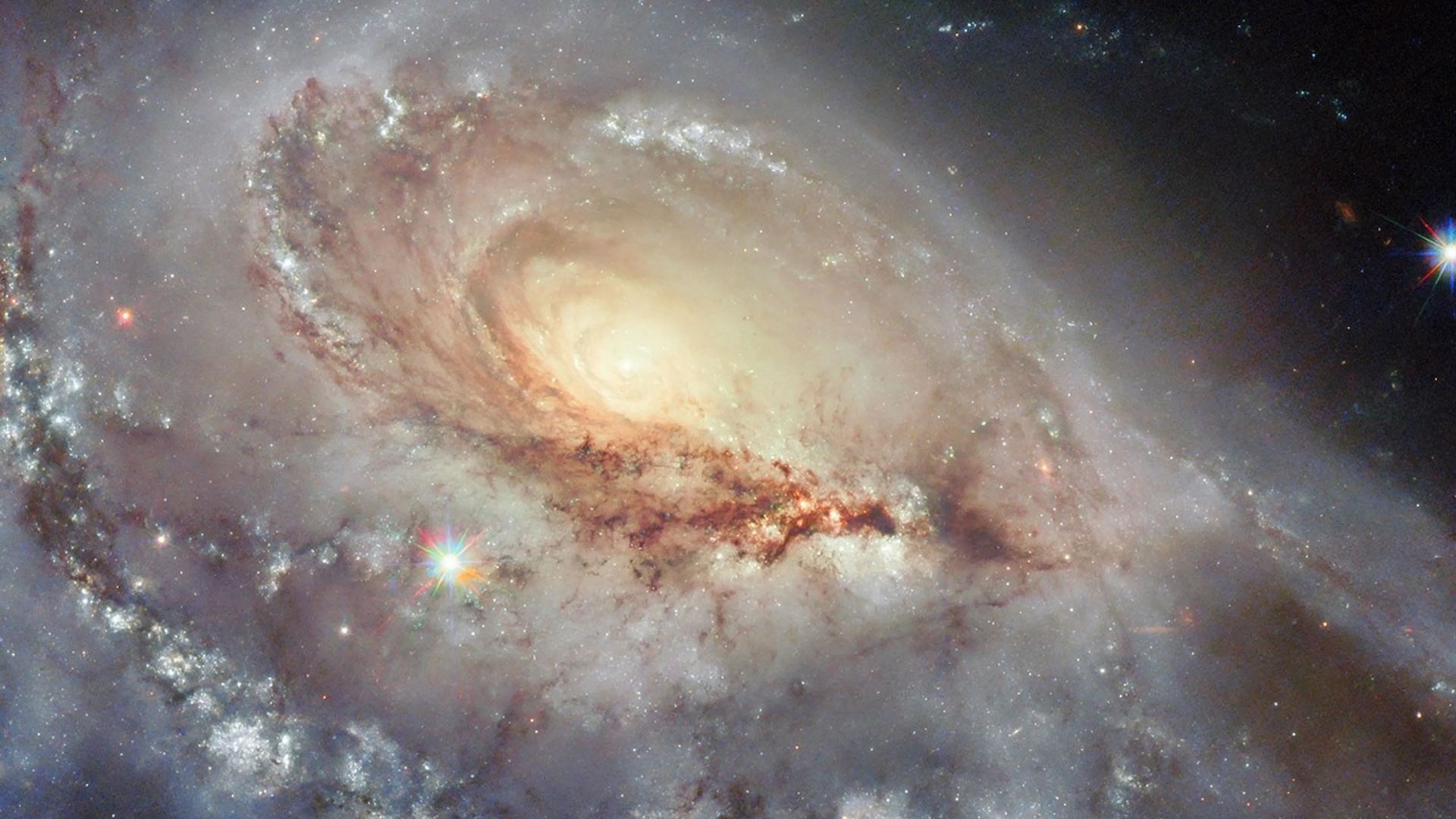
Astronomers used the Hubble Space Telescope to image "peculiar" galaxy Arp 184 (NGC 1961) about 190 million light-years away. Remarkably, the spiral galaxy has only one visible arm.
The Hubble Space Telescope's image of spiral galaxy Arp 184/NGC 1961.
(Image credit: ESA/Hubble & NASA, J. Dalcanton, R. J. Foley (UC Santa Cruz), C. Kilpatrick)
What it is: Arp 184 (NGC 1961)
Where it is: 190 million light-years distant in the constellation Camelopardalis, the giraffe.
When it was shared: April 29, 2025
Why it's so special: What if a galaxy had only one spiral arm?
Our solar system resides on the outskirts of one of the Milky Way galaxy's estimated four spiral arms, according to Space.com, but not all galaxies are like that. In the latest image from NASA's Hubble Space Telescope, a strange galaxy called NGC 1961 comes into focus that has just one — a single broad, star-speckled spiral arm that appears to stretch toward us as the galaxy is viewed from a skewed angle.
It may seem a dramatic point of view, but it's merely what Hubble sees from its line of sight on its orbital path around Earth. On the far side of the newly imaged galaxy, beyond swirls of stars and dust around a bright center, there is no similarly impressive spiral arm, with just a few wisps of gas and stars instead. The image is also available as a panoramic video, a zoomable version, and as a 15-megapixel download.
An uncropped version of the image. (Image credit: ESA/Hubble & NASA, J. Dalcanton, R. J. Foley (UC Santa Cruz), C. Kilpatrick)
Its sole spiral arm long ago earned NGC 1961 the additional name Arp 184 and a place in the Atlas of Peculiar Galaxies, a catalog of galaxies that are neither perfectly symmetrical spiral galaxies nor smooth, spherical elliptical galaxies. First published in 1966 by American astronomer Halton Arp, the atlas collects 338 galaxies that are oddly shaped, many because they're interacting with other galaxies. Others in the atlas are dwarf galaxies in flux.
There's another reason why Hubble targeted Arp 184/NGC 1961. It's hosted four known supernovas — the powerful explosion of a dying star — in the past four decades (in 1998, 2001, 2013 and 2021). It's exceptionally rare to catch a supernova in the act, so galaxies with a proven track record like this one make prime targets.
Arp 184/NGC 1961 was discovered by German-British astronomer William Herschel in 1788, seven years after he discovered the planet Uranus, the first planet to be found in modern times.
According to observations from NASA's Spitzer Space Telescope, the Milky Way has two main spiral arms — the Perseus and Scutum-Centaurus arms — and two less obvious arms, the Sagittarius and Norma arms. Two minor spiral arms are close to the galaxy's center, the Far-3 kiloparsec arm and the Near-3 kiloparsec arm. Our solar system exists in the Orion Spur between the Sagittarius and Perseus arms.
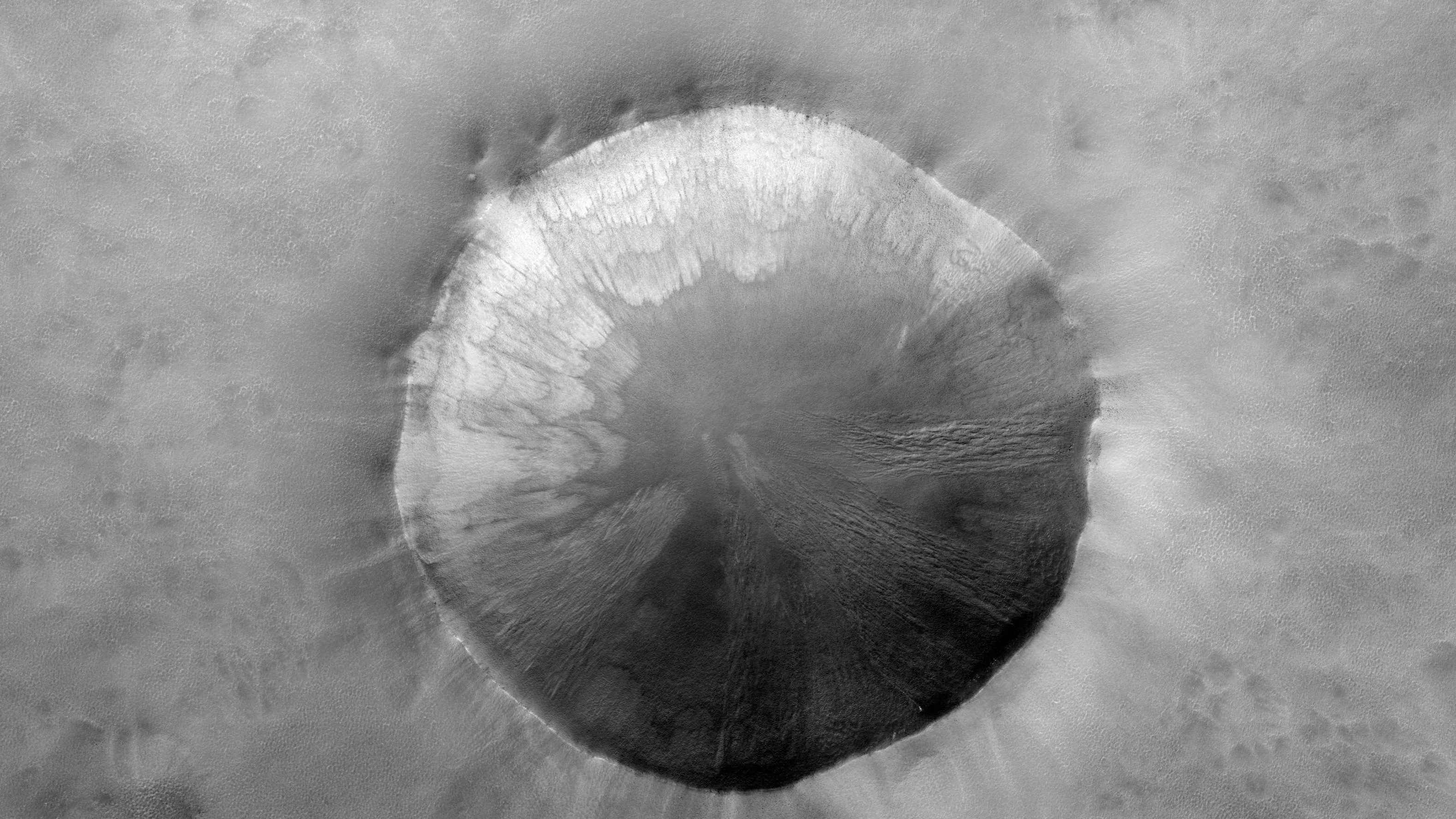
Wave-like soil patterns on the Martian surface match those found in Earth's cold, mountain regions, which could help scientists better understand the Red Planet's climate history and search for signs of life.
Mars has wave-like soil patterns that match those found on Earth. This image, taken fromthe Mars Reconnaissance Orbiter, shows the patterns inside a Mars crater.
(Image credit: NASA/JPL-Caltech/UArizona)
High-resolution satellite images have revealed dripping paint-like patterns on Mars that match those found on Earth, according to a new study.
The familiar soil patterns suggest that Mars and Earth were shaped by similar forces. On Earth, the patterns form on the slopes of cold, mountainous regions where soils freeze and thaw throughout the year. If Marsonce had the same icy, wet conditions, then these patterns could be a good place to explore the role that liquid water may have had in shaping the Red Planet and its potential to harbor signs of life.
"Understanding how these patterns form offers valuable insight into Mars' climate history, especially the potential for past freezing and thawing cycles, though more work is needed to tell if these features formed recently or long ago," study lead author JohnPaul Sleiman, a doctoral student in the department of Earth and environmental sciences at the University of Rochester in New York, said in a statement.
Mars Sample Return Mission – NASA & ESA’s Historic Journey to Bring Mars Rocks to Earth #mars #nasa
Mars in 4K: Perseverance’s Rock Sample Collection
"Ultimately, this research could help us identify signs of past or present environments on other planets that may support or limit potential life," Sleiman added.
The researchers published their findings online March 26 in the journal Icarus.
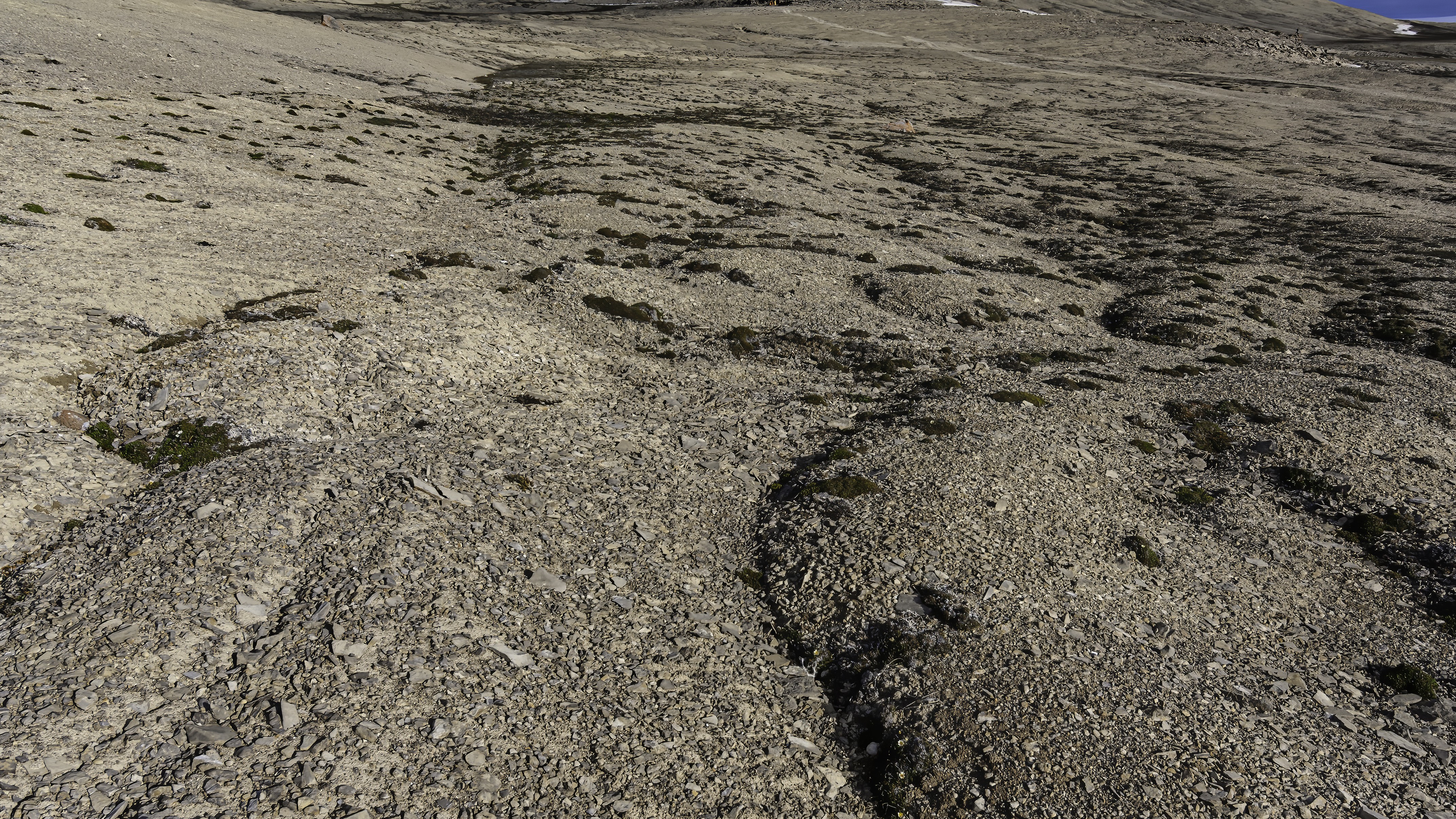
On Earth, soil patterns like this are known as solifluction lobes. They form when a sheet of frozen ground partially thaws and loosens, causing soil to creep downhill. The effect creates wave-like patterns on the side of hills in cold regions. Mars is further away from the sun than Earth, and typically much colder, but the Martian lobes only occur at high latitudes.
Some previous studies have suggested that Mars' high-latitude regions may have experienced freeze-thaw conditions in the planet's recent climate history, which would explain why it has similar lobes. However, there are many unanswered questions surrounding the Martian lobes, including why they appear to be significantly larger than those on Earth, according to the study.
The wave-like soil patterns form in cold, mountainous regions on Earth. (Image credit: Gerald Corsi via Getty Images)
By analyzing high-resolution satellite imagery of the Martian surface taken by the HiRISE camera aboard NASA's Mars Reconnaissance Orbiter, the research team saw that the wave-like landforms followed the same basic geometric pattern as those in Earth's Rocky Mountains, Arctic and other cold mountainous regions, according to the statement.
Study co-author Rachel Glade, an assistant professor in the department of Earth and environmental sciences at the University of Rochester, likened the landforms to patterns seen in fluids. These patterns "are large, slow-moving, granular examples of common patterns found in everyday fluids, like paint dripping down a wall," Glade said in the statement.
The team also confirmed that the Martian lobes were larger than Earth's — around 2.6 times taller on average. To explain this, they proposed that Mars has taller lobes because its gravity is weaker, which allows waves of accumulating sediment to grow taller before collapsing, according to the study.
The findings reinforce previous suspicions that Mars' lobes are — or were — linked to ground ice, with their patterns resembling what would be expected from fluid-like instabilities. However, the researchers couldn't be certain that liquid water was involved just from the satellite data. The authors suggested that future laboratory experiments could explore whether ice and liquid water are both required for the wave-like patterns to form.
It's Been a Year Since the Most Powerful Solar Storm in Decades. What Did We Learn?
By Mark Thompson
Image NASA’s Solar Dynamics Observatory captured this image of the Sun on May 7, 2024
Our local star the Sun is a vast sphere of electrically charged gas (plasma) and is the beating heart of our Solar System, bathing our world in life giving heat and light 150 million kilometres away. A main-sequence star, it’s composed primarily of hydrogen and helium, converting four million tons of matter into energy every second through nuclear fusion in its core. With surface temperatures reaching 5,500°C and a diameter 109 times that of Earth, the Sun has illuminated our planet for 4.6 billion years and will continue to shine for (hopefully) another 5 billion more before expanding into a red giant.
The Sun in white light showing sunspots and faculae
Of the many events visible on the Sun, solar storms are powerful eruptions of energy from that hurl charged particles and electromagnetic radiation into space at tremendous speeds. These violent phenomena begin as solar flares or coronal mass ejections (CMEs) on the Sun’s visible surface, where magnetic field lines twist, break, and explosively reconnect. When directed toward Earth, these storms can interact with our planet's magnetic field, triggering geomagnetic disturbances that create spectacular auroras but also pose serious risks to modern infrastructure.
Solar Orbiter view of the Sun showing solar flares
A year ago, NASA and other government agencies gathered to simulate responding to such events due to the potential risks yet their simulations were interrupted by the most powerful solar storm in over two decades. The G5 level event that was named the Gannon storm (named after space weather physicist Jennifer Gannon,) struck Earth on 10 May 2024. It transformed their tabletop exercise into a real-world response. While this powerful solar event—capable of damaging satellites, overloading electrical grids, and endangering astronauts—didn't cause catastrophic damage, it provided valuable insights to help prepare for future solar threats.
The storm caused widespread disruptions on Earth and in space. High-voltage lines tripped and transformers overheated in the US and GPS-guided tractors went off course. In the air, increased radiation risk and communication issues forced trans-Atlantic flights to reroute. The storm also heated the thermosphere to over 1,100°C, causing it to expand and create strong winds that pushed heavy nitrogen particles higher. This expansion increased atmospheric drag on satellites, causing some to lose altitude or deorbit early, and forcing others to use more power to stay in orbit and avoid debris.
“Not all farms were affected, but those that were lost on average about $17,000 per farm” - Terry Griffin, a professor of Agricultural Economics at Kansas State University.
Rare global auroral displays were also triggered, with over 6,000 sightings reported from 55 countries across all continents. In Japan, unusually high magenta auroras puzzled scientists until they found, through photo analysis, that these lights appeared about 600 miles above Earth—much higher than usual. A study concluded the rare colour came from a mix of red and blue auroras caused by oxygen and nitrogen molecules lifted by the storm's heating and expansion of the upper atmosphere. NASA called it a unique and exceptional event.
The Sun’s intense activity didn’t just affect Earth—it also hit Mars. NASA’s MAVEN spacecraft observed auroral displays covering Mars between May 14 and 20. The solar particles disrupted the star camera on the Mars Odyssey orbiter, causing it to shut down temporarily, and create visual "snow" in images from Curiosity’s cameras. Most notably, Curiosity recorded its highest-ever radiation spike, with levels that would have exposed astronauts to the equivalent of 30 chest X-rays.
The launch of MAVEN by an Atlas V rocket on 18 November 2013
(Credit : NASA)
The Gannon storm stands as a stark reminder of the Sun’s immense power, spreading aurora to unusually low latitudes and earning the title of the best-documented geomagnetic storm in history. It has provided an unprecedented set of data that scientists are still analysing a year later. From unexpected radiation surges on Mars to tractor disruptions in the American Midwest, the storm highlighted both the beauty and the vulnerability of life under the influence of our local star. As researchers continue to unravel the Gannon storm’s many effects, the lessons learned will shape future strategies for protecting technology, infrastructure, and even astronauts from the Sun.
Liquid water was abundant on Mars before ~3 billion years ago (left) but vanished as the planet transitioned into the cold, dry environment we see today (right). Art from https://i.ytimg.com/vi/pOcV7XbbfDs/maxresdefault.jpg.
Mars, the fourth planet from the Sun, has fascinated us for generations. This cold, dusty world features some of the Solar System's most dramatic landscapes, including massive canyons, towering volcanoes, and sprawling plains. While Mars appears dry and barren today, mounting evidence indicates it once had significant amounts of liquid water. Orbital imagery shows ancient riverbeds and what appear to be dried lake beds, while rovers have identified minerals that typically form in watery environments. These discoveries suggest Mars experienced a warmer, wetter period billions of years ago before transforming into the arid planet we observe today.
A full globe image of Mars showing its many features
A team of international scientists from China, Australia, and Italy investigated this very mystery; whether liquid water—crucial for habitability and once abundant on ancient Mars—still exists beneath the planet's surface. Their research addresses fundamental questions about potential Martian life and future human exploration.
"Water involves profound questions about life and humanity's future on the Red Planet” - lead researcher Dr. Hrvoje Tkalčić from the Australian National University.
The international geophysicists and geologists analysed seismic data from NASA's InSight mission, examining waveforms from two major meteorite impacts and Mars' largest recorded quake to investigate the planet's crustal structure. Their research revealed a significant low shear-wave velocity anomaly 5.4-8 kilometres beneath the surface, strongly suggesting the presence of liquid water at the base of Mars' upper crust. The team calculated this potential water reservoir could contain the equivalent of a 520-780 meter deep global water layer if spread across the entire Martian surface.
InSight Lander in Mars-Surface Configuration
(Credit : NASA/JPL-Caltech/Lockheed Martin)
The research team cautions that their estimate of Martian subsurface water is based only on data from beneath the InSight lander and doesn't account for regional variations or potentially primordial water elsewhere in the crust. Their groundbreaking detection of substantial liquid water 5.4-8 kilometres below the surface of Mars provides crucial insights into the planet's water cycle and habitability, though confirmation will require additional seismic missions.
This study transforms our understanding of Mars, suggesting the Red Planet didn't simply lose its water—it hid it underground. The discovery of a potentially vast subsurface reservoir challenges long-held assumptions about the evolution of Mars and dramatically improves prospects for future human exploration. With accessible water potentially available beneath the surface, establishing sustainable Martian outposts becomes more feasible.
View of Jezero acquired by Perseverance's left navigation camera
(Credit : NASA)
As space agencies plan ambitious crewed missions to Mars in coming decades, these findings will shape mission objectives, landing site selections, and resource utilisation strategies. Beyond practical implications, this research opens exciting new possibilities in astrobiology, as subsurface liquid water environments could provide sheltered habitats where Martian microorganisms might have survived or even thrived long after the surface became inhospitable.
The Plato Mission Just Got Dozens of Cameras Installed
By Mark Thompson
Plato's cameras
Hunting for exoplanets has transformed from science fiction to cutting-edge science fact in recent decades. Scientists use ingenious methods to spot these distant worlds, often looking for the subtle dimming of stars as planets cross their faces or the slight gravitational wobble planets induce in their host stars. Modern observatories like NASA's Transiting Exoplanet Survey Satellite and the James Webb Space Telescope have turned this cosmic treasure hunt into an age of discovery revealing thousands of worlds beyond our Solar System.
Artist impression of an exoplanet around a distant star
The European Space Agency's PLATO mission will soon join this flotilla of planet-hunting spacecraft. Set to launch in 2026, PLATO (PLAnetary Transits and Oscillations of stars) features an array of 26 high-precision cameras working together to continuously monitor vast regions of the sky. Unlike previous planet hunters, PLATO will specialise in finding and characterizing Earth-like planets orbiting in the habitable zones of Sun-like stars by simultaneously tracking the faint dimming of light from over 200,000 stars.
Artist impression of PLATO
(Credit - By ESA/ATG medialab)
PLATO is rapidly taking shape with 24 of its 26 sophisticated cameras now mounted on the spacecraft's optical bench to ensures precise alignment. The remaining two "fast" cameras will be installed in the coming weeks, while the spacecraft's supporting structure is being assembled in parallel at OHB in Germany.
"It's rewarding to see the progress we have made from last year when the work to mount the cameras started: with 24 cameras now in place, we see Plato taking its proper shape," - Thomas Walloschek, ESA's PLATO Project Manager.
PLATO's observational prowess comes from its strategic camera arrangement: 24 "normal" cameras positioned in four groups of six, each aimed at slightly different parts of the sky to collectively monitor about 5% of the celestial sphere simultaneously. Complementing these are two "fast" cameras that rapidly image the brightest stars within the same field and provide positioning coordinates to the spacecraft's guidance system. Meanwhile, engineers at OHB are constructing PLATO's service module, which houses the essential computers, orientation controls, propulsion systems, power distribution, and communication components. The integration of the camera-carrying payload module with this service module is scheduled for summer at OHB's facilities.
Main building in Bremen
(Credit - Marko Schade)
Building the PLATO satellite requires a new level of precision as engineers carefully mount its delicate cameras to ensure perfect alignment for detecting the faintest signals from distant stars. The sophisticated instruments are designed to capture minute brightness variations that occur when exoplanets transit their host stars. Beyond planet hunting, PLATO will revolutionize stellar science by monitoring "starquakes"—subtle brightness fluctuations that reveal a star's internal structure and age. This comprehensive approach, combining space observations with ground-based telescope follow-ups, will allow scientists to determine both the sizes and masses of newly discovered exoplanets.
Mantis Overlords: Ancient Aliens or Earth’s Hidden Rulers?
For decades, stories of alien abductions and mysterious creatures have flooded the paranormal landscape. But one specific entity has consistently stood out for its strangeness, intelligence, and chilling consistency: the Mantis Beings. Towering insectoid creatures, described as resembling humanoid praying mantises, have been reported across the globe—from ancient cave paintings to modern-day abduction experiences.
Encounters Along the Musconetcong River
In New Jersey, the quiet Musconetcong River has become a hotspot for reported sightings. Since 2006, multiple witnesses have come forward with eerily similar experiences: the forest falls silent, electronics fail, and a tall insectoid figure emerges—often accompanied by a low, humming vibration.
One of the earliest sightings came from a fisherman named Paul Jax, who described locking eyes with a seven-foot-tall being that seemed surprised he could see it. Shortly after, the creature vanished. Others, like Joe Pari, have reported telepathic contact, memory extraction, and paralysis during encounters with these beings—beings they say are not just aliens, but rulers in a complex extraterrestrial hierarchy.
Patterns in Abduction Testimonies
What makes the Mantis phenomenon so compelling is the consistency across thousands of abduction cases. People from different cultures and continents report the same appearance: triangular heads, large black eyes, thin insect-like bodies, and a commanding presence.
These beings don’t act alone. In many abduction stories—like the famous Terry Lovelace case from Devil’s Den State Park—witnesses report seeing smaller gray aliens working under the supervision of the Mantis beings. According to abductees, these Mantis entities often oversee medical procedures, communicate telepathically, and appear cold, efficient, and in complete control.
Ancient Evidence in Stone
Intriguingly, the Mantis narrative is not limited to modern experiences. Ancient civilizations may have also recorded these beings in their art and mythology. In Tamura, Iran, researchers discovered a petroglyph of a humanoid figure with mantis-like features, dated between 4,000 and 40,000 years old. In Africa, the San people (also known as the Khoisan) included mantis-headed figures in their rock art, often depicting them as creator gods.
These depictions span continents and cultures with no known contact, from early Mesopotamian and Egyptian texts to Native American legends—suggesting a global presence that predates written history.
A Portal in New Jersey?
One theory proposed by researchers is that certain geographic locations may act as gateways between dimensions. The Musconetcong River lies near several fault lines, which some scientists say could produce unusual electromagnetic fields. NASA refers to similar phenomena as “X-points,” or magnetic portals where Earth’s and the Sun’s magnetic fields connect. Could this explain the frequent sightings and strange activity in the area?
Some believe these locations serve as doorways, allowing interdimensional beings like the Mantis to enter our reality. Witnesses often describe their presence as distorting time, disabling electronics, and overwhelming the senses.
What Are They After?
Unlike the image of curious extraterrestrial explorers, Mantis beings appear to have a purpose. Abduction accounts, telepathic messages, and ancient stories suggest they are not merely observers—they’re here with a plan.
Some theories claim these entities have guided human development, influencing civilizations from behind the scenes. Others fear the Mantis are conducting long-term genetic experiments or harvesting knowledge and energy from humanity. Regardless of motive, one theme remains consistent: they are not new to this planet.
The Overlords Among Us?
Paranormal researchers, including Harvard psychiatrist Dr. John Mack, have extensively documented abduction cases and concluded that many cannot be dismissed as delusion. When so many individuals—many without mental illness or exposure to the subject—describe the same beings, the question is no longer if these entities exist, but who they are.
The idea of “Earth’s Mantis Overlords” may sound like science fiction, but for those who’ve seen them, the experience is chillingly real. Whether they are interdimensional travelers, ancient creators, or something else entirely, the Mantis beings appear to have been here for millennia—hidden in shadows, recorded in stone, and perhaps still watching us now.
Beerdiertjes hebben al heel wat meegemaakt. Zo hebben wetenschappers ze al eens ingevroren, de ruimte in geschoten en in een geladen geweer gestopt en afgevuurd. En daar blijft het niet bij, want onlangs hebben onderzoekers de arme organismen ook nog eens getatoeëerd.
Beerdiertjes zijn slechts een halve millimeter lang, maar onverwoestbaar gebleken. Zo hebben wetenschappers ze al eens volledig uit laten drogen, bevroren tot nabij het absolute nulpunt, verhit tot 148 graden Celsius en blootgesteld aan het vacuüm van de ruimte en een mate van straling die voor mensen dodelijk is. Maar de beerdiertjes gaven geen krimp en overleefden het allemaal. Zelfs experimenten waarin beerdiertjes in geladen geweren werden gestopt en met hoge snelheid werden afgevuurd – en ja, die hebben echt plaatsgevonden! – resulteerden niet in de dood van de kleine beestjes.
Tatoeage En met dat onverwoestbare karakter hebben de beerdiertjes nu de aandacht getrokken van Chinese onderzoekers. Zij besloten vervolgens na te gaan of het schier onoverwinnelijke organisme ook het zetten van een soort tatoeage weer te boven kon komen. Hun bevindingen zijn terug te lezen in het blad Nano Letters en onthullen – jawel – dat beerdiertjes ook van het zetten van een tatoeage niet direct onder de indruk zijn.
Microfabricage Het klinkt misschien als een ietwat lachwekkende onderzoeksvraag: kan een beerdiertje een tatoeage laten zetten en vrolijk voort leven? Maar dat is het zeer zeker niet. De betrokken wetenschappers houden zich namelijk bezig met microfabricage. Dit is een proces waarbij zeer kleine structuren – meestal op de schaal van micrometers of zelfs nanometers – worden gemaakt en dat bijvoorbeeld reeds heeft geleid tot de productie van microprocessoren en zonnecellen. Maar wetenschappers willen meer. Zo zouden ze bijvoorbeeld graag in staat zijn om micro- of nanosensoren direct op levend weefsel te printen, zo legt onderzoeker Ding Zhao aan Scientias.nl uit. “Microfabricage maakt het mogelijk om apparaten uiterst dicht op elkaar te integreren, binnen zeer beperkte ruimtes. Wanneer deze techniek wordt toegepast op levende organismen, minimaliseert dit de fysieke verstoring, wat helpt om de natuurlijke lichamelijke functies van het organisme te behouden.” Er is alleen één probleem: traditionele micro- en nanofabricagetechnieken zijn momenteel niet biocompatibel en zelfs ronduit gevaarlijk voor levend weefsels.
IJslithografie Maar er gloort hoop. Want sinds kort is er ijslithografie. “Dit is een opkomende fabricagemethode waarvan is aangetoond dat deze patronen kan aanbrengen op kwetsbare delicate ondergronden,” legt Zhao uit. “Deze techniek vereist echter nog steeds barre omstandigheden, zoals bevriezing en een vacuümomgeving.” Levende weefsels moeten namelijk in een vacuüm worden geplaatst en met een ijscoating worden bedekt, waarna men met elektronenbundels een patroon in die ijscoating ’tekent’ dat pas zichtbaar wordt als het weefsel weer wordt verwarmd en de ijscoating smelt. In een eerste poging om na te gaan of ijslithografie op kleine, levende organismen kan worden toegepast, besloten de onderzoekers dan ook al snel een beroep te doen op de onverwoestbare beerdiertjes. “Want beerdiertjes staan bekend om hun extreme stressbestendigheid.”
Het experiment Die stressbestendigheid hebben beerdiertjes mede te danken aan een slimme overlevingsstrategie die ook wel aangeduid wordt als cryptobiose. Zodra de omstandigheden waarin beerdiertjes leven onleefbaar worden, gaan ze in cryptobiose. Hun stofwisseling komt dan vrijwel stil te liggen en de beerdiertjes lijken bijna dood te zijn. Maar schijn bedriegt: wanneer de omstandigheden beter worden, komen de beerdiertjes uit cryptobiose en gaan ze weer verder waar ze gebleven waren. Omdat het tatoeage-avontuur een bevriezing, blootstelling aan straling en een vacuüm behelsde, besloten de onderzoekers de beerdiertjes eerst in cryptobiose te laten gaan. Ze lieten de beerdiertjes daartoe grotendeels uitdrogen. Eenmaal in cryptobiose werden de beerdiertjes klaargemaakt voor hun tatoeage. Ze werden in een vacuüm geplaatst, blootgesteld aan temperaturen van ongeveer -143 graden Celsius en bedekt met anisol – een naar anijs ruikend goedje. Vervolgens gebruikten de wetenschappers een elektronenbundel om een patroon in de anisol te kerven. Alleen anisol dat door de elektronenbundel werd beroerd, transformeerde tot een biocompatibel materiaal dat bij hogere temperaturen aan het beerdiertje bleef plakken. Dus toen de onderzoekers het beerdiertje weer opwarmden, verdampte de anisol die niet door de elektronenbundel was beroerd en vormde het door de elektronenbundel beroerde anisol een fraaie ‘tatoeage’. Door het uitgedroogde beerdiertje vervolgens weer te hydrateren, kwam deze uit cryptobiose en ging – met tatoeage – vrolijk verder waar deze gebleven was.
Sterfte Tenminste: soms. Ongeveer 40 procent van de beerdiertjes overleefde het zetten van de tatoeage en hervatte de activiteiten, zonder ogenschijnlijk hinder te ondervinden van de tatoeage. Dat 60 procent stierf, komt volgens Zhao waarschijnlijk niet door de tatoeage zelf. “We kunnen niet volledig uitsluiten dat het aanbrengen van het patroon enige schade aanrichtte. Maar het feit dat een substantieel aantal beerdiertjes de ingreep overleefde en daarna de activiteiten hervatte, wijst erop dat de schade die de procedure zelf met zich meebracht beperkt was en niet de belangrijkste oorzaak van de dood van de beerdiertjes was.” Dat 60 procent van de beerdiertjes het loodje legde, zou eerder te wijten zijn aan natuurlijke, onderlinge verschillen in stressbestendigheid, zo stelt Zhao. Ook is het mogelijk dat de beerdiertjes niet op de meest optimale manier in cryptobiose zijn gegaan en dat daardoor hun kansen om daar weer levend uit te komen, flink afnamen.
Overwinning Voor de onderzoekers is het duidelijk al een hele overwinning dat 40 procent van de beerdiertjes hun tatoeage-avontuur hebben overleefd en daarna – met tatoeage – ook hun leven weer konden oppakken. “Voor het eerst zijn we erin geslaagd om micro- tot nanoschaalpatronen met precisie rechtstreeks aan te brengen op het oppervlak van levende beerdiertjes,” benadrukt Zhao. “Gezien het onregelmatige en kwetsbare oppervlak van hun lichaam is dat veelzeggend (…) Het meest verbazingwekkende was nog wel dat de ‘getatoeëerde’ beerdiertjes niet alleen de procedure overleefden, maar ook in staat bleven om normaal te bewegen.”
Uitdagingen De onderzoekers zien hun bevindingen als een ‘proof of concept’: bewijs dat het idee om micro- en nanofabricagetechnieken rechtstreeks op levende organismen toe te passen realiteit kan worden. Tegelijkertijd erkennen ze dat er nog een lange weg te gaan is. “Het toepassen van deze techniek op kleinere of kwetsbaardere organismen brengt aanzienlijke uitdagingen met zich mee,” erkent Zhao. Zo zijn die organismen bijvoorbeeld vaak niet opgewassen tegen de bevriezing die met de toepassing van ijslithografie gepaard gaat. “Om verdere vooruitgang te boeken, zullen we de experimentele omstandigheden moeten optimaliseren en mogelijk het fabricageproces volledig moeten herontwerpen.”
Onderzoeker Gavin King, uitvinder van de ijslithografie, maar niet betrokken bij het onderzoek, ziet het desalniettemin zonnig in. “Het is een uitdaging om levend materiaal te voorzien van patronen, maar dit is een stap vooruit en hint op een nieuwe generatie biomaterialen en biofysische sensoren die tot nu toe alleen in sciencefiction bestonden.”
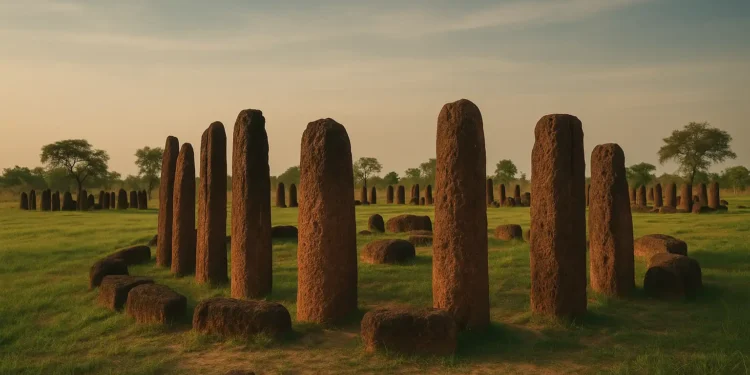
The ancient stone rings that predate writing. An illustraton of the so-called Senegambian stone circles.
Curiosmos.
We often assume civilization began with writing. But across continents, long before alphabets or empires, ancient people carved meaning into stone and arranged it into circles. These ancient stone rings, some more than 7,000 years old, are aligned with the sun, moon, and stars. Their builders had no known writing system, no cities, and no monuments, only the sky above and stone beneath.
What drove them to create these structures? Were they calendars? Ceremonial sites? Cosmic memory devices? The answer may lie hidden in the way these circles track time, space, and something more timeless, human curiosity.
The first circles of meaning
The oldest stone structures in the world are not pyramids or palaces, but rings. They appear in deserts, forests, savannas, and steppes. Though separated by thousands of miles and built by unrelated cultures, these circles share one thing: alignment with the sky.
Archaeologists have found ancient stone circles that predate writing by thousands of years. Some track solstices. Others point to bright stars. All of them suggest a deep understanding of cycles and a need to record them in permanent form.
Why circles? The shape has no beginning or end. It reflects continuity of seasons, of time, of life and death. That universality may explain why circles appear in cultures that never met, speaking languages no longer remembered.
Nabta Playa: A stone calendar in the desert
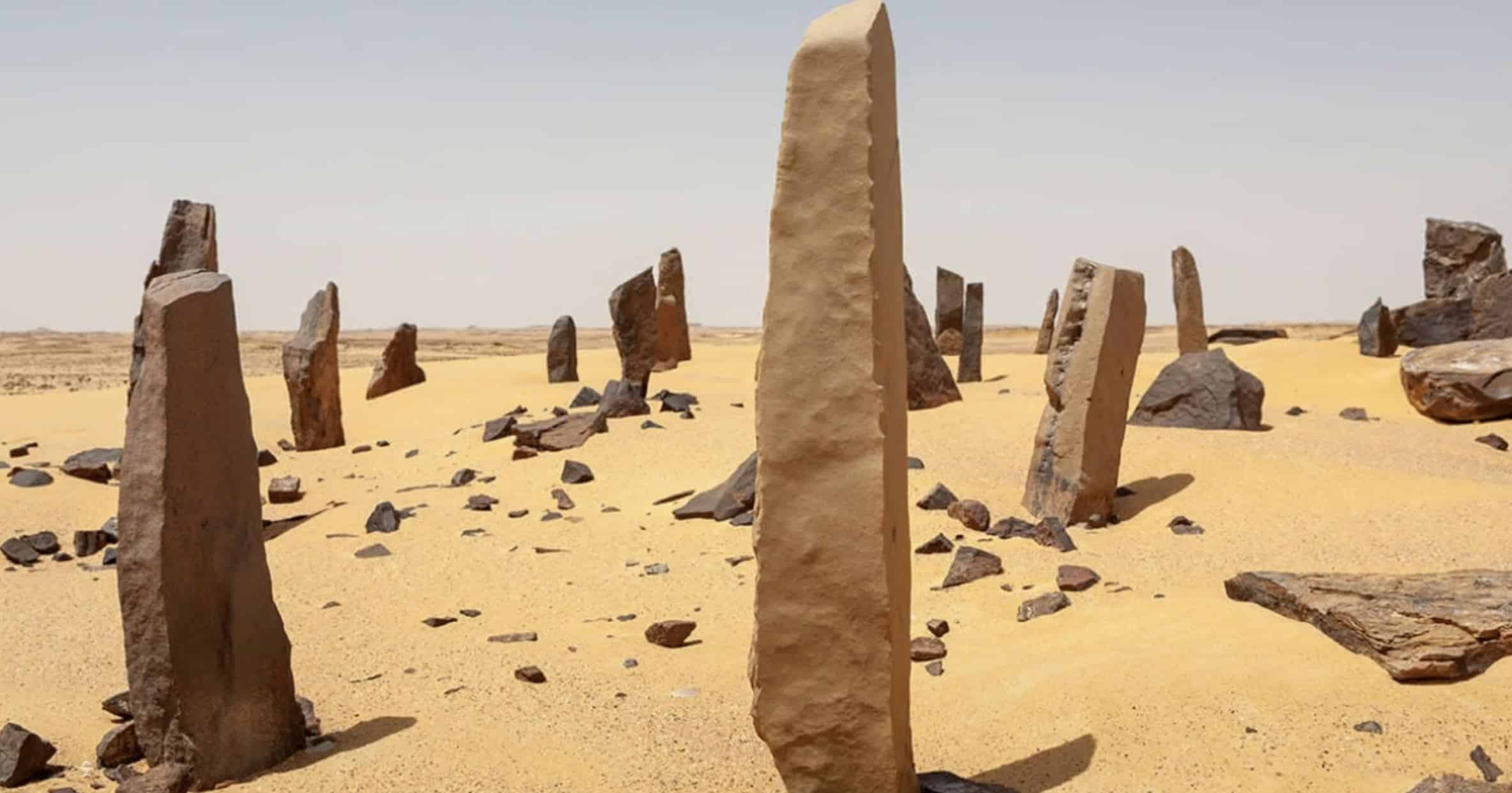
A photograph showing the stones of Nabta Playa.
In southern Egypt, buried beneath sand for millennia, lies Nabta Playa, a site older than Stonehenge. Built around 7,000 years ago by nomadic pastoralists, it features upright stones arranged in a circle with alignments that track the summer solstice.
Some researchers believe the stones point to Sirius and Orion’s Belt, suggesting a celestial function that goes beyond seasonal tracking. Nearby carved stones, including depictions of cows, hint at rituals tied to fertility, rain, or life cycles. Yet the people who built Nabta Playa left no written record.
They had only the stars to guide them, and stones to preserve what they saw.
Arkaim: Russia’s forgotten observatory city
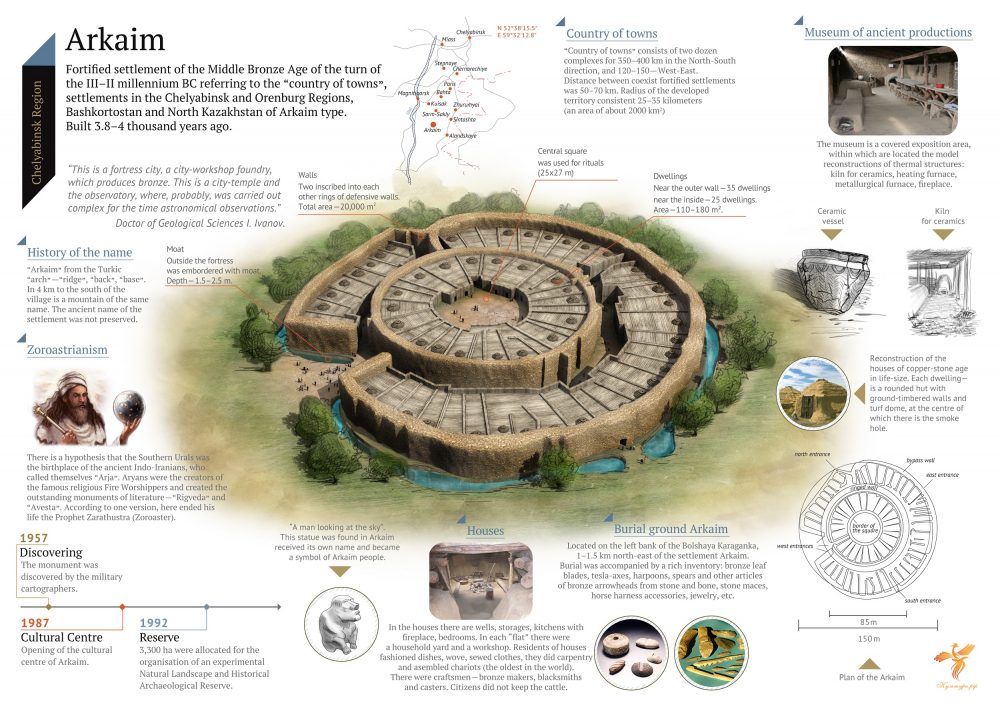
An infographic describing Arkaim. Image Credit: Wikimedia Commons.
I think a few of my readers have heard of this site. In the southern Ural Mountains lies Arkaim, a Bronze Age settlement with a circular layout and a mysterious past. Built roughly 4,000 years ago, its concentric walls and radial streets seem more than defensive. Researchers have noted solar and lunar alignments in its structure, leading some to describe it as an ancient observatory.
Arkaim’s origins are tied to early Indo-European migrations. Sky worship was common among these groups, and Arkaim may have served as a center for both astronomical observation and religious ceremony. Unlike Nabta Playa, it was a lived-in settlement, not just a ceremonial space. But its circular plan suggests a symbolic link to the sky above, a mirror of the heavens on Earth.
The Senegambian circles: Africa’s mysterious monuments
Scattered across Senegal and The Gambia are more than 1,000 stone circles, forming the largest concentration of megalithic structures in West Africa. Many date from the 3rd century BCE to the 9th century CE, but some may be older. Thousands of upright stones, often precisely placed, stretch across the landscape in repeating patterns.
Most were built over burials, but their scale and precision raise more questions than answers. Some researchers propose astronomical functions. Others see them as markers of territory or lineage. Almost nothing is known about the people who built them. Yet their work remains, quiet and immovable, still pointing at the sky.
What were the ancient stone circles really trying to say
We may never know exactly why these ancient stone circles were built, but when we step back and look at the patterns, a picture begins to form. Many of them are aligned with the solstices or lunar events, which suggests their builders were tracking time. This wasn’t just about counting days. It may have been a way to mark the rhythm of seasons, migrations, or sacred moments in the year.
Some of these ancient structures feel like gathering places. The way the stones are arranged, the way they open into space, hints at ceremonies or communal rituals. People may have met there to watch the sky, share stories, or honor something greater than themselves.
Then there are the details that raise even more questions. Certain sites reflect sound in strange ways. Others follow exact mathematical layouts. These elements suggest more than just tradition or instinct. They point to deliberate design, a kind of planning that reaches into science as well as spirit.
In a few places, the alignment of stones seems to echo the sky above. Stars have earthly counterparts. The layout becomes a reflection of the heavens. It’s as if these builders were creating a memory on the ground, one that would preserve what they saw in the sky.
Taken together, the rings speak to a kind of intelligence we don’t often associate with ancient people. They understood space and time. And they used stone to hold on to that knowledge.
Circles across the world and across time
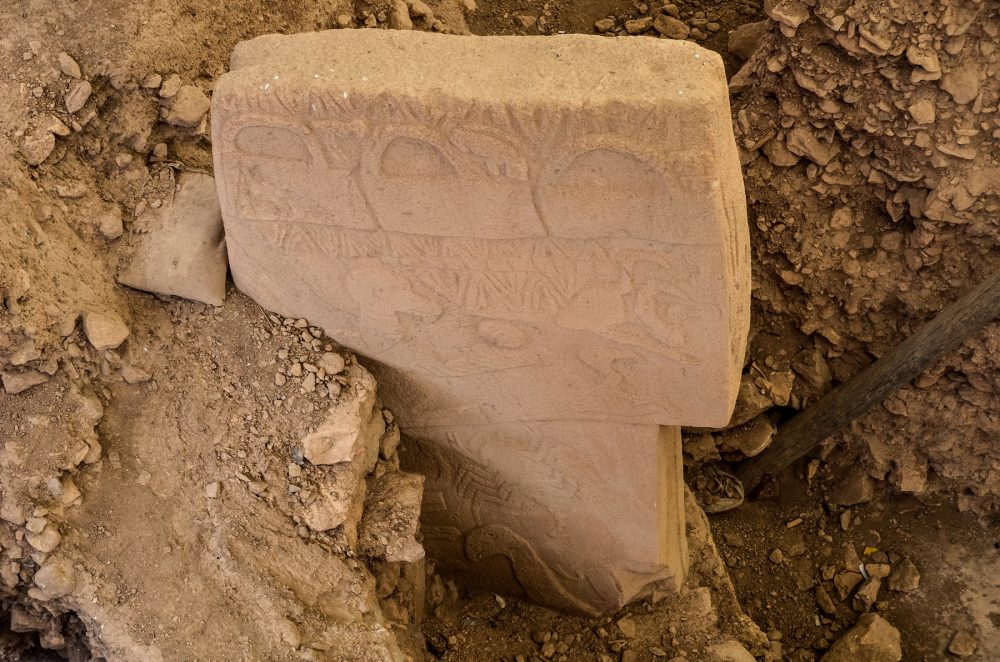
An image of a half-buried stone pillar at Gobekli Tepe. Shutterstock.
One of the most remarkable things is how often these stone circles appear in places that had no contact with each other. From the deserts of North Africa to the grasslands of Russia and the mountains of South America, circles keep appearing. Different people, different continents, but the same shape again and again.
Within these circles, familiar symbols often repeat. Bulls. Vultures (like at Göbekli Tepe). Rays of sunlight. The meanings may not have been the same, but the images speak to shared concerns. Life and death. Light and darkness. The turning of the sky.
Even now, we still rely on circles to shape our understanding of time. Our clocks are round. Our calendars turn in cycles. We still think in seasons, in repetitions, in return.
Maybe these ancient rings weren’t just tools or temples. Maybe they were a way to remember. Not just information, but feeling. Not just facts, but presence. They were made to last, and they have. Even if the language is lost, the shape remains. Even if the names are gone, the stones are still watching the sky.
Meer van UFO'S of UAP'S, ASTRONOMIE, RUIMTEVAART, ARCHEOLOGIE, OUDHEIDKUNDE, SF-SNUFJES EN ANDERE ESOTERISCHE WETENSCHAPPEN - DE ALLERLAATSTE NIEUWTJES


 The humanoid Mantis Beings: Have they been here since ancient times?