Ontdek de Fascinerende Wereld van UFO's en UAP's: Jouw Bron voor Onthullende Informatie!
Ben jij ook gefascineerd door het onbekende? Wil je meer weten over UFO's en UAP's, niet alleen in België, maar over de hele wereld? Dan ben je op de juiste plek!
België: Het Kloppend Hart van UFO-onderzoek
In België is BUFON (Belgisch UFO-Netwerk) dé autoriteit op het gebied van UFO-onderzoek. Voor betrouwbare en objectieve informatie over deze intrigerende fenomenen, bezoek je zeker onze Facebook-pagina en deze blog. Maar dat is nog niet alles! Ontdek ook het Belgisch UFO-meldpunt en Caelestia, twee organisaties die diepgaand onderzoek verrichten, al zijn ze soms kritisch of sceptisch.
Nederland: Een Schat aan Informatie
Voor onze Nederlandse buren is er de schitterende website www.ufowijzer.nl, beheerd door Paul Harmans. Deze site biedt een schat aan informatie en artikelen die je niet wilt missen!
Internationaal: MUFON - De Wereldwijde Autoriteit
Neem ook een kijkje bij MUFON (Mutual UFO Network Inc.), een gerenommeerde Amerikaanse UFO-vereniging met afdelingen in de VS en wereldwijd. MUFON is toegewijd aan de wetenschappelijke en analytische studie van het UFO-fenomeen, en hun maandelijkse tijdschrift, The MUFON UFO-Journal, is een must-read voor elke UFO-enthousiasteling. Bezoek hun website op www.mufon.com voor meer informatie.
Samenwerking en Toekomstvisie
Sinds 1 februari 2020 is Pieter niet alleen ex-president van BUFON, maar ook de voormalige nationale directeur van MUFON in Vlaanderen en Nederland. Dit creëert een sterke samenwerking met de Franse MUFON Reseau MUFON/EUROP, wat ons in staat stelt om nog meer waardevolle inzichten te delen.
Let op: Nepprofielen en Nieuwe Groeperingen
Pas op voor een nieuwe groepering die zich ook BUFON noemt, maar geen enkele connectie heeft met onze gevestigde organisatie. Hoewel zij de naam geregistreerd hebben, kunnen ze het rijke verleden en de expertise van onze groep niet evenaren. We wensen hen veel succes, maar we blijven de autoriteit in UFO-onderzoek!
Blijf Op De Hoogte!
Wil jij de laatste nieuwtjes over UFO's, ruimtevaart, archeologie, en meer? Volg ons dan en duik samen met ons in de fascinerende wereld van het onbekende! Sluit je aan bij de gemeenschap van nieuwsgierige geesten die net als jij verlangen naar antwoorden en avonturen in de sterren!
Heb je vragen of wil je meer weten? Aarzel dan niet om contact met ons op te nemen! Samen ontrafelen we het mysterie van de lucht en daarbuiten.
New research shows that microplastics have been contaminating some freshwater streams decades earlier than previously recorded. What could that mean for human health?
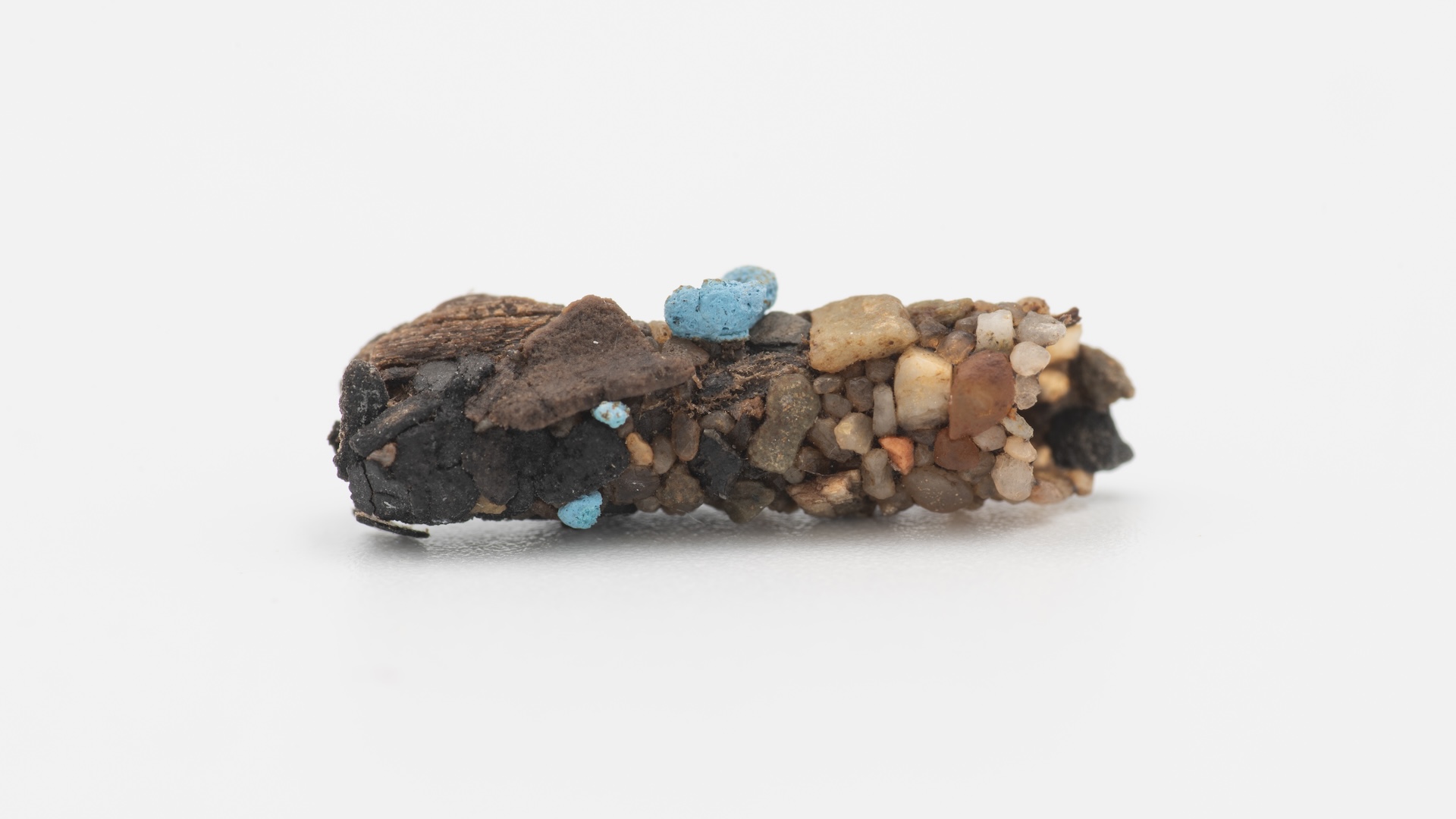
Caddisfly larvae built protective casings around themselves using materials available in the environment. This casing, from 1986, has blue microplastic in it.
(Image credit: Auke-Florian Hiemstra)
Microplastic pollution from industrial waste has been contaminating freshwater ecosystems for decades, with evidence pointing to this run-off starting in the 1950s to 1970s. Now, though, new evidence suggests the extent of that pollution might be even broader than once thought.
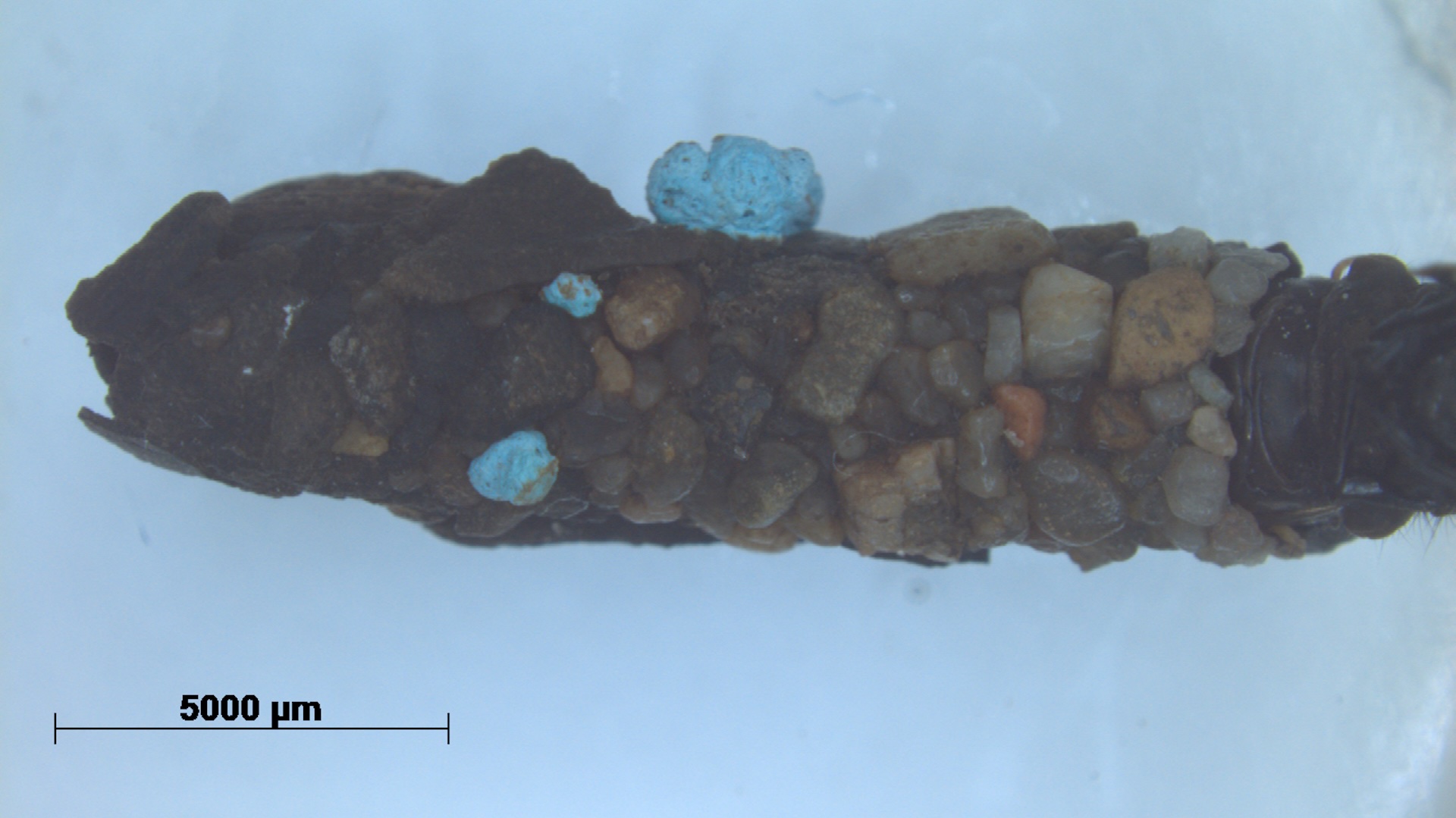
In a study published April 25 in the journal Science of The Total Environment, scientists examined the larvae of caddisflies, small insects that build protective casings around themselves using plant material, sand and small stones in their environment. These casings, gathered in the 1970s and 1980s, came from clear, spring-fed streams in the Netherlands that were considered pristine at the time.
However, the study revealed that the larvae were incorporating plastic particles into their protective casings as early as 1971 — in other words, microplastics had infiltrated even these seemingly untouched ecosystems.
"The inclusion of plastic in the casing of a caddisfly means plastic is entering the food chain," said lead study author Auke-Florian Hiemstra, a doctoral candidate in evolutionary ecology at the Naturalis Biodiversity Center.
"Many birds and fish eat these caddisfly larvae, and some swallow them including their casing," Hiemstra told Live Science in an email. "If caddisflies have been affected by microplastics for over half a century, that means the broader ecosystem is affected too."
Thecasing specimens in the study are part of the natural history collections at the Naturalis Biodiversity Center in the Netherlands. The researchers used a technique called energy dispersive X-ray analysis to reveal chemical elements and additives commonly associated with plastics inside the casings.
This provided a rare snapshot into the impact of microplastics on freshwater systems, which represent less than 4% of current studies on microplastics, Hiemstra said. Generally, the presence of microplastics in the 2000s iswell documented, but the historical timeline of microplastic pollution has remained vague. This lack of historical data has made it difficult to assess how long ecosystems and human populations have been exposed to microplastics, thus complicating risk assessments and epidemiological studies.
So, how might this study change our understanding of the history of microplastic exposure and its potential impacts on human health?
Microplastics in nature and the body
This caddisfly casing from 1971 has microplastic in it, the researchers found. (Image credit: Auke-Florian Hiemstra)
Microplastics are tiny fragments of synthetic polymers that can take anywhere from hundreds to thousands of years to degrade. They're defined as being between 1 micrometer and 5 millimeters long. Today, they seem to be found virtually everywhere: inclouds, theair we breathe, food, drinking water, and human blood and breast milk. These particles stem from the breakdown of larger plastics, and in some cases, they are intentionally manufactured for use in certain cosmetics and cleaning products.
Research suggests that the human body clears out some larger microplastics measuring up to 150 micrometers long, while fragments smaller than 10 micrometers may be absorbed into tissues. But recent research suggests that some plastics in our bodies are even tinier than that.
While whatqualifies as "nanoplastic" is still under debate, these ultrasmall particles are typically considered to be any plastic fragments smaller than 1 micrometer (or 1,000 nanometers) in diameter. A human hair, by comparison, is around 80,000 nanometers wide. Nanoplastics are small enough to potentially pass through cell membranes, studies suggest.
Matthew Campen, a toxicologist at the University of New Mexico, recentlyled a study that pointed to the presence of nanoplastics in human tissues. Using advanced, high-resolution imaging techniques, his team identified plastic fragments measuring no more than 200 nanometers in length — thin enough that they were translucent — in brain tissue from a few dozen organ donors.
After its publication, some of the analytical techniques used in the study were criticized, so the exact quantities of different types of plastic may be off, experts told Live Science. But by detecting nanoplastics, the findings expand upon previous work that relied on microscopes that could only detect particles up to 25 times larger.
That study, which included samples collected between 2016 and 2024, also suggested that later samples carried higher concentrations of plastics, and that the brains of individuals who died with dementia contained more plastic than healthy brains. These results raised questions about whether the public's plastic exposure has been increasing over time.
Hiemstra's new findings feed into that broader discussion and may have implications for how we understand the health risks of microplastics. If the pollutants have been present throughout the environment — not only near industrial sites — since the 1970s, that might reframe our understanding of where people have been exposed and for how long. Plastics not only accumulate in the environment, but also in the body, so better understanding the timeline and extent of exposure can help scientists unpack its long-term health outcomes.
As Hiemstra's study was focused on only the Netherlands, though, other work will need to be done to understand the history of microplastic pollution on a global scale.
Scientists arestill working to understand exactly how microplastics and the chemicals within plastics — such as phthalates and per- and polyfluoroalkyl substances (PFAS) — might affect our bodies, Tracey Woodruff, a professor at the University of California, San Francisco (UCSF) who studies how pollutants affect reproductive and developmental health, told Live Science.
Early research has linked plastic exposure to the risk of various health conditions, including heart disease, lung disorders,cancer and Alzheimer's disease. In each of these cases, the link is correlative, so it's not clear if or how the plastics might be contributing to the diseases. In addition, in lab-dish studies, some types of plastics appear to be relatively harmless, while others have been shown to kill human cells in vitro.
In 2024, Woodruff and her team at UCSF'sProgram on Reproductive Health and the Environment published asystematic review of nearly 2,000 studies on the health effects of microplastics as part of a California state-commissionedreport aimed at guiding policy decisions. The review identified potential health effects on respiratory, digestive and reproductive health, and particularly on sperm.
"While a link between chemicals in plastics and chronic diseases is clear, it's hard to separate the effects of the microplastic from its chemical additives," Woodruff noted.
Our understanding of the potential harms of microplastic exposure is very preliminary at this stage.
Bernardo Lemos, University of Arizona and the Harvard T.H. Chan School of Public Health
She added that, "with rising cancer rates among younger people and increasing exposure [to microplastics] from early life, the potential long-term health risks — especially for those exposed in utero — remain a major concern," Woodruff said. Exposure to pollution is one of several competing theories for why the rates of certain cancers are rising in people under 50.
"More data will help address the uncertainty in the findings, but we're being exposed to [microplastics] right now, so it would be prudent to reduce exposures," Woodruff said.
While it's suspected that microplastics have negative impacts on human health, the World Health Organization emphasizes that the evidence for these effects is still limited and inconclusive.
"Our understanding of the potential harms of microplastic exposure is very preliminary at this stage," said Bernardo Lemos, a professor of pharmacology and toxicology at the University of Arizona and an adjunct professor of environmental epigenetics at the Harvard T.H. Chan School of Public Health. Lemos has led research to document the effects of microplastic exposure in humans and in model organisms, such as fruit flies, mice and fish.
"I am sure there will be many more studies documenting an abundance of microplastics in historical samples," Lemos told Live Science in an email. "It will be interesting to document how microplastics' abundance and quality change over decades." The Organisation for Economic Co-operation and Development, an intergovernmental organization, predicts that plastic production maytriple by 2060.
A close-up of a caddisfly casing from 1986. (Image credit: Pasquale Ciliberti and Isabel van der Velden)
While Woodruff noted it would be prudent to reduce microplastic exposure, it's unclear what levels of micro- and nanoplastics we're realistically taking in on a daily basis. "Plastics can degrade into smaller fragments, but they persist, so we're going to be exposed to them for a very long time," Woodruff said.
She suggested that, at the individual level, people can reduce their exposure to microplastics and the chemicals in them by consuming fewer ultraprocessed foods, which are more likely to come into contact with plastic than whole or less-processed foods. She also suggested that it may help to avoid plastic containers, bottles and packaging where possible.
"There is still so little known about the history of microplastics," Hiemstra said. But thanks to collections that include specimens like the caddisfly casings, we may have unknowingly collected more evidence than we thought about the early days of this pollutant.
Other natural history collections around the world may harbor even older casings with microplastics, he suggested, highlighting the untapped value of such collections as tools for environmental science. They may offer a way to establish historical baselines of microplastic pollution, which are still largely missing from the record and could help us trace the true health impact of plastics.
Moon pit identified in Mare Tranquillitatis that could potentially be a lava cave entrance. (Credit: NASA/GSFC/Arizona State University)
What kind of spacecraft can be used to explore and study the subsurface lunar environment? This is what a recent study presented at the 56th Lunar and Planetary Science Conference (LPSC) hopes to address as an international team of researchers discussed the benefits of a mission concept called LunarLeaper, which will be designed to traverse and analyze the various aspects of the lunar subsurface environment, including moon pits and lava tubes.
Here, Universe Today discusses this incredible research with Dr. Anna Mittelholz, who is a lecturer in the Department of Earth and Planetary Sciences at ETH Zurich and lead author of the study, regarding the motivation behind the study, significant takeaways, next steps in developing LunarLeaper, and the importance of exploring the subsurface lunar environment. Therefore, what was the motivation behind the study?
Dr. Mittelholz tells Universe Today, “The primary motivation behind LunarLeaper was to enable agile and versatile access to challenging lunar terrain—particularly regions that traditional rovers struggle to reach, like steep slopes, rugged ejecta fields, and skylights leading to lava tubes. Paired with this outstanding science questions around subsurface lava tube was motivation enough!”
For the study, the researchers discussed several aspects of the LunarLeaper mission concept, including mission objectives, detailed breakdown of data collection, and how LunarLeaper could lay the foundation for future lunar exploration missions. For mission objectives, LunarLeaper will explore and analyze lunar lava tubes for their robotic and human exploration potential, specifically regarding if they could be used for human habitation. Additionally, LunarLeaper will investigate lunar volcanic and geologic history and how the lunar regolith (dust) played a role in the Moon’s evolutionary history.
Most importantly, the researchers analyzed how LunarLeaper could operate on the Moon, specifically navigating the uneven subsurface terrain of lava caves. While the lunar surface has uneven regions from craters, boulders, volcanic fields, and mountains, the environment of lava caves is even more unpredictable from collapsed channels, loose rocks, or sharp edges. This occurs when lava cools and is frozen in place in awkward locations, creating an environment that is difficult to navigate for humans or robots. Therefore, what are the most significant takeaways from this study?
“One key takeaway is that legged locomotion—or in our case, leaping—on the Moon is not only feasible but potentially game-changing for planetary exploration,” Dr. Mittelholz tells Universe Today. “Our simulations show that a hopping robot can navigate uneven terrain much more effectively than wheeled systems. Additionally, we’ve highlighted our specific mission architectures where this approach could provide unique scientific returns, especially in subsurface exploration.”
Mission concepts often take years to go from an idea to reality, comprised of a myriad of steps to ensure all mission aspects are fully operational and capable of performing in a space-based environment. This includes designs, tests, re-designs, more tests, system integrations to ensure each system can communicate with each other, more tests, countless meetings regarding funding and timetables, even more tests, until it’s finally ready for launch. NASA uses their Technology Readiness Levels (TRL) system to gauge progress on a mission plan and rate this progress, accordingly. Therefore, what are the next steps in developing LunarLeaper?
Dr. Mittelholz tells Universe Today, “We just passed our mission concept review and are now mostly focused on increasing the TRL of key systems, such as the locomotion and autonomous navigation.”
While NASA’s Apollo program proudly conducted the most in-depth surface exploration of the Moon, robotic and human exploration of the Moon’s surface began with missions conducted by NASA and the Soviet Union with the Luna and Ranger missions, respectively. As NASA geared up for Apollo, they conducted the Surveyor missions to better understand landing on the Moon’s surface.
After Apollo 17 in 1972, NASA entered a decades-long lull in lunar surface exploration but has still successfully conducted orbital exploration that has helped scientists gain immense insight into the Moon’s formation and evolution, and specifically its geologic and volcanic history. These orbital missions have identified more than 200 moon pits that could potentially lead to lava caves on the Moon while enabling future missions to explore the subsurface lunar environment. But what is the importance of exploring the subsurface lunar environment?
“From an exploration perspective, subsurface lava tubes are of incredible importance as they provide natural shelter for humans, protecting against harsh lunar conditions such as extreme temperature fluctuations, solar radiation, and micrometeorite impacts,” Dr. Mittelholz tells Universe Today. “These environments could serve as safe havens for long-duration missions, offering a potential foundation for sustainable lunar habitation. From a science perspective, the pits provide direct access to the Moon’s subsurface stratigraphy, potentially exposing pristine geological layers that have remained unaltered for billions of years. Studying these layers could yield critical insights into the Moon’s volcanic history, thermal evolution, and the broader processes that shaped the early solar system.”
How will LunarLeaper help scientists better understand the subsurface lunar environment in the coming years and decades? Only time will tell, and this is why we science!
artistic impression of the proposed Planet Nine in distant orbit of the Sun. (Credit : Tom Ruen)
The Solar System consists of our star, the Sun, and everything bound to it by gravity; the planets Mercury, Venus, Earth, Mars, Jupiter, Saturn, Uranus, and Neptune, along with dwarf planets like Pluto, dozens of moons, and millions of asteroids and comets. The planets orbit the Sunin elliptical paths, with the inner four being rocky terrestrial worlds and the outer four being gas and ice giants many times larger than Earth.
Artist impression of our Solar System
(Credit : Cacti Staccing Crane)
Our fascination with hunting down more planets in the Solar System has until now not revealed any strong candidates. With Pluto having been classed as the 9th planet for many years, the hunt was on for Planet X. With the demotion of Pluto in 2006, the idea of Planet Nine was first proposed in 2016 by astronomers Batygin and Brown. Its existence is inferred from unusual orbital clustering of several trans-Neptunian objects, suggesting they're being influenced by a large, unseen planetary body. Despite extensive searches using powerful telescopes, Planet Nine has remained theoretical as direct observation has proven elusive.
In a study led by Terry Long Phan and published in Cambridge University Press, the team searches for Planet Nine candidates by using two far-infrared all-sky surveys, IRAS and AKARI, whose 23-year separation allows detection of Planet Nine’s expected orbital motion (~3′/year). The search uses the AKARI Far-Infrared Monthly Unconfirmed Source List (AKARI-MUSL), which is better suited for identifying faint, moving objects than the standard AKARI Bright Source Catalogue. Researchers estimated Planet Nine’s expected flux and motion based on assumed mass, distance, and temperature, then applied positional and flux criteria to match sources between IRAS and AKARI. They identified 13 candidate pairs with angular separations corresponding to heliocentric distances of 500–700 AU and masses of 7–17 Earth masses.
Infrared Astronomical Satellite in space simulator at JPL
(Credit : NASA)
After a rigorous analysis and selection process, including visual inspection of images, the team identified one strong candidate pair, where the IRAS and AKARI sources showed the expected angular separation (42′–69.6′) and were not detected at the same position in each survey. The AKARI detection probability map confirmed the candidate’s consistency with a slow-moving object, showing two detections on one date and none six months earlier. However, IRAS and AKARI data alone are insufficient to determine a precise orbit so there will need to be follow-up observations with DECam, which can detect faint moving objects within about an hour of exposure, are suggested to confirm the candidate and fully determine its orbit, aiding in understanding the solar system’s evolution and structure.
The search for Planet Nine continues to push the boundaries of astronomical discovery using advanced survey techniques and paring it with careful analysis. While the identification of a promising candidate is an exciting step forward, confirmation will require further observations and continued collaboration across the astronomical community. If Planet Nine is ultimately detected, it would mark a monumental addition to our understanding of the Solar System.
Hubble Spots a Magnetar Zipping Through the Milky Way
By Carolyn Collins Petersen
An artist’s impression of a magnetar, which is a special type of neutron star with an incredibly strong magnetic field. Courtesy ESA.
Magnetars are among the rarest - and weirdest - denizens of the galactic zoo. They have powerful magnetic fields and may be the source of fast radio bursts (FRBs). A team of astronomers led by European Space Agency researcher Ashley Chrimes recently used the Hubble Space Telescope (HST) to track one of these monsters called SGR 0501+4516 (SGR0501, for short, and SGR stands for Soft Gamma Repeater). It's whipping through the Milky Way at a rate as high as 65 kilometers per second. The big challenge was to find its birthplace and figure out its origin.
At first, astronomers thought it could be related to a supernova remnant called HB9. After a great deal of study, it turns out SGR0501 is not the product of a massive core-collapse supernova, but Chrimes and her colleagues aren't completely sure of its origin, which makes it even more rare and strange.
“Magnetars are neutron stars — the dead remnants of stars — composed entirely of neutrons. What makes magnetars unique is their extreme magnetic fields,” said Chrimes. "Our definite conclusion is that SGR0501 did not originate in HB9. However, since there is no other clear birth site or smoking gun for a different origin, the alternatives are all plausible and we can’t yet say which is the most likely."
Unraveling the Track of the Traveling Magnetar
There are only about 30 known magnetars in the Milky Way Galaxy. These dense balls of neutrons aren't very big - only about 20 km (12 miles) across. Their tiny sizes belie the incredibly strong magnetic fields that they generate. As the folks at NASA like to say, those fields are strong that if one flew by Earth at the distance of the Moon, all our credit cards would be wiped out. Even worse, if we flew out to visit the magnetar on its way, our ship and astronauts would be torn apart.
Luckily, we only observe them from a distance. Chrimes estimates that it most likely lies about 2,000 parsecs (~6520 light-years) away from us. SGR0501 was originally spotted in 2008 when the Swift Observatory detected brief but bright flashes of gamma rays in its direction. It also looked like it was close to the supernova remnant HB9. Naturally, astronomers assumed the two might be related, since known magnetars are the result of core collapse supernova explosions.
The separation between the magnetar and the center of the supernova remnant on the sky is just 80 arcminutes, or slightly wider than your pinky finger when viewed at the end of your outstretched arm. However, things didn't add up after astronomers studied the magnetar with HST. A decade-long set of Hubble observations resulted in images that helped astronomers figure out the magnetar's path as it travels. By tracking its position, the team charted the object’s apparent motion across the sky. Both the speed and direction of SGR 0501+4516’s movement showed that it could not be associated with the nearby supernova remnant. Tracing the magnetar’s trajectory thousands of years into the past showed that there were no other supernova remnants or massive star clusters that could have produced it.
So, What Formed It?
So, if SGR0501 didn't form in a supernova explosion, what else could form a tiny ball of neutrons with a super-strong magnetic field? That was the challenge the team faced next. It turns out that there are a couple of non-supernova ways to make magnetars. One is by merging two lower-mass neutron stars. That would create the larger, stronger SGR0501.
An artist's conception of the merger of two neutron stars to form a more massive one. Such a collision would also emit radio bursts and other emissions.
Courtesy ESO/University of Warwick/Mark Garlick
The other way is by something called accretion-induced collapse. For that, you need a binary star system with a white dwarf as one of the components. As it pulls in gas and material from its companion, it can get greedy and take too much. That destabilizes the white dwarf and leads to a massive explosion. “Normally, this scenario leads to the ignition of nuclear reactions, and the white dwarf exploding, leaving nothing behind. But it has been theorized that under certain conditions, the white dwarf can instead collapse into a neutron star. We think this might be how SGR 0501 was born,” added co-investigator Andrew Levan of Radboud University in the Netherlands and the University of Warwick in the United Kingdom.
How are Fast Radio Bursts Connected to Magnetars?
The birth of a magnetar is a pretty powerful event that gives off the kind of brief but strong emissions that characterize fast radio bursts. If SGR0501 formed from a marger or accretion-induced collapse, that might explain the phenomenon of FRBs. These are very short (on the order of less than a millisecond) that don't always re-occur (in other words, they're transient flashes in the sky). Many FRBs occur outside our Milky Way, but some are also detected within the Galaxy.
“Magnetar birth rates and formation scenarios are among the most pressing questions in high-energy astrophysics, with implications for many of the universe’s most powerful transient events, such as gamma-ray bursts, super-luminous supernovae, and fast radio bursts,” said Nanda Rea of the Institute of Space Sciences in Barcelona, Spain. Magnetars that form through accretion-induced collapse could provide the kinds of short, powerful bursts of radio waves that characterize FGBs. In particular, that could explain the FRBs seen in ancient stellar populations too old to have massive stars that could explode as supernovae. Since there are other magnetars to study, the team is planning to use HST for further observations of these weirdly magnetic stellar remnants.
Super Earth's are Pretty Common. We Just Don't Have One.
By Mark Thompson
Caption: This artist's concept illustrates the results of a new study that measured the masses of many planets relative to the stars that host them, leading to new information about populations of planets in the direction of the bulge of the Milky Way. This study, published in the journal Science, shows that super-Earths are common and places them in context with gas giant planets. (Credit: Westlake University)
The discovery of exoplanets has transformed astronomy since the early 1990s. Using methods like transit photometry and radial velocity measurements, scientists have identified over 5,000 planets beyond our Solar System, revealing an incredible range of worlds from scorching gas giants to potentially habitable Earth-sized worlds. Space telescopes like Kepler, TESS, and James Webb have increased these discoveries, allowing us to study distant planetary atmospheres.
The James Webb Space Telescope has revolutionised our view of exoplanets
(Credit : NASA)
One particular type of exoplanet, the super-Earths have masses between Earth and Neptune, typically 2-10 times Earth's mass. They are absent from our Solar System but seem to be common elsewhere. Even within this classification, these worlds display remarkable diversity; some rocky with thin atmospheres, others with thick gaseous envelopes. Many orbit in their stars' habitable zones, raising possibilities for liquid water, though their stronger gravity and often tidally locked rotation would create distinctly alien conditions.
A recent study published in Science reveals that super-Earths are common throughout our Galaxy. The international research team, including astronomers from the Center for Astrophysics at Harvard & Smithsonian, discovered a particularly notable super-Earth orbiting its star at a distance greater than Saturn is from our Sun, a region where previously only massive planets had been found.
Illustration of the inferred size of the super-Earth CoRoT-7b (center) in comparison with Earth and Neptune
"We found a 'super Earth'... in a place where only planets thousands or hundreds of times more massive than Earth were found before," explained CfA Fellow Weicheng Zang, the study's lead author. This discovery highlights how dramatically different other planetary systems can be from our own Solar System and contributes to a broader investigation measuring planetary masses relative to their host stars, enhancing our understanding of planetary populations across the Milky Way.
This groundbreaking discovery of a distant super-Earth is part of a comprehensive study that has revealed new insights about planetary populations across the Milky Way by measuring planet masses relative to their host stars. Using microlensing (a technique where light from distant objects is amplified by intervening bodies) researchers could detect planets at large distances from their stars, comparable to the Earth-Saturn orbital range. This represents the largest study of its kind, examining about three times more planets and including worlds approximately eight times smaller than previous microlensing-detected samples.
This study also reveals super-Earths are at least as common as Neptune-sized planets throughout our galaxy, significantly advancing planetary science through advanced observational techniques. As instruments like the James Webb Space Telescope continue characterizing exoplanet atmospheres, astronomers edge closer to understanding planetary formation and the potential for extraterrestrial life. The discovery of such diverse planetary systems challenges our assumptions and suggests a Universe filled with planets of varied sizes and compositions in unexpected orbital arrangements. This expanding cosmic census not only deepens our astronomical knowledge but helps us better understand Earth's place in the Cosmos.
Found On Mars! Alien figure carved in stone, New Discovery Today! April 27, 2025, UFO UAP Sighting News.
Date of discovery: April 27, 2025
Location of discovery: Mars
Source photo used:
Guys I found this on Mars this morning while having my coffee. I can't imagine what I will find by my second coffee.
This figure carved in stone is similar to another figure I found long ago, the woman on Mars. Maybe you remember, but how is it similar you ask? Well, the woman on mars is wearing a green toga like robe. Here again we have a bipedal species, clearly not human, but wearing a robe or toga. Similar to those worn in Ancient Greece and Rome.
The eyes of this creature are very large and round, its ears smaller but visible on the side of its head. Its mouth is round and a little long like that of a small dog, but not as long. It's wearing a robe that really is unique, you see its sleeves are so long they touch the ground. One arm is bent at the elbow at waist level with its fingers in a certain position which has meaning in the species culture. The folds of the toga are visible as well as the belt area around the waist.
There is also a large skull nearby, which has similarities to that of a prehistoric creature...like a pterodactyl.
Wow, just undeniable proof of a non human species living on Mars thousand or millions of years ago.
Alien Orb Followed By US Military Helicopter! April 23, 2025, UFO UAP Sighting News.
Date of sighting:April 23, 2025
Location of sighting: Flagstaff, Arizona
Source: Email report, scwaring @ yahoo.com
This just sent in last night, a person caught a glowing orb being followed by a US military helicopter passion over his neighborhood in Flagstaff. He said the object had a strange smell left behind as if something was on fire. Similar reports of strange smells exist in eyewitness reports from the MJ12 files. Often an ionized iron...often called ozone, past reports said that such powerful odors is produced by the high voltages interaction between the UFO and static electricity in the atmospheric oxygen. Basically smells like fireworks. This smell is absolute evidence of an alien craft flying low and bold over Flagstaff.
30 misconceptions that have become modern-day 'facts'
Coffee is made from beans, penguins mate for life, and chameleons change color to match their surroundings... These are all 'facts' you probably believe to be true. After all, most people believe them to be so. However, experts have pointed out that many so-called 'facts' are simple misconceptions. Then there are some that are just downright myths!
Mount Everest is the "tallest" mountain in the world While Mount Everest is deemed the tallest mountain in the world, experts claim that, in technical terms, this isn't true. The summit of Mount Everest is officially higher above sea level than the summit of any other mountain. However, Mauna Kea is the tallest when measured from base to summit.
One human year is equivalent to seven dog years While it may be true for some dogs, it's not a rule of thumb. It all depends on the size and breed of the dog.
A goldfish has a memory span of three seconds This isn't true, as goldfish have very good memories for fish. They can be trained to respond in various ways to certain colors of light and different kinds of music.
You lose your body heat the fastest through your head While this is widely believed to be true, some experts say it's just a myth, and that humans would be just as cold if they went without a hat as if they went without pants.
Different parts of your tongue detect different tastes This was scientifically disproven, as researchers found that all taste sensations come from all regions of the tongue. However, different parts are more sensitive to certain tastes, which may be where this popular belief comes from.
People use just 10% of their brain Neurologists say this is entirely untrue. Humans use nearly every part of their brain, and most of the brain is active all the time.
Chameleons change color to match their surroundings The truth is chameleons actually change color as a response to mood, temperature, communication, and light, instead of the object they're touching.
Blood is blue before it's oxygenated While many believe that deoxygenated blood is blue, it's actually a myth because human blood is always red. However, the level of redness differs depending on how oxygenated it is.
Handling a baby bird will make its mother reject it Most birds have a very poor sense of smell, so in most cases they are unable to even notice human scent on a baby bird.
Alcohol keeps you warm Alcohol causes your blood vessels to dilate, moving warm blood closer to the surface of the skin. This can make you feel warmer temporarily. However, those same veins pumping blood closer to the skin's surface also cause you to lose core body heat.
The Great Wall of China can be seen from space The Apollo astronauts confirmed that you can't see the Great Wall of China from the Moon. In fact, all you can see from the Moon is the white and blue marble of Earth.
Penguins mate for life Penguins are mostly monogamous, but there are some species, such as the emperor penguin, which are only serially monogamous. They'll mate with one penguin for a season, then move onto another penguin the following season.
having your leg hair will make it grow back quicker Many believe shaving body hair makes it grow back quicker, but shaving hair doesn't change its thickness, color, or rate of growth. It might just feel coarse for a period of time as it grows out.
Bulls are enraged by the color red It's a proven fact that bulls only see blue and yellow. They only react to the red cape during bullfights because of the movements.
Fingernails continue to grow after you die The dehydration of the body after death can cause retraction of the skin around hair and nails, giving the illusion that they've grown. However, all tissues require energy to sustain their functions, which isn't possible when dead.
Vitamin C is an effective treatment for a cold Flu sufferers are often encouraged to increase their vitamin C dosage, but most experts have stated that there's little to no evidence that the vitamin can help with treatment of a cold. Instead, it's believed to help build up the immune system to ward off potential flu viruses.
Ostriches bury their head in the sand when they're scared Ostriches swallow sand and pebbles to help grind up food in their stomachs. This means they have to bend down and briefly stick their heads in the earth to collect the pebbles. It has nothing to do with them being scared.
Microwave radiation can cause cancer Most experts believe that microwave ovens don't give off enough energy to damage the genetic material in cells, so they can't cause cancer.
How Were the Pyramids Built? Engineers Suggest a New Theory
Story byTheo Burman
The pyramids may have been built using a sophisticated hydraulic system, according to a new study in Egypt.
Evidence of ancient Egyptians using water pressure to lift stone blocks was discovered at the Step Pyramid of Djoser, with a research team concluding its architecture matched that of a "hydraulic elevation mechanism."
Why It Matters
The theory could be the earliest evidence of hydraulic engineering in monumental architecture, and provides an explanation of how the pyramids were erected with tools previously thought unavailable at the time. If correct, it means that the Egyptians had a far greater understanding of hydraulic technology than previously thought.
What To Know
Most mainstream theories propose that the Egyptians used ramps and brute manpower as the primary methods for lifting the limestone blocks that make up the pyramids.
However, the study argues that the internal layout of the Step Pyramid, combined with the surrounding landscape, suggests that engineers may have used a volcano-style mechanism in which water-driven pressure helped elevate stones from within the structure.
The system would have operated in tandem with natural topography and artificially created reservoirs, potentially linking to a tributary of the Nile to create a temporary lake.
Stock Image: General view of the Step Pyramid of Djoser at Saqqara on February 9, 2024 in Giza, Egypt.
The main pieces of evidence supporting the hydraulic theory were the discovery of a "dry moat" surrounding the pyramid, as well as a massive stone structure known as the Gisr el-Mudir. These features resemble components of a modern water treatment system, including sedimentation and purification basins.
The Gisr el-Mudir could have functioned as a check dam to trap and regulate water flow, which in turn could have powered the lifting mechanism inside the pyramid. However, this setup implies a level of hydraulic sophistication way beyond all prior assumptions about how advanced ancient Egyptian engineering was.
What People Are Saying
In the abstract of the report, the researchers said: "The Step Pyramid of Djoser in Saqqâra, Egypt, is considered the oldest of the seven monumental pyramids built about 4,500 years ago. From transdisciplinary analysis, it was discovered that a hydraulic lift may have been used to build the pyramid.
"Based on our mapping of the nearby watersheds, we show that one of the unexplained massive Saqqâra structures, the Gisr el-Mudir enclosure, has the features of a check dam with the intent to trap sediment and water.
"The ancient architects may have raised the stones from the pyramid centre in a volcano fashion using the sediment-free water from the Dry Moat's south section. Ancient Egyptians are famous for their pioneering and mastery of hydraulics through canals for irrigation purposes and barges to transport huge stones."
What Happens Next
Researchers continue to investigate how the pyramids were built, with more focus being put into the possibility of hydraulic power.
Panicking Over AI? What 2,000 Years of Chinese History Can Teach Us (Part I)
In the sweltering summer of 18 AD, a desperate chant echoed across China’s sun-scorched plains: “Heaven has gone blind!” Thousands of starving farmers, their faces smeared with ox blood, marched toward the opulent vaults held by the Han dynasty’s elite rulers.
As recorded in the ancient text Han Shu (book of Han), these farmers’ calloused hands held bamboo scrolls – ancient “tweets” accusing the bureaucrats of hoarding grain while the farmers’ children gnawed tree bark. The rebellion’s firebrand warlord leader, Chong Fan, roared: “Drain the paddies!”
Within weeks, the Red Eyebrows, as the protesters became known, had toppled local regimes, raided granaries and – for a fleeting moment – shattered the empire’s rigid hierarchy.
The Han Dynasty of China (202 BC-AD 220) was one of the most developed civilisations of its time, alongside the Roman Empire. Its development of cheaper and sharper iron ploughs enabled the gathering of unprecedented harvests of grain.
But instead of uplifting the farmers, this technological revolution gave rise to agrarian oligarchs who hired ever-more officials to govern their expanding empire. Soon, bureaucrats earned 30 times more than those tilling the soil.
And when droughts struck, the farmers and their families starved while the empire’s elites maintained their opulence. As a famous poem from the subsequent Tang dynasty put it: “While meat and wine go to waste behind vermilion gates, the bones of the frozen dead lie by the roadside.”
Two millennia later, the role of technology in increasing inequality around the world remains a major political and societal issue. AI-driven “technology panic” – exacerbated by the disruptive efforts of Donald Trump’s new administration in the US – gives the feeling that everything has been upended. New tech is destroying old certainties; populist revolt is shredding the political consensus.
And yet, as we stand at the edge of this technological cliff, seemingly peering into a future of AI-induced job apocalypses, history whispers: “Calm down. You’ve been here before.”
The Link Between Technology and Inequality
Technology is humanity’s cheat code to break free from scarcity. The Han Dynasty’s iron plough didn’t just till soil; it doubled crop yields, enriching landlords and swelling tax coffers for emperors while – initially, at least – leaving peasants further behind. Similarly, Britain’s steam engine didn’t just spin cotton; it built coal barons and factory slums. Today, AI isn’t just automating tasks; it’s creating trillion-dollar tech fiefdoms while destroying myriads of routine jobs.
Technology amplifies productivity by doing more with less. Over centuries, these gains compound, raising economic output and increasing incomes and lifespans. But each innovation reshapes who holds power, who gets rich – and who gets left behind.
As the Austrian economist Joseph Schumpeter warned during the second world war, technological progress is never a benign rising tide that lifts all boats. It’s more like a tsunami that drowns some and deposits others on golden shores, amid a process he called “creative destruction”.
A decade later, Russian-born US economist Simon Kuznets proposed his “inverted-U of inequality”, the Kuznets curve. For decades, this offered a reassuring narrative for citizens of democratic nations seeking greater fairness: inequality was an inevitable – but temporary – price of technological progress and the economic growth that comes with it.
In recent years, however, this analysis has been sharply questioned. Most notably, French economist Thomas Piketty, in a reappraisal of more than three centuries of data, argued in 2013 that Kuznets had been misled by historical fluke. The postwar fall in inequality he had observed was not a general law of capitalism, but a product of exceptional events: two world wars, economic depression, and massive political reforms.
In normal times, Piketty warned, the forces of capitalism will always tend to make the rich richer, pushing inequality ever higher unless checked by aggressive redistribution.
So, who’s correct? And where does this leave us as we ponder the future in this latest, AI-driven industrial revolution? In fact, both Kuznets and Piketty were working off quite narrow timeframes in modern human history. Another country, China, offers the chance to chart patterns of growth and inequality over a much longer period – due to its historical continuity, cultural stability, and ethnic uniformity.
Unlike other ancient civilisations such as the Egyptians and Mayans, China has maintained a unified identity and unique language for more than 5,000 years, allowing modern scholars to trace thousand-year-old economic records. So, with colleagues Qiang Wu and Guangyu Tong, I set out to reconcile the ideas of Kuznets and Piketty by studying technological growth and wage inequality in imperial China over 2,000 years – back beyond the birth of Jesus.
To do this, we scoured China’s extraordinarily detailed dynastic archives, including the Book of Han (111 AD) and Tang Huiyao (961 AD), in which meticulous scribes recorded the salaries of different ranking officials. And here is what we learned about the forces – good and bad, corrupt and selfless – that most influenced the rise and fall of inequality in China over the past two millennia.
Chinese dynasties and their most influential technologies. Black text denotes historical events in the west; grey text denotes important interactions between China and the west.
One of the challenges of assessing wage inequality over thousands of years is that people were paid different things at different times – such as grain, silk, silver and even labourers.
The Book of Han records that “a governor’s annual grain salary could fill 20 oxcarts”. Another entry describes how a mid-ranking Han official’s salary included ten servants tasked solely with polishing his ceremonial armour. Ming dynasty officials had their meagre wages supplemented with gifts of silver, while Qing elites hid their wealth in land deals.
To enable comparison over two millennia, we invented a “rice standard” – akin to the gold standard that was the basis of the international monetary system for a century from the 1870s. Rice is not just a staple of Chinese diets, it has been a stable measure of economic life for thousands of years.
While rice’s dominion began around 7,000 BC in the Yangtze river’s fertile marshes, it was not until the Han dynasty that it became the soul of Chinese life. Farmers prayed to the “Divine Farmer” for bountiful harvests, and emperors performed elaborate ploughing rituals to ensure cosmic harmony. A Tang Dynasty proverb warned: “No rice in the bowl, bones in the soil.”
Using price records, we converted every recorded salary – whether paid in silk, silver, rent or servants – into its rice equivalent. We could then compare the “real rice wages” of two categories of people we called either “officials” or “peasants” (including farmers), as a way of tracking levels of inequality over the two millennia since the start of the Han Dynasty in 202 BC. This chart shows how real-wage inequality in China rose and fell over the past 2,000 years, according to our rice-based analysis.
Official-peasant wage ratio in imperial China over 2,000 years. The ratio describes the multiple by which the ‘real rice wage’ of the average ‘official’ exceeds that of the average ‘peasant’, giving an indication of changing inequality levels over two millennia.
The chart’s black line describes a tug-of-war between growth and inequality over the past two millennia. We found that, across each major dynasty, there were four key factors driving levels of inequality in China: technology (T), institutions (I), politics (P), and social norms (S). These followed the following cycle with remarkable regularity.
1. Technology triggers an explosion of growth and inequality
During the Han dynasty, new iron-working techniques led to better ploughs and irrigation tools. Harvests boomed, enabling the Chinese empire to balloon in both territory and population. But this bounty mostly went to those at the top of society. Landlords grabbed fields, bureaucrats gained privileges, while ordinary farmers saw precious little reward. The empire grew richer – but so did the gap between high officials and the peasant majority.
Even when the Han fell around 220 AD, the rise of wage inequality was barely interrupted. By the time of the Tang Dynasty (618–907 AD), China was enjoying a golden age. Silk Road trade flourished as two more technological leaps had a profound impact on the country’s fortunes: block printing and refined steelmaking.
Block printing enabled the mass production of books – Buddhist texts, imperial exam guides, poetry anthologies – at unprecedented speed and scale. This helped spread literacy and standardise administration, as well as sparking a bustling market in bookselling.
Meanwhile, refined steelmaking boosted everything from agricultural tools to weaponry and architectural hardware, lowering costs and raising productivity. With a more literate populace and an abundance of stronger metal goods, China’s economy hit new heights. Chang’an, then China’s cosmopolitan capital, boasted exotic markets, lavish temples, and a swirl of foreign merchants enjoying the Tang Dynasty’s prosperity.
While the Tang Dynasty marked the high-water mark for levels of inequality in Chinese history, subsequent dynasties would continue to wrestle with the same core dilemma: how do you reap the benefits of growth without allowing an overly privileged – and increasingly corrupt – bureaucratic class to push everyone else into peril?
2. Institutions slow the rise of inequality
Throughout the two millennia, some institutions played an important role in stabilising the empire after each burst of growth. For example, to alleviate tensions between emperors, officials and peasants, imperial exams known as “Ke Ju” were introduced during the Sui Dynasty (581-618 AD). And by the time of the Song Dynasty (960-1279 AD) that followed the demise of the Tang, these exams played a dominant role in society.
They addressed high levels of inequality by promoting social mobility: ordinary civilians were granted greater opportunities to ascend the income ladder by achieving top marks. This induced greater competition among officials – and strengthened emperors’ authority over them in the later dynasties. As a result, both the wages of officials and wage inequality went down as their bargaining power gradually diminished.
However, the rise of each new dynasty was also marked by a growth of bureaucracy that led to inefficiencies, favouritism and bribery. Over time, corrupt practices took root, eroding trust in officialdom and heightening wage inequality as many officials commanded informal fees or outright bribes to sustain their lifestyles.
As a result, while the emergence of certain institutions was able to put a break on rising inequality, it typically took another powerful – and sometimes highly destructive – factor to start reducing it.
Emperor Taizong Receiving the Tibetan Envoy (circa AD601-670). This famous Chinese painting depicts the expansion of Chinese influence during the Tang Dynasty.
3. Political infighting and external wars reduce inequality
Eventually, the rampant rise in inequality seen in almost every major Chinese dynasty bred deep tensions – not only between the upper and lower classes, but even between the emperor and their officials.
These pressures were heightened by the pressures of external conflict, as each dynasty waged wars in pursuit of further growth. The Tang’s three century-rule featured conflicts such as the Eastern Turkic-Tang war (AD626), the Baekje-Goguryeo-Silla war (666), and the Arab-Tang battle of Talas (751).
The resulting demand for more military spending drained imperial coffers, forcing salary cuts for soldiers and tax hikes on the peasants – breeding resentment among both that sometimes led to popular uprisings. In a desperate bid for survival, the imperial court then slashed officials’ pay and stripped away their bureaucratic perks.
The result? Inequality plummeted during these times of war and rebellion – but so did stability. Famine was rife, frontier garrisons mutinied, and for decades, warlords carved out territories while the imperial centre floundered.
So, this shrinking wage gap cannot be said to have resulted in a happier, more stable society. Rather, it reflected the fact that everyone – rich and poor – was worse off in the chaos. During the final imperial dynasty, the Qing (from the end of the 17th century), real-terms GDP per person was dropping to levels that had last been seen at the start of the Han Dynasty, 2,000 years earlier.
4. Social norms emphasise harmony, preserve privilege
One other common factor influencing the rise and fall of inequality across China’s dynasties was the shared rules and expectations that developed within each society.
A striking example is the social norms rooted in the philosophy of Neo-Confucianism, which emerged in the Song dynasty at the end of the first millennium – a period sometimes described as China’s version of the Renaissance. It blended the moral philosophy of classical Confucianism – created by the philosopher and political theorist Confucius during the Zhou Dynasty (1046-256 BC) – with metaphysical elements drawn from both Buddhism and Daoism.
Neo-Confucianism emphasised social harmony, hierarchical order and personal virtue – values that reinforced imperial authority and bureaucratic discipline. Unsurprisingly, it quickly gained the support of emperors keen to ensure control of their people, and became the mainstream school of thought in the Ming and Qing Dynasties.
Statue of Confucius, in Parque Rodó in Montevideo.
However, Neo-Confucianist thinking proved a double-edged sword. Local gentry hijacked this moral authority to fortify their own power. Clan leaders set up Confucian schools and performed elaborate ancestral rites, projecting themselves as guardians of tradition.
Over time, these social norms became rigid. What had once fostered order and legitimacy became brittle dogma, more useful for preserving privilege than guiding reform. Neo-Confucian ideals evolved into a protective veil for entrenched elites. When the weight of crisis eventually came, they offered little resilience.
To be continued …
Top image: Collection of Han Dynasty tomb bricks, featuring statue of Han stonecutter, on display at Nanyang Museum of Han Dynasty Stone Carving, Henan Province, China.
Meer van UFO'S of UAP'S, ASTRONOMIE, RUIMTEVAART, ARCHEOLOGIE, OUDHEIDKUNDE, SF-SNUFJES EN ANDERE ESOTERISCHE WETENSCHAPPEN - DE ALLERLAATSTE NIEUWTJES


 Microplastics have been in 'pristine streams' for half a century — what could that mean for human health?