Naar de inhoud

UFO'S of UAP'S, ASTRONOMIE, RUIMTEVAART, ARCHEOLOGIE, OUDHEIDKUNDE, SF-SNUFJES EN ANDERE ESOTERISCHE WETENSCHAPPEN - DE ALLERLAATSTE NIEUWTJES

UFO's of UAP'S in België en de rest van de wereld
akke.beakke.be
Ontdek de Fascinerende Wereld van UFO's en UAP's: Jouw Bron voor Onthullende Informatie! Ben jij ook gefascineerd door het onbekende? Wil je meer weten over UFO's en UAP's, niet alleen in België, maar over de hele wereld? Dan ben je op de juiste plek! België: Het Kloppend Hart van UFO-onderzoek In België is BUFON (Belgisch UFO-Netwerk) dé autoriteit op het gebied van UFO-onderzoek. Voor betrouwbare en objectieve informatie over deze intrigerende fenomenen, bezoek je zeker onze Facebook-pagina en deze blog. Maar dat is nog niet alles! Ontdek ook het Belgisch UFO-meldpunt en Caelestia, twee organisaties die diepgaand onderzoek verrichten, al zijn ze soms kritisch of sceptisch. Nederland: Een Schat aan Informatie Voor onze Nederlandse buren is er de schitterende website www.ufowijzer.nl, beheerd door Paul Harmans. Deze site biedt een schat aan informatie en artikelen die je niet wilt missen! Internationaal: MUFON - De Wereldwijde Autoriteit Neem ook een kijkje bij MUFON (Mutual UFO Network Inc.), een gerenommeerde Amerikaanse UFO-vereniging met afdelingen in de VS en wereldwijd. MUFON is toegewijd aan de wetenschappelijke en analytische studie van het UFO-fenomeen, en hun maandelijkse tijdschrift, The MUFON UFO-Journal, is een must-read voor elke UFO-enthousiasteling. Bezoek hun website op www.mufon.com voor meer informatie. Samenwerking en Toekomstvisie Sinds 1 februari 2020 is Pieter niet alleen ex-president van BUFON, maar ook de voormalige nationale directeur van MUFON in Vlaanderen en Nederland. Dit creëert een sterke samenwerking met de Franse MUFON Reseau MUFON/EUROP, wat ons in staat stelt om nog meer waardevolle inzichten te delen. Let op: Nepprofielen en Nieuwe Groeperingen Pas op voor een nieuwe groepering die zich ook BUFON noemt, maar geen enkele connectie heeft met onze gevestigde organisatie. Hoewel zij de naam geregistreerd hebben, kunnen ze het rijke verleden en de expertise van onze groep niet evenaren. We wensen hen veel succes, maar we blijven de autoriteit in UFO-onderzoek! Blijf Op De Hoogte! Wil jij de laatste nieuwtjes over UFO's, ruimtevaart, archeologie, en meer? Volg ons dan en duik samen met ons in de fascinerende wereld van het onbekende! Sluit je aan bij de gemeenschap van nieuwsgierige geesten die net als jij verlangen naar antwoorden en avonturen in de sterren! Heb je vragen of wil je meer weten? Aarzel dan niet om contact met ons op te nemen! Samen ontrafelen we het mysterie van de lucht en daarbuiten.

Archief

James Webb telescope takes emergency look at 'city-killer' asteroid 2024 YR4 ahead of close encounter in 2032

James Webb telescope takes emergency look at 'city-killer' asteroid 2024 YR4 ahead of close encounter in 2032

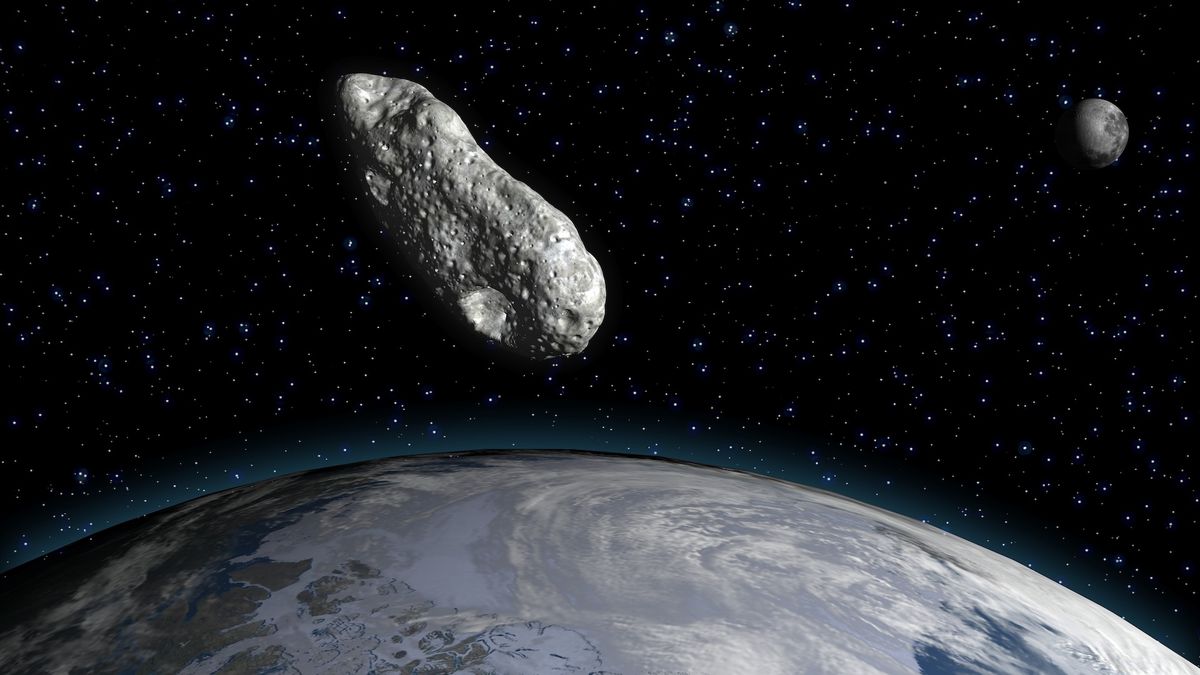
an illustration of a large asteroid approaching Earth
The ‘city-killer’ asteroid 2024 YR4 will come perilously close to the Earth, and may even hit the moon in 2032, James Webb Telescope observations confirm. 
(Image credit: JUAN GARTNER via Getty Images)

The powerful James Webb Space Telescope (JWST) has just completed the first of two planned observations of the infamous "city-killer" asteroid 2024 YR4, which will make a perilously close approach to Earth and the moon in December 2032.

Making use of emergency telescope time awarded to an international team of astronomers in February, JWST's first observation of the building-size asteroid reveals that 2024 YR4 may be slightly larger and rockier than previous ground-based telescope studies suggested.

Luckily, though, JWST also confirmed what NASA has known for weeks: 2024 YR4 is no longer a hazard, and there is zero chance that the asteroid will strike Earth in 2032. However, a direct collision with the moon is still possible.


JAMES WEBB SPOTS DEADLY "CITY-KILLER" ASTEROID COMING FOR US!

"While an Earth impact by 2024 YR4 on December 22, 2032 has now been ruled out, it continues to have a non-zero probability of impacting the Moon at this time," the researchers wrote in their preliminary report, which has not yet been peer-reviewed. A second round of JWST observations is planned for May 2025, before the asteroid disappears into the outer solar system for the next several years.

Related: 

Tracking a "city-killer"

Astronomers first discovered asteroid 2024 YR4 in December 2024. Initial observations with ground-based telescopes indicated that the space rock had a diameter of about 180 feet (55 meters) — roughly as wide as the Leaning Tower of Pisa is tall.

Its orbital trajectory frequently crosses Earth's route around the sun, making a direct collision with our planet possible. If such a strike were to occur, it could wipe out an entire city with the equivalent force of 500 Hiroshima bombs.

While analyzing the asteroid's trajectory, researchers briefly estimated that 2024 YR4 had up to a 3.1% chance of crashing into Earth in 2032 — the highest probability ever recorded for an object of this asteroid's size. NASA eventually refined this prediction down to 0%. But, while uncertainty reigned, the European Space Agency (ESA) announced that several hours of JWST's emergency discretionary time would be used to study the potentially hazardous space rock's size and trajectory.

Key to these observations are JWST's infrared sensors, which can directly detect heat emitted by the asteroid and provide insight into both its size and composition. Ground-based telescopes that observe visible light can only see the sunlight reflected off of the asteroid's surface, leaving big questions about its true nature.

"In general, the brighter the asteroid, the larger it is, but this relationship strongly depends on how reflective the asteroid's surface is," ESA officials wrote in a Feb. 10 blog post. "2024 YR4 could be 40 m [130 feet] across and very reflective, or 90 m [295 feet] across and not very reflective … the hazard represented by a 40 m asteroid is very different from that of a 90 m asteroid."

JWST made its first observations of the asteroid on March 26, watching the asteroid rotate once every 20 minutes over a five-hour period. The researchers then converted the asteroid's brightness to mid-infrared wavelengths, taking into account the known distances and angles between the asteroid, the sun and JWST.

With these data, the team estimated that asteroid 2024 YR4 is slightly larger than was previously estimated, measuring about 200 feet (60 m) in diameter. The thermal analysis also suggests that the asteroid is cooler than is typical for objects of this size, hinting that it may be rockier than previously thought as well.

Front-row seats to a lunar impact?

But even if 2024 YR4 is a bit bigger and harder than we thought, it still poses no imminent threat to Earth, the JWST data confirm. But there does remain a roughly 2% chance that the asteroid will slam into the moon in 2032, report co-author Andrew Rivkin, an astronomer at Johns Hopkins University, told New Scientist.

While a lunar impact may sound scary, the moon endures thousands of tiny meteor strikes every year and has the cratered scars to prove it has survived much larger impacts. But seeing a known asteroid, with a known size and trajectory, gouge open a new crater in real time would be a world-first opportunity for lunar researchers.

"We've got our fingers crossed for a moon impact," Alan Fitzsimmons, a physics and math professor at Queen's University Belfast in the U.K. who was not involved in the JWST observations, told New Scientist. "It would have no effect on Earth, but would allow us to study the formation of a lunar crater by a known asteroid for the very first time."

The second round of JWST observations, scheduled for May, will further help to refine the asteroid's orbital trajectory and its chances of hitting the moon.

RELATED VIDEOS

James Webb Telescope to Study Asteroid that Could Hit Earth in 2032 | News9

Chance of ‘city killer’ asteroid striking Earth increases: NASA

James Webb telescope to study asteroid that could hit Earth in 2032

{ https://www.livescience.com/space }

Hoe vind je dit bericht?
Geschreven door peter om 22:55 Stuur door

Ancient Egypt: Facts about the ancient civilization known for its pyramids, mummies and pharaohs

Ancient Egypt: Facts about the ancient civilization known for its pyramids, mummies and pharaohs

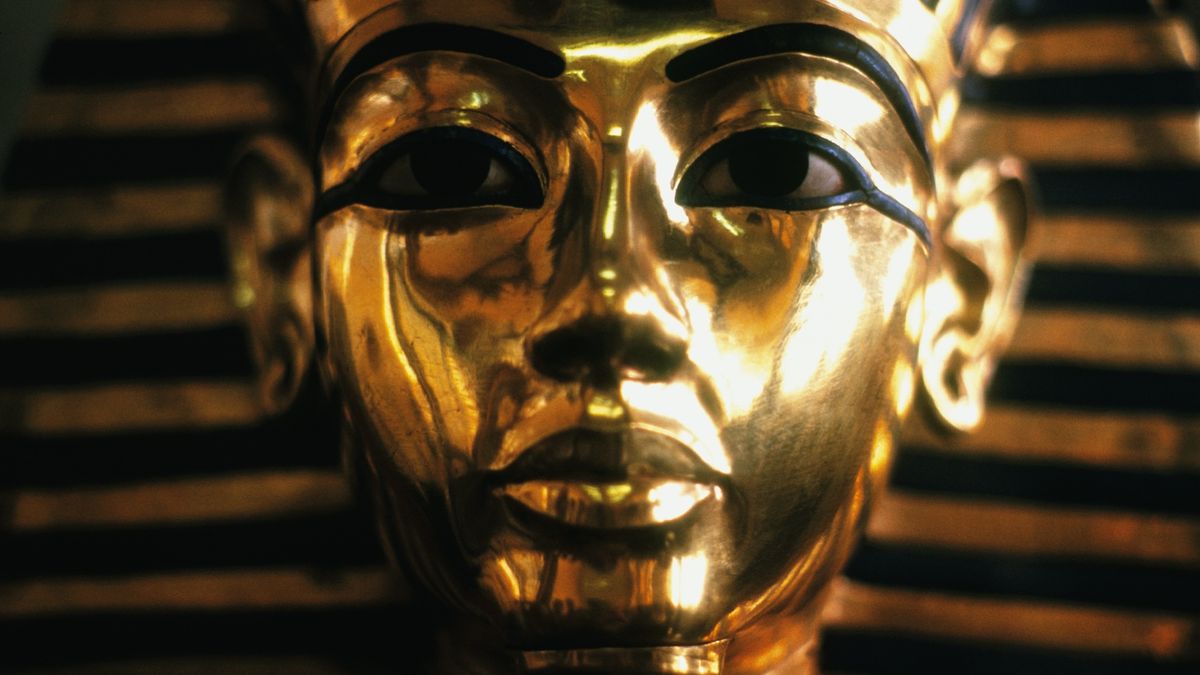
a closeup of King Tut's gold mask

(Image credit: Romilly Lockyer via Getty Images)
Quick facts about Ancient Egypt
  • Location: Egypt, other parts of North Africa and the Middle East
  • Dates: 3100 B.C. to 30 B.C.
  • Writing: Hieroglyphics, a writing system that uses pictures; hieratic, a quicker type of "cursive"; and demotic, a written short-form script
  • Ancient Egypt's gods: Osiris (the god of the underworld who was resurrected), Amun-Ra (the god of the sun), Isis (the goddess of healing and magic), Horus (a falcon-shaped god of war and the sky), Maat (the goddess of order) and many others

Ancient Egypt was an influential kingdom in North Africa and the Middle East for thousands of years. Ancient Egyptians were ruled by a leader called a pharaoh and worshipped many different gods.

Today, we can still see traces of this culture in archaeological sites and museums all over the world, as well as in modern pop culture, such as movies and books. Ancient Egypt is best known for the pyramids of Giza, the giant Sphinx, and mummies. However, the early Egyptians also left behind other ancient clues that we can use to learn about their daily lives, including their preserved temples, scrolls, statues, tools, pottery, jewelry, weapons and even their burials.

In fact, it was such a significant civilization that people who study ancient Egyptian history have a special name: Egyptologists. Keep reading to learn all about why ancient Egypt was so influential.

5 fast facts about Ancient Egypt

  • Ancient Egyptian pyramids were sometimes tombs for pharaohs and other important people.
  • Because hieroglyphics were complicated to write, ancient Egyptians invented cursive versions called hieratic and demotic.
  • The Book of the Dead was an ancient Egyptian manual for how to travel through the afterlife.
  • Pharaohs wore different kinds of headgear to symbolize their power. The most famous of these were striped headcloths called "nemes."
  • Ancient Egyptians sometimes mummified their pets, including pet cats, dogs and monkeys, and even other animals, like crocodiles, fish and beetles.

Everything you need to know about Ancient Egypt

When did ancient Egypt start and end?

Humans have lived in Egypt for at least 400,000 years, so it's tricky to establish exactly when the ancient Egyptian civilization began. However, because around 3100 B.C. — or 5,100 years ago— Egypt unified under a pharaoh and the writing system of hieroglyphics emerged, Egyptologists commonly use this date as the starting point. Ancient Egyptian history is usually divided into "dynasties" — time periods when a specific family of pharaohs ruled over the kingdom. Around 30 dynasties ruled over ancient Egypt, and the first pharaoh of the first dynasty might have been a ruler named Menes. Cleopatra is considered the last pharaoh. She died in 30 B.C. That means the ancient Egypt civilization lasted around 3,000 years.

Who built the ancient Egyptian pyramids?

People might claim that the Egyptian pyramids were built by aliens, or even the inhabitants of Atlantis. But that's not true — they were built by people thousands of years ago.

A pharaoh named Djoser ordered the construction of a "step pyramid" (a pyramid that looks like it has giant steps on its walls) around 4,600 years ago. The pharaoh Snefru ordered the construction of the first true pyramid around 100 years after that.

Though pharaohs ordered the pyramids to be constructed, the pharaohs didn't build the pyramids themselves. A team of workers moved the giant bricks that make up the pyramids. Egyptologists aren't sure exactly who the workers were, but they may have been farmers or a professional construction crew.

Why did the Egyptians build pyramids?

Most pyramids were royal tombs where the mummies of pharaohs and other important people, like nobles and government officials, were buried when they died.

Mummification was a complex ritual that took 70 days. Priests dried out the body of the person who died with salt and wrapped it in linen cloth before conducting the "Opening of the Mouth" ceremony, in which a priest touched different parts of the mummy with a special instrument. The ancient Egyptians believed this allowed the person to use their senses in the afterlife.

Then, the mummies were placed in a coffin and the coffin was put in a special room in the pyramid called the burial chamber. Ancient Egyptians also buried "grave goods" with the people who had died — valuable objects they could use in the afterlife.

Who are the most famous pharaohs?

The most famous pharaohs are perhaps Ramesses II and Tutankhamen. But others — including Cleopatra, Hatshepsut and Ptolemy I Soter — accomplished great things.

Hatshepsut was a woman who reigned from 1473 to 1458 B.C., or about 3,500 years ago. She ruled on behalf of her young stepson and nephew for several years before officially becoming a co-ruler in 1473, and one of the few known female pharaohs. She ordered important building projects, including a great temple at Deir el-Bahari, and established good relationships with a nation called the land of Punt, which probably existed somewhere in northeastern Africa.

Tutankhamun, also known as King Tut, reigned from 1336 to 1327 B.C., roughly 3300 years ago. He is known more for the famous discovery of his extravagant tomb than for anything he did. He inherited the throne when he was just 9 or 10 and died at just 18 or 19 years old.

Ramesses II, also known as Ramesses the Great, inherited the throne in 1279 B.C. after his father died. He was perhaps the most powerful ancient Egyptian ruler; he vastly expanded the Egyptian empire and built many large monuments. He also reigned for more than 60 years, dying in 1213 B.C.

Ptolemy I Soter was a general of Alexander the Great and started the last dynasty of Egypt — the Ptolemies, which included Cleopatra — before the Roman Empire took over. When Alexander the Great died in what is now Iraq, Ptolemy moved Alexander's body more than 1,000 miles (1,600 kilometers) — about the distance from Washington, D.C., to Miami — to start a new city in Egypt, called Alexandria. He reigned from 367 to 282 B.C., or about 2,300 years ago.

Cleopatra, who reigned from 51 to 30 B.C., was the last pharaoh and perhaps one of the most famous female rulers of all time. She convinced the Roman emperor Julius Caesar to help put her in power, during which she ruled over Egypt, parts of Libya and regions of the Middle East.

What was the religion of ancient Egyptians, and what did it say about the afterlife?

Ancient Egyptians worshipped many different gods and goddesses. The most important ones included Osiris (the god of the underworld who was later resurrected), Amun-Ra (the god of the sun), Isis (the goddess of healing and magic), Horus (a falcon-shaped god of war and the sky) and Maat (the goddess of order).

Ancient Egyptians believed that pharaohs were related to the gods, and religion played a role in all aspects of life. They also believed in the existence of life after death. When someone died, they were turned into mummies and buried with tools to help them navigate and live comfortably in the afterlife.

Part of the journey in the afterlife included weighing their soul on a scale — if the soul was lighter than a feather, it meant the person had committed more good deeds than bad deeds and was allowed to continue.

Ancient Egypt pictures

Discover more about Ancient Egypt

RELATED VIDEOS

The ENTIRE History of Egypt | Ancient Civilizations Documentary

Who Really Built The Great Egyptian Pyramids? | Private Lives Of The Pharaohs | Timeline

The Private Lives Of Egypt's Greatest Pharaohs | Real History

{ https://www.livescience.com/archaeology }

Hoe vind je dit bericht?
Geschreven door peter om 22:37 Stuur door

Watch this humanoid robot perform a side flip for the first time News

Watch this humanoid robot perform a side flip for the first time


World's First Side-Flipping Humanoid Robot: Unitree G1

Scientists just showcased a humanoid robot performing a complicated side flip.

The company that makes the robot, Unitree, posted a video to Youtube showcasing its acrobatics. In the video, the silver-grey G1 crouches slightly, then launches up before rotating sideways through the air.

The robot catches itself primarily with its left leg and stabilizes almost immediately as the other foot makes contact with the floor. As impressive as it is at full speed, it's even more mesmerizing in slow motion, particularly the ease with which the robot seems to balance and right itself after landing.

Last year, the same model mastered a backflip. To teach G1 its new trick, the company mainly upgraded the artificial intelligence (AI) algorithm it used to make the software faster and more responsive, Unitree representatives told Live Science.

"The side flip was performed under reinforcement learning training," they added.

Related: 

Reinforcement learning is a mainstay technique used to teach robots how to navigate and interact with the physical world. This is the same technology that robotics company Figure has used to train its Figure 02 robots to move in a more humanlike way.

Humanoid robot stands in the center of a room.

The G1 can also walk and run at up to 2 meters per second (4.5 miles per hour or 7.2 kilometers per hour).  (Image credit: Unitree Robotics)

A robotic acrobat

The G1 can do more than acrobatics; during a martial arts demonstration, it disarmed a baton-wielding opponent. After a series of feints with its hands, the bot executed a spinning kick that sent the baton flying from its opponent's hands.

Like its human counterparts, the robot's lightweight, compact form helps it perform acrobatic moves with ease.

The G1 stands at just over 4.3 feet (1.3 meters) in height and weighs only 77 pounds (35 pounds) G1 also sports a 3D light detecting and ranging (LIDAR) and depth camera, which gives it a 360-degree view of its environment. Perhaps most importantly, it incorporates 23 degrees of freedom, a measure of the number of joints or axes of movement available to the bot.

The G1 can also walk and run at up to 2 meters per second (4.5 miles per hour or 7.2 kilometers per hour).

The company envisions robots like G1 or its successors doing everything from helping out with chores at home to performing industrial operations to assisting with hazardous rescue missions, the Unitree representative said.

RELATED VIDEOS

Unitree G1 Robot Pulls Off Insane Side Flip – The Future is Here!

In a world first, China's Unitree G1 humanoid robot successfully performed a side-flip

Watch as humanoid robot lands impressive side flip #Shorts

{ https://www.livescience.com/technology }

Hoe vind je dit bericht?
Geschreven door peter om 21:04 Stuur door

Watch eerie video of humanoid robot 'army' marching naturally, thanks to a major AI upgrade

Watch eerie video of humanoid robot 'army' marching naturally, thanks to a major AI upgrade

An animation showing dozens of robots walking naturally across a white background
(Image credit: Figure)

A U.S. robotics company has used artificial intelligence (AI) to give its humanoid robots a more natural-looking stride, and they say it's just the beginning.

In the promotional video, the robot, called Figure 02 and manufactured by the company Figure, marches with a "human-like" gait. This is an ability it claims will help its robot to navigate the physical world more easily.

"These initial results are exciting, but we believe they only hint at the full potential of our technology," company representatives wrote in a blog post accompanying its announcement. "We're committed to extending our learned policy to handle every human-like scenario the robot might face in the real world."

Robots have been running, cartwheeling, doing backflips, breakdancing, and beating us at chess for years now. But performing tasks that appear simple to humans, such as walking in a straight line, gripping objects, tying shoelaces, and navigating social situations, have proven tough for robots to master.

Related: 


AI-Powered Humanoid Robot Army Marches Like Humans!

The problem, known as Moravec's Paradox, emerges because computers excel at problems that require complex calculations and large datasets, but lack our real-world experience honed by millions of years of evolution. This makes robots' shuffling gaits, well, robotic at best. At worst, it gives them the appearance that they may have soiled themselves.

To tackle the robot's unnatural gait, Figure's engineers used a learning technique called reinforcement learning — placing thousands of virtual robots inside a physics simulator that recreates various terrains, thereby improving their walking through trial and error.

By rewarding the virtual robot army for natural motions, they refined their gaits to appear more human-like. With this task accomplished, they uploaded the refined "Learned Natural Walking" model to a real-world Figure 02 robot. The result is an android that can move somewhat naturally, with heel strikes, toe-offs and synchronized arm swings.

Figure's reinforcement learning technique is key to the California company's plans to roll out its robots on factory floors. It has already tested its humanoid robots in a BMW factory in 2024 and plans to introduce more this year. Meanwhile, Apptronik, a Texas-based competitor, is also commercializing its humanoid robot, Apollo, for use in Mercedes-Benz factories by the end of 2025. Agility Robotics' Digit will also be introduced into warehouses this year.

RELATED VIDEOS


China’s AI Robot Army Is More Real Than You Think

AI ROBOTS Are Becoming TOO REAL! - Shocking AI & Robotics 2024 Updates #1

Boston Dynamics New Atlas Feels TOO Human and It's Freaking People Out!

Top 10 AI Robots In 2023 | Advanced AI Robots in the World | Artificial Intelligence | Simplilear

{ https://www.livescience.com/technology }

Hoe vind je dit bericht?
Geschreven door peter om 20:35 Stuur door

Mysterious Ancient Pyramid Discovered Alongside Weapons And Papyri In The Judean Desert

mound
The Israel Antiquities Authority and volunteers are excavating the site north of the Zohar Valley.
 Emil Aladjem / Israel Antiquities Authority
Mysterious Ancient Pyramid Discovered Alongside Weapons And Papyri In The Judean Desert

Found in the Zohar Valley near Israel's border with Jordan, this massive pyramid is made of hand-hewn stones, many weighing several hundred pounds.

Ancient Pyramid In Judean Desert

Israel Antiquities AuthorityThe ancient pyramid structure, dating back 2,200 years, that was discovered in the Judean Desert.

Archaeologists searching the Judean Desert in hopes of finding additional Dead Sea Scrolls recently made an unexpected discovery of an ancient pyramid structure.

Located 72 miles south of Jerusalem, the pyramid stands roughly 20 feet tall and is comprised of large, heavy stones that were hand-hewn roughly 2,200 years ago. Artifacts found at the site, such as coins, weapons, and furniture, date the structure back to the Hellenistic period (323 B.C.E. to 30 B.C.E.), when Greek culture rapidly spread across the Mediterranean world.

Although the ample artifacts found at the scene have helped narrow down the structure’s age, they have left puzzling questions about the purpose of the site. While archaeologists debate the possible purposes of the structure — ranging from guard tower to monumental burial site — the public has been called to aid the excavation crew in their quest to unravel the mysteries of this ancient desert pyramid.

Archaeologists Uncover A Mysterious Pyramid Dating Back 2,200 Years In The Judean Desert

Archaeologists Inside Judean Pyramid

Israel Antiquities AuthorityArchaeologists conduct a full excavation of the ancient pyramid.

In 2017, Israel’s Ministry of Heritage and the Israeli Antiquities Authority (IAA) began a large-scale project to survey and excavate large areas of the Judean Desert. Located in the West Bank and Israel, the desert stretches as far south as the Dead Sea and covers an area of 1,560 square miles.

During the almost decade-long excavation project, archaeologists have surveyed more than 100 miles of desert and 900 caves, uncovering artifacts like papyri, tools, weapons, leather goods, and coins.

papyrus

A piece of papyrus with Greek writing Emil Aladjem 

Israel Antiquities Authority

Recently, a team of archaeologists led by Matan Toledano, Dr. Eitan Klein, and Amir Ganor was examining an area in Nahal Zohar when they discovered something completely unexpected. Originally hoping to find additional Dead Sea Scrolls, the crew stumbled upon a 2,200-year-old pyramid structure from the Hellenistic period, an era when Greek culture rapidly spread across the Mediterranean.

The pyramid, standing nearly 20 feet tall, is comprised of large hand-hewn stones, many of which weigh hundreds of pounds. Surrounding the structure, the research team discovered a wealth of artifacts, including furniture, vessels, and coins.

Ancient Judean Sewing Needle

Israel Antiquities AuthorityAn ancient sewing needle discovered inside the pyramid.

“In the first excavation week, the volunteers found written historical documents, exceptional bronze vessels, and remains of ancient furniture, which thanks to the desert climate were preserved in amazing condition,” the crew explained in their statement. “Every moment new findings are discovered, and we are filled with anticipation for what else the next three weeks might reveal.”

Decoding The Mysteries Of The Judean Desert Pyramid

Judean Desert Pyramid Excavation

Israel Antiquities AuthorityArchaeologists search for more artifacts to shed light on the origins and use of the pyramid.

Due to the large number of historical artifacts discovered both in and around the pyramid, experts wondered if the site served as a strategic outpost in ancient times.

At first, archaeologists assumed that the structure was a burial site from the First Temple period, between the 10th and 6th centuries B.C.E. However, artifacts at the site, such as Greek papyri and coins minted under the reign of Antiochus IV Epiphanes, king of the Seleucid Empire, show that the structure was in use during the 3rd and early 2nd centuries B.C.E.

Greek Papyri Found Near Judean Pyramid

Israel Antiquities AuthoritySome of the ancient Greek papyri discovered at the site.

Artifacts found at the site also point to the pyramid being used as a possible guard tower or tax-collection center. It is possible that merchants traveling through the desert stopped at the structure to pay fees.

“Is this a guard tower, guarding an important commercial route through which the Dead Sea resources of salt and bitumen were transported to the coastal ports? Or at some point was this enormous structure on the mountaintop marking a grave, or serving as a monument in ancient history?” excavation leaders wrote in their statement.

To help solve the mystery of the Judean Desert pyramid, the IAA has called on volunteers from the public to help conduct excavations alongside archaeologists in the next three weeks. With their help, it’s possible that the pyramid’s secrets will be unveiled in full.

“The Judean Desert survey is one of the most important archaeological operations ever undertaken in the State of Israel’s history,” the IAA wrote. “The discoveries are exciting and even emotional, and their significance for archaeological and historical research is enormous. It is an enthralling historical mystery – and to our delight, the public coming to volunteer in the 

RELATED VIDEOS

A pyramid-shaped structure, documents written on papyrus, weapons - New Judean desert discoveries

Mysterious Pyramid in Israel Being Unearthed in Judean Desert

{ https://allthatsinteresting.com/tag/archaeology }

Hoe vind je dit bericht?
Geschreven door peter om 18:36 Stuur door

De verrassende vriendschap tussen Neanderthalers en moderne mensen: ze hadden meer gemeen dan we dachten

De verrassende vriendschap tussen Neanderthalers en moderne mensen: ze hadden meer gemeen dan we dachten

Neanderthalers-en-homo-sapiens-954x603_1.jpg

Ze leefden niet alleen samen, maar deelden ook met elkaar in technologie, levensstijlen en begrafenisrituelen, zo toont een nieuwe studie aan.

Wetenschappers zijn nog steeds bezig de mysterieuze band tussen Neanderthalers en moderne mensen te ontrafelen. We weten dat ze het bed met elkaar deelden, aangezien we Neanderthaler-DNA in ons hebben. Maar er wordt ook gesuggereerd dat de komst van de moderne mens misschien wel de nekslag voor de Neanderthaler heeft betekend. Opgravingen in de Tinshemetgrot in centraal Israël werpen nu nieuw licht op de nog steeds raadselachtige band tussen deze twee mensensoorten.

Tinshemetgrot
Opgravingen in de Tinshemetgrot zijn al sinds 2017 aan de gang. Een van de belangrijkste doelen van het onderzoeksteam is om te begrijpen hoe de relatie tussen Homo sapiens en Neanderthalers was gedurende het midden-Paleolithicum in de Levant, een deel van Zuidwest-Azië (een regio die de huidige landen Israël, Palestina, Libanon, Syrië en Jordanië omvat).We weten namelijk dat beide mensensoorten tegelijkertijd in dit gebied leefden. Maar waren ze rivalen die om middelen streden, vreedzame buren, of werkten ze zelfs samen?

Begrafenissen
Een recente ontdekking in de Tinshemetgrot onthult nu dat er veel meer wederzijdse invloed was dan vroeger werd gedacht. De grot, rijk aan archeologische vondsten, heeft meerdere menselijke begrafenissen onthuld – de eerste uit het midden-Paleolithicum in meer dan vijftig jaar. Dit levert sterk bewijs op dat Neanderthalers en moderne mensen in de regio niet alleen samenleefden, maar ook aspecten van hun dagelijks leven, technologie en begrafenisrituelen met elkaar deelden. Deze bevindingen benadrukken de complexiteit van hun interacties en suggereren een nauwere relatie dan voorheen werd gedacht.

Een stenen voorwerp ontdekt in de Tinshemetgrot dat is vervaardigd met een techniek die zowel door Homo sapiens als Neanderthalers werd gebruikt. Afbeelding: Marion Prévost

Interacties
Kortom, de bevindingen duiden erop dat verschillende Homo-groepen in het midden-Paleolithicum in de Levant dus belangrijke praktijken met elkaar deelden, zoals begrafenisrituelen en het symbolisch gebruik van minerale pigmenten. Zo vonden de onderzoekers in de Tinshemetgrot bijvoorbeeld oker, dat vermoedelijk werd gebruikt voor lichaamsversiering. Het betekent dus dat de twee mensensoorten veel met elkaar in contact stonden. Deze interacties zorgden vervolgens voor culturele uitwisseling, meer sociale complexiteit en nieuwe gedragingen, zoals formele begrafenissen.

Overnemen
Het is echter nog niet duidelijk welke groep welke praktijken van de ander overnam — bijvoorbeeld of moderne mensen de jachttechnieken van Neanderthalers leerden, of Neanderthalers de begrafenisrituelen van moderne mensen overnamen, of dat ze samen nieuwe tradities ontwikkelden. Wat de onderzoekers in ieder geval vermoeden, is dat de interacties tussen Neanderthalers en Homo sapiens geen toevallige ontmoetingen waren, maar dat er wezenlijke contacten waren die leidden tot het overnemen van elkaars gedragingen.

Kerkhof
De clustering van menselijke begrafenissen in de Tinshemetgrot roept daarnaast interessante vragen op over de rol van de grot in de samenleving van die tijd. Zou het misschien een speciale begraafplaats of zelfs een kerkhof kunnen zijn geweest? Als dat het geval is, zou dit kunnen wijzen op gedeelde rituelen en sterke gemeenschappelijke banden. Het plaatsen van belangrijke voorwerpen, zoals stenen werktuigen, dierenbotten en oker, in de begrafeniskuilen kan ook duiden op vroege overtuigingen in het leven na de dood.

Smeltkroes
Op basis van de interessante bevindingen omschrijft onderzoeksleider Yossi Zaidner de vindplaats als een ‘smeltkroes’ waar verschillende menselijke groepen elkaar ontmoetten, met elkaar omgingen en samen evolueerden. “Onze gegevens laten zien dat menselijke connecties en interacties tussen populaties essentieel zijn voor het stimuleren van culturele en technologische vernieuwingen door de geschiedenis heen”, legt hij uit.

De ontdekkingen in de Tinshemetgrot geven een fascinerend inzicht in de sociale structuren, symbolische gedragingen en het dagelijks leven van vroege menselijke groepen. Ze laten een tijd van grote demografische en culturele veranderingen zien en werpen nieuw licht op het complexe netwerk van interacties die de wereld van onze voorouders bepaalden. De voortzetting van de opgravingen in de Tinshemetgrot zal ongetwijfeld nog meer inzichten bieden in de oorsprong en evolutie van menselijke samenlevingen.

Bronmateriaal

GERELATEERDE VIDEO'S

Néandertal et Homo sapiens ont-ils cohabité au Levant ?

How Neanderthals Mate With Humans

Homo Sapiens: The New Rulers of Earth | Prehistoric Humans Documentary

{ https://scientias.nl/nieuws/mens-gezondheid-psychologie/ }

Hoe vind je dit bericht?
Geschreven door peter om 17:14 Stuur door

Watch eerie 'UFOs' and a solar 'cyclone' take shape in stunning new ESA video of the sun

Watch eerie 'UFOs' and a solar 'cyclone' take shape in stunning new ESA video of the sun

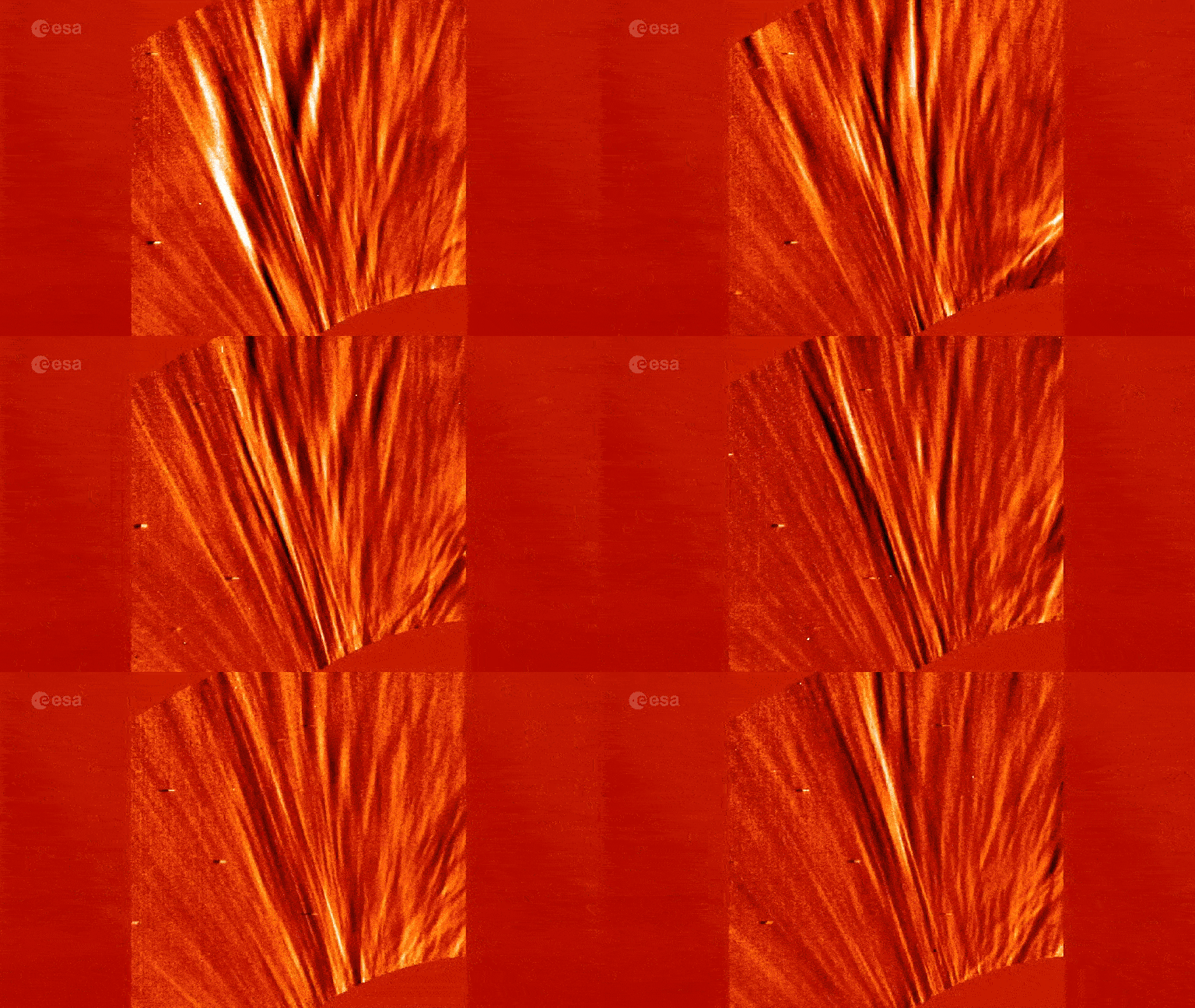
A newly released video shows a giant gust of spiralling solar wind shooting out of the sun in 2022. Strange, dark UFO-like lines also move across the screen during the sped-up footage. 
(Image credit: ESA & NASA/Solar Orbiter/Metis & EUI Teams, V. Andretta and P. Romano/INAF)

A newly released video has revealed a gigantic plume of solar wind towering above the sun in a never-before-seen, "cyclone-like" configuration that emerged in the wake of a massive solar explosion. The striking timelapse footage also captured strange lines streaking across the fiery scene like pixelated UFOs — but are actually distant stars.

The video, which was released March 26 by the European Space Agency (ESA), is sped-up footage originally taken over an eight-hour period on Oct. 12, 2022, by ESA's Solar Orbiter. The spacecraft captured the scene by blocking out the main disk of the sun, which enabled the probe's camera to focus on the extremely faint light given off by the flow of superfast charged particles, or solar wind, that streams out of our home star nearly constantly.

This is the first time solar wind has been recorded "flying out from the sun in a twisting, whirling motion," ESA representatives wrote in a statement. "The solar wind particles spiral outwards as if caught in a cyclone that extends millions of kilometres from the sun."


A Glimpse of the Sun [4K]

The striking video also shows around a dozen perfectly flat, half-dark, half-light lines that creep across the screen like the UFOs and aliens in arcade games such as "Space Invaders."

These features are actually stars that are moving across the background as the orbiter circles the sun, which show up thanks to an editing technique used to make the video, ESA representatives wrote.

Related: 

Credit: European Space Agency
Watch wind whirl from the Sun - YouTube
Solar ‘pseudostreamer’

In a new study of the video, released March 26 in The Astrophysical Journal, researchers described the giant solar corkscrew as a "large pseudostreamer" that erupted near the sun's north pole in the wake of a solar flare that launched a cloud of plasma, or coronal mass ejection (CME), into space. The pseudostreamer reached up to 1.5 times as long as the sun is wide and lasted for around three hours.

The "helix" structure of the wind jet is likely the result of Alfvénic fluctuations triggered by waves of ions that oscillate in response to magnetic field disturbances that occurred during the flare, the researchers wrote. They noted that the unique shape may also be tied to the streamer's position near one of the sun's polar regions, where magnetic fields are usually much stronger than near the sun's equator.

The sun is currently experiencing the peak in its roughly 11-year cycle of activity, known as solar maximum, which officially began in early 2024. During this phase, powerful solar flares explode more frequently from the sun and solar wind intensifies. However, this video was captured before solar activity started ramping up, which surprised the scientists.

A screenshot from the video showing the location of the pseudostreamer on the sun

The pseudostreamer shot out from near the sun's north pole, which may have played a role in its creation.  (Image credit: ESA & NASA/Solar Orbiter/Metis & EUI Teams, V. Andretta and P. Romano/INAF)

Until recently, the origin and complex behaviors of solar wind have remained largely elusive. But a new generation of spacecraft is helping to unravel these mysteries.

When the video was recorded, ESA's Solar Orbiter was the only probe capable of capturing solar wind in such great detail. However, ESA's Proba-3 mission, which launched in December 2024, is also capable of viewing solar wind thanks to its ability to create artificial solar eclipses in space. NASA's Parker Solar Probe, meanwhile, was launched in 2018 and has helped to capture important solar wind data during its recent super-close flybys of our home star.


Sounds of the Solar Wind from NASA's Parker Solar Probe

Solar wind is expected to become more extreme over the next few years as we enter the solar "battle zone" — a period after solar maximum when magnetic instabilities on the sun cause large coronal holes to open up on the sun's surface and shoot out extreme solar gusts. These solar events will be much like a dark patch that showered Earth with charged particles last week, triggering significant aurora activity.

{ https://www.livescience.com/space }

Hoe vind je dit bericht?
Geschreven door peter om 16:43 Stuur door

UFO Armada Over Denver, Colorado March 2025, UAP Drone Sighting News.

UFO Armada Over Denver, Colorado March 2025, UAP Drone Sighting News. 

UFO,%20UAP.png

UFO,%20aliens.png
Date of sighting: March 2025
Location of sighting: Denver, Colorado, USA
Source: Email report
 
This is a great catch of a four glowing spheres in military formation triangle over Denver this week. The guy was driving home from work and struggled to hold his phone and drive safely as you can see from the video. However he did succeed in show the craft, which reveals its size of about that of a car, its color being white and they move at about car speed. Now there have been thousands of reports over the last decade of white car size spheres over Denver and also some being chased by USAF jets. Mayors and police have also made reports about seeing them so we know they are up there. But my theory is that there is an alien base under the Rocky Mountains because most sphere sighting happen along the mountains. It seems the UFOs are now openly flying over towns! You know what this means right? Full disclosure is just around the corner. Aliens are pushing for the big reveal regardless of what the US gov wants us to know and not know. I believe full disclosure will happen in 2027. Not far now folks. 
Scott C. Waring - Utah 


UFO Fleet In Formation Over Denver, Colorado March 2025, UAP Drone Sighting News.

{ https://www.ufosightingsdaily.com/ }

Hoe vind je dit bericht?
Geschreven door peter om 15:26 Stuur door

Breaking News: ET Base On Moon io in Shape of Worm! UFO UAP Sighting News.

Breaking News: ET Base On Moon io in Shape of Worm! UFO UAP Sighting News.

alien%20life,%20moon,%20io.png
Date of discovery: March 31, 2025
Location of discovery: Moon io
Source: Me
 
Guys I found this amazing worm structure on Jupiter moon io yesterday. The structure looks segmented and shiny metallic. This really reminds me of the old Mars tunnels that were seen long ago and then suddenly the US gov made all that information disappear. Well, this may be wiped from the internet soon, but for now...it's here. This is absolute proof that intelligent beings live and build structures on the moon io. You don't need to believe me, but do you believe your own eyes?
Scott C. Waring
 

{ https://www.ufosightingsdaily.com/ }

Hoe vind je dit bericht?
Geschreven door peter om 15:18 Stuur door

Here’s how Neptune’s aurora could look if it was on Earth

Here’s how Neptune’s aurora could look if it was on Earth

Hoe vind je dit bericht?
Geschreven door peter om 15:10 Stuur door

Meer van UFO'S of UAP'S, ASTRONOMIE, RUIMTEVAART, ARCHEOLOGIE, OUDHEIDKUNDE, SF-SNUFJES EN ANDERE ESOTERISCHE WETENSCHAPPEN - DE ALLERLAATSTE NIEUWTJES

↑ Terug naar de berichten