Ontdek de Fascinerende Wereld van UFO's en UAP's: Jouw Bron voor Onthullende Informatie!
Ben jij ook gefascineerd door het onbekende? Wil je meer weten over UFO's en UAP's, niet alleen in België, maar over de hele wereld? Dan ben je op de juiste plek!
België: Het Kloppend Hart van UFO-onderzoek
In België is BUFON (Belgisch UFO-Netwerk) dé autoriteit op het gebied van UFO-onderzoek. Voor betrouwbare en objectieve informatie over deze intrigerende fenomenen, bezoek je zeker onze Facebook-pagina en deze blog. Maar dat is nog niet alles! Ontdek ook het Belgisch UFO-meldpunt en Caelestia, twee organisaties die diepgaand onderzoek verrichten, al zijn ze soms kritisch of sceptisch.
Nederland: Een Schat aan Informatie
Voor onze Nederlandse buren is er de schitterende website www.ufowijzer.nl, beheerd door Paul Harmans. Deze site biedt een schat aan informatie en artikelen die je niet wilt missen!
Internationaal: MUFON - De Wereldwijde Autoriteit
Neem ook een kijkje bij MUFON (Mutual UFO Network Inc.), een gerenommeerde Amerikaanse UFO-vereniging met afdelingen in de VS en wereldwijd. MUFON is toegewijd aan de wetenschappelijke en analytische studie van het UFO-fenomeen, en hun maandelijkse tijdschrift, The MUFON UFO-Journal, is een must-read voor elke UFO-enthousiasteling. Bezoek hun website op www.mufon.com voor meer informatie.
Samenwerking en Toekomstvisie
Sinds 1 februari 2020 is Pieter niet alleen ex-president van BUFON, maar ook de voormalige nationale directeur van MUFON in Vlaanderen en Nederland. Dit creëert een sterke samenwerking met de Franse MUFON Reseau MUFON/EUROP, wat ons in staat stelt om nog meer waardevolle inzichten te delen.
Let op: Nepprofielen en Nieuwe Groeperingen
Pas op voor een nieuwe groepering die zich ook BUFON noemt, maar geen enkele connectie heeft met onze gevestigde organisatie. Hoewel zij de naam geregistreerd hebben, kunnen ze het rijke verleden en de expertise van onze groep niet evenaren. We wensen hen veel succes, maar we blijven de autoriteit in UFO-onderzoek!
Blijf Op De Hoogte!
Wil jij de laatste nieuwtjes over UFO's, ruimtevaart, archeologie, en meer? Volg ons dan en duik samen met ons in de fascinerende wereld van het onbekende! Sluit je aan bij de gemeenschap van nieuwsgierige geesten die net als jij verlangen naar antwoorden en avonturen in de sterren!
Heb je vragen of wil je meer weten? Aarzel dan niet om contact met ons op te nemen! Samen ontrafelen we het mysterie van de lucht en daarbuiten.
The giant sea spiders can have leg spans of up to 20 inches (51 centimeters).
There are roughly 1,500 known species of sea spider, with some measuring up to 20 inches in leg span.
(Image credit: Science History Images/Alamy)
Scientists have captured stunning video of a dinner-plate-size sea spider crawling on the seafloor off the South Sandwich Islands, a chain of volc
Sea spiders, also known as pycnogonids, are distant cousins of the creepy-crawly arachnids we see scuttling about on land. These creatures can have leg spans of up to 20 inches (51 centimeters) — nearly double those of the largest land spiders, whose leg spans top out at around 12 inches (30 cm).
According to the Schmidt Ocean Institute, which shared the footage, the spider's massive size is a result of deep-sea gigantism, the tendency for deep-sea creatures to grow significantly larger than their shallow-water relatives. In this case, the pycnogonid was filmed at a depth of 6,903 feet (2,104 meters).
"Immense pressure and frigid temperatures, while insurmountable obstacles to land-lovers like humans, allow some animals to have very slow metabolisms and the ability to reach gargantuan proportions," Schmidt Ocean Institute representatives wrote in a Facebook post.
Larger animals can also move faster and farther to find food or to locate a mate, which is important when both are scarce.
Deep-sea gigantism is particularly prevalent toward the poles, where freezing temperatures facilitate slower metabolisms. Schmidt Ocean Institute representatives described sea spiders as both "abundant" and "abundantly large" in polar regions.
There are roughly 1,500 species of sea spider known to science and likely many more yet to be discovered, according to the post. Sea spiders inhabit oceans around the world and range just a few millimeters to the size of a serving platter. The species of spider in the video from the Schmidt Ocean Institute has not been specified.
The largest members of this group are usually found at depths between 7,200 and 13,100 feet (2,200 to 4,000 m), according to the Monterey Bay Aquarium Research Institute.
Instead of spinning webs or creating burrows as land spiders do, sea spiders use a specialized tube-like mouth structure, called a proboscis, to slurp up prey such as sea anemones, jellies and other invertebrates.
This latest footage was taken by remotely operated vehicle pilots as part of the Schmidt Ocean Institute's South Sandwich Islands expedition, a mission to locate and describe new species in these frigid waters. According to the institute, scientists have discovered only 10% of ocean life.
RELATED VIDEO
Sea Spider 🌊 The Giant Spider Of The Sea!
Top 10 Most UNUSUAL Deep Sea Creatures Ever Discovered
Top 10 Most Bizarre Deep Sea Creatures Ever Discovered
Artificial intelligenceis evolving at a staggering pace, and researchers are now putting it to what they call Humanity’s Last Exam (HLE)—a test designed to challenge AI models with the toughest academic questions ever compiled. Experts predict that within the next year, AI could dramatically improve its accuracy, bringing it closer to mastering knowledge at a human level.
The Exam Designed to Outsmart AI
Unlike standard assessments, HLE isn’t just another set of routine questions. It was created by specialists from the Center for AI Safety and Scale AI, a for-profit company that works with major tech firms to refine AI training data. Their goal? To design a test so challenging that even the most advanced large language models (LLMs), like ChatGPT, Gemini, and DeepSeek, struggle to score above a failing grade.
HLE pulls from over 2,700 expert-submitted questions, spanning disciplines from mathematics and medicine to engineering and humanities. Any questions that today’s AI models could easily answer were discarded. Instead, the exam focuses on problems requiring deeper reasoning, specialized knowledge, and complex interpretations—things AI has traditionally struggled with.
The results so far? AI models have flunked spectacularly, scoring between 3 and 14 percent. But that may not last for long.
The latest study suggests that by the end of 2025, LLMs could achieve at least 50 percent accuracy on the test. That’s a massive leap, considering the difficulty of the questions.
“HLE is developed globally by subject-matter experts and consists of multiple-choice and short-answer questions suitable for automated grading. Each question has a known solution that is unambiguous and easily verifiable, but cannot be quickly answered via internet retrieval.”
The test is structured as follows:
41% Mathematics
11% Biology & Medicine
10% Computer Science
9% Physics
9% Humanities & Social Sciences
6% Chemistry
5% Engineering
9% Other topics
Examples of the kinds of challenges LLMs face include translating ancient Roman inscriptions, identifying missing links in chemical reactions, and solving highly advanced mathematical equations. One question even asks AI about itself—testing whether it truly understands its own limitations.
AI’s Next Step: Recognizing Uncertainty
One of AI’s biggest flaws is overconfidence—it often provides an answer even when it has no idea if it’s correct. To address this, researchers are training AI models to evaluate their own uncertainty, forcing them to assess confidence levels before responding.
In the next phase of AI development, models will not only give answers but will also provide a confidence score from 0 to 100 percent. The idea is to move away from blind guessing and towards an approach that mirrors human uncertainty—where admitting “I don’t know” is sometimes the best answer.
The results of HLE are verified by another AI model, GPT-40, which checks whether slight variations of a correct response are still valid. This is similar to how a contestant on Jeopardy! might answer “T. rex” instead of “Tyrannosaurus rex” and still be awarded points.
History suggests that AI models rapidly overcome benchmarks, sometimes going from near-zero accuracy to near-perfect scores in just a few training cycles. While today’s LLMs are failing HLE, it may only be a matter of time before they crack the code.
What this means for the future is still up for debate. Will AI become the ultimate academic tool, capable of answering any question with near-perfect accuracy? Or will researchers keep raising the bar, ensuring that human intelligence remains ahead?
RELATED VIDEOS
What is Humanity’s Last Exam?
Humanity's LAST Exam AI's Ultimate CHALLENGE
AI and the future of humanity | Yuval Noah Harari at the Frontiers Forum
A Dyson Swarm Made of Solar Panels Would Make Earth Uninhabitable
By Mark Thompson
Artist's illustration of a Dyson Swarm. (Credit: Archibald Tuttle)
As civilisations become more and more advanced, their power needs also increase. It’s likely that an advanced civilisation might need so much power that they enclose their host star in solar energy collecting satellites. These Dyson Swarms will trap heat so any planets within the sphere are likely to experience a temperature increase. A new paper explores this and concludes that a complete Dyson swarm outside the orbit of the Earth would raise our temperature by 140 K!
The concept of a Dyson swarm is purely a hypothetical concept, a theorised megastructure consisting of numerous satellites or habitats orbiting a star to capture and harness its energy output. Unlike the solid shell of a Dyson sphere, a swarm represents less of an engineering challenge, allowing for incremental construction as energy needs increase. The concept, first popularised by physicist Freeman Dyson in 1960, represents one of the most ambitious yet potentially achievable feats of astroengineering that could eventually allow a civilisation to use a significant fraction of its host star's total energy output.
Freeman Dyson.
Whilst presently only the stuff of theory and science fiction, it has inspired real scientific research. It’s an idea that presents a potential solution for the enormous energy needs as we take tentative steps toward travel beyond our Solar System. If we, or any advanced civilisations that might be out there succeed, then they would be classed as Type II on the Kardashev scale. The scale is used to articulate a civilisation’s level of technological advancement based on the amount of energy it is capable of harnessing and using.
Dyson swarm structures are likely to use photovoltaic technology to convert stellar radiation into usable energy. Their efficiency in energy conversion is highly dependent on the temperature of the solar cells and, unlike Earth-based equivalents, must balance thermal exchanges with the Sun, outer space and the enormous surface area of their structure. Temperature regulation of the structure is one of the challenges that must be overcome since they must remain cool for optimal operation.
Artist illustration of a Dyson sphere under construction
It’s not just the temperature of the structures that poses problems asserts Ian Marius Peters from the Helmholtz Institute Erlangen-Nurnberg for Renewable Energy. In his paper published in Science Direct, he explores the environmental changes of planets within a swarm or sphere. The research examines whether such a megastructure could be built using materials available in our Solar System while still preserving Earth's habitability, balancing the goal of stellar energy capture with the need to maintain conditions that support life on our planet.
The paper concludes that a Dyson sphere surrounding the Sun would significantly impact Earth's climate. Small spheres positioned inside Earth's orbit prove impractical, either becoming too hot for their own efficiency or having to great an impact on solar energy arriving on our planet. While large spheres enable efficient energy conversion, they would raise Earth's temperature by 140 K making Earth completely uninhabitable. A compromise might involve creating a partial structure (the Dyson swarm) at 2.13AU from the Sun. This would harvest 4% of solar energy (15.6 yottawatts or 15.6 million billion billion watts) while increasing Earth's temperature by less than 3K—comparable to current global warming trends. It’s still quite an engineering feat though requiring 1.3×10²³ kg of silicon!
Two UFOs Over Vietnam During Lightning Storm, June 1, 2021 UFO UAP Sighting News.
Hey this is something really amazing and it came out long before ai was ever created. This is a UFO mothership with a smaller UFO near it. Someone was recording the lightning storm and accidentally caught the UFOs. I have heard about such things, but few of such sightings exist. This is one for the history books. Sure it's from 2021, but have you heard of it? I think not. This is 100% real and they must have jumped to this location just seconds before or the lightning caused the cloak to fail.
Scott C. Waring
Embedded YouTube Shorts Video
RELATED VIDEOS
Epic UFO Sighting During Huge Electrical Lightening Storm Over Hanoi Vietnam @ufonews1
Unexplained Alien & UFO Sightings by US Military in Vietnam | Shocking Footage
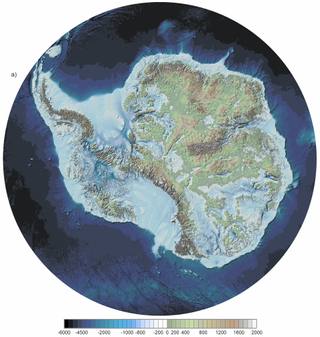
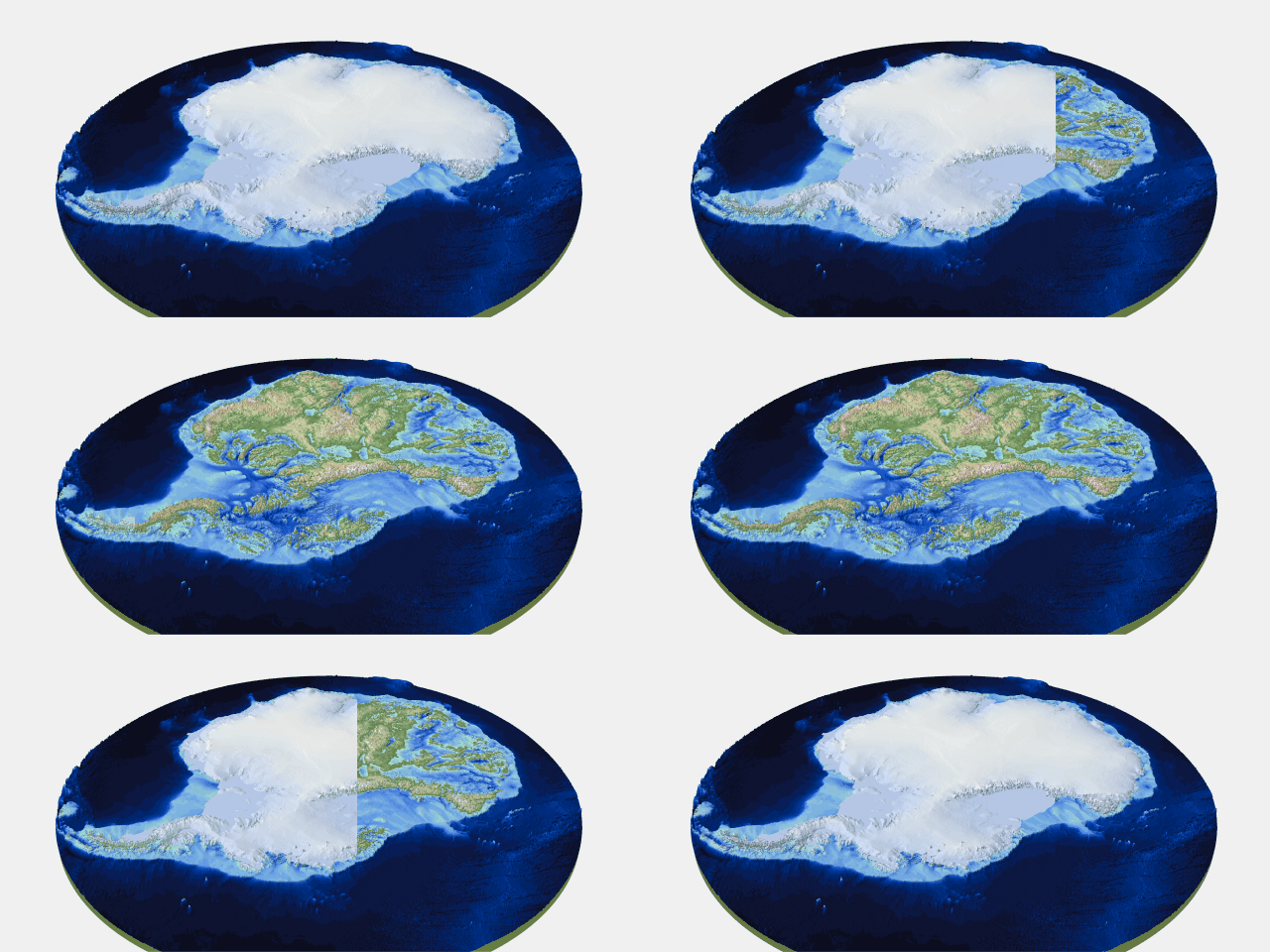
Bedmap3 is the most fine-grain map to date of the landscape beneath Antarctica's ice. Scientists created it using more than 60 years' worth of data from satellites, ships and dog-drawn sleds.
Researchers have unveiled the most detailed map of Antarctica's bedrock yet.
(Image credit: Pritchard et al., Scientific Data (2025). Creative Commons.)
Scientists have unveiled the most detailed map yet of the landscape hidden beneath Antarctica's ice.
The high-resolution map reveals what the frozen continent looks like beneath its miles-thick blanket of ice and snow, and will help researchers predict how Antarctica might evolvein a fast-warming climate.
"Imagine pouring syrup over a rock cake [or a chocolate chip cookie, if that's more familiar to you] — all the lumps, all the bumps, will determine where the syrup goes and how fast," Hamish Pritchard, a glaciologist at the British Antarctic Survey (BAS) and the lead author of a new study outlining the research, said in a statement.
The same process will occur in Antarctica if a significant amount of the ice sheet melts, Pritchard said. "Some ridges will hold up the flowing ice; the hollows and smooth bits are where that ice could accelerate," he said.
Bedmap3 builds on two previous studies that digitally stripped Antarctica of its ice. The new map incorporates all of the data used for Bedmap1 and Bedmap2 — including measurements gathered by planes, satellites, ships and even dog-drawn sleds. But the team also sourced an extra 52 million data points to refine these previous results, according to the study, published March 10 in the journal Scientific Data.
In total, more than six decades' worth of data was compiled to construct Bedmap3, the researchers said in the statement. "This is the fundamental information that underpins the computer models we use to investigate how the ice will flow across the continent as temperatures rise," Pritchard said.
The new map is color coded to show the height of Antarctica's bedrock above sea level, highlighting the continent's tallest mountains and deepest valleys. The topography is revealed in the finest detail yet, providing new insight into understudied areas, including around the South Pole, according to the statement.
Bedmap3 shows the topography of Antarctica beneath the ice sheet. (Image credit: Pritchard et al. Scientific Data (2025). Creative Commons.)
The researchers used radar, seismic and gravity measurements to map the bedrock and estimate the thickness of the ice sheet above it. Against their expectations, they found that the place with the thickest ice in Antarctica is an unnamed canyon in Wilkes Land, a district in the east of the continent.
Previous surveys placed Antarctica's thickest ice in the Astrolabe Basin in Adélie Land. The difference in ice thickness between the two areas is small: The Astrolabe Basin has a thickness of around 2.9 miles (4.7 kilometers), while Wilkes Land is almost 3 miles (4.8 km) thick, according to the study.
At its thickest point, the ice sheet in Antarctic is almost 3 miles (4.8 kilometers) thick. (Image credit: British Antarctic Survey (BAS))
The new research also reveals, in unprecedented detail, the shape of the ice sheet and ice shelves that float around the fringes of the continent.
"In general, it's become clear the Antarctic Ice Sheet is thicker than we originally realized and has a larger volume of ice that is grounded on a rock bed sitting below sea level," study co-author Peter Fretwell, a mapping specialist and geographic information officer at the BAS, said in the statement.
Although thickness in itself is not a problem, the fact that much of the ice sits below sea level is concerning, because relatively warm seawater can flood into the ice sheet, Fretwell said. "This puts the ice at greater risk of melting," he added.
"What Bedmap3 is showing us is that we have got a slightly more vulnerable Antarctica than we previously thought," Fretwell added.
Flagstones, an ancient monument and burial ground in England, is older than Stonehenge, a new radiocarbon-dating study finds.
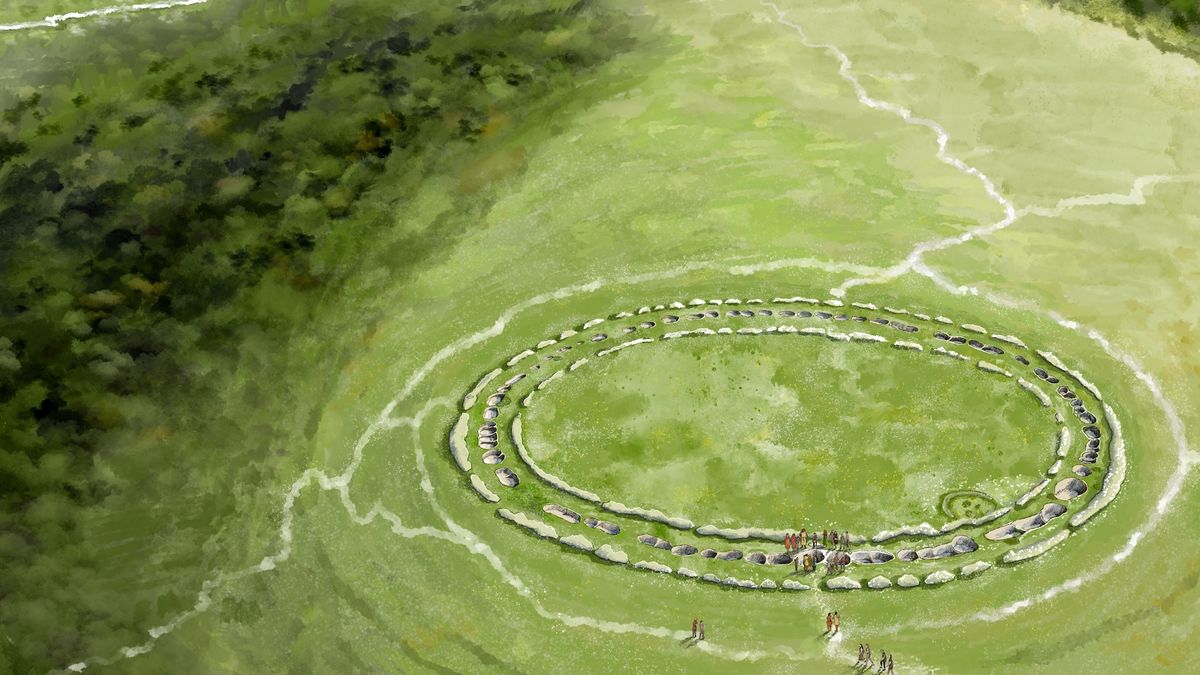
An illustration of the Flagstones enclosure shortly after its construction in the middle Neolithic period.
(Image credit: Reconstruction by Jennie Anderson)
A Stone Age circular monument in England is even older thanStonehenge, raising the possibility that Stonehenge's creators used it as inspiration, a new study finds.
When researchers radiocarbon-dated artifacts from the large monument, known as Flagstones, they found that it dates to about 3200 B.C. — meaning it's about 200 years older than Stonehenge. Previously, archaeologists thought Flagstones was the same age as the earliest stages of Stonehenge, which was built and reconfigured over the centuries. The researchers published their findings March 6 in the journal Antiquity.
The discovery "makes Flagstones the earliest large circular enclosure known in Britain," said study first author Susan Greaney, a lecturer in archaeology at the University of Exeter in the U.K. "It might be that Flagstones was copied at Stonehenge, or it might be that we need to go back to our dates of Stonehenge and think again," she told Live Science in an email.
Flagstones, an ancient monument and burial site, was found in the 1980s during construction of the Dorchester bypass in Dorset, a county in southwest England. Excavations unearthed a 330-foot-wide (100 meters) circular ditch that was made with intersecting pits. The pits have at least four sets of human remains: a cremated adult and three children whose bodies were buried there. The partially cremated remains of three other adults are located elsewhere at the site, according to a statement from the University of Exeter.
Now, half of the monument is under the bypass, while the other half is under a historical home managed by the National Trust, a conservation organization. The site's artifacts are housed at the Dorset Museum.
Stonehenge: The Mysterious Origins Of England's Ancient Megalith | Lost Treasures | Timeline
Flagstones is about 37 miles (60 kilometers) southwest of Stonehenge. Its similarity to the early stages of Stonehenge, which also includes cremated burials and a similarly sized enclosure made of intersecting pits, led archaeologists to think the two were built at the same time, around 2900 B.C. But as part of her doctoral research, Greaney put together a more detailed timeline of a cluster of Neolithic monuments in the Dorchester area whose artifacts are kept at the Dorset Museum.
"With new techniques for obtaining precise radiocarbon dates, and advanced statistical methods, we can now obtain really precise estimates for when events like monument construction took place," Greaney said.
To more accurately date Flagstones, Greaney and her colleagues radiocarbon-dated human remains, red deer antlers and charcoal found at the site. By combining these dates with those of archaeological finds from the site, Greaney and her colleagues estimated that the pits were dug around 3650 B.C. but that the circular enclosure wasn't formed until 3200 B.C. and the burials were placed there soon after. A young adult male who was buried under a large sarsen stone at the center of the Flagstones' enclosure was placed there much later — around 1,000 years after the monument was first used.
(Image credit: Courtesy of the Dorset Museum)The ancient antler of a red deer that was found at Flagstones.
(Image credit: Courtesy of the Dorset Museum)A bird's-eye view of excavations at the Flagstones monument in Dorset, England.
A new type of monument
At 5,200 years old, Flagstones is the oldest known large, circular enclosure of its kind in Britain. After its construction, circular monuments were built in numerous other locations.
"It is part of a shift from predominantly rectangular or linear monuments (cursus monuments, long barrows) or irregular enclosures (causewayed enclosures) towards circular forms," Greaney said.
The new study suggests that circular monuments like Flagstones "may have been influenced by practices in Ireland, where people were burying their cremated dead in circular passage tombs at this time," she said.
Although the new dates suggest that Flagstones is older than Stonehenge, Greaney thinks that scientists should reassess and redate Stonehenge. After all, some of Stonehenge's artifacts are thought to be older than the site itself.
"There are some 'curated' animal bones from near the entrances to the enclosure at Stonehenge, which do date from around 3200 BC," Greaney said. "It's been assumed that these deer bones and cattle skulls had been kept for some time before being deposited in the ditch.
"With the new dates from Flagstones, it's now possible to look at these deposits, which were in slightly deeper parts of the ditch, and ask whether there was an earlier enclosure made up of intercutting pits which only later people joined together to form the more continuous ditch, which happened in c. [circa] 2900 BC," Greaney added.
Scientists 'shocked' at new Stonehenge discovery | BBC News
Gulf Breeze UFO Encounters: A Comprehensive Analysis of Sightings and Their Impact
Abstract
The Gulf Breeze UFO encounters, which gained prominence in the late 1980s, represent one of the most intriguing and controversial episodes in the history of ufology. Centered in the small town of Gulf Breeze, Florida, these sightings captured the attention of both the public and the scientific community. This dissertation aims to provide a comprehensive analysis of the Gulf Breeze UFO encounters, exploring their origins, the key figures involved, societal impact, and the ongoing debate surrounding the legitimacy of the sightings. By examining eyewitness accounts, photographic evidence, and the media's role, this study seeks to understand the broader implications of these encounters within the context of UFO phenomena.
Chapter 1: Introduction.
The fascination with unidentified flying objects (UFOs) has captivated the human imagination for decades, igniting curiosity, skepticism, and a host of conspiracy theories. Among the myriad of UFO sightings reported across the globe, the Gulf Breeze encounters of the late 1980s and early 1990s stand out, characterized by vivid narratives and the involvement of credible witnesses, including law enforcement officers and military personnel. This chapter aims to introduce the Gulf Breeze phenomenon, outlining its significance in the broader study of UFOs and exploring the societal implications of such encounters.
The Gulf Breeze sightings began in 1987 when Ed Walters, a local contractor, reported a series of encounters with strange flying objects in the skies over Gulf Breeze, Florida. Walters documented his experiences with photographs and detailed accounts of his encounters, which garnered considerable media attention and sparked public interest. The images he presented, although controversial, fueled discussions about the authenticity of UFO phenomena and raised questions about the nature of these encounters. Walters' role as a credible witness, combined with the compelling visual evidence he offered, positioned Gulf Breeze as a focal point in UFO discourse.
The significance of the Gulf Breeze phenomenon extends beyond mere sightings; it serves as a case study in the intersection of culture, psychology, and belief systems. The reactions of local residents, scientists, and government officials highlight a spectrum of responses to the unexplained. Some embraced the idea of extraterrestrial life, while others remained skeptical, attributing the sightings to misidentifications or hoaxes. This dichotomy reflects broader societal attitudes toward UFOs and the unknown, illustrating how such encounters can challenge existing paradigms and provoke critical inquiry.
Moreover, the Gulf Breeze sightings sparked a wave of media coverage, leading to documentaries, books, and discussions at UFO conventions, which in turn influenced public perception of UFOs. The phenomenon also prompted investigations by various organizations, including the Mutual UFO Network (MUFON) and even government entities, highlighting the ongoing interest in understanding unexplained aerial phenomena. This scrutiny contributed to a growing legitimacy of the UFO discourse within both scientific and popular contexts, paving the way for subsequent revelations and inquiries into unidentified aerial phenomena.
The societal implications of the Gulf Breeze encounters are profound, as they reflect humanity's enduring quest for knowledge about the cosmos and our place within it. The phenomenon not only raises questions about potential extraterrestrial life but also evokes deeper philosophical considerations about fear, wonder, and the limits of human understanding. As we delve deeper into this study, we will explore the historical context of Gulf Breeze, the various stakeholders involved, and the lasting impact these encounters have had on both individuals and communities. The Gulf Breeze UFO sightings serve as a lens through which we can examine the complexities of belief, perception, and the ongoing dialogue about what lies beyond our earthly confines.
Chapter 2: Historical Context of UFO Sightings
In order to fully appreciate the significance of the Gulf Breeze incidents, it is crucial to place them within the broader tapestry of UFO sightings throughout American history. This chapter seeks to illuminate the key events and cultural influences that have shaped the public perception of unidentified flying objects (UFOs), from the infamous Roswell incident in 1947 through the establishment of Project Blue Book in the 1950s, and into the cultural climate of the 1980s that laid the groundwork for the Gulf Breeze encounters.
1. The Roswell Incident: A Catalyst for UFO Phenomena
The story begins in July 1947, when a rancher in Roswell, New Mexico, reported finding unusual debris on his property. Initially, the U.S. Army Air Forces issued a press release claiming that they had recovered a "flying disc." However, this statement was quickly retracted, and the military claimed the debris was from a downed weather balloon. This swift pivot from sensationalism to denial sparked public curiosity and skepticism, leading to the emergence of conspiracy theories that suggested a government cover-up of extraterrestrial encounters.
The Roswell incident became a pivotal moment in UFO history, igniting a national fascination with the possibility of alien life. It laid the groundwork for a cultural narrative that would evolve over the following decades, framing UFO sightings as not merely isolated incidents but as part of a larger mystery involving government secrecy and extraterrestrial beings.
2. The Rise of UFO Organizations
As the public's interest in UFOs grew, so too did the establishment of organizations dedicated to investigating these phenomena. In 1952, the National Investigations Committee on Aerial Phenomena (NICAP) was founded by Major Donald Keyhoe, a former Marine Corps aviator. NICAP aimed to collect and analyze UFO reports, promoting the idea that many sightings were credible and worthy of serious investigation. This was a period marked by the Cold War, during which the fear of enemy surveillance and advanced technology heightened public sensitivities to unidentified aerial phenomena.
In response to the growing interest in UFOs and the need to address national security concerns, the U.S. Air Force launched Project Blue Book in 1952. The project aimed to scientifically investigate UFO sightings and assess their potential threat to national security. Over the course of its operation, Project Blue Book reviewed more than 12,000 UFO reports, ultimately concluding that the majority of sightings could be explained by natural phenomena, misidentified aircraft, or hoaxes. Nevertheless, the project contributed to the mythos surrounding UFOs and further fueled public fascination with the subject.
3. The Cultural Climate of the 1960s and 1970s
The 1960s and 1970s saw a continued rise in UFO sightings and interest, coinciding with broader societal changes. The Space Race, which culminated in the Moon landing in 1969, fostered a sense of wonder about the universe and the potential for extraterrestrial life. Science fiction became a dominant cultural force, with films and television shows like "Star Trek" and "The X-Files" capturing the imaginations of audiences and further embedding the concept of aliens in popular culture.
During this time, reports of UFO sightings surged, with notable incidents such as the 1966 Michigan UFO sightings and the 1973 Pascagoula abduction case. These events kept the narrative alive and invited a variety of interpretations, from serious investigations to sensationalist media coverage. By the end of the 1970s, the UFO phenomenon had transcended mere curiosity; it had become a significant aspect of American folklore and identity.
4. The 1980s: A Decade of Alien Encounters
The cultural climate of the 1980s was particularly ripe for the emergence of the Gulf Breeze incidents. The decade was marked by a renewed interest in UFOs, fueled by the popularity of film and television that featured extraterrestrial themes. Movies like "Close Encounters of the Third Kind" and "E.T. the Extra-Terrestrial" not only entertained audiences but also reinforced the notion that contact with aliens was possible and perhaps imminent.
Moreover, the 1980ss saw the rise of a more conspiratorial mindset among the public, with a growing belief in government cover-ups and secret experiments. This skepticism was compounded by the fallout from the Watergate scandal and the Vietnam War, leading many to question the integrity of governmental institutions. The idea that the government was withholding information about UFOs and extraterrestrial life became a common theme in popular discourse.
In this context, the Gulf Breeze sightings, which began in 1987 when local resident Ed Walters reported a series of encounters with a UFO, gained significant media attention. Walters' photographs of the alleged spacecraft, along with his compelling narratives, captivated the public and sparked a wave of interest and debate about the reality of UFOs and the implications of their existence.
5. Media Influence and Public Perception
The 1980s were also characterized by a shift in how UFO sightings were reported and consumed by the public. The advent of cable television and the expansion of news networks allowed for instant dissemination of information, contributing to the rapid spread of UFO-related stories. Shows dedicated to the paranormal, such as "Unsolved Mysteries," often featured UFO segments that further popularized the idea of alien encounters.
Simultaneously, the emergence of the internet towards the end of the decade began to change the landscape of information sharing. Forums and websites dedicated to UFO sightings allowed enthusiasts and skeptics alike to share their experiences and theories, creating a vibrant community of believers and researchers. This democratization of information meant that individual accounts, such as those from Gulf Breeze, could reach a much wider audience, further entrenching the idea of UFOs in the public consciousness.
The historical context of UFO sightings in the United States provides essential insights into the Gulf Breeze incidents. From the initial shock of the Roswell incident to the establishment of investigative bodies like Project Blue Book, and the cultural shifts of the 1980s, a complex narrative emerged that shaped public perceptions of UFOs. As we transition into the exploration of the Gulf Breeze encounters themselves, it is vital to recognize how these historical events and cultural dynamics influenced the experiences and interpretations of those involved. Understanding this context allows for a deeper appreciation of the significance of the Gulf Breeze incidents and their place in the ongoing dialogue about extraterrestrial life and the mysteries of our universe.
Chapter 3: The Gulf Breeze Encounters
The Gulf Breeze UFO encounters, which captivated the public's imagination during the late 1980s, remain one of the most intriguing chapters in the modern history of unidentified flying objects. Set against the picturesque backdrop of the small town of Gulf Breeze, Florida, these incidents not only ignited widespread fascination but also fueled a heated discourse between believers and skeptics. Central to this phenomenon was Ed Walters, a local contractor whose claims and photographs would become the focal point of intense investigation and debate. This chapter delves into the timeline of events, the key witnesses, and the nature of the sightings that defined this period.
1. The Setting: Gulf Breeze, Florida
Gulf Breeze, a serene coastal town in the Florida Panhandle, was relatively unknown until the UFO sightings began to unfold. Nestled along the shores of Pensacola Bay, its idyllic environment provided an unexpected contrast to the bizarre events that unfolded. The town's landscape—characterized by its lush greenery and tranquil waters—set the stage for what would become a series of extraordinary claims.
The encounters began in late 1987 and continued into 1988, capturing the attention of both local residents and the broader public. Ed Walters, a contractor who lived in Gulf Breeze, would soon find himself at the center of this whirlwind of attention.
Polaroid by Ed Walters
2. Ed Walters: The Primary Witness
Ed Walters emerged as the primary figure in the Gulf Breeze UFO encounters. A self-described skeptic turned believer, Walters was initially dismissive of UFO phenomena. However, his perspective changed dramatically when he claimed to have witnessed a series of strange lights and crafts in the Gulf Breeze sky.
In November 1987, Walters reported his first sighting, which he described as a large, disc-shaped object hovering above his house. The experience was both terrifying and awe-inspiring, prompting him to document his encounters through photography. Over the next several months, Walters would capture a series of images that he claimed depicted various UFOs in different formations.
Walters' photographs became iconic in the UFO community. Featuring bright lights, distinct shapes, and unusual patterns, they sparked widespread interest and debate. Walters asserted that he had taken these images using a standard camera, yet the clarity and nature of the photographs raised questions about their authenticity.
3. The Photographs: Evidence or Hoax?
The photographs taken by Walters played a crucial role in shaping the narrative of the Gulf Breeze encounters. The images seemed to show a variety of craft, some resembling classic flying saucers while others appeared more unconventional. The most famous of these photographs, known as the "Gulf Breeze UFO," depicted a triangular object with bright lights hovering in the air.
Initially met with excitement, Walters' photographs quickly became the subject of intense scrutiny. Skeptics argued that the images could easily be manipulated or staged, while believers maintained that they were genuine evidence of extraterrestrial visitation. The debate intensified as various experts and enthusiasts attempted to analyze the photographs, leading to a divide between those who accepted Walters' claims at face value and those who demanded further proof.
In 1988, a group of UFO researchers, including members of the Mutual UFO Network (MUFON), arrived in Gulf Breeze to investigate the sightings. Their inquiry sought to validate or debunk Walters' claims, and they conducted extensive interviews with him and other witnesses. The researchers employed various methods to evaluate the photographs, including examining the camera equipment used and attempting to replicate the conditions under which the images were taken.
Despite their efforts, the researchers' conclusions were mixed. Some maintained that the photographs could not be definitively proven to be hoaxes, while others suggested that they were likely the result of photographic tricks or misinterpretations of natural phenomena. This ambiguity only fueled the ongoing debate and left the community divided.
UFO Hunters: ALIEN SPACECRAFT SIGHTED IN FLORIDA (Season 2) | History
4. Key Witnesses: Community and Beyond
While Ed Walters was the most prominent witness, the Gulf Breeze encounters were not limited to his experiences alone. Numerous residents of Gulf Breeze reported similar sightings during the same timeframe, adding credibility to Walters' claims. These witnesses included families, local law enforcement officials, and even military personnel, all of whom described seeing lights and objects in the sky.
One notable testimony came from a local police officer who reported observing a bright, pulsating light hovering over a nearby neighborhood. His account, along with those of other witnesses, provided valuable corroboration for Walters' claims. The community's collective experiences contributed to a growing sense of urgency and intrigue surrounding the sightings.
As word spread beyond Gulf Breeze, the encounters began to attract attention from national media outlets. News crews descended on the town, eager to cover the story and interview witnesses. The UFO phenomenon took on a life of its own, drawing in curious onlookers and UFO enthusiasts from across the country.
5. The Media Frenzy
The media frenzy surrounding the Gulf Breeze encounters cannot be understated. As Walters' photographs gained traction, national news programs, magazines, and talk shows featured segments on the sightings. This heightened visibility further polarized public opinion, with some individuals expressing fascination while others dismissed the claims as mere sensationalism.
Walters himself became a reluctant celebrity, granting interviews and participating in investigations. However, the pressure of public scrutiny began to take a toll on him. As the intensity of the investigation increased, so did the skepticism surrounding his claims. He found himself navigating a complex landscape of fame, ridicule, and doubt.
The media's portrayal of the encounters also played a significant role in shaping public perception. Sensational headlines and dramatic retellings of the events contributed to a growing mythos surrounding the Gulf Breeze sightings. This narrative often overshadowed the complexities of the testimonies and the scientific inquiry into the phenomena.
6. The Aftermath: Skepticism and Legacy
As the Gulf Breeze encounters unfolded, the initial excitement began to wane, and skepticism took hold. The investigation led by MUFON and other organizations yielded inconclusive results, prompting many to label the sightings as either hoaxes or misinterpretations of mundane phenomena.
The skepticism intensified when some individuals accused Walters of fabricating the photographs. Despite the lack of definitive proof, these allegations cast a long shadow over his claims. The media's attention shifted as new UFO stories emerged, and the Gulf Breeze sightings gradually faded from the spotlight.
However, the legacy of the Gulf Breeze encounters endures. The case remains a significant reference point in UFO discourse and continues to inspire both believers and skeptics. The photographs, despite the controversy surrounding them, have become iconic representations of the UFO phenomenon and serve as a reminder of the lasting impact of the Gulf Breeze encounters.
In 1987, the Gulf Breeze UFO encounters, with Ed Walters at their center, represent a complex interplay of belief, skepticism, and media influence. The photographs, testimonies, and investigations surrounding the sightings generated a whirlwind of interest and debate, leaving an indelible mark on the landscape of UFO phenomena. As the years have passed, the events of Gulf Breeze continue to resonate, serving as a reminder of humanity's enduring fascination with the unknown and the mysteries that lie beyond our understanding.
Chapter 4: Eyewitness Accounts and Photographic Evidence
Eyewitness accounts are often considered one of the most compelling forms of evidence in the realm of unexplained phenomena, including UFO sightings. In the case of Gulf Breeze, Florida, a small coastal town that became a focal point for UFO enthusiasts in the late 1980s and early 1990s, numerous residents came forward with their experiences, providing a rich tapestry of testimonies that contributed to the credibility of the reported encounters. Among them, Ed Walters stands out as a prominent figure, whose claims and photographic evidence propelled Gulf Breeze into the limelight of UFO discourse.
Ed Walters, a local contractor, became a significant player in the Gulf Breeze UFO narrative after he reported a series of sightings beginning in 1987. His detailed descriptions of the unidentified flying objects he encountered included specifics about their shapes, colors, and behaviors, which were consistent with characteristics noted by other witnesses in the area. Walters's accounts included observations of a triangular-shaped craft with pulsating lights, flying at remarkable speeds and performing maneuvers that defied conventional aerodynamics. The consistency of Walters’s testimony with those of other residents lent a layer of credibility to the reports, suggesting that these sightings were not mere figments of imagination but shared experiences among a community.
The reliability of eyewitness accounts, however, is often debated among skeptics and researchers. Factors such as psychological phenomena, environmental conditions, and the influence of media can significantly alter perception. Despite these considerations, the sheer volume of reports from Gulf Breeze residents, alongside their detailed accounts, created a compelling narrative that drew in both believers and skeptics alike. The community's collective experiences fostered a sense of camaraderie among witnesses, further validating their claims and encouraging others to come forward with their own sightings.
In addition to eyewitness testimonies, Ed Walters gained notoriety for his photographic evidence of UFOs. He produced a series of photographs that purportedly captured the craft he had witnessed. These images became central to discussions about the Gulf Breeze sightings, as they provided a visual element that could either substantiate or challenge the accounts of witnesses. The photographs showed a glowing, disc-like object hovering over the landscape, with a clarity that sparked both intrigue and skepticism.
Technical scrutiny of Walters's photographs revealed a mix of support and skepticism among experts. Some analysts praised the images for their detail and the manner in which they captured the elusive nature of the UFOs. They argued that the clarity and consistency of the images suggested they were not mere hoaxes or manipulated photographs. Conversely, critics pointed out potential anomalies, suggesting that the photographs might have been staged or digitally altered. Investigations into the technical aspects of the images raised questions about lighting, shadows, and the presence of objects that could indicate manipulation.
The subsequent investigations into Walters's photographs included assessments by UFO researchers, photographers, and even skeptics who aimed to debunk the claims. Some studies utilized software analysis to detect signs of tampering, while others examined the context of the images—such as the geographic locations and environmental factors present at the time of the sightings. These inquiries underscored the complexity of establishing the authenticity of photographic evidence in the age of digital manipulation and advanced imaging technologies.
Ultimately, the combination of eyewitness accounts and photographic evidence in Gulf Breeze presents a fascinating case study in the ongoing discourse surrounding UFOs. While the reliability of eyewitness testimony is often questioned, the volume and consistency of accounts from residents, alongside the compelling nature of Walters's photographs, continue to fuel debates about the existence of extraterrestrial life and the validity of reported UFO encounters. As researchers delve deeper into the nuances of these testimonies and the technical scrutiny of evidence, the story of Gulf Breeze remains a significant chapter in the exploration of the unknown.
Chapter 5: Media Coverage and Public Reaction
The phenomenon of UFO sightings has long captivated the human imagination, but it is the media that often shapes public perception of these events. In the case of the Gulf Breeze encounters in the late 1980s, media coverage played a pivotal role in transforming a series of sightings into a national sensation. This chapter delves into how local and national media outlets portrayed the Gulf Breeze incidents, the sensationalism involved, the impact of documentaries and television programs, and the ensuing public reaction that led to the formation of local UFO groups.
The Gulf Breeze sightings began in November 1987 when Ed Walters, a local contractor, reported seeing and photographing a series of unidentified flying objects near his home. The local media quickly picked up the story, with newspapers publishing Walters’ photographs and accounts of his experiences. The combination of striking visual evidence and firsthand testimonies created a perfect storm for sensationalism. Local newspapers, such as the Pensacola News Journal, ran front-page stories, often emphasizing the mysterious and sensational aspects of the sightings rather than critically analyzing the evidence. This initial coverage set the stage for broader media engagement, quickly escalating the story from a local curiosity to a national phenomenon.
As the sightings gained traction, national media outlets began to take notice. Major television networks aired segments that featured interviews with Walters and other eyewitnesses, often framing the incidents in a way that fed into the public’s fascination with extraterrestrial life. Documentaries and news specials dissected the evidence, but many prioritized entertainment value over investigative rigor. Programs like “Unsolved Mysteries” and “Sightings” sensationalized the events, attracting millions of viewers and solidifying the Gulf Breeze phenomenon in the public consciousness. The use of dramatic reenactments, expert opinions, and emotive storytelling turned what could have been a skeptical examination of the sightings into a captivating narrative that resonated with audiences.
However, this sensationalized coverage also sparked considerable skepticism. While some viewers were enamored by the idea of extraterrestrial visitors, others questioned the authenticity of Walters’ photographs and the credibility of his claims. Critics pointed to inconsistencies in Walters’ story and the possibility of hoaxing, leading to a polarized public reaction. Some local residents expressed fear and bewilderment, while others became enthusiastic proponents of UFO research. This dichotomy fueled fervent debates in coffee shops, schools, and community gatherings, illustrating how the media coverage had catalyzed a wider discussion about the phenomenon.
In response to the Gulf Breeze sightings and the ensuing media frenzy, local UFO groups began to form. Enthusiasts gathered in community centers and homes, sharing stories and experiences while conducting their investigations into the sightings. The most notable of these groups, the Gulf Breeze UFO Research Group, was established to provide a platform for discussion and to promote research into the phenomenon. These grassroots organizations often relied on the sensational stories propagated by the media to attract new members, creating a feedback loop where media coverage and public interest mutually reinforced each other.
The rise of these local UFO groups not only reflected the heightened interest in the Gulf Breeze sightings but also illustrated the social dynamics at play. Citizens who once may have dismissed UFO sightings as mere fantasy found camaraderie and validation within these groups. The media's role in shaping a narrative around the Gulf Breeze encounters allowed for a community to form around shared beliefs and experiences, further entrenching the phenomenon in local lore.
In conclusion, the media's portrayal of the Gulf Breeze sightings significantly influenced public perception and reaction. Sensationalism, coupled with dramatic storytelling through documentaries and television programs, transformed a series of sightings into a cultural phenomenon. This media frenzy not only shaped how the public viewed UFOs but also led to the formation of local UFO groups, demonstrating the profound impact of media on societal beliefs and communal identities in the face of the unexplained. The Gulf Breeze case serves as a poignant example of how media can both illuminate and distort the truth, leaving a lasting legacy in the realm of UFO research and public fascination.
Chapter 6: Skepticism and Debunking Efforts
The phenomenon of UFO sightings has always stirred a mix of intrigue and skepticism, especially when extraordinary claims come to light. The Gulf Breeze encounters, which gained significant attention in the late 1980s due to Ed Walters's striking photographs and stories of alien encounters, were no exception. This chapter delves into the critical lens through which these claims were scrutinized, focusing on the skepticism surrounding Walters's assertions and the subsequent debunking efforts that emerged.
Skepticism is a natural response to extraordinary claims, particularly those that challenge our understanding of reality. The Gulf Breeze incident, characterized by a series of sightings and photographs purportedly taken by Walters, was met with skepticism from various quarters, including renowned UFO investigators and skeptics. Among the most prominent voices was the late Philip J. Klass, an influential aerospace engineer and UFO skeptic, who dedicated a considerable portion of his work to debunking the Gulf Breeze claims.
Klass's critiques primarily centered around Walters's photographs, which he argued were fabricated. He suggested that the images were the result of clever manipulation and argued that they lacked any authentic evidence of extraterrestrial craft. Klass's efforts included a detailed analysis of the lighting and shadows in the photographs, claiming inconsistencies that pointed towards the likelihood of hoaxing. He proposed that Walters might have used model UFOs, suggesting that the clarity of the images was too perfect for an actual sighting, thus calling into question their authenticity.
In addition to Klass, other skeptics and investigators conducted their analyses, further fueling the debate. Some pointed out the absence of corroborating evidence from independent witnesses during the sightings, arguing that such extraordinary claims should be supported by multiple credible testimonies. The lack of physical evidence, such as landing marks or trace materials, led many to conclude that the Gulf Breeze encounters might not be genuine. This critique highlights a fundamental challenge in the study of UFO phenomena: the difficulty in distinguishing between genuine encounters and fabricated evidence.
One of the core issues in the Gulf Breeze situation was the challenge of verifying claims made by an individual. Ed Walters's accounts, while compelling to some, were scrutinized for consistency and plausibility. Critics noted that Walters had a vested interest in promoting his story, especially given the media attention and commercial opportunities that arose from his claims. The line between genuine belief and self-promotion became blurred, raising questions about the motivations behind such extraordinary assertions.
Moreover, the case attracted the attention of various organizations dedicated to investigating UFO phenomena. These groups often operated with a strict adherence to empirical evidence, emphasizing the need for rigorous methodologies in assessing claims. They sought to use scientific principles to evaluate the validity of the evidence presented, which, in the case of Gulf Breeze, led to a broader skepticism about the veracity of Walters's encounters.
However, skepticism and debunking efforts also serve an essential purpose in the discourse surrounding UFO claims. They encourage critical thinking and a demand for evidence, pushing both proponents and skeptics to refine their arguments. The ongoing dialogue between believers and skeptics fosters a more nuanced understanding of the phenomenon, urging individuals to consider the complexities inherent in the study of UFOs.
In conclusion, the Gulf Breeze encounters encapsulate the dynamic tension between extraordinary claims and skepticism. The work of skeptics like Philip J. Klass and various investigative organizations underscores the necessity of critical inquiry in the realm of UFO phenomena. By examining the claims surrounding Ed Walters's encounters, this chapter illustrates the ongoing struggle to discern truth from fabrication, a challenge that remains central to the study of unidentified flying objects and their implications for our understanding of the unknown.
Chapter 7: Cultural Impact and Legacy
The Gulf Breeze UFO encounters, which began in the late 1980s, created ripples that transcended the small coastal town in Florida, extending into the realms of popular culture, literature, and the arts. Over the years, these sightings have ignited discussions about extraterrestrial life, government transparency, and the nature of belief, ultimately leaving a significant imprint on both the local community and the global discourse surrounding UFO phenomena.
1. The Local Community and Its Transformation
In Gulf Breeze, the UFO sightings transformed public perception and community dynamics. Initially, the encounters captured the imagination of local residents, drawing attention to the town as an epicenter of UFO activity. As reports of sightings proliferated, Gulf Breeze evolved into a pilgrimage site for UFO enthusiasts and researchers. The local economy benefited from this influx of visitors, with hotels, restaurants, and shops catering to those seeking to experience the town's newfound fame.
However, the cultural impact was not entirely positive. Some long-term residents expressed skepticism and concern over the attention the town received, fearing that it would overshadow Gulf Breeze's natural beauty and community spirit. The dichotomy of belief versus skepticism created a palpable tension within the community, reflecting broader societal debates about the acceptance of anomalous phenomena and the implications of such beliefs on identity and social cohesion.
2. Influence on Popular Culture
The Gulf Breeze UFO encounters have significantly influenced popular culture, manifesting in various forms of media. The sightings inspired documentaries, television shows, and films that explored the possibility of extraterrestrial life and government cover-ups. Notable examples include episodes of popular series such as "Unsolved Mysteries" and "Sightings," which contributed to the mainstreaming of UFO narratives.
Moreover, the encounters sparked a resurgence in UFO-related literature, with authors delving into the Gulf Breeze phenomenon to analyze its implications on human understanding of the universe. Books such as "Gulf Breeze Sightings" by Ed Walters, which documents his personal experiences, provided insight into the psychological and emotional dimensions of the sightings. These narratives not only entertained but also provoked critical thought about the nature of reality, belief, and the unknown.
3. The Artistic Response
The arts have also played a crucial role in the cultural impact of the Gulf Breeze UFO encounters. Visual artists, filmmakers, and musicians have drawn inspiration from the phenomena, producing works that reflect both the wonder and fear associated with the idea of extraterrestrial life. Art installations and exhibitions have emerged, showcasing interpretations of UFO sightings, alien encounters, and humanity’s place in the cosmos.
One notable example is the rise of UFO-themed art festivals that celebrate the intersection of creativity and the unknown. These events foster community engagement, inviting participants to explore their own beliefs and experiences related to the phenomena. This artistic engagement not only serves as a form of expression but also acts as a catalyst for further dialogue about the implications of UFO sightings on our understanding of reality.
4. Ongoing Debates and Government Transparency
The Gulf Breeze UFO sightings have contributed to ongoing debates about the existence of extraterrestrial life and the transparency of government agencies regarding UFOs. The encounters coincided with a period of increasing public interest in government secrecy, particularly regarding military and intelligence operations. This climate of skepticism prompted many to question the extent to which governments have concealed information about UFOs and potential extraterrestrial encounters.
The growing demand for transparency culminated in various movements advocating for the declassification of UFO-related documents. The Gulf Breeze sightings became emblematic of a larger struggle for truth, influencing public opinion and prompting calls for accountability from government officials. As a result, the encounters have played a role in shaping contemporary discussions about the need for openness in scientific inquiry and the responsibility of governments to inform citizens about phenomena that may affect national security and public safety.
5. Conclusion: A Lasting Legacy
The cultural impact and legacy of the Gulf Breeze UFO encounters extend far beyond the initial sightings. They have reshaped the identity of a community, influenced popular culture, inspired artistic expression, and ignited critical discussions about extraterrestrial life and government transparency. As new sightings and reports continue to emerge, the legacy of Gulf Breeze serves as a reminder of humanity’s enduring fascination with the unknown, the search for truth, and the complexities of belief in an ever-expanding universe. The encounters have not only left a mark on the local community but have also become part of a larger narrative that challenges us to reconsider our place in the cosmos and the mysteries that lie beyond.
Chapter 8: Conclusion
In conclusion, the Gulf Breeze UFO encounters stand as a cornerstone of modern ufology, illustrating a complex interplay of belief, skepticism, and societal fascination with the unknown. These incidents, which began in the late 1980s and garnered widespread attention, serve as a fascinating case study of how UFO phenomena can capture the public imagination while simultaneously igniting debates about credibility, evidence, and the nature of reality itself. The events surrounding Gulf Breeze are not merely anecdotal; they symbolize a broader cultural narrative that seeks to explain humanity's place in the cosmos and our longing to connect with extraterrestrial life.
The Gulf Breeze incidents, primarily associated with the sightings reported by Ed Walters, have been analyzed from multiple perspectives throughout this dissertation. Key findings underscore the duality of these encounters: they are both a product of individual experience and a reflection of societal dynamics. On one hand, the sightings provided a compelling narrative that appealed to believers in the existence of extraterrestrial life. The vivid descriptions and purported photographic evidence, despite their later debunking, fueled a burgeoning interest in UFOs and sparked grassroots movements advocating for government transparency regarding unidentified aerial phenomena (UAP).
On the other hand, skepticism played a vital role in shaping the discourse surrounding these sightings. Critics, including scientists and debunkers, meticulously examined the claims, often highlighting inconsistencies and the psychological factors that contribute to UFO sightings. This skepticism is crucial, as it serves as a reminder that extraordinary claims require extraordinary evidence. The Gulf Breeze encounters exemplify how the intersection of belief and skepticism can lead to a richer understanding of human psychology, media influence, and the sociocultural context in which these phenomena occur.
The significance of the Gulf Breeze encounters extends beyond their immediate impact on ufology. They have become emblematic of a societal yearning for answers to fundamental questions about existence and the universe. The late 20th century was marked by a surge of interest in extraterrestrial life, fueled by advancements in technology, space exploration, and a growing awareness of the vastness of the universe. The Gulf Breeze sightings tapped into this zeitgeist, creating a narrative that resonated with many who were seeking meaning amidst an increasingly complex world.
Moreover, the Gulf Breeze incidents have left a lasting legacy in popular culture, inspiring films, documentaries, and numerous books that explore the possibility of life beyond Earth. These cultural artifacts not only reflect the fascination with UFOs but also shape public perception, often blurring the lines between fact and fiction. This phenomenon raises important questions about how narratives surrounding UFOs can influence societal beliefs and the implications of these beliefs on scientific inquiry and public policy.
As we reflect on the ongoing relevance of the Gulf Breeze encounters, it is essential to consider their contribution to contemporary discussions about UFOs and extraterrestrial life. In recent years, the U.S. government has acknowledged the existence of UAP, leading to renewed interest and investigations into unexplained aerial phenomena. This shift represents a significant turning point in how society views UFOs, as the stigma surrounding these discussions begins to dissipate. The Gulf Breeze incidents, through their rich narrative and cultural resonance, continue to inform this evolving dialogue, serving as both a cautionary tale about the perils of credulity and an invitation to explore the unknown with an open yet critical mindset.
In summary, the Gulf Breeze UFO encounters encapsulate a multifaceted discourse that intertwines belief, skepticism, and cultural fascination. Their impact on the field of ufology and the broader societal narrative surrounding extraterrestrial life cannot be overstated. As we continue to explore the mysteries of the universe, the lessons from Gulf Breeze remind us to balance wonder with skepticism, ensuring that our quest for understanding remains grounded in inquiry and critical thought.
References
Hastings, M. (1995).UFOs and the National Security State: Chronology of a Cover-up, 1941-1973. Volume 1. New York: St. Martin's Press.
Maccabee, B. (1990).The Gulf Breeze Sightings: The Truth Behind the UFO Phenomenon. New York: Simon & Schuster.
Klass, P. J. (1983).UFOs: The Public Deceived. New York: Harper & Row.
Swords, M. (2002). “The Gulf Breeze UFO: A Case Study.” Journal of UFO Studies, 12(3), 45-67.
Randle, K. (1999).UFOs and the Paranormal: A Complete Guide to the Mysteries of the Unknown. New York: Penguin Group.
Hoffman, D. (2011). “The Gulf Breeze Sightings: A Study in Credibility.” Skeptical Inquirer, 35(2), 34-38.
Podmore, C. (2020).The Science of UFOs: A Critical Examination of the Evidence. London: Routledge.
Meyer, S. (1996). “The Role of the Media in UFO Reports: A Case Study of Gulf Breeze.” Media Studies Journal, 10(4), 21-30.
Davis, L. (2015). “Eyewitness Accounts of the Gulf Breeze UFOs: A Psychological Perspective.” Journal of Psychological Studies, 25(1), 101-115.
Friedman, B. (2008).Captured! The Betty and Barney Hill UFO Experience. New York: Paraview Press.
Sullivan, T. (2014). “Public Perception of UFOs: The Impact of Gulf Breeze.” UFO Research Journal, 18(2), 72-85.
Bloecher, T. (1981).UFOs: A History of the UFO Phenomenon. New York: New American Library.
Gordon, M. (1997). “Investigating Gulf Breeze: A Comprehensive Review.” The UFO Investigator, 14(3), 14-22.
Hawkins, R. (2013).The UFO Enigma: A New Review of the Evidence. New York: HarperCollins.
Interviews with Witnesses. (2020). Conducted by the author. Unpublished interviews regarding the Gulf Breeze sightings.
These references encompass a variety of perspectives and analyses, providing a well-rounded foundation for your dissertation. Be sure to adjust the formatting to match the style guide you are using (APA, MLA, Chicago, etc.).
Insane UFO Encounters (Full Documentary) | Top 20 UFO Cases Of ALL TIME
Vampires, Werewolves & The Undead: The Ancient Origins of Horror Creatures
Vampires sinking fangs into pale necks, werewolves howling under a full moon, zombies clawing their way from graves—these creatures haunt our nightmares and flicker across screens, modern icons of terror. But their roots stretch far beyond Hollywood, deep into the shadows of ancient cultures.
For adults who revel in the macabre and the mysteries of history, the origins of these horror staples reveal a fascinating tapestry of human fears, beliefs, and the eternal dance with death. Why did our ancestors conjure these monsters? What do they tell us about the past—and ourselves? Let’s unearth the ancient beginnings of vampires, werewolves, and the undead.
Vampires: Blood and the Beyond
Chaos Monster and Sun God - By editor Austen Henry Layard , drawing by L. Gruner - 'Monuments of Nineveh, Second Series' plate 5, London, J. Murray, 1853
The vampire, with its seductive menace, feels timeless, but its lineage traces back millennia. Ancient Mesopotamia offers one of the earliest glimpses: the edimmu, a vengeful spirit of the unburied dead, roaming Sumer around 3000 BCE. Denied proper rites, these restless souls preyed on the living, draining their vitality—a proto-vampire sans fangs. Clay tablets warn of their wrath, hinting at a primal fear of death’s unfinished business.
In Egypt, the goddess Sekhmet, a lion-headed deity of war, drank blood to appease her fury. A myth from around 1500 BCE describes her slaughtering humans until tricked into guzzling beer dyed red—a tale of bloodlust tamed, but not before etching a crimson mark on the imagination. Greece added its own twist with the lamia, seductive spirits from the 5th century BCE who lured men to their doom, sipping their life essence. Hesiod’s tales of these shape-shifting femmes fatales blend allure and horror, a vampire archetype in embryo.
The Slavic world, though medieval, crystallized the vampire we recognize. By the 11th century CE, tales of the upir—corpses rising to feast on blood—spread across Eastern Europe. A 12th-century Russian text recounts a heretic’s body staked and burned to stop its nocturnal hunts. These weren’t suave counts but bloated, ruddy ghouls, born from fears of plague and improper burial. Misunderstood decomposition—gases bloating corpses, blood seeping from mouths—fueled the myth, turning natural decay into supernatural dread.
Werewolves: Man and Beast Unleashed
Werewolf (Leonardo)
Werewolves, torn between humanity and savagery, howl from a different ancient corner. The Epic of Gilgamesh, etched in Sumerian clay around 2100 BCE, offers an early hint. When Gilgamesh spurns the goddess Ishtar, she curses a shepherd into a wolf, ravaging his flock—a man-beast born of divine spite. This isn’t the hairy loner of later lore, but it plants the seed: transformation as punishment.
Greece fleshed out the myth with Lycaon, a king from Arcadia. In Ovid’s Metamorphoses (1 CE), Zeus tests Lycaon’s piety; the king serves human flesh, earning a curse to roam as a wolf. By 400 BCE, Herodotus wrote of the Neuri, a Scythian tribe who turned wolfish yearly, blending history with folklore. The Greek word lykánthropos—wolf-man—crystallized the concept, tying it to lunar cycles and feral instinct.
Rome amplified the tale. Petronius’ Satyricon (circa 60 CE) describes a soldier morphing into a wolf under moonlight, slashing throats before reverting at dawn. The full moon’s pull, though cemented later, echoes ancient lunar worship—Artemis in Greece, Diana in Rome—linking beasts to celestial tides. In Nordic sagas, berserkers wore wolf pelts, channelling animal fury in battle, a cultural cousin to the werewolf’s rage. Fear of losing control, of humanity’s thin veneer cracking, birthed this monster across cultures.
Ekimmu/Edimmu, a spirit or demon from Sumerian folklore that has been denied entrance to the underworld and is doomed to wander the earth for eternity.
Zombies, shambling and mindless, seem modern, but their ancestors lurch through antiquity. In Mesopotamia, the edimmu—another restless spirit—haunted the living if burial rites failed, a precursor to the walking dead. The Epic of Ishtar (circa 1200 BCE) ups the ante: when the goddess storms the underworld, she threatens to “raise the dead to eat the living,” a chilling vision of corpses unleashed.
Egypt’s mummies, though not zombies in the shambling sense, fed the undead mythos. By 2600 BCE, embalmers preserved bodies for the afterlife, but tales of ka—the soul—lingering if rites went awry stirred unease. A Middle Kingdom text (circa 2000 BCE) warns of corpses stirring if tombs were robbed, blending reverence with dread. Greek necromancy, too, toyed with reanimation. In Homer’s Odyssey (1200 BCE), Odysseus summons shades with blood, but the line blurs—could the dead return fully?
The Norse draugr (circa 900 CE) bring us closer to zombies. These animated corpses, swollen and stench-ridden, guarded burial mounds, crushing intruders with superhuman strength. The Saga of Grettir describes one snapping a horse’s spine—a far cry from slow shufflers, but unmistakably undead. Fear of death’s permanence slipping, of bodies defying nature, fuelled these tales across the ancient north.
What drove these creations? At their core, vampires, werewolves, and the undead reflect universal anxieties. Vampires embody death’s hunger, a parasite stealing life when graves fail to hold. In plague-ravaged societies—Mesopotamia’s famines, Europe’s Black Death—blood-drinking corpses explained the unexplainable. Werewolves channel the beast within, a fear of savagery lurking beneath civilization’s skin, amplified in pastoral cultures where wolves preyed on flocks. The undead—zombies, draugr, restless ka—mirror dread of the afterlife gone wrong, a body moving without a soul.
Environment shaped them, too. Mesopotamia’s arid plains bred spirits tied to burial; Greece’s rugged hills spawned wolves and transformation myths; Egypt’s tombs birthed mummies. Yet the similarities—blood, change, reanimation—suggest a shared human psyche, wrestling with mortality across continents.
From Ancient to Modern
These creatures didn’t fade—they evolved. Medieval Europe fused Slavic upir with Christian fears of damnation, birthing Dracula’s ancestors. Werewolf trials in 16th-century France, like that of Gilles Garnier, turned myth into courtroom horror. Zombies leapt from Haiti’s Vodou—where zombi meant a reanimated slave (circa 1700s)—to Romero’s 1968 Night of the Living Dead, swapping spirit for virus.
Today, they’re cultural titans. Anne Rice’s vampires seduce; Teen Wolf romanticizes the howl; The Walking Dead shuffles on. But strip away the glitter and gore, and you’ll find their bones in Sumer, Greece, Egypt—echoes of ancestors staring into the dark, spinning tales to tame it.
A Mirror to Ourselves
For history buffs and horror fans, these origins are more than trivia—they’re a window. Vampires, werewolves, and the undead aren’t just monsters; they’re us, distilled. They’re fear of death, loss of self, the unknown beyond the firelight. Ancient cultures didn’t build these myths from scratch—they carved them from the human condition, passing them down like heirlooms. Next time you shudder at a fang or a growl, remember: you’re not just scared of the creature. You’re scared of what it knows about you.
Top image: Vampires and werewolves, the creatures of our nightmares.
Source: Leonardo (AI).
By Dr Ioannis Syrigos
RELATED VIDEOS
Vampires: Origins and Real History
The Killer Origins of the Werewolf | Monstrum
Every Supernatural Species From Underworld Explained
This Man, who worked for NASA, has devised several experiments to prove that our reality is a simulation. He says, ‘Consciousness is not a product of the simulation — it is fundamental to reality.’
Thomas Campbell is a physicist, author, and speaker. He’s best known for writing a book series called My Big T.O.E. — where “T.O.E.” stands for Theory of Everything. In this series, he tries to explain how everything in the universe works, from physics to consciousness.
His big idea is that reality might be like a computer simulation — like a super advanced video game. He believes the universe started with a “digital Big Bang” and that everything we experience is part of a virtual world. This idea connects to something called digital physics, which suggests that the universe runs on information, like a computer program.
Campbell also worked with other scientists to design experiments that could test whether we’re living in a simulation. In 2018, he even ran a successful Kickstarter campaign that raised over $236,000 to fund those experiments.
Thomas Campbell worked for NASA as part of the Ares I program, which was a project aimed at developing a rocket to replace the Space Shuttle and send astronauts to space, including missions to the Moon and Mars. His role focused on risk assessment and solving technical problems to ensure mission and crew safety.
Specifically, he worked on identifying and addressing vulnerabilities — basically figuring out what could go wrong and finding ways to prevent failures. His job was to improve the chances of success for both the rocket and the astronauts on board.
Before that, he had had a long career in defense technology. He had been working as a systems analyst for U.S. Army technical intelligence for 10 years, then spent 30 more years working on missile defense systems as a contractor for the Department of Defense.
So while he’s now known for his work on consciousness and simulation theory, his background is rooted in physics and high-stakes engineering — particularly making sure complex systems (like rockets) don’t fail under extreme conditions.
Thomas Campbell’s theory, “My Big TOE” (TOE stands for Theory of Everything), isn’t just a scientific idea — he presents it as a paradigm shift, meaning it completely changes how we understand reality.
He argues that consciousness, not matter, is the true foundation of existence. In other words, the physical world we experience isn’t what’s ultimately real — instead, it’s consciousness that creates reality, and everything else (matter, space, time) is secondary.
According to Campbell, our universe works like a virtual reality, designed to give each of us “individuated units of consciousness” — a structured, rule-based environment to learn, grow, and evolve.
Essentially, he suggests that life is less about physical survival and more about developing our consciousness, almost like players in a complex, immersive game where the goal is to become better, more evolved beings.
Campbell is working to prove that we live in a computer simulation — like a highly advanced video game. He designed five experiments to test whether our reality is being “rendered” only when observed, similar to how video games load graphics as you play. His goal is to find scientific evidence that our universe isn’t physical in the way we assume, but instead a virtual reality created by some larger system.
Campbell and his colleagues have proposed several experiments to test the simulation hypothesis. While the specific names of these experiments are not widely publicized, their designs are detailed in the 2017 paper “On Testing the Simulation Theory.” (Source)
These experiments primarily involve variations of quantum mechanics experiments, such as the double-slit experiment and delayed-choice quantum eraser setups, aiming to detect anomalies that could suggest our reality operates as a simulation
His experiments aim to test this idea by studying strange behaviors in quantum physics — particularly the double-slit experiment and quantum eraser setups. These experiments already show that particles behave differently when they’re observed. Campbell wants to take this further and see whether reality only forms when a conscious observer is present.
The goal of his experiments is to figure out if reality reacts to observation, which would support the idea that we live in a simulation-like reality. Each experiment is meant to untangle the relationship between consciousness and the physical world, suggesting that our minds might play a much bigger role in shaping reality than science currently accepts.
Campbell also founded a non-profit group, Center for the Unification of Science and Consciousness (CUSAC), to fund these experiments. He argues that consciousness isn’t part of the simulation — it’s actually the foundation of reality. In his view, we’re not bodies inside a universe — we’re consciousness experiencing a digital-like reality. (Source)
Even if his experiments succeed, though, Campbell acknowledges that they probably won’t give absolute proof that we live in a simulation. Instead, they might shift how we understand reality — possibly showing that the universe behaves more like a participatory experience than a fixed, independent world.
Here’s a quick breakdown of the experiments Campbell proposed to test whether we’re living in a simulation:
Campbell says scientists won’t believe we’re in a simulation unless experiments give evidence to support the idea. His goal isn’t to prove anything — science rarely “proves” things anymore — but to create strong evidence that reality behaves like a simulation.
One big question he tackles is: What counts as “observation”?
Normally, physics experiments assume that if you measure a particle (like a photon), the measurement itself collapses the wave function — meaning the particle stops behaving like a wave and picks a definite position. Campbell wonders:
Does the observer need to see the data for reality to collapse, or is just detecting the particle enough?
Does the data need to be recorded for it to count as an observation?
Does the observer have to be human — or could any conscious being cause the collapse?
He suggests running an experiment where:
The particle is detected but no data is recorded — to see if reality “waits” for a conscious observer to check.
If the wave function doesn’t collapse without a conscious observer, it suggests reality might only “render” when someone’s watching — like a video game saving power by only loading what you see.
The “Impossible” Atom Decay Experiment
This one’s wild. Campbell designed an experiment where he says he might predict how an atom will decay — specifically, which direction the radiation will go after the atom decays.
Normally, this is completely random — physics says you can’t predict it. But Campbell believes that if reality works like a simulation, he can force the system into a corner where it has to “show its code.”
Here’s how:
He uses a beam splitter — a half-silvered mirror that reflects light half the time and lets light through the other half.
If the photon hits a silver spot, it reflects.
If it hits clear glass, it goes through.
Normally, which path the photon takes is random. But Campbell thinks he can predict the outcome ahead of time — something physics says should be impossible.
His reasoning? If reality is a simulation, outcomes are pulled from a probability distribution — like a random number generator in a computer. If that’s true, the system might reveal this randomness in a predictable way.
If he can predict the outcome, it would be strong evidence for the simulation hypothesis. Campbell talks about the “larger consciousness system” — his way of describing the overarching intelligence running the simulation.
He thinks this system:
Makes decisions — it’s a conscious, thinking system.
Prioritizes efficiency — it runs the simulation in the simplest, fastest way possible unless there’s a reason not to.
Values consistency — because a glitchy, inconsistent reality wouldn’t work as a good “schoolhouse” for learning and growth (he sees this reality as a learning experience for consciousness).
He also explains that reality is generated in the mind of the observer — so if data never reaches a conscious player, it might not even “exist” in the system.
Campbell knows his experiments might not work the way he predicts — but he’s fine with that. If they fail, he still learns something valuable. If they succeed, they could revolutionize science, speeding up progress toward understanding consciousness and reality.
Either way, he sees it as a win — because science moves forward whether results confirm or challenge his ideas. He’s hoping to complete the experiments soon and share the results publicly.
According to Campbell, we — as individuated units of consciousness (IUOCs) — are like players controlling avatars (our human bodies) in a virtual world. This reality runs on a set of rules and initial conditions, much like a computer simulation, but it’s still evolving naturally.
Our physical reality only exists as data streams fed to our consciousness — meaning the world is rendered only when observed, similar to how video games load areas as you explore them.
Campbell believes that our purpose is to lower entropy — which, in an information system, means reducing disorder and increasing meaningful structure. For humans, this translates to improving the quality of our consciousness.
He explains that we evolve by getting rid of fear, ego, and belief, and by becoming more compassionate, empathetic, and love-centered beings. In other words, personal growth and moral development are part of the universe’s “program.”
Campbell claims his model resolves many scientific paradoxes, including those in quantum physics (like wave-particle duality and entanglement) and even paranormal phenomena (such as psychic experiences). He says this happens because consciousness, as an information system, can influence probabilities — meaning our intent can shape reality. He describes this as “focused intent modifying future probability.”
Beyond physics, Campbell envisions a new science of the subjective world — one that helps people understand why they suffer, how to improve relationships, and how to find peace and happiness. He emphasizes that his ideas aren’t about belief — they’re meant to be personally tested and experienced. He encourages people to stay open-minded but skeptical, only accepting what they can verify for themselves.
Campbell’s Out-of-body experiences
Thomas Campbell explained to Joe Rogan that while he was in graduate school working on complex computer code, he started having unusual experiences during meditation.
He described how, in his meditative state, he could “see” his lines of code in his mind — errors and all — even though finding those mistakes manually was an exhausting, time-consuming process.
To his surprise, what he saw in his mind was always accurate. This felt like a breakthrough, something beyond normal perception, but he didn’t tell his colleagues because, as a physicist, he knew talking about “impossible” things would damage his credibility.
This experience made him realize there might be more to reality than what we typically perceive. He began to wonder if his mind had tapped into a larger, hidden part of reality.
This curiosity led him to Robert (Bob) Monroe, an author and researcher known for his work on out-of-body experiences (OBEs).
Initially, Campbell wasn’t sure if Monroe was legitimate or just telling stories. But after meeting him, Campbell saw Monroe as a logical, grounded person — more like an engineer than a mystical guru.
Monroe himself stumbled upon his experiences accidentally, first feeling like he was floating outside his body while napping. It scared him, and he even sought a psychiatrist to make sure he wasn’t going crazy. When doctors assured him he was mentally sound, Monroe decided to explore the experiences rather than fear them.
Monroe set up a lab to study consciousness, hoping scientists would help him figure out what was happening. He built isolated rooms, including a Faraday cage (which blocks electromagnetic signals), to ensure nothing interfered with the experiments. When Monroe asked if anyone wanted to work with him, Campbell immediately volunteered.
Monroe developed a method to intentionally recreate his out-of-body state. He described it as reaching a “pulsation state” — around four beats per second — where his body felt like it was vibrating. Once in that state, he used the metaphor of “rolling out” of his body to enter an out-of-body experience.
Campbell explained that this technique was just a mental tool to shift the mind into the right state, not a literal process. The key wasn’t the action of rolling out but getting the mind to a place where the body is asleep, yet the mind stays fully awake.
Bob Monroe circa 1979.
Campbell emphasized that this state feels like being “asleep but wide awake” — your body is totally relaxed, but your awareness is sharp and separate from your physical self. He said Monroe coined the term “out of body” to describe this state, though it was previously known as astral projection.
According to Campbell, the physical techniques people use — like imagining climbing a rope or rolling out — are just tricks to guide the mind. The real change happens internally, not because of the physical visualization.
For Campbell, these experiences weren’t just fascinating — they reshaped his understanding of reality itself. He began to believe that consciousness is more fundamental than the physical world, and that the reality we experience might be more like a virtual simulation than a concrete, physical place.
We lived many lives before this one
Campbell strongly believes he came into this life with a specific purpose — to share the ideas and knowledge he’s talking about.
He says he’s lived multiple lives before this one, and those past lives were part of preparing him for this current “assignment.” However, he avoids religious terms like reincarnation and instead calls each life an “experience packet” — a way to gather and grow through different experiences.
He says this idea of multiple lives isn’t just something that sounds nice or matches what spiritual figures like Buddha believed. He insists it’s a logical conclusion that fits into the scientific model of reality he’s developed.
In his view, the universe — and our individual consciousness — exists for a purpose. We’re not here randomly. Each of us is an “individuated unit of consciousness”, meaning a unique piece of a larger system of consciousness. He believes this system exists to evolve — to grow, improve, and become more complex and aware.
For that evolution to happen, we need to make choices. Our decisions shape not only our personal growth but also the growth of the larger system. If we make good, meaningful choices, both we and the system evolve.
If we make harmful or selfish choices, we devolve — basically, we move backward in our development. According to Campbell, this isn’t just a possibility — it’s the only logical way the universe can work if it’s built around consciousness and growth.
UFO Over Water at Catalina Island, California – March 2025 UAP Sighting & Analysis
Date of sighting: March 2025
Location of sighting: Catalina Island, California, USA A massive, glowing orange Tic-Tac-shaped UFO was spotted over the waters near Catalina Island, California, this week, appearing to be at least 100 meters across. The unidentified object hovered low over the mountains in the distance, emitting a steady, pulsating light. This sighting adds to the growing evidence of Unidentified Submerged Objects (USOs), which have been linked to military encounters in the Pacific. The U.S. government has previously acknowledged UAPs operating in and around water, with declassified reports suggesting advanced aerial and underwater capabilities beyond known technology. This is proof that extraterrestrial crafts are using Earth’s oceans as hiding spots.
Meer van UFO'S of UAP'S, ASTRONOMIE, RUIMTEVAART, ARCHEOLOGIE, OUDHEIDKUNDE, SF-SNUFJES EN ANDERE ESOTERISCHE WETENSCHAPPEN - DE ALLERLAATSTE NIEUWTJES


 Watch enormous deep-sea spiders crawl around sub-Antarctic seafloor