Ontdek de Fascinerende Wereld van UFO's en UAP's: Jouw Bron voor Onthullende Informatie!
Ben jij ook gefascineerd door het onbekende? Wil je meer weten over UFO's en UAP's, niet alleen in België, maar over de hele wereld? Dan ben je op de juiste plek!
België: Het Kloppend Hart van UFO-onderzoek
In België is BUFON (Belgisch UFO-Netwerk) dé autoriteit op het gebied van UFO-onderzoek. Voor betrouwbare en objectieve informatie over deze intrigerende fenomenen, bezoek je zeker onze Facebook-pagina en deze blog. Maar dat is nog niet alles! Ontdek ook het Belgisch UFO-meldpunt en Caelestia, twee organisaties die diepgaand onderzoek verrichten, al zijn ze soms kritisch of sceptisch.
Nederland: Een Schat aan Informatie
Voor onze Nederlandse buren is er de schitterende website www.ufowijzer.nl, beheerd door Paul Harmans. Deze site biedt een schat aan informatie en artikelen die je niet wilt missen!
Internationaal: MUFON - De Wereldwijde Autoriteit
Neem ook een kijkje bij MUFON (Mutual UFO Network Inc.), een gerenommeerde Amerikaanse UFO-vereniging met afdelingen in de VS en wereldwijd. MUFON is toegewijd aan de wetenschappelijke en analytische studie van het UFO-fenomeen, en hun maandelijkse tijdschrift, The MUFON UFO-Journal, is een must-read voor elke UFO-enthousiasteling. Bezoek hun website op www.mufon.com voor meer informatie.
Samenwerking en Toekomstvisie
Sinds 1 februari 2020 is Pieter niet alleen ex-president van BUFON, maar ook de voormalige nationale directeur van MUFON in Vlaanderen en Nederland. Dit creëert een sterke samenwerking met de Franse MUFON Reseau MUFON/EUROP, wat ons in staat stelt om nog meer waardevolle inzichten te delen.
Let op: Nepprofielen en Nieuwe Groeperingen
Pas op voor een nieuwe groepering die zich ook BUFON noemt, maar geen enkele connectie heeft met onze gevestigde organisatie. Hoewel zij de naam geregistreerd hebben, kunnen ze het rijke verleden en de expertise van onze groep niet evenaren. We wensen hen veel succes, maar we blijven de autoriteit in UFO-onderzoek!
Blijf Op De Hoogte!
Wil jij de laatste nieuwtjes over UFO's, ruimtevaart, archeologie, en meer? Volg ons dan en duik samen met ons in de fascinerende wereld van het onbekende! Sluit je aan bij de gemeenschap van nieuwsgierige geesten die net als jij verlangen naar antwoorden en avonturen in de sterren!
Heb je vragen of wil je meer weten? Aarzel dan niet om contact met ons op te nemen! Samen ontrafelen we het mysterie van de lucht en daarbuiten.
Commercial pilots have captured 'multiple UFOs' in the night sky as the passenger jet flew above Egypt
A video taken from inside the cabin showed several glowing orbs that the crew of the Boeing 747 said were 'dancing' around the plane.
Captain Van Pangemanan shared the clip on his YouTube channel, saying the UFOs flashed, 'as if they wanted to give a message.'
'We thought the light was a plane, but it wasn't on our radar,' the pilot said. 'Then we thought maybe it was a star, but the stars twinkled quickly and the stars didn't move.'
In his video, captured around 5am local time after the plane departed from Jeddah in Saudi Arabia, the UFOs can be seen swaying or wobbling in midair before appearing to go dark or duck into the cloud cover below.
Some have suggested that meteors from the Perseid meteor shower produced the lights, but Capt Van Pangemanan believes the UFOs' movements were too 'various' to be explained by a falling star.
'The light of the UFO in front of us moves freely,' he said. 'The UFO light shone for a long time and moved.'
Captain Ruud Van Pangemanan, who vlogs about his life flying Boeing 747 passenger jets, emphasized that he and his crewmates scrutinized the odd light hoping to find some kind of explanation for the unusual movements they were seeing: 'What is it, in the sky and dancing?'
According to Capt Van Pangemanan, the orb-like UFO lights showed up around 30 minutes into the flight after a 'normal take-off and cruising' — and after he had enjoyed an early breakfast in the jet's cockpit.
Typically, the Perseid meteor shower begins in mid-July, according to astronomer and Old Farmer's Almanac editor Bob Berman, intensifying deeper into the summer until the storm of shooting stars peaks between August 11-13.
The apparent origin or radiant point for Perseid meteors is roughly northeasterly near the constellation Perseus, from which the annual event gets its name.
However, the celestial events actual origins are in debris left behind by the comet 109P/Swift-Tuttle, whose path intersects with Earth every summer.
Given that Capt Van Pangemanan and his Max Air Ltd flight were traveling roughly southwest in their Boeing 747 from Jeddah to Abuja, Nigeria, the UFO outside the starboard side of their cockpit would be pointing in the general direction of the meteor shower.
'We also thought [about] the possibility the light was a satellite,' Capt Van Pangemanan continued, 'because right now there are a lot of Starlink satellites that have just been launched by Elon Musk.'
In the post to his YouTube channel, Capt Van Pangemanan opened the floor to his fans to help solve the mystery, asking: 'Please figure it out yourself, maybe you can Identify this Flying Object.'
'Guys, this is not a joke, or a 'picture' that was made,' witness and pilot Captain Ruud Van Pangemanan said in his video. 'This is my experience of seeing something strange'
Commercial pilots with a Nigerian airline recorded what one described as 'a UFO anomaly... in the sky and dancing' during an overnight flight above north Africa (pictured)
The pilot and vlogger also gave some additional details on timing of the sighting, stating that it occurred 30 minutes after takeoff.
Unexplained Mysteries: Ancient Alien Theories Debunked or Proven?
Is there life beyond the stars? This is one of those questions that have existed for centuries, and intrigued societies and great thinkers from the dawn of civilization. “Surely there is someone else out there in the distance,” they thought, and spoke in hushed tones about the mysteries that they could not explain. And so, generation by generation, century by century, the myths of the aliens remained, until a quite peculiar theory was born - the theory of the ancient aliens. Its adherents claim that extraterrestrial beingsdo exist, and that they visited our planet at the dawn of mankind, influencing its development and creating many ancient relics whose provenance cannot be explained today. These enduring mysteries are a dividing wedge between the scientific world and those who believe in something beyond the stars. But at the end of the day, is there truth to these beliefs?
The theory of ancient aliens remains quite popular, even in our modern age when we think we have answers for many things around us. Ancient alien theorists claim that there is ample evidence of extraterrestrial visitations, scattered throughout human history. They point out mysterious artifacts, stunning architectural wonders, and traditional myths that - in their view - cannot be explained by the capabilities of ancient societies and civilizations.
But there are many who oppose these ideas, always siding with mainstream society, urging people to observe things from an empirical point of view - if there isn’t sufficient evidence to support it, the theory should be disregarded.
And then there are those who go to the extremes, claiming that we are a freak of nature, and are the only living beings in the universe, and that the places beyond the stars are simply barren.
And so the war of views continues. It has been going on for many decades now. The ancient aliens theory and the concept of extraterrestrials visiting ancient peoples gained major popularity in the 1960s and 1970s. Controversial authors such as Erich von Däniken popularized the idea during this decade. Däniken’s best-selling book, “Chariots of the Gods?”, published in 1968, became a major hit and the theory quickly gained many adherents. The author proposed that many of the world’s best-known wonders are linked to extraterrestrial visitations, such as the enormous Naza Lines in Peru, the Great Pyramids in Egypt, the Stonehenge in England, and many others. Without direct proof that they were built by humans - and without an explanation how they would do it in the first place - Däniken quickly pinned them on the aliens.
Following the release of this book, the ancient alien theory gained momentum. Further books, such as “Gods from Outer Space” and “The Gods Were Astronauts”, as well as a number of documentaries, movies, and popular series all gave their own distinct views on these theories. In time, the theory incorporated claims that not only great structures were alien-made, but also religions, mythologies, and many innovations in history. And most of all, the theory posits that the Gods of ancient civilizations were actually alien beings, misinterpreted as deities by the primitive humans. And so came to be the theory of ancient aliens.
But can it be proven?
Is There Evidence of Ancient Aliens?
Those who staunchly believe that our distant ancestors came face-to-face with beings from outer space often point to what they consider compelling evidence that this is, in fact, true. However, this evidence is often based on the interpretation of texts, ancient artifacts, and major architectural feats. One evidence that they offer is the collection of Nazca Lines in Peru. These enormous geoglyphs, situated in the deserts of southern Peru, can only be seen from a great height. Those believing in ancient aliens claim that these lines were created as “landing strips” or messages for extraterrestrial visitors, exactly because they can only be seen from the air. Could the ancient Nazca people have observed spacecraft high above them, leaving these drawings as a message?
And, of course, the unexplained architectural marvels are always offered as clear evidence of alien visitation. For example, the site of Puma Punku in Bolivia is always mentioned. It is made of enormous stone blocks, some of which weigh well over 100 tons, all of which were carved with incredible precision and fitted precisely without the use of mortar. How was such precision achieved? These theorists say that the stones could not be carved like that, not without the use of very advanced machinery and technology, which could have only arrived from beyond the stars.
Without a doubt, the myths of the Anunnaki are the most frequently offered evidence of extraterrestrial ancients. These ancient Sumerian texts speak of the so-called Anunnaki, a group of deities described as arriving on Earth to create humanity. Ancient alien theorists propose that this is the unopposable evidence that extraterrestrials genetically engineered humans for their own purposes and pushed forward the formation of the world’s first civilizations.
Akkadian cylinder seal dating to circa 2300 BC depicting the deities Inanna, Utu, and Enki, three members of the Anunnaki.
The same goes for the Great Pyramids of Giza, which are usually the first to pop-up in talks of ancient aliens. The sheer size, perfect alignment with the cardinal directions, and incredible precision with which it was made and aligned with the celestial bodies, could have only been achieved with extraterrestrial assistance.
Science v. Belief: Who Wins?
The ancient alien theory became a proper trend in the recent years, but even so modern science continues to adamantly discredit it, unconvinced. Most scholars simply dismiss these claims, pointing out that they were built upon misinterpretation of evidence, misunderstanding, and underestimating our ancestors. A key counter argument to these theories is simply human ingenuity and ability. Archaeologists have long pointed out that our ancestors were not as primitive or clueless as we might think, and when presented with ample time and workforce, they could have achieved some truly stunning achievements. Are we simply underestimating them?
Many engineers and archaeologists stepped forward and demonstrated the construction techniques that were used to build many ancient structures, such as Stonehenge or megaliths. They all agree that such structures were well within the capabilities of ancient societies. Even though they used rudimentary materials and tools, they were still capable of organizing a massive workforce for their projects and coming up with innovative methods that would make their work easier and feasible.
Sunrise at Stonehenge on the summer solstice, 21 June 2005.
Scholars also try to provide a logical interpretation and explanation of the texts and myths that are commonly seen as connected to aliens. For example, they argue that many of the ancient religious and mythical texts are symbolic or metaphorical, and not literal descriptions of events. And many of the similarities that are shared amongst ancient cultures, such as their ideas, myths, beliefs, gods, and art, are not necessarily explained by extraterrestrial meddling. Instead, we can safely conclude that they were spread through cultural diffusion, through migration, trade, and conquest. There is also the independent invention of the same thing - in completely different cultures. This explains the appearance of pyramids in many ancient civilizations: this is a common architectural form that advanced cultures could have “invented” without anyone’s intervention.
Skepticism and Inquiry
To those who teeter at the edge, not knowing what to believe at the end of the day, it is crucial to offer advice. Sure, the idea of ancient alien visitors and superior high-tech innovations in the neolithic is definitely captivating. But it should still be taken with a healthy dose of skepticism. After all, such extraordinary claims require equally extraordinary evidence. However, much of the evidence that ancient alien theorists provide is rooted in speculation, conjecture, assumption, or free interpretation. And it always ends on the note that our ancestors were simply incapable of achieving any great feats, even when presented with ample time and many laborers.
But it is important to note that science bases everything on evidence - and truth is its only driving force. Repeatedly it has proven many things from our history and given explanations for many things that we previously had no knowledge on. From the secrets of the universe to the relics of our past, science seemingly pierced every mystery. But some evidence simply does not exist, even in the scientific world. And that is the evidence that extraterrestrials exist, and that they visited planet Earth in the past.
In the ongoing clash between the scientific world and the adherents of the ancient alien theory, the former always urges the latter to view our ancestors in a different light. To give credit where credit is due, and to understand that ancient humans were great thinkers, and observed the nature around them in a logical and innovative way, which allowed them to come up with many great inventions and creations. The Baghdad battery, the Antikythera mechanism, the hydraulics, navigation, sailing - the list of ancient achievements is never-ending, and the idea of extraterrestrial involvement is completely unnecessary in any of them. That is simply because those that came before us were not so feeble after all.
“If we want to set out on the arduous search for the truth, we must all summon up the courage to leave the lines along which we have thought until now and as the first step begin to doubt everything that we previously accepted as correct and true. Can we still afford to close our eyes and stop up our ears because new ideas are supposed to be heretical and absurd?”
― Erich von Däniken, Chariots of The Gods
When there is something which we cannot explain, we cannot understand, or cannot comprehend at all, we often reach for the stars to find the answers, as if all the truth of the world lies in that distant space. And yet, the answers never come - only speculation, only daydreams, and only imagination. The scientific world fires back with its factual data, the sheer evidence, and the unearthed, tangible history. In it, there are never extraterrestrials. There are only the achievements of mankind, fueled by natural knowledge gathered for hundreds of thousands of years before the emergence of the first civilizations.
Yet even so, there are those things from history that not even science can confirm or explain. There are those creations that defy all sense of reason and logic, leaving us neither amongst the stars nor on the hard ground - but somewhere in between. Where, then, do we search for answers, if not in the great beyond?
Top image:AI image of a flying saucer coming out from clouds on pyramids. Source: JackBoiler/Adobe Stock
U.S. Experts Testify Before Congress on Secret UFO Programs
In a rare joint hearing titled "Unidentified Anomalous Phenomena: Exposing the Truth," members of the U.S. Congress recently convened to explore whether the government is hiding information about Unidentified Anomalous Phenomena (UAPs), also known as UFOs.
The hearing, led by the House Oversight Committee’s cybersecurity, IT, and innovation subcommittees, came as public and political pressure mounts for the government to address the increasing reports of unexplained aerial objects. While the Pentagon has consistently found no evidence of alien technology in UAPs, new witness testimonies point to a deeply classified and potentially wide-ranging investigation into these phenomena, reports NPR.
Explosive Testimonies from Four Key Experts
Four experts provided written and oral testimonies at Wednesday’s hearing, each stressing the need for greater transparency. Journalist Michael Shellenberger, author Luis Elizondo, former NASA administrator Michael Gold, and retired Rear Admiral Tim Gallaudet offered distinct insights and called for an end to secrecy around the U.S. government’s UAP investigations.
Michael Shellenberger presented a 214-page document chronicling UAP incidents from 1947 to 2023 and cited sources alleging that the Department of Defense operates a covert project, code-named “Immaculate Constellation,” dedicated to tracking and studying UAPs. Shellenberger argued that secretive programs like this could erode public trust and demanded transparency legislation from Congress to provide clarity on UAPs.
Luis Elizondo, former head of the Pentagon’s Advanced Aerospace Threat Identification Program, asserted that some UAPs are not of human origin and that governments worldwide are engaged in a high-stakes arms race to reverse-engineer these technologies. In his written testimony he writes:
"Let me be clear: UAP are real. … Advanced technologies not made by our Government — or any other government — are monitoring sensitive military installations around the globe. Furthermore, the U.S. is in possession of UAP technologies, as are some of our adversaries."
When asked directly by Rep. Nancy Mace (R-SC) if the U.S. is running secret crash retrieval programs designed to reverse-engineer alien craft, Elizondo responded, "Yes."
Retired Admiral Tim Gallaudet recounted his personal experience with UAPs, referencing the “Go Fast” video, a 2015 Navy recording showing a fast-moving, unidentified object that displayed "flight characteristics unlike anything in our arsenal." He further alleged that the video file mysteriously vanished from Navy accounts soon after it was shared.
Michael Gold, a former associate administrator at NASA, emphasized the need to normalize scientific inquiry around UAPs, lamenting the stigma attached to discussing such phenomena. He called for NASA to receive dedicated funding to develop new tools for examining UAPs, which could lead to groundbreaking discoveries.
“It's hard to imagine four people this different passionately agreeing on something as controversial and career-jeopardizing as a massive, government cover-up on UFOs — and yet they do.”
“Immaculate Constellation”: A Secret Program with Far-Reaching Implications?
Shellenberger’s testimony revealed that “Immaculate Constellation” allegedly utilizes advanced tools to capture high-quality imagery of UAPs and even coordinates with fighter jets like the F-22 to intercept these objects.
According to Shellenberger, a whistleblower report alleges that an F-22 was once surrounded by a group of UAPs that boxed in the jet, suggesting an organized response from the unidentified objects.
The entire report on 'Immaculate Constellation' - the allegedly illegal 'Unacknowledged Special Access Program' (USAP) about UFOs that was leaked to Shellenberger — has now been posted online. Shellenberger told his followers on X that the hearing's co-lead, Rep Nancy Mace, was responsible for the decision to release this eleven-page document [PDF], reports the Daily Mail.
Shellenberger underscored the dangers of secrecy surrounding such incidents and argued that UAP transparency aligns with both national security interests and bipartisan values.
Congressional Pressure and the Push for UAP Transparency
Lawmakers, led by Rep. Nancy Mace, pressed for answers on secret UAP programs and crash retrieval efforts. Mace and other committee members questioned witnesses on the origins of these objects, asking if private companies, adversarial nations, or nonhuman intelligences were responsible. Elizondo hinted at a multifaceted answer, suggesting that some technologies might originate from private entities, while others could stem from extraterrestrial sources.
Rep. Jared Moskowitz (D-FL) also questioned Elizondo about the Defense Department’s handling of UAP data, underscoring concerns about a possible cover-up. Moskowitz drew a parallel to “Fight Club,” referencing its code of silence and secrecy, saying, "You can’t talk about Fight Club if there’s no Fight Club.” quotes NRP.
Elizondo affirmed that a substantial portion of UAP information remains classified and argued for controlled declassification to allow more robust scientific inquiry and public awareness.
Shifting Public and Institutional Attitudes Towards UAPs
The recent hearing reflects a growing shift within U.S. agencies and public institutions towards serious consideration of UAPs. In 2022, the Pentagon established the All-domain Anomaly Resolution Office (AARO) to centralize UAP reporting from the military and FAA. The creation of AARO follows historical efforts to study UAPs, including Project Blue Book, a 1947–1969 Air Force project that collected over 12,000 reports, many of which were later explained by conventional means, though 701 incidents remained unexplained.
With agencies such as NASA now directly addressing UAPs, the stigma surrounding the study of unexplained phenomena is slowly diminishing. Gold argued that government agencies require dedicated tools to properly study UAPs, moving beyond the limited use of cellphone videos and fighter jet gun cameras. He and other witnesses emphasized that more funding and open scientific research would help establish whether UAPs have terrestrial or extraterrestrial origins.
A Call for Greater Accountability
The hearing concluded with an appeal for accountability from the witnesses, who reiterated that the secrecy surrounding UAPs could be detrimental to national security, public trust, and scientific progress. Elizondo warned that if UAPs represent foreign adversarial technology, it would mark an intelligence oversight “eclipsing that of 9/11 by an order of magnitude.”
Public pressure and bipartisan support for transparency legislation on UAPs continue to grow. As Congress seeks answers, the recent testimonies have raised new questions about the nature of UAPs, whether they stem from human or extraterrestrial origins, and the true scope of the U.S. government’s investigations into these mysterious phenomena.
Top image: Mr Shellenberger holds up the whistleblower report at the UAP Congressional Hearing. Source: YouTube Screenshot
Who are the Nephilim and what do they represent? Are they biblical giants? What does the term literally translate to, and why does the brief mention of them in the Book of Genesis show resemblance to other mythologies? The Nephilim have been a topic of great controversy. Many scholars, both independent and accredited, have dedicated much of their lives to answer these questions. It wasn’t until the discovery and translation of the Book of 1Enoch that we were finally given a better understanding of these Nephilim, but is it a proper understanding?
This detailed analysis will incorporate the theology during the proposed time of writing for the verses, grammatical study in Hebrew and Aramaic word forms, and even external influences that would have played a role in the region.
In the past century, many independent scholars have taken the opportunity to exploit the Nephilim to their advantage. Zecharia Sitchin was one of those individuals, who proposed that the Nephilim were nothing more than a god-like race with the knowledge and technology to navigate the heavens, who came to earth and created mankind as slave labor mining rare materials. Sitchin had jumped on the chance to translate the Nephilim as: (1) those who came down from above, (2) those who were cast down, and (3) people of the fiery rockets. These made-up epithets are clearly ridiculous and groundless. The Hebrew verb for ‘to go’ or ‘to come down, descend’ is yarad which shows no relation to the term in question. He then goes on to identify the Nephilim with the Sumerian deities, claiming that the Sumerians knew of their existence and that they came from a planet called Nibiru. According to Sitchin, Nibiru completed its rotation around our sun every 3600 or so earth years. The sources cited came from his mistranslated Mesopotamian inscriptions and cylinder seal impressions. Many others have tried to follow in Zecharia Sitchin’s footsteps, such as Alan Alford, but have quickly repealed their theories, claiming it was too outlandish of an idea. It was in his second book, The Phoenix Solution, that Alan Alford retracted his ancient astronaut theories. Apparently, this made such a powerful impact that Zecharia Sitchin threatened Alan Alford with a 50 million dollar lawsuit on the grounds that Alford’s comments discredited Sitchin’s theories and destroyed his reputation.
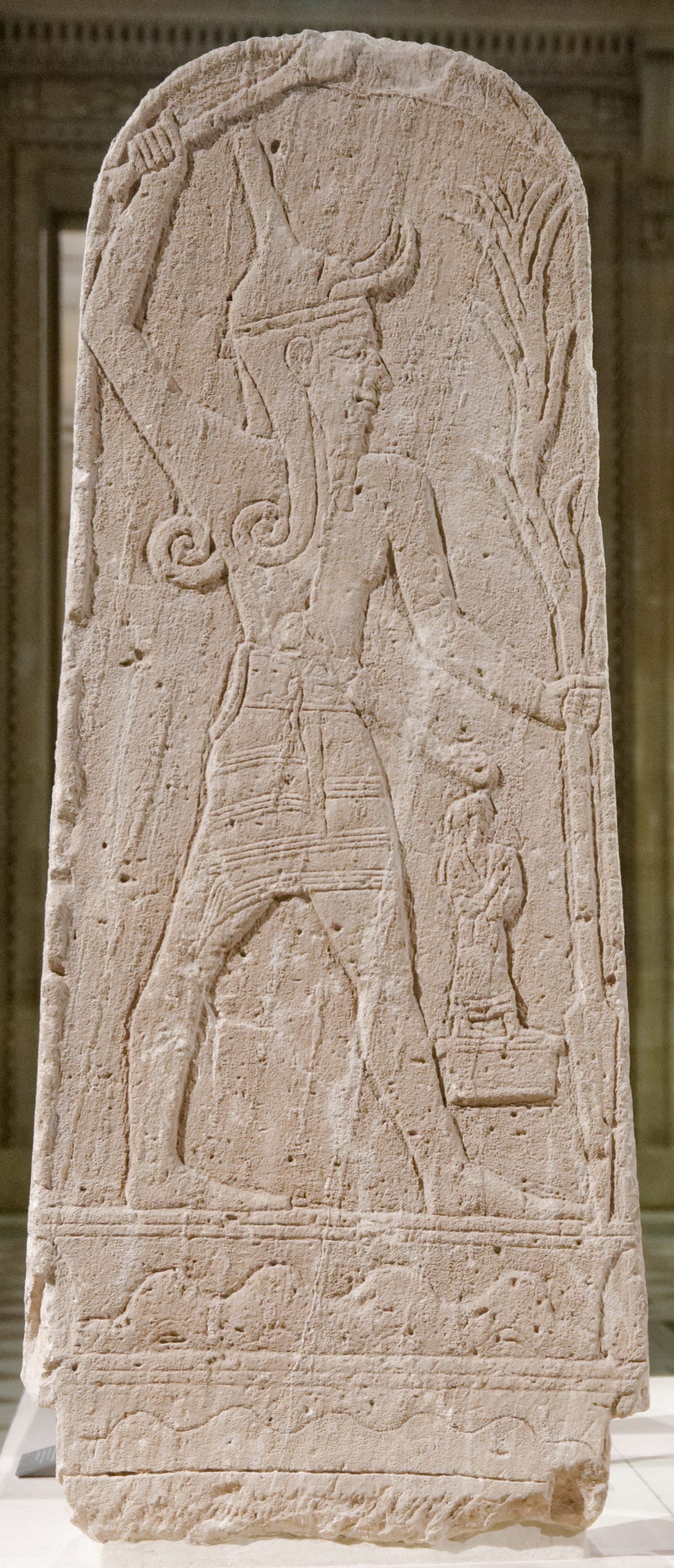
Figure 1 - Stela depicting image of Baal Haddad in a smiting position.
Then there was Andrew Collins, using the sons of God and the Nephilim to hint at a forgotten race. This race allegedly knew and shared all the forbidden arts and sciences with humanity, thus leading them to their corruption and the Flood of Noah. Much of what Collins proposes, it seems, may be based on earlier works, such as that belonging to Sitchin. For example, Collins uses translations similar to Sitchin’s for the noun Nephilim.
In his book, From the Ashes of Angels, Collin’s clearly displays his lack of knowledge in biblical Hebrew; confusing the Nephilim with the sons of God, when it was the sons of God who supposedly had fallen (unto the daughters of men) and not the Nephilim. It would seem that most of these authors attempt to link the root word for the plural Nephilim with the Hebrew singular word of naphal. naphal means ‘to fall’ or ‘to fall in battle, by the sword’, ‘to be killed’, ‘to be fallen’ and also ‘to fall unto/ upon.’ All of these definitions display characteristics not held by the Nephilim or, as I will point out later in this article, the sons of God.
We first read of the Nephilim in Genesis 6:4. This is one of two verses to mention the Nephilim three times throughout the entire Pentateuch. Genesis 6:4 reads:
The Nephilim were in the earth in those days, and also after that, when the sons of God came in unto the daughters of men, and they bore children to them; the same were the mighty men that were of old, the men of renown.
The biggest clues to the identification of the Nephilim will come from Numbers 13:33:
And there we saw the Nephilim, the sons of Anak, who come of the Nephilim; and we were in our own sight as grasshoppers, and so we were in their sight.
Taking an interpretation of the Nephilim as the ‘people of the fiery rockets’ again holds no credibility when examining the term itself and the surrounding grammar of Genesis 6:4 and Numbers 13:33. The word was left untranslated by the Revisers, the name of one of the Canaanite tribes. The Revisors have, in fact, translated the Hebrew gibborim, in Genesis 6:4, as ‘mighty men,’ which will be a key point in the coming conclusions. When the Old Testament was first translated to the Greek language, the word for Nephilim read gigantes, the Greek word for giants. This is confirmed in Numbers 13:33 with the description of the Israelites when compared to the race of giants.
It is extremely important for the reader to understand that in Hebrew grammar, the singular naphal cannot form the plural Nephilim. If we were to follow grammatical rules within the language, we would end up with the plural nophelim. Clearly this is not the same as Nephilim, and we can now see that it is impossible for naphal to be the root word used. A detailed analysis of the characteristics held by the Nephilim will further prove this in the section below. One other area of concern is that nophelim is not in the plural passive (perfect) form, but instead a plural active (imperfect), indicating that these beings are ‘falling’ and have not ‘fallen’. Now what have the Nephilim fallen from? The answer is nothing. If a link were to be established for someone(s) falling from God’s grace it would have to go to the sons of God as is apparent in the post-Exilic and not in the pre-Exilic literature. The biggest clue to the identification of the word’s root can be found in Numbers 13:33. The word Nephilim is used twice in this verse, but oddly enough, is spelled differently. Many have wondered what this could mean. In the first occurrence we find:
Top image: The Fall of the Rebel Angels by Pieter Bruegel the Elder (Public Domain)
A sample of the Moon’s far side retrieved by Chang’e-6 contains 2.83-billion-year-old basalt
Abstract
Remote sensing observations have shown that the far side of the Moon (lunar farside) has different geology and rock composition to the near side, including the abundances of potassium, rare earth elements, and phosphorus (collectively known as KREEP). The Chang’e-6 (CE-6) spacecraft collected samples from the South Pole-Aitken (SPA) basin on the farside and brought them to Earth. We use lead-lead and rubidium-strontium isotope systems to date low-titanium basalt in a CE-6 sample, finding a consistent age of 2830 ± 5 million years. We interpret this as the date of volcanism in SPA and incorporate it into lunar crater chronology. Strontium, neodymium and lead isotopes indicate the volcanic magma was from a lunar mantle source depleted in incompatible elements and containing almost no KREEP component.
The Moon has a global dichotomy, with its near and far sides having different geomorphology, topography, chemical composition, crustal thickness, and evidence of volcanism (1–3). Volcanic eruptions flooded parts of the surface with lava, producing rocks known as mare basalts, which are more common on the nearside (4), where they cover ~30% of the surface compared to 2% of the farside (5). Analysis of samples retrieved by the Apollo and Luna missions has indicated most mare volcanism on both sides ceased before ~3.0 billion years ago (Ga) (6). Samples returned by the Chang’e-5 (CE-5) mission demonstrate that mare volcanism continued to at least 2.0 Ga in the Procellarum KREEP Terrane (PKT) region of the near side (7, 8) and other forms of volcanism potentially to ~120 million years ago (Ma) (9, 10). It is unclear when mare volcanism ceased on the farside, due to lack of samples. The SPA basin, located on the lunar farside, is the largest and oldest known lunar impact basin. Its formation is thought to have had a global effect on the Moon (11, 12). Samples from the SPA basin could potentially provide information on the Moon’s global dichotomy (13).
The CE-6 mission collected a total of 1935.3 g of lunar soil from the lunar farside and brought it to Earth for laboratory analysis. The CE-6 landing site (at lunar coordinates 41.625°S, 153.978°W) (Fig. 1) was in the southern part of the Apollo impact basin, located northeast of the SPA basin (14). The Apollo basin has a diameter of 492 km, making it the largest impact structure within the SPA basin, and formed earlier than 3.9 Ga (15–17). Remote sensing observations show that at least two episodes of mare basalt eruptions occurred in the region (Fig. 1A) (14, 18–20). The earlier episode occurred during the Imbrian geologic period (3.3 to 3.4 Ga) and erupted low-titanium (Ti) basalts, likely covering the entire southern Apollo basin, which has low topography (19). It was followed by younger (2.4 to 3.1 Ga) eruptions of intermediate-Ti mare basalt from the west of the previous eruption (19). The CE-6 samples were collected from the intermediate-Ti mare unit, close to its eastern boundary, ~5 km from the low-Ti basalt flows (Fig. 1A). We therefore expect the CE-6 samples to be dominated by the younger mare eruption.
Fig. 1. Geological settings of the CE-6 landing site.
(A) Location of the CE-6 landing site (red dot) in the south of Apollo basin. The background image is an orthographic albedo map from Chang’e-2 (36). (B) Zoom out to the entire farside hemisphere. The yellow dot indicates the CE-6 landing site and the white dashed circle outlines the SPA basin. (C) TiO2 abundance map (color bar in percentage by weight, wt%) of the same region as panel A, derived from Kaguya Multiband Image data (37). In panels A and C, the younger basalts are labeled intermediate-Ti and the older are labeled low-Ti. The white lines indicate the boundary of mare units.
We analyzed basalt clasts (rock fragments formed on the Moon’s surface by space weathering) (Fig. 2, A and B, and fig. S1) from a CE-6 sample using radiometric dating, to determine the age of the farside mare basalts. We also conducted a geochemical analysis to characterize the magma source of the eruptions.
Fig. 2. Two types of basaltic clasts in CE-6 lunar soil. Back-scattered electron (BSE) images of two clasts, with mineral phases labeled. The brightness and contrast vary between images. (A) Low-Ti basalt clast with moderate content of ilmenite. (B) Very low-Ti basalt clast with much less ilmenite. (C-D) Zoomed regions of two other low-Ti basalt clasts. Fine apatite, baddeleyite and potassium-rich phases are labeled. Each panel is labeled with the resin mount number (S3551 in panel A) and the particle number (001 in panel A). Mineral abbreviations: Pl, plagioclase; Cpx, clinopyroxene; Ilm, ilmenite; Ap, apatite; Tro, troilite; Bdy, baddeleyite; Kfs, K-feldspar; Si, silica.Open in viewer
Sample description
Thirty-five basalt clasts with sizes from 0.2 to 5 mm were identified from a 2 g aliquot of CE-6 lunar soil (scooped sample CE6C0100YJFM003) and analyzed with a scanning electron microscope (SEM) (21). We identified grains of pyroxene in these basaltic clasts using electron probe microanalysis (EPMA (21)), which follow two compositional trends (fig. S2A). The pyroxene compositions are expressed as the molar ratios Ti# ≡ 100 × Ti/(Ti + Cr) and Fe# ≡ 100 × Fe/(Fe + Mg). Thirty-three of the thirty-five basaltic clasts follow a monotonic trend beginning from a low-Ti composition (which we interpret as the parent magma) and extending to higher Ti# and Fe#. The other two clasts have much lower Ti content, so we infer they formed from a very low-Ti (VLT) parental magma. Pyroxene in all 35 clasts has similar Fe/Mn ratios to previous measurements of nearside mare basalts (fig. S2B). The mineral assemblages in both groups are similar; we identified minerals including plagioclase, pyroxene, ilmenite and troilite. The low-Ti basalt contains more ilmenite (~50%) than the VLT basalt (< 1%) (Fig. 2, A and B). This provides petrographic support for our interpretation that there are two types of mare basalts in the sample. The predominance of low-Ti basalts in our clasts most likely represents the local basalts (19) which formed during the Eratosthenian period [3.2 to 0.8 Ga; (22, 23)].
Fractures are common in these basaltic clasts, while shock veins and melt pockets are absent. Some datable minerals are present, mostly in the mesostasis (the last minerals to crystallize in lunar basalts) area of the low-Ti group, including apatite (size, 10 to 50 μm), baddeleyite (3 to 20 μm) and tranquillityite (4 to 15 μm) (Fig. 2, C and D; fig. S1; data S2). No phosphates or zirconium (Zr)-bearing minerals are found in the two VLT basaltic clasts. We therefore performed isotopic dating on the low-Ti basaltic clasts only.
Radioisotope dating
The thirty-three low-Ti basaltic clasts were used for Pb isotope measurements (data S3). Zr-bearing minerals (number of analyses n = 44), apatite (n = 78), potassium (K)-rich phases (K-feldspar, K-glass, n = 54) and troilite (n = 11) were analyzed in a secondary ion mass spectrometer using a primary beam of O- ions with ~3 μm, ~5 μm, ~15 μm and ~15 μm spot sizes, respectively (fig. S3). From the 187 individual measurements, 60 were discarded due to having elevated 204Pb/206Pb ratios, which indicates terrestrial contamination (21). The remaining 127 measurements were used to construct a Pb-Pb isochron (line of constant age) (Fig. 3A). Fitting a linear model to the data indicates a mean age of 2830 ± 5 Ma [mean squared weighted deviation (MSWD) = 0.53, 95% confidence level].
Fig. 3. Radioisotope dating of the CE-6 low-Ti basaltic clasts.
Plotting symbols indicate measurements from different mineral phases (see legends). Error bars are 2σ. (A) Pb-Pb istopes in 33 low-Ti basaltic clasts. Measurements discarded due to terrestrial Pb contamination are omitted here but are shown in fig. S3A. (B) Rb-Sr isotopes for 17 low-Ti basaltic clasts.
In seventeen of the low-Ti basaltic clasts, we identified clean grains of plagioclase - those that are free of mineral inclusions, mesostasis pockets, or mesostasis domains - making them suitable for analysis of RbSr isotopes (fig. S4). A total of thirty-two clean plagioclase grains and twenty-seven plagioclase grains with various amount of late-stage mesostasis (data S4) were measured using multiple-collector inductively coupled plasma mass spectrometry (21). The Rb-Sr measurements of grains with mesostasis domains and clean plagioclase follow a single isochron, with the clean plagioclase close to the initial ratio (Fig. 3B). The Rb-Sr isochron has a fitted model age of 2839 ± 95 Ma (MSWD = 2.3, 95% confidence level) and initial 87Sr/86Sr ratio of 0.69927 ± 0.00004 (2σ). This Rb-Sr age is consistent with (but less precise than) that derived from the Pb-Pb measurements.
The consistent ages and pyroxene composition (fig. S2B) indicate that the measured low-Ti basaltic clasts probably have a common origin. We adopt the higher precision Pb-Pb age of 2830 ± 5 Ma and interpret it as the crystallization age of the low-Ti basalt unit. This is older than the 2.0 Ga basalt sampled by CE-5 (7, 8), but demonstrates that volcanism occurred more recently than 3.0 Ga on both the near- and far-sides of the Moon.
Origin of the parent magma
We consider the intermediate-Ti and low-Ti basalt units identified by remote sensing as likely corresponding to the low-Ti and VLT basalts in our sample, respectively, on the basis of their pyroxene compositional trends (fig. S2). Those trends indicate that extensive evolution of the parent magmas increased the TiO2 contents of the erupted lava to the low-Ti and intermediate-Ti categories (19). The Ti abundances we measured in the pyroxene grains are lower (data S1 and fig. S2A) than we expected from the remote sensing data (Fig. 1C). We regard this discrepancy as likely due to the very different sampling scales. The remote sensing TiO2 measurement is an average value of a large area (20 m pixel−1 in Fig. 1B), whereas the scooped soil sample collected by CE-6 was from an area of less than 1 m2. Although we conclude that the low-Ti basaltic clasts are representative of the mare basalts local to the sampling site (21), we are unable to determine the provenance of the VLT clasts. They could be derived from the older mare unit to the east of the CE-6 landing site (Fig. 1A), or be fragments of underlying mare units that were excavated to the surface by impacts, or were transported to the sample site from more distant locations (19).
It has been suggested that lunar magmatism was sustained by radiogenic heating from KREEP components in the mantle sources of the magmas (24). However, studies of CE-5 basalt (25) and some ~3.0 Ga lunar meteorites (26) have found that these younger basalts do not contain a KREEP component. Because the CE-6 low-Ti basalt records similarly young basaltic volcanic activity on the farside, we investigate whether the mantle source contained a KREEP component by examining the initial Sr-Nd isotopic compositions and initial 238U/204Pb ratio (μ value).
We select the five analyses of troilites in the CE-6 basaltic clasts that have the highest measured 207Pb/206Pb ratios (data S2), 1.090 ± 0.007 (2σ), which we assume represents the initial 207Pb/206Pb composition. The initial 204Pb/206Pb ratio is more difficult to determine due to the low current abundance of 204Pb. We therefore constrain the initial 204Pb/206Pb ratio using the estimated initial 207Pb/206Pb and the best-fitting Pb-Pb isochron (Fig. 3A), which yields an initial 204Pb/206Pb of 0.00563 ± 0.00013 (2σ). We then use a two-stage lunar Pb isotopic evolution model (27) to estimate the μ value of the CE-6 low-Ti basalt mantle source. The model assumes the Moon formed at 4500 Ma and evolved as a single body, with initial Pb isotopes equal to the isotopic standard Canyon Diablo Troilite (28) and had a μ value of 460. Beginning at 4376 Ma in the model, the Moon differentiated to produce different mantle sources (27). Our application of this model indicates a μ value of 355 ± 8 for the CE-6 low-Ti basalt mantle source (Fig. 4A). This is much lower than the μ values of KREEP-rich basalts [> 2000 (27)] and the PKT basalt from CE-5 [~680 (7, 8)].
Fig. 4. Initial Sr-Nd-Pb isotopes of lunar basalts.
(A) Initial 206Pb/204Pb as a function of crystallization age for lunar basalts from Apollo and Chang’e samples and lunar meteorites (see legend). The dashed lines show calculated evolution trajectories from a two-stage Pb isotope evolution model (27) of different lunar mantle sources at varying μ values. Our CE-6 measurement (red star) is compared to CE-5, Apollo and meteorite data (8, 27, 38). (B) Initial εNd as a function of initial 87Sr/86Sr for lunar basalts and meteorites. The dashed lines indicate evolutionary models calculated as described in the text. Data sources: CE-5 basalt (25); Apollo basalts (39, 40); Lunar meteorites (26, 38, 41–44).
The 32 clean plagioclase measurements yield an average initial 87Sr/86Sr ratio of 0.69922 ± 0.00013 (2σ), which is consistent with the initial ratio determined from the fitted Rb-Sr isochron (0.69927 ± 0.00004, 2σ), and lower than those of CE-5 basalts and most Apollo mare basalts (fig. S5A). We measured Sm-Nd isotopic compositions of domains containing late-stage mesostasis with high proportions of apatite in the CE-6 low-Ti basalt (fig. S4 and data S5). We find the 147Sm/144Nd ratios vary from 0.2049 to 0.2384, and 143Nd/144Nd from 0.51370 ± 0.00007 (2σ) to 0.51424 ± 0.00013 (2σ). The averaged initial εNd (defined in equation S1) is 17.2 ± 2.4 (2σ, n = 8), which is higher than other lunar samples (fig. S5B).
We calculate the expected evolution of the depleted mantle and urKREEP (primordial KREEP from the lunar magma ocean) using an initial 87Sr/86Sr of 0.69903 and a chondrite-like initial 143Nd/144Nd. For the depleted mantle, 87Rb/86Sr and 147Sm/144Nd were set to 0.005 and 0.286, respectively. For urKREEP, they were set to 0.206 and 0.158, respectively, fitted to the plotted lunar samples in Fig. 4B, which shows the initial Sr-Nd isotopes of the CE-6 low-Ti basalt are compatible with our calculated Sr-Nd isotopic evolution trajectory for depleted lunar mantle with 87Rb/86Sr = 0.005 and 147Sm/144Nd = 0.286. The initial Sr-Nd -Pb isotopes of the CE-6 low-Ti basalt indicate a mantle source depleted in incompatible elements (elements that tend to remain in melts during partial melting or crystallization), containing no measurable KREEP component. The farside CE-6 low-Ti basalts, and nearside CE-5 basalts, indicate that heat-producing KREEP components were probably not responsible for the generation of their parent magmas.
It has been suggested that the asymmetry of lunar nearside and farside volcanic activity is due to differences in the thickness of the Moon’s crust (4, 29). The farside has a thicker crust [mean ~50 km compared to ~30 km on the nearside (30)], which could explain the lower level of volcanism. However, the SPA basin on the farside has a thinner crust (20-30 km (30)) than the mean, but still does not contain abundant mare basalts. The giant impact basins on the nearside, such as Imbrium, Serenitatis and Tranquillitatis, are all flooded by mare basalts, whereas the SPA basin, the largest lunar impact basin, contains few volcanic deposits (18).
The Sr-Nd-Pb isotopic signature of the CE-6 low-Ti basalt indicates it was sourced from a non-KREEP mantle source, whereas KREEP is widespread on the nearside. The very depleted mantle source could be related to the impact that formed the SPA basin, which had an excavation depth of 100 km (31). The SPA impact might have redistributed any sub-crustal KREEP material to the nearside of the Moon (11, 12), and induced partial melting of the mantle beneath the SPA basin, leaving a depleted mantle below SPA with low U/Pb and Rb/Sr ratios, and a high Sm/Nd ratio (fig. S6). Over time, Sr, Nd and Pb isotopic ratios evolved due to radioactive decay until they matched the isotopic compositions we measured for the CE-6 low-Ti basalts. Depleted mantle material would have a higher melting point temperature than mantle material that did contain a KREEP component (32). KREEP contains elements that generate heat through radioactivity (including K, Th and U), so the absence of KREEP in the CE-6 mantle source would correspond to a low heat flow in the SPA basin. We suggest a combination of these factors could explain the rarity of mare volcanism in the SPA basin.
Implications for lunar crater chronology
Isotopic dating provides absolute ages for locations on the Moon from which samples have been retrieved. The ages of other locations are indirectly estimated from the number and size of impact craters, calibrated to the locations with measured absolute ages. Models of this lunar crater chronology have shown that the impact rate on the Moon has varied over time (33). The lunar impact flux was high at early times, then rapidly declined to a nearly constant rate, but timing of that transition is poorly constrained. The canonical chronology model predicts that the transition occurred at ~3.0 Ga (33). However, the only absolute age available between ~3.0 to 0.8 Ga was the CE-5 basalts (7, 8). Our isotopic dating of the CE-6 mare basalt provides an additional calibration point at ~2.8 Ga.
Adding the CE-6 data point to a crater chronology model requires a determination of N(1), the spatial density of impact craters with diameter D ≥1 km, at the landing site. Prior to the launch of CE-6, predictions for the age of the landing site ranged from 2.42 to 3.33 Ga (5, 14, 19, 34) due to differences in the determinations of N(1). We adopt N(1) = (2.01 ± 0.90) × 10−3 km−2 from a study (35) of craters with diameters ~200 m to 2 km in multiple areas of the mare beneath the CE-6 landing site. We discuss this choice of N(1) in Supplementary Text.
Using the measured date and N(1) value for the CE-6 landing site, we re-calibrate the lunar crater chronology model using least square fitting (Fig. 5A). We find
Fig. 5. Incorporating the Chang’E-6 landing site into a lunar crater chronology model. (A) N(1), the density of craters larger than 1 km, as a function of age. Blue circles are calibration points from Apollo (A11, A12, A14, A15, A16 and A17) and Luna (L24) samples, using crater densities (15, 45), and radiometric ages (22), and from CE-5 using the radiometric age (8) and crater density (46). The red star shows the constraint from CE-6, using the radiometric age (this work) and adopted crater density (47). Error bars indicate 1σ uncertainties. The black curve is the canonical crater chronology (33) and the red curve is our recalibrated model (Eq. 1). The inset shows the same models on a linear scale. (B) The impact flux, determined by integrating the chronology models in panel A. The recalibrated model has a slightly faster decline of impact flux between 4.0 and 3.0 Ga, and a slightly lower constant flux thereafter. The inset in (B) shows the residual between the two models.Open in viewer
N= 1.94 × 10⁻¹⁴(e7.196t – 1) + 7.652 × 10⁻⁴t (1)
(1)
where t is time in Ga. This chronology model implies a constant impact flux after 2.83 Ga, slightly earlier than the canonical model (Fig. 5B).
Acknowledgments
We thank Yi-Ge Zhang and Feifei Zhang for advice and comments on a draft manuscript. We thank the China National Space Administration (CNSA) for providing the CE6 samples. We appreciate Katherine Joy, Anthony Lagain and an anonymous reviewer for their thoughtful reviews which helped to improve the manuscript. Editor Keith Smith is also thanked for the comments and efficient editorial handling. The lunar working group at GIGCAS is thanked for inspiring discussions.
Funding:
Y.G.X. was financially supported by the Chinese Academy of Sciences (grant ZDBS-SSW-JSC007-11). L.Z. was supported by the lunar research program of GIGCAS (grant 2022SZJJZD-03).
Author contributions:
Y.G.X. and L.Z. designed the project. Y.Q.Z. and J.Y. Chen prepared the sample mounts. Z.X.C. and Q.Y. collected SIMS data; L.Z., Z.M.C., H.Y.X., C.Y.W., J.Y.C., P.L.H., Y.H.C., Q.Z., F.F.H., L.L.C., B.W., J.T.W., Y.N.Y., L. S., Y.P.Y., X.J.L. and J.X.Z. collected SEM data; L.Z., C.Y.W. and J.Y.C. collected LA-MC-ICP-MS data. C.Z.X., L.Z., Z.M.C., J.Y.C., Y.Q.Q., Z.Y.X., J.T.W. and F.L.L. produced data tables, produced figures and performed calculations. L.Z., Y.G.X., Z.X.C., Q.Y., J.Y.C., Z.Y.X., Y.Q.Q., L.X., J.W.H., and C.R.N. drafted the manuscript. All authors revised the manuscript.
Competing interests:
We declare no competing interests.
Data and materials availability:
The lunar soil investigated in this study (CE6C0100YJFM003) was provided by the CNSA under a materials transfer agreement (47). The prepared sample mounts are currently held at Guangzhou Institute of Geochemistry, Chinese Academy of Science, on a 1-year loan, after which they will be returned to CNSA. Readers may request Chang’e-6 samples from CNSA through a standard procedure (47). The crater chronology data and our fitting code are available at Zenodo (48). Our measured compositions of pyroxene and Pb-Pb dating minerals are provided in data S1 and S2, and our measured Pb-Sr-Nd isotopes are in data S3 to S5.
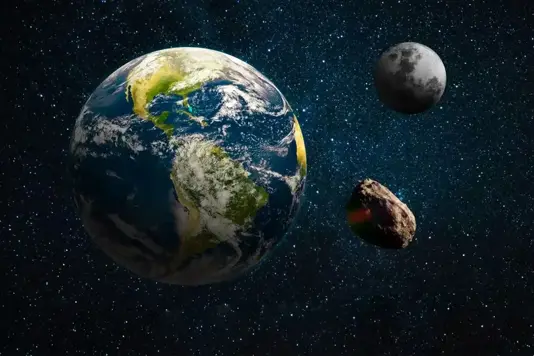
Astronomers at the Complutense University of Madrid first spotted this intriguing event using a powerful telescope in Sutherland, South Africa. The tiny asteroid, measuring just 37 feet wide, has been temporarily ensnared by Earth’s gravitational pull, transforming it into a mini-moon.
Richard Binzel, an astronomer at the Massachusetts Institute of Technology (MIT), explains, “These happen with some frequency, but we rarely see them because they’re very small and very hard to detect. Only recently has our survey capability reached the point of spotting them routinely.”
While Earth’s primary moon boasts a diameter of 2,159 miles, 2024 PT5 is comparatively minuscule. To put it in perspective :
Earth’s moon : 2,159 miles wide
Asteroid 2024 PT5 : 37 feet wide$
Size difference : Earth’s moon is over 300,000 times wider
Despite its small size, this temporary satellite provides valuable insights into our cosmic neighborhood and the dynamics of near-Earth objects.
The journey of Earth’s new mini-moon
Asteroid 2024 PT5 belongs to theArjuna asteroid belt, a group of space rocks that follow orbits similar to Earth’s, approximately 93 million miles from the sun. Some Arjuna asteroids can approach our planet at a close range of around 2.8 million miles, traveling at relatively low velocities of less than 2,200 miles per hour.
Wow! See Artemis 1 spacecraft's Earth-moon transit view in amazing time-lapse
According to data from NASA’s Jet Propulsion Laboratory Horizons system, 2024 PT5’s stay in Earth’s orbit will be brief. The capture began at 3 :54 p.m. EDT on September 29, 2024, and is expected to end at 11 :43 a.m. EDT on November 25, 2024.
Carlos de la Fuente Marcos, a professor and mini-moon expert from the Complutense University, likens the asteroid’s behavior to that of a window shopper. He states, “Asteroid 2024 PT5 will not describe a full orbit around Earth. You may say that if a true satellite is like a customer buying goods inside a store, objects like 2024 PT5 are window shoppers.”
This celestial visitor’s journey serves as a reminder of the dynamic nature of our solar system. While it won’t remain in Earth’s orbit for billions of years like our primary moon, its fleeting presence offers a unique opportunity for scientific study.
The significance of mini-moons in astronomical research
Mini-moons like 2024 PT5 provide scientists with valuable opportunities to study near-Earth objects up close. These temporary captures act as natural cosmic laboratories, offering insights into the composition of asteroids and the intricate workings of our solar system.
Binzel emphasizes the importance of these events, stating, “These temporary captures are natural cosmic laboratories. They help us understand the small bodies that come close to Earth and could be important for future space missions.”
While mini-moons are too small and dim for most amateur astronomers to observe, they fall within the detection range of professional-grade telescopes. To spot 2024 PT5, one would need :
The study of mini-moons contributes to our understanding of near-Earth asteroids and their potential impact on our planet. By analyzing these temporary satellites, scientists can refine their models of asteroid behavior and improve our ability to predict and mitigate potential collisions.
Future implications and ongoing research
As technology advances, researchers hope to study these fleeting visitors more closely. Future missions may even attempt to gather samples or test new spacecraft designs using mini-moons as targets.
The discovery of 2024 PT5 and other mini-moons highlights the ever-changing nature of our cosmic environment. It serves as a reminder that our solar system is a dynamic place, full of surprises and opportunities for scientific exploration.
While Earth’s second moon may be temporary, its presence opens up new avenues for research and discovery. As we continue to scan the skies, who knows what other celestial wonders we might uncover ? The universe never ceases to amaze, and each new finding brings us one step closer to unraveling its mysteries.
Earth’s second moon confirmed : Scientists discover new natural satellite orbiting our planet
The New Mars Landing Approach: How We’ll Land Large Payloads on the Red Planet
Back in 2007, I talked with Rob Manning, engineer extraordinaire at the Jet Propulsion Laboratory, and he told me something shocking. Even though he had successfully led the entry, descent, and landing (EDL) teams for three Mars rover missions, he said the prospect of landing a human mission on the Red Planet might be impossible.
But now, after nearly 20 years of work and research — as well as more successful Mars rover landings — Manning says the outlook has vastly improved.
“We’ve made huge progress since 2007,” Manning told me when we chatted a few weeks ago in 2024. “It’s interesting how its evolved, but the fundamental challenges we had in 2007 haven’t gone away, they’ve just morphed.”
Image of the Martian atmosphere and surface obtained by the Viking 1 orbiter in June 1976. (Credit: NASA/Viking 1)
The problems arise from the combination of Mars’ ultra-thin atmosphere—which is over 100 times thinner than Earth’s — and the ultra-large size of spacecraft needed for human missions, likely between 20 – 100 metric tons.
“Many people immediately conclude that landing humans on Mars should be easy,” Manning said back in 2007, “since we’ve landed successfully on the Moon and we routinely land human-carrying vehicles from space to Earth. And since Mars falls between the Earth and the Moon in size and in the amount of atmosphere, then the middle ground of Mars should be easy.”
But Mars’ atmosphere provides challenges not found on Earth or the Moon. A large, heavy spacecraft streaking through Mars’ thin, volatile atmosphere only has just a few minutes to slow from incoming interplanetary speeds (for example, the Perseverance rover was traveling 12,100 mph [19,500 kph] when it reached Mars) to under Mach 1, and then quickly transition to a lander to slow to be able to touch down gently.
Universe Today publisher Fraser Cain’s video about the challenges of landing Mars, with more details in this article.
In 2007, the prevailing notion among EDL engineers was that there’s too little atmosphere to land like we do on Earth, but there is actually too much atmosphere on Mars to land heavy vehicles like we do on the Moon by using propulsive technology alone.
“We call it the Supersonic Transition Problem,” said Manning, again in 2007. “Unique to Mars, there is a velocity-altitude gap below Mach 5. The gap is between the delivery capability of large entry systems at Mars and the capability of super-and sub-sonic decelerator technologies to get below the speed of sound.”
The largest payload to land on Mars so far is the Perseverance rover, which has a mass of about 1 metric ton. Successfully landing Perseverance and its predecessor Curiosity required a complicated, Rube Goldberg-like series of maneuvers and devices such as the Sky Crane. Larger, human-rated vehicles will be coming in even faster and heavier, making them incredibly difficult to slow down.
Rob Manning, Chief Engineer for NASA’s Jet Propulsion Laboratory, and the Sky Crane for landing rovers on Mars. Credit: NASA/JPL-Caltech/Keck Institute
“So, how do you slow down to subsonic speeds,” Manning said now in 2024 as the chief engineer at JPL, “to get to speeds where traditionally we know how to fire our engines to enable touchdown? We thought bigger parachutes or supersonic decelerators like LOFTID (Low-Earth Orbit Flight Test of an Inflatable Decelerator) tested by NASA) would allow us to maybe slow down better, but there were still issues with both those devices.”
“But there was one trick we didn’t know anything about it,” Manning continued. “How about using your propulsion system and firing the engines backwards —retro propulsion — while you are flying at supersonic speeds to shed velocity? Back in 2007, we didn’t know the answer to that. We didn’t even think it was possible.”
Why not? What could go wrong?
“When you fire engines backwards as you are moving through an atmosphere, there’s a shock front that forms and it would be moving around,” Manning explained, “so it could come along and whack the vehicle and cause it to go unstable or cause damage. You’re also flying right into the plume of the rocket engine exhaust, so there could be extra friction and heating possibilities on the vehicle.”
All of this is very hard to model and there was virtually no experience doing it, as in 2007, no one had ever used propulsive technology alone to slow and then land a spacecraft back on Earth. This is mostly because our planet’s beautiful, luxuriously thick atmosphere slows a spacecraft down easily, especially with a parachute or creative flying as the space shuttle did.
“People did study it a bit, and we came to the conclusion it would be great to try it and find out whether we could fire engines backwards and see what happens,” Manning mused, adding that there wasn’t any extra funding laying around to launch a rocket just to watch it come down again to see what happened.
A SpaceX Falcon-9 rocket poised to launch Dragon from Cape Canaveral. Credit: NASA
But then, SpaceX started doing tests in attempt to land their Falcon 9’s first stage booster back on Earth to re-use them.
“SpaceX said they were going to try it,” Manning said, “And to do that they needed to slow the booster down in the supersonic phase while in Earth’s upper atmosphere. So, there’s a portion of the flight where they fire their engines backwards at supersonic speeds through a rarified atmosphere which is very much what’s like at Mars.”
As you can imagine, this was incredibly intriguing to EDL engineers thinking about future Mars missions.
After a few years of trial, error, and failures, on September 29, 2013, SpaceX performed the first supersonic retropropulsion (SRP) maneuver to decelerate the reentry of the first stage of their Falcon 9 rocket. While it ultimately hit the ocean and was destroyed, the SRP actually worked to slow down the booster.
NASA asked if their EDL engineers could watch and study SpaceX’s data, and SpaceX readily agreed. Beginning in 2014, NASA and SpaceX formed a three-year public-private partnership centered on SRP data analysis called the NASA Propulsive Descent Technology (PDT) project. The F9 boosters were outfitted with special instruments to collect data specifically on portions of the entry burn which fell within the range of Mach numbers and dynamic pressures expected at Mars. Additionally, there were visual and infrared imagery campaigns, flight reconstruction, and fluid dynamics analysis – all of which helped both NASA and SpaceX.
To everyone’s surprise and delight, it worked. On December 21, 2015, an F9 first stage returned and successfully landed on Landing Zone 1 at Cape Canaveral, the first-ever orbital class rocket landing. This was a game changing demonstration of SRP, which advanced the knowledge and tested the technology of using SRP on Mars.
View of SpaceX Falcon 9 first stage approaching Landing Zone 1 on Dec. 21, 2015. Credit: SpaceX
“Based on the analyses completed, the remaining SRP challenge is characterized as one of prudent flight systems engineering dependent on maturation of specific Mars flight systems, not technology advancement,” wrote an EDL team, detailing the results of the PDT project in a paper. In short, SpaceX’s success meant it wouldn’t require any fancy new technology or breaking the laws of physics to land large payloads on Mars.
“It turns out, we learned some new physics,” Manning said. They found that the shock front ‘bubble’ created around the vehicle by firing the engines somehow insulates the spacecraft from any buffeting, as well as from some of the heating.
EDL engineers now believe that SRP is the only Mars entry, descent and landing technology that is intrinsically scalable across a wide range and size of missions to shed enough velocity during atmospheric flight to enable safe landings. Alongside aerobraking, this is one of the leading means of landing heavy equipment, habitats and even humans on Mars.
But still, numerous issues remain unsolved when it comes to landing a human mission on Mars. Manning mentioned there are multiple unknowns, including how a big ship such as SpaceX’s Starship would be steered and flown through Mars’ atmosphere; can fins be used hypersonically or will the plasma thermal environment melt them? The amount of debris kicked up by large engines on human-sized ship could be fatal, especially for the engines you’d like to reuse for returning to orbit or to Earth, so how do you protect the engines and the ship? Mars can be quite windy, so what happens if you encounter wind shears or a dust storm during landing? What kind of landing legs will work for a large ship on Mars’ rocky surface? Then there are logistics problems such as how will all the infrastructure get established? How will ships be refueled to return home?
“This is all going to take a lot of time, more time than people realize,” Manning said. “One of the downsides of going to Mars is that it is hard to do trial and error unless you are very patient. The next time you can try again is 26 months later because of the timing of the launch windows between our two planets. Holy buckets, what a pain that is going to be! But I think we’re going to learn a lot whenever we can try it for the first time.”
And at least the supersonic retropropulsion question has been answered.
“We’re basically doing what Buck Rogers told us to do back in the 1930s: fire your engines backwards while you’re going really fast.”
At first glance at this creature, you'd be forgiven for mistaking it for a sparkly pair of fake eyelashes.
But the creature is very much real and was discovered at the junction of three tectonic plates in the Pacific Ocean.
Researchers from the Schmidt Ocean Institute spotted the animal while using an underwater robot to scour the seabed.
The animal is a polychaete - a class of marine worms, more widely known as bristle worms.
'To describe this polychaete, one simply must use jazz hands — it is the only way to capture this deep-sea worm's dazzle!' the experts said in an Instagram post about the polychaete.
Footage of the creature has garnered huge interest on Instagram, with thousands of viewers flocking to the comments to discuss it.
One viewer described it as a 'forbidden toilet scrubber', while another called it a 'deep sea Xmas tree'.
And one joked: 'It looks like two eyelashes put together.'
At first glance at this creature, you'd be forgiven for mistaking it as a sparkly pair of fake eyelashes. But the creature is very much real and was discovered at the junction of three tectonic plates in the Pacific Ocean
One viewer described it as a 'forbidden toilet scrubber', while another called it a 'deep sea Xmas tree'
The polychaete was spotted while ROV (remotely operated vehicle) pilots were exploring the Chile Margin.
'The international science team is exploring along the margin, a nearshore deep-sea feature where a submerged continental shelf extends from the country's west coast and drops steeply and suddenly into the Pacific Ocean,' the Schmidt Ocean Institute explained on Instagram.
'It runs the entire length of South America due to the subduction of the Pacific plate under the South American plate.
'The confluence of tectonic forces and terrestrial influences makes this margin a natural laboratory for investigating chemosynthetic and deep-sea environments that host animals like this [queue jazz hands] shimmering deep-sea worm.'
In a video posted to Schmidt Ocean Institute's Instagram account, the animal can be seen inching along the sea bed, with its iridescent bristles glimmering in the light.
Polychaete means 'many bristles', the experts explained.
'Each body segment has a pair of fleshy protrusions called parapodia covered in bristles called chaetae,' they wrote.
'Some worms are bioluminescent, but this sassy sparkler has protein structures in the bristles that make them iridescent.
In a video posted to Schmidt Ocean Institute's Instagram account, the animal can be seen inching along the sea bed, with its iridescent bristles glimmering in the light
Expedition uncovers more than 50 deep sea species off Chile coast
'Polychaetes play a vital role throughout our global Ocean, from heat-tolerant extremophiles at hydrothermal vents to the bone-eating Osedax worms that cycle nutrients.'
Several viewers took to the comments to discuss the creature.
The Chile Margin has been dubbed a 'natural laboratory', and has an intermediate water depth of about 2,652 to 3,281 feet.
During a 55-day expedition, which will end on 5 December, researchers have set out to map, sample, and characterise the deep-sea exosystems along the central-south Chile Margin.
'Their research will advance our understanding of an essential area in the Ocean while strengthening efforts to manage and protect Chile's waters,' the Schmidt Ocean Institute explains on its website.
VIDEOS
New Species Discovered Underwater By NOAA's Deep-Sea Robot
A robot traveled to the deep sea. See what it found
A robot traveled to the deep sea. See what it found | YT News
This is the hilarious moment that an octopus smacked a fish in the face while both animals were hunting together underwater.
Video footage shows the tentacled creature appearing to be solely focused on finding food at the seabed with a nearby fish doing the same.
With the pair appearing to forage in relative tranquility, the octopus comes out with a hugely unexpected move, swiping the fish away in anger as it got too close.
The octopus then continues to moodily look for sustenance while the shocked fish is seen hurriedly swimming away to avoid further punishment from the irate mollusc.
Stating its claim as an animal not to be crossed at the depths of the ocean, the octopus can then be seen prowling around for more food - but without challenging any further fish to a fight.
Video footage shows the tentacled creature appearing to be solely focused on finding food at the seabed with a nearby fish doing the same
With the pair appearing to forage in peace next to one another, the octopus comes out with a hugely unexpected move, swiping the fish away in anger as it got too close
New research shows that there may be an explanation for the octopuses' behaviour, as it suggests that octopuses - previously thought to be solitary creatures - might sometimes socialise with fish in order to share the responsibility of hunting.
The findings broaden our understanding of the shared social life of octopuses and fish, scientists say.
In the past, the animals have been seen to hunt together for shared prey such as molluscs and crustaceans.
The new study sheds more light on this, revealing that when hunting prey together, some octopus and fish species appear to share leadership.
However, it is not always a harmonious group hunt, with the scientists observing aggression among group members, including fish displacing others by darting towards them, and octopuses punching some fish to the outer areas of the group.
After analysing data from 120 hours of dives, scientists found that leadership is shared for different types of decisions.
For example, goatfish specialised in deciding where the hunting pack moves - while the octopus decided whether and when the move would be made.
The authors note that although other types of mixed-species hunting is known - such as badger-coyote, mixed birds, and moray eel-grouper groups - they appear to be less flexible in using social information to change strategy compared to octopus-fish hunting groups.
Octopuses and fish hunt together, taking it in turns to lead according to a new study
Writing in the Nature Ecology and Evolution journal, the authors say: 'These findings expand our current understanding of what leadership is and what sociality is.'
Eduardo Sampaio, from the Max Planck Institute of Animal Behaviour in Germany, and colleagues tracked octopus–fish hunting packs during scuba diving expeditions in the Red Sea.
They saw 13 hunting groups consisting of one day octopus and different species of fish, including gold-saddle goatfish and blacktip groupers.
The researchers suggest that this joint effort leads to better success compared to the octopus or fish acting alone.
Octopus Punches Fish While Hunting! 👊🤕 #Octopus
Squids & Octopuses - Mysterious Hunters of the Deep Sea | Free Documentary Nature
Tucker Carlson believes that the U.S. government has entered into some agreement with entities thought to be aliens, who are not extraterrestrial but have always been present on Earth and maybe spiritual.
On Timcast IRL podcast, Carlson discusses the idea that there are non-human forces influencing human behavior, suggesting that these forces might exist in a spiritual realm. He mentions that many people refer to these beings as “dimensional beings” but expresses uncertainty about labeling them as angels or demons.
Carlson reflects on how people are influenced by good and evil forces beyond themselves, and he asserts that everyone, if introspective, can recognize these external influences. He also touches on the idea that creativity, particularly in art, might be driven by forces outside the individual, which artists often describe as “channeling.” Carlson implies that both positive and destructive acts are likely the result of these external spiritual forces acting upon people.
“So there are forces. That are not human, that do exist in a spiritual realm of some kind that we cannot see and that when you think about it, sort of make you think we live in an ant farm.”
Recently, Tucker Carlson said he was “physically mauled” by a demon a year and a half ago, in an assault that he says left him bleeding and with scars from “claw marks”.
“That’s what happened to me. I had a direct experience with it,” said Carlson. Asked if he was referring to journalism, Carlson responded: “No, in my bed at night. I got attacked while I was asleep with my wife and four dogs and mauled, physically mauled.”
Carlson, who said he still bears the scars, said his assailant was a “demon”. He added: “Or by something unseen that left claw marks on my sides.” He said at the time of the attack, he was asleep in bed. I was “totally confused, I woke up, and I couldn’t breathe, and I thought I was going to suffocate”, he said.
“I walked around outside and then I walked in and my wife and dogs had not woken up. And they’re very light sleepers. And then I had these terrible pains on my rib cage and on my shoulder, and I was just in my boxer shorts and I went and flipped on the light in the bathroom, and I had four claw marks on either side underneath my arms and on my left shoulder. And they’re bleeding.”
He added that he explained the encounter to an assistant, an evangelical Christian, who told him: “That happens, people are attacked in their bed by demons.” Carlson, who lives in the woods of Maine, did not say where the attack occurred, but called it a “transformative experience” that left him “seized with this very intense desire to read the Bible”.
In his 1969 book “Passport to Magonia: On UFOS, Folklore and Parallel Worlds,” Astronomer and UFO researcher Jacques Vallée argues for a “parallel universe co-existing with our own.” The idea was reiterated in Vallée’s subsequent writings. He summarized his objection in his 1990 paper “Five Arguments Against the Extraterrestrial Origin of Unidentified Flying Objects”:
Unexplained close encounters are far more numerous than required for any physical survey of the earth;
The humanoid body structure of the alleged “aliens” is not likely to have originated on another planet and is not biologically adapted to space travel;
The reported behavior in thousands of abduction reports contradicts the hypothesis of genetic or scientific experimentation on humans by an advanced race;
The extension of the phenomenon throughout recorded human history demonstrates that UFOs are not a contemporary phenomenon;
The apparent ability of UFOs to manipulate space and time suggests radically different and richer alternatives.
They are Jinn
In an interview with Whitley Strieber, former CIA officer Jim Semivan says he refers to the UFO, UAP, and Alien Phenomena as Jinn. He does not mean that in a religious way – credibility to the inter-dimensional hypothesis. (Source)
“This phenomenon does lie to you and it is very very deceitful at times. It will tell you things that sound wonderful but also make no sense and is it toying with us or is it using some kind of you know symbols that we don’t understand?“
I refer to them as a ‘Jinn’ because you know in Arab culture they’re sort of like us or they’re made out of quote-unquote fire or ether or whatever. But they also have the same kind of emotions but there’s good Jinn and there’s bad Jinn.”
Dr. Karla Turner claimed There Are Entities who can take our consciousness – out of our physical bodies, disable our control of our bodies, install one of their own entities, and use our bodies as vehicles for their own activities before returning our consciousness to our bodies. She died of Cancer within a year after her work was published.
Karla Turner was one of the few America’s alien abductees who found a respectable position in UFOlogy after she had made some strong claims about alien abductions.
Her extensive research into the subject revealed that aliens manipulate perception, control consciousness, cause unexplained illnesses and mental decline, and engage in gruesome activities in underground facilities.
Her findings highlight the alarming physical, psychological, and spiritual consequences faced by abductees, raising questions about the true nature and intentions of these extraterrestrial encounters.
In her book “Taken,” Karla Turner discussed the idea that some prominent abduction theorists state should be avoided — do not think of aliens as good and evil.
Dr. Turner claimed that “this cannot be done, nor should it be.” She continued that those who had been abducted have the right to know how their “participation” would be used by their abductors, under what circumstances and what reason would the abducted be “made a part of this agenda” since they have been “implanted, trained, and programmed to participate in some future scenario.” Don’t abductees have the right to know for what purpose “our minds, bodies, and souls will be used?”
Dr. Turner’s main concerns regarding alien abductions were the aliens’ cruelty towards abductees, both physically and mentally. Victims experienced traumatic events such as forced impregnation, painful miscarriages, and severe injuries.
She believed that the aliens had complete control over the minds of humans, using psychic technology to manipulate their perceptions and memories.
Ex-US Navy Officer Saw ‘Non-human Entities’ In His Bedroom
Matthew Roberts, a former cryptologist in the US Navy with 16 years of service, shared his experience and encounters with non-human entity during a Netflix series “Encounters.” He was present on the USS Theodore Roosevelt in 2015 during an event involving the now-famous “Gimbal footage.” (Click here to read the full article)
During his AMA on Reddit, Roberts described the non-human entities: “I saw ones that had blue skin and were tall. I saw very tall white ones that resembled Jack Skellington. I saw one that looked like a yard gnome. I saw some that appeared to radiate white light. I don’t know where they were from they never revealed that.”
Matthew Roberts explains that he never tried to film any of the encounters with non-human entities in his bedroom. When asked if he considered setting up a recording device, he mentions that these encounters often happen when individuals are in an altered state or when the entities appear in the sky with a craft, conveniently when the person does not have his cell phone.
He considered recording the experiences but decided against it. He reasons that it would not convince everyone, as some might think he faked it. Roberts believes the argument over the authenticity of any images would overshadow the main point, which is encouraging people to seek and have their own experiences with consciousness. He emphasizes that he does not need people to believe him; instead, he wants others to explore consciousness firsthand.
Roberts asserts that the truth of these experiences has been documented for thousands of years by various individuals, citing such authors as William Walker Atkinson, Mabel Collins, Joseph Campbell, Dr. John Mack, and Dr. Robert Moore. He challenges the notion that he could have orchestrated the biggest hoax in human history, suggesting that there may be something genuinely significant in these experiences.
He points to the wealth of evidence available for those willing to examine it, citing a podcast by Mark Gober called “Where is My Mind,” where accomplished scientists discuss their work on consciousness. Roberts believes that understanding consciousness surviving death is a crucial aspect of our existence, mentioning the Bigelow Institute for Consciousness Studies (BICS) and the substantial prizes offered for evidence of consciousness after death.
He suggested that these entities seem to have a significant level of control over the experiences people have, which contributes to why some individuals perceive these encounters as malevolent or evil. He acknowledged that many people who invest time and money into gathering evidence of these phenomena often end up without conclusive results.
VIDEOS
Tucker Carlson Goes On Bizzare UFO Rant
Tucker Carlson On UFOs: TOO DARK TO SHARE; Grusch: Gov't Has KILLED PEOPLE For Trying To Go Public
JUST IN: Tucker Carlson Warns Of 'Unseen Forces' And Details What He's Learned Studying The Bible
Meer van UFO'S of UAP'S, ASTRONOMIE, RUIMTEVAART, ARCHEOLOGIE, OUDHEIDKUNDE, SF-SNUFJES EN ANDERE ESOTERISCHE WETENSCHAPPEN - DE ALLERLAATSTE NIEUWTJES


 Pilots capture 'multiple UFOs' dancing around their Boeing passenger jet flying over Egypt