Naar de inhoud

UFO'S of UAP'S, ASTRONOMIE, RUIMTEVAART, ARCHEOLOGIE, OUDHEIDKUNDE, SF-SNUFJES EN ANDERE ESOTERISCHE WETENSCHAPPEN - DE ALLERLAATSTE NIEUWTJES

UFO's of UAP'S in België en de rest van de wereld
akke.beakke.be
Ontdek de Fascinerende Wereld van UFO's en UAP's: Jouw Bron voor Onthullende Informatie! Ben jij ook gefascineerd door het onbekende? Wil je meer weten over UFO's en UAP's, niet alleen in België, maar over de hele wereld? Dan ben je op de juiste plek! België: Het Kloppend Hart van UFO-onderzoek In België is BUFON (Belgisch UFO-Netwerk) dé autoriteit op het gebied van UFO-onderzoek. Voor betrouwbare en objectieve informatie over deze intrigerende fenomenen, bezoek je zeker onze Facebook-pagina en deze blog. Maar dat is nog niet alles! Ontdek ook het Belgisch UFO-meldpunt en Caelestia, twee organisaties die diepgaand onderzoek verrichten, al zijn ze soms kritisch of sceptisch. Nederland: Een Schat aan Informatie Voor onze Nederlandse buren is er de schitterende website www.ufowijzer.nl, beheerd door Paul Harmans. Deze site biedt een schat aan informatie en artikelen die je niet wilt missen! Internationaal: MUFON - De Wereldwijde Autoriteit Neem ook een kijkje bij MUFON (Mutual UFO Network Inc.), een gerenommeerde Amerikaanse UFO-vereniging met afdelingen in de VS en wereldwijd. MUFON is toegewijd aan de wetenschappelijke en analytische studie van het UFO-fenomeen, en hun maandelijkse tijdschrift, The MUFON UFO-Journal, is een must-read voor elke UFO-enthousiasteling. Bezoek hun website op www.mufon.com voor meer informatie. Samenwerking en Toekomstvisie Sinds 1 februari 2020 is Pieter niet alleen ex-president van BUFON, maar ook de voormalige nationale directeur van MUFON in Vlaanderen en Nederland. Dit creëert een sterke samenwerking met de Franse MUFON Reseau MUFON/EUROP, wat ons in staat stelt om nog meer waardevolle inzichten te delen. Let op: Nepprofielen en Nieuwe Groeperingen Pas op voor een nieuwe groepering die zich ook BUFON noemt, maar geen enkele connectie heeft met onze gevestigde organisatie. Hoewel zij de naam geregistreerd hebben, kunnen ze het rijke verleden en de expertise van onze groep niet evenaren. We wensen hen veel succes, maar we blijven de autoriteit in UFO-onderzoek! Blijf Op De Hoogte! Wil jij de laatste nieuwtjes over UFO's, ruimtevaart, archeologie, en meer? Volg ons dan en duik samen met ons in de fascinerende wereld van het onbekende! Sluit je aan bij de gemeenschap van nieuwsgierige geesten die net als jij verlangen naar antwoorden en avonturen in de sterren! Heb je vragen of wil je meer weten? Aarzel dan niet om contact met ons op te nemen! Samen ontrafelen we het mysterie van de lucht en daarbuiten.

Archief

Het universum bestond al vóór de oerknal, zo beweert een onderzoek

Het universum bestond al vóór de oerknal, zo beweert een onderzoek

Janine imagedoor Janine
Een driedimensionale kaart van donkere materie, zoals ontwikkeld door NASA, ESA en CALTECH

ESA

Niet iedereen gelooft dat het universum met de oerknal is ontstaan. Voor sommigen waren er zelfs twee oerknallen, terwijl voor anderen het universum heen en weer beweegt tussen fases van uitdijing en inkrimping zonder te worden gereduceerd tot singulariteiten. Dit is ongetwijfeld een fascinerend perspectief, hoewel moeilijk te bewijzen, dat een ander beeld oplevert vergeleken met de meest wijdverspreide theorie van vandaag. Toch hebben sommige onderzoekers recentelijk bewijs gevonden van geheim leven in het universum vóór de oerknal, dat verband houdt met zwarte gaten en donkere materie. Laten we eens kijken waar het over gaat.

Zijn zwarte gaten en donkere materie hetzelfde?

Donkere materie is lange tijd het onderwerp geweest van diepgaande studies: we weten dat het bestaat, maar we kunnen het op geen enkele manier “zien”, behalve via enkele van de effecten ervan op de omringende materie. In feite zendt, absorbeert of reflecteert donkere materie geen elektromagnetische straling, maar heeft toch wel effecten op de zwaartekracht en de rotatiesnelheid van sterrenstelsels. Het is daarom een ​​soort materie die we alleen kunnen bestuderen via de effecten ervan, op een manier die sterk lijkt op wat er gebeurt met zwarte gaten.

En juist deze principiële overeenkomst is niet onopgemerkt gebleven: een recente studie gepubliceerd in de Journal of Cosmology and Astroparticle Physics heeft de hypothese naar voren gebracht dat donkere materie zou kunnen worden gevormd door primordiale zwarte gaten. Maar wanneer zouden deze zwarte gaten zich hebben gevormd? Voor onderzoekers bestaat er geen twijfel: vóór de oerknal.

Van de Big Bounce tot (primordiale) zwarte gaten

Een weergave van het superzware zwarte gat M87* in gepolariseerd licht

EHT Collaboration/Wikimedia Commons - CC BY 4.0

Vanaf hier keren we terug naar de kosmologische theorie die we in de inleiding noemden, omdat de associatie tussen oorspronkelijke zwarte gaten en donkere materie het bewijs zou kunnen vormen van de Big Bounce. Volgens deze theorie was het ontstaan ​​van het heelal daarom niet een singulariteit gevolgd door een fase van snelle uitdijing, in een proces dat we kennen als de oerknal, maar een oscillerend patroon van uitdijingen en inkrimpingen.

Volgens onderzoekers kromp het heelal ruim 13 miljard jaar geleden tot een oneindig kleine omvang voordat het weer uitdijde, wat leidde tot een toename van de dichtheid van de materie, wat op zijn beurt bijdroeg aan de vorming van oorspronkelijke zwarte gaten. We hebben het over hemellichamen die de massa van een asteroïde hebben en een oneindig kleine diameter, maar toch groot genoeg zodat Hawkingstraling ze niet volledig wegvaagt. Zeker niet in 13 miljard jaar. Maar wat betekent dit allemaal voor het universum, voor de natuurkunde en voor donkere materie?

Aan de oorsprong van het universum?

Het aantonen dat donkere materie uit vele kleine oorspronkelijke zwarte gaten bestaat, zou een impuls kunnen geven aan de studie van dit overheersende component van het universum. Aan de andere kant zouden we kunnen stoppen met het zoeken naar deeltjes die alleen via de zwaartekracht met materie interactie hebben, en op zoek kunnen gaan naar kleine zwarte gaten verspreid over het universum: sommige doen al iets soortgelijks. En dit is niet het enige gevolg: volgens de onderzoekers komen de eigenschappen van een oscillerend universum zoals geschetst overeen met de kromming van de ruimte en de kosmische achtergrondstraling in zijn vroege stadia. Maar zo eenvoudig is het niet.

Om hun theorie te testen zal het internationale team dat aan het onderzoek heeft gewerkt zwaartekrachtgolven moeten detecteren die zijn gevormd in de vorige fase van samentrekking van het universum. Tot op heden is het onmogelijk om dit te doen, tenminste met de instrumenten die momenteel beschikbaar zijn, maar wie weet in de toekomst. Misschien kunnen de Laser Interferometer Space Antenna, of LISA, en de Einstein Telescope ons al een antwoord op deze vraag geven. En een revolutie teweegbrengen in alles wat we wisten over de oorsprong van het universum.


Wat was er voor de oerknal? | God? | Wie heeft God gemaakt? | Bestaat God?

De oerknal door Robbert Dijkgraaf

{ https://www.curioctopus.nl/ }

Hoe vind je dit bericht?
Geschreven door peter om 00:48 Stuur door

Alien Abduction or Truth? The Charles Hickson Case That Passed the Polygraph Test

Alien Abduction or Truth? The Charles Hickson Case That Passed the Polygraph Test

Alien Abduction or Truth? The Charles Hickson Case That Passed the Polygraph Test

One of the most compelling stories of alien abduction took place on the night of October 11, 1973, in Pascagoula, Mississippi. Two men, Charles Hickson and Calvin Parker, experienced a bizarre and traumatic event that would go on to become one of the most famous UFO cases in American history. What sets this case apart from other similar reports is that both men passed polygraph tests, providing a degree of credibility to their account. The Pascagoula incident remains one of the most intriguing alien abduction stories to date.

The Incident: A Night of Fishing Gone Wrong

On that fateful evening, Hickson, a 42-year-old Korean War veteran and shipyard foreman, and his friend Calvin Parker, a 19-year-old welder, were fishing along the Pascagoula River. As they enjoyed the quiet night, they were suddenly startled by a strange zipping sound and two flashing blue lights. Turning around, they saw an oval-shaped, hovering object, approximately 30-40 feet across and 8-10 feet high, descend towards them. The craft appeared to defy the laws of gravity, hovering just above the ground.

Before the two men could react, three strange creatures emerged from the craft. The beings were described as having no necks, coarse, wrinkled skin, and standing around five feet tall. Their movements were mechanical, and they glided toward Hickson and Parker. The men later reported being paralyzed, unable to move but fully conscious, as they were floated aboard the hovering craft.

Inside the spacecraft, both men claimed to have undergone a terrifying examination. Hickson described an “electronic eye” that scanned his body, while Parker recalled being laid on a table, subjected to a thorough physical examination by a more human-like, feminine creature. Both men said they were given telepathic reassurances not to be afraid, but the experience left them traumatized.

The Aftermath: Reporting the Incident

After being released from the spacecraft, Hickson and Parker were left standing at the river’s edge, completely shaken. Still in shock, the men initially hesitated to report the incident, but eventually decided to contact local authorities. They first called Keesler Air Force Base, only to be told that UFO encounters were no longer within their jurisdiction. With nowhere else to turn, they went to the Jackson County Sheriff’s Office.

Skeptical at first, the sheriff’s deputies interviewed the men separately and even placed them in a room wired for sound, hoping to catch them in a lie. However, their conversation, recorded when they thought they were alone, only reinforced the deputies’ belief that the men were genuinely terrified by something unexplainable.

The story quickly gained national attention. News outlets across the country reported on the Pascagoula abduction, and Hickson, in particular, became a media sensation. Despite the attention, both men maintained the truth of their account, never deviating from their original story.

Passing the Polygraph Test: The Truth or Belief?

A key moment in the investigation was the administration of polygraph tests, which both men passed. Charles Hickson’s polygraph test was conducted by a New Orleans firm on October 30, 1973, just weeks after the incident. The examiner stated that Hickson was truthful in his belief that he had been abducted by extraterrestrial beings.

Skeptics have pointed out that passing a polygraph test does not definitively prove the truth of an event. Instead, it shows that the person being tested believes they are telling the truth. However, the fact that both Hickson and Parker passed their polygraph tests adds a layer of complexity to the case, as they demonstrated strong conviction in the accuracy of their bizarre experience.

The Public Reaction and Ongoing Interest

Hickson, more open to sharing his story, appeared on popular talk shows like The Tonight Show with Johnny Carson and To Tell the Truth. Despite the public interest, Parker shied away from the limelight, choosing a quieter life, though he never contradicted his earlier statements.

In the years that followed, other witnesses came forward to support the men’s claims. For example, Mike Cataldo, a retired Navy officer, later reported seeing a strange, hovering object in the sky the same night near the Pascagoula River. Cataldo’s account described an object with flashing lights, spinning in the sky, and disappearing after hovering for about 30 seconds.

Despite the corroborative testimonies, skeptics, including renowned UFO debunkers like Philip Klass, challenged Hickson and Parker’s story. Klass pointed to inconsistencies in Hickson’s descriptions of the creatures, noting that his accounts changed over time. Others suggested that the men had entered a state of sleep paralysis and hallucinated the entire experience.

Theories and Skepticism: Was It Real?

Skeptics have tried to explain the incident in various ways. Joe Nickell, a prominent paranormal investigator, suggested that Hickson and Parker might have entered a hypnagogic state, a condition where a person experiences sleep paralysis and vivid hallucinations. This could explain the sensations of paralysis and the strange visual and auditory experiences the men reported.

Additionally, some investigators raised concerns about the polygraph tests. They noted that the polygraph examiner was relatively inexperienced, and Hickson had refused to take another test conducted by a more seasoned expert. These factors have led some to question the legitimacy of the tests and the overall story.

VIDEO:

  • The Most Convincing Alien Abduction Victim (He Passed The Polygraph Test)

The Pascagoula alien abduction case remains one of the most perplexing UFO encounters in American history. With both men passing polygraph tests, numerous eyewitnesses coming forward, and their consistent storytelling over the years, the incident continues to baffle investigators. Charles Hickson passed away in 2011, and Calvin Parker in 2023, yet their experience still ignites debate among believers and skeptics alike.

Was it a genuine alien abduction, a shared hallucination, or something else entirely? The Pascagoula incident leaves us with more questions than answers, but it stands as one of the most convincing cases in the annals of UFO lore, made even more compelling by the fact that its key witnesses passed a polygraph test, indicating that—at least in their minds—their terrifying experience was very real.


Travis Walton Tells His Story of Alien Abduction

Secret recording of Charles Hickson and Calvin Parker after the Pascagoula alien abduction incident

IN CONTACT ~ rare documentary with Calvin Parker and Charles Hickson on the Pascagoula UFO incident

{ https://www.latest-ufo-sightings.net/ }

Hoe vind je dit bericht?
Geschreven door peter om 00:35 Stuur door

Underwater UFOs display capability that ‘jeopardizes US maritime security,’ ex-Navy officer says

Hoe vind je dit bericht?
Geschreven door peter om 00:00 Stuur door

Europese ruimtesonde "ontdekt" dat er leven mogelijk is op aarde

Europese ruimtesonde "ontdekt" dat er leven mogelijk is op aarde

Europese ruimtesonde "ontdekt" dat er leven mogelijk is op aarde

Europese ruimtesonde "ontdekt" dat er leven mogelijk is op aarde

Geruststellend nieuws: de aarde is bewoonbaar. Dat heeft de Europese ruimtesonde Juice bevestigd toen hij op 20 augustus langs de planeet scheerde op weg naar Jupiter, zo deelde de Europese ruimtevaartorganisatie ESA dinsdag mee.

Instrumenten van de ruimtesonde gingen tijdens de vlucht langs de aarde na of de noodzakelijke voorwaarden voor leven aanwezig zijn. Ze vonden niet alleen water, maar ook koolstof, waterstof, stikstof, zuurstof, fosfor en zwavel, de meest voorkomende elementen in levende organismes.

Belangrijker dan de "ontdekking" op zich, is de bevestiging dat de instrumenten van Juice werken. "We zijn uiteraard niet verrast door de resultaten, het zou heel zorgwekkend zijn geweest indien we hadden ontdekt dat er geen leven mogelijk is op aarde", zegt projectwetenschapper Olivier Witasse. "Maar de resultaten bewijzen dat de instrumenten goed zullen werken bij Jupiter, waar ze zullen onderzoeken of er op de ijsmanen leven mogelijk is of is geweest."

Europese ruimtesonde "ontdekt" dat er leven mogelijk is op aarde

Juice (kort voor Jupiter Icy Moons Explorer) werd in april 2023 gelanceerd. De aankomst bij Jupiter is in 2031 gepland. Daar zal de sonde drie van de zowat honderd manen van de planeet - Ganymedes, Callisto en Europa - bestuderen, omdat zij onder hun ijskorst mogelijk oceanen met vloeibaar water bevatten.

De flyby langs de aarde en de maan in augustus diende om met behulp van de zwaartekracht de snelheid en richting van het ruimteschip aan te passen. In 2026 en 2029 zal de sonde normaal opnieuw langs de aarde komen.

{ https://www.msn.com/nl-be/ }
Hoe vind je dit bericht?
Geschreven door peter om 21:55 Stuur door

Starliner Suffers New Problems While Coming Back to Earth

Starliner Suffers New Problems While Coming Back to Earth

Story by Victor Tangermann

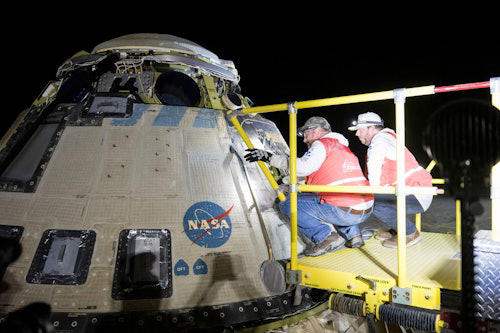
Late Friday night, NASA's plagued Starliner spacecraft finally made it back to the ground. A new thruster failed.

Late Friday night, NASA's plagued Starliner spacecraft finally made it back to the ground. A new thruster failed.

Homeward Bound

On Saturday morning, NASA's plagued Starliner spacecraft finally made it back to the ground.

The capsule landed in the New Mexico desert after spending just over three months in space. But thanks to technical issues worrying NASA officials, it left behind the agency's two stranded astronauts Butch Wilmore and Suni Williams, bookending a disastrous first crewed flight attempt.

The pair will have to wait for their ride back, on a SpaceX Crew Dragon spacecraft, until February.

Signals on the capsule's return were mixed. On the one hand, according to NASA’s commercial crew program manager Steve Stich, it pulled off a "bullseye landing." On the other, the agency admitted that a new thruster had failed during its descent. The capsule also experienced a temporary blackout of Starliner's guidance system during reentry.

It's an awkward situation for the space agency: would Starliner have been able to ferry NASA's missing crew members in the end?

"I think we made the right decision not to have Butch and Suni on board," Stich told reporters on Saturday. "All of us feel happy about the successful landing. But then there’s a piece of us, all of us, that we wish it would have been the way we had planned it."

Double Down

While approaching the International Space Station in early June, five of Starliner's 28 control thrusters gave up, forcing Wilmore and Williams to take over manual control.

Subsequent investigations concluded that the thrusters had overheated, causing a Teflon "poppet" seal to expand and restrict the flow of the oxidizer.

Several helium leaks added to Boeing's growing headache at the time, worrying NASA officials.

The capsule didn't fare much better following undocking procedures on Friday. One of its 12 control jets on the crew module — a different set unrelated to the other malfunctioning service module thrusters — failed to ignite. And a glitch caused the spacecraft's navigation system to go down briefly during reentry as well.

It's still unclear whether Boeing will try to launch its plagued Starliner again. Analysts suggest the aerospace giant may dump the entire project, which has already lost the company well over a billion dollars, instead.

"It’s unclear if or when the company will have another opportunity to bring astronauts to space," Bank of America aerospace and defense analyst Ron Epstein told the New York Times. "We would not be surprised if Boeing were to divest the manned spaceflight business."

More on Starliner: Retired NASA Engineer Warns Boeing's Starliner Could Lose Control During Return and Crash in Populated Area

The post Starliner Suffers New Problems While Coming Back to Earth appeared first on Futurism.

{ https://www.msn.com/en-us/ }

Hoe vind je dit bericht?
Geschreven door peter om 20:22 Stuur door

So, Would Starliner Have Safely Brought Its Astronauts Home?

So, Would Starliner Have Safely Brought Its Astronauts Home?

Story by Doris Elín Urrutia

— NASA/Getty Images News/Getty Images

NASA/Getty Images News/Getty Images

Starliner is finally home. But its crew — astronauts Butch Wilmore and Suni Williams — are not. Could Starliner have safely carried them?

The Boeing spacecraft’s initial 8-day flight ballooned into a months-long saga shortly after launch. The aerospace company and NASA, who are collaborating for the agency’s Commercial Crew Program to bring low-cost astronaut rides to and from space, had tense discussions. Boeing argued their spacecraft was sound enough to return the crew. NASA was uncomfortable signing off. Starliner therefore landed shortly past midnight Eastern time early Saturday without Wilmore and Williams.

But in hindsight, would it have been fine?

Steve Stich, manager of NASA’s Commercial Crew Program, doesn’t beat about the bush on this point: “It would have been a safe successful landing with the crew onboard, had we have had Butch and Suni onboard.”

These comments came during a media conference NASA held after landing — noticeably without Boeing officials, who did not participate in the event. Stich explained that “if there was a crew onboard, it would have flown the same back-away sequence, and the same orbit return, and executed the same entry.”

This of course was not a given since not long after Starliner entered orbit around Earth on June 5, it leaked helium and five thrusters malfunctioned. Out of an abundance of caution — or according to many even a modicum of it — NASA did not want to send the astronauts home once they looked over the data with Boeing. It was not an easy decision and as Stich noted in an earlier meeting that “the teams were very split.” Boeing thought it would be fine — NASA “saw limitations” in the data.

So, Would Starliner Have Safely Brought Its Astronauts Home?

So, Would Starliner Have Safely Brought Its Astronauts Home?

Moving forward, this uneventful landing doesn’t mean Starliner is now certified to get back in the game. Starliner’s launch in June was its critical Crew Flight Test, which would have certified Starliner as an astronaut ferry provider for NASA — had nothing gone awry. Of course, plenty went wrong and it was a huge hitch for Wilmore and Williams who will now return to Earth in February 2025 at the earliest, onboard a SpaceX Crew Dragon capsule set to launch to the International Space Station later this month.

Related video: 

NASA Says Something Weird Is Happening With Boeing's Starliner, Stay in Space Forever!

“I’d say it’s probably too early to think about what the next flight looks like. We want to look at the data,” Stich said.

Amidst Boeing’s absence at the conference, Stich said the company is still a major partner. The major goal of the Commercial Crew Program is to get Starliner to the point where it’s greenlit for crew rotation. But the next steps aren’t yet clear.

“We will review the data and determine the next steps for the program,” Mark Nappi, vice president and program manager of Boeing’s Commercial Crew Program, said in a statement Boeing published after Starliner landed.

“It will take time to determine the path forward,” Stich said. “Today we saw the vehicle perform well.”

{ https://www.msn.com/en-us/ }

Hoe vind je dit bericht?
Geschreven door peter om 18:34 Stuur door

Mysterious objects spotted in the outer solar system beyond Pluto

Mysterious objects spotted in the outer solar system beyond Pluto

Story by Eric Ralls
Mysterious objects spotted in the outer solar system beyond Pluto

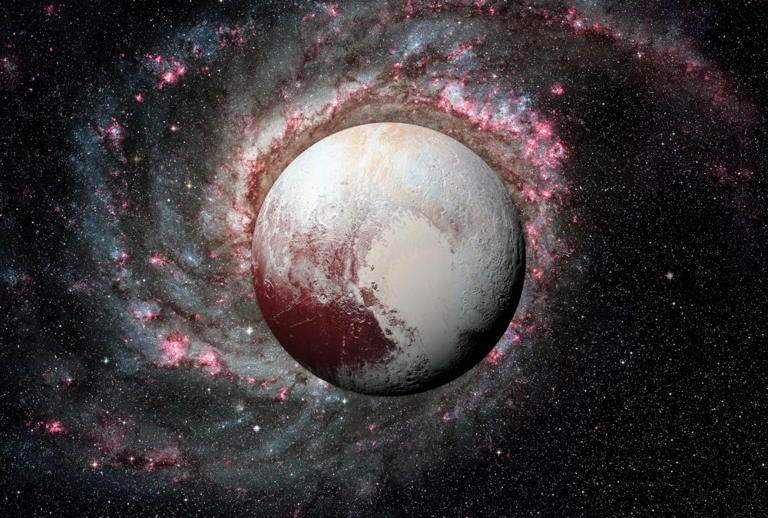
Recent observations using the ultra-widefield prime focus camera of the Subaru Telescope have shown that there may be a population of small astronomical objects further out in the Kuiper Belt still waiting to be discovered.

According to the experts, the findings are essential for a better understanding of the formation of the solar system.

The research was made possible through an international collaboration between the Subaru Telescope and the New Horizons spacecraft traveling through the outer solar system.

New Horizons flew through the Kuiper Belt 

NASA's New Horizons spacecraft was launched in 2006 in order to observe the surfaces of outer solar system bodies up close for the first time in our history. The spacecraft successfully completed a flyby of the Pluto system (2015), and later on (2019)  it made a flyby of one of the Kuiper Belt objects, (486958) Arrokoth.

Although there were four other spacecraft which have flown to the outer solar system, New Horizons is the only one that has flown through the Kuiper Belt.

Viewing objects in the Kuiper Belt 

When examining Kuiper Belt objects from the ground, we can only observe them at small solar phase angles (the angle between the sun, the object, and the observer). 

However, when looking at an object in the outer solar system from a spacecraft in the Kuiper Belt, these objects can be observed at different phase angles and their reflection characteristics can be utilized to estimate their surface properties. 

Related video: 
  • One of NASA’s Furthest Probes Just Gave Us a Look at Just How Dark the Universe is Beyond Our Solar System  

Yet, the camera on the New Horizon spacecraft has a narrow field-of-view and cannot find Kuiper Belt objects on its own. 

Fortunately, the Subaru Telescope can use its wide-field camera to discover a variety of Kuiper Belt objects and then narrow down the collection of objects which the spacecraft can fly by and examine. 

New Horizons and the Subaru telescope 

The collaboration between the New Horizons spacecraft and the Subaru Telescope was initiated in 2004.

During the 2004–2005 observations with the Subaru Telescope's prime focus camera (Suprime-Cam), the orbital alignment between Pluto and the spacecraft caused a portion of the Milky Way's center to appear in the background of the search area for Kuiper Belt objects.

While it was highly difficult to search for solar system objects with multiple background stars, the scientists were able to localize 24 Kuiper Belt objects.

Unfortunately, the Kuiper belt objects discovered until now require too much fuel for New Horizons to flyby, but new ones at greater distances might fall within the available fuel reach of the spacecraft. 

In 2020, deeper observations with the Hyper Suprime-Cam (HSC) on the Subaru Telescope began, and, by 2023, 239 Kuiper Belt objects were discovered.

"The most exciting part of the HSC observations was the discovery of 11 objects at distances beyond the known Kuiper Belt," said team member Fumi Yoshida, a scientist at the University of Occupational and Environmental Health Sciences and the Planetary Exploration Research Center at the Chiba Institute of Technology.

Unexpected discovery of mysterious objects 

A large number of objects discovered with HSC are located at distances ranging from 30 to 55 astronomical units (au) from the Sun (with one au corresponding to the distance between the Sun and Earth) and are thought to belong to the known Kuiper Belt.

However, the experts were not expecting to discover what looks to be a cluster of objects in the 70–90 au region and a valley between 55 and 70 au, where only a small number of objects are distributed.

Is there a new population of Kuiper Belt objects located at 70–90 au? "If this is confirmed, it would be a major discovery. The primordial solar nebula was much larger than previously thought, and this may have implications for studying the planet formation process in our solar system," Yoshida explained.

"This is a groundbreaking discovery revealing something unexpected, new, and exciting in the distant reaches of the solar system; this discovery probably would not have been possible without the world-class capabilities of the Subaru observatory," added New Horizons mission principal investigator Alan Stern.

Understanding solar system formation 

In order to determine the precise orbits of these objects, the scientists are continuing observations with HSC.

"I think the discovery of distant objects and the determination of their orbital distribution are important as a stepping stone to understanding the formation history of the solar system, comparing it with exoplanetary systems, and understanding universal planet formation," Yoshida said.

New Horizons is currently traveling further out, at approximately 60 au from the Sun, hoping to discover many more distant objects.

 VIDEOS

Incredible Discoveries Of The James Webb Telescope | Universe Explorers | BBC Earth Science

The Year of Pluto - New Horizons Documentary Brings Humanity Closer to the Edge of the Solar System

Mysteries of the Universe. A Journey to Amazing Objects
{ https://www.msn.com/en-us/ }
Hoe vind je dit bericht?
Geschreven door peter om 18:14 Stuur door

Scientists finally solve mystery behind Bermuda Triangle disappearances

Scientists finally solve mystery behind Bermuda Triangle disappearances

Story by Harriet Brewis

The Bermuda Triangle is one of urban legend’s favourite locations.

For decades, the section of the north Atlantic ocean has sparked fear and fascination as the alleged site, and source, of dozens of mysterious disappearances.


Top 10 Creepiest Unsolved Bermuda Triangle Mysteries

More than 50 ships and 20 airplanes are said to have vanished in the region, which stretches roughly from the Florida coast to Bermuda to the Greater Antilles islands.

This amounts to an average of four planes and 20 boats disappearing without a trace in the zone every year, the Week notes.

Naturally, conspiracy theories have abounded as to the causes of these tragic and unexplained instances, with aliens and even Atlantis blamed for the phenomena.

However, experts have offered more credible hypotheses and, in 2017, Australian scientist Karl Kruszelnicki claimed to have “solved” the enduring mystery once and for all.

The precise parameters of the Bermuda Triangle are disputed, but it roughly lies between Florida, Bermuda and Puerto Rico ((iStock))

The precise parameters of the Bermuda Triangle are disputed, but it roughly lies between Florida, Bermuda and Puerto Rico
((iStock))

He dismissed any suggestion that the supernatural was at play here and instead pointed the finger of blame simply at human error, bad weather and high traffic volumes.

“It is close to the equator, near a wealthy part of the world, America, therefore you have a lot of traffic,” he told news.com.au.

Indeed, the Bermuda Triangle (also known as the “Devil’s Triangle”), is one of the most heavily travelled shipping lanes in the world, with vessels passing through to reach ports in the US, Europe and the Caribbean.

And whilst the disappearance of any plane or ship is a tragedy, in fact, “the number of planes that go missing in the Bermuda Triangle is the same as anywhere in the world on a percentage basis,” Dr Kruszelnicki said, quoting insurance company Lloyds of London and the US Coast Guard.

Put simply, travelling through this infamous area is no riskier than going through other busy parts of the world.

And yet, sceptics will continue to cling to more interesting theories, including that rogue waves are behind the disappearances.

Scientists put forward this hypothesis in the Channel 5 documentary ‘The Bermuda Triangle Enigma’, claiming that conditions in the zone are just right for “massive rogue waves”.

“There are storms to the south and north, which come together,” University of Southampton oceanographer Simon Boxall explained. “And if there are additional ones from Florida, it can be a potentially deadly formation of rogue waves.”

Rogue waves of this type could reach around 30 metres (100 feet) tall, which would be on par with the largest wave ever recorded – a 100-foot tsunami triggered by an earthquake and landslide in Alaska’s Lituya Bay in 1958, HuffPost reports.

None of the 14 airmen involved in Flight 19 were ever seen or heard from again ((NAVAL HISTORY AND HERITAGE COMMAND/NAS Fort Lauderdale Museum))

None of the 14 airmen involved in Flight 19 were ever seen or heard from again
((NAVAL HISTORY AND HERITAGE COMMAND/NAS Fort Lauderdale Museum))

Reports of unexplained occurrences in the Bermuda Triangle date to the mid-19th century when some ships were discovered completely abandoned for no apparent reason, while others transmitted no distress signals but were never seen or heard from again, , according to the Encyclopedia Britannica.

Perhaps the most famous incident linked to the area is the disappearance of Flight 19, which occurred in December 1945 and saw five US Navy Avenger torpedo bombers vanish during a training mission.

After setting off from Fort Lauderdale, Florida, the planes reportedly experienced compass malfunctions and became disoriented, leading to their disappearance.

And yet, Kruszelnicki dismissed suggestions, posited in 1964, that the incident proves that the Bermuda Triangle “is the scene of disappearances that total far beyond the laws of chance.”

He noted that Flight 19 took off in poor weather conditions, with 15-metre (49-foot) waves crashing down below the aircraft.

Kruszelnicki added that the only truly experienced pilot in the flight was its leader, Lieutenant Charles Taylor, and his human error may well have played a part in the tragedy.

“[He] arrived with a hangover, flew off without a watch, and had a history of getting lost and ditching his plane twice before,” the scientist explained.

Furthermore, radio transcripts recorded before the patrol vanished revealed that Lt Taylor had lost his bearings and ordered the patrol to fly east – unwittingly taking them further over the deep waters of the Atlantic.

Ultimately, it doesn’t matter what the experts say. For some people, legends like that of the Bermuda Triangle will always hold appeal.

After all, mystery and intrigue are a lot more enticing than the prosaic truth: that humans make mistakes and you can't trust the weather.

  • Sign up for our free Indy100 weekly newsletter
  • How to join the indy100's free WhatsApp channel
  • Indy100 is the sister title of The Independent, bringing you the stories you want to read, in the order you want to read them. Created with a particular focus on the Gen Z and young Millennial audience, it’s fun, it's original, it captures the mood and tells the untold angle to the big global stories across news, viral trends, politics, celebrities, sport, science, tech and identities. It's never boring, and is passionately progressive and always supports equality. Follow Indy100 at the top of the article./em>

VIDEOS


Scientist Solves the Mystery of the Bermuda Triangle

What Actually Happens in the Bermuda Triangle - Mystery Revealed

The Mysterious Bermuda Triangle Unveiling Its Secrets. #Bermuda Triangle
Hoe vind je dit bericht?
Geschreven door peter om 17:53 Stuur door

Largest Dark Matter Detector is Narrowing Down Dark Matter Candidate

Technicians scanning for dust on the LUX-ZEPLIN (LZ) Dark Matter Detector. Credit: LZ Experiment

Largest Dark Matter Detector is Narrowing Down Dark Matter Candidate

In 2012, two previous dark matter detection experiments—the Large Underground Xenon (LUX) and ZonEd Proportional scintillation in Liquid Noble gases (ZEPLIN)—came together to form the LUX-ZEPLIN (LZ) experiment. Since it commenced operations, this collaboration has conducted the most sensitive search ever mounted for Weakly Interacting Massive Particles (WIMPs) – one of the leading Dark Matter candidates. This collaboration includes around 250 scientists from 39 institutions in the U.S., U.K., Portugal, Switzerland, South Korea, and Australia.

On Monday, August 26th, the latest results from the LUX-ZEPLIN project were shared at two scientific conferences. These results were celebrated by scientists at the University of Albany‘s Department of Physics, including Associate Professors Cecilia Levy and Matthew Szydagis (two members of the experiment). This latest result is nearly five times more sensitive than the previous result and found no evidence of WIMPs above a mass of 9 GeV/c2. These are the best-ever limits on WIMPS and a crucial step toward finding the mysterious invisible mass that makes up 85% of the Universe.

Led by the Department of Energy’s (DoE) Lawrence Berkeley National Laboratory, the LZ experiment is located at the Sanford Underground Research Facility in South Dakota, about 1,500 meters (nearly a mile) beneath the surface. The experiment relies on an ultra-sensitive detector made of 10 tonnes (11 U.S. tons) of liquid xenon to hunt for the elusive signals caused by WIMP-nucleus interactions. While direct detections are yet to be made, these latest results have helped scientists narrow the search.

As Levy explained in a recent UofA press release:

“Dark matter interacts very, very rarely with normal matter, but we don’t know exactly how rarely. The way we measure it is through this cross-section or how probable an interaction is within our detector. Depending on the mass of a dark matter particle, which we don’t know yet, an interaction within the detector is more or less probable. What the new LZ results tell us is that dark matter interacts with normal matter even more rarely than we thought, and the only instrument in the world that is sensitive enough to measure that is LZ.”

The existence and nature of Dark Matter are among the greatest mysteries in modern astrophysics. Originally proposed to explain the rotational curves of galaxies, the existence of Dark Matter is vital to the most widely accepted cosmological model – the Lambda Cold Dark Matter (LCDM) model. Unfortunately, according to the prevailing theories, DM only interacts with normal (aka. “luminous”) matter via gravity, the weakest of the four fundamental forces. Detecting these interactions requires incredibly sensitive instruments and an environment free of electromagnetic energy (including heat and light).

While no direct detections have been made, the latest results from LZ have narrowed the range of possibilities for one of the leading DM candidates. As Szydagis said:

“It’s often misunderstood what is meant by the phrase ‘world’s best dark matter experiment’ since no one has made a conclusive, unambiguous discovery yet. However, new, stricter null results like LZ’s are still extremely valuable for science. UAlbany, as one part of the multinational collaboration that is LZ, has been making important contributions ensuring the robustness of LZ’s results, going back to the very beginning of the experiment.”

Although DM remains “invisible” to us, the presence of its gravitational pull is fundamental to our understanding of the Universe. For example, the formation and movement of galaxies are attributed to DM, and its existence is vital for explaining the large-scale structure and evolution of the Universe. If DM does not exist, then our understanding of gravity – as described by Einstein’s Theory of General Relativity – is essentially wrong and needs revision. However, General Relativity has been experimentally validated again and again over the past century.

Therefore, narrowing the search for its constituent particle is vital to proving that our foundational theories about the Universe are correct. As Levy noted, UAlbany scientists have been making integral contributions to LZ for over a decade, and their work is far from done! “Working on LZ is always so exciting, even if we still have not made a discovery yet,” she said. “We all know that if it were easy, someone else would have done it already! I think right now what we need to take out of this result is that LZ is a great team of scientists, our detector is working superbly, our analysis is extremely robust, and we are nowhere near done taking data.”

Further Reading: 
{ https://www.universetoday.com/ }

Hoe vind je dit bericht?
Geschreven door peter om 16:58 Stuur door

Using A Space Elevator To Get Resources Off the Queen of the Asteroid Belt

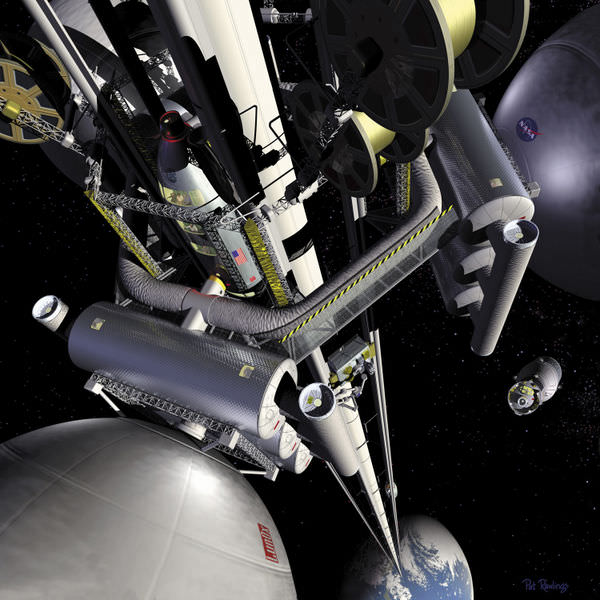
Artistic view of a possible space elevator. Credit: NASA

Using A Space Elevator To Get Resources Off the Queen of the Asteroid Belt

Here at UT, we’ve had several stories that describe the concept of a space elevator. They are designed to make it easier to get objects off Earth and into space. That, so far, has proven technically or economically infeasible, as no material is strong enough to support the structure passively, and it’s too energy-intensive to support it actively. However, it could be more viable on other worlds, such as the Moon. But what about worlds farther afield? A student team from the University of Colorado at Colorado Springs looked at the use case of a space elevator on Ceres and found that it could be done with existing technology.

Before we discuss why anyone would want to put a space elevator on Ceres, let’s first examine the technologies that would make it possible. Every space elevator design has three different components: an anchor, a tether, and a counterweight. Each would require its own technologies.

The anchor is simple enough; it’s how the system interfaces with Ceres. The surface of Ceres is primarily made of clay, which is relatively good for anchoring technologies. Luckily, the force the anchor needs to withstand is only around 300N, which is much lower than the force on Earth, given Ceres’ small mass. There have already been asteroid anchoring technologies for other missions that can provide up to 500N of force resistance, so an anchor on Ceres should prove no real challenge.

Fraser describes the general idea of a space elevator.

The tether is where the technology falls short on Earth – no material known to science can withstand the forces exerted on the tether of a passively controlled space elevator when it is tied to Earth. However, the closest we can come, something space elevator enthusiasts mention as almost a holy grail, is carbon nanotubes. In the analysis for the space elevator on Ceres, they once again came out ahead. However, the limitation of actually physically creating a long tether will still plague any space elevator design on Ceres.

The counterweight is much simpler, as it can be just a big, dumb mass. However, its mass is proportional to the necessary length of cable—the heavier the mass, the shorter the cable. So, the tradeoff between having a heavier counterweight and a shorter cable is another design consideration when considering these systems.

Calculations from the team show that, with only a little more technological development, all three main systems could be ready for installation on Ceres itself. But what advantages does it have? It could be helpful as a launching point for accessing other asteroids in the asteroid belt. Ceres also has water relatively near the surface, which is helpful for all kinds of human exploration, either as rocket fuel or biological systems. It’s also well placed to quickly get things back to Earth using Jupiter as a gravity assist.

Isaac Arthur goes into a deeper description of space elevators and their advantages.

But before it can provide any of those advantages, someone is going to have to pay for it. Estimates of the overall cost of the system total about $5.2 billion — not too far out of the range of larger-scale space exploration projects. But more than most countries are likely willing to pony up for a grand infrastructure project that hasn’t yet proven its benefit.

So, for now, any space elevator will remain in the realm of science fiction. But research like this and other ongoing technological improvements is how we will eventually push forward to that future. Whether it’s a space elevator on Ceres, on the Moon, or some other novel launch technology, someday humans will need a better way to get off Earth rather than burning dead living organisms. Hopefully, that day will come sooner rather than later.

Learn More:

Lead Image:

  • Artistic view of a possible space elevator.
    Credit: NASA

{ https://www.universetoday.com/ }

Hoe vind je dit bericht?
Geschreven door peter om 16:46 Stuur door

Meer van UFO'S of UAP'S, ASTRONOMIE, RUIMTEVAART, ARCHEOLOGIE, OUDHEIDKUNDE, SF-SNUFJES EN ANDERE ESOTERISCHE WETENSCHAPPEN - DE ALLERLAATSTE NIEUWTJES

↑ Terug naar de berichten