Naar de inhoud

UFO'S of UAP'S, ASTRONOMIE, RUIMTEVAART, ARCHEOLOGIE, OUDHEIDKUNDE, SF-SNUFJES EN ANDERE ESOTERISCHE WETENSCHAPPEN - DE ALLERLAATSTE NIEUWTJES

UFO's of UAP'S in België en de rest van de wereld
akke.beakke.be
Ontdek de Fascinerende Wereld van UFO's en UAP's: Jouw Bron voor Onthullende Informatie! Ben jij ook gefascineerd door het onbekende? Wil je meer weten over UFO's en UAP's, niet alleen in België, maar over de hele wereld? Dan ben je op de juiste plek! België: Het Kloppend Hart van UFO-onderzoek In België is BUFON (Belgisch UFO-Netwerk) dé autoriteit op het gebied van UFO-onderzoek. Voor betrouwbare en objectieve informatie over deze intrigerende fenomenen, bezoek je zeker onze Facebook-pagina en deze blog. Maar dat is nog niet alles! Ontdek ook het Belgisch UFO-meldpunt en Caelestia, twee organisaties die diepgaand onderzoek verrichten, al zijn ze soms kritisch of sceptisch. Nederland: Een Schat aan Informatie Voor onze Nederlandse buren is er de schitterende website www.ufowijzer.nl, beheerd door Paul Harmans. Deze site biedt een schat aan informatie en artikelen die je niet wilt missen! Internationaal: MUFON - De Wereldwijde Autoriteit Neem ook een kijkje bij MUFON (Mutual UFO Network Inc.), een gerenommeerde Amerikaanse UFO-vereniging met afdelingen in de VS en wereldwijd. MUFON is toegewijd aan de wetenschappelijke en analytische studie van het UFO-fenomeen, en hun maandelijkse tijdschrift, The MUFON UFO-Journal, is een must-read voor elke UFO-enthousiasteling. Bezoek hun website op www.mufon.com voor meer informatie. Samenwerking en Toekomstvisie Sinds 1 februari 2020 is Pieter niet alleen ex-president van BUFON, maar ook de voormalige nationale directeur van MUFON in Vlaanderen en Nederland. Dit creëert een sterke samenwerking met de Franse MUFON Reseau MUFON/EUROP, wat ons in staat stelt om nog meer waardevolle inzichten te delen. Let op: Nepprofielen en Nieuwe Groeperingen Pas op voor een nieuwe groepering die zich ook BUFON noemt, maar geen enkele connectie heeft met onze gevestigde organisatie. Hoewel zij de naam geregistreerd hebben, kunnen ze het rijke verleden en de expertise van onze groep niet evenaren. We wensen hen veel succes, maar we blijven de autoriteit in UFO-onderzoek! Blijf Op De Hoogte! Wil jij de laatste nieuwtjes over UFO's, ruimtevaart, archeologie, en meer? Volg ons dan en duik samen met ons in de fascinerende wereld van het onbekende! Sluit je aan bij de gemeenschap van nieuwsgierige geesten die net als jij verlangen naar antwoorden en avonturen in de sterren! Heb je vragen of wil je meer weten? Aarzel dan niet om contact met ons op te nemen! Samen ontrafelen we het mysterie van de lucht en daarbuiten.

Archief

What Boeing’s Starliner Thruster Tests In New Mexico Actually Revealed About the Spacecraft’s Fate

What Boeing’s Starliner Thruster Tests In New Mexico Actually Revealed About the Spacecraft’s Fate

The saga continues for two NASA astronauts.

by Doris Elín Urrutia
 
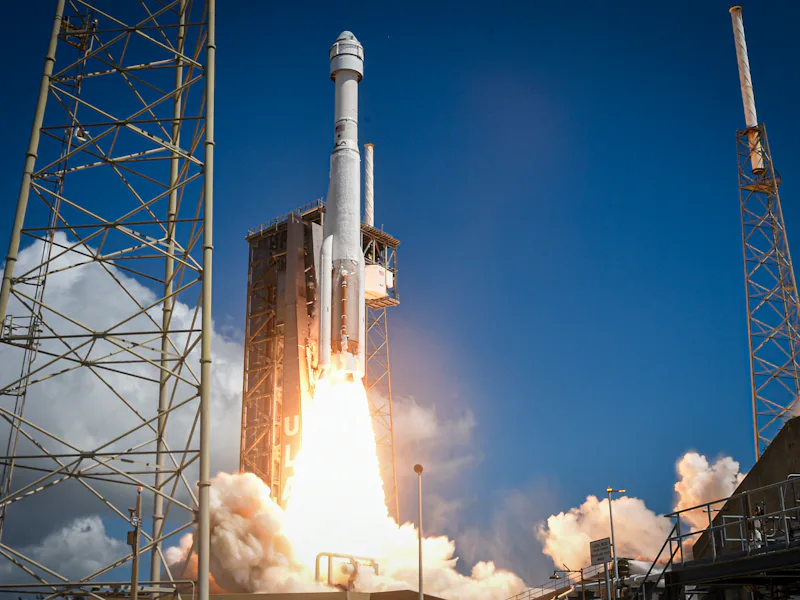
The United Launch Alliance (ULA) Atlas V rocket with Boeing's CST-100 Starliner spacecraft launches ...
MIGUEL J. RODRIGUEZ CARRILLO/AFP/Getty Images

The two Boeing Starliner astronauts may remain onboard humanity’s farthest outpost for half a year more. Not everyone at NASA thinks the spacecraft has been proven safe enough to bring them back from Earth orbit.

When NASA’s associate administrator of space operations Ken Bowersox addressed reporters on Wednesday, internal debates within the space agency surfaced. The concerns were regarding the safety of Starliner’s two astronauts, Suni Williams and Butch Wilmore, who’ve already been living in space two months longer than planned.

They flew into space on June 5 for what was, at the time, set as an eight-day mission. The mission was called Crew Flight Test and was meant to be a certification of Starliner’s abilities to become a commercial crew program spacecraft — second to the now tried-and-tested SpaceX Crew Dragon — that could bring spacefarers to the International Space Station (ISS) and back safely at a low cost to NASA.

With Starliner, NASA seeks comfort. If something goes wrong in space or with SpaceX’s launchers, astronauts can rely on Starliner to make it to space without interruption in the timelines.

Things went awry soon into the mission. Thruster and helium leak anomalies didn’t stop Starliner and its crew from successfully docking to the ISS, but raised serious concerns about how they would return home.

Problems arise on test flights, and that’s what the evaluative nature of these flights are for: to catch blindspots and remedy. But days, weeks and, now, months have passed.

To figure a way forward, NASA and Boeing have run hot fire tests of Starliner in space. And on Earth, engineers have put spare thrusters through the gamut at NASA’s White Sands Testing Facility in New Mexico to replicate the conditions that the hardware in space has gone through. They believe the thruster issue is due to overheating, plus swelling of a teflon seal that blocks the flow of fuel into the thruster’s combustion chamber. “What we're trying to do now is sort of understand what all that data means to us from the White Sands testing, and then what it means to the thrusters on orbit,” NASA Commercial Crew Program manager Steve Stich said Wednesday.

As teams figure out the ramifications of the worst case scenario for thruster overheating, as well as of the helium leaks experienced during Starliner’s journey to the ISS,the test crew remains in space. Their return date continued to be pushed into the future. Their arrival home could now be as late as next year.

Don’t overstay your time in space

Tensions clashed last month, when Boeing Commercial Crew Program manager Mark Nappi scolded reporters during a press briefing for using language that called the astronauts “stranded” or “stuck” in space. Reporters pushed back asking for clearer responses from NASA and Boeing leadership as to when they’d come home, and more frequent updates on the Starliner troubleshooting. Then during a follow-up media conference, Nappi and Stich expressed regret that they had outlined the mission as an eight-day event, to avoid scrutiny.

Test flight or not, missions must adhere to schedule windows. The ISS is an aging spacecraft. To maintain its functions, astronauts are swapped in and out on assignments. Having two extra astronauts aboard the station strains the resources, occupancy, and schedules of the other space crews. That’s not even taking into account the private, personal tolls that the extended missions may have on the crew. Or, the physical changes they’ll experience as a result of longer periods in microgravity.

As a consequence of the idle Starliner, the SpaceX Dragon Crew-9 mission will no longer launch in mid-August with its crew of four. Its launch date has been pushed to September 24. Its crew may also be halved to open up two free seats for Wilmore and Williams to return home as a backup plan. But Crew-9 wraps up its six-month mission in February 2025, meaning the Starliner crew would come home eight months past schedule.

Not everyone at NASA agrees on Starliner’s safety

The same day that Bowersox and his colleagues announced the new Crew-9 launch date, he opened up about the internal discussions that have kept the Starliner crew from returning home.

“It's been really great to watch our team working, our Boeing team, our NASA team, the way people are speaking up. The way we're hearing different voices, different thoughts on how critical different factors are in the decision,” Bowersox said Wednesday.

“I think it's been very healthy. I have to admit that sometimes when we get disagreement, it's not fun. It can be painful having those discussions. But it's what makes us a good organization. And it's what will get us to a good decision as we approach that point here in the future. And I don't think we're too far away from making that call,” he added.

Starliner may still yet return with its crew. Data from recent tests and new evaluations might finally bring the team to a consensus for how — and when — to finally bring Williams and Wilmore home.

{ https://www.inverse.com/ }

Hoe vind je dit bericht?
Geschreven door peter om 23:00 Stuur door

AI Focused! UFO At SpaceX launch, Friends of Elon Musk? March 9, 2022, UAP Sighting News. Video.

AI Focused! UFO At SpaceX launch, Friends of Elon Musk? March 9, 2022, UAP Sighting News. Video.

UAP,%20%E0%A4%89%E0%A4%AB%E0%A5%8C%20,%20%E0%A6%87%E0%A6%89%E0%A6%8F%E0%A6%AB%E0%A6%93,%20%C4%91i%CC%83a%20bay,%20MUFON,%20%E7%9B%AE%E6%92%83%E3%80%81%E3%82%A8%E3%82%A4%E3%83%AA%E3%82%A2%E3%83%B3,%20%20UFO,%20UFOs,%20%D0%9D%D0%9B%D0%9E%20,%20NLO,%20sighting,%20sightings,%20alien,%20aliens,%20ET,%20anomaly,%20anomalies,%20ancient,%20astrobiology,%20vreemdelinge,%20%203%20copy%205.png

Date of sighting: March 9, 2022
Location of sighting: SpaceX launch, Playalinda Beach, Florida, USA

Now check this out, long ago I reported a UFO shooting past a SpaceX rocket launch and now I wanted to run some screenshots though ai to focus them and focus it did. It really blew my mind how detailed the UFO was and how there are no wings, no windows, no jet engines or strings...it's just a magnificent example of alien technology at its best. 

Scott C. Waring 

{https://www.ufosightingsdaily.com/ }

Hoe vind je dit bericht?
Geschreven door peter om 21:02 Stuur door

Why Experts Believe the Pentagon Covers Up UAP Reports

Why Experts Believe the Pentagon Covers Up UAP Reports

Why experts think the Pentagon covers up UAP reports

In a recent episode of Reality Check, journalist Ross Coulthart delves into the Pentagon’s handling of Unidentified Aerial Phenomena (UAP) reports. Joined by NewsNation correspondent Xavier Walton, the discussion uncovers a deep-seated skepticism among experts regarding the transparency and authenticity of these investigations. This article explores why experts believe the Pentagon might be covering up information about UAPs.

Historical Context and the DNI Report

The turning point in the UAP discourse came in June 2021 when the Director of National Intelligence (DNI) released a groundbreaking report. This document, titled “Preliminary Assessment: Unidentified Aerial Phenomena,” acknowledged the reality of UAPs and their potential threat to national security and flight safety. This admission was significant as it marked a departure from decades of stigma and denial surrounding UAPs within the U.S. government.

The AARO Report Controversy

Fast forward to 2024, and the Pentagon’s All-domain Anomaly Resolution Office (AARO) released its much-anticipated historical review of UAPs. However, this report was met with criticism from experts who felt it lacked objectivity and thorough investigation. The AARO report was seen by many as an attempt to discredit longstanding allegations of a secret U.S. program aimed at retrieving and reverse-engineering alien technology.

Experts like ufologist Don Schmidt and military veteran Kevin Randall, both prominent figures in UAP research, expressed disappointment in the AARO report. They argued that it failed to provide new information and did not engage in rigorous investigation, merely reiterating what was already known without substantiating any claims.

Expert Opinions and Skepticism

Don Schmidt, the lead investigator for the UFO Museum in Roswell, and Kevin Randall, an author of over three dozen books on UFOs, have long been vocal critics of the government’s handling of UAP reports. Schmidt’s stance is that asking the very entities responsible for the cover-up to come clean is futile. He believes that AARO will continue to dismiss the subject, maintaining that there is no extraordinary evidence of alien technology in the government’s possession.

Randall echoes these sentiments, highlighting the lack of verifiable information in the AARO report. He criticizes the report for its inability to provide checkable data, leaving researchers with nothing to substantiate the government’s claims.

Public Perception in Roswell

The sentiment of disappointment and skepticism is not limited to experts. During the Roswell UFO Festival, NewsNation’s Xavier Walton engaged with locals and attendees who expressed similar frustrations. Many locals in Roswell, a town synonymous with the famous 1947 UFO incident, remain convinced that the government is not disclosing the full truth about UAPs. This skepticism is rooted in decades of independent research and witness testimonies that contradict official explanations.

Historical Investigations by Independent Researchers

Schmidt and Randall have dedicated years to investigating the Roswell incident, conducting detailed interviews with first-person witnesses and gathering substantial evidence. Their meticulous approach starkly contrasts with what they perceive as the Pentagon’s superficial efforts. For instance, interviews with individuals like Walter Haut, who issued the original 1947 press release claiming the recovery of a flying disc, and Major Jesse Marcel, the intelligence officer who inspected the crash site, reveal a different narrative than the one presented by the government.

Lou Alzando’s Revelations

Adding to the controversy, a leaked book by Lou Alzando, a former Pentagon UAP investigator, claims that the Roswell crash was indeed of extraterrestrial origin. This revelation, if verified, would provide semi-official confirmation from someone within the Pentagon, further fueling beliefs of a cover-up.

VIDEO:

  • Why experts think the Pentagon covers up UAP reports | Reality Check with Ross Coulthart

The skepticism towards the Pentagon’s UAP investigations reflects a broader mistrust in governmental transparency. Despite official denials, many experts and the public remain convinced of a cover-up, supported by decades of independent research and compelling witness testimonies. As researchers like Don Schmidt and Kevin Randall continue to seek genuine disclosure, the call for accountability and transparency in UAP investigations grows louder.

In conclusion, the persistent belief in a Pentagon cover-up of UAP information is bolstered by historical context, expert analysis, and public sentiment. The debate continues as the quest for the truth about UAPs remains a contentious and unresolved issue.

{ https://www.latest-ufo-sightings.net/ }

Hoe vind je dit bericht?
Geschreven door peter om 20:48 Stuur door

NASA Discovers Galaxies Older Than the Universe

NASA Discovers Galaxies Older Than the Universe

Story by Ben Campbell
 
NASA Discovers Galaxies Older Than the Universe

©NASA/Facebook

NASA Discovers Galaxies Older Than the Universe
Astronomers were left stunned after NASA’s powerful James Webb Telescope captured several galaxies deep in the cosmos that appear to be older than the universe itself.

This sparked significant and engaging debate among astronomers about how such a thing is possible. Here's what the experts have to say about the strange phenomena.

The Beginning of the Universe

©Wikimedia

The Beginning of the Universe
Astrophysicists believe the universe was formed at least 13.8 billion years ago following a significant event commonly referred to as the Big Bang.

Prior to this, the entirety of the universe’s energy is theorized to have been concentrated in a singularity, defined as a point of infinite temperature and density. As this singularity began to expand, it resulted in an explosion dubbed the Big Bang.

The Fundamental Forces of Nature Appear

©Wikimedia

The Fundamental Forces of Nature Appear
After the violent explosion that gave birth to the universe as we know it occurred, the fundamental forces of nature, including electromagnetism and gravity, alongside the strong and weak forces, evolved in stages.

These led to the eventual formation of galaxies. However, observations carried out using the state-of-the-art James Webb Telescope have noticed that certain earlier galaxies appear to have skipped the gradual process of evolution, giving the impression that they are older than the universe itself.

The Webb Telescope Observes Early Galaxies

©Wikimedia

The Webb Telescope Observes Early Galaxies
The powerful Webb telescope can essentially peer back in time and observe galaxies when the universe was a mere 500 million years old, or 3% of its current age.

As the cosmos was still considered in its infancy at this period, researchers predicted small galaxies scattered throughout the universe. However, the JWST has observed galaxies that were far larger than previously anticipated.

Webb Telescope Makes Fascinating Discovery

©Wikimedia

Webb Telescope Makes Fascinating Discovery
The galaxies spotted by the JWST contain a mass of stars that could be as much as 100 billion times the mass of the Sun.

To better understand this enormous cluster of stars in the early galaxies, we can compare it to our own galaxy, the Milky Way, which only contains a mass of stars equal to approximately 60 billion suns.

How is This Possible?

©Freepik

How is This Possible?
The question that continues to perplex astronomers is how such an extensive number of celestial bodies and extensive galaxies existed at such an early period of the universe.

To better understand this, we must explore "redshifting." According to the European Space Agency (ESA), “Redshift is a key concept for astronomers. The term can be understood literally—the wavelength of the light is stretched, so the light is seen as 'shifted' towards the red part of the spectrum.”

The Visible Light Spectrum

©Freepik

The Visible Light Spectrum
In simple terms, redshift refers to a particular section of the visible light spectrum.

The shortest wavelength of light is violet, at around 380 nanometers. The longest is red, at around 700 nanometers. Astronomers use the latter to gather valuable data on the age of galaxies.

ESA Defines Redshift

©Wikimedia

ESA Defines Redshift
According to the ESA, redshift is used to measure how far a celestial object like a galaxy has moved away from us.

“When an object (e.g. a galaxy) moves away from us, it is 'red-shifted' as the wavelength of light is 'stretched' so the light is seen as 'shifted' towards to red end of the spectrum,” according to the ESA.

Redshift and Dating Galaxies

©Wikimedia

Redshift and Dating Galaxies
Astronomers can use this redshift to predict the age of galaxies found throughout the universe, as all celestial bodies and objects emit a frequency or hue of color that telescopes can pick up. This red color will differ depending on how young or old the galaxy is, allowing researchers to effectively discern how old galaxies are in the depths of the cosmos.

Redshifting can also be used to instruct researchers on the extreme age of galaxies in the cosmos, as well as to analyze several other factors, including their size. Astronomers can also use redshift to scour the galaxy for massive stars and to give researchers an indication of how far a celestial body is from our own planet.

Galaxies During the Infancy of the Universe Continues to Perplex Astronomers

©Wikimedia

Galaxies During the Infancy of the Universe Continues to Perplex Astronomers
As galaxies in the cosmos age, they produce more suns, which is generally expected. However, the galaxy spotted by the JWST during the universe's infancy has a mass significantly larger than that of the present-day Milky Way.

Despite their attempts to explain this unusual phenomenon, astronomers and researchers have come up empty-handed, and there is no accepted explanation just yet.

The Universe is 26.7 Billion Years Old, Says Researcher

©Freepik

The Universe is 26.7 Billion Years Old, Says Researcher
Physicist Rajendra Gupta from the University of Ottawa in Canada is one researcher who believes he has an answer to the question, suggesting “redshift could be a hybrid phenomenon, rather than purely due to the universe’s expansion.”

He added, “Our newly-devised model stretches the galaxy formation time by several billion years, making the universe 26.7 billion years old, and not 13.7 as previously estimated,” Dr Gupta said.

Why Early Galaxies Appear to Have Larger Masses

©Wikimedia

Why Early Galaxies Appear to Have Larger Masses
The suggestion that the universe is twice as old as originally thought has stirred up considerable controversy in the scientific community.

Such a revelation could undoubtedly explain why early galaxies, which emerged 500 million years after the beginning of the universe, appear with a mass generally associated with billions of years of evolution.

{ https://www.msn.com/en-us/ }

Hoe vind je dit bericht?
Geschreven door peter om 23:25 Stuur door

AI Focused, UFO Powers Up, Shoots Off! Taipei, Taiwan Aug 2006, UAP Sighting News.

AI Focused, UFO Powers Up, Shoots Off! Taipei, Taiwan Aug 2006, UAP Sighting News.

UAP,%20%E0%A4%89%E0%A4%AB%E0%A5%8C%20,%20%E0%A6%87%E0%A6%89%E0%A6%8F%E0%A6%AB%E0%A6%93,%20%C4%91i%CC%83a%20bay,%20MUFON,%20%E7%9B%AE%E6%92%83%E3%80%81%E3%82%A8%E3%82%A4%E3%83%AA%E3%82%A2%E3%83%B3,%20%20UFO,%20UFOs,%20%D0%9D%D0%9B%D0%9E%20,%20NLO,%20sighting,%20sightings,%20alien,%20aliens,%20ET,%20anomaly,%20anomalies,%20ancient,%20astrobiology,%20vreemdelinge,%20%203%20copy%205.png

Date of sighting: Aug 2006
Location of sighting: Taipei, Taiwan
 
Now I was sent this by a friend of the eyewitness back in 2006 so I know the date, time and location is 100% correct. Also this was a decade before all the fakes started rolling out of the USA, so the chances of this being fake is very small. This is raw footage and you can hear the panic in the Taiwanese girls voice as she yells to her husband in the living room..."Fa dee a, can dow!" Meaning UFO, come see! Yes, I lived in Taiwan for 25 years and I recognize the languages and their accent. Raw video guys, what are we looking at here? Because it looks like it's the best UFO video ever recorded due to 1st it holding still so close to the top of the building. 2nd the eyewitness is very close, living in the penthouse (top floor) apartment. 3rd the UFO is seen powering up. 4th the UFO shoots away showing its incredible speed and power. 
Scott C. Waring 

{https://www.ufosightingsdaily.com/ }

Hoe vind je dit bericht?
Geschreven door peter om 22:53 Stuur door

Fossielen ontdekt diep in het hart van Groenland: de ijskap was ooit een toendra

Fossielen ontdekt diep in het hart van Groenland: de ijskap was ooit een toendra

Janine imagedoor Janine
Hannes Grobe/Wikimedia commons - CC-BY-SA-2.5

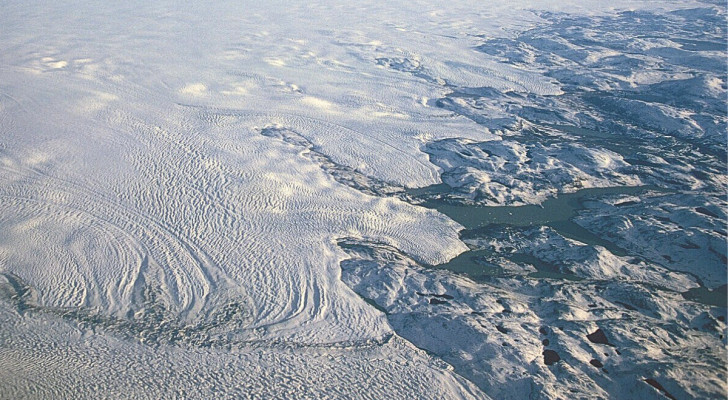
Calotta glaciale della Groenlandia

Het centrum van de Groenlandse ijskap is in een niet al te ver verleden gesmolten, zo blijkt uit een onderzoek: het onomstotelijke bewijs zijn fossielen die zijn gevonden in wat ooit een groene toendra was.

Ook het centrum van Groenland is in het verleden gesmolten

Tegenwoordig zien we Groenland als een witte ijsvlakte, maar ooit was dat helemaal niet zo. Voortdurende ontdekkingen over het verleden van dit ijzige gebied op aarde onthullen steeds meer ongelooflijke achtergronden, zoals het feit dat het er uitgesproken “groen” uitzag. Nieuw onderzoek heeft bewijs gevonden dat niet alleen de randen, maar ook het midden van de Groenlandse ijskap in een nog niet zo ver geologisch verleden is gesmolten en dat het “oude” landschap eruitzag als een toendra.

In 1993 werd een ijskern van meer dan 3 kilometer lang uit het centrale deel van het grondgebied gewonnen en vervolgens tot op de dag van vandaag bewaard in een afzetting in Colorado, VS. Nu heeft een groep wetenschappers opnieuw de sedimenten op de bodem van dit halfronde stuk ijs onderzocht en iets spannends ontdekt.

Fossielen in het midden van de ijskap

Cochenilleluis, zaden van de arctische papaver, bladvlekkenziekte en megasporen van de stekelige distel, gevonden in het bodemmonster van GISP2, bekeken onder de microscoop

Halley Mastro/University of Vermont

Het team ontdekte dat de sedimenten schimmels, insectenresten, wilgenhout en een maanzaad bevatten, allemaal ongerept. Paul Bierman van de Universiteit van Vermont, co-auteur van het onderzoek samen met Halley Mastro, stelt: "Deze fossielen zijn prachtig."

Onderzoek heeft het feit bevestigd dat de enorme ijskap van Groenland in het verleden is gesmolten als gevolg van een bijzonder warme periode, waardoor een groen eiland is ontstaan. Aangenomen wordt dat dit in de afgelopen miljoen jaar heeft plaatsgevonden, wat betekent dat de ijskap veel kwetsbaarder is dan wetenschappers hadden gedacht. Sinds het ijs in het midden van Groenland smolt, spreekt het voor zich dat de rest van het eiland hetzelfde lot onderging en, volgens Bierman, duizenden jaren lang, genoeg om een ​​terrein te creëren dat klaar was om een ​​ecosysteem te huisvesten.

Richard Alley, klimatoloog aan de Pennsylvania State University, verklaarde na bestudering van de resultaten van het onderzoek: “Het bevestigt en breidt het feit uit dat een groot deel van de zeespiegelstijging plaatsvond in een periode waarin de oorzaken van de opwarming niet bijzonder extreem waren”, en ziet het als een waarschuwing voor wat er zou kunnen gebeuren als het klimaat verder opwarmt door toedoen van de mens.

pnas.2407465121fig02.jpg

GISP2 till and macrofossils found in it: (A) Photo of the angular-clast-rich till section of the GISP2 subglacial core, taken 1994, up core to left (Credit: T. Gow, supplied by D. Meese). (B) Overview of sediment, mostly quartz and fossils. (C) Wood fragment. (D) Vertical orientation typical of GISP2 wood. (E) Wood at higher magnification showing simple pits in lateral vessel wall (1) and distinct simple perforation plate (2), along with the helical thickening typical of GISP2 wood. (F) Bud scale of Salix (willow). (G) Sclerotium of the soil fungus C. geophilum* (H) Insect eye, possibly from a fly*. (I) S. rupestris megaspore. (J) Seed of Papaver sect. Scapiflora. The asterisk shows macrofossil types also found in Camp Century sediment by ref. 5. Wood fragment images are same specimen.

De “kwetsbaarheid” van Groenland bevestigd

In feite stijgt de zeespiegel met 2,5 cm per jaar en in een versnellend tempo. Tegen het einde van deze eeuw zullen de oceanen naar verwachting ongeveer zes meter hoger stijgen dan nu.

In 2016 werd dezelfde ijskern, GISP2 genaamd, onderzocht door wetenschappers van Columbia University: de resultaten suggereerden dat de huidige ijskap niet ouder kon zijn dan 1,1 miljoen jaar en dat Groenland tijdens het Pleistoceen lange tijd zonder ijs heeft gezeten, minstens 90% van zijn grondgebied. In 2019 werden in een andere ijskern, die in de jaren ’60 werd gedolven, kleine takken en gefossiliseerde insecten gevonden die 416.000 jaar oud waren. Het huidige onderzoek bevestigde dat dit bevroren eiland niet zo sterk en veerkrachtig is als eerder werd gedacht: meer dan 3 meter ijs smolt gemakkelijk, waardoor er tijd en ruimte overbleef voor de ontwikkeling van een toendra. 

{ https://www.curioctopus.nl/ }

Hoe vind je dit bericht?
Geschreven door peter om 22:45 Stuur door

Starliner-astronauten keren mogelijk pas in 2025 terug naar aarde

Starliner-astronauten keren mogelijk pas in 2025 terug naar aarde

Starliner-astronauten keren mogelijk pas in 2025 terug naar aarde

Starliner-astronauten keren mogelijk pas in 2025 terug naar aarde

De twee astronauten die begin juni met de Boeing-ruimtecapsule Starliner zijn aangekomen in het internationale ruimtestation ISS, moeten daar mogelijk nog tot 2025 blijven. Dat heeft het Amerikaanse ruimtevaartagentschap NASA gemeld.

Sunita Williams en Butch Wilmore zijn sinds 6 juni aan boord van het internationale ruimtestation (ISS). Hun testmissie zou ongeveer een week duren, maar door problemen met de Starliner kunnen ze voorlopig niet terugkeren.

NASA bestudeert nu twee mogelijkheden om hen terug naar de aarde te brengen. Een eerste optie is om hen toch met de Starliner te laten terugkeren, maar daarvoor moeten er wel nog werken aan dat ruimtetoestel worden uitgevoerd.

De tweede optie is om de Crew 9-missie van SpaceX in september met slechts twee van de vier voorziene astronauten te laten vertrekken. Wilmore en Williams zouden dan met hen kunnen terugkeren. Dat betekent dan wel dat ze tot februari volgend jaar vastzitten in het ISS.

Voorlopig is er nog geen beslissing genomen.

{ https://www.msn.com/nl-be/feed?ocid=msedgntp&pc=acts }

Hoe vind je dit bericht?
Geschreven door peter om 21:12 Stuur door

Zealandia: het achtste continent dat onder de oceaan verborgen is

Zealandia: het achtste continent dat onder de oceaan verborgen is

Artikel door thedailydigest.com
Een achtste continent onder water

Wetenschappers uit Australië en Nieuw-Zeeland hebben onlangs een nieuw onderwatercontinent herontdekt, namelijk Zealandia.

Een groep eilanden

Afbeelding: NEOM/Unsplash

Een groep eilanden

Het is in feite een groep eilanden die vergelijkbaar is met de eilanden waaruit Nieuw-Zeeland bestaat, met een oppervlak dat iets minder groot is dan de helft van Brazilië.

Een oud supercontinent

Afbeelding: Marjan Blan/Unsplash

Een oud supercontinent
Er wordt aangenomen dat Zealandia deel uitmaakte van het oude supercontinent Gondwana, dat enkele honderden miljoenen jaren geleden een groot deel van het zuidelijk halfrond van onze planeet bedekte.

Indrukwekkende afmetingen

Afbeelding: Benjamin L. Jones/Unsplash

Indrukwekkende afmetingen
Volgens een artikel van de BBC zijn de afmetingen van dit ondergedompelde continent indrukwekkend: 4,9 miljoen vierkante kilometer.

De grootte van India

Afbeelding: Jean Beller/Unsplash

De grootte van India
Volgens een ander team onderzoekers, dat in 2017 het continent Zealandia voor het eerst claimde te hebben ontdekt, heeft het ongeveer dezelfde grootte als India, zo bericht Ouest France.

Bijna het gehele oppervlak bevindt zich onder water

Afbeelding: Greg Rosenke/Unsplash

Bijna het gehele oppervlak bevindt zich onder water
Het land van Zealandia maakte waarschijnlijk deel uit van een uitgestrekt gebied boven zeeniveau. Tegenwoordig bevindt 94% van het oppervlak zich echter onder water.

Wat is het precies?
Afbeelding: Yannis Papanastasopoulos / Unsplash
Wat is het precies?
Gaat het om een groot eiland of een continent? Zoals de Times of India opmerkt, is er geen geologische parameter die een precieze grens tussen de ene of de andere term vastlegt, en maakt het daardoor onderwerp voor discussie.
Afgezonderd van het Australische continent
Afbeelding: Jay Wennington / Unsplash
Afgezonderd van het Australische continent
Ondanks de nabijheid van Australië geloven wetenschappers dat de twee groepen afzonderlijk van elkaar bestaan. Al wordt de term 'Australazië' soms gebruikt om het volledige landgebied van het zuidwesten van de Grote Oceaan aan te duiden.

Gedetailleerde kartering
Afbeelding: Alex Rose / Unsplash
Gedetailleerde kartering
Geowetenschappers hebben Zeelandia gedetailleerd in kaart gebracht, waarmee ook de locatie van vulkanische activiteit werd onthuld en belangrijke informatie over de opbouw van het continent werd verkregen.
Monsters genomen van de bodem in de oceaan
Afbeelding: NOAA / Unsplash
Monsters genomen van de bodem in de oceaan
Om deze kartering uit te voeren, verzamelden de onderzoekers geologische monsters van de landmassa die zich onder water in de oceaan bevindt.

Een schat aan mineralen
Afbeelding: Tyler Lastovich / Unsplash
Een schat aan mineralen
Het tijdschrift Slate berichtte dat er een echte schat is aangetroffen: "Een mengsel van verschillende soorten zandsteen, basalt en kalksteen".
Magnetische afwijkingen
Afbeelding: Christian Wiediger / Unsplash

Magnetische afwijkingen
De datering van deze monsters en het onderzoek van hun magnetische afwijkingen stelden wetenschappers in staat om de Zealandia op een waardevolle manier in kaart te brengen.
Waarom ligt Zeelandia onder water?
Afbeelding: Matt Hardy / Unsplash
Waarom ligt Zeelandia onder water?
De meest voor de hand liggende verklaring hiervoor is dat de tektonische platen door het uitrekken van Gondwana braken, waardoor het oceaanwater vrij spel kreeg.

Een dunne, ondergedompelde aardkorst
Afbeelding: Dan Stark / Unsplash
Een dunne, ondergedompelde aardkorst
Het loskomen van Antarctica zou de aardkorst van Zeelandia geleidelijk hebben verdund tot het land volledig was ondergedompeld.
Meer kennis over de eigenschappen van de aardkorst
Afbeelding: Dan Gold / Unsplash
Meer kennis over de eigenschappen van de aardkorst
De ontdekkingen in Zealandia zouden wetenschappers meer kennis kunnen geven in waarom de aardkorst zo dun werd en zo sterk uitrekte.
Zijn er nog andere verborgen continenten?
Afbeelding: Matteo Paganelli / Unsplash
Zijn er nog andere verborgen continenten?
We weten niet of er meer onderzeese continenten zijn, omdat we eigenlijk maar weinig weten over de diepten van de oceanen. De ruige omgeving bemoeilijkt dit soort plekken. Daarom is deze recente ontdekking zo waardevol!
Hoe vind je dit bericht?
Geschreven door peter om 21:05 Stuur door

Greenland’s Ice Sheet is Both Younger And Less Stable Than Scientists Thought

Greenland’s Ice Sheet is Both Younger And Less Stable Than Scientists Thought

If the ice sheet melted once, it could easily melt again.

 
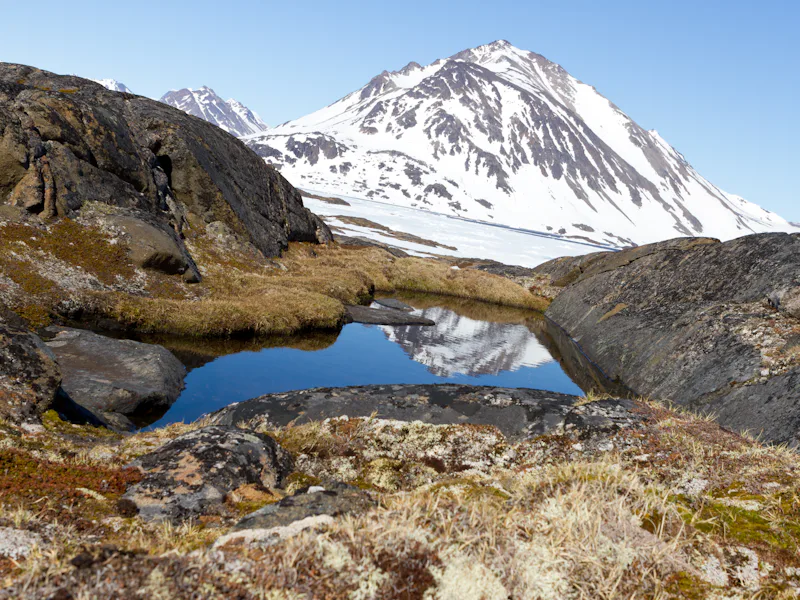
Snow-capped mountain peaks reflect in a clear water pond surrounded by rocky terrain and patches of ...
Joshua Brown

About 80 percent of Greenland is armored in a continuous sheet of ice, three times the area of Texas. But it hasn’t always been that way. At various points in Earth’s past, much of the island was, in fact, actually green — covered in soil and vegetation. The last period of thaw may have been more recent than previously thought, according to new research. The new data comes with worrying implications for present-day climate change and sea level rise.

Tiny organic fossils found deep under the ice in central Greenland show that the middle of the landmass was ice free, serving as habitat for growing plants and insects within the last 1 to 2 million years, per a study published August 5 in the journal Proceedings of the National Academy of Sciences. The exact age of Greenland’s ice sheet remains unresolved, but the ballpark suggested by the new findings bolster the formerly controversial “fragile Greenland” hypothesis, which suggested that the island’s ice sheet has melted at least once since it first formed. And if it thawed entirely before, then it could easily do so again under human-caused global warming, spurring even more dramatic sea level rise than current climate models indicate.

The Pleistocene era lasted from about 2.6 million years ago to the start of the Holocene, 11,700 years ago. During this period, our planet went through several freeze and thaw cycles where glaciers expanded during ice ages and contracted during interglacials. Previously, glaciologists and the research record have disagreed about what was happening on Greenland, during this epoch. For example, one 2016 study of mineral deposits in ocean sediments indicated that the ice sheet has persisted for 7.5 million years. In contrast, another study published that same year assessing isotopes in ice cores suggested that the ice sheet is just 1.1 million years old, with more than 280,000 years of ice-free conditions leading up to its last freeze.

The new research supports that latter finding. The study scientists re-evaluated sediments collected in a two-mile-deep ice core more than 30 years ago from Summit Camp, Greenland, a research station positioned near the very center of the ice sheet. Isotope analysis of quartz extracted from the sand at the bottom of the core suggests that it was buried under ice no more than 2 million years ago.

Isotope analysis of quartz extracted from the sand at the bottom of the core suggests that it was buried under ice no more than 2 million years ago.

Inside the previously frozen sediment, the researchers also identified miniature fossils of a bygone ecological age. Among other bits of remarkably well-preserved biological matter, the scientists found a poppy seed, moss remnants, insect parts, willow wood, and fungi — hallmarks of a tundra landscape. These fossil finds suggest that not only was the center of Greenland ice-free within the past 2 million years, but that it was also unfrozen long enough for soil and a complex ecosystem to form — likely for thousands and thousands of years. “Poppies don’t grow on top of miles of ice,” said Hailey Mastro, co-lead study author and a master’s student researching paleoclimatology at the University of Vermont, in the news statement.

The assemblage of organisms suggests Greenland’s climate was not much warmer than today’s at the time of this last melt, with summer temperatures between 1 and 10 degrees Celsius. Though an ice-free Greenland might be good news for cold-adapted flowers, it’s not good news for us. “This new study confirms and extends that a lot of sea-level rise occurred at a time when causes of warming were not especially extreme,” said Richard Alley, a geoscientist at Penn State who reviewed the research, in a press release. It’s “a warning of what damages we might cause if we continue to warm the climate,” he added. Past assessment of the same 1993 ice core determined that, if the center of Greenland was melted, then 90 percent of the island would also be ice-free.

Already, the Greenland ice sheet is the largest single contributor to ongoing sea level rise, and that melt is accelerating. If the landmass were to lose all of its ice, it would raise global sea level by an alarming 24 feet. Even with current warming, that’s not set to happen right away. Likely it would take hundreds to thousands of years for the island to lose all of its ice mass. But still, less ice on Greenland means much, much less land above water elsewhere.

 { https://www.inverse.com/ }

Hoe vind je dit bericht?
Geschreven door peter om 00:15 Stuur door

Scientists are getting serious about UFOs. Here’s why

digital art of an unexplained anomalous phenomena (UAP)

UFOs have been rebranded as unexplained anomalous phenomena, or UAPs, and are now getting attention from mainstream scientists.

Matt Chinworth

Scientists are getting serious about UFOs. Here’s why

Understanding what are now called UAPs is crucial for national security and aircraft safety

By 

For millennia, humans have seen inexplicable things in the sky. Some have been beautiful, some have been terrifying, and some — like auroras and solar eclipses before they were understood scientifically — have been both. Today’s aircraft, balloons, drones, satellites and more only increase the chances of spotting something confounding overhead.

In the United States, unidentified flying objects, or UFOs, came into the national spotlight in the late 1940s and early ’50s. A series of incidents, including a supposedly crashed alien spaceship near Roswell, N.M., generated something of an American obsession. The Roswell UFO turned out to be part of a classified program, the remnants of a balloon monitoring the atmosphere for signs of clandestine Russian nuclear tests. But it and other reported sightings prompted the U.S. government to launch various projects and panels to investigate such claims, as Science News reported in 1966 (SN: 10/22/66), as well as kicking off hobby groups and conspiracy theories.

In the decades since, UFOs have often come to be dismissed by scientists as the province of wackos and thus unworthy of study. The term UFO has a smirk factor to it, says Iain Boyd, an aerospace engineer at the University of Colorado Boulder and director of the school’s Center for National Security Initiatives.

But government agencies and officials are trying to change that attitude. Among the biggest concerns is that the stigma associated with reporting a sighting has the side effect of stifling reports from pilots or citizens who might have valuable information about potential threats in U.S. air space — such as the Chinese spy balloon that traversed North America and made headlines last year.

“If there’s something interfering with flights, people or cargo, that’s a problem,” Boyd says.

To help reduce the stigma, many serious investigators now refer to UFOs as “unidentified anomalous phenomena,” or UAPs, coined by the U.S. Department of Defense in 2022. “The term UAP brings science to the issue,” Boyd says. It also rightly broadens the view to include natural atmospheric phenomena as well as things outside the atmosphere, such as satellites and particularly bright planets such as Venus.

a group of experts sitting at a panel table with a projection behind them An independent team of experts (shown meeting in 2023) suggested NASA help fill in gaps in collecting UAP data. Joel Kowsky/NASA

Investigators of all types have a lot of questions about UAPs that they believe deserve serious scientific scrutiny: Which UAPs are something real and which are merely artifacts of the sensors that detect them? If real, which may be a threat to aviation? A threat to national security? Do they point to some unknown natural phenomena?

Answers may be forthcoming. In June 2022, NASA announced an independent study to determine how the agency could lend its scientific expertise to the study of UAPs. Meanwhile, military and commercial pilots have felt more comfortable making reports and even providing videos taken during close encounters. Some of those reports were discussed as part of congressional hearings in 2022 and 2023, which were covered widely by the media and in part focused on more government transparency (SN: 5/19/22). Those were the first open hearings since the mid-1960s.

Americans for Safe Aerospace, an advocacy organization with a focus on UAPs, supports legislation that would help provide a way for pilots to confidentially report potential sightings to the government.

And government agencies increasingly recognize publicly that strange phenomena in the skies are worthy of attention — whether the phenomena are signs of aliens or not. In 2022, the Pentagon established the All-domain Anomaly Resolution Office to serve as a clearinghouse for government reports of UAPs and for analysts determining if UAPs pose threats. The National UFO Reporting Center, a nonprofit established in 1974, and other organizations continue to collate reports from the public.

By bringing UAPs into the realm of science, the hope is to make the unexplained explainable.

Where do UAP sightings occur?

Since its founding, the National UFO Reporting Center has kept a database of UAP sightings, including past and recent incidents reported through its telephone hotline, the mail and online. The database includes almost 123,000 sightings in the United States from June 1930 through June 2022. It’s a trove of data that few if any peer-reviewed scientific studies have used, says Richard Medina, a geographer at the University of Utah in Salt Lake City.

For a study reported in 2023, Medina and colleagues scoured the database to see if they could identify which factors, if any, might affect the number of sightings in a particular area. They focused on the almost 99,000 reports, or about 80 percent of the total, that came from the continental United States from 2001 through 2020. They stuck to the continental United States because tree cover was a factor they were studying, and detailed maps of forested land aren’t available for Alaska’s interior.

First, the researchers calculated the number of UAP sightings that occurred in each county in the Lower 48 states for the 20-year period. Then, they tried to correlate the number of sightings per 10,000 people that lived in each county with environmental factors.

As expected, UAP sightings weren’t as frequent in counties with a lot of tree cover and large amounts of nighttime light pollution, the researchers reported in Scientific Reports. Average cloud cover didn’t seem to affect the number of sightings one way or another — but maybe that’s because the team looked at average cloud cover over the course of the year, not the amount of cloud cover at the time of the sighting, Medina suggests.

What did boost the number of sightings substantially was proximity to airports or military installations. Although this analysis doesn’t specifically say that many UAPs in such areas can be attributed to aircraft associated with those facilities, the data are suggestive, Medina notes. At such sites, aircraft are likely to be closer to the ground and more visible than at other places, he adds.

And many of those aircraft could have been classified or experimental craft, according to a report issued earlier this year by the All-domain Anomaly Resolution Office. After undertaking an analysis of reports made to or by the government since 1945, that office found that many sightings could be attributed to never-before-seen craft such as rockets, drones or aircraft incorporating stealth technologies. The analysis found no evidence that any UAPs were signs of extraterrestrials and no evidence that the U.S. government ever had access to alien technology.

A second report, with new analyses focused on more recent sightings, will be released later this year.

What are UAPs?

The task of pinning down the sources of UAPs has become easier thanks to the ever-growing analytical prowess of computers and advanced visualization tools. “What used to take months of analysis before can now be done in just a few minutes,” says Mick West, a retired software engineer in Sacramento, Calif., who runs the website Metabunk.org, where people can post and discuss UAPs and other unusual phenomena.

Take, for instance, an enigmatic sighting of lights in the sky over the Great Plains one night early in 2023. Video of the UAP taken by a commercial pilot in flight caused a stir when it was posted online soon after the sighting, West says.

Whoever posted the video didn’t include specifics about the sighting, other than to say it was taken somewhere over the central United States on a particular date. A pattern of lights on the ground, which turned out to be warning lights atop turbines in a large wind farm, helped investigators on Metabunk locate the plane as somewhere in western Oklahoma.

Certain details about the sighting, such as flashes of lightning on the distant horizon, wouldn’t have occurred on the supposed date of the video, West notes. Using public meteorological databases about the times, dates and locations where lightning strikes occur, the Metabunk crew figured out the video actually had been taken a few days earlier than reported. The date, in turn, helped the group figure out which flight the video was taken from.

Then, knowing the date, time and precise coordinates, West and collaborators used computer simulations to re-create what the sky would have looked like in the direction where the UAP was seen. The mystery lights were actually a cluster of Starlink satellites reflecting sunlight from below the horizon as they swooped across the sky. With the first batch launched in 2019, Starlink satellites now circle Earth in the thousands, providing internet service for locales worldwide (SN: 3/12/20). Their movements and patterns in the sky “are still a mystery to some pilots,” West says.

West suggests that people are often too quick to jump from “I saw some lights in the sky” to “Aliens!” With so many possibilities for what UAPs might be — optical illusions, meteorological phenomena and aviation-related sightings, plus more — the experience generally turns out to be more mundane than observers imagine, West says.

“We’re not really looking for aliens,” he explains. “We’re looking to explain what people are seeing.”

The study of UAPs needs more and better data

Good data are key to deciphering UAPs, but they’re often in short supply. Although many reports by pilots include images taken by onboard sensors or with handheld video cameras, those instruments often aren’t sophisticated enough to capture the necessary details. The same is true for sightings reported from the ground, where the specifics of a presumed object’s direction and speed as well as general environmental conditions are often lacking.

By contrast, NASA has a wealth of data from satellites that monitor Earth. Though they don’t have the resolution to spot relatively small objects the size of most UAPs, the satellites are poised to play a supporting role, says astrophysicist Thomas Zurbuchen. Now at ETH Zurich, he’s a former associate administrator of NASA’s Science Mission Directorate. NASA satellites could be key in providing details on any environmental conditions that may coincide with UAPs, according to the NASA team’s report, released in September 2023. Data collected by commercial satellites can play a similar role.

Gathering and analyzing data is a good way to address what UAPs are, Zurbuchen says. “We should be excited about things we don’t understand, whether they’re natural phenomena, balloons or other things,” he says. “We currently don’t understand what’s flying in our airspace, not to the level that’s needed.”

Boyd also emphasizes the need for better data. The sensors typically used on planes today “weren’t designed to detect UAPs, and the signals that we do pick up are sometimes hard to interpret,” he says. Yet getting the right data may prove challenging and expensive. Integrating new types of sensors into the already-complicated electronic systems of military and commercial aircraft would be something of a “needle-in-a-haystack type of endeavor,” Boyd says. “There are more than 100,000 flights per day; how many have actually seen anything?”

Wes Watters, a planetary scientist at Wellesley College in Massachusetts, is on one team now developing such instrument packages. The observatories are intended to “determine whether there are measurable phenomena in or near Earth’s atmosphere that can be confidently classified as scientific anomalies,” he and colleagues proposed in the March 2023 Journal of Astronomical Instrumentation. Or, in simpler terms, “to figure out what’s normal versus what’s not normal,” he explains.

Designing such observatories is complicated by the fact that not all UAPs are the same. But previous fieldwork, as well as the observations made by people during UAP sightings, is a rich source of information about what measurements could be useful, Watters says. Besides sensors for detecting and characterizing a UAP itself, instrument packages will collect weather data, which could help researchers interpret the other measurements.

Watters and colleagues are developing three styles of instrument packages as part of the Galileo Project. Led by Harvard University astronomer Avi Loeb, the project seeks to bring the search for signs of extraterrestrial technologies into mainstream scientific research.

The most elaborate instrument package will sport arrays of wide-field cameras for targeting aerial objects and triangulating their positions; narrow-field cameras for tracking objects across the sky; radio antennas and receivers; microphones that can detect sound across a wide range of wavelengths; and computers that can integrate, process and analyze data. These weather-resistant systems will function autonomously 24/7 and be deployed at sites with electrical power and internet connectivity.

These observatories will likely cost around $250,000 each and be deployed to at least three sites for up to five years.

A second, more portable option will be designed for rapid deployment for up to two weeks to sites that don’t have access to electrical power or internet. Each costing about $25,000, these simpler packages will be monitored daily, with data recorded and then processed later and elsewhere. The instruments won’t necessarily be weatherized, restricting their operation to mild-weather locales.

The third, simplest and least expensive package will host low-end, consumer-grade sensors and instruments, Watters says. They’ll be easy to maintain, monitor the sky within a radius of five kilometers and operate continuously for up to a year, relying on solar and battery power if need be. Groups of these packages can be networked together to cover a broad region. Each package will probably cost about $2,500.

With these sorts of instrument packages — and open minds, Watters suggests — researchers are bound to make new discoveries. “It’s impossible to make sense of these phenomena until we collect the right kinds of data,” he says.

In their 2023 report, Watters and colleagues noted that though several teams are developing or using instrument packages, none have yet reported detection of UAPs in peer-reviewed papers. The Galileo Project, including Watters’ team’s research, is funded by private donations, including a recently received $575,000 grant to establish and monitor a ground-based observatory somewhere in the Pittsburgh area.

The goal is not to explain away UAPs, Watters says. Instead, he notes, “we’re about identifying and characterizing what they are or might be.”

{ https://www.sciencenews.org/ }

Hoe vind je dit bericht?
Geschreven door peter om 23:06 Stuur door

Meer van UFO'S of UAP'S, ASTRONOMIE, RUIMTEVAART, ARCHEOLOGIE, OUDHEIDKUNDE, SF-SNUFJES EN ANDERE ESOTERISCHE WETENSCHAPPEN - DE ALLERLAATSTE NIEUWTJES

↑ Terug naar de berichten