Naar de inhoud

UFO'S of UAP'S, ASTRONOMIE, RUIMTEVAART, ARCHEOLOGIE, OUDHEIDKUNDE, SF-SNUFJES EN ANDERE ESOTERISCHE WETENSCHAPPEN - DE ALLERLAATSTE NIEUWTJES

UFO's of UAP'S in België en de rest van de wereld
akke.beakke.be
Ontdek de Fascinerende Wereld van UFO's en UAP's: Jouw Bron voor Onthullende Informatie! Ben jij ook gefascineerd door het onbekende? Wil je meer weten over UFO's en UAP's, niet alleen in België, maar over de hele wereld? Dan ben je op de juiste plek! België: Het Kloppend Hart van UFO-onderzoek In België is BUFON (Belgisch UFO-Netwerk) dé autoriteit op het gebied van UFO-onderzoek. Voor betrouwbare en objectieve informatie over deze intrigerende fenomenen, bezoek je zeker onze Facebook-pagina en deze blog. Maar dat is nog niet alles! Ontdek ook het Belgisch UFO-meldpunt en Caelestia, twee organisaties die diepgaand onderzoek verrichten, al zijn ze soms kritisch of sceptisch. Nederland: Een Schat aan Informatie Voor onze Nederlandse buren is er de schitterende website www.ufowijzer.nl, beheerd door Paul Harmans. Deze site biedt een schat aan informatie en artikelen die je niet wilt missen! Internationaal: MUFON - De Wereldwijde Autoriteit Neem ook een kijkje bij MUFON (Mutual UFO Network Inc.), een gerenommeerde Amerikaanse UFO-vereniging met afdelingen in de VS en wereldwijd. MUFON is toegewijd aan de wetenschappelijke en analytische studie van het UFO-fenomeen, en hun maandelijkse tijdschrift, The MUFON UFO-Journal, is een must-read voor elke UFO-enthousiasteling. Bezoek hun website op www.mufon.com voor meer informatie. Samenwerking en Toekomstvisie Sinds 1 februari 2020 is Pieter niet alleen ex-president van BUFON, maar ook de voormalige nationale directeur van MUFON in Vlaanderen en Nederland. Dit creëert een sterke samenwerking met de Franse MUFON Reseau MUFON/EUROP, wat ons in staat stelt om nog meer waardevolle inzichten te delen. Let op: Nepprofielen en Nieuwe Groeperingen Pas op voor een nieuwe groepering die zich ook BUFON noemt, maar geen enkele connectie heeft met onze gevestigde organisatie. Hoewel zij de naam geregistreerd hebben, kunnen ze het rijke verleden en de expertise van onze groep niet evenaren. We wensen hen veel succes, maar we blijven de autoriteit in UFO-onderzoek! Blijf Op De Hoogte! Wil jij de laatste nieuwtjes over UFO's, ruimtevaart, archeologie, en meer? Volg ons dan en duik samen met ons in de fascinerende wereld van het onbekende! Sluit je aan bij de gemeenschap van nieuwsgierige geesten die net als jij verlangen naar antwoorden en avonturen in de sterren! Heb je vragen of wil je meer weten? Aarzel dan niet om contact met ons op te nemen! Samen ontrafelen we het mysterie van de lucht en daarbuiten.

Archief

NASA Made a World-Shaking Discovery: Compelling Evidence of Past Life on Mars
NASA Made a World-Shaking Discovery: Compelling Evidence of Past Life on Mars
Story by Darren Orf
 
  • In its ancient past, Mars likely contained many of the necessarily ingredients for microbial life to flourish on its surface.
  • Now, a new discovery by NASA’s Perseverance rover shows a trifecta of compelling evidence—including the presence of water, organic compounds, and a chemical energy source—all on one rock located in the Jezero Crater.
  • Although this is the best clue yet that microbial life existed on Mars, there are still other explanations that could explain this geologic display without the existence of microbes.

“Is there life on Mars” is a question that has vexed astrobiologists and David Bowie alike. While the latter imagined some macabre collection of arachnids on the Red Planet, NASA scientists are fixated on finding evidence that microbial life once flourished on the fourth rock from the Sun. So fixated, in fact, that the space agency has spent more than $5 billion getting two immensely complicated robotic rovers—Curiosity and Perseverance—onto the Martian surface with this specific microbial mission in mind.

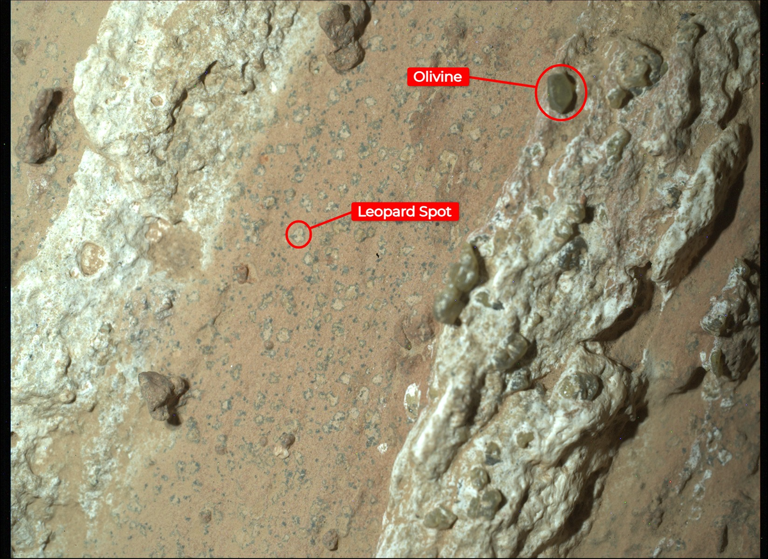
Now, one of those rovers might’ve discovered one of the most compelling pieces of evidence for Martian microbial life. Located on an arrowhead-shaped, three-foot-long rock nicknamed “Cheyava Falls” in the Jezero Crater (the 28-mile-wide crater that Perseverance has called home for the past three years), this “piece of evidence” is actually a trifecta of data points that suggest the presence of past microbial life. The rock in question features two vertical veins of calcium sulfate that likely formed from past water, and these stripes both flank a red band of rock filled with “leopard spots.”

NASA has discovered evidence of past water on Mars before, but it’s this narrow band of rock that brings new meaning to this discovery. Using its SHERLOC (Scanning Habitable Environments with Raman & Luminescence for Organics & Chemicals) and PIXL (Planetary Instrument for X-Ray Lithochemistry) instruments, Perseverance determined the existence of organic compounds within the rock. Oh, and those “leopard spots?” Those likely indicate chemical reactions that could’ve supplied energy to ancient microbial Martians.

While each of these discoveries—the presence of water, organic compounds, and chemical reactions—would be notable even if discovered separately, NASA has never seen all three in one location, meaning the geological chemistry of Cheyava Falls is possibly our best clue yet that Mars once hosted life.

“Cheyava Falls is the most puzzling, complex, and potentially important rock yet investigated by Perseverance,” Caltech’s Ken Farley, Perseverance project scientist, said in a NASA press statement. “We have our first compelling detection of organic material, distinctive colorful spots indicative of chemical reactions that microbial life could use as an energy source, and clear evidence that water—necessary for life—once passed through the rock.”

While this site is particularly exciting, it’s far from the first Martian discovery to cause considerable microbial hype. Just earlier this year, scientists studying a 2017 soil analysis from Curiosity’s ongoing mission in Gale Crater discovered an abundance of manganese in the soil—something that usually requires the presence of oxygen and (you guessed it) microbes.

An annotated image of the Cheyava Falls rock, the two vertical veins of calcium sulfate can be seen on the left and right of the image.

An annotated image of the Cheyava Falls rock, the two vertical veins of calcium sulfate can be seen on the left and right of the image.
© NASA/JPL-Caltech/MSSS

But all of these discoveries come with more than a few caveats. In Curiosity’s case, too little is known about the Mars’ oxidation process to be certain that microbes existed in Gale Crater, and this new discovery also isn’t immune from scientific scrutiny. One big head scratcher is the presence of millimeter-sized olivine crystals—a mineral that forms from magma. This may possibility explain how past volcanic activity could produce this geologic phenomena without relying on the presence of microbes at all.

“We have zapped that rock with lasers and X-rays and imaged it literally day and night from just about every angle imaginable,” Farley said in the press statement. “Scientifically, Perseverance has nothing more to give. To fully understand what really happened in that Martian river valley at Jezero Crater billions of years ago, we’d want to bring the Cheyava Falls sample back to Earth, so it can be studied with the powerful instruments available in laboratories.”

The “six-wheeled geologist” (as NASA calls it) doesn’t contain an onboard lab like its sister rover, Curiosity. But that’s actually a feature—not a flaw. NASA originally designed Perseverance to also be a sample retrieval mission, meaning that the space agency would send an additional spacecraft to retrieve samples from Perseverance and bring them back to Earth for further study.

However, with the costs of such a mission edging into the $11 billion range, bringing back samples of this Martian geologic wonder is in now question—as is the possibility of definitively understanding if there was once microbial life on Mars.

Hoe vind je dit bericht?
Geschreven door peter om 16:41 Stuur door

NASA’S DART MISSION SNAPPED PICTURES UNTIL IT CRASHED INTO AN ASTEROID. HERE’S WHAT THOSE IMAGES REVEAL

NASA’S DART MISSION SNAPPED PICTURES UNTIL IT CRASHED INTO AN ASTEROID. HERE’S WHAT THOSE IMAGES REVEAL

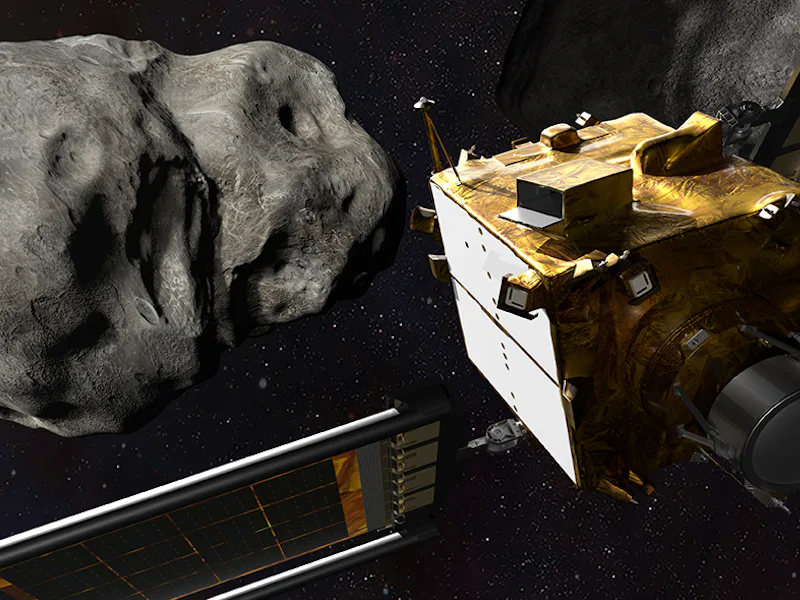
NASA got up close and personal to an asteroid pair near Earth.

 
An illustration of a box-shaped spacecraft approaching a potato-shaped asteroid.
JHU Applied Physics Laboratory

NASA’s Double Asteroid Redirection Test (DART) made history almost two years ago. This was the first time humanity attempted to intentionally alter the motion of a space rock. They succeeded.

A spacecraft slammed into the tiny moon of an asteroid, all while its onboard camera and an Italian robotic onlooker called LICIACube snapped photos.

The footage is a treasure trove. On Tuesday, teams published five scientific papers in the journal Nature Communications. Each contains new insights into what these rocks are like, and how tricky it may be for future planetary defense missions to strike another asteroid to avoid an impact’s calamity on Earth.

Behold the final five-and-a-half minutes before DART intentionally collided into asteroid Dimorphos.

NASA/JOHNS HOPKINS APL

Here are five discoveries about this binary asteroid system so briefly encountered on September 26, 2022.

1. THE LARGER ASTEROID HAS AN OLDER SURFACE THAN THE LITTLE MOON.

Didymos and its moonlet Dimorphos are related to one another. But scientists still don’t know exactly how. One investigation looked at 16 craters on the larger asteroid, Didymos.

DRACO, the Didymos Reconnaissance and Asteroid Camera for OpNav scientific camera, was one image source. It took many photos of Didymos and smaller Dimorphos before impacting the latter’s surface.

The craters suggest that the Didymos surface is about 12.5 million years old. But the Dimorphos surface is a fraction of that, only about 90,000 years to 300,000 years old.

2. DIDYMOS IS A PILE OF RUBBLE.

Observations confirmed theoretical expectations: It’s essentially a clump of leftovers from a catastrophic event in the ancient past.

Scientists noticed Didymos boulders appear too large to have been excavated by whatever made the craters. Something grander was responsible, and its mess, rounded up through gravitational attraction, is now Didymos. The large boulders are heirlooms passed down from an ancient parent rock.

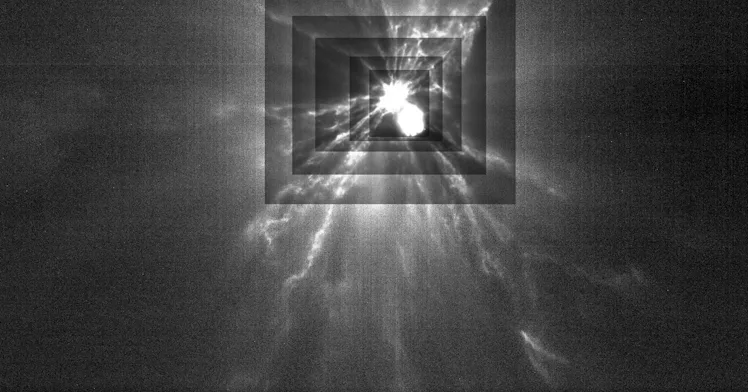
A plume fans out from a central bright region like wings. The central bright region is surrounded by...

This image from Italy’s LICIACube show the plumes of ejecta streaming from the Dimorphos asteroid after NASA’s DART made impact. Each rectangle creates a different level of contrast. This helps viewers to better see the plume’s fine structure. 

ASI/NASA/APL

3. WE NEED TO KNOW MUCH MORE ABOUT FRACTURES ON DIMORPHOS’ BOULDERS.

Asteroid boulders live in an airless environment. But, they can be altered through thermal fatigue. As the Sun shines on them, cracks form.

The Dimorphos fractures were identified with the help of independent contributors who located them across boulders of different sizes. This work adds to what’s already been gleaned about the Near-Earth asteroid population from previous NASA, Japanese, and European missions.

The picture emerging from the data is that, should a kinetic impactor like DART slam into another space rock, the thermal cracks “may contribute to an enhancement in the ejected mass,” one study says.

4. ECLIPSES MAY BE ONGOING.

On the flip side, eclipses could be having an opposite effect: cooling rocks down.

This animation shows how Dimorphos’ orbit around Didymos was seen from Earth about one week after the DART impact.

NASA/APL/UMD

Based on limited data about how Dimorphos now spins after DART struck it, scientists think the moonlet remains tidally-locked to Didymos. This means Dimorphos shows the same face to Didymos, like the Moon does with Earth. If this relationship is fostering eclipses, a periodic drop in temperature could be happening on the asteroids.

Like thermal fatigue from solar radiation, the cooling effect of eclipses must also be factored into deflection techniques. This asteroid duo provides a unique chance to investigate this. Other closely-studied asteroids and comets have no companion to block out light.

5. THE DIDYMOS SURFACE IS WEAKER THAN DRY SAND ON EARTH.

One major thing researchers want to know before visiting any celestial object is how much weight you can put on it. This is called bearing capacity. It reveals a lot about the formation history of the Solar System. And in the case of planetary defense, bearing capacity also informs how to build something that can effectively knock a space rock off a collision course with Earth.

“The low surface strength of Dimorphos likely contributed to DART’s significant impact on its orbit,” NASA officials wrote in an announcement published Tuesday. This also seems to be a trait of the larger asteroid, Didymos.

Researchers looked at DRACO’s final full image of Didymos before it slammed into the moonlet Dimorphos. DART didn’t touch Didymos. But boulders on its surface left tracks. Scientists studied nine of these paths. They determined that the bearing capacity of Didymos is “at least 3 orders of magnitude less than the bearing capacity of dry sand on Earth, or lunar regolith [dirt].”

Researchers have already learned so much about Near-Earth asteroids from the DART mission. Thanks to the European Space Agency’s upcoming Hera mission to survey the duo in October 2026, even more discoveries could emerge.

{ https://www.inverse.com/ }

Hoe vind je dit bericht?
Geschreven door peter om 16:31 Stuur door

Een reis naar lokale legendes over de hele wereld -DEEL I

Een reis naar lokale legendes over de hele wereld - DEEL I

Een reis naar lokale legendes over de hele wereld

©Getty Images

Een reis naar lokale legendes over de hele wereld
Etherische figuren, die doen denken aan eeuwenoude legendes, komen op subtiele wijze tevoorschijn uit het tapijt van culturen en wenken nieuwsgierigen en dapperen om de blijvende kracht van folklore te ontdekken. Deze verhalen zijn het gefluister van generaties, die de essentie van het mysterieuze en magische vastleggen, en in deze galerij worden ze gevierd als de schatten van ons gedeelde menselijke erfgoed.

LEES VERDER door de galerij om de verhalen van weleer te ontdekken!

Het fluisterende bamboe (China)

©Shutterstock

Het fluisterende bamboe (China)
In het hart van het oude China fluistert een verhaal over twee geliefden, getransformeerd in bamboe, voor altijd samen zwaaiend in de wind. Deze legende, diep geworteld in de Chinese folklore, spreekt over de blijvende kracht van de liefde die echoot door de ritselende bamboebladeren. Het is een herinnering aan de veerkracht van de liefde en de eeuwige aanwezigheid in de natuur.

Anansi's Web (West-Afrika)

©Shutterstock

Anansi's Web (West-Afrika)
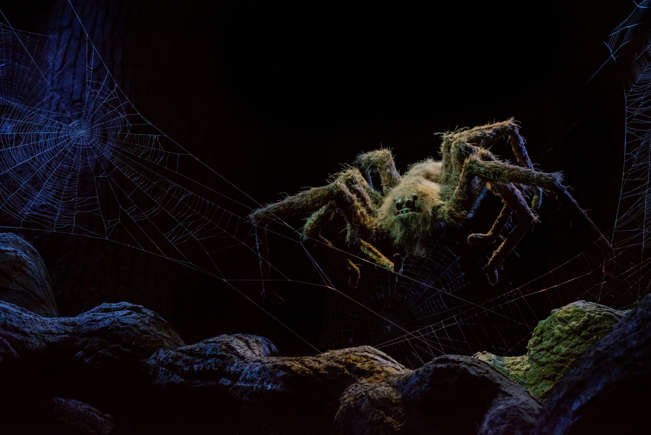
Onder de Afrikaanse hemel weeft Anansi de Spin meer dan alleen maar webben; hij weeft verhalen over wijsheid. Deze bedrieger, een prominent figuur in West-Afrikaanse verhalen, leert levenslessen door zijn sluwe en avontuurlijke heldendaden. Elke streng van zijn web symboliseert de complexiteit van de beslissingen in het leven en de wijsheid die hij door ervaring verkrijgt.

Het noorderlicht (Scandinavië)

©Shutterstock

Het noorderlicht (Scandinavië)
Terwijl je in de Scandinavische nacht staart, ben je getuige van de etherische dans van de Aurora Borealis. Folklore vertelt over deze lichten als een hemels fenomeen, waar de geesten van de overledenen in de hemel spelen, verhalen van verwondering weven en het aardse rijk overbruggen met het mystieke.

Het monster van Loch Ness (Schotland)

©Shutterstock

Het monster van Loch Ness (Schotland)
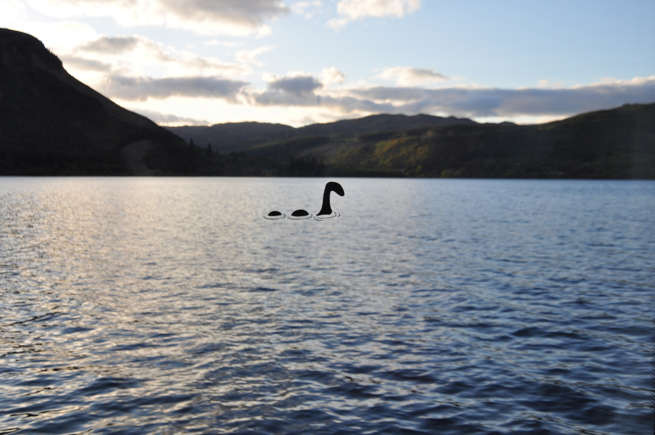
Gehuld in de mist van de Schotse folklore ligt Loch Ness, de thuisbasis van Nessie, het ongrijpbare monster. Deze legende geeft de essentie weer van de enigmatische charme van Schotland, waarbij Nessie de mysteries symboliseert die op de loer liggen in de diepten van onze verbeelding en in de donkere wateren van het meer.

Baba Yaga's Hut (Rusland)

©Shutterstock

Baba Yaga's Hut (Rusland)
In het hart van de Russische folklore staat de hut van Baba Yaga, een bijzondere verblijfplaats op kippenpoten. De enigmatische heks, die vaak een cruciale rol speelt in verhalen over heldendom en speurtochten, belichaamt de dualiteit van de natuur – soms een helper, soms een belemmering, maar altijd een belangrijke figuur in het rijke tapijtwerk van de Slavische mythologie.

De Feniks (Midden-Oosten)

©Shutterstock

De Feniks (Midden-Oosten)
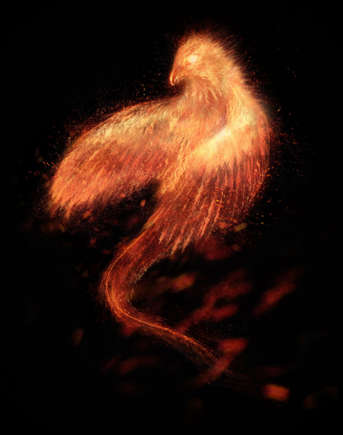
Uit de as van oude verhalen uit het Midden-Oosten rijst de Feniks op, een prachtige vogel die vernieuwing en het eeuwige leven symboliseert. Dit mythische wezen, helder brandend en herboren uit zijn eigen ondergang, vertegenwoordigt de eindeloze cyclus van leven, dood en wedergeboorte, een krachtig embleem van veerkracht en hoop in de folklore.

Kraken (Noordse Zee)

©Shutterstock

Kraken (Noordse Zee)
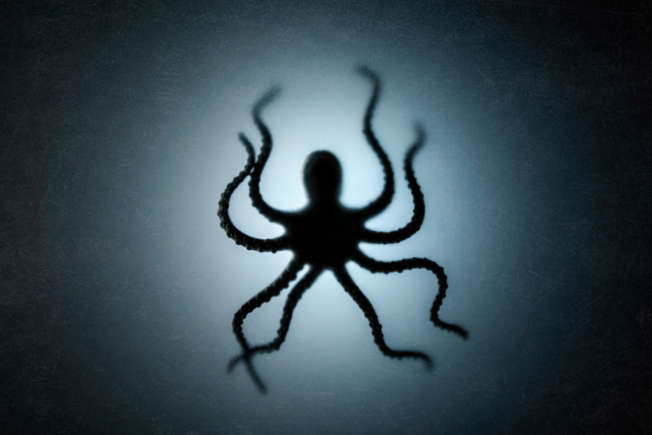
In de diepe, koude wateren van de Noordse Zeeën schuilt de Kraken, een legendarisch zeemonster dat gevreesd wordt door zeilers. Dit enorme wezen, vaak vergeleken met een reuzeninktvis, belichaamt de mysteries en verschrikkingen van de oceaan, een bewijs van de eeuwenoude fascinatie en angst van de mensheid voor de onbekende diepten van de zee.

El Dorado (Zuid-Amerika)

©Shutterstock

El Dorado (Zuid-Amerika)
Diep in het hart van Zuid-Amerika fascineert de legende van El Dorado, de stad van goud, ontdekkingsreizigers al eeuwenlang. Dit prikkelende verhaal spreekt over grenzeloze rijkdom en ambitie en weerspiegelt de eindeloze zoektocht van de mensheid naar ontdekkingen en de ongrijpbare aard van onze grootste verlangens.

De Banshee (Ierland)

©Shutterstock

De Banshee (Ierland)
In de Ierse folklore is het treurige gejammer van de Banshee onder het maanlicht een voorbode van de dood. Deze spookachtige figuur, gehuld in mysterie, belichaamt de Keltische eerbied voor de overgang van leven naar dood, een aangrijpende herinnering aan de dunne sluier tussen het levende en het spirituele rijk.

Tengu (Japan)

©Shutterstock

Tengu (Japan)
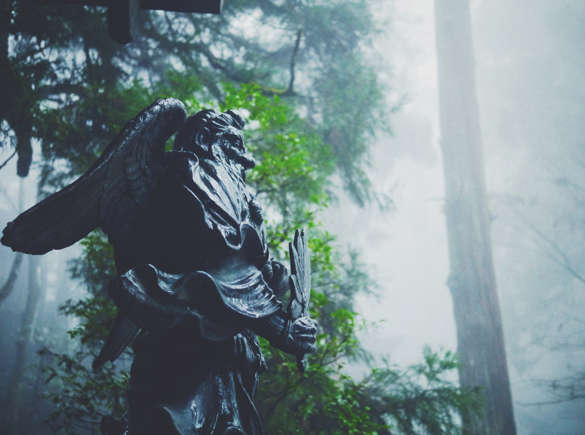
Hoog in de Japanse bergen wonen de Tengu: mystieke wezens die deels mens en deels vogel zijn. Deze wezens staan ​​bekend als zowel beschermers als bedriegers van de bossen en symboliseren de complexiteit van de natuur en menselijke interactie, waarbij ze kattenkwaad en wijsheid vermengen in het rijke tapijtwerk van de Japanse folklore.

Bigfoot (Noord-Amerika)

©Shutterstock

Bigfoot (Noord-Amerika)
In de uitgestrekte, onbekende bossen van Noord-Amerika roept de legende van Bigfoot, een mysterieuze reus, nieuwsgierigheid en debat op. Dit ongrijpbare wezen, vaak omschreven als een torenhoge, harige figuur, belichaamt de wilde en onbekende aspecten van de natuur. Bigfoot dient als symbool voor de mysteries die nog steeds verborgen liggen in de afgelegen wildernis.

De regenboogslang (Australië)

©Shutterstock

De regenboogslang (Australië)
Centraal in de Aboriginal mythologie wordt de Regenboogslang vereerd als een krachtige scheppende godheid. Dit levendige, slangachtige wezen, geassocieerd met water en leven, weeft door de verhalen van de inheemse bevolking en symboliseert de schepping, vruchtbaarheid en de onderlinge verbondenheid van alle levende wezens.

La Llorona (Mexico)

©Shutterstock

La Llorona (Mexico)
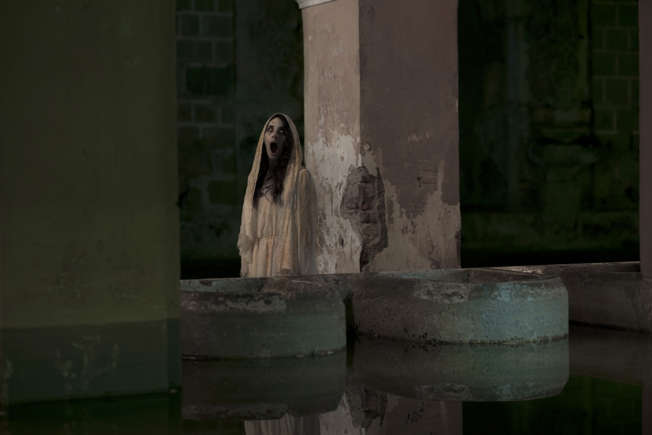
Het verhaal van La Llorona, gefluisterd langs de rivieroevers, spreekt over een spookachtige vrouw, die eeuwig rouwt om haar verdronken kinderen. Dit aangrijpende verhaal, doordrenkt van Mexicaanse folklore, dient als een waarschuwend verhaal over liefde, verlies en de gevolgen van iemands daden, dat door de eeuwen heen weerklinkt.

De Djinn (Midden-Oosten)

©Shutterstock

De Djinn (Midden-Oosten)
In verhalen uit het Midden-Oosten zijn de Djinn bovennatuurlijke wezens, noch geheel goed, noch slecht. Deze raadselachtige wezens worden vaak geassocieerd met het vervullen van wensen en weerspiegelen de dubbele aard van menselijke verlangens en de complexe gevolgen die de vervulling ervan met zich meebrengt.

 { https://www.msn.com/nl-be/ }

Hoe vind je dit bericht?
Geschreven door peter om 16:06 Stuur door

Een reis naar lokale legendes over de hele wereld - DEEL II

Een reis naar lokale legendes over de hele wereld - DEEL II

De Krampus (AlpenEuropa)

©Shutterstock

De Krampus (AlpenEuropa)
In de ijskoude Alpengebieden vormt de Krampus een schril contrast met de feestelijke vreugde van Kerstmis. Deze gehoornde figuur, bekend om het straffen van zich misdragende kinderen tijdens de kerstperiode, belichaamt de oude gebruiken en duistere aspecten van wintervieringen en herinnert aan de balans tussen welwillendheid en discipline.

Valkyries (Noorse mythologie)

©Shutterstock

Valkyries (Noorse mythologie)
In de Noorse mythologie kozen Walkuren, goddelijke vrouwelijke figuren, het lot van krijgers in de strijd. Deze krachtige wezens, die door de lucht vliegen, vertegenwoordigen de concepten van het lot en het hiernamaals, een integraal onderdeel van de Viking-overtuigingen en -cultuur.

De rattenvanger (Duitsland)

©Shutterstock

De rattenvanger (Duitsland)
De rattenvanger, een mysterieuze figuur uit de Duitse folklore, staat erom bekend een stad van ratten te bevrijden en later zijn kinderen weg te lokken. Zijn verhaal is een waarschuwend verhaal over beloften en gevolgen, dat door de eeuwen heen weerklank vindt.

De Nian (China)

©Shutterstock

De Nian (China)
Het angstaanjagende beest Nian zou in de Chinese folklore zijn verslagen met behulp van rode lantaarns en vuurwerk. Deze legende symboliseert de triomf over angst en tegenspoed, gevierd tijdens het Chinese Nieuwjaar.

De Golem (Joodse folklore)

©Shutterstock

De Golem (Joodse folklore)
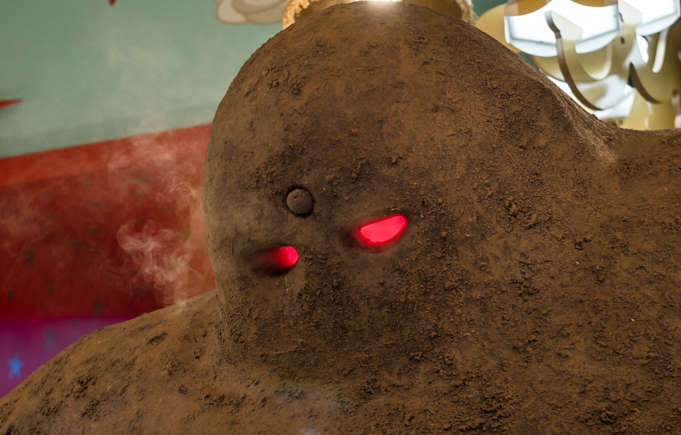
In de Joodse folklore werd de Golem, een tot leven gewekt kleifiguur, gecreëerd om de gemeenschap te beschermen. Dit krachtige verhaal onderzoekt thema's als creatie, controle en de onbedoelde gevolgen van onze acties.

Kappa (Japan)

©Shutterstock

Kappa (Japan)
De Kappa, waterwezens uit de Japanse folklore, staan ​​bekend om hun kattenkwaad, maar toch zijn ze gebonden aan een beleefdheidscode. Deze wezens symboliseren de genuanceerde relatie tussen mensen en de natuurlijke wereld en weerspiegelen het delicate evenwicht van co-existentie.

The Selkie's Secret (Schotse en Ierse folklore)

©Shutterstock

The Selkie's Secret (Schotse en Ierse folklore)
Selkies, zeehondenmensen uit de Schotse en Ierse overlevering, belichamen de thema's identiteit en vrijheid. Hun verhalen, vaak romantisch en tragisch, spreken over de transformerende aard van selkies en hun diepe verbinding met zowel land als zee, en reflecteren op het universele verlangen naar iemands ware thuis.

Bronnen:

  • (Invaluable.com)
  • (TheTravel)
  • (World of Tales)

{ https://www.msn.com/nl-be/ }

Hoe vind je dit bericht?
Geschreven door peter om 16:04 Stuur door

What could a future sovereign Mars economy look like?

Artist's illustration of a future Mars colony. (Credit: Ville Ericsson)

What could a future sovereign Mars economy look like?

What would the economy of a future Mars society look like, and how could it be self-sustaining while being completely sovereign from Earth and its own economy? This is what a recent study submitted to Space Policy hopes to address as a sole researcher discusses a model that could be used for establishing economic freedom on Mars, enabling both monetary and political stability across all Red Planets settlements. This study holds the potential to help scientists, economists, and world leaders better understand plausible governmental systems used by human settlers on other worlds while maintaining sovereignty from Earth and its own governmental law and order.

Here, Universe Today discusses this incredible study with Dr. Jacob Haqq-Misra, who is the Director and a Senior Research Investigator of Blue Marble Space Institute of Science (BMSIS) and sole author of the study, regarding the motivation behind the study, significant ideas presented in the study, the importance of establishing a sovereign economic system on Mars, eliminating capital exchange between Mars and Earth, how Mars can become a sovereign entity from Earth after humans settle there, and how an economic system can be established on a sovereign Mars. Therefore, what was the motivation behind the study?

“My motivation was to build on the idealistic framework for an independent Mars that I developed in my book Sovereign Mars,” Dr. Haqq-Misra tells Universe Today. “In my book, I describe five conditions for enabling Mars to be an independent planetary state, a juridical peer to Earth. In this new study, I develop a possible economic model that would be consistent with these five conditions.”

These five conditions outlined in Sovereign Mars include all permanent settlers on Mars completely acquiescing Earth citizenship and interests; Earthlings being unable to interfere with the Mars affairs, including financial, political, and social aspects; Earthlings requiring permission from Mars to conduct scientific investigations on the Red Planet; only Mars citizens can own land; and all resources brought from Earth, including technological or other items, will remain on Mars permanently.

For the study, Dr. Haqq-Misra dives deeper into the economic facets of a future sovereign Mars government while embodying these five conditions, specifically focusing on the financial aspects of such an economic system, including banking, currencies, capital ownership, and Earthling tourism. He emphasizes how such a system builds off the mistakes from Earth’s present-day economic systems that could potentially lead to both financial and political stability on Mars. He notes this is an “idealistic but feasible model” with the goal of establishing full economic freedom for future Mars citizens from Earth. So, what were the most significant ideas presented in this study?

“The first idea is ‘full reserve banking’,” Dr. Haqq-Misra tells Universe Today. “Our banking system today allows banks to loan out more money than they hold as cash in reserves, which is known as a ‘fractional reserve’ system. This can lead to problems such as a ‘run on the bank,” where too many people try to take out their deposits all at once, only to find that the bank does not have their money.”

Dr. Haqq-Misra continues, “The second idea is the diffusion of capital ownership. Many visions of space settlement imagine something like a world space agency or other centralized authority that could ensure justice and perhaps even serve as a way to redistribute wealth. But the centralization of sovereign power also carries significant risks for the abuse of such power. Some arguments even suggest a somewhat Marxists approach toward the centralized or government ownership of wealth-producing capital, which is then redistributed equitably, but this again carries significant risk of abuse and corruption. An alternative idea is to widely diffuse the ownership of capital, instead of wealth. This means that ownership of companies, equipment, and anything else that can generate wealth would be held in a wider range of hands than today—ideally, by everyone.”

Along with the five conditions of a sovereign Mars noted above, requirements will also be established by the full reserve banking system on Mars, including all transactions staying on Mars, no currency exchange with Earth, and currency issuance will be based on changes in population. All tourism on Mars will follow three conditions that coincide with the conditions of both a sovereign Mars and the Mars full reserve banking system, including tourists being unable to own capital on Mars, the prohibition of Mars currency from being returned to Earth, and no currency transactions from tourists while services would only be provided from the exchange of goods.

On present-day Earth, currency exchange is the primary method for purchasing goods and services, with a total of 180 currencies being recognized across 195 countries around the world. While the value of each currency across the globe varies daily, this system allows individuals from separate countries to own capital in other countries with minimal government interference. But what is the importance behind the complete lack of capital exchange between Earth and Mars?

“This is part of the idealistic framework in Sovereign Mars,” Dr. Haqq-Misra tells Universe Today. “Preventing exchange between the two planets would enable Mars to retain its maximum potential to develop new ideas in civilization, such as this economic model. In practice, these ideas could still be attempted on Mars even if there is some exchange between the two planets, although this may lead to different results.”

The prospect of sending humans to Mars has been the purview of science fiction and countless scientific discussions for over 100 years. this began with the Danish silent film A Trip to Mars and other films continuing throughout the 20th century while incorporating current Mars inhabitants or remnants of past Mars civilizations. While films of the last few decades of the 20th century and into the 21st century conveyed the first human trips to Mars, most recently with the film The Martian, little has been discussed regarding permanent human settlements on the Red Planet.

The closest this notion came was in the television series The Expanse, which depicted the Martian Congressional Republic on Mars being a sovereign entity from Earth, complete with its own military and political hierarchy. However, the economic system within this government wasn’t discussed in detail. But what steps need to be taken for Mars to become a sovereign entity after humans settle there?

“The biggest challenge is having sufficient infrastructure and resources to become self-sustaining on Mars,” Dr. Haqq-Misra tells Universe Today. “Some resources could be used on Mars, but not right away, and actually enabling an independent Mars may require benefactors with long-term visions for humanity or even Earth, without the need for an immediate or near-future financial return. I call this ‘deep altruism’ in Sovereign Mars.”

Additionally, regarding the importance of establishing a sovereign economic system on Mars and the steps required for this economic system to take hold, Dr. Haqq-Misra tells Universe Today, “We have many examples even in recent history of economic recessions and collapses. If space settlement is really to be a long-duration venture, then we need economic ideas that can remain sustainable over long timescales.”

Dr. Haqq-Misra continues, “The best way to establish this economic system would be for any initial settlers to agree on a method for implementing such a system prior to actually arriving on Mars. Part of the value in thinking about martian governance today is to anticipate such possibilities prior to the actual landing of humans on Mars. And thinking about governance on Mars can also help us gain better insight into our governance and economic systems on Earth.”

Sending humans to Mars could happen within the next decade, but sending humans to live there could be decades away, and establishing a sovereign Mars could be at least 100 years away, along with establishing and maintaining a sustainable economy separate from Earth. However, establishing protocols well in advance could lead to a smooth transition into an economic system on a sovereign Mars that is completely separate and free from the Earth’s systems.

Dr. Haqq-Misra concludes by telling Universe Today, “I am working with a talented group of students this summer through the BMSIS Young Scientist Program to examine historical analogues for sovereignty on Mars. We hope to have some new studies finished in the coming year.”

Will a future sovereign Mars successfully establish an economic system that is separate from Earth some time in the distant future? Only time will tell, and this is why we science!

As always, keep doing science & keep looking up!

{ https://www.universetoday.com/ }

Hoe vind je dit bericht?
Geschreven door peter om 01:40 Stuur door

Having Trouble Traversing the Sands of Mars? A Lizard Robot Might Help

Having Trouble Traversing the Sands of Mars? A Lizard Robot Might Help

Mars exploration vehicles typically have wheels, allowing them to traverse some challenging terrain on the Red Planet. However, eventually, their systems start to wear down, and one of their wheels gets stuck. The “Free Spirit” campaign in 2009 was the most widely known case. Unfortunately, that campaign wasn’t successful, and now, 15 years later, Spirit remains stuck in its final resting place. Things might have been different if NASA had adopted a new robot paradigm developed by Guangming Chen and his colleagues at the Nanjing University of Aeronautics & Astronautics Lab of Locomotion Bioinspiration and Intelligent Robots. They devised a robot based on a desert lizard, with adaptable feet and a flexible “spine” that, according to their calculations, would be well suited to traversing over Martian regolith.

Planning for traversing tough terrain isn’t limited to rovers that are stuck. Curiosity and Perseverance, perhaps the two best-known operating rovers on Mars, currently spend a lot of their time trying to avoid areas where they might become entangled. This limits their ability to capture any data from those areas, potentially missing out on some cool rocks, like the pure sulfur that Curiosity recently found for the first time on Mars. 

A lizard-inspired robot, on the other hand, would have no trouble traversing such terrain. It also has some advantages over traversing different types of terrain, such as rocks. Most rovers don’t have enough leg lift to get over medium-sized rocks, whereas a legged robot would, especially one with adjustable “toes” that would allow it to grip a rock tighter than would otherwise be possible with typical legged robots.

Lizard-inspired robots aren’t only useful for walking – they can also jump like their biological cousins, as demonstrated in this video from UC Berkeley’s robotics lab.
Credit – UC Berkeley YouTube Channel

The design for the robot itself is relatively simple – it has four “feet” that are offset from each other by a chassis that essentially looks like a desert lizard. It even has a tail for counterbalancing. Each foot has a series of three “toes” powered by springs. They also have a servo for ankle articulation and a bearing for rotational control. This combination allows the lizard robot to walk on all fours effectively and adjust each leg to best adapt to the surface it is “walking” over.

The authors performed a series of kinematic calculations for different types of terrain to help understand how the robot would interact with each of those surfaces. Kinematic calculations are typically used in robotics when designers attempt to find the best way to move a specific robot part. The calculations are relatively detailed in this case, given the number of variable parts. However, a control algorithm is possible using just on-board computation, allowing for some basic autonomous terrain navigation if architecture is ever adopted for use in space.

Building an actual prototype would be a great way to work on that navigation algorithm, and that’s precisely what the researchers did. They 3D printed many of the parts for the chassis and foot, embedded some batteries and controllers in the head and tail sections, and started testing the prototype on simulated Martian test terrain.

Mars isn’t the only place that could benefit from legged robots – they could work on the Moon as well, as Fraser discusses.

They tested everything from grasping loose regolith to climbing over small rocks, and their algorithm seemed to work effectively for handling the relatively simple terrain in the test bed. However, the robot’s actual speed of movement was slower than originally simulated, mainly due to technical difficulties in balancing the motions of the springs and the spine. 

Despite any problems that arose during physical testing, this new robot iteration is a step in the right direction, as this lab has been designing similar systems for years. They also plan to continue to another version, including mounting a continuous power supply and fully implementing an autonomous navigation algorithm. Their research is funded by both Jiangsu Province and the Chinese Ministry of Science and Technology, so it seems it will continue to gain support, at least for the foreseeable future.

Learn More:

Lead Image:

  • Image of the prototyped lizard biomimetic robot.
  • Credit – Chen et al.

{ https://www.universetoday.com/ }

Hoe vind je dit bericht?
Geschreven door peter om 01:31 Stuur door

Watch an Inflatable Habitat Burst in Super Slo-Mo

Image of Sierra Space's full-scale Large Integrated Flexible Environment (LIFE®) on the test stand at NASA Marshall Space Flight Center. (Credit: Sierra Space)

Watch an Inflatable Habitat Burst in Super Slo-Mo

Ae inflatable habitats the future of human space exploration? This is what the space-tech company, Sierra Space, hopes to achieve as they recently conducted a successful Ultimate Burst Pressure test on June 18 with its Large Integrated Flexible Environment (LIFE®) technology at NASA’s Marshall Space Flight Center. The goal of these tests is to inflate the test article until it explodes while ascertaining if the maximum pressure falls within NASA’s strict safety guidelines regarding a recommended operating pressure of 60.8 psi (maximum operating pressure of 15.2 psi times four as a safety factor). Upon explosion, Sierra Space engineers immediately found the recent test achieved 74 psi, thus exceeding NASA’s safety standards by 22 percent.

“We are 100 percent committed to maintaining U.S. leadership in Low Earth Orbit. Sierra Space is leading the way with the first commercial space station to replace the International Space Station when it is decommissioned and ensure there is no gap in LEO,” said Sierra Space CEO Tom Vice. “Our revolutionary, expandable space station technology reinvents the space station. Our technology, for the first time, will enable the right unit economics that will usher in the full commercialization of space. Our biotech and industrial partners will utilize our factories of the future to innovate new products that will massively disrupt terrestrial markets and benefit life on Earth.”

This recent test marks the technology’s second full-scale structural test and seventh key validation test, which comes after Sierra Space successfully conducted its first full-scale burst test in December 2023, achieving 77 psi and exceeding NASA’s safety standards by 27 percent. Both test units stood at more than 6 meters (20 feet) in height and had volumes of 300 m3 (10,594 ft3), or approximately 1/3rd of the pressurized volume of the International Space Station (ISS). Sierra Space is now planning for the first test of its 500 m3 (17,657 ft3) space station technology in 2025, which will be 55 percent of the pressurized volume of the ISS.

December 2023 burst test of the Large Integrated Flexible Environment (LIFE®)

“No other company is moving at the speed of Sierra Space to develop actual hardware, stress-tested at full scale, and demonstrate repeatability. We’ve taken a softgoods system that very few companies around the world have been able to design, and now we have consistent, back-to-back results,” said Shawn Buckley, VP of Earthspace™ Systems, Space Stations, at Sierra Space. “A second successful full-scale test is an absolute game changer. We now know it’s possible to equal or surpass the total habitable volume of the entire International Space Station, in a single launch.”

While these two recent tests were conducted at full-scale, Sierra Space conducted two sub-scale burst tests in July 2022 and November 2022, achieving maximum pressures of 192 and 204 psi, respectively, with NASA’s safety standards being 182.4 psi given the sub-scale sizes, thus both tests successfully exceeding these safety standards.

July 2022 sub-scale burst test
November 2022 sub-scale burst test

Sierra Space stated in June 2023 that they hope to launch a “pathfinder” version of the LIFE® habitat in 2026 with the goal of the technology being an essential piece to the Orbital Reef commercial space station, with the latter scheduled to be operational in 2027. Given its size, Sierra Space estimates the LIFE® habitat can comfortably accommodate four astronauts with the remaining volume being used for science experiments, exercise equipment, small medical facilities, and the Astro Garden® system, which can potentially grow food in space and has previously undergone testing at the Sierra Space Madison WI facility.


This comes as numerous commercial space companies are attempting to launch their own space stations, including the Axiom Station, Starlab Space Station, Haven-1, and the aforementioned Orbital Reef space station. Additionally, this also comes as NASA announced their plans to “retire” the ISS in 2030, although the agency announced in a July 2024 white paper that they will evaluate the possibility of extending the lifetime of the ISS if no commercial space stations are able to accommodate space-based research at that time.

How will Sierra Space’s Large Integrated Flexible Environment (LIFE®) technology help advance human space exploration in the coming years and decades? Only time will tell, and this is why we science!

As always, keep doing science & keep looking up!

{ https://www.universetoday.com/ }

Hoe vind je dit bericht?
Geschreven door peter om 23:52 Stuur door

51,200-YEAR-OLD CAVE ART, LIKELY THE WORLD’S OLDEST, MAY NOT HAVE BEEN MADE BY MODERN HUMANS

zKrzIu3v?format=jpg&name=900x900

51,200-YEAR-OLD CAVE ART, LIKELY THE WORLD’S OLDEST, MAY NOT HAVE BEEN MADE BY MODERN HUMANS

New evidence reaffirms that cave art on the Indonesian island of Sulawesi is the oldest known in the world, according to a study that now dates the enigmatic paintings to 51,200 years ago.

The findings push back the timescales on human activity on Sulawesi, raising new questions about the origins of the island’s ancient art and its relationship to early human migrations.

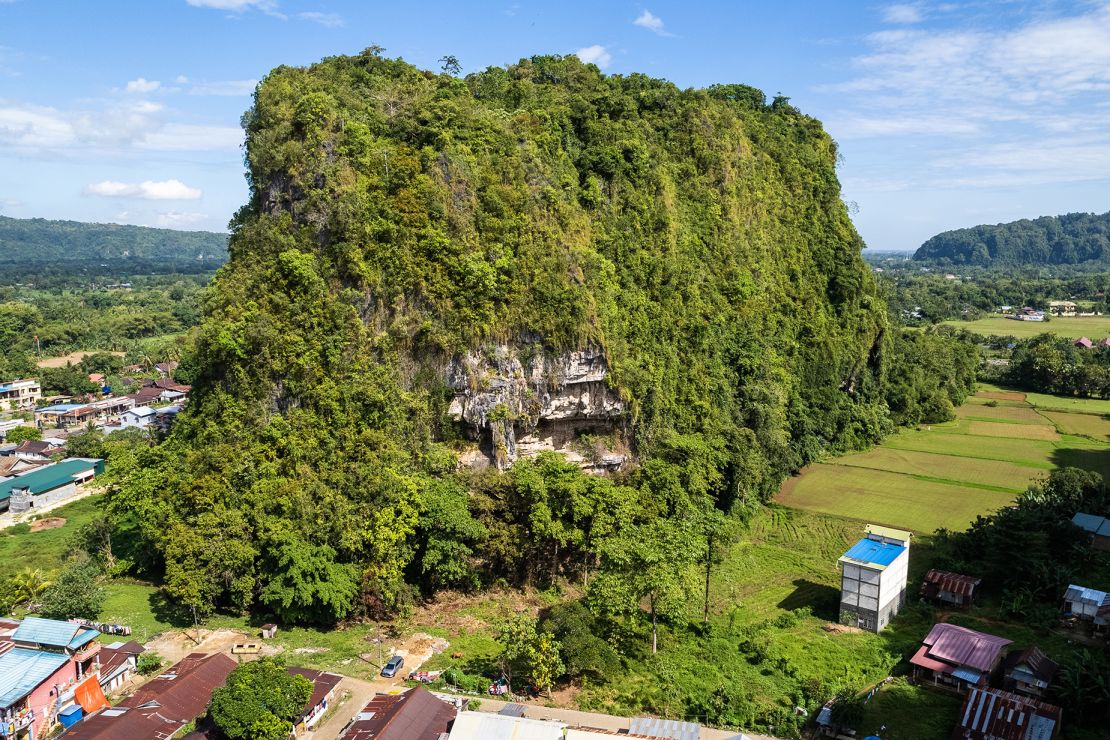
An aerial view of Karampuang hill in south Sulawesi, where the cave is located.

An aerial view of Karampuang hill in south Sulawesi, where the cave is located. 
BRIN Google Arts & Culture

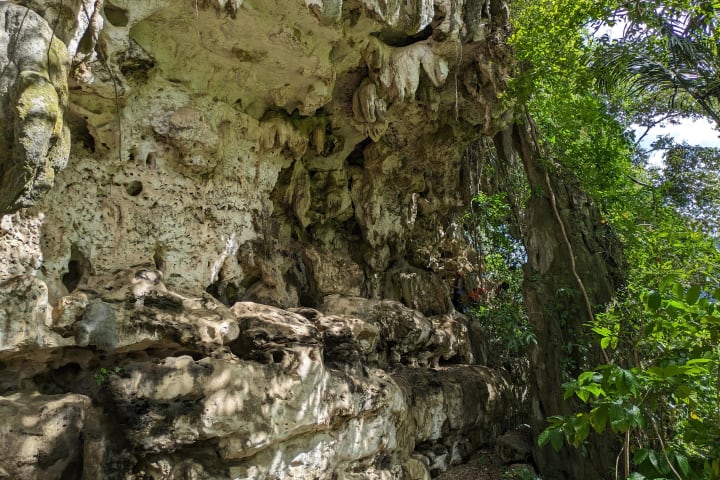
The entrance to Leang Karampuang cave

The entrance to Leang Karampuang cave, where some of the oldest cave art has been found.

Google Arts & Culture

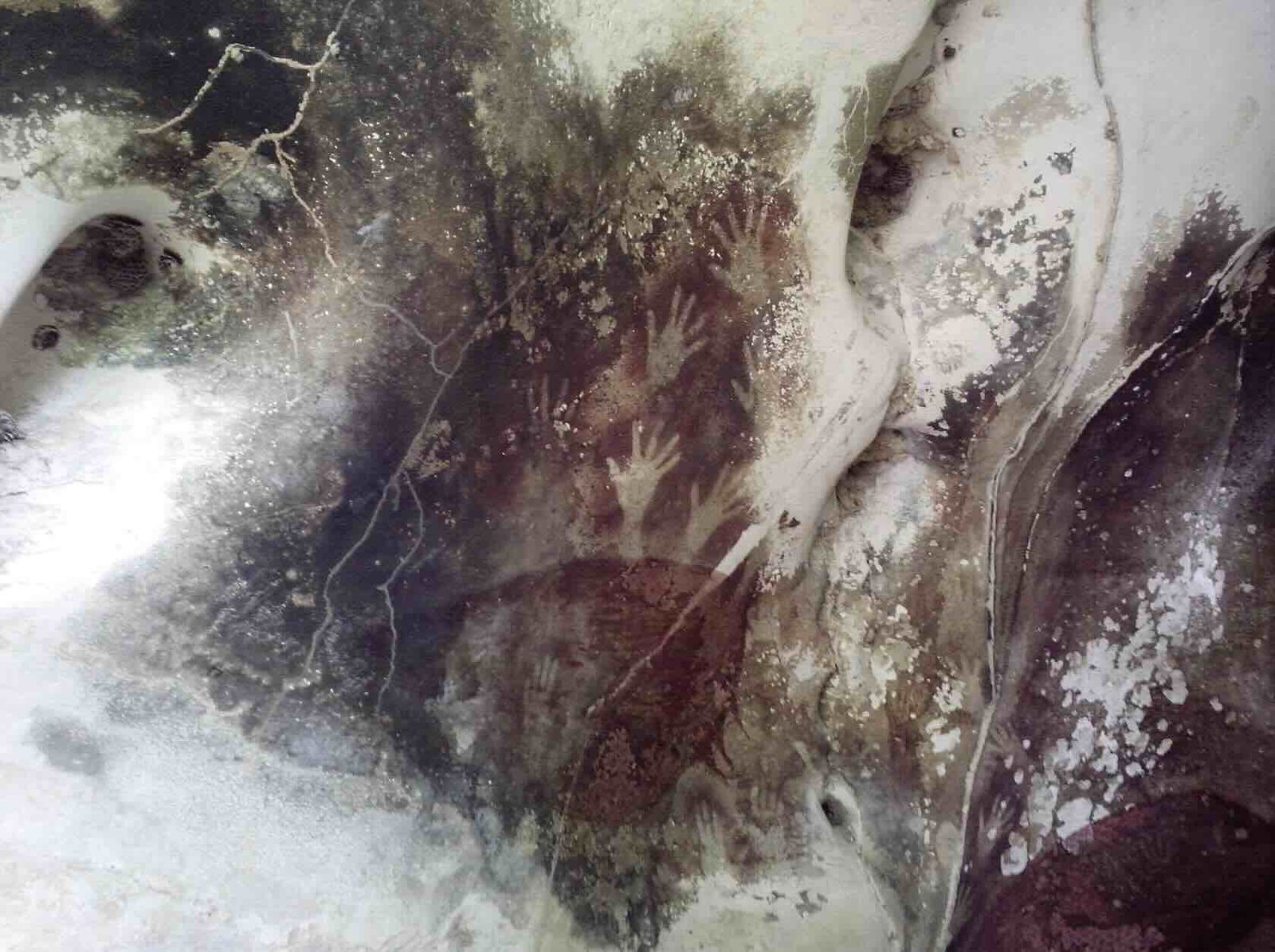
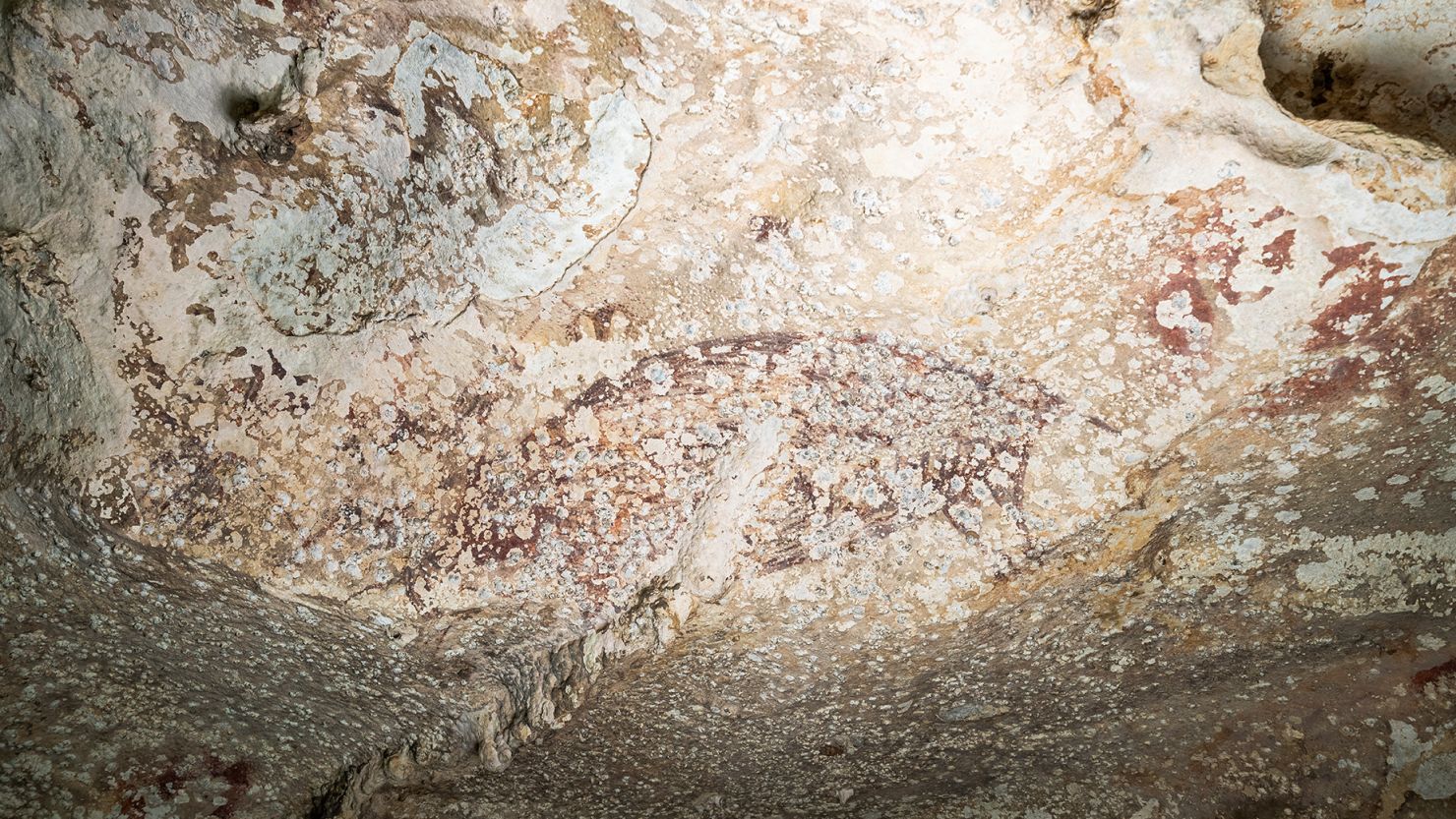
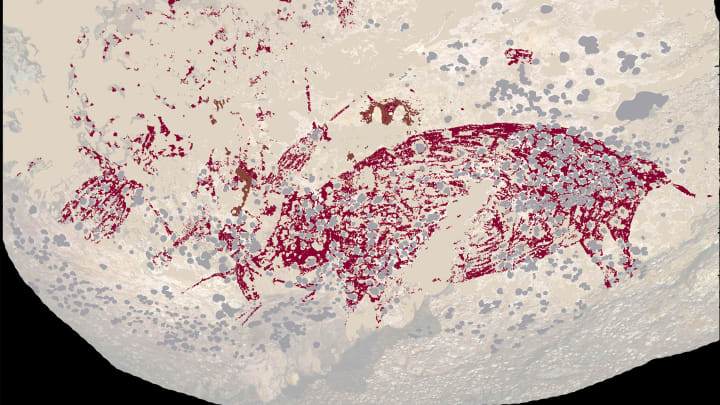
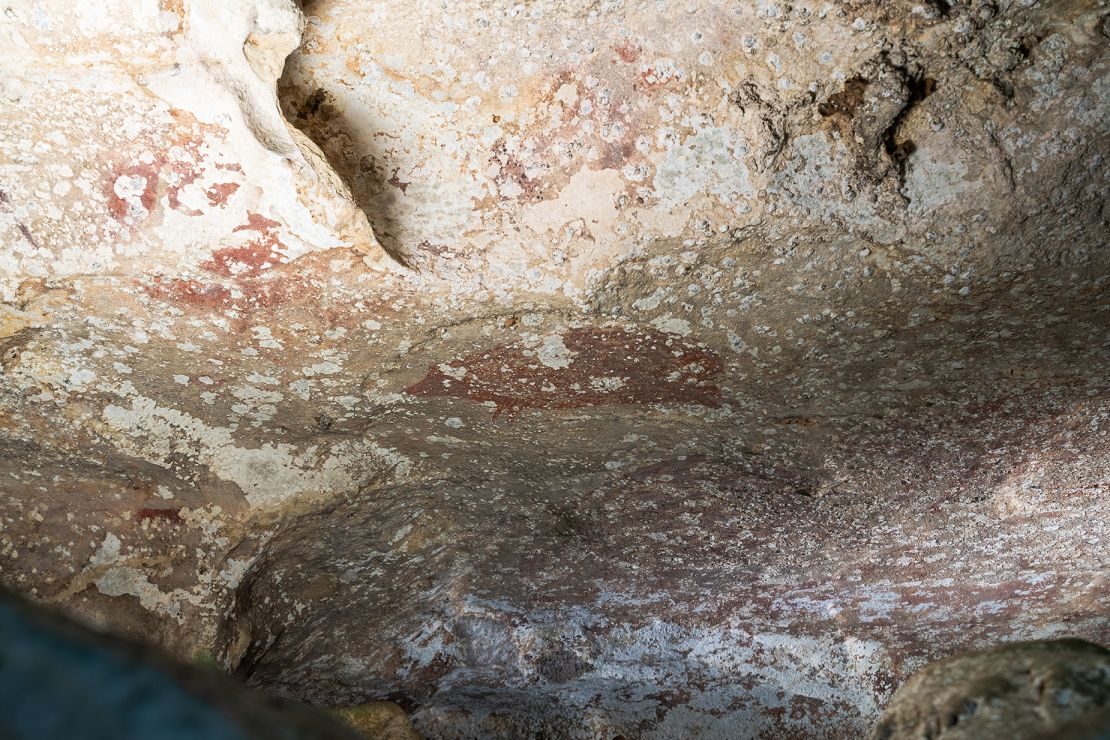
Recent studies involving advanced laser ablation techniques examined the images on the cave’s walls, which include ancient depictions of animals like pigs and bovines along with stick renderings of anthropomorphic shapes. The new analysis reveals that the art is likely several thousands of years older than previously thought.

However, the extreme age of the art within the cave may point to another intriguing possibility: that its creators were not modern humans, and instead may have been one of our ancient hominin cousins. Such a discovery, if proven, would have profound implications for the origins of figurative art and the cognitive capabilities of our now-extinct hominin relatives.

THE ENIGMA OF SULAWESI

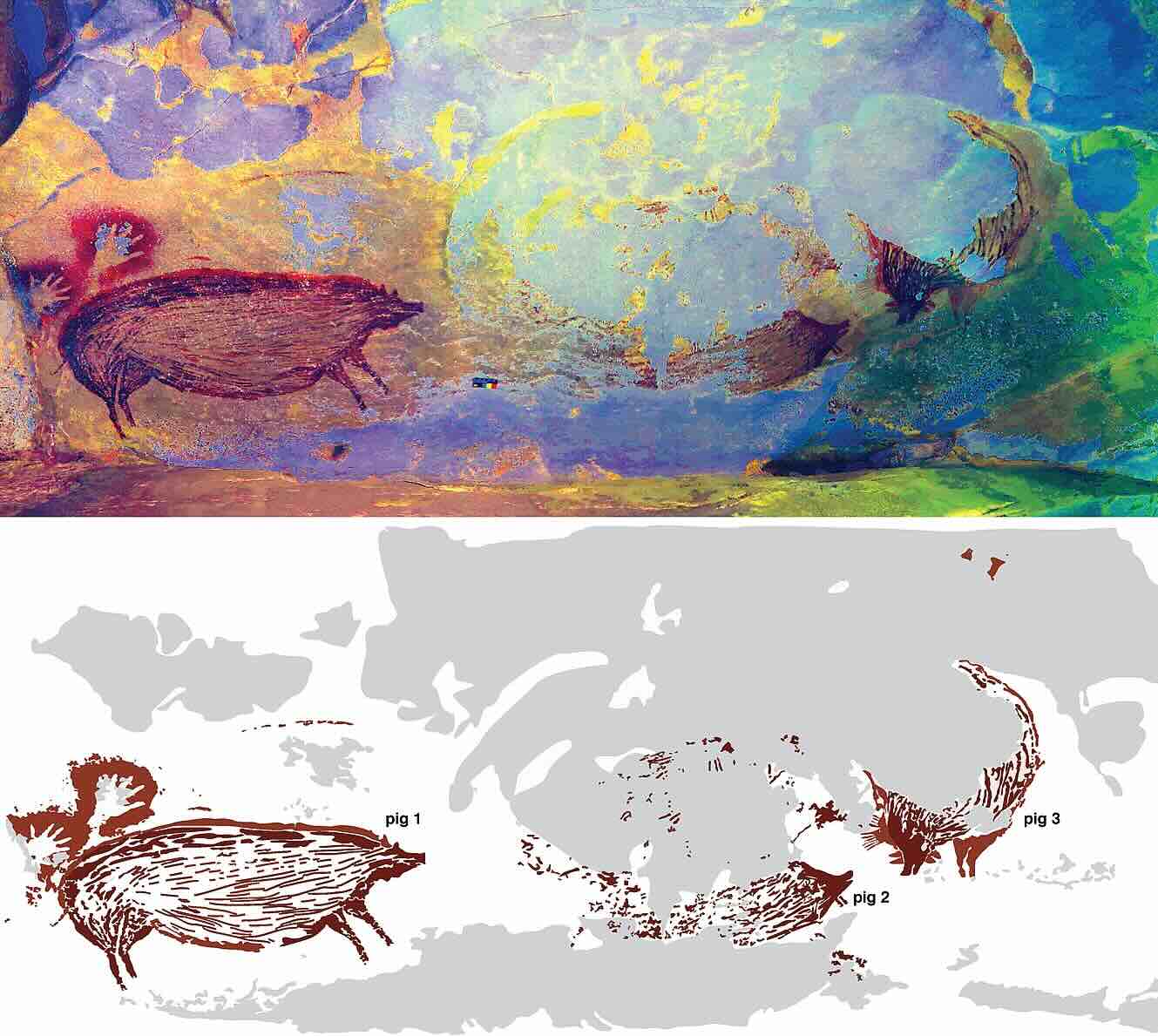
Renowned for its ancient cave paintings, Sulawesi has long fascinated archaeologists. Among the island’s most notable works of cave art include a 14-foot-wide panel that depicts crude imagery of early humans hunting what are commonly believed to be warty pigs and dwarf bovines with spears.

Past work had already revealed the presence of what archaeologists recognized as some of the world’s oldest rock art on the island. A process known as solution uranium-series (or U-series) was used to analyze calcite deposits that had formed over the art on the walls of Maros-Pangkep, a rock art location on the southern portion of the island. This technique, which scans rock walls without taking physical samples, provides a more accurate estimate by distinguishing between layers of sediment.

cave art

Cave art found at Maros-Pangkep on southern Sulawesi

(Credit: Cahyo/Wikimedia Commons/CC BY-SA 3.0).

However, in their recent study, researchers led by Indonesian archaeologist Adhi Augus Oktaviana used what they describe as “a novel application of this approach,” called laser-ablation U-series imaging, which allowed them to more accurately date some of the earliest cave art in the area.

In a recent study detailing their work, the researchers write, “This method provides enhanced spatial accuracy,” resulting in older minimum ages for previously dated art.

The scene, covered with calcium carbonate deposits, shows three human figures<strong> </strong>and a pig.

The scene, covered with calcium carbonate deposits, shows three human figures and a pig.

Dominic Julian/BRIN Google Arts

Three human-like figures and a large pig are drawn on a limestone cave wall.

Three human-like figures and a large pig are drawn on a limestone cave wall. Griffith University

REDATING THE WORLD’S OLDEST CAVE ART

The new analysis revealed remarkable results. A hunting scene found at the Leang Bulu’ Sipong 4 location, previously dated to at least 43,900 years ago during previous analysis, has now been revealed to have a minimum age closer to 51,200 years ago, making the art at the location at least 4,040 years older than initial estimates had placed it.

“Painted at least 51,200 years ago, this narrative composition, which depicts human-like figures interacting with a pig, is now the earliest known surviving example of representational art and visual storytelling in the world,” the authors of the new study state.

The authors add that their new analysis reveals a much deeper origin of figurative portrayals of animals and humans than previously recognized.

cave art

Image comparison revealing separation between pigment and sedimentation buildup on the cave walls at Sulawesi

(Credit: A.A. Oktaviana / Wikimedia Commons)

Of course, revising the dates of the cave art on Sulawesi raises new questions about what species of ancient hominin had actually served as the ancient artists in residence. According to most commonly accepted timelines, modern humans are believed to have left Africa as recently as 50,000 to 60,000 years ago, although possibly as early as 90,000 years ago.

Considering those nearer estimates for when these ancient migrations might have begun, it does raise questions about how likely it is that modern humans could have been present on Sulawesi by the time the newly redated cave art was produced. The earliest known modern human remains on the island date back to no earlier than 25,000 years ago, although evidence of human presence in the form of rock shelters and stone tool use has been found that suggests humans may have been there far earlier, even as much as 118,000 years ago.

While the possibility of modern humans arriving on the island that long ago presents a challenging question, there is little doubt that our ancient hominin cousins were present on Sulawesi by then. Past fossil discoveries have presented compelling evidence of the presence of hominins on the island as far back as 194,000 years ago.

CHALLENGING OLD THEORIES

While pushing back the timescales for the use of figurative art on the island of Sulawesi and raising questions about what species could have made it, the new findings also challenge past ideas that attribute the origins of such art to Europe toward the end of the Ice Age.

To figure out when the cave paintings were made, the team used a new technique to date calcium carbonate deposits that formed on top of the art.

To figure out when the cave paintings were made, the team used a new technique to date calcium carbonate deposits that formed on top of the art.

Dominic Julian/BRIN Google Arts

The team’s discoveries also suggest that it is possible humans may have been creating such art long before their arrival in Asia, if not even further back to times before modern humans are believed to have left Africa; a controversial possibility that some researchers, including British anthropologist Chris Stringer, have begun to propose in recent years.

However, if it were ever proven that some other hominin species had possessed the necessary cognitive development required to create figurative art so long ago, it would potentially upend our existing ideas about the capabilities of our early human ancestors and their hominin relatives.

At the very least, the authors concede in their study that the new findings suggest “a rich culture of storytelling developed at an early period in the long history of H. sapiens in this region — in particular, the use of scenic representation to tell visual stories about human-animal relationships.”

The new paper, led by Oktaviana et al. and titled “Narrative cave art in Indonesia by 51,200 years ago,” appeared in the journal Nature on July 3, 2024.

LINK VIDEO

{ https://thedebrief.org/category/science/ }

Hoe vind je dit bericht?
Geschreven door peter om 23:20 Stuur door

CHIMPANZEES ARE CAPABLE OF SPEECH, ACCORDING TO NEW ANALYSIS OF DECADES-OLD FOOTAGE

g61AsXXV?format=jpg&name=900x900

CHIMPANZEES ARE CAPABLE OF SPEECH, ACCORDING TO NEW ANALYSIS OF DECADES-OLD FOOTAGE

In 1962, many American moviegoers were treated to an unusual display during screenings of the popular Universal Newsreels that aired before feature presentations. That year, a segment entitled “Now Hear This! Italians Unveil Talking Chimp” was shown, introducing audiences to Renata, a chimpanzee who had reportedly been trained to say “mama” by her handler.

“As explained by her foster mother, this is one of the most extraordinary chimps in the world,” announcer Ed Herlihy’s famous voice could be heard saying in the decades-old footage. “You don’t have to know Italian to understand Renata’s accent when she gets her cue.”

Then, as Renata’s handler taps her on the chin, the chimpanzee is shown saying the word “mama” several times.

The footage, likely viewed as little more than a novelty at the time, represented something potentially extraordinary: evidence of a non-human primate displaying the ability to speak, albeit crudely. Despite Renata’s unique talent, the footage was largely forgotten, and prevailing wisdom continued to insist that humans were the only primates with the required neural circuitry capable of speech.

However, Renata was not the only known example of a chimpanzee who displayed a limited ability to learn and speak human words. Decades later, in a video uploaded to YouTube on August 17, 2007, a chimpanzee named Johnny was also shown saying “mama,” seemingly in response to requests from his owner, after which he was awarded a treat.

Now, an international team of researchers that reviewed the footage of Renata and Johnny have concluded that in at least three known instances, chimpanzees were indeed able to learn human words and exhibit limited speech capabilities.

“We recovered original footage of two enculturated chimpanzees uttering the word ‘mama’ and subjected recordings to phonetic analysis,” write the authors of a new study published in Nature: Scientific Reports by Axel G. Ekström and colleagues. “Our analyses demonstrate that chimpanzees are capable of syllabic production, achieving consonant-to-vowel phonetic contrasts via the simultaneous recruitment and coupling of voice, jaw and lips.”

In their paper, the researchers state that they conducted an online experiment in which participants were provided recordings of the utterances to listen to but were not told they were listening to chimpanzees. The participants “reliably perceived chimpanzee utterances as syllabic utterances, primarily as ‘ma-ma,’” the researchers write.

The researchers conclude that the vocal abilities great apes possess have largely been underestimated, writing that “Chimpanzees possess the neural building blocks necessary for speech.”

Great apes do not appear to display any signs of language use in nature, and it is noteworthy that Renata and Johnny appear to have learned their unique talents through human coaching. However, the findings are significant since they show that at least one nonhuman great ape species does possess the required neural components to facilitate speech, whether or not they utilize such faculties on their own in the wild.

Although speech is not an ability chimpanzees normally rely on, the same cannot be said of their overall ability to communicate. Recent studies have shown that chimpanzees frequently use gestures while communicating in a way similar to that of humans. In at least a few instances, chimpanzees have also shown a remarkable ability to understand human language. One notable example involves Kanzi, a bonobo who reportedly understands close to 3000 human words and has exhibited the ability to answer questions using a special keyboard that reproduces human words.

In their new paper, Ekström and colleagues note that past studies involving chimps and their ability to exhibit rudimentary speech had been largely dismissed due to lack of rigorous analysis. However, the new findings appear to support these previously unconfirmed observations, which have often cited words like “mama” as being among the ones most commonly learned by chimps.

Indeed, there could be more to the prevalence of this particular word in past studies involving chimpanzee speech. As the study’s authors note, “mama” is often among the first words human infants learn and may, in fact, have deeper roots as one of the earliest spoken language words ever created by humans.

“Accordingly, it has been argued that ‘mama’ may have been among the first words to appear in human speech,” the authors of the new study write.

“Our data complements this picture: chimpanzees can produce the putative ‘first words’ of spoken languages.”

The team’s new study, “Chimpanzee utterances refute purported missing links for novel vocalizations and syllabic speech,” was published in Nature: Scientific Reports on July 25, 2024.

{ https://thedebrief.org/category/science/ }

Hoe vind je dit bericht?
Geschreven door peter om 22:45 Stuur door

SR-91 Aurora: A Highly Classified American Aircraft

SR-91 Aurora: A Highly Classified American Aircraft

SR-91 Aurora: A Highly Classified American Aircraft

For decades, the US military has pursued the dream of dominating the skies with hypersonic platforms, a dream that China and Russia are also striving to become a reality. In this scenario of fierce competition, a disturbing question arises: is it possible that a Mach 5 aircraft, the mythical SR-91 Aurora, already existed and that its existence has been hidden from us?

The classified SR-91 Aurora project

Whispers about the Aurora, a supposedly classified hypersonic aircraft, have resonated in aviation circles since the 1980s. Yet evidence of this enigmatic triangular craft is as elusive as the wind. Is it conceivable that the United States not only managed to develop and operate a fleet of these aircraft at Mach 5+ during the 1980s but also kept this achievement in the shadows to this day? The truth could be more labyrinthine than we imagine.

SR-91 Aurora: A Highly Classified American Aircraft

The Pentagon, known for its “black programs,” has secretly funded the development of advanced technologies throughout history. Today, the most clandestine efforts are grouped under Special Access Programs, or SAPs, which restrict information to even those with the highest security clearances. Some of these recognized SAPs are never fully revealed, and others remain eternally anonymous.

After examining historical reports, declassified documents, testimonies and discussion forums, it is extremely unlikely that the United States has ever secretly operated a fleet of hypersonic aircraft. However, this does not rule out that such technological marvels have once touched the imposing doors of the hangars of Area 51.

Technology cost-benefit analysis for the SR-91 Aurora

It is vital to remember that there is a vast difference between technology that is mature and reliable enough for mass production and combat operation and that which, although within reach, is not sustainable from economic, resource or even political perspectives.

SR-91 Aurora: A Highly Classified American Aircraft SR-91

For example, the iPhone in your pocket is not necessarily the most advanced smartphone in the world; It is simply technology that can be mass-produced for a specific price and consumer. The latest communications technology would probably be much more expensive, potentially less reliable, and capable of leaving you in awe.

Aeronautical programs are advancing in a similar way: an extraordinary plane can be built for $2 billion, but that does not mean that mass production can begin immediately. Technology demonstrations, prototypes and limited production of exotic aircraft are a reality at facilities such as the Lockheed Martin plant in Palmdale or Area 51.

SR-91 Aurora: A response to the need to see without being seen

Sometimes, these efforts do not produce the expected results, are too costly, or require excessive maintenance. And sometimes, America‘s deepest secrets are buried in the desert, condemned to oblivion.

The SR-91 Aurora, if it ever existed, was conceived in response to a strategic need for aerial reconnaissance, a testament to the relentless quest for technological supremacy in a world where secrets and shadows play a crucial role.

Lockheed‘s SR-71 Blackbird, an unrivaled aerial beast and aviation’s fastest gem, laughed in the faces of more than 4,000 missiles with its dazzling speed during its golden era as a sky spy. This colossus, capable of challenging Mach 3 as if it were child’s play, made the most sophisticated surface-to-air missiles and elite fighters useless. So, when the Air Force decided to retire this very expensive technological marvel in the late 1980s, the world could only speculate: the United States must have something even more impressive in its arsenal.

It was not for less. The secret corridors of the Pentagon and Congress whispered about an heir to the Blackbird throne. But now, decades later, fact and fiction have become intertwined in a labyrinth of classified theories and programs, real or imagined, including those that may still lurk in the shadows.

Among whispers and rumors, there was talk of Aurora, a hypersonic, triangular plane taken from the bowels of science fiction, which seemed to be a first cousin of Lockheed Martin‘s SR-72 project, announced with great fanfare before this began. New era of hypersonic arms race.

Despite the rise of satellites, the need for aerial reconnaissance never died, as did the legend of the SR-71, which was even briefly resurrected in the 1990s to satisfy the hunger for aerial intelligence. The popular belief was that the Air Force would not let the SR-71 die without already having a worthy successor ready, warming up its engines in some secret location.

SR-91 Aurora: Many have followed its thread without finding its skein

And maybe they weren’t wrong. There are clues, threads of a larger plot, that point to evidence of an extraordinarily fast plane in those years, possibly related to Aurora.

In April 1992, on two separate occasions, journalist Steve Douglass, scanning the skies over Southern California, captured radio conversations that defied logic. A mysterious plane, with the callsign “Gaspipe,” coordinated with Edwards Air Force Base. The words captured by Douglass suggested that this craft flew at otherworldly altitudes and speeds. “You are at sixty-seven thousand [feet], eighty-one miles,” the controller indicated, and then, “Seventy miles, thirty-six thousand. Above the glide slope. Words that conjure images of a machine challenging the limits of the sky.

Was the SR-91 Aurora a real US military project?

There is no concrete evidence to confirm the existence of the SR-91 Aurora. Although it has been the subject of speculation and conspiracy theories, the lack of tangible evidence and the absence of official information suggests that it could be more of a myth or legend within the realm of military aviation.

What capabilities would a hypersonic aircraft like the SR-91 Aurora have?

If the SR-91 Aurora had existed, it is expected that it would have reached speeds exceeding Mach 5, which would have allowed it to perform reconnaissance and surveillance missions at extremely high speeds, making it difficult to detect and track by enemy air defense systems.

How is the SR-91 Aurora related to the SR-71 Blackbird?

The SR-91 Aurora is often considered the hypothetical successor to the SR-71 Blackbird, a spy plane that was a technological marvel of its time. It is speculated that the Aurora would have been designed to exceed the Blackbird’s capabilities, especially in terms of speed and operating altitude.

What advanced technologies would be expected on the SR-91 Aurora?

The SR-91 Aurora, had it been developed, would likely have incorporated advanced technologies such as high-temperature resistant composite materials, innovative propulsion systems to achieve hypersonic speeds, and stealth technologies to reduce its visibility to enemy radars.

Why do rumors about the SR-91 Aurora persist despite the lack of evidence?

Rumors about the SR-91 Aurora persist due to the public’s fascination with secret and advanced military technology. The story of the Aurora feeds into the culture of the Pentagon’s 

{https://militaryview.com/ }

Hoe vind je dit bericht?
Geschreven door peter om 22:32 Stuur door

Meer van UFO'S of UAP'S, ASTRONOMIE, RUIMTEVAART, ARCHEOLOGIE, OUDHEIDKUNDE, SF-SNUFJES EN ANDERE ESOTERISCHE WETENSCHAPPEN - DE ALLERLAATSTE NIEUWTJES

↑ Terug naar de berichten