Naar de inhoud

UFO'S of UAP'S, ASTRONOMIE, RUIMTEVAART, ARCHEOLOGIE, OUDHEIDKUNDE, SF-SNUFJES EN ANDERE ESOTERISCHE WETENSCHAPPEN - DE ALLERLAATSTE NIEUWTJES

UFO's of UAP'S in België en de rest van de wereld
akke.beakke.be
Ontdek de Fascinerende Wereld van UFO's en UAP's: Jouw Bron voor Onthullende Informatie! Ben jij ook gefascineerd door het onbekende? Wil je meer weten over UFO's en UAP's, niet alleen in België, maar over de hele wereld? Dan ben je op de juiste plek! België: Het Kloppend Hart van UFO-onderzoek In België is BUFON (Belgisch UFO-Netwerk) dé autoriteit op het gebied van UFO-onderzoek. Voor betrouwbare en objectieve informatie over deze intrigerende fenomenen, bezoek je zeker onze Facebook-pagina en deze blog. Maar dat is nog niet alles! Ontdek ook het Belgisch UFO-meldpunt en Caelestia, twee organisaties die diepgaand onderzoek verrichten, al zijn ze soms kritisch of sceptisch. Nederland: Een Schat aan Informatie Voor onze Nederlandse buren is er de schitterende website www.ufowijzer.nl, beheerd door Paul Harmans. Deze site biedt een schat aan informatie en artikelen die je niet wilt missen! Internationaal: MUFON - De Wereldwijde Autoriteit Neem ook een kijkje bij MUFON (Mutual UFO Network Inc.), een gerenommeerde Amerikaanse UFO-vereniging met afdelingen in de VS en wereldwijd. MUFON is toegewijd aan de wetenschappelijke en analytische studie van het UFO-fenomeen, en hun maandelijkse tijdschrift, The MUFON UFO-Journal, is een must-read voor elke UFO-enthousiasteling. Bezoek hun website op www.mufon.com voor meer informatie. Samenwerking en Toekomstvisie Sinds 1 februari 2020 is Pieter niet alleen ex-president van BUFON, maar ook de voormalige nationale directeur van MUFON in Vlaanderen en Nederland. Dit creëert een sterke samenwerking met de Franse MUFON Reseau MUFON/EUROP, wat ons in staat stelt om nog meer waardevolle inzichten te delen. Let op: Nepprofielen en Nieuwe Groeperingen Pas op voor een nieuwe groepering die zich ook BUFON noemt, maar geen enkele connectie heeft met onze gevestigde organisatie. Hoewel zij de naam geregistreerd hebben, kunnen ze het rijke verleden en de expertise van onze groep niet evenaren. We wensen hen veel succes, maar we blijven de autoriteit in UFO-onderzoek! Blijf Op De Hoogte! Wil jij de laatste nieuwtjes over UFO's, ruimtevaart, archeologie, en meer? Volg ons dan en duik samen met ons in de fascinerende wereld van het onbekende! Sluit je aan bij de gemeenschap van nieuwsgierige geesten die net als jij verlangen naar antwoorden en avonturen in de sterren! Heb je vragen of wil je meer weten? Aarzel dan niet om contact met ons op te nemen! Samen ontrafelen we het mysterie van de lucht en daarbuiten.

Archief

Perseverance vindt nieuw mogelijk bewijs van leven op Mars: “het is iets wat we nog nooit eerder hebben gezien”.

Perseverance vindt nieuw mogelijk bewijs van leven op Mars: “het is iets wat we nog nooit eerder hebben gezien”.

Janine imageDoor Janine

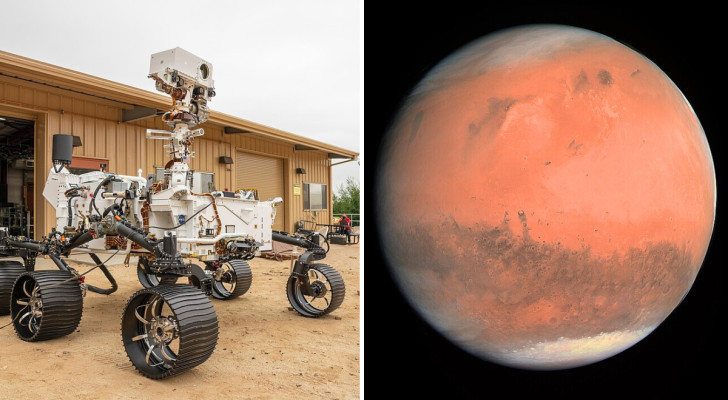
Het tweelingmodel van de Perseverance rover en een kleurenfoto van Mars

NASA/JPL-Caltech/Wikimedia commons -

Public domain / ESA & MPS for OSIRIS Team MPS/UPD/LAM/IAA/RSSD/INTA/UPM/DASP/IDA/Wikimedia commons - CC BY-SA 3.0 igo

NASA's Perseverance rover zet zijn missie op Mars voort op zoek naar bewijs dat de oude aanwezigheid van buitenaards leven op de rode planeet zou kunnen onthullen: er komt een opzienbarende nieuwe ontdekking.

Perserverance vindt een pijlvormige rots op Mars

Een vreemde rots, waarvan de vorm lijkt op de punt van een pijl, heeft de aandacht getrokken van NASA's Perseverance rover, op een missie naar Mars om te zoeken naar tekenen van buitenaards leven. Hoewel het bestaan van marsmannetjes nog niet is aangetoond, zijn er wel elementen naar voren gekomen die hun aanwezigheid op de rode planeet miljarden jaren geleden zouden kunnen bewijzen.

De Amerikaanse ruimtevaartorganisatie maakte dit bekend nadat Perseverance een rots had ontdekt die bedekt was met vlekken en rijk was aan “aderen”. Wetenschappers hebben deze rots een speciale naam gegeven, Cheyava Falls, naar een van de watervallen van de Grand Canyon. Maar wat is er zo bijzonder aan en waarom zou het bewijs kunnen leveren van buitenaards leven op Mars, dat ooit bewoonbaar kan zijn geweest?

Gesteente op Mars bedekt met vlekken: mogelijke sporen van fossiel leven

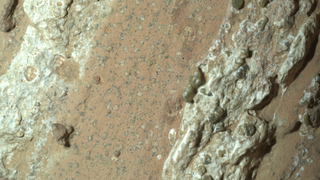
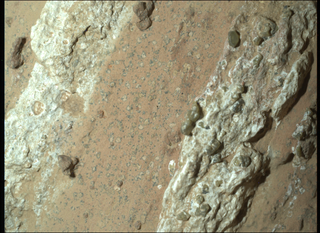
Cheyava Falls lijkt organische verbindingen te bevatten en dit zou kunnen wijzen op sporen van microbieel leven uit de tijd dat er water was op Mars. Perseverance vond de rots in het noordelijke deel van de Neretva-vallei, waar in het verleden een rivier stroomde die uitmondde in de Jezero-krater. "Deze “luipaardvlekken” op een rots op Mars zijn aanwijzingen voor waarschijnlijk de beste tekenen van oeroud microbieel leven die we tot nu toe op Mars hebben gevonden. Om het zeker te weten, moeten we het gesteente bestuderen in laboratoria op aarde", staat te lezen in het X-profiel van NASA's Jet Propulsion Laboratory.

De route van de rover, zoals uitgelegd door de Associate Administrator voor het Directoraat Wetenschapsmissies, Nicola Fox, was ontworpen om ervoor te zorgen dat hij de gebieden van Mars kan bereiken waar zich vermoedelijk de meest interessante wetenschappelijke monsters bevinden. "Deze reis door de rivierbedding van de Neretva Vallis heeft zijn vruchten afgeworpen, omdat we iets hebben ontdekt dat we nog nooit eerder hadden gezien en dat onze wetenschappers veel te bestuderen zal geven."

Nieuw bewijs van leven op Mars: verzamelde monsters

Perseverance van zijn kant "verklaarde" op zijn X-profiel: "Ik kwam naar Mars met een taak om uit te voeren: het vinden en bemonsteren van de beste rotsen voor toekomstige studies in laboratoria op Aarde. Ik zal deze speciale rotskern, en de andere in mijn collectie, veilig bewaren totdat er een toekomstige missie komt om ze naar de Aarde te brengen voor verdere studie."

De rots, die 90 cm bij 60 cm meet, verschilt van andere roodgekleurde rotsen die op Mars zijn gevonden door de vele zwarte en witte vlekken die erop zitten. De zwarte delen bevatten fosfaat en ijzer, net als aardse gesteenten waarop gefossiliseerd microbieel leven is gevonden. Juist dit heeft de hoop van wetenschappers aangewakkerd om misschien het leven van microben op Mars te kunnen bevestigen, hoewel we voor een definitief antwoord zullen moeten wachten tot de monsters over een paar jaar naar onze planeet terugkeren.

{ https://www.curioctopus.nl/ }

Hoe vind je dit bericht?
Geschreven door peter om 22:21 Stuur door

Night of Terror: The Chilling Pascagoula UFO Encounter of 1973″

Night of Terror: The Chilling Pascagoula UFO Encounter of 1973″

The Pascagoula UFO Incident

On a quiet night in October 1973, the lives of two friends, Charles Hickson and Calvin Parker, were forever changed by a series of events that remain one of the most compelling UFO incidents in history. Fishing on the Pascagoula River in Mississippi, they encountered a mysterious craft and beings that would haunt them for decades. This article delves into the details of their experience, the aftermath, and possible explanations for what occurred that fateful night.

The Encounter

On October 11, 1973, Charles Hickson, 42, and Calvin Parker, 19, were fishing off a pier after a long day at their shipyard jobs. As they cast their lines into the water, a large, oval-shaped craft with blue lights appeared in the sky. It hovered about 40 feet long and 10 feet high, emitting a strange buzzing sound.

Three creatures emerged from the craft, floating just above the ground. These beings, about five feet tall, had pale, wrinkled skin and grotesque faces with pointed protrusions instead of noses and ears. Their hands ended in crab-like claws, and they moved with an eerie, robotic motion. The beings paralyzed Hickson and Parker, rendering them unable to move or cry for help.

The creatures lifted them off the ground and carried them into the craft. Inside, they were subjected to invasive procedures. Hickson remained conscious, his mind racing in terror as he was examined by the beings. Parker fainted but later recalled being examined by a more humanoid female alien who communicated telepathically, attempting to reassure him.

Aftermath

Hickson and Parker woke up back on the riverbank, disoriented and terrified. Although it felt like hours had passed, they realized only 20 minutes had elapsed. Determined to report the incident, they contacted the Air Force, who directed them to the local police.

At the police station, the officers, initially skeptical, secretly recorded Hickson and Parker’s conversation. The recording, later known as the “secret tape,” captured their genuine fear and consistent recounting of the incident, lending credibility to their story. Multiple witnesses also reported seeing strange lights in the sky that night, corroborating their account.

Psychological Explanations

While Hickson and Parker’s story is compelling, some suggest it could be explained by psychological phenomena. Hypnagogic hallucinations, vivid experiences that occur between wakefulness and sleep, might account for their vivid memories. Sleep paralysis, where one is awake but unable to move, often accompanied by hallucinations and a sense of a threatening presence, could explain their paralysis and sense of fear.

Subsequent Encounters and Public Reaction

In the years following the incident, Hickson reported multiple additional encounters with various alien beings. He claimed to have received messages about environmental concerns and nuclear weapons and even described receiving an implant. These stories, while controversial, kept him in the public eye within the UFO community.

Parker, on the other hand, initially shied away from the spotlight, struggling with PTSD. He later began speaking publicly about the incident, publishing a book recounting his experiences. Their accounts, though occasionally evolving over time, remained consistent in their core details.

Broader Context and Impact

The Pascagoula incident is one of many reported alien abductions, each sharing common elements such as paralysis, telepathic communication, and invasive procedures. Notable cases include the 1961 abduction of Betty and Barney Hill, the 1975 Travis Walton case, and Whitley Strieber’s 1985 experience. These stories have significantly contributed to public fascination with extraterrestrial encounters and have sparked numerous debates about their validity.

VIDEO:

  • The Why Files – The Pascagoula UFO Incident | When Nightmares Come True

The Pascagoula UFO incident remains a fascinating and controversial event. While some believe Hickson and Parker were genuinely abducted by extraterrestrial beings, others attribute their experience to psychological phenomena such as hypnagogic hallucinations and sleep paralysis. Regardless of the true nature of their encounter, the trauma they experienced was real, and their story continues to captivate and intrigue those who hear it. The incident has not only left an indelible mark on the lives of Hickson and Parker but has also significantly influenced the broader narrative of UFO sightings and alien abductions.

{ https://www.latest-ufo-sightings.net/ }

Hoe vind je dit bericht?
Geschreven door peter om 22:08 Stuur door

NASA's Perseverance Mars rover finds possible signs of ancient Red Planet life

NASA's Perseverance Mars rover finds possible signs of ancient Red Planet life

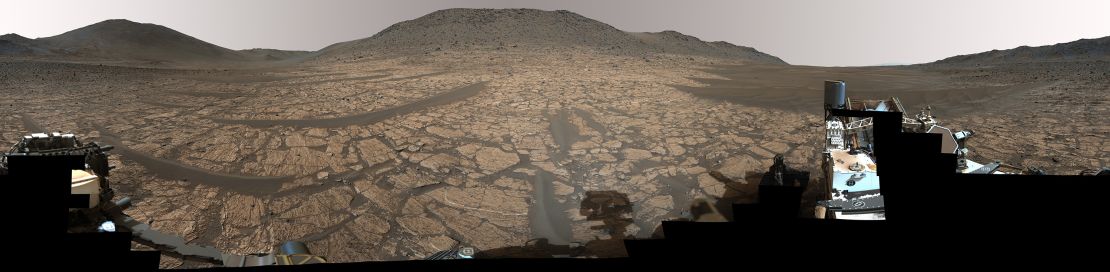
Perseverance rover captured a 360-degree panorama of a region on Mars called “Bright Angel,” where a river flowed billions of years ago.

Perseverance rover captured a 360-degree panorama of a region on Mars called “Bright Angel,” where a river flowed billions of years ago. 

NASA/JPL-Caltech/ASU/MSSS

Perseverance collected a sample of the Cheyava Falls rock on July 21.

Perseverance collected a sample of the Cheyava Falls rock on July 21. 

NASA/JPL-Caltech/ASU/MSSS

Perseverance took this selfie, made up of 62 individual images, on July 23.

Perseverance took this selfie, made up of 62 individual images, on July 23. 

NASA/JPL-Caltech/MSSS

{ https://www.space.com/ }

Hoe vind je dit bericht?
Geschreven door peter om 01:41 Stuur door

Telescopes Shooting Lasers, Assembling Telescopes in Space, Growing Plants on Mars | Overtime Q&A 2

Telescopes Shooting Lasers, Assembling Telescopes in Space, Growing Plants on Mars | Overtime Q&A 2

What are those lasers shooting out from telescopes? Can we build a space elevator? Could we grow plants in Mars regolith? Why not assemble telescopes in space? Answering all these questions and more in this week's Overtime Q&A.

{ https://www.youtube.com/@frasercain }

Hoe vind je dit bericht?
Geschreven door peter om 01:12 Stuur door

Earth is wobbling and days are getting longer — and humans are to blame

Earth is wobbling and days are getting longer — and humans are to blame

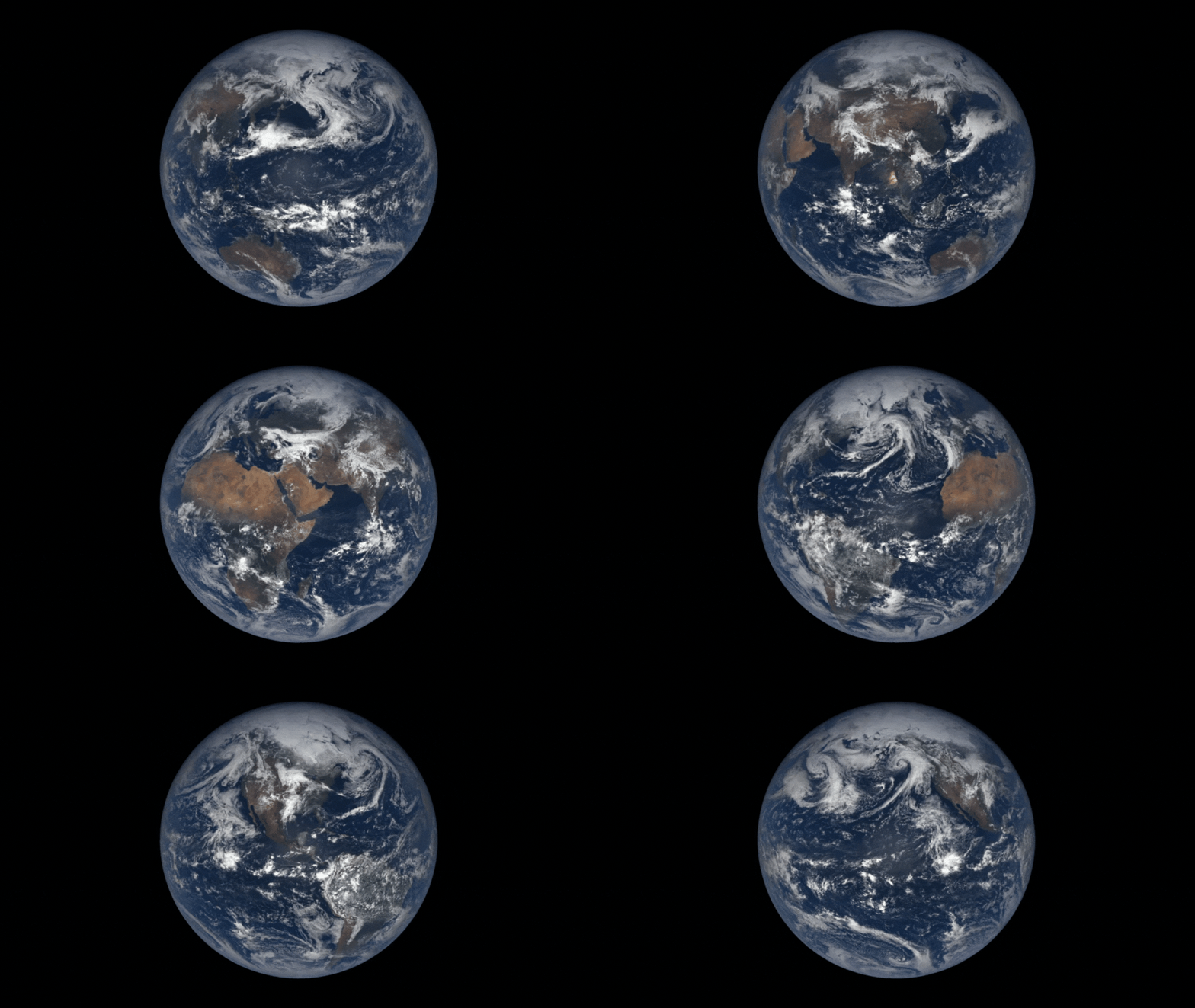
The planet Earth on April 17, 2019. The Earth Polychromatic Imaging Camera (EPIC), a NASA camera aboard NOAA’s DSCOVR spacecraft, returns daily images of Earth from a distance of nearly 1 million miles (1.6 million kilometers). This animation shows the entire rotation of the planet on that day.
Earth moves much faster than it seems. 
(Image credit: NASA)

The length of Earth's days and the orientation of our planet are being thrown out of balance as human-caused climate change continuously alters Earth's spin, new research suggests.

Initially, these changes will be imperceptible to us, but they could have serious knock-on effects, including forcing us to introduce negative leap seconds, interfering with space travel and altering our planet's inner core, researchers warn.

A day on Earth lasts about 86,400 seconds. But the exact time it takes our planet to complete a single rotation can shift by tiny fractions of milliseconds every year due to a number of factors, such as tectonic plate movements, changes to the inner core's rotation and gravitational tugging from the moon.

However, human-caused climate change is another factor that can alter the length of our days, and scientists are just starting to realize how much this will affect our planet's spin in the coming years.

Over the past few decades, the rate of ice loss from Earth's polar regions, particularly Greenland and Antarctica, has been increasing rapidly due to global warming, leading to rising sea levels. Most of this extra water accumulates near the equator, causing our planet to bulge slightly around the middle. This, in turn, slows the planet's spin because more weight is distributed farther away from the planet's center — similar to how spinning figure skaters slow down by moving their arms away from their bodies.

In the new study, published July 15 in the journal PNAS, researchers used an advanced artificial intelligence program that combines real-world data with the laws of physics to predict how the planet's spin will change over time.

Related: 

A photo of water pouring from a melting Arctic glacier

Global warming has triggered sea level rises, which are impacting Earth's rotation. (Image credit: Getty Images)

The results back up a similar study published in March, which suggested that Earth's days will get longer in the future. However, the new program offered much more precise estimates of how days will lengthen over time.

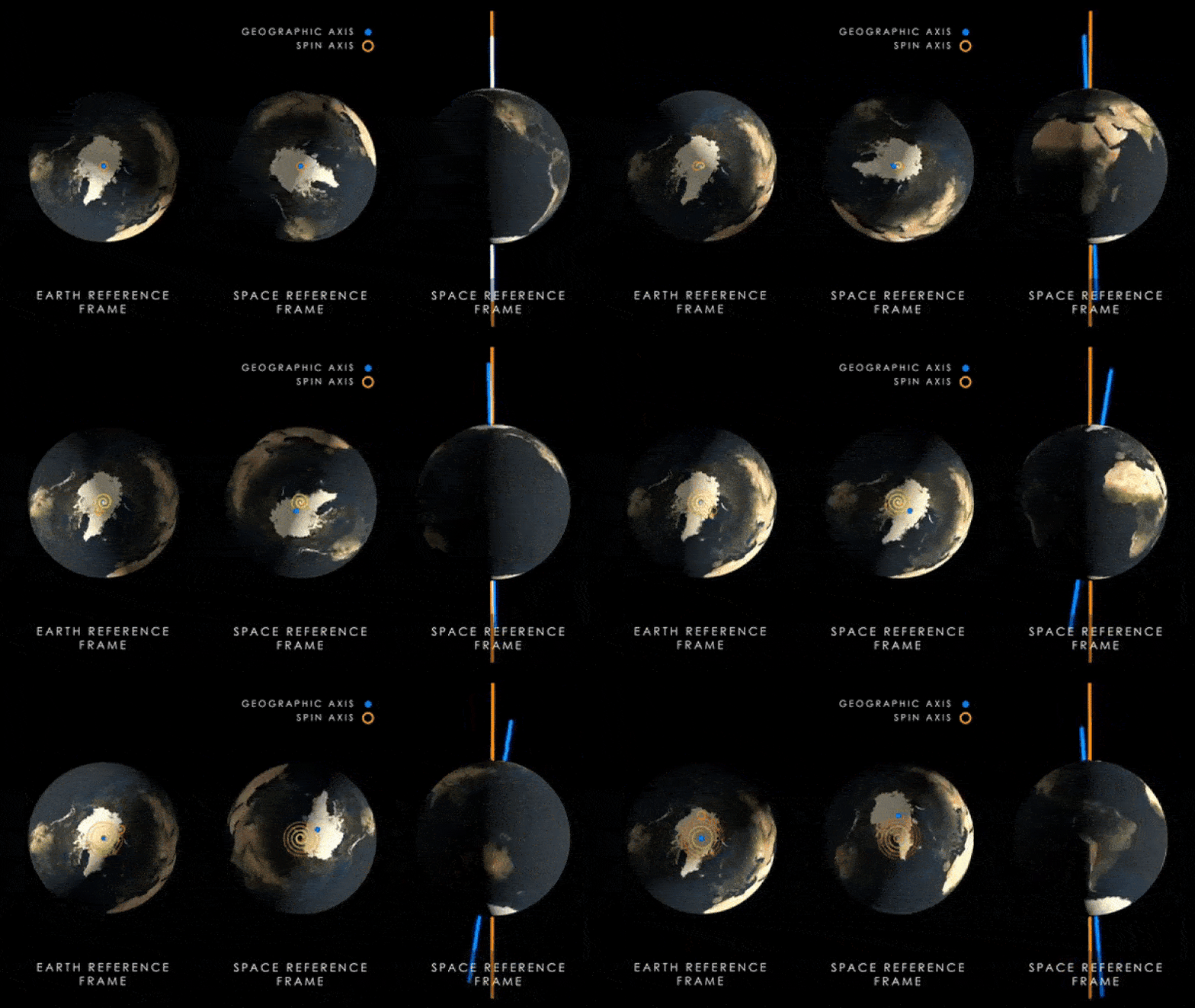
The same research team behind the new paper also released another study, published July 12 in the journal Nature Geoscience, which showed that the increased water near the equator is moving Earth's axis of rotation. This is making the magnetic poles wobble farther away from the axis every year.

Scientists previously found that this effect has likely been happening for at least the past three decades. However, the new study suggests the axis will move even farther from its current position than previous studies predicted.

"We humans have a greater impact on our planet than we realise," Benedikt Soja, a geodesist at ETH Zurich in Switzerland who was a co-author on both the new studies, said in a statement. "And this naturally places great responsibility on us for the future of our planet."

Earth's magnetic poles (blue) will begin to wobble around the planet's spin axis (yellow) as the latter begins to move as a result of climate change.  (Image credit: ETH Zurich)

Spinning slower

Earth's days have always varied in length. Around 1 billion years ago, our planet likely took only 19 hours to complete a single rotation, before slowing to the 24 hours we experience today.

It also changes on shorter timescales. For example, in 2020, Earth was spinning more quickly than at any point since records began in 1960. In 2021, the planet's rotation began to slow down again even though we experienced the shortest-ever recorded day in June 2022.

But in general, Earth's rotation has been slowing for millennia, mainly due to a process known as lunar tidal friction, in which the moon's gravitational effect on our oceans pulls water away from the poles. At the moment, this effect is lengthening our days by around 2.3 milliseconds every century.

The new studies show that climate change is currently lengthening our days by around 1.3 milliseconds every century. However, based on current global temperature models, the researchers predict that this could increase to 2.6 milliseconds per century by the end of the 21st century, which would make climate change the biggest influence on our planet's spin.

Potential impacts

Spiral starlines in the night sky caused by Earth's rotation

Any changes to Earth's spin will have to be accounted for during space travel, researchers say.  (Image credit: Getty Images)

One of the most likely effects of longer days would be the need to introduce negative leap seconds — where we'd occasionally lose a second from some future days to accommodate the lengthening days, similar to how leap years work.

The March study suggests that this may need to start happening as soon as 2029, mainly to accommodate for how much the days have already lengthened over the past few millennia.

In the past, scientists have suggested this introduction could mess with the timekeeping of computers and smartphones. However, not everyone is convinced this will be a major issue.

The researchers of the new studies also noted that future changes could impact space travel.

"Even if the Earth's rotation is changing only slowly, this effect has to be taken into account when navigating in space — for example, when sending a space probe to land on another planet," Soja said. It is therefore important to monitor these changes closely, he added.

The team also warned that the changes to Earth's rotational axis could alter the rotation of Earth's inner core, which could further increase how fast days lengthen. However, this potential interaction is still largely unknown.

{ https://www.space.com/ }

Hoe vind je dit bericht?
Geschreven door peter om 01:06 Stuur door

Donkere zuurstofbron ontdekt op de bodem van de oceaan: het zou de oorsprong van het leven kunnen verklaren

Donkere zuurstofbron ontdekt op de bodem van de oceaan: het zou de oorsprong van het leven kunnen verklaren

Janine imageDoor Janine
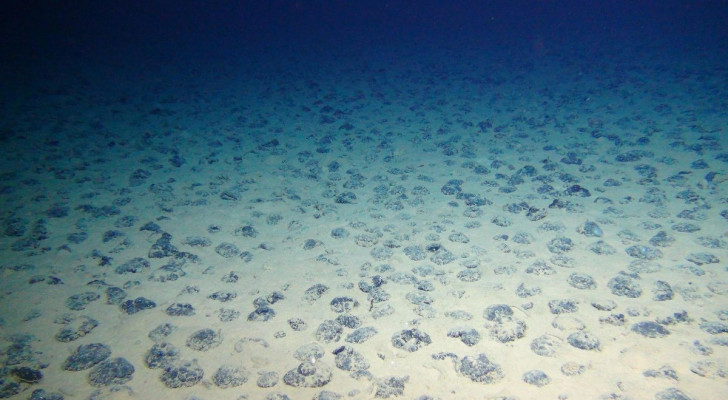
Zuurstofproducerende polymetaalknollen in de diepten van de Stille Oceaan

ROV KIEL 6000, GEOMAR/Wikimedia Commons - CC BY 4.0

Zonder zuurstof zou er geen leven op aarde zijn, althans niet al tweeënhalf miljard jaar. We weten nu dat de eerste organismen die zuurstof produceerden blauwalgen waren en dat na verloop van tijd planten zich specialiseerden in de productie ervan door middel van fotosynthese. Om zuurstof te krijgen heb je zonlicht nodig, en daarom zijn er geen algen in de diepe zee die dit kunnen produceren, toch? Nou, ja en nee: het klopt dat er geen planten zijn in de diepten van de oceaan, maar tegelijkertijd hebben onderzoekers een productie van donkere zuurstof ontdekt uit bepaalde mineralen op de zeebodem. Laten we eens kijken hoe dit proces plaatsvindt en wat het betekent voor de oorsprong van het leven op aarde.

Zuurstofproducerende mineralen ontdekt op 5000 meter diepte

Anaëroob leven, dat wil zeggen leven zonder zuurstof, is zeker niet onbekend: het wordt bijvoorbeeld aangetroffen in sommige diepten in de zee, zoals de verloren stad van Lost City. Kortom, op de bodem van de oceaan is het vreemder om zuurstofproducerende mechanismen te vinden dan planten. Toch heeft een internationaal team van onderzoekers ontdekt dat er speciale metaalmineralen in de oceaanbodem zitten die zeewater kunnen splitsen in waterstof en zuurstof. Dit zijn de woorden van Andrew Sweetman van de Scottish Association for Marine Science:

Zuurstof was noodzakelijk om het aerobe leven op aarde te laten ontstaan, en we zijn er altijd van uitgegaan dat deze toevoer begon met fotosynthetische organismen. Maar nu weten we dat er zuurstof wordt geproduceerd in de diepten van de zee, waar geen licht is.

Kortom, het zou een “donkere zuurstof” zijn, juist omdat het niet wordt geproduceerd dankzij de fotosynthese van chlorofyl en zonlicht, maar door andere chemische processen die letterlijk plaatsvinden daar waar de zon niet schijnt.

De “geobatterijen” verborgen op de oceaanbodem

Goodfon

Zoals het team wetenschappers opmerkt in het onderzoek dat is gepubliceerd in het tijdschrift Geoscience, zijn het speciale polymetaalknollen die zich vormen op de oceaanbodem die zuurstof produceren. Deze formaties bevatten metalen zoals nikkel, koper, kobalt, lithium en mangaan, oftewel materialen die veel worden gebruikt bij de fabricage van elektrische batterijen. En het zijn precies “geobatterijen” waar Sweetman en zijn collega's het over hebben, nu ze zuurstofproductie hebben ontdekt in de Clarion-Clipperton-zone in het midden van de Stille Oceaan.

De onderzoekers ontdekten namelijk hoe de combinatie van roest en zout water elektriciteit kan opwekken. En er is slechts 1,5 volt nodig om zeewater te scheiden in waterstof en zuurstof, zoals werd aangetoond in een experiment: in de praktijk de spanning van een klassieke AA-batterij. De metaalknollen in de diepten van de oceaan fungeren als batterijen, of beter gezegd “geobatterijen”, voor de productie van zuurstof.

Oorsprong van aëroob leven en mijnexploitatie: de vooruitzichten op ontdekking

De ontdekking van de onderzoekers wijst in twee verschillende richtingen. De eerste is het verleden, en meer dan tweeënhalf miljard jaar geleden, het ontstaan van aeroob leven. Als rotsen inderdaad ook zuurstof kunnen produceren, wie zegt dan dat ze niet ook verantwoordelijk zijn voor het ontstaan van het leven op aarde zoals we dat nu kennen?

Tegelijkertijd is de tweede richting die van de toekomst en mijnexploitatie. Polymetaalknollen die donkere zuurstof produceren zouden tientallen jaren lang batterijen op wereldschaal van energie kunnen voorzien, maar is dat wel een goed idee? Enerzijds werd het onderzoek deels gefinancierd door het bedrijf The Metals Company, dat de metaalknollen wil extraheren. Aan de andere kant heeft diepzeemijnbouw tot verschillende problemen voor oceaanecosystemen geleid. Waaronder één die de zuurstof wil produceren die we al heel lang inademen.

{ https://www.curioctopus.nl/ }

Hoe vind je dit bericht?
Geschreven door peter om 23:50 Stuur door

Het iconische zeedier dat een schaal in de vorm van een taco had: een nieuwe studie onthult zijn “geheimen”

Het iconische zeedier dat een schaal in de vorm van een taco had: een nieuwe studie onthult zijn “geheimen”

Janine imageDoor Janine

The Burgess Shale - Royal Ontario Museum

Vijfhonderd miljoen jaar geleden leefde er een zeedier in de vorm van een “taco” in de wateren van de aarde. Een ongekende fossiele analyse heeft iets nieuws ontdekt over dit merkwaardige uitgestorven dier.

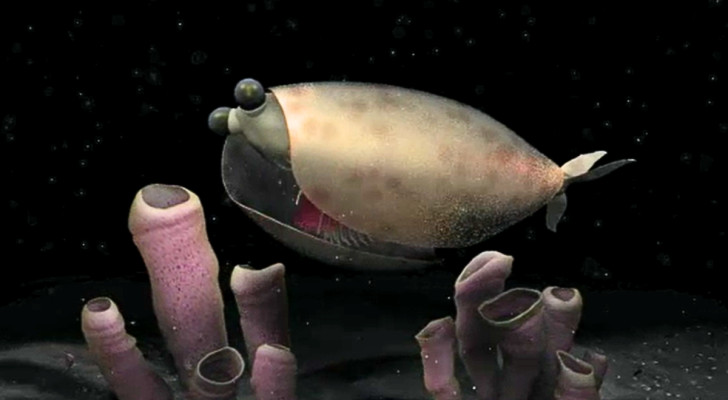
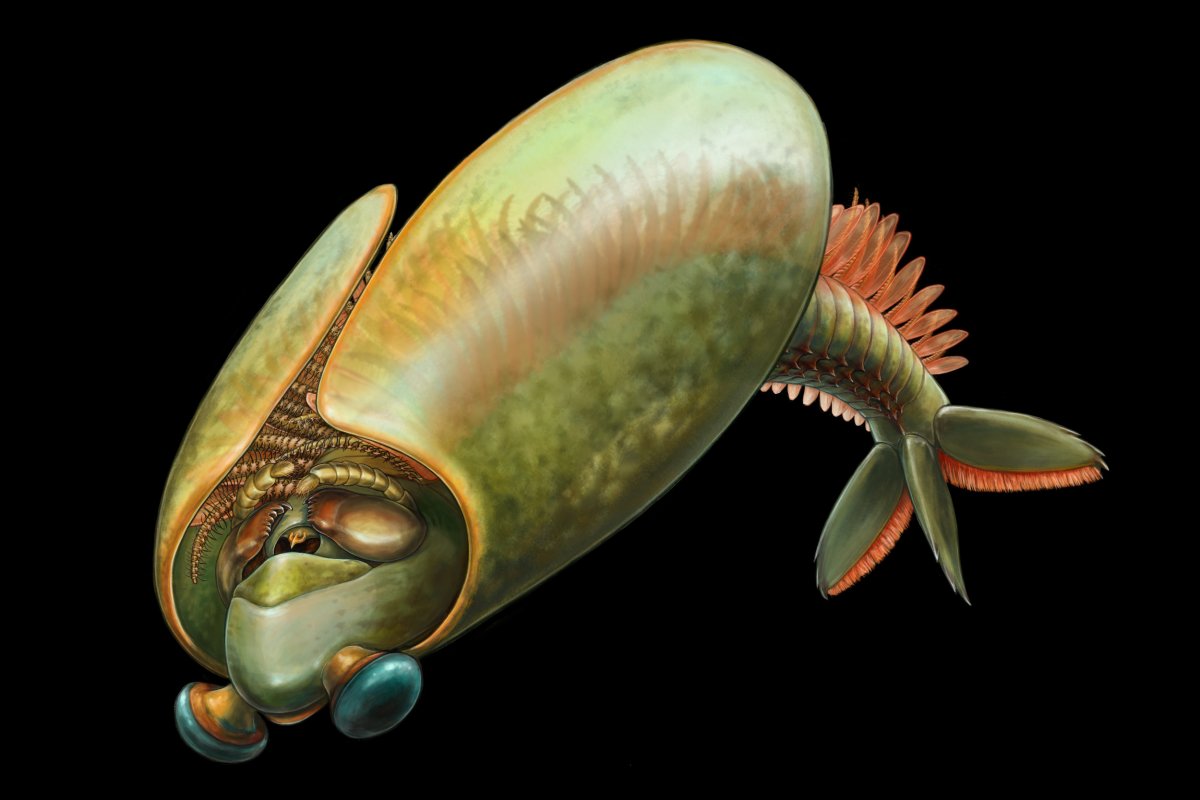
Odaraia alata, het vreemde zeewezen uit het Cambrium

In het Cambrium, toen het leven op aarde dramatisch explodeerde, leefde een vreemd wezen dat op een garnaal leek in de eerste oceanen die zich op onze planeet vormden. Landdieren die worden gedefinieerd als geleedpotigen met onderkaken of tangkaken bestaan voor ongeveer 70% uit krabben, bijen, duizendpoten en garnalen. 

Daartoe behoorde de Odaraia, waarvan de specifieke schaal hem beschermde tegen mariene gevaren, in de prehistorie, ongeveer 508 miljoen jaar geleden. De Odaraia bewoog zich in ondiep water, was bijna twintig centimeter lang en door zijn taco-vormige schaal, de beroemde Mexicaanse tortilla, kon hij zowel in normale houding als ondersteboven voortbewegen in zee.

De Odaraia had kaken: het is bevestigd

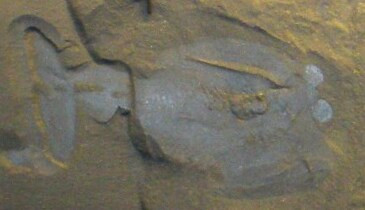
Foto van een Odaraia fossiel genomen in het Museum voor Natuurwetenschappen, Brussel

Ghedoghedo/Wikimedia commons - CC BY-SA 3.0

Onderzoekers van het Royal Ontario Museum in Toronto, Canada, hebben het eerste concrete bewijs geleverd dat dit schepsel was uitgerust met onderkaken, waarmee het zich voedde in open zee en niet alleen op de zeebodem. Door het analyseren van fossielen is het mogelijk geweest om enkele gaten in de evolutie van geleedpotigen op te vullen, en de Odaraia heeft in dit geval meer dan honderd jaar lang twijfels opgeroepen onder paleontologen.

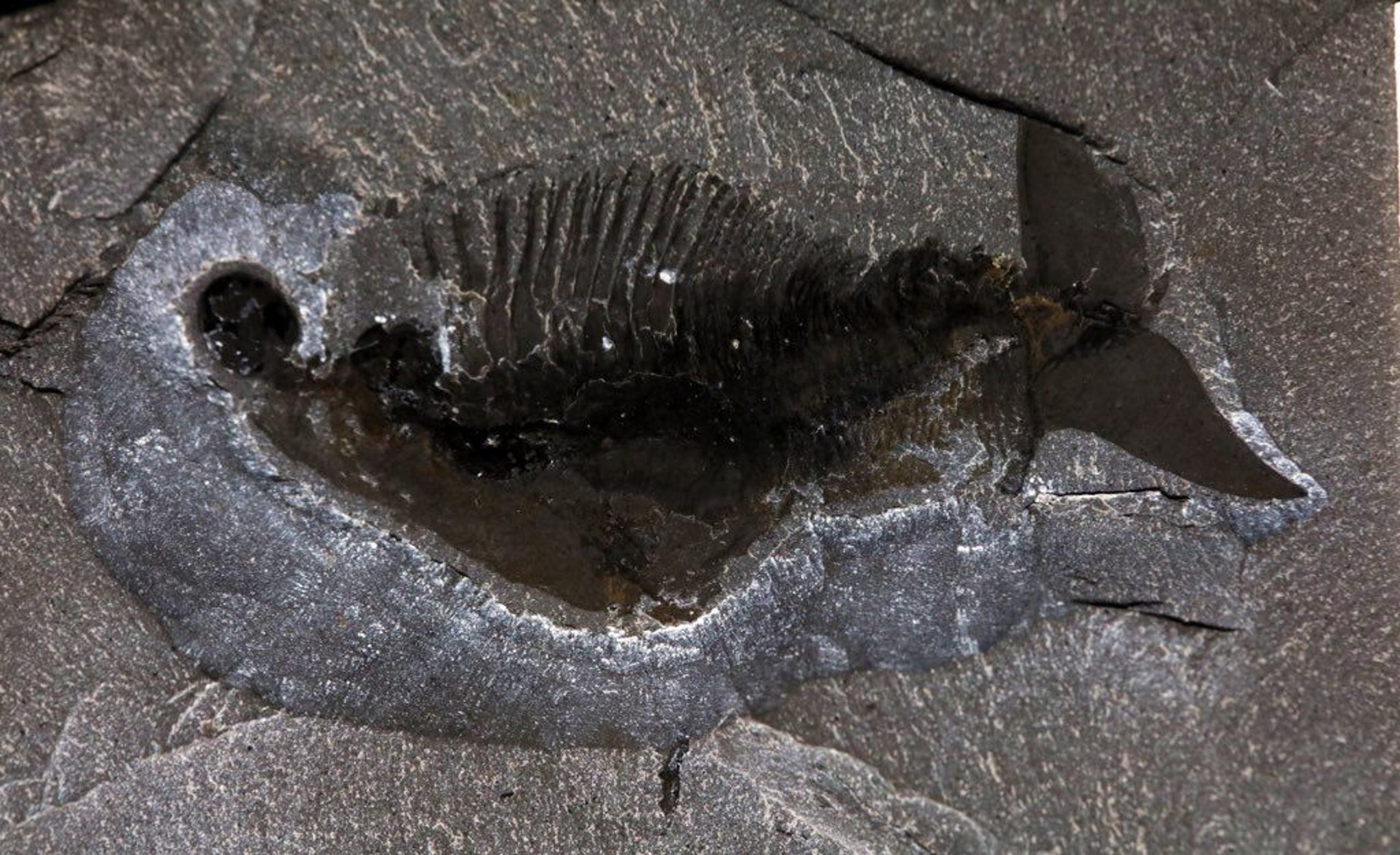
In 1912 en 1981 werd de hypothese geopperd dat dit grote waterinsect in staat was om voedsel door zijn kaken te filteren, net als moderne garnalen. De beschikbare fossielen waren echter niet voldoende om deze theorie te bevestigen. De nieuwe studie, onder leiding van paleontoloog Alejandro Izquierdo López, heeft eindelijk wat duidelijkheid gebracht: na onderzoek van 150 exemplaren uit het Royal Ontario Museum die tot nu toe nog niet bestudeerd waren, koos het team 24 van de best bewaarde exemplaren uit om in detail te analyseren. De fossielen in kwestie waren gevonden in de rotsformatie Burgess Shale, waar de conservering van vondsten doorgaans buitengewoon goed is.

Ontdekt hoe de Odaraia zich voedde

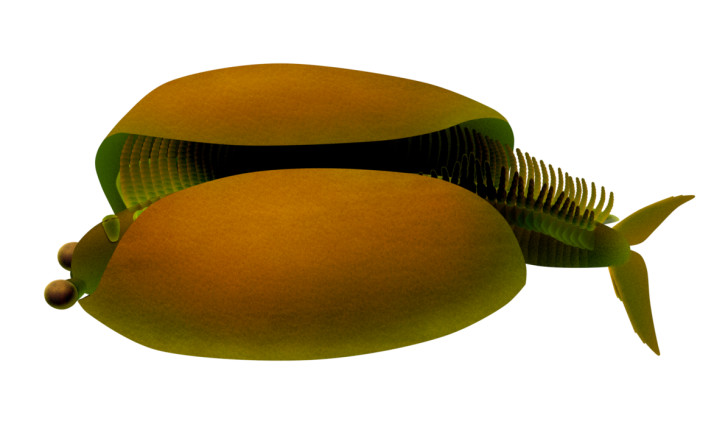
Reconstructie van de Odaraia alata

Qohelet12/Wikimedia commons - CC BY-SA 4.0

De ongelooflijke staat van bewaring, zelfs van de zachte delen van het lichaam, maakte het mogelijk om te ontdekken dat de Odaraia doorzichtige kaken had, uitgerust met kleine tandjes. Tussen de kaken stond een enkele tand, die waarschijnlijk diende om voedsel beter te kunnen kauwen. Izquierdo López verklaarde dat “het lijkt op een drietand. Het is iets dat nog nooit bij een ander dier uit het Cambrium is gezien."

Verder bleek uit het onderzoek dat de 30 paar kleine poten van de Odaraia bedekt waren met talloze stekels en honderden kleine puntjes, die er samen uitzagen als een soort visnet voor de jacht op plankton. Een dier dat “deels filtervoeder, deels roofdier” was, met voor die tijd bijzonder grote ogen. Na meer dan een eeuw is het geheim van de bizarre Odaraia dus eindelijk onthuld en het helpt om de evolutie van de kaak bij de oude geleedpotigen van onze planeet te begrijpen.

74528367007-odaraia-swimming.jpg?width=2560

Odaraia alata is portrayed swimming upside down. You can see its large eyes and mandibles, or pincers, at the front near its mouth.  

DANIELLE DUFAULT, ROYAL ONTARIO MUSEUM

74528366007-small-odaraia.jpeg?width=2560

A smaller Odaraia alata seen from the side, with its big eyes and spiny legs.  
JEAN-BERNARD CARON, ROYAL ONTARIO MUSEUM

Artist's reconstruction of the arthropod Odaraia alata

Artist's reconstruction of Odaraia alata. It has now been classified as a mandibulate, and rsearchers believe it could have swum upside down to gather food with the help of the many spines along its legs. Less 

ILLUSTRATED BY DANIELLE DUFAULT. COURTESY ROYAL ONTARIO MUSEUM

{ https://www.curioctopus.nl/ }

Hoe vind je dit bericht?
Geschreven door peter om 22:35 Stuur door

Are Aliens Future Humans? Exploring Dr. Michael P. Masters’ Groundbreaking Theory

Are Aliens Future Humans? Exploring Dr. Michael P. Masters’ Groundbreaking Theory

ngcb1

In a recent episode of “Reality Check,” journalist Ross Coulthart sat down with Dr. Michael P. Masters, a professor of biological anthropology at Montana Tech University, to explore a fascinating and unconventional theory: Could UFOs and extraterrestrial beings be future humans? This theory, though unconventional, offers a unique perspective on the longstanding mystery of unidentified aerial phenomena (UAP) and the beings associated with them.

Dr. Michael P. Masters: A Profile

Dr. Michael P. Masters is not your typical scientist dabbling in speculative ideas. He holds a Ph.D. in anthropology from The Ohio State University, where he specialized in hominin evolutionary anatomy, archaeology, and biomedicine. His academic background provides a robust foundation for his research, which posits that the beings we often refer to as aliens might actually be our descendants from the future. This hypothesis is detailed in his books, including “Identified Flying Objects: A Multidisciplinary Scientific Approach to the UFO Phenomenon” (2019), “The Extratempestrial Model” (2022), and his novel “The Future Human Past” (2023).

The Future Human Hypothesis

The crux of Dr. Masters’ theory is the idea that UFOs and their occupants are not visitors from distant planets but time travelers from our own future. This hypothesis stems from his observations of the consistent humanoid descriptions of extraterrestrial beings. According to Masters, the anatomical features of these beings—such as their upright posture, bilateral symmetry, and advanced cognitive abilities—mirror the evolutionary trends observed in humans.

In his discussions, Masters elaborates on how these beings’ physical characteristics align with the trajectory of human evolution. He points out that the bipedalism, brain size, and facial anatomy of these so-called aliens show a continued evolution of traits that have defined our species for millions of years. He also touches on the improbability of similar evolutionary paths occurring independently on other planets, given the unique environmental pressures and conditions on Earth.

Personal Encounters and High Strangeness

An intriguing aspect of the interview was Dr. Masters’ personal experiences with the paranormal, which began intensively in 2022. These experiences include seeing multiple UFOs near his home in Montana and engaging in what he describes as telepathic communications with an advanced consciousness. These encounters, particularly one involving a deep trance mediumship session with two individuals, have profoundly influenced his views on the phenomenon. Masters describes these experiences as wake-up calls, pushing him to pay closer attention to the mysteries surrounding UAPs.

The Crypto-Terrestrial Hypothesis

In addition to his future human theory, Dr. Masters is also a proponent of the crypto-terrestrial hypothesis. This idea suggests that advanced beings might be hiding on Earth, possibly remnants of ancient civilizations that have advanced alongside us. This hypothesis aligns with various archaeological anomalies and ancient texts that hint at advanced knowledge and technology predating known human history.

For instance, the discovery of interlocking wooden pieces at Zambia’s Kalambo Falls dating back half a million years and a fossilized wheel imprint in a Ukrainian coal mine suggest the presence of advanced civilizations in Earth’s distant past. These findings challenge conventional timelines and suggest that humanity might not be the first technologically advanced species on this planet.

Cultural and Mythological Connections

Masters and Coulthart also delve into the cultural and mythological aspects of the phenomenon. They discuss how various ancient cultures, from the Sumerians to Native American tribes, have legends of great floods and advanced beings. These stories, preserved in oral histories and ancient texts, often depict encounters with superior entities that could be interpreted as future humans or remnants of advanced ancient civilizations.

Mainstream Media and Scientific Openness

Despite the unconventional nature of these theories, there is a growing openness in mainstream media and scientific communities to explore these ideas. This shift is partly due to the increasing number of credible UFO sightings and the acknowledgment by government agencies of the need to investigate these phenomena seriously.

Dr. Masters’ recent Harvard research paper, though briefly taken down due to a minor grammatical error, has sparked significant interest and discussions. This paper, co-authored with other researchers, explores various hypotheses, including the possibility of extraterrestrial or crypto-terrestrial origins of these beings. The goal is to foster a scientific dialogue that transcends traditional boundaries and considers all plausible explanations.

VIDEO:

  • Ross Coulthart and Dr. Masters ask: Are aliens future humans? | Reality Check

The conversation between Ross Coulthart and Dr. Michael P. Masters offers a thought-provoking perspective on the nature of UFOs and their occupants. By considering the possibility that these beings are future humans, we are invited to rethink our understanding of time, evolution, and the cosmos. As scientific and public interest in UAPs continues to grow, such interdisciplinary and open-minded approaches may bring us closer to unraveling one of humanity’s greatest mysteries.

{ https://www.latest-ufo-sightings.net/ }

Hoe vind je dit bericht?
Geschreven door peter om 15:38 Stuur door

Planet Mercury is covered with a layer of diamonds that is 9 miles thick

Planet Mercury is covered with a layer of diamonds that is 9 miles thick

Story by Eric Ralls

Planet Mercury is covered with a layer of diamonds that is 9 miles thick

Planet Mercury is covered with a layer of diamonds that is 9 miles thick
© Provided by Earth

Beneath the skin of Mercury, the smallest planet in our solar system, expect the unexpected. Reaching out across the cosmos with this fascinating revelation is a new study that points to a 9-mile-thick layer of diamonds concealed beneath the planet's surface.

While instance of such valuable encrustation might sound tantalizing, turning these precious stones into fashionable jewelry remains an impossibility due to their inaccessible location deep within the planet.

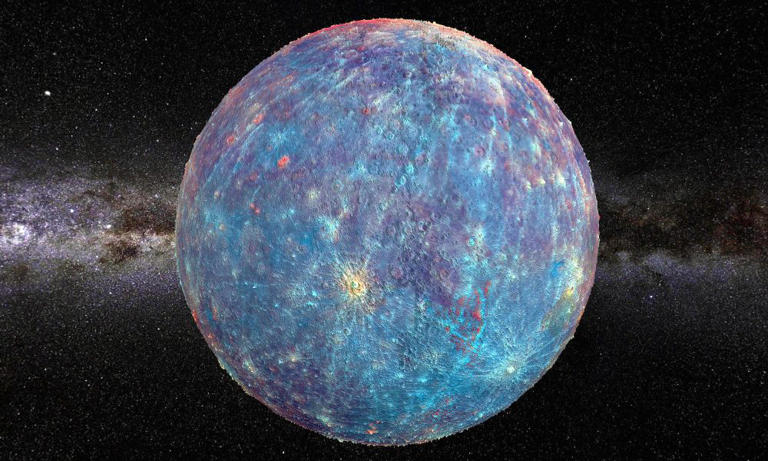
A rendered photo of Mercury with rainbow colors across its surface

Mercury, seen in this false-color image, may have a deep layer of inner diamonds, new research finds. 

(Image credit: NASA/Johns Hopkins University Applied Physics Laboratory/Carnegie Institution of Washington)

However, these gems could hold the key to unraveling some of the big unanswered questions circling around Mercury' composition and its rather curious magnetic field.

The scientist leading the charge is Yanhao Lin, a staff scientist based out of the Center for High Pressure Science and Technology Advanced Research in Beijing.

Mercury's hidden diamond

Oddly enough, for a planet its size, Mercury has a magnetic field. It is weaker than its Earth counterpart, but is still intriguing considering the planet's overall inactivity in geological terms.

What truly sparked Lin's interest, however, were the unusually dark patches on the surface of Mercury that were identified as graphite by NASA's Messenger mission.

This revelation triggered exploration into the possibility of something unique brewing within the planet's interior.

Birth of Mercury's diamond layer

Utilizing a team comprised of Chinese and Belgian researchers, Lin sought to explore the possibility of diamond formation deep in Mercury's core.

The team began by creating chemical mixtures that replicated Mercury's magma ocean. The concoction included iron, silica, and carbon, elements similar to certain kinds of meteorites, and was subjected to crushing pressures and extreme temperatures.

The team's rigorous experiments and computer simulations confirmed that Mercury's mantle would indeed be conducive to forming diamonds, especially under the revised conditions that the team established.

If these diamonds do exist, they could form a 9-mile average thick layer at the core-mantle boundary of Mercury, which is approximately 300 miles below the surface.
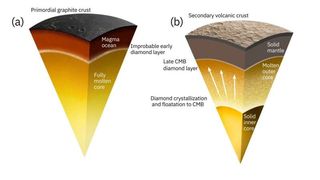
A diagram showing a cross-section of Mercury

A diagram showing the proposed layer of diamond at Mercury's core-mantle boundary. 

(Image credit: Dr. Yanhao Lin and Dr. Bernard Charlier)

Mercury's magnetism

The hypothesized existence of this layer of diamonds is more than just an intriguing fact. It could potentially explain the origin of Mercury's magnetic field.

These diamonds may facilitate heat transfer between the core and mantle, thereby creating temperature differences and causing liquid iron to circulate – a process that would kickstart the creation of a magnetic field.

Implications for future research

The discovery of a potential diamond layer within Mercury opens new avenues for planetary research and composition studies not only of Mercury but also of other celestial bodies.

Understanding the unique geological characteristics of Mercury could provide deeper insight into the formation and evolution of the solar system.

Future missions to Mercury may focus on directly exploring its interior structure through advanced geophysical measurements and remote sensing techniques to verify the existence of this diamond layer and its impact on the planet's magnetic field.

article image

Mercury as seen by the MESSENGER spacecraft. Although easily the darkest of the planets, Mercury may have a sparkling layer deep inside.

Image Credit: NASA/Johns Hopkins University/Hopkins University Applied University Applied Physics Laboratory/Carnegie Institution of Washington

Planetary formation and Mercury's diamonds

This revelation also prompts a reconsideration of the processes involved in planetary formation.

Diamonds are typically associated with high-pressure environments, suggesting that similar conditions may exist in other distant rocky exoplanets and moons within our solar system.

Lin and his team's findings underline the importance of studying extreme planetary conditions, which can reveal not only the composition of these bodies but also the historical processes that formed them, leading to a more comprehensive understanding of geology across the cosmos.

Evolution of exoplanets

The potential discovery casts a new light on the evolution of carbon-rich exoplanets. According to Lin, the process that led to the formation of a diamond layer on Mercury could also be at play on other planets, possibly leaving similar traces.

The arrival of the BepiColombo spacecraft, a joint mission of the European Space Agency and the Japan Aerospace Exploration Agency, in 2025 will provide better opportunities to delve deeper into this intriguing discovery.

Mercury, it seems, continues to dazzle us with new surprises, keeping the scientific community and general public on their toes.

Who'd have thought that this small, seemingly quiet planet could hold such vast volumes of precious stones deep within its confines?

{ https://www.msn.com/en-us/channel/topic/Science/ }

Hoe vind je dit bericht?
Geschreven door peter om 15:23 Stuur door

NASA just scored a badly needed win: The best potential evidence of alien life yet

NASA just scored a badly needed win: The best potential evidence of alien life yet

Story by mmcfalljohnsen@businessinsider.com (Morgan McFall-Johnsen)

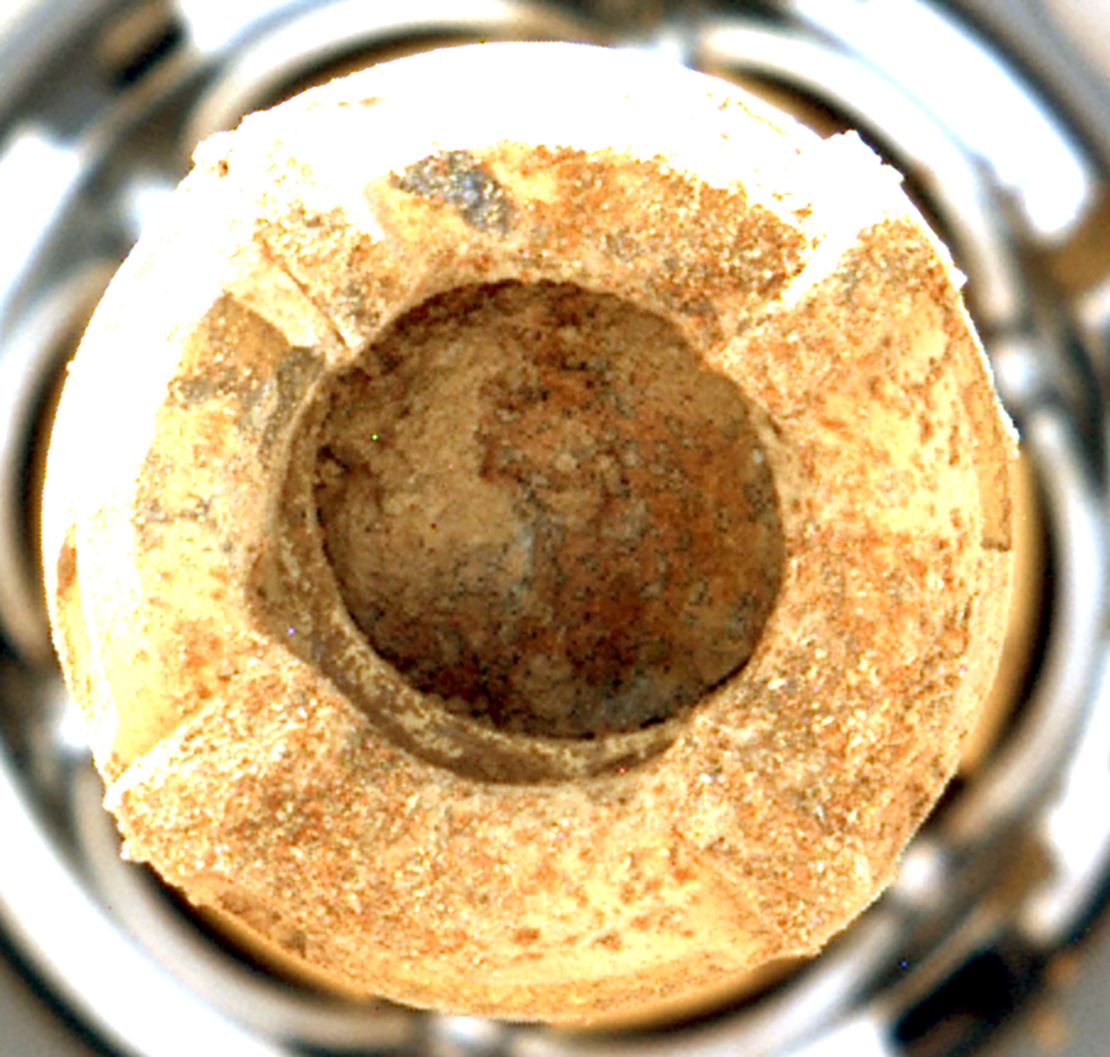
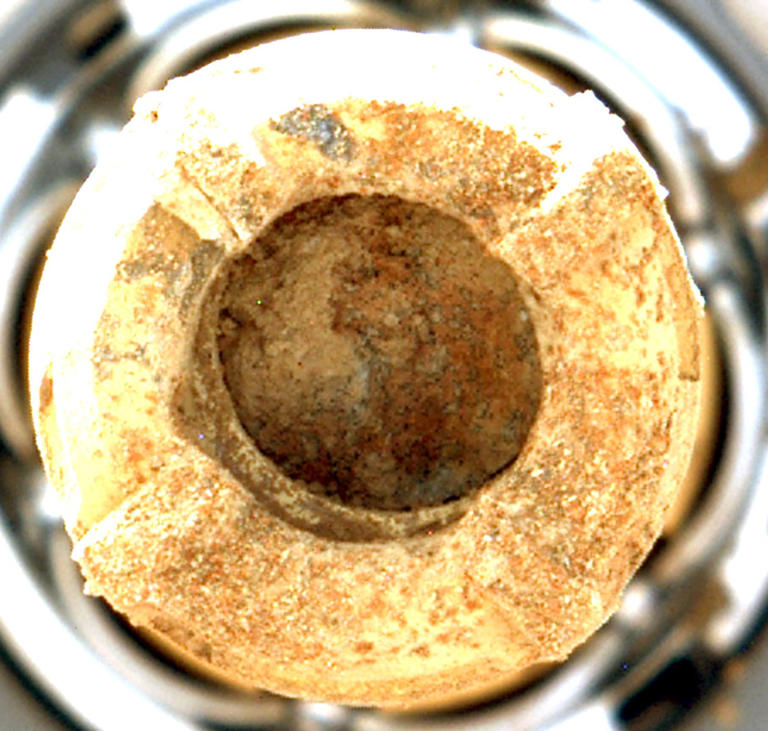
The Cheyava Falls rock sample inside Perseverance's drill bit. NASA/JPL-Caltech/ASU/MSSS

The Cheyava Falls rock sample inside Perseverance's drill bit.
NASA/JPL-Caltech/ASU/MSSS© NASA/JPL-Caltech/ASU/MSSS
  • NASA's Perseverance rover has found potential evidence of ancient microbial life on Mars.
  • Scientists must bring the rock to Earth for further study, but three key features make it promising.
  • The discovery is a crucial win for NASA after a series of budget cuts and mission setbacks.

NASA has snagged a chunk of rock on Mars that could someday prove to be the first clear evidence of alien life.

To be clear, NASA is not declaring that it's discovered Martian life. Rather, its Perseverance rover has drilled a sample from a rock with attributes that could have come from ancient microbial activity, the agency announced Thursday.

To confirm their suspicions, scientists would need to bring the rock sample to Earth and study it in more detail.

"This is exactly the kind of sample that we wanted to find," Katie Stack Morgan, a lead scientist on the Perseverance mission, told Business Insider.

3 key features could point to alien life

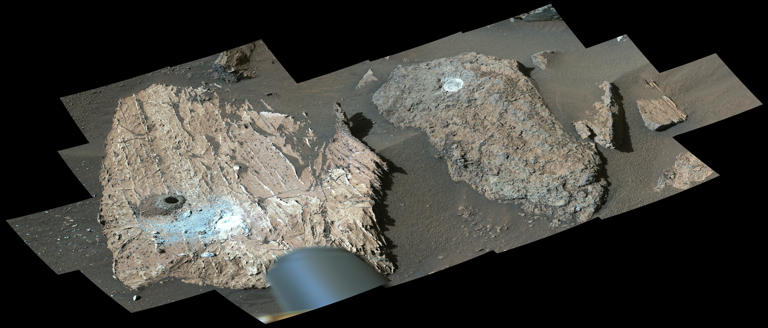
"Cheyava Falls" (left) shows the dark hole where NASA's Perseverance took a core sample. The white patch directly beside the hole is where the rover abraded the rock to investigate its composition. NASA/JPL-Caltech/ASU/MSSS

"Cheyava Falls" (left) shows the dark hole where NASA's Perseverance took a core sample. The white patch directly beside the hole is where the rover abraded the rock to investigate its composition.

NASA/JPL-Caltech/ASU/MSSS© NASA/JPL-Caltech/ASU/MSSS

The rock, nicknamed Cheyava Falls, has three critical features:

  • First, white veins of calcium sulfate are clear evidence that water once ran through it.
  • Second, the rock tested positive for organic compounds, which are the carbon-based building blocks of life, as we know it.
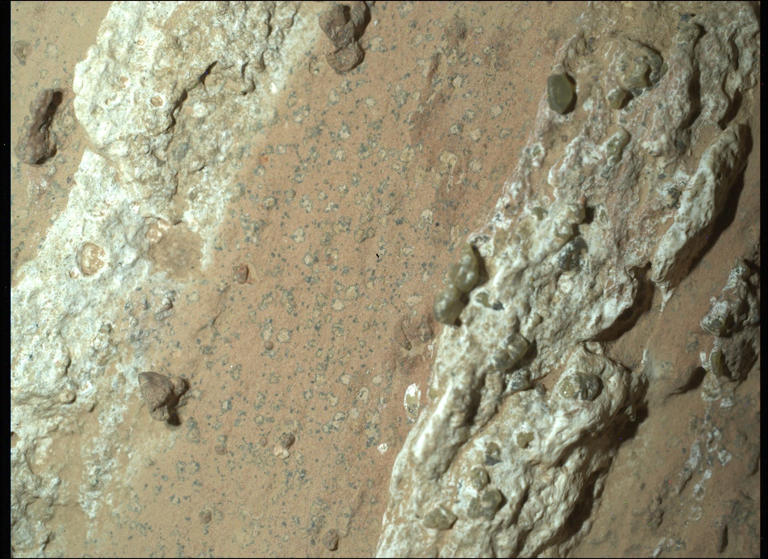
  • Third, it's speckled with tiny "leopard spots" that point to chemical reactions that are associated with microbial life here on Earth.

A reddish Mars rock, nicknamed "Cheyava Falls," contains leopard spots that could point to ancient microbial life. NASA/JPL-Caltech/MSSS

A reddish Mars rock, nicknamed "Cheyava Falls," contains leopard spots that could point to ancient microbial life.

NASA/JPL-Caltech/MSSS© NASA/JPL-Caltech/MSSS

However, both the organic material and the leopard spots could have come from non-biological processes. That's why scientists need to study the sample more closely on Earth to know for sure.

The rover has reached the limit of what it can learn about the rock.

"We're not saying there's life on Mars, but we're seeing something that is compelling as a potential biosignature," Stack Morgan said.

Related video: 

  • Over 5000 Alien Worlds Have Been Discovered Outside Our Solar System (Dailymotion)

A biosignature is any feature that points to the presence of life.

"This is a very significant discovery," she added.

It's a much-needed win for the space agency. In recent months, NASA has taken hit after hit from budget limitations and technical errors across missions.

NASA needs this win

Earlier this year, the agency's first attempt to return to the moon since 1972 failed. The NASA-funded Peregrine moon mission, by the company Astrobotic suffered a fuel leak shortly after launch, forcing it to return to Earth and burn up in the atmosphere. (The next attempt, a mission by the company Intuitive Machines, also funded by NASA, successfully landed on the moon.)

Then, new budgeting decisions came down. NASA's budget proposal for 2025 effectively defunds the Chandra X-ray Observatory, which is still a highly productive and functional mission.

And just last week, NASA officials announced they were scrapping the VIPER moon rover that the agency has already spent $450 million to build. NASA plans to disassemble it and reuse some of the parts for future moon missions.

Meanwhile, two astronauts have been stuck on the International Space Station for 51 days because the NASA-funded Boeing spaceship that carried them there is leaking helium and having thruster malfunctions.

Even Perseverance wasn't spared. In April, NASA announced it was canceling its $11 billion plan to send a follow-up mission, called Mars Sample Return, to collect the rover's tubes of Martian rock and carry them back to Earth. That was the plan that could've brought scientists the Cheyava Falls rock sample.

Instead, NASA is asking companies to step in and propose their own cheaper, faster versions of the mission.

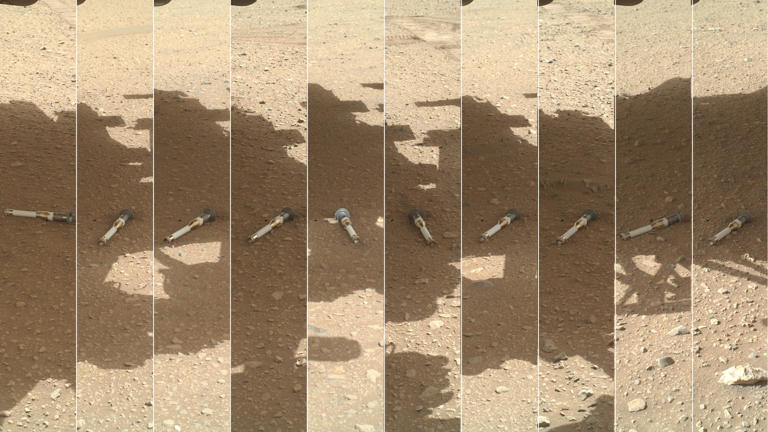
Those aren't light sabers, they're Perseverance's sample tubes, stashed on the Martian surface. NASA/JPL-Caltech/MSSS

Those aren't light sabers, they're Perseverance's sample tubes, stashed on the Martian surface.
NASA/JPL-Caltech/MSSS© NASA/JPL-Caltech/MSSS

The Cheyava Falls rock especially needs the extra studying.

"This rock is also one of the most complex rocks we've seen on the surface of Mars. There is a lot going on in this rock," Stack Morgan said.

Is it aliens? Check the CoLD scale

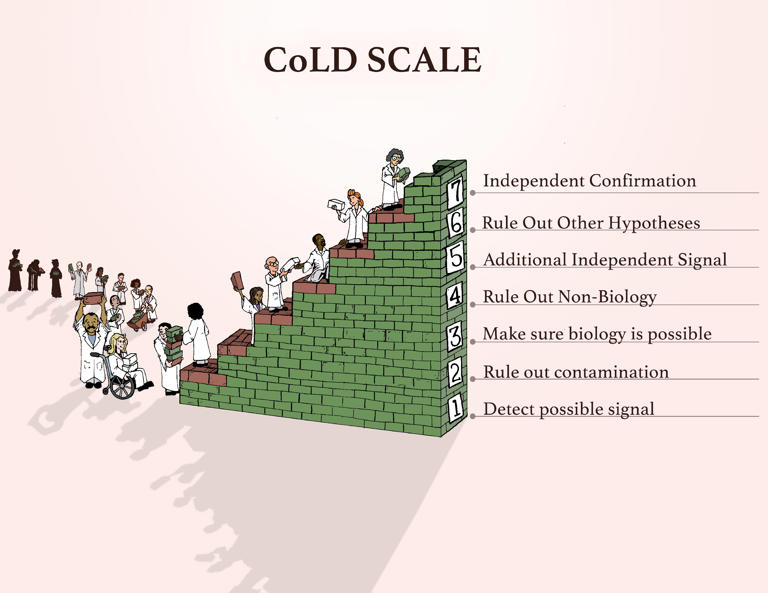
For now, this discovery is just a "step one" on the seven-step "confidence of life detection" (CoLD) scale.

The CoLD scale is a rough rating of scientific confidence in any potential alien-life discovery.

The CoLD (Confidence of Life Detection) scale helps scientists research whether a signal could indicate life. NASA/Aaron Gronstal

The CoLD (Confidence of Life Detection) scale helps scientists research whether a signal could indicate life.
NASA/Aaron Gronstal© NASA/Aaron Gronstal

"We've taken us up to the start of that scale, and I think that's what the rover was sent to Mars to do," Stack Morgan said.

A possible biosignature can climb to higher levels of confidence as evidence builds. For example, if scientists can confirm that known non-biological processes didn't create the leopard spots, the Cheyava Falls rock might ascend to step two or three.

But they need to get the sample to Earth first. And NASA needs to figure out how to do that.

"We're hoping that our most recent sample can play into the conversation about whether this effort is worth it," Stack Morgan said. "And we believe that it is."

If you enjoyed this story, be sure to follow Business Insider on Microsoft Start.

{ https://www.msn.com/en-us/channel/topic/Science/ }

Hoe vind je dit bericht?
Geschreven door peter om 14:59 Stuur door

Meer van UFO'S of UAP'S, ASTRONOMIE, RUIMTEVAART, ARCHEOLOGIE, OUDHEIDKUNDE, SF-SNUFJES EN ANDERE ESOTERISCHE WETENSCHAPPEN - DE ALLERLAATSTE NIEUWTJES

↑ Terug naar de berichten