Naar de inhoud

UFO'S of UAP'S, ASTRONOMIE, RUIMTEVAART, ARCHEOLOGIE, OUDHEIDKUNDE, SF-SNUFJES EN ANDERE ESOTERISCHE WETENSCHAPPEN - DE ALLERLAATSTE NIEUWTJES

UFO's of UAP'S in België en de rest van de wereld
akke.beakke.be
Ontdek de Fascinerende Wereld van UFO's en UAP's: Jouw Bron voor Onthullende Informatie! Ben jij ook gefascineerd door het onbekende? Wil je meer weten over UFO's en UAP's, niet alleen in België, maar over de hele wereld? Dan ben je op de juiste plek! België: Het Kloppend Hart van UFO-onderzoek In België is BUFON (Belgisch UFO-Netwerk) dé autoriteit op het gebied van UFO-onderzoek. Voor betrouwbare en objectieve informatie over deze intrigerende fenomenen, bezoek je zeker onze Facebook-pagina en deze blog. Maar dat is nog niet alles! Ontdek ook het Belgisch UFO-meldpunt en Caelestia, twee organisaties die diepgaand onderzoek verrichten, al zijn ze soms kritisch of sceptisch. Nederland: Een Schat aan Informatie Voor onze Nederlandse buren is er de schitterende website www.ufowijzer.nl, beheerd door Paul Harmans. Deze site biedt een schat aan informatie en artikelen die je niet wilt missen! Internationaal: MUFON - De Wereldwijde Autoriteit Neem ook een kijkje bij MUFON (Mutual UFO Network Inc.), een gerenommeerde Amerikaanse UFO-vereniging met afdelingen in de VS en wereldwijd. MUFON is toegewijd aan de wetenschappelijke en analytische studie van het UFO-fenomeen, en hun maandelijkse tijdschrift, The MUFON UFO-Journal, is een must-read voor elke UFO-enthousiasteling. Bezoek hun website op www.mufon.com voor meer informatie. Samenwerking en Toekomstvisie Sinds 1 februari 2020 is Pieter niet alleen ex-president van BUFON, maar ook de voormalige nationale directeur van MUFON in Vlaanderen en Nederland. Dit creëert een sterke samenwerking met de Franse MUFON Reseau MUFON/EUROP, wat ons in staat stelt om nog meer waardevolle inzichten te delen. Let op: Nepprofielen en Nieuwe Groeperingen Pas op voor een nieuwe groepering die zich ook BUFON noemt, maar geen enkele connectie heeft met onze gevestigde organisatie. Hoewel zij de naam geregistreerd hebben, kunnen ze het rijke verleden en de expertise van onze groep niet evenaren. We wensen hen veel succes, maar we blijven de autoriteit in UFO-onderzoek! Blijf Op De Hoogte! Wil jij de laatste nieuwtjes over UFO's, ruimtevaart, archeologie, en meer? Volg ons dan en duik samen met ons in de fascinerende wereld van het onbekende! Sluit je aan bij de gemeenschap van nieuwsgierige geesten die net als jij verlangen naar antwoorden en avonturen in de sterren! Heb je vragen of wil je meer weten? Aarzel dan niet om contact met ons op te nemen! Samen ontrafelen we het mysterie van de lucht en daarbuiten.

Archief

Study: Biological Amino Acids Could Survive in Near-Surface Ices of Europa and Enceladus

Study: Biological Amino Acids Could Survive in Near-Surface Ices of Europa and Enceladus

Europa and Enceladus are key targets to search for evidence of alien life in our Solar System. However, the surface and shallow subsurface of these airless icy moons are constantly bombarded by ionizing radiation that could degrade chemical biosignatures. Therefore, sampling of icy surfaces in future life detection missions to Europa and Enceladus requires a clear understanding of the necessary ice depth where unaltered organic biomolecules might be present. A team of scientists from NASA and the Pennsylvania State University has conducted experiments by exposing individual biological and abiotic amino acids in ices to gamma radiation to simulate conditions on these icy worlds.

The surface of Europa looms large in this newly-reprocessed color view; image scale is 1.6 km per pixel; north on Europa is at right. Image credit: NASA / JPL-Caltech / SETI Institute.

The surface of Europa looms large in this newly-reprocessed color view; image scale is 1.6 km per pixel; north on Europa is at right.

Image credit: NASA / JPL-Caltech / SETI Institute.

“Based on our experiments, the ‘safe’ sampling depth for amino acids on Europa is almost 20 cm (8 inches) at high latitudes of the trailing hemisphere (hemisphere opposite to the direction of Europa’s motion around Jupiter) in the area where the surface hasn’t been disturbed much by meteorite impacts,” said Dr. Alexander Pavlov, a researcher at NASA’s Goddard Space Flight Center.

“Subsurface sampling is not required for the detection of amino acids on Enceladus — these molecules will survive radiolysis (breakdown by radiation) at any location on the Enceladus surface less than a few millimeters (a tenth of an inch) from the surface.”

Dr. Pavlov and his colleagues used amino acids in radiolysis experiments as possible representatives of biomolecules on icy moons.

Amino acids can be created by life or by non-biological chemistry.

However, finding certain kinds of amino acids on Europa or Enceladus would be a potential sign of life because they are used by terrestrial life as a component to build proteins.

Proteins are essential to life as they are used to make enzymes which speed up or regulate chemical reactions and to make structures.

Amino acids and other compounds from subsurface oceans could be brought to the surface by geyser activity or the slow churning motion of the ice crust.

To evaluate the survival of amino acids on these worlds, the researchers mixed samples of amino acids with ice chilled to about minus 196 Celsius (minus 321 Fahrenheit) in sealed, airless vials and bombarded them with gamma-rays, a type of high-energy light, at various doses.

Since the oceans might host microscopic life, they also tested the survival of amino acids in dead bacteria in ice.

Finally, they tested samples of amino acids in ice mixed with silicate dust to consider the potential mixing of material from meteorites or the interior with surface ice.

The experiments provided pivotal data to determine the rates at which amino acids break down, called radiolysis constants.

With these, the scientists used the age of the ice surface and the radiation environment at Europa and Enceladus to calculate the drilling depth and locations where 10% of the amino acids would survive radiolytic destruction.

Although experiments to test the survival of amino acids in ice have been done before, this is the first to use lower radiation doses that don’t completely break apart the amino acids, since just altering or degrading them is enough to make it impossible to determine if they are potential signs of life.

This is also the first experiment using Europa/Enceladus conditions to evaluate the survival of these compounds in microorganisms and the first to test the survival of amino acids mixed with dust.

The scientists found that amino acids degraded faster when mixed with dust but slower when coming from microorganisms.

“Slow rates of amino acid destruction in biological samples under Europa and Enceladus-like surface conditions bolster the case for future life-detection measurements by Europa and Enceladus lander missions,” Dr. Pavlov said.

“Our results indicate that the rates of potential organic biomolecules’ degradation in silica-rich regions on both Europa and Enceladus are higher than in pure ice and, thus, possible future missions to Europa and Enceladus should be cautious in sampling silica-rich locations on both icy moons.”

“A potential explanation for why amino acids survived longer in bacteria involves the ways ionizing radiation changes molecules — directly by breaking their chemical bonds or indirectly by creating reactive compounds nearby which then alter or break down the molecule of interest.”

“It’s possible that bacterial cellular material protected amino acids from the reactive compounds produced by the radiation.”

  • The team’s paper was published in the journal Astrobiology.
  • Alexander A. Pavlov et al. 2024. Radiolytic Effects on Biological and Abiotic Amino Acids in Shallow Subsurface Ices on Europa and Enceladus. Astrobiology 24 (7); doi: 10.1089/ast.2023.0120
  • This article was adapted from an original release by NASA.

{ https://www.sci.news/ }

Hoe vind je dit bericht?
Geschreven door peter om 21:27 Stuur door

AI Focuses UFO Over Brazil Drops Two Objects, Feb 2011, UAP Sighting News.

AI Focuses UFO Over Brazil Drops Two Objects, Feb 2011, UAP Sighting News.

UAP,%20%E0%A4%89%E0%A4%AB%E0%A5%8C%20,%20%E0%A6%87%E0%A6%89%E0%A6%8F%E0%A6%AB%E0%A6%93,%20%C4%91i%CC%83a%20bay,%20MUFON,%20%E7%9B%AE%E6%92%83%E3%80%81%E3%82%A8%E3%82%A4%E3%83%AA%E3%82%A2%E3%83%B3,%20%20UFO,%20UFOs,%20%D0%9D%D0%9B%D0%9E%20,%20NLO,%20sighting,%20sightings,%20alien,%20aliens,%20ET,%20anomaly,%20.png

Date of sighting: February 11, 2011 

Location of sighting: Sao Paulo, Brazil
 
I really wanted to run some screenshots of this UFO though ai, and quickly realized that this really was a UFO as it came into focus. AI helps some photos get focused and cleaned up so that we can see the true detail. Sometimes AI can't, so I have to go through about 20-30 sighting photos before I find one thats focuses. AI is the tool of the future for all UFO researchers world wide. 
Scott C. Waring 

{ https://www.ufosightingsdaily.com/ }

Hoe vind je dit bericht?
Geschreven door peter om 21:19 Stuur door

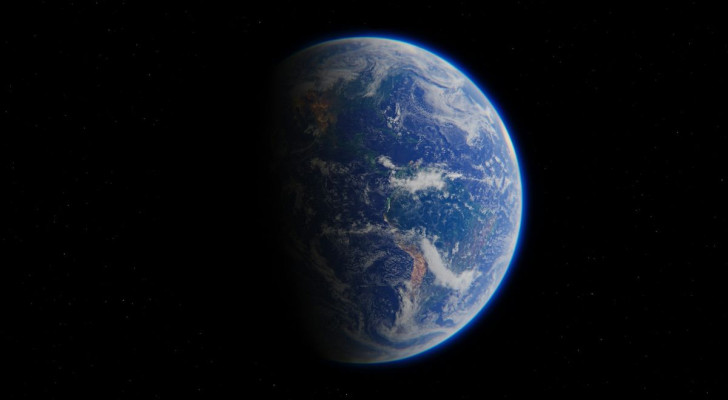
Dit is de reden waarom de aarde langzamer draait en de dagen langer worden: volgens een onderzoek is het onze schuld

Dit is de reden waarom de aarde langzamer draait en de dagen langer worden: volgens een onderzoek is het onze schuld


Janine image
Door
 Janine
De rotatiesnelheid van de aarde is langzamer, maar niet alleen om kosmische redenen

Unsplash

Dat de aarde steeds langzamer draait is geen mysterie, tenminste niet binnen de wetenschappelijke gemeenschap. De redenen hiervoor zijn divers en hebben te maken met de natuurlijke processen die onze planeet beïnvloeden... voor het grootste deel. Volgens recent wetenschappelijk onderzoek vertraagt de rotatiesnelheid van de aarde echter door toedoen van de mens en zijn activiteiten. Laten we eens kijken hoe dit mogelijk is en wat de gevolgen zijn voor onze samenleving.

Van de maan tot de gletsjers: een reis op een steeds trager wordende planeet

Zoals we in de inleiding zeiden, is het onderhand bekend dat de rotatiesnelheid van de aarde om haar as noch vast, noch constant is, voornamelijk als gevolg van twee verschillende processen:

  • aan de ene kant vertraagt de kern van de Aarde haar rotatiesnelheid;
  • aan de andere kant verwijdert de Maan zich steeds verder van de Aarde.

Dit zijn natuurlijke processen die leiden tot werkelijk oneindige veranderingen in de rotatiesnelheid van onze planeet, en dus ook in de lengte van de dagen. Door de verwijdering van de maan zal de dag van de aarde bijvoorbeeld 25 uur duren, maar over 200 miljoen jaar. Toch spreekt onderzoek uitgevoerd door het centrum ETH Zürich in samenwerking met NASA over een andere factor die de rotatiesnelheid van de aarde zou kunnen vertragen: de stijging van de temperatuur als gevolg van menselijke activiteiten.

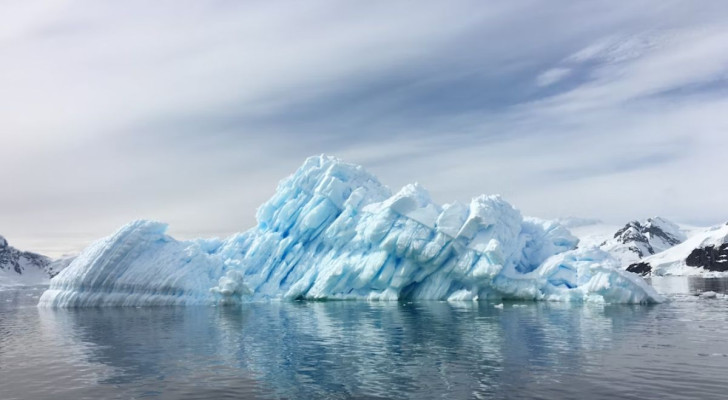
Het verband lijkt werkelijk paradoxaal, maar het is er wel. Onderzoekers hebben namelijk ontdekt hoe hogere temperaturen een kettingreactie hebben veroorzaakt die de dagen op aarde feitelijk verlengt. Het smelten van gletsjers op Antarctica en Groenland leidt er feitelijk toe dat miljoenen kubieke meters water over het hele aardoppervlak worden verspreid, waardoor de rotatiesnelheid van de planeet effectief wordt vertraagd.

De gevolgen van de vertraging van de aarde… op aarde

De gletsjers van Antarctica en Groenland dragen bij aan langere dagen

Unsplash

In hun eerste onderzoek, gepubliceerd in het tijdschrift PNAS, merken de onderzoekers op hoe de temperatuurstijging om antropogene redenen leidt tot langere dagen. Hetzelfde team publiceerde echter ook een tweede onderzoek in het tijdschrift GeoScience, waarin ze kijken naar hoe smeltende gletsjers bijdragen aan het veranderen van de positie van de rotatie-as van de aarde. Samen met andere verschijnselen, zoals de eerder genoemde bewegingen van de kern van de aarde, verschuift de rotatie-as elke 100 jaar ongeveer 10 meter.

De effecten die kunnen worden toegeschreven aan smeltende gletsjers en menselijke activiteiten zijn minimaal, maar er is geen reden tot vreugde. Alle verschijnselen die door de onderzoekers zijn geanalyseerd, zijn namelijk terug te voeren op natuurlijke verschijnselen, en dat hebben we gezien: de maan die afstand neemt, het effect van de getijden, de binnenkern en haar bewegingen, enzovoort. In zo'n beeld speelt echter ook de hand van de mens een rol en kan leiden tot plotselinge versnellingen van deze processen.

De gevolgen van de vertraging van de aarde... voor de mens

De interne en externe processen op aarde zijn daarom meer met elkaar verbonden dan we denken: zoals we hebben gezien, kunnen ze elkaar beïnvloeden,  maar ook de menselijke activiteiten die bijdragen aan het veroorzaken ervan. Hoewel de vertraging van de rotatiesnelheid van de aarde momenteel minimaal is en de dagen slechts fracties van een seconde langer worden, zijn de gevolgen voor de mens al aanzienlijk.

De tijdmeting van de mens is gebaseerd op uiterst nauwkeurige atoomklokken. Deze precisie wordt echter in gevaar gebracht door de interactie tussen de verschillende factoren die bijdragen aan het verlengen van de dagen op aarde. Het risico is dat we minder nauwkeurige GPS hebben, met alle gevolgen van dien voor alle menselijke activiteiten.

Aan de andere kant: als de vertraging tot 2000 tussen de 0,3 en 1 milliseconde per eeuw lag, zitten we nu op ongeveer 1,3 milliseconden per eeuw, maar dit lijkt voorbestemd om te stijgen. Het is een neerwaartse spiraal waar we de afgelopen decennia steeds meer vertrouwd mee zijn geworden... en die we nog kunnen vertragen als we tijdig handelen.

Source:

{ https://www.curioctopus.nl/ }

Hoe vind je dit bericht?
Geschreven door peter om 21:14 Stuur door

Amazon UFO Secrets: Researcher Uncovers Mysterious Sounds in the Rainforest

Amazon UFO Secrets: Researcher Uncovers Mysterious Sounds in the Rainforest

Amazon UFO secrets revealed

The Amazon rainforest, a place often associated with vast biodiversity and hidden natural wonders, has recently become the focus of UFO research. Brazilian UFO researcher Rony Vernet has uncovered extraordinary phenomena that suggest the presence of unidentified aerial phenomena (UAP) deep within this dense jungle.

In a recent episode of “Reality Check with Ross Coulthart,” Vernet shared his findings after an expedition to the Amazon rainforest, specifically a remote area near the border of Brazil and Peru. Vernet’s journey was inspired by a long history of unexplained UAP incidents in the region, dating back to at least the mid-1970s.

Background on UAP Activity in the Amazon

The Amazon and its surrounding areas have been hotspots for UAP sightings for decades. In 1977, a series of UAP incidents in the Brazilian states of Pará and Maranhão drew significant attention. Hundreds of people reported being struck by light beams emitted from UAPs, particularly around the city of Colares. These incidents led to Operation Saucer (Operação Prato), an investigation by the Brazilian Air Force, which officially found no unusual phenomena. However, locals reported injuries consistent with microwave burns, and some even claimed that individuals were killed by these light beams.

In more recent years, there have been continued reports of UAP activity. In 2013, unidentified aerial phenomena were observed over a village in Acre, Brazil, near the Peruvian border. By 2014, these sightings escalated to UAPs descending into the village and emitting light beams at the indigenous people, prompting an investigation by the National Indigenous Foundation and federal authorities.

Vernet’s Expedition and Findings

Driven by these historical reports, Vernet embarked on an expedition to the Yanawa Indigenous Tribe in Acre province. His goal was to gather firsthand evidence of these phenomena. Over the course of his investigation, Vernet experienced a series of inexplicable events, beginning with what he described as poltergeist-like activity.

On his first night in the jungle, Vernet reported hearing loud, metallic sounds that had no apparent source. These sounds resembled furniture being dragged across a wooden floor, yet there were no structures nearby that could produce such noises. Despite thorough searches, Vernet and his team could not find any logical explanations for these occurrences.

The following night, Vernet explored an abandoned house in the jungle, which was filled with objects as if its inhabitants had left suddenly. Here, he and his team felt an overwhelming sense of fear and coldness, unlike anything they had experienced before. The eerie environment only added to the mystery of the phenomena they were investigating.

Encounters with Luminous Spheres

As Vernet continued his investigation, he began to observe luminous phenomena. Indigenous people frequently reported seeing orange or yellow spheres, described as golden balls of fire, hovering near their homes. These spheres often appeared on the rooftops, seemingly observing the inhabitants. Remarkably, whenever someone attempted to point at or directly engage with the spheres, they would disappear instantly.

On one occasion, while setting up monitoring equipment, Vernet and his team witnessed a large, red-orange sphere less than a meter from the ground and only about five meters away from them. Despite its brightness, the sphere made no noise and could be stared at without discomfort. When Vernet attempted to capture the phenomenon with a drone, the sphere evaded recording by somehow remaining invisible to the drone’s camera despite being clearly visible to the naked eye.

Technological and Sensor Data

Vernet’s research was not limited to visual observations. He brought a variety of sophisticated equipment, including thermal cameras, cosmic ray sensors, infrasound detectors, and microwave antennas, to gather as much data as possible. Notably, during these encounters, he detected a 1.6 GHz signal, a frequency also observed during similar phenomena at Skinwalker Ranch in the United States.

Although some of his sensors were not fully operational during the initial nights, Vernet plans to analyze the collected data to find correlations between the visual phenomena and the sensor readings. His initial findings suggest that the UAPs might have the capability to interfere with electronic devices, as witnessed when camera equipment and flashlights malfunctioned during sightings.

Indigenous Perspectives and Scientific Interpretation

The indigenous communities in the Amazon have their own interpretations of these phenomena, often linking them to spiritual beliefs. The Yanawa tribe, for instance, regards certain areas of the forest as portals where beings from the spirit world traverse into our reality. Vernet’s research, combining modern scientific methods with indigenous knowledge, aims to provide a comprehensive understanding of these mysterious occurrences.

Conclusion

Rony Vernet’s investigation into the Amazon’s UAP phenomena has provided compelling evidence that these mysterious lights and sounds are more than mere folklore. His findings suggest a highly intelligent phenomenon capable of interacting with and evading human observation. As Vernet continues to analyze the data and collaborate with other scientists, his work could bring us closer to understanding the enigmatic UAPs of the Amazon rainforest.

The combination of scientific inquiry and indigenous wisdom in Vernet’s approach sets a new precedent for UAP research. By respecting and incorporating the knowledge of local communities, researchers like Vernet are paving the way for a more holistic understanding of these phenomena, which could one day unravel the secrets of the Amazon’s skies.

VIDEO

{ https://www.latest-ufo-sightings.net/ }

Hoe vind je dit bericht?
Geschreven door peter om 21:01 Stuur door

Dit 'zombievirus' wordt misschien wel onze volgende pandemie

Dit 'zombievirus' wordt misschien wel onze volgende pandemie

Dit 'zombievirus' wordt misschien wel onze volgende pandemie

 'zombievirus' wordt misschien wel onze volgende pandemie

© Pixabay

Wetenschappers van een laboratorium in het Franse Marseille hebben gewaarschuwd voor de mogelijkheid van een nieuwe pandemie in de toekomst. Deze zou immers kunnen worden veroorzaakt door een virus dat al meer dan 30.000 jaar bevroren is.

Microben in het noordpoolgebied zouden de oorzaak kunnen zijn, nadat de opwarming van de aarde, de toegenomen menselijke activiteit en de aanwezigheid van schepen in de regio het ontdooi- en smeltproces versnellen.

Volgens de onderzoekers is de kans groot dat deze en andere virussen, als het ontdooiproces doorgaat, zich vrij zullen verspreiden en uiteindelijk nieuwe ziekten veroorzaken.

Dit ‘zombievirus’ werd door laboratoriumonderzoekers ontdekt in een laag Siberische permafrost die duizenden jaren bevroren was in het noordwesten van Siberië.

Het nieuws werd in The Guardian becommentarieerd door de Nederlandse viroloog Marion Koopmans, die beweerde dat “we niet weten welk virus zich in de permafrost bevindt. Maar ik denk dat er een reëel risico bestaat dat er één virus is dat een epidemie kan veroorzaken, bijvoorbeeld een oude vorm van polio. We moeten aannemen dat zoiets zou kunnen gebeuren”, waarschuwde ze.

(SR and FM for Tagtik/Source: The Guardian/Illustration: Pixabay)

{https://www.msn.com/nl-be/feed?ocid=msedgntp&pc=acts }

Hoe vind je dit bericht?
Geschreven door peter om 20:22 Stuur door

Dit 'zombievirus' wordt misschien wel onze volgende pandemie

Dit 'zombievirus' wordt misschien wel onze volgende pandemie

Dit 'zombievirus' wordt misschien wel onze volgende pandemie

 'zombievirus' wordt misschien wel onze volgende pandemie

© Pixabay

Wetenschappers van een laboratorium in het Franse Marseille hebben gewaarschuwd voor de mogelijkheid van een nieuwe pandemie in de toekomst. Deze zou immers kunnen worden veroorzaakt door een virus dat al meer dan 30.000 jaar bevroren is.

Microben in het noordpoolgebied zouden de oorzaak kunnen zijn, nadat de opwarming van de aarde, de toegenomen menselijke activiteit en de aanwezigheid van schepen in de regio het ontdooi- en smeltproces versnellen.

Volgens de onderzoekers is de kans groot dat deze en andere virussen, als het ontdooiproces doorgaat, zich vrij zullen verspreiden en uiteindelijk nieuwe ziekten veroorzaken.

Dit ‘zombievirus’ werd door laboratoriumonderzoekers ontdekt in een laag Siberische permafrost die duizenden jaren bevroren was in het noordwesten van Siberië.

Het nieuws werd in The Guardian becommentarieerd door de Nederlandse viroloog Marion Koopmans, die beweerde dat “we niet weten welk virus zich in de permafrost bevindt. Maar ik denk dat er een reëel risico bestaat dat er één virus is dat een epidemie kan veroorzaken, bijvoorbeeld een oude vorm van polio. We moeten aannemen dat zoiets zou kunnen gebeuren”, waarschuwde ze.

(SR and FM for Tagtik/Source: The Guardian/Illustration: Pixabay)

{https://www.msn.com/nl-be/feed?ocid=msedgntp&pc=acts }

Hoe vind je dit bericht?
Geschreven door peter om 20:22 Stuur door

Swarming Satellites Could Autonomous Characterize an Asteroid

Swarming Satellites Could Autonomous Characterize an Asteroid

An asteroid’s size, shape, and rotational speed are clues to its internal properties and potential resources for mining operations. However, of the more than 20,000 near-Earth asteroids currently known, only a tiny fraction have been sufficiently characterized to estimate those three properties accurately. That is essentially a resource constraint – there aren’t enough dedicated telescopes on Earth to keep track of all the asteroids for long enough to characterize them, and deep space resources, such as the Deep Space Network required for communications outside Earth’s orbit, are already overutilized by other missions. Enter the Autonomous Nanosatellite Swarming (ANS) mission concept, developed by Dr. Simone D’Amico and his colleagues at Stanford’s Space Rendezvous Laboratory. 

The concept behind ANS is relatively simple. A primary “mothership” spacecraft travels to an asteroid, where it deploys several smaller, autonomous nanosatellites upon arrival. These nanosatellites take up positions surrounding the asteroid and, using relatively inexpensive sensor and communications technology, map the asteroid’s features. After observing for some time, they send data back to the mothership, where an algorithm pieces together information similar to a stereo vision system on Earth and calculates the asteroid’s shape, size, and rotational speed.

There are several deeper layers to unpack in the mission, though. Communication is the first one. In ANS, only the mothership communicates back to Earth using a high-gain antenna. The smaller swarming robots all communicate with each other – partly to estimate distances between the different swarming satellites but also to coordinate observations.

Characterization is the first step toward exploitation, as Fraser discusses.

Each nanosatellite utilizes only a few relatively inexpensive pieces of hardware, including a star tracker for overall positioning, short range camera (as compared to more expensive lidar systems typically used in asteroid characterization missions), atomic clocks to synchronize timing, and radio frequency communication modules. These components allow for relatively independent operation of each nanosatellite and lower the burden of communication back with Earth – freeing up those deep space communications resources for other critical work.

But the critical component of ANS isn’t so much the hardware—it’s the software, particularly the control and estimation algorithm. Dr. D’Amico and his team describe a technical tool known as an unscented Kalman filter, which allows them to estimate asteroid shape, size, and rotation based on landmarks noticed by each swarming nanosatellite and run through this algorithm.

To demonstrate the effectiveness of that algorithm, the team tested it using a relatively well-characterized asteroid: 443 Eros. That asteroid had the distinction of being both the first near-Earth object ever found, back in 1898, and the first ever visited by a mission – the NEAR mission 100 years later. The NEAR Shoemaker craft that visited 433 Eros also successfully landed on it, another first for humanity. Even with the comparatively simple sensing technology of a quarter century ago, Eros is still one of the most characterized asteroids in the solar system.

Here’s a talk about autonomous swarming given by Dr. D’Amico, the head of Stanford’s Space Rendezvous Lab.

The demonstration results clearly showed that the ANS algorithm does its job well. It can coordinate the positioning of the nanosatellites surrounding the asteroid and coalesce their disparate data sets into a coherent picture of the asteroid they are monitoring. And it can do so remotely, with very minimal input from Earth.

For now, that is how far the algorithm has gotten. Several missions, some of which we’ll cover in the near future, further explore the idea of nanosatellite swarms. But ANS itself hasn’t yet been adopted into a formal mission architecture. One day, though, thousands of satellites might be swarming the tens of thousands of small bodies surrounding our home, leading to the first stages of a genuinely off-Earth economy.

Learn More:

Lead Image:

  • Artist’ depiction of an ANS mission to Eros.
    Credit – Stacey, Dennison, & D’Amico

{ https://www.universetoday.com/ }

Hoe vind je dit bericht?
Geschreven door peter om 00:16 Stuur door

The Most Dangerous Part of a Space Mission is Fire

This AI generated image shows a fire spreading in a spacecraft. Researchers are working to understand how fire behaves differently in spacecraft environments so they can protect astronauts. Image Credit: ZARM/ University of Bremen

The Most Dangerous Part of a Space Mission is Fire

Astronauts face multiple risks during space flight, such as microgravity and radiation exposure. Microgravity can decrease bone density, and radiation exposure is a carcinogen. However, those are chronic effects.

The biggest risk to astronauts is fire since escape would be difficult on a long mission to Mars or elsewhere beyond Low Earth Orbit. Scientists are researching how fire behaves on spacecraft so astronauts can be protected.

Scientists from the Center of Applied Space Technology and Microgravity (ZARM) at the University of Bremen are investigating the risks of fire onboard spacecraft. They’ve published a new study in the Proceedings of the Combustion Institute titled “Effect of oxygen concentration, pressure, and opposed flow velocity on the flame spread along thin PMMA sheets.” The lead author is Hans-Christoph Ries.

“A fire on board a spacecraft is one of the most dangerous scenarios in space missions,” said Dr. Florian Meyer, head of the Combustion Technology research group at ZARM. “There are hardly any options for getting to a safe place or escaping from a spacecraft. It is therefore crucial to understand the behavior of fires under these special conditions.”

Since 2016, ZARM has been researching how fire behaves and spreads in microgravity conditions like those in the ISS. Those conditions also include an oxygen level similar to Earth’s, forced air circulation, and ambient pressure similar to Earth’s. NASA has been conducting similar experiments, and now we know that fire behaves differently in microgravity than it does on Earth.

Initially, a fire will burn with a smaller flame and take longer to spread. This is to the fire’s advantage since it won’t be noticed as quickly. Fire also burns hotter in microgravity, meaning that some materials that may not be combustible in normal Earth conditions could burn in spacecraft, creating toxic chemicals in the spacecraft’s air.

Spacecraft for Mars missions will have different environments than the ISS. The ambient air pressure will be lower, which provides two benefits: it makes the spacecraft lighter and also allows astronauts to prepare for external missions more quickly. However, the lower ambient pressure introduces another critical change in the spaceship environment. The oxygen content has to be higher to meet the astronauts’ respiration needs.

In these latest tests, the team at ZARM tested fire in these revised conditions.

PMMA stands for polymethyl methacrylate and is usually called acrylic. It’s a common material used in place of glass because it’s light and shatterproof. The ISS doesn’t use it, but it’s being developed for use in future spacecraft. The Orion capsule uses acrylic fused to other materials for windows, and future spacecraft will likely use something similar.

In their experiments, the researchers lit acrylic glass foils on fire and varied three environmental factors: ambient pressure, oxygen content and flow velocity.

This table from the figure is the test matrix for the experiments. The X's and the single O indicate flow rates: X = 100 mm/s, O = 30–200 mm/s. Image Credit: Ries et al. 2024. This table from the figure is the test matrix for the experiments. The X’s and the single O indicate flow rates: X = 100 mm/s, O = 30–200 mm/s. Image Credit: Ries et al. 2024.

They used the Bremen Drop Tower to simulate microgravity.

The experiments showed that lower ambient pressure dampens fire. However, higher oxygen content has a more powerful effect. The ISS’s oxygen level is 21%, just as it is on Earth. Future spacecraft with lower ambient pressures will have oxygen levels as high as 35%. That translates into a huge increase in the risk astronauts face from fire. The results show that a fire can spread three times faster than it would under Earth conditions.

“Our results highlight critical factors that need to be considered when developing fire safety protocols for astronautic space missions.”

Dr. Florian Meyer, Combustion Technology research group at ZARM
This figure from the study shows a time series of infrared images of the tests. They show fire on an acrylic film under microgravity conditions with 100 mm/second airflow, 75 kPa, and 28.3% oxygen. The white dashed lines show the contour of the acrylic sample. The green dotted lines are the evaluation lines used to measure the fire's propagation rate. In figure b, the pink horizontal bar below the propagation front is the igniter. Image Credit: Ries et al. 2024. This figure from the study shows a time series of infrared images of the tests. They show fire on an acrylic film under microgravity conditions with 100 mm/second airflow, 75 kPa, and 28.3% oxygen. The white dashed lines show the contour of the acrylic sample. The green dotted lines are the evaluation lines used to measure the fire’s propagation rate. In panel b, the pink horizontal bar below the propagation front is the igniter. Image Credit: Ries et al. 2024.

We all know increased airflow spreads fire faster; that’s why we blow on a small flame to create a larger fire. Increased airflow delivers more oxygen, increasing combustion, so increased airflow in a higher-oxygen atmosphere creates a dangerous situation for astronauts.

“Our results highlight critical factors that need to be considered when developing fire safety protocols for astronautic space missions,” said Dr. Florian Meyer. “By understanding how flames spread under different atmospheric conditions, we can mitigate the risk of fire and improve the safety of the crew.”

{ https://www.universetoday.com/ }

Hoe vind je dit bericht?
Geschreven door peter om 23:49 Stuur door

Meteor Exploded Over N.Y.C. at 38,000 MPH: 'Rare Daylight Fireball'

Meteor Exploded Over N.Y.C. at 38,000 MPH: 'Rare Daylight Fireball'

Story by Anna Lazarus Caplan
 
NASA said that it does not track small meteors at "significant" distances from Earth, but individuals in New York and New Jersey reported witnessing the event
Gary Hershorn/Getty New York City's skyline
© Provided by People

A small meteor was responsible for a big fireball over New York City on Tuesday, July 16, authorities said.

The astronomical event was first detected about 49 miles above Upper Bay/New York Harbor and moved west towards New Jersey at 38,000 mph, passing over the Statue of Liberty before disintegrating about 29 miles above midtown Manhattan, NASA confirmed in a statement.

Witnesses described seeing a fireball, hearing “booms” and feeling “shakings” between 10 a.m. to 12 p.m. local time, NASA said.

It is unclear if the sounds were related to the meteor or were due to military operations happening at the same time in New Jersey, Bill Cooke, with NASA’s Meteoroid Environments Office said, per ABC affiliate WABC-TV.

Related: Moon Cave Found Near Apollo 11 Landing Site Could One Day House Humans, Scientists Say

However, he added that the event was an unusual occurrence.

"Something when it's moving that fast it heats up,” Cooke said. “You expect to see meteors at night not during the day, so this was a rare daylight fireball."

While no meteorites were reported, the meteor gave pause to those underneath its trajectory.

Related video: 
  • NASA Meteor Watch: 'Daylight fireball over New York City' around time of reported booms, shakings (News 12 (Video)

"It was long and really, really fast," Judah Bergman, who saw the meteor from his Lakewood, N.J. office, told WABC. "It looked like a flaming, long rod or something on fire and flying through the sky."

The meteor was not even on NASA’s radar, at first, according to the organization. 

Related: 

“We do keep track of asteroids that are capable of posing a danger to us Earth dwellers, but small rocks like the one producing this fireball are only about a foot in diameter, incapable of surviving all the way to the ground,” NASA said in its statement. “We do not (actually cannot) track things this small at significant distances from the Earth, so the only time we know about them is when they hit the atmosphere and generate a meteor or a fireball.”

While some seasoned New Yorkers were nonplussed, according to The New York Times, at least one resident who observed the moment reveled in its rarity.

“There’s something magical about it,” Tina Dang, a private chef, said. “You forget about these incredible moments in life, when so much else is going on.”

  • Read the original article on People.
Hoe vind je dit bericht?
Geschreven door peter om 22:36 Stuur door

Klimaatverandering veroorzaakt een onverwachte en fundamentele planetaire verandering

Klimaatverandering veroorzaakt een onverwachte en fundamentele planetaire verandering

Een verrassend samenspel tussen het smelten van ijs en natuurkunde betekent dat de dagen van de aarde langer worden

Het is algemeen bekend dat klimaatverandering veel verandert aan de aarde, van de intensiteit van extreem weer tot nutriëntencycli en ecosystemen en zelfs het risico op aanvallen van dieren. Maar nieuw onderzoek geeft aan dat er iets nog fundamentelers verschuift naarmate de klimaatverandering vordert: de lengte van een dag.

IJssmelt aangespoord door door de mens veroorzaakte opwarming van de aarde wijzigt de massaverdeling van onze planeet, vertraagt uiteindelijk de rotatie van de aarde en verlengt de 24-uursdag, volgens een studie gepubliceerd op 15 juli in het tijdschrift Proceedings van de National Academy of Sciences. Eerder onderzoek heeft vergelijkbare bevindingen gedaan, maar de nieuwe studie suggereert dat klimaatverandering een grotere impact heeft op de daglengte dan eerder werd gedacht.

Als het gebruik van fossiele brandstoffen en de uitstoot van broeikasgassen blijven toenemen in een algemeen genoemd scenario met hoge opwarming, bekend als RCP 8.5, dan zou klimaatverandering een grotere invloed kunnen hebben op de rotatie en daglengte van de aarde dan de maan, volgens de nieuwe bevindingen.

Veel factoren hebben een klein maar significant effect op de daglengte, waaronder de beweging van magma in de vloeibare kern van de aarde, windfluctuaties en de stroming van water op het oppervlak van onze planeet. Zoals het is, creëert de maan getijden die heen en weer wrijving produceren die de rotatie van onze planeet vertraagt. Op de schaal van de geologische tijd heeft dit maaneffect de grootste bijdrage geleverd aan veranderingen in de daglengte in de geschiedenis van onze planeet. Toch is de door de mens veroorzaakte opwarming van de aarde bezig met een inhaalslag.

De aarde is geen perfecte bol, het is "afgeplat", wat betekent dat het licht samengedrukt is langs de evenaar in een subtiele 3D-ovale vorm. Naarmate de ijskappen van Groenland en Antarctica smelten, beweegt er meer water en massa van de polen naar de evenaar. Dit maakt de aarde effectief verder plat, waardoor het midden nog breder en zwaarder wordt dan de boven- en onderkant, waardoor de rotatie enigszins wordt vertraagd als gevolg van de toegenomen traagheid. "Het is net als wanneer een kunstschaatsster een pirouette maakt, waarbij ze eerst haar armen dicht bij haar lichaam houdt en ze vervolgens uitstrekt", zei senior onderzoeker Benedikt Soja, hoogleraar ruimtegeodesie aan de ETH Zürich in Zwitserland, in een persverklaring. Met uitgestrekte armen zou de kunstschaatser vertragen, en twee eeuwen aan observatiegegevens en modellen suggereren dat onze planeet dat ook is.

Onderzoekers berekenden het smelten van ijs en de bijbehorende veranderingen in de afgeplatheid van de aarde met behulp van observatiegegevens die sinds 1976 zijn verzameld en modelleerden reconstructies en projecties van 1900 tot 2100. In de 20e eeuw ontdekten ze dat klimaatverandering de dag tussen 0,3 en 1,0 milliseconden verlengde. Sinds 2000 is de snelheid van door klimaatverandering veroorzaakte dagverlenging echter versneld tot ongeveer 1,33 milliseconden per eeuw. In het RCP 8.5-scenario met hoge emissies voorspellen de wetenschappers dat de snelheid van dagverlenging zou verdubbelen tot ongeveer 2.62 milliseconden per eeuw, waarmee officieel de getijdenwrijving van de maan zou worden overtroffen als de belangrijkste langetermijnkracht die op de daglengte van de aarde inwerkt.

Een paar milliseconden per eeuw klinkt misschien als kruimels in vergelijking met de universele taart, maar het kan oplopen tot dagen die uren langer zijn gedurende miljarden jaren. Op de kortere termijn hebben de door het klimaat veroorzaakte verschuivingen invloed op nauwkeurige tijdregistratie, die wordt gebruikt om nauwkeurige en soepele GPS-navigatie, wereldwijde communicatie, elektriciteitsnetten en financiële systemen te behouden. Ook de verkenning van de ruimte kan door de verandering worden beïnvloed, omdat zelfs kleine afwijkingen in rotatie en positie op aarde kunnen leiden tot grote misrekeningen als het gaat om het navigeren en corrigeren van het landen van een sonde over grote afstanden elders in het zonnestelsel.

Een verwante studie van dezelfde groep onderzoekers die op 12 juli werd gepubliceerd, beoordeelde niet alleen de rotatiesnelheid, maar ook de beweging en locatie van de as van de aarde. Soja en zijn collega's ontdekten dat dezelfde herverdeling van water en massa, veroorzaakt door smeltende poolkappen, bovendien de rotatie-as van de planeet verschuift - mogelijk met een paar meter per eeuw.

Er zijn beperkingen aan beide onderzoeken. RCP 8.5 wordt bijvoorbeeld over het algemeen beschouwd als een verouderde en onwaarschijnlijke projectie voor toekomstige opwarming en gemodelleerde gegevens gaan gepaard met een zekere mate van onzekerheid. Toch laten de twee wetenschappelijke artikelen zien hoe diep de gevolgen van klimaatverandering weerklinken.

"Wij mensen hebben een grotere impact op onze planeet dan we beseffen", aldus Soja in het persbericht. "Dit legt natuurlijk een grote verantwoordelijkheid op ons voor de toekomst van onze planeet."

{ https://www.inverse.com/ }

Hoe vind je dit bericht?
Geschreven door peter om 22:23 Stuur door

Meer van UFO'S of UAP'S, ASTRONOMIE, RUIMTEVAART, ARCHEOLOGIE, OUDHEIDKUNDE, SF-SNUFJES EN ANDERE ESOTERISCHE WETENSCHAPPEN - DE ALLERLAATSTE NIEUWTJES

↑ Terug naar de berichten