Naar de inhoud

UFO'S of UAP'S, ASTRONOMIE, RUIMTEVAART, ARCHEOLOGIE, OUDHEIDKUNDE, SF-SNUFJES EN ANDERE ESOTERISCHE WETENSCHAPPEN - DE ALLERLAATSTE NIEUWTJES

UFO's of UAP'S in België en de rest van de wereld
akke.beakke.be
Ontdek de Fascinerende Wereld van UFO's en UAP's: Jouw Bron voor Onthullende Informatie! Ben jij ook gefascineerd door het onbekende? Wil je meer weten over UFO's en UAP's, niet alleen in België, maar over de hele wereld? Dan ben je op de juiste plek! België: Het Kloppend Hart van UFO-onderzoek In België is BUFON (Belgisch UFO-Netwerk) dé autoriteit op het gebied van UFO-onderzoek. Voor betrouwbare en objectieve informatie over deze intrigerende fenomenen, bezoek je zeker onze Facebook-pagina en deze blog. Maar dat is nog niet alles! Ontdek ook het Belgisch UFO-meldpunt en Caelestia, twee organisaties die diepgaand onderzoek verrichten, al zijn ze soms kritisch of sceptisch. Nederland: Een Schat aan Informatie Voor onze Nederlandse buren is er de schitterende website www.ufowijzer.nl, beheerd door Paul Harmans. Deze site biedt een schat aan informatie en artikelen die je niet wilt missen! Internationaal: MUFON - De Wereldwijde Autoriteit Neem ook een kijkje bij MUFON (Mutual UFO Network Inc.), een gerenommeerde Amerikaanse UFO-vereniging met afdelingen in de VS en wereldwijd. MUFON is toegewijd aan de wetenschappelijke en analytische studie van het UFO-fenomeen, en hun maandelijkse tijdschrift, The MUFON UFO-Journal, is een must-read voor elke UFO-enthousiasteling. Bezoek hun website op www.mufon.com voor meer informatie. Samenwerking en Toekomstvisie Sinds 1 februari 2020 is Pieter niet alleen ex-president van BUFON, maar ook de voormalige nationale directeur van MUFON in Vlaanderen en Nederland. Dit creëert een sterke samenwerking met de Franse MUFON Reseau MUFON/EUROP, wat ons in staat stelt om nog meer waardevolle inzichten te delen. Let op: Nepprofielen en Nieuwe Groeperingen Pas op voor een nieuwe groepering die zich ook BUFON noemt, maar geen enkele connectie heeft met onze gevestigde organisatie. Hoewel zij de naam geregistreerd hebben, kunnen ze het rijke verleden en de expertise van onze groep niet evenaren. We wensen hen veel succes, maar we blijven de autoriteit in UFO-onderzoek! Blijf Op De Hoogte! Wil jij de laatste nieuwtjes over UFO's, ruimtevaart, archeologie, en meer? Volg ons dan en duik samen met ons in de fascinerende wereld van het onbekende! Sluit je aan bij de gemeenschap van nieuwsgierige geesten die net als jij verlangen naar antwoorden en avonturen in de sterren! Heb je vragen of wil je meer weten? Aarzel dan niet om contact met ons op te nemen! Samen ontrafelen we het mysterie van de lucht en daarbuiten.

Archief

Futuristische vliegtuigen die je in 4 uur van Londen naar Sydney brengen

Futuristische vliegtuigen die je in 4 uur van Londen naar Sydney brengen

Artikel door Zeleb.es
Futuristische vliegtuigen die onze manier van reizen kunnen veranderen
©Aangeboden door The Daily Digest
Afbeelding: destinusaero / X
Futuristische vliegtuigen die onze manier van reizen kunnen veranderen
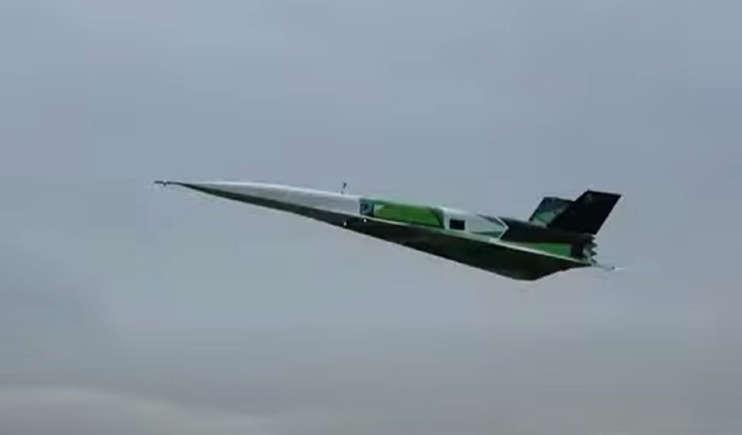
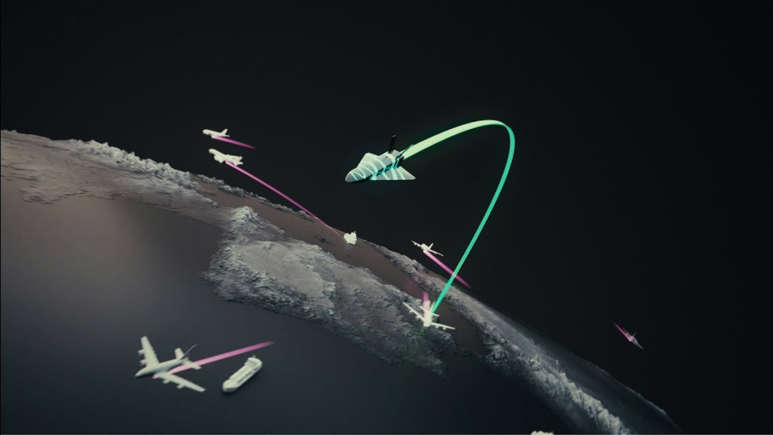
Stel je voor dat je in slechts vier uur van Europa naar Australië kunt reizen of in slechts 90 minuten van Frankfurt naar Dubai. Het klinkt misschien als sciencefiction, maar het bedrijf Destinus is in Europa bezig met de ontwikkeling van een hypersonisch vliegtuig dat dit binnenkort werkelijkheid zou kunnen maken.
Een Zwitserse start-up
©Aangeboden door The Daily Digest
Een Zwitserse start-up
Het Zwitserse Destinus is een start-up die pas twee jaar geleden, in 2021, is opgericht, meldt EuroNews. In die korte tijd heeft het bedrijf echter al veel vooruitgang geboekt.
Een samenwerking tussen verschillende Europese landen
©Aangeboden door The Daily Digest
Een samenwerking tussen verschillende Europese landen
Het bedrijf werkt samen met een programma van de Spaanse overheid en een team van 120 mensen verspreid over Spanje, Frankrijk en Duitsland.
Er is flink geïnvesteerd
©Aangeboden door The Daily Digest
Afbeelding: destinusaero / X
Er is flink geïnvesteerd
Destinus heeft € 12 miljoen aan investeringen binnengehaald door partnerschappen met technologiecentra, bedrijven en enkele Spaanse universiteiten.

Succesvolle vluchten met prototypes
©Aangeboden door The Daily Digest
Afbeelding: destinusaero / X
Succesvolle vluchten met prototypes
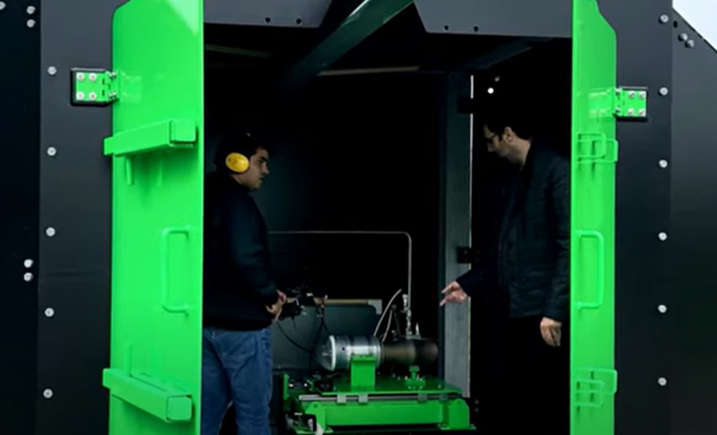
De eerste twee prototypes van het hypersonische vliegtuig hebben succesvolle testvluchten gemaakt en bereiden zich nu voor op proeven met waterstofmotoren.

De eerste vlucht van Destinus 3 in het najaar van 2023
©Aangeboden door The Daily Digest
De eerste vlucht van Destinus 3 in het najaar van 2023
Het derde prototype, bekend als Destinus 3, zal naar verwachting tegen het einde van het jaar klaar zijn voor zijn eerste vlucht.
Mach 5
©Aangeboden door The Daily Digest
Afbeelding: destinusaero / X

Mach 5
Volgens een reportage van CNN zal het hypersonische vliegtuig van Destinus naar verwachting met een snelheid van Mach 5 vliegen, oftewel: vijf keer de snelheid van het geluid.

Topsnelheid van 6174 km/u

©Aangeboden door The Daily Digest

Afbeelding: destinusaero / X

Topsnelheid van 6174 km/u
Dit betekent dat hij een topsnelheid van maar liefst 6174 kilometer per uur kan bereiken.

Londen-Sydney in 4 uur in plaats van 22 uur
©Aangeboden door The Daily Digest
Afbeelding: destinusaero / X
Londen-Sydney in 4 uur in plaats van 22 uur
Door deze adembenemende snelheid zou het vliegtuig in slechts vier uur van Londen naar Sydney kunnen vliegen. Dit is een aanzienlijke tijdsbesparing als je het vergelijkt met de huidige reistijd van ongeveer 22 uur.

Hoe werkt een hypersonisch vliegtuig?
©Aangeboden door The Daily Digest
Afbeelding: destinusaero / X
Hoe werkt een hypersonisch vliegtuig?
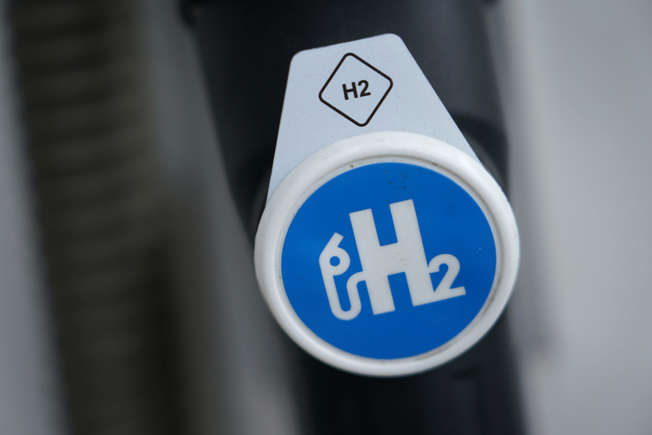
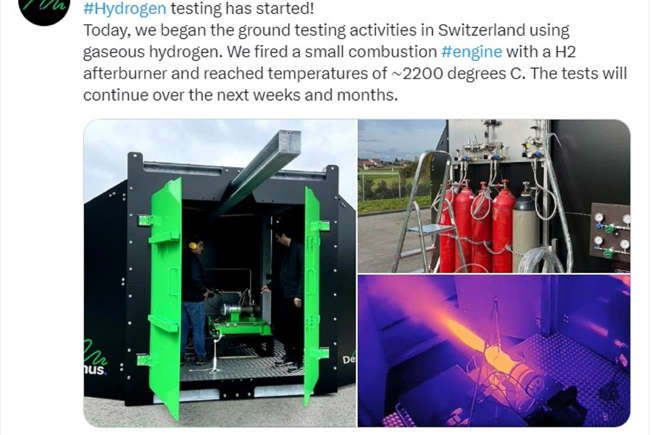
Maar wat is het mechanisme achter de werking van een hypersonisch vliegtuig? Design Boom meldt in een rapport dat het vliegtuig, genaamd Destinus, zal functioneren op waterstof, een brandstof die zowel schoon als efficiënt is.

Opstijgen vanaf een 'Hyperport'
©Aangeboden door The Daily Digest
Afbeelding: destinusaero / X
Opstijgen vanaf een 'Hyperport'
De Zwitserse start-up vertelt dat het de bedoeling is dat het vliegtuig opstijgt vanaf wat ze een 'Hyperport' noemen, een luchthaven met infrastructuur voor de verwerking van waterstof. Eenmaal in de lucht zal het vliegtuig raketmotoren gebruiken om hypersonische snelheden te bereiken.

Een schone brandstof
©Aangeboden door The Daily Digest
Een schone brandstof
Waterstof is niet alleen een schone brandstof, maar het is ook overvloedig aanwezig en kan worden geproduceerd uit hernieuwbare bronnen. Hierdoor zou het vliegtuig Destinus een zeer lage impact op het milieu hebben.
Uitdagingen
©Aangeboden door The Daily Digest
Afbeelding: destinusaero / X
Uitdagingen
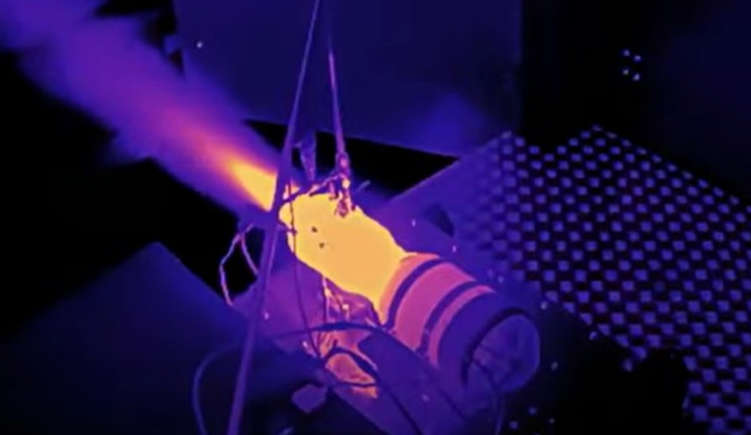
Maar de ontwikkeling van een hypersonisch vliegtuig verloopt niet zonder slag of stoot. Volgens Destinus is een van de grootste uitdagingen het vinden van materialen die bestand zijn tegen de extreme temperaturen die bij een dergelijke hypersonische vlucht optreden.

Geen gemakkelijke opgave
©Aangeboden door The Daily Digest
Geen gemakkelijke opgave
De website van het bedrijf zegt hierover: "Het is geen gemakkelijke opgave om de constructie koud te houden bij zulke hoge snelheden".
Een uniek koelsysteem
©Aangeboden door The Daily Digest
Een uniek koelsysteem
"Daarom zijn we bezig met de ontwikkeling van een uniek actief koelsysteem dat de thermische energie, gegenereerd door luchtwrijving, transformeert in voortstuwing. Dit zorgt ervoor dat de structuur voldoende gekoeld blijft om de externe warmtestroom te weerstaan tijdens het aandrijven van de raketmotoren."
Over een paar jaar kan reizen er heel anders uitzien
©Aangeboden door The Daily Digest
Afbeelding: destinusaero / X

Over een paar jaar kan reizen er heel anders uitzien
Als de ontwikkeling van Destinus succesvol is, kunnen we over een paar jaar grote veranderingen in het luchtverkeer verwachten.

Al in 2030 zouden deze vliegtuigen passagiers kunnen vervoeren
©Aangeboden door The Daily Digest
Al in 2030 zouden deze vliegtuigen passagiers kunnen vervoeren
Martina Löfqvist, de manager bedrijfsontwikkeling van het bedrijf, deelde aan CNN mee dat het bedrijf streeft naar de lancering van een kleiner waterstofvliegtuig in 2030, dat plaats biedt aan ongeveer 25 businessclasspassagiers.
Ambitie om alle passagiers te kunnen vervoeren in enkele uren
©Aangeboden door The Daily Digest
Afbeelding: Destinus / YouTube
Ambitie om alle passagiers te kunnen vervoeren in enkele uren
Destinus heeft de ambitie om tegen 2040 ook grotere vliegtuigen te produceren die in staat zijn om passagiers van alle klassen in slechts enkele uren de wereld rond te vliegen.

LINKS
Hoe vind je dit bericht?
Geschreven door peter om 22:09 Stuur door

There’s Chang’e-6 on the Far Side of the Moon

There’s Chang’e-6 on the Far Side of the Moon

The newest phase of China’s lunar exploration project is soon coming to an end. On June 20th, the Chang’e 6 sample return mission starts its journey back to Earth from the far side of the Moon, having already collected samples and blasted itself back into lunar orbit. But since a picture is worth a thousand words, let’s look at some of the more memorable images that have come out of this mission so far.

China’s National Space Agency (CNSA) released up close and personal images of the Chang’e-6 landers/ascender system on June 14th. They were taken by a small, autonomous rover that descended from the lander, maneuvered to a suitable position, framed a photograph, and took one, all without input from its human overlords. 

Weighing in at only 5 kg, the rover showed what is possible for autonomous operation with relatively light hardware. It also shows an impressive amount of autonomy for a lunar rover, especially one operational only on the “far” side of the Moon.

974a2f8838534c7592c4d3bd999c4b37-1024x576.jpg

Shot of the Chang’e-6 lander/ascender taken by its companion autonomous rover.
Credit – CNSA

It wasn’t the only observer that captured an interesting image of China’s sixth mission in a series named after Chang’e, the Chinese Moon goddess. NASA’s Lunar Reconnaissance Orbiter captured the orbiter from overhead space and showed a dramatic change in its surroundings. 

In the image, the lander itself appears as a bright white dot. However, the surrounding area also appears significantly lighter. This had to do with the blast radius of the lander’s retrograde rockets for its soft landing. Those powerful rockets blew away the dark lunar regolith that had remained untouched for millions of years. The picture was snapped on June 7th, after the Chang’e-6 ascent vehicle had launched back off the surface and rendezvoused with the orbiter that will take the samples it collected back to Earth. In so doing, it likely blew away plenty of material with its own ascent rockets.

During its time on the Moon, Chang’e-6 collected 2 kg of samples, which it will return to a laboratory on Earth. This is the second time CNSA has planned such a mission and the first time one has taken place on the far side that humans cannot see from Earth. 

Fraser discusses the Chang’e-6 mission to collect lunar samples in this news update.

The next in the sequence of Chinese moon missions is Chang’e-7, which will focus its research efforts on the lunar south pole. Scientists predict water ice might be abundant there and that it might be the potential future site of a crewed Chinese moon base. Chang’e-7 will also include a hopping rover to explore the local environs surrounding its lander, but it isn’t scheduled for launch until 2026.

Currently, the Chang’e-6 mission orbiter, which has already successfully docked with the ascent vehicle containing the collected samples, is waiting for the opportune time to return to Earth. It will also serve as the return vehicle, which is planned to land back on Earth on June 25th. If all goes according to plan, there will soon be more lunar samples for scientists to explore and another successful mission for the CSNA that will have been documented in some pretty astounding pictures.

Learn More:

Lead Image:

This image from NASA’s Lunar Reconnaissance Orbiter shows China’s Chang’e 6 lander in the Apollo basin on the far side of the Moon on June 7, 2024. The lander is the bright dot in the center of the image. The image is about 0.4 miles wide (650 meters); lunar north is up.
Credit: NASA/Goddard/Arizona State University

{ https://www.universetoday.com/ }

Hoe vind je dit bericht?
Geschreven door peter om 01:41 Stuur door

A New Way to Survive the Harsh Lunar Night

Heat-Switch Device Boosts Lunar Rover Longevity in Harsh Moon Climate. Credit: Shinichiro Kinoshita, Masahito Nishikawara

A New Way to Survive the Harsh Lunar Night

The Moon is a tough place to survive, and not just for humans. The wild temperature extremes between day and night make it extremely difficult to build reliable machinery that will continue to operate. But an engineering team from Nagoya University in Japan have developed an energy-efficient new way to control Loop Heat Pipes (LHP) to safely cool lunar rovers. This will extend their lifespan, keeping them running for extended lunar exploration missions.

How do you keep a rover insulated well enough to survive the frozen lunar nights, without cooking it during the day? A team of engineers led by Dr Masahito Nishikawara of Nagoya University may have found an answer. By combining a loop heat pipe (LHP) with an electrohydrodynamic pump (EHP), they have created a mechanism to cool machinery efficiently in the vacuum of space, but in a form which can also be turned off at night. Crucially, it is so efficient that it uses practically no power at all.

The Moon is an extraordinarily harsh environment for machinery. Aside from the highly abrasive regolith, which sticks to everything and is found everywhere, the Moon has no atmosphere and a very slow rotational period. This means that days and nights on the moon last 14 Earth days each, and reach extreme temperatures. With no atmosphere to insulate and transport heat around the Moon, night-time temperatures can drop all the way down to -173º Celsius, while the unfiltered heat from the Sun causes daytime temperatures to climb as high as 127º Celsius.

It is very difficult to design complex machinery to work reliably under such conditions. The long nights mean that the energy harvested from solar panels needs to be stored in very large batteries, but batteries do not cope well with low temperatures. They can be electrically warmed, but heaters need a constant flow of electricity, draining the batteries. Alternatively, a machine can be heavily insulated to keep it functional when idle, but this leads to overheating when it is active, and when the Sun rises.

Overheating can damage batteries, but it’s equally bad for electronic components. Active cooling systems are the traditional answer. They work similarly to the radiator in a car by pumping coolant through a large radiator, but these require power to run. This is a problem when you need your batteries to last 14 days before the next recharge. Passive systems, such as LHPs, are effective and don’t require power, but they run continuously, even when you would prefer heating.

“Heat-switch technology that can switch between daytime heat dissipation and nighttime insulation is essential for long-term lunar exploration,” said lead researcher Masahito Nishikawara. “During the day, the lunar rover is active, and the electronic equipment generates heat. Since there is no air in space, the heat generated by the electronics must be actively cooled and dissipated. On the other hand, during extremely cold nights, electronics must be insulated from the outside environment so that they don’t get too cold.”

LHPs can be thought of as a cross between the machinery of a refrigerator or air conditioner, and the heat pipes in modern laptop computers. Like a refrigerator, a liquid refrigerant is allowed to absorb heat which causes it to vaporise. The vapour then passes through a radiator, which cools it back to ambient temperatures. This turns it back into a liquid, and the cycle repeats. The phase changes, from liquid to gas and back, allow the refrigerant to transfer heat very efficiently. Heat pipes, by contrast, use capillary action to move a liquid between a heat source (such as your computer’s CPU or graphics accelerator) and a radiator. LHPs combine the capillary transport action of a heat pipe with the phase changes of a refrigeration unit.

LHPs have been used in space before, where they have been equipped with valves to block the flow of refrigerant when cooling is not needed. However, these valves significantly reduce the system’s cooling efficiency. Nishikawara’s innovation is to replace the valves with an Electrohydrodynamic pump. EHPs are low-powered pumps which work by inducing electric currents in a fluid, and then using the resulting magnetic field to apply force to the fluid. This has the advantage of not intruding into the plumbing of the system, which means there is no interference with flow when it isn’t active.

Nishikawara’s team have added low-powered EHPs to an LHP to act as a very efficient valve: When they need to turn cooling off, the EHP is activated to create a small opposing force that stops the flow of refrigerant, while sipping only a tiny amount of power.

“This groundbreaking approach not only ensures the rover’s survival in extreme temperatures but also minimizes energy expenditure, a critical consideration in the resource-constrained lunar environment,” Nishikawara said. “It lays the foundation for potential integration into future lunar missions, contributing to the realization of sustained lunar exploration efforts.”

{ https://www.universetoday.com/ }

Hoe vind je dit bericht?
Geschreven door peter om 01:30 Stuur door

Earth’s Atmosphere is Our Best Defence Against Nearby Supernovae

Artist's impression of a Type II supernova explosion. These supernova produce gamma rays and powerful ionizing radiation that's hazardous to life. Credit: ESO

Earth’s Atmosphere is Our Best Defence Against Nearby Supernovae

Earth’s protective atmosphere has sheltered life for billions of years, creating a haven where evolution produced complex lifeforms like us. The ozone layer plays a critical role in shielding the biosphere from deadly UV radiation. It blocks 99% of the Sun’s powerful UV output. Earth’s magnetosphere also shelters us.

But the Sun is relatively tame. How effective are the ozone and the magnetosphere at protecting us from powerful supernova explosions?

Every million years—a small fraction of Earth’s 4.5 billion-year lifetime—a massive star explodes within 100 parsecs (326 light-years) of Earth. We know this because our Solar System sits inside a massive bubble in space called the Local Bubble. It’s a cavernous region of space where hydrogen density is much lower than outside the bubble. A series of supernovae explosions in the previous 10 to 20 million years carved out the bubble.

Supernovae are dangerous, and the closer a planet is to one, the more deadly its effects. Scientists have speculated on the effects that supernova explosions have had on Earth, wondering if it triggered mass extinctions or at least partial extinctions. A supernova’s gamma-ray burst and cosmic rays can deplete Earth’s ozone and allow ionizing UV radiation to reach the planet’s surface. The effects can also create more aerosol particles in the atmosphere, increasing cloud coverage and causing global cooling.

A new research article in Nature Communications Earth and Environment examines supernova explosions and their effect on Earth. It is titled “Earth’s Atmosphere Protects the Biosphere from Nearby Supernovae.” The lead author is Theodoros Christoudias from the Climate and Atmosphere Research Center, Cyprus Institute, Nicosia, Cyprus.

The Local Bubble isn’t the only evidence of nearby core-collapse supernovae (SNe) in the last few million years. Ocean sediments also contain 60Fe, a radioactive isotope of iron with a half-life of 2.6 million years. SNe expel 60Fe into space when they explode, indicating that a nearby supernova exploded about 2 million years ago. There’s also 60Fe in sediments that indicate another SN explosion about 8 million years ago.

This graphic from the research article shows the potential atmospheric and climate impacts of a nearby supernova. Gamma rays can deplete the ozone, allowing more UV radiation to reach Earth's surface. Some UV radiation is ionizing, meaning it can damage DNA. Cosmic rays can also create more condensation nuclei, meaning more clouds and potential global cooling, Image Credit: Christoudias et al. 2024

This graphic from the research article shows the potential atmospheric and climate impacts of a nearby supernova. Gamma rays can deplete the ozone, allowing more UV radiation to reach Earth’s surface. Some UV radiation is ionizing, meaning it can damage DNA. Cosmic rays can also create more condensation nuclei, meaning more clouds and potential global cooling, Image Credit: Christoudias et al. 2024

Researchers have correlated an SN explosion with the Late Devonian extinction about 370 million years ago. In one paper, researchers found plant spores burned by UV light, an indication that something powerful depleted Earth’s ozone layer. In fact, Earth’s biodiversity declined for about 300,000 years prior to the Late Devonian extinction, suggesting that multiple SNe could’ve played a role.

Earth’s ozone layer is in constant flux. As UV energy reaches it, it breaks ozone molecules (O3) apart. That dissipates the UV energy, and the oxygen atoms combine into O3 again. The cycle repeats. That’s a simplified version of the atmospheric chemistry involved, but it serves to illustrate the cycle. A nearby supernova could overwhelm the cycle, depleting the ozone column density and allowing more deadly UV to reach Earth’s surface.

But in the new paper, Christoudias and his fellow authors suggest that Earth’s ozone layer is much more resilient than thought and provides ample protection against SNe within 100 parsecs. While previous researchers have modelled Earth’s atmosphere and its response to a nearby SN, the authors say that they’ve improved on that work.

They modelled Earth’s atmosphere with an Earth Systems Model with Atmospheric Chemistry (EMAC) model to study the impact of nearby SNe explosions on Earth’s atmosphere. Using EMAC, the authors say they’ve modelled “the complex atmospheric circulation dynamics, chemistry, and process feedbacks” of Earth’s atmosphere. These are needed to “simulate stratospheric ozone loss in response to elevated ionization, leading to ion-induced nucleation and particle growth to CCN” (cloud condensation nuclei.)

“We assume a representative nearby SN with GCR (galactic cosmic ray) ionization rates in the atmosphere that are 100 times present levels,” they write. That correlates with a supernova explosion about 100 parsecs or 326 light-years away.

These panels from the research letter show the ozone column percentage decrease from a 100-fold increase in GCR intensity over nominal. The left vertical axis represents Earth's latitude, and the x-axis shows the time of year. Ozone loss is more pronounced over the poles due to the effect of Earth's magnetosphere, where it's weaker. a is present-day Earth, while b represents an ancient Earth with only 2% oxygen during the pre-Cambrian. Image Credit: Christoudias et al. 2024 These panels from the research letter show the ozone column percentage decrease from a 100-fold increase in GCR intensity over nominal. The left vertical axis represents Earth’s latitude, and the x-axis shows the time of year. Ozone loss is more pronounced over the poles due to the effect of Earth’s magnetosphere, where it’s weaker. a is present-day Earth, while b represents an ancient Earth with only 2% oxygen during the pre-Cambrian. Image Credit: Christoudias et al. 2024

“The maximum ozone depletion over the poles is less than the present-day anthropogenic ozone hole over Antarctica, which amounts to an ozone column loss of 60–70%,” the authors explain. “On the other hand, there is an increase of ozone in the troposphere, but it is well within the levels resulting from recent anthropogenic pollution.”

But let’s cut to the chase. We want to know if Earth’s biosphere is safe or not.

The maximum mean stratospheric ozone depletion from 100 times more ionizing radiation than normal, representative of a nearby SN, is about 10% globally. That’s about the same decrease as our anthropogenic pollution causes. It wouldn’t affect the biosphere very much.

“Although significant, it is unlikely that such ozone changes would have a major impact on the biosphere, especially because most of the ozone loss is found to occur at high latitudes,” the authors explain.

But that’s for modern Earth. During the pre-Cambrian, before life exploded in a multiplication of forms, the atmosphere had only about 2% oxygen. How would an SN affect that? “We simulated a 2% oxygen atmosphere since this would likely represent conditions where the emerging biosphere on land would still be particularly sensitive to ozone depletion,” the authors write.

“Ozone loss is about 10–25% at mid-latitudes and an order of magnitude lower in the tropics,” the authors write. At minimum ozone levels at the poles, ionizing radiation from an SN could actually end up increasing the ozone column. “We conclude that these changes of atmospheric ozone are unlikely to have had a major impact on the emerging biosphere on land during the Cambrian,” they conclude.

What about global cooling?

Global cooling would increase, but not to a dangerous extent. Over the Pacific and Southern oceans, CCN could increase by up to 100%, which sounds like a lot. “These changes, while climatically relevant, are comparable to the contrast between the pristine pre-industrial atmosphere and the polluted present-day atmosphere.” They’re saying that it would cool the atmosphere by about the same amount as we’re heating it now.

These two panels from the research help illustrate the global cooling effect from a nearby SN exposing Earth to 100 times more ionizing radiation. b shows the fractional change in CCN relative to the present day. d shows the fractional change in outgoing solar radiation relative to the present day due to increased cloud albedo. Image Credit: Christoudias et al. 2024 These two panels from the research help illustrate the global cooling effect from a nearby SN exposing Earth to 100 times more ionizing radiation. b shows the fractional change in CCN relative to the present day. d shows the fractional change in outgoing solar radiation relative to the present day due to increased cloud albedo. Image Credit: Christoudias et al. 2024

The researchers point out that their study concerns the entire biosphere, not individuals. “Our study does not consider the direct health risks to humans and animals resulting from exposure to elevated ionizing radiation,” they write. Depending on individual circumstances, individuals could be exposed to dangerous levels of radiation over time. But overall, the biosphere would hum along despite a 100-fold increase in UV radiation. Our atmosphere and magnetosphere can handle it.

“Overall, we find that nearby SNe are unlikely to have caused mass extinctions on Earth,” the authors write. “We conclude that our planet’s atmosphere and geomagnetic field effectively shield the biosphere from the effects of nearby SNe, which has allowed life to evolve on land over the last hundreds of million years.”

  • This study shows that Earth’s biosphere will not suffer greatly as long as supernova explosions keep their distance.

{ https://www.universetoday.com/ }

Hoe vind je dit bericht?
Geschreven door peter om 01:20 Stuur door
Mega structure on planet Jupiters moon Ganymede in recent photo released by NASA on X, formally Twitter. UFO sighting news.
Mega structure on planet Jupiters moon Ganymede in recent photo released by NASA on X, formally Twitter. UFO sighting news. 

Screenshot%202024-06-17%20at%207.53.18%E2%80%AFPM.png
Date of discovery: June 17, 2024
Location of discovery: Jupiter moon Ganymede. 
Source: 
Guys I saw a Tweed on X from NASA with a photo celebrating the father of astronomy...Galileo and in the photo there is a mega structure in the moons northern  pole region. It's a dark black structure with walls several miles tall and an about 100 miles across. This is why NASA always over exposes photos with light, flooding light so we cannot see the detail of the moons and planets. 
Scott C. Waring - Utah

Screenshot%202024-06-17%20at%2010.09.54%E2%80%AFAM.png

{ https://www.ufosightingsdaily.com/ }

Hoe vind je dit bericht?
Geschreven door peter om 23:18 Stuur door

UFO over Museum in Salt Lake City, Utah on June 7, 2024, UAP Sighting News.

UFO over Museum in Salt Lake City, Utah on June 7, 2024, UAP Sighting News.

Screenshot%202024-06-16%20at%2011.12.20%E2%80%AFPM.png

Screenshot%202024-06-17%20at%207.49.44%E2%80%AFPM.png

Source Credit: https://nuforc.org/ 
 
Hey this is just fantastic. A UFO was photographed just a few miles from me. I hike on the trails behind this museum. I have often felt there was something there and this week it showed up. A wing shaped UFO with a disk at its center. I have seen a report of a similar craft back in Mt Saint Hellens volcano, Washington in Feb 25, 1999, when when a team of forestry service workers witnessed a similar craft abduct an Elk right in from of them. This UFO in Utah...its 100% real. 
Scott C. Waring - Utah
 
 Eyewitness states:
Walking up to the building in the pictures. Took one picture from a little further back, then walked up a few more steps to get a closer picture of the building. Took two more pictures within seconds of each other, and in the third photo the object appeared. Made no sound, and truly did not even notice it in the sky until I looked at the picture. My friend who was with me, was just as shocked, as she also said she heard and saw nothing in the sky. Our focus was straight ahead at the building so we really feel we should have seen or heard something. Whatever this was moved in and out of the area very quickly.

{ https://www.ufosightingsdaily.com/ }

Hoe vind je dit bericht?
Geschreven door peter om 23:11 Stuur door

Alien Activity on The Dark Side of the Moon

Alien Activity on The Dark Side of the Moon

Over the years, much has been published about the strange things that happen on the dark side of the moon. 
aliens%20dark%20of%20the%20moon.jpg

The far side of the moon has been a mystery since the dawn of the space age. But is it just a barren, crater-filled wasteland? 
Shocking claims from astronauts, whistleblowers, and classified documents suggest there's more to the story. Eerie sounds, inexplicable sightings, and covert missions point to something astounding hidden from public view. 
Before delving into the evidence, which ranges from Apollo-era transcripts to insights from modern military insiders, it's worth noting an intriguing paper recently released by Harvard. Titled "The Cryptoterrestrial Hypothesis. This paper proposes among other themes that UAPs (Unidentified Aerial Phenomena) might be the result of activities by intelligent beings hidden here on Earth eventually underground or in nearby areas such as the moon. (Notion: The dark of the side of the moon could be an excellent place to hide.) 
But the Harvard paper has suddenly disappeared... though we saved you a copy: https://bit.ly/4b1xk11 
The implications are staggering, hinting at a secret history beyond our world.

{ https://ufosightingshotspot.blogspot.com/ }

Hoe vind je dit bericht?
Geschreven door peter om 22:56 Stuur door

NASA rover discovers boulder

NASA rover discovers boulder "never observed before" on Mars

Story by Emily Mae Czachor
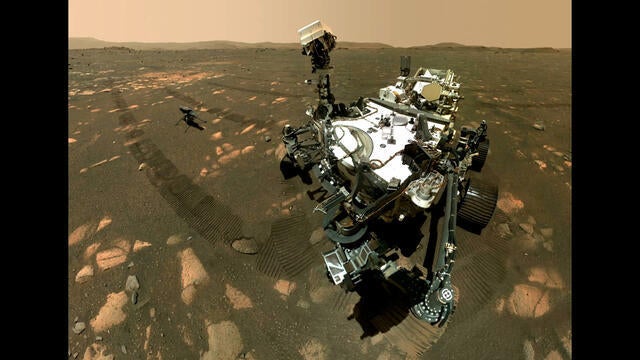
While exploring a crater on Mars that may give scientists insights into life that potentially once existed there, NASA said its Perseverance rover made an unprecedented discovery. The rover, which landed on the Red Planet in 2021 specifically to probe the ancient Jezero crater, found a mysterious light-toned boulder earlier this month that was the first of its kind seen on Martian land.

th?id=OVFT.U279F0lpnIBegnmwwVr6jy&pid=News&w=300&h=186&c=14&rs=2&qlt=90&dpr=1.3

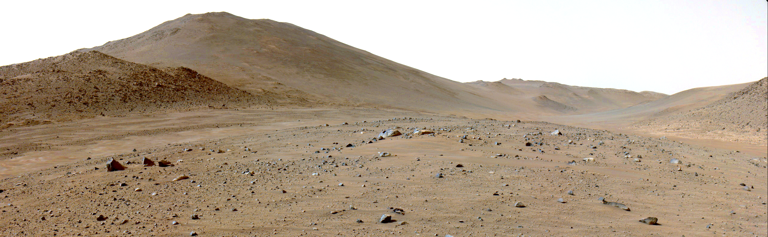
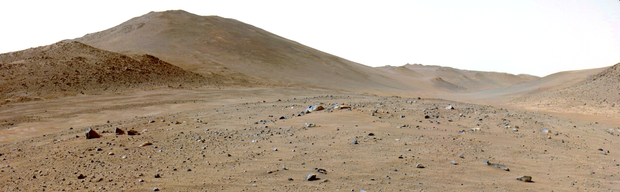
Perseverance encountered the boulder while traversing the Neretva Vallis, a dried river delta that flowed into the crater billions of years ago, on its way to an area inside the rim where rocky outcrops are being examined for sediment that could shed light on Mars' history, said NASA. The rover had changed course along its route to avoid rough terrain when, traveling a short cut through a dune field, it reached a hill that scientists have dubbed Mount Washburn.

The hill was covered with boulders, some of which NASA described as belonging to "a type never observed before on Mars."

One small boulder particularly intrigued the scientists working with Perseverance from Earth. Measuring roughly 18 inches across and 14 inches tall, the speckled and conspicuously light-toned rock was spotted among a field of darker boulders on the hill.

Stitched together from 18 images taken by NASA’s Perseverance rover, this mosaic shows a boulder field on “Mount Washburn” on May 27.
Stitched together from 18 images taken by NASA’s Perseverance rover, this mosaic shows a boulder field on “Mount Washburn” on May 27. Intrigued by the diversity of textures and chemical composition in the light-toned boulder at center, the rover’s science team nicknamed the rock “Atoko Point.”
Credit: NASA/JPL-Caltech/ASU/MSSS 

"The diversity of textures and compositions at Mount Washburn was an exciting discovery for the team, as these rocks represent a grab bag of geologic gifts brought down from the crater rim and potentially beyond," said Brad Garczynski of Western Washington University, who co-leads the current Perseverance mission, in a statement. "But among all these different rocks, there was one that really caught our attention." 

Garczynski and his team nicknamed the mysterious boulder Atoko Point, and a deeper examination of the rock using the rover's instruments suggested that it was composed of the minerals pyroxene and feldspar. NASA said the size, shape and overall arrangement of minerals in Atoko Point, as well as the potential composition of the boulder on a chemical level, put the rock "in a league of its own" in terms of Martian sediment, at least among those already known to scientists.

Pyroxene and feldspar are minerals also found in the Earth's crust and on the moon, according to the U.S. Geological Survey and NASA. The space agency said that some scientists on the Perseverance team speculated that the minerals detected on Atoko Point may have come from magma that originated below the surface of Mars and became exposed on the rim of the Jezero crater over time because of erosion. 

Other members of the team suggested that the boulder may have appeared out of place on Washburn Hill if it was really produced on a different part of the planet and moved with the ancient river channel to its present location on the rim. But NASA said all of the Perseverance scientists believe that more rocks with a similar composition must exist elsewhere on Mars.
NASA's Perseverance rover was traveling in the channel of an ancient river, Neretva Vallis, when it captured this view of an area of scientific interest nicknamed
© Provided by CBS News

The rover discovered Atoko Point in the midst of its fourth "campaign" on Mars, which focuses on finding evidence of carbonate and olivine deposits in the interior of the Jezero crater. Both groups of minerals exist on Earth, with carbonate typically found in deposits near the shores of lakes and olivine typically associated with volcanic activity. 

They are of interest to scientists studying Mars —and they've both been observed already by Perseverance— because of their abilities to encapsulate remnants of the past for long periods of time. Identifying carbonate in the Martian crater could theoretically give scientists access to traces of ancient life on the planet preserved within the mineral itself, and olivine helps them understand when in history the Martian climate may have been conducive to organic compounds, like flowing water, and, potentially, life. 

Scientists say that learning about the makeup of Mars, and what it may have been like long ago, could help them figure out whether the planet's current landscape could ever be habitable for humans. It could also offer important clues about the origins and evolution of life on Earth.

NASA rover discovers mysterious Mars boulder unlike any others

Credit: NASA / JPL-Caltech / ASU / MSSS

images-1_5axb.jpg

The Perseverance rover found an exceptional boulder on Mars, thought to be an anorthosite.

Credit: NASA / JPL-Caltech / ASU

images-2_493a.jpg

The NASA team hopes to discover many more rocks like Atoco Point in a couple of months when Perseverance reaches the crater rim.

Credit: NASA / JPL-Caltech / University of Arizona

perseverance-rover.png

NASA's Perseverance rover was traveling in the channel of an ancient river, Neretva Vallis, when it captured this view of an area of scientific interest nicknamed "Bright Angel" – the light-toned area in the distance at right.

NASA/JPL-CALTECH

Hoe vind je dit bericht?
Geschreven door peter om 22:47 Stuur door

Scientists spot mysterious object at the center of our Milky Way

Scientists spot mysterious object at the center of our Milky Way

Story by Stacy Liberatore For Dailymail.com

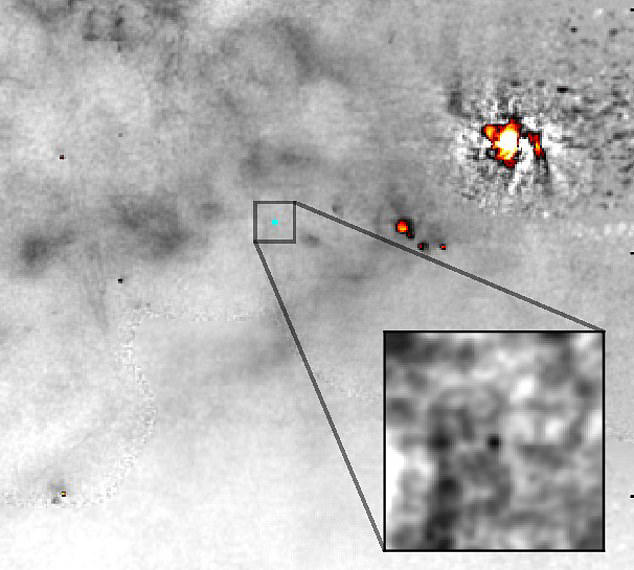
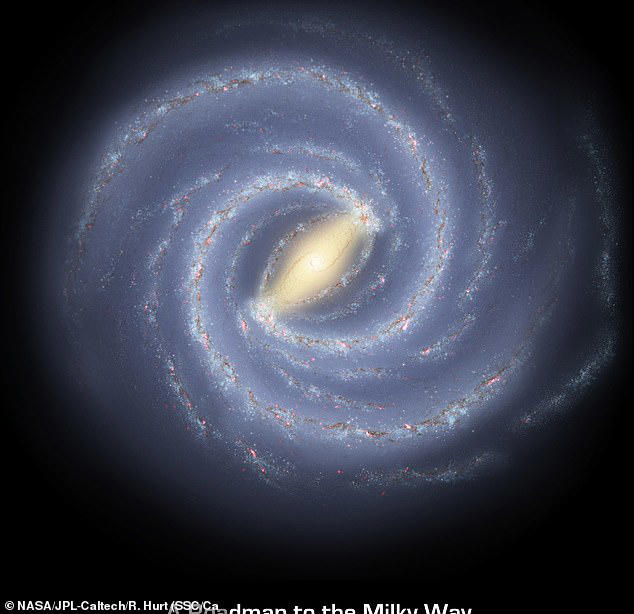
Scientists have discovered a mysterious object at the center of our Milky Way that does not fit the criteria of anything else in the galaxy.

The team found the object emits microwaves, which suggests it contains dust and fast-moving gas that is traveling nearly 112,000 miles per hour from a very small area in the heart of our galaxy.

Astronomers have considered a range of options for what the object could be, from a black hole to a collapsing cloud and evolved star, but found 'its features do not match well with those of any known type of astronomical body.'

The team found the object emits microwaves, which has suggested it contains dust and fast-moving gas. The gas was detected moving nearly 112,000 miles per hour from a very small area in the heart of our galaxy

The team found the object emits microwaves, which has suggested it contains dust and fast-moving gas. The gas was detected moving nearly 112,000 miles per hour from a very small area in the heart of our galaxy© Provided by Daily Mail

‘The center of our Galaxy contains billions of stars, tens of millions of solar masses of gas, a supermassive black hole, a tenth of our Galaxy's ongoing star formation, and an extensive graveyard of stellar remnants,’ researchers shared in the study published in the Astrophysical Journal Letters.

‘It is therefore the likeliest place to find new classes of objects. We present one such object in this work.

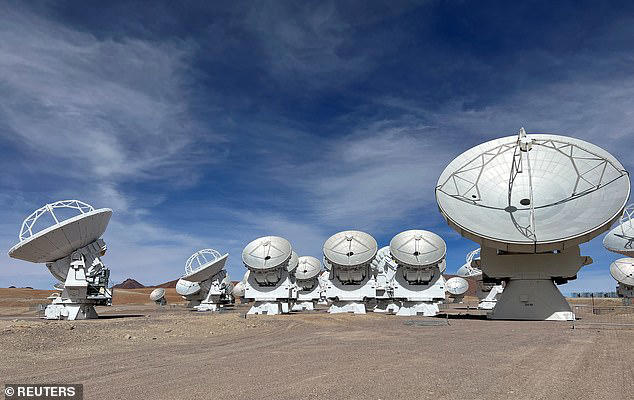
The object, labeled G0.02467–0.0727, was discovered using the Atacama Large Millimeter/submillimeter Array (ALMA) observatory in Chile.

'We consider several explanations for the Millimeter Ultra-Broad Line Object (MUBLO), including protostellar outflow, explosive outflow, collapsing cloud, evolved star, stellar merger, high-velocity compact cloud, intermediate mass black hole, and background galaxy,' the team wrote.

'Most of these conceptual models are either inconsistent with the data or do not fully explain it.'

The object was observed while the team was ALMA to study a special area in the center of our galaxy, known as the central molecular zone (CMZ).

The CMZ, measuring about 700 light-years across, contains nearly 80 percent of all the dense gas in the galaxy and is home to giant molecular clouds and massive star forming clusters that are poorly understood.

Astronomers detected millimeter waves coming from the object, with the surrounding dust showing broad, spread-out signals.

The object also gave off continuous radiation, which appeared to come from the dust and emitted specific signals from certain molecules like carbon monosulfide and sulfur monoxide. 

Carbon monosulfide has been detected in molecular clouds and sulfur monoxide has been observed around Io, one of Jupiter's moons.

Scientists have discovered a mysterious object at the center of our Milky Way that does not fit the criteria of anything else in our universe

Scientists have discovered a mysterious object at the center of our Milky Way that does not fit the criteria of anything else in our universe

© Provided by Daily Mail

The object, labeled G0.02467–0.0727, was discovered using the Atacama Large Millimeter/submillimeter Array (ALMA) observatory in Chile, which also detected the microwaves speeding through space

The object, labeled G0.02467–0.0727, was discovered using the Atacama Large Millimeter/submillimeter Array (ALMA) observatory in Chile, which also detected the microwaves speeding through space© Provided by Daily Mail

The gas's temperature was around -436 degrees Fahrenheit, much colder than what has been typically seen in this part of the galaxy.

Researches also found that the gas molecules were not traveling in a simple ring, which suggested they could be flowing away from an exploding star, reported Nature.

However, shock waves create specific chemicals that MUBLO lacks.

Researchers said that the most plausible explanations would be an intermediate-mass black hole or a pair of merging stars obscured by dust.

But they also noted that the object does not fit either definition.

'The MUBLO is, at present, an observationally unique object,' the team concluded in the study.

 Read more

{ Dailymail.com }

Hoe vind je dit bericht?
Geschreven door peter om 21:15 Stuur door

NASA is Considering Other Ways of Getting its Mars Samples Home

Artist's impression of the NASA-ESA Mars Sample Return mission. Credit: NASA

NASA is Considering Other Ways of Getting its Mars Samples Home

In 2021, NASA’s Perseverance rover landed in the Jezero Crater on Mars. For the next three years, this astrobiology mission collected soil and rock samples from the crater floor for eventual return to Earth. The analysis of these samples is expected to reveal much about Mars’ past and how it transitioned from being a warmer, wetter place to the frigid and desiccated place we know today. Unfortunately, budget cuts have placed the future of the proposed NASA-ESA Mars Sample Return (MSR) mission in doubt.

As a result, NASA recently announced that it was seeking proposals for more cost-effective and rapid methods of bringing the samples home. This will consist of three studies by NASA and the Johns Hopkins University Applied Physics Laboratory (JHUAPL). In addition, NASA has selected seven commercial partners for firm-fixed-price contracts for up to $1.5 million to conduct their own 90-day studies. Once complete, NASA will consider which proposals to integrate into the MSR mission architecture.

As Administrator Bill Nelson stated in a NASA press release

“Mars Sample Return will be one of the most complex missions NASA has undertaken, and it is critical that we carry it out more quickly, with less risk, and at a lower cost. I’m excited to see the vision that these companies, centers and partners present as we look for fresh, exciting, and innovative ideas to uncover great cosmic secrets from the Red Planet.”

The MSR mission represents the culmination of decades of efforts to learn more about the early history of Mars. NASA had originally hoped that the first crewed mission (planned for 2033) would retrieve the samples and transport them back to Earth. However, delays and budget concerns have led to growing concerns that a crewed mission will not reach Mars until 2040 (at the earliest). As a result, NASA and the European Space Agency adopted a joint mission architecture consisting of multiple robotic elements that would return the samples by 2031.

This included the Sample Retrieval Lander (SRL), two Sample Recovery Helicopters (SRH), the Mars Ascent Vehicle (MAV), the Earth Return Orbiter (ERO), and the Earth Entry System (EES). However, the current budget environment forced NASA to announce that the 15-year MSR mission architecture (which would cost $11 billion) was too expensive and that waiting until 2040 was impractical. As a result, NASA has adopted a revised plan that leverages current technology and will return the Mars samples by the 2030s. As NASA Administrator Bill Nelson said at the time:

“Mars Sample Return will be one of the most complex missions NASA has ever undertaken. The bottom line is, an $11 billion budget is too expensive, and a 2040 return date is too far away. Safely landing and collecting the samples, launching a rocket with the samples off another planet – which has never been done before – and safely transporting the samples more than 33 million miles back to Earth is no small task. We need to look outside the box to find a way ahead that is both affordable and returns samples in a reasonable timeframe.”

In addition to the NASA-led studies, seven aerospace companies have been selected to develop sample-return concepts. They include NASA’s regular commercial partners, such as Lockheed Martin, SpaceX, Aerojet Rocketdyne, Blue Origin, and Northrop Grumman, as well as relative newcomers Quantum Space and Whittinghill Aerospace. A total of $10 million has been awarded to these companies to develop their concepts, the full list of which can be found here.

Once again, NASA is facing a budget crunch and has reached out to its commercial partners to develop cost-effective alternatives. This is in keeping with NASA’s long history of collaborating with the commercial sector to develop key mission concepts. However, the need to outsource major elements of its Moon to Mars program highlights the agency’s ongoing budget problems. As independent experts have concluded, a budget increase is necessary if NASA is to realize its ambitious goals for the future.

Further Reading: 

{ https://www.universetoday.com/ }

Hoe vind je dit bericht?
Geschreven door peter om 01:25 Stuur door

Meer van UFO'S of UAP'S, ASTRONOMIE, RUIMTEVAART, ARCHEOLOGIE, OUDHEIDKUNDE, SF-SNUFJES EN ANDERE ESOTERISCHE WETENSCHAPPEN - DE ALLERLAATSTE NIEUWTJES

↑ Terug naar de berichten