Naar de inhoud

UFO'S of UAP'S, ASTRONOMIE, RUIMTEVAART, ARCHEOLOGIE, OUDHEIDKUNDE, SF-SNUFJES EN ANDERE ESOTERISCHE WETENSCHAPPEN - DE ALLERLAATSTE NIEUWTJES

UFO's of UAP'S in België en de rest van de wereld
akke.beakke.be
Ontdek de Fascinerende Wereld van UFO's en UAP's: Jouw Bron voor Onthullende Informatie! Ben jij ook gefascineerd door het onbekende? Wil je meer weten over UFO's en UAP's, niet alleen in België, maar over de hele wereld? Dan ben je op de juiste plek! België: Het Kloppend Hart van UFO-onderzoek In België is BUFON (Belgisch UFO-Netwerk) dé autoriteit op het gebied van UFO-onderzoek. Voor betrouwbare en objectieve informatie over deze intrigerende fenomenen, bezoek je zeker onze Facebook-pagina en deze blog. Maar dat is nog niet alles! Ontdek ook het Belgisch UFO-meldpunt en Caelestia, twee organisaties die diepgaand onderzoek verrichten, al zijn ze soms kritisch of sceptisch. Nederland: Een Schat aan Informatie Voor onze Nederlandse buren is er de schitterende website www.ufowijzer.nl, beheerd door Paul Harmans. Deze site biedt een schat aan informatie en artikelen die je niet wilt missen! Internationaal: MUFON - De Wereldwijde Autoriteit Neem ook een kijkje bij MUFON (Mutual UFO Network Inc.), een gerenommeerde Amerikaanse UFO-vereniging met afdelingen in de VS en wereldwijd. MUFON is toegewijd aan de wetenschappelijke en analytische studie van het UFO-fenomeen, en hun maandelijkse tijdschrift, The MUFON UFO-Journal, is een must-read voor elke UFO-enthousiasteling. Bezoek hun website op www.mufon.com voor meer informatie. Samenwerking en Toekomstvisie Sinds 1 februari 2020 is Pieter niet alleen ex-president van BUFON, maar ook de voormalige nationale directeur van MUFON in Vlaanderen en Nederland. Dit creëert een sterke samenwerking met de Franse MUFON Reseau MUFON/EUROP, wat ons in staat stelt om nog meer waardevolle inzichten te delen. Let op: Nepprofielen en Nieuwe Groeperingen Pas op voor een nieuwe groepering die zich ook BUFON noemt, maar geen enkele connectie heeft met onze gevestigde organisatie. Hoewel zij de naam geregistreerd hebben, kunnen ze het rijke verleden en de expertise van onze groep niet evenaren. We wensen hen veel succes, maar we blijven de autoriteit in UFO-onderzoek! Blijf Op De Hoogte! Wil jij de laatste nieuwtjes over UFO's, ruimtevaart, archeologie, en meer? Volg ons dan en duik samen met ons in de fascinerende wereld van het onbekende! Sluit je aan bij de gemeenschap van nieuwsgierige geesten die net als jij verlangen naar antwoorden en avonturen in de sterren! Heb je vragen of wil je meer weten? Aarzel dan niet om contact met ons op te nemen! Samen ontrafelen we het mysterie van de lucht en daarbuiten.

Archief

Verbijsterende ontdekking in Nieuw-Zeelandse grot onthult fossielen van 1 miljoen jaar oud

Verbijsterende ontdekking in Nieuw-Zeelandse grot onthult fossielen van 1 miljoen jaar oud

341d52416674-1024x576.webp
Interessante fakta – Verbijsterende ontdekking in Nieuw-Zeelandse grot onthult fossielen van 1 miljoen jaar oud

Adembenemende vondst werpt nieuw licht op prehistorische dieren

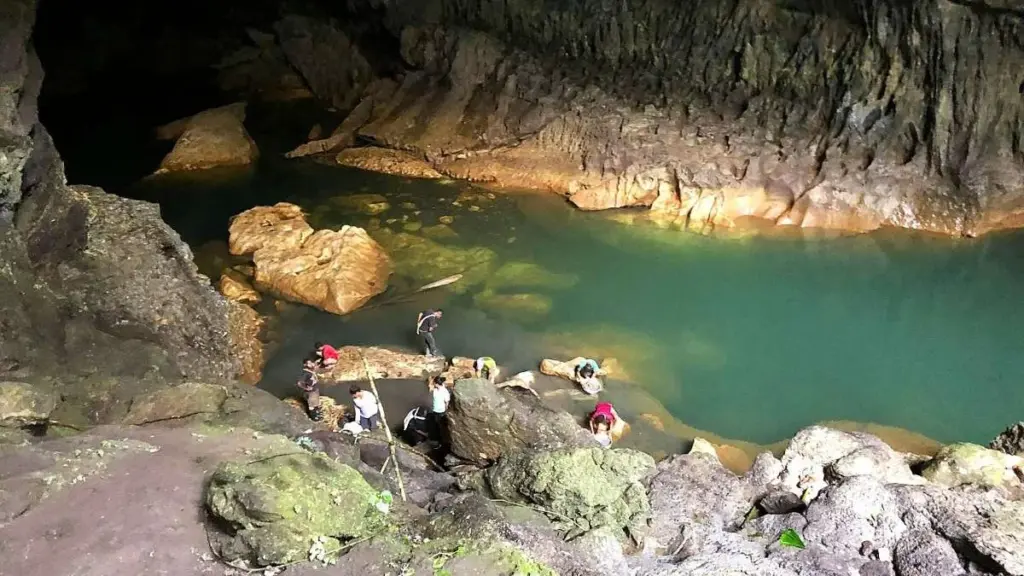
Een spectaculaire paleontologische ontdekking in een grot op het Noordereiland van Nieuw-Zeeland heeft fascinerende geheimen prijsgegeven over de evolutie van dieren in deze regio. Wetenschappers hebben verstarde overblijfselen gevonden van landdieren die ongeveer een miljoen jaar oud zijn, waardoor we nu kunnen reconstrueren hoe het leven eruitzag lang voordat mensen hun intrede deden. Deze bevindingen schudden onze aannames over de krachten die de biodiversiteit in het verleden hebben gevormd grondig op.

Het onderzoek, gepubliceerd in het vakblad Alcheringa: An Australasian Journal of Palaeontology, documenteert de allereerste verzameling fossielen van landdieren uit die tijdsperiode – het vroege Pleistoceen, dat zich uitstrekte van ongeveer 2,6 miljoen tot 780.000 jaar geleden. Deze vondsten bieden een verrassend nieuwe kijk op hoe vogels transformeerden en welke uitstervingsgolven zich voltrokken, eeuwen voordat de mens een voet op het eiland zette.

Een tijdcapsule uit een grot gaat open

Wetenschappers uit Australië en Nieuw-Zeeland hebben in een grot bij Waitomo op het Noordereiland van Nieuw-Zeeland oude dierlijke resten ontdekt. De fossielensite bevat resten van zo'n miljoen jaar oud, waaronder 12 oude vogelsoorten en vier soorten kikkers. Onderzoekers noemen het een zeldzaam venster op de wilde dieren van Nieuw-Zeeland, lang vóór de komst van mensen.

Verdwenen diversiteit en dramatische veranderingen in de fauna

Bij de analyse van fossielen uit de zogenaamde Moa Eggshell Cave, gelegen nabij de beroemde Waitomo-grotten, identificeerden onderzoekers overblijfselen van vier kikkersoorten uit het geslacht Leiopelma en twaalf verschillende vogelsoorten. Het verbazingwekkende is dat minstens vier, mogelijk zelfs zes van deze vogels nooit meer opdoken in latere fossielvondsten. Dit wijst op ingrijpende verschuivingen en vervanging van soorten gedurende het afgelopen miljoen jaar.

Het artikel stelt nadrukkelijk dat het bestaan van deze fauna vóór de Kidnappers tephra aantoont dat de vogelpopulatie met 33 tot 50 procent is veranderd over het laatste miljoen jaar. Deze aslaag, achtergelaten door een gigantische vulkaanuitbarsting, fungeert als een natuurlijke tijdsmarker die de precieze datering van de resten mogelijk maakt.

Een mogelijke verwant van de kākāpō valt op

Een van de opvallendste vondsten is een oude verwant van de kākāpō, de grote, loopvogelachtige papegaai die vandaag nog leeft. In sommige berichtgeving wordt deze oeroude vorm beschreven als mogelijk beter in staat om te vliegen dan de moderne kākāpō. Dat detail is belangrijk, omdat het laat zien hoe sterk de vogelwereld van Nieuw-Zeeland in de loop van de tijd is veranderd. Zelfs bekende soorten hebben een diepe, veranderlijke geschiedenis.

Twee baanbrekende soortontdekkingen

Tussen de meest opmerkelijke ontdekkingen bevinden zich beschrijvingen van twee nooit eerder geziene soorten. De eerste is Strigops insulaborealis uit de familie Strigopidae, een oude verwant van de huidige kakapo-papegaai. De tweede is Porphyrio claytongreenei uit de familie Rallidae, een uitgestorven voorouder van de moderne takahē.

Het onderzoek meldt ook voor het eerst de aanwezigheid van prehistorische duiven uit de phabine-groep in de oude geschiedenis van Nieuw-Zeeland. Het enorme verschil tussen de dieren uit deze grot en die welke vlak voor de komst van mensen leefden, toont aan dat het uitsterven en vervangen van soorten frequent en ingrijpend was.

Natuurkrachten als oorzaak van massale uitstervingen

De studie benadrukt dat deze uitstervingsgolven werden veroorzaakt door natuurlijke krachten, specifiek razendsnelle klimaatveranderingen en grootschalige vulkaanuitbarstingen. Dit doorbreekt het populaire beeld dat massale uitsterving alleen verband hield met de aankomst van mensen op het eiland, ongeveer 750 jaar geleden.

Volgens Trevor Worthy, hoofdauteur van het onderzoek, demonstreert dit werk dat natuurkrachten zoals supervulkanen en dramatische klimaatschommelingen al meer dan een miljoen jaar geleden de unieke samenstelling van de fauna vormgaven. De vulkanische aslagen maken het mogelijk om de ouderdom van de gevonden resten nauwkeurig vast te stellen.

De prehistorische wilde dieren van Nieuw-Zeeland stonden niet stil voordat mensen arriveerden. Vulkanische activiteit, klimaatveranderingen en milieuveranderingen bepaalden welke dieren overleefden. De fossielen vullen een gat op tussen veel oudere vondsten en recentere fauna uit de tijd vóór de mens. Ze laten zien dat het landschap al te maken had met natuurlijke veranderingen.

Kikkers voegen een extra laag toe

De fossiele kikkers zijn belangrijk, omdat amfibieën vaak minder zichtbaar zijn in openbare discussies over de natuur van Nieuw-Zeeland. Hun aanwezigheid helpt het oude milieu te reconstrueren, inclusief vochtigheid, habitatstructuur en klimaat. Een fossiele grot is niet alleen een lijst met botten. Het is een verslag van een ecosysteem.

Precisiedatering dankzij vulkanische aslagen

Wetenschappers slaagden erin de exacte ouderdom van de fossielen te bepalen dankzij twee lagen vulkanische as die in de grot werden aangetroffen. De onderste laag ontstond na een uitbarsting die 1,55 miljoen jaar geleden plaatsvond, terwijl de bovenste laag gevormd werd na de Kidnappers-superuitbarsting van 1 miljoen jaar geleden.

Daarnaast ontdekten onderzoekers aan het oppervlak van de sedimenten een speleotheem – een mineralenformatie zoals een stalagmiet – die 535.000 jaar oud is. Deze combinatie van vulkanische lagen en mineraalformaties maakt nauwkeurige datering mogelijk, waardoor deze locatie de oudst bekende fossielegrot op het Noordereiland van Nieuw-Zeeland is.

Multidisciplinair team ontraadselt mysteries

Een multidisciplinair team van paleontologen van Flinders University en Canterbury Museum werkte samen met vulkanologen van de Universiteit van Auckland en Victoria University in Wellington om de soorten te identificeren. Ze vergeleken de gevonden botten met huidige soorten en andere fossielen, waarbij ze uitgebreide studies uitvoerden naar hun vorm en structuur.

Worthy benadrukt dat deze fossielen een cruciale basis bieden die ontbrak in de natuurlijke geschiedenis van het land. Ze vormen een essentieel referentiepunt voor het analyseren van de evolutie van de inheemse fauna.

Nieuwe theorieën over overleven op afgelegen eilanden

Deze ontdekking levert ongekende informatie over de evolutie van biodiversiteit in de regio. De bevinding dat voorouders van de kakapo-papegaai waarschijnlijk konden vliegen, samen met duivensoorten verwant aan Australische neven, maakt het mogelijk om nieuwe hypotheses te formuleren over hoe vogels aankwamen, zich verspreidden en aanpasten in Nieuw-Zeeland.

Tegelijkertijd vult het onderzoek een belangrijke lacune in de fossielengeschiedenis van de regio, waarin tot nu toe geen gegevens waren over landdieren van die ouderdom in grotten. Dit werk onderstreept het belang van het herstellen en bestuderen van oude fossielverzamelingen om te begrijpen hoe dieren reageren op extreme milieucrises.

De informatie verkregen uit de Moa Eggshell Cave zal een fundamentele bron zijn voor toekomstig onderzoek naar hoe soorten uitsterven, diversifiëren en overleven op oceanische eilanden. Deze grot biedt een zeldzaam venster op een verborgen wereld die ons begrip van de natuurgeschiedenis volledig hervormt.

Uitsterven heeft een langere geschiedenis

De komst van mensen veranderde de wilde dieren van Nieuw-Zeeland ingrijpend, maar deze ontdekking laat zien dat er daarvoor ook al verliezen en veranderingen waren. Dat neemt de huidige verantwoordelijkheid niet weg. Het helpt wetenschappers juist om te begrijpen hoe natuurlijke druk en menselijke druk van elkaar verschillen. De grot onthult een verloren wereld, maar ook een waarschuwing over hoe snel uniek eilandleven kan veranderen.

{ https://bloedjesbloemen.nl/ }

Hoe vind je dit bericht?
Geschreven door peter om 17:45 Stuur door

Creepy 'demon' fish with no eyes found hidden beneath 'Area 51' military base

Creepy 'demon' fish with no eyes found hidden beneath 'Area 51' military base

Scientists have discovered a bizarre, eyeless 'demon fish' living in toxic underground pools beneath a secretive US military base tied to UFO rumours

BY Liam Randall - News Reporter

An eerie 'demon fish' with no eyes and transparent skin has been discovered lurking in subterranean waters

An eerie 'demon fish' with no eyes and transparent skin has been discovered lurking in subterranean waters

(Image: Jam Press/Matthew L. Niemiller, Niemiller Nature LLC)

An eerie "demon fish" with no eyes and completely transparent skin has been discovered lurking in subterranean waters directly beneath a secretive US military base dubbed "Alabama's Area 51".

The tiny, creepy creature, measuring just two inches long, was uncovered in a single, pitch-black underground cave system beneath the US Army's Redstone Arsenal in Huntsville.

Scientists who stumbled across the terrifying-looking specimen have officially named it Demogorgonichthys arcanus, or the "demon cavefish".

Despite being discovered beneath a high-security facility closely tied to classified rocket research and long-standing UFO rumours, the strange organism isn't an alien lifeform. However, genetic analysis revealed it is an incredible evolutionary anomaly that split from its closest ancestors over 11.6 million years ago.

The creature was uncovered in an underground cave beneath the US Army's Redstone Arsenal

The creature was uncovered in an underground cave beneath the US Army's Redstone Arsenal

(Image: Jam Press/Matthew L. Niemiller, Niemiller Nature LLC)

Having adapted to a life of total, relentless darkness deep underground, the fish completely shed its eyes and skin pigmentation, replacing them with specialized sensory organs scattered across its body to hunt and navigate.

Astonishingly, it evolved side-by-side in the exact same cave pools alongside another species, the Southern Cavefish (Typhlichthys subterraneus), but followed an entirely different genetic path.

Dr Matthew Niemiller, associate professor of biological sciences at the University of Alabama, said: "This is one of the last places we'd have bet on it.

Scientists who stumbled across the terrifying-looking specimen have named it the 'demon cavefish'

Scientists who stumbled across the terrifying-looking specimen have named it the 'demon cavefish'

(Image: Jam Press/Matthew L. Niemiller, Niemiller Nature LLC)

"Finding an entirely unknown, new genus of freshwater fish in eastern North America today is a little like finding a new kind of big cat.

"The group is so well known, we thought the big surprises were behind us. To have one turn up in a cave we've watched for three decades is a real reminder to stay curious. It was genuinely surprising."

Only a handful of the ghostly fish were spotted between 2019 and 2025 during surveys published in Scientific Reports.

Because it exists only within a single location beneath the military base, experts warn it is critically endangered and extremely vulnerable to environmental changes.

Iron-clad security around Redstone Arsenal has inadvertently protected the cave from public developments.

However, researchers discovered the creature's fragile habitat is actively contaminated with toxic remnants of chemical weapons and explosives.

Writing in their study, the research team said: "Trace metals, including cadmium, chromium, and lead, have been detected at elevated concentrations in water samples from Bobcat Cave over the past two decades."

The contamination stems from an old industrial zone on the base where the military historically disposed of weapons materials, which slowly leaked into the groundwater.

First opened in 1941, Redstone Arsenal was the birthplace of NASA and currently employs over 45,000 personnel.

However, its recent selection as the headquarters for US Space Command has sparked wild internet conspiracies that ET technology was relocated there from Area 51 in Nevada.

Before her death in 2022, local anti-gravity researcher Amy Eskridge fuelled the rumours during an interview, claiming: "Redstone Arsenal in Huntsville, Alabama is the biggest f****** deal that you've never heard of."

RELATED

The Eyeless Demon Cavefish Beneath a Military Base #CreepyNature #Science

Scientists Found a “Demon Fish” Hiding Beneath Alabama — And It Has No Eyes

{ https://www.dailystar.co.uk/ }

Hoe vind je dit bericht?
Geschreven door peter om 17:27 Stuur door

Arctic fossil abandoned in 1948 proves to be record-size Triassic hunter

Arctic fossil abandoned in 1948 proves to be record-size Triassic hunter

What the fossil of Arctobatrachus urdensis looked like in 1948 (A–C), the skull today (D), and a reconstructed drawing (E). Scale bar = 10 cm. Credit: Schoch et al. 2026

Nearly 80 years ago, a British expedition discovered the battered remains of a giant fossil on the peak of an Arctic island. Unable to take it with them, they snapped some pictures, took some bones and left the fossil to be ravaged by the icy winds and rain. Little did they know it would be found again decades later and turn out to be the first of its kind and a giant among its peers.

The fossil found on Bjørnøya (Bear Island) all those years ago has now been identified as a new species of ancient amphibian-like creature, a plagiosaurid, researchers reported in a study published in Papers in Palaeontology. Named Arctobatrachus urdensis, the creature was a giant, roughly 2.7 m (about 8.9 feet) long, making it by far the largest plagiosaurid ever discovered.

"This species was one of many winners of an extremely hot period that caused a huge extinction a few million years earlier," said Rainer Schoch, a paleontologist at the State Museum of Natural History Stuttgart.

A fossil forgotten in the Arctic

Plagiosaurids were a group of extinct bottom-dwelling, flat-bodied creatures that lived during the Triassic period (~251 to 201 million years ago). What set them apart was their extremely bizarre body shape. "The skull was much wider than long, and its outline resembles a boomerang," Schoch said.

Fossil abandoned in the Arctic in 1948 identified as new species of giant plagiosaurid

Arctobatrachus urdensis skull (A) compared to those of various other plagiosaurid species. Scale bar = 5 cm. Credit: Schoch et al. 2026

According to the study, these creatures lived at the bottom of rivers, lakes and seas, where they would lie in wait for anything that came too close, sucking in their prey through wide, gaping mouths lined with tiny teeth.

Their fossils have been discovered across the ancient world, from Brazil to China, but one fossil, discovered in 1948, would not be recovered until decades later. Assuming the harsh Arctic winters wouldn't allow the fossil to survive, researchers had long given up on it until a Norwegian field party made a chance rediscovery in 1984.

In the 37 years since it was last seen by human eyes, the fossil had been thoroughly beaten, and various cracks and missing bones told a tale of decades exposed to Mother Nature's harsh climate.

After a weeklong excavation, it was finally retrieved, yet it would sit mostly unexamined for a few more decades until it was fully prepared at the Stuttgart museum for the current study.

A giant predator of the Triassic seas

Using photographs taken in 1948, the researchers reconstructed the missing portions of the skull. The skull alone was a whopping 70 cm (~27.6 inches) wide, but only around 21 cm (~8.3 inches) long, giving it an unusual shape. The skull was much wider than long, and its outline created a near-perfect semicircle.

Its massive size, large teeth and unusually wide mouth all suggested it had been an active hunter and possibly a top predator. In addition, its features were unlike any other, suggesting it was an entirely new species. They named it Arctobatrachus urdensis.

Analysis of its position in the family tree revealed it was one of the earliest members of the plagiosaurids, giving researchers a rare window into what the ancestors of this bizarre lineage may have looked like. Initially, these creatures were more active swimmers with less flat bodies before evolving into more sedentary, flatter-bodied animals.

The discovery adds to the growing understanding of these elusive marine creatures.

"Many people are fascinated by our past," Schoch said. "What did the planet, its climate and life look like, say 240 million years ago?" Fossils like this giant flat-headed plagiosaurid offer a glimpse into that ancient world.

Written for you by our author Sandee Oster, edited by Gaby Clark, and fact-checked and reviewed by Robert Egan—this article is the result of careful human work. We rely on readers like you to keep independent science journalism alive. If this reporting matters to you, please consider a donation (especially monthly). You'll get an ad-free account as a thank-you.

Publication details
  • Rainer R. Schoch et al, A giant plagiosaurid temnospondyl from Bjørnøya (Svalbard, Norway) and the origin of the plagiosaurid body plan, Papers in Palaeontology (2026). DOI: 10.1002/spp2.70115

Journal information: 

{ https://phys.org/biology-news/paleontology/ }

Hoe vind je dit bericht?
Geschreven door peter om 17:05 Stuur door

Fossiel dat in 1948 in de buurt van de Noordpool werd achtergelaten, blijkt van gigantisch onbekend dier

Fossiel dat in 1948 in de buurt van de Noordpool werd achtergelaten, blijkt van gigantisch onbekend dier

fossil-abandoned-in-th-e1786554735476.jpg
Hoe het fossiel van Arctobatrachus urdensis er in 1948 uitzag (A–C), de schedel zoals die er nu uitziet (D), en een gereconstrueerde tekening (E). Schaalbalk = 10 cm.
Foto: Schoch et al. 2026

Bijna tachtig jaar geleden stuitte een Britse expeditie op de gehavende resten van een gigantisch fossiel op de top van Bereneiland, onderdeel van Spitsbergen. Het gevaarte bleek te groot om mee te nemen. De onderzoekers maakten foto’s, namen enkele botten mee en lieten de rest achter. Decennialang leek het fossiel verloren. Tot nu. Het blijkt te gaan om de grootste vertegenwoordiger ooit van een merkwaardige groep oeroude, amfibieachtige dieren.

De nieuwe soort krijgt de naam Arctobatrachus urdensis. Het dier behoorde tot de plagiosauriërs, een uitgestorven groep grote roofdieren die tijdens het Trias leefden, zo’n 251 tot 201 miljoen jaar geleden. Met een geschatte lichaamslengte van ongeveer 2,7 meter torende Arctobatrachus urdensis ver boven alle eerder bekende plagiosauriërs uit. “De soort was een van de overlevers van een extreem hete periode die enkele miljoenen jaren eerder een enorme uitstervingsgolf veroorzaakte”, vertelt paleontoloog Rainer Schoch van het natuurhistorisch museum in Stuttgart.

Fossiel raakte tientallen jaren uit beeld

Plagiosauriërs hadden een opvallend uiterlijk. Ze leefden op de bodem van rivieren, meren en ondiepe zeeën, waar ze roerloos wachtten tot een prooi dichtbij kwam. Vervolgens zogen ze die met hun enorme bek naar binnen. Hun brede kaken zaten vol met talloze kleine tanden. “De schedel was veel breder dan hij lang was en de omtrek lijkt op een boemerang”, zegt Schoch.

Fossielen van plagiosauriërs zijn eerder gevonden op uiteenlopende plekken, van Brazilië tot China. Het exemplaar van Bjørnøya, zoals Bereneiland officieel heet, kende echter een uitzonderlijke geschiedenis. Nadat het in 1948 was ontdekt, gingen onderzoekers ervan uit dat het de strenge Arctische winters niet zou overleven. Pas in 1984 stuitte een Noorse expeditie bij toeval opnieuw op het fossiel.

In de 37 jaar dat niemand het had gezien, had het flink te lijden gehad onder het poolklimaat. Scheuren en ontbrekende botten verrieden hoe wind, regen en vorst hun sporen hadden nagelaten. Na een opgraving van een week werd het fossiel veiliggesteld. Vervolgens bleef het opnieuw jarenlang grotendeels onaangeroerd, totdat het in het museum in Stuttgart zorgvuldig werd geprepareerd voor het huidige onderzoek.

Leestip: 

Gigantische schedel

De oude foto’s uit 1948 bleken van onschatbare waarde. Daarmee konden ontbrekende delen van de schedel worden gereconstrueerd. De schedel was ongeveer 70 centimeter breed, maar slechts 21 centimeter lang. Hij had een bijna perfecte halfronde vorm.

De enorme afmetingen, de grote tanden en de uitzonderlijk brede bek wijzen erop dat het dier een actieve jager was en mogelijk tot de toppredatoren van zijn leefgebied behoorde. Tegelijkertijd wijkt de bouw van het fossiel duidelijk af van alle bekende plagiosauriërs, waardoor duidelijk is dat het om een nieuwe soort gaat.

Analyse van de evolutionaire verwanten laat bovendien zien dat Arctobatrachus urdensis tot de vroegste leden van de plagiosauriërs behoort. Daarmee biedt het fossiel een zeldzame blik op de voorouders van deze opmerkelijke diergroep. In hun vroege geschiedenis waren plagiosauriërs actievere zwemmende dieren met een minder afgeplat lichaam. Pas later ontwikkelden ze de sterk afgeplatte lichaamsvorm waarmee ze langdurig op de bodem konden liggen.

De vondst levert daarmee nieuwe inzichten op in de evolutie van deze mysterieuze waterroofdieren uit het Trias. “Veel mensen zijn gefascineerd door ons verleden”, zegt Schoch. “Hoe zagen de planeet, het klimaat en het leven er bijvoorbeeld 240 miljoen jaar geleden uit? Fossielen zoals deze reusachtige plagiosauriër met zijn platte kop bieden een zeldzame blik op die verdwenen wereld.”

Bronmateriaal

{ https://scientias.nl/ }

Hoe vind je dit bericht?
Geschreven door peter om 16:43 Stuur door

UFO Makes Loops Over Cleveland, Texas, USA On Aug 10, 2026, UAP Sighting News.

UFO Makes Loops Over Cleveland, Texas, USA On Aug 10, 2026, UAP Sighting News.

UFO_Texas.png

UAP,%20Texas.png

Date of sighting: Aug 19, 2026
Location of sighting: Cleveland, Texas, USA
Source: 
Now spinning UFOs are not unheard of. I have seen hundreds of reports of UFOs spinning in loops, so don't think it doest happen. When this person posted the video people left comments saying it was Venus, clouds, ect and even came to the conclusion it was his truck causing Venus to bounce around. Clearly they didn't think this out or they would have noticed that when he was moving around, the from inside the truck to outside, it was still moving. And its focus was great, nothing out like telephone pole wires were shaking, instead the wires were steady and focused the whole time and so were the clouds, this means the UFO really was spinning in loops. 
Awesome rare footage. Don't let non believers change the truth into a lie.  The truth is in the details. To attack an eyewitness when the attackers were not even there to see it for themselves is a very ignorant act indeed. 
Scott C. Waring - UFO Sightings Daily 
 
Eyewitness states: 
Recorded this while at work yesterday. Any ideas as to what this might be?
 

UFO Flying In Loops Over Cleveland, Texas USA Aug 19, 2026, UAP Sighting Alien Paranormal News.

{ https://www.ufosightingsdaily.com/ }

Hoe vind je dit bericht?
Geschreven door peter om 16:23 Stuur door

Jellyfish-Like Entity Captured in the Martian Sky

Jellyfish-Like Entity Captured in the Martian Sky

To this day, unusual objects continue to be observed in the Martian atmosphere. Some have been interpreted as possible UFOs or other unknown phenomena moving through Martian airspace. While there is no confirmed evidence that these objects represent intelligent life, their presence has raised questions about what may still exist on or beneath the surface of Mars. 
The next image was captured by the Right Navigation Camera aboard NASA’s Curiosity rover on Sol 3924, corresponding to August 20, 2023, at 22:27:46 UTC. 
jellyfish%20like%20entity%20Mars.jpg

It appears to show a strange entity in the Martian sky resembling a tripod-like or jellyfish-like life form, seemingly interacting with the surface below. 
Coincidence? The entity's appearance is remarkably similar to the tripod-like creatures depicted in War of the Worlds and the heptapod-like beings featured in Arrival. There may be more happening on Mars than NASA is telling us. 
Kari Sivertzen, who discovered the jellyfish-like object, as well as Joe White, Scott Waring and Jean Ward also identified several other possible UFO's in images of the Martian sky. According to their analysis, these UFO's appear to be more than simple camera artifacts or dust particles on the lens. 
UFOs%20martian%20sky.png

In the next video, Jean Ward examines the mysterious entity and UFO's in greater detail.
  

{ https://ufosightingshotspot.blogspot.com/ }

Hoe vind je dit bericht?
Geschreven door peter om 16:10 Stuur door

Scientists discover a never–before–seen astronomical object that's a mashup of a black hole and a huge star – and it could explain the mysterious red dots in deep–space images

Scientists discover a never–before–seen astronomical object that's a mashup of a black hole and a huge star – and it could explain the mysterious red dots in deep–space images

A never-before-seen astronomical object has been discovered in the very early universe – and scientists believe it's a mashup of a black hole and a huge star.

Researchers were using the James Webb Space Telescope (JWST) to hunt for the earliest galaxies when they spotted an impossibly bright and incredibly red object.

It looked like a vast star, stretching out to cover an area as large as our entire solar system.

However, scientists were shocked to see that this bizarre dot was somehow pumping out 100 billion times more energy than any star can physically produce.

Lead author Dr Rohan Naidu, of the Massachusetts Institute of Technology and University of Hawai'i, says: 'That means you can't be powering this by nuclear fusion, which is the energy source that sits at the heart of all the stars we have.'

In a new paper, published in the journal Nature, Dr Naidu argues this must be an entirely new form of astronomical object known as a 'black hole star'.

The black hole star, dubbed MoM–BH*–1, is an enormous cloud of gas powered, not by fusion, but by the terrible forces of a central black hole.

The researchers estimate that this black hole has a mass 100,000 times greater than our sun and creates so much energy that it shines through its dense gas cocoon.

Scientists have discovered a never-before-seen object in the early universe that is a mashup of a black hole and a star (artist's impression)

Scientists have discovered a never–before–seen object in the early universe that is a mashup of a black hole and a star (artist's impression) 

Dr Naidu and his colleagues didn't set out to find a black hole star, but were trying to investigate the very bright galaxies that appear extremely early in the universe's history.

But, while conducting their 'Miracle or Mirage' survey, the researchers spotted a dot that was different to anything they had seen before.

Just as smoke from a wildfire can make the sky over nearby cities turn crimson, clouds of dust in the universe often give sources of light a distinctive red tinge.

However, this red dot's other characteristics didn't match up with what scientists have come to expect from a drifting cloud of gas and dust.

Dr Naidu says: 'The way its light is almost entirely red and abruptly disappears below a certain wavelength is so dramatic that there is no comparison among any prior set of objects.'

That drop-off in light, known as a Balmer Break, is usually associated with dense gases soaking up photons in the atmospheres of stars that are a few hundred million years old.

This phenomenon isn't rare, and scientists can even see it in the light coming from Vega, one of the brightest stars in the night sky.

However, the Balmer Break coming from this red dot was the deepest scientists had ever seen, ruling out 'ordinary' stars as a potential source.

This 'black hole star' is a solar-system-sized cloud of dense hydrogen that is powered, not by fusion like a normal star, but by an enormous black hole with a mass 100,000 times greater than our sun

This 'black hole star' is a solar–system–sized cloud of dense hydrogen that is powered, not by fusion like a normal star, but by an enormous black hole with a mass 100,000 times greater than our sun

Even stranger, the red dot's light didn't contain any signatures of metal that would normally be found in a star, and only contained hydrogen and helium.

'It is a very special thing to find an object with no comparison given the vast stores of data on billions of stars, galaxies, and black holes that we have in astronomical archival databases,' Dr Naidu says.

'But it made us wonder if we were seeing a new kind of "stellar atmosphere", but on a spectacular scale'.

The researchers ran various computer simulations to see what combinations of astronomical features would explain the dot's distinctive colouration and brightness.

But it was only when the team replaced the star with an active black hole cocooned in hydrogen that their simulations started to match what they were seeing in reality.

The simulation that was the closest match for MoM–BH*–1 was a vast black hole 100,000 times the mass of the sun surrounded by a cocoon of hydrogen so dense that it resembles the surface of a solar system-sized star.

'The rapidly feeding black hole at its centre is the source of its energy,' Dr Naidu explains.

'The energy may be transmitted in the form of radiation or winds or shocks that slam against the dense shrouds of gas enveloping the black hole.'

Scientists say this could explain the origins of the 'little red dots' that NASA's James Webb Space Telescope has spotted forming in the first few hundred years of the universe

Scientists say this could explain the origins of the 'little red dots' that NASA's James Webb Space Telescope has spotted forming in the first few hundred years of the universe 

article image

That would explain the extreme brightness, the light-blocking Balmer Break, and the lack of anything other than hydrogen and helium that the astronomers observed.

Critically, the researchers think that MoM–BH*–1 could be just one of hundreds of black hole stars that have been hiding in plain sight.

The JWST has spotted hundreds of 'little red dots' that appear in the first hundred million years of the early universe, but seem to have vanished by the present day.

Now, Dr Naidu and his co-authors believe that each and every one of these little red dots could be hiding a black hole star at their core.

'Black Hole Star may lie at the heart of every Little Red Dot,' says Dr Naidu.

'The redness of the little red dots is because their blue light is soaked up by the dense shrouds of gas blanketing the Black Hole Star.

'All the peculiarities and puzzles surrounding the Little Red Dots begin to make sense once you place black hole stars at their centres.'

BLACK HOLES HAVE A GRAVITATIONAL PULL SO STRONG NOT EVEN LIGHT CAN ESCAPE

Black holes are so dense and their gravitational pull is so strong that no form of radiation can escape them - not even light.

They act as intense sources of gravity which hoover up dust and gas around them. Their intense gravitational pull is thought to be what stars in galaxies orbit around.

How they are formed is still poorly understood. Astronomers believe they may form when a large cloud of gas up to 100,000 times bigger than the sun, collapses into a black hole.

Many of these black hole seeds then merge to form much larger supermassive black holes, which are found at the centre of every known massive galaxy.

Alternatively, a supermassive black hole seed could come from a giant star, about 100 times the sun's mass, that ultimately forms into a black hole after it runs out of fuel and collapses.

When these giant stars die, they also go 'supernova', a huge explosion that expels the matter from the outer layers of the star into deep space. 

RELATED 

Scientists Just Discovered a Brand New Type of Object in the Universe: The "Black Hole Star"

{ https://www.dailymail.com/sciencetech/index.html }

Hoe vind je dit bericht?
Geschreven door peter om 15:21 Stuur door

Extinct human remains found on seafloor fuel claims of real-life biblical giants

Extinct human remains found on seafloor fuel claims of real-life biblical giants

The remains of an extinct human discovered on the seafloor off Taiwan have reignited theories about the giants described in the Bible.

Researchers identified the mysterious leg bones as belonging to Denisovans, an ancient human group that split from the Neanderthal lineage about 550,000 years ago.

The fossils, which include part of a thigh bone and a shin bone, were recovered from the Penghu Channel between Taiwan and mainland China.

An analysis of proteins preserved inside the bones linked both specimens to the Denisovan lineage, which once inhabited vast areas of eastern Asia.

Scientists estimated that the individual represented by the thigh bone stood around five feet 11 inches tall and weighed 183 pounds.

The individual represented by the shin bone may have reached approximately six feet three inches and weighed 201 pounds, making him substantially taller than the average man today, which is five feet, nine inches.

Their extraordinary dimensions led independent researcher Jimmy Corsetti to suggest that Denisovans may have inspired stories about the Nephilim, mysterious beings mentioned in the Bible and often interpreted as giants.

The fact that the fossils were retrieved from the seabed has also fueled his speculation connecting them to the biblical account of the Great Flood.

Researchers identified the mysterious leg bones as belonging to Denisovans, an ancient human group that split from the Neanderthal lineage about 550,000 years ago

Researchers identified the mysterious leg bones as belonging to Denisovans, an ancient human group that split from the Neanderthal lineage about 550,000 years ago


GIGANTIC: Giant Humanoids Throughout History

{ https://www.dailymail.com/sciencetech/index.html }

Hoe vind je dit bericht?
Geschreven door peter om 15:05 Stuur door

Mysterious 'demon' creature discovered lurking beneath Alabama's 'Area 51'

Mysterious 'demon' creature discovered lurking beneath Alabama's 'Area 51'

A new species has been discovered under a secretive military base known as Alabama's Area 51.

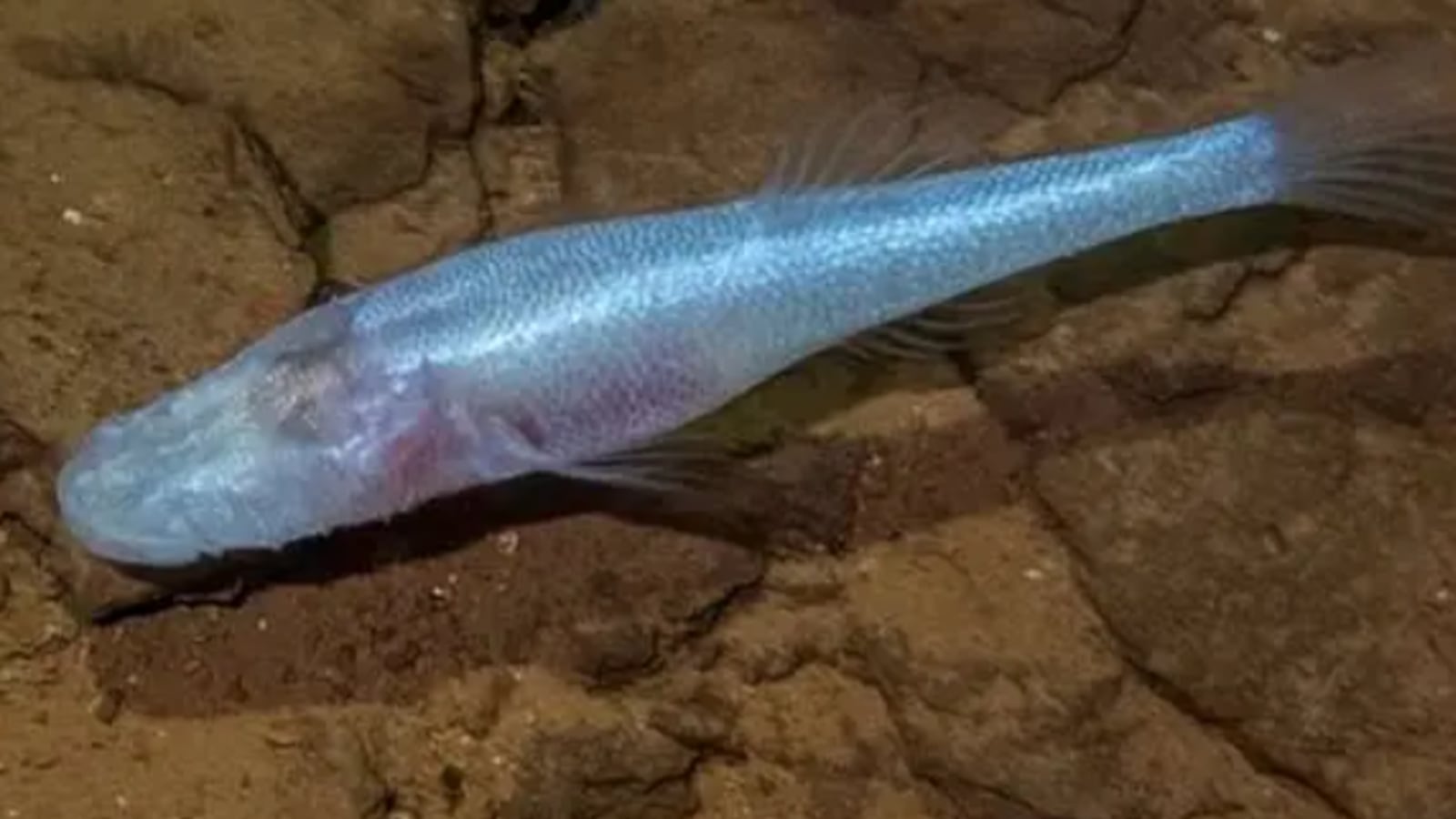
Researchers in Huntsville named it Demogorgonichthys arcanus, or 'demon cavefish,' and revealed that the creature has no eyes, no skin color, grows to just two inches in length and lives in one tiny pool in an underground cave below the US Army's Redstone Arsenal.
demon fish

Matthew L. Niemiller, Niemiller Nature LLC

While the new lifeform is not from another world, this tiny, otherworldly species was discovered by a University of Alabama team exploring the space under a military facility linked to UFOs and classified research into missiles, rockets and space-related technology.

DNA tests showed the fish is related to other North American cavefish but appeared to diverge from other similar species about 11.6 million years ago.

It completely adapted to life underground, shedding its eyes and growing special sensory organs all over its body over millions of years of evolution.

The team said that the fish is so genetically unique compared to other known cavefish that they placed it in a new biological subgroup.

For example, the team found a gene normally used for eyesight that had been badly broken in the demon fish. Scientists expected to find this in the animals because they live in total darkness and no longer need sight.

However, the team was completely surprised to find this new creature had evolved side-by-side in the same pools with the Southern Cavefish, known as Typhlichthys subterraneus, taking a completely different evolutionary path despite living in the same place.

Scientists have discovered a new species underneath a base tied to UFO conspiracies in Huntsville, Alabama

Scientists have discovered a new species underneath a base tied to UFO conspiracies in Huntsville, Alabama

The 'demon cavefish' (Demogorgonichthys arcanus) is similar in appearance to other cavefish scientists have found but is said to be genetically unique

The 'demon cavefish' (Demogorgonichthys arcanus) is similar in appearance to other cavefish scientists have found but is said to be genetically unique

Scientists revealed that while finding independent evolutionary paths among different cavefish species has happened before, uncovering a unique creature adapting in its own way in the exact same pool alongside other cavefish is very rare.

Dr Matthew Niemiller, associate professor of biological sciences, said in a press release: 'This is one of the last places we'd have bet on it.'

'Finding an entirely unknown, new genus of freshwater fish in eastern North America today is a little like finding a new kind of big cat. The group is so well known, we thought the big surprises were behind us. To have one turn up in a cave we've watched for three decades is a real reminder to stay curious. It was genuinely surprising.'

Only a handful of the demon fish were seen in the team's observations between 2019 and 2025, which were published in Scientific Reports.

The fish has only been found in this one small aquifer system, and it is believed to have a very small habitat underneath Redstone Arsenal.

Since the fish, which is less than two inches long, lives in such a tiny area of the cave and depends on groundwater to survive, Niemiller's team considers it highly vulnerable to pollution, changes in water flow, droughts and floods - making it critically imperiled and possibly a critically endangered species.

The fact that the cave is under Redstone Arsenal is believed to have given the fish some protection from extinction, since base restrictions have kept the public from building on the site and destroying the cave.

Although the base's cave is protected from the public, scientists found that the environment the fish were living in was still contaminated - apparently with residue from chemical weapons.

The fish was found in a cave under Redstone Arsenal, a US Army base that also houses US Space Command

The fish was found in a cave under Redstone Arsenal, a US Army base that also houses US Space Command

Scientists found that the cave was contaminated with materials used in both conventional and chemical weapons

Scientists found that the cave was contaminated with materials used in both conventional and chemical weapons

article image

'Trace metals, including cadmium, chromium, and lead, have been detected at elevated concentrations in water samples from Bobcat Cave over the past two decades,' the team wrote in their study.

Niemiller's team said the most likely reason for the pollution was that Bobcat Cave sits under an old industrial part of Redstone Arsenal where the Army used to dispose of both regular and chemical explosives.

Some of those materials seem to have slowly leaked into the underground water that flows into the cave.

Cadmium, chromium and lead are all metals that can be harmful to living things even in small amounts. 

Lead has served as the main metal in most bullets and projectiles. Lead compounds have also been used in primers, the part that starts the explosion when the trigger is pulled.

Meanwhile, both chromium and cadmium have been used by the military as a protective plating that resists rust and corrosion.

Redstone Arsenal has been called the Area 51 of Alabama

Redstone Arsenal has been called the Area 51 of Alabama

Unproven claims have alleged that recovered UFOs were taken to Redstone Arsenal in 2026

Unproven claims have alleged that recovered UFOs were taken to Redstone Arsenal in 2026

The mysterious base opened in 1941 to support the US during World War II, and it now has a workforce of more than 45,000 military personnel, civilian employees and contractors.

According to a government fact sheet about Redstone: 'The installation is the birthplace of NASA and has grown to include more than 65 diverse and distinct organizations.'

However, the base's newest task - becoming the home for US Space Command - has revived decades-old UFO conspiracy theories tied to Redstone Arsenal.

In fact, just a month after US Space Command officially transferred its operations to Redstone, unproven allegations began spreading online claiming that non-human craft being held at Area 51 in Nevada were being moved to Alabama.

In 2020, Amy Eskridge, a researcher working on anti-gravity technology in Huntsville, claimed during an explosive interview that the source of UFO and alien disclosure would be Redstone Arsenal.

Eskridge, who died in 2022, said: 'Redstone Arsenal in Huntsville, Alabama is the biggest f****** deal that you've never heard of.'

RELATED

Scientists Found a “Demon Fish” Hiding Beneath Alabama — And It Has No Eyes

The Eyeless Demon Cavefish Beneath a Military Base #CreepyNature #Science

{ https://www.dailymail.com/sciencetech/index.html }

Hoe vind je dit bericht?
Geschreven door peter om 14:50 Stuur door

UFOs Over Crete and Athens? Meteorologist Clears Up Night Sky Pani

UFOs Over Crete and Athens? Meteorologist Clears Up Night Sky Panic

Kostas Raptis

mysteriousobject.webp?resize=1068%2C586&ssl=1

Glowing sky spirals over Crete sparked alien rumors on August 11, but meteorologist Theodoros Kolydas confirms it was just a SpaceX rocket fuel dump.

No, Aliens Didn’t Choose Crete First. The Mystery Spiral Has a Much Simpler Explanation

  • On the night of August 11, 2026, spectacular glowing spirals appeared in the skies over Crete and Athens, triggering a wave of UFO reports on social media.
  • Meteorologist Theodoros Kolydas has confirmed the “alien invasion” was actually the exhaust trail of a SpaceX Falcon 9 rocket.
  • The phenomenon is caused by rocket fuel expanding in the thin upper atmosphere and catching sunlight from above the Earth’s shadow (the “twilight effect”).

Late Tuesday night (August 11), phone screens across Crete and Athens lit up faster than the sky itself. Dozens of bewildered residents took to social media, uploading photos and videos of glowing, swirling white spirals hovering overhead. For a few frantic minutes, local comment sections were convinced that extraterrestrials had finally chosen the Aegean as their preferred summer holiday destination. The group chats in Crete and Athens were absolutely exploding. “Did you see that?” “Is it an invasion?” “Should I grab the shotgun or the raki?” And somewhere, in a Cretan field, a shepherd remained unfazed, probably just wondering, “Wait… whose goats are those?”

Social media was flooded with photos and videos of a bizarre, glowing, spiral-shaped object twisting through the night sky. It was majestic, eerie, and looked exactly like the opening scene of a low-budget sci-fi movie. People were ready to believe. After all, if aliens were going to visit Greece, they’d probably stop for a frappé and some dakos first, right?

The Buzzkill from the Meteorologist

Enter Theodoros Kolydas, the meteorologist who apparently has no sense of drama. He stepped in to crush everyone’s extraterrestrial dreams with a cold, hard dose of physics.

“It’s not a UFO,” he essentially told the entire population of Crete. “It’s a SpaceX Falcon 9 rocket.”

mysteriousobject1.webp?resize=696%2C469&ssl=1

Glowing Cloud Greece

People witnessed a single, bright cloud gliding through an otherwise entirely clear, dusk-filled sky. Public Domain

Yes, that’s right. The mysterious, glowing alien spiral was just the exhaust fumes from a rocket stage dumping fuel hundreds of kilometers up in the sky. The “aliens” were actually just Elon Musk’s recycling program in action.

The Science That Ruined the Fun

For those who want to know why it looked like a glowing intergalactic snail, here is the explanation that Kolydas provided:

  1. High altitude nonsense: The rocket was super high up, where the air is incredibly thin. When the upper stage of the rocket released gas and fuel leftovers, it didn’t behave like normal smoke. It expanded instantly into a massive, swirling cloud.
  2. The spin: The rocket stage was spinning or changing orientation, which turned the exhaust trail into that perfect, creepy spiral shape.
  3. The “Twilight Effect:” This is the coolest part. Even though it was pitch-black night down here on the ground (where we were all panicking), up at 200+ kilometers altitude, the sun was still shining. The exhaust cloud was floating in sunlight, reflecting it down to us like a glowing neon sign in the dark sky.

So, while we were standing in the dark looking up, the rocket fumes were essentially sunbathing in space. Therefore, no invasion, no mothership, and no little green tourists asking where to find Balos Beach. Just physics doing what physics has always done: creating moments that seem almost too extraordinary to be real.

The Great Contradiction

Kolydas pointed out a beautiful irony in the whole situation: We were standing in the middle of the night, convinced we were seeing something supernatural, when in reality, we were just watching sunlight hit rocket poop a few hundred kilometers above our heads.

It was a beautiful, glowing, spiral-shaped physics lesson.

Meteorologist Theodoros Kolydas summarized the situation with the calm demeanor of a man who has explained this thing too many times:

“Therefore, such a luminous formation does not in itself constitute evidence of an unknown flying object. On the contrary, it is a stunning example of how rocket technology, upper atmosphere physics, the motion of gases at very low densities, and illumination from the Sun combine… Thus are created these strange luminous spirals that, for a few minutes, can really make the sky look… alien.”

As sunseekers along Saronida Beach near Athens looked up, they witnessed a single, bright cloud gliding through an otherwise entirely clear, dusk-filled sky. With no other cloud coverage in sight, photos and videos quickly flooded social media, sparking wild theories ranging from alien visits to secret atmospheric military tests. The sighting was also confirmed by people as far as Crete.


UAP in the night sky of Greece..??#uap ##greece #crete #siriusanews #strange

{ https://www.argophilia.com/news/ }

Hoe vind je dit bericht?
Geschreven door peter om 23:37 Stuur door

Meer van UFO'S of UAP'S, ASTRONOMIE, RUIMTEVAART, ARCHEOLOGIE, OUDHEIDKUNDE, SF-SNUFJES EN ANDERE ESOTERISCHE WETENSCHAPPEN - DE ALLERLAATSTE NIEUWTJES

↑ Terug naar de berichten