Naar de inhoud

UFO'S of UAP'S, ASTRONOMIE, RUIMTEVAART, ARCHEOLOGIE, OUDHEIDKUNDE, SF-SNUFJES EN ANDERE ESOTERISCHE WETENSCHAPPEN - DE ALLERLAATSTE NIEUWTJES

UFO's of UAP'S in België en de rest van de wereld
akke.beakke.be
Ontdek de Fascinerende Wereld van UFO's en UAP's: Jouw Bron voor Onthullende Informatie! Ben jij ook gefascineerd door het onbekende? Wil je meer weten over UFO's en UAP's, niet alleen in België, maar over de hele wereld? Dan ben je op de juiste plek! België: Het Kloppend Hart van UFO-onderzoek In België is BUFON (Belgisch UFO-Netwerk) dé autoriteit op het gebied van UFO-onderzoek. Voor betrouwbare en objectieve informatie over deze intrigerende fenomenen, bezoek je zeker onze Facebook-pagina en deze blog. Maar dat is nog niet alles! Ontdek ook het Belgisch UFO-meldpunt en Caelestia, twee organisaties die diepgaand onderzoek verrichten, al zijn ze soms kritisch of sceptisch. Nederland: Een Schat aan Informatie Voor onze Nederlandse buren is er de schitterende website www.ufowijzer.nl, beheerd door Paul Harmans. Deze site biedt een schat aan informatie en artikelen die je niet wilt missen! Internationaal: MUFON - De Wereldwijde Autoriteit Neem ook een kijkje bij MUFON (Mutual UFO Network Inc.), een gerenommeerde Amerikaanse UFO-vereniging met afdelingen in de VS en wereldwijd. MUFON is toegewijd aan de wetenschappelijke en analytische studie van het UFO-fenomeen, en hun maandelijkse tijdschrift, The MUFON UFO-Journal, is een must-read voor elke UFO-enthousiasteling. Bezoek hun website op www.mufon.com voor meer informatie. Samenwerking en Toekomstvisie Sinds 1 februari 2020 is Pieter niet alleen ex-president van BUFON, maar ook de voormalige nationale directeur van MUFON in Vlaanderen en Nederland. Dit creëert een sterke samenwerking met de Franse MUFON Reseau MUFON/EUROP, wat ons in staat stelt om nog meer waardevolle inzichten te delen. Let op: Nepprofielen en Nieuwe Groeperingen Pas op voor een nieuwe groepering die zich ook BUFON noemt, maar geen enkele connectie heeft met onze gevestigde organisatie. Hoewel zij de naam geregistreerd hebben, kunnen ze het rijke verleden en de expertise van onze groep niet evenaren. We wensen hen veel succes, maar we blijven de autoriteit in UFO-onderzoek! Blijf Op De Hoogte! Wil jij de laatste nieuwtjes over UFO's, ruimtevaart, archeologie, en meer? Volg ons dan en duik samen met ons in de fascinerende wereld van het onbekende! Sluit je aan bij de gemeenschap van nieuwsgierige geesten die net als jij verlangen naar antwoorden en avonturen in de sterren! Heb je vragen of wil je meer weten? Aarzel dan niet om contact met ons op te nemen! Samen ontrafelen we het mysterie van de lucht en daarbuiten.

Archief

Ret. NASA Astronaut Claimed To Have Seen Snake-Shaped UFOs During Two Missions In Space

Snake-Shaped UFOs

Ret. NASA Astronaut Claimed To Have Seen Snake-Shaped UFOs During Two Missions In Space

Space is not what we see at night or what NASA has shown us for years. Amid stars, planets, and other celestial bodies, there are much more vivid, bizarre, and strange things hidden from our eyes. Several astronauts strongly believe in the existence of extraterrestrial civilizations including Gordon Cooper, Buzz Aldrin, and Story Musgrave.

Many conspiracy theorists believe that NASA knew that Buzz Aldrin and Neil Armstrong had an encounter with aliens, which is why they erased 40 rolls of film from the Apollo 11 mission. It was claimed by Bob Dean, a United States Army Command Sergeant Major.

Story Musgrave

The crew Of Sts-80, Seated (From Left-to-right) Kent V. Rominger, Pilot; Kenneth D. Cockrell, Commander. Standing (Left To Right) Mission Specialists Tamara E. Jernigan, F. Story Musgrave, And Thomas D. Jones. Photo Credit: Nasa

According to a report shared by Gaia, there is a transcript between Aldrin and Armstrong where the two had witnessed extraterrestrial activities on the Moon during the Apollo 11 mission.

Apollo 11: “Those are giant things. No, no, no, this is not an optical illusion. No one is going to believe this.”

NASA: “What… what…. what? What the hell is happening What’s wrong with you?”

Apollo 11: “They’re here, under the surface.”

Apart from this, what former NASA astronaut Franklin Story Musgrave said about his experience in space would shock anyone. He claimed to have seen an 8-foot-long snake, white in color, floating through space. It is hard to explain how a snake could reach space, but Musgrave has never denied it.

Read also:

Here is Musgrave’s quote from the TV series “Sightings, ” Sunday, April 9, 1995:

“On two of my missions, and I still don’t have an answer, um, I have seen, a snake out there, six seven eight feet long. It is rubbery because it has internal waves in it and it follows you for a rather long period of time. The more you fly in space the more you see an incredible amount of things out there and THAT sorta brings to you, really a certainty, that other living creatures are out there. Some incredibly primitive, more primitive, some just ah just proteins coming together, amino acids and some just single-cell organisms and other civilizations that have been around for a million years that are doing unimaginable kinds of things.”

1-1.jpg

Fig 1: Alleged Photograph of snake-like UFO captured during NASA STS-61 mission

2-1.jpg

 Fig 2: Alleged Photograph of snake-like UFO captured during NASA STS-61 mission

There is even a video (see below) where a snake-like creature is floating in the Earth’s stratosphere. Musgrave said: “Some are incredibly primitive – some just proteins coming together, amino acids, and some just single-celled organisms. And other civilizations have been around for millions of years that are doing unimaginable kinds of things.”

Musgrave (85) is also a retired colonel of the United States Marine Corps, physician, and mathematician, holds six academic degrees, and is simply a legendary figure in US history. He spent a total of 1,281 hours, 59 minutes, and 22 seconds during his six space shuttle missions in space including 27 hours of spacewalk. Besides, he developed a spacesuit for space shuttle astronauts.

This is not the end of strange anomalies watched by the astronauts in space. Retired astronaut Leroy Chiao, a commander of Expedition 10, along with his crew members witnessed a set of bright lights in the formation of an upside-down tick mark in space.

The description of an unknown snake-like creature or craft given by Musgrave was also spotted in March 2019, when one of the passengers on a commercial airline flight from Phoenix to Portland captured two long dark objects, having long tails or tentacles. Some viewers compared it with the squid lime sentinels from the Matrix series, while others believe that it was possibly something from another dimension that slipped through momentarily.

Similarly, the New York Post shared a video of a UFO in 2018, shot by a passenger while cruising over the Aegean Sea that also shows a creature with a long tail. The opinions were divided into two groups, where people from one group believed it was just a hoax while others also witnessed the same encounter while flying in the plane.

{ https://www.howandwhys.com/ }

Hoe vind je dit bericht?
Geschreven door peter om 00:00 Stuur door

Why Mars Died

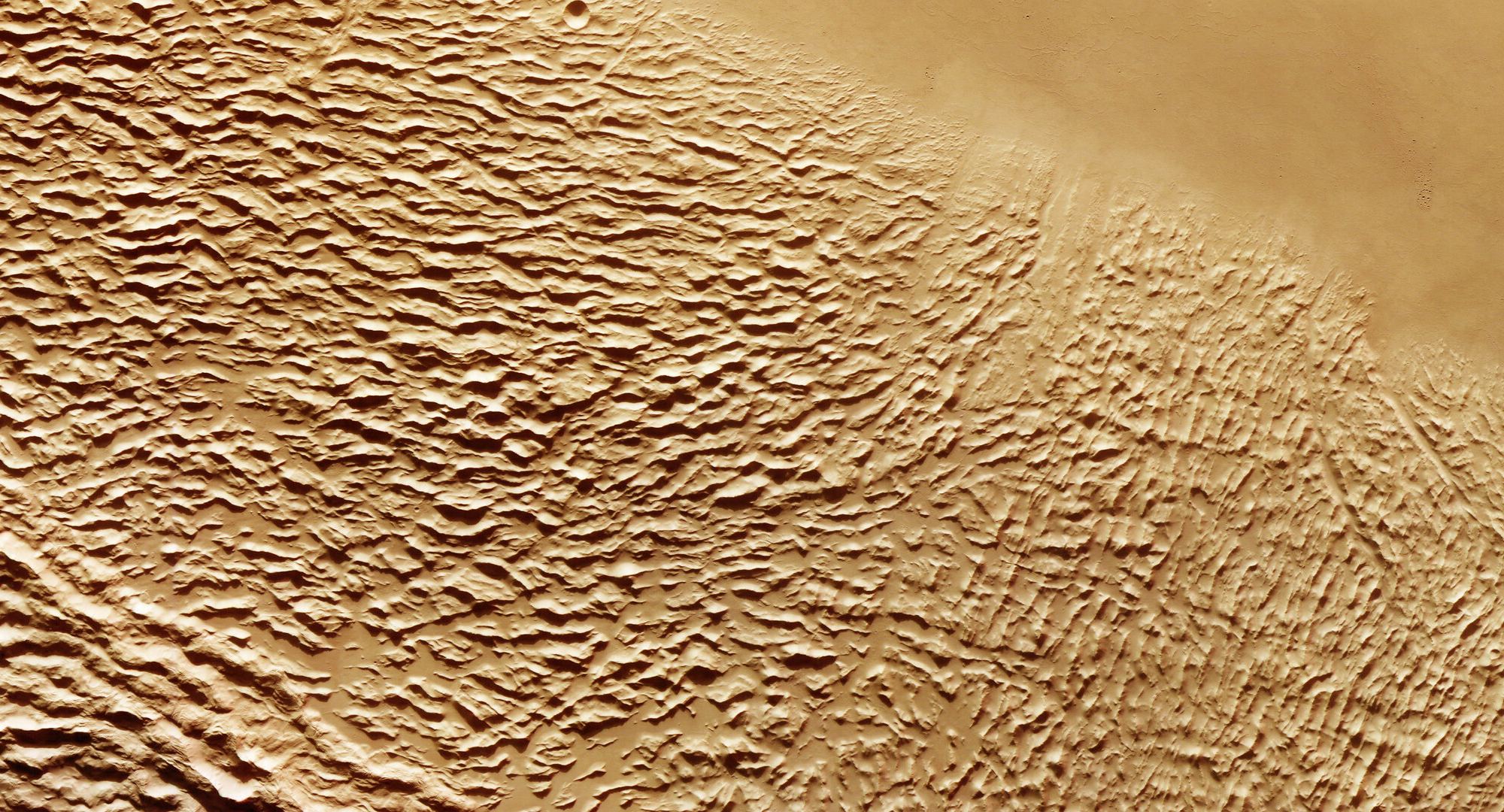
This image from ESA’s Mars Express shows the wrinkled surroundings of Olympus Mons, the largest volcano not only on Mars but in the Solar System. This feature, created by previous landslides and lava-driven rockfalls, is named Lycus Sulci. Credit: ESA/DLR/FU Berlin.

Why Mars Died

We know of Mars as the Red Planet, for its surface and atmosphere is caked in endless swirling dust of rusted iron, the rusting action provided by the always-eager oxygen. But this was not always so.

As attested by our robotic emissaries that we have sent to that planet for over half a century, Mars was once a vibrant (if not verdant) world. We see the evidence for water everywhere we look: ancient flood plains, seabeds, alluvial fans, all of it. If I were to give you two pictures, one from the surface of Mars and one from one of Earth’s deserts, you could not tell the difference.

While Mars may not have had as rich an abundance of liquid water as the Earth, we do know with confidence that the world once hosted vast oceans, long, meandering rivers, and a weekly forecast featuring rainy, overcast, dreary days.

We do not yet know if the right chemicals found the right combinations at the right times to begin climbing the ladder to life on that planet, but we do know that if you could transport yourself back billions of years, to the early days of our solar system, you would find two Earth-like planets orbiting within the habitable zone of our star.

But Mars was born with a flaw, a crippling birth defect that fated it to snuff out any hope for life on its surface. The planet Mars, though it gleams with red anger in our nighttime skies, is small. By mass it’s roughly only 11% that of the Earth. And that small mass means that its core cooled off much faster than it should have.

All worlds are warm. Some of the heat comes from the decay of radioactive elements, elements mixed within the primordial gas cloud that condensed long ago to form our solar system. But they also retain heat from the process of formation itself. Every planet that we see today is the end result of collapsing a large, diffuse cloud of gas and dust into a relatively compact volume. That collapse causes friction, and that friction generates heat.

That heat is trapped inside the body of a planet as it forms. The only way for that heat to escape is through the planet emitting radiation into the vacuum of space. As methods of heat transport go, radiation is by far the most inefficient (for a gruesome but tangible example, if we were to toss your body into the vacuum of space far away from the Sun, it would take several hours for you to freeze). As the planets emit infrared radiation, they slowly release the heat from within and cool off.

The Earth still has plenty of heat to spare, for two reasons. One, our planet is larger than Mars, and so it acquired more heat during its formation. Second, the heat of our planet is contained within the volume of its body, but the heat can only radiate from its surface. If you double the size of a planet, its surface area quadruples, but its volume becomes eight times larger. Larger planets release heat more slowly than smaller ones. In other words, we are much more inefficient than Mars when it comes to removing our heat.

Our heat keeps the core of our planet molten, and it’s there, buried thousands of miles beneath the surface, where the complex twisting of charged elements like iron, worming against each other in a great churning fire, generate our planet’s magnetic field. That magnetic field deflects the onslaught of the solar wind, the ever-present rain of charged subatomic particles streaming from our Sun, keeping our atmosphere safe. Without that protective magnetic field, we would lose our air like dandelion seeds in the breeze.

And this was Mars’ flaw. Born too small, within a billion years its core cooled and solidified, its magnetic field becoming feeble. Without that protection, Mars lost its atmosphere. Without that atmospheric pressure, the water on its surface boiled and evaporated into gas, where it too got caught up in the solar wind and blown out of the solar system. That water has now joined its brethren in the interstellar wastes, never to be seen again.

And with that, Mars died, along with any hope of life on that world.

{ https://www.universetoday.com/  }

Hoe vind je dit bericht?
Geschreven door peter om 23:03 Stuur door

It’s Time to Go Back to Uranus. What Questions do Scientists Have About the Ice Giants?

Uranus-1920x1200.jpeg

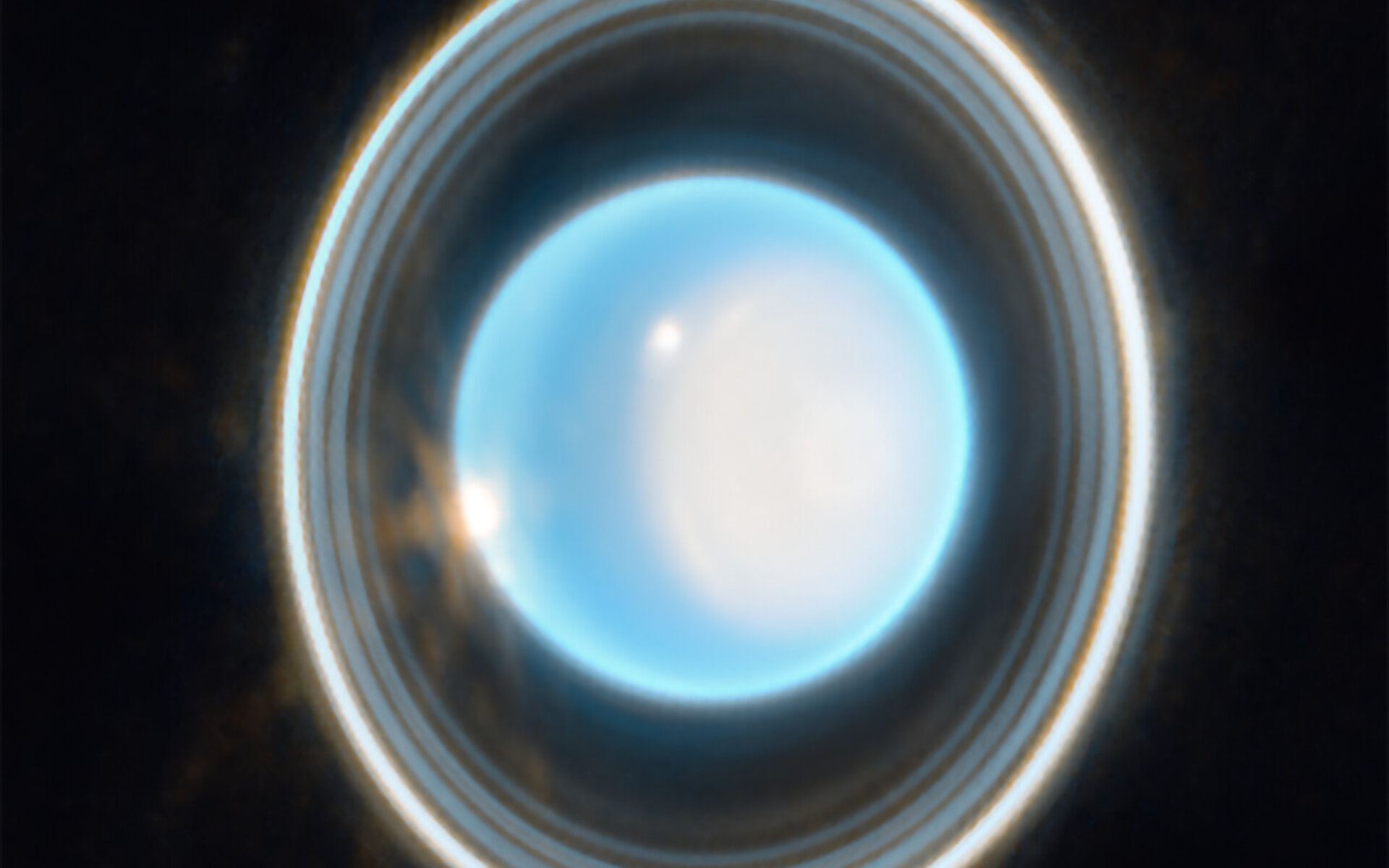
Image of Uranus from Webb

It’s Time to Go Back to Uranus. What Questions do Scientists Have About the Ice Giants?

It seems crazy that Uranus was discovered in 1781 yet here we are, in 2024 and we have only sent one spacecraft to explore Uranus. Voyager 2 is the only spacecraft to have given us close-up images of Uranus (and Neptune) but since their visit in 1986, we have not returned. There have of course been great images from the Hubble Space Telescope and from the James Webb Space Telescope but we still have lots to learn about them. 

The discovery of Uranus was accidental! British astronomer William Herschel was surveying stars that were too faint to see with the naked eye. One star caught his attention as it seemed to move agasinst the fixed background of stars. He assumed therefore that it was closer than the more distant, background stars. Initially he thought it was a comet but it was soon realised that it was a new planet. It was Uranus

Our knowledge of Uranus was quite limited until the advent of space exploration, in particular the Voyager spacecraft. Voyager 2 was launched on 20 August 1977 via the Titan Centaur rocket. Following flybys of Jupiter and Saturn in 1979 and 1981 respectively, it visited Uranus in 1986.  Voyager 2 revealed a world with a lack of internal heat, a warmer than expected thermosphere and a magnetic field offset from the planets rotational axis. Other than that, Uranus has been sitting quitely minding its own business, being observed from afar through our best space telescopes. 

This artist's concept depicts one of NASA's Voyager spacecraft, including its high-gain antenna. Voyager 2 is out of communications until October. Credit: NASA/JPL-Caltech This artist’s concept depicts one of NASA’s Voyager spacecraft, including its high-gain antenna. Voyager 2 is out of communications until October. Credit: NASA/JPL-Caltech

There are however, many questions and uncertainties around the seventh planet from the Sun; from the nature of its interior and the interactions with the magnetic field to the mechanisms that shape the planet we see today. Without a doubt, a dedicated Uranian mission would help to unravel some of these mysteries. 

It’s not just the paper that has been recently published by Emma K Dahl and team that recommends a Uranus Orbiter and Probe but a survey compiled by the National Academies of Sciences, Egineering and Medicine (NASEM) also found the same conclusion. A mission that could monitor Uranus over the long term would be invaluable in unlocking more details about the atmosphere; how the planet formed and how it has migrated around the Solar System? how the atmosphere has contributed to the evolution of the planet?; what processes are underway in the Uranian atmosphere and much more. 

Uranus as seen by NASA’s Voyager 2. Credit: NASA/JPL

Unlocking some of these mysteries will not only help us to understand the nature or Uranus but also help us to understand how the Solar System and other planetary systems form. The paper goes further though, not just discussing the key outstanding questions but also looking at the measurements needed to derive conclusions and hypotheses from temperature and pressure profiles, chemical concentrations, wind speeds, vertical convection levels and magnetic field strengths to name a few. 

There is a huge level of support across the science community for a mission to Uranus and not just an orbiter, a probe that can offer long term readings and observations. The recommendations from the NASEM review highlight the areas of focus and, if addressed, will help to finally unravel some of the mysteries of Uranus. 

Source :

{ https://www.universetoday.com/  }

Hoe vind je dit bericht?
Geschreven door peter om 22:57 Stuur door

Thirsty? Water is More Common than you Think

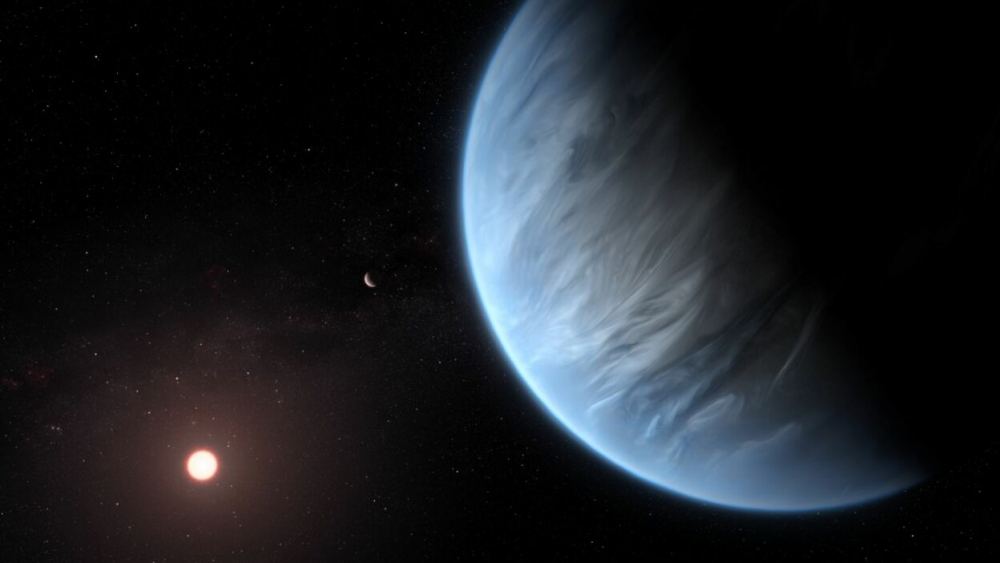
Artist rendition of a potential water-world exoplanet that might support life. Scientists could determine whether to explore this world based on its planetary entropy production. (Credit: ESA / Hubble / M. Kornmesser)

Thirsty? Water is More Common than you Think

Water is the most common chemical molecule found throughout the entire universe. What water has going for it is that its constituents, hydrogen and oxygen, are also ridiculously common, and those two elements really enjoying bonding with each other. Oxygen has two open slots in its outmost electron orbital shell, making it very eager to find new friends, and each hydrogen comes with one spare electron, so the triple-bonding is a cinch.

Hydrogen comes to us from the big bang itself, making it by both mass and number the #1 element in the cosmos. Seriously, the stuff is everywhere. About 75% of every star, every interstellar gas cloud, and every wandering bit of intergalactic space debris never to know the warmth of stellar fusion in 13.8 billion years of cosmic history is made of hydrogen. That hydrogen got its start when our universe was only about ten minutes old, and all the hydrogen that has ever existed (except for random radioactive decays and fission reactions, but that would come later) formed before our universe turned 20 minutes.

A dozen minutes, 13.8 billion years ago. When you quench your thirst with a healthy glass, that’s what you’re consuming.

We can understand this epoch of cosmic history, known as the nucleosynthesis era, because over the past century we’ve become rather skilled at dealing with nuclear reactions, and in one of the hallmarks of our species we have unleashed this radical understanding into the physical nature of reality and deployed it for both peacetime energy generation and wartime bombs.

Our understanding of nuclear physics tells us that earlier than the ten-minute mark, our universe was too hot and too dense for protons and neutrons to form. Instead their subatomic parts, known as quarks, were unglued in a heaving maelstrom of nuclear forces, constantly binding and unbinding in a seething rage-filled sea of gluons, the force carriers of the strong nuclear force.

Once the universe expanded and cooled enough, condensates of protons and neutrons formed like droplets on the windowpane, low-energy pockets capable of keeping themselves together despite the temperatures. Eventually, however, as soon as the party got going it fizzled out: when the universe became too large and too cool, a mere dozen minutes later, there wasn’t sufficient density to bring the quarks close enough together to perform their nuclear binding trick. Some protons and neutrons would find each other in those storm-filled days, though, forming heavier versions of hydrogen, some helium, and a small amount of lithium.

And since then those hydrogen atoms have wandered about the cosmos; most lost in the intergalactic wastes, some participating in the glorious construction of stars and planets, and a lucky few finding themselves locked in a chemical dance with oxygen.

The oxygen has another tale to tell, also a story of fusion, on its way to becoming water. But not the fusion of the first few heady minutes of the big bang, but in the dance within the hearts of stars. There, crushing pressures and violent temperatures slam hydrogen atoms together, forcing them to fuse into helium, in the process releasing an almost vanishingly small amount of energy. But that forced marriage happens millions of times every second, in every one of the trillions upon untold trillions of stars strewn about the cosmos, enough to light up the universe for all conscious observers to enjoy.

Near the end of a star’s life, it turns to fusing the built-up ash of helium piled in its core, The fusion of helium produces two products: carbon and oxygen. Now this oxygen would end up forever closed off from the cosmos, locked behind a million-kilometer thick wall of plasma, if it were not for a trick of physics that happens when the star meets its final days.

Our Sun will someday experience this fate, about four and a half billion years now. When it grows old and weary, it will swell and turn red, violently spasming as it draws its last fatal breaths. Those gargantuan shudders release material from the star, launching it into the surrounding system, billowed by gusty winds of fundamental particles streaming away at nearly the speed of light. Fit by ragged fit, the Sun will lose its own self, driving away over half its mass into a spreading nebula, the only sign that distant eyes can perceive of yet another noble star laying down its struggle against the all-consuming night.

But in that gruesome death, a miracle. The cycle born anew: the hydrogen and helium, the primordial elements of the star, now mixed with carbon and oxygen drift off into the interstellar void, someday to take part in the formation of a new star, a new solar system, a new world wet with water, and, if the chances are perfect, a new life.

{ https://www.universetoday.com/  }

Hoe vind je dit bericht?
Geschreven door peter om 22:48 Stuur door

Venus’ Clouds Contain Sulfuric Acid. That’s Not a Problem for Life.

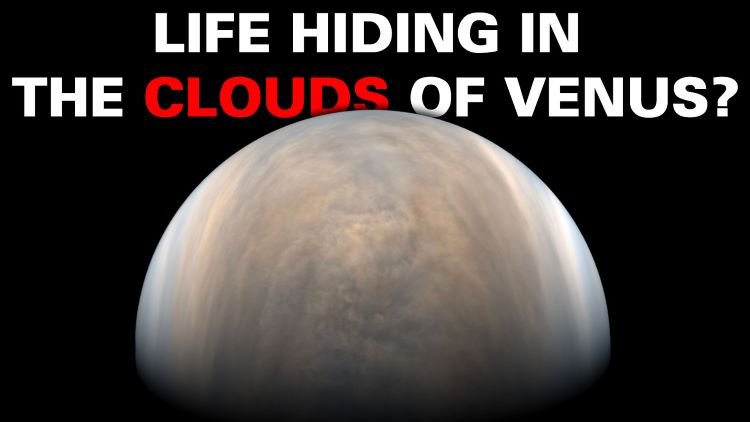
Photo of Venus (Credit: Akatsuki)

Venus’ Clouds Contain Sulfuric Acid. That’s Not a Problem for Life.

A recent study published in Astrobiology investigates the potential habitability in the clouds of Venus, specifically how amino acids, which are the building blocks of life, could survive in the sulfuric acid-rich upper atmosphere of Venus. This comes as the potential for life in Venus’ clouds has become a focal point of contention within the astrobiology community in the last few years. On Earth, concentrated sulfuric acid is known for its corrosivity towards metals and rocks and for absorbing water vapor. In Venus’ upper atmosphere, it forms from solar radiation interacting with sulfur dioxide, water vapor, and carbon dioxide.

Here, Universe Today discusses this new research with Dr. Sara Seager, who is a professor of physics at the Massachusetts Institute of Technology (MIT) and a co-author on the study, regarding the motivation behind the study, how it builds off previous studies, and what this could mean regarding the search for life in the clouds of Venus. Therefore, what is the motivation behind this recent research?

“We are pushing forward the decades-old speculative idea that there might be some kind of microbial-type life in the clouds of Venus,” Dr. Seager tells Universe Today. “The surface of Venus is too hot for life, but just like on Earth as one climbs a mountain or goes up in an airplane, the temperature gets colder and colder above the surface. In the Venus clouds 50 km above the surface the temperature is just right for life. However, the clouds of Venus are not made of water as Earth clouds are, but sulfuric acid is a highly destructive and toxic chemical. The motivation is to explore whether or not sulfuric acid can support complex molecules needed for life.”

For the study, the researchers examined 20 biogenic amino acids within sulfuric acid concentrations that mirrored Venusian atmospheric conditions. After four weeks, the researchers discovered that 11 of the 20 biogenic amino acids didn’t react—or exhibited stability—to the sulfuric acid concentrations while the eight amino acids exhibited stability in the sulfuric acid concentrations after experiencing alteration, and one experiencing instability after alteration. This alteration specifically pertained to the amino acid’s side chain, which is the part of the amino acid that contains each amino acid’s distinctive chemical characteristics, or its uniqueness compared to other amino acids. Along with demonstrating that amino acids remain stable in sulfuric acid concentrations, the study notes how this research “…also informs the possible origins of life on Venus, if life exists there.”

While this study focuses on the ability of amino acids to survive in sulfuric acid, a June 2023 study, which Dr. Seager was lead author, investigated if nucleic acid bases could survive in concentrated sulfuric acid, and whose findings also produced positive results, as well. So, how does this most recent study build off the June 2023 study?

“We can broadly say that biochemistry of life on Earth is composed of four different categories of compounds: nucleic acid bases, amino acids, fatty acids, and carbohydrates,” Dr. Seager tells Universe Today. “Carbohydrates are not stable, but we are working through all the others. This work relates to the June 2023 study as a continuation of working through different classes of molecules. You’ll be hearing more as we make further progress.”

In addition to the June 2023 study, this recent study comes as discussions about the potential for life in the clouds of Venus continue to gain traction, including a myriad of studies between 2020 and 2021 being published in Astrobiology outlining the potential for habitable conditions for life within Venus’ clouds. These studies included using models to determine how life could be possible, the potential presence of phosphorus within the clouds, and a potential instrument package that could be used to sample aerosols within Venus’ clouds to detect potential biogenic markers.

One such future mission that Dr. Seager mentions to Universe Today is Rocket Lab’s First Private Mission to Venus, which was outlined in a 2022 study published in Instrumentation and Methods for Astrophysics and which Dr. Seager tells Universe Today has a current scheduled launch date of January 2025. The mission is slated to use Rocket Lab’s configurable Photon spacecraft that will be fitted with a small, 1-kg (2.2-lb) scientific instrument whose purpose is to shine a laser into the clouds of Venus with the goal of literally lighting up potential organic molecules that might be present. But with all these studies and planned missions, will we ever find life in the clouds of Venus, and in what form?

“If there is life it is most likely simple, single-celled life,” Dr. Seager tells Universe Today. “If we can continue to send space missions to probe the Venus atmosphere directly, we can make progress in answering this question.”

What further discoveries will researchers make about the potential for life in the clouds of Venus in the coming years and decades? Only time will tell, and this is why we science!

  • As always, keep doing science & keep looking up!

{ https://www.universetoday.com/  }

Hoe vind je dit bericht?
Geschreven door peter om 22:43 Stuur door

NASA Lost Contact With its Ingenuity Helicopter Briefly, but it's Back

1-PIA25968_-_MHeli_natural_-_Sol0871.width-1320.jpg

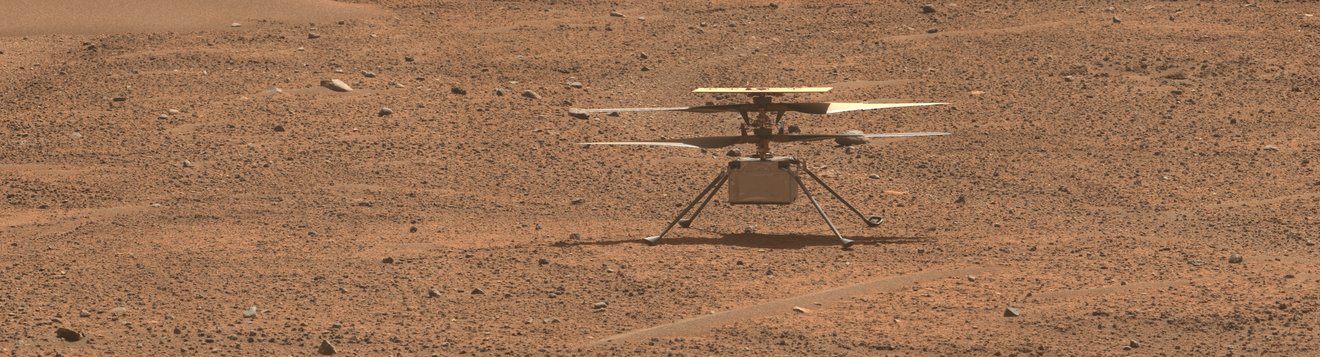
This view of NASA’s Ingenuity Mars Helicopter was generated using data collected by the Mastcam-Z instrument aboard the agency’s Perseverance Mars rover on Aug. 2, 2023, the 871st Martian day, or sol, of the mission, one day before the rotorcraft’s 54th flight. Credit: NASA/JPL-Caltech/ASU/MSSS

NASA Lost Contact With its Ingenuity Helicopter Briefly, but it's Back

Imagine remotely flying a drone or small aircraft from a great distance and loosing contact with it during flight. You’d likely assume the worst, that your aircraft was probably laying in a crashed heap in some remote location.

That’s what engineers at NASA’s Jet Propulsion Laboratory went through with the beloved Ingenuity helicopter on Mars, millions of miles away. During a recent quick pop-up flight that was supposed to last just 32 seconds, Ingenuity lost communications before it touched back down. The engineers back on Earth had no idea if the little helicopter landed safely or not.

Communications were lost on January 18 when the tiny autonomous rotorcraft was flown on a short vertical flight to test its systems after an unplanned early landing during its previous flight, NASA reported in a status update.

For some reason, the communications link was severed between Ingenuity and the Perseverance rover, which relays data between the helicopter and Earth during the flights. Data received showed that Ingenuity had climbed to its assigned maximum altitude of 12 meters (40 feet), but then the data link terminated early, prior to touchdown.

Ingenuity captured this image of Mars on December 2, 2023 (Sol 990) with its high-resolution color camera. The shadow of the helicopter can be seen near the center of the images. Credit: NASA/JPL-Caltech

But thankfully, after engineers had worked around the clock, on late on January 20 communications were able to be reestablished between the helicopter and rover, with engineers able to determine the helicopter was “power-positive” and sitting upright on Mars.

The team is now running further diagnostic checks, and commanding Ingenuity to take photos of its location on the surface to help  pinpoint its location, and performing a spin test.

“Ginny is back in contact!,” JPL Director Laurie Leshin posted on X. “Thanks to our team for working the issue so quickly and effectively. Still need to understand more about what happened. After far more flights than anticipated, no matter what, the #MarsHelicopter has been an extraordinary success!”

NASA’s Perseverance Mars rover took a selfie with the Ingenuity helicopter, seen here about 13 feet (3.9 meters) from the rover. This image was taken by the WATSON camera on the rover’s robotic arm on April 6, 2021, the 46th Martian day, or sol, of the mission. Credits: NASA/JPL-Caltech/MSSS.

JPL did say that during the flight, Perseverance was out of line-of-sight with Ingenuity, and after communications were lost, the team considered driving the rover closer for a visual inspection. They did use the rover “to perform long-duration listening sessions for Ingenuity’s signal.”

This was Ingenuity’s 72nd flight at the Red Planet – which is incredible given that only four flights were planned for the plucky little helicopter, the first aircraft to perform a powered, controlled extraterrestrial flight. But since becoming operational on April 19, 2021, it has blown away expectations, now completing 72 flights.

Ingenuity operates in a harsh environment that no aircraft has ever flown in before. Mars is extremely cold and dry, and Mars’ very thin atmosphere has only about 1% the density of Earth’s. The thin atmosphere makes lift more difficult to generate, although the gravity is weaker, which helps. There’s also the time delay in communications between Mars and Earth which adds a layer of complexity to every endeavor.

If we are practical, we realize that one day, Ingenuity will fly its last flight, never to be heard from again.

But that day is not today.

{ https://www.universetoday.com/  }

Hoe vind je dit bericht?
Geschreven door peter om 22:33 Stuur door

US Military Has Machine That Can Levitate UFO Metal, Confirms Stanford Top Scientist

Garry Nolan terahertz UFO

US Military Has Machine That Can Levitate UFO Metal, Confirms Stanford Top Scientist

Professor Garry Nolan is one of the most reputable experts examining the enigma of Unidentified Aerial Phenomena (UAPs). He has been studying UAP materials for many months and has made numerous astonishing statements about UFOs. His contributions lend credibility to this particular mystery, which many mainstream scientists hesitate to discuss.

Dr. Nolan works at Stanford University as a professor of Immunology. He was nominated for the Nobel Prize, which is a big honor. He is known as one of the best immunologists in the world. He has many patents and has written a lot of research papers. He has also started two companies listed on the NASDAQ stock exchange because of his successful inventions.

In June 2022, Australian investigative journalist Ross Coulthart interviewed Dr. Nolan and learned from him shocking UAP information that the U.S. government had been investigating for the past few years. Dr. Nolan said that one thing he is sure about is that we do not know what UAPs are: “We do know that there is something here something that I think defies explanation but that something can be studied from a scientific Viewpoint.”

Although this interview was recorded in 2022, Dr. Nolan adheres to David Grusch’s statement that the U.S. government has been lying about UAPs for the last 60-70 years. He believes the reason behind this is that the U.S. government itself does not know what they are dealing with. “Absolutely, there is a cover-up,” says Dr. Nolan. “I mean, there has been both a cover-up and a disinformation campaign to make people appear as if they were crazy.”

Coutlhart questions the potential dangers of admitting one’s thoughts on these mysterious events, to which Dr. Nolan responds, “I think it’s dangerously necessary… ignoring the physics of what these things are capable of doing.” Coutlhart further asks, “Let’s talk about ‘It.’ What is it?”

Dr. Nolan replies, “You know, I wish I knew… Whatever it is appears to be so far advanced from us that it beggars understanding.” When pressed further by Coutlhart if he believes the phenomenon to be of human origin, Dr. Nolan decisively states, “I’m sure it’s not human..I think it’s whatever it is it’s been here a long time so and certainly it’s been here longer than we’ve been civilized so at the very least who really owns the planet who was here first uh I’m not sure it was.”

Dr. Nolan explained he studied the brains of pilots who claimed to have encountered the phenomena. After their UAP/ UFO encounters, they all got damaged or hurt such as buzz noises in their head, got sick, etc. Most of them have had similar kinds of bad things. He showed the MRIs of some people that revealed damage in the middle of the basal ganglia – an area responsible for motor control and other core brain functions, including intuition.

Dr. Nolan said the damage should have killed those people, yet they were alive. He obtained MRIs of some prior to their encounters and they had the damage, so they were most likely born with it. “These are all so-called high-functioning people. They’re pilots who are making split-second decisions, intelligence officers in the field, etc,” he said.

Alleged UFO material

Former Pentagon UFO official Lue Elizondo shared a truly eye-opening statement in his interview with James Iandoli of Engaging The Phenomenon on June 11, 2021. They discussed crash retrievals and materials related to unidentified flying objects (UFOs) or unidentified aerial phenomena (UAPs). Elizondo acknowledged the sensitivity of the topic and the potential consequences of discussing it openly.

However, Elizondo expressed his belief that the US government does possess exotic materials but could not provide further details due to the lack of transparency from the government. He mentioned the three layers of analysis that can be conducted on a piece of material, namely physical, chemical, and atomic or nano-level research.

Coulthart asked the Stanford professor about this research on a peculiar material known as Bismuth magnesium. Dr. Nolan described it as a layered substance consisting primarily of bismuth, with traces of lead and magnesium. Despite his assessment of its isotope ratios showing nothing out of the ordinary, he expressed his intent to study a significantly larger sample in the future. This expanded sample size would allow him to conduct more comprehensive tests, potentially shedding light on its properties.

Terahertz Transmistter

Coulthart speculated on the material’s ability to levitate when exposed to a specific waveform. While Nolan acknowledged hearing about such claims, he had not personally witnessed or tested the phenomenon. When pressed by Coulthart about whether he had attempted any experiments, Nolan clarified that the required waveform for levitation would be “Terahertz Waves,” which he had not utilized.

Coulthart highlighted that the U.S. Army possessed the necessary terahertz transmitter for potential experiments with the Bismuth magnesium material. However, Dr. Nolan remained tight-lipped about the specifics, stating he could not discuss whether such research had been conducted.

Coulthart mentioned that Tom Delonge’s To the Stars Academy (TTSA) worked with the U.S. Army to study this material using the right equipment. Coulthart wondered why the U.S. government keeps such materials if stories about flying objects are just made up. Nolan thinks there is a lot of false information out there but believes there might be real materials that we should know about. He wants the government to tell us clearly if those special materials are real or not.

In 2019, Tom DeLonge claimed that his UFO research organization had acquired “potentially exotic materials featuring properties not from any known existing military or commercial application.” “The structure and composition of these materials are not from any known existing military or commercial application,” Steve Justice, TTSA’s COO and former head of Advanced Systems at Lockheed Martin’s Skunk Works said in a statement. (Source)

According to the press release, some of these materials were in the possession of investigative journalist and UFO researcher Linda Moulton Howe, who, in 2004, gave a presentation at the Xcon Conference regarding these materials. In her lecture, a video of which has been on the Internet for years, she suggests that the material could become a “lifting body” with the right amount of electromagnetic static and certain RF frequency. These are undoubtedly the same materials mentioned by Tom DeLonge on his Joe Rogan interview where he stated, “if you hit it with enough terahertz, it’ll float.”

In this video, Dr. David Chester, a scientist from Quantum Gravity Research, makes several references to pulsed terahertz waves. Towards the end, he mentions that pulsed terahertz waves in a metamaterial can slow down the speed of light. He further explains that this is beneficial for anti-gravity engineering. According to him, due to the way everything couples together in the equations, a reduced speed of light requires less energy to achieve the desired anti gravitic effects.

This is some really interesting information on terahertz, thanks to Observing The Anomaly.

AAWSAP commissioned 37 scientific papers that are now public. Someone FOIA’d about UAP materials being studied and DIA responded with 5 of these papers. One paper was on spintronics and another on metamaterials. TTSA bought an alleged sample of Roswell crash material and gave it to the Army to study in 2019. According to Puthoff it appeared to be a metamaterial that acts as a waveguide at the terahertz frequency. The two papers on spintronics and metamaterials also touches on creating materials that operate at this frequency and specifically that such materials would be radiation resistant and ideal for long space travel.

Hal Puthoff also discusses the sample with UFO Joe. Notice the bolded statement below. (Source)

So the answer is, we don’t, yet, really know where it came from. And it’s true that ten years ago Linda Howe provided us with a sample. And we did a lot of tests. Got electron microscope pictures and irradiated it with various gigahertz frequencies, megahertz frequencies and so on. We couldn’t make anything out of it. So it kind of went on the shelf. And it was only after this paper on meta-materials was published, we said, “Oh my gosh. The claim here, that this could have some real utility as microscopic waveguides, would actually fit the structure, you know, that we see there.” Okay, well where do we go with that?

Well, the truth of the matter is, that piece is actually pretty mangled and what you’d really like to do is say, “Okay, well let’s have a nice, clean piece of this, and let’s irradiate with terahertz frequencies, first of all, to see if it really does act as a microscopic waveguide for terahertz frequencies. And then, if that works, we’ll iradiate it with other kinds of fields and see if there are any unexpected responses and so on.” So it is still, despite the fact it gets unbelievable publicity out there, it’s still an absolutely unknown. It does range all the way from…this was a fraud of junk material sent to us, to…no, this came off the wedge of an ET craft.

We don’t know the answer to that, and the only way we are going to get something of value is to determine its properties or maybe reproduce it under nice conditions and determine its properties. So, it is still a giant question mark out there. So even though it’s, you know, it’s like…a few percent of our effort at TTSA, it’s like 99% of our criticisms (laughs). That’s just what you get in this field. That’s the way it goes. Some of us have developed very hard skins. Another question?

Puthoff elaborates further in another interview: (Source)

Well, years later, decades later actually, finally our own science moves along. We move into an area called metamaterials, and it turns out exactly this combination of materials at exactly those dimensions turn out to be an excellent microscopic waveguide for very high frequency electromagnetic radiation terahertz frequencies. So, the wavelength is 60 microns, which is a pretty small size. But it turns out because of the metamaterial aspect of this material, those bismuth layers that act as waveguides can be one twentieth the size of the wavelength, and usually when you make a waveguide it’s gotta be about the size of the wavelength. So, in fact this turned out to be a material that would propagate sub-wavelength waveguide effects. Why somebody wants to do that we still don’t know the answer to that.

Dr. Nolan is said to have a good friendship with Jacques Vallée, Kit Green, Eric Davis, and Colm Kelleher. They all came to him to analyze the UAP materials after he had developed some wonderful instruments using mass spectrometry.

“Some of the objects are nondescript, and just lumps of metal. Mostly, there’s nothing unusual about them except that everywhere you look in the metal, the composition is different, which is odd. It’s what we call inhomogeneous. That’s a fancy way of saying ‘incompletely mixed.’ The common thing about all the materials that I’ve looked at so far, and there’s about a dozen, is that almost none of them are uniform. They’re all these hodgepodge mixtures. Each individual case will be composed of a similar set of elements, but they will be inhomogeneous,” he explained.

Dr. Nolan found out that some of the fragments from the so-called UFO crash in Brazil have extraordinarily altered isotope ratios of magnesium. He explained:

“It was interesting because another piece from the same event was analyzed in the same instrument at the same time. This is an extraordinarily sensitive instrument called a nanoSIMS – Secondary Ion Mass Spec. It had perfectly correct isotope ratios for what you would expect for magnesium found anywhere on Earth. Meanwhile, the other one was just way off. Like 30 percent off the ratios. The problem is there’s no good reason humans have for altering the isotope ratios of a simple metal like magnesium. There’s no different properties of the different isotopes, that anybody, at least in any of the literature that is public of the hundreds of thousands of papers published, that says this is why you would do that. Now you can do it. It’s a little expensive to do, but you’d have no reason for doing it.”

Dr. Vallée collected purported metal from the UFO cases dated back to 1947 and brought them to Stanford University for analysis. Dr. Gary Nolan, a Stanford microbiologist analyzed the 3-D atomic structure of the unknown metal with a state-of-the-art Multiparameter Ion Beam Imager (MIBI) capable of discerning the precise composition of matter at the level of its isotopes.

The result might be shocking for non-believers, as when he put the sample in the vacuum chamber of the machine, he found out that their composition was unlike any other known metal on Earth.

“If you’re talking about an advanced material from an advanced civilization you’re talking about something that I’ll just call it an ultra material right it’s something which has properties where somebody is putting it together again at the atomic scale so we’re building our world with 80 elements somebody else is building the world with 253 different isotopes,” Dr. Nolan said.

Could humans be altering the isotopes in these strange objects for unknown purposes? Dr. Nolan speculates that it is possible, but proving it requires getting down to the atomic level, possibly with a super quantum interference device (SQUID). However, neither his budget nor the budgets of the groups analyzing UFO/UAP encounters have that kind of funding yet.

{ https://www.howandwhys.com/ }

Hoe vind je dit bericht?
Geschreven door peter om 22:19 Stuur door

SOMETHING ‘ANOMALOUS’ ON THE MOON’S SURFACE IS EXHIBITING ‘UNIQUE’ MAGNETIC AND REFLECTIVE PROPERTIES

TlVoXIQn?format=jpg&name=900x900

(NASA/LRO)

SOMETHING ‘ANOMALOUS’ ON THE MOON’S SURFACE IS EXHIBITING ‘UNIQUE’ MAGNETIC AND REFLECTIVE PROPERTIES

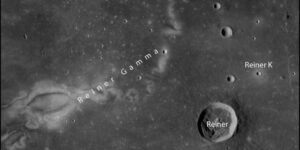
An international research team has discovered what they describe as ‘anomalous’ rocks on the Moon’s surface that exhibit unique magnetic properties. Located near an area named Reiner Gamma, the small group of meter-sized rocks stood out because they are covered in a layer of dust with special reflective properties, meaning they reflect light differently than all previously known lunar rocks.

The discoveries are part of an effort to better understand the movement of dust and other processes that form and change the surface of the Moon, but they may also end up offering unexpected insights into the history of its magnetic core.

“Current knowledge of the Moon’s magnetic properties is very limited, so these new rocks will shed light on the history of the Moon and its magnetic core,” said Ottaviano Rüsch from the Institut für Planetologie. “For the first time, we have investigated the interactions of dust with rocks in the Reiner Gamma region – more precisely, the variations in the reflective properties of these rocks.”

SCANNING OVER ONE MILLION IMAGES YIELDED THE ANOMALOUS ROCKS

To make the unexpected discovery, Rüsch and his team employed artificial intelligence to scour through over one million images taken by NASA’s Lunar Reconnaissance Orbiter, which continuously orbits the Moon. The use of artificial intelligence allowed the team, which was originally looking for cracks on the Moon, to investigate such a large number of photos while scanning for expected and unexpected variances in material on the lunar surface.

“Modern data processing methods allow us to gain completely new insights into global contexts,” explained Valentin Bickel from the Center for Space and Habitability at the University of Bern. “At the same time, we keep finding unknown objects in this way, such as the anomalous rocks that we are investigating in this new study.”

This effort led to the discovery of about 130,000 “flagged’ images, half of which were then examined by human scientists. In that group, the researchers spotted some unusual reflectivity coming off of certain rocks around Reiner Gamma, prompting them to investigate further.

“We recognized a boulder with distinctive dark areas on just one image,” said Rüsch. “This rock was very different from all the others, as it scatters less light back towards the sun than other rocks. We suspect that this is due to the particular dust structure, such as the density and grain size of the dust.”

“Normally, lunar dust is very porous and reflects a lot of light back in the direction of illumination,” adds Marcel Hess from TU Dortmund University. “However, when the dust is compacted, the overall brightness usually increases. This is not the case with the observed dust-covered rocks.”

anomalous rocks

The meter-high rocks discovered in the work are located near the Reiner K crater in the “Reiner Gamma” region, which has a magnetic anomaly.

CREDIT: NASA LRO/NAC

FUTURE ROBOTIC ROVER MISSION WILL EXAMINE THE ROCKS UP CLOSE

After publishing their findings in the Journal of Geophysical Research Planets, the research team says they want to spend the coming weeks and months performing additional investigations. This includes trying to better understand the underlying processes that govern interactions between dust and rocks as well as doing more study on what caused the formation of the special dust structure.

According to the press release announcing the findings, these efforts will also include investigating the process behind “the lifting of the dust due to electrostatic charging or the interaction of the solar wind with local magnetic fields.”

Fortunately, the research team notes, NASA is planning to send a robotic rover to the Reiner Gamma region “in the coming years” that will be tasked with finding similar anomalous rocks covered with the uniquely reflective dust. Having a better understanding of how dust behaves in the lunar environment will be critical for planning future manned missions, they argue, especially given how many problems moon dust caused for the Apollo missions of the late 1960s and 1970s and the bold goals of putting a permanent base on the Moon.

“Even if it is still a dream of the future, a better understanding of dust movement can help with the planning of human settlements on the Moon,” the release concludes.

  • Christopher Plain is a Science Fiction and Fantasy novelist and Head Science Writer at The Debrief. Follow and connect with him on X, learn about his books at plainfiction.com, or email him directly at christopher@thedebrief.org.

{ https://thedebrief.org/category/science/ }

Hoe vind je dit bericht?
Geschreven door peter om 21:42 Stuur door

New Evidence Shows Modern Humans First Arrived in China 45,000 Years Ago

Reconstruction of Shiyu "horse-hunters", earliest known modern humans in China. Source: GUO Xiaocong/Nature

New Evidence Shows Modern Humans First Arrived in China 45,000 Years Ago

A new study presents evidence showing that Homo sapiens (modern humans) arrived in China approximately 45,000 years ago, or several thousand years earlier than previously suspected. The original human settlers to the region likely arrived from the north and east, experts believe, migrating to northern China from the adjacent lands of modern-day Siberia and Mongolia.

An international team of researchers who study human evolution, led by Paleolithic archaeologist Shi-Xia Yang from the Chinese Academy of Sciences, completed a thorough re-examination of artifacts collected from a long-neglected and nearly forgotten archaeological site known as Shiyu, which is located in China’s Shanxi province. This fresh study just published in the journal Nature Ecology & Evolution uncovered the true age of this prehistoric human settlement, which will now be recognized as the oldest Homo sapiens site ever found on Chinese soil.

"Our new study identified an Initial Upper Paleolithic (IUP) archaeological assemblage from the Shiyu site of North China dating to 45,000 years ago that includes blade technology, tanged and hafted projectile points, long-distance obsidian transfer, and the use of a perforated graphite disk," Shi-Xia Yaong stated in a Chinese Academy of Sciences press release covering his teams findings.

In the context of the region as a whole, this discovery sheds new light on the migration of peoples from one territory to another over the course of several thousand years.

“The geographic expansion of Homo sapiens populations into southeastern Europe occurred by 47,000 years ago, marked by Initial Upper Paleolithic (IUP) technology,” the study authors explained in their Nature Ecology & Evolution paper:

“Homo sapiens was present in western Siberia by 45,000 years ago, and IUP industries indicate early entries by 50,000 years ago in the Russian Altai and 46–45,000 years ago in northern Mongolia. Homo sapiens was in northeastern Asia by 40,000 years ago, with a single IUP site in China dating to 43–41,000 years ago.”

Assumptions about when the migrations that started in southeastern Europe reached China were shaped primarily by the last discovery referenced above. But it seems that Shiyu could predate this other Chinese site by as much as 4,000 years, which represents a significant divergence from the previously accepted timeline.

Revealing the Secrets of Asia’s Prehistoric Past

Excavations at Shiyu in 1963 produced more than 15,000 tools, weapons and personal items made from stone, along with thousands of animal bones that showed signs of having been touched or altered by human hands. While there was no doubt the site had been heavily used by ancient humans, the Chinese archaeologists who excavated the site were only able to recover a single piece of one Homo sapiens skull, meaning burials of the dead likely occurred elsewhere nearby.

Shiyu Initial Upper Palaeolithic Artifacts. a) Levallois points (1–3); b) other tool types including denticulate on blade (1, 2), denticulate on flake (3), and end scraper (4); c) tanged tools showing the locations of notched retouching (red) and thinning of the tangs (light blue). (IVPP/Nature)

Shiyu Initial Upper Palaeolithic Artifacts. a) Levallois points (1–3); b) other tool types including denticulate on blade (1, 2), denticulate on flake (3), and end scraper (4); c) tanged tools showing the locations of notched retouching (red) and thinning of the tangs (light blue).

(IVPP/Nature)

Incredibly, much of this valuable evidence of prehistoric human activity was lost decades ago. Artifacts sent to the Institute of Vertebrate Paleontology and Paleoanthropology in Beijing for further study were preserved, but excavated items that were transferred to local facilities eventually disappeared, never to be seen again. About 90 percent of the stone objects recovered at Shiyu were lost, and the lone piece of skull bone was somehow misplaced as well.

The problem was that Shiyu was discovered and excavated shortly before the onset of China’s Cultural Revolution, which created intense social and political turmoil that hindered scientific exploration and study. The preservation of the past was not a priority during those times, as reformers were far more interested in building a future utopia than trying to protect an ancient cultural legacy.

The discoverers of the site knew that what they’d found was important. But the chaos and fear associated with the Cultural Revolution prevented a more exhaustive follow-up study from taking place, and that, combined with the loss of most of the artifacts that had been found, left a great deal of uncertainty about when Shiyu had been occupied and by whom.

It was only recently that a more extensive analysis of this ancient prehistorical site was finally launched, by researchers from China, France, Australia and Germany who were anxious to unlock Shiyu’s secrets and reveal more about the earliest inhabitants of the region.

If the skull piece had been preserved, modern techniques of DNA testing could have revealed its true age. But since that artifact was lost long ago, the researchers had to resort to other means to find out more about Shiyu’s ancient occupants.

Fortunately, other means were available. The researchers analyzed 15 sediment samples taken from the site using a technology known as optically stimulated luminescence (OSL), which can calculate how long grains of earth and rock found in an excavated sediment layer had been covered up and protected from sunlight. They also used carbon dating techniques to estimate the age of some of the animal bones and teeth found at the site, which were left there by the humans that had hunted and consumed the animals.

Correlating the data from these tests, the scientists determined that Shiyu would have been occupied by humans approximately 44,600 years ago. This was surprising, since up to now no evidence had emerged suggesting that Homo sapiens had arrived in China so early.

The excavation layer that produced signs of human occupation was found relatively close to the bottom of a 100-foot (30-meter) deposit of sand and soil that was dug up at the site. There was no evidence of further occupation in levels of sediment found closer to the surface, suggesting the site had been heavily used for a period of time before being abandoned tens of thousands of years ago.

Graphite disc and bone tool that was recovered from the Shiyu site.

(IVPP/Nature)

A Complex Ancient Culture Rooted in Tradition and Innovation

The results of the analysis of animal fossils combined with use-wear analysis of stone tools showed that the prehistoric inhabitants of ancient Shiyu were horse hunters who preyed on adult horses for meat and hides. They had access to an advanced set of tools for processing the horses they harvested from local herds, including end-scrapers and awls unique to the Late Paleolithic plus highly efficient butchering tools from the Levallois industry that was first developed in the Middle Paleolithic. The occupants of Shiyu also manufactured tools from bone and graphite, and some of their stone tools were made from obsidian that would have been secured from sources located hundreds of miles away.

All in all, the variety and functionality of their tool industry makes it clear that the prehistoric residents of Shiya built a complex and sustainable culture that efficiently exploited the resources available in their region. This culture would have used a mixture of technologies and practices imported from the peoples’ original homelands in Siberia or Mongolia, physical objects acquired through trading activity, and new inventions and techniques that were unique to that time and place.

“Shiyu reflects a process of cultural creolization,” the Chinese Academy of Sciences press release states, “through contact between societies and relocated peoples, whereby inherited traits blended with novel innovations, thus complicating the traditional understanding of  Homo sapiens' global expansion.

  • Top image: Reconstruction of Shiyu "horse-hunters", earliest known modern humans in China.
  • Source: GUO Xiaocong/Nature

By Nathan Falde

{ https://www.ancient-origins.net/ }

Hoe vind je dit bericht?
Geschreven door peter om 21:14 Stuur door

Pentagon moves to declassify some secret space programs and technologies

Pentagon moves to declassify some secret space programs and technologies

a white rocket blasts off during the day, leaving a streak of fire behind it
A United Launch Alliance Delta 4 Heavy lifts off from Vandenberg Space Force Base, California as it launches a spy satellite from California, Sept. 24, 2022. 
(Image credit: MATT HARTMAN/AFP via Getty Images)

The United States Department of Defense (DoD) wants to declassify more space programs in order to boost the nation's military edge in space.

As the world's superpowers continue to invest in the militarization of space, some leaders at the Pentagon believe it's time to declassify some of the secretive space programs in the United States' portfolio. To that end, U.S. Deputy Secretary of Defense Kathleen Hicks recently approved a new policy that will reduce the classification level of some highly secret space programs and technologies.

The policies that have prohibited sharing this information are outdated and are holding back the U.S. when it comes to superiority in space, according to DoD Assistant Secretary for Space Policy John Plumb. "What the classification memo does, generally, is it overwrites — it really completely rewrites — a legacy document that had its roots 20 years ago, and it's just no longer applicable to the current environment that involves national security space," Plumb said last week, according to Breaking Defense.

The policy does not mean that these programs and technologies will now be fully unclassified and revealed to the public; instead, it will lower their classification levels in order to share some technologies and programs with private industry and international allies to help the U.S. build an "asymmetric advantage and force multiplier that neither China nor Russia could ever hope to match," Plumb said in a DoD statement. 

Related: 

The move would allow each branch of the U.S. armed services to decide their own classification levels, rather than spread a blanket DoD policy over all military space programs and technologies. 

One of the key issues driving this policy change is the use of what are known as Special Access Programs (SAPs), security protocols that severely restrict the sharing of highly sensitive and classified information. Some of these SAPs are acknowledged, meaning their existence is known to the public but their details haven't been revealed. Others, however, are unacknowledged, meaning their mere existence is even a secret.

Plumb argued that the new policy will remove SAP status from some of the Pentagon's most valuable space programs, giving the U.S. military an edge in what the Department of Defense now considers the "most essential domain" in terms of national security.

An Atlas V rocket carrying the classified Silent Barker multi-payload satellite for the National Reconnaissance Office and Space Force lifts off from Cape Canaveral Space Force Station, Florida on Sept. 10, 2023.  (Image credit: United Launch Alliance)

"Anything we can bring from a SAP level to a Top Secret level for example, brings massive value to the warfighter, massive value to the department, and frankly, my hope is over time [it] will also allow us to share more information with allies and partners that they might not currently be able to share," Plumb said.

Some officials at the Pentagon have been calling for such a new classification policy for years, arguing that excessive classification has prevented advanced military capabilities from deterring attacks from adversaries, which is one of the main reasons they were created to begin with.

In a rare show of disclosure, the U.S. Space Force and National Reconnaissance Office revealed a set of general capabilities of the Silent Barker "watchdog" satellite launched by United Launch Alliance in September 2023. 

Before the launch, NRO and Space Force officials told the public that Silent Barker was designed to keep an eye on satellites and spacecraft in geosynchronous orbit (GEO). The disclosure was designed to help deter attacks on U.S. satellites, Space Force Lt. General Michael Guetlein, commander of Space Systems Command, said at the time.

"Not only are we going to maintain custody and the ability to detect what's going on in GEO, but we'll have the indications and warnings to know there's something out of the normal occurring, and that goes a long way towards deterrence," Guetlein said.

The exact capabilities and specifications of many of the U.S. military's and intelligence community's satellites remain unknown.

 { https://www.space.com/ }

Hoe vind je dit bericht?
Geschreven door peter om 20:58 Stuur door

Meer van UFO'S of UAP'S, ASTRONOMIE, RUIMTEVAART, ARCHEOLOGIE, OUDHEIDKUNDE, SF-SNUFJES EN ANDERE ESOTERISCHE WETENSCHAPPEN - DE ALLERLAATSTE NIEUWTJES

↑ Terug naar de berichten