Ontdek de Fascinerende Wereld van UFO's en UAP's: Jouw Bron voor Onthullende Informatie!
Ben jij ook gefascineerd door het onbekende? Wil je meer weten over UFO's en UAP's, niet alleen in België, maar over de hele wereld? Dan ben je op de juiste plek!
België: Het Kloppend Hart van UFO-onderzoek
In België is BUFON (Belgisch UFO-Netwerk) dé autoriteit op het gebied van UFO-onderzoek. Voor betrouwbare en objectieve informatie over deze intrigerende fenomenen, bezoek je zeker onze Facebook-pagina en deze blog. Maar dat is nog niet alles! Ontdek ook het Belgisch UFO-meldpunt en Caelestia, twee organisaties die diepgaand onderzoek verrichten, al zijn ze soms kritisch of sceptisch.
Nederland: Een Schat aan Informatie
Voor onze Nederlandse buren is er de schitterende website www.ufowijzer.nl, beheerd door Paul Harmans. Deze site biedt een schat aan informatie en artikelen die je niet wilt missen!
Internationaal: MUFON - De Wereldwijde Autoriteit
Neem ook een kijkje bij MUFON (Mutual UFO Network Inc.), een gerenommeerde Amerikaanse UFO-vereniging met afdelingen in de VS en wereldwijd. MUFON is toegewijd aan de wetenschappelijke en analytische studie van het UFO-fenomeen, en hun maandelijkse tijdschrift, The MUFON UFO-Journal, is een must-read voor elke UFO-enthousiasteling. Bezoek hun website op www.mufon.com voor meer informatie.
Samenwerking en Toekomstvisie
Sinds 1 februari 2020 is Pieter niet alleen ex-president van BUFON, maar ook de voormalige nationale directeur van MUFON in Vlaanderen en Nederland. Dit creëert een sterke samenwerking met de Franse MUFON Reseau MUFON/EUROP, wat ons in staat stelt om nog meer waardevolle inzichten te delen.
Let op: Nepprofielen en Nieuwe Groeperingen
Pas op voor een nieuwe groepering die zich ook BUFON noemt, maar geen enkele connectie heeft met onze gevestigde organisatie. Hoewel zij de naam geregistreerd hebben, kunnen ze het rijke verleden en de expertise van onze groep niet evenaren. We wensen hen veel succes, maar we blijven de autoriteit in UFO-onderzoek!
Blijf Op De Hoogte!
Wil jij de laatste nieuwtjes over UFO's, ruimtevaart, archeologie, en meer? Volg ons dan en duik samen met ons in de fascinerende wereld van het onbekende! Sluit je aan bij de gemeenschap van nieuwsgierige geesten die net als jij verlangen naar antwoorden en avonturen in de sterren!
Heb je vragen of wil je meer weten? Aarzel dan niet om contact met ons op te nemen! Samen ontrafelen we het mysterie van de lucht en daarbuiten.
Much to volcanologists' dismay, Hollywood's enthusiasm for special effects often gets in the way of scientific accuracy when it comes to making a volcano movie.
But experts say that some epic disaster movies do manage to get some surprising details correct.
Now, researchers have revealed the most scientifically accurate volcano movies ever made.
And it's great news if you've been looking for an excuse to re-watch the 1997 classic, Dante's Peak.
In a new paper, published in the Bulletin of Volcanology, a team of British scientists watched through 20 movies featuring volcanoes to see how they square up with real eruptions.
They found that the most important thing these films get wrong is not the eruption itself, but the build-up to the explosion and how scientists try to predict it.
Most volcano movies dramatically shorten the real timeline, condensing weeks or months of uncertainty into hours or days of intense action.
However, Co-author Professor Jenni Barclay, a volcanologist from the University of Bristol, told the Daily Mail that Dante's Peak 'had a real attempt to demonstrate the uncertainties around an eruption and some of the elements of the eruption were pretty well portrayed.'
Scientists say that the 1997 classic Dante's Peak is one of the most scientifically accurate volcano movies ever made, but it still gets a lot wrong
After watching volcano movies spanning the last 60 years of cinema, starting with 1942's Superman vs Volcano, the researchers found that most movies get some core scientific details wrong.
Most importantly, they say that the timelines seen in volcano movies can be about ten times shorter than real eruptions.
Professor Barclay says the least realistic films they watched were 'where the volcano goes from 0 to 10,000 miles per hour dramatically fast'.
While volcanoes in the movies have a clear onset, rapid progression, and obvious resolution point, this is far from the case for real eruptions.
The researchers also bemoaned the almost ubiquitous presence of sudden, fast-flowing streams of lava which 'move like rivers in spate'.
Co-author Dr Bridie Davies, of the University of Manchester, told the Daily Mail that this is a particularly egregious blunder given the other classic features of a Hollywood volcano.
The classic on-screen eruption features a large cone-shaped volcano, which is scientifically known as an arc stratovolcano.
Dr Davies says the occurrence of 'runaway lava flows' alongside large, ashy explosive eruptions of stratovolcanoes is one of the most glaring scientific errors because 'these two eruption styles are unlikely to coexist in the real world'.
The biggest issue most volcano movies have is that the eruption accelerates too quickly from initial signs of unrest to an abrupt stop
Researchers say that the 1997 movie Volcano is much less realistic than Dante's Peak due to its bad choice of Los Angeles as the site of an eruption and excessive use of fast-flowing lava
The most and least scientifically accurate volcano films, according to the experts
Most accurate
* Dante's Peak
* Krakatoa: The final Days
* Pompeii: The Last Day
Least accurate
* Volcano
* Joe Versus the Volcano
* Pompeii
* Krakatoa: East of Java
* Apocalypse Pompeii
Arc stratovolcanoes are much more likely to create deadly pyroclastic flows, fast-moving avalanches of superheated ash and rock, but these natural terrors very rarely make an appearance in cinema.
The researchers' dedicated watching also helps to settle a question that has divided film fans for the last 30 years.
1997 saw the back-to-back release of two classics of the volcano disaster genre: Volcano starring Tommy Lee Jones, and Dante's Peak with Pierce Brosnan.
Now we can finally say that, as far as scientific accuracy is concerned, Dante's Peak was the far superior flick.
Dr Davies says: 'Volcano does show some of the key signs of volcanic unrest we would look for, such as increased temperatures and gas levels.
'But the runaway lava flow apocalypse in Volcano and the poorly chosen location of downtown LA for a large hidden volcanic threat are difficult to overlook.'
On the other hand, Dr Davies says that Dante's Peak 'gives more screen time to unrest phenomena and does a better job at representing the wide range of scientists involved in monitoring volcanic hazard.
'We just have to overlook the scene where Pierce Brosnan drives for several minutes over a red-hot lava flow without his tyres popping.'
Real eruptions have a much longer period of uncertainty before the eruption, sometimes lasting days or months
What are arc stratovolcanoes?
Arc stratovolcanoes are tall, steep-sided volcanoes built from alternating layers of lava, ash and volcanic rock.
They form in curved chains called volcanic arcs, usually where one tectonic plate is forced beneath another.
Their magma is generally thick and rich in silica, which can trap gases and produce powerful, explosive eruptions.
The main hazards include ash clouds, lava flows, fast-moving pyroclastic flows and volcanic mudslides.
Famous examples include Mount Fuji, Mount St Helens and Mount Vesuvius. They are particularly common around the Pacific Ring of Fire and in the Mediterranean region.
Likewise, co-author Professor David Pyle, of the University of Oxford, told the Daily Mail: 'Dante’s Peak is geologically much more realistic, starting with the volcanic setting, which is clearly reminiscent of Mt St Helens, which erupted in 1980.
'The film does try to cram in far too many effects, but the inspiration is very much taken from things that have been seen in eruptions.'
Outside of the typical blockbuster movie, the researchers praised the accuracy of the 2006 BBC docudrama Krakatoa: The Last Days.
This is a partially fictionalised account of the 1883 Krakatoa eruption, based on eyewitness accounts, particularly the writings of Dutch geologist Rogier Verbeek.
The researchers say this film did a great job capturing the catastrophic effects of the blast, such as the tsunami waves and avalanches of volcanic ash, as well as the reality of the eruption timeline.
When it comes to the least scientifically accurate films, Professor Pyle singled out many of the disaster films that take inspiration from the 79 AD eruption of Vesuvius, such as 2014's Pompeii, starring Kit Harington.
Professor Pyle says these films 'run away with their imaginative dramatisations of the catastrophe'.
He adds: 'More often than not, the motivation is to show off the special effects to the max, rather than to be more faithful to what might have happened.'
Experts say that films about Pompeii, including the 2014 flop Pompeii, are the least scientifically accurate
The most accurate piece of volcano media is the 2006 docudrama Krakatoa: The Last Days, which used eyewitness accounts to closely match the progress of the real eruption (illustrated)
However, besides the details of the eruptions themselves, one massive thing that all of these movies get wrong is the role of local communities and emergency responders.
While these movies usually show the local population 'running around and panicking', the reality is that people who live near volcanoes play a key role in preventing disasters.
Local groups help scientists to monitor the signs of an impending eruption and make plans for evacuations in case of an emergency,
Dr Davies says: 'I would love to see greater value placed on the stories, knowledge and often extremely pro-social responses of local communities before, during and after volcanic eruptions.
'The relationships built between scientists, local communities, leaders and emergency managers are complex and their combined efforts during times of volcanic crisis provide compelling stories of the power of the human spirit and community collaboration at its best.
According to Eric Dunham, an associate professor of Stanford University's School of Earth, energy and Environmental Sciences, 'Volcanoes are complicated and there is currently no universally applicable means of predicting eruption. In all likelihood, there never will be.'
However, there are indicators of increased volcanic activity, which researchers can use to help predict volcanic eruptions.
Researchers can track indicators such as:
* Volcanic infrasound: When the lava lake rises up in the crater of an open vent volcano, a sign of a potential eruption, the pitch or frequency of the sounds generated by the magma tends to increase.
* Seismic activity: Ahead of an eruption, seismic activity in the form of small earthquakes and tremors almost always increases as magma moves through the volcano's 'plumbing system'.
* Gas emissions: As magma nears the surface and pressure decreases, gases escape. Sulfur dioxide is one of the main components of volcanic gases, and increasing amounts of it are a sign of increasing amounts of magma near the surface of a volcano.
* Ground deformation:Changes to a volcano's ground surface (volcano deformation) appear as swelling, sinking, or cracking, which can be caused by magma, gas, or other fluids (usually water) moving underground or by movements in the Earth's crust due to motion along fault lines. Swelling of a volcano cans signal that magma has accumulated near the surface.
Source: United States Geological Survey
RELATED
DANTE'S PEAK (1997): Why it's the ultimate volcano movie
🌋 Most Powerful VOLCANIC ERUPTIONS Ever 🌋💥 Size Comparison
The Lost Supervolcano: The Biggest Eruption in Human History - Full Documentary
At first glance at this footage, you'd be forgiven for mistaking it as a clip from the latest science fiction blockbuster.
But the humanoid robot in the video is very much real.
Dubbed 'Origin–F1', the robot is the brainchild of Chinese robotics company AheadForm.
Its facial expressions and movements are eerily human–like thanks to AI–driven facial motion algorithms, which deliver natural motion while avoiding 'uncanny effects'.
To get your hands on one, you'll need to splash the cash, with the Origin–F1 estimated to cost between $50,000 and $173,000, depending on the configuration.
However, this price tag doesn't seem to faze many fans, who are desperate to get their hands on one.
Commenting on a video of the robot, one viewer said: 'My father saved his money for a house, I am saving mine for my future robot dream girl.'
Another added: 'We'll be able to have a robot girlfriend that's way out of our league.'
At first glance at this footage, you'd be forgiven for mistaking it as a clip from the lastest science fiction blockbuster. But the humanoid robot in the video is very much real
AheadForm describes the Origin–F1 as a 'desktop ultra–bionic humanoid robot for real–world human interaction scenarios'
AheadForm describes the Origin–F1 as a 'desktop ultra–bionic humanoid robot for real–world human interaction scenarios'.
In terms of software, the bot features AI–driven facial motion algorithms, which co–ordinate facial expressions, eye movements and speech.
And when it comes to hardware, the robot features 26 degrees of freedom, which allow it to carry out even the most subtle of micro–expressions.
'It combines bionic mechanical design with multimodal artificial intelligence to deliver natural, vivid, and continuously evolving interactive experiences in a physical embodiment,' AheadForm added.
On the website, the Origin–F1 is described in two forms – 'black' (a female humanoid with black hair), and 'white' (a female humanoid with light blonde hair).
However, AheadForm claims it could have 'unlimited character appearances' in the future.
'Through 3D reconstruction and high–precision biomimetic skin, the virtual image is perfectly restored,' it explained.
Its lifelikeness has delighted fans online, with many praising its realistic movements.
On the website, the Origin–F1 is described in two forms – 'black' (a female humanoid with black hair), and 'white' (a female humanoid with light blonde hair)
In terms of software, the bot features AI–driven facial motion algorithms, which co–ordinate facial expressions, eye movements and speech
On YouTube, one said: 'The blinking of the eyes is the most realistic I've ever seen in a robot. It feels so natural and impressive!'
Another wrote: 'Eye realism (blinking speed and cadence, left/right and up/down movement) is pure next–level.
'She radiates a sense of true awareness. AheadForm have landed on the other side of the uncanny valley and it's amazing.'
And one said: 'By far the best of the best right now. This is the turning point.'
Meanwhile, others claimed they are willing to fork out the $150,000 to get one themselves.
One simply said: 'Take my money.'
Another claimed: 'Please release as soon as possible, I will spend anything.'
And one joked: 'Wow I'm looking at my future wife.'
A release date remains unclear at this stage, although the Daily Mail has contacted AheadForm for clarification.
The news comes shortly after UBTech Robotics unveiled a new generation of humanoid robots said to be designed for a 'lifetime' of companionship.
The Uworld U1 androids are covered with 'biomimetic skin' that looks and feels just like that of a real human.
Grootste zonsverduistering in België sinds 1999 op 12 augustus: 90 procent van zon bedekt
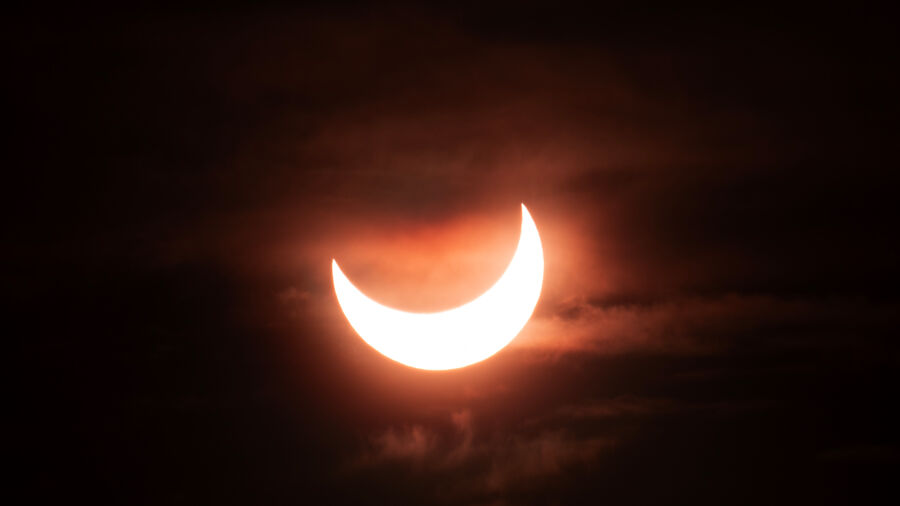
Archieffoto ter illustratie.
Technologie & Wetenschap
Op woensdag 12 augustus zal in België de grootste zonsverduistering sinds 1999 te zien zijn. Dat meldt Volkssterrenwacht Urania. Kort voor de zonsondergang zal de maan ongeveer 90 procent van de zon bedekken. Een zonsverduistering van dezelfde omvang zal in ons land pas opnieuw zichtbaar zijn in 2081.
De grootste zonsverduistering van deze eeuw maakt deze maand zijn opwachting. Op woensdag 12 augustus om 20.11 uur wordt ongeveer 88% van de zon bedekt door de maan, meldt Weeronline. In IJsland, Spanje en een klein deel van Portugal is sprake van een totale zonsverduistering.
De gedeeltelijke zonsverduistering begint in Nederland om 19.16 uur. De maan schuift voor de zon, die dan laag aan de horizon staat. Om 20.11 uur is de zon alleen nog aan de bovenkant voor een klein deel zichtbaar. Ongeveer een uur later is de gedeeltelijke verduistering helemaal voorbij. Het is nog niet duidelijk of de zonsverduistering daadwerkelijk goed te zien is; daarvoor is een heldere hemel noodzakelijk.
In het westen van IJsland is tegen het einde van de middag al een volledige zonsverduistering. In delen van Spanje wordt de zon tussen 20.26 en 20.32 uur volledig verduisterd. Tijdens een totale zonsverduistering verandert de heldere dag tijdelijk in de nacht. De helderste sterren kunnen zichtbaar worden en de temperatuur kan enkele graden dalen.
De eclips begint om 19.18 uur Belgische tijd, wanneer de maan voor het eerst de zon raakt. De bedekking neemt daarna geleidelijk toe terwijl de zon zakt. Om 20.13 uur bereikt de verduistering het maximum. Vanuit Brussel zal ongeveer 90 procent van de zon door de maan worden bedekt. Om 21.05 uur eindigt de eclips.
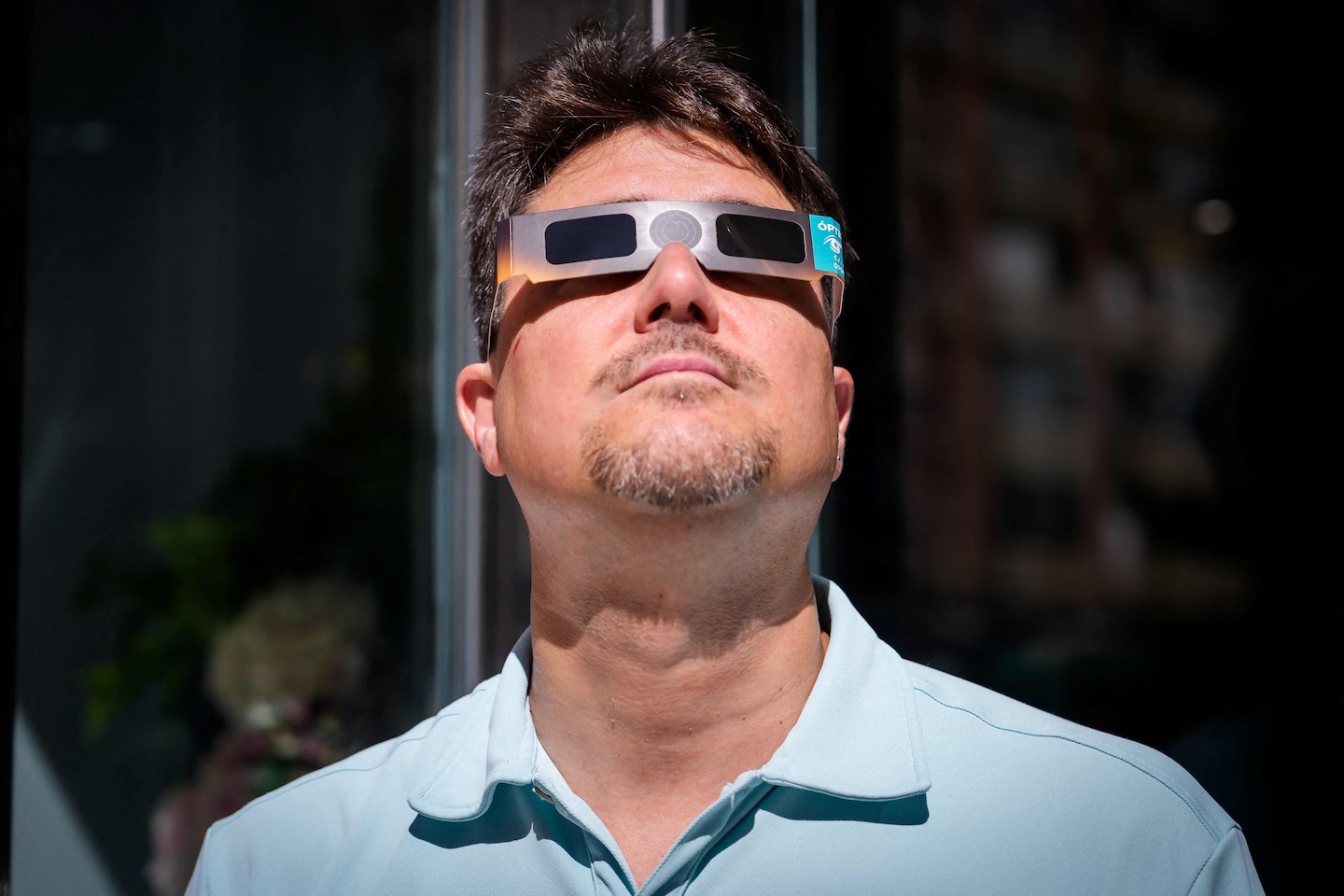
Volgens Urania groeit de belangstelling voor het natuurverschijnsel. Directeur Marc Van den Broeck stelt dat al 80.000 mensen een eclipsbril hebben gekocht.
Eclipsbril
Volgens Urania groeit de belangstelling voor het verschijnsel sterk. Directeur Marc Van den Broeck stelt dat al 80.000 mensen een eclipsbril hebben gekocht.
Wie op 12 augustus een vollédige zonsverduistering wil zien, moet naar Groenland, IJsland, Spanje of Portugal. De laatste volledige eclips in België dateert van 11 augustus 1999. Voor de volgende totale zonsverduistering in ons land is het nu wachten tot 25 mei 2142.
De Vlaamse volkssterrenwachten hebben een informatiebrochure samengesteld om jongeren te informeren over dat uitzonderlijke fenomeen. Die raadt de jeugd onder meer aan om nooit rechtstreeks naar de zon te kijken en de ogen te beschermen met een eclipsbril of zonnefilter, en is beschikbaar via de site www.eclips2026.be.
Hoe kan je naar een zonsverduistering kijken?
Om naar de zon te kijken, heb je altijd een speciale eclipsbril nodig. Kijk nooit rechtstreeks in de zon. Je kan er blijvende oogschade aan overhouden.
Ook een zonnebril is niet sterk genoeg. Die houdt het directe zonlicht wel tegen, maar laat toch nog schadelijke infrarode en uv-straling door, die ook blindheid kunnen veroorzaken.
Hetzelfde met andere "trucjes", zoals een cd of dvd. Ook die blokkeren zonlicht, maar laten toch nog schadelijke straling door. Lasglazen met een gradatie 13 of hoger, zijn wél geschikt om naar de zonsverduistering te kijken.
Het is niet veilig om rechtstreeks naar een zonsverduistering te kijken. Het weerbureau adviseert een eclipsbril om oogschade te voorkomen. "Een alternatief is het projecteren van het zonlicht op een vlak oppervlak, bijvoorbeeld met een vergiet of een vel papier met kleine gaatjes", aldus Weeronline.
Why MTV used NASA's Apollo 11 footage for its iconic launch intro
There's a special connection between MTV and Apollo 11
Jack Marsh
What do Teen Mom, Jackass, Beavis and Butt-Head, and Celebrity Deathmatch all have in common? Well, apart from all being follow-up programs for MTV Cribs, they've all also been welcomed onto the screen by Buzz Aldrin.
Yes, MTV programs have all been supported by NASAand Apollo 11 icon Buzz Aldrin, as the television platform has used the iconic space footage of the second man on the moon in its launch intros.
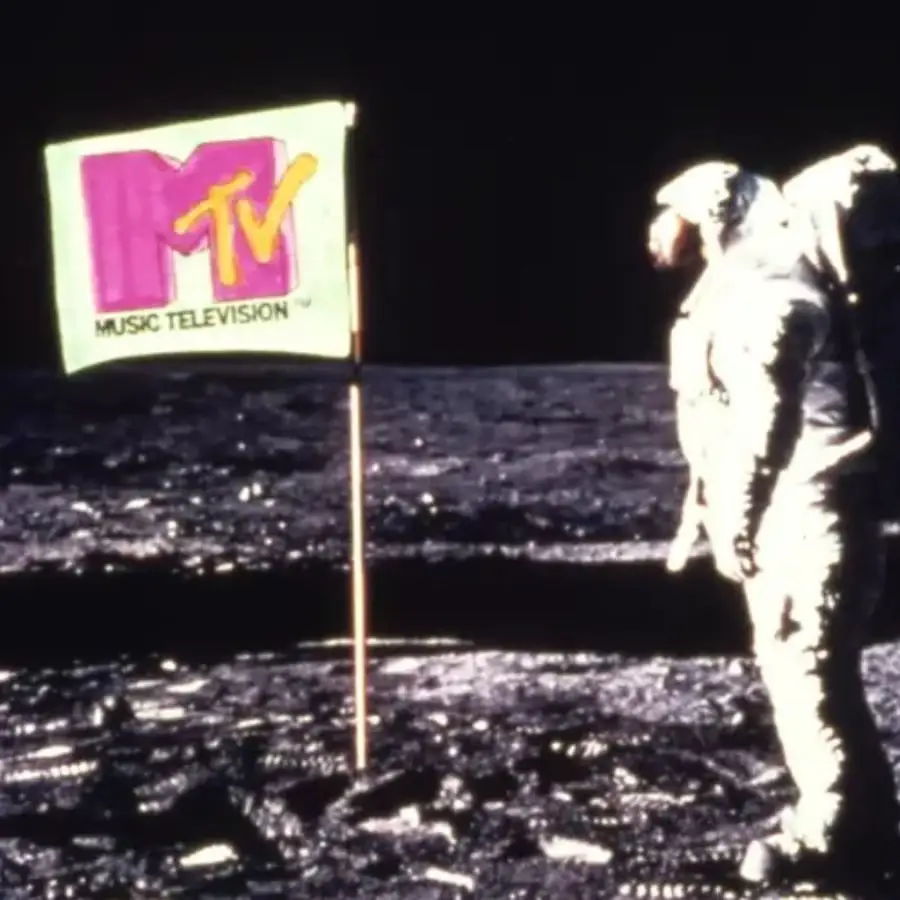
In fact, the first-ever sequence that aired on MTV back in 1981 saw Aldrin's likeness plant the MTV flag on the moon, a staple feature of the channel ever since.
Yet the reason why is lesser-known to the public and the countless celebrities that have hoisted the 'Moon Man' trophy.
What links MTV and NASA's Apollo 11?
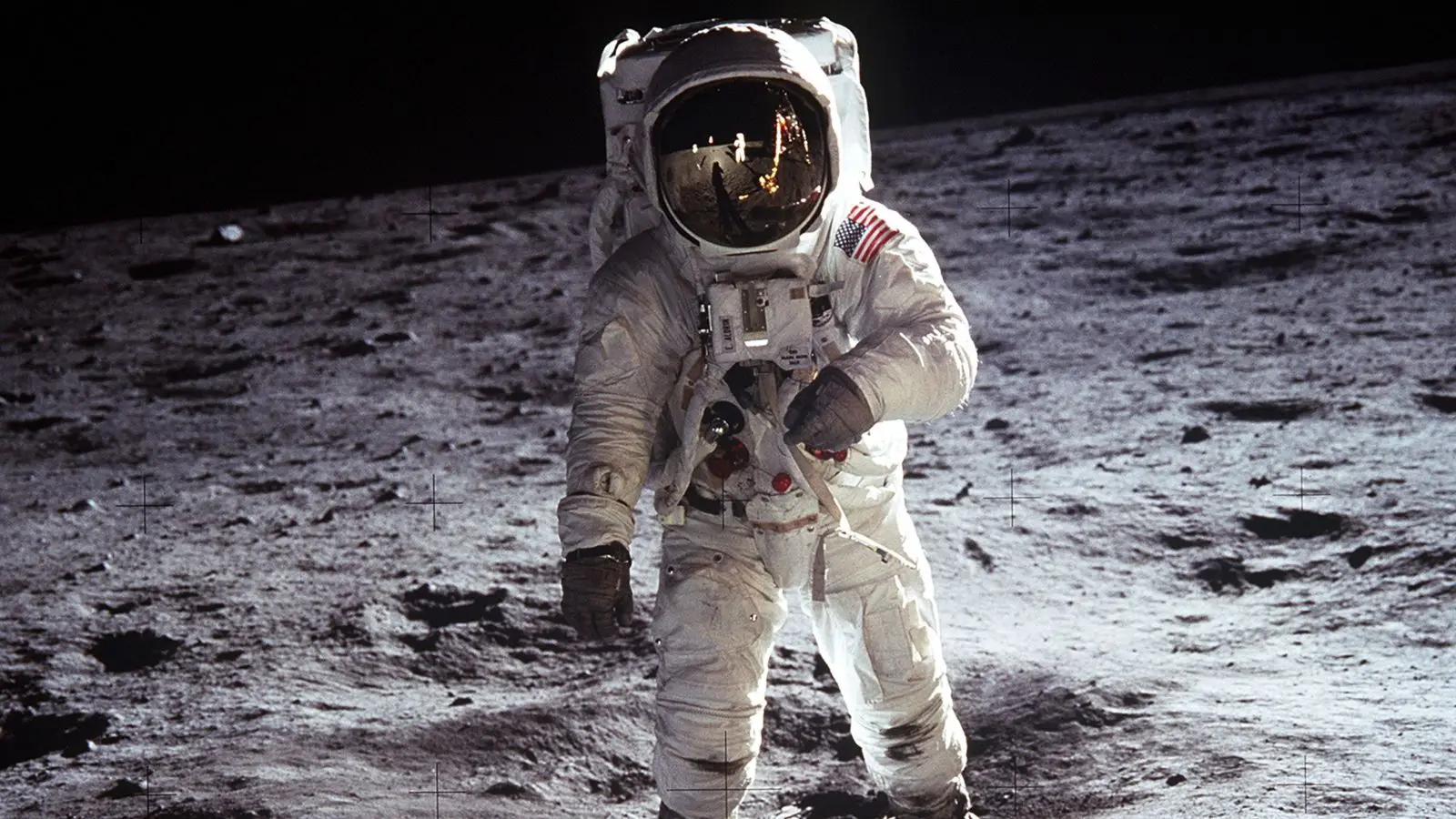
It's one of the most iconic photos of all time, but the first picture of men on the moon shows Buzz Aldrin's figure turning to face the camera held by Neil Armstrong.
The footage, also captured in video form, has always been free to use for all creative purposes as part of the public domain, and MTV chose to use it for their branding.
NASA
According to the Smithsonian National Air and Space Museum, MTV founder Bob Pittman claimed that the channel intended to be 'a network that would be about the network, rather than the individual programs,' and wanted to lead with the legendary slogan of 'That's one small step for man, one giant leap for mankind.'
However, having appealed to NASA and Armstrong's lawyers about using his quote, building their marketing and promotional decks before hearing back, MTV was blocked from adding the words to their slogan.
Instead, the intro was released without the words and simply saw an astronaut resembling Aldrin planting the MTV flag on the moon instead.
That clip ran for every hour for five years and continues to sporadically feature today.
Although nowadays, the 'Moon Man' has a different meaning for MTV.
A worthwhile trophy
Having introduced the Video Music Awards (VMAs) just a few years later, championing the best of the best in the music video medium, MTV even decided to use its newfound mascot as the likeness for the coveted award.
Getty Images / Alexi Rosenfeld
Some 42 years after the first ceremony, in which the winners consisted of icons like Michael Jackson and David Bowie, the Moon Man trophy continues to be hoisted by the likes of Ariana Grande and Lady Gaga.
"The whole idea was, the statue had to be balancing on one leg, like anti-gravity and floating,” said trophy creator Pat Gorman.
While the trophy has been remade many times, lining the cabinets of the legends of the music industry, MTV made a special one that even traveled to space, as Pepsi paid to have a VMA award statue flown to the Russian Mir space station, which featured in a live broadcast during the award ceremony in 1996.
From what was once just a free-to-use gimmick, the Moon Man is now a legend.
NASA’s Mars rover spots unexplained mystery on the Red Planet that's left scientists baffled
NASA's Curiosity rover discovered strange shapes on the surface of Mars
Rikki Loftus
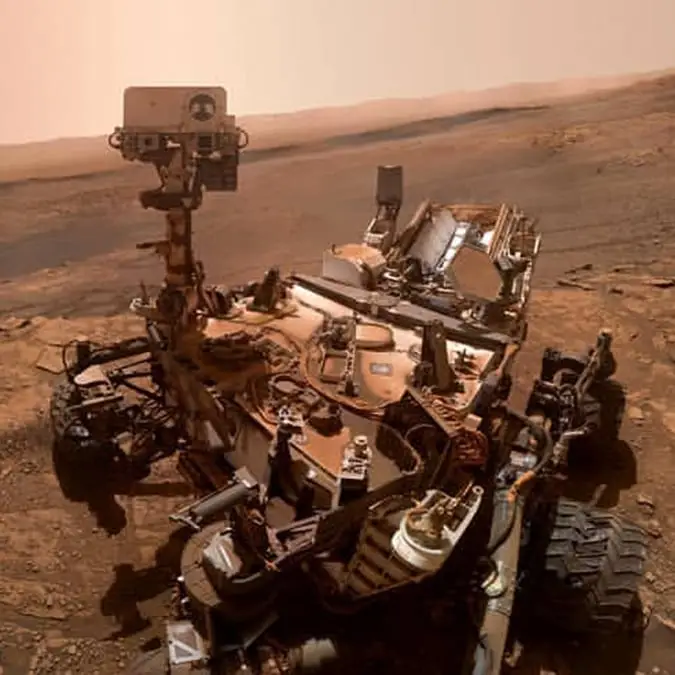
NASA’s Mars Curiosity rover has been roaming the Red Planet for nearly 14 years after it first landed back in August 2012.
Scientists have gained a lot of insight about our neighboring planet thanks to the rover and now, it seems that it has made a new unexplained discovery.
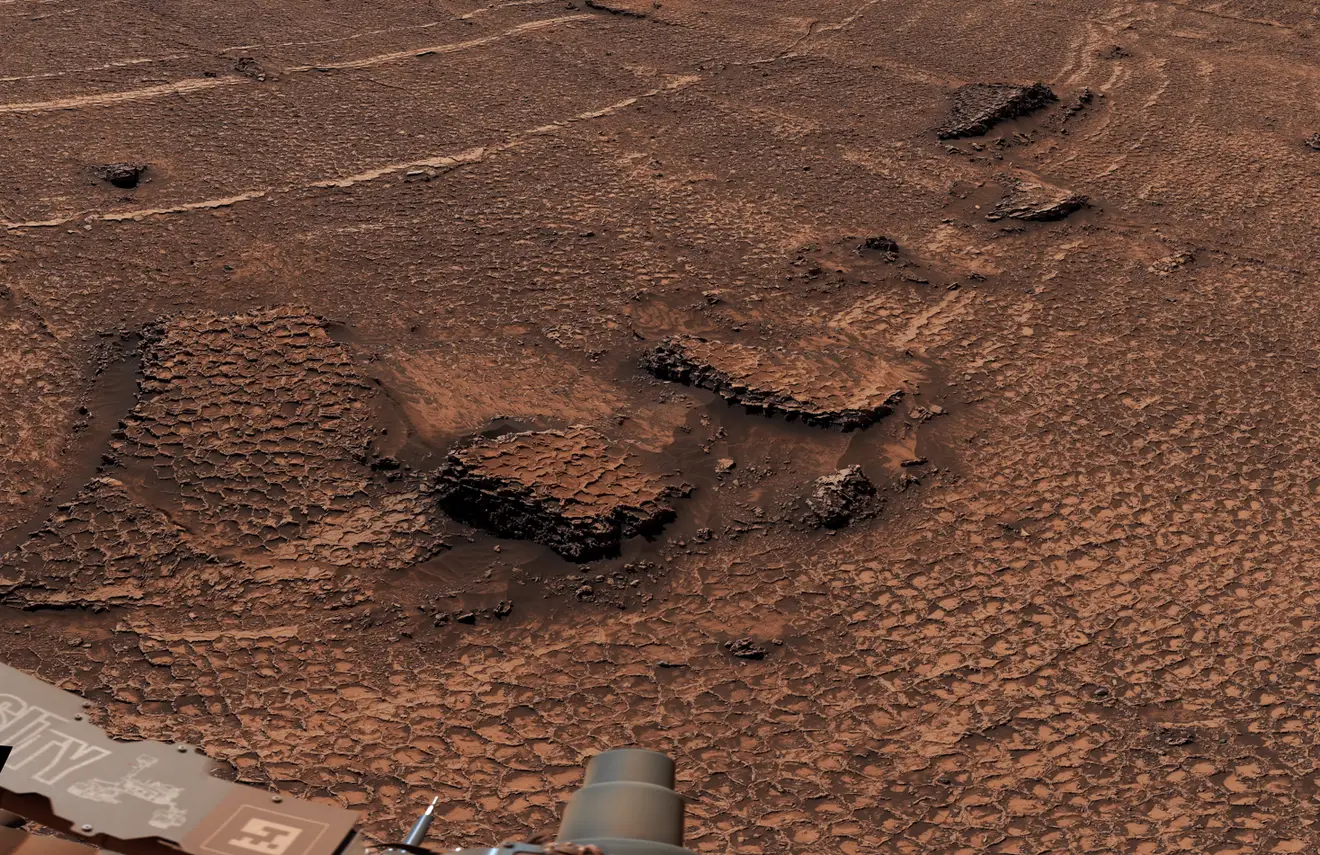
The mystery on Mars has left experts baffled after the vehicle came across ‘honeycomb-like’ patterns on the planet’s surface.
The discovery was made while the rover was exploring a particular valley on Mars known as Valle Grande when it stumbled upon mysterious polygonal shapes, whichNASAhas since described as a ‘field of honeycomb textures’.
NASA's Curiosity rover discovered strange shapes on the surface of Mars
(NASA/JPL-Caltech/MSSS)
In a statement, the mission’s project scientist, Ashwin Vasavada of NASA’s Jet Propulsion Laboratory in Southern California, said: “We’ve seen a lot of fascinating landscapes through Curiosity’s eyes, but this sea of polygons took our breath away.
“We measured their shapes and chemistry carefully and are hopeful there are clues in the data as to how these features formed.”
According to the space agency, Curiosity has found ‘small patches’ of these shape formations before but nothing to the scale of what was found at Valle Grande.
Some of the polygons spotted previously had clearly been ‘formed as mud cracks’, although there are a variety of processes which could contribute to the honeycomb texture.
This includes ‘cycles of warm and cold temperatures or compression that squeezed water out of the sediment when the surface was buried’.
In the statement, NASA continued: “In a 360-degree panorama that the rover captured on June 19 and 20, the 4,930th and 4,931st Martian days, or sols, of the mission, the polygonal shapes spread in all directions for as far as the rover can see. They even wrap around the sides of a nearby butte nicknamed ‘Miraflores’, which stands 20 feet (6 meters) tall and is topped with a thick cap of sand.”
However, this isn’t the only discovery made by the rover as, over the years, Curiosity has shined a light on never-before-seen parts of the Red Planet.
This includes sulfur crystals, meteorites and other geologic features of Mars that scientists previously had no idea about.
NASA added: “The rover has previously uncovered chemistry left over from Mars’ watery history, including carbon-based molecules believed to be precursors to RNA and DNA, two nucleic acids that carry genetic information. Scientists have no way of knowing whether these organic molecules were created by biologic or geologic processes - either path is possible - but their discovery reconfirmed that ancient Mars had the right chemistry to support life.”
RELATED VIDEOS
NASA Found Something Strange on Mars
NASA Just Found Something Strange on Mars… Scientists Are Stunned!
Rover Just Found Something NASA Didn't Expect... 🚀 #fascinatinginformation #redplanet
Claims that extraterrestrials influenced Earth’s distant past have fuelled debate, including controversial theories about the purpose of dinosaurs
What if the dinosaurs were never meant to rule Earth forever?
What if they were only one chapter in a plan that began hundreds of millions of years before humanity existed?
It sounds impossible.
Yet that is exactly what several whistleblowers, researchers, and investigative journalists have claimed for years.
Among them are Linda Moulton Howe and David Hatcher Childress, who have explored testimony suggesting Earth’s history may have been shaped by advanced extraterrestrial civilisations rather than natural evolution alone. If you would like to hear these claims presented directly by the people discussing them, you can watch the video included at the end of this article.
They may have been part of a much larger experiment.
And if even part of that story were ever proven true, it would force humanity to rethink everything it believes about its own origins.
Earth May Have Been a Living Laboratory for Experiments
Ancient Earth with diverse dinosaur species. Credit: Wikipedia
The story begins long before humans.
Long before the first mammals.
Even before the dinosaurs became Earth’s dominant life forms.
One of the most controversial claims comes from a former Defence Intelligence Agency analyst who allegedly stated that three competing extraterrestrial civilisations have been genetically influencing life on Earth for at least 270 million years.
Rather than allowing evolution to unfold naturally, these alleged visitors supposedly guided it.
Species appeared.
Others disappeared.
Entire ecosystems changed.
Within this narrative, Earth was never simply a planet where life evolved on its own.
It became a laboratory.
And that may have been only the beginning.
The Question That Could Change the Dinosaur Story
If dinosaurs were part of that programme…
Why did they disappear?
Mainstream science points to the asteroid impact that struck Earth around 66 million years ago.
The evidence supporting that event is extensive and remains the accepted explanation for the mass extinction.
But then comes perhaps the most astonishing claim of all.
Some alternative researchers argue the asteroid may not have been entirely natural.
Instead, they suggest an advanced civilisation either allowed the impact to happen—or deliberately influenced it—to make room for the next stage of life on Earth.
There is no publicly verified evidence supporting that claim.
Even so, it remains one of the most debated ideas within the UFO disclosure movement.
Because if the extinction was intentional…
Then the rise of humanity may not have been accidental.
The Alleged Genetic Programme Did Not End
If that theory sounds extraordinary, the next claim goes even further.
Linda Moulton Howe and other researchers have discussed testimony claiming that genetic intervention continued long after prehistoric life vanished.
Some whistleblowers describe multiple non-human groups conducting separate biological programmes over millions of years.
Others claim those efforts eventually focused on early human ancestors.
Supporters believe this could explain sudden leaps in intelligence and several unanswered questions surrounding human evolution.
Mainstream science reaches very different conclusions.
Researchers explain human development through genetics, fossils, and natural selection accumulated over immense periods of time.
Without independently verified evidence, extraterrestrial genetic engineering remains an extraordinary claim rather than an accepted scientific explanation.
Where Science Ends and the Greatest Mystery Begins
Ancient DNA research grows more advanced every year.
Our understanding of evolution also continues to evolve as fresh discoveries emerge.
At the same time, disclosure researchers argue that classified testimony deserves further investigation rather than immediate dismissal.
Neither position answers every question.
Why did certain evolutionary changes happen so rapidly?
Could every mass extinction be explained completely?
Have we already uncovered all of humanity’s origins?
Those questions keep the debate alive.
And perhaps that is why theories like these refuse to disappear.
Final Verdict: Were Dinosaurs Only the Beginning?
Today, no publicly verified scientific evidence supports the claim that extraterrestrials created the dinosaurs or directed Earth’s evolutionary history.
The accepted scientific explanation remains that dinosaurs evolved naturally and disappeared after a catastrophic asteroid impact changed the planet forever.
Yet the alternative story continues to capture imaginations around the world.
Because it asks a question that reaches far beyond dinosaurs themselves.
What if humanity has misunderstood the purpose of life on Earth from the very beginning?
If the dinosaurs were only one phase of a much larger experiment…
Who—or what—was waiting for the next one?
Watch the Video
You need to watch this. It explores the extraordinary claims presented by Linda Moulton Howe, David Hatcher Childress, and alleged intelligence insiders, examining theories that extraterrestrial civilisations may have genetically influenced life on Earth, the mystery surrounding the dinosaur extinction, and why some believe humanity’s true origins have been hidden for millions of years.
This explosive panel discussion brings together Linda Moulton-Helm, David Hatcher, and whistleblowers to unpack evidence that challenges everything we’ve been taught about human origins. From a DIA analyst who claimed three competing extraterrestrial civilizations have been mixing genes on Earth for at least 270 million years, to the puzzling question of the six-mile asteroid and how it may have been allowed or provoked, this video stitches archaeology, whistleblower testimony, and stellar anomalies into a single, unsettling narrative.
We examine obelisks as massive quartz antennas, the strange wooden pyramids cropping up across Russia, underwater monoliths off Sicily, and the vast underground structures at Tiwanaku and Puma Punku. The panel also raises Antarctica as a potential disclosure flashpoint — whistleblowers and a Navy SEAL imply non-human encounters and concealed sites that could shatter the official timeline.
If you follow UFOs, alien disclosure, government secrets, ancient monuments, and secret technologies, this episode connects dots across DNA manipulation, ancient engineering, and classified knowledge. Subscribe for more deep-dive investigations and witness testimony as we continue to track the evidence governments won’t explain.
NASA Data On The Moon Just Dropped — The Truth Is Worse Than Expected
New NASA measurements hint at unexpected lunar conditions, raising questions about what scientists may have misunderstood.
For years, the far side of the Moon has been described as one of the least understood regions in near-Earth space. Unlike the hemisphere constantly visible from Earth, this hidden area remained largely unexplored until modern probes began returning detailed measurements. Recent datasets linked to NASAmissions have revived debate about unusual formations detected within shadowed terrain and deep crater interiors.
What makes the situation unusual is not a single observation, but a collection of anomalies. Thermal inconsistencies, radar reflections, and localized magnetic signatures appear scattered across the landscape. Each finding has a plausible explanation, yet viewed together they form a pattern that some observers consider difficult to ignore. The absence of a unified interpretation fuels speculation.
High-resolution imagery has added another layer to the mystery. Certain ridges and lines appear unusually straight compared to surrounding terrain. Researchers often attribute these to geological fracturing, but critics argue that the precision seems unexpectedly organized. Without direct exploration, the discussion remains unresolved.
Compounding the intrigue is the limited follow-up commentary. Technical data is released, but broad conclusions remain cautious. For those inclined toward speculative interpretations, the gap between measurements and official explanations creates fertile ground for alternative theories about hidden structures.
Some of the most discussed observations involve linear formations within permanently shadowed craters. These features appear aligned in ways that contrast with surrounding chaotic terrain. Natural fracturing can produce straight edges, yet the apparent symmetry continues to attract attention.
Researchers analysing imagery suggest that lighting angles may exaggerate perceived structure. When shadows stretch across uneven ground, ridges can appear more uniform than they actually are. This optical effect may explain the visual consistency.
Alternative interpretations propose that these formations could represent collapsed surface layers above subsurface cavities. While hypothetical, the idea reinforces speculation about complex underground features.
Radar Signals Hinting at Hollow Spaces
Radar mapping has revealed regions where signals penetrate deeper than expected. These readings often indicate voids or less dense material below the surface. Scientists commonly interpret these as lava tubes formed by ancient volcanic activity.
Some scans suggest unusually large cavities. These appear more interconnected than isolated pockets, which has drawn attention from researchers studying subsurface geology.
Without direct entry, the exact nature of these voids remains uncertain. They could represent natural tunnels, though their scale continues to inspire broader interpretations.
Thermal Anomalies in Permanent Darkness
Permanently shadowed areas are expected to maintain extremely low temperatures. Yet certain locations show slight variations. These differences are small but consistent enough to raise interest.
Scientists propose that subsurface composition or insulation effects may explain the warmth. Another possibility involves buried voids altering heat retention.
Speculative interpretations suggest internal cavities could create unique thermal signatures. This remains unconfirmed but contributes to ongoing debate.
Magnetic Patches That Defy Expectations
The Moon lacks a global magnetic field, yet localized regions of magnetism exist. These areas are often linked to ancient impacts or magnetized rock.
Some anomalies appear clustered rather than randomly distributed. This pattern has prompted discussion about unusual subsurface composition.
Geological explanations remain most likely, though the distribution keeps speculation active.
Unusual Surface Density Readings
Certain areas display higher-than-expected density measurements. These readings suggest compacted layers beneath the surface.
Such variations could result from ancient lava flows or compressed regolith. However, uniformity in some zones appears distinctive.
One interpretation suggests dense layers covering hollow spaces, creating contrasts detected by instruments.
Limited Imaging Coverage Fuels Speculation
Not all regions have equal high-resolution coverage. Mission priorities often focus on specific scientific targets.
Uneven coverage has led to claims that certain areas remain under-documented. There is no evidence supporting this, yet the perception persists.
The absence of continuous imaging allows speculation to grow in unexplored gaps.
Historical Rumours Resurface
Stories about unusual formations on the far side date back decades. Early low-resolution imagery sparked imagination long before modern missions.
As new data emerges, earlier claims resurface and merge with contemporary findings. This combination strengthens speculative narratives.
Despite this, no official confirmation supports extraordinary interpretations.
Future Missions May Reveal More
Upcoming lunar missions aim to map the surface with greater precision. Improved radar and imaging could clarify existing anomalies.
Exploration of potential lava tubes is also being considered. These structures may offer natural shelter for future operations.
Whether these efforts confirm natural geology or something unexpected, they will likely reshape the discussion.
Could Hidden Structures Exist?
The combination of geometric patterns, radar voids, and thermal variations keeps speculation alive. Individually, each observation has a scientific explanation. Together, they form a puzzle inviting further study.
The far side remains difficult to access, making definitive answers slowly to arrive. Until direct exploration occurs, interpretations will remain divided.
For now, the Moon continues to hold unanswered questions beneath its surface. Whether these anomalies represent natural formations or something more unusual remains open.
Watch This:
Watch the video for a breakdown of lunar anomalies, radar findings, and why some believe hidden structures may exist on the Moon’s far side.
The Moon's Mysteries Revealed | Ancient Aliens | History
NASA Data About the Moon Has Just Been Released — The Truth Is Worse Than Expected
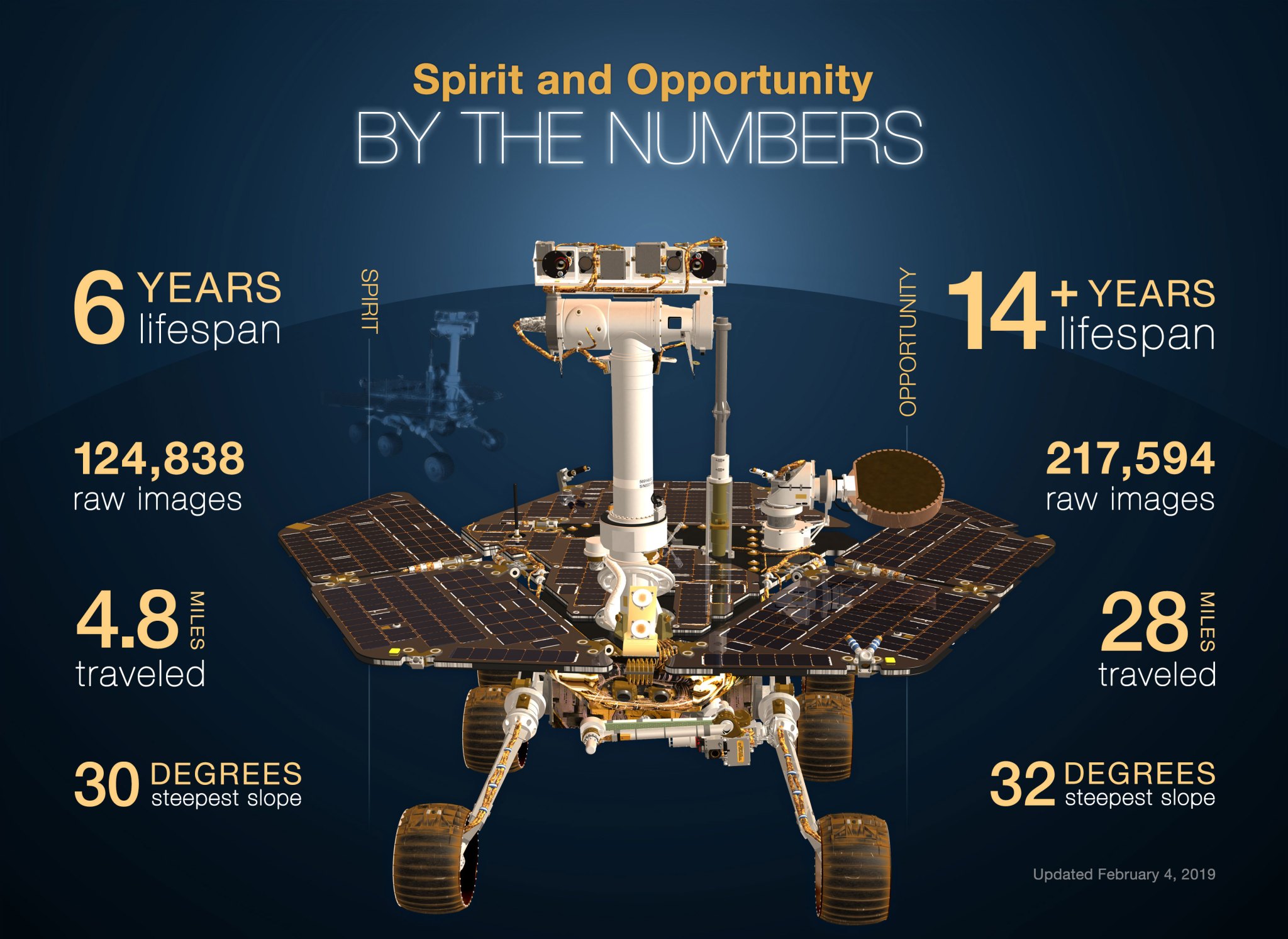
A new look at more than two decades’ worth of archival data from NASA’s Spirit mission suggests that the Martian soil may hold iron-bearing minerals — hematite and altered magnetite — that were too faint for scientists to detect in real time during the mission.
NASA’s Spirit rover on Mars.
Image credit: NASA.
“From early 2004, Spirit Rover explored the surface of Gusev crater on Mars carrying a suite of scientific instruments to perform geological and mineralogical analysis on soils, rocks, meteorites, and dust collected by magnets,” said Professor Paulo de Souza, a researcher at Edith Cowan University.
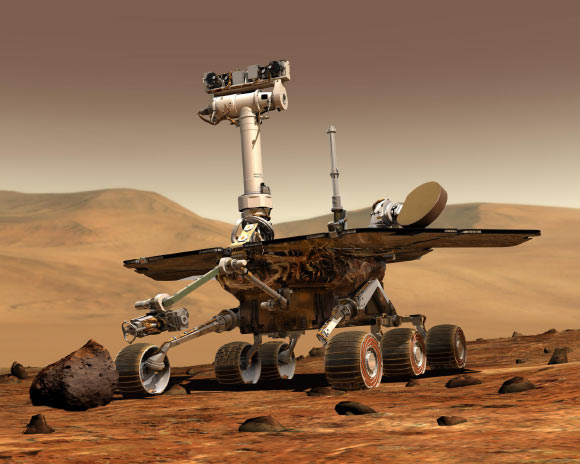
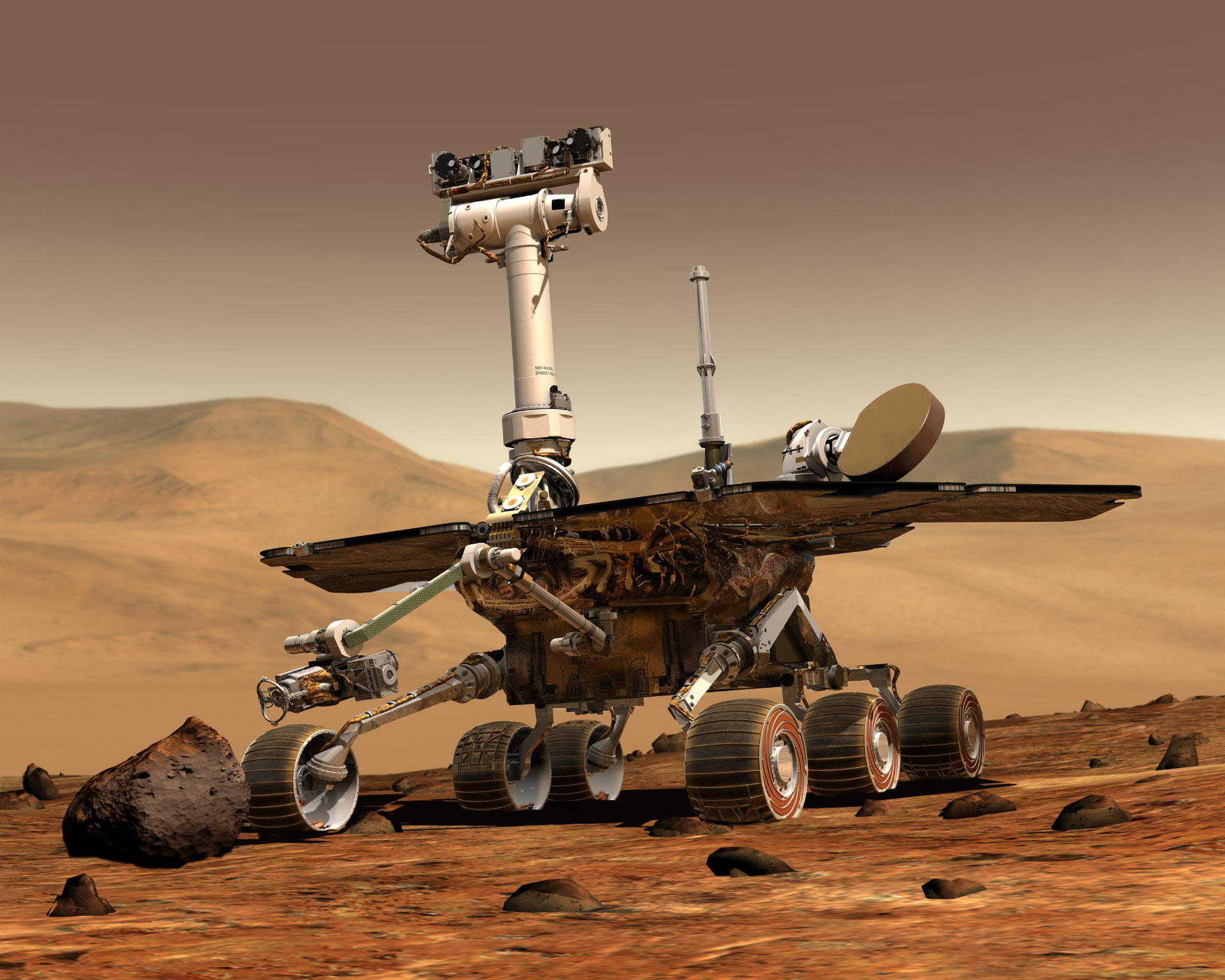
A 3D model of the twin Mars Exploration Rovers, Spirit and Opportunity.
NASA Visualization Technology Applications and Development (VTAD)
“Among these instruments, a miniaturized Mössbauer spectrometer named MIMOS II was extensively used.”
“During the next 2062 sols, NASA’s Mars Exploration Rovers traversed the surface of the Red Planet with the objective of determining if Mars was once wet.”
In a new study, Professor de Souza revisited data collected by the MIMOS II spectrometer, which can identify iron-bearing minerals by measuring how iron atoms in a sample absorb gamma rays.
Because the Spirit rover had to share limited time, power and memory among a full suite of science instruments, individual Mössbauer measurements on Mars were often brief, producing spectra with relatively poor statistics.
This made it difficult to spot minor iron phases that made up only a small fraction of a soil sample’s mineral content.
To work around that limitation, Professor de Souza combined readings from 32 undisturbed soil targets that Spirit examined at Gusev crater over the course of 2,062 Martian days, spanning temperatures from 180 to 300 K.
Because temperature swings within about a 10-K range don’t meaningfully distort the spectra of basaltic material, the researcher merged data across those windows first, then combined all the temperature ranges into one composite spectrum.
The result was roughly six days worth of equivalent measurement time packed into a single dataset.
The consolidated spectrum pointed to the presence of common Martian soil minerals such as olivine and pyroxene, along with a poorly crystalline, paramagnetic iron-bearing phase.
But it also revealed clearer signatures of magnetite and crystalline hematite than earlier single-experiment analyses were able to pick out.
“One of the most important discoveries was finding crystalline hematite in ordinary Martian soil,” Professor de Souza said.
“This mineral’s widespread presence suggests not only that water was present, but that significant areas of Mars may have once been covered by water.”
The study was published in the journal Interactions.
P. de Souza. 2026. A consolidated Mössbauer spectrum for undisturbed soils from Gusev Crater, Mars. Interactions 247, 278; doi: 10.1007/s10751-026-02625-4
NASA’s Spirit and Opportunity rovers were identical twin robots that helped rewrite our understanding of the early history of Mars.
Scientists Think Mars Once Had Water. So What Happened to It?
Al tientallen jaren speuren astronomen de hemel af naar radiosignalen die kunnen wijzen op buitenaardse intelligentie. Maar mogelijk hebben ze daarbij een groot deel van het radiospectrum over het hoofd gezien. Nieuw onderzoek wijst uit dat juist hogere radiofrequenties interessant kunnen zijn in de zoektocht naar technologische signalen van andere beschavingen.
Het merendeel van de SETI-programma’s (Search for Extraterrestrial Intelligence) richt zich al jaren op radiofrequenties tussen 1,42 en 1,66 gigahertz. Deze bandbreedte staat bekend als de waterput, omdat het tussen de natuurlijke radiofrequenties van waterstof en hydroxyl in ligt, die samen water vormen.
Wetenschappers beschouwen dit als een logische frequentie om naar buitenaardse signalen te zoeken. Een technologisch geavanceerde beschaving zou immers het belang van waterstof en hydroxyl kunnen herkennen en daarom juist in dit relatief rustige deel van het radiospectrum zenden én luisteren. Maar volgens de nieuwe studie is het tijd om de blik te verruimen.
Vrijwel onontgonnen terrein
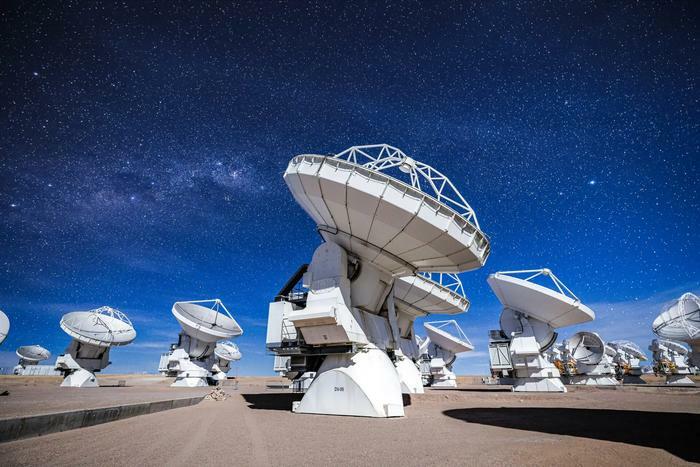
Voor haar onderzoek gebruikte Louisa Mason, promovenda aan de Universiteit van Manchester, archiefgegevens van de Atacama Large Millimeter/submillimeter Array (ALMA) in Chili. Daarmee voerde ze de eerste SETI-studie ooit uit met deze telescoop.
In plaats van nieuwe waarnemingen te doen, analyseerde ze bestaande ALMA-data die oorspronkelijk voor heel andere astronomische onderzoeken waren verzameld. Ze zocht daarin naar smalbandige radiosignalen die eerder op technologie dan op natuurlijke astronomische processen wijzen.
“Decennialang hebben SETI-onderzoeken zich geconcentreerd op een relatief klein deel van het radiospectrum”, zegt Mason. “Wij wilden onderzoeken wat er gebeurt als we op een heel andere plek gaan zoeken.” Volgens haar zijn de millimeter- en submillimetergolflengten vrijwel volledig onontgonnen binnen SETI. “Het gaat erom een heel nieuw onderzoeksgebied te starten.”
Mason onderzocht twee kleine frequentiegebieden binnen ALMA’s zogeheten Band 3-waarnemingen. Daarbij werden geen technologische signalen gevonden die voldeden aan de gestelde detectiecriteria.
Dat betekent volgens haar echter niet dat buitenaardse intelligente beschavingen niet bestaan. De studie onderzocht maar een klein deel van het frequentiebereik en maakte bovendien gebruik van slechts vier gearchiveerde ALMA-waarnemingen. Wel laat het onderzoek zien dat telescopen die op hogere radiofrequenties werken in de toekomst een waardevolle aanvulling kunnen vormen op bestaande SETI-programma’s.
Veel meer sterren dan gedacht
En het onderzoek leverde nog een opvallend resultaat op. Wanneer astronomen een telescoop op één object richten, komen automatisch ook talloze andere sterren binnen het gezichtsveld terecht. Die zogeheten stellar bycatch blijkt veel groter te zijn dan gedacht.
Tot nu toe maakten onderzoekers vaak gebruik van sterrencatalogi, zoals Gaia, om te bepalen hoeveel sterren daadwerkelijk waren onderzocht. Mason koos een andere aanpak en gebruikte het Besançon Galactic Model. Daarmee kon ze ook sterren meenemen die te zwak, te ver weg of te moeilijk te identificeren zijn om in bestaande catalogi voor te komen.
Beter beeld
Toen ze deze methode toepaste op een eerdere SETI-survey met 1327 telescoopwaarnemingen, bleek het aantal onderzochte sterren niet ongeveer 288.000, zoals op basis van Gaia werd aangenomen, maar ruim 6,1 miljoen. Volgens Mason geeft dat een veel realistischer beeld van hoeveel van onze Melkweg daadwerkelijk is onderzocht op mogelijke technologische signalen. “Een van de spannendste resultaten van dit werk is dat we ons realiseren dat we veel meer sterren hebben onderzocht dan we aanvankelijk dachten”, zegt ze.
“Zelfs een heel kleine waarneming kan een enorme hoeveelheid en diversiteit aan sterren bevatten die we oorspronkelijk helemaal niet van plan waren te bestuderen. Door waarnemingen op hogere frequenties te combineren met galactische simulaties krijgen we een veel beter beeld van wat we daadwerkelijk hebben onderzocht en waar we vervolgens moeten zoeken.”
Mason ziet het niet als een teleurstelling dat er geen buitenaardse radiosignalen zijn opgepikt. Volgens haar laat het onderzoek vooral zien dat de zoektocht naar technologische signalen nog veel breder kan worden opgezet dan tot nu toe het geval was.
Ze hoopt dan ook dat toekomstige SETI-projecten niet alleen vaker hogere radiofrequenties onderzoeken, maar ook beter gebruik maken van de enorme hoeveelheid astronomische archiefgegevens die al beschikbaar is. Bestaande waarnemingen bevatten mogelijk veel meer informatie dan gedacht.
Mystery 'flying saucer' zooms within feet of passenger jet over UK airport
Official UK aviation reports reveal alarming close encounters between pilots and mysterious UFOs, including a 'flying saucer' lurking near a London airport
An Airbus passenger jet coming in to land at London Gatwick was approached by an unidentified disc-shaped object
(Stock image)(Image: Getty Images)
Pilots flying commercial aircraft in the UK have detailed terrifyingly close encounters with unidentified flying objects and suspected drones, official reports show. In one alarming incident, an Airbus passenger jet coming in to land at London Gatwick was approached by an unidentified disc-shaped object.
Details released by the UK Airprox Board state: "The A319 pilot reports that descending, turning left, a disc or 'flying saucer' type suspected drone was seen flying very close in the opposite direction, at the same level to them, past their right wing.
"Approximately 100-300ft from their aircraft wing. The object looked like adisc with darker markingson the rim, a suspected possible drone but not sure. It was very close to the aircraft, but no evasive action was required as they were in a turn already."
An assessment of the near-miss at Gatwick concluded that the safety of the jet had been 'reduced'
(Stock image)(Image: Getty Images)
Following an assessment of the near-miss, the board concluded that the safety of the jet had been "reduced", according to The Sun.
A separate incident occurring in the same month near Heathrow Airport involved an A321 aircraft whose crew spotted a drone passing dangerously close.
Official documents state: "The A321 pilot reports that, whilst in a left turn on to base leg at LHR (over Marlow), a drone was witnessed to fly down the left-hand-side of the aircraft at close enough proximity to see details such as the colour, shape and individual props spinning."
A separate incident occurred in the same month near Heathrow Airport
(Image: alxpin via Getty Images)
Investigating the close call, Airprox officials said: "The board considered that providence had played a major part in the incident and/or a definite risk of collision had existed."
The reports follow another striking encounter detailed by the board involving military personnel.
Two Royal Air Force pilots operating an air-to-air refuelling mission at 16,000ft over the North Sea off the Norfolk coast spotted an unidentified craft.
One pilot inside a Voyager tanker was forced to duck as the object zoomed past at a distance of just 100ft to 150ft.
Although the pilot of an accompanying Typhoon fighter also witnessed the object, it failed to show up on radar systems.
RELATED
Pilot spots “flying saucer” near London Gatwick Airport 👽
Meer van UFO'S of UAP'S, ASTRONOMIE, RUIMTEVAART, ARCHEOLOGIE, OUDHEIDKUNDE, SF-SNUFJES EN ANDERE ESOTERISCHE WETENSCHAPPEN - DE ALLERLAATSTE NIEUWTJES