Ontdek de Fascinerende Wereld van UFO's en UAP's: Jouw Bron voor Onthullende Informatie!
Ben jij ook gefascineerd door het onbekende? Wil je meer weten over UFO's en UAP's, niet alleen in België, maar over de hele wereld? Dan ben je op de juiste plek!
België: Het Kloppend Hart van UFO-onderzoek
In België is BUFON (Belgisch UFO-Netwerk) dé autoriteit op het gebied van UFO-onderzoek. Voor betrouwbare en objectieve informatie over deze intrigerende fenomenen, bezoek je zeker onze Facebook-pagina en deze blog. Maar dat is nog niet alles! Ontdek ook het Belgisch UFO-meldpunt en Caelestia, twee organisaties die diepgaand onderzoek verrichten, al zijn ze soms kritisch of sceptisch.
Nederland: Een Schat aan Informatie
Voor onze Nederlandse buren is er de schitterende website www.ufowijzer.nl, beheerd door Paul Harmans. Deze site biedt een schat aan informatie en artikelen die je niet wilt missen!
Internationaal: MUFON - De Wereldwijde Autoriteit
Neem ook een kijkje bij MUFON (Mutual UFO Network Inc.), een gerenommeerde Amerikaanse UFO-vereniging met afdelingen in de VS en wereldwijd. MUFON is toegewijd aan de wetenschappelijke en analytische studie van het UFO-fenomeen, en hun maandelijkse tijdschrift, The MUFON UFO-Journal, is een must-read voor elke UFO-enthousiasteling. Bezoek hun website op www.mufon.com voor meer informatie.
Samenwerking en Toekomstvisie
Sinds 1 februari 2020 is Pieter niet alleen ex-president van BUFON, maar ook de voormalige nationale directeur van MUFON in Vlaanderen en Nederland. Dit creëert een sterke samenwerking met de Franse MUFON Reseau MUFON/EUROP, wat ons in staat stelt om nog meer waardevolle inzichten te delen.
Let op: Nepprofielen en Nieuwe Groeperingen
Pas op voor een nieuwe groepering die zich ook BUFON noemt, maar geen enkele connectie heeft met onze gevestigde organisatie. Hoewel zij de naam geregistreerd hebben, kunnen ze het rijke verleden en de expertise van onze groep niet evenaren. We wensen hen veel succes, maar we blijven de autoriteit in UFO-onderzoek!
Blijf Op De Hoogte!
Wil jij de laatste nieuwtjes over UFO's, ruimtevaart, archeologie, en meer? Volg ons dan en duik samen met ons in de fascinerende wereld van het onbekende! Sluit je aan bij de gemeenschap van nieuwsgierige geesten die net als jij verlangen naar antwoorden en avonturen in de sterren!
Heb je vragen of wil je meer weten? Aarzel dan niet om contact met ons op te nemen! Samen ontrafelen we het mysterie van de lucht en daarbuiten.
This image from the ESA's MASTER (Meteoroid and Space Debris Terrestrial Environment Reference) risk-assessment tool shows the dangerous debris orbiting Earth. Image Credit: IRAS/TU Braunschweig
What can we do about space junk? We know how much debris is in orbit, and we know the problem is getting worse. It’s our fault.
Our Earth now has a halo of orbital debris, and the ESA has a plan to stop contributing to the problem.
You can only kick a can down a road for so long before you’re tripping over all the cans. While politicians seem particularly adept at kicking them into the future and then blaming the other side when we’re ankle-deep in pesky cans, people in scientific pursuits don’t have the same luxury of intellectual dishonesty.
“Behaviours in space have to change.”
-ESA
We’re all aware of the space debris problem, and we know it’s getting worse. We’ve been launching satellites at an increased pace in the last few years. When combined with all of the satellites launched in prior decades, the result is a congested area that’s getting more crowded by the month. And like empty cans kicked into the future, many of the objects in orbit are no longer functioning or serving any purpose. They’re just there. If only someone had seen this coming.
But at least the ESA is committing to a plan to stop putting more debris in space.
“130 million pieces of space debris larger than a millimetre orbit Earth, threatening satellites now and in the future,” the ESA writes. “Once a week, a satellite or rocket body reenters uncontrolled through our atmosphere. Behaviours in space have to change.”
There’s not much of an argument that things need to change. But in an international world where not all countries want to cooperate and where private companies are responsible for a growing amount of stuff in space, change is tricky.
The ESA is setting a new standard for itself. They call it the “Zero Debris Approach.”
The space debris problem isn’t something that exists down the road. In 2009, two satellites collided over Siberia. One was defunct, but one was active. Besides destroying an active Iridium satellite, the collision created a whole bunch more debris. Perhaps the most troubling part is that the collision was predicted. In fact, of all the satellites that come close to each other, these two weren’t even in the top 200 satellites in dangerous proximity to one another.
“Arguably, the best approach is adopting practices that prevent creating debris in the first place,” an article in American Scientist said at the time.
There’s also the growing risk that even without any additional launches, collisions between existing debris will still make the problem worse. “It has been estimated that even in the case of no further launches into orbit, collisions among the existing space objects can lead to further growth in space debris population,” the ESA writes. The worst possible outcome is the Kessler syndrome, where collisions produce more debris that leads to a growing cascade of collisions that ultimately makes Earth orbit unusable.
American astrophysicist Donald Kessler predicted the Kessler syndrome back in 1978. In 2012, he co-authored an article saying that we’re already passed the tipping point for orbital debris. “That runaway debris generation scenario, often called the Kessler syndrome, may seem far off,” the article said. “But in fact, the sheer density of derelict objects in orbit has already exceeded what many consider to be the mathematical point of no return.”
This illustration depicts the Kessler Syndrome, named after American astrophysicist Donald Kessler. In 2012, Kessler co-authored an article warning that we’re already at the tipping point. Image Credit: ESA
There’s lots of talk about developing systems to remove existing space debris, especially larger pieces like intact satellites. There’s talk of harpoons, robotic arms, and even using other satellites to move debris into graveyard orbits. But there’s not much action to stop adding more debris.
Now, here we are, almost 15 years since the collision, and at least the ESA got the message.
“We are seeing a dramatically increased use of space, but still insufficient technology to prevent the risks that follow. Our aim to become debris neutral in just a few years will require clearing precious Earth orbits once a mission is complete, and if the mission fails to do this, it must be actively removed by dedicated vehicles,” explains Holger Krag, ESA’s Head of Space Safety.
This figure shows the amount of debris in space and what type it is. Image Credit: ESA
Krag likens it to the backcountry hiker’s motto: pack out what you pack in. “We are aiming for rules that compare to every national park on Earth – what you bring in, you must take with you when you leave.”
The ESA’s Zero Debris Approach starts with mission design. In 2022, the ESA undertook a large study involving all of their sites across Europe as well as 270 experts from industry, governmental agencies and academia. The study produced recommendations to help the ESA reach Zero Debris by 2030. The recommendations form the basis of the recently published ‘ESA Space Debris Mitigation Requirements.’
Here are the eight recommendations in the document:
Guarantee successful disposal
Improve orbital clearance
Avoid in-orbit collisions
Avoid internal break-ups
Prevent the intentional release of space debris
Improve on-ground casualty risk assessment
Guarantee Dark and Quiet skies
Beyond the protected regions (This includes GNSS constellations and lunar orbits.)
That’s a pretty comprehensive list, and it should be. We rely heavily on satellites, but many of us never think about them. They’re an important structural element in modern society.
“As space infrastructure has become the backbone of our modern society, the proliferation of space debris is threatening our way of life. Now is the time to act as a community to channel our collective efforts,” said ESA Director General Josef Aschbacher. “To implement the Zero Debris Charter, ESA will focus on developing ground-breaking technologies for satellite end-of-life disposal, in-orbit servicing and active debris removal. In addition, ESA will work hand-in-hand with institutions in charge of regulatory aspects.”
So, where are the rest of the world’s space agencies on this issue? NASA has made lots of statements about ‘limiting’ orbital debris and even has an office dedicated to the problem. But they haven’t taken the same type of bold step the ESA has.
China? They’re working on ways to de-orbit space junk successfully. But again, no bold, clear language commitment. ISRO? India’s set up a Centre for Space Debris Research, but they’ve made no promises about not adding to the problem.
How about Russia? Does what’s left of Roscosmos’ corpse have any plans? They make all kinds of statements, but nobody believes them. Especially since they keep messing with everyone else’s satellites.
You’ve gotta hand it to the ESA. Even though they’re an organization made up of 22 separate nations, they’ve come together and are the ones leading the charge on this issue.
NASA benadrukt een ongelooflijke foto van de Krabnevel gemaakt door de James Webb
NASA benadrukt een ongelooflijke foto van de Krabnevel gemaakt door de James Webb (NASA, ESA, CSA, STScI; Tea Temim (Princeton University) // NASA – APOD)
Op de afbeelding is de Krabnevel, officieel gecatalogiseerd als M1, in al zijn pracht te zien dankzij de geavanceerde infraroodcamera’s van de James Webb, waarbij de helderheid, de wolk en de gefragmenteerde restanten van de explosie van een massieve ster in 1054 worden benadrukt.
In het midden bevindt zich een van de meest ongelooflijke objecten die astronomen kennen, de Krabpulsar, een neutronenster die ongelooflijk 30 keer per seconde draait en zichtbaar is als een helder punt.
De Krabnevel staat bovenaan de lijst van de 18e eeuw van Charles Messier, samengesteld uit hemellichamen die geen kometen zijn.
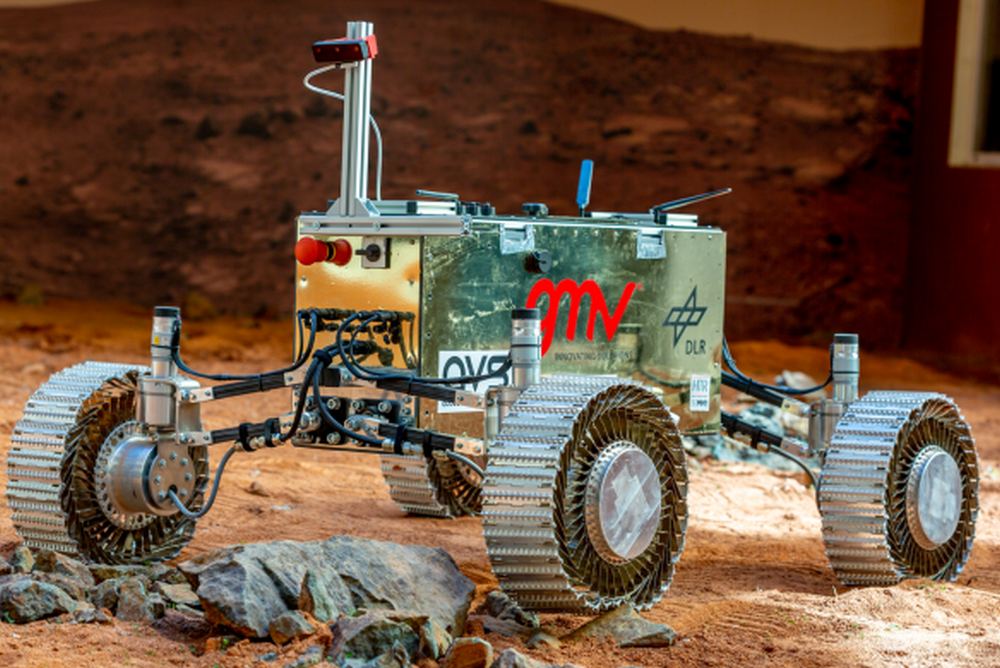
ESA is Testing a Modular Multipurpose Rover that Could Be a Science Lab or a Tiny Bulldozer
Most rovers have been built for Mars, and each one of them is a complex machine designed with specific goals and terrains in mind. But the Moon is different than Mars. We’re not searching for life there; we’re trying to establish a presence.
In recognition of the difference, the ESA is developing modular rovers that can serve different needs with only small modifications.
It’s called the European Moon Rover System (EMRS), and its goal is to “develop a versatile surface mobility solution for future lunar missions,” according to newly published papers. The surface mobility systems will serve four upcoming ESA missions: the Polar Explorer (PE), In-Situ Resource Utilization (ISRU), Astrophysics Lunar Observatory (ALO) and Lunar Geological Exploration Mission (LGEM).
Each of the four missions has specific requirements, including placing scientific instrumentation at the lunar south pole, excavating and transporting over 200 kg (440 lbs) of regolith, building an astrophysical observatory on the far side of the Moon, and studying the Moon’s volcanic history. The ESA is developing a rover that uses modularity to meet each goal rather than a completely different rover.
The new modular lunar rover design will have to move lunar regolith as part of building the Astrophysics Lunar Observatory. This image shows the test rover with its bulldozer blade attached during testing. Image Credit: ESA
“To achieve this, a modular approach has been adopted for the design of the platform in terms of locomotion and mobility, which includes onboard autonomy,” the paper explains.
There are obvious benefits to modularity and its offshoot, redundancy. Modular payloads can be used more advantageously for the specific mission at hand. They can also be removed and added as the need arises and are less time-consuming to work on and develop. And if one rover is out of commission for some reason, payloads can be swapped according to changing priorities.
When it comes to mobility, the new rovers will rely on Adaptable Wheels for Exploration (AWE) designed by Hellenic Technology of Robotics (HTR). “Rover wheels play a pivotal role, especially given the challenging lunar surface conditions and regolith,” the paper states. There’s plenty of loose sand on the Moon, and AWE will supply enough traction. The wheels have caterpillar-style tracks on top of springs and a fixed internal hub. These wheels are remarkably flexible and will be tough enough to meet the mission’s requirements, including being built with materials that can handle the wild temperature swings on the lunar surface.
This figure shows the EMRS wheels developed by HTR. The image on the right shows them being tested on the rover prototype. Image Credits: ESA/HTR
The rover’s four wheels are just part of the mobility design. The steering system is just as important. There are two potential steering system designs: on-top steering and on-side steering. The ESA has chosen on-side steering partly because it’s more compatible with upper payload bay volume.
On-side steering allows for four different turning modes: Skid Steering, Ackermann Turn, Crab Turn, and Point Turn.
The steering system allows for four different turning modes: Skid Steering, Ackermann Turn, Crab Turn, and Point Turn. Image Credit: ESA
The suspension system will be a hybrid of passive and active, with an independent suspension for each wheel. “The independent, active suspension enables a wheel-walking mode, and coupled with the independent steering even a’ paddling’ mode,” the paper states. Paddling mode provides a safeguard in case the rover gets stuck in very soft terrain. Getting stuck in soft ground is one of the most challenging scenarios for conventional passive suspension systems.
The suspension design also allows for the rover’s stored configuration during spaceflight.
This schematic shows the rover’s suspension system is stowed (L) and normal configurations (R.) Image Credit: ESA
When it comes to the modular rover’s chassis, the design team proposes a strong and lightweight Carbon Fiber Reinforced Polymer (CFRP) design. The chassis will have four separate bays. The primary bay is common among all rovers and will hold the common avionics, thermal control systems, and power components. There will also be two side bays and a top bay, all able to hold different payloads.
This schematic shows the rover’s four payload bays. The grey one is the primary bay. The pink ones flanking the primary bay are lateral payload modules that can hold equipment needing access to the lunar surface, like drills or excavators. The green one on top is a configurable cargo bay. The image on the right shows the cargo bay carrying materials for the Astrophysics Lunar Observatory (ALO.) Image Credit: ESA
The rover will have onboard software (OBSW) that will allow it to drive autonomously. It’ll be able to detect and identify different obstacles and objects and determine its way through, around, or over them. “It also has manipulation capabilities, allowing it to perform ISRU tasks, manipulate tools, and scientific sampling,” the paper states. Astronaut time is valuable, and the more autonomous the rovers can be, the more time astronauts will have for other tasks.
The paper points out that rover modularity starts paying off well before a rover is ever deployed. “The modular design of our prototype provides a unique advantage by allowing us to evaluate the rover’s locomotion and software in tandem with a variety of scientific payloads,” it states. That’s extremely valuable since the payloads could variously consist of things like drills, bulldozer blades, spectrometers and cameras.
The modular rover design is still in the concept phase, though test models have been built and tested.
“A series of rigorous obstacle and excavation tests has been carried out, shedding light on the remarkable capabilities of the EMRS system configuration,” the paper states. “These tests not only demonstrate the rover’s ability to safely navigate lunar terrain but also underscore its proficiency in lunar regolith excavation.”
The ESA is developing some ambitious plans not only for lunar exploration but for a sustained human presence on the Moon. Rovers will be the workhorse for these activities, and the modular design should give the rovers an advantage.
We’ll find out in a few years when the ESA lands on the Moon.
The details of the EMRS design process are in two new papers:
Mexican alien mummies have once again returned to the media spotlight, this time with factual evidence that supports the authenticity of the bodies. On November 6, 2023, Mexican journalist Jaime Maussan gathered a group of doctors and scientists to present new data on the Peruvian mummies, which show potential signs of non-human life forms, while refraining from confirming that the remains were extraterrestrial.
During the Second Public Hearing on the Regulation of Unidentified Anomalous Phenomena, experts in the field shared their research work and personal experiences related to this intriguing topic. The hearing included the participation of various professionals, including Jesús Ángel Guevara Madrigal, Air Controller of Mexico; Rafael Arcángel Berrocal Ramos, a lawyer; Thierre Maurice Pierre, a researcher at the Inkari Institute in Cusco, Peru; Roger Zúñiga Avilés, who led the investigation on behalf of the ICA University in Peru, as well as Peruvian legislators and other researchers.
On September 12, 2023, the Mexican government hosted a historic UAP hearing, organized by the Commission of Science and Technology of the Chamber of Deputies, where they first heard of Peruvian mummies from Jaime Maussan. The small mummified specimen was retrieved from Cusco, Peru, in a layer of diatomaceous earth. They are believed to be one thousand years old. “These aren’t beings that were found after a UFO wreckage,” Mr. Maussan said, “They were found in diatom mines, and were later fossilized.” He later added: “Whether they are aliens or not, we don’t know, but they were intelligent, and they lived with us. They should rewrite history… We are not alone in this vast universe; we should embrace this reality.”
After almost two months, Mr. Maussan was more focused on proving the authenticity of alien mummies. Mr. Maussan and other experts claim the specimens were tested and found to be “non-human beings that are not part of our terrestrial evolution.” He said, “None of the scientists say [the study results] prove that they are extraterrestrials, but I go further,” suggesting that they could be evidence of non-Earthly life forms.
On August 1, 2019, the San Luis Gonzaga National University of Ica, Peru, received four desiccated bodies exhibiting characteristics of both humans and reptilians. These specimens were transferred while safeguarding the confidentiality of the source of information, following the provisions outlined in the second article, subsection 18, of the Political Constitution of Peru. The purpose behind the delivery of these bodies was to ensure their custody and preservation and facilitate research aimed at elucidating the authenticity of these desiccated specimens.
One of the bodies, known as Maria, is approximately human-sized but displays distinct anatomical variations. It possesses an elongated skull and three fingers on both its hands and feet. Upon examination of the bones, a consistent structure was observed, devoid of any indications of finger damage.
The smaller bodies, measuring approximately 60 cm in length, display a morphological and anatomical structure markedly distinct from that of humans. Their skin exhibits morphological and histological characteristics reminiscent of reptiles, featuring three-digited hands and feet. Notably, they possess voluminous skulls, and their bone and joint system deviates significantly from human anatomy, showcasing unique and sui generis atypical features.
Importantly, it is worth noting the absence of rigid or metallic elements for union and support in the joints throughout the entire body. Given the extraordinary nature of these bodies and the pronounced anatomical and structural disparities, further comprehensive investigations are imperative for a deeper understanding of their essence.
Celestino Adolfo Piotti, a doctor in medicine and surgery and the founder of a special branch of anthropology in Argentina, said he reached this conclusion by studying X-rays of the skulls of non-human beings. He compared them to his theory of evolution, called the “guardian theory,” which disagrees with Charles Darwin’s theory.
[Translation] “The final numerical result that it gives me is that they are not individuals from the past or the present but rather from the future, so it means that these two beings, Mary and these two beings 60 centimeters high (those that Maussan presented), “They should have existed in the future and not in the past a thousand years ago,” he said.
The researcher acknowledged that the scientific method cannot provide an answer to the conclusion he reached. However, he stated that non-human beings are “the link of our human species that goes from being returned towards a new species…The lower beings would be a complete evolution of a species that will come after us, in summary, they would be our descendants.”
Thierre Maurice Pierre, a researcher at the Inkari Institute in Cusco, Peru, stated that the analysis concluded that non-human beings date back thousands of years and that their DNA is not human. However, he clarified that this does not necessarily mean they belong to extraterrestrial beings.
“The laboratories concluded that these bodies were centuries, even millennia old. The DNA of these beings does not belong to the human species. For this reason, the laboratories will speak of at least two unknown species. I want to insist on this important point: none of the laboratories have mentioned extraterrestrials,” he said.
Anthropologist Roger Zúñiga Avilés of San Luis Gonzaga National University in Ica, Peru, said researchers had studied five similar specimens over four years. “There was absolutely no human intervention in the physical and biological formation of these beings,” he added, saying he did not know the origin of the beings.
Zúñiga presented a letter signed by 11 researchers from the university declaring the same. The letter made clear, however, they were not implying the bodies were “extraterrestrial.” According to Reuters, “When asked about those studies, Zúñiga said the specimens were probably fake. The bodies that he and the other university researchers looked at, however, were real, he said.”
After thorough investigations, the research team has conclusively determined that the desiccated bodies under study are entirely authentic from a biological standpoint. There are no indications of tampering or artificial assembly. The scientific approach has been meticulous, and these results further affirm the authenticity of the bodies.
Mexican September UAP hearings came after the US Congress conducted its hearings where corner US intelligence officer David Grusch testified that the US government has its possession of intact alien crafts and claimed that “non-human biologics” had been recovered from crashed vehicles of unknown origin. He further claimed the Pentagon was secretly reverse-engineering the recovered craft without oversight by Congress or the US public.
Guys, take a deep breath, make sure you are very, very relaxed, because what I have to say is not the typical small talk. I was looking at a Gizmodo story that was about the asteroid Dinkinesh having not one, but two tiny moons orbiting it. But I noticed that the photos were over exposed...meaning they had too much light added on purpose to drown out the detail. So I added shadow and added focus then something awesome happened, I soon saw the two moons were actually two alien ships! And Dinky asteroid is actually has structures built into it, so it looks like an asteroid, but is really a space station or mother craft. Kinda mind-blowing. We don't need the gov to tell us what is and isnt real, we ourselves can research, enhance and discover the truth on our own. We already have mountains of factual pieces of evidence about UFOs and aliens existing in NASA photos themselves, I've been doing it over 20 years so I know.
“What’s the weirdest case you’ve ever studied?” Jacques Vallée talks UFO landing in Valensole, 1965
In the tranquil lavender fields of Valensole, France, a strange occurrence in 1965 catapulted the small town into the annals of UFO lore. Maurice Masse, a local farmer, became an unwitting participant in one of the most scrutinized UFO sightings of the 20th century. This event would not only ignite a wave of curiosity but would leave an indelible mark on the sleepy landscape, turning it into a pilgrimage site for UFO enthusiasts and skeptics alike.
An Early Morning Encounter
Before dawn on that fateful July morning, Maurice Masse encountered what he initially mistook for juvenile trespassers. However, this assumption was swiftly dispelled when the ‘children’ morphed into entities of inexplicable origin, alongside a craft bearing no resemblance to any known vehicular contrivance.
The Unfathomable Craft and Its Occupants
Masse described the beings as diminutive figures with disproportionately large heads, their eyes a deep, unsettling void. They donned garb unlike any terrestrial fashion, and one wielded a mysterious device — a detail paralleling numerous UFO sightings worldwide. The confrontation left Masse temporarily paralyzed, a peculiar effect also echoed in similar accounts from various corners of the globe.
The Aftermath and the Indelible Scar on Nature
In the wake of the entities’ abrupt departure, Masse discovered an area of his field that was rendered infertile, a testament to the unusual encounter’s tangible consequences. The ground, hardened like concrete, resisted agricultural attempts for seven long years, serving as a silent witness to the unexplained phenomenon.
The Scientific Scrutiny
The Valensole incident was not without rigorous scrutiny. Noted astronomer and UFOlogist Dr. J. Allen Hynek, along with French governmental agencies, investigated the site. They were met with a puzzle — the traces left behind defied conventional replication, suggesting that whatever landed in Valensole had properties beyond the current understanding of physics and technology.
Echoes of the Unexplained
This occurrence was not an isolated narrative. The sighting in Socorro, New Mexico, by policeman Lonnie Zamora the previous year shared eerie similarities, including the description of the craft and the feeling of paralysis reported by the witness. Such instances add layers of complexity to the global tapestry of UFO sightings, offering compelling vignettes of unexplained aerial phenomena that continue to provoke both wonder and debate.
The Continual Quest for Understanding
Decades have passed, yet the Valensole sighting remains a beacon for those seeking answers in the sky. The incident stands as a symbol of the enduring allure of the unidentified — a narrative that captivates, challenges, and confounds. It reminds us that, sometimes, the most enduring mysteries are not in the far reaches of space but here at home, in our fields, our skies, and our collective imagination.
VIDEO:
“What’s the weirdest case you’ve ever studied?” Jacques Vallée talks UFO landing in Valensole, 1965
With every recounted tale of lights in the sky and untraceable craft, the Valensole encounter endures, a cornerstone in the ever-expanding chronicle of UFO sightings. As we gaze upward, one cannot help but ponder — will the mysteries of the universe ever fully reveal themselves, or are we destined to grapple with the enigma of the unidentified, one sighting at a time?
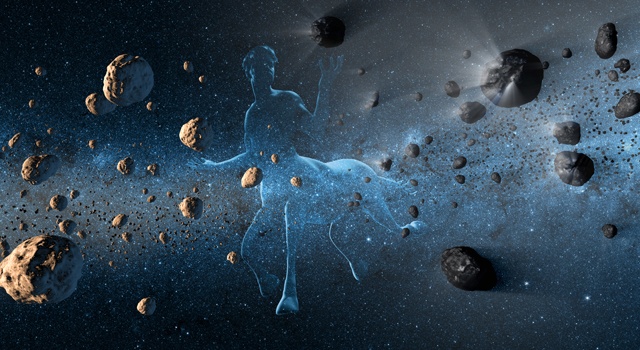
Centaurs are small planetary bodies that orbit between Jupiter and Neptune and have baffled astronomers for sharing characteristics with both asteroids and comets. Centaurs got their name after the mythical half-horse, half-human creatures called centaurs due to their dual characteristics. Above is an artist's illustration displaying a centaur creature among asteroids (left) and comets (right). (Credit: NASA/JPL-Caltech)
JWST Detects Carbon Dioxide in a Centaur for the First Time
A study published today in The Planetary Science Journal examines how NASA’s James Webb Space Telescope (JWST) has conducted a first-time detection of carbon dioxide in a Centaur, this one designated 39P/Oterma. A Centaur is a small planetary body that orbits between Jupiter and Neptune and frequently crosses the orbits of one or more of the gas giant planets within our solar system. While no Centaur has been imaged up-close, they typically exhibit a combination of attributes between comets and asteroids. While carbon monoxide has been detected in two known centaurs, this recent discovery could mark a turning point in how scientists understand the formation, evolution, and composition of not only Centaurs, but of the early solar system, as well.
“Centaurs are important to study since they are fairly well-preserved objects in space that can provide insight on the chemical composition and physical processes of the early solar system,” Study lead author, Dr. Olga Harrington Pinto, who is a postdoctoral researcher at Auburn University but conducted the research while a PhD student at the University of Central Florida, tells Universe Today.
Centaur 39P/Oterma was discovered on April 8, 1943, by Finnish astronomer, Dr. Liisi Oterma, who was the first woman to earn PhD in astronomy in Finland, along with being the first woman PhD of the faculty of sciences at Turku University. While 39P/Oterma has long been classified as an inactive comet, it currently exhibits a Centaur-like orbit between Jupiter and Saturn, meaning it doesn’t approach the Sun, and has a radius of approximately 2.21 to 2.49 km (1.37 to 1.55 mi), according to this study. So, why was 39P/Oterma chosen for this specific study?
“39P/Oterma is what we call an active centaur, a centaur that develops a coma and a tail like a normal comet,” Dr. Adam McKay, who is an assistant professor in the Department of Physics and Astronomy at Appalachian State University and a co-author on the study, tells Universe Today. “Since they are active, we can use spectroscopy to observe molecules in their coma to gain insights into their composition. 39P was chosen as one of our targets because it would be active during the time of the proposed observations.”
For the study, the researchers used JWST’s Near-Infrared Spectrograph (NIRSpec) instrument and was supported by ground-based observations from the Gemini North Observatory and Lowell Discovery Telescope to investigate the characteristics of 39P/Oterma while it was orbiting close to its perihelion (closest distance to the Sun) at 5.82 astronomical units (AU) from the Sun in July 2022. For context, the perihelion of 39P/Oterma has gradually increased since its discovery: 3.39 AU (1958), 5.47 AU (1983), and 5.71 AU (2023), and is projected to reach 5.91 AU and 6.15 AU in 2042 and 2246, respectively.
After analyzing the JWST NIRSpec data, the researchers confirmed the first detection of carbon dioxide in any Centaur, and the lowest amount of carbon dioxide ever detected in any Centaur or comet. They also did not detect traces of water or carbon monoxide, which are traditionally detected in Centaurs, specifically 29P/Schwassmann-Wachmann 1 (29P/SW1), another Centaur that shares approximately the same AU distance as 39P/Oterma.
“These results are important because they show that thanks to the impressive capabilities of JWST, we are able to see low production rates of a relatively small object that is very far away,” Dr. Pinto tells Universe Today. “And, though the production rates are low, it shows a different chemical behavior from another Centaur, 29P/SW1, seen at a similar distance (~6 AU). This difference in chemical behavior could be from the very different sizes of Centaurs 29P and 39P, or from having different orbital histories, or starting out with different compositions, or possibly a combination of all of these.”
The finding of carbon dioxide in a Centaur could be a gamechanger in terms of understanding the compositions and characteristics of Centaurs, asteroids, and comets throughout the solar system, along with potentially gaining better insight into the formation and evolution of the solar system, overall.
What new discoveries about Centaurs will researchers make in the coming years and decades and how many more Centaurs could possess carbon dioxide throughout the solar system? Only time will tell, and this is why we science!
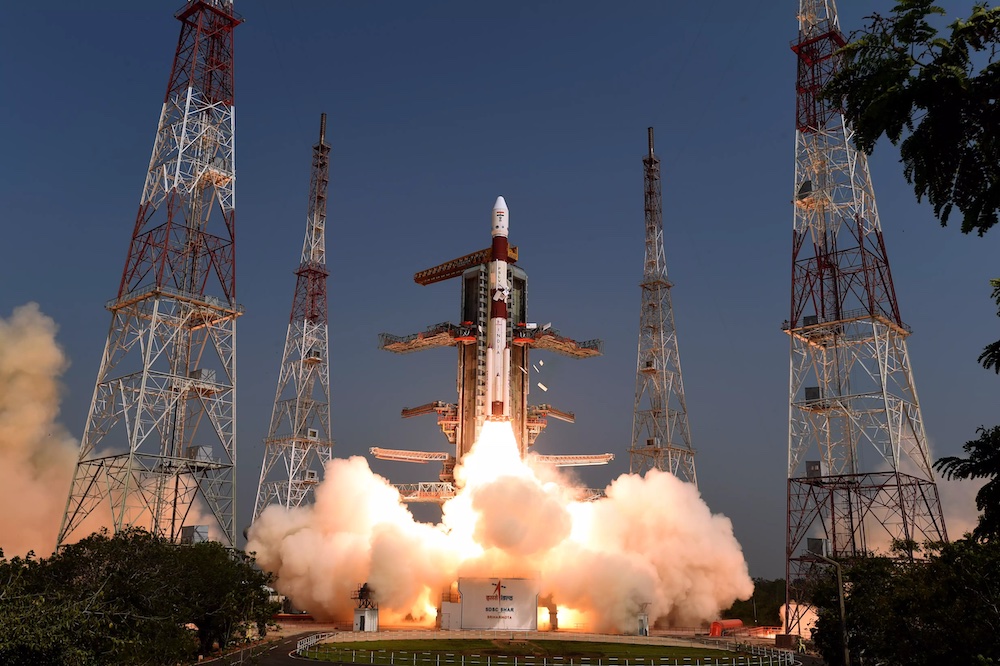
The Indian space program has been on a bit of a tear lately. Chadrayaan-3 was just the latest successful for the ISRO, India’s space agency, when it launched in July – especially juxtaposed with Luna-25, a Russian moon lander mission that launched around the same time and failed spectacularly by crashing into the Moon. Maybe in part due to the ISRO’s success, Indian Prime Minister Narendra Modi appears to have taken an increased interest in the program and recently chaired a meeting to review the Gaganyaan Mission, India’s first foray into crewed space flight. But while in the meeting, he suggested the country’s exploration goals should go further – much further.
Let’s start with the Gaganyaan mission itself. It’s hit a series of setbacks after initially being planned for launch in December 2020. Admittedly, some of those setbacks were caused by the pandemic, which hit India particularly hard. However, the program appears to be back on track, and the mission planners confirmed a launch in 2025, though this is slightly later than even the Wikipedia page for the missions says at the time of writing, and it was updated only in September.
Press releases from the PM’s office most likely overrules any Wikipedia site, so while the mission may be delayed until 2025, the testing leading up to it is still ongoing. A test of the Crew Escape System Test Vehicle, a critical component in modern-day human spaceflight systems, occurred successfully recently. Around 20 additional tests are planned over the next two years to ensure the mission’s success.
Fraser discusses India’s moon mission.
One key component of the new mission is the development of a Human Rated Launch Vehicle called HLVM3 by the ISRO. This is a modified version of the Launch Vehicle Mark 3, which has been the workhorse of ISRO’s satellite launching efforts since its first orbital flight back in 2017. However, launching humans is not the same as launching satellites, and much work needs to be done to ensure the safety of any future astronauts that might take a ride on this rocket.
That might seem like enough to keep the mission planners and engineers at ISRO busy for the foreseeable future. But PM Modi wants to aim higher – literally to the Moon in this case. He suggested sending an Indian astronaut to the Moon by 2040. Doing so in 17 years is feasible, especially considering the US did so in 9 with 1960s technology.
But the Moon won’t be the only stop for the ISRO. PM Modi also announced a plan to build a Bharatiya Antariksha Station – translated as “Indian Space Station” in the press release, by 2035. What exactly this station will entail and how it will fit with the wider plans for the Moon were not detailed in the press release. Still, assumedly, an orbital station will plan a key staging role for astronauts traveling to our nearest cosmic neighbor.
And about the success of that mission.
Human spaceflight isn’t the only kind, though, and ISRO will be busy in the robotic arena as well. Interplanetary missions were also mentioned by the PM, who took special note of a Venus Orbiter and Mars landers in his discussions during the meeting. Neither of those projects has yet garnered a name, so it’s unclear how much support they’ll have going forward. But if recent history is any indication, India will be adding plenty of new accomplishments to its portfolio of successful space missions in the near future.
Now here are some unusual screenshots from a Chandrayaan mission. The crater is made of many over lapping tunnels, something I did not expect, but this seems like an intelligently made structure on Earths moon built across the crater in order to appear like a crater shadow. I also found some tunnels to the right of the crater, but I did have to add shadows in order to see them. You will also see structures around it here and there. The moon is certainly inhabited by an intelligent species, but would they welcome a visit from humans?
Here is an interesting capture by YouTuber Shellys UFOs. The UFO is triangle in shape with a smaller triangle hump on its upper center. Very unique and its movement is unpredictable. The blue glowing craft appears to want to be seen.
Meer van UFO'S of UAP'S, ASTRONOMIE, RUIMTEVAART, ARCHEOLOGIE, OUDHEIDKUNDE, SF-SNUFJES EN ANDERE ESOTERISCHE WETENSCHAPPEN - DE ALLERLAATSTE NIEUWTJES


 ESA Plans to Eliminate New Space Debris by 2030