Ontdek de Fascinerende Wereld van UFO's en UAP's: Jouw Bron voor Onthullende Informatie!
Ben jij ook gefascineerd door het onbekende? Wil je meer weten over UFO's en UAP's, niet alleen in België, maar over de hele wereld? Dan ben je op de juiste plek!
België: Het Kloppend Hart van UFO-onderzoek
In België is BUFON (Belgisch UFO-Netwerk) dé autoriteit op het gebied van UFO-onderzoek. Voor betrouwbare en objectieve informatie over deze intrigerende fenomenen, bezoek je zeker onze Facebook-pagina en deze blog. Maar dat is nog niet alles! Ontdek ook het Belgisch UFO-meldpunt en Caelestia, twee organisaties die diepgaand onderzoek verrichten, al zijn ze soms kritisch of sceptisch.
Nederland: Een Schat aan Informatie
Voor onze Nederlandse buren is er de schitterende website www.ufowijzer.nl, beheerd door Paul Harmans. Deze site biedt een schat aan informatie en artikelen die je niet wilt missen!
Internationaal: MUFON - De Wereldwijde Autoriteit
Neem ook een kijkje bij MUFON (Mutual UFO Network Inc.), een gerenommeerde Amerikaanse UFO-vereniging met afdelingen in de VS en wereldwijd. MUFON is toegewijd aan de wetenschappelijke en analytische studie van het UFO-fenomeen, en hun maandelijkse tijdschrift, The MUFON UFO-Journal, is een must-read voor elke UFO-enthousiasteling. Bezoek hun website op www.mufon.com voor meer informatie.
Samenwerking en Toekomstvisie
Sinds 1 februari 2020 is Pieter niet alleen ex-president van BUFON, maar ook de voormalige nationale directeur van MUFON in Vlaanderen en Nederland. Dit creëert een sterke samenwerking met de Franse MUFON Reseau MUFON/EUROP, wat ons in staat stelt om nog meer waardevolle inzichten te delen.
Let op: Nepprofielen en Nieuwe Groeperingen
Pas op voor een nieuwe groepering die zich ook BUFON noemt, maar geen enkele connectie heeft met onze gevestigde organisatie. Hoewel zij de naam geregistreerd hebben, kunnen ze het rijke verleden en de expertise van onze groep niet evenaren. We wensen hen veel succes, maar we blijven de autoriteit in UFO-onderzoek!
Blijf Op De Hoogte!
Wil jij de laatste nieuwtjes over UFO's, ruimtevaart, archeologie, en meer? Volg ons dan en duik samen met ons in de fascinerende wereld van het onbekende! Sluit je aan bij de gemeenschap van nieuwsgierige geesten die net als jij verlangen naar antwoorden en avonturen in de sterren!
Heb je vragen of wil je meer weten? Aarzel dan niet om contact met ons op te nemen! Samen ontrafelen we het mysterie van de lucht en daarbuiten.
Otherworldly UFO Destinations For the Alien-Obsessed Are we truly alone in the universe? Some people assert that we've already made contact! Here are some of the best places to learn more about both real and fictional UFOs.
10. McMinnville, Oregon McMinnville is a great place to begin for several reasons. For starters, photos of the UFO that appeared over McMinnville are considered some of the most compelling, clear evidence of UFOs ever captured. Secondly, they have an annual UFO festival. There’s plenty of goofiness happening, but there are also serious discussions. The latest festival featured several witnesses and investigators of the Phoenix Lights, one of the most well-documented and widely-seen UFO events in history.
9. Aurora, Texas The story of UFOs in America doesn’t start with Roswell. It actually goes back much farther than that. In 1896, residents of Aurora, Texas, started seeing a cigar-shaped object floating in the sky. In 1897, the alleged craft collided with a windmill. According to local legend, the pilot—assumed to be from another planet—was buried in the town graveyard. While the gravestone that used to mark its plot is gone, there’s still a historical telling the story.
8. The Smithsonian Institution Washington, D.C. The Smithsonian has fascinating scientific and historical artifacts, but it also has a great deal of science fiction on display. Margaret Weitekamp is the Curator for Social and Cultural Dimensions of Spaceflight, which means that it’s her job to put together a collection of all the ways space travel has captured our imaginations. That’s not the only place to see UFOs at the Smithsonian, though. The Institute’s National Museum of African-American History and Culture holds a reconstructed incarnation of Parliament’s P-Funk Mothership, one of the most iconic stage props in history, and certainly the funkiest starship in the galaxy.
7. Kennedy Space Center, Florida Merritt Island, Florida Maybe the objects flying out of Kennedy are more known than unknown, but it’s still a cool place to be. This is an exciting time for spaceflight—SpaceX just launched a rocket that successfully landed on a boat at sea. Being able to reuse rockets instead of just crashing them makes space exploration much more affordable. They’re not the only private company helping advance spaceflight, just one of the many getting in on the action here at Kennedy and Cape Canaveral.
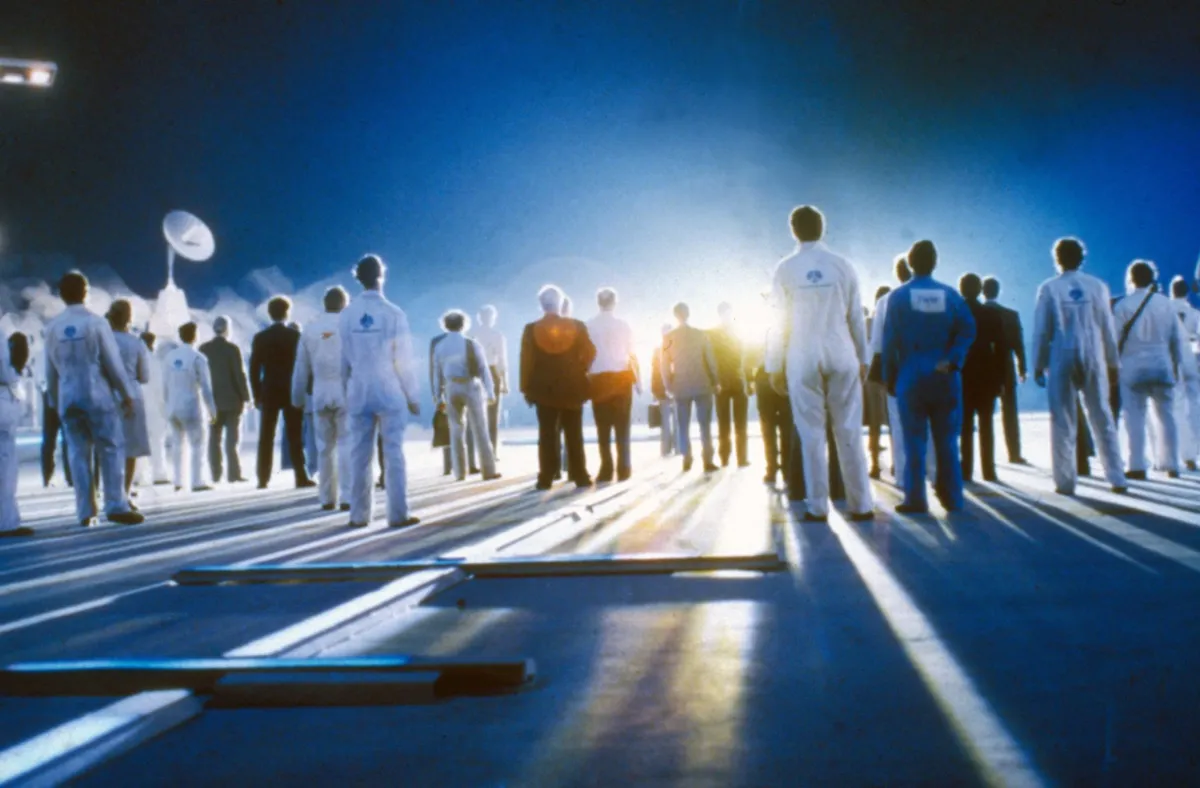
6. Devils Tower Crook County, Wyoming Devils Tower is an enormous igneous intrusion in Wyoming. Most people probably know it from Spielberg’s Close Encounters of the Third Kind, where Richard Dreyfuss and several others found themselves obsessed with the unique shape of the mountain, eventually flocking to the site just in time for UFOs to land. The movie turned the monument into a sci-fi icon, one that’s been parodied by everyone from “Weird Al” Yankovic to The Simpsons to even The X-Files.
5. Vasquez Rocks Los Angeles County, California Vasquez Rocks is one of those places more associated with fictional aliens than any real or alleged encounter. Still, it’s so iconic that it deserves a mention—as soon as you see this structure, it’s immediately familiar, even if you can’t place it. That’s because it’s been a filming location for over 50 films and countless TV shows. Captain Kirk famously fought that rubber-suited lizard monster here. But the rocks have also appeared in the likes of Roswell, Alien Nation, Battlestar Galactica, Buffy, and much more.
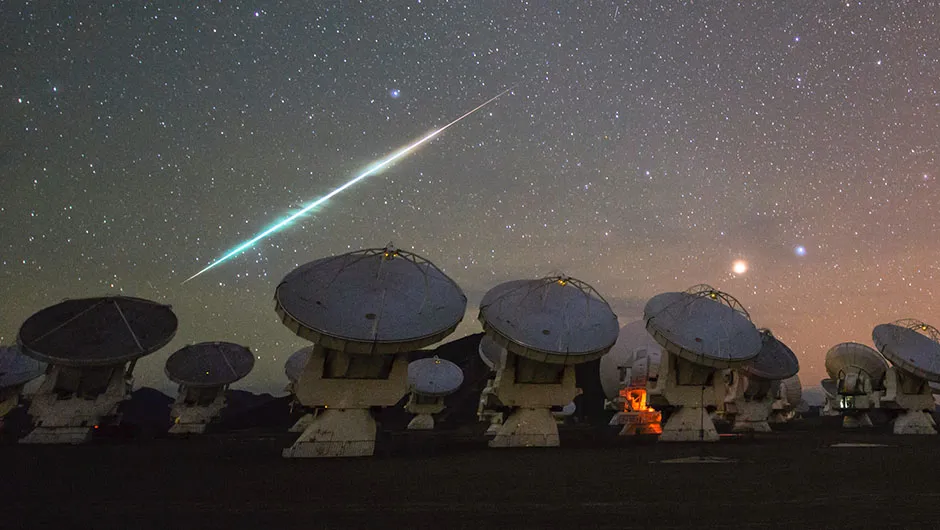
4. The Karl G. Jansky Very Large Array Socorro County, New Mexico The Karl G. Jansky Very Large Array is (you guessed it) a very large array of radio telescopes, trained at the Socorro County skies. The antennas here are so huge that they’re repositioned via a system of trains. They’ve helped us learn more about black holes, quarks, quasars, and even the gasses at the center of our galaxy. They’re not actually used to seek out UFOs, but they’re almost better.
3. The SETI Institute Mountain View, California Not all of the conversation around aliens has to do with little green men. SETI—the Search for Extra-Terrestrial Intelligence—has been exploring the universe for signs of life since it began operations in 1985. They use a telescope array (not the Very Large Array; a different one) to search for signs of technology, and a cross-disciplinary team of scientists explores forms of life that might exist but haven’t occurred to us.
2. Area 51 Lincoln County, Nevada Let’s get one thing clear—do NOT attempt to actually enter Area 51. Whether it has anything to do with UFOs or not, this is a very real military base, about which nearly everything is classified. Its proximity to Roswell has led people to cite it as the parking spot for the Roswell UFO. It's probably no surprise, then, that most of the kitschy tourist items around here are centered around the alien theme.
1. Roswell, New Mexico In 1947, one of two things occurred during the “Roswell Incident:" either (1) part of a weather balloon fell onto a rancher’s property or (2) a UFO crashed that incited an immediate government cover-up. That second theory is certainly not harmed by the fact that there is a top-secret air force base not too terribly far away. At a minimum, kitschy UFO imagery has seeped into just about every part of the town, and it makes for a good time.
Official records show the army has been developing and testing 'counterterrorism' drones in New Jersey for years, amid claims of a government cover-up.
A 2018 defense contract awarded $50 million to a private roboticscompany to develop craft capable of creating 3D maps of urban areas for a 'counter weapons of mass destruction' program.
The contract was given out by the Army's Armament Research, Development, and Engineering Center (ARDEC), which is located at the Picatinny Arsenal in Rockaway, New Jersey, where mystery drones were first reported last month.
Retired CIA Intelligence Officer Rudy Ridolfi told DailyMail.com: 'This FAA notice shows US drone testing is happening in the area. It's a warning for others to stay out of the area during those dates.
'While the nature of the testing isn't specified, it's most likely the testing of payloads related to reconnaissance.'
But Matt Sloane, founder of drone consulting firm AI Skyfire, told DailyMail.com that the sightings could be 'a contractor developing these drones for DoD [the Department of Defense].'
The DoD can deny claims of third-party technologies if the drones were placed on a secure tech list for contract disclosures, which means the government is applying special restrictions to the information.
The restrictions are added when technologies protect national security or to keep advanced systems hidden from hostile nations, and the developer holds primary liability if the government is not operating the drones, Ridolfi explained.
Experts have suggested that the government is secretly behind the drones in New Jersey, saying government contractors could be testing testing unmanned aerial systems for the Department of Defense at Picatinny Arsenal
A Picatinny Arsenal spokesperson told DailyMail.com: 'We can confirm that they are not the result of any Picatinny Arsenal or DEVCOM Armaments Center (formerly ARDEC) directed actions.'
The government contract was awarded to Maryland-based company Robotics Research.
The FAA alert could signal signal that the contract had approval to test drones in a public area.
'They could have been testing them in a different place on a military installation and now it was time to move the testing out to a public area,' Sloane said.
'The military has in various places around the country that are out of the way of prying eyes. Maybe it was just time to graduate that testing to the public.'
While large swaths of New Jersey are seeing drones, the White House has noted that there are more than one million drones lawfully registered in the US and many of the sightings could be hobby crafts, airplanes and even stars.
Air Force Global Strike Command, based in Louisiana, confirmed that it conducts counter-drone exercises out of F.E. Warren Air Force Base in Cheyenne, where it is based.
The drones appeared in mid-November over the Picatinny Arsenal military base in Rockaway, also the location for the Army's Armament Research, Development and Engineering Center (ARDEC) that develops new drone technologies for the military
The drones were described to have 'flashing or steady white, red or green lights.'
The story echoes the current situation in New Jersey - residents and local officials were demanding answers.
The drones in Colorado were also rumored to be sniffing for missing radioactive material, which has been a theory in the Garden State.
'I think (at the extreme) this could be a search operation [in New Jersey], said Ridolfi.
'One argument against that (to some degree) is the vast bulk of the sightings are at night. If it really was a national security issue, they'd be running around the clock.'
Sloane said the drones being tested by a government contractor could feature any type of attachment.
'There's cameras, gas detectors, radiation detectors,' he said.
The FAA flight restriction alert last month states the temporary ban is due to national defense and security reasons, prohibiting other aerial vehicles flying within a two-mile radius and below 2,000 feet.
However, exceptions include operations supporting national defense, law enforcement, firefighting, search and rescue, disaster response, event support, and commercial operations with a valid statement of work.
When asked about the FAA's restriction over the base, a spokesperson for the agency said they were unaware of the alert.
Picatinny Arsenal, located in Morris County, develops advanced conventional weapon systems and ammunition and has supplied Ukraine with weapons for its fight against Russia.
The White House has claimed the drone sightings - which coincidentally began on November 18 -are not a foreign adversary, pose no threat and are not part of a US military operation (stock)
The Federal Aviation Administration also issued a Notice to Air Missions (NOTAM) around Picatinny from November 21 through December 26, restricting flights over the base for 'special security reasons'
Morris County was also the first area to report sightings, sparking a joint letter from 21 mayors that called for statewide action from New Jersey Gov Phil Murphy.
The initial sightings sparked fears of foreign adversaries spying on Picatinny Arsenal, but the White House has assured the public that this is not the work of Russia, China or Iran.
'I do think it's interesting that [the drones are] using position lights,' said Sloane.
'If I were a foreign adversary wanting to spy on things, I probably wouldn't have red and green lights on my drone.'
On December 10, Picatinny Arsenal recorded 17 confirmed and unconfirmed sightings of drones over its territory since November 13.
Under the terms of the contract, Robotic Research was tasked with conducting technical demonstrations of autonomous unmanned systems sensing technologies and designing them with sensing technologies.
The program is focused on improving autonomy, 3D/4D mapping, localization, target ID, tracking, collective 3D visualization, weapons system integration of Unmanned Autonomous Systems and subterranean communications.
Mysterious drones overNew Jersey in 2024 kept Americans scanning the skies for answers.
Now, newly released documents obtained by The War Zone through the Freedom of Information Act reveal what police on the ground actually saw.
The records describe officers across the state spotting large unidentified drones flying in coordinated formations, sometimes in groups of more than a dozen.
Several reports said the aircraft hovered over critical infrastructure, including reservoirs, power substations, research laboratories and military facilities.
In one incident, multiple drones forced a New Jersey State Police medevac helicopter to abort a landing before several appeared to follow it to another location.
Air traffic controllers also reported unidentified drones flying through restricted airspace near Trenton-Mercer Airport at speeds approaching 170 miles per hour, prompting warnings to pilots.
Other officers described triangular or fixed-wing drones significantly larger than consumer models, some reportedly the size of a small car and possibly capable of jamming radar signals.
The thousands of pages of emails, police reports and internal memos show law enforcement officials repeatedly warning that the aircraft could be military-grade and potentially carrying explosive payloads.
Mysterious drones over New Jersey in 2024 kept Americans scanning the skies for answers
The earliest warnings surfaced on November 18, 2024, when Watchung Police Captain Sherif Zaiton alerted officers to 'rogue drone flights' reported across the county
When President Donald Trump returned to office in January 2025, his administration said the drones were approved by the Federal Aviation Administration (FAA) for research and other purposes. But the administration provided no further details.
The thousands of pages of emails, police reports and internal memos obtained by The War Zone paint a far more complicated picture of the so-called 'Jersey drone scare' than the public was initially told.
While many sightings were later attributed to misidentified aircraft, stars or planets, law enforcement officers across the state documented dozens of incidents involving unusual drones operating near critical infrastructure and sensitive locations.
The objects were first reported in Morris County near the Picatinny Arsenal and over Trump's Bedminster golf course.
The earliest warnings surfaced on November 18, 2024, when Watchung Police Captain Sherif Zaiton alerted officers to 'rogue drone flights' reported across the county.
'There have been reports county-wide of rogue drone flights, multiple drones flying in pattern over sensitive sites,' Zaiton wrote in an email to officers.
Because Trump frequently visited the region at the time, Zaiton told officers to immediately report any sightings.
The following day, Peapack and Gladstone Police Chief Stephen Ferrante warned other departments that 'multiple reports of large drones' had already been received in the area.
The thousands of pages of emails, police reports and internal memos show law enforcement officials repeatedly warning that the aircraft could be military-grade and potentially carrying explosive payloads. Pictured are reported drone sightings on the East Coast
When President Donald Trump returned to office in January 2025, his administration said the drones were approved by the Federal Aviation Administration (FAA) for research and other purposes. But provided no further details
The objects were first reported in Morris County near the Picatinny Arsenal and over Trump's Bedminster golf course
Authorities quickly realized the situation was serious enough to involve multiple agencies.
Emails show local police were coordinating with county officials, the New Jersey State Police and the FBI as reports spread across the state.
In one message to officers, Watchung Police Chief Scott Anderle warned that the aircraft were 'far bigger than typical hobbyist models' and could require special Federal Aviation Administration licensing.
He also cautioned officers to treat the drones as potentially dangerous.
'The size of the recent drones encountered makes them potentially military grade,' Anderle wrote, advising officers to call bomb squads if one landed.
Shortly after, another update suggested the aircraft was deliberately flying around county communications towers.
'Please keep this in mind,' Zaiton wrote in a follow-up message. 'We are being told to very much consider that these drones could be carrying an explosive payload.'
The drones appeared in mid-November over the Picatinny Arsenal military base in Rockaway, also the location for the Army's Armament Research, Development and Engineering Center (ARDEC) that develops new drone technologies for the military
Newly released documents obtained by The War Zone through the Freedom of Information Act reveal what police on the ground actually saw
While many sightings were later attributed to misidentified aircraft, stars or planets, law enforcement officers across the state documented dozens of incidents involving unusual drones operating near critical infrastructure and sensitive locations.
On November 19, a Raritan Borough police officer reported observing two fixed-wing drones flying at about 400 feet above the ground along nearly identical routes.
Another smaller quadcopter-style drone was seen traveling in the opposite direction.
As sightings increased, federal authorities stepped in.
On November 22, a counterterrorism coordinator with the Middlesex County Prosecutor's Office sent an alert to local departments at the request of the FBI and Joint Terrorism Task Force.
The warning urged patrol officers to immediately report sightings of suspicious unmanned aircraft.
'Some of these unknown fixed-wing drones have been quite large,' the alert said.
Investigators also warned that the aircraft were being spotted near power lines, substations and military installations.
'There is a concern this could be 'out of country' nations,' the message noted.
Over the following days, police logged an escalating series of sightings.
Law enforcement also reported drones flying near hospitals, research laboratories and even federal restricted airspace
Authorities requested that the New Jersey State Police monitor nearby highways because the area contained critical infrastructure, including water treatment facilities.
Two days later, another officer in Branchburg reported spotting a drone hovering above a power switching station.
When the officer approached the site, the aircraft suddenly switched off its navigation lights and flew away.
Within minutes, two more drones appeared behind the property and headed north.
The drones also interfered with emergency operations.
That same evening, a New Jersey State Police medevac helicopter attempting to land at Raritan Valley Community College was forced to abort its landing after firefighters spotted multiple drones in the area.
As the helicopter diverted to another landing site, officers reported that several drones appeared to follow it.
Police also described unusual drone shapes and formations.
An officer in Fair Hills reported seeing about ten large drones moving along a highway corridor at altitudes between 200 and 400 feet.
The aircraft were triangular, significantly larger than typical consumer drones and equipped with strobing red and white lights.
Other sightings suggested even more unusual capabilities.
At Trenton-Mercer Airport in early December, air traffic controllers tracked several unidentified aerial vehicles flying through restricted airspace.
One officer reported radar speeds reaching about 150 knots, roughly 170 miles per hour.
The activity was serious enough that airport officials issued a Notice to Airmen warning pilots about drone activity near the airport.
In another incident, Essex County Airport officials told police they believed the drones were using 'sophisticated radar jamming technology' after the aircraft appeared invisible to radar systems.
Some of the most alarming sightings occurred near critical government facilities.
On December 8, officers at the Federal Reserve building in East Rutherford reported seeing three drones hovering about 100 feet above the parking lot.
One of the drones was described as roughly the size of a motor vehicle, and photographs taken by police were attached to the report.
Law enforcement also reported drones flying near hospitals, research laboratories and even federal restricted airspace.
At the Princeton Plasma Physics Laboratory, staff reported about 11 drones flying near the facility for more than 20 minutes. Five of the aircraft reportedly entered restricted federal airspace.
Sightings were also reported over major medical centers in the state, including Princeton Medical Center and Robert Wood Johnson University Hospital.
Despite the sheer number of reports, no arrests were made and authorities never publicly identified who was operating the drones.
Many sightings were ultimately attributed to misidentified aircraft or celestial objects.
But the police records reveal that officers across the state repeatedly encountered unusual aerial activity they could not immediately explain.
Those firsthand reports, from local patrol officers to federal investigators, highlight how much uncertainty surrounded the mysterious drone activity that gripped New Jersey during the winter of 2024.
And even now, the documents suggest one lingering question remains unanswered.
The Leicester Daily Mercury detailed a ‘mystery’ on Thursday, January 24, 1974
(Picture: Mirrorpix)
Ornaments rattled, walls shook and lights flickered. People spilled onto the streets and looked up at the dark hills, where strange lights darted across the sky.
Police switchboards became clogged as panicked residents called in some sort of ‘explosion’.
In the village of Llandderfel, Pat Evans was jolted to her feet as she watched television. Fearing an aircraft had crashed, the nurse hastily drove up the B4391 as mist rolled over the winding road.
‘We drove a fair way along the mountain road,’ Pat had told the press. ‘To our left we could see a huge orange ball sitting on the mountain. It was glowing.’
Ken Houghton, who lived on Royal Oak Farm in the village of Betws-y-Coed – 25 miles away from Llandderfel – also witnessed a strange occurrence on the hillside. He told reporters he saw ‘sheet lightning behind a cloud’ before ‘a sphere came down’ on the hills.
‘The Welsh Roswell’ - the Berwyn mountain UFO crash, Llandrillo, Wales, January 23, 1974
The Berwyn Mountains
An RAF search and rescue team was scrambled to investigate the incident. But a ground search was called off due to the blanket of darkness that made the terrain difficult to traverse.
Ancient Aliens: UFO Crash Site in Wales (Season 12) | History
In the coming weeks, scientists, police officers and villagers flocked to the Berwyn mountains, a sparsely populated area of moorland popular with walkers.
It was thought a meteor – or perhaps something else entirely – had crashed into the hills.
The official explanation for the commotion in the Berwyn mountains was that an earthquake had struck North Wales just as a meteor shower passed over the region.
This was confirmed by academics at Edinburgh University and Keele University who measured the earth tremors and tracked where the meteor could have been spotted from.
Swansea UFO Network interviewed Scott Felton a North Wales based UFO investigator who with Margaret Fry another investigator took a fresh look at the case.
The witnesses generally reported seeing a bright light in the north-west which seemed to fall towards the horizon.
An expert who carried out independent research into the Berwyn Mountains incident for the British Astronomical Society reported that a “fireball” was visible over most of the UK that night.
It descended from a height of about 120km to about 35km before disintegrating over Manchester, the expert found.
Then-junior RAF minister Brynmor John summed up the official position in a letter to MP Dafydd Elis Thomas in May 1974.
He wrote: “As suggested by the descriptions reported, it seems the phenomena could well have been caused by a meteor descending through the atmosphere burning up and finally disintegrating before it reached the ground. Such a hypothesis would also explain the absence of any signs of impact.
It has also been suggested that at 8.32 pm that evening there was an earth tremor in the Berwyn Mountains which produced a landslide with noises like detonations.”
Coverage of the incident in the Liverpool Echo on Thursday 24 January 1974
(Picture: Mirrorpix)
But the MoD’s conclusions did not convince many of those who witnessed the incident firsthand.
One wrote in a letter preserved in the files: “That ‘something’ came down in the Berwyn Mountains on that night I am certain ...”
UFO researcher Russ Kellett said he has spoken to a fisherman who said he saw flying saucers emerge from the Irish Sea before the incident on the Berwyn Mountains.
Mr. Kellett, 47, from North Yorkshire, said: “There’s no doubt whatsoever that it was more than just an earthquake.
“I’ve got an affidavit from a group of men who were coming home from Bala when they found this flying saucer at the side of the road and the military came and took it away on a flat-back vehicle.”
Journalist and UFO investigator Dr. David Clarke, who is a skeptic on the subject, says the Berwyn Mountains incident is the most intriguing sighting in Wales, and elements of it remain unexplained.
Eyewitness sketches from the National Archives
Dr. Clarke, 42, who lectures at Sheffield Hallam University, said: “What we know is that on that particular night there was a nurse who heard the explosion and thought something had crashed into the hillside.
A stone circle near Llandrillo, Wales, close to where the 1974 sighting was reported
Geraint Edwards of Llandderfel, Denbighshire, told a Channel Five documentary, how he stood in amazement as a flying saucer hovered for 10 minutes above the mountains.
He said at the time: “It was definitely a flying saucer. It was a pity I didn’t have a camera because it was there for at least 10 minutes, just hovering. We were on the way to play darts when something caught our eye in the south-east.
“It looked like a rugger ball, but the ends were more pointy. When it took off, it just went like lightning.
“I wrote it down in my diary. It was 6.45 pm on the Friday night.
“If we were coming back from the pub, people would be saying, ‘they’ve had one or two [drinks]’ but we were going to the pub.”
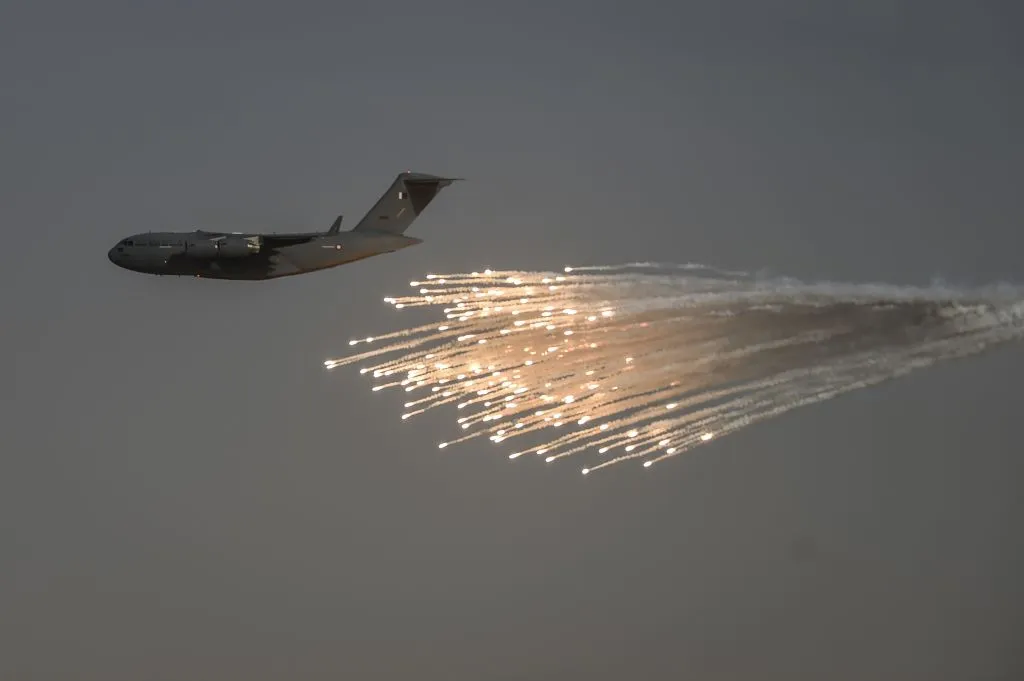
A document from the Maritime and Coastguard Agency revealed a military operation, codenamed Photoflash, was scheduled for that evening. It involved about 10 military aircraft and a series of powerful flashes across the North Wales coast and Liverpool Bay.
The MCA letter said:“During the late afternoon and early evening of 23rd January 1974 there was an exercise from Jerby Range on the Isle of Man. The exercise was called ‘Photoflash’ and coastguards were advised to expect at least 10 aircraft taking part and at least 80 flashes around the Liverpool Bay area and the North Wales coastline.”
There was no more information from official sources on that specific exercise and if it was connected to Berwyn. A spokesman at the RAF Museum Research Department suggested photoflash operations were used for training exercises to illuminate the ground below.
Nick Redfern's Cosmic Crashes has a another take on the alleged crash
The original account mentioned in Nicks book comes from investigator Tony Dodd. 'James Prescott' is a pseudonym; the person using it was not an official in the Welsh Armed Forces.
According to his account, he was stationed in South England before receiving orders to proceed to North Wales who claims he knew about live NHI bodies at the crash site... -
The bodies were about five to six feet tall, humanoid in shape, but so thin they looked almost skeletal with a covering skin.
- Sometime later we joined up with the other elements of our unit, who informed us that they had also transported bodies of alien beings to Porton Down, but said that their cargo was still alive.
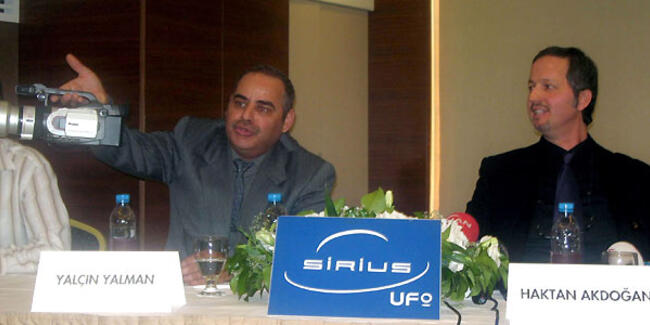
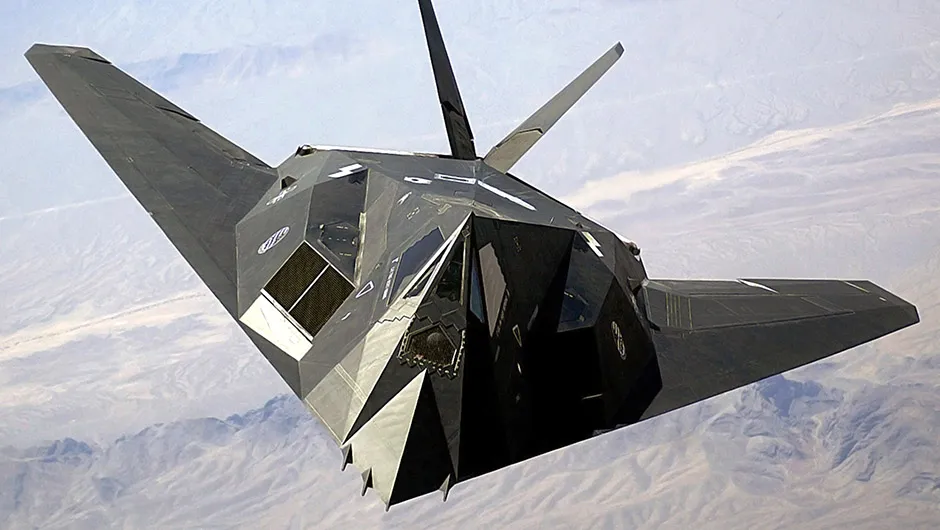
A series of UFO incidents occurred between 2007 and 2009 in the town of Kumburgaz, situated near Istanbul, Turkey. The events stunned the media and UFO enthusiasts after the images and videos of the sightings went viral on the Internet. The video evidence of UFOs shared by a nightwatchman named Yalcin Yalman could be another strong evidence of non-human technology.
Back in 2008, Yalcin Yalman worked as a night watchman at the Yenikent facility from where he shot all these amazing videos of UFOs, hovering over the Marmara Sea near Kumburgaz. He even showed his second-hand camera to the media in a press conference held at the Dedeman Hotel in Istanbul.
Yalman said he started recording the strange crafts as a hobby to pass his time in the night. Due to the shaky videos, some skeptics claimed that the mysterious objects over the skies of Turkey could have been a US stealth drone or other aircraft. However, numerous experts confirmed that the videos were authentic. Besides, many people witnessed the same unknown crafts in the sky. The sightings gained attention from locals, national media, and even CNN. Several videos were recorded between June 8 and 12, 2009, showing mysterious objects and lights.
Originally, the video was analyzed and made public by the Sirius UFO Space Sciences Research Center led by researcher Haktan Akdoğan. Haktan said the UFOs were often seen by civilians and military pilots during an International UFO Congress in 2009. (Source)
n 2009, after the conference, there were witnesses of 8-10 people including UFOlogist Dr. Roger Leir, who also witnessed and verified the Kumburgaz UFO sighting. Dr. Leir was present during the filming of one video on May 17, 2009, and confirmed that as the UAP turned, it was similar to the “Roswell” shaped craft (more boomerang-shaped) rather than a traditional disc. Dr. Leir discussed this incident that happened with him after the conference on Coast to Coast with George Knapp.
Yalcin Yalman (Left) sitting next to Akdoğan (Right), showing his camera during a press conference in Istanbul in 2009
Dr. Leir told Knapp that he, Yalman and others went to Kumburgaz to film UFOs. The group stayed up from midnight to 4 o’clock in the morning to capture any possible sightings. The conditions were ideal, with clear skies and no obstructions. During the filming, they observed a bright object below the full moon, which initially appeared as a potential star or planet. As they focused on this object, they discovered a semi-circular craft with a multitude of lights, possibly shaped like a boomerang or a cylindrical saucer
Dr. Leir said, “You’d think, ‘Well, gee, a bright sky, bright moon, you’re not going to see anything.’ But in this case, the moon was a big help. It essentially lit up the exterior portion of the craft, which initially, when we saw it, looked a bit like a boomerang because we weren’t seeing it straight on, so we couldn’t tell the exact shape of the craft. But then we went to full film on it, and we could see that it was either a boomerang, or we were looking at a certain portion of a cylindrical craft or a saucer.
Till this day, I don’t know, and I don’t know what the analysts said about the shape. But it was either one of the two: either a boomerang shape with a round front or a complete saucer. It did turn a couple of times, so we were able to see the side, and it looked like it could have been saucer-shaped. But then we got the biggest shock of our lives because we could see light that was emanating from the internal portion of the craft in three areas. One was directly in front, and one was on either side.
This was a full-on front view, and folks can look at the Coast website and they can not only see the video but please go to the Chilean analysis because there are some still photos there which show what we saw when we looked in the central portion. That was a big shock to look and see, not a Rorschach-type thing, but actual entities that were, whatever they were doing, looking out the front of the craft, just the same as we were looking at them.”
Video Observation
From 2007 to 2009, Yalman recorded approximately 30 videos. The footage was taken with a MiniDV Canon DM-GR1-A based on the NTSC system with a diaphragm set at a maximum of 1.8. It is a 3CCD 20x optic 100x with a teleconverter mounted on a 58 mm adapter. The tele-objective is a Sony VCL HGD 1758 model lens, x 1.7. [2007 to 2009 Original Raw Footage]
The videos were examined by two influential state-sponsored organizations in Turkey, “The Scientific and Technology Research Board of Turkey” and “The TUG National Observatory.” Their objective was to identify any evidence of forgery, but the results supported the authenticity of the videos. The original film cassettes were also studied by individuals from Japan, Chile, Brazil, and Russia, and despite several attempts, no one has been able to conclusively demonstrate evidence of a hoax, fraud, or manipulation, leaving the case unidentified.
Yalman’s camera was equipped with a zoom option which allowed him to even capture the pilots, sitting in one of the crafts. The image is shaky due to the hand movements while zooming. However, with the editing software, the video was stabilized, and the result shocked everyone. Two humanoid figures could be seen in the image with large black eyes and oversized heads.
Haktan Akdoğan noted that these are the most important images in Turkey and in the world, saying: “After doing all the necessary analysis which went on for several weeks, the board came to a definite conclusion with no doubt that these are 100% genuine videos. The objects sighted in the aforementioned footage that have a structure that is made of specific material are definitely not made up by any kind of computer animation nor are they any form of special effects used for simulation in a studio or for a video effect therefore in conclusion it was decided that the sightings were neither a mock up or hoax. It is concluded that these objects in the sightings that have physical and material structures do not belong in any category such as; planes, helicopters, meteors, Venus, Mars, satellites, fireballs, Chinese lanterns, fireballs, weather balloons, natural or atmospheric phenomenon etc. and but rather fall into the category of UFOs.”
“We see the heads of not only one UFO but also of two beings in the images. This is the first in the world.” He further added that those images would have a great impact on UFOlogy. He had been researching UFOs for 22 years and had never seen something like this. He stated: “These are the most remarkable images taken in Turkish history.”
[In translation] Akdoğan stated that “these beings are generally seen in areas rich with resources, volcanic areas, and historical places. They started to come more frequently after nuclear tests. Maybe the released radiation also harms the cosmic neighbors, we disrupt the balance in the universe. Maybe they observe this dangerous process.” (Source)
The images were recorded in digital NTSC format by the above-mentioned camera.
The date on the video indicates that the recordings were made during 2007, 2008, and 2009.
The footage images of the object that visibly have a certain configuration are not computer animations, special video effects or studio-re-created images or models. The footage is genuine.
The first observation made from the footage is that some of the images were recorded in the nighttime sky at a certain altitude from the horizon. The footage also covers images of the moon in some parts which proves that the video was shot in the nighttime and open air. But, the fact that digital date displays show AM in certain frames and PM in others, raises suspicion about the validity of the time in which the recordings were made.
Since in some parts, there is no other object that can be featured as a reference in the close-up frames and no observable differences were found on background examination, the actual location, distance, dimensions and nature of the objects could not have been determined.
Through the examination of shootings of multiple dates, it is a strong possibility that 2-3 different objects were captured. However, it is difficult to determine whether the objects are moving or not. Their movement is slow even if they do so.
The reflections of light on the objects are sometimes caused by the moon which was in a convenient location at that time, and sometimes produced by some other sources of light.
The light reflection from the left side of the object which is seen on the August 10th shootings is not produced by the moon. At that time, the moon was in a phase that was pretty close to the “new moon” phase and located approximately at a 10-degree proximity/angle to the horizon. Moreover, the image processing analysis conducted on some parts of the footage revealed that the center of the object has the same density as its background, namely is of a transparent nature.
Not Debunked
Adam Goldstack of UAP Media UK mentions that many debunkers try to explain the craft as cruise ships but according to former F-16 fighter pilot and researcher Chris Letho, it does not add up. Letho analyzed the videos and case and calculated the object’s size, horizon distance, plus visual angles from the Marmara Sea. He concluded the logistics of a cruise ship did not match the reported UAP. (Source)
Goldstack writes, “From an analytical perspective, the Turkey Kumburgaz UFO case is unique with regards to the clear and multiple video footage obtained. Through this case, we also have sequential data that display behavioral patterns, times, and dates. We see all of the twenty-five video encounters/incidents at night-time/early morning (with one in the late evening), which is in keeping with the wider range of Ufology data that suggests UAP often appears at night-time.
We also see another significant pattern displaying the encounters around water – in this case, the Marmara Sea. The Sea of Marmara itself is a small sea with an area of 11,350 km2 (4,380 sq mi) and with dimensions of 280 km × 80 km (174 mi × 50 mi). The sea has a greatest depth of 1,370 m (4,490 ft). How significant the Sea of Marmara is to potential UAP has still not been explained. No connection to nuclear facilities or weapons has been linked in this case.”
Wat Zijn UFO's? Selectie van Theorieën en Veranderende Wetenschappelijke Standpunten
Voor velen roept de term "UFO" het beeld op van een vliegende schijf die door de nachtelijke lucht zweeft. Maar wat is een UFO eigenlijk?
Joe McBride / Getty Images
Inleiding: Het mysterieuze licht in de nachtelijke hemel
Stel je voor: je kijkt naar de sterrenhemel en ziet plots een helder, bewegend licht dat niet lijkt op een ster of een vliegtuig. Het beweegt met een verbijsterende snelheid, pulseert met een radiantie die je nog nooit hebt waargenomen. In dat moment schiet je meteen de drie letters door je hoofd: U-F-O. En hoewel Hollywood ongetwijfeld heeft bijgedragen aan de wereldwijde fascinatie rond deze mysterieuze verschijnselen, rijst de vraag: wat zijn UFO's echt? Zijn ze buitenaardse voertuigen, of heeft onze interpretatie van deze fenomenen een meer aardse verklaring? In dit artikel duiken we diep in de wereld van UFO's, de verschillende theorieën die erover bestaan, en de veranderingen in de wetenschappelijke houding ten opzichte van deze mysterieuze objecten.
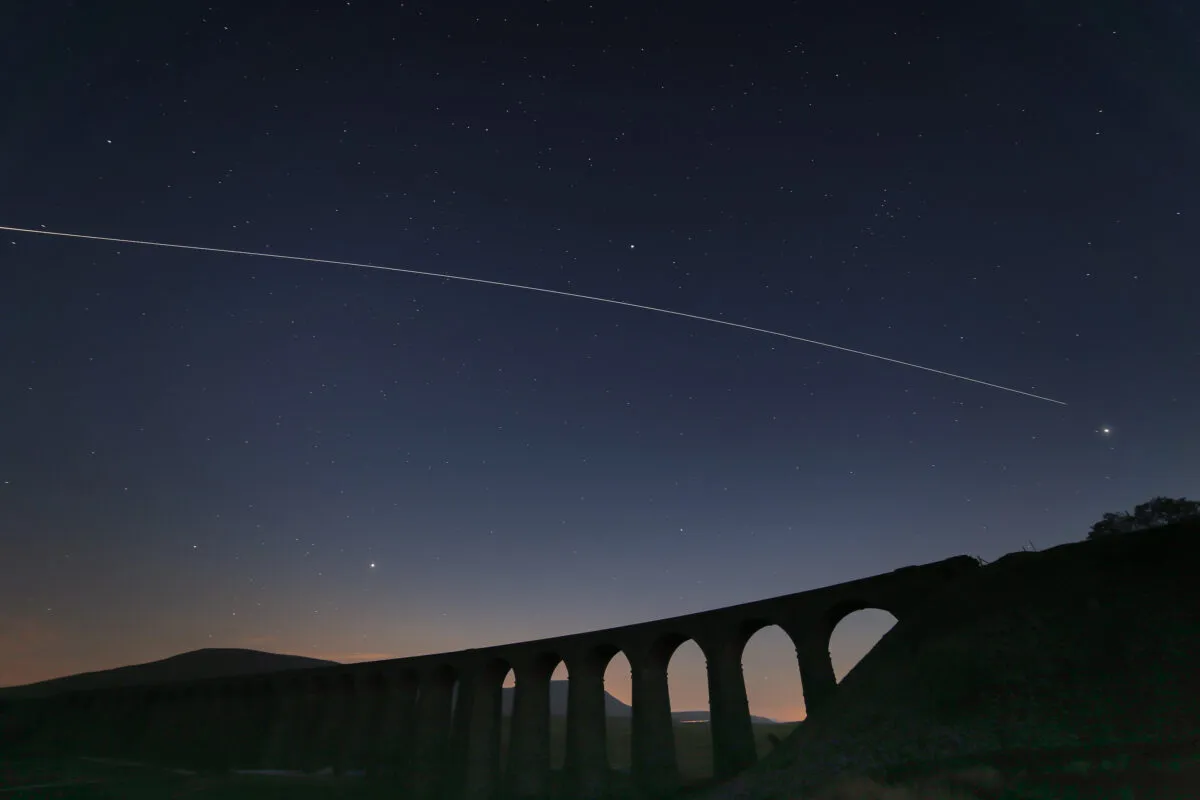
Wat Zijn UFO's?
Technisch gezien staat UFO voor "Unidentified Flying Object". Dit betekent dat het eenvoudigweg een object in de lucht is dat niet onmiddellijk geïdentificeerd kan worden. Het kan bijvoorbeeld gaan om een onbekend vlieg- of lichtverschijnsel dat niet direct herleid kan worden tot een bekende aircraft of natuurlijk fenomeen.
In de volksmond en populaire cultuur wordt de term echter vaak gelijkgesteld aan buitenaardse schepen of voertuigen van extraterrestrale oorsprong. Dit komt doordat veel mensen en media UFO's associëren met de mogelijkheid van buitenaardse intelligentie en het bestaan van andere werelden. Hoewel niet alle UFO-waarnemingen daadwerkelijk buitenaardse oorsprong hebben, blijft de term veelvuldig in gebruik en in de verbeelding gegrift. Het blijft een onderwerp dat zowel wetenschappers, onderzoekers als enthousiastelingen intrigeert, omdat het vragen oproept over de aard van ons universum en de mogelijkheden van buitenaards leven.
Beschrijvingen en waarnemingen
Veel getuigen rapporteren objecten die lichtend zijn, vaak met een glanzend of pulserend oppervlak dat opvalt in de hemel. Deze objecten kunnen stil hangen op één plek, waardoor ze nauwelijks beweging lijken te vertonen, of zigzaggende bewegingen maken, waardoor ze onvoorspelbaar en mysterieus overkomen. Sommigen beschrijven ze als ronde of platte schijven, vergelijkbaar met klassieke ufo-afbeeldingen uit de jaren 50 en 60, terwijl anderen spreken over vormloze lichtbollen of geometrische vormen zoals driehoeken en ruiten.

Wat deze waarnemingen bijzonder maakt, is dat de bewegingen vaak onlogisch lijken voor bekende vliegtuigen of natuurlijke verschijnselen. Een van de meest iconische voorbeelden is het "Tic Tac"-verschijnsel dat in 2004 door Amerikaanse Navy-vliegers werd waargenomen. Dit onbegrijpelijke, snel bewegende object zonder zichtbaar voortstuwingssysteem werd vastgelegd op radar en in videobeelden, en vertoonde bewegingen die onze huidige technologie niet kan verklaren. Dit soort waarnemingen blijft tot op heden een mysterie, dat vragen oproept over de aard van deze objecten en hun mogelijke oorsprong.
Recordjaar voor Belgisch UFO-meldpunt
Technologie en onmogelijkheden
De waarnemingen die vaak worden gerapporteerd, suggereren dat deze objecten beschikken over technologie die onze huidige wetenschap verre overstijgt. Ze zouden kunnen manoeuvreren zonder geluid of luchtdrukverschijnselen die normaal gesproken gepaard gaan met menselijke vliegtuigen of natuurlijke luchtverschijnselen. Sommige waarnemingen suggereren dat deze objecten snelheden behalen die de limieten van onze huidige rakettechnologie ver te boven gaan, soms sneller dan het licht, volgens de waarnemers.
Bovendien zou een bemanning over zulke objecten moeten beschikken die bestand is tegen enorme g-krachten tijdens scherpe bochten en snelle acceleraties – iets dat met onze huidige middelen onmogelijk lijkt voor menselijke piloten of robots. Deze objecten lijken ook te kunnen verdwijnen en verschijnen op onverwachte plaatsen, wat duidt op geavanceerde technologieën zoals teleportatie of onzichtbaarheid.
Het feit dat deze objecten vaak zonder duidelijke energiebron bewegen, roept vragen op over de aard en oorsprong ervan. Hoewel er geen definitieve bewijzen zijn, blijven deze waarnemingen een fascinerend en intrigerend fenomeen dat de grenzen van onze wetenschap uitdaagt.
De Wetenschappelijke Standpunt over UFO's
Voor een lange periode werden UFO's vooral beschouwd als subjecten voor complottheorieën, sensatiejournalistiek en pseudowetenschap. Mensen die deze fenomenen observeerden, werden vaak afgedaan als fantasierijk of misleid, en de wetenschappelijke gemeenschap was terughoudend om zich uit te spreken over de aard en betekenis ervan. Dit was vooral omdat er simpelweg onvoldoende bewijs was dat de fenomenen buitenaards van aard waren. Wetenschappers wilden geen conclusies trekken op basis van onvolledige of onbetrouwbare gegevens, en bovendien heerst er binnen de wetenschap een sterke voorkeur voor bewijs dat reproduceerbaar en objectief verifieerbaar is. Hierdoor bleef de discussie lang vooral hangen in speculatie en onbewezen theorieën.
Skepsis en voorzichtigheid
De wetenschap hanteert een principe van kritische beoordeling en bewijsgerichtheid. Dit betekent dat nieuwe verschijnselen en verklaringen altijd onderworpen worden aan strenge controle en analyse voordat ze als feit worden erkend. De meeste waarnemingen en verklaringen over UFO's berusten op menselijke perceptie, die niet altijd betrouwbaar is. Vaak gaat het om beelden die met camera's of smartphones gemaakt zijn, maar deze kunnen vervormd, onscherp of verkeerd geïnterpreteerd worden. Daarnaast is er een overvloed aan anekdotische verslagen – getuigenissen van mensen die iets gezien zouden hebben – die niet altijd objectief te verifiëren zijn. Bovendien kunnen culturele en psychologische factoren een grote rol spelen in de interpretatie van waarnemingen. Mensen kunnen bijvoorbeeld beeldvorming en interpretaties laten beïnvloeden door populaire cultuur, verhalen uit de media of eigen verwachtingen. Hierdoor blijft het moeilijk om UFO's te beschouwen als een concreet fenomeen dat duidelijk wijst op buitenaards bezoek.
Nieuwe wetenschappelijke houding
De afgelopen jaren is er echter een duidelijke verschuiving merkbaar in de manier waarop de wetenschap naar UFO's kijkt. Organisaties zoals NASA en het Amerikaanse ministerie van defensie (DoD) benaderen UFO- en UAP-waarnemingen met meer wetenschappelijke interesse en openheid. In 2020 richtte het Amerikaanse ministerie van defensie bijvoorbeeld de UAP Task Force op, met als doel om systematisch gegevens te verzamelen, te analyseren en te beoordelen. Deze task force probeert de waarnemingen te categoriseren en te begrijpen, en zo een beter beeld te krijgen van de aard van de fenomenen. In september 2023 publiceerde NASA een rapport waarin werd geconcludeerd dat de meeste waarnemingen niet kunnen worden verklaard met de huidige kennis en technologieën. Het rapport benadrukte dat er geen bewijs is dat deze fenomenen buitenaards van aard zijn, maar dat ze wel de aandacht verdienen van de wetenschap omdat ze onduidelijk blijven.
Deze nieuwe houding onderstreept dat de wetenschap niet per definitie afwijzend staat tegenover het fenomeen UFO's. In plaats daarvan is de nadruk komen te liggen op het verzamelen van betrouwbaar bewijs om tot een meer gefundeerde interpretatie te komen. Het belang van systematisch onderzoek en het vermijden van voorbarige conclusies wordt steeds meer erkend. Wetenschappers blijven voorzichtig, maar zijn bereid om open te staan voor nieuwe gegevens die mogelijk de bestaande kennis kunnen uitdagen. Het is duidelijk dat verdere studie en technologische ontwikkeling nodig zijn om de aard van deze fenomenen beter te begrijpen. Door een meer evidence-based aanpak wordt de kans groter dat we in de toekomst tot helderdere inzichten komen over de aard en oorsprong van UFO's, zonder daarbij onnodig te vervallen in speculatie of pseudowetenschap.
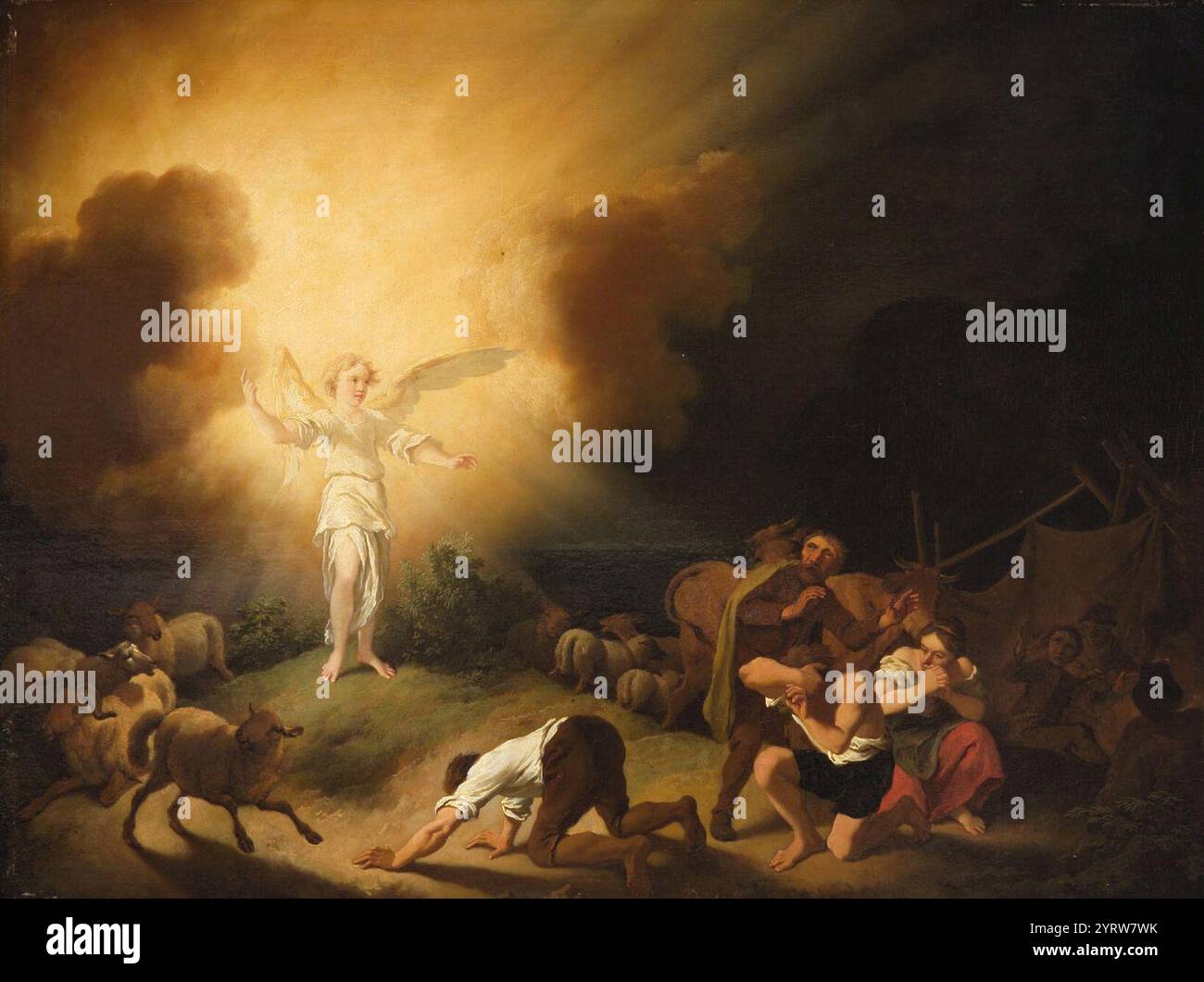
Het Betoverende Schilderij: "Vuur in de Hemel"
In de wereld van kunst en cultuur worden UFO's vaak afgebeeld als buitenaardse schepen, vliegende objecten die de mensheid al eeuwenlang fascineren en inspireren. Echter, in historische tijden werden vergelijkbare fenomenen niet altijd geïnterpreteerd als buitenaardse technologie, maar vaker binnen een religieus of mythologisch kader. Deze interpretaties weerspiegelen de overtuigingen, angsten en verwachtingen van de samenleving uit die periode. Een treffend voorbeeld hiervan is het schilderij "Vuur in de Hemel" van Christian Wilhelm Ernst Dietrich, dat een betoverende en mysterieuze voorstelling geeft van hemelse verschijnselen. Dit kunstwerk biedt een venster naar de manier waarop onze voorouders deze fenomenen zagen en interpreteerden, vaak als goddelijke interventies of bovennatuurlijke krachten die de wereld beïnvloeden.
Het schilderij "Vuur in de Hemel" en de symboliek ervan Christian Wilhelm Ernst Dietrich was een Duitse schilder uit de 18e eeuw die bekend stond om zijn indrukwekkende landschappen en hemellichamen. Zijn schilderij "Vuur in de Hemel" toont een dramatisch tafereel van een hemel die wordt verlicht door vurige lichten en stralen. De compositie is rijk aan symboliek: de vurige lichten kunnen worden geïnterpreteerd als tekeningen van goddelijke macht, bovennatuurlijke interventies of zelfs apocalyptische gebeurtenissen. Het schilderij straalt een gevoel van verwondering uit, maar ook van angst en onbegrip, wat de menselijke reactie op onbekende fenomenen uitstekend weergeeft. Deze visuele voorstelling weerspiegelt de overtuigingen en mythologische verhalen die in die tijd werden gedeeld over de hemel en het bovennatuurlijke.
Historische interpretaties van hemelse verschijnselen In de oudheid en middeleeuwen werden zogeheten "hemelse lichten" vaak geïnterpreteerd als goddelijke tekenen of boodschappers van de goden. Bijvoorbeeld, de vurige verschijnselen die men soms zag, werden gezien als manifestaties van de hemelse machten die de mensen waarschuwden of zegeningen boden. Deze interpretaties waren sterk verbonden met religieuze overtuigingen en mythologieën, waarin de hemel werd gezien als een domein van goddelijke aanwezigheid en interventie. Men geloofde dat deze verschijnselen een boodschap waren van de goden of een teken van naderend onheil. Het schilderij "Vuur in de Hemel" vangt deze oude overtuigingen doordat het een dramatische en bovennatuurlijke scène uitbeeldt die bijna religieus aanvoelt.
De moderne kijk op hemelse en buitenaardse verschijnselen Tegenwoordig worden vergelijkbare fenomenen vaak anders geïnterpreteerd. Wat in de oudheid als goddelijke tekenen werd gezien, wordt nu soms beschouwd als mogelijke UFO-waarnemingen. Met de ontwikkeling van de wetenschap en technologische vooruitgang is onze interpretatie van vreemde lichten en vliegende objecten geëvolueerd. Mensen zoeken nu naar natuurlijke en technologische verklaringen voor dergelijke verschijnselen, zoals atmosferische fenomenen, weerballonnen, of zelfs buitenaardse technologie. Toch blijven sommige waarnemingen mysterieus en onverklaard, wat de mensheid blijft fascineren en tot speculatie aanzet.
Psychologie en projectie De Zwitserse psychiater Carl Jung was een invloedrijk denker op het gebied van de menselijke perceptie en interpretatie van bovennatuurlijke verschijnselen. Volgens Jung hebben deze verschijnselen geen intrinsieke betekenis op zichzelf, maar worden ze door de waarnemer geïnterpreteerd op basis van hun culturele, persoonlijke en psychologische overtuigingen. Met andere woorden, wat iemand ziet of ervaart, hangt sterk af van hun achtergrond en innerlijke wereld. Jung stelde dat deze interpretaties vaak projecties zijn van innerlijke verlangens, angsten of archetypes die in het collectieve onbewuste van de mensheid voorkomen.
De rol van cultuur en overtuigingen In verschillende culturen en tijden worden dezelfde verschijnselen totaal verschillend geïnterpreteerd. In sommige samenlevingen werden vreemde lichten en hemelverschijnselen als goddelijke tekenen gezien die goede of slechte tijden aankondigden. In andere culturen werden ze als magische of bovennatuurlijke krachten beschouwd. De interpretatie hangt dus sterk af van de culturele context waarin men leeft. De manier waarop mensen hemelse verschijnselen zien, wordt daardoor gekleurd door de overtuigingen en mythes die binnen die cultuur bestaan.
Samenvatting en reflectie Kortom, het schilderij "Vuur in de Hemel" biedt niet alleen een visueel spektakel, maar ook een diepgaande reflectie op hoe mensen door de geschiedenis heen hemelse en mysterieuze verschijnselen hebben geïnterpreteerd. Of het nu ging om goddelijke tekenen, mythologische verhalen of moderne UFO-waarnemingen, de menselijke neiging om het onbekende te verklaren binnen een bepaald kader blijft onverminderd bestaan. De rol van psychologie en cultuur speelt hierbij een centrale rol, omdat onze perceptie van externe fenomenen altijd wordt gekleurd door onze innerlijke wereld.
Door de eeuwen heen hebben mensen gezocht naar betekenis in het onbegrijpelijke, en kunstwerken zoals "Vuur in de Hemel" herinneren ons eraan dat onze interpretaties vaak diep verweven zijn met onze overtuigingen en culturele achtergrond. Het blijft een fascinerend onderwerp dat ons uitdaagt om kritisch te kijken naar onze eigen percepties en de verhalen die wij vertellen over de hemel en het onbekende.
Religieuze Interpretaties van UFO's
Historisch gezien werden fenomenen die nu als UFO's worden beschouwd vaak geïnterpreteerd binnen religieuze kaders. Een bekend voorbeeld is de gebeurtenis in Fatima, Portugal, in 1917.
Het wonder van de zon
Tijdens de zogenaamde "Mirakel van de Zon" zagen duizenden getuigen een dansende, veranderende zon die leek te spinnen en te veranderen van kleur. Veel van deze waarnemingen werden later verklaard als optische illusies of massale hallucinaties, maar voor de gelovigen was het een goddelijke openbaring.
Van paganisme tot christendom
In pre-christelijke tijden zouden dergelijke fenomenen geïnterpreteerd zijn als tekenen van bovennatuurlijke machten of goden. Tegenwoordig worden ze nog steeds door sommigen gezien als tekenen van buitenaardse intelligenties die communiceren via verschijnselen in de lucht. Het belang hiervan ligt in de manier waarop mensen gebeurtenissen interpreteren en betekenis geven op basis van hun wereldbeeld.
Evaluatie van UFO-rapporten en Vreemde Ontvoeringen
Een van de meest besproken aspecten van de UFO-fenomenen betreft de zogenaamde "alien abducties". Mensen rapporteren vaak dat ze door buitenaardse wezens zijn meegenomen, vaak voor medische experimenten of observaties.
Onderzoek en verklaringen
Deze ervaringen worden vaak onderzocht door artsen en psychologen. Veel deskundigen wijzen op slaapverlamming, hypnagogie en hypnopompische hallucinaties als mogelijke verklaringen. Deze tijdelijke verlamming gecombineerd met visuele en auditieve hallucinaties kunnen worden beïnvloed door stress, angst of culturele verwachtingen.
Voorbeeld: Michael Shermer
Michael Shermer, een bekende skeptische wetenschapper en schrijver, raakte zelf betrokken bij een vermeende ontvoeringservaring. Hij verklaarde dat hij door slaaptekort en uitputting hallucinaties had die hij interpreteerde als buitenaardse ontmoetingen. Zijn ervaring illustreert hoe de menselijke geest in staat is om overtuigende illusies te creëren, vooral onder stress of vermoeidheid.
Neurologische en psychologische factoren
Neuroscientific onderzoek suggereert dat afwijkingen in de temporale kwabgenese en andere hersengebieden kunnen bijdragen aan het ontstaan van dergelijke ervaringen. Mensen kunnen zich herinneringen toeschrijven aan buitenaardse ontmoetingen, terwijl ze eigenlijk hallucinerende of dissociatieve toestanden ervaren.
Culturele en psychologische aspecten
Volgens Jung en andere psychologen zoeken mensen in UFO's vaak naar antwoorden op existentiële vragen of proberen ze betekenis te geven aan het onbekende. Abductieverhalen kunnen ook een uiting zijn van onderliggende psychologische processen, zoals zelfreflectie, trauma of het verlangen naar verbondenheid.
De Cultuur en de Veranderende Perceptie: Van UFO naar UAP
De terminologie rondom deze fenomenen evolueert mee met de tijd. Sinds 2020 gebruiken de Amerikaanse overheid en andere instanties de term "Unidentified Aerial Phenomena" (UAP) in plaats van UFO. Dit is niet alleen een semantische wijziging, maar reflecteert ook een nieuwe aanpak om deze verschijnselen wetenschappelijk te benaderen.
Het UAP-onderzoek
De UAP Task Force en NASA streven ernaar om gestructureerd data te verzamelen en te analyseren, zonder meteen te concluderen dat het om buitenaardse technologie gaat. Het doel is om eenduidige, betrouwbare informatie te verkrijgen, zodat er geen ruimte meer is voor speculatie en misinformatie.
Politieke en militaire betrokkenheid
In 2023 hield het Amerikaanse Congres hoorzittingen waarin veteranen en militaire officials over hun waarnemingen vertelden. Sommige getuigen spraken over geheime programma's voor het reverse-engineeren van ongeïdentificeerde technologieën en zelfs het ophalen van niet-menselijke biologische materialen. Hoewel deze claims controversieel blijven, benadrukken ze het belang van transparantie en verder onderzoek.
National security en wetenschap
De militaire en politieke discussies richten zich niet alleen op mogelijke buitenaardse oorsprong, maar ook op het beschermen van nationale veiligheid. Het is cruciaal dat de overheid en wetenschappers samenwerken om te begrijpen wat deze fenomenen werkelijk zijn en welke risico's ze mogelijk vormen.
Conclusie: Wat Zijn UFO's ECHT?
De vraag "Wat zijn UFO's?" blijkt complexer dan het lijkt. Hoewel de cultuur, psychologie en wetenschap verschillende perspectieven bieden, is er momenteel geen sluitend bewijs dat deze fenomenen buitenaardse technologieën zijn. Wat wel duidelijk is, is dat de menselijke perceptie en interpretatie een grote rol spelen in onze waarnemingen.
De recente verschuiving naar de term UAP en de wetenschappelijke inspanningen om data te verzamelen, laten zien dat we serieus werk maken van het begrijpen van deze verschijnselen. Het is een zoektocht die niet alleen de grenzen van de wetenschap uitdaagt, maar ook onze wereldbeelden en overtuigingen.
Voorbeelden ter illustratie:
De "Tic Tac" waarneming (2004):Amerikaanse Navy-vliegers zien een onbegrijpelijk snel bewegend object dat geen zichtbaar voortstuwingssysteem heeft. Dit leidde tot een hernieuwde interesse in UAP's en een verhoogde militaire aandacht voor dergelijke fenomenen.
Het "Mirakel van de Zon" in Fatima: Een religieus fenomeen dat door velen werd geïnterpreteerd als een bovennatuurlijk teken, maar dat mogelijk een optische illusie was.
Michael Shermer's ervaring:Een sceptische wetenschapper die door slaaptekort hallucinaties had die hij interpreteerde als een buitenaardse ontmoeting, wat illustratief is voor de kracht van de menselijke geest.
NASA's rapport (2023): Concludeerde dat de meeste UAP-verschijnselen niet kunnen worden verklaard, maar dat geen bewijs bestaat voor buitenaardse oorsprong.
Wat betekent dit voor de toekomst?
Het onderzoek naar UFO's en UAP's blijft evolueren. Met technologische vooruitgang en meer wetenschappelijke transparantie kunnen we wellicht in de toekomst meer duidelijkheid krijgen over deze mysterieuze verschijnselen. Tot die tijd blijven UFO's een bron van verwondering, onderzoek en discussie, en herinneren ze ons eraan dat het universum nog veel geheimen bevat die wachten om ontdekt te worden.
2026 – A Year of Unprecedented Focus, History, and Ongoing Research in UFO and UAP Studies: The Oz Files
Introduction and Overview
The year 2026 marks a significant turning point in the global exploration, analysis, and understanding of Unidentified Aerial Phenomena (UAP), commonly known as UFOs. This pivotal year is characterized by a series of commemorative events, renewed scholarly research initiatives, and a surge in public and governmental interest, all pointing toward a transformative era in UAP investigation. The confluence of anniversary celebrations, innovative fieldwork, and high-level official commentary signals what many experts consider a historic juncture in human interaction with the mysterious aerial phenomena that continue to challenge conventional scientific paradigms.
In particular, Australia stands at the forefront of this movement, commemorating the 60th anniversaries of two landmark incidents—the Westall UFO encounter of February 1966 and the Tully “saucer‑nest” event of July 1966. These anniversaries are not only moments for reflection but also catalysts for renewed investigation, documentation, and public engagement. Meanwhile, in Europe and North America, researchers are expanding the archival record, employing advanced technologies, and fostering multidisciplinary approaches to better understand four distinct categories of aerial anomalies.
This comprehensive overview explores the key milestones, ongoing initiatives, classification challenges, and future outlook of UFO and UAP research in 2026, emphasizing the rich historical context and the evolving scientific landscape that underpin this unprecedented year.
Anniversary Milestones and Commemorative Events
The anniversaries of the Westall and Tully incidents serve as focal points for both public fascination and scholarly inquiry. These events have been deeply ingrained in Australian UFO lore, symbolizing early encounters with unexplained aerial phenomena and inspiring generations of researchers and enthusiasts.
1. Westall Incident (February 1966): This event involved a large crowd of students, teachers, and local residents witnessing a strange flying object near Melbourne. Despite initial skepticism, the incident has gained renewed attention through documentaries, interviews, and academic studies. The 60th anniversary in 2026 has prompted a series of public programs aimed at distinguishing eyewitness testimony from folklore, and at examining physical traces and radar data that may support the accounts.
2.Tully “Saucer-Nest” (July 1966):
One of Australia’s most famous UFO sightings, the Tully case involved multiple witnesses reporting a glowing, saucer-shaped craft that allegedly nested in the rainforest for several hours. Photographs by George Pedley, as well as sketches and contemporary footage, are being showcased at the Australian UFO Festival held in Cardwell, Queensland, from August 6 to 9, 2026. These visual materials serve as vital historical artifacts and investigative tools, bridging the original reports with modern scientific standards.
3. Public Engagement and Academic Discourse: In Melbourne and Sydney, university-affiliated panels and community forums are bringing together eyewitnesses—former teachers, police officers, and local residents—to share their recollections. These discussions aim to separate verified data from folklore, creating a more robust dataset for future research. Additionally, local museums and archives are hosting exhibitions featuring photographs, sketches, and declassified documents to educate the public and foster transparency.
Expanding Research Initiatives and International Collaboration
The academic and investigative landscape in 2026 is marked by a surge in systematic research efforts, leveraging new technologies and international partnerships.
The Hessdalen Lights Project: One of the most prominent ongoing investigations is the Hessdalen Lights project in Norway. This initiative involves a consortium of atmospheric scientists, physicists, and UAP investigators who have launched a dedicated podcast series—produced in collaboration with Norwegian research institutions. The latest episodes focus on cataloging nightly luminous phenomena using high-resolution infrared imaging and spectrometry. Dr. Eirik Larsen, lead researcher, emphasizes that these light events form a natural laboratory for understanding low-altitude luminous anomalies that might share underlying physics with other UAP reports worldwide.
European Archival and Data Collection Efforts: In Scandinavia, archivist Clas Svahn has digitized extensive Cold War-era radar logs, military memos, and civilian sighting reports from Sweden, Denmark, and Norway. Hosted on an open-access platform, this database contains over 3,000 entries—many of which have never been examined or published in scientific literature. This effort aims to provide a comprehensive, searchable repository that can facilitate cross-referencing and pattern analysis, enabling researchers to identify trends and anomalies across decades and regions.
North American and UK Initiatives: Across the Atlantic, the United Kingdom’s UAP research community has gained momentum. Nick Pope, a former UK Ministry of Defence analyst, has publicly characterized 2026 as a “historic moment” for humanity’s relationship with the unknown. Now heading the UAP research unit at the UK Defence Science and Technology Laboratory, Pope highlights recent congressional hearings and the Pentagon’s 2023 UAP report as evidence that government secrecy is giving way to transparent, multidisciplinary inquiry. Such developments are fostering increased cooperation between military, scientific, and civilian organizations.
Governmental and Military Interest: The United States continues to lead in official investigations, with the Pentagon’s Unidentified Aerial Phenomena Task Force (UAPTF) releasing declassified reports and encouraging civilian collaboration. Congressional hearings have brought UAP issues into mainstream political discourse, prompting calls for standardized data collection and international cooperation on a scientific basis.
Is a UAP a UFO? NASA's new team investigating the unknown
The Classification Challenge: Understanding the Four Phenomena Types
Despite growing interest and data, the field continues to face a fundamental classification challenge—distinguishing among different types of aerial phenomena and understanding their underlying nature.
The community now generally recognizes four primary categories:
Instrument-Verified Aerial Objects: Objects detected through corroborated sensor data, such as radar, infrared imaging, or other instrumentation, providing objective evidence of physical presence and movement.
Visual Sightings with Corroborating Radar Data: Eyewitness accounts supported by radar tracks, often involving military or civilian observers who report consistent observations across multiple modalities.
Luminescent Ground-Based Events: Phenomena like the Hessdalen Lights or similar ground-based luminous events that are often characterized by their spontaneous appearance, high luminosity, and often mysterious physics.
Cultural-Psychological Reports: Accounts influenced by media reports, folklore, or psychological factors, which may not involve physical phenomena but contribute to the overall understanding of public perception and mass psychology related to UAP.
Each category demands an appropriate methodological approach—from high-resolution infrared and radar analysis to sociological surveys and psychological profiling. The challenge lies in developing a unified scientific framework capable of integrating these diverse data sources into a coherent understanding.
Australian Case Studies and Classification: The Westall incident, primarily documented through eyewitness testimony and limited radar data, falls into the fourth category—cultural-psychological reports—highlighting the importance of contextual analysis. Conversely, the Tully “saucer-nest” involves physical impressions on the ground and military documentation, aligning more with instrument-verified and corroborated sightings.
By studying these contrasting cases side by side, researchers aim to refine criteria for what constitutes credible, scientifically investigable evidence, moving beyond anecdotal reports toward objective, reproducible data.
Outlook and Community Sentiment for 2026 and Beyond
The increasing volume and quality of data, combined with governments’ willingness to declassify and share information, have fostered cautious optimism among UAP researchers and the interested public.
Public Engagement and Policy Developments: The momentum generated by international collaborations, archival releases, and academic conferences suggests that the next phase of UAP research will be characterized by increased transparency, standardized data collection, and technological innovation. Governments worldwide are starting to acknowledge the importance of understanding these phenomena—not merely for scientific curiosity but also for national security and technological advancement.
Scientific and Technological Advances: Physicist Albert Pennisi, who recently presented on electromagnetic signatures associated with UAP, notes that “the interdisciplinary dialogue we’re seeing now was unimaginable three decades ago.” His statement echoes the sentiments of many in the field: while sensational headlines still dominate media narratives, rigorous scientific inquiry is gaining ground.
Potential Breakthroughs and Challenges: While some observers speculate that this convergence might lead to tangible policy changes, technological breakthroughs, or even contact, others caution that the phenomena remain elusive and complex. Nonetheless, the historical and ongoing efforts in 2026 set a foundation for a more systematic, credible approach to studying the unknown.
The question remains whether this “historic moment,” as Nick Pope describes it, will translate into lasting scientific insights, policy shifts, or technological innovations. The signs are promising, and the momentum is undeniable, marking a new era in humanity’s quest to understand the mysterious aerial phenomena that have fascinated and perplexed us for generations.
In Summary: 2026 stands out as a landmark year in the history of UFO and UAP research, characterized by commemorative milestones, innovative scientific investigations, expanded archival resources, and a global community increasingly committed to rigorous, multidisciplinary inquiry. As these efforts continue to unfold, they promise to reshape our understanding of the skies and our place within the broader universe—whether these phenomena are extraterrestrial, atmospheric, or psychological in origin remains to be fully understood, but the journey toward that understanding has never been more active or promising.
Onderdeel van de populaire cultuur De fascinatie voor ongeïdentificeerde vliegende objecten (ufo's) groeide binnen de moderne cultuur vanaf 1947, het jaar waarin de term 'vliegende schotel' bekendheid verwierf na een gerapporteerde massale waarneming in de Verenigde Staten.
Wat is een ufo? Een ufo, oftewel ongeïdentificeerd vliegend object (van het Engels), verwijst naar elk object in de lucht waarvan de aard niet door de waarnemer of de wetenschap kan worden verklaard. De hedendaagse betekenis van deze term is verbonden met meldingen die na de Tweede Wereldoorlog zijn gedaan.
24 juni 1947: een beslissende dag De eerste breed uitgemeten waarneming vond plaats op 24 juni 1947, toen piloot Kenneth Arnold iets zag dat niet overeenkwam met een bekend vliegtuig uit die tijd.
Wie was Kenneth Arnold? Kenneth Albert Arnold (midden op de foto) was een Amerikaanse ondernemer en burgerpiloot met ervaring in zoek- en reddingsvluchten, iemand met diepgaande kennis van de luchtvaart, wat hem in staat stelde om zijn ervaring gedetailleerd te beschrijven.
Een beeld dat bijblijft Volgens zijn eigen relaas zag Arnold in totaal negen heldere objecten in formatie vliegen, die zich met hoge snelheid en ongewone bewegingen voortbewogen die niet eenvoudig uit te leggen waren.
Ongelooflijke snelheid De ervaren Amerikaanse piloot schatte dat deze objecten sneller gingen dan 1200 mijl per uur, wat ongeveer 1932 kilometer per uur is, een snelheid die veel hoger lag dan die van de destijds bekende vliegtuigen.
Als een schotel op water Bij het beschrijven van de bewegingen verklaarde Arnold in een interview met Edward R. Murrow van CBS op 7 april 1950 dat de objecten zich bewogen "als schotels die over het water stuiteren", een omschrijving die bepalend werd voor de populaire benaming van ufo's.
Vliegende schotel: een blijvende term Na zijn eerste verklaringen over de waarneming begonnen tal van media in de Verenigde Staten en Canada – en zelfs daarbuiten – de term 'vliegende schotel' te gebruiken, geïnspireerd door Arnolds woorden. Al snel werd deze uitdrukking wereldwijd een synoniem voor ufo.
Media-aandacht Het verhaal werd breed verspreid door nieuwsdiensten als Associated Press, waardoor zijn verslag niet alleen in de Verenigde Staten, maar ook daarbuiten bekend werd.
Het ontstaan van het ufo-mythos Dit voorval markeerde het begin van het moderne tijdperk van ufo-waarnemingen, met honderden vergelijkbare meldingen in de dagen na de bekendmaking van de Amerikaanse piloot.
Grote invloed op de cultuur Na Arnolds waarneming nam de belangstelling voor ongeïdentificeerde objecten aan de hemel sterk toe, wat invloed had op boeken, films en de populaire cultuur van vele landen, en dat tot op de dag van vandaag.
Officiële onderzoeken De waarneming trok de aandacht van het leger en inlichtingendiensten, die later officiële programma's opzetten om dit soort verschijnselen te onderzoeken.
Wat waren het echt? De verklaringen over wat Arnold die dag zag, verschillen afhankelijk van de deskundigen die de zaak hebben onderzocht. Van optische illusies tot natuurlijke fenomenen, geen enkele uitleg is voor alle waarnemers volledig overtuigend geweest.
De erfenis van Arnold Hoewel sommigen denken dat Arnold mogelijk vogels of andere natuurlijke verschijnselen zag, blijft zijn verslag het gedocumenteerde beginpunt van de hedendaagse interesse in ufo's.
A US historian looked at the history of UFO sightings. This is what he found.
BY Iain Todd
The history of reports of 'flying saucers' and 'UFOs' is fraught with alleged conspiracy theories and cover-ups, claims by believers and de-bunks from non-believers.
Are people really seeing things in the sky that can't be explained? And if that is the case, does that necessarily mean they must be of extra-terrestrial origin?
Whether we believe in the idea that alien craft are visiting Earth or not, it's a fact that there are numerous eye-witness accounts from across the world in which people claim to have seen something beyond belief in the sky.
So what happens when you take a scientific, empirical look at reports of UFOs and flying saucers?
What patterns emerge, and do they tell us anything about the cultural or geopolitical trends at the time the reports were made?
Greg Eghigian is Professor of History and Bioethics at Penn State University in the United States and has written a book called After The Flying Saucers Came.
It's just that: a history of UFO reports and what they can tell us about belief in the extra-terrestrial.
We spoke to Greg to find out more about the flying saucer craze.
Interview about the history of flying saucers and UFOs with historian Greg Eghigian
What made you decide to look into the history of flying saucers?
I’m an historian of science and medicine by speciality, and over the years have looked primarily at the history of how scientific and medical establishments and governments have understood ideas, feelings, people and thoughts that were marginal, or deemed to be outside the mainstream.
I was led to the topic of flying saucers and UFOs in part by those interests, though it does deviate from what I normally work on.
I was always fascinated with this stuff when I was growing up.
I was a really voracious reader and consumer of anything about aliens and outer space visitors and things like that, though that interest waned as I got older and I grew interested in lots of other things unrelated to this.
But I was talking with a colleague of mine, an historian who was working on a book project that involved looking at the renaissance of the occult right after World War II in Europe.
I asked her: “was that whole flying saucer thing a craze in Europe at the time?”
She said “I don't know, you ought to look into it and write something about it.”
And I just dismissed it out of hand.
But one summer I was ill, so I couldn't do traveling as I normally do, and I started going through digital databases of newspapers in Germany in the late 1940s and 50s.
And bam: all these headlines about flying saucers.
I wrote an article on it and I thought there must be so many historians who have done work on this.
I found one. One sole book on the history of the subject in 1975 by a historian who, by the way, later becomes a subject in my own book because he becomes a true believer and a major figure in the alien abduction phenomenon.
And that's how I got hooked. I thought, okay, I'm diving in.
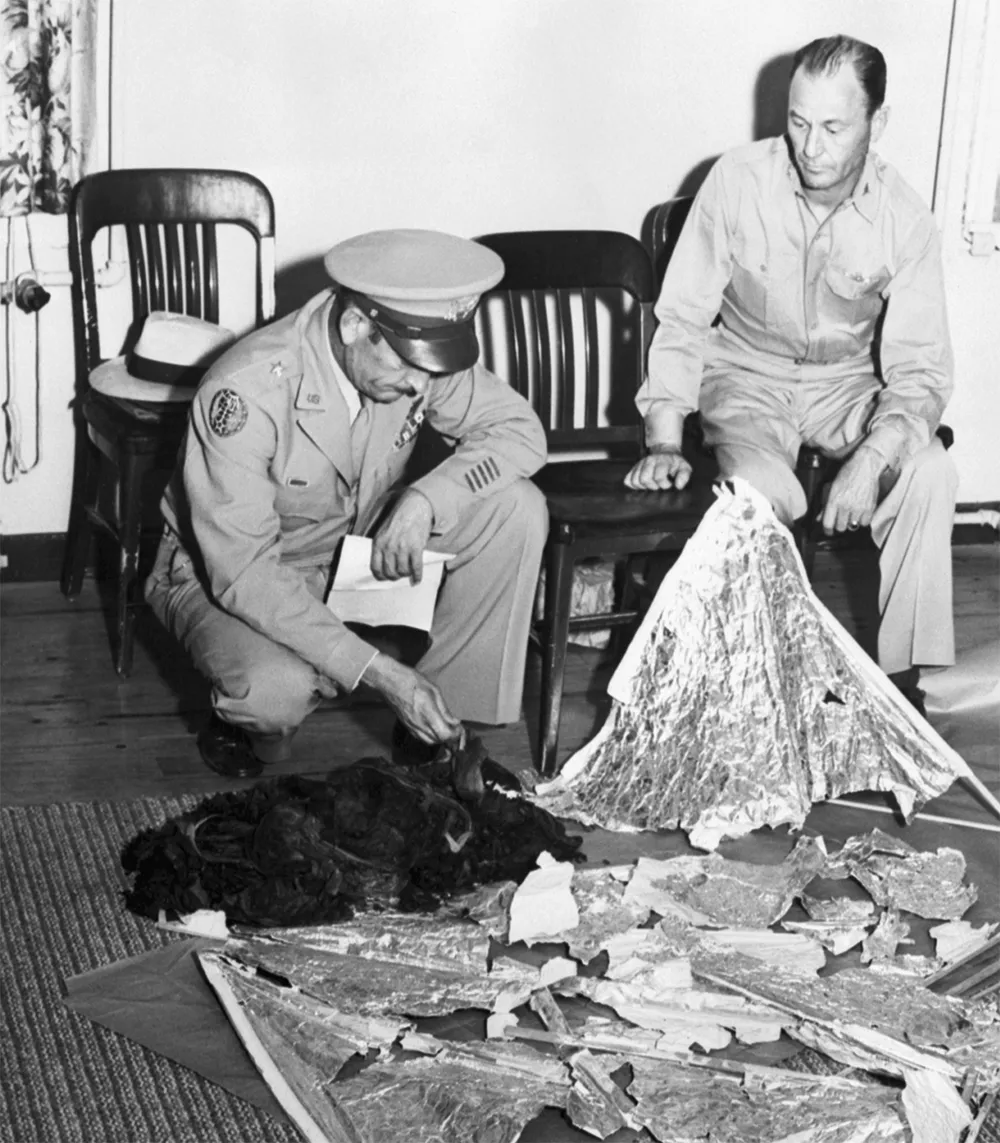
At Fort Worth Army Air Field on 8 July 1947, Brigadier General Roger M Ramey (left) and Colonel Thomas J Dubose, identify metallic fragments found at Roswell as pieces of a weather balloon. Credit: Bettmann / Getty Images
You don't have to believe the reports are true in order to factually catalogue the history of it, do you?
No, I come at this from that very perspective.
I make it very clear from the start, I'm not here to try to present evidence that aliens have been visiting us.
But I also don't come from the perspective of the debunker who's here to tear down every opinion.
I wanted to take the general ethos of most historians and say, I'm here to chronicle the way we've come to think about and talk about and debate this subject.
Especially in this day and age with a lot going on when it comes to discussions about exoplanets and SETI and things like that.
It seems to me it's the time to revisit that history and think about how we got to the point where we are now.
Does it all begin with Roswell?
No, it doesn't begin with Roswell! In fact, Roswell is a blip, a really minor blip. It's a very tiny footnote.
When you look at it in the wider perspective, it actually starts a little earlier than that with a private pilot by the name of Kenneth Arnold, who's flying around Washington State, around Mount Rainier, looking for a crashed plane.
And he sees these strange pan-shaped objects flying at high speeds.
He comes back, lands on the ground and tells people he’s seen some weird stuff, and reports it to the authorities and also the media.
And the media starts asking him questions about it. They ask him, how did these things fly? How would you describe it?
He said they flew like a saucer might if you skipped it over water.
And a very enterprising journalist knew a headline when they saw one and called them flying saucers.
Within 6 weeks, a survey said 9 out of 10 Americans had heard the term flying saucer.
Roswell pops up as a story for about 2 days and then disappears and is never heard of again, until you get into the late 1970s and early 80s.
(L-R) Pilots E.J. Smith, Kenneth Arnold and Ralph E. Stevens look at a photo of an unidentified flying object they sighted en route to Seattle, Washington. Credit: Bettmann / Getty Images
When you hear a report like that from a pilot, someone who’s an expert in aviation, do you find yourself struggling to remain neutral?
Yeah, reports like that pop up all the time and there are lots of head scratchers.
And there are times you read something and you say, this doesn't pass the sniff test.
When you're talking about historical cases where you can't talk to anybody anymore, you're left saying, geez, I wish there was a little more information about this, or I wish somebody had a camera at the time.
But when you hear seasoned pilots, for instance, who are very knowledgeable, talk and describe things that they see, that is really arresting and it makes you pause.
The great Swiss psychologist Carl Jung put it really, really well. He said "things are seen in the sky, but we don't know what".
And even the authorities, whether it's the UK Ministry of Defence or the United States Air Force, all have historically fully admitted there are cases we can never explain.
They make us scratch our heads; we're sort of left with a big question mark.
How do you approach a topic like this as an historian?
There are a couple of things that it's important to keep in mind.
One is that the language that's often used in the UFO world, if you will, is often very sloppy.
Just think of something like the term ‘UFO’: Unidentified Flying Object.
Even though it sounds precise, it was meant to replace ‘flying saucer’, because ‘flying saucer’ was seen as a kind of biased term.
‘UFO’ is biased in its own ways.
Is that really an object? Flying implies piloting and it implies design.
It's fair to say the same thing holds true with the distinction between sightings and reports.
A sighting is an experience that someone has, but we know that the vast majority of people who see something odd never say anything, not to officials, to the media, the police or the Air Force.
Something has to lead somebody to actually report it to some institution – it might be a UFO group, it might be authorities – and they then write it down in some form.
It could be in a messy form, it could be a police officer who's ho-humming it all the time.
So what I'm interested in is reports, these documents that we have.
They oftentimes aren't very detailed. So as an historian we are ultimately left with trying to work with records and documentation.
That can be a recording, that can be an interview, but it oftentimes it’s self reports and also reports by others.
How do we discuss reports of flying saucers? How have different institutions and different groups grappled with it?
And how have they made that into something that they see as worthy of a conversation, and sometimes worthy of some sort of action on the part of people who can take action?
The term 'flying saucer' has now entered our common vocabulary. Credit: KTSDesign / Science Photo Library
Do you find any narrative consistency throughout reports of UFOs?
What's interesting is that's one of the things that changes.
When you look particularly in, say, the first decade or decade and a half of the phenomenon, there is a lot of diversity, in terms of what's reported.
The most common thing that people see are lights. Maybe it's different colors. Maybe they flash off and on, but lights: very vague, very blurry.
Not much more detail than that.
You hear people talking about cigar-shaped things, saucer-shaped things, globes, hexagonal objects.
But you really see the diversity when people say they actually saw the occupants of these vehicles.
In the 1940s and 50s into the early 60s, it's a very wide range, very diverse group of beings that are talked about.
Everything from little men under four feet tall, sometimes as small as under 12 inches.
Other times they're large, hairy monsters that sort of look like Sasquatch.
There are robots, there are males, there are females, there are androgynous beings, there are bulbous heads.
Some are absolutely gorgeous and look like fashion models, all sorts of things.
What happens over time, and this is what's interesting to me, is that those images start to winnow down, and there becomes a kind of a homogeneity to it all, kind of a standardisation, if you will, in descriptions.
And that to me, in part, is something that signals a role that culture is increasingly playing in terms of helping to shape those images into images that are familiar to everyone.
Did you find correlation between the language that's used at the time of a report and current movies, songs, popular culture?
Well, again, what I love about this history is it confounds every preconception I had.
I, like most everybody else, was ready to think there must be so much influence of pop culture on UFO sightings and reports and the way people describe things.
And in part there is. There's no question that the pulp science fiction of the first half of the 20th century had a direct impact on the early alien visitor story, the way people engaged with it.
It's not a surprise that most all of those first few years of people pushing the UFO narrative, there seems to be inspiration from the pulp science fiction world.
But where you see something that doesn't quite connect that way is with film.
The idea has been always that films must have a real profound influence on, say, upticks in the number of sightings.
And that doesn't really bear out. You have a very big wave of sightings and reports in the United States, for instance, in 1952.
But there's no major big UFO film from that time period that takes place.
Or you could take something like Steven Spielberg's 1977 film Close Encounters.
I talked to one of the folks who leads one of the big organizations that were looking into UFOs at the time, and I asked him about it.
And he said, what we saw at the time was not an uptick in new sightings.
People weren't seeing UFOs right after the film, but what they did see an uptick in was the number of people coming forward saying "five years ago, or three years ago, I saw something that seemed like that".
So it triggered that.
And we know from the UK, for instance, that following Spielberg's film E.T., there was actually a downward movement in the number of UFO sightings.
So it doesn't neatly map on to popular culture as much as we like to think at times.
Close Encounters of the Third Kind. Popular UFO movies don't necessarily cause an increase in reported UFO sightings. Photo by Sunset Boulevard/Corbis via Getty Images
You hear people say it's not a coincidence it all kicked off during the Cold War and Space Age.
I definitely would argue that the Cold War plays a critical role in this.
The UFO as we know it is unimaginable without the Cold War, and it's a spectre that haunts the entire history.
People are constantly making references to UFOs.
For instance, in those early years, one of the questions that comes up is, okay, the flying saucers are here, they're aliens.
Why are they here in 1947, 1948? Why now and not five years earlier, 500 years earlier?
And the argument that starts being put forward is, well, the aliens have seen the atomic bomb explosions.
They've seen that we have unlocked the key to atomic energy and they are scared.
They're either scared for us or they're scared of us, but they realise we have reached this level of civilisation that makes us a qualitatively different species.
What I don't see is a lot of what some people have argued is the case, that bad times promote more flying saucer panics or flying saucer reports.
That seems to me a bit of a problematic argument because it seems to me prone to cognitive bias.
Pick up a newspaper from any time period you like, and outside of maybe when the Berlin Wall fell, you will see mostly bad news.
Journalists are very good at reporting bad news and sometimes have a hard time knowing how to make good news interesting!
Do you find a large majority of sightings and reports are from the US? And does that suggest it's to do with the culture of the society?
I would say the evidence shows that the United States plays a very critical role. It's a hub.
It's a hub in that the news emanating out of the United States is what triggers the UFO phenomenon.
Throughout the history of flying saucers and UFOs, whenever there's a new development, like the events occurring since 2017, it is something that gets reported everywhere else.
That said, it's very clear within a few years that there are hubs popping up throughout the world and other places, and the influence actually goes in the other direction at times.
There are places in Europe, in South America, where you see a really pronounced concentration, not only of sightings and reports, but also activities by UFO organisations.
So I would say in Europe, Great Britain, France, Italy, Spain all played a very, very big role.
Whereas in Germany, for instance, it was a much more muted phenomenon.
In South America, Brazil and Chile, Argentina play major roles.
And my argument would be, it has to do with whether or not you have a civilian UFO organization infrastructure.
In places where that gets built up and is sustainable, that's where you see this ability to articulate these narratives and lay out these programs to study the phenomenon, but also to have an impact worldwide on how these things are understood and viewed.
Some argue it's not a coincidence that UFO sightings increased during the Cold War. Photo by Camerique/Getty Images
Did you come across attempts to explain the strangest cases away?
Oh, I see that all the time.
Over the years I've been working on this, I've gotten to know lots and lots of 'ufologists', as they're called, UFO researchers of various kinds, and talked with people who say they've had experiences having contact with aliens or other kinds of beings.
It's a pretty diverse group of people.
I think there's a lack of appreciation just how many diverse perspectives there are when it comes to the flying saucer and UFO phenomenon in terms of how people approach it.
A lot of folks I know are not really altogether different from the people, say, over in the UK defence ministry who were very sceptical about this.
They themselves will tell you 95% of sightings, if not more, are easily explained.
And in fact, many UFO investigators I talk with, this is one of the things they do all the time.
They get a phone call or they get an email, they look into the case and they find out it's a rather mundane explanation.
Somebody was floating Chinese lanterns or somebody saw Starlink satellites which, if you see those things in the sky and don't know what that is, I would call that a UFO sighting.
One of the things I talk about in the book is the motivation for why people get involved in this stuff.
It’s that ability to be a detective, to crack a case.
It's really not altogether different from your favourite true crime podcast where everybody's invited to chime in and crack the case.
It keeps you going in the hope that maybe one day, a case is going to come along that makes you think “this is not going to go away”.
A group of SpaceX Starlink satellites in the night sky over Uruguay. Photo by Mariana SUAREZ / AFP via Getty Images
After you finished the book, was it hard to leave the subject alone?
Yeah, it is hard to leave it alone. I won't be leaving it alone because now I get a lot of people wanting to talk with me and contact me about discussing it.
And I'm going to be working on a new project, writing a book about the controversy surrounding the alien abduction phenomenon that was particularly lively in the 1970s, 1980s, and 1990s.
So no, once you've met the UFOs, they don't leave you alone!
What do you think about the argument that smartphones mean we should have irrefutable proof by now?
The ‘everyone carries a camera now’ argument is one I've heard a lot, and it's actually convinced some old-time UFO investigators that maybe there is not much to this anymore.
I've gotten a response from other UFO researchers who say, we know our smartphones are good at taking a picture of nice food at a restaurant or your friends at a party.
It's not a very refined or precise instrument for tracking something as complicated as a UFO.
US Congress hearing ‘Unidentified Anomalous Phenomena: Implications on National Security, Public Safety, and Government Transparency’, on Capitol Hill, Washington DC, 26 July 2023. Photo by Drew Angerer/Getty Images
How do you feel about more recent reports like those that have occurred since 2017 with the US Navy footage and Pentagon briefings in the US?
First of all, the fact that intelligence officials in the United States have come forward to say unequivocally, these pilots saw real objects, these are not computer glitches, these are not optical illusions, something is there.
That's unusual. That you didn't tend to get over the decades, that kind of admission.
And also their admission that they have maybe been derelict in taking seriously the reports of pilots, that they've ridiculed them, that a certain amount of peer and hierarchical pressure has really influenced people not to report things.
From my position as an academic, what I really find exciting and interesting is NASA's intervention.
Because, you know, NASA is about civilian science, it's not about classified projects.
So adding that legitimacy to me seems to be the really unprecedented step.
That's the thing that I think opens the pathway for people from all sorts of disciplines to begin having conversations about what research projects might look like.
I think we'll see over the next, say five to 10 years, where this takes us.
Think you've seen a UFO in the sky? Consider the following possibilities...
BY Ezzy Pearson
Thousands of people across the world have reported unidentified objects in the night sky, many under the impression that they have witnessed a visiting alien spacecraft.
Reports often feature lights zipping across the sky, changing direction in manoeuvres that seem to defy the laws of physics, not to mention huge shapes that move silently overhead and strange objects that suddenly explode.
We've all heard the stories of the Roswell UFO incident, or the supposed alien species that many 'believers' think inhabits a star orbiting Zeta Reticuli.
The term 'flying saucer' has now entered our common vocabulary. Credit: KTSDesign / Science Photo Library
UFO sightings have a long history. In 1950, the UK Ministry of Defence opened an official desk to investigate every flying saucer report in the UK.
Rather than looking for little green men, however, it was tasked with investigating possible hostile aircraft that may have secretly entered UK airspace.
The desk was closed in November 2009 and after nearly 60 years of reports, not one resulted in a genuine threat to the UK.
But rather than uncovering an extra-terrestrial conspiracy, the last batch of files released by the National Archives revealed that at the time of the closure the MoD had "no opinion" on the existence of extra-terrestrial beings, and seemed a little fed up by the hundreds of reported UFO sightings that they were receiving each year.
But the truth is that the vast majority of UFO sightings have Earthly origins – optical illusions and rare weather among them. Here we'll look at some of the most likely suspects.
So, the next time you see something in the sky and you think it might be a UFO, consider the following possibilities.
A yellow-ish object appears out of nowhere, flying fast and silent across the sky and leaving a glowing trail behind it.
The object suddenly breaks into smaller pieces before vanishing into thin air – all in under a minute.
Over-anxious witnesses might run screaming to the media, but astronomers will be content to have seen a spectacular meteor fireball.
Lens flare
Have you captured a strange glowing orb in a photo? Might it just be lens flare? Credit: Strixcode / Getty Images
If you’ve been observing for a long time you’ll be all too aware that light sometimes bounces off the lens elements in your camera, binoculars or telescope, causing a lens flare.
Some flares can look like solid objects and, if they’re accidentally framed in the right place, a newbie might well mistake them for an unworldly spacecraft.
The Moon
Credit: Dan Fleetwood, Rugby, Warwickshire, 27 July 2020.
Sometimes all rational thought seems to go out of the window.
In 2007, a woman phoned South Wales Police to report a ‘bright stationary object’ that had been floating in the air for 30 minutes.
Later that evening, the police control room radioed to check what an officer had found.
The officer replied: “It’s the Moon. Over.”
The International Space Station
International Space Station over Ribblehead Viaduct by Pete Collins, Yorkshire Dales. Equipment: Canon 6D, Samyang 14mm f2.8 lens at f4, iso200.
The International Space Station is larger than Wembley’s football pitch and significantly brighter than most night sky objects.
It moves fast, taking just a few minutes to cross the sky from one horizon to the other.
It’s also silent, perhaps startling and confusing onlookers who are used to the din of aeroplane engines.
A lenticular cloud can look remarkably like a flying saucer or UFO. Credit: Atosan / Getty Images
The closest you’ll get to seeing a classic flying saucer shape is the so-called lenticular cloud (Altocumulus lenticularis).
They form at high altitudes, near or atop mountains that have moist air blowing over them.
Although the wind speeds are high, the clouds remain stationary.
It’s not hard to imagine you’re seeing a hovering UFO, or a saucer concealed inside the cloud.
A SpaceX frozen exhaust plume
Jeremy Tuck witnessed this strange cloud spiral over North Yorkshire, 8pm UTC, 24 March 2025. It turned out to be the exhaust plume from a SpaceX Falcon 9 rocket.
They’ve been used in Asia for centuries, and now sky lanterns are now becoming increasingly popular around the world. Using the heat generated by a small candle, the paper lanterns can rise up to over 1km in altitude – and if there is little wind when they are released, they can appear to hover overhead.
Several lanterns are often released at once, sometimes tied together so they appear to fly in formation. From the ground it’s easy to mistake this for a single solid object. Today, sky lanterns are the number one cause of UFO reports. In 2009, the number of sightings reported to the MoD’s UFO desk tripled, with most eventually being attributed to these floating lights.
Military satellites
In the 1970s, the US Navy launched a series of surveillance satellites to track Russian vessels.
Dubbed NOSS (Naval Ocean Surveillance System) by civilians, these consist of a trio of satellites that orbit in a triangle formation and are sometimes visible to the naked eye.
Venus
Venus and a starry night sky over the Cotswolds. Photo by Tim Graham/Getty Images
Seen either before sunrise or after sunset, Venus is so bright it’s often mistaken for the landing lights of an aeroplane.
Unlike a plane, though, Venus is pretty much stationary, which gives imaginative observers the impression of something ‘hovering’.
Bright, orangey red Jupiter is another planet frequently taken to be a UFO.
Ball lightning
Credit: ThinkStock
No one is sure what causes this electrical phenomenon, which can measure as much as 1m across. Though often associated with thunderstorms, ball lightning tends to last much longer than a lightning bolt – up to a minute rather then a split-second. It has been reported to move erratically, or hover in place, before either silently fading from view or exploding loudly.
Due to its rare and unpredictable nature there has been little study of ball lightning, but reported sightings date back centuries. There are even reports that the glowing spheres have come into people’s homes down chimneys and through windows.
Space debris
Credit: janiecbros / Getty Images
Junk in low Earth-orbit has become a major problem, with inoperable satellites left behind to become what is collectively known as space junk.
Eventually, atmospheric drag slows them down to the point that they fall to Earth, streaking across the sky as huge fireballs that can last for up to a minute.
Different materials in the debris can create brightly coloured trails as they burn up, adding to their otherworldly appearance.
Sometimes pieces can make it to the ground, leaving behind strangely shaped debris, which some mistake as wreckage from spacecraft of a less terrestrial origin.
Weather balloons
Credit: MileHighTraveller / Getty
Weather stations all around the world release balloons on a daily basis, to monitor current conditions and provide better forecasts. However, an increasing number of weather balloons are being used by members of the public for scientific experiments, educational purposes or simply to capture video from the upper atmosphere.
The balloons can rise to altitudes of 40km, at which point they burst and fall to Earth. From the ground this is often mistaken for an exploding plane or spacecraft. A balloon was responsible for the most famous of all UFO sightings, the 1947 Roswell incident.
Rocket misfires
A Russian bulava missile misfired in December 2009 to produce this strange spectacle. Credit: Jan Petter Jorgensen / REX
In the early hours of the morning on 9 December 2009, a strange white spiral appeared in the skies over Norway. It seemed to be emitting a blue beam from its centre. The weird formation was the result of a Russian Bulava missile test, in which the missile malfunctioned high in the atmosphere. The rocket went wild, venting gas from the side, making the craft spin.
Though it was still night for people on the ground, the Sun had reached the upper atmosphere, illuminating the gas as a white spiral. The light also caused fuel leaking from the missile to glow blue, giving the illusion of a ray beam emanating from the spiral.
Flares from aircraft
A plane shooting flares shooting flares, Qatar, 9 May 9, 2018. Photo by Smith Collection/Gado/Getty Images
In 1997, several hundred people saw a V of lights flying over Phoenix, Arizona. It was later revealed that the lights were the result of a routine training exercise run by the Maryland Air National Guard, in which a group of planes flew in formation, dropping flares.
This kind of exercise is commonly undertaken without being noticed, but on clear nights the flares can be seen from up to 50km away. The intense heat from the flares can create currents in the surrounding air, causing them to hover. If the conditions are mild then the flares can hold their formation, creating the optical illusion of a solid object.
Searchlights
Credit: Andrew TB Tan / Getty Images
Massive searchlights outside clubs, theme parks and festivals are a common sight, sweeping back and forth across the clouds, but when viewed from several miles away they can look like mysterious objects moving in the night. The light
beam is so weak that it cannot be seen, leaving only the bright spots of white light.
These can be mistaken as shining through the clouds, rather than being cast on them. They often appear to be darting back and forth across the sky, but are in reality the work of a lighting technician.
Contrails
Vapour trails lit by the setting Sun. Credit: Ashley Cooper / Getty
Perspective can easily fool the untrained eye. When a plane is flying at right angles towards the horizon and leaving a trail of artificial clouds known as a contrail behind, it can appear to be an object crashing to the ground. The effect of the wind blowing the cloud formations wider emphasises this illusion, and red light from a setting Sun can make them glow red, as if on fire.
Light glinting off the underside of a plane can make it appear as if there is a bright core to the cloud. However the object will appear to be moving very slowly. If something is really falling to Earth, it will move very quickly across the sky, even when seen from a distance.
Meer van UFO'S of UAP'S, ASTRONOMIE, RUIMTEVAART, ARCHEOLOGIE, OUDHEIDKUNDE, SF-SNUFJES EN ANDERE ESOTERISCHE WETENSCHAPPEN - DE ALLERLAATSTE NIEUWTJES