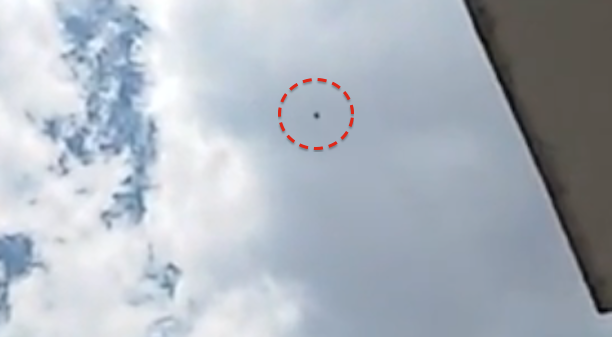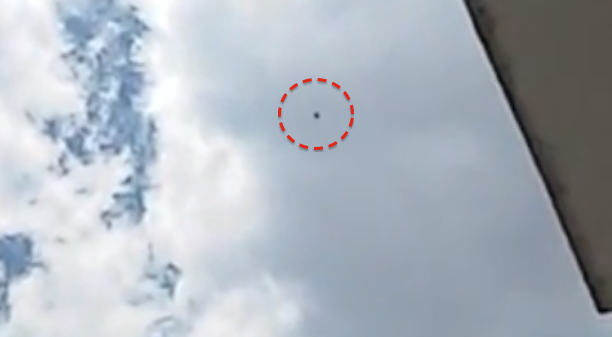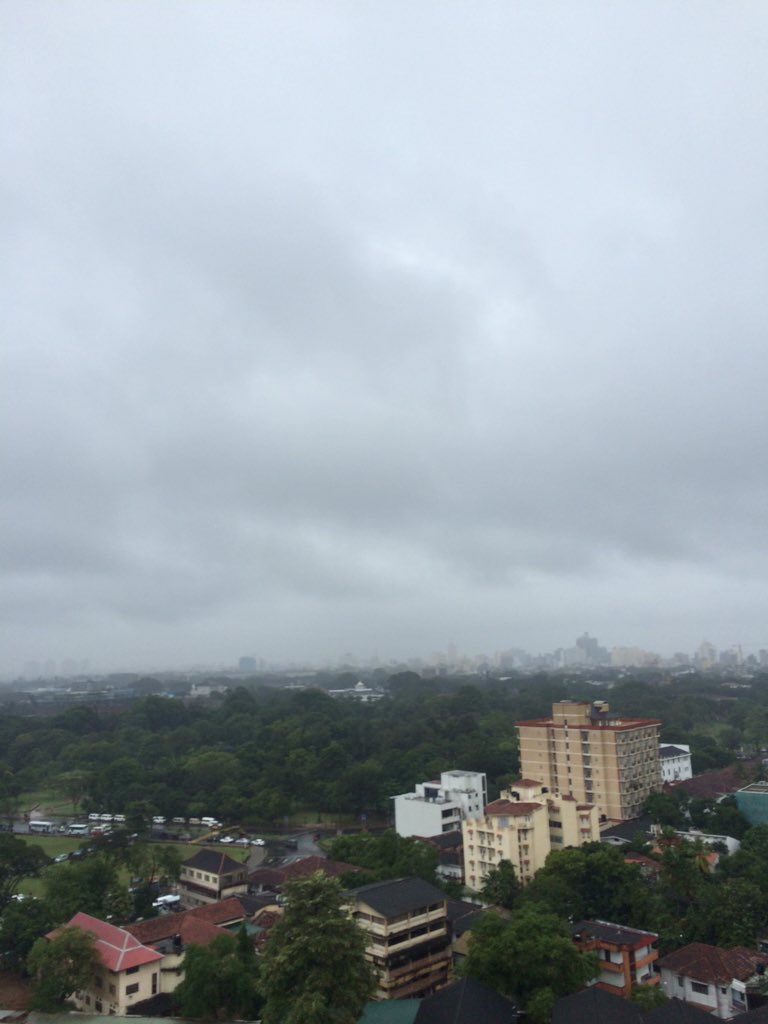
Where are you #wt1190f
Senior SETI Scientist Believes YOU Might Be a Martian

Senior SETI Scientist Believes YOU Might Be a Martian


Senior SETI Scientist Believes YOU Might Be a Martian


Vlaamse toerist fotografeert ‘ufo’ in Barcelona - nieuwsblad.be

Foto: Belgisch UFO-meldpunt
Eén ding is zeker: deze foto die een Vlaamse toerist vorige maand maakte van de skyline van Barcelona, is écht. Pas toen de man enkele dagen later thuiskwam en de panoramische foto van de Spaanse stad nauwkeuriger bekeek, zag hij het vreemde ding in het midden van de foto.
Het beeld wordt nu onderzocht door het Belgische ufo-meldpunt. “De foto is niet nep”, zegt Frederick Delaere. Toch zijn ze er niet van overtuigd dat de witte schijf die door de lucht lijkt te zoeven, echt een ‘ongeïdentificeerd vliegend object’ is, “aangezien niemand anders iets opmerkte op het moment dat de foto genomen werd. Ook de fotograaf had niets door.”
“We denken dat het een insect of een vogel is, die toevallig dicht bij de cameralens vloog. De foto werd genomen vanop de Montjuïc, een heuvel in het zuidwesten van de stad waar veel planten en bomen staan. Als het een insect was, moet het een vlinder geweest zijn. Drie Spaanse onderzoekers die we hebben aangeschreven, denken dan weer dat het om een zeemeeuw gaat.”
Wheel of Giants: Prehistoric 'Stonehenge' Monument In Golan Heights Fuels Mysterywww.undergroundworldnews.com
Driving past it, one of the most mysterious structures in the Middle East is easy to miss. The prehistoric stone monument went unnoticed for centuries in a bare expanse of field on the Golan Heights.
After Israel captured the territory from Syria in a 1967 war, archaeologists studying an aerial survey spotted a pattern of stone circles not visible from the ground. Subsequent excavations revealed it was one of the oldest and largest structures in the region.
Known as Rujm el-Hiri in Arabic, meaning the "stone heap of the wild cat", the complex has five concentric circles, the largest more than 500 feet (152 m) wide, and a massive burial chamber in the middle. Its Hebrew name Gilgal Refaim, or "wheel of giants", refers to an ancient race of giants mentioned in the Bible.
It is up to 5,000 years old, according to most estimates, making it a contemporary of England's Stonehenge. Unlike the more famous monument built with about 100 huge stones topped by lintels, the Golan structure is made of piles of thousands of smaller basalt rocks that together weigh over 40,000 tons.
Read More:
http://news.yahoo.com/prehistoric-sto...
Russian General: “We’ve Been Summoning UFOs for Over 30 Years”


.jpg)
Mysterieus object WT1190F stort neer op vrijdag de dertiende
Het mysterieuze object WT1190F is vanochtend rond 07.00 uur Nederlandse tijd neergestort boven de Indische Oceaan.
Wetenschappers zijn er kort geleden in geslaagd om de baan van het object, dat in oktober dit jaar werd ontdekt, te berekenen. Zodoende voorspelde het Europese ruimteagentschap ESA dat WT1190F op vrijdag 13 november zou neerkomen op zo’n 100 kilometer van de zuidelijke kust van Sri Lanka.
In Sri Lanka zaten heel wat enthousiastelingen klaar om het gebeuren te volgen, maar de wolken gooiden roet in het eten. Het is ook mogelijk dat het ruimteobject in de atmosfeer is verbrand voordat het de aarde kon bereiken.
De autoriteiten namen het zekere voor het onzekere. Zo mochten er geen vliegtuigen vliegen over het gebied waar WT1190F zou neerstorten en ook mocht er niet gevist worden.
De onderzoekers weten niet zeker wat het is. Wel weten ze dat het een hol object is met een doorsnee van een paar meter. Ze vermoeden dat het onderdeel is geweest van een raket die al enkele jaren in de ruimte zweeft. Na analyse bleek dat het object al eerder was waargenomen in 2012 en 2013.
WT1190F blijft de nodige vragen oproepen. Er hangt veel ruimtepuin rond de aarde, maar dit object zat in een heel langwerpige elliptische baan om de aarde. Gezien de baan denken onderzoekers dat het een restant kan zijn van een maanmissie, eventueel van de Apollomissies eind jaren zestig.
Omdat dit één van de weinige grote brokstukken is die terugkomt naar de aarde, is er wereldwijd heel wat aandacht voor het neerstorten van het object.

Where are you #wt1190f
[VTM]
Antarctisch UFO-mysterie wordt groter: “Crashplek bewaakt door tanks”
Complottheoristen claimen bewijs te hebben gevonden van ‘legervoertuigen’ die de crashplek van een mysterieuze UFO ‘bewaken’. Dat meldt de Britse Daily Express.
Eerder dit jaar zei de Russische onderzoeker Valentin Degterev uit Nizjni Nagil op Google Earth een ongeïdentificeerd object te hebben gespot. Andere onderzoekers hebben satellietbeelden gevonden van dezelfde plek, die dateren van april en december 2011.
Volgens sommigen tonen de beelden vier tanks bij een vreemde scheur in het oppervlak op Google Earth, alsof een UFO na een noodlanding een spoor door de sneeuw heeft getrokken. Op eerdere foto’s is de ‘crashplek’ wel te zien, maar ontbreken de vier extra objecten.
Degterev zette de beelden afgelopen zomer op internet, waarna ze al snel viraal gingen. Hij is ervan overtuigd dat het enorme object een ‘vliegende schotel’ is, die half onder de sneeuw bedolven ligt. De beelden die hij heeft gebruikt zijn gemaakt op 15 februari 2012.
Hij schat dat het object 62 bij 12 meter moet zijn. Sommige reageerders waren er zeker van dat het niets meer dan een kloof is, terwijl anderen zich afvroegen wat er met de inzittenden is gebeurd.
[Express]
Spinning UFO Over Portugal Neighbourhood On Nov 12, 2015, Video, UFO Sighting News
White Glowing UFO Over Santa Tecla, El Salvador On Oct 29, 2014, Video, UFO Sighting News.
Bright UFO hovering above Arizona

Here’s one interesting sighting of an bright object hovering in the sky above Bullhead City in Arizona. This happened on 30th October 2015.
Witness report: UFO observed for 30 minutes or More. Bright intense, changing lights, Changed into two objects than back to One. Witnessed for three nights in a row.
My father was walking to the grocery store right down the street. He noticed a long bright light up on the mountain ridge to the West. He came in and got me and his girlfriend and we went out in the front yard to watch this strange light. It was there for a good 30 minutes or more, and for three nights we saw this. The unidentified objects most mysterious thing was that it would be a small white light and then all of a sudden get brighter and brighter to where it was blinding and we could hardly look at it. It would move up and down a little but mostly kept its path going slowly back and forth in a North and South direction. It would blink, change color to red, Disappear then reappear. A few times it changed from one object into two than back as one again. I have many short video recordings on my camera. Every time I try to submit them it knocks me offline. This is my forth attempt at submitting this so I am just going to attach one video and one picture. You can let me know if you would like to see the rest. To see everything this UFO was doing you would have to watchall the videos. What is going on in Bullhead City ?? My father and I are very interested in finding out what that was we were watching for three days.
Author (source: MUFON)
UFOs Have Allegedly Been Scanning Above The Martian Surface

Extraterrestrial researchers – who have been claiming to have seen evidence of alien fossils, statues, buildings, ET beings, and other objects from the Red Planet – now claim to have finally found proof of alien craft.
Several pictures from NASA Curiosity rover allegedly show a four-wheel-drive droid that believed to be doing exploration on the surface and taking photos and rock samples.
In one of the pictures taken on November 3 and made available online by NASA on the next day, seems to show a dark object in the sky at the distance. When zoomed in, the photo reveals what looks like a flying saucer.
In different pictures captured on the same day, two dark objects allegedly appear in the sky. It seems that the two rear cameras of the Curiosity both caught the objects in different positions. Then a little earlier it took place again. Online alien chasers think that it is clear evidence that something is flying above Mars.
In a YouTube video of paranormal channel Streetcap1, it shows a separate image in November showing a third UFO during a sunset on the Red Planet. The UFO is thought to be tilted to an angle and looks like a drone.
However, skeptics suggested that inexplicable images in photographs do not automatically make them alien craft, and they could be just dirt on the lens.
(exclusive video)Colossal Green Fireball Captured While Dashing Over Thailand’s Sky
Large Blimp Like Alien Craft Spotted In Texas
Hi, my name is Michael. I live in Pearland Texas, just on the outskirts of Houston. I had a strange sighting this past October 22nd. I’ve been looking for an explanation online somewhere but haven’t found anything close to what I saw, maybe you or one of your readers could shed some light on it.
About 8:30 am I was on my way home from dropping a friend off at work, I was turning from Interstate 45 onto Dixie Farm Rd, when I saw what initially looked like a plane, but I just can’t say that’s what it actually was, due to its strange appearance. It looked like a plane, only it was sort of fat in appearance, its wings were average size, but it had no windows, and I saw no engines. It was dull gray with a single blue stripe along the length of its body. I figured it had to be a blimp, only there were no tether wires or strings holding it in place. It was perfectly still and unwavering despite it being a very windy overcast day. It was very low to the ground, perhaps the length of three or four cars high. It was perfectly still and above a small mining facility.
To attach something like this to that machinery I’m sure would be dangerous and illegal. It was the same body length as it was high up from the ground (3-4 car lengths). I wanted to take a picture but due to the mining equipment, there is no place to pull over. I drove about two blocks down, made a u-turn and went back to see it again as it truly was an odd sight, but upon returning, it was gone. I just don’t see how it could disappear in the two minutes it took me to turn around and come back to where it was. I drove around to see if maybe it had floated off, thinking it had actually been a blimp after all, but it was nowhere to be seen. I’m not ready to say that it was extraterrestrial, but it definitely was a UFO. I live in between Hobby Airport and NASA so I guess anything is possible. I’m just really curious if anyone else saw it or something similar to it. µ
NOTE: The above image is a rendering.
KEN PFEIFER WORLD UFO PHOTOS AND NEWS
THANKS TO WWW.UFOCASEBOOK.COM
A Brief History of UFO Sightings in Los Angeles

Los Angeles Examiner's photo of the Battle of Los Angeles via USC Libraries
Late last week, Angelenos were confused/awed/terrified by the sight of a mysterious streak of light illuminating the night sky across its entire length. For hours, no official explanation was offered, leading everyone in town to speculate wildly on Twitter about what it was. It turns out that it was the Navy testing their Trident II missile, which is used to deter nuclear attacks; to prevent the prying eyes of the Russians, the Navy released no details to the public prior to the launch. It was a reasonable, if not slightly off-putting explanation, but it didn't take long for people to cry conspiracy. Was it a comet? Was it an alien? What was the government hiding? We may never know, but for some conspiracy theorists, speculation will probably continue for years. And the Trident incident is not alone—Los Angeles actually has a rich history of unexplained phenomenon in its skies. Here's a rundown of LA's best UFO stories throughout history:
February 24 to 25, 1942
Sighting: In the midst of World War II, Los Angeles is put on a high-alert blackout one February evening when it's feared that an unidentified object in the sky is a Japanese aircraft. Anti-aircraft gunners anxiously await news of the impending danger, and when reports came in that an object has been spotted in the air near Santa Monica, the sky "erupted like a volcano" with gunfire. Three people die from falling shells and three others succumb to stress-induced heart attacks in the hour-long ordeal.
Reality: After the end of the war, the Japanese refuted claims that they had sent any planes into American airspace. In 1983, the Office of Air Force History offered a thorough report on the incident that stated a case of wartime nerves caused a chain reaction of shooting that lit up the sky for hours. The report found that the initial cause of the chaos was a weather balloon the Navy had spotted in the sky, mistaken for an enemy plane, and proceeded to bomb the hell out of. Once firing began, smoke from the 1,500 rounds of anti-aircraft artillery obscured the field of vision, and gun outposts up and down the coast responded by firing all they had at the sky.
May 3, 1957
Sighting: While testing the landing gear on a new aircraft, crew members report seeing a saucer-like aircraft that hovered near them as they flew. They manage to capture both still images and motion pictures of the craft with the cameras they had been using to document the aircraft testing. Upon landing, the two crew members report the incident to Captain Gordon Cooper, showing him the film and photos. Understandably confused, Gordon informs the Pentagon of the incident and they tell him to send all original film and photos to Washington for analysis. The Pentagon does not follow up on the incident and the images are never seen again.
Reality: No official explanation was ever given for the sighting. Captain Gordon Cooper maintained for several years that the government regularly covers up UFO encounters. In his memoirs published in 2000, Cooper claimed to have seen many unidentified aircraft during his career. Six years after the incident at Edwards Air Force Base, Gordon became a flying object himself, orbiting Earth 22 times as an astronaut for the Mercury-Atlas 9 mission.
May 24, 1952
Sighting: Orfeo Angelucci, an assembly line worker at the Lockheed Martin plant in Burbank, makes contact with extra terrestrial beings on his drive home from work. According to Angelucci, a red, glowing oval appeared from the sky, emitting two globes of green lights that appeared in front of his car. From the balls of light, Angelucci hears a masculine voice speaking perfect English that calls him out of the car and offers up a mysterious drink in a crystal goblet. Angelucci is told his "higher vibrational perception" makes him one of three humans that the alien beings feel comfortable contacting. Over time, their relationship grows, as the beings took him in their craft for several journeys into the cosmos.
Reality: A sickly man from childhood, Angelucci moved to Los Angeles from Trenton, NJ because thunderstorms caused him mental anguish. On his way to LA, he was checked out by doctors at the Mayo Clinic and told to only engage in jobs that would not overwork his "weakened constitution." He then immediately takes a job working the graveyard shift at an airline assembly plant.
From his own, published account of the day he made contact with aliens:
After several cups of coffee and an exchange of good-natured banter with some of the customers, I left and went to my job at the Lockheed Aircraft Corporation plant. Things went along well enough during the earlier part of the evening, but about 11 o'clock I began to feel ill. An odd prickling sensation was running through my hands and arms and up into the back of my neck. I had a slight heart palpitation and my nerves were on edge.
He drives home and sees aliens. Verdict? Switch to decaf, Orfeo.
April 15, 1966 and December 29, 1968
Sighting: Catalina has become a small hotbed for alleged UFO sightings, enough to even support a guided UFO tour. The island's UFO-mania all started on the morning ofApril 15, 1966. At 9:45 am, in the skies above the Catalina Channel, a silver disc-like object is seen rocketing through the sky at an estimated speed of 170 mph. Grainy black and white footage is taken of the sighting.
In 1968, Paul Allione sees a set of bright lights in the sky in the same location as the 1966 sighting. The line of lights appear to tilt in the sky before stopping and hovering above the ocean.
Reality: After being inundated with calls from confused locals, the news reports that the mysterious moving lights in the sky was a weather balloon launched by two college students.
Daily UFO Headlines 11/12/2015openminds.tv
Is dit de belangrijkste exoplaneet ooit ontdekt? - HLN.be

Een impressie van GJ 1132b, die rond een rode dwerg cirkelt. © Dana Berry.
STERRENKUNDE Een rotsachtige planeet ter grootte van de aarde, op amper 39 lichtjaren - een steenworp, in astronomische termen - hier vandaan. GJ 1132b, in het sterrenstelsel Vela, zou volgens astronomen wel eens de belangrijkste exoplaneet zijn die tot nu toe werd ontdekt.
Deze buitenaardse wereld cirkelt rond een rode dwerg (een kleine, zwakke ster) en is ongeveer zestien procent groter dan onze aarde. Maar vooral bevindt hij zich drie keer dichterbij dan de dichtstbijzijnde aarde-achtige, rotsige planeet die tot nu toe gevonden was.
Op die afstand, zo hopen astronomen, zullen ze met behulp van telescopen de chemische stoffen in de atmosfeer van de planeet, de snelheid van de winden en de kleuren van de zonsondergangen zorgvuldig kunnen ontleden. En dat is dan weer beloftevol voor de toekomst, want die informatie kan wetenschappers helpen om te zoeken naar tekenen van leven op andere planeten.
'Deze planeet lijkt op de aarde, bevindt zich dichtbij, en zijn ster zal het onderzoek niet belemmeren'Drake Deming, astronoom
De ster waarrond de nieuw ontdekte planeet zich beweegt, is maar een vijfde zo groot als de zon en dus ook veel koeler en zwakker. Maar GJ 1132b bevindt zich zo dicht bij zijn ster dat de oppervlaktetemperaturen oplopen tot 260 graden Celsius. De verschroeiende hitte maakt het onmogelijk dat er vloeibaar water op het oppervlak is - en dus dat er leven te vinden is. Maar wellicht is het er net niet heet genoeg om de atmosfeer weg te branden.
"Indien deze planeet een atmosfeer heeft, kunnen we mogelijk ook andere, koelere planeten met een atmosfeer vinden die rond kleine sterren draaien", zegt onderzoeker Zachory Berta-Thompson van het Kavli Institute for Astrophysics and Space Research aan MIT. "Die kunnen we dan doorzoeken op moleculen die ontstaan door leven."
Volgens Drake Deming, astronoom aan de universiteit van Maryland, is GJ 1132b "wellicht de belangrijkste planeet ooit ontdekt buiten ons zonnestelsel". Zijn nabijheid en baan rond een rode dwerg zullen astronomen toelaten de planeet te bestuderen met een ongekende nauwkeurigheid. "Hij lijkt op de aarde, is dichtbij, en zijn ster zal het onderzoek niet belemmeren."
De planeet wordt ook een belangrijk doelwit voor toekomstige missies, waaronder de ruimtetelescoop James Webb die naar verwachting in 2018 gelanceerd wordt en de Giant Magellan-telescoop die in 2025 in werking treedt in Chili.
Police Remains Clueless About the Appearance of Crop Circles On Wheat Fields In Argentina

Police investigators have no idea as to who or what is making a series of strange crop circles in Argentina.
The unusual pattern of wheat fields have appeared in the northern province of Salta in 2015, and the latest one was on a plantation in Chicoana.
Mercedes Casas, a crop circle investigator, said that the latest pattern has nine circles that begin big and get smaller until the last one.
The first circle has seven metres in diameter and gradually gets smaller until four metres with some interesting markings, Casas described. She added that lines connect the circles, approximately a metre wide and a few centimetres tall.
Another formation of crop circles appeared in Salta in February.
Mercedes believes humanoids designed these rings. These humanoids, according to Mercedes, are extra-terrestrial entities in the form of humans that appear tall and blonde.
A physics professor at Truman State University, Taner Edis, said these circles all fall within the range of hoaxes so far. Edis explains that he’s aware of claims of obscure natural causes or alien origin, but there’s no scientific evidence for such explanations.
Door de ontdekking van dit hemellichaam wordt er weer volop gespeculeerd over planeet X
Astronomen hebben een nieuw object ontdekt in ons zonnestelsel, dat drie keer verder van de aarde staat dan Pluto. “We weten niets over de omloopbaan van dit object,” zei Scott Sheppard van het Carnegie Institute of Washington. “We weten alleen dat het gaat om het meest afgelegen object in ons zonnestelsel.”
Het nieuwe object is V774104 gedoopt en staat op ongeveer 103 astronomische eenheden (afstand tussen de aarde en de zon) van de zon. De twee Pioneer-sondes, die sinds 1972 en 1973 door de ruimte reizen, staan op ongeveer dezelfde afstand van ons af.
Wetenschappers schatten dat het hemellichaam tussen de 500 en 1000 kilometer in doorsnee moet zijn. In de buurt van V774104 zijn nog meer hemellichamen aangetroffen. Omdat ze zo langzaam rond de zon draaien, zal het ongeveer een jaar duren voordat er meer bekend is over hun omloopbaan en herkomst.
Als ze richting Neptunus bewegen, zijn ze waarschijnlijk uit het binnenste deel van het zonnestelsel verstoten. Het is ook mogelijk dat ze uit de binnenste Oortwolk komen. Er zijn tot op heden maar twee objecten ontdekt die daar vandaan komen: dwergplaneet Sedna en 2012 VP113.
“Sedna en VP113 zijn de enige objecten in het nu bekende zonnestelsel met een omloopbaan die niet kan worden verklaard,” zei Michael Brown van het California Institute of Technology.
Eén mogelijke verklaring voor de vreemde omloopbaan van deze objecten is de aanwezigheid van een hele donkere rotsachtige planeet, die de objecten als een soort schaapsherder bij elkaar houdt.
Het is goed mogelijk dat voorbij Pluto nog een Neptunus-achtige planeet of superaarde staat die niet kan worden gedetecteerd met de huidige telescopen. Het is ook mogelijk dat de objecten zijn beïnvloed door een passerende ster.
Als blijkt dat de omloopbaan van de objecten niet wordt beïnvloed door bekende reuzenplaneten, zal worden gekeken of de banen kunnen worden gelinkt aan een nog onbekende reuzenplaneet in de buitenste regionen van ons zonnestelsel.
[Popular Mechanics via New Scientist]
The psychology of Conspiracy Theories……why we believe in Conspiracy Theories
The psychology of Conspiracy Theories…..why we believe in Conspiracy Theories (an excellent page by Rob Brotheton)
“Everyone loves a good conspiracy theory. The plots of countless Hollywood blockbusters, bestselling books, and beloved TV shows revolve around conspiratorial shenanigans, and surprising numbers of people believe that the kinds of vast, insidious conspiracies that Mulder and Scully routinely unearthed on The X-Files are happening right now in the real world. Yet conspiracy theories are not a recent invention, and they are not always a harmless curiosity.
In “SUSPICIOUS MINDS: Why We Believe Conspiracy Theories” (Bloomsbury / November 17, 2015 ), Rob Brotherton, a research psychologist and leading expert on the psychology of conspiracy theory, explores the history and consequences of conspiracism, and offers insights into why so many of us are drawn to implausible, unproven and unprovable conspiracy theories. They resonate with some of our brain’s built-in quirks and foibles, and tap into some of our deepest desires, fears, and assumptions about the world. But conspiracy theories are not unique in eliciting our brain’s biases. From our love of heroic underdogs to our tendency to see hidden hands behind ambiguous events, the same mental quirks that make conspiracy theories appealing are constantly shaping how we think about the world. Most of the time our biases simply slip by unnoticed.
The fascinating psychology of conspiracy theories tells us a lot about how our minds are wired and, indeed, why we believe anything at all. Conspiracy theories are not some psychological aberration—they’re a predictable product of how brains work. And, of course, just because your brain’s biased doesn’t always mean you’re wrong. Sometimes conspiracies are real. Sometimes, paranoia is prudent.
Conspiracy theorists aren’t just a few kooks lurking on the paranoid fringes of society with bizarre ideas about shape-shifting reptiles secretly running society. According to Brotherton, we’re all conspiracy theorists—some of us just hide it better than others.
And here’s what people are saying about it…
“[Brotherton] casts doubt on the assumption that far-fetched beliefs are reserved for the simple-minded or the exceedingly paranoid…Although we like to think our judgments are based on evidence, Brotherton reveals that a host of psychological factors come into play whenever we choose what to believe.” –Scientific American
“The world of conspiracy theory is a minefield of manic personalities, but Brotherton uses a measured scientific tone to explain our more creative anxieties. His writing style is inviting and even cheeky, and the book is a page-turner. A thoughtful, general analysis of conspiracy theories arguing that belief in secret plots is neither new nor unusual but a time-tested part of the human experience.” –Kirkus Reviews
“Clearly written and with liberal use of humor and numerous examples from scholarly research, this title provides a valuable look at why conspiracy theories abound and why we should continually assess our thinking.” –Library Journal, starred review
“Over the course of this all-too-short book, Brotherton illustrates how incomplete, contradictory, coincidental, and incongruent information can allow people to see conspiracies and connections where there are none, due in part to the theories’ plausibility and humans’ innate desire for order, as well as a given individual’s understanding of how the world works. Put simply, people want to believe. Brotherton maintains an educational approach to the material, leading readers through the logic behind each concept as he explores subjects as diverse as the Illuminati, the Protocols of the Learned Elders of Zion (“not a very good fake”), the Kennedy assassination, and birthers. While Brotherton might not convince all believers to remove their tinfoil hats (a concept whose origin he explains), it’s sure to make readers question their worldview.” –Publishers Weekly, starred review”
Norio Hayakawa’s CIVILIAN INTELLIGENCE NEWS SERVICE
E-mail = noriohayakawa@gmail.com
Scientists think they just found the most important planet outside our solar systemScientists think they just found the most important planet outside our solar system
© Dana Berry/Sky
A small planet, just a bit bigger than Earth, has been spotted in our stellar neighborhood, just 39 light-years away.
Known as GJ 1132b, it is the closest rocky exoplanet to have ever been found, and astronomers say it could provide our most in-depth look yet at an alien world not so different than our own.
Drake Deming, an astronomer at the University of Maryland, was so excited about the findings, published this week in Nature, that he described the new world as "arguably the most important planet ever found outside the solar system" in an accompanying News and Views article.
The newly discovered planet is just 16 percent larger than Earth, and it is made of rock and metal like our own planet. However, scientists say it is not likely to host life as we know it.
Its small, dim, sun is just one-fifth the size of our own sun, but GJ 1132b circles it at a distance of just 1.4 million miles, completing a full orbit once every 1.6 Earth days. (For perspective, Mercury orbits the sun from a distance of 36 million miles.)
The exoplanet's close proximity to its host star keeps its temperature at a broiling 500 degrees Fahrenheit — or about as hot as the highest setting on your home oven, said Zachory Berta-Thompson, a post-doc at the Massachusetts Institute of Technology's Kavli Institute for Astrophysics and Space Research.
At that temperature, liquid water cannot exist on the planet's surface, although scientists say it is likely the planet still has an atmosphere.
"Our best guess is that this planet looks like Venus," said Berta-Thompson, who was also the first author on the study. "But we won't have to guess for long. This is the first rocky planet for which we have the chance to go out and observe its atmosphere."
GJ 1132b was discovered with the help of the MEarth-South Observatory, a Harvard University lead array of eight 16-inch wide robotic telescopes stationed in the mountains of Chile. The array is specifically tasked with looking among nearby stars exoplanets that in some way resemble Earth.
"The idea is if we can find the planet in a small telescope, we can study it in much more detail with a large telescope," said Berta-Thompson.
The researchers first detected GJ 1132b in May 2014, when they noticed a telltale dip in the brightness of a small red dwarf star that suggests a planet had passed in front of it, blocking some of its light.
After confirming the finding with a smattering of other telescopes, the researchers proceeded to do a series of measurements and calculations to characterize the exoplanet.
By measuring how much the star dims each time the planet passes in front of it they were able to determine the planet is just a bit bigger than Earth.
By looking at the frequency of the dips in the star's brightness they could say with certainty that the planet orbits its sun once every 1.6 Earth days.
The orbital period of the planet can also be used to calculate how far the exoplanet is from its host star, which in turn helped the researchers estimate how much the planet is likely heated by its star.
And there's more.
Planets exert a slight gravitational pull on their host stars, causing them to wobble. By measuring how much a star wobbles, astronomers can determine an exoplanet's mass. Because they also know its size from looking at how much light it blocks, they can also figure out the planet's density.
"The mass was telling us that this planet is for the most part a big ball of rock and iron, and not just big puffy ball," Berta-Thompson said. "For example, we could have measured that the density was the same as a bag of feathers."
But Berta-Thompson said these initial investigations of the newly found planet are just the beginning of what he hopes will be a lot more study yet to come — especially once the powerful James Webb Space Telescope is launched in October 2018.
"We've come up with theories about rocky planets — how they formed, how they got into their current orbits, what physical processes occur on them — but we have not been able to test many of them," he said. "The discovery of this planet gives us the opportunity to switch our focus from imagining what is out there to testing our theories observationally."