

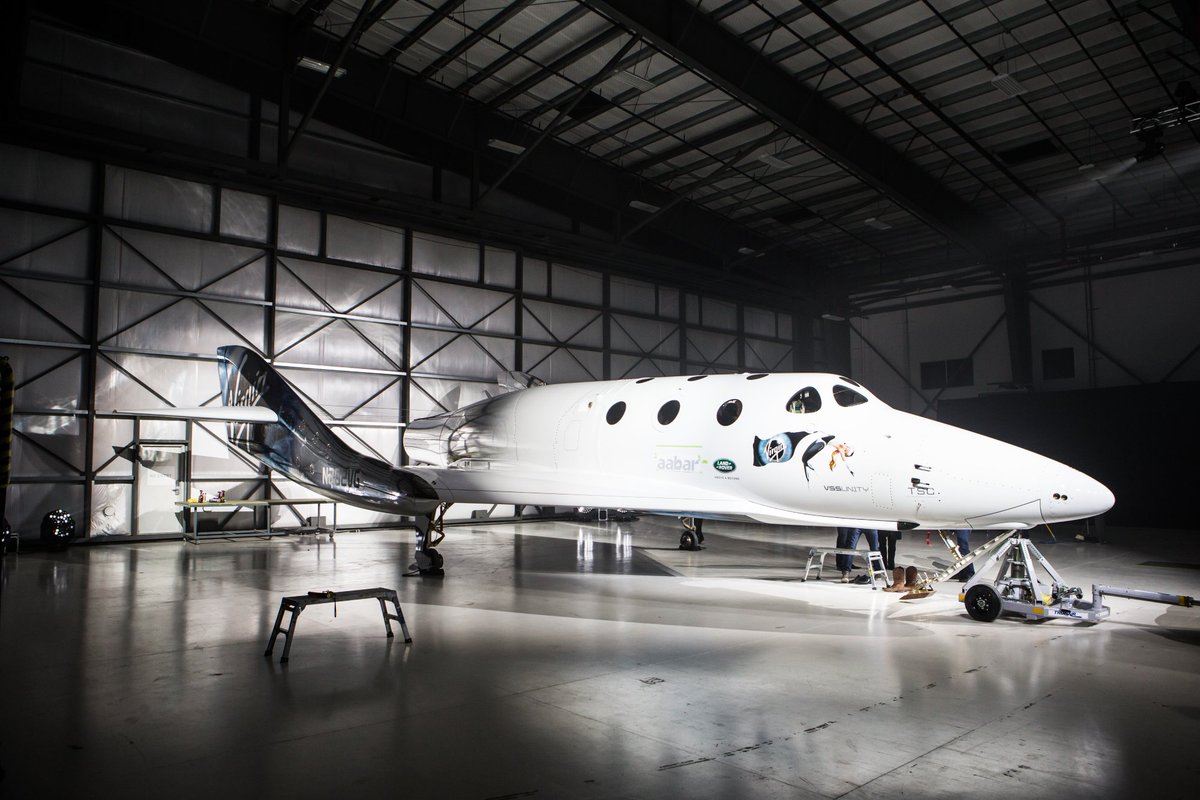
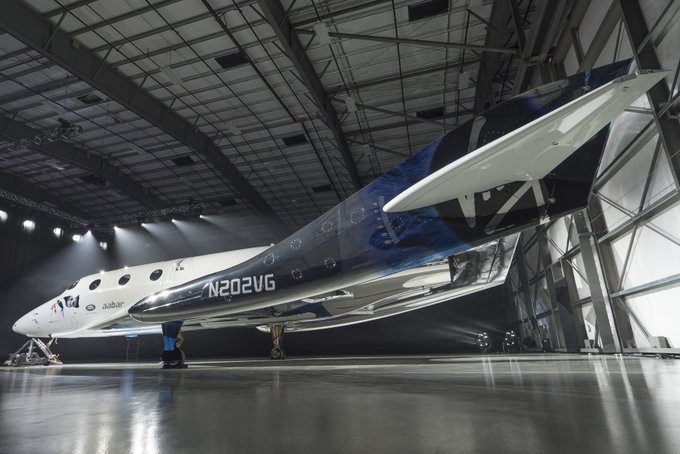
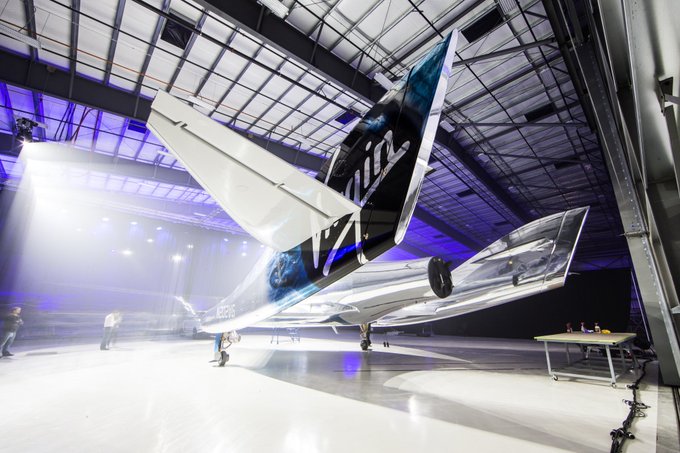
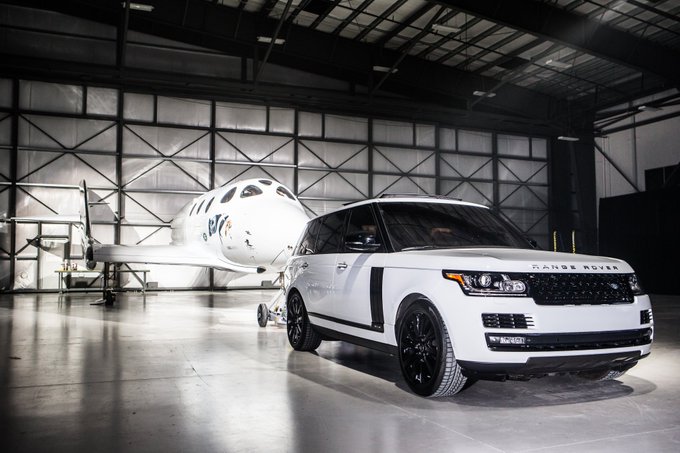
Ladies and gentlemen, please meet the new #SpaceShipTwo. More photos and info coming soon.
Triangle Close Encounter Near Florida’s State Line

Triangle Close Encounter Near Florida’s State Line
Miners In Siberia Find What Could Be Evidence Of Extraterrestrial Life
In Siberia, a mining company keeps coming across these strange stone circles that eerily resemble the classic symbol of extraterrestrial life on Earth: the flying saucer. Experts and ancient alien skeptics alike are baffled by the find.
Some ufologists claim that this is a small monument to an ancient race of extraterrestrials who appeared on Earth thousands of years ago. It could be that, I guess…or it could be a sign that our early ancestors were just bored and wanted to mess with future generations. What I’m saying is this: We’ll probably never know.
Source:
Virgin Galactic onthult nieuw ruimteschip - HLN.be
Virgin Galactic, het ruimtevaartbedrijf van Richard Branson, onthulde vrijdag zijn nieuwste ruimteschip in de Mojave Lucht- en Ruimtehaven in Californië. Het toestel dient ter vervanging van het model dat crashte in 2014: daarbij kwam een testpiloot om het leven.

Ladies and gentlemen, please meet the new #SpaceShipTwo. More photos and info coming soon.
Het nieuwe toestel krijgt dezelfde naam als het gecrashte exemplaar: SpaceShipTwo. Virgin Galactic liet ook weten dat er veel meer testen zullen gebeuren vooraleer het toestel een solovlucht zal maken, om een nieuwe crash te vermijden.
Volgens de firma is het nieuwe voertuig erg gelijkaardig aan zijn voorganger, dus zal het "de voordelen genieten van de bijzonder nuttige data uit 55 succesvolle proefvluchten en de brutale, maar belangrijke lessen van één tragisch proefvluchtongeluk".
Commerciële ruimtevaart
Zodra het toestel volledig vliegklaar is, wil Virgin Galactic passagiers meenemen tot een hoogte van 80 kilometer boven het aardoppervlak.
"Een ding dat ik bijzonder krachtig vind, is dat we in staat zullen zijn om een nieuwe blik op onze planeet te werpen, terwijl honderden en uiteindelijk miljoenen mensen in staat zullen zijn om de ruimte in te gaan," zei George Whitesides, CEO van het bedrijf.
Meer dan 700 mensen hebben zich al opgegeven om een vlucht te maken met Virgin Galactic, hoewel het bedrijf een voorschot van 250.000 Amerikaanse dollar (225.000 euro) vraagt voor een plaatsje.
Wanneer de eerste passagiersvlucht zal plaatsvinden is nog niet duidelijk. De maatschappij laat weten dat ze niet gehaast is.
Piloot vs. automatische besturing
Hoewel sommige toestellen van concurrende ruimtevaartbedrijven volledig vertrouwen op een automatische besturing, is het systeem van Virgin Galactic volledig afhankelijk van de vaardigheden van de piloten. Volgens het bedrijf past die aanpak in hun streven naar eenvoud: "De verantwoordelijkheid is groot. Maar de reden waarom we dit in de eerste plaats doen, is om alles zo eenvoudig mogelijk te houden. De redenering is dat als je een eenvoudig systeem hebt, de kans op fouten kleiner is. Dat maakt het veiliger," aldus hoofdpiloot Dave Mackay.
Met de ontwikkeling van de SpaceShipTwo lijkt de droom van 'betaalbare' commerciële ruimtevaart werkelijkheid te worden. "Het is een belangrijk moment in de luchtvaartgeschiedenis, denk ik," zegt Mackay. "Dit is het voertuig dat honderden gewone mensen voor het eerst in de ruimte zal brengen."
Apollo 10-astronauten hoorden mysterieuze 'ruimtemuziek' tijdens vlucht voorbij de maan - HLN

© Science Channel.
VIDEO Bijna veertig jaar na de missie van Apollo 10 naar de maan is een opname opgedoken waarin schijnbaar 'ruimtemuziek' te horen is. De driekoppige bemanning van het ruimtetuig bevond zich aan de achterkant van de natuurlijke satelliet toen ze allen het geluid waarnamen. De astronauten waren zo opgeschrikt door de kosmische klanken dat ze twijfelden om hun ervaring met de ruimteorganisatie NASA te delen. Dat blijkt uit een opname die te horen is in de documentairereeks 'NASA's Unexplained Files' en waarover de nieuwssite Huffington Post bericht.
De ruimtereis van Apollo 10 in 1969 was zogezegd de generale repetitie voor de eerste maanlanding in datzelfde jaar door de bemanning van Apollo 11. De trip hield onder andere een vlucht voorbij de achterkant van de maan in, het halfrond dat nooit te zien is van op aarde. Tijdens die ongeveer een uur durende tocht is er geen contact met de aarde mogelijk. Aan het publiek werd achteraf meegedeeld dat de missie vlekkeloos verlopen was. Maar in 2008, bijna vier decennia later, doken ineens opnames op waaruit blijkt dat de ruimtevaarders, in de periode dat ze geïsoleerd waren, geconfronteerd werden met een geluid dat ze niet konden plaatsen en zelf "een soort kosmische ruimtemuziek" noemden.
Uit de gesprekken die het drietal voerde, en die binnenkort te horen zijn in de documentairereek 'NASA's Unexplained Files', valt te besluiten dat de ruimtevaarders geluiden opvingen die voor hen volledig onbekend waren:
"Het klinkt als, weet je wel, een soort kosmische ruimtemuziek."
"Hoor je dat? Dat fluitende geluid? Whooooooo!"
"Wel, dat is zeker rare muziek."
De onverklaarbare klanken waren gedurende bijna een uur te horen. Vlak voordat de ruimtevaarders opnieuw contact hadden met de controlekamer op aarde, bediscussieerden ze of ze al dan niet zouden meedelen wat ze ervaren hadden:
"Het is ongelooflijk! Weet je wel?"
"Zullen we het hen vertellen?"
"Ik weet het niet. We moeten erover nadenken."
"De crew van Apollo 10 wist heel goed welke geluiden ze kon verwachten", zegt Apollo 15-ruimtevaarder Al Worden in de reeks, die vanaf dinsdag door Science Channel wordt uitgezonden. "De logica vertelt me dat als er daar iets is opgenomen, er daar ook echt iets was. De NASA is in staat om informatie achter te houden wanneer die denkt dat het in het beste belang van het publiek is."
"Wanneer je voorbij de achterkant van de maan vliegt, geen contact met de aarde hebt en je hoort vreemde geluiden via de radio: wat moet je daarvan dan denken?" vervolgt Worden.
De transcripties van de Apollo 10-missie werden geclassificeerd en verdwenen tot 2008 in de archieven van de NASA.
De Cassini-Huygens-ruimtesonde pikte jaren later een soortgelijk bizar geluid op bij de planeet Saturnus. Voor die tonen is echter een wetenschappelijke verklaring. Ze worden veroorzaakt door geladen deeltjes die zich door de magnetische omgeving van de gasreus verplaatsen. Die uitleg gaat echter niet op voor de mysterieuze 'maanmuziek'. In de nabije omgeving van de natuurlijke satelliet is immers geen atmosfeer of magnetisch veld te bespeuren.
VIDEO: Internationaal ruimtestation ISS gevolgd door ‘mysterieus object’
De camera’s van het internationale ruimtestation ISS hebben een UFO vastgelegd die het ruimtestation lijkt te volgen. Dat schrijven Britse media.
De video is in Rusland opgedoken en toont naar verluidt een ongeïdentificeerd vliegend object dat het ISS volgt. De beelden zouden zijn gemaakt op het moment dat het station wachtte op voorraden, zo meldden Russische media.
Er zijn voor zover bekend geen stemopnames van de astronauten die aan boord van het ISS spraken over de UFO. Het object lijkt dezelfde koers te volgen en dezelfde snelheid te hebben als het ISS.
Critici claimen dat het filmpje nep is omdat beelden van de UFO niet terug te vinden zijn in het archief. De video ging op internet als snel viral en lokte een flinke discussie uit onder kijkers. Sommigen menen dat het een schip is.
Iemand schreef: “Ruimtepuin heeft ongeveer dezelfde snelheid als het ISS. Het is waarschijnlijk een isolatiepaneel.” Een ander stelde: “Als het ruimtepuin was, zou het toch als zodanig zijn gecategoriseerd?”
Unknown lights filmed over Smyrna, Tennessee

Here’s one new video of a bright unidentified flying object hovering in the sky above Smyrna in Tennessee on 21st January 2016.
Witness report: My daughters and I were driving East on I-24 in Tennessee. The lights seemed to be hovering over the trees to the southeast of my location. We were driving, so it was hard to tell. I thought they were possibly helicopters from a nearby Air National Guard base. They seemed to remain stationary as we drove right under them. There were four bright points of white lights shaped in a crescent with a twinkling reddish/white in the center of the four brighter points of light. I have lived in this area most of my life and have never witnessed anything like this before. We continued on to our destination writing it off as what we thought it had to be, helicopters. But, curiosity got the best of me….
Author (source: MUFON)
UFO Expert Dismisses Meteor Theory Of A UFO Over Gladstone

Sheryl Gottshall, president of UFO Research Queensland, said that finding the truth is to rule out possibilities. When it comes to UFOs, Gottshall said that it is a must to go through the list of possibilities and tick them off. For example, someone says it is a meteor, then ticking it off is needed.
Gottshall is talking about the theories of the bright light and the massive boom observed above the Gladstone region recently.
Mark Sugars, the member of Bundaberg Astronomy Society, said the description could suggest a meteorite. The strange event was witnessed from Rockhampton to Gympie.
But Gladstone resident Rory Henricks believed it was a plane shooting fireworks out of its rear.
RAAF watch keeper Corporal King has disclosed that carrier KC-30A took off from the nearest air base to Gladstone on the night of the reported sighting.
Residents saw the object over Gladstone region, including Tannum Sands, Agnes Water, Calliope, and Kirkwood and heard a boom sound approximately 9:20 p.m.
Corporal King did not reveal his first name because of strict defence force privacy protocol. He said that the massive plane took off from the Amberley Air Base and it should be the only plane flying from Amberley area that time.
Amberley Air Base is on the outskirts of Ipswich, 40kms south-west of Brisbane. Corporal King can’t reveal the reason of the aircraft in the area and the path it had taken as he isn’t at liberty to disclose such information.
A KC-30A is described as a heavily modified large Airbus A330 airliner. It can carry fuel loads of up to one hundred tonnes for a range of fighter jets and RAAF surveillance aircraft. It can also carry 270 passengers and 34,000 kg of cargo.
Ms Gottshall said that meteor theory doesn’t go well because there are no meteors that rumble for 5 minutes as one witness reported hearing.
Some witnesses also claim to have seen debris flying from the object, creating a theory of a plane crash. Ms Gottshall said that this wasn’t possible as a plane crash would have emergency services arriving in the area.
As of the theory of KC-30A over Gladstone, she said that it could be, but it is hard to tell exactly. If the identity is not surely identified, then it remains unidentified, Ms Gottshall explains.
HoloLens 'Teleports' NASA Scientist to Mars in TED Talk Demo
|
| HoloLens developer Alex Kipman "teleported" a NASA scientist onto the stage at the TED2016 conference in Vancouver, Canada. Credit: TED |
Something amazing happened at the TED2016 conference today: HoloLens developer Alex Kipman "teleported" a NASA scientist onto the stage, on the surface of Mars.
Jeff Norris of NASA's Jet Propulsion Laboratory was physically across the street from the auditorium in Vancouver, Canada, but with the HoloLens cameras, a hologram of him (a three-dimensional, talking hologram, which is made entirely of light) was beamed onto the stage where a virtual Mars surface was waiting.
"I'm actually in three places," Norris said. "I'm standing in a room across the street, while I'm standing on the stage with you, while I'm standing on Mars a hundred million miles away." [See Photos of the HoloLens Experience and Teleported Scientist]
Kipman demoed the HoloLens for the audience and, for the first time, revealed this new holographic teleportation aspect of the technology.
"I invite you to experience, for the first time anywhere in the world, here on the TED stage a real-life holographic teleportation…," Kipman said. When Norris, wearing a NASA T-shirt and baseball cap appeared onstage (his hologram, that is), Kipman was ecstatic. "Woo. That worked," he said.
The alien scape on which Norris stood was a holographic replica of the planet created from data collected by NASA's Curiosity rover.
To infinity and beyond
Kipman sees the technology as a game-changer for the world. Today, he says, humans are limited by our two-dimensional interaction with the world, through monitors and other screens.
"Put simply I want to create a new reality," Kipman said. "A reality where technology brings us infinitely closer to each other, a reality where people, not devices, are at the center of everything. I dream of a reality where technology senses what we see, touch and feel, a reality where technology no longer gets in the way but instead embraces who we are."
Enter the HoloLens: "This is the next step in the evolution. This is Microsoft Hololens, the first fully untethered holographic computer," said Kipman. "I'm talking about freeing ourselves from the 2D confines of traditional computing." [Here's How the Microsoft HoloLens Works]
The technology relies on a fish-eye camera lens, loads of sensors and a holographic processing unit, according to Microsoft.
And to allow the viewer to walk around in their own environment overlaid with various holograms, the devices maps your home or any surroundings in real-time. "The HoloLens maps in real-time at about five frames per second with this technology we call spatial mapping. So in your home as soon as you put it on holograms will start showing up and you'll start placing them, you'll start learning your home," Kipman said.
For the demo, where Kipman's headset was wirelessly linked to big screens, the HoloLens relied on stored information. "In a stage environment where we're trying to get something on my head to communicate with something over there with all of the wireless connectivity that usually brings all conferences down we don't take the risk of trying to do this live," Kipman said. "So what we do is we pre-map the stage at five frames per second with the same spatial mapping technology that you'll use with the product at home and then we store it."
Demoing more of the HoloLens experience, Kipman shows the audience what he sees through the headset as he dials his world from reality toward the imaginary, turning people in the audience, for instance, into elves with wings.
Exploring with HoloLens
The technology is already being put to good use in the scientific and consumer realm.
Medical students at Case Western University are using HoloLens to learn about medicine and the human body in an augmented-reality world; Volvo has developed a partnership with Microsoft to use the HoloLens for both design of their cars and as a way to enhance consumers' experiences with their vehicles and brand.
And Kipman's "personal favorite" — NASA is using the technology to let scientists explore planets holographically, a partnership dubbed OnSight.
"Today a group of scientists on our mission are seeing Mars as never before, an alien world made a little more familiar because they are finally exploring it as humans should," Norris said of the ability to use HoloLens to experience the planet as if one were there. "But our dreams don't have to end with making it just like being there. If we dial this real world to the virtual, we can do magical things. We can see in invisible wavelengths or teleport to the top of a mountain. Perhaps some day we'll feel the minerals in a rock just by touching it."
Astronauts aboard the International Space Station have HoloLens headsets so that scientists on Earth can assist them as if both were in the same place.
Follow us @livescience, Facebook& Google+. Original article on Live Science.