Ontdek de Fascinerende Wereld van UFO's en UAP's: Jouw Bron voor Onthullende Informatie!
Ben jij ook gefascineerd door het onbekende? Wil je meer weten over UFO's en UAP's, niet alleen in België, maar over de hele wereld? Dan ben je op de juiste plek!
België: Het Kloppend Hart van UFO-onderzoek
In België is BUFON (Belgisch UFO-Netwerk) dé autoriteit op het gebied van UFO-onderzoek. Voor betrouwbare en objectieve informatie over deze intrigerende fenomenen, bezoek je zeker onze Facebook-pagina en deze blog. Maar dat is nog niet alles! Ontdek ook het Belgisch UFO-meldpunt en Caelestia, twee organisaties die diepgaand onderzoek verrichten, al zijn ze soms kritisch of sceptisch.
Nederland: Een Schat aan Informatie
Voor onze Nederlandse buren is er de schitterende website www.ufowijzer.nl, beheerd door Paul Harmans. Deze site biedt een schat aan informatie en artikelen die je niet wilt missen!
Internationaal: MUFON - De Wereldwijde Autoriteit
Neem ook een kijkje bij MUFON (Mutual UFO Network Inc.), een gerenommeerde Amerikaanse UFO-vereniging met afdelingen in de VS en wereldwijd. MUFON is toegewijd aan de wetenschappelijke en analytische studie van het UFO-fenomeen, en hun maandelijkse tijdschrift, The MUFON UFO-Journal, is een must-read voor elke UFO-enthousiasteling. Bezoek hun website op www.mufon.com voor meer informatie.
Samenwerking en Toekomstvisie
Sinds 1 februari 2020 is Pieter niet alleen ex-president van BUFON, maar ook de voormalige nationale directeur van MUFON in Vlaanderen en Nederland. Dit creëert een sterke samenwerking met de Franse MUFON Reseau MUFON/EUROP, wat ons in staat stelt om nog meer waardevolle inzichten te delen.
Let op: Nepprofielen en Nieuwe Groeperingen
Pas op voor een nieuwe groepering die zich ook BUFON noemt, maar geen enkele connectie heeft met onze gevestigde organisatie. Hoewel zij de naam geregistreerd hebben, kunnen ze het rijke verleden en de expertise van onze groep niet evenaren. We wensen hen veel succes, maar we blijven de autoriteit in UFO-onderzoek!
Blijf Op De Hoogte!
Wil jij de laatste nieuwtjes over UFO's, ruimtevaart, archeologie, en meer? Volg ons dan en duik samen met ons in de fascinerende wereld van het onbekende! Sluit je aan bij de gemeenschap van nieuwsgierige geesten die net als jij verlangen naar antwoorden en avonturen in de sterren!
Heb je vragen of wil je meer weten? Aarzel dan niet om contact met ons op te nemen! Samen ontrafelen we het mysterie van de lucht en daarbuiten.
Dinsdag 5 juli 2016
UFO Disk Being Hauled Down Freeway Almost Hits Overpass, July 2016, Video, UFO Sighting News.
UFO Disk Being Hauled Down Freeway Almost Hits Overpass, July 2016, Video, UFO Sighting News
Date of sighting: posted July 1, 2016
Location of sighting: Unknown
This UFO was being hauled by a really run down semi truck and add to the fact that he was moving so fast that he almost hit the overpass as he went under it. He is in a hurry, and having a UFO on your trailer and gov officials waiting for it...its no wonder why he is moving so fast. Then again, maybe some guy found this landed on his farm and he just wanted to load it up on one of his trucks and take it to the local Air Force Base to have them check it out.
The Hidden Truth about Falcon Lake Landing In 1967
A UFO is any extraterrestrial spacecraft that is unidentified. Therefore, there are plenty of UFOs. If you ask if it has to be an alien craft, the answer is “No”. Since in 1940’s, not all have been highly regarded as an advanced craft. The UFO incident in Falcon Lake that took place on May 19, 1967, in Canada is an event which skeptics and believers have been splitting hairs for decades. On one hand, many believe Stephen Michalak’s story about confronting a UFO. Skeptics believe that the story is a hoax.
Stephen Michalak
Michalak is a mechanic but used to be an amateur geologist. While enjoying days off, he decided to do prospecting near Falcon Lake, Manitoba, when he spotted two UFOs, with one landed on a huge, flat rock about 160 feet from him. As he looked, one of the objects stopped, but hovered later on, while the other descended on a huge flat rock about 160 feet from him. Minutes later, the object changed from red to orange and to grey as it flew in the west. Later on, it disappeared behind the clouds. The object on the ground turned to grey and lastly to “hot stainless steel” enclosed by a golden-hued glow. While chipping at the quartz to guard his eyes against flying fragments, he had been wearing welding goggles. Now, they served the purpose of protecting his eyes from a purple light that shines through openings in the exterior part of the object.
The object was making a whirring noise, and a hissing sound and it gave off a sulfurous smell. After approaching the object and looked inside, it moved, and release an exhaust vent in front of him. Afterwards, there was a hot gas shot from these holes to his chest, setting his undershirt on fire and leaving him burns and severe pain in the shape of a grid. Finally, he reached the motel. Michalak decided to return to Winnipeg than go to Ontario for the doctor. He arrived in Winnipeg at 10:15 p.m., and he was sent to the Misericordia Hospital, where his nausea and headache were treated. The burn marks on his chest were noted.
As part of North Wales X-Files series, Steve Bagnall looks at the theories surrounding an unidentified object spotted in the skies over Gwynedd
A strange triangular unidentified flying object was spotted over Bangor in 2010
In 2010 witnesses claimed to have seen a strange triangular craft hovering near Bangor .
It was allegedly up to 200ft wide, had numerous lights and made a noise like a lawn mower before vanishing out of sight baffling the on-lookers.
The sighting was one of 13 reported to North Wales Police between 2004-2010 which were revealed under a Freedom of Information request.
Documents show that police were told by the observer: “A large, black triangular shaped craft appeared ‘out of nowhere’.
“The craft was of a large scale, approximately 150ft-200ft wide, had a central light, and numerous glowing bright lights on either side (white, blue and red).
“It was hovering slowly at a very low altitude (a few feet above the height of a telephone pole). It made a noise similar to that of a lawnmower.”
The object “made no attempt to avoid detection” as it hovered above the group, “proceeded to cross the field” then after 90 seconds vanished out of sight.
More information on the Internet of the same sighting, narrowed the location down to a rural area at Waen Y Pandy, Tregarth.
Trevor Owen describes seeing a UFO over Conwy Castle
Trevor Owen with his picture of Conwy Castle which he claims shows UFOs
Trevor Owen with his picture of Conwy Castle which he claims shows UFOs
Trevor Owen with his picture of Conwy Castle which he claims shows UFOs
Apparently there were three witnesses who saw the odd vessel, about 40 feet above their heads and they also reported it to the Ministry of Defence (MoD).
After the sightings were revealed under the FOI, a North Wales Police spokesman told the Daily Post: “We take a note of these calls on UFOs. It depends on the circumstances as to how we respond.
“If there are lights in the sky we might contact HM Coastguard to see if they are flares. In other instances we may let the RAF know.
“But we would prioritise each call depending on the information received.”
So what could have happened that day in Bangor?
It is not the first time strange triangular craft have been seen in the skies around the world.
Two Giant Underwater Crystal Pyramids Discovered in the Center of the Bermuda Triangle
With the use of sonar, oceanographer Dr. Meyer Verlag discovered giant glass pyramids at a depth of two-thousand meters. The use of other devices have allowed scientists to determine that these glass giants are both made of a crystal-like substance, and are nearly 3 times bigger than the pyramid of Cheops in Egypt
Dr. Verlag believes that further investigation into the secrets in the the pyramids center could reveal more information regarding the cases of mysterious disappearances associated with the Bermuda Triangle. In a press conference held in the Bahamas, the scientist presented a report with the exact coordinates of the pyramids, and made note that the technology at use is unknown to modern science. A more detailed study may bring results that are difficult for us to imagine. Who knows what will be discovered about these underwater architectural anomalies – perhaps something of shocking significance.
Built on Land – Lost During Last Pole Shift?
There are several Western scholars who argue that the pyramid on the seabed may have been initially made on the mainland, after which a devastating earthquake struck and changed the landscape completely. Other scientists argue that a few hundred years ago the waters of the Bermuda Triangle area may have as one of the cornerstone activities of the people of Atlantis, and Pyramids on the sea floor may be a supply warehouse for them.
A more detailed study over time will give results that are difficult to imagine. Scientists have processed all of the data and concluded that the surface is perfectly smooth for it to look like glass or ice. The size of the pyramids are nearly three times the size of the pyramids of Cheops. This news was sensational, and was discussed at a conference in Florida and even reported to local Florida newspapers.. The journalists present in it, have a lot of pictures and high resolution computerized data, which show three-dimensional pyramids perfectly smooth, without being covered with a surface free of debris or algae or cracks.Pyramid
Discovery Challenges Current Archaelogical Theory
A gigantic structure, initially identified by a doctor in the 1960s, has recently been independently verified by diving teams from France and the U.S.
The discovery has rocked scientists around the world. Will they rush to investigate it? No, they’re more likely to studiously ignore it. If pressed, they’ll officially position themselves as highly skeptical—especially in light of the potential ramifications.
The pyramid could confirm some engineers’ contentions that pyramids were originally created as massive power sources, support the claim that the ancient city-state of Atlantis did exist, or even provide answers to the mysterious goings-on that have been recorded since the 19th Century in the region of the Atlantic dubbed the Bermuda Triangle.
First discovered in 1968
According to the history, the pyramid was accidentally discovered during 1968 by a doctor of naturopathy, Ray Brown of Mesa, Arizona.
Brown was in the Caribbean on vacation and making dives with friends in a region off the Bahamas known as “the Tongue of the Ocean.” The area acquired that name because a tongue-shaped portion of the seabed extends out from the island before sharply dropping off into much greater depths.
When relating his discovery, the doctor explained he became separated from his diving friends underwater. While attempting to rejoin them he came upon a massive structure rising from the ocean floor: a black, hulking object silhouetted against the lighter sun-filtered water. The object was shaped like a pyramid.
Because he was low on air, he didn’t spend much time investigating the pyramid, but did find a strange crystal sphere.
He brought it to the surface with him and later when the ancient crystal was studied researchers were astonished by its properties.
Properties of Crystal Pyramids
Some theories of Atlantis propose the island city’s power pyramids were made of crystal, or their tops were capped with a crystalline substance.
Could such a thing actually generate, store, and distribute energy on demand? Yes.
Experimenters discovered decades ago that pyramids do tend to act in some ways like a natural electrical capacitor gathering and storing energy around them. The larger the pyramid, the greater the capacity of gathering and storing energy. A pyramid’s composition is important too. Having one made of crystal, or an apex made of crystal, could vastly increase its power.
Crystal has long been known to have energy applications and exhibits natural piezoelectrical properties.
Early radio used germanium crystals to capture the radiowaves and convert them into electrical signals that could be processed and broadcast through headphones into soundwaves duplicating the human voice, music, and other sounds.
Pyramid power, say investigators, is intrinsic to the pyramid shape. It’s an architecture that’s proven to function as an energy accumulator and amplifier of energetic force.
As if to prove the investigators’ assertions true, recently some of the worlds pyramids began discharging beams of raw energy into space.
The bottom line? Pyramids are intrinsically natural generators of power.
Pyramids and the ‘Cavity Structural Effect’
Barry Carter calls attention to another property that pyramids exhibit called the “Cavity Structural Effect” (CSE) by its discoverer, Dr. Viktor S. Grebennikov. The scientist employed the CSE to construct a rudimentary anti-gravitic platform.
Viktor S. Grebennikov demonstrates anti-gravity platform
Carter explains that “Grebennikov also claimed that he could feel energies emitting from the apex of a pyramid: ‘You will soon pick up an active zone, a “clot”, where the Egyptians had their tombs. Another active zone (a “flame”) above the top of the pyramid is also well-perceived by the indicator if you drag its end over the top. The “clot” and the “flame” are well-felt by the finger inserted into the pyramid, or your palm moved above it after some practice. The pyramid effect, which generated many scary and mysterious stories over the centuries, is one of the CSE manifestations.’”
A Bermuda Triangle ‘Death Vortex’
Another deadly phenomenon pyramids may create: an energy vortex
Besides the time and spatial anomalies reported in the Triangle, some survivors of terrifing incidents there have reported huge, swirling vortices suddenly appearing and disappearing .
Evidence exists that some missing ships may have gone missing because of this phenomenon.
Observations of some of the submerged pyramids reveals they sporadically generate intense vortices in the ocean water flowing around them. Those vortices may be caused by a discharge of internal energy.
If those submerged pyramids also discharge massive enegy through their apexes, that could account for the formation of deadly vortices on the surface of the sea that swallows up whole ships along with their doomed crews.
Future expeditions to these mysterious pyramids may finally uncover the truth and reveal amazing ancient technology.
Unfortunately, deep sea archaeology is very expensive and not well-funded. Most dives are to ancient wrecks that promise riches to risk-taking treasure hunters.
And, of course, the world’s universities are not especially eager to explore the idea that very ancient ruins containing high technology may exist that challenges virtually all of the foundations of their pet theories.
Meet the electric life forms that live on pure energy
Unlike any other life on Earth, these extraordinary bacteria use energy in its purest form – they eat and breathe electrons – and they are everywhere
(Image: Derek Lovley/SPL)
By Catherine Brahic
Geobacter – a current favourite
STICK an electrode in the ground, pump electrons down it, and they will come: living cells that eat electricity. We have known bacteria to survive on a variety of energy sources, but none as weird as this. Think of Frankenstein’s monster, brought to life by galvanic energy, except these “electric bacteria” are very real and are popping up all over the place.
Unlike any other living thing on Earth, electric bacteria use energy in its purest form – naked electricity in the shape of electrons harvested from rocks and metals. We already knew about two types, Shewanella and Geobacter. Now, biologists are showing that they can entice many more out of rocks and marine mud by tempting them with a bit of electrical juice. Experiments growing bacteria on battery electrodes demonstrate that these novel, mind-boggling forms of life are essentially eating and excreting electricity.
That should not come as a complete surprise, says Kenneth Nealson at the University of Southern California, Los Angeles. We know that life, when you boil it right down, is a flow of electrons: “You eat sugars that have excess electrons, and you breathe in oxygen that willingly takes them.” Our cells break down the sugars, and the electrons flow through them in a complex set of chemical reactions until they are passed on to electron-hungry oxygen.
“Life’s clever. It figures out how to suck electrons out of everything we eat and keep them under control”
In the process, cells make ATP, a molecule that acts as an energy storage unit for almost all living things. Moving electrons around is a key part of making ATP. “Life’s very clever,” says Nealson. “It figures out how to suck electrons out of everything we eat and keep them under control.” In most living things, the body packages the electrons up into molecules that can safely carry them through the cells until they are dumped on to oxygen.
“That’s the way we make all our energy and it’s the same for every organism on this planet,” says Nealson. “Electrons must flow in order for energy to be gained. This is why when someone suffocates another person they are dead within minutes. You have stopped the supply of oxygen, so the electrons can no longer flow.”
Video: Electric bacteria connect to form wires
The discovery of electric bacteria shows that some very basic forms of life can do away with sugary middlemen and handle the energy in its purest form – electrons, harvested from the surface of minerals. “It is truly foreign, you know,” says Nealson. “In a sense, alien.”
Nealson’s team is one of a handful that is now growing these bacteria directly on electrodes, keeping them alive with electricity and nothing else – neither sugars nor any other kind of nutrient. The highly dangerous equivalent in humans, he says, would be for us to power up by shoving our fingers in a DC electrical socket.
To grow these bacteria, the team collects sediment from the seabed, brings it back to the lab, and inserts electrodes into it.
First they measure the natural voltage across the sediment, before applying a slightly different one. A slightly higher voltage offers an excess of electrons; a slightly lower voltage means the electrode will readily accept electrons from anything willing to pass them off. Bugs in the sediments can either “eat” electrons from the higher voltage, or “breathe” electrons on to the lower-voltage electrode, generating a current. That current is picked up by the researchers as a signal of the type of life they have captured.
“Basically, the idea is to take sediment, stick electrodes inside and then ask ‘OK, who likes this?’,” says Nealson.
Shocking breath
At the Goldschmidt geoscience conference in Sacramento, California, last month, Shiue-lin Li of Nealson’s labpresented results of experiments growing electricity breathers in sediment collected from Santa Catalina harbour in California. Yamini Jangir, also from the University of Southern California, presented separate experiments which grew electricity breathers collected from a well in Death Valley in the Mojave Desert in California.
Over at the University of Minnesota in St Paul, Daniel Bond and his colleagues have published experiments showing that they could grow a type of bacteria that harvested electrons from an iron electrode (mBio, doi.org/tqg). That research, says Jangir’s supervisor Moh El-Naggar, may be the most convincing example we have so far of electricity eaters grown on a supply of electrons with no added food.
But Nealson says there is much more to come. His PhD student Annette Rowe has identified up to eight different kinds of bacteria that consume electricity. Those results are being submitted for publication.
Nealson is particularly excited that Rowe has found so many types of electric bacteria, all very different to one another, and none of them anything like Shewanella or Geobacter. “This is huge. What it means is that there’s a whole part of the microbial world that we don’t know about.”
“This is huge. What it means is there’s a whole part of the microbial world that we don’t know about”
Discovering this hidden biosphere is precisely why Jangir and El-Naggar want to cultivate electric bacteria. “We’re using electrodes to mimic their interactions,” says El-Naggar. “Culturing the ‘unculturables’, if you will.” The researchers plan to install a battery inside a gold mine in South Dakota to see what they can find living down there.
NASA is also interested in things that live deep underground because such organisms often survive on very little energy and they may suggest modes of life in other parts of the solar system.
Electric bacteria could have practical uses here on Earth, however, such as creating biomachines that do useful things like clean up sewage or contaminated groundwater while drawing their own power from their surroundings. Nealson calls them self-powered useful devices, or SPUDs.
Practicality aside, another exciting prospect is to use electric bacteria to probe fundamental questions about life, such as what is the bare minimum of energy needed to maintain life.
For that we need the next stage of experiments, says Yuri Gorby, a microbiologist at the Rensselaer Polytechnic Institute in Troy, New York: bacteria should be grown not on a single electrode but between two. These bacteria would effectively eat electrons from one electrode, use them as a source of energy, and discard them on to the other electrode.
Gorby believes bacterial cells that both eat and breathe electrons will soon be discovered. “An electric bacterium grown between two electrodes could maintain itself virtually forever,” says Gorby. “If nothing is going to eat it or destroy it then, theoretically, we should be able to maintain that organism indefinitely.”
It may also be possible to vary the voltage applied to the electrodes, putting the energetic squeeze on cells to the point at which they are just doing the absolute minimum to stay alive. In this state, the cells may not be able to reproduce or grow, but they would still be able to run repairs on cell machinery. “For them, the work that energy does would be maintaining life – maintaining viability,” says Gorby.
How much juice do you need to keep a living electric bacterium going? Answer that question, and you’ve answered one of the most fundamental existential questions there is.
Lars Peter Nielsen and his colleagues at Aarhus University in Denmark have found that tens of thousands of electric bacteria can join together to form daisy chains that carry electrons over several centimetres – a huge distance for a bacterium only 3 or 4 micrometres long. It means that bacteria living in, say, seabed mud where no oxygen penetrates, can access oxygen dissolved in the seawater simply by holding hands with their friends.
Such bacteria are showing up everywhere we look, says Nielsen. One way to find out if you’re in the presence of these electron munchers is to put clumps of dirt in a shallow dish full of water, and gently swirl it. The dirt should fall apart. If it doesn’t, it’s likely that cables made of bacteria are holding it together.
Nielsen can spot the glimmer of the cables when he pulls soil apart and holds it up to sunlight (see video).
Flexible biocables
It’s more than just a bit of fun. Early work shows that such cables conduct electricity about as well as the wires that connect your toaster to the mains. That could open up interesting research avenues involving flexible, lab-grown biocables.
This article appeared in print under the headline “The electricity eaters”
Many people still doubt the existence of a flying saucers, but
I tell you, just wait until they appear in large quantity. Around
the entire planet will demonstrate their ability to fly, their appearance and disappearance.
In a way that confuses people into the
large extent, that no one really
understand what is happening. It has been written that the sky will “sign”. This “sign” already seen a lot of people, but by the end of this age will see it every man of the earth and will be surprised”
View from NASA's Eyes on the Solar System. July 4, 2016
Credits: NASA/JPL-Caltech
View from NASA's Eyes on the Solar System. July 3, 2016
Credits: NASA/JPL-Caltech
IN BRIEF
NASA's Juno spacecraft is finally about reach Jupiter following an almost five-year journey. This is the first time a spacecraft will orbit the poles of Jupiter, providing new answers to the most pressing questions about the gas giant.
THE CULMINATION OF A FIVE-YEAR JOURNEY
A model of the Juno spacecraft at the Jet Propulsion Laboratory in Pasadena, CA. Photo Credit: (NASA/Aubrey Gemignani)
Today, after an almost five-year journey, NASA’s solar-powered Juno spacecraft will arrive at Jupiter. This evening, Juno will perform an orbit insertion maneuver, a 35-minute burn ion its main engine, to slow the spacecraft by about 542 meters per second (1,212 miles per hour) so it can be captured into the gas giant’s orbit.
So, what if something goes wrong? The Juno mission team is definitely prepared. They’ve programmed the spacecraft with ways to restart itself if something stops the engine burn. That’s good, because NASA really won’t be in a position to help the spacecraft if any problems arise. It takes about 48 minutes to send a radio signal to Jupiter, and 48 minutes to send one back. If there is an issue, NASA will hear about it an hour later, and by that time it will be way too late for the space agency to send any corrective signals from Earth.
Interested in live coverage of the event?
NASA TV coverage of orbital insertion begins tonight at 10:30 p.m. EDT. Or check out NASA’s “Eyes on the Solar System” app that lets you fly along with Juno during Jupiter orbit insertion.
“WE ARE READY”
Once in Jupiter’s orbit, the spacecraft will circle the Jovian world 37 times during 20 months, skimming to within 5,000 km (3,100 miles) above the cloud tops. This is the first time a spacecraft will orbit the poles of Jupiter, providing new answers to ongoing mysteries about the planet’s core, composition and magnetic fields.
“We are ready,” said Scott Bolton, principal investigator of Juno from the Southwest Research Institute in San Antonio. “The science team is incredibly excited to be arriving at Jupiter. The engineers and mission controllers are performing at an Olympic level getting Juno successfully into orbit. As Juno barrels down on Jupiter, the scientists are busy looking at the amazing approach science the spacecraft has already returned to Earth. Jupiter is spectacular from afar and will be absolutely breathtaking from close up.”
Not quite ready for your closeup, Jupiter? Don’t worry. Juno won’t begin taking hi-def photos and videos until its first flyby on August 27. After waiting five years, another month shouldn’t be too bad for the Juno team.
Mysterieuze UFO boven Siberië maakt veel los op social media
Een virale video van een mysterieus object aan de avondhemel boven een klein Siberisch stadje maakt veel los op social media. Velen geloven dat het een UFO was.
De beelden zijn op 28 juni gemaakt door twee inwoners van het plaatsje Tsjerlak in de Russische regio Omsk. Het filmpje toont een helder object aan het hemelse firmament dat continu van vorm verandert.
Petr Mironov (22), de maker van de video, zei dat het object eruitzag als een soort vlam. “Nee, ik beweeg de camera niet heen en weer, ik houd hem stil” zegt hij in het filmpje. “Het is een kegelvormig object en we zien dit niet met onze eigen ogen.”
Heldere ster
Petr en Tatiana uit Omsk
Sommigen suggereerden dat het een heteluchtballon of optische illusie was die werd veroorzaakt door een defecte cameralens. Sceptici claimden dat het een nepfilmpje was om aandacht te trekken.
Die beschuldiging is gebaseerd op het feit dat Tatiana Kopylova (23), die de beelden op YouTube plaatste, een groot fan is van UFO’s en vaker dit soort filmpjes plaatst.
De Siberische astronoom Vladimir Krupko vermoedt dat het close-up beelden zijn van een heldere ster. Om die reden zou het object soms kegel- of ruitvormig zijn, aldus nieuwssite OmskZdes.
Buitenaards ruimteschip
Scott C. Waring beweerde echter dat het vliegende object boven Siberië een UFO was en ook in andere delen van de wereld is gezien, waaronder Taiwan, China en Israël. “Dit is geen planeet of ster, dit is een UFO,” zei hij. “Ik heb het met eigen ogen gezien boven Taiwan.”
Het is niet voor het eerst dat er UFO’s zijn gezien boven Omsk, meldt OmskZdes. Meer dan 50 jaar geleden werd daar ook al een mysterieus object gezien. En in 1991 zagen inwoners van het dorp Tsjoekreevka een vuurbal boven de straten zweven. Het object raakte uiteindelijk de grond en explodeerde.
Ufologen suggereerden destijds dat de bal een buitenaards ruimteschip was. Experts troffen een grote hoeveelheid chemische elementen aan op de plek van de explosie, waaronder zeldzame metalen.
Onmogelijke verdwijnende sterren kunnen wijzen op hoogontwikkelde buitenaardse beschavingen
Arthur C. Clarke werd bekend om zijn uitspraak ‘elke voldoende geavanceerde technologie is niet te onderscheiden van tovenarij’. Als je door een tijdreiziger uit het verleden zou worden meegenomen naar het heden, zou je moderne technologieën zoals draadloze apparaten, vliegtuigen en zelfs kunstmatig licht waarschijnlijk als tovenarij zien.
Astronomen van de Universiteit van Uppsala in Zweden passen hetzelfde principe nu toe in de zoektocht naar hoogontwikkelde buitenaardse beschavingen door te zoeken naar tovenarij aan de avondhemel.
Ver te boven
Ze speuren de hemel af op zoek naar sterren die plotseling op onverklaarbare wijze verdwijnen. Een ster die verdwijnt wijst mogelijk op de aanwezigheid van een zeer geavanceerde technologie die onze verbeelding ver te boven gaat.
Eerder haalde een bizarre ster het nieuws die volgens sommige astronomen wordt omringd door een ‘buitenaardse megastructuur’. Die zou worden gebruikt om een hoogontwikkelde buitenaardse beschaving van energie te voorzien.
Veel verder ontwikkeld
Tot dusver heeft het team van de Universiteit van Uppsala zo’n 300.000 lichtbronnen geanalyseerd. Er zijn al een aantal kandidaten geselecteerd die verder onderzocht moeten worden.
Wat als we bewijs vinden voor technologieën die sterren kunnen laten verdwijnen? Een buitenaardse beschaving die het onmogelijke mogelijk kan maken is hoogstwaarschijnlijk veel verder ontwikkeld dan de mens.
SCHOOLMEISJE VERTELT OVER ONTMOETING MET BUITENAARDSEN ( VIDEO )
Voor de eerste keer vertelt Emily Trim publiekelijk over haar ontmoeting met buitenaardsen op het schoolplein in Ruwa in het Afrikaanse Zimbabwe.
Zij was één van de kinderen die in 1994 oog in oog stond met de vreemde wezens die net daarvoor waren geland.
In 1994 gebeurde er iets heel bijzonders bij een school in Rwanda in Afrika. Een gebeurtenis die het leven van veel mensen voorgoed zou veranderen.
Voor het verslag van die gebeurtenis lenen we wat tekst van Ufowijzer:
Een incident dat in 1994 voorviel op de Ariel school in Ruwa, Zimbabwe, toen 62 kinderen tussen de 8 en 12 jaar oud, meldden dat ze tijdens hun speelkwartier die morgen een UFO en ‘vreemde wezens’ hadden gezien.
“Het was die morgen speelkwartier en ze waren buiten op het schoolterrein,” zegt Nickerson. “Ze zagen één zilver hoofdvoertuig waar omheen zich vier andere objecten bevonden. Het kwam naar beneden op een heuvel naast het speelterrein van de school dat zonder hekken was. De grens ervan was de rand van het speelterrein, daarna werd het kreupelbos en heuvelachtig. Ze renden naar de rand van het speelterrein om te kijken was dat voor ding was. Ze zagen een klein wezen dat rondliep bovenop het voertuig terwijl er een ander wezen naar beneden kwam naar de kinderen toe. Hij was helemaal in het zwart, met een strak zittend pak aan. De kinderen vertelden dat hij grote ogen had, ‘zoals rugby ballen’.
De kinderen hadden direct oogcontact met dit wezen. Er lijkt de een of andere vorm van communicatie tussen het wezen en de kinderen te zijn geweest over de staat van de wereld – wat wij de planeet aandoen, de vernietiging die we veroorzaken. Maar niet alle kinderen bleken deze boodschap te hebben gekregen. Enkele kinderen waren getraumatiseerd, anderen waren opgewonden. De jongere kinderen waren degene die overstuur waren, omdat zij vooraan in de groep stonden.
Ze renden allemaal schreeuwend terug naar hun onderwijzers. Die geloofden hen in eerste instantie niet. Maar toen de kinderen thuis kwamen en het aan hun ouders vertelden, kwamen die naar school en wilden weten wat er was voorgevallen. Kort daarna werd de kinderen gevraagd te tekenen wat ze gezien hadden. Ze deden dat afzonderlijk. De tekeningen waren allemaal hetzelfde.”
Eén van hen destijds was Emily Trim.
Zij behoorde bij de kinderen die tot op enkele meters verwijderd stonden van de buitenaardse wezens.
Tot op de dag van vandaag heeft die gebeurtenis grote invloed op haar.
Emliy is ervan overtuigd dat de buitenaardsen haar boodschappen hebben doorgegeven.
Ze heeft prachtige tekeningen en schilderijen gemaakt die volgens haar een manifestatie zijn van de boodschappen die ze heeft ontvangen.
In de onderstaande video spreekt Emily voor het eerst publiekelijk over haar ervaringen.
Het verhaal van een kind dat oog in oog stond met buitenaardsen.
MOEDER UFO BOVEN ALASKA LANCEERT DRIE KLEINERE UFO'S
Het is middenin de nacht wanneer nachtwaker Jared zijn ronde doet in het slapende Fairbanks in de Amerikaanse staat Alaska.
Het is koud en de lucht is kraakhelder en opeens ziet deze nachtwaker een vreemd licht verschijnen aan de hemel.
Afgelopen donderdag waren wij te gast bij First, een televisiekanaal voor jongeren in samenwerking met Ziggo, waar we onder andere de volgende vraag kregen:
Is YouTube in jouw ogen een voordeel of een nadeel voor het onthullen van de waarheid? Omdat werkelijk iedereen zomaar video’s kan maken over van alles en nog wat.
En toen lieten ze tijdens de uitzending een aantal Youtube opnames zien van UFO’s, waarvan een aantal zelfgemaakte om aan te tonen hoe gemakkelijk het tegenwoordig is om nepopnames te maken.
Wat dat betreft wordt Youtube op een bepaalde manier ook wel een nadeel, omdat het wordt overspoeld door gelukszoekers, grappenmakers en zelfs complete bedrijven die zich specialiseren in het maken van nepvideo’s over UFO’s, af en toe afgewisseld met een echte opnames zoals de beruchte nep videomaker, Thirdphase of the Moon, dat ook doet.
En toch…
Ook zitten er echte opnames tussen al die grappenmakers, zoals de volgende:
Honderd procent zekerheid heb je nooit, die heb je alleen als je zelf een bepaalde opname hebt gemaakt, maar er zijn wel een aantal factoren waar je naar kunt kijken.
Zoals wie heeft de opname gemaakt en waar?
De volgende video is gemaakt in Fairbanks in de Amerikaanse staat Alaska in de nacht van 13 mei 2016 ergens tussen één en drie uur.
Hij is gemaakt door een nachtwaker die op patrouille was. Een man die eigenlijk nooit video’s maakt en geen enkele reden heeft om nu ineens een nepvideo te plaatsen.
Ook wanneer je luistert naar de verbaasde opmerkingen terwijl de opname wordt gemaakt, is een indicatie dat je hier te maken hebt met een echte gebeurtenis.
En die is toch wel bijzonder, want je ziet heel duidelijk een UFO in de lucht hangen, maar dat niet alleen, het lijkt alsof er zich op een gegeven moment andere UFO’s van afsplitsen.
Het lijkt alsof je te maken hebt met een soort moeder UFO van waaruit een drietal kleinere tevoorschijn komen die op een verkenningsmissie worden gestuurd.
Op een later punt zullen ze dan weer allemaal terugkeren naar de moeder-UFO en het geheel zal weer verdwijnen zoals ze zijn gekomen.
Hieronder een video van hetzelfde fenomeen maar dan met wat analyse van beelden erbij.
Ook in ons land komen de vreemde ronde bollen nog steeds veelvuldig voor, meestal wit of oranje gekleurd.
Tijdens de televisieuitzending bij First was daar ook te gast Marcel Schakenraad van het Youtubekanaal Raar Maar Waar.
Ook bij Marcel staan de vreemde onverklaarbare oranje bollen in de top drie van UFO-waarnemingen in ons land. Deze video is inmiddels al twee jaar oud, dus misschien binnenkort tijd voor een update.
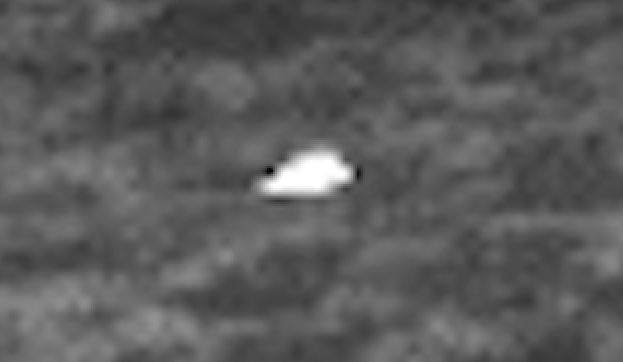
As I was going though this weeks Black and White NASA Curiosity Rover photos, I found a glowing object that really shouldn't be there. Its dark and this object is glowing like it makes its own energy. We can clearly make out many right angles so it does look like its a constructed object.
This area had two photos of it, one with the white object, one without it. One was taken by the Navcam Left B camera. The other Navcam Right B camera.Both were taken at 06:38:20, so perhaps this white object hid quickly in those rocks. This could be a white rabbit creature, like the one I reported back in 2012. (Click here to view the white rabbit).
If the rover investigated it, all close up photos were not posted. There is only one photo of this object and it was so bright that I am confident that NASA scientists noticed.
UFOs Appear In Henderson Despite Fireworks Happening Everywhere, July 2016, Video, UFO Sighting News.
Date of sighting: July 2, 2016 Location of sighting: Las Vegas, Nevada, USA This UFO was caught by Steven Barone of Vegas this week. It is higher than the mountains and moves up and down very fast, so it could be a UFO, but it also could be a secret project from the local US Air Force base nearby. Very cool catch, just wish it was in night vision. Scott C. Waring www.ufosightingsdaily.com Eyewitness states: I shot this video from my backyard in the Summerlin area of Las Vegas, Nevada on the night of July 2, 2016. Being that the 4th of July was only two days away I wondered what kind of night it was going to be. I see fireworks going off all year long and it gets heavy around holidays where fireworks are typically used to celebrate. I definitely saw plenty of fireworks going off last night but it didn't seem to have any effect on the UFO activity. I caught these UFOs that I see all the time out in the desert in Henderson along with an amazing display at the Air Force Base. There were also some objects that appeared in the north valley. I used up a new set of batteries on the night vision camera because that event went on so long. It turned out to be a bit of a bummer because after filming four lights sitting still just hovering and flashing there was only one time where a fifth object appeared and moved briefly. I put that video together and decided to delete it because it wasn't really anything special and I need all the room I can save on my external hard drives.
Chinese news is reporting a giant disk parked over their city of Shanghai yesterday for ten hours. For it to be there so long, there must be some video of this thing, but I haven't seen any yet. I will keep checking and update this later. I don't think any Chinese military pilot would dare fly over a city to test out an alien tech saucer, but you never really know. This could be alien tech in Chinese military hands.
Shanghai night sky appears UFO sightings were suspended more than 10 hours over Shanghai witnessed many users reflect the sky clouds in a flash suspended UFO, according to projections, the presence of the object in the night sky in Shanghai time over 10 hours. 4:00 yesterday, I saw the unidentified flying
Shanghai night sky appears UFO sightings suspension over more than 10 hours
Shanghai witnessed many users reflect the clouds in the night sky with a flash suspended UFO, according to projections, the presence of the object in the night sky in Shanghai time over 10 hours.
"Yesterday 4:00, I saw the UFO in Songhu Road, near the southeast where the three channels. Sparking been a long time." Mr. Meng friends yesterday 4:00 to Xinmin call reflected. According to its memories, the object was suspended in the night sky clouds. Mr. Meng look through the telescope, discovered the object flashing red, yellow, and blue light. He then called the friends around to watch together, they all said they do not know what it is. "At first I thought it was the stars, but the stars are not so big, but suspect it is not a plane, but the object has been suspended in the sky, does not seem to move." Mr. Meng said the object floating in the air for a long time, until dawn, clouds They dispersed after see clearly. Since the environment is too dark, Mr. Meng was unable to record clear images.
Internet users questioned whether the object was a kite lights at night, Mr. Meng denied: ".. Kites fluttering under general meeting, but that the object has been stuck in a position and a higher position, you should not be able to reach the location of the kite"
Mr Choi in public the evening of 26 southwest of Shanghai Xinzhuang area also observed this phenomenon: "We found behind the clouds there is a very bright object, at first we thought it was a plane, but I was referring to a nearby building, the object does not moving, feeling very strange. "
Event "Shanghai night sky appears UFO" also attracted close attention to some users. Many users have posted that Shanghai has witnessed the object, Shanghai netizen "bleed with Sophie," said he found more than 266 points of the object evening, when work on their own just to chat and colleagues downstairs: "Seeing a circle thing, red, hovering far away in the beginning did not pay attention, thought it was a plane or something, but then it was still dark, the aircraft did not think so bright it, then the sky darkened. that red things disappeared behind the clouds. then in the same location, continues to flash. "Since then living in Yichuan Road, Pudong, Beixinjing users were each proved myself to see the object. Netizen "Dousha chief" said the object "yellow flashing lightning", it was said that "only see the clouds in a flash, did not see the light-emitting substance." Some Internet users question whether lightning and other natural phenomena, but the opposition: "lightning can not at the same location, continuous flash two hours of it!" (when it was 20 o'clock at night)
According to eyewitness testimony than friends, if the object from the "bleed with Sophie" from the time of 18:00 sightings calculated, then by the time the next witness Mr. Meng 4:00, the object in the sky Shanghai residence time of more than 10 hours.
January 1871, Texas, a farmer named John Martin near Denison farming, occasionally looked up and saw a circular object in the sky like a plate in slow flight. The next day, "Denison Daily News" newspaper reports appeared in the term "flying saucer."
I know this is weird, but this is a UFO behind the words on the cam. The cam photo changes every 2 minutes and this was one of the still shots of the Colima volcano in Mexico. Being caught behind the cam identification code is very unexpected, but then catching a UFO anywhere is always unexpected. This UFO has a classic disk shape, much like the UFO that Bob Lazar worked on at Area S4 and the same as the UFO I caught on Google Map at Cape of Good hope (Google deleted it).
Its well known among UFO researchers that alien bases exist below both Colima Volcano and Popocatepeti volcano in Mexico. The base is 4-5km deep and was strategically placed below the volcano because of its difficulty for humans to scale the mountain and impossible to enter the mouth. This UFO is more sleek than that of the Friendship Case at Rocca Pia, Italy, but I sure would like a ride in one of these. Scott C. Waring www.ufosightingsdaily.com
1km Mothership Over Cartagena, Colombia Has Residents Concerned, June 30, 2016, Video, UFO Sighting News
Date of sighting: June 30, 2016 Location of sighting: Cartagena, Colombia Here is a massive UFO that is cloaked inside this cloud shield. Why use a cloud shield to hide in? Honestly, how would your grandmother feel if a 1km UFO flew over your neighborhood? Yeah...a 911 emergency right? So, they do whats best and what it takes to get their ship from A to B in the safest way possible among humans. Man this came out just in time for ID4 part 2 which is in theaters right now. This UFO looks a lot like the one in the movie. If you haven't seen the new movie out...go check it out. Can't believe the video is so short. It would have been easy to get 10-30 minutes of video here. I wonder whats up with that? Scott C. Waring www.ufosightingsdaily.com
Mysterious Lights Spotted in Dinwiddie: Is It A UFO or Nighttime Lights?
There were government leaders, police officers, health professionals, entrepreneurs of corporations, teachers, skilled psychologists and the listing goes on of men and women who observed strange alien encounter. The point here is, everybody may experience this event. In fact, there was an incident where hundreds of teachers and students witnessed a flying saucer. The term Unidentified Flying Object refers to any flying object, which cannot be identified by the naked eye. This can be anything, from planes at funny angles to experimental vessel. It can also mean planets or meteorites, such as Jupiter or Venus which looks like they are moving. The term does not correlate to aliens right away, but due to the lack of explanations, humans would like to believe their connections.
Recently, mysterious lights were claimed to have been spotted by a witness residing in Dinwiddie. Though lights can be identified, it seems like these type of lights in the McKenney night sky had left the residents scratching their heads and repeatedly ask for answers. While some believed the sighting to be natural lights, some residents saw it as a flying saucer. The saucer could be a form of life from another world. The lights are immovable because there were no audible sounds that would signify that an engine is running. CBS 6 went out to McKenney to shed light on the alleged flying object. While this flying object remains to be a mysterious element, for now, Zach Daniel, the CBS 6 Chief Meteorologist has a couple of guesses as what it could be. According to him, the lights most likely are coming from another planet or perhaps satellites visible in the sky.
There is an endless list of sightings, which when seen by the unskilled eye will not be readily identifiable. For years now, sky and eyes have met to see the controversies the universe has to offer.
This happening took place on January 8, 1981, at Trans-en-Province, France. An unidentified object was seen landing in the yard of Nicolai. Despite the drawback to this case due to the single witness that validated the landing, he still gave a full account to police authorities, making him as a trustworthy and reliable individual.
Nicolai had lived at the Trans-en-Province house for 14 years with his wife. Nicolai’s wife worked as a cleaning lady, and Nicolai has just retired from SCNI Company. Since 1973, Nicolai had suffered from a heart condition, which forced him to retire six years later with a pension. On January 8, 1981, Nicolai was outside in the yard when at 5:00 PM, he heard a whistling sound. Later on, he was shocked to see a flying device with a large pine tree nearby the boundary of the property. As the alien continued its downward motion, he moved closer for a better view. He clearly saw the object in the yard. Moments after, the object raised up and took off. As it made its way, the object had kicked up dust. Nicolai appears like two saucers, which is inverted on beneath each other. It stands at the height of 4 feet, with a dull gray color.
GEPAN, which is a department of the French Space Agency, is responsible for all the UFO investigation. He also reconstructed the duration and trajectory. According to the witness, he started perceiving the phenomenon in the sky beyond the trees at the back end of the huge platform. In the case, Mr. Nicolai observes that the motion was continuous and fast, without sudden changes in speed. The Trans-en Province case has always been included in the discussions. In fact, it was considered as one of the best cases that took place in France. On the case, much investigation was done. Though definite conclusions may arrive, residents therein were assuming that a UFO landed on January 8, 1981, in France.
Closing in on Jupiter: 7 Fun Facts About Juno's Mission
By Elizabeth Howell, Space.com Contributor
Artist's illustration of NASA's Juno spacecraft arriving at Jupiter on July 4, 2016.
Credit: NASA
NASA's Juno spacecraft will reach Jupiter Monday (July 4) after a five-year journey through deep space. The probe will study the structure and evolution of the solar system's largest planet from orbit, taking measurements for more than a year despite Jupiter's intense radiation environment.
"Jupiter is the planet on steroids in our solar system; everything about it is extreme," Juno principal investigator Scott Bolton, of the Southwest Research Institute in San Antonio, told Space.com.
The mission has several major science goals. One is to learn how much water is inside Jupiter, which should yield insights about the amounts of water that were present in the solar system's early days. [Juno's Jupiter Arrival: Complete Coverage]
Juno scientists also hope to map out Jupiter's interior, determining (among other things) whether or not the planet has a rocky core. Such information should help researchers learn more about the planet-formation process in general, shedding light on the nature of worlds throughout the Milky Way galaxy, mission team members have said.
"It's a big challenge," Bolton said, "but we have to take those challenges if we're going to explore and learn about ourselves, and how we fit into nature."
Here are seven things to know about Juno's mission:
1. Jupiter's radiation will take a toll on Juno
Juno is scheduled to orbit Jupiter for about 20 months. The spacecraft likely can't keep going much longer than that, because of the intense radiation environment at Jupiter.
For example, the planet's magnetic field is about 20,000 times as intense as Earth's, so Juno will have to withstand impacts by many charged particles moving at superfast speeds. [Juno's Jupiter Mission Fraught with Danger (Video)]
That's not to say that NASA isn't doing its best to keep the probe safe. Juno harbors a radiation-shielded electronics vault, the first of its kind. The vault is a cube about the size of an SUV's trunk, made of titanium about 0.3 inches (0.8 centimeters) thick. Inside are some of the most precious parts of Juno — its brain (command and data-handling box), its power and distribution unit, and 20 other key electronics components, according to a NASA press kit. With instruments inside, the vault has a mass of about 500 lbs. (200 kilograms).
2. Juno only has about as much hard-drive space as your laptop
The spacecraft's main computer has about as much memory as a laptop with a solid-state drive. The computer features 256 megabytes of flash memory — to preserve data even in the event of a power interruption — and 128 megabytes of dynamic random-access memory (DRAM). DRAM is useful in situations where low cost and high capacity are required at the same time, NASA officials have said.
Why not give Juno more memory? The spacecraft uses the BAE Systems RAD750 single-board computer, which is designed for high-radiation environments. This computer has been used many times in space, including for NASA missions such as the Van Allen probes (which fly through Earth's radiation belts), the Mars Reconnaissance Orbiter and the Mars rover Curiosity.
3. Juno is the most distant solar-powered spacecraft ever
Juno has gone farther into deep space than any other solar-powered probe. The spacecraft set the record in January, when it was about 493 million miles (793 million kilometers) from the sun, surpassing the distance of the European Space Agency's Rosetta spacecraft during the latter's journey to Comet 67P/Churyumov-Gerasimenko.
Most spacecraft that venture so far from the sun need to use nuclear power to keep going. But Juno is able to generate enough power, thanks to its three huge solar panels, each of which is 30 feet (9 meters) long. These arrays will generate about 500 watts of power at Jupiter, mission team members have said.
4. Juno will spin while doing science
Juno spins to stay stable, a strategy that borrows from the design of NASA's old Pioneer probes. Two Pioneer spacecraft (Pioneers 10 and 11) sailed by Jupiter in 1973 and are still cruising out into the solar system, albeit silently; NASA lost contact with Pioneer 10 in 2003 and Pioneer 11 in 1995.
Juno's spin rate has varied quite a bit during its journey so far. When its main engine fires, Juno spins up to 5 revolutions per minute (RPM). During cruise periods, this rate dips to 1 RPM.
When doing science operations, however, Juno will spin at 2 RPM. At this rate, Juno's field of view will move across Jupiter 400 times during one journey from pole to pole. The spacecraft will not use a "scan platform" to point its instruments because of the spinning design, and also because the instruments don't need to point in different directions at the same time.
Juno mission: British rocket engine ready for Jupiter task | Short News
5. Juno will take nearly three months to reach its final orbit
After Juno inserts itself into Jupiter's orbit, the probe will spend 107 days in what is called a "capture orbit." Scientists chose to take this long way around instead of inserting Juno directly into its final, 14-day orbit, because the direct route would have required a lot of fuel.
The capture orbit not only saves fuel, but it also gives mission scientists a chance to check out their instruments and begin science observations from afar. According to NASA, the team will begin using all the instruments to collect data about 50 hours after Juno is inserted into Jupiter's orbit.
6. Juno has an unusual final orbit
The best way to map any world is to move a spacecraft repeatedly over the poles. Then the entire world can spin beneath the probe, allowing it to map every part of the surface. But at Jupiter, there's a rub — high levels of potentially damaging radiation close to the planet.
As a way to minimize its radiation exposure, Juno will fly in a very elongated orbit. At the south end of its orbit, Juno will be at its closest approach to Jupiter: just 3,100 miles (5,000 kilometers). But as it leaves the south polar region, Juno will fly way out beyond the moon Callisto's orbit, which lies about 1.2 million miles (1.9 million km) from Jupiter.
This highly elliptical orbit will also keep Juno's solar panels in sunlight, NASA officials have said.
NASA's Juno Mission: Everything You Could Want to Know
In the past few decades, scientists have learned that life is incredibly hardy and persistent. Earth microbes thrive in boiling-hot, deep-sea vents at the bottom of the ocean, and some can even survive exposure to the harsh environment of space.
It's therefore possible that some Earth organisms may still be alive aboard Juno. Scientists and NASA officials don't want to take the chance that such microbes could contaminate Jupiter's ocean-harboring moon Europa — one of the solar system's best bets to host alien life — or other Jovian satellites such as Ganymede or Callisto.
So at the end of its mission, Juno will perform a 5.5-day maneuver that will crash it into Jupiter's atmosphere intentionally. The mission is scheduled to end in February 2018, but it may be extended slightly.
Meer van UFO'S of UAP'S, ASTRONOMIE, RUIMTEVAART, ARCHEOLOGIE, OUDHEIDKUNDE, SF-SNUFJES EN ANDERE ESOTERISCHE WETENSCHAPPEN - DE ALLERLAATSTE NIEUWTJES


 UFO Disk Being Hauled Down Freeway Almost Hits Overpass, July 2016, Video, UFO Sighting News.