Naar de inhoud

UFO'S of UAP'S, ASTRONOMIE, RUIMTEVAART, ARCHEOLOGIE, OUDHEIDKUNDE, SF-SNUFJES EN ANDERE ESOTERISCHE WETENSCHAPPEN - DE ALLERLAATSTE NIEUWTJES

UFO's of UAP'S in België en de rest van de wereld
akke.beakke.be
Ontdek de Fascinerende Wereld van UFO's en UAP's: Jouw Bron voor Onthullende Informatie! Ben jij ook gefascineerd door het onbekende? Wil je meer weten over UFO's en UAP's, niet alleen in België, maar over de hele wereld? Dan ben je op de juiste plek! België: Het Kloppend Hart van UFO-onderzoek In België is BUFON (Belgisch UFO-Netwerk) dé autoriteit op het gebied van UFO-onderzoek. Voor betrouwbare en objectieve informatie over deze intrigerende fenomenen, bezoek je zeker onze Facebook-pagina en deze blog. Maar dat is nog niet alles! Ontdek ook het Belgisch UFO-meldpunt en Caelestia, twee organisaties die diepgaand onderzoek verrichten, al zijn ze soms kritisch of sceptisch. Nederland: Een Schat aan Informatie Voor onze Nederlandse buren is er de schitterende website www.ufowijzer.nl, beheerd door Paul Harmans. Deze site biedt een schat aan informatie en artikelen die je niet wilt missen! Internationaal: MUFON - De Wereldwijde Autoriteit Neem ook een kijkje bij MUFON (Mutual UFO Network Inc.), een gerenommeerde Amerikaanse UFO-vereniging met afdelingen in de VS en wereldwijd. MUFON is toegewijd aan de wetenschappelijke en analytische studie van het UFO-fenomeen, en hun maandelijkse tijdschrift, The MUFON UFO-Journal, is een must-read voor elke UFO-enthousiasteling. Bezoek hun website op www.mufon.com voor meer informatie. Samenwerking en Toekomstvisie Sinds 1 februari 2020 is Pieter niet alleen ex-president van BUFON, maar ook de voormalige nationale directeur van MUFON in Vlaanderen en Nederland. Dit creëert een sterke samenwerking met de Franse MUFON Reseau MUFON/EUROP, wat ons in staat stelt om nog meer waardevolle inzichten te delen. Let op: Nepprofielen en Nieuwe Groeperingen Pas op voor een nieuwe groepering die zich ook BUFON noemt, maar geen enkele connectie heeft met onze gevestigde organisatie. Hoewel zij de naam geregistreerd hebben, kunnen ze het rijke verleden en de expertise van onze groep niet evenaren. We wensen hen veel succes, maar we blijven de autoriteit in UFO-onderzoek! Blijf Op De Hoogte! Wil jij de laatste nieuwtjes over UFO's, ruimtevaart, archeologie, en meer? Volg ons dan en duik samen met ons in de fascinerende wereld van het onbekende! Sluit je aan bij de gemeenschap van nieuwsgierige geesten die net als jij verlangen naar antwoorden en avonturen in de sterren! Heb je vragen of wil je meer weten? Aarzel dan niet om contact met ons op te nemen! Samen ontrafelen we het mysterie van de lucht en daarbuiten.

Carolina UFO Sighting

 Carolina UFO Sighting

surf-city-ufo

Here one interesting video of a group of bright lights hovering above Surf City in North Carolina.

Witness report: 

  1. My wife and I were sitting out on our deck around 11PM on August 27, 2016. We noticed a group of orange, glowing orbs from the northeast about 10 feet above the house across the street. They floated slowly and silently towards our direction. We noticed them because we were seated facing north, so you couldn’t miss them unless you were asleep. We both observed these object with a skeptics eye at first, but it was unlike anything we had ever seen before. They made absolutely no noise. There was no frame to them (like a Chinese lantern). We saw them from the side and from directly underneath. I rushed into the house, grabbed my camera and told my daughter to come see these objects. I exited our deck into the front yard and started filming. There was 5 of them. They were hovering just above the power lines. The objects were in a line, one behind the other. As they reached our house they moved into a circular formation. They hovered above our house for about 20-30 seconds before going back into a linear formation and moving on towards the southwest. My wife then noticed that a sixth orb was hovering just 5 or so feet above our house as if it was curious of us. That’s when my dog started to bark at the object. It hovered over us for about 10 seconds before joining the other 5 orbs. As they all floated away in the distance, they seemed to just disappeared. There was no wind. There was no noise. They were always at least 15-40 feet away from us until they finally floated off and disappeared in the distance.

Author (source: MUFON)

{  http://www.latest-ufo-sightings.net/ }

Hoe vind je dit bericht?
Geschreven door peter om 20:38 Stuur door

Watch this UFO destroying a chemtrail over Paris, France

Watch this UFO destroying a chemtrail over Paris, France

ufo-chemtrail

This interesting daytime footage was recorded over Paris, France on 28th September 2016.

Witness report:

 I caught an extraordinary UFO sighting. I was watching an odd looking light crossing the sky at variable speeds around my house, during the sunset. To me it was just some sort of helicopter, or maybe a drone. But after 5 or 10 minutes, I began suspecting the object not to be man-made. It was performing weird maneuvers, accelerating and decelerating randomly. When the light started to accelerate towards a huge Chemtrail, I took my camcorder and tried to find it in the distance.
The object stopped in front of the Chemtrail, and slowly destroyed it. Indeed, the trail was being “consumed” progressively. I was simply speechless. I still can’t believe what I caught. The Chemtrail got literally perforated! I can’t be 100% sure it’s due to the object itself, but I’m sure there’s a link between it and the Chemtrail. Such a huge trail can’t just disappear like that, for no reason! And only a small portion of the trail gets erased, justly around the object!
After the UFO attacked the trail, it moved backwards and flied West, in my opposite direction. It disappeared pretty quickly.
Sorry for zooming out a little bit too early, my camcorder screen is really small, and doesn’t have that much pixels… The object got so far away at the end, I simply thought it was not there anymore.
What was that object? Man-made prototype to delete Chemtrails? Some extra-terrestrial technology made to protect us? (maybe a bit far-fetched, but seriously, have you ever seen that before?) I just don’t have a clue of what this is.

Author (WTFflow @ youtube)

{ http://www.latest-ufo-sightings.net/ }

Hoe vind je dit bericht?
Geschreven door peter om 01:09 Stuur door

UFO Sighting Revealed In Leaked U.S. Security Footage

UFO Sighting Revealed In Leaked U.S. Security Footage

ufo

Another footage has made the rounds online that may have confirmed a real UFO sighting. The video that has been leaked is said to belong to the Department of Homeland Security of the U.S.

The alleged leaked video shows a UFO ascending from the sea and splitting in half. The movements of the object are so strange to everybody. The mysterious object appears to be a metallic sphere. It moves quickly above and dives into the ocean, then seems to change shape or tumble.

The Scientific Coalition for Ufology (SCU) claimed that the video was from the DHS through a whistleblower. SCU website says the UFO has different features to any known object and its characteristics can’t be explained.

Since it made available online, several others came forward to claim they also saw the UFO.

SCU just released the video recently, but they noted that it was shot back in 2013. They explained that the released of the video had been delayed to confirm its authenticity first before publishing it for the public.

According to the report, the video was shot at an airport in Aguadilla, Puerto Rico on April 25, 2013, 9:20 p.m. The DHS crew of a DHC-8 Turboprop aircraft from Customs and Border Protection of the U.S. reportedly monitored the UFO activity.

According to the report, the crew of the DHC-8 plane noticed a strange, pinkish, red light over the ocean during its routine flight. Not informed of any incoming traffic, they radioed the presence of the UFO.

The tower crew responded that they also noticed the object but could not identify it.

SCU confirmed the flight was delayed due to the UFO sighting that night. Also revealed in the report is the video of the plane circling the airport two times before taking off.

The unknown object was allegedly flying from 40 mph to 120 mph at between 3 and 5 feet. The strangest part of the incident was that it went into the ocean about half a mile before darting back up and out of the ocean and appeared to split into two.

{  http://www.latest-ufo-sightings.net/ }

Hoe vind je dit bericht?
Geschreven door peter om 01:04 Stuur door

Chunk of Lightweight Metal Is Believed To Be An Old Proof That Alien Once Visited Earth

Chunk of Lightweight Metal Is Believed To Be An Old Proof That Alien Once Visited Earth

alien-metal

A mysterious piece of aluminum is being considered as 250,000-year-old evidence of alien existence on Earth. The old metal was discovered in communist Romania in 1973, but it wasn’t made public at the time.

After several examinations, the object is found to have made of 12 metals and 90 percent aluminum. Romanian officials concluded it is a 250,000 years old chunk of metal.

A laboratory in Lausanne, Switzerland later confirmed the initial results.

The large chunk is being hailed as an intriguing find because humanity wasn’t producing metallic aluminum until around 200 years ago.

In 1973, three objects measuring 33 feet or 10 meters was discovered under the ground on the shores of the Mures River. Archeologists identified two of the objects as fossils. The third one is a light metal and suspected to be the end of an ax.

All objects being discovered were sent to Cluj City in the region of Transylvania, Romania. Experts quickly determined the two as large bones of an extinct large mammal that died around 10,000 to 80,000 years ago. However, they were stunned to know that the third object was a piece of lightweight metal that seemed to have been manufactured.

The object in question is 7.8 inches or 20 centimeters long, 4.9 inches or 12.5 centimeters wide, and 2.8 inches or 7 centimeters thick.

Puzzled experts concluded that the piece of metal could be manufactured as part of a more complex mechanical system because it has concavities.

Now, the results have brought speculations of UFO and alien visitations in the past.

Deputy Director of the Romanian Ufologists Association, Gheorghe Cohal, believes that there’s a big chance that the third object is an old UFO fragment because it comprises with substances that could not be combined with technology on Earth.

Meanwhile, local historian Mihai Wittenberger believes the object is just a piece of a German aircraft during World War II, particularly from the landing gear of Messerschmitt ME 262.

However, this suggestion doesn’t explain the age of the lightweight metal.

The mysterious metal object is currently on display at the History Museum of Cluj-Napoca with a description saying “origin still unknown.”

{ http://www.latest-ufo-sightings.net/ }

Hoe vind je dit bericht?
Geschreven door peter om 01:01 Stuur door

UFO sighting filmed over Pomona, California 22-Oct-2016

UFO sighting filmed over Pomona, California 22-Oct-2016

ufos

Check out this UFO video that was filmed on 22nd October 2016 over Pomona, California.

Witness report: 

I only got the end of it before it dissappeared – It was around 8pm were having a family party theres about 100 guest present and my cousin starts filming me and notices 2 lights and in spanish he says “Oh were dead look they are coming for us” By they he meant the lights and in the video he films the lights right before they dissappear. Once they dissappeared they never appeared again

Auth0r (source: MUFON)

Hoe vind je dit bericht?
Geschreven door peter om 00:57 Stuur door

UFO Sighting 2016: Fleet of UFOs spotted in Santiago’s Sky in Mysterious footage

UFO Sighting 2016: Fleet of UFOs spotted in Santiago’s Sky in Mysterious footage

UFO Sighting 2016
UFO Sighting 2016

In another alien and UFO related activity, a mysterious footage has come up on YouTube that shows a supposed fleet of flying saucers over Santiago's sky in Chile, South America.

Ever since the footage surfaced, people have begun to talk about the extraterrestrial activity as a fair number of viewers think that the sighting was nothing but UFOs.

The video which has been snapped over Santiago's sky appears to show four flying saucers, reports Daily Express. At first, the glowing lights seem to be floating in the distance, making a strange formation and then they spread out only to disappear completely in seconds. The pictures were taken on Thursday at 6 p.m. local time.

Later, they were sent by the photographer to the Mutual UFO Network aka MUFON- the biggest organization in the world dedicated to UFO research and study. According to the said photographer, he did not take the pictures with the intention of capturing UFOs and they were detected later after a review of the snapshots.

On the other hand, MUFON has said that it gets so many reports on a daily basis that it is unable to investigate every case. Nevertheless, it would not take much time for the body to figure out if they are UFOs or something else. As of now, some, including one forensic investigator of UFO pictures, said that they might also be reflections of light inside the building from where the photos were taken.

Meanwhile, the social media is divided in opinion about the video of the flying saucers, reports The Daily Mail. One viewer says that he initially thought that the flying objects were Chinese lanterns tied together but they were moving at a great speed. Another said that they seemed very real. Some said that the UFO claims were false as the lights were nothing but drones flying over the city.

It may be mentioned here that Chile has witnessed many UFO sightings and one of its cities, Andean town of San Clemente has become the hub of such activities and it is known as the country's capital for flying objects.

Hoe vind je dit bericht?
Geschreven door peter om 23:57 Stuur door

'Spiders' on Mars: Citizen Scientists Investigate Strange Martian Terrain

'Spiders' on Mars: Citizen Scientists Investigate Strange Martian Terrain


martian-spiders.jpg?interpolation=lanczos-none&downsize=*:1400
"Spidery" channels spotted near Mars' south pole by NASA's Mars Reconnaissance Orbiter.
Credit: NASA/JPL-Caltech/Univ. of Arizona

NASA's Mars Reconnaissance Orbiter (MRO) has been surveying strange "spider-like" surface features on Mars for years, and now citizen scientists are helping the orbiter hone in on areas that require further investigation. 

These prominent surface features are found near Mars' south pole, and are believed to be linked to seasonal changes. The planet's polar ice caps thaw bottom-side first in the spring, causing carbon dioxide to build up and carve deep channels in the terrain, according to a statement from NASA. 

"The trapped carbon dioxide gas that carves the spiders in the ground also breaks through the thawing ice sheet. It lofts dust and dirt that local winds then sculpt into hundreds of thousands of dark fans that are observed from orbit," Meg Schwamb, a planetary scientist from the Gemini Observatory in Hawaii, said in the statement. "For the past decade, [the orbiter's instrument] HiRISE has been monitoring this process on other parts of the south pole." [Latest Photos from NASA's Mars Reconnaissance Orbiter]]

Context Camera (CTX) aboard the MRO captured the images of these spider-like cracks and crevices, which volunteer citizen scientists have analyzed using the website "Planet Four: Terrains." 

With the observations from this citizen science project, NASA has added 20 new regions to the agency's seasonal monitoring campaign on Mars. The orbiter's High Resolution Imaging Science Experiment (HiRISE) camera will explore these regions in greater detail. 

"It's heartwarming to see so many citizens of planet Earth donate their time to help study Mars," Candice Hansen, HiRISE deputy principal investigator, said in the statement. "Thanks to the discovery power of so many people, we're using HiRISE to take images of places we might not have studied without this assistance."

The new places of interest on Mars include some unexpected spider terrain, areas where the surface is composed of material that was ejected from impact craters. Previously, those areas were not associated with carbon dioxide ice sheets, and therefore not thought to have spider-like crevices. 

The spider cracks may have formed on the material ejected from craters using a different mechanism than the ice sheets, Hansen said. "Perhaps on surfaces that are more erodible, relative to other surfaces, slab ice would not need to be present as long, or [need to be] as thick, for spiders to form. We have new findings, and new questions to answer, thanks to all the help from volunteers," Hansen added.

Follow Samantha Mathewson @Sam_Ashley13. Follow us @Spacedotcom,Facebook and Google+. Original article on Space.com.

{ 

Hoe vind je dit bericht?
Geschreven door peter om 23:46 Stuur door

Red Planet Express: 10 Ways Robots Move on Mars

Red Planet Express: 10 Ways Robots Move on Mars

Mars Helicopter

Credit: NASA/JPL-Caltech

1. Mars Helicopter

This proposed robotic helicopter could triple the distances that Mars rovers could drive in a day and help pinpoint interesting targets for study, NASA researchers said. The low-flying scout helicopter would travel ahead of a rover to scope out the best driving routes. Engineers at NASA's Jet Propulsion Laboratory in Pasadena, California, have been testing the design, but the agency has no concrete plans to take the helicopter to Mars — yet. Read more about the Mars Helicopter here.
 Extreme Access
Credit: NASA/Swamp Works

2. Extreme Access

Engineers at NASA's Kennedy Space Center have invented an autonomous quadcopter, or drone, to fly on Mars. The machines are fast and flexible and can squeeze into places that other Mars robots cannot. They will be able to collect soil samples and return them to a mothership, which doubles as a charging station. Read more about the Mars drones here. 
Entomopter
Credit: NASA

3. Entomopter

Insects inspired the design for this aircraft, called an Entomopter. Conventional types of helicopters and airplanes would have a hard time maneuvering through Mars' thin atmosphere, but the rapidly flapping wings on this aircraft design make flying on the Red Planet more practical. Other aircraft have to fly at over 250 mph (or 400 km/h) to remain airborne, which means that landing or taking off from the Martian surface are out of the question. But the Entomopter can fly slowly, land, take off and even crawl! It would be able to collect samples and return to a home base (like the rover pictured in the foreground) to recharge. A team led by Anthony Colozza at the Ohio Aerospace Institute in Cleveland received funding from NASA's Institute for Advanced Concepts in 2002 to develop this design for a Mars aircraft. Watch the Entomopter in action in this video. 
LDSD, the 'Flying Saucer'
Credit: NASA/JPL-Caltech

4. LDSD, the 'Flying Saucer'

NASA's Low-Density Supersonic Decelerator project combines a balloon with a rocket to deliver huge payloads to the Martian surface — up to 15 tons. Mars Science Lab, the Curiosity rover, weighs only 1 ton and is currently the biggest spacecraft to land on Mars. LDSD could one day even deliver something as heavy as 100 tons or more, NASA officials said. The flying-saucer-shaped balloon will help slow down the landing in Mars' thin atmosphere. Read more about LDSD here. 

Prandtl Glider
Credit: NASA Illustration / Dennis Calaba

5. Prandtl Glider

Student interns at NASA's Armstrong Flight Research Center in Edwards, California, helped to design this prototype of an engineless Mars glider called Prandtl-m. The design for this glider was inspired by boomerangs and birds and is based on a concept developed by German engineer Ludwig Prandtl around a century ago. This glider has no rudder and a slight twist in its wings, which helps to minimize air resistance and maximize efficiency. At Mars, it would be deployed high up in the atmosphere and collect data while floating down to the surface. NASA said it hopes to see one of its Prandtl gliders hitch a ride to Mars with the upcoming Mars 2020 rover mission. Read more about the Prandtl project here. 

Mini-Sniffer

Credit: NASA

6. Mini-Sniffer

This proposed foldable Mars airplane concept is based on the design of a craft that flew on Earth in the 1970s. Three different versions of the Mini-Sniffer were developed by NASA to fly over Earth and test the upper atmosphere for pollution. Dale Reed, a researcher at NASA's Dryden Flight Research Center in Edwards, California, earned a patent in 1977 for the proposed Mars airplane. But NASA's plans for the Mars Mini-Sniffer never got off the ground.

ARES Mars Airplane

Credit: NASA

7. ARES Mars Airplane

Rocket-powered airplanes could be the solution to the flying problems posed by Mars' thin atmosphere. This aircraft, called the Aerial Regional-scale Environmental Surveyor (ARES), could fly over mountains, craters and volcanoes on Mars — places that terrestrial robots often cannot reach. It was developed at NASA's Langley Research Center in Virginia. A prototype has already been built and tested, and now the ARES team said it hopes to send its aircraft to Mars via NASA's Mars Scout Program. Read more about ARES here. 
Tumbleweed Rovers
Credit: North Carolina State University

8. Tumbleweed Rovers

One proposed way to travel on Mars is essentially a giant beach ball that rolls around in the wind. It wouldn't need any engines — just the wind. Engineers at NASA's Jet Propulsion Laboratory said that a payload of scientific instuments would be suspended inside the ball with tension cords. If scientists decide that one of these rovers needs to stop to take a measurement, the ball can be partially deflated to keep it from blowing away. NASA has already performed field tests with tumbleweed rover prototypes on Earth, but they have yet to be tested on Mars. 
Roving with Wheels
Credit: NASA/JPL-Caltech/MSSS

9. Roving with Wheels

So far the most popular type of robotic Mars explorer has been the rover. These types of Mars robots are somewhat comparable to vehicles that rove around on Earth, at roughly the size of a compact sedan. Several rovers have been sent to Mars, but only two are still functioning today: NASA's Curiosity (Mars Science Laboratory) and Opportunity. Another NASA rover, named Spirit — Opportunity's twin — went silent in 2010 after one of its wheels became trapped in the Martian sand. 

Though the remote-controlled rovers may be the most intuitive form of robot for humans to build and operate, they do have some drawbacks. Aside from the risk of getting stuck like Spirit did, rovers can't drive very fast on Mars. Curiosity creeps along at about 2 inches (5 centimeters) per second, or 0.11 mph (0.18 km/h). Some areas of Mars are inaccessible to rovers, like steep mountains ridges or craters. [Infographic: Mars Explored: Landers and Rovers Since 1971]

Hopping Bots

Credit: AGI/University of Leicester

10. Hopping Bots

Someday, Mars robots could get around on the Red Planet by hopping from place to place. These vehicles would use gas from the Martian atmosphere to propel their rockets and leap around. Researchers in England have proposed a hopping robot that uses radioactive isotopes as an initial power supply to squeeze gas into thrusters and heat it up before the propulsion system can begin powering the hopping. A hopper like this could fly in 0.6-mile (1 kilometer) hops at least, the researchers said. Read more about the hopping robots here.

{ http://www.space.com/ }

Hoe vind je dit bericht?
Geschreven door peter om 23:10 Stuur door

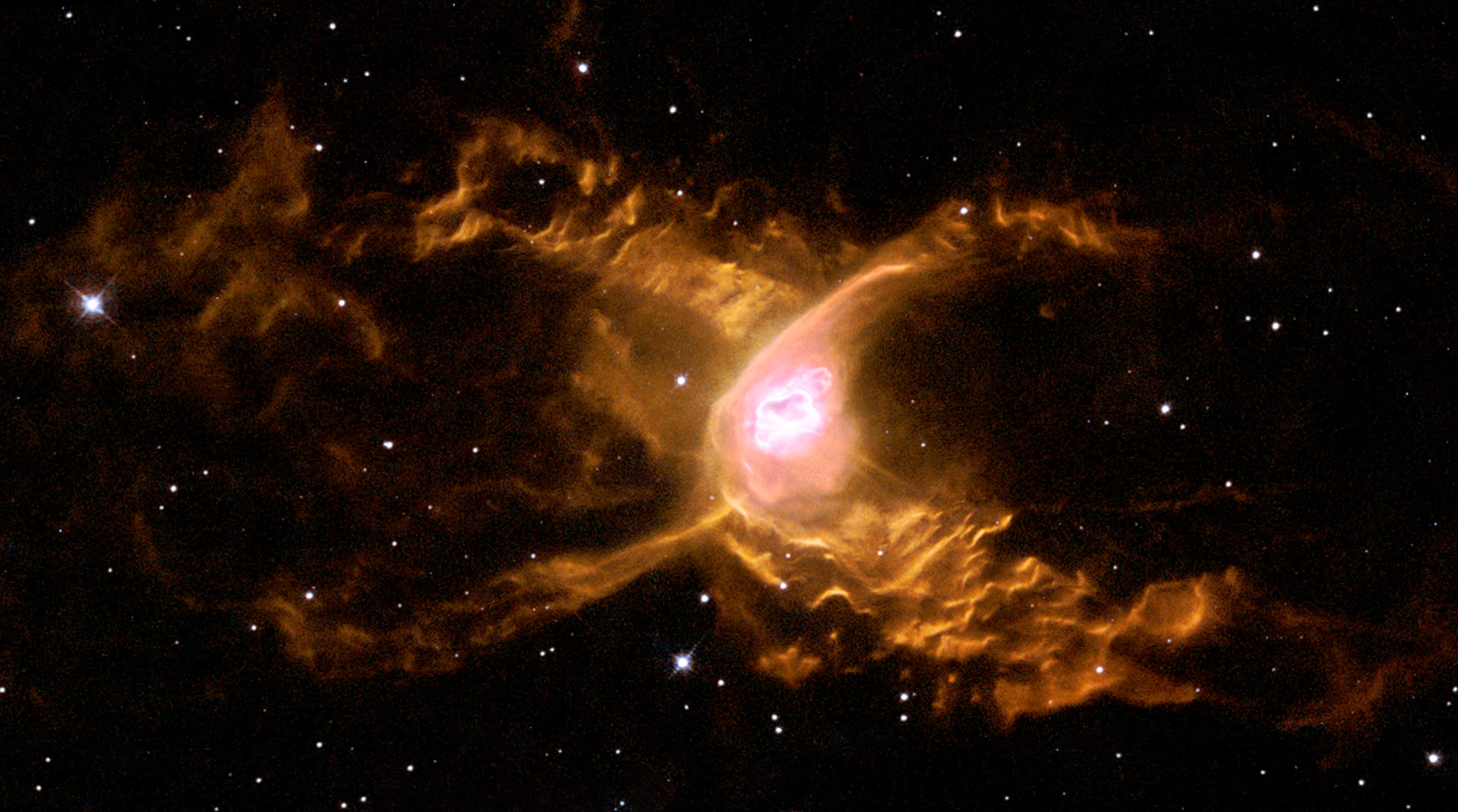
Red Spider Nebula Haunts Deep Space in Hubble Photo

Red Spider Nebula Haunts Deep Space in Hubble Photo

Red Spider Nebula Haunts Deep Space in Hubble Photo
Using Hubble's powerful camera, an image of the Red Spider Nebula in the constellation of Sagittarius clearly displays the power of the stellar wind expanding the lobes.
Credit: ESA/Garrelt Mellema (Leiden University, the Netherlands)

The Red Spider Nebula welcomes Halloween with its eerie lobes and ghostly shine.

Large ripples constitute the expansive lobes of the Red Spider Nebula. The two lobes of the nebula represent a typical expression at the end of a star's life, with material from the star gushing into space at high speeds. [Haunting Photos: The Spookiest Nebulas in Space]

The nebula, thousands of light years from Earth in the constellation of Sagittarius, contains one of the hottest known stars which creates waves 100 billion kilometers (62.4 billion miles) high with its powerful cosmic winds. The speed of the waves arise from supersonic shocks forming from local gas compression, heating and rapid expansion in the lobes. Atoms trapped in the the shock create the dazzling radiation seen here.

The Hubble Space Telescope captured using the Wide Field and Planetary Camera 2 (WPFC2) in September pf 1997. The WPFC2 uses five different filters and light from the different elements are colored differently — sulfur ions in red, nitrogen ions in orange, ionized hydrogen in green, atomic oxygen in light blue and ionized oxygen in dark blue.

Hubble has been returning images of the deep recesses of our Universe to us since April of 1990. After being repaired and upgraded with five separate Space Shuttle missions, with the last in 2009. While Hubble could operate into the 2030s, its successor, the James Webb Space Telescope (JWST) is scheduled to launch in 2018.

Follow us @Spacedotcom, Facebook and Google+. Original article onSpace.com.

{ http://www.space.com/ }
Hoe vind je dit bericht?
Geschreven door peter om 22:25 Stuur door

UFO Rods Seen Moving Past Volcano Live Cam On Oct 24, 2016, Video, UFO Sighting News

Moving Past Volcano Live Cam On Oct 24, 2016, Video, UFO Sighting News

Volcano%252C%2Bmexico%252C%2BZero%2BPoint%2BEnergy%252C%2BZPE%252C%2BMars%252C%2BUFO%252C%2BUFOs%252C%2Bsighting%252C%2Bsightings%252C%2Bnews%252C%2Bvideo%252C%2BMexico%252C%2Bdisclose.tv%252C%2Bgovernment%252C3.png

Volcano%252C%2Bmexico%252C%2BZero%2BPoint%2BEnergy%252C%2BZPE%252C%2BMars%252C%2BUFO%252C%2BUFOs%252C%2Bsighting%252C%2Bsightings%252C%2Bnews%252C%2Bvideo%252C%2BMexico%252C%2Bdisclose.tv%252C%2Bgovernment%252C4.png

Volcano%252C%2Bmexico%252C%2BZero%2BPoint%2BEnergy%252C%2BZPE%252C%2BMars%252C%2BUFO%252C%2BUFOs%252C%2Bsighting%252C%2Bsightings%252C%2Bnews%252C%2Bvideo%252C%2BMexico%252C%2Bdisclose.tv%252C%2Bgovernment%252C1.png

Volcano%252C%2Bmexico%252C%2BZero%2BPoint%2BEnergy%252C%2BZPE%252C%2BMars%252C%2BUFO%252C%2BUFOs%252C%2Bsighting%252C%2Bsightings%252C%2Bnews%252C%2Bvideo%252C%2BMexico%252C%2Bdisclose.tv%252C%2Bgovernment%252C2.png

Date of sighting: October 24, 2016
Location of sighting: Popocatepetl, Mexico

Here is a great example of rods. They were caught yesterday on a live volcano cam. There rods following each other side by side. Also in the distance a unknown craft moves closer to the volcano, but the video ends so we could not see if it emerges or not from the other side. Its rare to catch one, but to see three fly side by side. Wow, very exciting video. 

Scott C. Waring

{ http://www.ufosightingsdaily.com/ }

Hoe vind je dit bericht?
Geschreven door peter om 21:34 Stuur door

Ster met recordbrekend oude stofschijf ontdekt

Hoe vind je dit bericht?
Geschreven door peter om 21:14 Stuur door

'Alien probeert Marsrover Curiosity te saboteren'

{ http://www.scientias.nl/ }

Hoe vind je dit bericht?
Geschreven door peter om 21:09 Stuur door

Nieuw onderzoek trekt versnelde uitdijing van universum in twijfel

{ http://www.scientias.nl/ }

Hoe vind je dit bericht?
Geschreven door peter om 21:03 Stuur door

De noordpool van Saturnus verandert van kleur

Hoe vind je dit bericht?
Geschreven door peter om 20:52 Stuur door

Saturn’s Hexagonal Storm Mysteriously Changes From Blue to Gold

Saturn’s Hexagonal Storm Mysteriously Changes From Blue to Gold

 
blue-hexagon
True colour photo taken on 26 June 2013.
Credit: NASA/JPL-Caltech/Space Science Institute/Val Klavans
 
IN BRIEF
  • Astronomers have noted a change in the color scheme of Saturn's hexagonal storm from a bluish color to a more golden hue.
  • NASA experts assert this may be due to the increased production of photochemical hazes in the atmosphere as the north pole approaches summer solstice in May 2017.

A WHIRLWIND OF COLORS

The mysterious hexagon on Saturn’s north pole has just changed colors, as shown in recently released photos taken by NASA’s Cassini spacecraft. Discovered roughly 30 years ago, the geometric figure on Saturn’s northernmost area is actually a storm, which has been raging for decades, or even centuries.

The six-sided figure spans about 32,000 km (20,000 miles) in diameter, and extends for 100 km (60 miles) into the gas giant’s atmosphere. Each point in the hexagon rotates at its center at almost the same rate Saturn rotates on its axis. The perpetual hurricane in middle of the hexagon is constantly blasted by a jet stream of air at 321 km/h (200 mph).

Credits: NASA/JPL-Caltech/Space Science Institute/Hampton University Credits: NASA/JPL-Caltech/Space Science Institute/Hampton University

Baffled scientists can only point to one probable explanation. According to NASA,

“The color change is thought to be an effect of Saturn’s seasons. In particular, the change from a bluish color to a more golden hue may be due to the increased production of photochemical hazes in the atmosphere as the north pole approaches summer solstice in May 2017.”

MYSTERIOUS LIKE MOST

Researchers believe the hexagon’s sides act like barriers, preventing haze particles from outside to enter. This likely explains why the hexagon turned blue sometime between November 1995 and August 2009, during a polar winter night. Presumably, while it was devoid of sunlight, Saturn’s north pole became clear of aerosols produced by photochemical reactions.

After Saturn’s equinox in August 2009, the planet’s polar atmospheres have been bathed in sunlight. Photochemical reactions in the atmosphere were triggered, producing aerosols that make the north pole’s hexagon hurricane hazy and appear golden in the recent Cassini photo.

It shouldn’t really come as a surprise that we don’t understand much of what’s going on in our giant gas neighbor. The mysteries of space continually baffle us, until technological advancescatch up and explain the previously unexplainable.

At that point, we’ll no longer be amazed. We’ll be mesmerized.

Here's more of the false colour hexagon:

{ http://futurism.com/ }

Hoe vind je dit bericht?
Geschreven door peter om 20:33 Stuur door

Extreme Mars: Future Missions May Be Assisted by Humanoid Robots

Extreme Mars: Future Missions May Be Assisted by Humanoid Robots

NASA's R5 "Valkyrie" robot may become a regular part of future crewed missions to Mars and beyond. Credit: NASA/B. Stafford/J. Blair/R. Geeseman
IN BRIEF
  • NASA donated a humanoid robot to MIT’s CSAIL to give students the opportunity to develop algorithms that could be used as part of NASA’s Space Robotics Challenge.
  • The challenge, which aims to create robots that could assist, or even potentially replace, human astronauts on extreme space missions, offers a $1,000,000 prize.

The DARPA Robotics Challenge (DRC) sought to inspire the creation of robots that could perform human tasks, in that case, for the sake of disaster relief. Credit: DARPA

The DARPA Robotics Challenge (DRC) sought to inspire the creation of robots that could perform human tasks; in that case, for the sake of disaster relief.

Credit: DARPA

ONE SMALL STEP FOR A (SORT OF) MAN

By the time a human is finally ready to set foot on Mars, he or she could have a team of autonomous humanoid robots walking beside them.

Last November, NASA donated a humanoid robot, Robonaut 5 (R5), to MIT’s Computer Science and Artificial Intelligence Laboratory (CSAIL). They wanted to give students the opportunity to test the robot and develop algorithms for it that they could then use as part of NASA’s upcomingSpace Robotics Challenge. The challenge aims to create “dexterous autonomous robots” that could assist, or even potentially replace, human astronauts on “extreme space” missions.

“Precise and dexterous robotics, able to work with a communications delay, could be used in spaceflight and ground missions to Mars and elsewhere for hazardous and complicated tasks, which will be crucial to support our astronauts,” said Monsi Roman, program manager of NASA’s Centennial Challenges, in a press release. “NASA and our partners are confident the public will rise to this challenge and are excited to see what innovative technologies will be produced.”

ROBOTS. IN. SPACE.

Artificially intelligent robots capable of assisting human astronauts could become invaluable as we continue to push the boundaries of space exploration. Unlike current robots that must be controlled by human operators, autonomous humanoid robots would be able to work independently. They could be sent on missions prior to human astronauts deploying, remain behind to look after equipment, and generally free up crew members to do more complex and less dangerous work.

While expanding humankind’s knowledge of space is a reward in and of itself, the million dollar prize for the team that wins NASA’s Space Robotics Challenge is great additional motivation for MIT’s team to make sure its bot comes out on top.

NASA's Space Robotics Challenge seeks to foster the development of robots that can help human astronauts during future missions, like to Mars. Credit: NASA

NASA’s Space Robotics Challenge seeks to foster the development of robots that can help human astronauts during future missions, like to Mars. Credit: NASA/STMD

Hoe vind je dit bericht?
Geschreven door peter om 20:23 Stuur door

Extreme Mars: Future Missions May Be Assisted by Humanoid Robots

Extreme Mars: Future Missions May Be Assisted by Humanoid Robots

NASA's R5 "Valkyrie" robot may become a regular part of future crewed missions to Mars and beyond. Credit: NASA/B. Stafford/J. Blair/R. Geeseman
IN BRIEF
  • NASA donated a humanoid robot to MIT’s CSAIL to give students the opportunity to develop algorithms that could be used as part of NASA’s Space Robotics Challenge.
  • The challenge, which aims to create robots that could assist, or even potentially replace, human astronauts on extreme space missions, offers a $1,000,000 prize.

The DARPA Robotics Challenge (DRC) sought to inspire the creation of robots that could perform human tasks, in that case, for the sake of disaster relief. Credit: DARPA

The DARPA Robotics Challenge (DRC) sought to inspire the creation of robots that could perform human tasks; in that case, for the sake of disaster relief.

Credit: DARPA

ONE SMALL STEP FOR A (SORT OF) MAN

By the time a human is finally ready to set foot on Mars, he or she could have a team of autonomous humanoid robots walking beside them.

Last November, NASA donated a humanoid robot, Robonaut 5 (R5), to MIT’s Computer Science and Artificial Intelligence Laboratory (CSAIL). They wanted to give students the opportunity to test the robot and develop algorithms for it that they could then use as part of NASA’s upcomingSpace Robotics Challenge. The challenge aims to create “dexterous autonomous robots” that could assist, or even potentially replace, human astronauts on “extreme space” missions.

“Precise and dexterous robotics, able to work with a communications delay, could be used in spaceflight and ground missions to Mars and elsewhere for hazardous and complicated tasks, which will be crucial to support our astronauts,” said Monsi Roman, program manager of NASA’s Centennial Challenges, in a press release. “NASA and our partners are confident the public will rise to this challenge and are excited to see what innovative technologies will be produced.”

ROBOTS. IN. SPACE.

Artificially intelligent robots capable of assisting human astronauts could become invaluable as we continue to push the boundaries of space exploration. Unlike current robots that must be controlled by human operators, autonomous humanoid robots would be able to work independently. They could be sent on missions prior to human astronauts deploying, remain behind to look after equipment, and generally free up crew members to do more complex and less dangerous work.

While expanding humankind’s knowledge of space is a reward in and of itself, the million dollar prize for the team that wins NASA’s Space Robotics Challenge is great additional motivation for MIT’s team to make sure its bot comes out on top.

NASA's Space Robotics Challenge seeks to foster the development of robots that can help human astronauts during future missions, like to Mars. Credit: NASA

NASA’s Space Robotics Challenge seeks to foster the development of robots that can help human astronauts during future missions, like to Mars. Credit: NASA/STMD

Hoe vind je dit bericht?
Geschreven door peter om 20:23 Stuur door

Creationist Ken Ham Says There Are No Intelligent Aliens... Because Aliens Can’t Possibly Exist

Creationist Ken Ham Says There Are No Intelligent Aliens... Because Aliens Can’t Possibly Exist

Poor E.T.

580ef1f41800002d00dc3f62.jpeg?cache=rzoxcro4qk
DAVID MCGLYNN VIA GETTY IMAGES
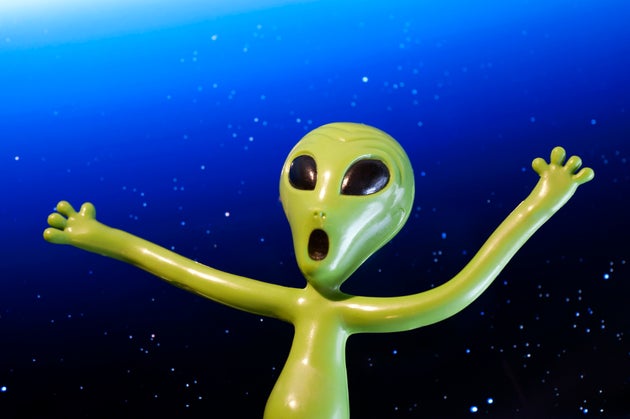
An alien discovers that he isn’t real (simulation). 

The search for extraterrestrial intelligence is a huge waste of time, according to creationist Ken Ham. 

Ham, who runs creationist attractions in Kentucky including a supposed replica of Noah’s Ark complete with replica dinosaurs, claims that aliens can’t possibly be intelligent... because they can’t possibly exist.

Writing on his “Answers in Genesis” blog, Ham attempted to respond to Scottish astronomer Duncan Forgan, who has been running computer simulations about the possibility of alien civilizations. 

Forgan lamented in a Fox News interview the difficulty of testing some theories in his simulation because of the lack of data on alien behavior.  

Ham predicted that problem would never be solved.

“Real alien data will never exist because, well, aliens aren’t real!” he wrote.

While there is no evidence yet for extraterrestrial life, a number of NASA scientists have said they expect to find it in the coming decades.

“I think in the next 20 years we will find out we are not alone in the universe,” NASA astronomer Kevin Hand said in a 2014 discussion. 

Hand’s boss agreed.

“It’s highly improbable in the limitless vastness of the universe that we humans stand alone,” NASA Administrator Charles Bolden said.

However, Ham wrote in his Sunday blog post that people searching for alien life are really looking for replacements for God. 

“Only a life pursuing our Creator will give us the answers and purpose we seek,” he wrote. 

Ham, who once debated “Science Guy” Bill Nye, wrote in 2014 that aliens ― if they did exist ― would be beyond salvation because they are not descendants of the biblical figure Adam. 

“Jesus did not become the ‘GodKlingon’ or the ‘GodMartian’!” he wrote at the time. “Only descendants of Adam can be saved. God’s Son remains the ‘Godman’ as our Savior.”

{ http://www.huffingtonpost.com/ }

Hoe vind je dit bericht?
Geschreven door peter om 20:12 Stuur door

Reference: What Is a Planet?

Reference:

What Is a Planet?

What Is a Planet?
The planets of the solar system as depicted by a NASA computer illustration. Orbits and sizes are not shown to scale.
Credit: NASA

While many people can point to a picture of Jupiter or Saturn and call it a "planet," the definition of this word is much more subtle and has changed over time. Many astronomers decided on a new definition in 2006 after the discovery of several worlds at the fringes of the solar system — a decision that remains controversial.

The International Astronomical Union defined a planet as an object that:

  • orbits the sun
  • has sufficient mass to be round, or nearly round
  • is not a satellite (moon) of another object
  • has removed debris and small objects from the area around its orbit

The IAU also created a new classification, "dwarf planet," which is an object that meets planetary criteria except that it has not cleared debris from its orbital neighborhood. This definition meant that Pluto — considered a planet at the time — was demoted and reclassified as a dwarf planet. But not all scientists agree with this classification.

[Related: New Horizons' Pluto Flyby: Latest News, Images and Video]

The term "planet" originally comes from the Greek word for "wanderer." Many ancient cultures observed these "moving stars," but it wasn't until the advent of the telescope in the 1600s that astronomers were able to look at them in more detail. Small telescopes revealed moons circling Jupiter — a big surprise to Galileo Galilei (the likely discoverer) and his opponents at the Catholic Church — as well as rings around Saturn and an ice cap on Mars.

Telescopes also revealed the existence of objects not known to the ancients, because they are too far away and small to be spotted with the naked eye. Uranus was found on March 13, 1781, by the prolific astronomer William Herschel. Ceres was discovered between Mars and Jupiter in 1801. It was originally classified as a planet, but it was later realized that Ceres was the first of a class of objects eventually called asteroids. Neptune was discovered in 1846. [Related: Solar System Planets: Order of the 8 (or 9) Planets]

Astronomers continued scouring the solar system's outer reaches in search of a large "Planet X" that was believed to be disturbing the orbits of Uranus and Neptune. While these irregularities were later discounted by further observations, Clyde Tombaugh did spot a smaller object in 1930 beyond the orbit of Neptune. Called Pluto, the object (then called a planet) was relatively small and had a highly eccentric orbit that sometimes even brought it closer to the sun than Neptune is.

Nothing close to Pluto's size was found in the solar system for more than two generations. That changed in the 2000s, when Mike Brown — a young astronomer at the California Institute of Technology — was in search of a defining research project and decided upon searches for objects in the outer solar system.

In quick succession, Brown and his team discovered several large "trans-Neptunian objects," or icy bodies beyond Neptune's orbit. While discovering icy objects that far away was not unexpected — the supposed Oort Cloud, the birthplace of comets, should have trillions of these things — it was the size that made other astronomers pay attention.

Some of Brown's notable discoveries included Quaoar; Sedna; Haumea; Erisand its moon, Dysnomia; and Makemake. All were found in a relatively short period of time, between 2001 and 2005. Eris (which was originally nicknamed "Xena" after a popular television show of the time) was large enough that some in the media were calling it the 10th planet.

With this series of discoveries confronting them, the International Astronomical Union spent two years examining the evidence and called a general meeting in 2006 to vote on what the definition of what a planet would be. The delegates present voted on a definition that excluded Pluto, Eris and any other objects that were close to the same size.

The new designation "dwarf planet" is considered to be an object orbiting the sun that is round, or approximately round, but is smaller than Mercury. The object may also be in an area with several other objects orbiting with it, such as within the asteroid belt. The IAU has only accepted five objects as dwarf planet so far: Ceres, Pluto, Eris, Makemake and Haumea. But there are many other candidate objects discovered by Brown and other astronomers in the years since.

Brown agreed with the demotion of "Xena" (which Eris was still called at the time) to dwarf planet, although he acknowledged other people felt emotional about the loss of Pluto. "I understood. Pluto was part of their mental landscape, the one they had constructed to organize their thinking about the solar system and their own place within it. Pluto seemed like the edge of existence. Ripping Pluto out of that landscape caused what felt to be an inconceivably empty hole," he wrote in his memoir, "How I Killed Pluto and Why It Had It Coming."

Years after the vote, however, there are still scientists that refer to Pluto as a planet. For example, NASA published a video in early 2014 from several speakers at the Pluto Science Conference in July 2013 who repeatedly referred to the world as a "planet". Also, people such as NASA's Alan Stern regularly present their arguments for why Pluto should still be considered a planet, citing problems with the IAU definition such as planets never fully clearing the zone around them.

A more recent discovery beyond Pluto's orbit — 2012 VP113, nicknamed "Biden," announced in early 2014 — shows that the zone between Pluto and the Oort Cloud could be populated with more objects like Sedna. The solar system is a more complex place than imagined even a couple of decades ago.

{ http://www.space.com/ }

Hoe vind je dit bericht?
Geschreven door peter om 19:18 Stuur door

Bored of Living on Earth? Try Asgardia, the First “Space Nation”

Bored of Living on Earth? Try Asgardia, the First “Space Nation”

By: Nidhi Goyal 

Image courtesy  James Vaughan/Asgardia

Image courtesy James Vaughan/Asgardia

A team from the Aerospace International Research Center (AIRC) has announced the plan to send up a satellite in 2017 and build a new country called Asgardia, named after a city in Norse mythology.

This project aims at creating a protective shield for humankind by defending the Earth from asteroids, dangerous meteorites, space debris, and other threats.

Their core concept is to set up an everlasting space station where people can live, work, and have their own rules and regulations. Asgardia will operate as its own country, independent of any Earthly nation state.

Project leader Dr. Igor Ashurbeyli, said, “It is the realization of man’s eternal dream to leave his cradle on Earth and expand into the Universe. Asgardia’s philosophical envelope is to ‘digitalize’ the Noosphere, creating a mirror of humanity in space but without Earthly division into states, religions, and nations. In Asgardia we are all just Earthlings!”

Asgardia would be an independent nation, and a future member of the U.N. People who are interested in becoming the first citizens of this space nation can apply on the Asgardia website

Professor Ram Jakhu, director of the Institute of Air and Space Law, explained, “The (Asgardia) vision is very, very clear. This nation will do things to help protect the Earth and, secondly, it will be for exclusively peaceful purposes and also allowing access to developing countries that don’t have that (space access). So, if that is done, recognition will not be a major problem. If these four elements (territory, people, government, and recognition) are achieved it will become a state and can apply for its membership in the United Nations.”

Nidhi Goyal

Nidhi is a gold medalist Post Graduate in Atmospheric and Oceanic Sciences. You can also find Nidhi on Google+.

{  http://www.industrytap.com/ }

Hoe vind je dit bericht?
Geschreven door peter om 19:02 Stuur door

Meer van UFO'S of UAP'S, ASTRONOMIE, RUIMTEVAART, ARCHEOLOGIE, OUDHEIDKUNDE, SF-SNUFJES EN ANDERE ESOTERISCHE WETENSCHAPPEN - DE ALLERLAATSTE NIEUWTJES

↑ Terug naar de berichten