
The Yellowstone Supervolcano
http://ow.ly/tSQb30eBcsT #Yellowstone#Volcano #Climate


 Amazing TR-3B footage
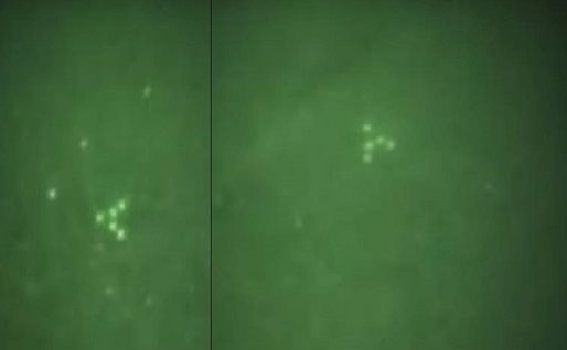
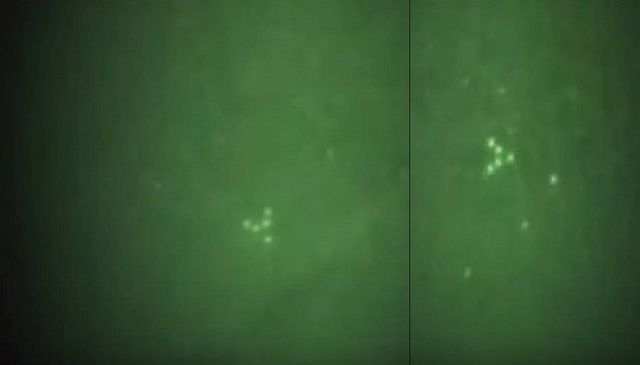
This footage was recorded with an infrared camera. This camera allows us to see objects in the infrared spectrum. The human eye does not have the capabilities to see the infrared spectrum. The infrared camera captured this triangular UFO during the night. The camera shows several objects like airplanes, but these can also be seen with the naked eye. The UFO was not visible to the naked eye and only showed up on the infrared camera. The UFO appears to be the infamous TR-3B secret airplane. It shows a lot of similarities of the objects that were witnessed by thousands during the Belgian UFO flap in 1990 and during the Phoenix Lights events in 1997. This video is one of the best video’s ever proving the existence of the TR-3B.
Unknown lights hovering above Tijuana, Mexico 28-Sep-2017
This new footage of a bright lights was filmed in the sky above Tijuana in Mexico. This happened on 28th September 2017 and It was filmed right off the water just south of the border below Imperial Beach, CA.
Tom DeLonge's New Company Is Trying To Prove That Aliens Exist
The blink-182 founder is trying to change the world
By
Among those of a certain scene, former blink-182 guitarist Tom DeLonge's interest in aliens and all things science fiction have been well publicised.
Spearheaded by his band Angels & Airwaves, DeLonge's To The Stars Media has launched books, feature films and soundtracks exploring the myths and rumours behind some of the biggest sci-fi conspiracies in history.
Now, DeLonge looks set to take this interest to another level, with the founding of the To the Stars Academy of Arts & Science, with three divisions focusing on space, aerospace and entertainment.
After months of speculation around what DeLonge teased would be a big and important reveal, the new initiative was announced in a live stream yesterday (11 October).
Joining him in the organisation are ex-CIA members and former members of the US government's Department of Defense, and a NASA advisor. Their aim is to enable researchers to collaborate on new technologies exploring "the outer edges of science".
"The public interest in the outer edges of science and the understanding of phenomena has always been suffocated by mainstream ideology and bureaucratic constraint," DeLonge said in a statement. "We believe there are discoveries within our reach that will revolutionize the human experience, but they can only be accomplished through the unrestricted support of breakthrough research and innovation."
The company is crowdfunding now and has raised almost $250,000, which probably means he won't have to go out on any lucrative blink-182 tours ever again.
Cassini’s Last Dance With Saturn: The Farewell Mosaic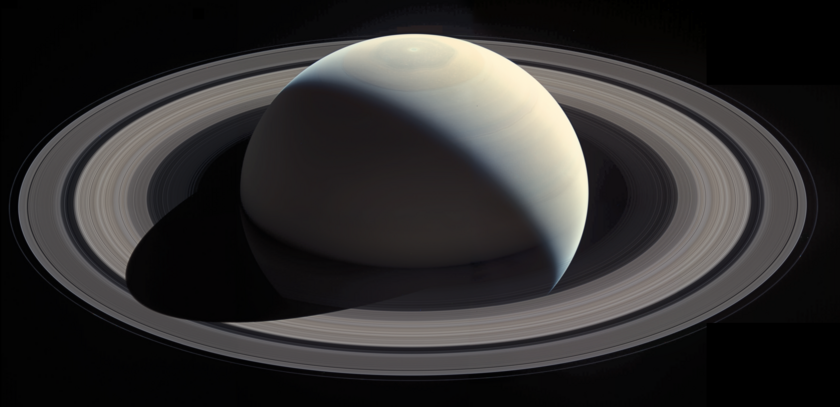
Cassini’s Last Dance With Saturn: The Farewell Mosaic
Last month, the world watched as Cassini plummeted into the upper atmosphere of Saturn—a fitting Viking funeral for a robot that had operated magnificently for two decades in the unforgiving environment of deep space.
One may attach human characteristics to Cassini, for it essentially acted as a human proxy in our quest to better understanding our universe: it sniffed out the composition of molecules, tasted charged particles, felt out the textures of alien moons via radar, listened in to radio emissions from its home planet, and last but not least, used its suite of electronic eyes to gaze upon and observe the many breathtaking vistas it encountered on its journey.
Cassini helped so many folks all over the world—scientists and laypeople alike—to become vicarious explorers of the solar system, and of course, the Saturn system in particular. So when the mission came to an end this past September, I felt a sense of melancholy and bittersweet pride. Cassini is no more and that hurts, no matter which way you slice it.
I’ve felt a particular affinity to Cassini ever since I sent a signed postcard to the Planetary Society in 1996 (signatures were scanned and burned onto a CD that was subsequently bolted to the side of the spacecraft). As such, I debated how to mark the end of the mission—surely I couldn’t just release a wistful sigh and then get on with my life? No, there had to be a more meaningful way to mark the end of this marvellous chapter in space exploration.
And then I had it—almost exactly 48 hours before the two-story probe disintegrated and became forever a part of the sixth planet, it had captured what was to be its final portrait of Saturn and the rings. Its electronic eyes (or the Image Science Subsystem, to use the more prosaic moniker) were cast upon the beringed giant, methodically recording image after image in a variety of exposures and filters. If the 13-year gravitational coupling between Cassini and Saturn were a waltz, this image would, in my eyes, come to represent the ‘last dance’ between the two bodies. That phrase stuck.
By the time the 15th of September came around, and all waited for Cassini’s death gasp to arrive in the form of a truncated radio signal, the raw images of this ‘Last Dance’ mosaic had already been downlinked and released to the public. Many talented peers in the image processing community had already produced fantastic renditions in a very short space of time (most notably Jason Major, Kevin Gill, and Don Davis).
If this had been a regular, run-of-the-mill observation, I would’ve been content to let their hard work represent this moment in time. But this was no ordinary moment in time: it was a watershed moment, a picture that said more than a hundred eulogies could convey. I **had** to make my own version of this mosaic! It wasn’t about doing a better job than my peers; it wasn’t about getting noticed on social media; it wasn’t about anything else except wanting to deal with the end-of-mission in my own way: a cathartic and almost ritualistic process that would, to use the much-vaunted term, bring ‘closure’ to my own Cassini adventure. As such, I poured more hours into this than otherwise would be warranted. I allowed my inner-perfectionist to run riot, at times driving the saner part of me to distraction!
Having produced two other large color Cassini mosaics over the previous 12-months (the so-called ‘Glutton For Punishment’ view from 2016, and the more recent ‘Grand Finale’ vista), I had developed my own approach and workflow that seemed to reliably pay dividends, as long as I was willing to put in the long, arduous hours.
NASA / JPL / SSI / Ian Regan

NASA / JPL-Caltech / SSI / Ian Regan
In the early hours of April 13, 2017, Cassini captured this breathtaking and unique visage of the Saturnian system as it coasted through space in the shadow of the gas giant.
Using its Wide-Angle Camera (part of the Imaging Science Subsystem), Cassini snapped 96 individual digital photos: these images consisted of Red, Green, and Blue-filtered frames, covering a total of 32 ‘footprints’. These 32 color frames were painstakingly combined to produce the final mosaic.
Cassini took nearly four hours to collect these data. In that time, the spacecraft was slowly cruising away from the planet, en route to apoapse (the point farthest from Saturn in any given orbit) of Revolution 269. The distance to the planet increased by 82,000 km in that time, and in the end, the distance to the cloud-tops equaled 650,040 km.
I discovered that having a template, much as a dressmaker might use, was particularly helpful. To that end, I used Mark Showalter’s Saturn Viewer to render the view from Cassini’s vantage point at the midpoint of the observation. (Cassini took two hours to shutter all seventy-six images for this mosaic, starting at 13:09 UTC on September 13). The computer-generated wireframe depiction of Saturn was to be the anchor layer against which all of the individual frames would be matched against.
Saturn and its rings were covered by a grid of ‘footprints’, 5 across and 2 high. These ‘footprints’ are points or objects in space that a spacecraft’s camera stares at, capturing one or more photographs in the process. All data captured, the spacecraft changes its attitude to point the sensor in question in a slightly different direction (aka a new ‘footprint’).
In this instance, Cassini used the wide-angle camera (WAC) to obtain the photographs collected in each of the ten footprints. These images included shots via the red, green, blue and clear filters the WAC possesses. Furthermore, long and short exposures were shuttered to capture detail in the bright rings and sunlit crescent, as well as the more subtle details on the nightside of the planet.
My approach from this point onward can be succinctly summed up in bullet-point form:
Resize all images to 200% scale.
Align and stack all images in each footprint, producing a 16-bit greyscale TIF that preserved details both in the light and dark areas.
Manual assembly of a greyscale mosaic of Saturn’s rings, using the Saturn Viewer wireframe as a guide.
Manual assembly of a greyscale mosaic of Saturn itself, carefully preserving detail both in the sunlit crescent, and the nightside faintly illuminated by ring-shine.
A careful merger of the sub-mosaics produced in steps 4 and 5.
Using the same wireframe reference, make a RGB mosaic covering all ten footprints. Here more time was spent working on careful color-matching between footprints, as opposed to fine alignment of features.
The slightly less precise color mosaic was used to lend chroma information to the base greyscale mosaic.
Final adjustments to color balance, and various high-pass sharpening procedures.
Final ‘Last Dance’ Saturn mosaic, with a subjective (but I suspect fairly accurate) attempt to reproduce natural color:
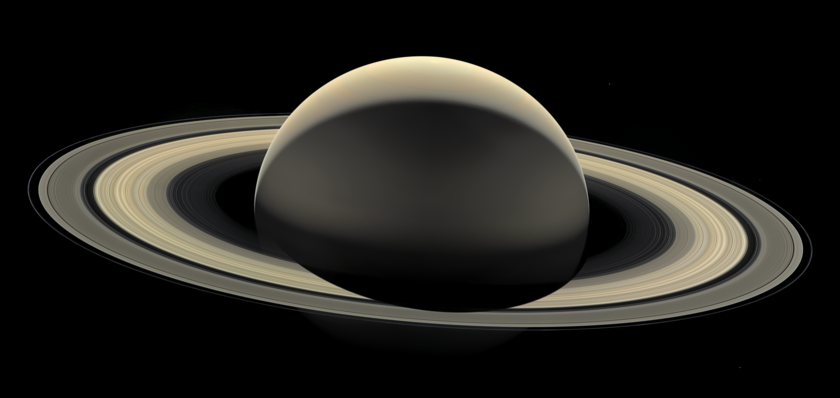
NASA / JPL-Caltech / SSI / Ian Regan
In the early afternoon of September 13, 2017, the venerable and much-loved Cassini probe captured this final portrait of Saturn and its main ring system, before plummeting to fiery destruction in the planet's hazy atmosphere just 48 hours later.
Using its Wide-Angle Camera (part of the Imaging Science Subsystem), Cassini snapped 75 photos: these images can be grouped into a grid of 6 by 2. Each footprint in that grid was covered with both long and short exposures via the red, green, and blue filters, plus a longer exposure shuttered through the clear filter.
The veteran spacecraft took nearly two hours to collect these data: starting at 1:09 PM and concluding at 3:17 PM (all times are UTC). Only three moons—Enceladus, Janus and Mimas—can be picked out in the uncalibrated and compressed data.
Annotated variant:

NASA / JPL-Caltech / SSI / Ian Regan
Every so often, I paused to save and back-up a new iteration of the ‘Last Dance’ mosaic. Unusually, I retained all the intermediate stages (normally I delete the oldest versions after a certain point), enabling me to produce the following GIF, depicting the gradual evolution of the mosaic:

Ian Regan
The final product came out much better than anticipated, and it provided me with the sense of closure and finality I’d sought for. It is not meant to be the definitive rendition of these data, and I fully anticipate an official version to be released before the year is out.
However, as much as having my signature sent to Saturn represented the opening chapter in my own Cassini journey, this image is my personal epilogue at the other end of the story. In my my eyes, the journey is now complete and the circle completed. Cassini is gone, but the legacy lives on, as will the images and data, one hopes, for millennia to come.
CHINA: WORLD’S BIGGEST RADIO TELESCOPE DETECTS TWO PULSARS DURING TRIAL RUN
Studying pulsars, named so because they appear to pulse as they spin, provides scientists with a natural laboratory to look at some of the most extreme conditions in the universe.
Scientists at National Astronomical Observatories of China (NAOC) said FAST discovered two new pulsars on August 22 and 25. These observations were then verified with the Parkes radio telescope in Australia.
The pulsars have been named J1859-01 and J1931-01, and they are located 16,000 and 4,100 light years from Earth, respectively. The more distant pulsar spins at a rate of 1.83 seconds, while the closer at 0.59 rotations per second, according to China’s Xinhua news agency.
Possible UFO Spotted Over Yellowstone Volcano?
A YouTube video has surfaced, which allegedly shows a UFO flying over the Yellowstone volcano, in Wyoming.
The low-quality video is about 3 minutes in length and appears to show a metallic object flying in the sky. A circular bright light emerges from the object for a few seconds and then speeds off quickly into the distance, out of frame.
The video was originally taken on June 9, according to Fox News, but it was only recently shared on YouTube.
Upon further inspection, the description of the video notes that no witness report was available.
The full video can be seen below.
Comments under the video complained about the quality of the film.
“Why are all UFO videos in bad quality?” one person wrote.
“Web cam taking a picture every few seconds (or minutes), so naturally is highly inconclusive” another wrote. “And no witnesses during that great weather? Hard to believe.”
The Yellowstone area has often had reports of alien sightings. According to the National UFO Reporting Center, there have been hundreds of reported sightings in the state, dating back all the way back to 1871.
Recently the volcano had been hit by a swarm of earthquakes, but this is not uncommon.
The cluster of earthquakes at the Yellowstone Park volcano is the most active it’s been in recent history. The earthquake count is up to 2,357 since June. The largest was a magnitude 4.4. The majority of the earthquakes were magnitudes of 0 or 1, as Newsweek reported.
Swarms of earthquakes do not necessarily reflect a forthcoming eruption. Yellowstone experiences thousands of eathquakes a year. The type of earthquake swarms that are occurring at Yellowstone are different from a regular earthquake, that indeed may signal an approaching eruption.
 'Dragonfly' Drone Could Explore Saturn Moon Titan

On Titan, flowing methane and ethane rivers and seas provide a unique opportunity to explore the chemistry that could lead to the rise of life. But it's the thick atmosphere that would make the mission possible.
"The atmosphere is what is giving us this ability to travel on Titan," Turtle said.
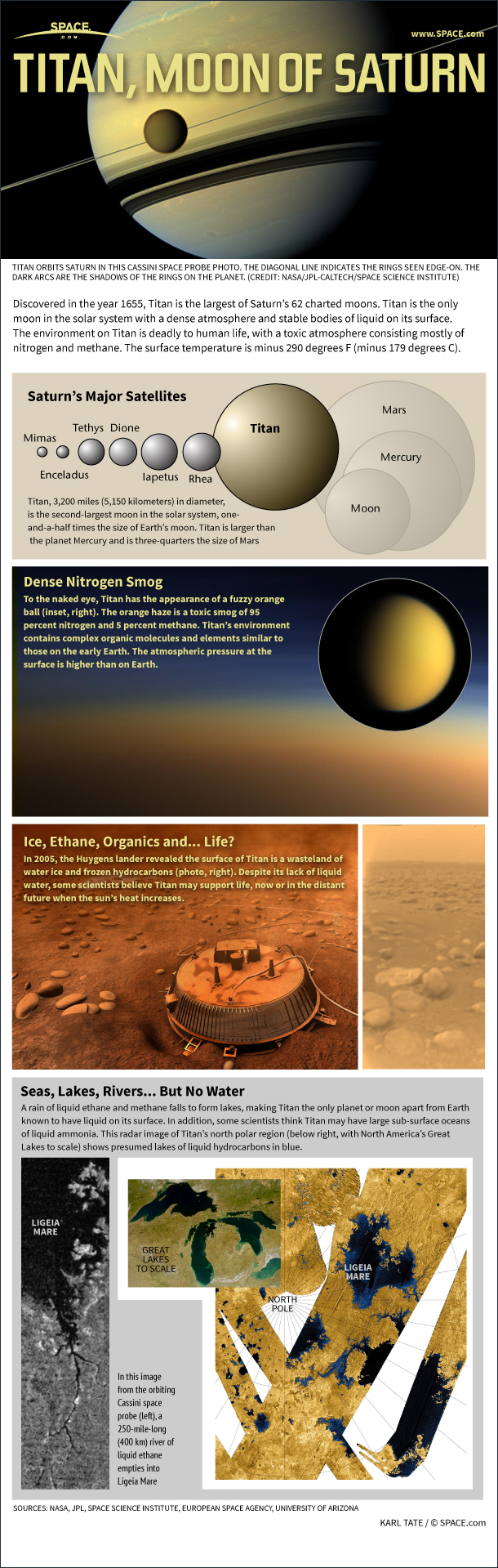
When the Cassini-Huygens mission, a joint initiative between NASA and the European Space Agency, arrived at Titan in 2004, it discovered a world where methane rained down onto the surface into organic-rich lakes and seas. It dropped the Huygens probeonto Titan's surface, providing a tantalizing peek at some of the chemistry beneath the clouds. Over the past decade, the orbiter revealed even more details about Titan's surface, including a variety of environments with the potential to have chemical evolution similar to Earth's, Turtle said.
"The kind of prebiotic chemistry that we're looking at, these are things we can't do in the lab — the timescales are too long to do these experiments in the lab — but Titan has been doing them for ages," Turtle said.
"The results are just sitting on the surface," she added. "If we can get to these different places on the surface of Titan, we can pick up the results of the experiments. They're just waiting for us."
When it came to exploring various locations on Mars, that meant rovers. Each rover dropped at a promising location could trek for tens of miles over its lifetime. As of April 2017, NASA's Opportunity rover had traveled a total of more than 27 miles (43 kilometers), and Curiosity had traveled nearly 10 miles (16 km).
But instead of sending multiple rovers to explore Titan, Turtle wants to use the moon's thick atmosphere to travel more efficiently. Titan's atmosphere is about four times as dense as Earth's, while its gravity is about a tenth as strong.
"Heavier-than-air flight is substantially easier [on Titan]," Turtle said. "That means we can take a really capable lander and move it by a few tens of kilometers in a single flight, and hundreds of kilometers over the time of the mission."
In the past, Titan mission proposals have included balloons and airships that took advantage of the thick atmosphere to travel. But these missions required these vehicles to be constantly in the air, which consumed a great deal of power, Turtle said. They also provided only cursory exploration of the surface.
Instead, Dragonfly would use two rotors positioned at each of its four corners to fly from one region of the moon to the next, then recharge while landed using the multimission radioisotope thermoelectric generator (MMRTG) it would carry with it, which converts the heat from decaying plutonium-238 into electricity. This could mean Dragonfly could fly around Titan for years, or even decades, Turtle said. At the same time, the thick atmosphere would block damaging radiation, providing a welcoming environment for a long-lived mission, she added.
If NASA selects Dragonfly, the spacecraft would be ready for launch in the mid-2020s and should arrive in the 2030s, Turtle said. Cassini's data would provide potential landing sites, but once Dragonfly arrived, it would be able to scout them out and, using the same type of program that Mars rovers use to land safely, decide which one would be the best landing location. After landing, the quadcopter could launch and map several potential sites, and then return to its original spot to continue investigating while scientists decide where it should go next. [How Humans Could Live on Saturn's Moon Titan (Infographic)]
Flying isn't the only task Dragonfly would excel at, Turtle said: A drill and a sampling system would allow it to examine the surface up close, while a spectrometer would let it study the surface composition in larger patches. Meteorology and remote sensing would help characterize the atmosphere and weather of Titan, where a methane cycle stands in for Earth's water cycle, she added.
The spacecraft's ability to move would help it keep Earth in its line of sight, as it will be communicating directly with the planet. Dragonfly would arrive during Titan's northern winter, so it would start out in the southern hemisphere because Earth won't be in the sky in the north, Turtle said. But as the seasons shift, the quadcopter could move, too, heading up north when our planet rises again.
With methane and ethane falling as raindrops from the sky, Titan boasts a hydration cycle both similar to and different from Earth's. The moon is covered with organic materials that make it a potential home for a different sort of life to evolve. That's just one reason many scientists are eager to visit the Saturn satellite. [Life on Titan? Saturn's Cold Moon Fascinates Scientists (Video)]
"Titan is the ideal destination to do prebiotic chemistry," Turtle said. "It has incredibly rich organic material all over the surface."
The giant sand dunes of organic material that stretch for thousands of kilometers across Titan's equator are a potentially intriguing target. Although scientists aren't certain how these dunes form, they may represent what Turtle called a "grab bag" of materials from across the surface.
Impact craters provide another interesting region to explore. The impacts should have melted ice in the crust, thus putting liquid water in close contact with organic material for extended periods, Turtle said.
"We can start to look at how the organic chemistry progressed," she added.
Along the way, Dragonfly could hunt for very basic signs of life on the methane-rich world.
"If we're taking the instrumentation to measure the details of the chemistry, we can also look for biosignatures, because it's the same measurements," Turtle said.
With a $1 billion price tag, NASA's New Frontiers missions are exploring some of the most intriguing places in the universe. Previous selections included the New Horizons mission to Pluto, the Juno spacecraft to Jupiter and the OSIRIS-REx asteroid sample return mission. The current competition lists six mission themes, including sample-return missions from comets or the moon, an ocean worlds explorer, a probe to Saturn, exploration of the Trojan asteroids and a Venus in-situ explorer. NASA plans to select a new mission every five years.
The deadline for the latest round of New Frontiers proposals is April 28, and Dragonfly will be one of the candidates. In November 2017, NASA will select a subset of the proposals for further study and will make its final selection in July 2019. That means there will be a long wait for Turtle, who is hoping Dragonfly comes out on top.
"Titan is just begging us to do this," she said.

The Johns Hopkins Dragonfly proposal is another well-realized drone-exploration project to be put to the space organization. NASA are currently evaluating several mission proposals for the next New Frontiers project. By the end of 2017 it will announce further investment into concept studies for one or more of the submitted proposals, and the final mission will be decided upon by mid-2019 with a launch scheduled by 2025.
Follow Nola Taylor Redd at @NolaTRedd, Facebook, or Google+. Follow us at @Spacedotcom, Facebook or Google+. Originally published on Space.com.
Asteroids: Fun Facts and Information About Asteroids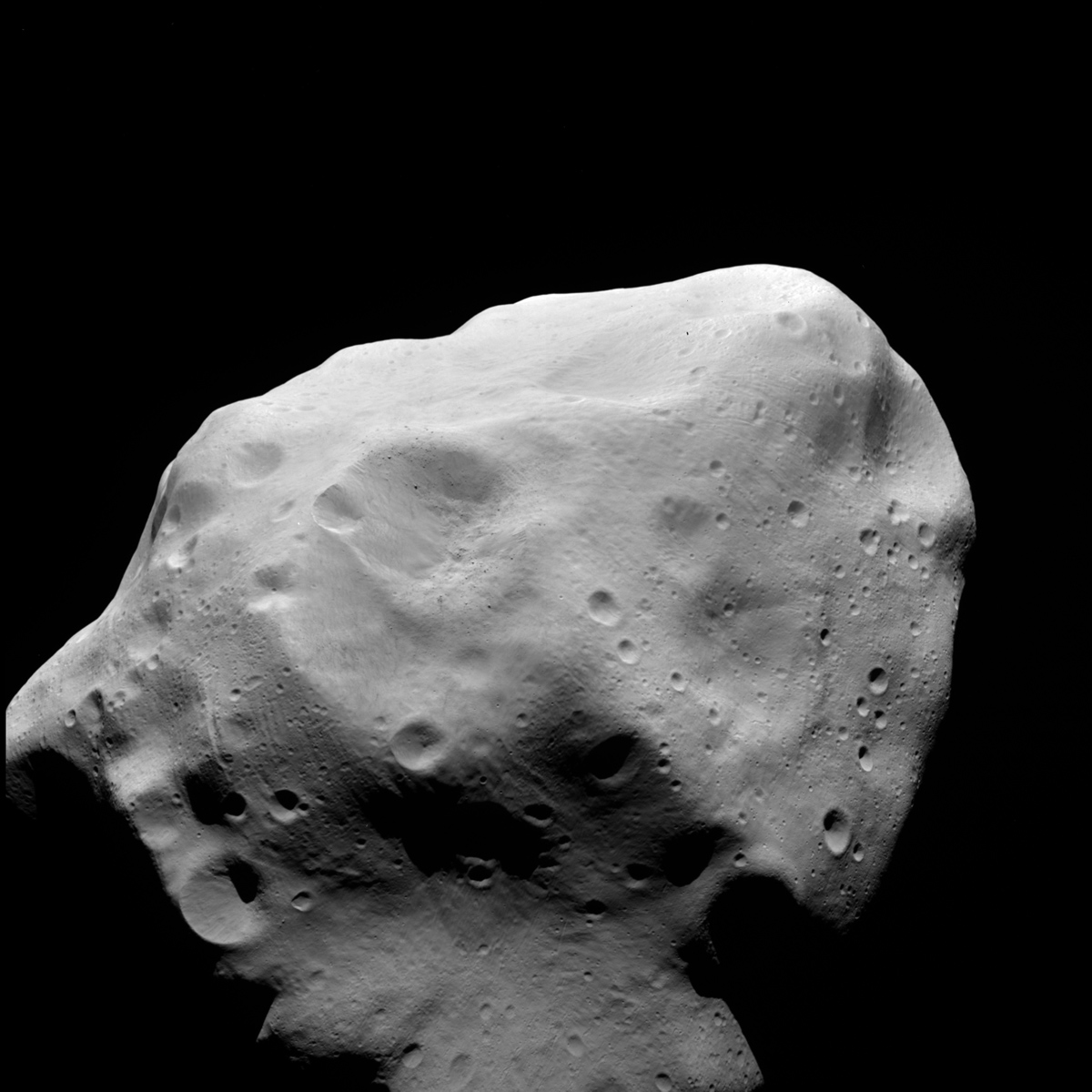 A European Astronomical Observatory is Announcing an “Unprecedented Discovery”

Moments ago, the European Southern Observatory (ESO) announced that they made a revolutionary discovery, one that they will be unveiling to the world on Monday (October 16th). According to the media advisory released today by the ESO, scientists have observed an astronomical phenomenon that has never been witnessed before.
Beyond that, no information is available regarding this most recent announcement.

The last time that astronomers unveiled a groundbreaking discovery of this nature was when scientists working at LIGO (the Laser Interferometer Gravitational-Wave Observatory) detected gravitational waves. Ultimately, the find ushered us into a new era in astronomy, allowing us to see the universe as never before.
To clarify, before this detection, we were only able to perceive the cosmos through observations of electromagnetic radiation—through gamma rays, x-rays, visible light, and so on. Thanks to the LIGO discovery, we can now observe the very ripples of spacetime itself.
Remarkably, the waves were even powerful enough to break the Internet, bringing down both the LIGO and American Physical Society websites.
Of course, there are a number of mysteries that scientists have yet to explain in relation the origins and evolution of the cosmos. As such, it is difficult to pin down the specific nature of this observation—perhaps scientists finally observed dark energy, the mysterious force that is thought to make up approximately 73 percent of the universe, or perhaps it is a discovery that scientists never before fathomed. Stay tuned.
HD Mysterious UFO's at the Great Pyramids �� Ancient Aliens Pyramid's s...Deep, Mystical and Involved documentary regarding the strange architectural perfections, coincidences and Mathematics of the Great Pyramid at Giza - Oh ! and of course..... UFO footage towards the end!!
Enjoy this medley of facts and wonder!!
By Ancient Revelation ( On YouTube)
Gigantic Mystery Hole Opens in Antarctica, Are the Aliens Here?
Gigantic Mystery Hole Opens in Antarctica, Are the Aliens Here?
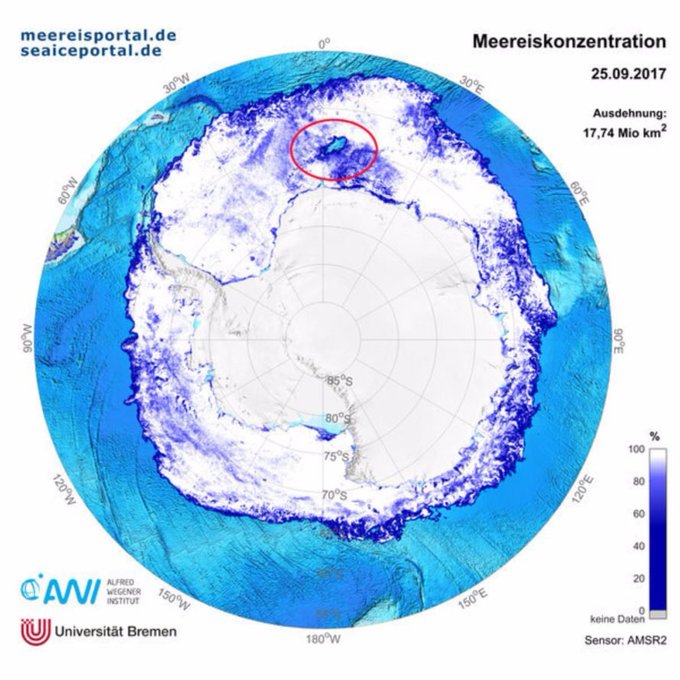
A giant hole the size of Lake Superior (over 300 miles long) has opened up in Antarctica, could this mean that the aliens are here prematurely? Scientists cannot explain why the mystery hole has appeared again after 40-years, but they have better technology to study it this time around. The spot was first observed in the same exact location in the 1970s, which was when the first satellites were launched that provided images of the sea ice cover from space. It reportedly looks like someone, or thing, simply punched a hole in the ice.
Areas of open water surrounded by ice are known by the Russian word "polynya," which is an area of open water surrounded by sea ice. It is now used as a geographical term for an area of unfrozen sea within the ice pack. They occur regularly in the Antarctic and Arctic, but typically in coastal regions. University of Toronto Mississauga professor Kent Moore told Motherboard that the hole is "quite remarkable," but scientists still can't figure out how or why that it has happened again. Professor Mojib Latif told Motherboard that the area is distinct layers. He explains.
"The Southern Ocean is strongly stratified. A very cold but relatively fresh water layer covers a much warmer and saltier water mass, thus acting as an insulating layer."
Certain conditions cause the warm water on the lower layers to reach the surface and melt the ice. Professor Mojib Latif went on to explain that it's basically like opening a pressure relief valve that releases heat during the winters. But still, the science community is baffled by what they're seeing. Could it be extraterrestrial activity?
Last week it was reported that a drunk man in Casper, Wyoming claimed that he was sent from the year 2048 back in time to warn us of an impending alien invasion that is supposed to happen next year. The drunken time traveler told police officers that the aliens filled his body with booze and that he needed to talk to the "president of the town" immediately to warn him of the alien invasion. As news of the giant hole in Antarctica has spread, it has prompted many to rethink the drunken time traveler's story, since he came to warn us a little earlier than he had planned.
Both scientists warned that it is too premature to point the finger at climate change at this time, but they both inferred that the polyana will have a wide impact on the world's oceans as the contrast between ocean temperature and atmosphere drive convection. If not global warning, it could very well be aliens that have punched a hole in the ice with their ships to hide deep in the ice shelf of Antarctica to plan their attack for next year. It isn't clear when the aliens are supposed to invade, but the drunken time traveler warns that it will be early next year. You can check out some more information about the giant mystery hole in Antarctica courtesy of Motherboard.
A GIGANTIC MYSTERY HOLE OPENS IN ANTARCTICA
A GIGANTIC MYSTERY HOLE OPENS IN ANTARCTICA
Startling new evidence has emerged that a massive hole has formed in the ice of Antarctica, and scientists won't say why they think it is there.
Atmospheric physicist Kent Moore, a professor at the University of Toronto admits that the mysterious hole "is quite remarkable, "and adds that "It looks like you just punched a hole in the ice."
This is not the first time such a hole has formed in the ice. When such holes in areas of open water surrounded by sea ice form, they are known as polynyas.
IS AN ANTARCTIC DISASTER ABOUT TO UNLEASH THE APOCALYPSE?
Moore explained that they form in coastal regions of Antarctica. What is strange in this particular case, however, is that this polynia is "deep in the ice pack, "he said. Since this has never happened before, it is becoming clear that it must have formed through other processes that are not yet understood. However, scientists were reluctant to be more specific.
Moore did add, "This is hundreds of kilometers from the ice edge. If we didn't have a satellite, we wouldn't know it was there." (It measured 80,000 k㎡ at its peak.)
When polynias have emerged in the past, they have been largely unreported on and unstudied. Back then, scientists' observation tools were not as sophisticated, so those holes remained largely unstudied. Then the holes went away for four decades, until last year, when one reopened for a few weeks. Now it's back again.
"This is now the second year in a row it's opened after 40 years of not being there, "Moore said. (It opened around September 9.) "We're still trying to figure out what's going on."
When asked if this could be due to climate change, Moore said that's "premature." Scientists can say with certainty, though, that the polynia will have a wider impact on the oceans.
"Once the sea ice melts back, you have this huge temperature contrast between the ocean and the atmosphere, "Moore explained. "It can start driving convection." Particularly concerning is that these holes may not fix themselves in coming winter, since denser, colder water sinks to the bottom of the ocean, while warmer water rises to the surface, "which can keep the polynia open once it starts, "he said.
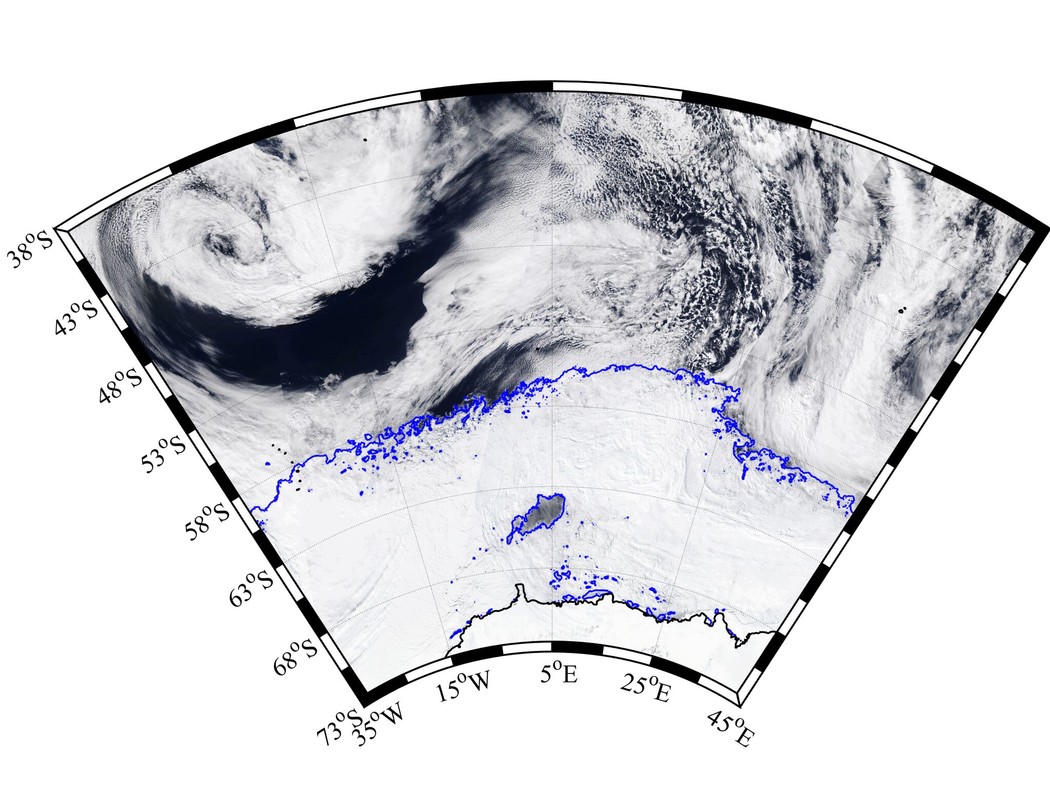
Antarctica is undergoing massive changes right now, and this is certainly one of the most concerning. If this process continues, the ice will not be able to heal itself by refreezing in the winter, thus contributing to a sudden, massive increase in sea level.
STRANGE ENERGY PULSES FROM ANTARTICA
Some are also concerned that the international food reserve could be at risk if this keeps up - potentially endangering humanity's last hope if something catastrophic does happen.
RELATED ARTICLES
IMPRESSIVE UFO RECORDED OVER YELLOWSTONE VOLCANO
IMPRESSIVE UFO RECORDED OVER YELLOWSTONE VOLCANO
Yellow Stone National park has been a long-time heralded UFO sighting area for many decades throughout American history.
The mountain in past years and recent news has been declared a ticking time-bomb as it has awakened into an active volcano being able to erupt at any time it should choose.
Recently a visitor was able to capture one of these amazing U.F.O sightings on camera. The Youtube video was taken earlier this past June already has nearly 25 thousand views. Alien hunters and paranormal fans worldwide are beyond excited to view this very credible footage of a typical silvery flying saucer rising beside Yellowstone then shooting across the sky.
This is not the first sighting of an unidentifiable object in the sky near Yellow Stone. In 2016 there too was a sighting of what appeared to be a drone-like object hovering directly above the head of the summit. Footage of this sighting can also be found on the "Jeanette" channel under a video entitled "Things Are Flying All Over The Night Sky! Upper Basin - Overnight!".
Is there a possibility that visitors from other planets could share an interest in the earth's natural wonders?
Are alien beings somehow involved with the activation of this super-volcano? It is estimated that the volcano last erupted over 700 000 years ago. Many locals feel uneasy knowing that all it might take is just one unexpected earthquake to set it off, immediately killing an estimated 87,000 people and making two-thirds of the United States immediately uninhabitable.
RELATED ARTICLES
ESO TO ANNOUNCE UNPRECEDENTED ASTRONOMICAL PHENOMENON NEVER WITNESSED BEFORE
ESO TO ANNOUNCE UNPRECEDENTED ASTRONOMICAL PHENOMENON NEVER WITNESSED BEFORE
ESO will hold a press conference on 16 October 2017 at 16:00 CEST, at its Headquarters in Garching, Germany, to present groundbreaking observations of an astronomical phenomenon that has never been witnessed before.
The event will be introduced from ESO’s Paranal Observatory in Chile by the Director General, Xavier Barcons, and will feature talks by representatives of many research groups around Europe.
This invitation is addressed exclusively at media representatives. To participate in the conference, bona fide members of the media must register by completing an online form. Please indicate whether you wish to come in person to the press conference or if you will participate online only.
By registering for the conference, journalists agree to honour an embargo, details of which will be provided after registration, and not to publish or discuss any of the material presented before the start of the conference on 16 October 2017 at 16:00 CEST.
On site journalists will have a question and answer session with panelists during the conference. We will also take questions from journalists participating online. In-person individual interviews right after the conference are also possible.
Details about how to connect to the conference, how to submit questions or book interviews, will be sent after registration.
An ESO press release will be publicly issued at the start of the conference. Translations of the press release will be available in multiple languages, as well as extensive audiovisual supporting material.
Press release by ESO:
http://www.eso.org/public/announcements/ann17071/
RELATED ARTICLES
Asteroïde scheerde deze ochtend rakelings langs de aarde - HLN.be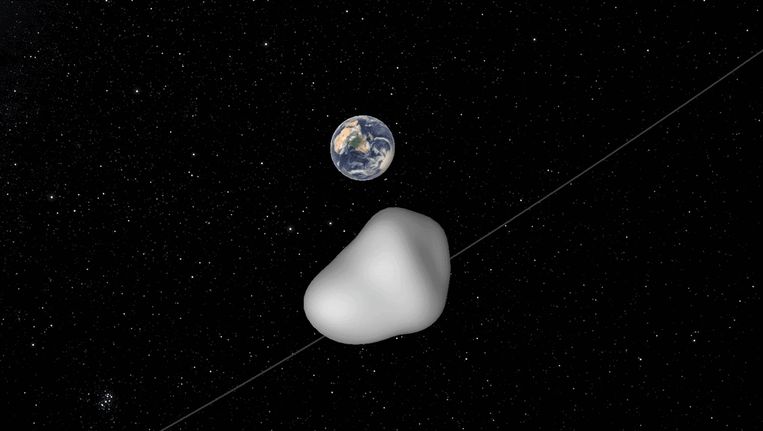 EPAEen impressie, verspreid door NASA, van asteroïde 2012 TC4 die langs de aarde passeert.
De asteroïde ter grootte van een huis - 15 tot 30 meter - bereikte rond 7.40 uur het dichtste punt bij de aarde. Hij bevond zich op dat moment op zo’n 43.800 kilometer boven Antarctica. Een risico dat hij de aarde vandaag zou raken, was er niet.
Het object werd op 5 oktober 2012 door een observatorium op Hawaï ontdekt. Het passeerde de aarde toen op 100.000 kilometer. Sindsdien is het niet meer gezien. In oktober 2079 zou dezelfde asteroïde ons wél kunnen treffen, al bedraagt de waarschijnlijkheid volgens de huidige berekeningen amper 1 op 2.645.
Hoe dan ook leverde deze doortocht belangrijke informatie op. Zo hebben wetenschappers het waarschuwingssysteem voor naderende ruimteobjecten getest. Ze onderzoeken zo hoe we op aarde op een reële bedreiging kunnen reageren.
Amateur-astronomen die vroeg zijn opgestaan, hadden echter pech. Omdat de asteroïde zich snel voortbewoog en niet veel licht weerkaatste, hadden zij weinig kans om hem te spotten.
Ex-gitarist Blink 182 richt onderzoekscentrum voor buitenaards leven op - HLN.be Alex Vanhee
“Wij zijn ervan overtuigd dat er ontdekkingen binnen ons bereik liggen die een revolutie zullen betekenen voor onze menselijke ervaring, maar dat kunnen we enkel bereiken als we onbeperkte steun geven aan baanbrekend onderzoek”, gaat DeLonge, CEO van de instelling, verder.
Want de gitarist is van oordeel dat we al veel verder hadden kunnen staan, ware het niet dat de “overheersende ideologie en bureaucratische beknotting altijd al de publieke interesse in de grenzen van de wetenschap en het begrip van deze fenomenen hebben verstikt”.
DeLonges interesse in buitenaards leven en de ruimte is niet nieuw. Zo schreef de man die in 2015 Blink 182 verliet eerder dit jaar nog een boek “Sekret Machines: Gods” en werkt hij aan een film “Stranger Times”.
De crowdfundingcampagne voor dit project bracht tot nu toe al 200.000 dollar op, weet Rolling Stone.
Vreemd object gespot boven supervulkaan Yellowstone. Is dit een UFO?
Op YouTube is een video verschenen waarin een UFO te zien zou zijn die over de supervulkaan Yellowstone zigzagt. Dat schrijft Fox News.
In de drie minuten durende video, die ruim een half miljoen keer is bekeken, lijkt een metalen object in de lucht zichtbaar te zijn.
Er komt enkele seconden een helder licht uit het object, waarna het verdwijnt. Het filmpje is op 9 juni gemaakt en later die maand op internet geplaatst.
Bekijk de video hieronder:
De supervulkaan Yellowstone trekt de laatste maanden de aandacht vanwege het grote aantal aardbevingen die bij de vulkaan zijn geregistreerd.
Alleen al in de zomer deden zich ruim 400 aardbevingen voor in de buurt van de supervulkaan.
“Dit is het hoogste aantal aardbevingen bij Yellowstone binnen een week in vijf jaar, maar tijdens soortgelijke zwermen aardbevingen in 2002, 2004, 2008 en 2010 zijn er nog meer geweest,” zeiden wetenschappers in juni.
De wetenschappers voegden toe dat er geen reden is tot zorg. Experts van de Amerikaanse geologische dienst USGS zeiden dat de kans dat de supervulkaan uitbarst één op 730.000 is.
Yellowstone is al lange tijd een hotspot voor UFO-waarnemingen. Volgens het Amerikaanse National UFO Reporting Center zijn er in de staat Wyoming vele honderden meldingen gedaan.
[Fox News]Tom DeLonge’s Big Announcement
Tom DeLonge’s big UFO announcement has come and gone and most reactions seem to depend on what you were hoping he would announce, what you think the governments of the world are hiding and what you thought of Blink182.
“To The Stars Academy of Arts & Science has mobilized a team of the most experienced, connected and passionately curious minds from the US intelligence community, including the CIA and Department of Defense, that have been operating under the shadows of top-secrecy for decades. The team members all share a common thread of frustration and determination to disrupt the status quo, wanting to use their expertise and credibility to bring transformative science and engineering out of the shadows and collaborate with global citizens to apply that knowledge in a way that benefits humanity.”

Tom DeLonge
That paragraph from the website of the To The Stars Academy of Arts & Science pretty much sums up the announcement except for naming names. DeLonge has used his own name, money and lifelong interest in UFOs, space and the paranormal to create a company dedicated to delving deeply into those topics without being “suffocated by mainstream ideology and bureaucratic constraint.” That, of course, assumes that the reason why there is so little solid information on UFOs, space and the paranormal is because it’s “suffocated by mainstream ideology and bureaucratic constraint” and not because it may not exist or that it takes time, money, dedication and education to pursue answers. And THAT explains the vast differences of opinion and strong feelings about DeLonge’s announcement.

“To The Stars Academy strives to be a powerful vehicle for change by creating a consortium among science, aerospace and entertainment that will work collectively to allow gifted researchers the freedom to explore exotic science and technologies with the infrastructure and resources to rapidly transition them to products that can change the world.”
The words “Arts” and “entertainment” in the mission statement have upset some because it implies to them that DeLonge will use the organization as a vehicle to market his own writings and music. Well, that’s what he does and that’s what he brings to the organization – the ability to not only present to but also persuade both the public and the providers of the “secret” information via entertainment. He’s already shown he can do it by bringing this large, diverse group of people together and, as the Wikileaks emails revealed, make serious contacts with government and military officials in the pursuit of information. For those who think entertainment should be left out of research and education, tell that to Ken Burns.
Then there’s the group that is disappointed in varying degrees because there was no “big reveal” in the announcement – no space ships, no aliens, no ET messages, no solid evidence. Get over it! That’s not their job … it’s YOURS! The other two legs of the To The Stars Academy of Arts & Science are ‘science’ and ‘aerospace’. Don’t just blindly stare at the shadow of the eclipse … study the science of them, take kids to science museums, skip one sci-fi con and enter them in a technology fair instead. Support politicians who are committed to supporting and funding science and science education. Go outside and look at the stars. Then vote for politicians who know that that view is fading and only science can clean the cosmic glass. The more of space you can see, the better your chances are of seeing a UFO yourself and providing the proof that so many believe is being hidden.

Tom DeLonge is guy with interest, inspiration and imagination (and cash and fame). We don’t need less of him … we need more. He’s not the scientist nor the classic ufologist and may not be the guy who opens the box of secrets or even finds it, but if we look at what he’s doing with disdain, we’ll discourage others from trying, especially our next generations but also those people with the money and the fame to lead the creative charge to greater knowledge of our universe.
As Tom DeLonge says … we have a chance. Stop talking about it or complaining about it … take it and do it.
Infamous TR-3B On Secret Mission?
 Expedition Unknown: Hunt For ExtraTerrestrials asks: Did aliens visit Easter Island millennia ago?
Josh Gates and the Expedition Unknown: Hunt For ExtraTerrestrials
This week Josh Gates and the Expedition Unknown: Hunt For ExtraTerrestrials team head to Easter Island which some ancient alien theorists think aliens could have visited in the distant past.
Easter Island or Rapa Nui (in Polynesian) lies in the southeastern part of the Pacific Ocean and is most famous for the 887 statues that gaze out across the landscape.
Known as moai, they were created by the Rapa Nui civilization over hundreds of years, with initial settlement of the world’s most remote island taking place between 700 and 1100 CE.

Easter Island
However, as the population increased and invasive species like the Polynesian rat upset the ecosystem the civilisation began to decline. Ironically the very thing the island is most famous for might have hastened the decline. Moving the statues around the island involved a huge amount of deforestation and this left the fragile top soil exposed, degrading the value of the limited agricultural land.
The island is a UNESCO World Heritage Site and archeologists have spent decades studying the statues and the culture that produced them.
However, some ancient alien theorists think that some sort of extraterrestrial contact might have seeded the strange activity and building.
Also on this episode, Josh heads to Zimbabwe in Africa to investigate a recent meteorite strike. Many scientists think that life on Earth could have been seeded through celestial objects hitting the planet and a recent strike like this offers some opportunity to test the theory.
Expedition Unknown: Hunt For ExtraTerrestrials airs on Wednesdays at 9:00 PM on Travel Channel.



 Scientists Warn About A Catastrophic Wave Of Earthquakes Caused By A Gigantic Hole In The Ocean Floor
 NASA's Mars Reconnaissance Orbiter Spotted A Strange
 Impressive UFO Captured During Night Shift
 Yellowstone Supervolcano Earthquake Swarm Now One Of Biggest Ever
 New Earth 2.0 alien world to be unveiled by ESO tomorrow
 ESO trail exciting new information about a newly discovered ‘remarkable