


The @NASA_TESS team is excited to announce the mission's first candidate planet -- a super-Earth around the bright star Pi Mensae, nearly 60 light-years away. The planet orbits every 6.3 days. The discovery is now being reviewed by other scientists to validate it. Stay tuned!
Donderdag 20 september 2018
 Octopuses Rolling on MDMA Reveal Unexpected Link to Humans
Octopuses Rolling on MDMA Reveal Unexpected Link to Humans
“After the MDMA, it was like an eight-armed hug.”
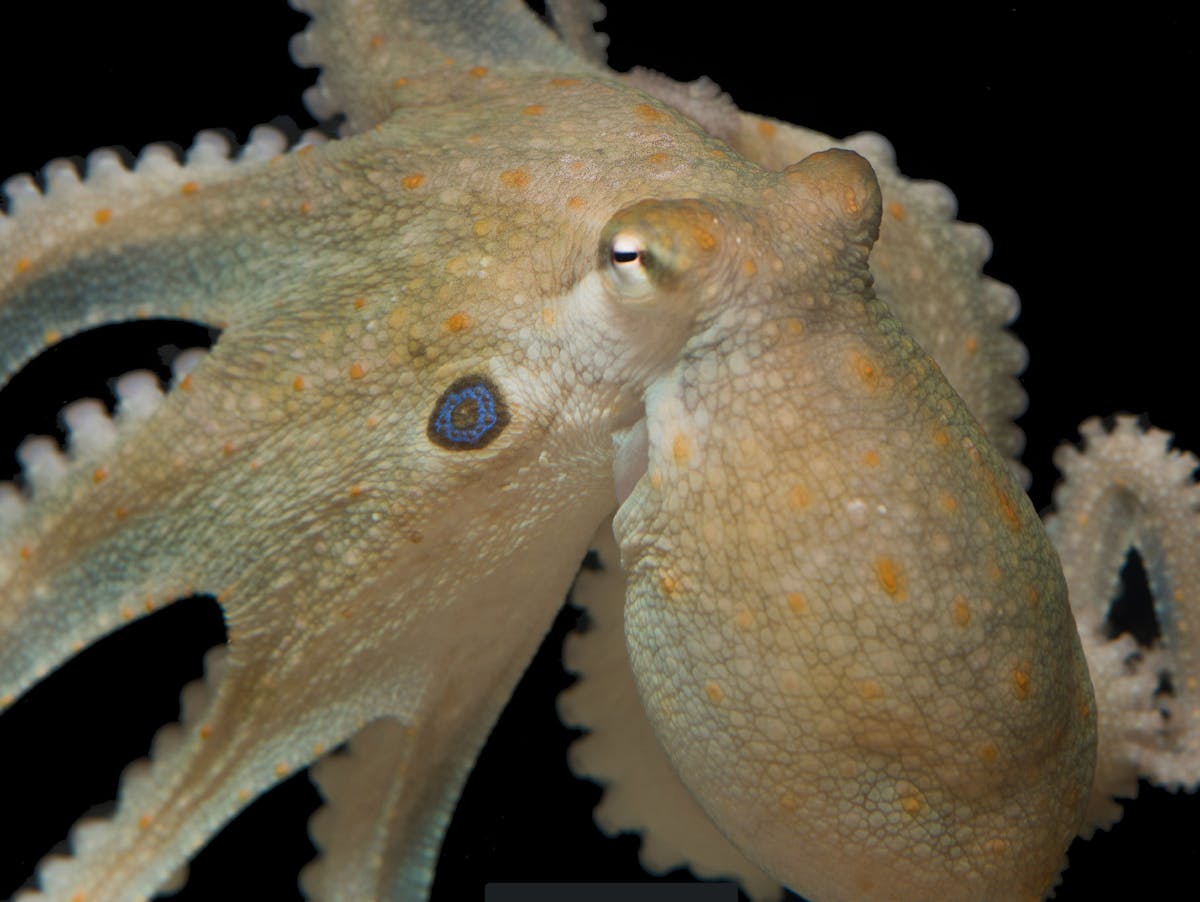
This became clear when she observed how octopuses acted after they were bathed in MDMA. Individual octopuses were put into the middle zone of a glass aquarium that was divided into three. From the middle zone, the subject octopus had the option to move into the zone on either side of it. On one side, there was another octopus in a cage, and on the other, there was a “novel toy object” (a Stormtrooper figurine). Sociality was measured by the number of seconds the subject octopus spent on the side with the caged octopus compared to the Stormtrooper side. Five octopuses were used in the control experiment, and four were used during the MDMA trial.
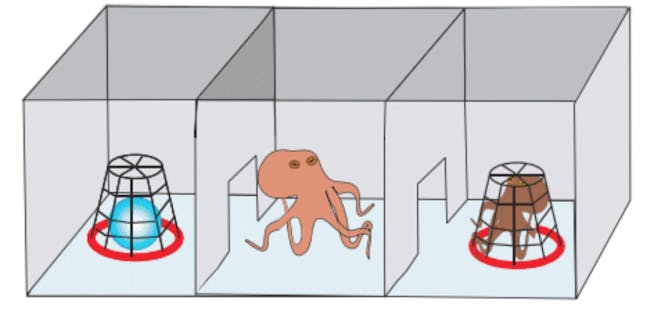
Watching the individual control octopuses — those that hadn’t been bathed in MDMA — during 30-minute test sessions, the researchers found that all of the octopuses spent more time with the Stormtrooper when the social chamber contained a male. When the social chamber contained a female, both male and female octopuses tentatively explored that area.
They would “push against the wall and sort of delicately touch the container that had the octopus in it,” says Dölen.
But when these octopuses were on MDMA, they were notdelicate with their movements toward the caged individuals. After being placed in a bath with MDMA for 10 minutes then washed with saline for 20 minutes, they re-entered the three-zone aquarium. This time around, they spent significantly more time with the other octopus, whether it was male or female, and the eight-armed hugging commenced.

“This paper is welcomed, as the behavioral neuroscience of cephalopods is very understudied,” Dalhousie University invertebrate behavioral physiologist Shelley Adamo, Ph.D., who was not involved with the current paper, tells Inverse. Adamo also studies the interactions between behavior and physiology in invertebrate model systems. “We know little about how their brains work. This paper breaks new ground by examining the underlying molecular basis of at least one neurotransmitter system.”
But she also cautions that it’s too early to jump to conclusions because the paper’s evidence that “the octopus were engaging in ‘social’ behaviors is not especially strong.” There could be alternative explanations for all that friendliness: Maybe the drug altered their foraging behavior and the target octopus “smelled” like food (cephalopods are occasionally cannibalistic). Maybe the MDMA changed their typical hunting behavior, and being hungry could explain why both male and female octopuses were interested in the target.
“As with most interesting papers, it raises a number of questions: What would two octopus do if they were both on MDMA and they could contact one another?” Adamo asks. “The small sample size — a necessary evil for most studies on cephalopods — means that the data is not as robust as it could be.”
Dölen has two hypotheses to explain what happened. Qualitatively, it looks like octopuses on MDMA, much like humans, could just like touching in general and the octopus in the cage “is the most interesting object that an octopus would want to touch.” Or it could be that the drug really does make them social. The latter, she believes, is the most robust hypothesis: MDMA affects human interest in social touch as well, and that seems to be preserved in octopuses as well.
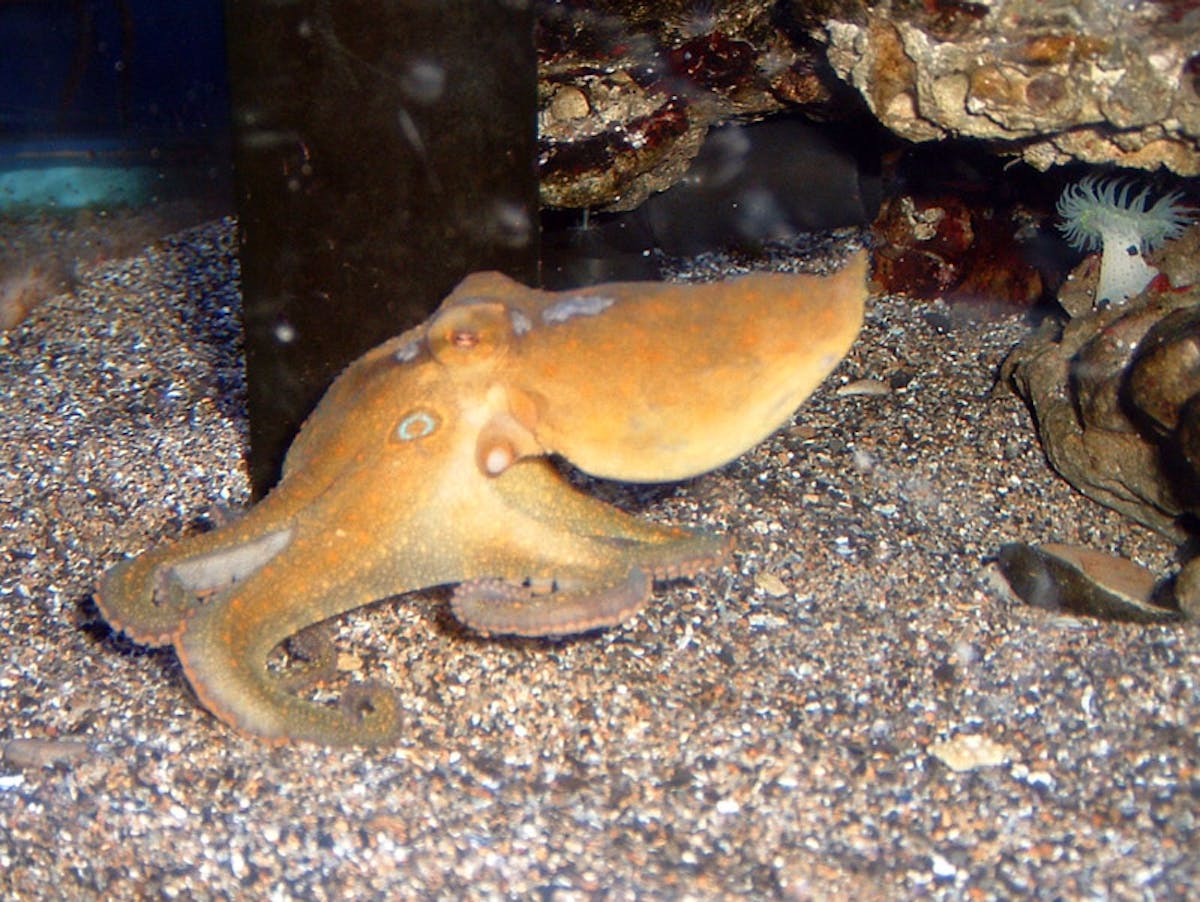
“What this says to me is that in the brain of an octopus, the neural circuits and transmitters that are required for social behavior must exist and they are just suppressed most of the time,” says Dölen. “Octopuses appear to suspend their asociality during important mating periods through a suppression mechanism in their brain.”
The MDMA used in the study was provided by the Multidisciplinary Association for Psychedelic Studies (MAPS), the nonprofit organization that funds the FDA-approved Phase 3 clinical trials of MDMA-assisted psychotherapy in patients with severe PTSD. This research, Dölen says, has intrigued MAPS founder Rick Doblin, and with good reason. It suggests that perhaps the best way to gain insight into MDMA’s mechanisms and therapeutic importance isn’t by taking an fMRI picture of the brain and examining the regions it activates, which has been standard practice in MDMA research. From Dölen’s point of view, the fact that octopuses don’t have same brain regions as humans but still carry the genes that enable MDMA binding means that molecular and cellular information is going to be more useful than anatomical data.
“Octopuses don’t have the same parts of the brain that we think are important for social behavior, a region called the nucleus accumbens,” says Dölen.
“What we’re arguing is that the brain regions don’t matter. What matters is that they have the molecules, the neurotransmitters, and some configuration of neurons. They have the serotonin transporter and that’s enough.”
Geschreven door peter om 23:36
Stuur door