Ontdek de Fascinerende Wereld van UFO's en UAP's: Jouw Bron voor Onthullende Informatie!
Ben jij ook gefascineerd door het onbekende? Wil je meer weten over UFO's en UAP's, niet alleen in België, maar over de hele wereld? Dan ben je op de juiste plek!
België: Het Kloppend Hart van UFO-onderzoek
In België is BUFON (Belgisch UFO-Netwerk) dé autoriteit op het gebied van UFO-onderzoek. Voor betrouwbare en objectieve informatie over deze intrigerende fenomenen, bezoek je zeker onze Facebook-pagina en deze blog. Maar dat is nog niet alles! Ontdek ook het Belgisch UFO-meldpunt en Caelestia, twee organisaties die diepgaand onderzoek verrichten, al zijn ze soms kritisch of sceptisch.
Nederland: Een Schat aan Informatie
Voor onze Nederlandse buren is er de schitterende website www.ufowijzer.nl, beheerd door Paul Harmans. Deze site biedt een schat aan informatie en artikelen die je niet wilt missen!
Internationaal: MUFON - De Wereldwijde Autoriteit
Neem ook een kijkje bij MUFON (Mutual UFO Network Inc.), een gerenommeerde Amerikaanse UFO-vereniging met afdelingen in de VS en wereldwijd. MUFON is toegewijd aan de wetenschappelijke en analytische studie van het UFO-fenomeen, en hun maandelijkse tijdschrift, The MUFON UFO-Journal, is een must-read voor elke UFO-enthousiasteling. Bezoek hun website op www.mufon.com voor meer informatie.
Samenwerking en Toekomstvisie
Sinds 1 februari 2020 is Pieter niet alleen ex-president van BUFON, maar ook de voormalige nationale directeur van MUFON in Vlaanderen en Nederland. Dit creëert een sterke samenwerking met de Franse MUFON Reseau MUFON/EUROP, wat ons in staat stelt om nog meer waardevolle inzichten te delen.
Let op: Nepprofielen en Nieuwe Groeperingen
Pas op voor een nieuwe groepering die zich ook BUFON noemt, maar geen enkele connectie heeft met onze gevestigde organisatie. Hoewel zij de naam geregistreerd hebben, kunnen ze het rijke verleden en de expertise van onze groep niet evenaren. We wensen hen veel succes, maar we blijven de autoriteit in UFO-onderzoek!
Blijf Op De Hoogte!
Wil jij de laatste nieuwtjes over UFO's, ruimtevaart, archeologie, en meer? Volg ons dan en duik samen met ons in de fascinerende wereld van het onbekende! Sluit je aan bij de gemeenschap van nieuwsgierige geesten die net als jij verlangen naar antwoorden en avonturen in de sterren!
Heb je vragen of wil je meer weten? Aarzel dan niet om contact met ons op te nemen! Samen ontrafelen we het mysterie van de lucht en daarbuiten.
Dinsdag 17 september 2019
Retangle Shaped UFO Over Athens, Greece On Aug 29, 2019, UFO Sighting News.
Retangle Shaped UFO Over Athens, Greece On Aug 29, 2019, UFO Sighting News.
Date of sighting: 8-29-2019
Location of sighting: Athens, Greece
Source: MUFON #103355
The eyewitness states that they saw an odd object over the city that seemed orb like, but with other parts that were odd.
I made a close up of the UFO he photographed and found that the object appeared to be two rectangles one layered upon the other. Its a shape that I have only seen in some Mars Rover photos a few times. The UFO can easily be mistaken for a bird since its so high up, but the close up show its unlike any bird known. This is UFO 100% real, its black color, energy aura around it...all scream alien tech. It looks to be about the size of a motorcycle or small car. Absolutely amazing shape.
Two UFO Seen Over New York City Tribute Lights On 911 Anniversary, UFO Sighting News.
Date of sighting: 9-11, 2019
Location of sighting: Tribute lights, New York City, USA
These UFOs were recorded moving about in the 911 tribute lights on the anniversary just 6 days ago. They were recorded by Youtuber Orlando Bosca, a UFO researcher that keeps an eye on the live cams, checking them daily for possible catches.
There is lots of evidence that UFOs are interested in historical events, but 911 also has evidence of UFOs in the videos of the actual crash of a plane into a building. Just as one plane is about to hit the building, a round object shoots past the plane hitting into the windows...what was it? An unknown...unidentified flying object. Often we see UFOs are historical locations...probably watch how the humans emotions and passion to keep such events in memories changes the cultures.
UFO Found Landed On Moon May Be Over 20km Long! UFO Sighting News.
Date of discovery: 2013 Location of discovery: Earths moon,
This photo is in the NASA collection at the University of Arizona...gota love them. ASU got them directly from Lydon B. Johnson Space Center. Sure I found this back in 2013, but I wanted to go over it again and this time make the video HD. The object may be sitting on the surface of the moon. Which means its an abandoned mothership, probably sitting on the surface of the moon gathering dust for thousands or millions of years. Someone should lay claim to this. Even if it cant fly, it still will have tons of alien technology that would make any country on earth a world power.
“We have never seen anything like this in the 24 years we have studied the supermassive black hole. It’s usually a pretty quiet, wimpy black hole on a diet. We don’t know what is driving this big feast.”
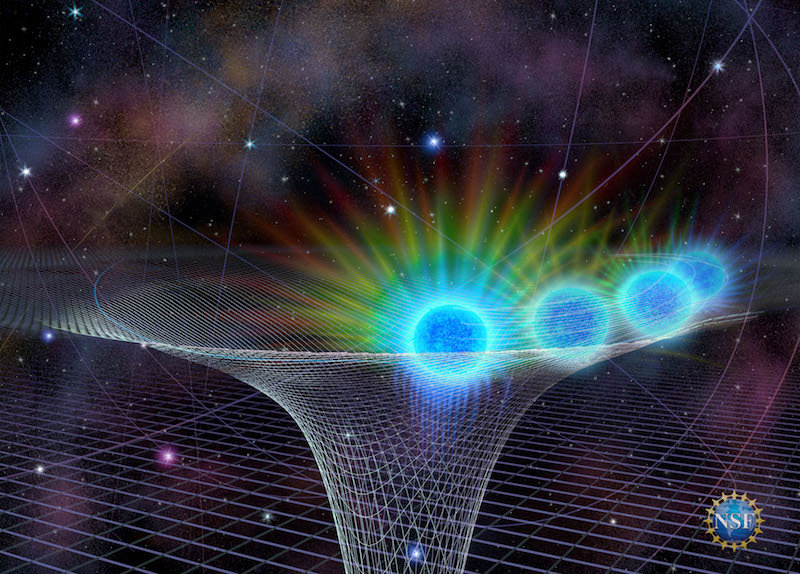
Artist’s concept of an object called S0-2 orbiting our Milky Way’s supermassive black hole. Astronomers tracked this object for years, hoping to catch it falling over the hole’s event horizon. It did not fall in, but its close approach in 2018 might be one reason for the black hole’s growing appetite now.
UCLA astronomers announced on September 11, 2019, that, last May, they caught the supermassive black hole at the center of our Milky Way galaxy having an unusually large meal of interstellar gas and dust. They caught the feast on May 13 (although of course it happened some 25,000 years ago earlier, since the center of the galaxy is about 25,000 light-years away). What they saw was this. The black hole – called Sagittarius A*, pronounced Sagittarius A-star – became extremely bright in May 2019, growing 75 times as bright for a few hours. Yet, as of now, the researchers don’t yet understand why. Why did the area just outside the black hole’s event horizon – its point of no return – suddenly become brighter? What did it ingest, and why at that time?
Astronomer Tuan Do is lead author of new research describing this event, published September 11 in Astrophysical Journal Letters. He also produced the timelapse in the tweet below, which depicts the brightness changes at Sgr A*. Andrea Ghez, of the UCLA Galactic Center Group, is co-senior author on the new paper. She said:
We have never seen anything like this in the 24 years we have studied the supermassive black hole. It’s usually a pretty quiet, wimpy black hole on a diet. We don’t know what is driving this big feast.
… analyzed more than 13,000 observations of the black hole from 133 nights since 2003. The images were gathered by the W. M. Keck Observatory in Hawaii and the European Southern Observatory’s Very Large Telescope in Chile. The team found that on May 13, the area just outside the black hole’s ‘point of no return’ (so called because once matter enters, it can never escape) was twice as bright as the next-brightest observation.
They observed large changes on two other nights this year; all three of those changes were ‘unprecedented,’ Ghez said.
They said the brightness surrounding the black hole always varies somewhat, but the extreme variations in brightness observed this year left them “stunned.”
So what is going on?
In an absolute sense, the increased brightness on a few nights in 2019 can be explained by radiation from gas and dust falling into the black hole. One hypothesis about the increased activity is that when a star called S0-2 made its closest approach to the black hole during the summer 2018, it launched a large quantity of gas that reached the black hole this year.Tuan Do, the study’s lead author, said:
The first image I saw that night, the black hole was so bright I initially mistook it for the star S0-2, because I had never seen Sagittarius A* that bright. But it quickly became clear the source had to be the black hole, which was really exciting.
Another possibility involves a bizarre object known as G2, which is most likely a pair of binary stars, which made its closest approach to the black hole in 2014. It’s possible the black hole could have stripped off the outer layer of G2, Ghez said, which could help explain the increased brightness just outside the black hole.
Morris said another possibility is that the brightening corresponds to the demise of large asteroids that have been drawn in to the black hole.
Tuan Do@quantumpenguin
Here's a timelapse of images over 2.5 hr from May from @keckobservatory of the supermassive black hole Sgr A*. The black hole is always variable, but this was the brightest we've seen in the infrared so far. It was probably even brighter before we started observing that night!
The question for astronomers is, what does this activity mean? Is it simply an extraordinary singular event, or is it a precursor to significantly increased activity for Sgr A*? Mark Morris, UCLA professor of physics and astronomy, is another author on the paper. He said:
The big question is whether the black hole is entering a new phase – for example if the spigot has been turned up and the rate of gas falling down the black hole ‘drain’ has increased for an extended period – or whether we have just seen the fireworks from a few unusual blobs of gas falling in.
The team has continued to observe the area. They say they’ll try to settle the question based on what they see from new images. Ghez said:
We want to know how black holes grow and affect the evolution of galaxies and the universe. We want to know why the supermassive hole gets brighter and how it gets brighter.
The black hole is some 26,000 light-years away and poses no danger to our planet. Do said the radiation would have to be 10 billion times as bright as what the astronomers detected to affect life on Earth.
Astrophysical Journal Letters also published a second article by the researchers, describing speckle holography, the technique that enabled them to extract and use very faint information from 24 years of data they recorded from near the black hole.
Ghez’s research team reported July 25 in the journal Science the most comprehensive test of Einstein’s iconic general theory of relativity near the black hole. Their conclusion that Einstein’s theory passed the test and is correct, at least for now, was based on their study of S0-2 as it made a complete orbit around the black hole.
… studies more than 3,000 stars that orbit the supermassive black hole. Since 2004, the scientists have used a powerful technology that Ghez helped pioneer, called adaptive optics, which corrects the distorting effects of the Earth’s atmosphere in real time. But speckle holography enabled the researchers to improve the data from the decade before adaptive optics came into play. Reanalyzing data from those years helped the team conclude that they had not seen that level of brightness near the black hole in 24 years.
It was like doing LASIK surgery on our early images. We collected the data to answer one question and serendipitously unveiled other exciting scientific discoveries that we didn’t anticipate.
Bottom line:UCLA astronomers announced on September 11, 2019, that – in May – they caught the supermassive black hole at the center of our Milky Way galaxy having an unusually large meal of interstellar gas and dust. Why did the area just outside the black hole’s event horizon – its point of no return – suddenly become dramatically brighter? What did it ingest, and why at that time?
In 1950, a learned lunchtime conversation set the stage for decades of astronomical exploration. Physicist Enrico Fermi submitted to his colleagues around the table a couple contentions, summarized as 1) The galaxy is very old and very large, with hundreds of billions of stars and likely even more habitable planets. 2) That means there should be more than enough time for advanced civilizations to develop and flourish across the galaxy.
So where the heck are they?
This simple, yet powerful argument became known as the Fermi Paradox, and it still boggles many sage minds today. Aliens should be common, yet there is no convincing evidence that they exist.
(This assumes, of course, that humans count as intelligent.) Life may exist, but it could simply take the form of miniscule microbes or other cosmically "quiet" animals.
3. Intelligent species lack advanced technology.
Currently, astronomers utilize radio telescopes to listen intently to the night sky. So if alien species aren't broadcasting any signals, we'd never know they existed.
4.Intelligent life self-destructs.
Whether via weapons of mass destruction, planetary pollution, or manufactured virulent disease, it may be the nature of intelligent species to commit suicide, existing for only a short time before winking out of existence.
5. The universe is a deadly place.
On cosmic timescales – think billions of years – life may be fleeting. All it takes is a single asteroid, supernova, gamma ray burst, or solar flare to render a life-harboring planet lifeless.
6. Space is big.
The Milky Way alone is 100,000 light years across, so it's conceivable that the focused signals of intelligent aliens, which are limited to the speed of light, simply haven't reached us yet.
7. We haven't been looking long enough.
Eighty years. That's the amount of time that radio telescopes, which allow us to detect alien signals, have been around. And we've been actively searching for aliens for maybe sixty years. That's not very long at all.
8. We're not looking in the correct place.
As previously mentioned, space is big, so there are tons of regions to listen for alien signals. If we're not listening precisely in the direction from which a signal is originating, we'd never hear it. As Andrew Fain explained at Universe Today, it's like trying to speak with your friend on a 250,000,000,000-channel CB radio, without any knowledge of the frequency on which they are transmitting. You'll probably be channel flipping for a long time.
9. Alien technology may be too advanced.
Radio technology may be commonplace here on Earth, but on far-flung worlds, alien societies may have graduated to more advanced communication technologies, like neutrino signals. We can't decipher those just yet.
10. Nobody is transmitting.
Instead, everybody may be listening. That's basically how it is here on Earth. Apart from a few paltry efforts to broadcast strong signals over a narrow frequency band towards the stars above, we've barely made our presence known in the universe. In fact, if aliens have radio telescopes similar to what we have on Earth, our television and radio broadcasts would only be detectable up to 0.3 light-years away. That distance doesn't even transcend the farthest reaches of our solar system.
11. Earth is deliberately not being contacted.
On Earth, we have policies about contacting indigenous peoples; it's possible that the same thing could be happening with us. Just like in Star Trek, advanced alien societies may enforce rules that limit contact only to species that attain a lofty degree of technological or cultural evolution.
12. Aliens are already here and we just don't realize it.
Conspiracy theorists love this unlikely explanation. While the chances are remote, it's not impossible that government agencies are concealing the presence of aliens. Although it's more likely that aliens are already amongst us, observing humanity in the clever and ironic guise of lab mice.
Michio Kaku: We’ve Reached A Turning Point On UFOs
JAZZ SHAW
As we’ve been covering the various stories relating to the recent release of videos by our military, showing strange aircraft (spacecraft?) in our military airspace, there’s been one repeating theme. Most of the people speculating on the origin of these craft seemed to generally be from the military or the “ufo community.” Where have the more mainstream scientists been in this debate? At least one of them stepped up to the plate recently to weigh in with a surprising take.
Professor Michio Kaku of CUNY, the theoretical physicist who shows up on virtually every show about outer space on the Science Channel, Discovery and others, spoke at the Ufology World Congress in Spain recently. He addressed the question of the recent videos and what implications they might have for us. After previously treating the UFO topic as something more fanciful, Kaku seems to have really had a change of heart and declared that we’ve reached “a turning point.” (Yahoo News)
Even if not smoking-gun proof, the declassified videos — bolstered by confirmation of multiple sightings of unexplained aerial vehicles during 2014 and 2015, including at least one near-collision — are giving ufology new weight. “We’ve reached a turning point,” Kaku said. “It used to be that believers had to prove that these objects were from an intelligent race in outer space. Now the burden of proof is on the government to prove they’re not from intelligent beings in outer space.”
The possibility that they are vehicles from other planetary civilizations, Kaku told Yahoo, “now has to be put on the table.”
That’s a pretty hot take right there. “The burden of proof is on the government” to prove that these vehicles didn’t come from outer space.
By the way, that linked article at Yahoo is quite lengthy and has a ton of background information on the various players in this topic right now. If you’re interested, but not really up to speed on the government material, the To The Stars Academy and all the rest, it’s definitely worth a read.
But is Professor Kaku right? Have we really reached “a turning point” in the discussion of possible extraterrestrial intelligence and anomalous craft visiting our planet? I’m not quite there yet, but the discussion has certainly been expanding into the mainstream media a lot more, rather than just the dark halls of ufology websites and dens of conspiracy theories. (Confession time. Those are places I hang out anyway.)
I have a couple of issues with the stance that Kaku is taking, though I’m still very excited about the information that’s been coming out. First of all, stating that the burden of proof is now on the government to prove something relies on the rather dubious assumption that the government actually knows the answer. After all, one of the reasons they came clean with the Navy videos was that the pilots and their commanders were concerned and wanted a more thorough investigation done. Congress even demanded (and received) a briefing on the subject, so it doesn’t sound like they knew about it either. It’s entirely possible that the government doesn’t have a clue who built those things. Of course, if that’s the case, then who did?
I suppose it’s still conceivable (barely) that some super-secret group in the Defense Department cooked this up and just didn’t tell anyone else… even our own military. Or perhaps the Russians or the Chinese. But if you go back and watch my interview with Quantum Physicist Deep Prasad you’ll see there’s a problem with that theory. The amount of energy required to essentially defy gravity as at least one type of these UAPs have been observed doing, would probably require smashing two black holes together. If anyone was producing that kind of energy anywhere on the planet, somebody should have noticed.
Still, I’m heartened to see more people, including mainstream scientists, looking into these questions and expanding the discussion. It just feels as if we might finally be on the verge of learning something new and truly remarkable. And it’s something that could change the entire course of history and the future of humanity. Well… unless it turns out that the aliens are here to eat us and steal our planet. That would kind of suck.
The dinosaur-killing asteroid that hit the Earth around 66 million years ago probably generated a huge tsunami, according to new research.
A team of scientists dug into Chicxulub crater, which is the scar left over from the impact that is located on the Yucatan Peninsula in Mexico. There, they retrieved rocks from between 1,640 feet and 4,260 feet (500 meters and 1,300 meters) beneath the surface.
"This research helps answer the tantalizing question of exactly what happened in the immediate aftermath of one of the most significant events in Earth's history," co-author Kliti Grice, a geochemist at Curtin University in Australia, said in a statement. This impact was not only deadly to the dinosaurs, Grice noted, but it also killed off about three-quarters of all animal and plant species around the world.
The researchers analyzed samples of the peak ring of the crater core, searching for molecules such as polycyclic aromatic hydrocarbons (PAH), which are organic compounds containing carbon and hydrogen. ("Aromatic" does not refer to the molecules' smell, but rather their ring-like shape.) In the samples, the scientists looked for a PAH called perylene, which comes from pigment made by wood-degrading fungi.
The compound's presence suggests that a tsunami several hundred feet (or meters) high "flooded the crater within days of the asteroid impact," Grice said. "The abundance of perylene within the crater is the result of it being transported there by the soil and land plant debris carried by the tsunami."
The aftermath of the impact was catastrophic: first, a quick inferno, then a long period of cooling. Most of the species alive at the time couldn't tolerate the dramatic temperature shifts and perished. "We fried them and then we froze them," lead author Sean Gulick, a geoscientist at the University of Texas as Austin, said in a statement. "Not all the dinosaurs died that day, but many dinosaurs did."
The research is described in a paper published on Monday (Sept. 9) in the journal Proceedings of the National Academy of Sciences.
Scientists have detected water vapor in the atmosphere of K2-18 b, a potentially habitable alien world about twice the size of Earth. The finding, announced today (Sept. 11), follows a separate study released yesterday announcing the discovery of water vapor, and likely clouds and rain, on the planet.
The far-off planet (it's about 110 light-years away) was discovered in 2015 by NASA's Kepler space telescope. The alien world is about two times the size of Earth and eight times as massive. K2-18 b orbits a red dwarf star in the "habitable zone" — the range of distances where liquid water could be stable on a world's surface.
Scientists with the study published today in the journal Nature Astronomy used data from Hubble Space Telescope observations made from 2016 and 2017 collected by the research team behind yesterday's study to determine that the exoplanet has water vapor in its atmosphere. K2-18 b is so far the smallest exoplanet that atmospheric water vapor has been discovered on.
In a study published Sept. 11, 2019, researchers detected water vapor in the atmosphere of exoplanet K2-18b. This artist’s impression shows the planet K2-18b, its host star and an accompanying planet in this system.
(Image credit: ESA/Hubble, M. Kornmesser)
A candidate for alien life?
Much remains unknown about the exoplanet K2-18 b, the researchers stressed. The exoplanet could be rocky with a large atmosphere, or a "water world" covered mostly or entirely by water, they asserted.
Still, K2-18 b is one of thebest candidates to host alien life that we know about, lead researcher Angelos Tsiaras of the University College London (UCL) Department of Physics and Astronomy, told Space.com. The fact that it is a relatively small planet that lies within a habitable zone and has evidence of water "makes this target the best target for habitability that we know right now," he said.
The researchers studied Hubble data to analyze K2-18 b's transit, or its movement across its host star's face, using a technique known as transit spectroscopy. As the planet transits, "part of the stellar light is filtered through the atmosphere of the planet," Tsiaras said. "The atmosphere of the planet leaves a characteristic fingerprint on the light … this is what we try to observe."
The team analyzed the data from the planet's transits and from this analysis determined that K2-18 b's atmosphere likely contains between 0.01% and 50% water, and there could additionally be a significant amount of hydrogen.
This massive range stems from the fact that, with Hubble observations, researchers can only identify a water signature, the "fingerprint" observed using transit spectroscopy; they can't tell how much water is there, Giovanna Tinetti, a researcher on this study and a professor of astrophysics at UCL, said during a Sept. 10 news conference.
"The water signature is so strong that [with] even a tiny bit of water, you would immediately see the signature," Tinetti said. So, while the team knows there's water in the atmosphere, its abundance remains unknown.
Water vapor in air
As of now, the researchers have concluded that there is some quantity of water and likely hydrogen in the planet's atmosphere. They also know the size and mass of the cold planet, and that K2-18 b has much higher gravity than we do here on Earth (because of the much higher mass). K2-18 b has an orbital period of 33 Earth days — so one year on K2-18 b is equivalent to about one Earth month.
Additionally, K2-18 b orbits a red dwarf star alongside a second, smaller exoplanet (K2-18 c). So, if you were standing on the surface of the planet under clear skies, you would see a red star overhead instead of our yellowish-orange sun (though, because of the high gravity and higher UV radiation on the surface of this exoplanet, it might not be possible or safe to walk around).
This finding has sparked a host of new questions regarding what exactly this exoplanet and its atmosphere are like. According to this study, there are three equally likely atmospheric models for the exoplanet.
K2-18 b exoplanet possibilities
The first possibility described by these researchers is a cloud-free atmosphere that contains only water and hydrogen-helium. The second possibility is a cloud-free atmosphere that has water, hydrogen-helium and molecular nitrogen. Third, the researchers think that this planet's atmosphere could be cloudy with water and hydrogen-helium.
"These are, statistically, equally likely, given the data," Ingo Waldmann, one of the authors of this new study, said in the news conference. The "answer is probably somewhere in between those," he added.
Currently, it would be very difficult for researchers to study this planet and its atmosphere further using ground-based observations, the team said. "It's very difficult to observe an atmosphere with water through an atmosphere with water," Waldmann, who's also based at UCL, said about trying to observe K2-18 b through Earth's atmosphere.
However, the researchers think that they might be able to answer some of the many questions that have arisen about the planet, its atmosphere and its potential habitability with NASA's James Webb Space Telescope, which is set to launch in 2021.
"It's a step in the right direction," Sara Seager, a professor of planetary science, physics and aerospace engineering at the Massachusetts Institute of Technology who was not involved with this study, told Space.com. "We're trying to understand what the most common type of planet is. What's it made of? Is it a rocky planet with this giant envelope?"
"We have no planet like this in our solar system, yet they're incredibly common," Seager said about super-Earths. "We hope to get better data on this planet … with the upcoming James Webb Space Telescope, it could look at a much broader range of the spectrum and do much more detailed observations," she added.
Technologies linking human consciousness to any sort of a cloud computing service could not just open the way for totalitarian mind control, but destroy the very essence of human relations, philosopher Slavoj Zizek says.
A computer that can read the thoughts of many people at once would make normal human life impossible, the Slovenian cultural philosopher told RT in the wake of the World Artificial Intelligence (AI) Conference in Shanghai, which saw Alibaba’s chairman Jack Ma and Tesla CEO Elon Musk clashing over the future of AI.
While the two technopreneurs engaged in a heated discussion over the possibility of humans being controlled by machines in the future, the senior researcher at the Institute for Sociology and Philosophy at the University of Ljubljana shared his thoughts on the issue with RT.
Our brain being connected to a machine is not a utopia
What I am studying now is the so-called phenomenon of wired brains, a possibility of our brains being connected with strong digital machines. And that is not a utopia. In the media lab at MIT, Massachusetts, they already have simple machines like that. It is like a helmet, nothing intrusive, they put it on your head.
And then something horrible happens - I saw the video - you think certain thoughts, you do not say anything, and the machine reproduces them either in writing or with artificial voice.
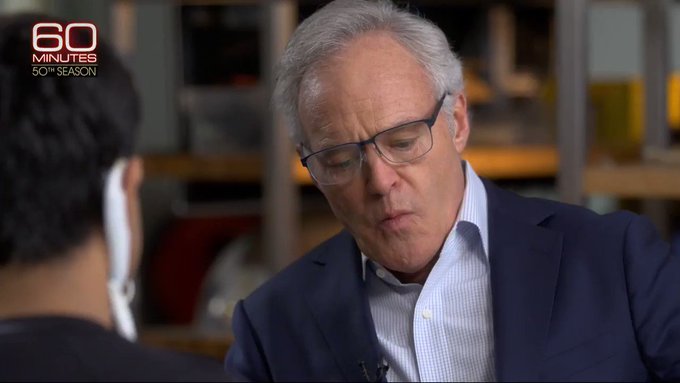
60 Minutes✔@60Minutes
Arnav Kapur, a student in MIT’s Media Lab, has developed a system to surf the internet with his mind. He silently Googled our questions and heard the answers through vibrations transmitted through his skull and into his inner ear.
The primitive level machines can already read your thoughts. It is ok, if it involves your agreement but what if it is done (and it is easy to imagine that) without you knowing it?
Now, there is a serious option to read our thoughts, not just our emotional attitudes like being angry or sad but even the line of our thoughts in our mind. The next step in this “utopia” will be a computer that can read my thoughts and your thoughts that can connect us so that we can share our thoughts. If you and I are connected through the same computer, I can literally participate in your thinking directly without any external communication like word typing.
As you probably know, modern technology theorists Ray Kurzweil and Melanie Swan called it a new form of divinity.
It will no longer be a transcendent God but all of us sharing our thoughts through some AI cloud system. Millions of people will be participating together in a new form of awareness. I find this prospect pretty horrifying.
We are entering a post-human era if computers can identify & share a person’s thoughts
We as human beings are precisely what we are, free individuals as far as we can be sure that you do not know what I am thinking. I think what I think, I am free in my mind. What happens if I cannot be sure even of this?
If I think about something and computer can identify what I am thinking and then share it with others, we are really entering a post-human era. I believe that we should not be just fascinated about what it means technologically.
Do you not agree that we should worry about who will control these digital machines?
I do not have fears about the machines controlling us. We are not there yet. However, who will control this, who will use this? What remains of our freedom? Private companies, like Google or Facebook, are already developing similar technologies.
Thought ‘transparency’ is biggest threat to our freedom today
I see it as the biggest threat to our freedom. We will literally become transparent. Let’s think about the everyday consequences of this. All flirting will be out. I meet someone and instead of all the lovely games of erotic hints she can read ‘I want to go to bed with you’ and the eroticism will disappear.
Another simple example is everyday politeness. Let’s say we know each other but we are not mega-close friends. I see you on the street and say the usual polite things like: “hello, how are you? I am glad to meet you.” But if you can read my mind this is nonsense because this is politeness and I do not mean it. Usually, I do not care how you feel.
This intrigues me very much. What is happening? How will it affect our everyday manners, our old civilization social inventions? All our cultivated interactions are based on this.
There is another thing.
What new way of suffering and torture can be developed in this way? Can you even imagine someone controlling your mind? What can they do to you? What horrible thoughts can I implant into your mind? There might be images [of] your nearest terribly tortured, and so on.
I know this is not a joke. It is a very serious thing.
Lying will become more complicated and more privileged
If we imagine this happening in a society where economic and power relations are structured the way they are now, I think, this will mean that the privileged ones will be those who will be able to conceal their minds, who will exclude themselves from this network.
Not everybody will be controlled in the same way. That’s the first problem, who will control the game and who will be excommunicated?
It is always like this. The first thought when a new spying device is developed usually is ‘how can I escape it?’ The privilege is to be outside of it. Lying will become more complicated but it will also become more privileged.
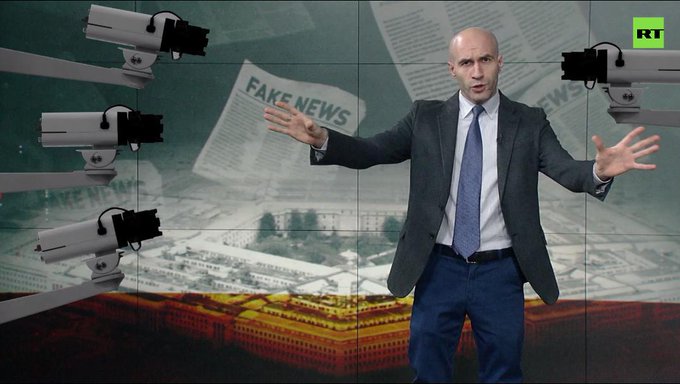
RT✔@RT_com
Ministry of Truth: US military develops AI to identify 'fake news'
Computers are smarter on mechanical level, but lack the ability to simplify
An idea of AI beating humans in the field of intellect in fact depends on how you define being smart. If by smart you simply mean a more complex mathematical or logical operation as well as knowing more data, computers are definitely smarter. Yet, there is still hope for us.
The greatness of [the] human mind is not in knowing all the details but in picking out from the multitude of data to catch the essence and simplify it.
A book by a Soviet psychologist Aleksandr Luria titled ‘The Mind of a Mnemonist’ describes a guy with perfect memory. He remembered almost everything that he read and saw. The psychological consequences of this were horrible because he knew so much [that] he could not decide anything, the moment he wanted to take a decision, hundreds of other data popped up in his mind. He lacked the great ability of simplification.
Computers can be smarter than us on some mechanical level – and even in learning – but I do not think they can deal with the phenomenon of simplification.
Robots will not take menial jobs, they will be tasked with planning
Today’s paradox is that we are afraid of robots that could supposedly take our jobs, but those of us who work, work more than ever. Second, we still have the idea that robots will do the primitive work for us and we will just plan what they are doing. In many companies, from McDonald’s to those which do day services, it is robots that do the planning and individuals that execute it.
In McDonald’s everything is programmed by robots and ‘stupid’ people just serve other people. It eventually depends on the social order, if we remain in the same capitalist order, in which we are, it will be even worse than today.
There is a possibility, a hope, that we will work less. Yet, many new stupid forms of amusement might fill our free time. I still believe in work and creativity. If we do not have enough things to do, even if we will feel happy just sitting, watching films and drinking, it will be a very stupid existence. It will soon get dire.
It is not technology as such, it is how we will use technology socially.
Karen Meech wouldn't credit Comet C/2019 Q4 with good timing. But when an astronomer has a chance to study the first known interstellar comet, by golly they take it, unfinished paper for a major conference aside.
Meech is just one of the astronomers who has rushed to ask for time using instruments on Earth and in its orbit to study a major cosmic celebrity: a bright, fuzzy dot in the sky that she and her colleagues are confident is the first interstellar comet known to scientists and just the second interstellar object at all, following 2017's blockbuster discovery of a strange space rock eventually named 'Oumuamua. But to Meech, this new discovery is perhaps a more exciting opportunity.
"This one is spectacular compared to the first one, where we had effectively a week to observe it," Meech told Space.com. The astronomer at the University of Hawaii, who made critical observations of 'Oumuamua, said, "So you had to write your proposals, observe it, get the observations down, reduce the data, and we managed to pull together a paper in a week. But this one, we have the luxury of lots of time."
For C/2019 Q4, the clock started early in the morning of Aug. 30, when a Crimean astronomer named Gennady Borisov trained a small telescope near the horizon, closer to the sun than many scientific instruments can point.
That's perhaps the first great irony of the eagerly awaited interstellar object: Scientists' organized surveys searching the skies for such an object wouldn't have spotted the object nearly as quickly, Meech said, since they don't examine the sky so close to the sun. Because the horizon is particularly clouded by atmospheric interference, these surveys prioritize areas they can see more clearly.
Many of scientists' favorite instruments aren't even physically capable of seeing the object right now. "With small telescopes, you can point as close to the horizon as you wish, and so anyone that has that sort of telescope can easily observe it now," Meech said. "The really big telescopes that you would want to use to do the science have pretty significant limits to how close to the horizon they point, so many of the big ones can't get to it until mid to late October."
(Telescopes in the Northern Hemisphere will be able to study the comet until January, when Southern Hemisphere instruments will take over the task. By October 2020, Meech calculated, it will be nearly impossible to spot, speeding past the sun on its way to visiting a new world.)
But Borisov was able to spot the comet on Aug. 30, and he posted news of the sighting on an astronomy forum. As his and others' observations came in, calculations suggested that its orbit might arc across our solar system, not loop endlessly through it, prompting "cautious interest" among scientists, Meech said.
The first color image of Comet C/2019 Q4, captured Sept. 9-10, 2019.
(Image credit: Gemini Observatory/NSF/AURA)
And the rush began. Meech and her colleagues caught C/2019 Q4 on the nights of Sept. 8 to 10 using the Canada-France-Hawaii Telescope on Mauna Kea in Hawaii. By Sept. 11, the Minor Planet Center, which monitors these things, was willing to conclude that data suggested that the object likely came from beyond our solar system. If it confirms the preliminary conclusion, the object's name will be adjusted to begin with 2I, marking the second interstellar object discovered. "But our team internally is 100% convinced," Meech said.
Meech and her colleagues are also confident it really is a comet, unlike 'Oumuamua, which faced an early identity crisis. Astronomers had expected to see a comet first because, if the objects are equal sizes and equal distances from the sun, a comet will appear much brighter than an asteroid.
"To find the first one not to have a tail, when it's really hard to see, had some pretty interesting implications," Meech said. "It meant, wow, there must be a lot more of these [interstellar objects] than we had anticipated, by maybe a factor of 100."
But now that they do have a comet — and one they can watch for more than a year, no less — scientists are thrilled. When 'Oumuamua sped past, astronomers focused on its strange, elongated shape.
That was in part because they couldn't see any gas or dust that they could study to understand what the object was made of, Meech said. But the new interstellar comet is cocooned in gunk that telescopes can analyze. Their results will tell scientists whether the comet's home solar system matches ours in terms of whether the proportion of different chemicals follows the same basic recipe.
Astronomers are beginning to be able to analyze that proportion in other solar systems, but it's perhaps the equivalent of trying to reconstruct the precise taste of a well-spiced curry based on a friend's description of a long-ago meal.
"We go back in time to look at what happened in our early solar system by looking at the leftover bits and pieces — the comets and the asteroids — and try to put everything back together," Meech said. "Now, conveniently, we've been handed a couple of objects now that had been ejected from those disks that we can study close up like we do in our solar system, so that's really neat."
If the comet's recipe turns out to be different from our solar system's, the chemical analysis could be the single most significant research scientists conduct on the visitor, she said. But there are plenty of other, more basic questions to ask as well.
Like, how big is it? Meech and her colleagues saw the comet's tail stretching 93,000 miles (150,000 kilometers) into space. But it's much more difficult to estimate the size of the comet itself under all that fuzz enveloping it. The team has made a preliminary estimate that the object is between 1.2 and 10 miles (2 and 16 km) across.
That calculation relies on estimating the brightness of the comet in one image compared with the sky around it. Then Meech applied a model built on several assumptions, such as the idea that the comet reflects the same percent of light as our local comets do. Any one of those premises could turn out to be incorrect as scientists learn more about the object.
"You would normally never publish something fitting a complex model to a single data point — that's crazy," she said. But Meech — and many of her colleagues — all need something to tell the people in charge of the host of instruments they want to commandeer to study the interstellar comet in order to begin answering all these questions.
"Everybody's been scrambling to write proposals," Meech said. And thank goodness. "We've milked the one data point to death."
UFO-mysterie opgelost: Ierse universiteit verloor zaterdag contact met onderzoeksballon ... boven Gent - HLN.be
Twitter
GENTHet mysterie van de tientallen UFO-meldingen boven Gent is dan toch opgelost: Een Ierse correspondent liet vandaag aan het Belgisch UFO-meldpunt weten dat een universiteit in de stad Cork zaterdag het GPS-contact verloor met hun onderzoeksballon. Wellicht op het ogenblik dat de ballon explodeerde.
Het lichtgevend object boven Gent deed zaterdagavond de fantasie van heel wat Oost-Vlamingen op hol slaan. Een ontploffende weerballon, dachten ze aanvankelijk bij het Belgische UFO-meldpunt. Maar dat werd deze ochtend uitgesloten. De Belgische noch de Nederlandse weerdiensten hadden daar op dat moment een weerballon in de lucht.
Nu is het mysterie dan toch opgelost. Een Ierse student liet de ballon, geladen met instrumenten, donderdag de lucht in. Dat gebeurde vanop de ‘Met Éireann’s Valentia Observatory’, helemaal in het Westen van Ierland. Dat observatorium werkt onder andere samen met de Ierse meteorologische dienst. Zaterdag werd het GPS-contact met de ballon verloren boven Gent. Wellicht op het ogenblik dat de ballon explodeerde.
UFO boven Gent? Meldpunt ontvangt tientallen meldingen van vreemd verschijnsel -HLN.be
Jeroen Desmecht
UFO meldpunt.Na enige tijd spatte het object uit elkaar.
GENT Een lichtgevend object heeft zaterdagavond de fantasie van heel wat Gentenaren op hol doen slaan. Het Belgische UFO-meldpunt ontving tientallen meldingen van het vreemde verschijnsel. “Volgens onze bronnen gaat het echter om een ontplofte weerballon”, zegt coördinator Frederick Delaere.
Verschillende getuigen hadden het over een helder wit object dat na een tijdje in stukken uit elkaar spatte. Volgens ruimtevaartdeskundigen van de Gentse Volkssterrenwacht Armand Pien gaat het allicht om een uiteengespatte weerballon. Dat schrijft VRT NWS. Zo’n weerballon hangt op 35 kilometer boven de grond.
Ook het Belgische UFO-meldpunt meent dat het om een weerballon gaat. “Dat blijkt voorlopig uit onze bronnen”, vertelt coördinator Frederick Delaere. “Onze medewerkers doen momenteel het nodige om deze verklaring na te trekken. De komende uren proberen we om alle waarnemingen op onze website te vermelden.
In 2018 registreerde het Belgische UFO-meldpunt 179 waarnemingen van vreemde luchtverschijnselen in ons land. Dat is een stijging van 33 procent in vergelijking met het aantal meldingen uit 2017 (134 waarnemingen). In de provincie Oost-Vlaanderen werden de meeste UFO’s gespot.
WETENSCHAP & PLANEET Volgens Europees ruimtevaartbureau ESA zijn er 879 asteroïden die kans maken – “hoe onwaarschijnlijk ook” – om op de aarde neer te storten. ESA bundelde de krachten met NASA om een strategie te ontwikkelen om zulke asteroïden indien nodig af te wenden. De komende dagen komen experts drie keer samen voor overleg.
Op dit moment staan er 879 asteroïden op de risicolijst van ESA: een catalogus van ruimteobjecten die ‘non-zero’ kans hebben om op aarde neer te storten in de komende honderd jaar. “Dat betekent dat een impact, hoe onwaarschijnlijk dan ook, niet uitgesloten kan worden”, aldus ESA. Het gaat veelal om kleine asteroïden met een geschatte diameter van een paar tot enkele tientallen meters, hoewel ook een fors exemplaar van ongeveer 1.950 meter doorsnede de lijst haalde.
Dat kleinere asteroïden in de atmosfeer van de aarde terechtkomen, komt overigens relatief vaak voor. Volgens NASA is er elk jaar wel een asteroïde ter grootte van een personenauto op onze planeet afstevent, maar dan opbrandt voor het het aardoppervlak bereikt. Grotere asteroïden komen minder vaak voor in de omgeving van de aarde, maar zouden wel catastrofale schade kunnen aanrichten.
Daarom slaan ESA en NASA de handen in elkaar om potentieel gevaarlijke asteroïden op te sporen en de technologie te ontwikkelen om ze uit koers te brengen. De komende dagen komen ruimtevaartexperts op drie verschillende plaatsen samen om de strategie rond “planetaire defensie” te bespreken. In de bijeenkomst in Rome wordt deze week een eerste, toekomstige test onder de loep genomen: zo plant NASA in 2022 een ruimtevoertuig te laten botsen met de asteroïde Didymos-B – met een diameter van 160 meter – om te kijken of het object afgewend kan worden. Twee jaar later zal ESA dan een sonde sturen om Didymos-B te bestuderen na de crash.
Daarnaast komen experts deze en volgende week samen in Münich en Darmstadt, onder meer voor overleg over de communicatie rond asteroïden en de “non-detectie” van asteroïde 2006 QV89, die vermoedelijk eind september langs aarde scheert. “Deze drie ontmoetingen tonen de omvang van de huidige activiteiten wereldwijd om het risico van een asteroïdecrash te verkleinen, om een tijdige waarschuwing te verzekeren en om aarde voor te bereiden in het onwaarschijnlijke geval van een botsing – planetaire defensie is op dreef!”, aldus ESA.
Boven Nederland is vanmiddag een felle meteoor gezien. Het verschijnsel werd veroorzaakt door een ruimterots die in onze dampkring kwam en daar verbrandde. De steen was waarschijnlijk “1 meter tot enkele meters” in doorsnee, is de eerste indruk van Joost Hartman, voorzitter van de Nederlandse Werkgroep Meteoren.
De vuurbol was rond 14.50 uur te zien. Hij bevond zich boven het Duitse waddeneiland Langeoog, ten noordoosten van de Nederlandse provincie Groningen.
De steen moet in elk geval groot zijn geweest, want het lichtspoor in de hemel was zo fel dat het boven het zonlicht uitkwam. De werkgroep heeft trouwens ook meldingen gekregen vanuit België, Duitsland, Denemarken en Engeland - waar mensen het lichtspoor konden zien. De rots zal 50 tot 100 kilometer boven het oppervlak van de aarde zijn geweest toen hij verscheen.
Michael Thompson uit IJsselmuiden reed vanuit ‘s-Heerenbroek richting Zwolle toen hij de meteoor in de lucht zag. “Je kon hem heel goed zien, met lichtsporen en al. Een goeie vier, vijf seconden was hij zichtbaar.’’ De Nederlander reed met de motor en dacht eerst dat het in zijn helm om een reflectie van een medeweggebruiker ging. Pas later realiseerde hij zich dat het een meteoor was.
Het grootste deel van de rots is waarschijnlijk verbrand in de dampkring. Een brokstuk dat zo groot is als “een vuist of een voetbal” is mogelijk in de Noordzee terechtgekomen.
Werkgroep Meteoren@WerkgroepMeteor
Momenteel zijn er al bijna 100 melding binnen van de #vuurbol. Ze komen voornamelijk uit Nederland, maar ook uit België, Duitsland, Denemarken en Engeland. Ook iets gezien? Deel jouw waarneming dan via http://werkgroepmeteoren.nl/vuurbol-melden/
Het is de tweede keer in een kwartaal dat een meteoor boven Oost-Nederland raast. Op 28 juni hoorden inwoners van Oost-Nederland plots een harde knal. Een familie uit Harderwijk filmde toen bij toeval de meteoriet. De meteoriet kwam volgens experts rondom het Nederlandse Hasselt neer, maar die werd tot dusver nog niet gevonden.
Helder daglichtvuurbol op de middag van 12 september
Op donderdagmiddag omstreeks 14:50 uur verscheen er een heldere vuurbol die door veel mensen vanuit Nederland werd waargenomen. Ook uit omliggende landen kwamen tientallen meldingen binnen van het...
AFPHet is de eerste keer dat waterdamp is gevonden in de atmosfeer van een exoplaneet met temperaturen zoals hier op aarde.
WETENSCHAP & PLANEET Astronomen hebben voor het eerst water(damp) gevonden in de atmosfeer van een planeet binnen de “levensvatbare zone” rond haar ster, wat een nieuwe fase inluidt in de zoektocht naar leven buiten ons zonnestelsel. Het hemellichaam, een “super-aarde” waarvan nog weinig geweten is, verheft zich tot de rang van “beste kandidaat” voor het zoeken naar tekenen van buitenaards leven.
Het gaat om exoplaneet K2-18b die in 2015 door de Amerikaanse ruimtetelescoop Kepler is gevonden en die rondom de rode dwergster K2-18 draait, in het sterrenbeeld Leeuw op 110 lichtjaar van ons zonnestelsel. De ster is er één van de M-dwergklasse.
De planeet krijgt veel meer straling van zijn ster te verduren dan de aarde van de zon, wat de kans op leven verkleint. Het is één van de honderden “super-aardes” die zijn gevonden en die een massa hebben tussen die van onze planeet en Neptunus. De exoplaneet heeft acht keer de massa van de aarde en is twee keer zo groot. Het hemellichaam bestaat wellicht uit silicaten en ijs.
Britse wetenschappers hebben de ontdekking vandaag bekendgemaakt in het belangrijke wetenschapsblad Nature Astronomy: een planeet die rond een andere ster draait, heeft mogelijk water. In de dampkring van de planeet K2-18b is namelijk waterdamp gevonden.
“Men mag er niet uit afleiden dat er vloeibaar water is op het oppervlak van de exoplaneet, maar ik denk dat het heel goed mogelijk is”, zegt Giovanna Tinetti, coauteur van de studie. Bovendien bevindt de planeet zich in de “levensvatbare” zone rond de ster, of niet te dicht of te ver van haar hitte, maar wel juist waar de temperatuur het bestaan van vloeibaar water mogelijk kan maken en waar leven, zoals wij het kennen, zich kan ontwikkelen, voegt de wetenschapster eraan toe. “Een temperatuur vergelijkbaar met die van de aarde.” Tinetti waarschuwt daarbij dat een levensvatbare exoplaneet niet per sé moet zijn zoals de onze.
“Water vinden op een mogelijk leefbare wereld buiten de aarde is ongelofelijk opwindend”, zegt onderzoeksleider Angelos Tsiaras. “K2-18b is geen tweede aarde, hij is aanzienlijk zwaarder en heeft een andere dampkring. Maar het brengt ons wel dichter bij een antwoord op de fundamentele vraag: is de aarde uniek?”
Sterrenlicht bestuderen
De onderzoekers bestudeerden metingen van ruimtetelescoop Hubble. Die zag sterrenlicht dat op weg naar de aarde door de dampkring van K2-18b kwam. Wat ook mogelijk was omdat de planeet één keer om de 33 dagen voorlangs de ster schuift. In dat licht zagen ze de ‘vingerafdruk’ van waterdamp, waterstof en helium. Stikstof en methaan komen er misschien ook voor. De wetenschappers willen verder onderzoek doen om te meten hoeveel waterdamp er is, of er wolken voorkomen en of er sporen zijn van onder andere zuurstof en ozon.
Eerder was al wel waterdamp waargenomen in de atmosferen van ‘onleefbaar’ hete en koude exoplaneten.
Hubble✔@NASAHubble
For the first time, researchers using Hubble have detected water vapor signatures in the atmosphere of a planet beyond our solar system that resides in the "habitable zone." For more information: https://go.nasa.gov/2LplGVb
Douwe van HinsbergenGroot Adrië botste 100 tot 120 miljoen jaar geleden met het zuiden van Europa.
WETENSCHAP Wist je dat er onder het zuiden van Europa een verloren continent ligt? Niet Atlantis, maar wel Groot-Adrië. Het continent was 140 miljoen jaar geleden zo groot als Groenland maar verdween 100 tot 120 miljoen jaar geleden van de radar. Nu ontrafelden onderzoekers aan de universiteit van Utrecht het verleden en de ondergang van het verloren continent.
Tien jaar lang spendeerden de Utrechtse geologen aan hun onderzoek. De uiteindelijke analyse van de onderzoekers is ongezien en moet een “enorme klus” geweest zijn volgens Laurent Jolivet, geoloog aan de Sorbonne University in Parijs en niet betrokken bij het onderzoek.
De enige zichtbare elementen die overblijven van het verloren continent zijn slechts enkele kalkstenen die verspreid liggen over de bergketens van Zuid-Europa en Azië.
Enkele miljoenen jaren voor die botsing, werd Groot-Adrië gesplitst van het zuidelijke supercontinent, ook wel Gondwanaland genoemd. Oorspronkelijk bestond dat continent uit gebieden die tegenwoordig in het zuidelijk halfrond liggen waaronder Antarctica, Afrika en Zuid-Amerika alsook Groot-Adrië.
Botsing
Maar 240 miljoen jaar geleden scheurde Gondwanaland plotseling in stukken. En zo ontstond Groot-Adrië. Het nieuwe continent verplaatste zich stilletjes naar het noorden, en verdween reeds voor een stukje in de zee. Totdat het 100 tot 120 miljoen jaar geleden plots botste met het continent dat we nu kennen als Europa.
En hoewel de tektonische platen (stukken van de aardkorst) onder de continenten tijdens hun botsing met snelheden van amper 3 tot 4 centimeter per jaar voortbewogen, werd Groot-Adrië vrijwel volledig verwoest.
Het verloren continent verdween vrijwel volledig onder het dominante Europese continent. Sommige rotsen op Groot-Adrië waren echter niet zwaar genoeg om volledig te zinken. In plaats daarvan werd het gesteente ‘afgeschraapt’. “Vergelijk het met je armen in een strakke winterjas hijsen terwijl je een trui met lange mouwen aanhebt: de mouwen kruipen daarbij ook naar boven”, aldus Douwe van Hinsbergen, hoofdonderzoeker en geoloog aan de universiteit van Utrecht.
Geologische puinhoop
Toch blijft er niet bijzonder veel van dat lichte gesteente over. En de schaarse overblijfselen zijn verspreid over dertig verschillende landen, in een uitgestrekte regio van Spanje tot Iran. Verder nog is het Middellandse Zeegebied een “geologische puinhoop” volgens van Hinsbergen. “Alles is gebogen, gebroken en gestapeld.”
Na tien lange jaren stenen verzamelen, konden de onderzoekers dan toch de fatale botsing reconstrueren die het einde voor Groot-Adrië zou betekenen.
De Utrechtse onderzoekers waren overigens niet de eersten om het verloren continent onder de loep te nemen. Vorig onderzoek suggereerde reeds dat Groot-Adrië inmiddels zo’n 1.500 kilometer onder de oppervlakte van onze planeet begraven zou liggen.
This may be the first known exoplanet with rain and clouds of water droplets
Two teams have detected signs that K2 18b has a damp atmosphere
Exoplanet K2 18b, shown in the foreground of this artist’s impression, may be the first temperate planet in another star system found with a watery atmosphere, and perhaps even clouds and rain.
Clouds of water droplets and even rain may exist in the soggy skies of a faraway exoplanet.
A combination of observations with space telescopes and simulations suggests that planet K2 18b has water vapor in its atmosphere, and might be the first planet orbiting a distant star found to support liquid water, thought to be an essential ingredient for life.
“Water vapor exists everywhere in the universe,” says astronomer Björn Benneke of the University of Montreal, who reported the potential discovery in a paper posted September 10 at arXiv.org. “But it’s not so easy to make liquid water; you need the right pressure and the right temperature. That’s what makes this planet special.”
The exoplanet-hunting Kepler space telescope discovered K2 18b in 2015. The planet orbits a dim red dwarf star about 110 light-years away, and is bigger and heavier than Earth: about 2.5 times Earth’s radius and about eight times its mass.
“From the beginning, that makes it not an Earthlike planet,” astronomer Angelos Tsiaras of University College London, whose team independently detected water vapor in K2 18b’s atmosphere in a study published September 11 in Nature Astronomy, said in a Sept. 10 news teleconference. But tantalizingly, the planet’s distance from its star places it in the habitable zone, the region around a star where a planet could have temperatures conducive to liquid water (SN: 6/14/17).
In 2016 and 2017, a group led by Benneke used the Hubble Space Telescope to probe K2 18b for signs of an atmosphere as the planet passed in front of its star. Molecules in the planet’s atmosphere absorbed certain wavelengths of the star’s light, alerting astronomers to their presence.
Tsiaras and colleagues accessed that data from a public archive and used specially designed software to analyze it. The team found that the planet has an atmosphere, and that the atmosphere imprints the telltale signature of water vapor molecules on the filtered starlight. The atmosphere also contains hydrogen and helium, the team reports.
“Until now, the planets for which we had the atmosphere observed and found water were gas giants, planets more similar to Jupiter, Saturn or Neptune,” Tsiaras says. K2 18b’s location in the habitable zone, size and watery atmosphere mean that “this is the best candidate for habitability that we now have.”
Benneke and colleagues took the work a step further and observed K2 18b with the Spitzer space telescope. The combination of Hubble, Spitzer and Kepler observations suggests that clouds form at a certain level in the planet’s atmosphere, absorbing more starlight than at other levels, the team found.
When Benneke and colleagues simulated the planet’s climate, they found that the region where the clouds condense could have the right pressure and temperature for liquid water to form. That means liquid water droplets could condense out of the clouds and rain down, Benneke says.
“It’s quite likely that this planet has liquid rain on it,” he says. “This is actually one of the most exciting findings from this data.”
Benneke thinks K2 18b’s raindrops would never hit solid ground. Instead, they would reach a point in the planet’s thick atmosphere where the pressure and temperature were so great that the droplets would evaporate. Then the water would rise up in the atmosphere again, condense into clouds, and rain back down. “There’s a bit of a water cycle,” he suggests.
Other exoplanet experts remain skeptical. “There is no definitive proof” of raindrops, says astronomer Sara Seager of MIT. “It’s a solid but still speculative statement.”
But liquid water, if it exists on K2 18b, doesn’t mean anything lives — or can live — on the planet. Its size places the exoplanet somewhere between the girth of Earth and Neptune, meaning it’s not clear if it has a rocky surface where life as we know it could evolve. Most exoplanets in the Milky Way fall in this size range, but it’s hard to tell if they’re rocky super-Earths, gassy mini-Neptunes or sodden water worlds (SN: 6/19/17).
“It’s one of these really mysterious planets that are the most common type of planet in our galaxy, as far as we can tell,” Seager says. “We have no idea what they are.” Future observations with NASA’s planned James Webb Space Telescope may be able to pin down how much water K2 18b contains, which would help figure out its composition, she says (SN: 4/19/16).
Our Milky Way galaxy could be filled with alien civilizations, a new study claims, but we don't know because they haven't stopped by Earth for a visit in millions of years.
According to a study published last month in The Astronomical Journal, extraterrestrial life might be taking its time to fully explore the galaxy, even using the movement of star systems to make this type of journey easier.
The scientists' work is the latest response to what's known as the Fermi paradox, which wonders why we have yet to detect signs of alien life.
Italian-American physicist Enrico Fermi famously said something to the effect of, "But where is everybody?" in reference to the possibility of star-hopping space aliens.
The new study claims the aliens may just be taking their time and being strategic.
"If you don't account for motion of stars when you try to solve this problem, you're basically left with one of two solutions," Jonathan Carroll-Nellenback, a computational scientist and the study's lead author, told Business Insider. "Either nobody leaves their planet, or we are in fact the only technological civilization in the galaxy."
Stars, along with the planets around them, orbit the center of the Milky Way on unique paths at varying speeds, and they sometimes zip past one another as they do, Business Insider reports.
Carroll-Nellenback's study points out that the aliens could simply be waiting for their next destination to come closer to them.
Verdwenen continent onthuld in reconstructie van geologische geschiedenis
Een zeer gedetailleerde reconstructie van de afgelopen 240 miljoen jaar vertelt het turbulente verhaal van een oercontinent genaamd Groot Adria.vrijdag 13 september 2019
De Corno Grande, de hoogste berg in de Apennijnen, rijst op uit de wolken. De Apennijnen, de ruggengraat van het Italiaanse schiereiland, maken deel uit van de afgeschraapte restanten van het oercontinent Groot Adria, zo blijkt uit speurwerk van geologen.
FOTOGRAAF GUIDO PARADISI, ALAMY STOCK PHOTO
Wie een bergwandeling door een van de vele bergketens rond de Adriatische Zee maakt, wandelt eigenlijk door de verkreukelde restanten van een al sinds lange tijd verdwenen oercontinent.
Deze hutspot van gesteenten is wat er overbleef van een stuk continentale korst ter grootte van Groenland dat miljoenen jaren geleden werd verbrijzeld, zo berichten wetenschappers deze maand in het tijdschrift Gondwana Research. Het epische verhaal van de ondergang van dit continent maakt deel uit van een nieuw onderzoek waarin de laatste 240 miljoen jaar van de tektonische geschiedenis van het Middellandse-Zeegebied in ongekend detail is gereconstrueerd.
Uit het model blijkt hoe het continent zich eerst afscheidde van een gebied dat nu Spanje, Zuid-Frankrijk en Noord-Afrika omvat en een aparte landmassa vormde, die van het onderzoeksteam de formele naam ‘Groot Adria’ heeft gekregen. Maar terwijl de tektonische platen van de planeet onverbiddelijk langs en over elkaar heen bleven schuiven, daalde dit continent af in meerdere subductiezones, de alles verwoestende geologische kaken van de aarde.
Toen de plaat de helse diepten van de aardmantel in werd geduwd, werd de bovenste laag van het continent van het gesteente afgeschraapt, alsof een titaan een kolossale appel aan het schillen was. Dit schraapsel kwam op de bovenliggende platen te liggen, waar het later de Apennijnen, de bergketen die de ruggengraat van Italië vormt, en ook het bergland van Turkije en Griekenland, de Alpen en het Balkangebergte zou vormen.
Maar meerdere fragmenten van Groot Adria ontsprongen de dans: ze werden niet afgeschraapt en ook niet door het gestage subductieproces vermalen. Deze relatief intacte overblijfselen van Groot Adria zijn tegenwoordig nog te vinden in de hiel van de Italiaanse laars, in een gebied tussen Venetië en Turijn en in de Kroatische regio Istrië – wat betekent dat je grote kans maakt je vakantie door te brengen op een scherf van een verloren gewaand continent.
EARTH 101
De aarde is voor zover we weten de enige planeet waarop leven voorkomt. Kom meer te weten over de oorsprong van onze planeet en over een aantal van de belangrijkste factoren die van dit blauwe stipje in de ruimte een uniek wereldwijd ecosysteem maken.
De reconstructie van dit puzzelstuk uit de geologische geschiedenis van de aarde is van groot belang voor een beter inzicht in het heden, zegt onderzoeksleider Douwe van Hinsbergen, expert in mondiale tektoniek en paleogeografie aan de Universiteit Utrecht.
“Alles wat je om je heen ziet dat niet uit hout of textiel bestaat, is ooit door een geoloog in een berg ontdekt,” zegt hij. Ertsen, metalen en mineralen die van groot belang zijn voor onze beschaving, worden in deze bergen gevonden, en de aaneengesloten aders van deze ertsen en mineralen zijn als gevolg van de turbulente platentektoniek in allerlei fragmenten opgebroken.
Met modellen zoals die ook in dit onderzoek zijn toegepast, kunnen onderzoekers de geologische klok terugdraaien en dat fragmentatieproces in detail bestuderen. Als bijvoorbeeld een grote koperader in een bepaald gebied wordt aangetroffen, kunnen de onderzoekers aan de hand van hun modellen zien waar deze aders zijn afgesneden en waar ze weer verderlopen, zodat er een soort prehistorische schatkaart ontstaat.
Het terugdraaien van de klok
De reconstructie van de geologische evolutie van het Middellandse-Zeegebied sinds het Trias stelde de wetenschappers voor de nodige uitdagingen. Ze konden al geruime tijd beschikken over een algemeen overzicht van de tektonische geschiedenis van deze regio, maar door de wirwar van geologische brokstukken in dit deel van de aarde was een gedetailleerdere analyse zeer lastig. “Het Middellandse-Zeegebied is een allegaartje,” zegt Robert Stern, een expert in platentektoniek van de University of Texas in Dallas die niet bij het nieuwe onderzoek was betrokken.
In deze tumultueuze zone hadden geologen eerder al aanwijzingen voor het bestaan van een verdwenen continent gevonden, maar het was moeilijk om de cruciale details van het verhaal te achterhalen. De restanten van het continent lagen verspreid over een dertigtal landen, die elk met hun eigen modellen, kaarten, landmeetmethoden en terminologieën werkten. In de vakliteratuur werden voor het continent zelfs talloze verschillende benamingen gebruikt.
Om de zaken wat overzichtelijker te maken vergaarde het team tien jaar lang een kolossale hoeveelheid geologische en geofysische gegevens over het hele gebied en stopten die in hun computermodel, dat liep op software met de naam GPlates. In de afgelopen vijftien jaar hebben onderzoekers met behulp van deze software, die door Van Hinsbergen als “kinderlijk eenvoudig” wordt omschreven, steeds gedetailleerdere visualisaties en aanpassingen van complexe tektonische modellen kunnen opstellen. Het nauwgezette proces van het team onthulde de ontbrekende hoofdstukken in het verwrongen verhaal van dit verdwenen continent.
Rond 240 miljoen jaar geleden maakte Groot Adria nog deel uit van het supercontinent Pangea, waar het lag ingeklemd tussen landmassa’s die nu Noord-Afrika, Spanje en Zuid-Frankrijk vormen. Twintig miljoen jaar later splitste Groot Adria zich af van Afrika en daarna ook van Frankrijk en Spanje, om nog eens veertig miljoen jaar later een apart continent te vormen.
Hoewel de precieze geografie van Groot Adria tot nu toe niet duidelijk is, moet ze vergelijkbaar zijn geweest met die van het grotendeels onder water liggende continent Zeelandia, waarvan gedeelten uit zee steken (in dit geval Nieuw-Zeeland en Nieuw-Caledonië). Groot Adria kan ook hebben geleken op de huidige Florida Keys, een archipel van niet-vulkanische eilandjes die boven het zeewater uitsteken.
Monumentaal werk
De verwoesting van Groot Adria begon honderd miljoen jaar geleden pas echt, toen de landmassa op het huidige Zuid-Europa botste en onder een hele reeks platen in deze regio begon te schuiven. De zeer gefragmenteerde subductie van het hele continent betekende dat “elk brokstuk zo zijn eigen geschiedenis heeft,” zegt Van Hinsbergen. “En zo beland je dan in de geologische puinhoop die het Middellandse-Zeegebied nu is.” Maar gelukkig “laten continenten vaak littekens achter als ze verdwijnen,” zegt hij, en daartoe behoorde ook de vorming van bergketens.
Bergen ontstaan wanneer twee continenten op elkaar botsen, zoals in het geval van de vorming van de Himalaya. Maar voor het ontstaan van bergen heb je niet altijd zo’n botsing nodig. Het kan volgens Stern ook gebeuren als een overschuivende plaat de bovenste gesteentelagen van de onderschuivende plaat afschraapt en dit ‘schraapsel’ zich ophoopt en plooit tot een bergketen.
Dit principe was doorslaggevend voor de reconstructie van het geologische verleden van het Middellandse-Zeegebied, zegt Van Hinsbergen. Aan de hand van de huidige restanten van deze bergvormende subductie kunnen geologen inschatten hoe lang de oorspronkelijke aardschol was die door de onderliggende aardmantel werd opgeslokt, waardoor ze een gedetailleerder model van de stukjes van deze oerpuzzel kunnen opstellen.
Dit onderzoek is “duidelijk een monumentale onderneming geweest,” zegt geofysicus Dietmar Müller, een van de leiders van het EarthByte Project van de University of Sydney, de onderzoeksgroep die GPlates heeft ontwikkeld. Het werk dat in het nieuwe onderzoek is gestoken, kan in omvang alleen worden vergeleken met de reconstructie van het tektonische verleden van de hele aarde door zijn eigen groep, en daar waar de nieuwe studie minder omvangrijk is, maakt ze dat goed door een adembenemende mate van detail.
Dit artikel werd oorspronkelijk in het Engels gepubliceerd op NationalGeographic.com
About 140 million years ago, Greater Adria—which later got shoved beneath southern Europe—was a Greenland-size landmass (submerged portions in gray-green) south of the continent.
VAN HINSBERGEN ET AL., GONDWANA RESEARCH (2019)
Geologists uncover history of lost continent buried beneath Europe
Forget the legendary lost continent of Atlantis. Geologists have reconstructed, time slice by time slice, a nearly quarter-of-a-billion-year-long history of a vanished landmass that now lies submerged, not beneath an ocean somewhere, but largely below southern Europe.
The researchers’ analysis represents “a huge amount of work,” says Laurent Jolivet, a geologist at Sorbonne University in Paris who was not involved in the new study. Although the tectonic history of the landmass has been generally known for a few decades, he says, “[T]he amount of detail in the team’s systematic time-lapse reconstruction is unprecedented.”
The only visible remnants of the continent—known as Greater Adria—are limestones and other rocks found in the mountain ranges of southern Europe. Scientists believe these rocks started out as marine sediments and were later scraped off the landmass’s surface and lifted up through the collision of tectonic plates. Yet the size, shape, and history of the original landmass—much of which lay beneath shallow tropical seas for millions of years—have been tough to reconstruct.
For starters, Greater Adria had a violent, complicated history, notes Douwe van Hinsbergen, a geologist at Utrecht University in the Netherlands. It became a separate entity when it broke away from the southern supercontinent of Gondwana (which comprised what is today Africa, South America, Australia, Antarctica, the Indian subcontinent, and the Arabian Peninsula) about 240 million years ago and started to move northward, scientists believe. About 140 million years ago, it was a Greenland-size landmass, largely submerged in a tropical sea, where sediments collected and slowly turned into rock. Then, as it collided with what is now Europe between 100 million and 120 million years ago, it shattered into pieces and was shoved beneath that continent. Only a fraction of Greater Adria’s rocks, scraped off in the collision, remained on Earth’s surface for geologists to discover.
Another complication is that Greater Adria’s rocks are dispersed across more than 30 countries, in a swath from Spain to Iran. So, like the rocks themselves, data have been scattered and thus are difficult to collect, van Hinsbergen says. And finally, he notes, until the past decade or so geologists haven’t had the sophisticated software needed to perform such byzantine reconstructions. “The Mediterranean region is quite simply a geological mess,” he says. “Everything is curved, broken, and stacked.”
In the new study, van Hinsbergen and his colleagues spent more than 10 years collecting information about the ages of rock samples thought to be from Greater Adria, as well as the direction of any magnetic fields trapped in them. That let the researchers identify not just when, but where, the rocks were formed.
Rather than simply moving north with no change in its orientation, Greater Adria spun counterclockwise as it jostled and scraped past other tectonic plates, van Hinsbergen’s team reports this week in Gondwana Research. Although the tectonic collision happened at speeds of no more than 3 to 4 centimeters per year, the inexorable smash-up shattered the 100-kilometer-thick bit of crust and sent most of it deep within Earth’s mantle, van Hinsbergen says.
The study is not the only evidence for Greater Adria as a lost continent. Other researchers who use seismic waves to generate computerized tomography–like images of structures deep within Earth have created an “atlas of the underworld”—a graveyard of slabs of crust that have sunk into the mantle. This research shows that portions of Greater Adria now lie as much as 1500 kilometers below our planet’s surface.
Vergeet Atlantis. Er ligt een verloren continent verborgen onder Europa
Wetenschappers hebben onder Europa een verloren continent ontdekt. Het heeft niet de naam Atlantis, maar Groot Adria gekregen.
Zo’n 140 miljoen jaar geleden was het net zo groot als Groenland. Tussen 100 en 120 miljoen jaar geleden verdween het opeens.
Wetenschappers van de Universiteit Utrecht hebben 10 jaar onderzoek gedaan naar het verdwenen continent.
Enorme klus
“Dat moet een enorme klus zijn geweest,” zei geoloog Laurent Jolivet, die niet betrokken was bij het onderzoek.
Het continent scheidde zich eerst af van een gebied dat nu Spanje, Zuid-Frankrijk en Noord-Afrika omvat en vormde een aparte landmassa.
Langzaam maar zeker werd het in de aardmantel geduwd.
Aanwijzingen
De enige resten van het continent aan het oppervlak zijn stukken kalksteen die het zuiden van Europa zijn gevonden.
Enkele fragmenten van Groot Adria werden niet meegesleurd de diepte in en kunnen vandaag de dag worden gevonden in het zuiden van Italië en in de Kroatische regio Istrië.
Geologen hadden eerder al aanwijzingen gevonden voor het bestaan van een verdwenen continent in Europa, maar het bleek lastig om cruciale details van het verhaal te achterhalen.
Monumentale onderneming
“Dit onderzoek is duidelijk een monumentale onderneming geweest,” zei geofysicus Dietmar Muller van de Universiteit van Sydney.
De onderzoeksresultaten zijn gepubliceerd in het tijdschrift Gondwana Research.
Meer van UFO'S of UAP'S, ASTRONOMIE, RUIMTEVAART, ARCHEOLOGIE, OUDHEIDKUNDE, SF-SNUFJES EN ANDERE ESOTERISCHE WETENSCHAPPEN - DE ALLERLAATSTE NIEUWTJES


 Retangle Shaped UFO Over Athens, Greece On Aug 29, 2019, UFO Sighting News.