2020 has been an interesting year so far with respect to the search for extraterrestrial entelligence, aka SETI. No, there’s been no alien signal yet, but scientists have been working with new technologies and strategies that should greatly improve the search. Earlier this year, they also announced that they have a ton of new survey data to go through, collected in previous years by radio telescopes.
An outline for new approaches to the question of alien intelligence, and how best to look for it, was announced by the National Radio Astronomy Observatory (NRAO) in mid-February 2020. The old SETI paradigm of only searching for radio signals is now changing as new technology is used and new ideas are considered.
Also in mid-February, the Breakthrough Listen initiative announced via UC Berkeley that a whopping 2 petabytes (2 million gigabytes) of data was released from the latest SETI survey of our galaxy. It is the most comprehensive survey yet of radio emissions from the plane of the galaxy and the region around the central black hole. The associated peer-reviewed paper can be found on arXiv.
When SETI first started in the 1960s with Project Ozma, its only focus was to look for radio signals from an advanced alien civilization among the stars. SETI still does that, but a lot has also changed since then. Now, as well as searching for radio signals, scientists are looking for technosignatures, a wide variety of possible signs of alien intelligence including chemical changes in a planet’s atmosphere, laser pulses and even megastructures orbiting a planet or star.

As part of the new technological advancements, the SETI Institute will add a new signal-processing system to the Very Large Array.
Image via Bill Saxton/ NRAO/ AUI/ NSF.
This year, some radio telescopes that are already looking for radio signals are having new SETI capabilities added to them with a new signal-processing system. This is the result of an agreement between NRAO and the SETI Institute. The National Science Foundation’s Karl G. Jansky Very Large Array (VLA) is the first to use this technology, with the addition of a state-of-the-art technosignature search system. NRAO director Tony Beasley said in February, in a statement:
Determining whether we are alone in the universe as technologically capable life is among the most compelling questions in science, and NRAO telescopes can play a major role in answering it.
Andrew Siemion is director of the Berkeley SETI Research Center, and he’s principal investigator for the Breakthrough Listen initiative. He explained:
The SETI Institute [is developing and installing] an interface on the VLA permitting unprecedented access to the rich data stream continuously produced by the telescope as it scans the sky. This interface will allow us to conduct a powerful, wide-area SETI survey that will be vastly more complete than any previous such search.
Such an endeavor is welcome news for those who have advocated that SETI needs to expand its search away from looking only for radio signals, given that a civilization older and more advanced than ours might have abandoned the use of radio signals long ago.
With the new technologies, scientists say they’ll be able to look for other signs of intelligent activity, such as lasers, megastructures like Dyson spheres that could be built around a star to harness its energy, chemicals in the atmosphere of a planet caused by industrial pollution, or rings of artificial satellites orbiting a planet. All this can be done while the telescope is also doing other kinds of observations, they say. Siemion explained:
Such indicators are becoming detectable as our technology advances, and this has renewed interest in SETI searches at both government agencies and private foundations.

The data from the VLA’s new observations is being provided to a new signal-processing system built by the SETI Institute. This will allow VLA to search for evidence of extraterrestrial intelligence while doing other kinds of observations at the same time.
Image via Bill Saxton/ NRAO/ AUI/ NSF.
SETI traditionally involved the search for alien civilizations. But there’s more to discover here. For example, simple life forms might also alter a planet’s atmosphere in ways that could be detected; for example, they might produce oxygen and methane. According to Victoria Meadows, principal investigator for NASA’s Virtual Planetary Laboratory (VPL):
Upcoming telescopes in space and on the ground will have the capability to observe the atmospheres of Earth-sized planets orbiting nearby cool stars, so it’s important to understand how best to recognize signs of habitability and life on these planets. These computer models will help us determine whether an observed planet is more or less likely to support life.
Of course, it would be exciting to find any kind of extraterrestrial life on an exoplanet orbiting a distant star. And now scientists have new and better tools to find it. But if alien life were found sometime relatively soon, then what? Jill Tarter of the SETI Institute has said:
How strong does the evidence need to be to justify claiming a discovery? Can we expect to find smoking guns? If the evidence requires many caveats, how do we responsibly inform the public?
Tarter also emphasized the need for media to accurately relay the discovery to the public:
A real detection of extraterrestrial intelligence would be such an important milestone in our understanding of the universe that journalists need to avoid uncritical reporting of obviously fake claims.
Beasley spoke to a new era for SETI as well when he said:
As continuing discoveries show us that planets are very common components of the universe, and we are able to study the characteristics of those planets, it’s exciting that at the same time, technological advances are giving us the tools to greatly expand our search for signs of life. We look forward to this new realm of discovery.
We also look forward to the coming decade, when we hope to build a next-generation Very Large Array, which will be able to search a volume of the universe a thousand times larger than that accessible to current telescopes, making it the most powerful radio technosignature search machine humanity has ever constructed.

Artist’s concept of a Dyson sphere, a theoretical megastructure built by an advanced alien civilization to harness energy from its star. This is one type of possible technosignature – evidence of a past or present technology, built by an alien civilization – included in SETI 2.0.
Image via SentientDevelopments.com.
In the meantime, as we wait for that big discovery – as we’ve waited hopefully for a lifetime – Breakthrough Listen also said in February that nearly 2 petabytes of data had been released from the most comprehensive survey to date of radio emissions from the plane of our galaxy and the region surrounding the central black hole.
It was the second data dump from the project’s four-year search. The first data release was in June 2019. The survey covered the radio spectrum between 1 and 12 gigahertz. Half the data is from the Parkes radio telescope in New South Wales, Australia, and the other half is from the Green Bank Telescope, part of the Green Bank Observatory in West Virginia, and an optical telescope called the Automated Planet Finder at Lick Observatory in California.
Matt Lebofsky, Breakthrough Listen’s lead system administrator, said in February in a statement:
Since Breakthrough Listen’s initial data release last year, we have doubled what is available to the public. It is our hope that these data sets will reveal something new and interesting, be it other intelligent life in the universe or an as-yet-undiscovered natural astronomical phenomenon.
Yuri Milner, the founder of Breakthrough Listen, also emphasized the importance of having much more data to work with:
For the whole of human history, we had a limited amount of data to search for life beyond Earth. So, all we could do was speculate. Now, as we are getting a lot of data, we can do real science and, with making this data available to the general public, so can anyone who wants to know the answer to this deep question.

Breakthrough Listen is using the Green Bank Telescope in West Virginia and the Parkes telescope in Australia for the most comprehensive search for alien radio signals yet conducted.
Image via Breakthrough Listen/ UC Berkeley.
The center of our Milky Way galaxy – and our galaxy’s flat disk – are considered good places to search for evidence of advanced alien life, since they are so dense with stars. It makes sense that we’d find a powerful transmitter or beacon in the galactic center or disk. According to Siemion:
The galactic center is the subject of a very specific and concerted campaign with all of our facilities because we are in unanimous agreement that that region is the most interesting part of the Milky Way galaxy. If an advanced civilization anywhere in the Milky Way wanted to put a beacon somewhere, getting back to the Schelling point idea, the galactic center would be a good place to do it. It is extraordinarily energetic, so one could imagine that if an advanced civilization wanted to harness a lot of energy, they might somehow use the supermassive black hole that is at the center of the Milky Way galaxy.
Now that’s a mind-blowing idea!
These scientists said earlier this year that a small subset of the new data had already been analyzed, from 20 nearby stars in the Earth-transit zone, that is, the zone in our sky aligned with the plane of Earth’s orbit around the sun. Distant planets in this part of our sky would see Earth transiting the sun, if they had powerful-enough technologies, and if they happened to be looking our way.
The search of 20 stars in the Earth-transit zone was conducted in the C-band – 4 to 8 gigahertz – by the Green Bank Telescope. Sofia Sheikh, a UC Berkeley undergraduate, conducted the analysis and submitted her findings to The Astrophysical Journal (here’s a draft on arXiv):
This is a unique geometry. It is how we discovered other exoplanets, so it kind of makes sense to extrapolate and say that that might be how other intelligent species find planets, as well. This region has been talked about before, but there has never been a targeted search of that region of the sky.

The Green Bank Telescope, part of the Green Bank Observatory, in West Virginia.
Image via Wikipedia.
So what did Sheikh find? Nothing yet, but this new comprehensive search is still in the very early stages. Siemion said:
We didn’t find any aliens, but we are setting very rigorous limits on the presence of a technologically capable species, with data for the first time in the part of the radio spectrum between 4 and 8 gigahertz. These results put another rung on the ladder for the next person who comes along and wants to improve on the experiment.
Sheikh added:
My search was sensitive enough to see a transmitter basically the same as the strongest transmitters we have on Earth, because I looked at nearby targets on purpose. So, we know that there isn’t anything as strong as our Arecibo telescope beaming something at us. Even though this is a very small project, we are starting to get at new frequencies and new areas of the sky.
As noted in the paper:
We conclude that at least 8% of the systems in the restricted earth transit zone within 150 pc [parsecs] do not possess the type of transmitters searched in this survey.
The Green Bank Telescope was aimed toward each star for five minutes, then was turned away from each star for five minutes. That process was repeated two more times. If a detected signal disappears when the telescope is turned away, that makes it more likely that it really is originating from the star and isn’t just terrestrial interference. An initial 1 million radio spikes were narrowed down to a couple of hundred good candidates, which were then eliminated as Earth-based interference. The last four signals turned out to be from passing satellites. Disappointing, but there is still a long way to go.
While searches like this cover a lot of cosmic territory, it should be kept in mind that we have still really only looked at a very tiny portion of even just our own galaxy. As Jason Wright at Penn State put it, if our oceans were an analogy to all the places and radio wavelengths that could be searched, then to date we have only explored the equivalent to a hot tub. That leaves a lot of cosmic real estate still to cover. According to Siemion:
Of all the observations we have done, probably 20% or 30% have been included in a data analysis paper. Our goal is not just to analyze it 100%, but 1000% or 2000%. We want to analyze it iteratively.
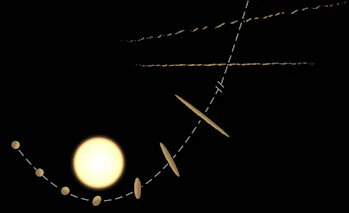
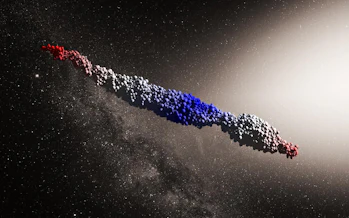
It’s not just distant stars that Breakthrough Listen can monitor. The project recently listened to interstellar comet 2I/Borisov as well as the previous interstellar visitor ‘Oumuamua in our solar system, just in case. Nothing was heard, which isn’t too surprising, but since we don’t really know when or how a distant civilization might send a probe our way, it doesn’t hurt to check them out. As Steve Croft, a research astronomer with the Berkeley SETI Research Center and Breakthrough Listen, explained:
If interstellar travel is possible, which we don’t know, and if other civilizations are out there, which we don’t know, and if they are motivated to build an interstellar probe, then some fraction greater than zero of the objects that are out there are artificial interstellar devices. Just as we do with our measurements of transmitters on extrasolar planets, we want to put a limit on what that number is.
With new technology, strategies and mountains of data to analyze, these are good days for SETI. Broadening the search for alien intelligence, or other life, is a smart move, and one of these days it might just pay off in spades.


 ‘Holy Grail’ Dating Technique Sheds New Light on Prehistoric Past