Ontdek de Fascinerende Wereld van UFO's en UAP's: Jouw Bron voor Onthullende Informatie!
Ben jij ook gefascineerd door het onbekende? Wil je meer weten over UFO's en UAP's, niet alleen in België, maar over de hele wereld? Dan ben je op de juiste plek!
België: Het Kloppend Hart van UFO-onderzoek
In België is BUFON (Belgisch UFO-Netwerk) dé autoriteit op het gebied van UFO-onderzoek. Voor betrouwbare en objectieve informatie over deze intrigerende fenomenen, bezoek je zeker onze Facebook-pagina en deze blog. Maar dat is nog niet alles! Ontdek ook het Belgisch UFO-meldpunt en Caelestia, twee organisaties die diepgaand onderzoek verrichten, al zijn ze soms kritisch of sceptisch.
Nederland: Een Schat aan Informatie
Voor onze Nederlandse buren is er de schitterende website www.ufowijzer.nl, beheerd door Paul Harmans. Deze site biedt een schat aan informatie en artikelen die je niet wilt missen!
Internationaal: MUFON - De Wereldwijde Autoriteit
Neem ook een kijkje bij MUFON (Mutual UFO Network Inc.), een gerenommeerde Amerikaanse UFO-vereniging met afdelingen in de VS en wereldwijd. MUFON is toegewijd aan de wetenschappelijke en analytische studie van het UFO-fenomeen, en hun maandelijkse tijdschrift, The MUFON UFO-Journal, is een must-read voor elke UFO-enthousiasteling. Bezoek hun website op www.mufon.com voor meer informatie.
Samenwerking en Toekomstvisie
Sinds 1 februari 2020 is Pieter niet alleen ex-president van BUFON, maar ook de voormalige nationale directeur van MUFON in Vlaanderen en Nederland. Dit creëert een sterke samenwerking met de Franse MUFON Reseau MUFON/EUROP, wat ons in staat stelt om nog meer waardevolle inzichten te delen.
Let op: Nepprofielen en Nieuwe Groeperingen
Pas op voor een nieuwe groepering die zich ook BUFON noemt, maar geen enkele connectie heeft met onze gevestigde organisatie. Hoewel zij de naam geregistreerd hebben, kunnen ze het rijke verleden en de expertise van onze groep niet evenaren. We wensen hen veel succes, maar we blijven de autoriteit in UFO-onderzoek!
Blijf Op De Hoogte!
Wil jij de laatste nieuwtjes over UFO's, ruimtevaart, archeologie, en meer? Volg ons dan en duik samen met ons in de fascinerende wereld van het onbekende! Sluit je aan bij de gemeenschap van nieuwsgierige geesten die net als jij verlangen naar antwoorden en avonturen in de sterren!
Heb je vragen of wil je meer weten? Aarzel dan niet om contact met ons op te nemen! Samen ontrafelen we het mysterie van de lucht en daarbuiten.
Dinsdag 12 mei 2020
They Captured Something Huge in Russia and There Is Something Inside It!
They Captured Something Huge in Russia and There Is Something Inside It!
I seen 3 stars years ago before this was news. I call them stars only because that’s what they looked like. But they came to a pyramid and stopped for seconds. Then went in different directions. I have always looked up since then . Never have seen that formation again. So yes I believe there is something out there. 🕊 SB
There is proof from ancient paintings, that the aliens have been here since 1200 A. D. & living in the deepest part of the ocean. Colombus wrote about the chariots of fire under the ocean in 1492. We know it’s true, only the religious hierarchy is preventing the government’s from revealing the truth. Larry Lightner
The last few minutes I say I hope so. Because 90% of man are still primitive and would most likely be scared and ready to fight right away when the entire world knows of them. MK
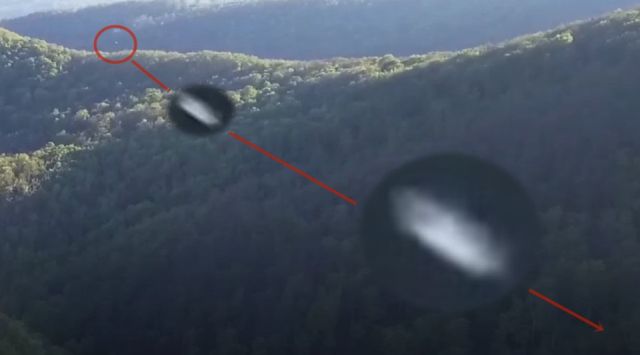
This is a great video of a UFO entering the peak of Mount Hood. The eyewitness recorded this from a plane and wanted to test out the camera. They didn't even see the UFO until they got home and looked at the video later. The video clearly shows a glowing disk in the distance moving slowly towards the top of Mount Hood and then disappearing. It has been long thought by UFO researcher that such high mountains and volcanos are being used as entrances to underground alien bases, because the peaks of such places are rarely visited by humans. Thus aliens have the seclusion and privacy they want. Scott C. Waring
Eyewitness states:
I saw this after the fact. while I was seeing how good my new pocket digital camcorder was! bam one of the first things I found. at 5 seconds and stopped on my large screen, it looks like a tic tac UFO.
Alien Entity Appeared In Church In Infrared Camera, Video, UFO Sighting News.
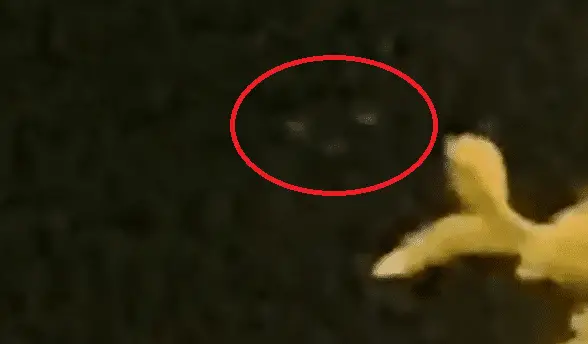
Date of sighting: May 2, 2020 Location of sighting: Mississippi, USA Here is some great raw video from some ghost hunters in Mississippi. Last week they were recording inside an old church using a special infrared camera when something appeared in front of them. A jellyfish shaped orb appeared. Very rare, never seen an orb quite like this before. It almost appears to have long legs and begins to move closer to the person holding the camera, but then vanishes. Looks like they caught an alien entity. They call it a ghost, but I really feel that these smaller orbs are alien entities living amounts that we cant normally see with the human eye. Its a well known fact that infrared cameras record cloaked UFOs, orbs and entities that the human eye cannot see. Even the US military and the Chile military releases UFO videos in infrared of them changing UFOs. So...infrared works...both at night and during the day. Scott C. Waring
Here is an interesting capture in Mississippi this week. A person spotted a orange ball moving across the sky. The UFO traveled across the sky at the same speed as a jet. Such UFOs have been seen a lot around the world. But I think aliens are taking notice that most people are on lock down and unable to see the sky, so aliens have free access to the sky for a while in some locations. From the screenshot above, I can tell you this is not a plane, helicopter or rocket...this is a glowing orb craft. This is 100% alien made. Scott C. Waring - Taiwan
News states:
For one Natchez resident, a late-night trip out of his house turned into an otherworldly experience when he spotted a bright orange fireball streak across the sky. “It scared the heck out of me,” Alex Sandel said Monday morning. “It was bright orange, red and spinning.” Living near Merit Health Natchez, Sandel said he has stepped outside to watch a helicopter take off from the hospital’s helipad Sunday evening at approximately 10:15 when he was startled by the fireball streaking across the sky. “I was outside waiting for the helicopter to take off when I saw this thing coming,” Sandel said. “It came from the north and went straight south.” Sandel said the fireball was traveling at a slow enough speed for him to reach his phone to capture an image of the flying object. “It wasn’t any faster than a jet,” Sandel said.
Drone Caught A Fastwalker Speeding Over Medvednica, Croatia
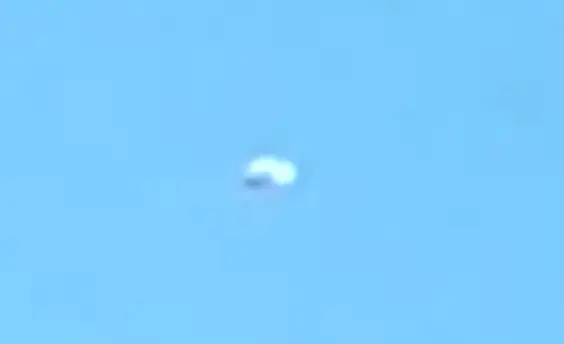
Adrone accidentally recorded a UFO or more likely a fastwalker moving at an incredible speed over Medvednica, Zagreb, Croatia.
On May 10, 2020.a drone owner was shooting video material for his video with his drone and in the montage he noticed a white object moving at high speed towards the drone, but he couldn't identify what it could be.
“Fastwalker” is a term used by NORAD and branches of armed forces to describe unidentified aerial phenomena moving and/or changing directions at high speed far beyond what current aerospace technology is capable of.
Usually these objects are observed in space and although it is assumed that these objects only move in space, in recent years, these fastwalkers have also been filmed while moving through our atmosphere at such an incredible speed that is not perceptible to the naked eye.
The Croatia footage shows such a mysterious fastwalker.
The Air Force Said This Object Was The Moon. Was It?
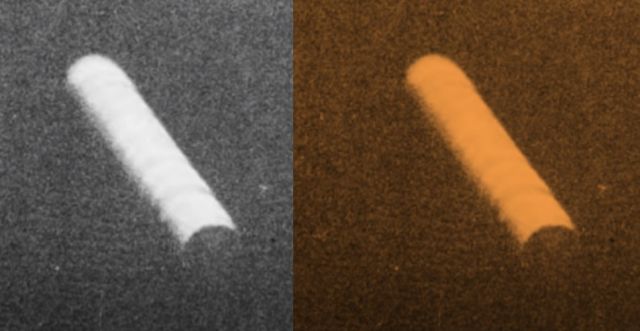
Before Project Blue Book came Project Grudge, an Air Force project its director later admitted was to debunk the UFO phenomenon. One file buried in the Grudge data concerns a cylindrical object photographed above Manhattan in 1950 — by one of New York City's most prestigious photographers (now featured in the Library of Congress).
The photographer, Irving Underhill, was adamant what was in the photo was an object, that wasn't there before or after it was shot.
The Air Force, though, had other ideas. They believed he misidentified the Moon, and forgot he was taking a time-lapse image.
In this video, we'll explore that hypothesis, and show its many issues, including the USAF's statement that the photo happened during sunset (the only time the Moon was in that part of the sky). Underhill's photo, taken at night, was used for a postcard titled "Night Lights from Queensboro Bridge."
In isolation, this may not be a big deal. But the early 1950s were full of cylindrical UFO sightings, including several made by trained observers noting cylinders traveling — strangely — through the air in an upright position or at an angle. We'll discuss all of this in today's episode.
Triangle-shaped UFO filmed over Lemon Grove, California 4-May-2020
Check out this amazing footage of a triangle UFO flying across the night sky above Lemon Grove, a city in San Diego County, California. This happened on 4th May 2020.
A dazzling new image of Jupiter makes the planet look like a gigantic, swirling ball of fire.
While it’s a dramatic sight to behold, the image doesn’t really show what Jupiter looks like through a telescope, BBC News reports. Rather, it’s a composite taken with a technique called “lucky imaging” that peers beneath the planet’s cloudy surface and shows the tumultuous distribution of heat hiding beneath.
Focusing In
Even though it’s an infrared heatmap, the new image is still among the sharpest images of Jupiter ever taken from Earth, according to BBC News.
That’s because lucky imaging helps filter out the usual blurriness caused by Jupiter’s extremely turbulent atmosphere, resulting in a much sharper image. This final image, from Hawaii’s Gemini North Telescope, combined a lot of those lucky images — letting researchers focus on the entire planet, bit by bit.
In a reportpublished last month, a team of scientists discussed how to ensure that human space travelers don’t contaminate distant planets — and that they don’t bring back extraterrestrial pollutants back to Earth, a topic that seems more pertinent than ever in the midst of a global pandemic.
“In my opinion, and that of the science community, the chance that rocks from Mars that are millions of years old will contain an active life form that could infect Earth is extremely low,” said adjunct Stanford professor of aeronautics and astronautics Scott Hubbard, co-author of the report, in an interview with Stanford News. “But, the [Mars] samples returned by [NASA] will be quarantined and treated as though they are the Ebola virus until proven safe.
The solution, Hubbard said, is “planetary protection.” Now that humanity is edging ever closer to traveling to Mars thanks to SpaceX and NASA, Hubbard and the rest of the committee argue that the US government and private sector need to “‘continually authorize and supervise’ private activities in space,” Hubbard told Stanford News.
To counteract any chances of contaminating other places around our solar system, Hubbard suggests scientists could implement “combinations of chemical cleaning, heat sterilization, applying reduction credit for time spent in the highly sterilizing space radiation environment and clever mechanical systems” that have already been shown to be effective.
For instance, for NASA Martian Sample Return mission, a part of the agency’s Perseverance Rover initiative set to launch this year, have already been decontaminated using extremely high temperatures.
But that still leaves germy humans.
“Spacesuits can leak or ‘blow out,’ potentially releasing all manner of earthly microbes and contaminating the surface for any future science missions,” Hubbard said.
“Humans obviously cannot be cleaned like robots, so much more attention to spacesuits, human habitats and using robots as assistants is required,” he added.
There’s somewhat of a precedent when it comes to the Moon, he pointed out. The quarantine requirements for Apollo astronauts was eliminated relatively quickly in the 1970s once we found out the Moon posed no risk of contamination.
But that doesn’t mean we shouldn’t handle the samples from Mars with extreme caution.
A team of MIT researchers are suggesting that we could use a “dynamic orbital slingshot” to get an up-and-close look at interstellar objects — or, in other words, they want to send tiny satellites screaming through space to chase space rocks from beyond our star system.
It’s a far-out concept that’s even grabbed the attention of NASA. The project has secured proof-of-concept funding from the NASA Innovative Advanced Concepts (NIAC) Program, an incubator for radically futuristic concepts such as turning a crater on the far side of the Moon into a giant radio telescope.
Interstellar objects have been a fascinating and relatively recent addition to scientific inquiry. In particular, space rock Oumuamua, first spotted in 2017, and 2I/Borisov, spotted by amateur astronomer Gennadiy Borisov last year, have puzzled astronomers due to their extremely unusual trajectories, leading them to believe they arrived from a neighboring star system.
“There are a lot of fundamental challenges with observing [interstellar objects] from Earth — they are usually so small that light from the sun needs to illuminate it in a certain way for our telescopes to even detect it,” said Richard Linares, assistant professor in the Department of Aeronautics and Astronautics (AeroAstro) at MIT who came up with the idea, in a statement.
“They are traveling so fast that it’s hard to pull together and launch a mission from Earth in the small window of opportunity we have before it’s gone,” Linares explained. “We’d have to get there fast, and current propulsion technologies are a limiting factor.”
To get over these limitations, Linares suggests using a series of “static satellites” that each use “solar sail” technology — using only radiation of the Sun as propulsion.
This constellation of space buoys could then jump into action, releasing stored energy as well as using the gravitational pull of the sun to slingshot themselves after interstellar objects once they’ve been detected.
But they won’t attempt to stop when they get to these elusive extragalactic visitors.
“Flyby missions tend to be easier because they don’t require you to slow down — you fly past the object and try to get as many pictures as you can in that window,” Linares said.
“Studying an interstellar body close-up would revolutionize our understanding of planet formation and evolution,” professor of planetary sciences Benjamin Weiss, who is also working on the project, said in the statement.
The slingshots could even allow us to study the feasibility of sending objects to other solar systems, according to Weiss.
NASA's Lucy asteroid mission already faced a busy itinerary with seven different space-rock targets. Now, the team has discovered that one of those asteroids has a tiny companion.
The realization came thanks to the Hubble Space Telescope, which the team first recruited in 2018 to study a space rock called Eurybates. Like several of the other Lucy mission targets, Eurybates belongs to a group of asteroids known as Trojans, which occupy about the same orbit around the sun as Jupiter but cluster ahead of or behind the gas giant. Scientists had wondered whether Eurybates might have a companion, but combing through those 2018 Hubble images came up empty — until the researchers revisited the data in November 2019 and saw something.
"We asked for more Hubble time to confirm, and they gave us three tries," Keith Noll, Lucy project scientist at NASA's Goddard Space Flight Center in Maryland and a co-discoverer of the Eurybates satellite, said in a statement. "In the first two observations in December we didn't see anything, so we began to think we might be unlucky. But on the third orbit, there it was." That third orbit came in early January.
Scientists working on the Lucy mission hope to get another look at the satellite next month, when it comes back into Hubble's view for the first time since the discovery was confirmed in January. In the meantime, they are focused on using what data they have to pin down the satellite's orbit around Eurybates, which should increase the odds of successfully observing it during the next attempt.
What the researchers know so far suggests that the newly identified space rock is truly tiny: because the object is more than 6,000 times fainter than Eurybates, the satellite is likely less than 0.6 miles (1 kilometer) across, according to the statement.
The scientists on the Lucy mission hope that the newly discovered satellite — and the rest of the mission's Trojan tour — will help them understand how the solar system came to look the way it does. The Trojans are likely crumbs that slipped away during the formation of the gas giants and became trapped in these pockets of orbital stability, which means these space rocks should hold clues to the early days of the solar system.
A diagram of Lucy's itinerary among the Trojan asteroids that trail and lead Jupiter. (Image credit: Southwest Research Institute)
Eurybates and its tiny companion may also be two pieces of a formerly larger space rock, the scientists suspect, which means studying the pair could help scientists understand what happens during solar system collisions.
"There are only a handful of known Trojan asteroids with satellites, and the presence of a satellite is particularly interesting for Eurybates," Thomas Statler, Lucy Program Scientist at NASA headquarters in Washington, said in the statement. "It's the largest member of the only confirmed Trojan collisional family — roughly 100 asteroids all traceable to, and probably fragments from, the same collision."
The discovery should not affect the plan for Lucy, according to NASA, although the team behind the mission will be evaluating the situation to be sure the spacecraft won't accidentally slip too close to the rock and smash itself to bits.
A spacecraft that died in 2017 is still providing insights about Saturn, the planet it studied up close for 13 years.
NASA's Cassini spacecraft helped scientists to discover why Saturn's upper atmosphere is so hot, which puzzled planetary scientists for decades since the planet is too far from the sun to receive our star's heat. But, using old data from Cassini, scientists are closer to solving this mystery.
This new work, which was conducted by NASA and the European Space Agency and led by Zarah Brown, a graduate student at the University of Arizona's Lunar and Planetary Laboratory, suggests that it's auroras that are heating up Saturn's atmosphere. These auroras are triggered by the constant stream of charged particles from the solar wind, which interacts with charged particles that flow from Saturn's moons and creates electric currents.
This insight not only helps scientists understand what is going on at Saturn, but perhaps also at gas giant planets in general. Jupiter, Neptune and Uranus all have strangely hot upper atmospheres as well. There are also numerous exoplanet gas giants far outside of our solar system that may exhibit similar behavior.
"The results are vital to our general understanding of planetary upper atmospheres, and are an important part of Cassini's legacy," study co-author Tommi Koskinen, a member of Cassini's Ultraviolet Imaging Spectrograph instrument team, said in a statement from NASA's Jet Propulsion Laboratory.
Researchers previously used Cassini data to build a map of the temperature and density of Saturn's upper atmosphere, which was not well known before the spacecraft arrived at the planet in 2004. In this study, this map helped scientists to study how electric currents from Saturn's auroras heats the planet's upper atmosphere, generating the solar wind. The solar wind, in turn, distributes energy from the poles (where the auroras are located) towards the equator. That energy then heats the equator to twice the temperatures than could be generated from the sun's heat.
It's common for archival data from spacecraft like Cassini to continue providing new insights long after the craft are no longer operational. This particular dataset came from Cassini's final few months at Saturn when it did 22 very close orbits of the gas giant before deliberately hurling itself into the planet on Sept. 15, 2017 (to prevent possible Earthly contamination of Saturn's icy moons, which could host microbial life.)
For six weeks, Cassini examined bright stars in the constellations Orion and Canis Major, watching as the stars rose and set behind Saturn. By observing the shifting starlight, scientists were able to learn more about the density of Saturn's atmosphere. Since density decreases with altitude, the rate of decrease is dependent on temperature, allowing scientists to estimate temperatures in Saturn's upper atmosphere.
Cassini's observations showed the temperatures peaking around the auroras, in turn providing evidence that it is electric currents are what Saturn's upper atmosphere so hot. Wind speeds on Saturn were also determined using density and temperature measurements.
1. The Mass Fleet Encounter of UFOs over Washington D.C. Capital (1952)
2. Mufon Case: 108659 In the sky above Everett,Washington 5/7/2020
Long Description of Sighting Report
Myself and several others were enjoying the beach when these unknown objects kept appearing and reappearing with no sound, almost as if fading in and out from another dimension or cloaking or optical illusions. Not sure if it was military or not. It did not appear to be any aircraft I am familiar with but who knows. I just know I am unable to define what we all saw. We are near the Snohomish County/Paine Field airport and near Everett navy base. https://mufoncms.com/cgi-bin/report_h...
3. MUFON Report Case Number 104601
A California witness at Menlo Park On Nov 20, 2019 spotted Blimp/ oval-like lights. “I spotted a bright large blimp/oval like UFO. It was moving interestingly slow for a large object the Witness stated. The features were described as being strong white lights with a hint of yellow lights and a red blinking light at the bottom center of the craft. It appeared to have had a bulge on the top center. The front of the craft had a more rounded curve while the back had a sharper and smaller curve, almost egg-shaped. It took about 8 minutes to move NE to South. and was observed for 40 mins,
4. MUFON Report Case 103929 -
An Iowa witness at Cedar Rapids reported seeing a white light with rapidly flashing red and green lights on October 8,2019 at 9:58 pm. according to testimony. The witness stated “Out of our front window I saw a white light with rapidly flashing red and green lights all around it. It was moving slowly from the East and then seemed to pause. Here is the video we have on this.
Gareth Dorrian, Post Doctoral Research Fellow in Space Science, University of Birmingham and Ian Whittaker, Lecturer in Physics, Nottingham Trent University
The Historiesby Herodotus (484BC to 425BC) offers a remarkable window into the world as it was known to the ancient Greeks in the mid fifth century BC. Almost as interesting as what they knew, however, is what they did not know. This sets the baseline for the remarkable advances in their understanding over the next few centuries – simply relying on what they could observe with their own eyes.
Herodotus claimed that Africa was surrounded almost entirely by sea. How did he know this? He recounts the story of Phoenician sailors who were dispatched by King Neco II of Egypt (about 600BC), to sail around continental Africa, in a clockwise fashion, starting in the Red Sea. This story, if true, recounts the earliest known circumnavigation of Africa, but also contains an interesting insight into the astronomical knowledge of the ancient world.
The voyage took several years. Having rounded the southern tip of Africa, and following a westerly course, the sailors observed the Sun as being on their right hand side, above the northern horizon. This observation simply did not make sense at the time because they didn’t yet know that the Earth has a spherical shape, and that there is a southern hemisphere.
1. The planets orbit the sun
A few centuries later, there had been a lot of progress. Aristarchus of Samos (310BC to 230BC) argued that the Sun was the “central fire” of the cosmos and he placed all of the then known planets in their correct order of distance around it. This is the earliest known heliocentric theory of the solar system.
Unfortunately, the original text in which he makes this argument has been lost to history, so we cannot know for certain how he worked it out. Aristarchus knew the Sun was much bigger than the Earth or the Moon, and he may have surmised that it should therefore have the central position in the solar system.
Nevertheless it is a jawdropping finding, especially when you consider that it wasn’t rediscovered until the 16th century, by Nicolaus Copernicus, who even acknowledged Aristarchus during the development of his own work.
2. The size of the moon
One of Aristarchus’ books that did survive is about the sizes and distances of the Sun and Moon. In this remarkable treatise, Aristarchus laid out the earliest known attempted calculations of the relative sizes and distances to the Sun and Moon.
It had long been observed that the Sun and Moon appeared to be of the same apparent size in the sky, and that the Sun was further away. They realised this from solar eclipses, caused by the Moon passing in front of the Sun at a certain distance from Earth.
Also, at the instant when the Moon is at first or third quarter, Aristarchus reasoned that the Sun, Earth, and Moon would form a right-angled triangle.
As Pythagoras had determined how the lengths of triangle’s sides were related a couple of centuries earlier, Aristarchus used the triangle to estimate that the distance to the Sun was between 18 and 20 times the distance to the Moon. He also estimated that the size of the Moon was approximately one-third that of Earth, based on careful timing of lunar eclipses.
A 10th century reproduction of a diagram by Aristarchus showing some of the geometry he used in his calculations. (Image credit: Wikipedia, CC BY-SA)
While his estimated distance to the Sun was too low (the actual ratio is 390), on account of the lack of telescopic precision available at the time, the value for the ratio of the size of the Earth to the Moon is surprisingly accurate (the Moon has a diameter 0.27 times that of Earth).
Today, we know the size and distance to the moon accurately by a variety of means, including precise telescopes, radar observations and laser reflectors left on the surface by Apollo astronauts.
3. The Earth's circumference
Eratosthenes (276BC to 195 BC) was chief librarian at the Great Library of Alexandria, and a keen experimentalist. Among his many achievements was the earliest known calculation of the circumference of the Earth. Pythagoras is generally regarded as the earliest proponent of a spherical Earth, although apparently not its size. Eratosthenes’ famous and yet simple method relied on measuring the different lengths of shadows cast by poles stuck vertically into the ground, at midday on the summer solstice, at different latitudes.
The Sun is sufficiently far away that, wherever its rays arrive at Earth, they are effectively parallel, as had previously been shown by Aristarchus. So the difference in the shadows demonstrated how much the Earth’s surface curved. Eratosthenes used this to estimate the Earth’s circumference as approximately 40,000km. This is within a couple of percent of the actual value, as established by modern geodesy (the science of the Earth’s shape).
Later, another scientist called Posidonius (135BC to 51BC) used a slightly different method and arrived at almost exactly the same answer. Posidonius lived on the island of Rhodes for much of his life. There he observed the bright star Canopus would lie very close to the horizon. However, when in Alexandria, in Egypt, he noted Canopus would ascend to some 7.5 degrees above the horizon.
Given that 7.5 degrees is 1/48th of a circle, he multiplied the distance from Rhodes to Alexandria by 48, and arrived at a value also of approximately 40,000km.
4.The first astronomical calculator
The world’s oldest surviving mechanical calculator is the Antikythera Mechanism. The amazing device was discovered in an ancient shipwreck off the Greek island of Antikythera in 1900.
The device is now fragmented by the passage of time, but when intact it would have appeared as a box housing dozens of finely machined bronze gear wheels. When manually rotated by a handle, the gears span dials on the exterior showing the phases of the Moon, the timing of lunar eclipses, and the positions of the five planets then known (Mercury, Venus, Mars, Jupiter, and Saturn) at different times of the year. This even accounted for their retrograde motion – an illusionary change in the movement of planets through the sky.-
We don’t know who built it, but it dates to some time between the 3rd and 1st centuries BC, and may even have been the work of Archimedes. Gearing technology with the sophistication of the Antikythera mechanism was not seen again for a thousand years.
Sadly, the vast majority of these works were lost to history and our scientific awakening was delayed by millennia. As a tool for introducing scientific measurement, the techniques of Eratosthenes are relatively easy to perform and require no special equipment, allowing those just beginning their interest in science to understand by doing, experimenting and, ultimately, following in the foot steps some of the first scientists.
One can but speculate where our civilisation might be now if this ancient science had continued unabated.
Meer van UFO'S of UAP'S, ASTRONOMIE, RUIMTEVAART, ARCHEOLOGIE, OUDHEIDKUNDE, SF-SNUFJES EN ANDERE ESOTERISCHE WETENSCHAPPEN - DE ALLERLAATSTE NIEUWTJES


 They Captured Something Huge in Russia and There Is Something Inside It!