Shapeshifting Skinwalker Caught On Tape in Poland?

Shapeshifting Skinwalker Caught On Tape in Poland?
Rare Giant Creature Of The Deep washed op on the shore in Western Cape, South Africa
The Westall School UFO Case

April 6, 1966. Near Melbourne, Australia, 200 students and teachers had an extraordinary UFO sighting which involved one main craft and five smaller objects buzzing around it. The Australian Army showed up and confiscated all cameras, including photos and video. The school’s principal told the students never to talk about what they had seen. Threats were made to some of the teachers. One female student even disappeared after she was taken away in an ambulance. The Australian government explained this all to be a weather balloon, but the description by the witnesses was consistent. This was a classic sighting of a flying saucer, one that may have landed.
Other Videos, selected by peter2011
Research sheds new light on intelligent life existing across the galaxy
Is there anyone out there? This is an age-old question that researchers have now shed new light on with a study that calculates there could be more than 30 intelligent civilizations throughout our Galaxy. This is an enormous advance over previous estimates which spanned from zero to billions.
One of the biggest and longest-standing questions in the history of human thought is whether there are other intelligent life forms within our Universe. Obtaining good estimates of the number of possible extraterrestrial civilizations has however been very challenging.
A new study led by the University of Nottingham and published today in The Astrophysical Journal has taken a new approach to this problem. Using the assumption that intelligent life forms on other planets in a similar way as it does on Earth, researchers have obtained an estimate for the number of intelligent communicating civilizations within our own galaxy -the Milky Way. They calculate that there could be over 30 active communicating intelligent civilizations in our home Galaxy.
Professor of Astrophysics at the University of Nottingham, Christopher Conselice who led the research, explains: "There should be at least a few dozen active civilizations in our Galaxy under the assumption that it takes 5 billion years for intelligent life to form on other planets, as on Earth." Conselice also explains that, "The idea is looking at evolution, but on a cosmic scale. We call this calculation the Astrobiological Copernican Limit."
First author Tom Westby explains: "The classic method for estimating the number of intelligent civilizations relies on making guesses of values relating to life, whereby opinions about such matters vary quite substantially. Our new study simplifies these assumptions using new data, giving us a solid estimate of the number of civilizations in our Galaxy.
The two Astrobiological Copernican limits are that intelligent life forms in less than 5 billion years, or after about 5 billion years—similar to on Earth where a communicating civilization formed after 4.5 billion years. In the strong criteria, whereby a metal content equal to that of the Sun is needed (the Sun is relatively speaking quite metal rich), we calculate that there should be around 36 active civilizations in our Galaxy."
The research shows that the number of civilizations depends strongly on how long they are actively sending out signals of their existence into space, such as radio transmissions from satellites, television, etc. If other technological civilizations last as long as ours which is currently 100 years old, then there will be about 36 ongoing intelligent technical civilizations throughout our Galaxy.
However, the average distance to these civilizations would be 17,000 light-years away, making detection and communication very difficult with our present technology. It is also possible that we are the only civilization within our Galaxy unless the survival times of civilizations like our own are long.
Professor Conselice continues: "Our new research suggests that searches for extraterrestrial intelligent civilizations not only reveals the existence of how life forms, but also gives us clues for how long our own civilization will last. If we find that intelligent life is common then this would reveal that our civilization could exist for much longer than a few hundred years, alternatively if we find that there are no active civilizations in our Galaxy it is a bad sign for our own long-term existence. By searching for extraterrestrial intelligent life—even if we find nothing—we are discovering our own future and fate."
Explore further
New Research: There Could Be 36 Alien Civilizations in Our Galaxy

According to a new study in The Astrophysical Journal, there could be dozens of intelligent alien civilizations hiding in our galaxy, all capable of communicating.
“There should be at least a few dozen active civilizations in our Galaxy under the assumption that it takes 5 billion years for intelligent life to form on other planets, as on Earth,” Christopher Conselice, Professor of Astrophysics at the University of Nottingham and lead author of the study, said in a statement.
“The idea is looking at evolution, but on a cosmic scale,” he added.
The researchers say the numbers suggest there are a number of technological civilizations in the Milky Way galaxy.
“In the strong criteria, whereby a metal content equal to that of the Sun is needed (the Sun is relatively speaking quite metal rich), we calculate that there should be around 36 active civilizations in our Galaxy,” Tom Westby, first author and assistant professor at the University of Nottingham, said in the statement.
Previous estimations have been based on educated guesses and opinions — something that can cause numbers to “vary quite substantially,” according to Westby. But the astronomers say their estimation takes the latest research into account.
“Our new study simplifies these assumptions using new data, giving us a solid estimate of the number of civilizations in our Galaxy,” Westby added.
Hidden in the cool research is a major bummer: the average alien civilization would be 17,000 light-years away. It’s also possible that all other intelligent civilizations already kicked the bucket a long time ago.
But finding them could give us important clues about our own humanity as well.
“If we find that intelligent life is common then this would reveal that our civilization could exist for much longer than a few hundred years, alternatively if we find that there are no active civilizations in our Galaxy it is a bad sign for our own long-term existence,” Conselice said.
“By searching for extraterrestrial intelligent life — even if we find nothing — we are discovering our own future and fate,” he added.
Things Could Be Worse — Crocodiles Once Ran Upright on Two LegsWelcome to another edition of “Things Could Be Worse!” Today’s subject: crocodiles. These leftovers from the age of dinosaurs are already feared across Africa and India, in northern Australia, parts of the southern U.S. and other swampy areas. With saltwater crocodiles reaching lengths over 23 feet and well known for attacking and killing humans – sometimes in teams — they’ve earned their fearsome reputation. But, as the title suggests, things could be worse.
“We can see all the digits, all the ridges in the skin – just as if you were looking at your hands. They put one foot in front of another; they could pass a sobriety test walking on a straight line. And there are no front footprints.”
Take a sobriety test? Make me!
Martin Lockley, an emeritus professor at the University of Colorado, was interviewed by BBC News about his new study (with photos and illustrations), published in Scientific Reports, on prehistoric crocodylomorph footprints discovered in southeast South Korea. Crocodylomorphs are the extinct ancestors of modern crocs and were much more numerous and diverse than their descendants. And yet, the South Korean fossil tracks from the Early Cretaceous, 110-120 million years ago, were something archeologists had never seen before.
“Our trackways are very narrow-looking – more like a crocodile balancing on a tight-rope,” he remarked. When combined with the lack of any tail-drag marks, it became clear that these creatures were moving bipedally.”
Bipedal crocodiles! Professor Kyung Soo Kim from South Korea’s Chinju National University of Education, team leader and co-author, says the most telling point was that the prints were deep, indicating all of the creature’s weight was pressing down on them. Add that to no front footprints and you have a new species of crocodylomorph that is now named Batrachopus grandis. A bipedal crocodile – imagine that. And then … it gets worse.
“They were giants. Nobody expected such large bipedal crocs. But, like a carnivorous dinosaur, they could also have hunted in shallow water. They likely ate whatever was available.”
Like this … only bigger and on land
Fortunately, humans weren’t available at the time because crocodylomorphs grew up to 12 meters (39 feet) in length. The ability to run on two legs may have given them more speed and range, and this new information has caused other researchers to question other tracks that were assumed to be from bird-like raptors. Now they must consider croc-like raptors – a much scarier movie premise. Being good scientists, Lockley and the team admit that this is a lot to assume based on just tracks and that more could be learned – or disproven – with bones and other remains.
Thirty-nine foot bipedal crocodiles. Working at home or wearing a mask doesn’t seem to bad now, does it?
It’s Aliens! Study Finds There Should Be 36 Intelligent Civilizations in the Milky Way Galaxy

After reading that headline, we know what you’re thinking … did they include humans in that total? Ha ha! Good one!
“These assumptions are based on the one situation in which intelligent, communicative life is known to exist—on our own planet.”
There’s your answer – it depends on whether you consider our civilization to be intelligent. Let’s assume for the moment that we are. Researchers at the University of Nottingham did that and then attempted to simplify the methodology used to model whether there are any other active intelligent civilizations in the Milky Way galaxy. Led by Professor of Astrophysics Christopher Conselice, they developed an upper and lower limit to the probability of life evolving into intelligent life in around 5 billion years – about the time it took to evolve on Earth (actually 4.5 billion but apparently rounding is allowed when you’re dealing in billions). That’s the weaker or lower limit to the constant they named the Astrobiological Copernican Limit. They also threw in the requirement that evidence be found of at least 100 years of electronic or similar communication (like radio) – which is how long our civilization has had radio.
“This type of life has developed in a metal-rich environment.”
As explained in the study published in The Astrophysics Journal and its press release, that’s the simple strong or upper Astrobiological Copernican Limit – a star showing sufficient metal content to make a safe assumption that its life-bearing planets also have the metals needed to evolve enough to have intelligence. The most likely candidates are M-dwarf stars – red dwarfs that are low in mass and cool in temperature. Coupled with the fact that they would be 17,000 light-years away on average, they’re nearly impossible to detect with current technology. Despite that, the study concludes that there will be about 36 ongoing intelligent technical civilizations in the Milky Way galaxy.
This is not saying they’ve visited Earth, just that 36 other intelligent civilizations should exist. However, Enrico Fermi’s paradox still applies … where are they?
“If we find that intelligent life is common then this would reveal that our civilization could exist for much longer than a few hundred years, alternatively if we find that there are no active civilizations in our Galaxy it is a bad sign for our own long-term existence. By searching for extraterrestrial intelligent life — even if we find nothing — we are discovering our own future and fate.”
Yes, that popular dystopian conclusion pops up in this study: the technology needed to develop intelligent life may be the same technology it needs to destroy itself.
Is it possible that we’re the only intelligent (by our definition, at least) civilization in the Milky Way? If we’re the last one, can we be the exception and survive long enough to spread to other planets?
Ha ha! Good one!
Green lights, red planet: Glow similar to the Aurora Borealis is detected around Mars for the first time
A green glow similar to that seen in the the Aurora Borealis has been detected around the red planet — Mars — for the first time, a study reported.
So-called 'green line emissions' — caused by the excitation of oxygen in the atmosphere — are responsible for the primary colour of the polar aurorae on Earth.
However, they also cause a thin layer of green glow seen in the daytime at an altitude of around 56 miles (90 kilometres) in the atmosphere above our world.
This has never been seen before in the atmosphere of other planets — as either their surface is too bright in contrast or space missions hadn't the right sensors.
Its detection around Mars — albeit as a line on a spectrograph, rather than in a photograph — concludes a 40-year-hunt for the phenomena on the red planet.

A green glow similar to that seen in the the Aurora Borealis has been detected around the red planet — Mars — for the first time, a study reported. Pictured, the green glow above the Earth

Its detection around Mars — albeit as a peak on a spectrograph at a wavelength of 557.7 nanometres, pictured, rather than in a photograph — concludes a 40-year-hunt for the phenomena on the red planet
In their study, planetary scientist Manish Patel of The Open University and colleagues identified the green glow using the NOMAD ultraviolet and visible spectrometer (UVIS) aboard the ExoMars Trace Gas Orbiter spacecraft in orbit of the red planet.
This joint project between the European Space Agency (ESA) and Russia's Roscosmos is tasked with studying trace gases in the Martian atmosphere and investigating potential underground sources playing a role in such.
The NOMAD instrument detected the characteristic signal of oxygen excitation at a wavelength of 557.7 nanometres that indicated the presence of the green glow — alongside a weaker ultraviolet oxygen emission at 297.2 nanometres.
Similar studies on the Earth's atmosphere had never managed to capture both of these emission readings at the same time — and the ration of the lines never matched the theoretical predictions for such.
'The UVIS channel of NOMAD continues to return excellent science,' said Dr Patel.
'We didn’t design the instrument to make these measurements and it’s a fantastic example of the unforeseen additional science you can get from this kind of mission.
'As a physicist, it is great to see UVIS resolving a long-standing debate between quantum mechanical calculations and remote observations.'

In their study, planetary scientist Manish Patel of The Open University and colleagues identified the green glow using the NOMAD ultraviolet and visible spectrometer, pictured, aboard the ExoMars Trace Gas Orbiter spacecraft in orbit of the red planet
Having reached Mars in October 2016, the ExoMars Trace Gas Orbiter spent more than a year aerobreaking in the martian atmosphere to lower itself to the correct orbit — 249 miles (400 kilometres) above the planet's surface — for its investigation.
It began taking measurements in the May of 2018.
The full findings of the study were published in the journal Nature Astronomy.


Belgisch instrument ontdekt groene gloed rond Mars - HLN.beDe ruimtesonde maakt deel uit van een Europees-Russische Marsmissie. Volgens het Europese ruimteagentschap ESA is de waarneming een primeur.
“Een van de helderste emissies van poollicht op aarde ontstaat als zuurstofatomen licht van een bepaalde golflengte uitstoten. Dat werd nooit eerder waargenomen rond een andere planeet”, aldus Jean-Claude Gérard van de Universiteit van Luik, een van de wetenschappers achter een nieuwe studie in het wetenschappelijke tijdschrift Nature Astronomy. “Wetenschappers vermoedden dat de uitstoot ook bestond op Mars. Dankzij de TGO hebben we die eindelijk waargenomen.”
Daarvoor werd een Belgisch instrument gebruikt, de NOMAD (Nadir and Occultation for Mars Discovery). “Bij eerdere observaties die recht op het oppervlak van Mars gericht waren, zagen we geen groene gloed”, aldus Ann Carine Vandaele van het Koninklijk Belgisch Instituut voor Ruimte-Aeronomie (BIRA), dat gespecialiseerd is in atmosfeeronderzoek. “Daarom besloten we het instrument te richten op de ‘rand’ van Mars, zoals bij beelden van de aarde die vanuit het internationaal ruimtestation ISS genomen worden.”
Tussen 24 april en 1 december 2019 werden hoogtes van 20 tot 400 kilometer boven het oppervlak van Mars gescand. Bij de analyse van de datasets werd elke keer de groene zuurstof-uitstoot teruggevonden. De emissie bleek het sterkst te zijn op een hoogte van 80 kilometer en was afhankelijk van de veranderende afstand tussen Mars en de zon.
De studie van de gloed in de atmosfeer van planeten kan een schat aan informatie geven over de samenstelling en de werking van de atmosfeer. Het kan onthullen hoe energie afgezet wordt door het licht van de zon en de zonnewind, de stroom van geladen deeltjes die uit onze zon komt.
Kennis van de atmosfeer van Mars is niet alleen interessant voor de wetenschap, maar ook voor toekomstige missies naar de Rode Planeet. De dichtheid van de atmosfeer beïnvloedt bijvoorbeeld de weerstand die satellieten ondervinden, en parachutes die instrumenten naar de oppervlakte van Mars brengen.
It Happened Right Under Our Noses and UFO Researchers Didn't Pick Up On It

The 1980s was an interesting time for the subject of Ufology in the UK, but researches may have missed this. An innocent military facility in full view of travellers from England to Wales was likely not so innocent at all. Was there test flying of a highly secret exotic craft taking place right under our noses. What unfolded for a UK resident and telecommunications engineer was straight out of a conspiracy novel. A resident that coincidentally had an interest in mysteries, as well as having access to the countries most guarded telecommunications.
All content on this channel is licensed, and or produced by Zohar Entertainment Group/Awakening Expo/Phenomena Magazine.
Mysterious Green Fireball Spotted Above Remote Australian Outback
Green Fireball Over Australia Is Actually An Alien Ship! Video, UFO Sighting News.
Strange Alien Pods Found On Mars In Rover Photo, June 2020, UFO Sighting News.
Awesome Video Of UFO Creating Mini UFOs Over Russia, June 2020, Video, UFO Sighting News.
UFO Light Reverses Field In Ontario Lightening Storm Over Canada, Video, UFO Sighting News.
Flying Saucer Recorded On IPhone Photo Burst In Arizona, Video, UFO Sighting News.
2020 crop circles: Wiltshire, UK |June 14

Latest crop circles report from Wiltshire, UK. This one was found on Sunday, 14th June 2020.
UFOs/Orbs started appearing over Monument, CO 13-Jun-2020
This UFO phenomenon was taking place in the sky above Monument, Colorado on Saturday, 13th June 2020.
Witness report:
Visit the Milky Way's supermassive black hole with 'Galactic Center VR' visualization (video)
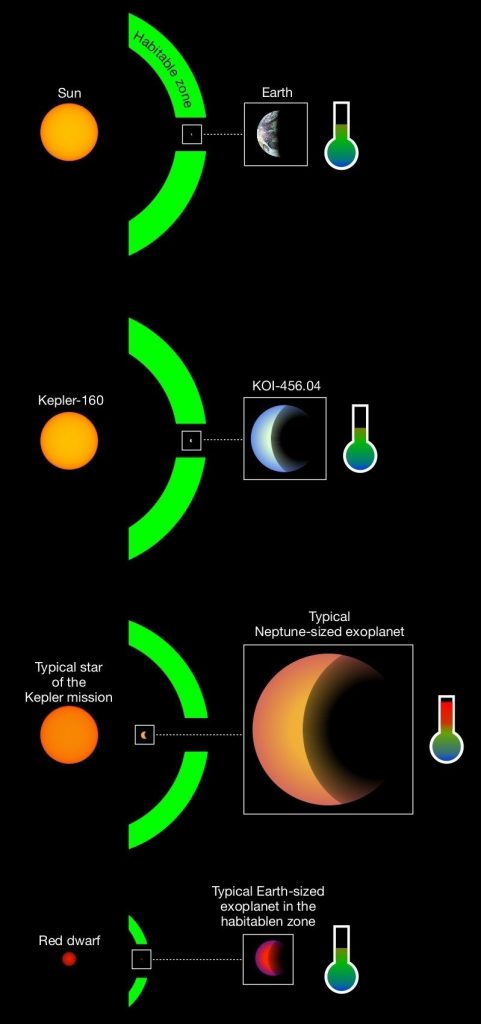
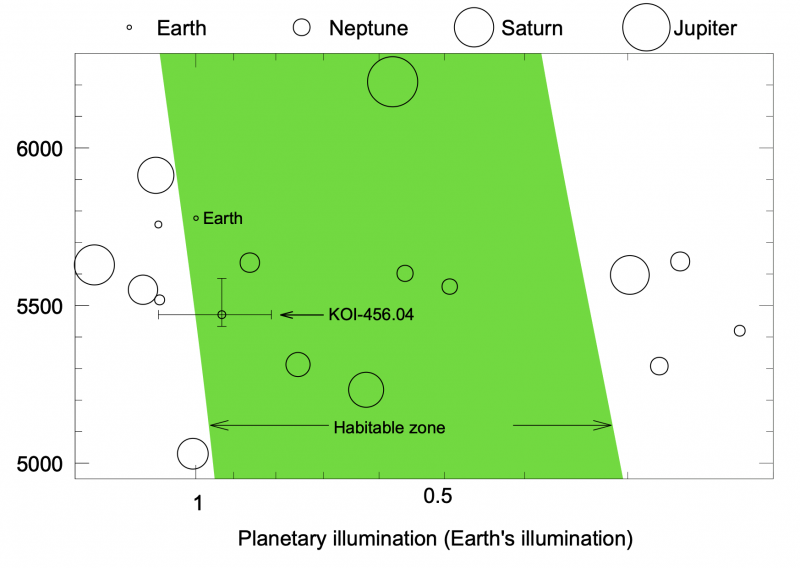
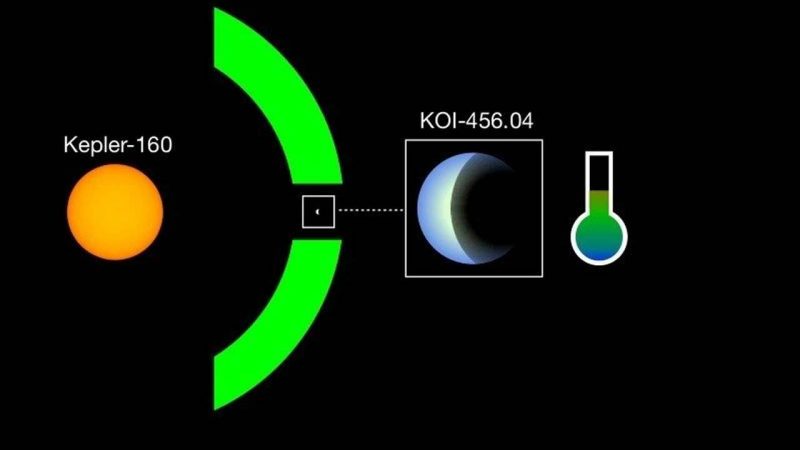
New exoplanet system is ‘mirror image’ of Earth and sun
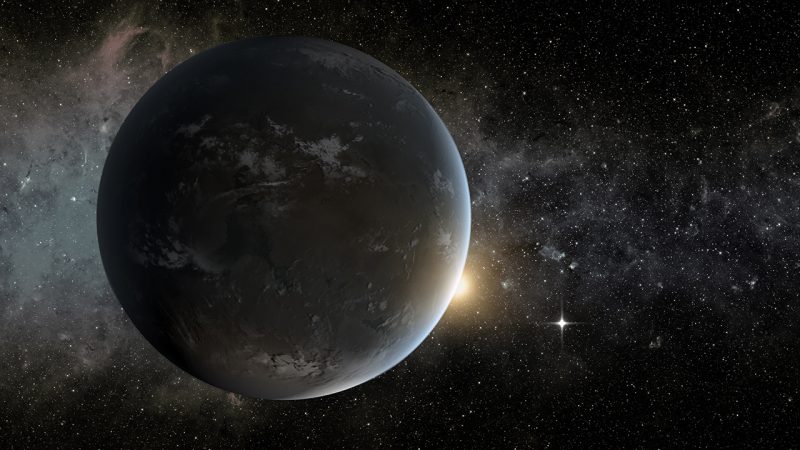
Researchers from Germany and the US have discovered an exoplanet less than twice the size of Earth orbiting at about the same distance from its star, making it the closest analog to the Earth-sun system known so far.