Ontdek de Fascinerende Wereld van UFO's en UAP's: Jouw Bron voor Onthullende Informatie!
Ben jij ook gefascineerd door het onbekende? Wil je meer weten over UFO's en UAP's, niet alleen in België, maar over de hele wereld? Dan ben je op de juiste plek!
België: Het Kloppend Hart van UFO-onderzoek
In België is BUFON (Belgisch UFO-Netwerk) dé autoriteit op het gebied van UFO-onderzoek. Voor betrouwbare en objectieve informatie over deze intrigerende fenomenen, bezoek je zeker onze Facebook-pagina en deze blog. Maar dat is nog niet alles! Ontdek ook het Belgisch UFO-meldpunt en Caelestia, twee organisaties die diepgaand onderzoek verrichten, al zijn ze soms kritisch of sceptisch.
Nederland: Een Schat aan Informatie
Voor onze Nederlandse buren is er de schitterende website www.ufowijzer.nl, beheerd door Paul Harmans. Deze site biedt een schat aan informatie en artikelen die je niet wilt missen!
Internationaal: MUFON - De Wereldwijde Autoriteit
Neem ook een kijkje bij MUFON (Mutual UFO Network Inc.), een gerenommeerde Amerikaanse UFO-vereniging met afdelingen in de VS en wereldwijd. MUFON is toegewijd aan de wetenschappelijke en analytische studie van het UFO-fenomeen, en hun maandelijkse tijdschrift, The MUFON UFO-Journal, is een must-read voor elke UFO-enthousiasteling. Bezoek hun website op www.mufon.com voor meer informatie.
Samenwerking en Toekomstvisie
Sinds 1 februari 2020 is Pieter niet alleen ex-president van BUFON, maar ook de voormalige nationale directeur van MUFON in Vlaanderen en Nederland. Dit creëert een sterke samenwerking met de Franse MUFON Reseau MUFON/EUROP, wat ons in staat stelt om nog meer waardevolle inzichten te delen.
Let op: Nepprofielen en Nieuwe Groeperingen
Pas op voor een nieuwe groepering die zich ook BUFON noemt, maar geen enkele connectie heeft met onze gevestigde organisatie. Hoewel zij de naam geregistreerd hebben, kunnen ze het rijke verleden en de expertise van onze groep niet evenaren. We wensen hen veel succes, maar we blijven de autoriteit in UFO-onderzoek!
Blijf Op De Hoogte!
Wil jij de laatste nieuwtjes over UFO's, ruimtevaart, archeologie, en meer? Volg ons dan en duik samen met ons in de fascinerende wereld van het onbekende! Sluit je aan bij de gemeenschap van nieuwsgierige geesten die net als jij verlangen naar antwoorden en avonturen in de sterren!
Heb je vragen of wil je meer weten? Aarzel dan niet om contact met ons op te nemen! Samen ontrafelen we het mysterie van de lucht en daarbuiten.
Vrijdag 24 juli 2020
Iphone dropped into Nevada's Devil's Cauldron catches screaming voices from the deep
Iphone dropped into Nevada's Devil's Cauldron catches screaming voices from the deep
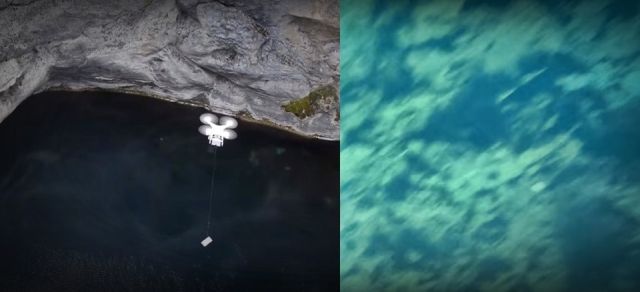
TechRax who is testing new iphones on their quality and endurance got the idea to drop an iphone 11 Pro down a super deep hot cauldron hole known as "Diana's Punchbowl" aka Devil's Cauldron to see what's inside the steaming hot water and whether the iPhone would survive!
Using a drone, he drops the phone into the water for a second time when unexpectedly the phone catches a pretty eerie sound that sounded like screaming voices, like 'help me - help me' according to TechRax who couldn't believe what he has heard.
Although the creepy sound remains a mystery, we may wonder whether the 'Devil's Cauldron is a portal to a secret underworld, a supernatural world of the dead below the world of the living.
The Devil's Cauldron, is a geothermal feature located on a small fault in Nye County, Nevada. The spring is exposed through a cup-shaped depression about 50 feet (15 m) in diameter at the top of a dome-like hill of travertine about 600 feet (180 m) in diameter.
VIDEO & PHOTOS: UFO seen over different provinces in Mongolia | July 2020
These UFO report was just submitted to me through our Facebook page. Bright spiral-shaped object was seen over at least three provinces in Mongolia: Ar Khanggai, Khövsgöl and Zavhan. Date: 23rd July 2020.
What do you think this is? Please leave a comments below!
Don’t forget to follow us on Youtube for the latest UFO videos.
WETENSCHAP & PLANEET China heeft donderdagnamiddag lokale tijd haar eerste onafhankelijke Marsmissie gelanceerd, die de naam Tianwen-1 of ‘Vragen aan de hemel’ draagt.
De lancering gebeurde om 12.41 uur lokale tijd (6.41 uur Belgische tijd) op de lanceersite Wenchang in de zuidelijke provincie Hainan, volgens Xinhua News Agency.
Tianwen-1 wil de omgeving van Mars verkennen en zoeken naar tekenen van leven. Het ruimtevaartuig zal er zo’n zeven maanden over doen om de rode planeet te bereiken, en eens daar zal het nog twee à drie maanden rond Mars draaien alvorens een poging te doen om te landen. Vanop de Japanse ruimtehaven Tanegashima is maandag (lokale tijd) ook de eerste Arabische sonde naar Mars gelanceerd. Het is de bedoeling dat al-Amal (‘Hoop’) in februari in een baan rond Mars komt, als eerste Arabische missie naar een andere planeet. De Verenigde Staten lanceren volgende week een ruimtetuig naar Mars.
Dangerous Asteroids Collision Course.. Everything We Know as of Now..
Dangerous Asteroids Collision Course..
Here Is Everything We Know About Dangerous Asteroids As of Now
Hello and welcome! My name is Anton and in this video, we will talk about a potential asteroid collision and what hazards there are in the next few decades.
Meteors, Meteorites & Asteroids Documentary – History Channel
Wow! Watch Breathtaking 4K Video Showing Mars in Ultra-High Definition
Looks like de Blasio’s NYC in 10 years.
While the left is expending all of its resources and energy trying to drag us back to the stone age, it is awesome to see the wonder of human achievement and productivity.
As one of my readers opined, “Maligned and hated by the bad guys foreign and domestic, be reminded great USA, we achieved this astounding feat and so much more.
The Left can destroy great cities, police departments, and a once great nation. They can reduce us to a one party authoritarian state, a destruction of their hated Constitution and America….give them that.”
Breathtaking 4K video shows Mars in ultra-high definition
Extraordinary images captured by NASA’s robotic rovers are giving Earthlings their first look at Mars in state-of-the-art, ultra-high-definition video.
A 10-minute clip posted on YouTube features panoramic views of the Red Planet’s surface, including sweeping deserts, massive dunes, craggy outcroppings and cracked ground strewn with jagged rocks.
A 10-minute clip posted on YouTube features panoramic views of the Red Planet’s surface, including sweeping deserts, massive dunes, craggy outcroppings and cracked ground strewn with jagged rocks.
“This is the first time Martian footage has been rendered in stunning, 4K resolution,” a narrator intones as haunting music plays in the background.
The video’s “journey across the surface of another world” was posted by Britain’s ElderFox Documentaries, which said it was created using digital photos shot by three NASA rovers — Spirit, Opportunity and Curiosity — and beamed back to Earth.
They were then “stitched together” to create the illusion of a camera panning across the desolate and barren landscape — and provide what the narrator calls the “most lifelike experience of being on Mars.”
The locations featured in the video bear names that include Cape Verde, Santa Maria Crater, Burns Cliff and Marathon Valley Entrance.
Some shots capture parts of the rovers that were recording the images, while others have small black sections that represent scenery that wasn’t photographed.
Amazing Sky Phenomena - "Days of 2020" - Dramatic Skies Around the World via MrMBB333
Sky Phenomena – “Days of 2020″ – Dramatic Skies Around the World
People are seeing some AMAZING things up there!
We are living in very unique, changing times and during these times I have become more than intrigued by these changes and what is causing them. I’m referring to the earth changes, changes in our sun and how the earth’s atmosphere manages this what I believe to be a much different sunlight.
Over the last 10 years I have become very familiar with our planet, the mechanics of it and how it reacts to many different aspects of space weather and many other things as well. I monitor everything from the sea floor to the cosmos and everything in between. I am a full-time Watchman and as these uncertain times move forward I’ve got your back. When you really need to know…you’ll know.
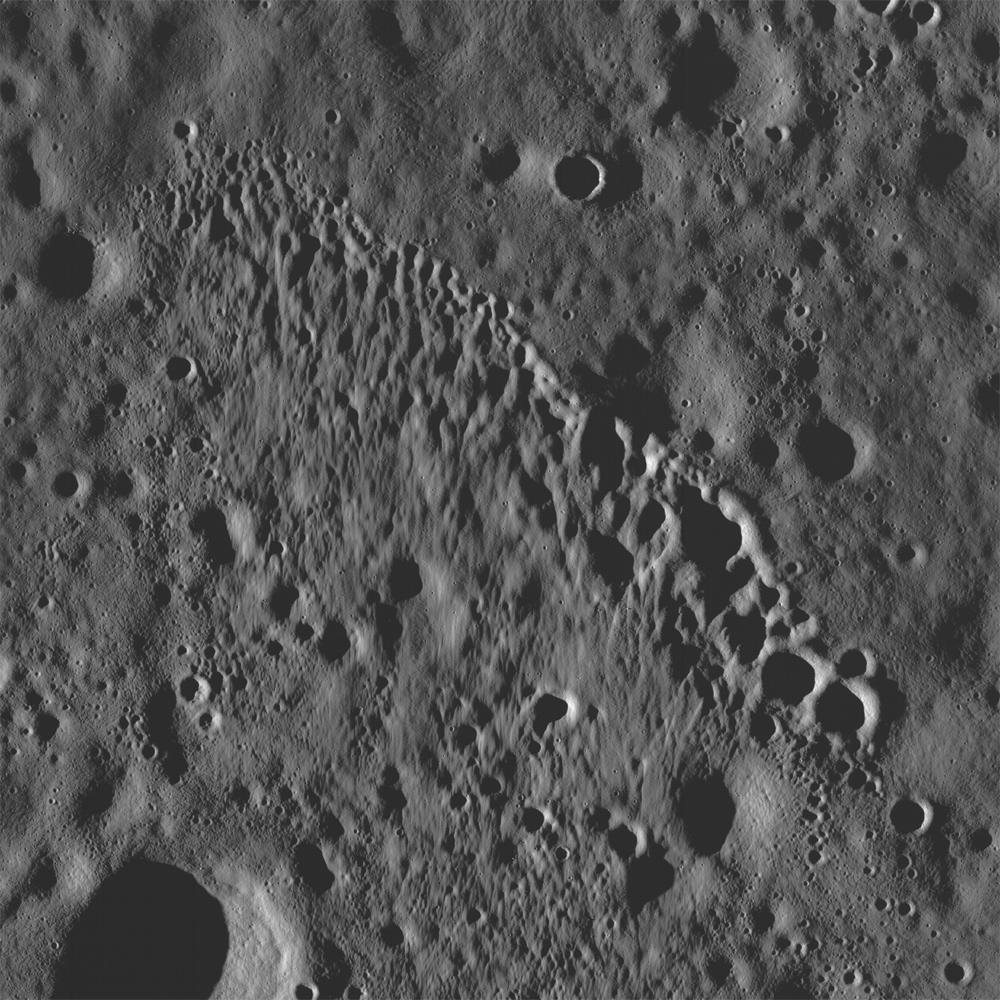
Guys I was going through some NASA index photo of the moon when I came across this dark tower. At first it was the top of the tower that grabbed my attention, but then when I noticed the square doorway at its bottom, I became excited. Then I noticed a ring, but when I enlarged the ring I realized it was not a full circle but 80% of a circle. I tried to make the symbol of the tower in black and white seen in the above photo. I think its very close. It must have some very important meaning to this species of aliens because that symbol on the tower is huge. It looks to be an ancient temple of some serious significance to it...maybe religious, maybe unifying, or even political.
It looks about 1.5km tall and .5km wide. I discovered it so I will name it. Waring Tower has a nice ring to it. That would make my tower 1.3km taller than the 202 meter Trump tower. #winning
Several Million People are on Mars, All Part of the German Breakaway Colony
The following pictures were all taken by NASA Mars Rovers. They are big blow ups that have been cropped. In the original NASA pictures the Beings and Objects wouldn't have been noticed. Also, fill light, contrast, and sharpening has been done on some.
[All pictures below are taken from NASA Rover Pictures that are PUBLIC DOMAIN!]
Several Million People are on Mars, All Part of the German Breakaway Colony
COAST TO COAST AM - Michael Salla has concluded that major war operations presented opportunities for huge amounts of money to be siphoned off for secret projects, such as what went on at the Montauk Air Force Station from 1971-1983.
Based on whistleblower testimony, he believes they perfected portal or stargate technology there, which allowed people to be instantly transported to far-flung destinations such as Mars.
Over the years, the Germans continued their covert technological and spacecraft projects out of Antarctica, he cited, and "right now, I firmly believe there are several million people on Mars that are part of this German breakaway colony."
There were many UFO sightings and encounters that happened in and over the Himalaya mountains in 1968 wherein mysterious and fast-moving lights were reported in several regions in India, including Nepal and Bhutan. Declassified CIA files contain short information on the events and can be viewed on the website of the agency.
On February 19, an apparent supersonic, elongated UFO was seen at 9’oclock in the evening as it traversed the sky over north-eastern Nepal. The object in question went into the Indian province of Sikkim while emitting rays of green and red light.
The CIA would investigate another sighting two days later. This time a bluish UFO was reported in Thimpu, the Bhutan capital. The object was reportedly moving without noise on an East to West course. But the report concludes the mysterious flying object could have been coming from the direction of Tibet.
Don’t forget to follow us on Instagram for the latest UFO videos & photos.
On March 14, two UFOs emerged above the Chang La pass and moved over the Indian Air Force’s base in Fukche. One white light appeared from nowhere, and simultaneously two blasting sounds were heard. One reddish light was spotted, followed by white smoke. The report stated that the sighting exhibited particularities of bright UFOs spotted over South Ladakh, North East Nepal, Sikkim, and Bhutan as the aerial objects behaved in the same ways. There’s a possibility that these UFOs belonged to the same entity or group of entities.
According to popular UFO theory, a group of entities might be operating a secret facility in the area, particularly around Kongka La, a high mountain pass on the disputed border between India and China. A hidden UFO base might be housing advanced technology that could constitute a tempting acquirement. The disputes on that particular stretch of the Sino-Indian border appear to confirm the presence of such a valuable asset nearby.
The strangest incident revealed in the declassified CIA cases happened on March 25 in the Kaski district of Northwestern Nepal. The report mentions the circumstance that resulted in the recovery of a flying saucer. While poor in detail, the report provides one vital aspect, which reads that the same objects were found in Turepasale, and Talakote, which are two other regions of Nepal. It appears that this wasn’t an isolated case, and the CIA had acknowledged previous crashes.
So, what happened to the UFOs? Where are they now? Were they otherworldly or human-made? Was the recovery of the UFOs without consequences? These are questions of the curious mind, but in this intricate mystery, nothing is certain except that these questions have answers, but we won’t be getting them anytime soon.
Earth’s previous polar reversal happened 780,000 years ago. Are we facing another one soon? Hear from the authors of a new study, on a strange anomaly that might be a clue.
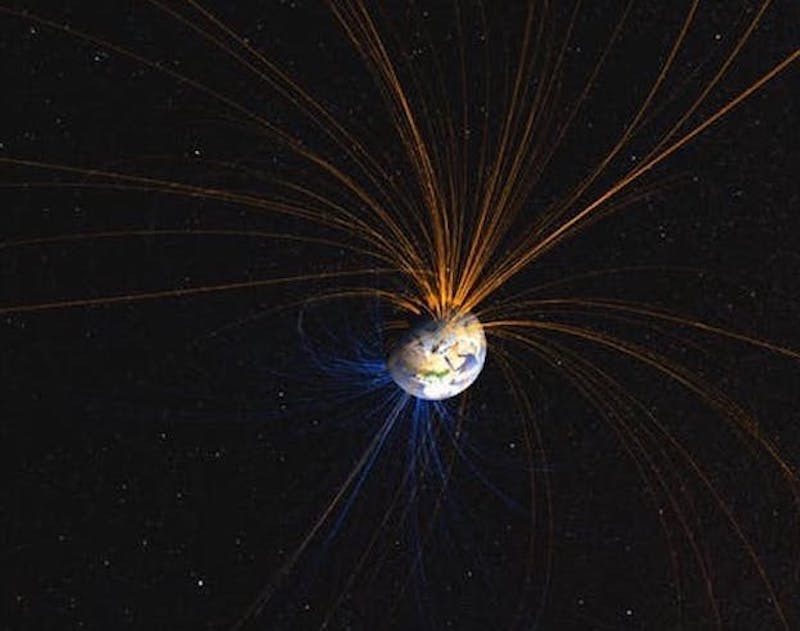
Earth’s magnetic field extends from the Earth’s interior out into space, surrounding our planet like an invisible force field , protecting life from harmful solar radiation by deflecting away charged particles from the sun. But this field is continuously changing. Indeed, our planet’s history includes numerous global magnetic reversals, where north and south magnetic poles swap places.
Deep inside the Earth, liquid iron is flowing and generating the Earth’s magnetic field, which protects our atmosphere and satellites against harmful radiation from the sun. This field changes over time, and also behaves differently in different parts of the world. The field can even change polarity completely, with the magnetic north and south poles switching places. This is called a reversal and last happened 780,000 years ago.
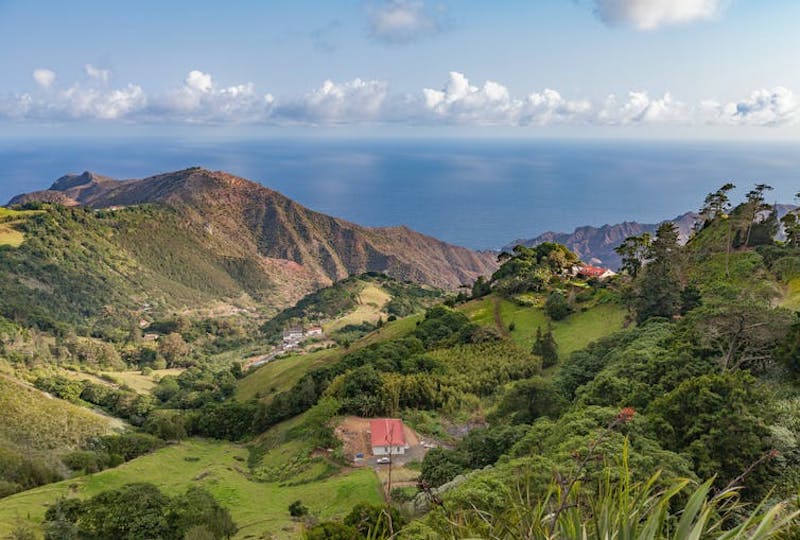
Saint Helena, where Earth’s magnetic field behaves strangely.
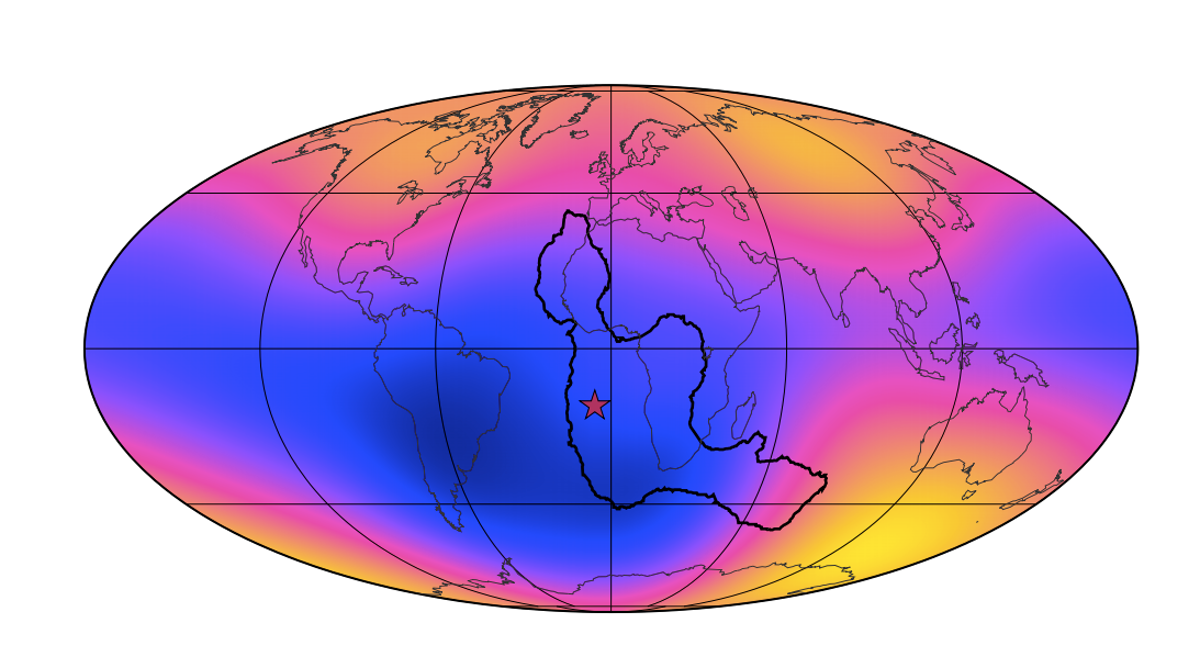
Between South America and southern Africa, there is an enigmatic magnetic region called the South Atlantic Anomaly, where the field is a lot weaker than we would expect. Weak and unstable fields are thought to precede magnetic reversals, so some have argued this feature may be evidence that we are facing one.
Now our new study, published June 12, 2020, in the Proceedings of the National Academy of Sciences, has uncovered how long the field in the South Atlantic has been acting up – and sheds light on whether it is something to worry about.
Weak magnetic fields make us more prone to magnetic storms that have the potential to knock out electronic infrastructure, including power grids. The magnetic field of the South Atlantic Anomaly is already so weak that it can adversely affect satellites and their technology when they fly past it. The strange region is thought to be related to a patch of magnetic field that is pointing a different direction to the rest at the top of the planet’s liquid outer core at a depth of 1,795 miles (2,889 km) within the Earth.
The geomagnetic field at Earth’s surface with the South Atlantic Anomaly outlined in black and St. Helena marked with a star. Colors range from weak fields (blue) to strong fields (yellow).
This “reverse flux patch” itself has grown over the last 250 years. But we don’t know whether it is simply a one-off product of the chaotic motions of the outer core fluid or rather the latest in a series of anomalies within this particular region over long time frames.
If it is a non-recurring feature, then its current location is not significant – it could happen anywhere, perhaps randomly. But if this is the case, the question of whether its increasing size and depth could mark the start of a new reversal remains.
If it is the latest in a string of features reoccurring over millions of years, however, then this would make a reversal less likely. But it would require a specific explanation for what was causing the magnetic field to act strangely in this particular place.
Volcanic rocks
To find out, we travelled to Saint Helena – an island in the middle of the South Atlantic Ocean. This island, where Napoleon was exiled to and eventually died in 1821, is made of volcanic rocks. These originate from two separate volcanoes and were erupted from between eight million and 11.5 million years ago.
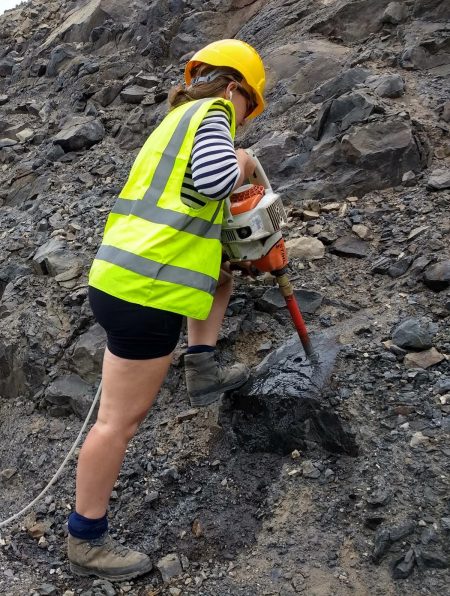
Lead author Yael Engbers is drilling a core on Saint Helena.
When volcanic rocks cool down, small grains of iron-oxide in them get magnetized and therefore save the direction and strength of the Earth’s magnetic field at that time and place. We collected some of those rocks and brought them back to our lab in Liverpool, where we carried out experiments to find out what the magnetic field was like at the time of eruption.
Our results showed us that the field at Saint Helena had very different directions throughout the time of eruption, showing us that the field in this region was much less stable than in other places. It therefore challenges the idea that the abnormality has only been around for only a few centuries. Instead, the whole region has likely been unstable on a timescale of millions of years. This implies the current situation is not as rare as some scientists had assumed, making it less likely that it represents the start of a reversal.
A window into Earth’s interior
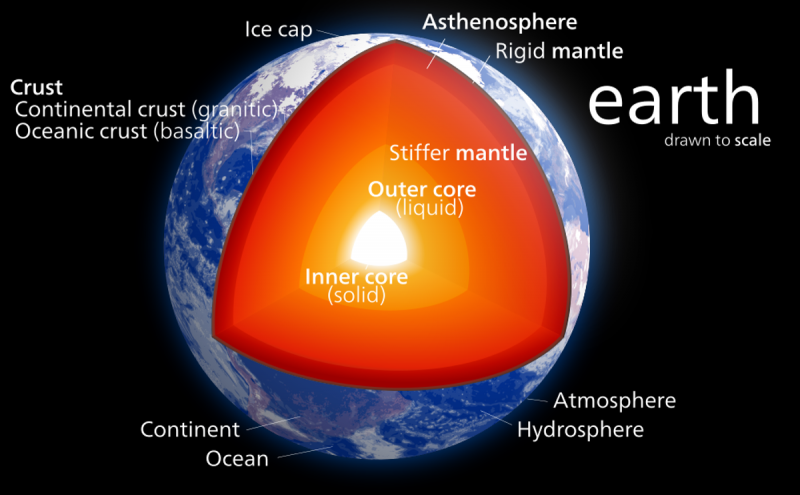
So what could explain the odd magnetic region? The liquid outer core that is generating it moves (by convection) at such high speeds that changes can occur on very short, human timescales. The outer core interacts with a layer called the mantle on top of it, which moves far slower. That means the mantle is unlikely to have changed very much in the last ten million years.
Earth’s inner structure.
Image via Wikipedia.
From seismic waves passing through the Earth, we have some insight into the structure of the mantle. Underneath Africa there is a large feature in the lowermost mantle where the waves move extra slow through the Earth – meaning there’s most likely an unusually warm region of the lowermost mantle. This possibly causes a different interaction with the outer core at that specific location, which could explain the strange behavior of the magnetic field in the South Atlantic.
Another aspect of the inside of the Earth is the inner core, which is a solid ball the size of Pluto beneath the outer core. This solid feature is slowly growing, but not at the same rate everywhere. There is a possibility that it is growing faster on one side, causing a flow inside the outer core that is reaching the outer boundary with the rocky mantle just under the Atlantic hemisphere. This may be causing irregular behavior of the magnetic field on the long timescales we found on Saint Helena.
Although there are still many questions about the exact cause of the irregular behavior in the South Atlantic, this study shows us that it has been around for millions of years and is most likely a result of geophysical interactions in the Earth’s mysterious interior.
Fabien Cousteau, the grandson of legendary ocean explorer Jacques Cousteau, wants to build the equivalent of the International Space Station (ISS) — but on the ocean floor deep below the surface, asCNN reports.
All images: Courtesy Proteus/Yves Béhar/Fuseproject
With the help of industrial designer Yves Béhar, Cosuteau unveiled his bold ambition: a 4,000 square foot lab called Proteus that could offer a team of up to 12 researchers from all over the world easy access to the ocean floor. The plan is to build it in just three years.
The most striking design element of their vision is a number of bubble-like protruding pods, extending from two circular structures stacked on top of each other. Each pod is envisioned to be assigned a different purpose, ranging from medical bays to laboratories and personal quarters.
“We wanted it to be new and different and inspiring and futuristic,” Béhar told CNN. “So [we looked] at everything from science fiction to modular housing to Japanese pod [hotels].”
The team claims Proteus will feature the world’s first underwater greenhouse, intended for growing food for whoever is stationed there.
Power will come from wind, thermal, and solar energy.
“Ocean exploration is 1,000 times more important than space exploration for — selfishly — our survival, for our trajectory into the future,” Cousteau told CNN. “It’s our life support system. It is the very reason why we exist in the first place.”
Space exploration gets vastly more funding than its oceanic counterpart, according to CNN, despite the fact that humans have only explored about five percent of the Earth’s oceans — and mapped only 20 percent.
The Proteus would only join one other permanent underwater habitat, the Aquarius off the coast of Florida, which has been used by NASA to simulate the lunar surface.
“This study significantly changes the view of Venus from a mostly inactive planet to one whose interior is still churning and can feed many active volcanoes,” one scientist said.
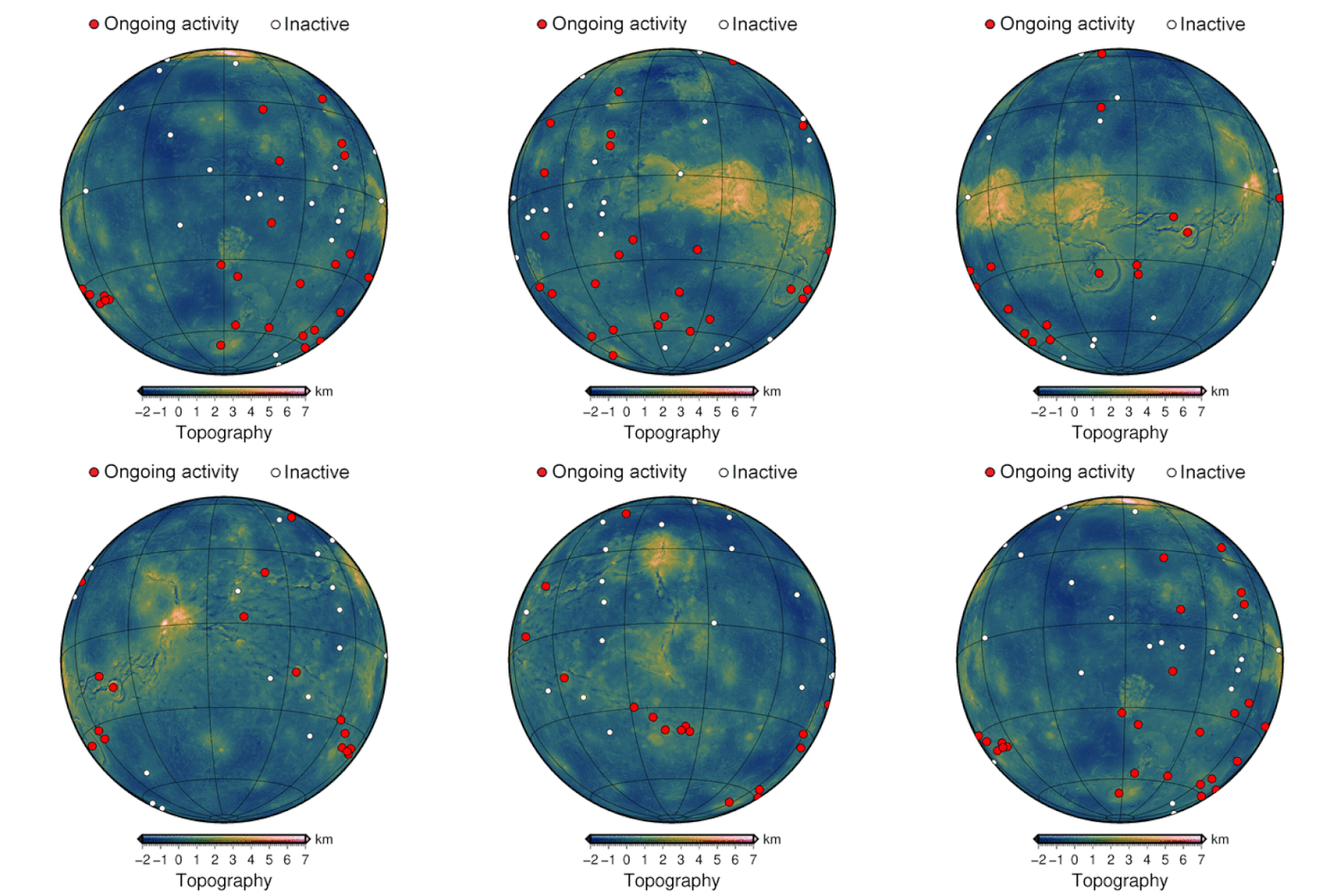
On Venus, ring-like structures known as coronae dot the surface of the planet. They’re thought to provide evidence of a warm interior and for ongoing geologic activity. In the global map of Venus above, the 37 coronae determined to be active in the new study appear in red, and inactive coronae appear in white.
Researchers at the University of Maryland and the Institute of Geophysics at ETH Zurich, Switzerland, announced today (July 20, 2020) that their new new 3D model of cloud-covered Venus identifies 37 recently active volcanic structures. They said their study “provides some of the best evidence yet” that Venus is today a geologically active world. The peer-reviewed journal Nature Geoscience published these scientists’ work today. Laurent Montési, a professor of geology at UMD and co-author of the research paper, said:
This is the first time we are able to point to specific structures and say ‘Look, this is not an ancient volcano but one that is active today, dormant perhaps, but not dead.’ This study significantly changes the view of Venus from a mostly inactive planet to one whose interior is still churning and can feed many active volcanoes.
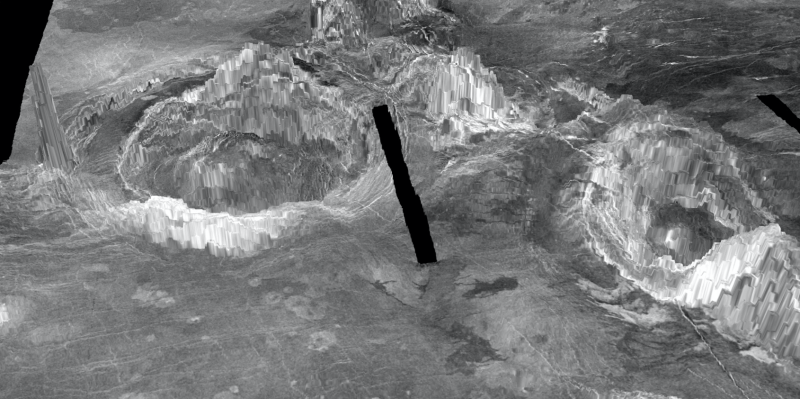
A 3D rendition of 2 coronae observed on Venus’ surface. The ringlike structures are formed when hot material from deep inside Venus rises through the planet’s mantle and erupts through its crust. The black line represents a gap in the data.
A statement from University of Maryland explained:
Scientists have known for some time that Venus has a younger surface than planets like Mars and Mercury, which have cold interiors. Evidence of a warm interior and geologic activity dots the surface of the planet in the form of ring-like structures known as coronae, which form when plumes of hot material deep inside the planet rise through the mantle layer and crust. This is similar to the way mantle plumes formed the volcanic Hawaiian Islands.
But it was thought that the coronae on Venus were probably signs of ancient activity, and that Venus had cooled enough to slow geological activity in the planet’s interior and harden the crust so much that any warm material from deep inside would not be able to puncture through.
In addition, the exact processes by which mantle plumes formed coronae on Venus and the reasons for variation among coronae have been matters for debate.
In the new study, the researchers used numerical models of thermomechanical activity beneath the surface of Venus to create high-resolution, 3D simulations of coronae formation. Their simulations provide a more detailed view of the process than ever before.
The results helped Montési and his colleagues identify features that are present only in recently active coronae. The team was then able to match those features to those observed on the surface of Venus, revealing that some of the variation in coronae across the planet represents different stages of geological development.
The study provides the first evidence that coronae on Venus are still evolving, indicating that the interior of the planet is still churning.
Anna Gülcher is a Ph.D. student in the Geophysical Fluid Dynamics group at ETH Zürich and lead author of the new study.
Montési added:
The improved degree of realism in these models over previous studies makes it possible to identify several stages in corona evolution and define diagnostic geological features present only at currently active coronae. We are able to tell that at least 37 coronae have been very recently active.
The active coronae on Venus are clustered in a handful of locations, which suggests areas where the planet is most active, providing clues to the workings of the planet’s interior. These results may help identify target areas where geologic instruments should be placed on future missions to Venus, such as Europe’s EnVision mission, scheduled to launch in 2032.
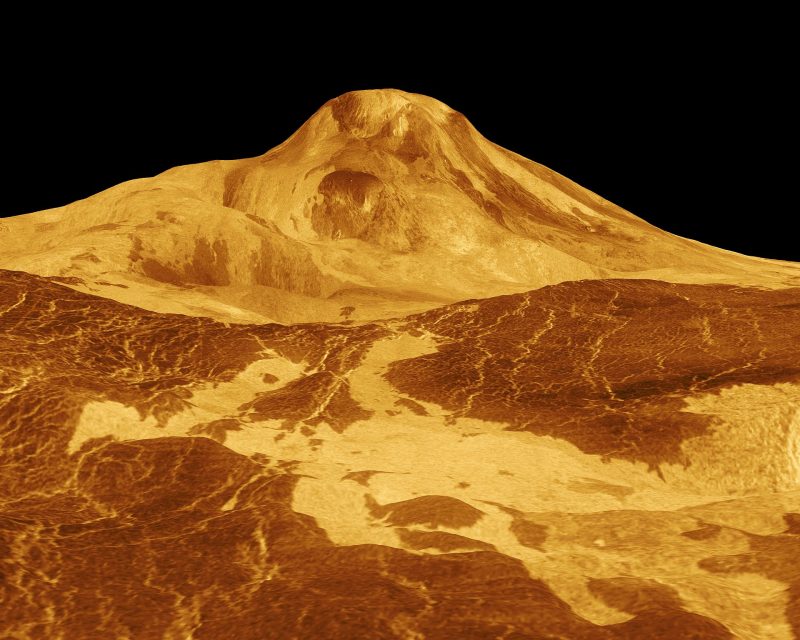
We’ve known about volcanic mountains on Venus for some time. Here is Maat Mons, a massive Venusian shield volcano. It’s the second-highest mountain – and the highest volcano – on Venus, rising some 5 miles (8 km) high. This perspective view is based on radar images from the Magellan spacecraft, which orbited Venus from 1990 to 1994. Maat Mons is not one of the locations evaluated in the new study, by the way. This structure on Venus be inactive or active, but the new study doesn’t address that question. In addition, there could be additional locations of current activity on Venus not pinpointed by the new study.
Back in January of this year, I wrote an article on how experts were hinting at the possibility that some volcanoes on Venus may have erupted quite recently and some may still even be active to this day (the article can be read here). Now, experts have released new information stating that they have found at least 37 active volcanoes on our sister planet.
According to a new study that was published in the journal Nature Geoscience, researchers from the University of Maryland and the Institute of Geophysics at ETH Zurich, Switzerland, have identified 37 separate characteristics on the planet that were most likely created by very recent and even current volcanic activity.
Laurent Montési, who is a professor of geology at the University of Maryland as well as a co-author of the study, explained this significant discovery, “This is the first time we are able to point to specific structures and say, ‘Look, this is not an ancient volcano but one that is active today — dormant, perhaps, but not dead,’” adding, “This study significantly changes the view of Venus from a mostly inactive planet to one whose interior is still churning and can feed many active volcanoes.”
For a long time, scientists have believed that Venus was still an active planet but they couldn’t prove it. But in this new study, several researchers, led by Anna Gülcher who is a geophysicist at ETH Zürich in Switzerland, conducted computer simulations in order to identify with precise details the formation and evolution of the planet’s coronae which are ring-shaped volcanic structures. They were then able to search for young coronae on Venus by analyzing data that was gathered by NASA’s Magellan probe which orbited the planet from 1990 to 1994.
“The improved degree of realism in these models over previous studies makes it possible to identify several stages in corona evolution and define diagnostic geological features present only at currently active coronae,” Montési explained, adding, “We are able to tell that at least 37 coronae have been very recently active.” Interestingly enough, these coronae were found in a few different clusters spread out across the planet which indicates where the planet has the most activity. (A video map of the clusters can be seen here.)
The coronae discovered on Venus were created by plumes of molten rock that rose up from the mantle and through the planet’s crust. In fact, this process is very similar to how the islands of Hawaii were created here on our planet.
This is such an incredible discovery as Earth was the only planet in our Solar System that contained active volcanoes. Mars did have volcanoes at one point but they all died out many years ago.
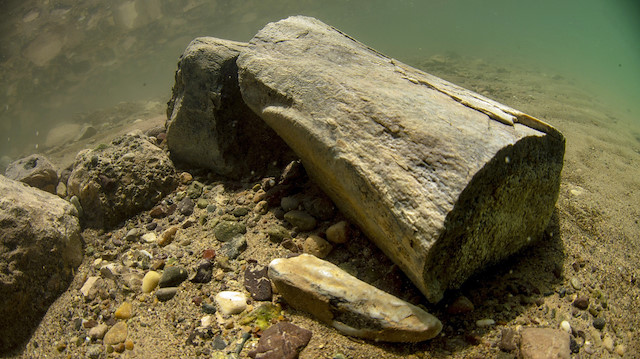
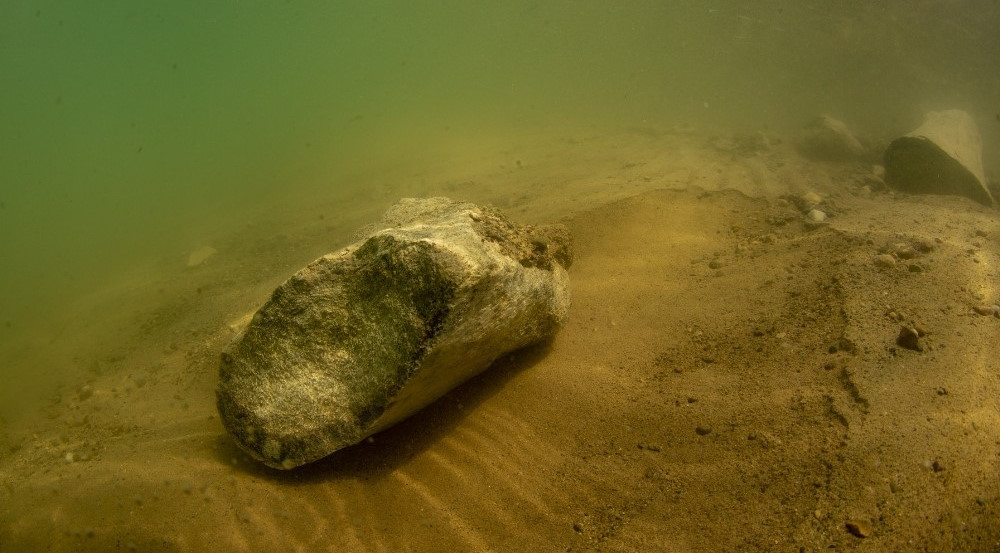
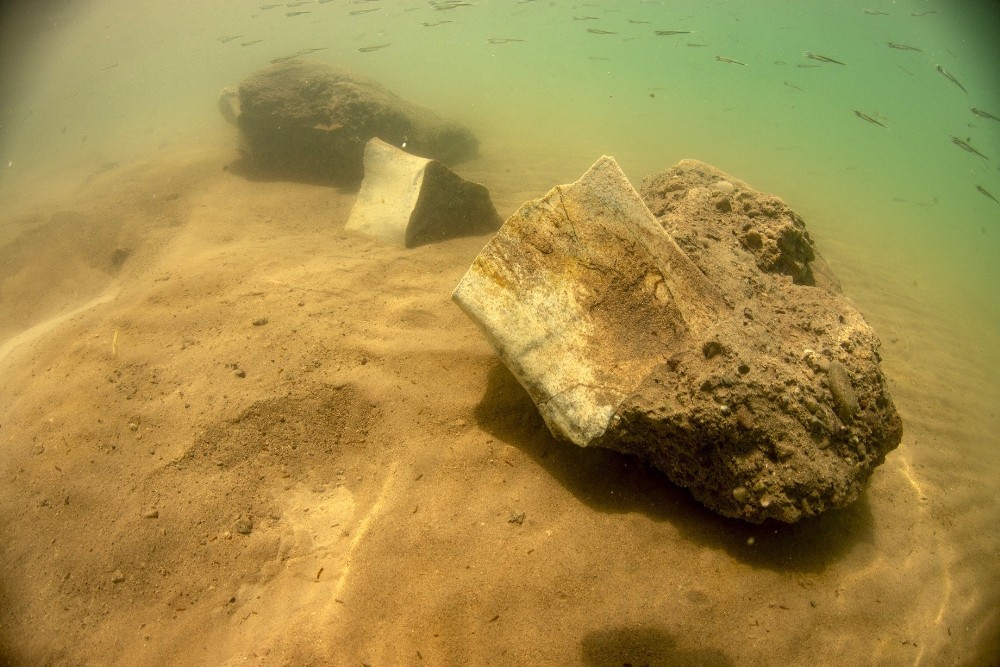
For the first time, researchers have found the underwater remains of a land animal that is believed to be an ancient ancestor of elephants. The remains were discovered by the Obruk Cave Research Group at the bottom of the Yamula Dam which is located in the central province of Kayseri, Turkey.
In a statement released by the Kayseri Metropolitan Municipality on their Facebook page, they stated that they believe the 7.5 million-year-old fossil belongs to an ancient ancestor of today’s elephants. “For the first time in the world, a land animal’s fossil was found underwater at the Yamula Dam,” the statement read in part, adding that it’s quite rare to find such a large and mostly undamaged fossil deep beneath the water.
Ali Ethem Keskin, who is a Turkish cave diver, stated, “They (experts) can identify which part belongs to which animal species from the photographs I take… However, these samples may be fragmented and deformed as they remain underwater,” adding, “I need to underline that fossils of sea creatures were previously discovered. However, for the first time in the world, fossils of a land creature thought to belong to the ancestors of elephants have been pictured underwater.”
While diving underwater, Keskin took several pictures of the remains which include a foot bone from the ancient land animal. Several of the pictures can be seen here as well as here.
A land animal's fossil was found underwater at the Yamula Dam
Photograph: Kayseri Büyükşehir Belediyesi
İHA
İHA
Yamula Dam
Additional excavations were conducted close to the Yamula Dam two years ago and experts have found numerous fossils belonging to elephants, such as jawbones and skulls. As a matter of fact, in October of 2019, there were reports of anthropologists unearthing 8 million-year-old fossils located not too far from the Yamula Dam (in the Barsama area which is 43.5 miles away). The remains consisted of several animals including a giraffe, rhinoceros, tricorn horse, and a bovidae species.
Other fossils had been previously unearthed closer to the Yamula Dam and they were all from the same time period. The only difference was that the ones found in the Barsama area belonged to smaller animals than the remains that were found close to the Yamula Dam.
WETENSCHAPWetenschappers hebben maar liefst 37 vulkanische structuren op de planeet Venus geïdentificeerd, die recent nog actief zijn geweest. Dat zou betekenen dat Venus niet zo diep slaapt als aanvankelijk werd gedacht. Dat schrijven onderzoekers in het vaktijdschrift Nature Geoscience.
Venus is vanaf de zon gezien de tweede planeet van ons zonnestelsel en dus, samen met Mars, een naburige planeet van de Aarde. Nog een eigenschap van Venus: er zijn heel wat overeenkomsten met de Aarde. Venus heeft ongeveer dezelfde grootte, massa en samenstelling als onze planeet. Maar van Venus werd wel gedacht dat ze (geologisch) inactief was. Recent onderzoek spreekt die veronderstelling tegen. “Er werden tientallen vulkanische hotspots ontdekt”, schrijft hoofdauteur Anna Gülcher op Twitter.
Zo bestudeerden onderzoekers de zogenaamde coronae, ringvormige structuren die ontstaan doordat er warm materiaal opwelt vanonder het oppervlak. Die ringvormige structuren zouden voldoende bewijs hebben geleverd dat de vulkanen op Venus nog actief zijn.
In totaal werden er wel 133 coronae onderzocht, waarvan er 37 de laatste 2 tot 3 miljoen jaar actief bleken te zijn. “Venus is helemaal niet zo dood als we dachten”, besluit Anna Gülcher.
via REUTERSOnderzoekers bestudeerden de coronae, ringvormige structuren die ontstaan doordat er warm materiaal opwelt vanonder het oppervlak.
NASA Asteroids Warning! Five More Large Asteroids Headed This Way, 19 Interstellar Centaurs Found
As NASA reports that five more asteroids are headed our way this week, four of which are over 50 meters in diameter, research from Brazil has identified some 19 space rocks of interstellar origin in our solar system.
Scientists at Sao Paulo State University’s Institute of Geosciences and Exact Sciences have identified asteroids formed in another solar system in the galaxy, and classified them as Centaurs.-
On June 5th, 2020, asteroid 2020 ND passed within the Moon’s distance but no one noticed that it is there. 2 days later on June 7th, astronomers noticed its presence and close flyby. And marked it as a Potentially Hazardous Asteroid.
2020 ND has a diameter of 170 meters, this space rock is larger than the London Eye. On July 24th, 6 days from now, with a speed of 13.5 kilometers per second 2020 ND will again make a close flyby. If 2020 ND hits our planet, it will create a crater 1.2 km wide and it can wipe out an entire city.
Soldiers Encountered 5 Mysterious Things During Wartime
5 most mysterious things that soldiers encountered during the wartime. Today, we take a look at 3 mysterious things that soldiers encountered during the wartime.
During times of war, tensions are heightened to their boiling point as soldiers are constantly on edge waiting for the enemy to strike when they least expect it, but what happens when that attack is far from human? Today, here at unexplained mysteries, we will be going over 5 unique cryptid monster encounters that soldiers faced during times of war.
I found a statue on Mars, and its very similar to hundreds of statues found here on Earth. The statue is similar to that of Easter Island, a small island surrounded by a mysterious people the arrived, constructed statues and disappeared. Well, I thing we know where they came from now...this photo of an Easter Island statue on Mars tells us everything we need to know. The people came from Mars, at least...this tribe of people, they landed on an island, and later decided to travel beyond earth so they left to find a new planet. There is so much evidence of an intelligent civilization living on Mars in this one photo. I literally could find over 100 different objects in this photo. Even the untrained eye could find at least a dozen. Well...I guess we solved the Easter Island mystery. I leave you with the words of JFK. Scott C. Waring - Taiwan
The problems of the world cannot possibly be solved by skeptics or cynics whose horizons are limited by the obvious realities. We need men who can dream of things that never were.- John F. Kennedy
Impressive Alien Spacecraft Flying Around The Sun Caught On Camera
There is a lot of UFO activity around the sun. A video of the Sun before it set on Friday July 17, 2020 shows several alien spacecraft flying around the Sun.
Although images of UFOs near the sun are quite intriguing, still there are people suggesting they are nothing but pixelation, light reflections or camera glitches.
However if you look at these large objects, especially the two craft depicted in the images above, you clearly can see that they are constructed unidentified flying objects created by and possible piloted by a form of alien intelligence.
Meer van UFO'S of UAP'S, ASTRONOMIE, RUIMTEVAART, ARCHEOLOGIE, OUDHEIDKUNDE, SF-SNUFJES EN ANDERE ESOTERISCHE WETENSCHAPPEN - DE ALLERLAATSTE NIEUWTJES


 Iphone dropped into Nevada's Devil's Cauldron catches screaming voices from the deep