Ontdek de Fascinerende Wereld van UFO's en UAP's: Jouw Bron voor Onthullende Informatie!
Ben jij ook gefascineerd door het onbekende? Wil je meer weten over UFO's en UAP's, niet alleen in België, maar over de hele wereld? Dan ben je op de juiste plek!
België: Het Kloppend Hart van UFO-onderzoek
In België is BUFON (Belgisch UFO-Netwerk) dé autoriteit op het gebied van UFO-onderzoek. Voor betrouwbare en objectieve informatie over deze intrigerende fenomenen, bezoek je zeker onze Facebook-pagina en deze blog. Maar dat is nog niet alles! Ontdek ook het Belgisch UFO-meldpunt en Caelestia, twee organisaties die diepgaand onderzoek verrichten, al zijn ze soms kritisch of sceptisch.
Nederland: Een Schat aan Informatie
Voor onze Nederlandse buren is er de schitterende website www.ufowijzer.nl, beheerd door Paul Harmans. Deze site biedt een schat aan informatie en artikelen die je niet wilt missen!
Internationaal: MUFON - De Wereldwijde Autoriteit
Neem ook een kijkje bij MUFON (Mutual UFO Network Inc.), een gerenommeerde Amerikaanse UFO-vereniging met afdelingen in de VS en wereldwijd. MUFON is toegewijd aan de wetenschappelijke en analytische studie van het UFO-fenomeen, en hun maandelijkse tijdschrift, The MUFON UFO-Journal, is een must-read voor elke UFO-enthousiasteling. Bezoek hun website op www.mufon.com voor meer informatie.
Samenwerking en Toekomstvisie
Sinds 1 februari 2020 is Pieter niet alleen ex-president van BUFON, maar ook de voormalige nationale directeur van MUFON in Vlaanderen en Nederland. Dit creëert een sterke samenwerking met de Franse MUFON Reseau MUFON/EUROP, wat ons in staat stelt om nog meer waardevolle inzichten te delen.
Let op: Nepprofielen en Nieuwe Groeperingen
Pas op voor een nieuwe groepering die zich ook BUFON noemt, maar geen enkele connectie heeft met onze gevestigde organisatie. Hoewel zij de naam geregistreerd hebben, kunnen ze het rijke verleden en de expertise van onze groep niet evenaren. We wensen hen veel succes, maar we blijven de autoriteit in UFO-onderzoek!
Blijf Op De Hoogte!
Wil jij de laatste nieuwtjes over UFO's, ruimtevaart, archeologie, en meer? Volg ons dan en duik samen met ons in de fascinerende wereld van het onbekende! Sluit je aan bij de gemeenschap van nieuwsgierige geesten die net als jij verlangen naar antwoorden en avonturen in de sterren!
Heb je vragen of wil je meer weten? Aarzel dan niet om contact met ons op te nemen! Samen ontrafelen we het mysterie van de lucht en daarbuiten.
Zaterdag 22 augustus 2020
They Said it Will Hit on Sunday, September 20, 2020
They Said it Will Hit on Sunday, September 20, 2020
What would we do if we discovered a large asteroid on course to impact Earth? that was the high-consequence scenario discussed by attendees at an Oct. 25, 2016NASA-FEMA tabletop exercise in El Segundo, California.
The drill simulated a possible impact four years from now -- a fictitious asteroid imagined to have been discovered this fall with a 2 percent probability of impact with Earth on Sept. 20, 2020.
The simulated asteroid was initially estimated to be between 300 and 800 feet (100 and 250 meters) in size, with a possibility of making impact anywhere along a long swath of Earth, including a narrow band of area that crossed the entire United States.
In the fictitious scenario, observers continued to track the asteroid for three months using ground-based telescope observations, and the probability of impact climbed to 65 percent.
Then the next observations had to wait until four months later, due to the asteroid's position relative to the sun.
Once observations could resume in May of 2017, the impact probability jumped to 100 percent. By November of 2017, it was simulated that the predicted impact would occur somewhere in a narrow band across Southern California or just off the coast in the Pacific Ocean.
Coincidence or not, but asteroids are getting very close to Earth lately. On August 16, 2020, a car-sized asteroid flew within 2,000 miles over the Pacific Ocean, far east of Australia,, the closest ever recorded.... but NASA missed it!
And what about asteroid called “2018 VP1“, which is about 6 feet diameter. this asteroid will pass within about 300 miles of our planet on November 2, 2020 which is one day before the presidential election.
Of course there are always a lot of speculations and doomsday scenarios on these kind of events, and although an asteroid named 2017 SL16 will pass Earth on September 20, probably nothing will happen that day, but we may wonder whether this so-called “drill” could go live like so many other exercises have in the past?
There's something very strange happening high above South America and the nearby Atlantic Ocean, and NASA is on the case.
Meet the South Atlantic Anomaly, a strange dent in Earth's magnetic field that is growing and splitting. It's been there for decades, but over time the anomaly has slowly changed. Although you'd never notice anything was wrong from the ground, for satellites, changes to the magnetic field that envelopes Earth can be a big deal — hence NASA's interest in the anomaly and its activities.
The connection comes because the magnetic field blocks charged particles spewed out by the sun from reaching Earth. But at the South Atlantic Anomaly, the field is dented, lowering the protective barrier above that part of Earth. The lower barrier means that more radiation bombards satellites as they fly over this region, triggering occasional shutdowns to avoid potential damage to the hardware, according to a NASA statement.
An artist's depiction of Earth's magnetic field, with the sun in the background. (Image credit: NASA's Goddard Space Flight Center)
The International Space Station is one of the many spacecraft that fly through the anomaly, but it carries extra shielding to protect the astronauts who live and work in orbit from radiation. Other spacecraft that fly through the anomaly send NASA valuable observations about how the feature is changing, like the Ionospheric Connection Explorer (ICON), which the agency launched last year in part to monitor the weak spot in the field after the retirement of its Solar, Anomalous, and Magnetospheric Particle Explorer (SAMPEX) mission in 2012. Among other changes, those observations have shown that the "dent" is moving westward and splitting in two.
These observations are valuable because of the complexity of studying the magnetic field, which traces its roots to liquid metal moving within Earth's core, then is shaped by a range of phenomena as it ripples out from the center of the planet, according to NASA.
Those interactions mean that more data about changes in the magnetic field can lead to a host of valuable results — not just a better understanding of what the anomaly is doing now in order to warn approaching satellites, but also more nuanced models of what's happening deep inside the Earth, and of course, more accurate predictions of how the anomaly will change into the future.
"Even though the SAA [South Atlantic Anomaly] is slow-moving, it is going through some change in morphology, so it's also important that we keep observing it by having continued missions," Terry Sabaka, a geophysicist at NASA's Goddard Space Flight Center in Maryland, said in the statement. "Because that's what helps us make models and predictions."
Email Meghan Bartels at mbartels@space.com or follow her on Twitter @meghanbartels. Follow uson Twitter @Spacedotcom and on Facebook.
The Japan Aerospace Exploration Agency said this week that it has now been officially informed that its Hayabusa2 space capsule – carrying precious dust captured from the surface of near-Earth asteroid Ryugu – is approved for landing in Australia.
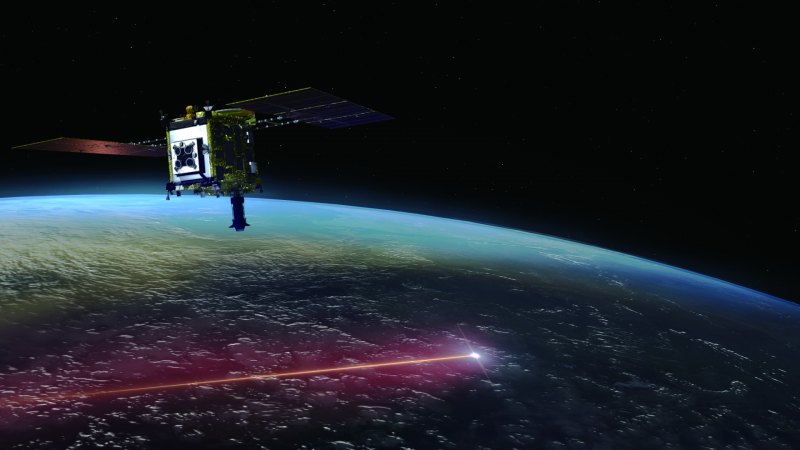
Artist’s concept of JAXA’s Hayabusa2 sweeping past Earth, as its sample-return capsule – carrying precious grains from the surface of asteroid Ryugu – plummets to Earth’s surface.
On February 22, 2019, the Hayabusa2 spacecraft of the Japan Aerospace Exploration Agency (JAXA) touched down briefly on near-Earth asteroid 162173 Ryuguand fired a bullet into the asteroid’s surface. The spacecraft collected a sample of dust puffed up during the maneuver, and now the spacecraft – carrying its precious cargo of an asteroid sample within a capsule on board – is headed back to Earth. The spacecraft will sweep past Earth, and the capsule will drop to Earth’s surface via parachute on December 6, 2020. JAXA said in an announcement on August 19, 2020, that it has now been officially informed that the capsule is approved for landing in Australia.
JAXA said:
The Hayabusa2 re-entry capsule will return to Earth in South Australia on December 6, 2020 (Japan Time and Australian Time). The landing site will be the Woomera Prohibited Area. The issuance of the AROLSO [Authorization of Return of Overseas-Launched Space Object] gave a major step forward for the capsule recovery.
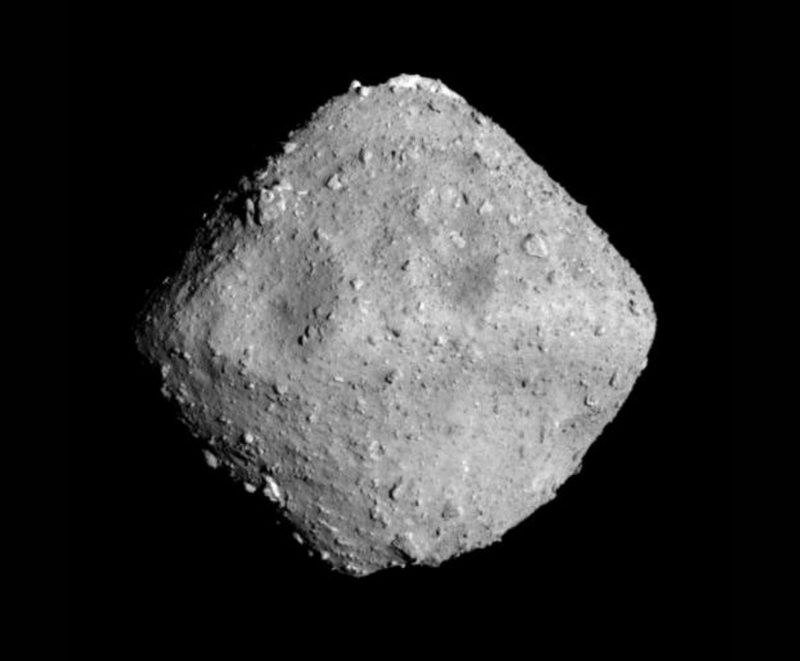
Ryugu as seen by Hayabusa2 on June 26, 2018.
Image via JAXA/ University of Tokyo/ Kochi University/ Rikkyo University/ Nagoya University/ Chiba Institute of Technology/ Meiji University/ University of Aizu/ AIST.
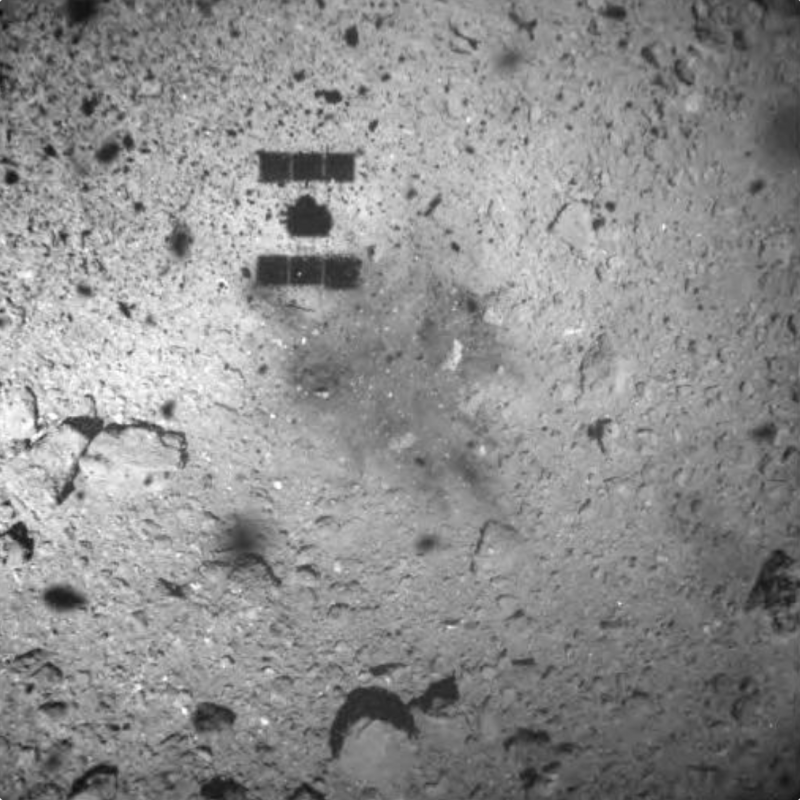
Japan’s Hayabusa2 spacecraft captured this image in February 2019, during its ascent after touchdown on asteroid Ryugu. You can see the shadow of Hayabusa2 and a region of the surface of the asteroid apparently discolored by the touchdown.
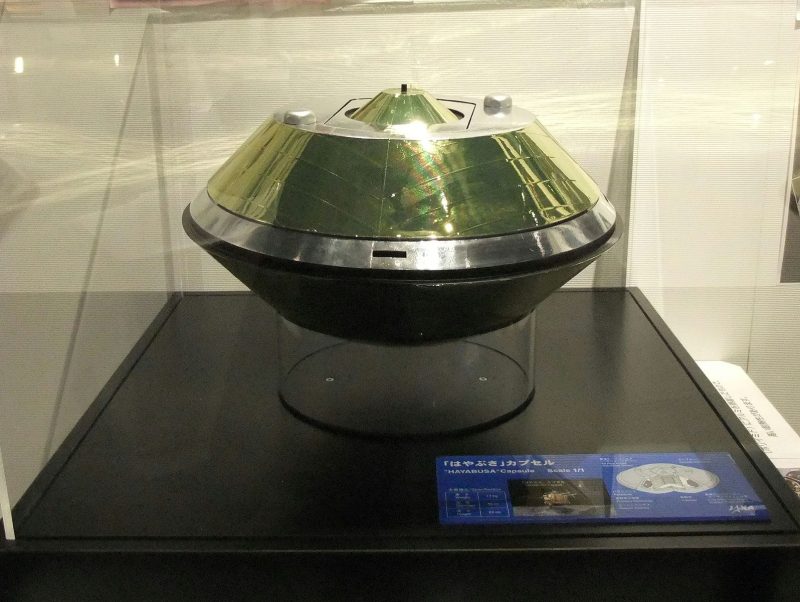
Replica of the Hayabusa2 sample-return capsule, which measures about 16 inches (40 cm) in diameter. The capsule is scheduled to land, via parachute, in Australia’s Woomera Prohibited Area on December 6, 2020.
Hayabusa2 was launched from Earth on December 3, 2014. The spacecraft rendezvoused with asteroid Ryugu on June 27, 2018. The mission follows an earlier JAXA Hayabusa mission (the name means Peregrine falcon), which, in 2010, returned samples from asteroid 25143 Itokawa, the first-ever asteroid to be the target of a sample return mission and the only other mission so far to have returned asteroid samples to Earth.
Hayabusa2 surveyed Ryugu for a year and a half. It left the asteroid with the precious sample safe inside its capsule in November, 2019.
After Hayabusa2 flies past Earth to deliver its sample capsule in late 2020, it is expected to retain 30 kg (66 lb) of xenon propellant, which can be used to extend its service and to fly by new targets to explore. As of August 2020, there are two scenarios under consideration for a mission extension. First, a Venus flyby in 2024 would set up the spacecraft for a November 2029 encounter with a small, quickly spinning near-Earth asteroid called 2001 AV43. During the flyby, Hayabusa2 could also conduct infrared observations of Venus. Alternatively, the spacecraft could be sent toward a rendezvous with another near-Earth asteroid and another fast rotator – 1998 KY26 – in July 2031.
A live webcast showed Hayabusa2 scientists nervously monitoring Hayabusa2’s February 22, 2019 touchdown on distant asteroid Ryugu.
Bottom line: The Japan Aerospace Exploration Agency (JAXA) said this week that it has now been officially informed that its Hayabusa2 space capsule – carrying precious dust from the surface of near-Earth asteroid Ryugu – is approved for landing in Australia. If returned safely as planned on December 6, 2020, this asteroid dust will be only the second asteroid sample ever returned to Earth.
Nasa is monitoring a "small but evolving dent" in the Earth's magnetic field that could cause major problems for satellites and spacecraft.
The Earth's magnetic field wraps around our planet, bouncing away charged particles that come to us from the Sun. But there is an unexplained gap in it, where the magnetic field is weak, hovering over South America and the southern Atlantic Ocean.
What's more, the region is spreading and continuing to weaken, leading to fears that the problem could get worse.
Researchers refer to the gap as the "South Atlantic Anomaly, or SAA", and fear that it could cause significant problems for equipment that is used on Earth. Within the anomaly, particles are able to get closer to the surface than usual, meaning that satellites and computers that pass through it could be hit by problems.
That has led Nasa to devote resources to tracking the dent, in an attempt to better understand where it is and what could be causing it.
At the moment, there is no obvious consequence of the SAA for anyone living on Earth. But detailed observations have suggested that it is getting more extreme and that it is expanding to the west, as well as splitting so that there are two points at which the anomaly is least strong.
The Earth's magnetic field – and the changes it undergoes – are happening beneath our feet. Underneath the Earth, in its outer core, metals are churning that create electric currents that then go on to produce the important magnetic field.
Over time, those conditions within the core change, and so does the magnetic field. It is those changes that lead to phenomena such as the SAA.
But the greatest concern about the magnetic fields for the time being is it effects on equipment away from Earth's surface. Ordinarily, the magnetic field keeps the satellites that are around the Earth safe – including inhabited ones like the International Space Station – but the changes mean they lack the protection as they fly through the area covered by the SAA.
At the moment, operators are forced to shut down specific components as they pass through the area. That is one of the reasons that tracking the SAA is important to Nasa, since it needs to know exactly where it is so that those changes can be made most accurately.
With better data in the future, Nasa hopes to be able to more accurately predict how the SAA could be changing and therefore what danger it might pose to satellites and the instruments on them. Future missions will better inform those models, Nasa says, and can also be used to better understand the processes in the Earth that are leading to the changes.
All related videos, selected and posted by peter2011
Arecibo Observatory’s main collecting dish, which is among the world’s largest single-dish radio telescopes, was badly damaged when a cable snapped on Monday, Aug. 10. (Image credit: University of Central Florida)
TheArecibo Observatory— a gargantuan telescope in Puerto Rico famous for scouring the cosmos for asteroidsand alien life — went quiet this week, following a devastating accident that left the telescope's reflector dish in pieces.
On Monday (Aug. 10) at approximately 2:45 a.m. local time, a metal cable at the facility snapped, slashing through the radar dish and tearing open a 100-foot-long (30 meters) hole, according to a statement from the University of Central Florida, which operates the National Science Foundation-owned facility. The snapped cable also smashed through several other cables and platforms that support the dish, causing debris to rain down on the ground below and making it harder for technicians to access the site.
"We have a team of experts assessing the situation," Francisco Cordova, the director of the observatory, said in the statement. "Our focus is assuring the safety of our staff, protecting the facilities and equipment, and restoring the facility to full operations as soon as possible, so it can continue to assist scientists around the world."
Arecibo began operating in 1963 from the bottom of a natural sinkhole in Puerto Rico. At the time of its completion, Arecibo was the world's largest single-dish telescope, stretching 1,000 feet (305 m) in diameter. While you may not know the telescope by name, you might know it by sight, thanks to the 1997 movie "Contact." That film's protagonist is an astronomer working at Arecibo, who hopes to make first contact with extraterrestrial intelligence. (The observatory's gargantuan reflector dish alsostole the show at the end of the 1995 James Bond flick, "GoldenEye.")
Though we're still waiting for that epic first DM from aliens, Arecibo has played a central role in the search for extraterrestrial intelligence (SETI) since the 1970s. In 1974, astronomers used the radio telescope to transmit a binary code toward a dense cluster of stars 25,000light-years away, hoping the message might get picked up by another technologically-advanced civilization. (It wasn't).
SETI experiments have remained a key part of the observatory's agenda — and so has planetary defense. Arecibo's Planetary Radar Project, part of NASA's Planetary Defense program, is responsible for detecting and studying near-Earth objects, such as asteroids, that could pose a threat to our planet.
That project, along with all other Arecibo projects, has been suspended due to the damage. But Arecibo has bounced back from damage before, including the fallout from earthquakes and Hurricane Maria, and this accident will hopefully be no exception. Still … it would be a lousy time for the aliens to finally return our call.
When we think of aliens, we tend to think of biological creatures. But, what about extraterrestrial robots? There are a number of such cases on record.Gareth Medway says: “The Christiansen family of Wildwood, New Jersey, who had seen a UFO on 22 November 1966, were interviewed by ‘the strangest looking man I’ve ever seen,’ wearing a thin black coat, who introduced himself as ‘Tiny’ from the ‘Missing Heirs Bureau.’ He spoke in a high, ‘‘tinny’ voice, in clipped words and phrases like a computer, ‘as if he were reciting everything from memory.’ His black trousers were too short, and ‘they could see a long thick green wire attached to the inside of his leg, it came up out of his socks and disappeared under his trousers’ John Keel commented that he had not heard of this feature in other MIB cases: ‘Was Tiny wearing electric socks? Or was he a wired android operated by remote control?’ [italics mine]. He departed in a black 1963 Cadillac.”
In the summer of 1997, one of the most controversial UFO-themed books ever written was published. Its title: The Day After Roswell. Ghosted by William Birnes, the editor of the now-defunct UFO Magazine and of History Channel’s also defunct UFO Hunters, the book tells the story of one Philip Corso. Specifically, Lieutenant Colonel. Philip J. Corso. U.S. Army. Corso’s story was both amazing and groundbreaking. But, was it true? While some in the field of Ufology embraced the story, many certainly did not, preferring instead to view the book as either government disinformation – intended to confuse the truth of what really happened at Roswell, New Mexico back in the summer of 1947 – or nothing more than an elaborate and ingenious hoax.
Contrary to what the UFO community said or assumed, Corso never explicitly stated that the Roswell corpses were extraterrestrial. In fact, what he really said was quite the opposite. In Corso’s story the so-called “Grey aliens” are actually created, built, or grown to perform specific tasks. As for the creators of the Greys, it was they, Corso maintained, who were the real aliens. Corso also said that, as far as he was aware, no-one has ever seen the real aliens, only ever their black-eyed, large-headed worker-drones. William Birnes said that Corso described the Greys as “…an android or biological robot [italics mine]. “The entities ” had no digestive system whatsoever” and were “connected electronically to the navigation controls of the spacecraft.”
One of the most intriguing, but also baffling, UFO encounters occurred in Scotland on November 9, 1979, at around 1o:39 a.m. The Telegraph newspaper stated: “…Robert Taylor, a Scottish forestry worker employed by the Livingston Development Corporation, parked his truck at the bottom of Dechmont Law and took his red setter for a walk up the hill. By his account, as he emerged into a clearing he came across a strange metal sphere about 20 ft across ‘like a spaceship, a huge flying dome.’ It appeared to be made from a dark metallic material with a rough texture like sandpaper.” The BBC stated: “[Taylor] told how two-spiked spheres then rolled out towards him and, as he passed out, he was aware of being grabbed on either side of his legs. Mr Taylor woke up in a disheveled state 20 minutes later…After the spiked objects rushed out and tried to grab hold of him, all he could remember was a strong smell of burning. When he came to, the clearing was empty, apart from a pattern of deep regular marks on the ground. He went to his van but was so shaken he drove it into a ditch and had to stagger home in ‘a dazed condition.” Were those spiked spheres actually robots, dispatched to perform a specific task? Maybe so. Finally…
It was late one night, at some point in the latter part of 1956, said “John Hanks,” when he came face to face with a strange creature in Falls City, Richardson County, Nebraska. He was confronted by a creature in excess of nine feet in height, one that was humanoid in shape, but which most certainly could never be termed a member of the human race. That much, at least, we can ascertain from Hanks’ description. Ken Gerhard says, with a great deal of justification, that “[Hanks’] description of the creature sounds reminiscent of something out of an H.P. Lovecraft story.” Ken is not wrong. In fact, he is right on target. Hanks’ nightmarish thing had a pair of fifteen-foot-wide wings that, rather oddly, appeared to be made of bright, shining, aluminum! Not only that, the wings appeared to be strapped to the creature; almost grafted onto its body in definitive cyborg-style [italics mine].
This Top Secret UFO Aircraft Has Just Been Revealed At An Aviation Show But There's A Catch via Unexplained Mysteries
This top secret concept aircraft has just been revealed at an aviation show but there’s a catch. Today, we take a look at this top secret concept aircraft that’s just been revealed.
Unidentified flying objects have been a topic of mystery and confusion. Various groups have given their opinions on these mysterious objects, with some believing that they originate from space, while others are of the idea that they are man made, and belong to top secret governments from around the world. Due to recent announcements this has only caused some to get onboard with this idea.
I found a doorway that was standing all alone at the base of hillside on Mars. I found it in Sol 1381 and the detail is fantastic. The archway is about 18 inches tall or 45 cm, however I believe the bottom of the doorway is buried below some dirt from the hillside, so it may be 2X taller. The doorway is of course part of a larger structure that no longer exists. The accents of the timing around the doorway is very beautiful. Any doorway that leads you to a deeper understanding of yourself is a worthwhile one. Scott C. Waring - Taiwan
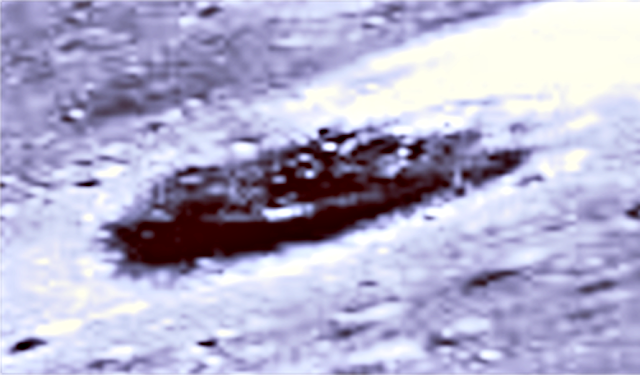
Heys guys whats up? The detail of this abandoned ship is incredibly great. I want to apologize to those frightened. Its not my intention to shock or frighten anyone. I just want you to be in awe of the universe as much as I am.
I was searching NASAs moon map...the LROC when I came across this long black structure laying along side a crater. I added a bit of darkness and sharpening and I found an old ship...a once spacefaring craft, now derelict and forgotten.
As I have said before, there three main types of structures and ships I have found. The grey metal structures, the white reflective structures and the non reflective black structures. This fits in the last category. Its only about 40 meters across, but its not the size that matters, but the detail of the structure.
Scott C. Waring - Taiwan
Othello: It is the very error of the moon; She comes more nearer earth than she is wont And makes men mad. Othello (V.ii.109-111)
Eleven Energy Entities Seen Over Lakevielle, Minnesota, Aug 14, 2020, UFO Sighting News.
Date of sighting: Aug 14, 2020
Location of sighting: Lakeville, Minnesota, USA
Source: MUFON #111041
Now one of the hardest things to catch on video or photos is energy beings. Energy beings don't have a solid ship, but instead they travel in a group. This looks like a disk above, but its not. I see ten energy beings in an oval an one on the upper right of it. Why no video you ask? Probably because it just wont help much, just cant capture energy beings so well since they are 80% transparent.
I Scott C. Waring, have witnessed such a sight in front of my whole family at midnight here in Taiwan. I recorded over 15 min but neither camera nor camcorder could focus it much. So, yes...I know about this kind of sighting first hand. Its real, its hard to describe since they are light. Hardest and most paranormal of all UFO sightings...witnessing energy beings first hand. Oh...and yes, I'm sure they saw him too and stayed a bit to observe the humans. Energy beings are highly curious and playful. But don't often come down out of the clouds as far as I have seen.
Scott C. Waring
Eyewitness states:
Large bright white light circular shape..was quiet lasted about 5 minutes...noticed at night was on our Deck was white then the circle lit up with various colors and then moved away and took off high into the sky at like 45 degrees.
Dark Flying Saucer Caught During Sunset At Prescott, Arizona, Aug 19, 2020, UFO Sighting News.
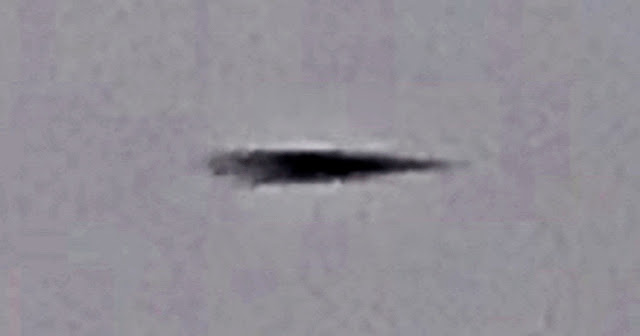
Date of sighting: Aug 19, 2020 Location of sighting: Prescott, Arizona, USA Source: MUFON #111051 Here is a great UFO capture during a sunset in Arizona. The photo was taking with a great camera and enlarging the UFO was no difficulty. Also when I enlarged the craft, I noticed that there was some clouds around one end of it. This is significant since in means it was coming from behind the cloud. That gives us both a distance and a huge size. The size is roughly about that of 30 meters across. Its distance is about 1km up. Arizona...a known UFO hotspot. Scott C. Waring - Taiwan Eyewitness states:
I was watching some nice cloud formations & started taking photos w/my cell phone. I am in central Arizona at about 5,200’ we do have some bugs flying around right now but nothing like the places at lower altitudes. At one point, I saw a cloud that resembles a UFO and thought, how cool. I continued to snap photos and then thought a bug or dirt fell on my viewfinder. I tried to wipe it off and realized it was part of the photo. I just figured it was a bug or small bird that must have flew in front of the camera without me noticing. After snapping a few more photos I went back to lol at them. When I came to the odd photo o studies for a long time. Normally with my camera if I catch a photo of a moving object, it will show the object’s motion when flipping from photo to photo and then it stops for the “still.” This did not happen with this photo. I am terrible with estimating distance but it appears to be pretty far from where I was standing (on my second floor deck).
What Do Alien Civilizations Look Like? The Kardashev Scale
The observable universe is a big place that has been around for more than 13 billion years. Up to two trillion galaxies made up of something like 20,000 billion billion stars surround our home galaxy.
In the milky way alone scientists assume there are some 40 billion earth like planets in the habitable zone of their stars. When we look at these numbers it is hard to imagine that there is nobody else out there.
The Kardashev scale is a method of measuring a civilization's level of technological advancement based on the amount of energy they are able to use. The measure was proposed by Soviet astronomer Nikolai Kardashev in 1964. The scale has three designated categories:
A Type 1 civilization, also called a planetary civilization - can use and store all of the energy available on its planet. Currently, the civilization of Type I is usually defined as one that can harness all the energy that falls on a planet from its parent star (for Earth–Sun system which is about four orders of magnitude higher than the amount presently attained on Earth.
A Type 2 civilization, also called a stellar civilization - can use and control energy at the scale of its planetary system. A civilization capable of harnessing the energy radiated by its own star—for example, the stage of successful construction of a Dyson sphere.
A Type 3 civilization, also called a galactic civilization - can control energy at the scale of its entire host galaxy. a civilization with access to the power comparable to the luminosity of the entire Milky Way galaxy,
Kardashev believed that a Type 4 civilization was impossible, so he did not go past Type 3. However, new types (0, 4, 5, 6) have been proposed. Some scientists suggest there might be type 4 and Type 5 civilizations, whose influence stretches over galaxy clusters or super-clusters, structures comprising thousands of galaxies and trillions of stars.
Ultimately, there might be a Type Omega civilization, able to manipulate the entire universe and possibly others. Type Omega civilizations might be the actual creators of our universe, for reasons beyond our comprehension!
And what about the current status of human civilization?
Well, at the current time, humanity has not yet reached Type 1 civilization status. If humans increase their energy consumption at an average rate of 3 percent each year, they may attain Type 1 status in 100–200 years, Type 2 status in a few thousand years, and Type 3 status in 100,000 to a million years.
Former Defense Official Advocates Serious Investigation On UFO Phenomenon
Former Defense Department intelligence official urges the government to take UFO reports seriously. Christopher Mellon, ex-deputy assistant of defense for intelligence, believes this is a topic the oversight Committee should seriously lookinto.
Mellon, the Pentagon’s third highest-ranking intelligence post, is referring to the supposed plan of Pentagon to release more information on the famed UFO sighting by U.S. Navy pilots who reported a UFO moving in a way world technology wouldn’t do.
Eric Davis, a contractor and Pentagon consultant, said he had briefed a Defense Department agency this spring on research that showed the Navy discovered vehicles, not on this earth.
Mellon, also a television host, suggests that assertion should be taken seriously. The reports and the pending release of Pentagon are making UFO reports switch from decades-old fiction to real phenomenon now.
Mellon pointed out the article published by the Scientific American itself, saying the scientific community should take the subject seriously and investigate it. He said that the Defense Department and the Navy have stood up and publicly acknowledged that the UFO phenomenon is real, happening and that our Navy pilots are encountering these vehicles.
Reacting to the explanation that modern technology might be the cause of the recent findings of UFOs behaving in a way this world doesn’t yet allow, Mellon, called it “too simplistic.” He explains that we had information from multiple systems, multiple personnel in the ground, and the air, tracking these UFOs performing intelligent maneuvers beyond any capability we possess.
While studies on wildlife have linked plastics to several health problems, their effects in humans are still mostly unknown. Now, a new study has found evidence that human organs and tissue absorb both nano- and microplastics, which could help us understand their impact on our health.
Credit Oregon State University
Plastics are one of the most severe environmental problems of our time. They are very durable, even in the most extreme environmental conditions, making them the worst kind of material to be floating around the ocean or washing up on pristine beaches.
But that’s not all; they can also easily break down. Researchers define microplastics as plastic fragments less than 5 mm, or about 0.2 inches, in diameter. Nanoplastics are even smaller, with diameters under 0.001 mm. Exposure to such plastic in wildlife can lead to cancer, infertility, and inflammation/
“You can find plastics contaminating the environment at virtually every location on the globe,” said Charles Rolsky, co-author of the study, in a statement.
“There’s evidence that plastic is making its way into our bodies, but very few studies have looked for it there. And at this point, we don’t know whether this plastic is just a nuisance or whether it represents a human health hazard.”
Rolsky and a group of researchers from Arizona State University wondered if the tiny particles accumulate in human organs. To find out, they analyzed 47 samples from lungs, liver, spleen, and kidneys, organs likely to be exposed to plastics, obtained from a repository of brain and body tissues.
The team created a technique to extract plastics from the samples and analyze them. They also developed a computer program that converts information on plastic particle count into units of mass and surface area. The tool will be shared with other researchers so all results can be reported in a standardized manner.
The method can detect dozens of types of plastic components within human tissues, including polycarbonate (PC), polyethylene terephthalate (PET), and polyethylene (PE). The team found plastic contamination in all the analyzed samples. Bisphenol A (BPA), used in food containers, was found in all samples.
“We never want to be alarmist, but it is concerning that these non-biodegradable materials that are present everywhere [may] enter and accumulate in human tissues, and we don’t know the possible health effects,” Varun Kelkar, one of the researchers that participated in the study, said in a statement.
Going forward, the researchers hope to compare the levels of microplastics in the tissues of donors with information about their lives, which is typically collected along with the tissue itself. This could draw some links between certain activities, foods, even jobs, and the prevalence of microplastics in each person’s tissue.
NASA has posted a sampling of some of the most awe-inspiring photos of Mars, to celebrate the 15th anniversary of the launch of Mars Reconnaissance Orbiter. They are proof that Mars is a very photogenic world.
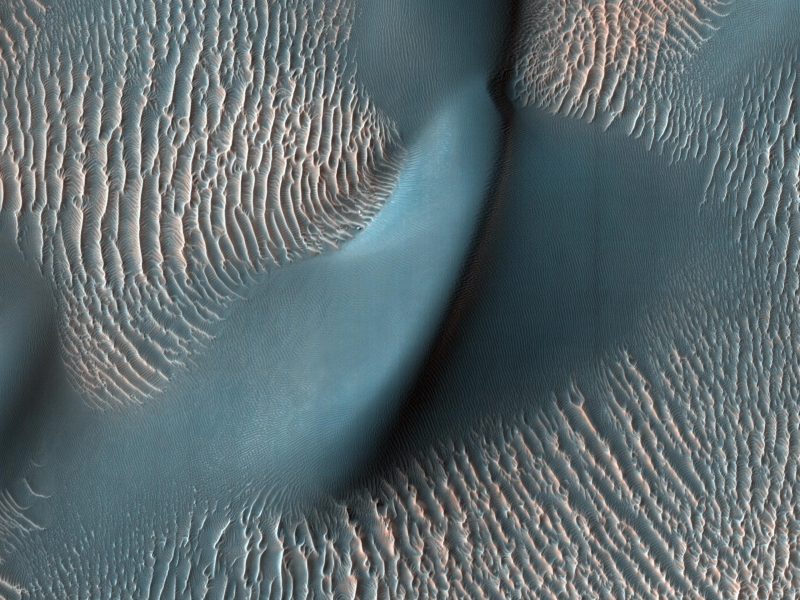
View larger. | Sand dunes and ripples in Proctor Crater on Mars, as seen by the Mars Reconnaissance Orbiter on February 9, 2009.
Mars is a dry desert world, covered in reddish sand. In our lifetimes, spacecraft have revealed its amazing scenery and sweeping landscapes. It’s a world at once reminiscent of Earth, yet alien and strange. This week, to celebrate the launch of the Mars Reconnaissance Orbiter 15 years ago, NASA has shared some of the orbiter’s most breathtaking images. We found these images very beautiful and think you will, too, whether you’re a Mars aficionado or a newbie.
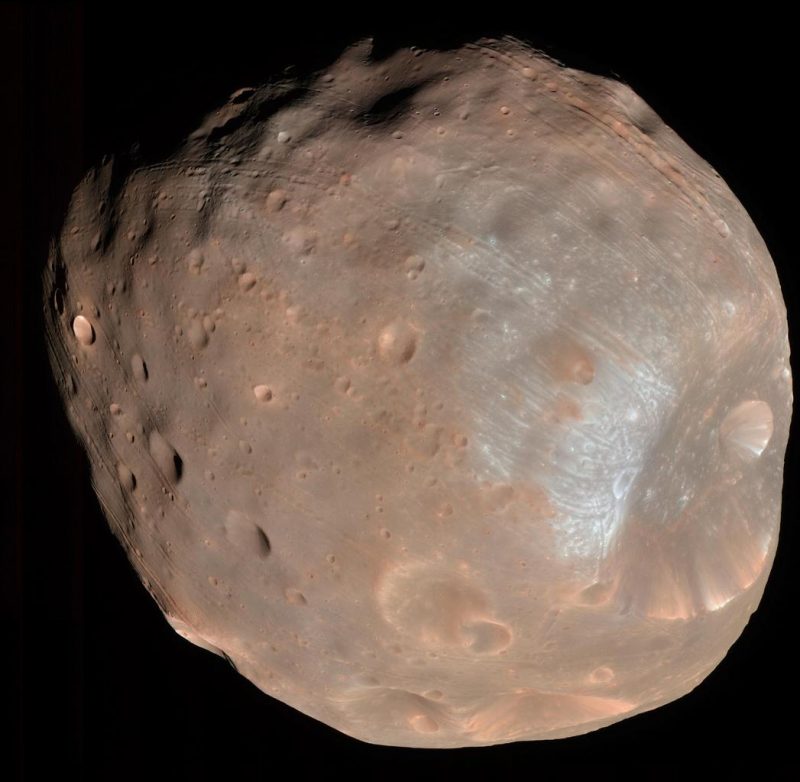
The Mars Reconnaussance Orbiter (MRO) has three cameras: The Mars Color Imager (MARCI), which has a fisheye lens for a daily global view of the planet; the Context Camera (CTX), which provides 19-mile-wide (30-kilometer-wide) black-and-white terrain shots; and the High-Resolution Imaging Science Experiment (HiRISE), which produces the beautiful and jaw-dropping images that MRO has become famous for. HiRISE takes the highest-resolution orbital images of the Martian surface ever obtained, and in full color. They show sand dunes, avalanches, craters, dust devils, old river and lake beds, mountains, gullies and more in exquisite detail. MRO has even been able to photograph rovers such as Curiosity and Opportunity, on the planet far below. It has also photographed the two small Martian moons, Phobos and Deimos.
The image at top of the sand dune and ripples in Proctor Crater is in enhanced color to bring out details. Like other images of still-active sand dunes, it shows that Mars isn’t a completely inactive, motionless world. Leslie Tamppari, MRO deputy project scientist at JPL, said in a statement:
The more we look, the more we discover. Before MRO, it wasn’t clear what on Mars really changed, if anything. We thought the atmosphere was so thin that there was almost no sand motion and most dune movement happened in the ancient past.
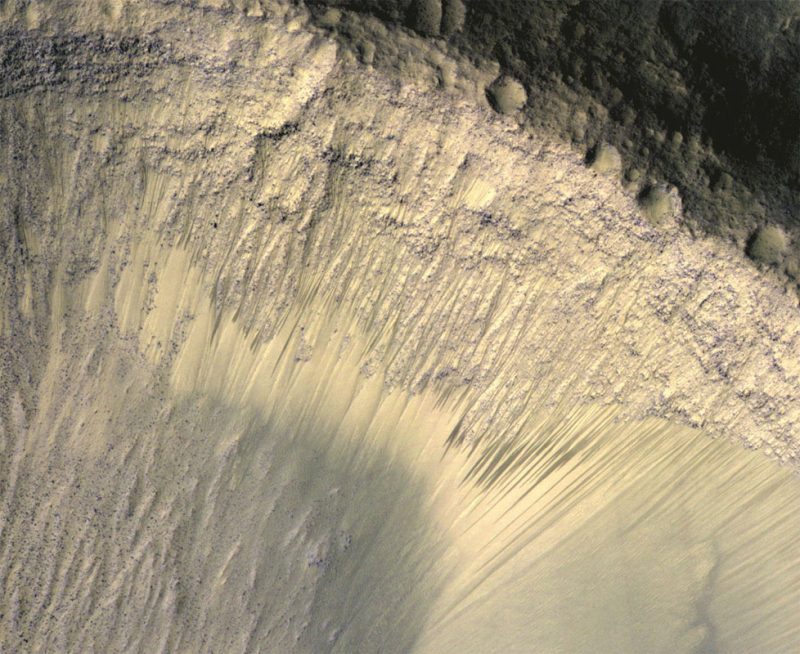
View larger. | Recurring slope lineae (RSL) in a crater in Valles Marineris.
In the image above, we see dark streaks, called recurring slope lineae (RSL), on a steep crater wall in Valles Marineris. There is still much debate as to whether those might be small streams of briny liquid water.
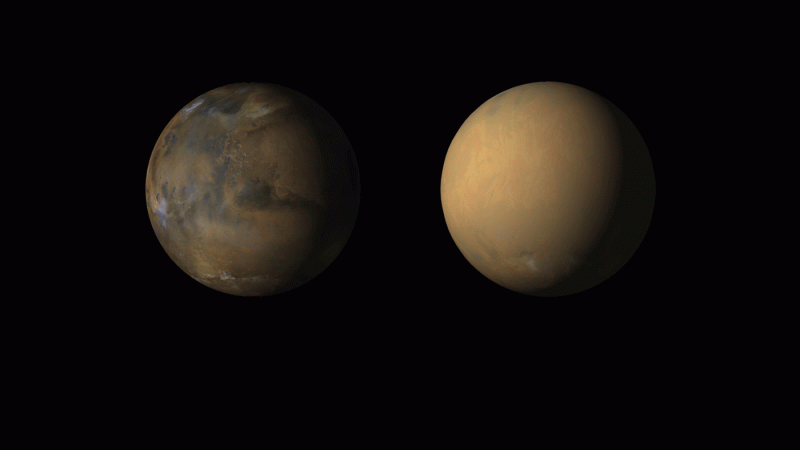
MRO has also watched dust storms on Mars, as seen in the image below. Most storms are fairly small and regional, but others can grow to encompass the entire planet, about once or twice a decade. These are called “planet-encircling dust events.” MARCI took the images in the summer of 2018. This was the storm that darkened the skies over the Opportunity rover and caused it to run out of power from its solar panels.
In the view from May, we see the Valles Marineris chasms (left), Meridiani Planum (center), an autumn dust storm in Acidalia Planitia (top) and the early spring south polar cap (bottom). The same regions are in the view from July, but completely obscured by dust.
View larger. | Global dust storm seen by MRO in the summer of 2018 (right).
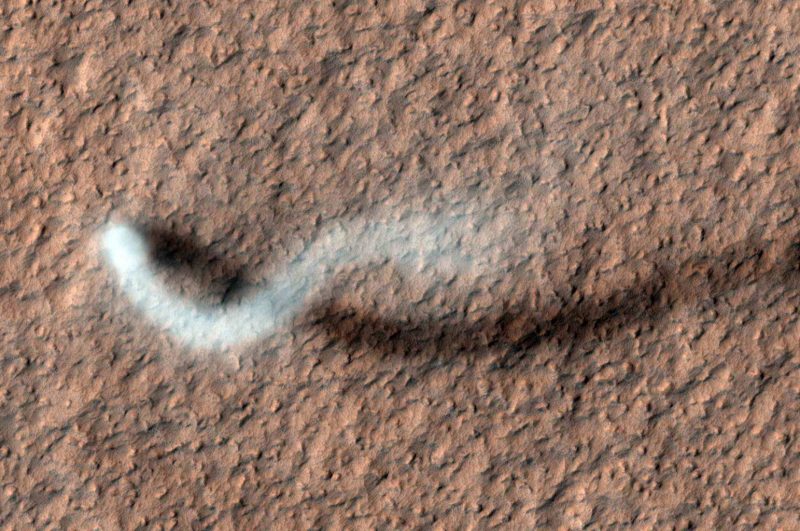
Dust storms aren’t the only dusty phenomenon that MRO has seen. The next image below is a good example of a serpent-like dust devil, captured on February 16, 2012. The image was taken in a late spring afternoon in the Amazonis Planitia region of northern Mars.
The plume is about 98 feet (30 meters) in diameter, and based on the length of the shadow, is more than half a mile (800 meters) tall!
A westerly breeze created the S-like arc in the plume. Just like on Earth, Martian winds get their energy from the sun, even though Mars is much farther from the sun than Earth. Even though winds have lessened this time of year, they are still strong enough to produce dust devils like this one.
Dust devils have also been seen up close on the ground by the rovers Opportunity, Spirit and Curiosity.
View larger. | A twisting dust devil in the Amazonis Planitia region of northern Mars.
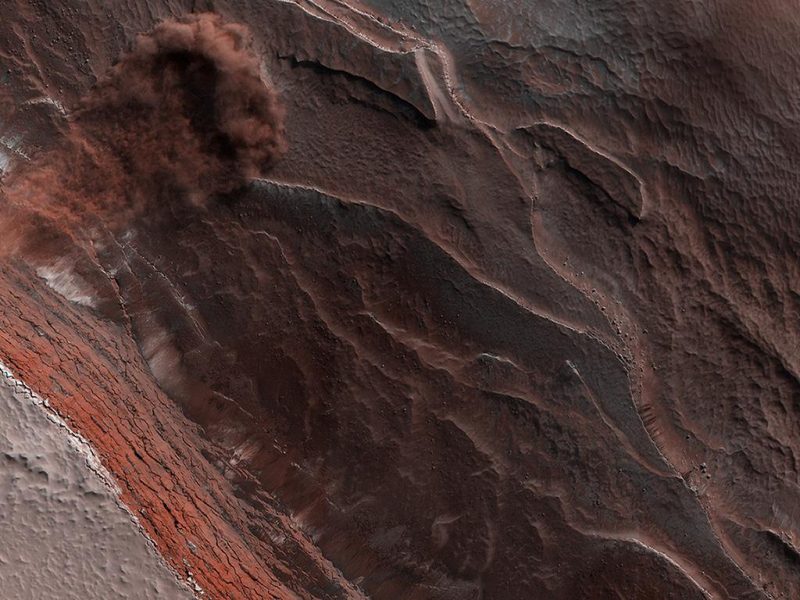
Dust storms and dust devils aren’t the only way that Mars is still active. Avalanches are another common occurrence, especially when seasonal ice vaporizes in the warmer spring.
In the image below, taken on May 29, 2019, MRO captured avalanches on 1,640-foot-tall (500-meter-tall) cliffs at Mars’ north pole. The avalanches also had the effect of exposing hidden layers of ice and dust in the cliffs, going back millions of years or more. For scientists, these layers are like reading the book of Mars’ history, providing clues as to how the environment changed in the region over time.
View larger. | Avalanches on steep cliffs near the martian north pole on May 29, 2019.
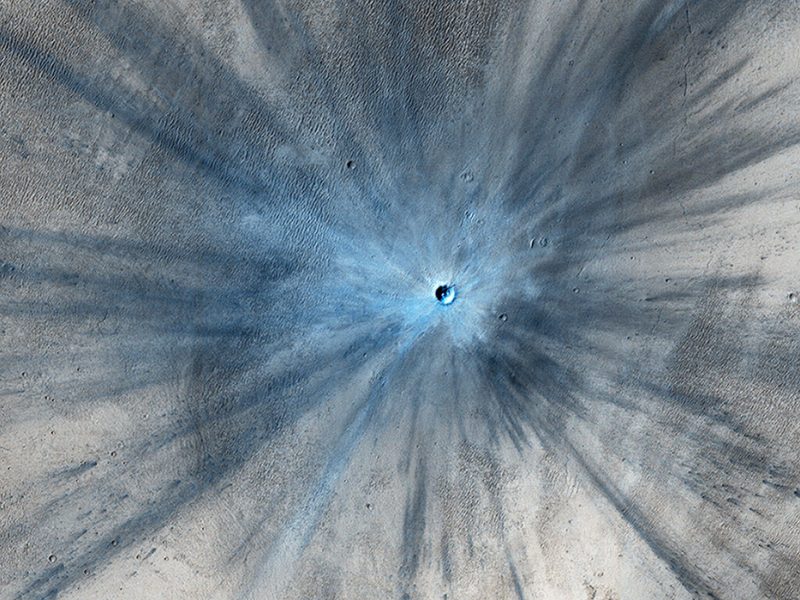
Another thing that MRO is good at is finding new craters. Such “fresh” craters can be identified by the new-looking ejecta blanket of rocky debris around them. Many more of these can be seen on Mars due to the planet’s very thin atmosphere, which doesn’t burn up larger meteors as easily as Earth’s atmosphere. More of them therefore actually impact the planet.
MRO has found over 800 new impact craters so far during its mission. The one pictured below is about 98 feet (30 meters) across. The impact was strong enough to throw ejecta as far as 9.3 miles (15 km).
On Mars, craters also last much longer than they do on Earth, again because of the thin atmosphere that erodes them more slowly.
View larger. | A new impact crater, spotted by MRO on November 19, 2013.
MRO has been orbiting Mars since 2006, and has taken no less than 6,882,204 images, generating 194 terabytes of data. Those views of the red planet have helped to revolutionize our knowledge about this familiar yet alien world.
MRO has also taken images of mud volcanoes, and a recent study showed that mud which flows from them will flow in a manner similar to lava on Earth.
As well as taking incredible images, MRO also studies Mars with multiple other instruments. It measures the temperature of the atmosphere and dust and water vapor using Mars Climate Sounder (MCS), peers beneath the surface with radar using Shallow Radar (SHARAD) and analyzes different minerals on the surface in rocks and sand with the Compact Reconnaissance Imaging Spectrometer for Mars (CRISM).
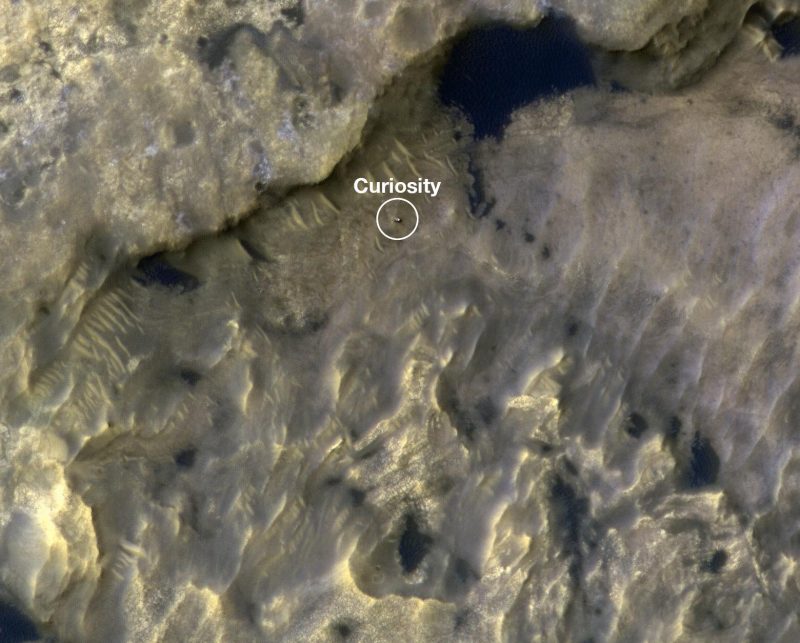
View larger. | NASA’s Curiosity rover in Gale Crater, as seen by MRO from orbit.
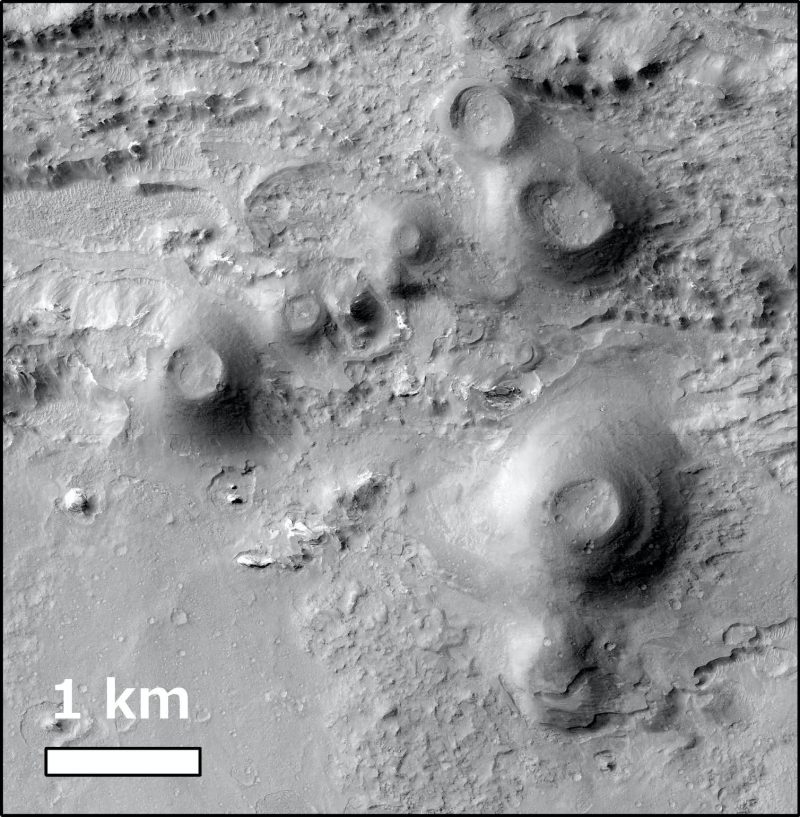
View larger. | Conical hills thought to be mud volcanoes, in Coprates Chasma on Mars, photographed by MRO.
Image via Petr Bro¸/ MRO/ NASA/ JPL/ University of Arizona/ The Conversation.
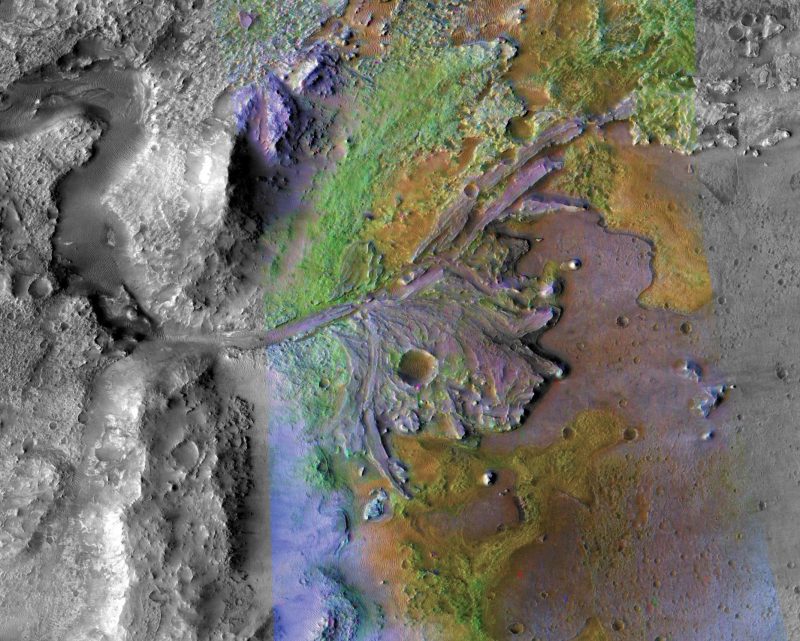
View larger. | Enhanced-color image from MRO of the future landing site of the Perseverance rover in Jezero Crater in February 2021. An ancient river delta is still clearly visible.
The images sent back by MRO have been some of the most incredible of any planetary mission, and are the perfect way to celebrate the 15th anniversary of the launch. Along with all the other data to date, they have forever changed our view and understanding of the red planet.
More information about MRO is available on the mission website. Check out the HiRISE website for many thousand more images! You can even make a request for the spacecraft to take images of specific targets.
Bottom line:NASA has posted amazing photos of Mars to celebrate the 15th anniversary of the launch of Mars Reconnaissance Orbiter.
The mysterious “bag” of the Gods: represented in Sumeria, America and Göbekli Tepe
The mysterious purse of the gods displayed by various ancient civilizations separated by more than 12,700 kilometers apart, from Sumer to Mesoamerica.
This mysterious bag is observed in sculptures and bas-reliefs of Sumeria of 6,000 years ago (the Anunnaki carried it) and in the temple of Göbekli Tepe of the millennium 10 BC. C. It is also carried by Mesoamerican deities (the Olmecs, Toltecs, Aztecs , etc.) and Australia . Its symbology is enigmatic, it could represent a type of universal standard weight measure or be part of the equipment of alien gods with futuristic technology.
The mysterious purse of the Gods: paradigmatic pictographs
The Sumerians from the beginning of their civilization in 4,500 BC. They portrayed the Anunnaki with peculiar artifacts , such as the pine cone , a type of “wrist watch” and this mysterious bag . Many pictographs show a winged god holding a pine cone in one hand and the divine purse in the other.
Other images show Adapa, Dagon or the fish god Oannes holding it. This aquatic god emerged from the waters of the Persian Gulf and founded civilizations , according to Mesopotamian mythology. 12,700 kilometers away , in Mesoamerica, sculptures of the Mayans, Aztecs, Toltecs and Olmecs show the same artifact.
The most prominent Mesoamerican example is from the Olmecs , at the La Venta archaeological site in Mexico . There is a stone engraving of the god Quetzalcoatl holding the same bag of the gods that the Anunnaki carried . This site was founded in 1750 BC.
Atlanteans of Tula and Göbekli Tepe
Another impressive example is in the monumental Toltec statues of the Atlanteans of Tula (in Tula, Mexico). They are representative warriors of Quetzalcóatl and carry the enigmatic contraption, although it is thought to be an atlat or dart thrower .
In Göbekli Tepe we found it. This massive temple located in Turkey is considered the oldest in history , from the 10th millennium BC. C. The artifact appears on Pillar 43 , in a row of three bags and on figures of animals such as birds and snakes.
Also tribes of ancient Australia painted images of this bag of the gods, in addition to the Native Americans of California , United States, mainly for the Coso petroglyphs . It should be noted that in Ancient Egypt a similar device is noted: the ankh or Egyptian cross , which is loaded in a similar way.
Symbol of a standard weight?
According to the book Ice Age Language: Translations, Grammar and Vocabulary by Dr. Robert Duncan-Enzmann and Jay R. Snyder, the symbol on the bag expresses a standard weight , a standard of weighing. This “standard weight” also denotes a “weight of authority” or “weight of power” , as it was always drawn being held by the Anunnaki or by Sumerian kings (authorities with power).
Another more futuristic explanation is in that of the ancient astronauts , that these artifacts could have been bags for cosmonaut equipment , since they are similar to those used today and because those ancestral gods were celestial travelers .
The interpretation of the standard weight makes sense but does not explain why various ancient civilizations of the world engraved the same bag of the gods . You might think that the Anunnaki and the ancient gods of places like Mexico, Guatemala, North America and Australia were the same deities .
All related videos, selected and posted by peter2011
Japan's asteroid-sampling mission is officially clear to return its precious cargo to Australia in December, according to statements from both countries' governments.
The Hayabusa2 spacecraft is trekking back to Earth with a sample capsule full of material snagged from a near-Earth asteroid called Ryugu. The Japan Aerospace Exploration Agency (JAXA), which runs the mission, has long planned to deposit that capsule in the vast desert of Australia, but the new announcement marks that country's official approval of the plan.
"I am delighted to have given the tick of approval for the Hayabusa2 to land at the Woomera Prohibited Area and am thrilled JAXA has chosen to partner with us on the capsule's re-entry," Karen Andrews, Australia's Minister for Industry, Science and Technology, said in a statement. "This mission is a very important scientific and technical feat, as the first ever sub-surface asteroid sample to be returned to Earth."
Over the course of its stay at Ryugu, Hayabusa2 collected samples from the asteroid's rocky surface, shot the asteroid to create an artificial crater, and collected some of the subsurface material uncovered by that impact as well. The diversity of samples means that scientists will be able to learn more about Ryugu's interior and how it has responded to the harsh forces of outer space, like the solar wind, a constant stream of highly energized particles called plasma flowing off the sun.
But even with advanced spacecraft, scientists can always do more detailed analyses in laboratories on Earth, hence the need to land that capsule. Hayabusa2's predecessor, another asteroid sample-return mission called Hayabusa that visited a space rock called Itokawa, also returned its material to Australia, and the current mission will follow suit, with the deposit scheduled for Dec. 6.
An artist's depiction of the Hayabusa2 spacecraft after inserting its capsule into Earth's atmosphere for sample delivery. (Image credit: JAXA)
"The approval to carry out the re-entry and recovery operations of the Hayabusa2 return sample capsule is a significant milestone. We would like to express our sincere gratitude for the support of the Australian government as well as multiple organizations in Australia for their cooperation," JAXA president Hiroshi Yamakawa said in a statement. "We will continue to prepare for the successful mission in December 2020 in close cooperation with the Australian government."
However, unlike Hayabusa, the current spacecraft will not return in full; it will only deposit a sample capsule back to Earth. JAXA is evaluating sending the Hayabusa2 probe on to visit a second asteroid about a decade from now.
Email Meghan Bartels at mbartels@space.com or follow her on Twitter @meghanbartels. Follow uson Twitter @Spacedotcom and on Facebook.
This photograph shows the laser-ranging facility at the Goddard Geophysical and Astronomical Observatory in Greenbelt, Maryland trying to hit the Lunar Reconnaissance Orbiter (LRO) with green laser light. For the first time, another facility in Grasse, France successfully bounced a laser (using infrared light) off the LRO's onboard mirror.
For the first time, scientists have successfully bounced a laser off a mirror that's attached to a spacecraft whirling around themoon.
Bouncing lasers off mirrors on the lunar surface is an old trick. Astronauts walking on the moon first left reflectors behind in 1969. And since then, researchers have bounced lasers off those reflectors to make precise measurements of the distance between the moon and Earth, using the speed of light and the time it takes for the laser beam to return to Earth.
But hitting a laser in orbit around the moon is a much trickier task. The Lunar Reconnaissance Orbiter (LRO) has orbited the moon with a mirror on its back since 2009. But nearly a decade went by without a single successful laser bounce. In an Aug. 6 paper in the journal Earth, Planets and Space, a team of researchers report the first successful laser contact: Twice on Sept. 4, 2018 and twice again between Aug. 23 and Aug. 24, 2019, technicians at the Lunar Laser Ranging (LLR) station in Grasse, France, shot laser bursts at the LRO and saw the light return 2.5 seconds later.
To make sure that the light bouncing off the LRO returns in the direction from which it came, the mirror on its back is more complicated than the one in your bathroom. Like the older mirrors on the lunar surface, it's a "corner cube" — a series of three-dimensional mirrors, each literally shaped like the inside of one corner of a cube. When a laser hits it, the light bounces three times before the geometry of the mirror returns it in the precise direction from which it came.
An animation illustrates how corner cube reflectors bounce light back in the direction from which it came. (Image credit: V.pantaloni/Wikimedia Commons/ CC BY 4.0)
Tracking the movement of the LRO over time is an interesting scientific project in its own right. But, the researchers wrote, these four successful laser contacts don't offer enough data to track that movement. The LRO is still moving too fast and too unpredictably to reliably hit with a laser, and all four contacts were made under what the researchers described as ideal conditions. The moon, LRO and France were all lined up perfectly to improve the odds of laser contact.
Apollo 11 astronaut Buzz Aldrin holds two experiments that he and Neil Armstong left behind on the moon. In his right hand is a corner cube reflector, the first of five that NASA astronauts eventually deposited on the lunar surface. (Image credit: Neil Armstrong/NASA)
Over the long-term, studies of the LRO mirror could help resolve a tricky problem impacting the mirrors left on the lunar surface. All of those mirrors have become less reflective over time, and researchers aren't sure why. But that lost quality is making precise measurements more difficult. The issue could be that long-term exposure to solar radiation just weakens the mirrors. In that case, the LRO's mirror should weaken over time at the same rate. Alternatively, lunar dust or faint haze from the moon's thin atmosphere could be obscuring the mirrors, the researchers wrote. In that case, the LRO's reflectivity should remain more or less unchanged over time high in orbit, even as the surface mirrors degrade.
The circled streak in the center of this image is asteroid 2020 QG, which came closer to Earth than any other non-impacting asteroid on record. It was detected by the Zwicky Transient Facility on Sunday (Aug. 16), six hours after its closest approach, which took place that day at 12:08 a.m. EDT (Saturday, Aug. 15 at 9:08 p.m. PDT).
The record-breaking asteroid 2020 QG won't soon forget its run-in with Earth.
Early Sunday morning (Aug. 16), the car-sized 2020 QG zoomed just 1,830 miles (2,950 kilometers) above the Indian Ocean, making the closest known flyby by an asteroid that didn't end up slamming into our planet.
Though 2020 QG survived the encounter, its path through space was altered significantly, scientists said.
"It's really cool to see a small asteroid come by this close, because we can see the Earth's gravity dramatically bend its trajectory," Paul Chodas, director of the Center for Near-Earth Object Studies at NASA's Jet Propulsion Laboratory in Southern California, said in a statement. "Our calculations show that this asteroid got turned by 45 degrees or so as it swung by our planet."
Researchers didn't learn of 2020 QG's existence until the Zwicky Transient Facility, a survey telescope in Southern California funded by the U.S. National Science Foundation and NASA, captured an image of the asteroid zooming away from Earth, six hours after closest approach.
That image shows 2020 QG as a blurry streak — no surprise, considering that the space rock was rocketing along at about 29,000 mph (46,700 kph). As speedy as that is, it's a little slower than average for a near-Earth asteroid, Chodas said.
There are many millions of near-Earth asteroids out there about the same size as 2020 QG, which is thought to be 10 to 20 feet (3 to 6 meters) wide. Such tiny space rocks are very hard to detect, but they pose no danger to life on Earth.
This illustration shows asteroid 2020 QG's trajectory bending during its close approach to Earth on Aug. 16, 2020. It came within 1,830 miles (2,945 kilometers) to Earth, the closest ever seen without an impact. (Image credit: NASA/JPL-Caltech)
"If it [2020 QG] had actually been on an impact trajectory, it would likely have become a fireball as it broke up in Earth's atmosphere, which happens several times a year," NASA officials wrote in the same statement. (Fireballs are meteors that blaze more brightly than Venus in our skies.)
Big asteroids are a bit worrisome, however. For example, scientists think a 6-mile-wide (10 km) space rock did in the dinosaurs when it barreled into Earth 66 million years ago.
NASA has found and tracked more than 95% of the mountain-sized asteroids in Earth's neighborhood, and none of them pose an impact risk in the foreseeable future. The space agency is currently working to compile a similarly comprehensive catalog of the near-Earth asteroids at least 460 feet (140 m) wide, which would do devastating damage on a regional scale if they hit.
Such work has practical applications beyond simply warning people about an impending impact. With enough notice — at least a few years, preferably — humanity could deflect an incoming asteroid, experts say.
Mike Wall is the author of "Out There" (Grand Central Publishing, 2018; illustrated by Karl Tate), a book about the search for alien life. Follow him on Twitter @michaeldwall. Follow us on Twitter @Spacedotcom or Facebook.
While The New York Times dances in and around the linked stories of the USS Nimitz Tic Tac UFOs seen and recorded by military pilots and the Pentagon’s announcement that it still has a funded investigation group that may or may not have pieces of non-human-made objects, Salon has followed a different path and talked to camera experts and experts in how humans think who debate the “I’m not saying it’s humans … but it’s humans” side of the discussion. Let’s hear what they have to say, courtesy of Salon.
“What looks like great speed and wild maneuvers is just a common optical illusion combined with the effects of the FLIR’s gimbal and glare filter.”
“The object you’re seeing is a single point of heat from an unidentified plane, probably a distant commercial jet, flying away from the F-18. The camera is looking out the side of the F-18 which is speeding past nearby clouds, making the object appear to be moving relative to the clouds.”
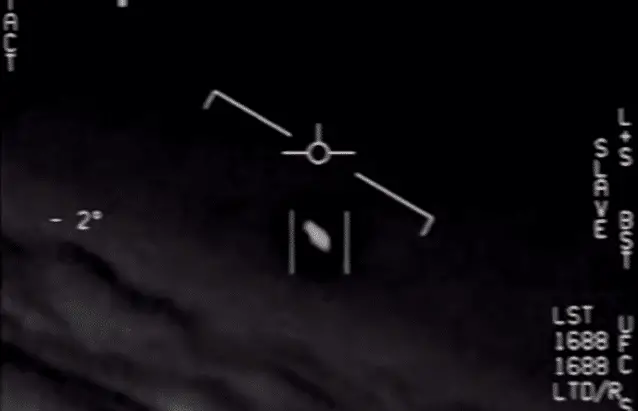
Still image from the footage of the “tic-tac” UFO
Brian Dunning is the controversial host of the Skeptoid podcast and he believes FLIR (Forward-Looking InfraRed) cameras are known to create optical illusions – as all cameras are, which is why this is a common refute of many videos of UFOs, particularly orbs and faraway cylinders.
“When people look at those kinds of videos and the reaction of the pilots, for example, I think that’s often also used to give them more credibility with these expert pilots, often military pilots, commenting on the behavior of the shifts.”
Timothy Caulfield, a host of “A User’s Guide to Cheating Death,” refers to the Occam’s razor principle which states that the simpler of two explanations (in the Tic Tac case, that they are non-Earth UFOs) is generally more likely to be correct, and it is bolstered in this case by the fact that it’s presented by respected military pilots. From this writer’s standpoint, while interesting, this seems to be more opinion than fact. Dunning defends his position.
“Two words: Sensationalism sells. Nobody is excited about the artifacts of the FLIR glare filter; everyone is excited about the prospect of the Pentagon hiding the ‘truth about aliens.'” Humans are hardwired for anecdotal thinking. Our brains gravitate toward the simple and the desirable, and away from the complicated and the boring.”
Alexander Wendt, a ufologist and international relations professor at Ohio State University, sticks up for the pilots and makes an interesting observation about the Navy response.
“I challenge anybody to do better than the Navy to explain what’s in those videos. If the Navy couldn’t do it… they had every reason to want this off their plate.”
Wendt thinks the Navy was hoping for an easy “Case closed” but the obvious stress of the credible pilots wouldn’t let their explanation be the “Occam’s razor” one, even if it was correct. Ohio State University professor and political scientist Thomas Wood seems to agree, citing the long-lasting yet non-scientific support the general public has for UFO conspiracy theories.
“If you look at the data on public opinion on this, it is really sort of incredible. The American public fascination with UFOs is one of the very durable conspiracy theories in the American public’s imagination.”
So, this Salon debate ultimately boils down to a fact about FLIR camera as versus a fact about the innate human preference for the simple explanation. In the end, without a sophisticated recreation of the Nimitz sighting in identical circumstances and lighting with identical cameras – a scientific test, in other words – Dunning loses the round to human nature.
Isn’t that how it seems to always work these days?
Meer van UFO'S of UAP'S, ASTRONOMIE, RUIMTEVAART, ARCHEOLOGIE, OUDHEIDKUNDE, SF-SNUFJES EN ANDERE ESOTERISCHE WETENSCHAPPEN - DE ALLERLAATSTE NIEUWTJES


 They Said it Will Hit on Sunday, September 20, 2020