Location of discovery: Mars
Google Mars Coordinates: 65°10'23.32"N 8°14'19.28"W
Hills of Yellow Gold Found On Mars Using Google Mars Map, Nov 1, 2020, Photos, UFO Sighting News.
Strange lights Over New Taipei City, Taiwan Oct 30, 2020, UFO Sighting News.
UFO Landing Lights In Bethany, Oklahoma On Oct 28, 2020, UFO Sighting News.
UFO Passes Over A Home In Irving, Texas. Oct 19, 2020, UFO Sighting News.
UFO Sightings in Belgium, Poland, California
https://mufoncms.com/cgi-bin/report_handler.pl?req=view_long_desc&id=112046
Best UFO videos in October 2020!

Yesterday I went live on my Facebook and Youtube page. I’ve checked UFO videos that (in my opinion) made the most impact last month.
You can watch the video below.
Here are the links so you can follow me:
RELATED VIDEOS, selected and posted by peter2011
Doubts over a ‘possible sign of life’ on Venus show how science works

Earth’s neighbor planet Venus, shown here in an artist’s impression, is under the microscope after a contested report of phosphine in its clouds.
M. KORNMESSER/ESO, CALTECH/JPL/NASA
Now there’s increasing emphasis on the “if.” As scientists take fresh looks at the data behind the Venus announcement, and add other datasets to the mix, the original claim of inexplicable amounts of phosphine is being called into doubt. And that’s a good thing, many scientists say.
“It’s exactly how science should work,” says planetary scientist Paul Byrne of North Carolina State University in Raleigh, who studies Venus but was not involved in any of the phosphine papers. “It’s too early to say one way or the other what this detection means for Venus.”
Here’s a closer look at efforts to get from “if” to “true:”
On September 14, astronomer Jane Greaves of Cardiff University in Wales and colleagues reported that they had seen signs of phosphine in Venus’ clouds using two different telescopes (SN: 9/14/20). The phosphine seemed to be too abundant to exist without some kind of source replenishing it. That source could be strange microbes living in the clouds, or some weird unknown Venusian chemistry, the team said.
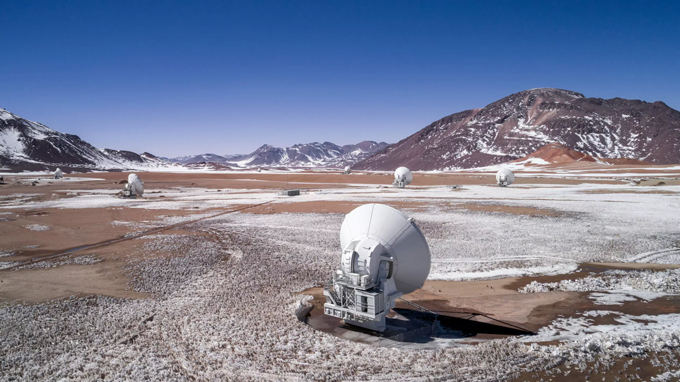
Greaves and colleagues first spotted phosphine with the James Clerk Maxwell Telescope in Hawaii and followed up with the powerful ALMA telescope array in Chile. But those ALMA data, and particularly the way they were handled, are now being called into question.

The key Venus observations were spectra, or plots of the light coming from the planet in a range of wavelengths. Different molecules block or absorb light at specific wavelengths, so searching for dips in a spectrum can reveal the chemicals in a planet’s atmosphere.
Phosphine showed up as a dip in Venus’ spectrum at about 1.12 millimeters, a wavelength of light that the molecule was thought to be absorbing. If Venus’ spectrum could be drawn as a straight line across all wavelengths of light, phosphine would make a deep valley at that wavelength.
But real data are never that easy to read. In real life, other sources — from Earth’s atmosphere to the inner workings of the telescope itself — introduce wiggles, or “noise,” into that nice straight line. The bigger the wiggles, the less scientists believe that the dips represent interesting molecules. Any particular dip might instead be just a random, extra-large wiggle.
That problem gets even worse when looking at a bright object such as Venus with a powerful telescope like ALMA, says Martin Cordiner, an astrochemist at NASA’s Goddard Space Flight Center in Greenbelt, Md. Cordiner uses ALMA to observe other objects in the solar system, like Saturn’s moon Titan, but was not involved in the Venus work.
“The reason those bumps and wiggles are here at all is because of the intrinsic brightness of Venus, which makes it difficult to get a reliable measurement,” Cordiner says. “You could think of it as being dazzled by a bright light: If there’s a bright light in your vision, then your ability to pick out fainter details becomes diminished.”
So astronomers do a few different things to smooth out the data and let real signals shine through. One strategy is to write an equation that describes the wiggles caused by the noise. Scientists can then subtract that equation from the data to highlight the signal they’re interested in, like fuzzing out the background of a photo to let a portrait subject pop. That’s a standard practice, says Cordiner.
But it’s possible to write an equation that fits the noise too well. The simplest equation one could use is just a straight line, also known as a first-order polynomial, described by the equation y=mx+b. A second-order polynomial adds a term with x squared, third-order with x cubed, and so on.
Greaves and colleagues used a twelfth-order polynomial, or an equation with twelve terms (plus a constant, the +b in the equation), to describe the noise in their ALMA data.
“That was a red flag that this needed to be looked at in more detail, and that the results of that polynomial fitting could be untrustworthy,” says Cordiner. Going all the way out to the power of 12 could mean a researcher subtracts more noise than is truly random, allowing them to find things in the data that aren’t really there.
To see if the researchers were a little overzealous in their polynomial fitting, astrophysicist Ignas Snellen, of Leiden University in the Netherlands, and colleagues reapplied the same noise reduction recipe to the ALMA data on Venus and found no statistically significant sign of phosphine, they report in a paper posted at arXiv.org on October 19.
Then the researchers tried the same noise filtering on other parts of Venus’ spectrum, where no interesting molecules should be found. They found five different signals of molecules that aren’t really there.
“Our analysis … shows that at least a handful of spurious features can be obtained with their method, and therefore [we] conclude that the presented analysis does not provide a solid basis to infer the presence of [phosphine] in the Venus atmosphere,” the team wrote.
Meanwhile, scientists at ALMA discovered a separate, unspecified issue in the data that were used to detect the phosphine and took those data off the observatory’s public archive to scrutinize and reprocess, according to a statement from the European Southern Observatory, of which ALMA is a part.
“This does not happen very often,” says Martin Zwaan of the ESO ALMA Regional Center in Garching, Germany, but this isn’t a first. When issues are discovered, it is standard practice to reprocess the data. “In many cases, it does not affect the science outcome significantly,” Zwaan says. “In the case of the phosphine on Venus, this [outcome] has not been established yet.”
What can scientists do while they wait? One of the best ways to confirm the phosphine is to see an equivalent signal at a different wavelength in Venus’ spectrum. Unfortunately, the news isn’t great there either. In a paper to appear in Astronomy & Astrophysics, astronomer Thérèse Encrenaz of the Paris Observatory and colleagues (including Greaves and some other authors of the original paper) looked at archived data from an infrared spectrograph called TEXES that operates in Hawaii. Those observations could have spotted phosphine in Venus’ cloud tops, a lower part of the sky than what ALMA could see.
Greaves and colleagues had approached Encrenaz to look for phosphine in infrared wavelengths before the original paper came out, but those observations were cancelled by the COVID-19 pandemic. So Encrenaz looked through data she had collected between 2012 and 2015 — and found nothing.
“At the level of the cloud tops, there is no [phosphine] at all,” Encrenaz says. That doesn’t necessarily mean there’s no phosphine higher up in the sky — there’s just no clear explanation for how it would get there. “The reasoning in the paper by Jane Greaves was that phosphine was coming from the clouds,” Encrenaz says. “So there is a big problem.”
There are still ways for Venus’ phosphine to pull through. If it varies with time, for instance, it might be there some of the times that astronomers look and not at others. It’s too early to invoke that scenario, though, Cordiner says. “There’s no point of talking about the time variability of a signal if it isn’t there.”
But this is not a crisis, says Clara Sousa-Silva, an astrochemist at the Harvard-Smithsonian Center for Astrophysics in Cambridge, Mass., and a coauthor of the original paper. Other groups challenging the finding “is completely normal and what I expected (nay, hoped) would happen,” she wrote in an e-mail. “This is usually a phase of a project that I enjoy, and I am hoping people will realize this is just what science looks like.”
The silver lining in all of this is that it’s gotten people excited about Venus, says Byrne, who is a member of NASA’s Venus Exploration Analysis Group.
“These papers provide much value and a needed assessment of these extraordinary claims,” he says. “If nothing else, it has shone a light on just how little we understand about Venus. And the only way we get those answers is if we go to Venus.”
OP AARDE NEERGESTORTE METEORIET BLIJKT WONDERBAARLIJK VEEL ONGEREPTE BUITENAARDSE ORGANISCHE VERBINDINGEN TE BEVATTEN
Vivian Lammerse

ALLE GERELATEERDE VIDEO'S, geselecteerd en gepost door peter2011
ALIENS KUNNEN ONS MOGELIJK VANAF HONDERDEN NABIJE PLANETEN SPOTTEN
Caroline Kraaijvanger

GERELATEERDE VIDEO'S, geselecteerd en gepost door peter2011
The Milky Way's quiet, introverted monster won't spin
CLOSE ENCOUNTER - UFO sightings are taking the US by storm – can Trump shake up the election by FINALLY revealing what the Pentagon knows?
NASA asteroid probe stows space-rock sample for return to Earth
UFO spotted over Hawaiʻi likely spent rocket
Thousands were mesmerized by a mysterious flurry of lights that appeared to float across Hawaiʻi’s evening sky on Saturday, October 24. Photos and videos of the string of lights flooded social media, leaving many to believe the sighting could be anything from a spaceship carrying extra terrestrials to a meteor shower.
University of Hawaiʻi at Mānoa Institute for Astronomy Professor Richard Wainscoat believes onlookers witnessed the reentry of a spent rocket booster used to launch Venezualan satellite, Venesat-1, back in 2008. The used rocket has been circling Earth since the launch, slowly losing altitude due to friction with the tenuous atmosphere in low-Earth orbit. On Saturday, the booster made its final orbits.

Wainscoat works with the Pan-STARRS telescope on Haleakalā, and said the reentry was predicted to occur over the Atlantic Ocean at 7:24 p.m. HST on October 24. He added that the object stayed in orbit a little longer than expected, and finally burned up in the atmosphere over Hawaiʻi, an occurrence that does not happen very often.
“Seeing a reentry is relatively rare for a specific location like Hawaiʻi, since we can only see the reentry if it occurs relatively close to us,” Wainscoat explained. Reentries are a common occurrence, with typically one to two per week taking place somewhere around the Earth. According to Wainscoat, although it’s possible for large solid pieces to survive reentry, most of the object will burn up, and any surviving debris will usually fall in the ocean or in uninhabited locations.
The reentry was also spotted by many of the sky-monitoring cameras at the Maunakea and Haleakalā observatories. The Canada-France-Hawaiʻi Telescope cloud camera on Maunakea captured an image of the streaking debris, as did the all-sky monitor on the ATLAS telescope on Haleakalā. AMOS systems on Haleakalā and Maunakea captured the rocket re-entry, as well. The observations by AMOS are used for observations and analysis of meteors and fireballs to help astronomers understand the structure of the solar system.
Telescopes on Haleakalā and Maunakea also play a critical role in tracking potentially hazardous asteroids and assist with rapid follow-up observations to verify an asteroid’s orbit and if it poses any threat to Earth.

NASA Releases Photo Of The “Greater Pumpkin” Galaxies Just In Time For Halloween

NASA Releases Photo Of The “Greater Pumpkin” Galaxies Just In Time For Halloween
NASA has released a photo of the “Greater Pumpkin” galaxies and it is the perfect timing in regards to Halloween. The two galaxies, named NGC 2292 and NGC 2293, are located approximately 120 million light-years away from us in the constellation Canis Major and are beginning to collide.
The picture that was captured by the Hubble Space Telescope looks like a gigantic pumpkin with glowing eyes and a crooked smile. The “eyes” are actually a bunch of stars that are surrounding two supermassive black holes, while the faint blue-colored “smile” is a cluster of newborn stars. The “pumpkin’s” orangish color is a result of red stars.
In a statement, NASA further described the picture, “Hubble’s holiday offering is a pair of colliding galaxies that resemble the cartoon Peanuts character Linus’ imagining of the elusive Great Pumpkin,” adding, “’Great’ is an understatement in this case because the galaxy pair spans 100,000 light-years.”
Interestingly, when the two galaxies finish merging, they could form a gigantic spiral galaxy. In fact, while the “smile” is made up of a cluster of newly formed stars, it is actually the beginning of the formation of a spiral galaxy. The “smile” stretches from one galaxy to the next and was probably created from compressed interstellar gas when the collision began.
William Keel, who is an astronomer from the University of Alabama in Tuscaloosa, has speculated that when the two merge together, it could turn out to be quite similar to the spiral galaxy known as UGC 2885 (or Rubin’s Galaxy) which is absolutely massive as it is two and a half times wider than the Milky Way and has ten times the amount of stars. It is located about 232 million light-years away from us in the constellation Perseus.
A picture of the “Greater Pumpkin” galaxies can be seen on NASA’s Hubblesite page.
This photo comes a year after NASA posted an image to their Facebook page of our sun also looking like a giant pumpkin. In their description, they stated that the photo was taken by an ultraviolet light on their Solar Dynamics Observatory satellite back in October of 2014. The “jack-o-lantern face” was caused by increased activity of sun spots. That picture can be seen on NASA’s Facebook page as well as on their website.

Happy Halloween!
The NASA/ESA Hubble Space Telescope has discovered a "galactic pumpkin" just in time for this year's Halloween. The Hubble captured an image of a pair of galaxies that looks like a Halloween decoration in space as they are in the early stages of a collision.
Described as the "Greater Pumpkin" by astronomers, the photo NASA shared on its Twitter and website shows what appears to be two eyes and a crooked smile inside a pumpkin-shaped head. The object emits a bright orange color, while the sector surrounding the "smile" is bluish.
The so-called "Greater Pumpkin" consists of two galaxies, identified as NGC 2292 and NGC 2293, that together span 109,000 light-years in diameter.
The orange color emitting from the two gala
xies is due to aging red stars, while the bluish hue of its smile is due to newborn star clusters scattered along a newly forming dusty arm. The "eyes" of the pumpkin, meanwhile, are actually concentrations of stars around a pair of supermassive black holes.
Check out the image of Hubble's "galactic pumpkin" below
Explaining the collision, Hubble astronomers said on the NASA website that galaxies lose their flattened spiral disks when they crash into one another, and their stars are gathered into a football-shaped volume of space, resulting in an elliptical galaxy.
{ https://mysteriousuniverse.org/ - https://www.ibtimes.com/ }
Waarom de volle maan vanavond extra speciaal is: onze wetenschapsexpert ontwart feiten en fabelsHebben katten en honden vannacht meer kans op een ongeval? Klopt het dat er tijdens een nacht met volle maan meer hersenbloedingen, nierstenen enzovoorts opduiken op de spoeddiensten van ziekenhuizen? Er bestaan al duizenden jaren heel wat gelijkaardige theorieën over volle maan. Onze wetenschapsexpert Martijn Peters bekijkt op basis van studies welke kloppen en welke niet, en vertelt er meteen bij waarom deze Halloween-maan extra speciaal is.
Van alle gedaanten die onze maan aanneemt, is volle maan wellicht de bekendste. “Meestal krijgen we er zo twaalf per jaar te zien, mooi verdeeld over de maanden. Maar eens om de 2,7 jaar zijn er twee volle manen in één maand, waarbij die tweede de titel ‘blauwe maan’ krijgt, van het Engelse 'once in a blue moon’”, zegt Peters. “Die dertiende volle maan krijgen we vanavond te zien.”
Talloze eigenschappen zijn toegeschreven aan volle manen, van mensen die zich vreemder gedragen tot veranderen in weerwolven
Maar daar blijft het niet bij. “Het is ook een 'micromaan’, omdat hij zich op de verst mogelijke afstand van de aarde bevindt: het zogenaamde ‘apogeum’, gemiddeld zo’n 405.500 km van de aarde. (In normale omstandigheden bevindt de maan zich op zo’n 384.400 km van de aarde, red.) De maan zal optisch dus kleiner zijn dan anders, maar dat verschil merk je amper op.”
Naast de bekendste is de volle maan ook de meest tot de verbeelding sprekende schijngestalte. “Talloze eigenschappen zijn toegeschreven aan volle manen, van mensen die zich vreemder gedragen — denk aan ‘lunatic’, het Engelse woord voor ‘krankzinnig’ — tot veranderen in weerwolven. Broodjeaapverhalen, maar er zijn ook beweringen die wél wetenschappelijk zijn getoetst.”
“Dat klopt, want bij volle maan zijn er straffere getijden”, zegt Martijn Peters. “Eb en vloed ontstaan immers door de zwaartekracht van de maan. En als maan, zon en aarde zich op één lijn bevinden komt daar nog de zwaartekracht van de zon bij. Eb en vloed komen hierdoor 20 procent hoger en lager te liggen. Dat kan natuurrampen versterken, zoals overstromingen bij stormen of orkanen, doordat het water hoger komt te staan bij vloed.”
Zelfs al zou de volle maan de kans op een aardbeving verhogen, zou die volgens wetenschappers minder dan 1 procent zijn
Over de invloed van volle manen op aardbevingen spreken onderzoekers elkaar tegen. “Een studie zag géén verband bij meer dan 200 zeer zware aardbevingen (vanaf 8 op de schaal van Richter) in de voorbije vier eeuwen”, zegt Peters. “Een andere, waarbij wetenschappers keken naar tienduizend aardbevingen vanaf 5.5 op de schaal van Richter, concludeerde dat ze heviger werden bij volle of nieuwe maan. Oorzaak zou de verhoogde druk zijn die het getijde uitoefent op breuklijnen in onze aardkorst. Maar zelfs al zou de volle maan de kans op een aardbeving verhogen, zou die volgens wetenschappers minder dan 1 procent zijn. Haast verwaarloosbaar.”
Door diezelfde zwaartekracht van de maan valt er wél minder regen. “Dat zagen wetenschappers die weerdata van honderd jaar bestudeerden. Door de aantrekkingskracht zet de atmosfeer uit in de richting van de maan, stijgt de luchtdruk en daalt de kans op regen. Maar ook dat zal je zelf niet opmerken.”
Al in de Griekse Oudheid opperde de filosoof Aristoteles dat ons brein, dat voor 73 procent uit water bestaat, misschien vatbaar is voor de invloed van de maan. En tot op vandaag geloven velen dat ons lichaam zich vreemder gedraagt bij volle maan. “De wetenschap ontkracht dat”, stelt Peters. “Ten eerste is het effect van de zwaartekracht niet sterk genoeg om veranderingen in de hersenen te veroorzaken, en als die er zouden zijn, moet je die evengoed zien bij nieuwe maan, en daarover circuleren er geen vreemde verhalen. Studie na studie wijst uit dat er níet meer bevallingen, psychologische problemen, gewelddaden, misdaden en zelfmoorden plaatsvinden bij volle maan. Ook epilepsie- en hartaanvallen, spoedopnames, verkeersongelukken, mislukte operaties, hersenbloedingen, nierstenen enzovoorts zouden dan vaker voorkomen, maar niets is minder waar. Enkel over het effect op de nachtrust is er nog discussie.”
Opmerkelijke vaststelling: rond volle maan hebben katten en honden respectievelijk 23 procent en 28 procent meer kans op een ongeval
Het planten- en dierenrijk ondervindt wel degelijk effect van een volle maan. “Opmerkelijke vaststelling na het bestuderen van bijna 12.000 dierenartsbezoeken: rond volle maan hebben katten en honden respectievelijk 23 procent en 28 procent meer kans op een ongeval, al is de reden niet bekend”, zegt Martijn Peters. “Even opvallend is een studie die aantoont dat mensen vaker gebeten worden door dieren tijdens nachten met een volle maan.”
Prooidieren blijken dan ook voorzichtiger te worden. “Wellicht omdat ze kwetsbaarder zijn voor roofdieren”, aldus Peters. “Zo kampt de das met ‘voortplantingsangst’ bij volle maan. Om te compenseren zullen roofdieren in de dagen na een volle maan sneller overdag jagen. Je past dus beter extra op.”
Het koraal van het Australische Groot Barrièrerif in Australië vindt het licht van de volle maan dan weer zeer romantisch. “Ergens in december lost het hele rif massaal eitjes en sperma en verandert de zee heel even in een winterwonderland.”
Tot slot is er ook nog de aanname dat er meer paddenstoelen opduiken rond volle maan. “Dat klopt dan weer niet, bewijst een studie uit 2011.”
Lees ook:
En de maan werd rood als bloed

Hierna volgen enkele feiten zoals die zijn verzameld door onderzoekers naar Planet X of Nibiru, voornamelijk op basis van oude teksten.
1) Mythologisch gezien ziet Nibiru eruit als een vurig beest die aan de hemel zal verschijnen als een tweede zon.
Openbaring 12:3
En er werd een ander teken gezien in den hemel; en ziet, er was een grote rode draak, hebbende zeven hoofden, en tien hoornen, en op zijn hoofden zeven koninklijke hoeden.
2) Nibiru is een magnetische planeet waardoor de aarde voor een deel zal kantelen wanneer deze passeert.
3) Men denkt dat Nibiru ongeveer vier keer groter is dan de aarde en 23 keer meer massief is.
4) Volgens de oude teksten is Nibiru gehuld in een wolk van rood ijzeroxide stof.
Volgens Zetatalk zweeft deze rode wolk als een gigantische staart achter de planeet aan en zal in de aanloop van de passage zich onder andere voor doen als extreem rode/oranje luchten vooral tijdens zonsopgang en ondergang.
In een later stadium, kort voor de werkelijke passage zal deze ijzeroxide in onze atmosfeer ervoor zorgen dat ook het water in de rivieren rood wordt en zwaar vergiftigd.


GERELATEERDE VIDEO'S, geselecteerd and gepost door peter2011
Ancient Statue Of Woman On Mars Found! Oct 31, 2020, UFO Sighting News.
Glowing Orange Sphere Over Philadelphia, Pennsylvania, Oct 21, 2020, UFO Sighting News.
UFOs in Triangle Formation over Peoria, Arizona, USA June 30 2020, UFO Sighting News.

UFO sighting after earthquake in Whittier, California

Here’s one really interesting UFO sighting that was filmed in the night sky above Whittier, a city in Southern California in Los Angeles County, part of the Gateway Cities. This happened back July 5th, 2019 but it was just published on MUFON’s website today. This triangle formation appeared in the sky just after a huge earthquake.
Witness report:
Six lights observed ascending from earth in triangular pattern, moving in synchronization with one another, and disappearing into the dark atmosphere. About an hour to an hour and a half prior to the UFO sighting, in Whittier, CA., there was a short but strong Earthquake. The earthquake was like nothing I’ve felt before; much like a swinging motion or swaying of the earth, that only lasted for a few seconds, but was strong enough to cause the power lines above my friends house, to rock quite a bit. When it came time for me to depart from my friends house, it was around 9:25pm. I was headed to another one of my friends houses, which was only about a 6 or 7 minute car drive. As I entered the neighborhood, of my destination, I noticed some strange bright lights moving at a very steady pace, in a triangular pattern ascending into the sky, starting from right above the tree level of my current field of vision, and kept ascending until each individual light disappeared one by one, into the dark night sky above. There were six bright yellowish-orange, sphere-shaped lights all together. One light in the front, Two in the middle and three behind. By the way that it seemed to be moving, it was as if they were all attached by something solid. They never got any closer or further away from each other as they moved along the night sky.
Don’t forget to follow us on Youtube for the latest UFO videos.
Link: youtube.com/c/LUFOS-UFO