Ontdek de Fascinerende Wereld van UFO's en UAP's: Jouw Bron voor Onthullende Informatie!
Ben jij ook gefascineerd door het onbekende? Wil je meer weten over UFO's en UAP's, niet alleen in België, maar over de hele wereld? Dan ben je op de juiste plek!
België: Het Kloppend Hart van UFO-onderzoek
In België is BUFON (Belgisch UFO-Netwerk) dé autoriteit op het gebied van UFO-onderzoek. Voor betrouwbare en objectieve informatie over deze intrigerende fenomenen, bezoek je zeker onze Facebook-pagina en deze blog. Maar dat is nog niet alles! Ontdek ook het Belgisch UFO-meldpunt en Caelestia, twee organisaties die diepgaand onderzoek verrichten, al zijn ze soms kritisch of sceptisch.
Nederland: Een Schat aan Informatie
Voor onze Nederlandse buren is er de schitterende website www.ufowijzer.nl, beheerd door Paul Harmans. Deze site biedt een schat aan informatie en artikelen die je niet wilt missen!
Internationaal: MUFON - De Wereldwijde Autoriteit
Neem ook een kijkje bij MUFON (Mutual UFO Network Inc.), een gerenommeerde Amerikaanse UFO-vereniging met afdelingen in de VS en wereldwijd. MUFON is toegewijd aan de wetenschappelijke en analytische studie van het UFO-fenomeen, en hun maandelijkse tijdschrift, The MUFON UFO-Journal, is een must-read voor elke UFO-enthousiasteling. Bezoek hun website op www.mufon.com voor meer informatie.
Samenwerking en Toekomstvisie
Sinds 1 februari 2020 is Pieter niet alleen ex-president van BUFON, maar ook de voormalige nationale directeur van MUFON in Vlaanderen en Nederland. Dit creëert een sterke samenwerking met de Franse MUFON Reseau MUFON/EUROP, wat ons in staat stelt om nog meer waardevolle inzichten te delen.
Let op: Nepprofielen en Nieuwe Groeperingen
Pas op voor een nieuwe groepering die zich ook BUFON noemt, maar geen enkele connectie heeft met onze gevestigde organisatie. Hoewel zij de naam geregistreerd hebben, kunnen ze het rijke verleden en de expertise van onze groep niet evenaren. We wensen hen veel succes, maar we blijven de autoriteit in UFO-onderzoek!
Blijf Op De Hoogte!
Wil jij de laatste nieuwtjes over UFO's, ruimtevaart, archeologie, en meer? Volg ons dan en duik samen met ons in de fascinerende wereld van het onbekende! Sluit je aan bij de gemeenschap van nieuwsgierige geesten die net als jij verlangen naar antwoorden en avonturen in de sterren!
Heb je vragen of wil je meer weten? Aarzel dan niet om contact met ons op te nemen! Samen ontrafelen we het mysterie van de lucht en daarbuiten.
Dinsdag 5 januari 2021
Astronauts Spending Long Time in Space Have Greater Dementia Risk, Claims New Study
Astronauts Spending Long Time in Space Have Greater Dementia Risk, Claims New Study
This article was originally published in Sputnik on 15 April 2020.
(Credit: NASA)
Researchers are now working to solve all these issues as space agencies prepare to launch manned missions to Mars. The journey to the Red Planet lasts between 200-300 days.
Astronauts, who spend long periods of time in space, have a greater risk of developing dementia, says a new study conducted by scientists from the University of Texas. They analysed MRI scans of 11 astronauts taken before and after their flights to the International Space Station and concluded that the lack of gravity in space makes their brains swell and cerebrospinal fluids expand.
“What we identified that no one has really identified before is that there is a significant increase of volume in the brain’s white matter from preflight to postflight”, said Dr Larry Krammer, the study’s lead author from the University of Texas. “White matter expansion in fact is responsible for the largest increase in combined brain and cerebrospinal fluid volumes postflight.”
Microgravity experienced by humans in space redirects blood from the arms and legs to the brain making the pressure inside the skull increase. Increased exposure to low gravity could cause the brain’s volume to balloon and the pituitary gland – which is part of the endocrine system – to shrink.
“We found that the pituitary gland loses height and is smaller postflight than it was preflight. In addition, the dome of the pituitary gland is predominantly convex in astronauts without prior exposure to microgravity but showed evidence of flattening or concavity postflight. This type of deformation is consistent with exposure to elevated intracranial pressures”, said Dr Krammer.
Moreover, the scientists noticed that cerebrospinal fluids ran faster thought the brain than before the space trip. They attributed such brain changes to hydrocephalus, a condition found in people on Earth who are not astronauts. In this condition, the brain ventricles enlarge anomalously. Researchers said changes may lead to walking issues, problems with bladder control, and a high risk of developing dementia.
Researchers are now working to solve all these issues as space agencies prepare to launch manned missions to Mars. The journey to the Red Planet lasts between 200-300 days. Artificial gravity is one of the solutions that can be implemented with large centrifuges. Another option is to impose negative pressure on lower limbs to balance the headward flow of fluid.
New threat for astronauts heading to Mars – dementia, brain damage
NASA’s 4-Year Twin Experiment Takes Us Closer To Mars Than Ever Before
Watch Elon Musk Reveal SpaceX’s Most Detailed Plans To Colonize Mars
Colonizing Mars may require humanity to tweak its DNA
If you look up in the southern sky you can see the "pointer" stars, pointing towards the Southern Cross. One of these pointers is Alpha Centauri, which is actually a pair of Sun-like stars that are too close together to tell apart by eye.
There is a third member of the Alpha Centauri system as well: Proxima Centauri (Proxima Cen for short), which circles the central two stars in a wide orbit. This is the Sun’s nearest neighbour, at a distance of just 4.2 light years.
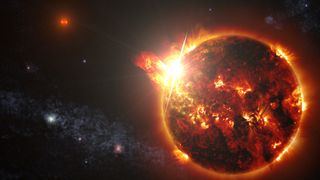
It is possible one of Proxima Cen’s planets is suitable for life. However, we recently detected the signature of fierce space weather from Proxima Cen, which implies an orbiting planet could be blasted with hazardous particles and magnetic fields.
Our neighbour is not like the sun
Our sun is a relatively unremarkable yellow dwarf star, hosting the only known life-bearing planet in the Universe: our Earth.
Proxima Cen is very different. It is a red dwarf star, with a diameter only 15% of the sun's, and a surface temperature of 3,000 K (degrees Kelvin), much cooler than the sun's 6,000K.
Because Proxima Cen is relatively cool, the "Goldilocks zone" of orbits around it – where the temperature is just right for liquid water – is around one-twentieth the Earth's distance from the sun. We are interested in planets in a star's Goldilocks zone because liquid water is necessary for life as we know it.
We know Proxima Cen has at least two planets: Proxima Cen b, a rocky "super-Earth" located in the middle of Proxima Cen’s Goldilocks zone, and Proxima Cen c, a “sub-Neptune” located further out.
For years, astronomers have suspected planets like Proxima Cen b may be a dangerous home for life because they are so close to their host stars. Many red dwarf stars produce frequent, powerful flares – intense bursts of radiation travelling out into space. If planets like Proxima Cen b don’t have protective features such as a thick atmosphere or a strong magnetic field, they would be exposed to perilous levels of radiation.
But what’s the weather like around these stars?
The “space weather” of red dwarfs is another important factor in determining how hospitable they are to life. While flares involve intense bursts of light, space weather events mean the magnetic field and charged particles from the star can interact with planets directly.
The most energetic space weather events are known as coronal mass ejections (or CMEs). These massive eruptions escape the atmosphere of a star and travel through space at millions of kilometres per hour.
If the space weather conditions are extreme enough, the planetary atmosphere can be blown away and its magnetic field can be pushed backwards, leaving the surface exposed to deadly flare radiation.
CMEs have been detected around the Sun since the 1970s, but detecting space weather events around distant stars is much harder.
A sequence of powerful coronal mass ejections from the Sun, observed by the ESA/NASA Solar and Heliospheric Observatory (SOHO). The Sun is located behind the central masked circle. (Image credit: ESA/NASA/SOHO)
For updates on the weather, tune into the radio
CMEs on the Sun produce characteristic bursts of radio noise, such as “type II” and “type IV” bursts. By detecting similar signatures on other stars, we can indirectly identify stellar CMEs.
On the night of May 2, 2019, we observed a massive optical flare with an estimated total energy output of 16 septillion joules. (That’s nearly 17 million years’ worth of Australia’s current electricity output.) On the Sun, flares this big happen only once every decade or two. But on Proxima Cen, they happen every few weeks.
Using ASKAP, we observed a spectacular sequence of intense radio bursts.
Radio and optical data from Proxima Cen on the night of May 2 2019. The top panel shows the ASKAP ‘dynamic spectrum’, showing how the intensity varies with radio frequency and time. The bottom panel shows data from optical telescopes, revealing a powerful outburst of radiation. When paired together, the occurrence of powerful radio bursts associated with flaring activity becomes clear. (Image credit: Andrew Zic/University of Sydney/CSIRO)
With the amazing detail revealed with ASKAP, we could see we had detected the best example of a solar-like type IV radio burst from another star to date.
This blast of radio waves implies the space weather environment around Proxima Cen is quite violent.
‘One swallow does not make a summer’
In 1859, British astronomers Richard Carrington and Richard Hodgson made the first observations of a solar flare, which was followed by a massive space weather storm named the “Carrington event”. We now know the storm was caused by a massive coronal mass ejection hitting Earth.
Carrington noted the coincidence between these extraordinary events, but was cautious to draw any connection between them, famously stating “one swallow does not make a summer”. We now find ourselves in a similar situation to Carrington.
We have observed a radio burst signature implying a CME erupting from Proxima Cen. But to confirm the relationship of these stellar radio bursts with CMEs, we need to harness information from other wavelengths. Once we can do this, we should soon know exactly how hazardous it is to live next to a star like Proxima Centauri.
Follow all of the Expert Voices issues and debates — and become part of the discussion — on Facebook and Twitter. The views expressed are those of the author and do not necessarily reflect the views of the publisher.
Everyone needed a respite from 2020, and tales of discovery provided a happy distraction from the worries of the day. Here are a few reminders that we still live in a world full of wonders.
1. Flowers at the South Pole
Antarctica was once home to a diverse rainforest. The unearthing of traces of vegetation in 90-million-year-old sediments off the coast of West Antarctica shows just how radically different the planet was during the age of dinosaurs, with conifers, ferns and blooming flowers where an ice sheet sits today (SN: 4/1/20).
Roughly 90 million years ago, a diverse rainforest (shown in this artist’s reconstruction) flourished within about 1,000 kilometers of the South Pole.J. MCKAY/ALFRED WEGENER INSTITUTE (CC BY 4.0)
2. Life finds a way
Researchers are still identifying new species and cataloging the amazing diversity of life on Earth. This year saw the discovery that the sparkly “Elvis worm” of the deep sea is actually four different species (SN: 5/25/20). Other scientists found a bonanza of 10 new bird species and subspecies on remote Indonesian islands (SN: 1/9/20). And the first complete count of plant species on New Guinea revealed more than 13,600 species of vascular plants, the most of any island on Earth (SN: 8/18/20).
New Guinea’s impressive array of floral diversity includes this Syzygium plant, a member of the myrtle family.YEE WEN LOW, R. CÁMARA-LERET ET AL/NATURE 2020
3. Raining reptiles
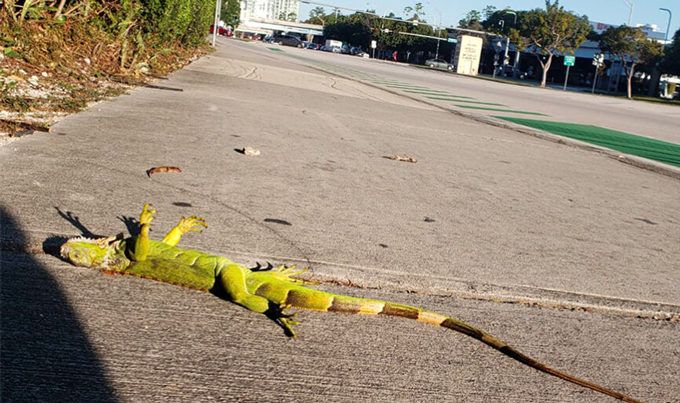
During a cold snap in southern Florida, lizards started falling from trees, landing legs-up (SN: 10/30/20). The reptiles weren’t hurt, just so cold that they couldn’t move and lost their grip. Oddly, this may be good news for the six lizard species scientists examined. The ability to withstand temperatures down to about 5.5° Celsius may suggest some resilience to extreme weather caused by climate change.
This iguana fell out of a tree in Key Biscayne, Fla., after a cold snap in January. Scientists have learned that such lizards are more tolerant of the cold than previously thought.BRETT PIERCE
4. Super chill
Hot water can sometimes freeze more quickly than cold, a baffling phenomenon called the Mpemba effect. Scientists couldn’t explain it — and weren’t sure it was even real. Now researchers have demonstrated the bizarre effect for the first time in the laboratory by cooling glass beads as a proxy for the more complex freezing process of water. In some conditions, the researchers say, materials can take a cooling “shortcut” that allows warmer objects to cool faster than colder ones (SN: 8/7/20).
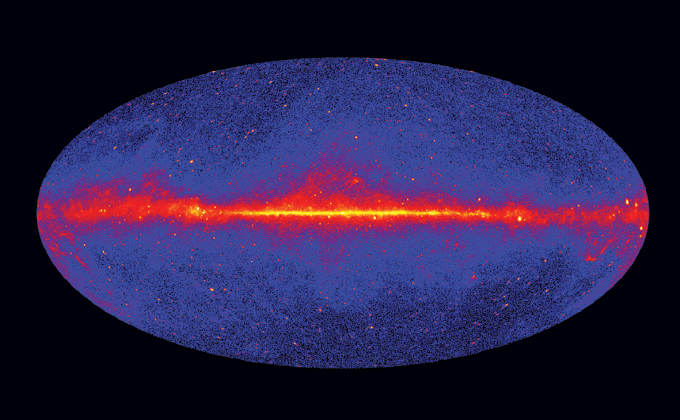
Astronomers have found the edges of the Milky Way, for the first time showing its enormous span and potentially helping to gauge its heft. Our home galaxy stretches almost 2 million light-years across, more than 15 times as wide as the Milky Way’s spiral disk of stars and planets (SN: 3/23/20). Beyond that disk lies a broad stretch of gas surrounded by a vast halo of invisible dark matter.
The vastness of the Milky Way (shown in a gamma-ray image) seems almost immeasurable, but this year, astronomers put limits on our home galaxy’s bounds.FERMI LAT COLLABORATION/DOE AND NASA
5. Go fly a snake
Paradise tree snakes can fling themselves 10 meters or more through the air, and engineers have now figured out how they stay aloft. Once the snakes are in the air, they undulate both side to side and up and down, giving them the stability needed to glide (SN: 6/29/20).
Scientists captured the undulating motion of paradise tree snakes as they glide through the sky. A computer simulation based on high-speed video shows that the undulation is necessary for stable flight.
6. Floats our boat
Here was a chance to witness the seemingly impossible: tiny toy boats floating along both the top and bottom of a levitating liquid. Physicists made this magic happen by shaking a container of liquid, thus keeping a fluid layer aloft above a layer of air and allowing the inverted flotation (SN: 9/2/20).
Physicists knew it was possible to keep a layer of liquid levitated over a cushion of air by vigorously shaking the layers up and down in a container. But new lab experiments have revealed a surprising effect of that antigravity trick. Toy boats and other objects are able to float along the bottom surface of a levitated liquid as well as its top.
7. Will to survive
One inspiring creature just refused to accept being eaten. The Regimbartia attenuata water beetle is the first prey known to survive a trip through a frog’s entire digestive system, not just by taking a ride (like the fish eggs found this year to survive ducks’ digestive systems) but by actively escaping through the back door (SN: 8/3/20; SN: 6/29/20).
About two hours before this video begins, this pond frog (Pelophylax nigromaculatus) ate a water beetle (Regimbartia attenuata). After traversing the digestive tract, the beetle emerges from the back end of the amphibian, alive. It’s the first documented example of prey actively escaping a predator through the digestive system.
8. Everybody smile
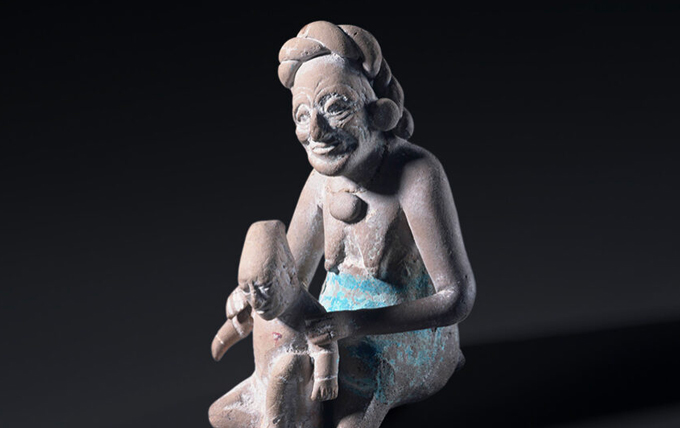
From grins to grimaces, facial expressions may be universal across human cultures, and from ancient times to the modern day. Just by looking at the faces of sculptures crafted between 3,500 and 600 years ago, without the context of the rest of the sculpture, present-day people correctly interpreted expressions such as anger in depictions of combat and pain in sculptures of people being tortured (SN: 8/19/20).
This ancient sculpture of a beaming Maya woman holding a child was among the artworks included in a study of universal facial expressionsPRINCETON UNIVERSITY ART MUSEUM 2003-26, GIFT OF G.G. GRIFFIN
9. Meet PigeonBot
A robotic bird made with real pigeon feathers can change the shape of its wings by fanning its feathers out or gathering them in, making for more birdlike flight. Using the robot, scientists discovered that a bird can steer into a turn by bending just one “finger” on one of its wings (SN: 1/16/20).
A robotic pigeon that can change its wing shape like a real bird paves the way for creating more agile aircraft, and offers a new way to study bird flight.
10. It’s alive!
Putting Rip Van Winkle to shame, microbes that had been buried in seafloor sediments for more than 100 million years revived and multiplied. All the microbes needed was food to pull them from their dormant state (SN: 7/28/20).
Seafloor sediment from beneath the Pacific Ocean contains still-living microbes (green in this microscopy image) that are more than 100 million years old.JAMSTEC
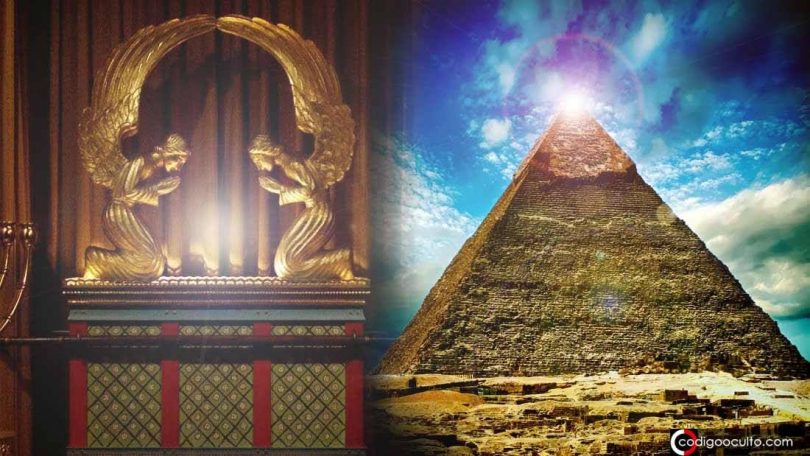
Ark of the Covenant: Device used to power the Great Pyramid of Giza
Is there a relationship between the Great Pyramid of Giza and the Ark of the Covenant? After it was discovered that it was not used as a tomb and that it stores electromagnetic energy inside … Is it possible that these two devices were connected ?
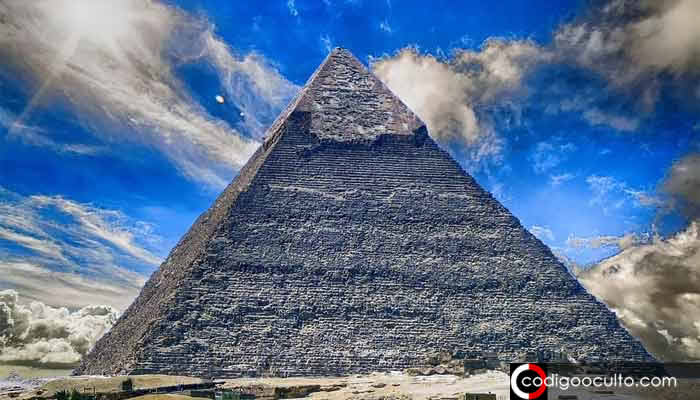
It is now official that the Great Pyramid of Giza was not used as a tomb. After many studies through ScanPyramids , it was detected that it contained thermal anomalies inside.
This posed a big question mark for archeology and science who believed that the temperature inside was constant .
Writer and filmmaker David Wilcock commented that the energy of the pyramids is related to gravity . Compare this energy to a river that flows constantly to Earth , which can be harnessed with a funnel-shaped construction . Thus, the energy swirls inside it and creates a vortex current.
Knowing this, there is no doubt that the Great Pyramid of Giza was built for the purpose of storing energy . The question is what for? With what technology? And the most important, are all the components of this great machinery still inside it ?
The Ark of the Covenant as an energy device
According to the book of Exodus, after the Israelites were liberated from Egypt, God summoned Moses on a sacred mountain, granting him two stone tablets that were carved with the ten commandments.
At that time, Moses was instructed to build the Ark of the Covenant , one of the most controversial devices in history.
The Ark of the Covenant not only contained the ten commandments, it was also believed to be the throne of God himself; where the Ark was, there would be the power of God.
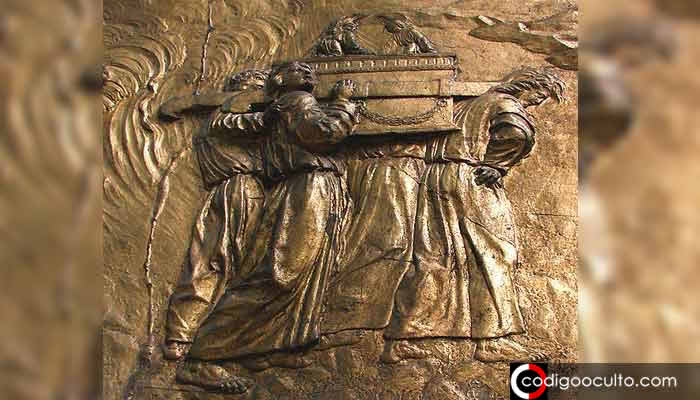
The dimensions of the alliance were approximately 131 x 79 x 79 centimeters . It was plated with gold and its crown, also made of gold, was placed around it. It had four gold rings that were fixed at its feet where wooden staves were placed, also gold-plated and with which the device would be transported .
Some researchers suggest that if the details of the ark’s construction were patented in the past , then it is a device similar to an electrical capacitor , including two electrodes separated by insulators.
To this is added that it was placed in a “room” that had a magnetic field of 500 to 600 volts per vertical meter. In this way, the crown that surrounded the Ark of the Covenant was charged with energy , functioning as a capacitor.
The true power of the Ark
There are many theories about this device, but most historians agree that it generated a powerful and unknown force.
This is assumed due to the prohibition of touching it and that those who transported it had to wear a kind of protective suit while the rest kept their distance.
Even the descriptions in the Bible mention the enormous power that was dangerous to man.
Thus it is suggested that the Ark was actually part of a complex system of energy production , which could be used as a weapon , just as Jericho used it. As a means of communication , just as Moses used it to talk to God. Among other uses.
The proofs of this power are found in the reading of the instructions for the Assembly of the Tabernacle where the Ark was kept, as well as the exact rules to access its interior without endangering their lives.
Another clue can be found in the Battle of Qadesh , in Abu Simbel, where you can see how Ramses II uses a device with a description similar to the one we can read in the Bible about the Ark of the Covenant, with which they invoked « mysterious powers.
Connection with the Great Pyramid of Giza
If the Great Pyramid of Giza was not built to be a tomb or to store things, as some skeptics suggest, why was it built?
It is possible that the answer is found in many factors, with the coordinates of its construction ; these are aligned with north-facing precision, with only 3/60 degree of error.
Another surprising fact is that it is located exactly over the center of the land mass . The east / west parallel and the north / south meridian intersect in two places on the planet; one of these is the Great Pyramid of Giza.
As can be seen, the construction of this great monument was not a whim ; its shape, location and size were not made by chance and everything had a reason.
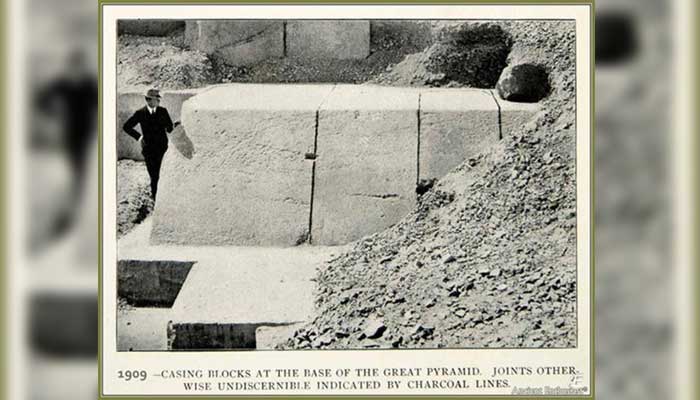
In fact, the pyramid’s cornerstone foundations possess a ball-and-socket construction that stands up to the expansion of heat and earthquakes. Foundations that were extremely large for human workers to displace thousands of years ago.
It is for that reason that it is believed that the Ark of the Covenant could have been the device used within the Great Pyramid of Giza, as a kind of capacitor or battery that would turn the entire structure into an ancient power plant.
Although they are only theories, there are too many connections to be taken for a simple “story”, as the skeptics of traditional history would have you believe.
JAPAN RELEASES STUNNING FIRST IMAGES OF ASTEROID RYUGU SAMPLES
Wait, is that tin foil?
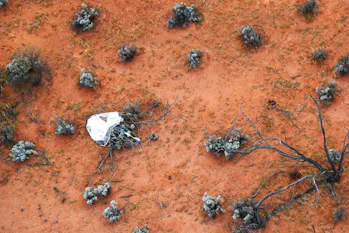
ON DECEMBER 6, a piece of an asteroid was found in the middle of the Australian desert.
But this wasn't an act of nature. It was a well-choreographed, meticulous transaction which took years of planning and execution.
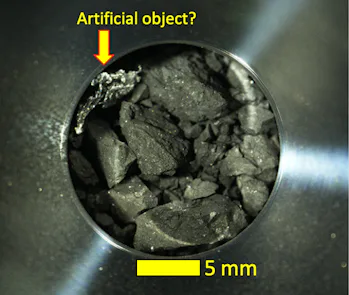
Japan's Hayabusa2 spacecraft, which traveled for nearly six years in space to tag and collect a sample from asteroid Ryugu, dropped off a small capsule containing pieces of the space rock for analysis here on Earth. The Japan Aerospace Exploration Agency (JAXA) opened up the capsule last week, revealing the precious space cargo to the world for the first time. And there was a surprise in store.
The images are the climax of the Hayabusa2 mission, which ended a five-year journey when it landed on asteroid Ryugu on February 21, 2019. The spacecraft arrived within range of Ryugu in June, 2018 and spent more than a year orbiting its rocky companion, collecting observations and images of Ryugu before its final touchdown.
The spacecraft collected a small sample of the asteroid, and dropped it off in the Woomera Prohibited Area in southern Australia. The 40-centimeter capsule landed on Earth on December 4, and the team behind the mission located and retrieved it two days later.
The capsule containing a piece of the space rock was found in the Australian desert.JAXA
After making its way to a lab in Japan, scientists finally opened the precious cargo on December 14, peering into a rare sample from the cosmos.
WHY ITS NEWSWORTHY
Inside the capsule was only the second asteroid sample that humans have managed to get their hands on throughout history. By studying the sample, scientists are hoping that it will help them better understand the origins of the Solar System.
Asteroids formed from the very same material that formed the Solar System, and may contain clues as to how water and other biological material made their way to Earth, and sparked life as we know it.
Most of what we know about asteroids comes from meteorites, which rain down to Earth as their parent comets and asteroids pass our planet. But this material may be significantly altered by virtue of Earth's atmosphere, water or weather.
So snagging a piece of an asteroid as it flies through space provides scientists with pristine material from billions of years ago when the Solar System was in its infancy.
WHAT'S NEW
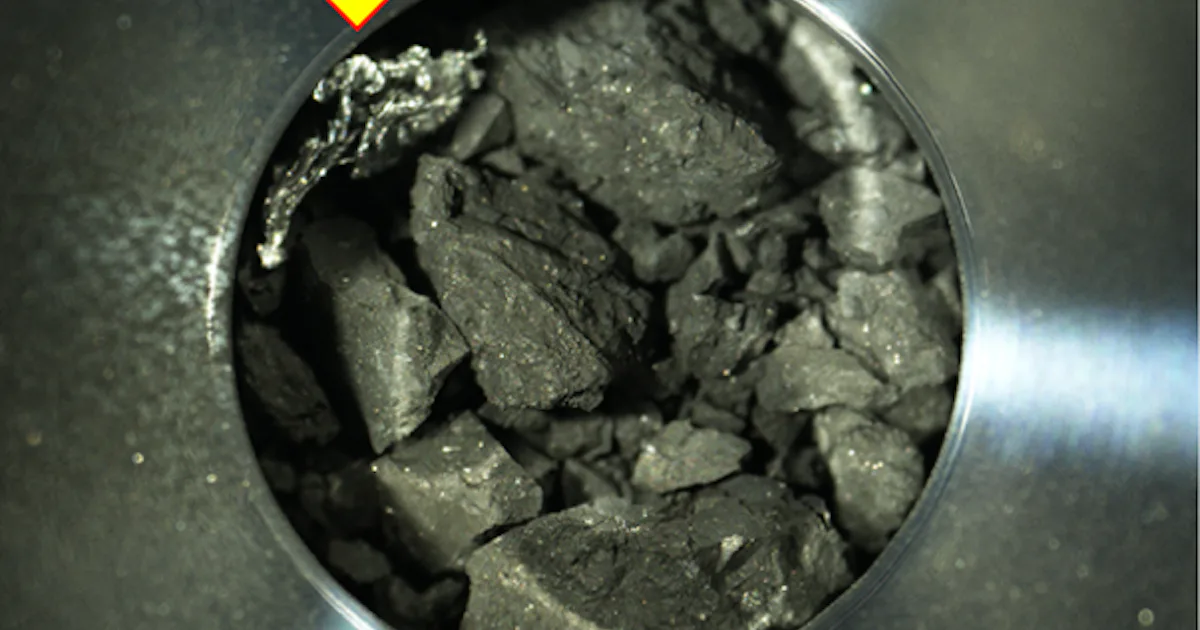
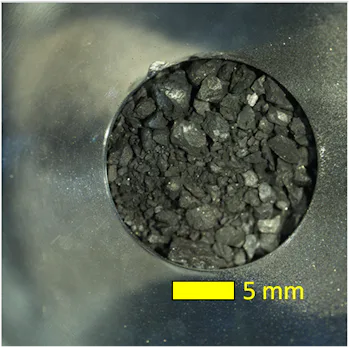
As seen in the images, the capsule contains small, gravely pieces of the asteroid that were collected by the Hayabusa2 spacecraft.
Many particles larger than 1mm were found in both chambers A and C.JAXA
There was a total of three capsule chambers with the asteroid samples contained inside. The samples inside Chamber C were larger than the one found in Chamber A, and the scientists behind the mission believe that the Chamber C samples were collected during the spacecraft's second touchdown on the asteroid.
Another odd finding in Chamber C is an artificial object, which appears to be some sort of tin foil.
The tiny scraps may be aluminum that scraped off the spacecraft during landing, according to JAXA. But the jury's still out on what, exactly, this scrap of material is and where it came from. It does, however, appear to be artificial and thus, potentially space trash.
WHAT'S NEXT
Now that the capsule has been opened, scientists will spend years analyzing the samples in order to try and figure out the origins of asteroid Ryugu, as well as the origins of our own world.
It seems the spacecraft scooped up more than enough dirt for initial analysis, according to JAXA, suggesting it may hold a wealth of new information about asteroids.
Giants of Ancient Egypt: The lost legacy of the “No-Human” Pharaohs
How did humans move blocks of tons of weight when building the pyramids ? That and other questions have led us to question the existence of giants in Ancient Egypt.
History has led one to think many times that the rulers of ancient Kemet were not ordinary humans.
Elongated skulls , others described as almost spiritual beings, and others as giants . And to support this theory is one of the legends that tells how the Pyramids of Giza were built at the hands of a race of giants.
This theory was shared during a lecture called “Atlantis and the Ancient Gods” by the occultist and Mason, Manly P. Hall.
Hall stated that in AD 820, the Great Pyramid of Giza was opened by El-Rashid Al-Ma’mun, a descendant of the great El-Rashid of the Arabian Nights. He had been told that it was built by giants known as Sheddai and that within them awaited a treasure beyond human knowledge .
Although it is true that in the year 832 d. C. Al-Ma’mun traveled to Egypt and was the first to explore the Great Pyramid at a time when it was still covered with white limestone, who are the Sheddai is a mystery that continues to be present.
Some say they were the followers of Horus , others the King of Ad, who was said to be the ruler of the lost city of Iram of the Pillars . An account mentioned in sura 89 of the Qur’an, where he is mentioned as a giant.
The monumental constructions in Egypt and their relationship with the giants
The Book of Wonders is an Arabic compilation of ancient traditions in Egypt and the prediluvian world.
Here it is said that the people of ‘Ad were giants, so Shaddad could be one of them. It is said that he built the monuments in Dahshur with the stones that were carved in his father’s time.
Before that, the giant Harjit was the one who started construction. Previously, another giant named Qofṭarīm placed the ” secrets in the pyramids of Dahshur and other pyramids as had been done in the past .” It was also he who founded the city of Dendera.
The text also mentions that the city of Memphis was built by a group of giants who lived after the Great Flood and served King Misraim, who was also known as a giant.
The cult of Horus
The followers of Horus , who may have created the main mound of Giza long before the pharaohs, are believed to be giants.
This is believed because at the end of the IV millennium BC. C., those called Disciples of Horus were a powerful aristocracy that ruled Egypt.
The theory about its existence is supported by the discovery of predynastic tombs north of Upper Egypt. From the remains found, skulls and constructions much larger than the rest stand out. The difference is such that any kind of common racial strain is ruled out.
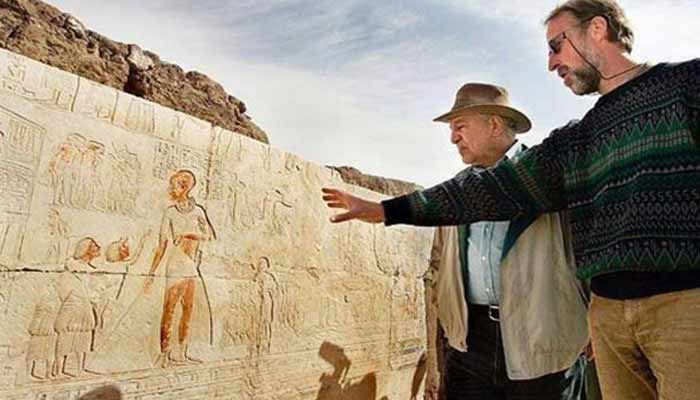
In fact, Professor Walter B. Emery , an Egyptologist who explored Saqqara in the 1930s, discovered the predynastic remains.
Emery discovered that the abnormally large remains belonged to people with blond hair and a much more robust complexion . He said that the strain was not native to Egypt, but that it was very important in his government.
He discovered that this group only mixed with other equally important aristocracies and were believed to be part of the Followers of Horus.
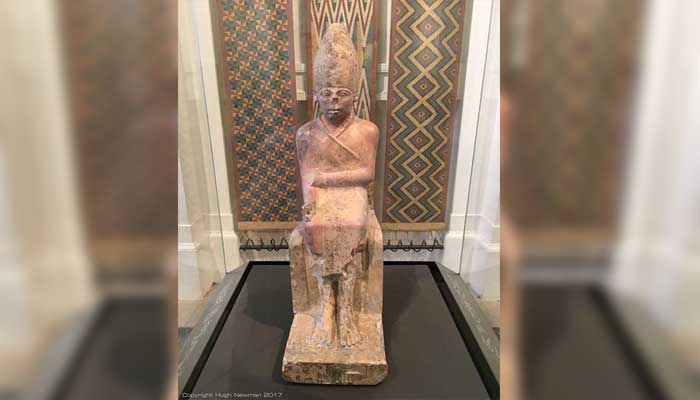
The 2.5 meter tall king
Khasekhemui was the last ruler of the Second Dynasty of Egypt , with its epicenter near Abydos. He was present in the construction of Hierakonpolis, the predynastic capital.
He was buried in the necropolis of Umm el-Qa’ab. His limestone tomb was investigated in 2001, surprising experts by the quality of the construction compared to the Step Pyramid of Djoser at Saqqara, which was dated to the beginning of the Third Dynasty.
Khasekhemui’s remains were never found, so it is believed that it was looted long before.
Flinders Petrie , who was the first to excavate the site, found evidence from the 3rd century BC. C., that the pharaoh almost reached 2.5 meters in height.
Representation of a giant in Saqqara
The third dynasty was responsible for the construction of the Step Pyramid of Saqqara, built with other temples in the complex.
Djoser, who was in charge of burying Khasekhemui, who is suspected of being his son , ruled Saqqara during the construction of the pyramid.
Within this complex it was possible to photograph a painting of a giant that clearly seemed to have an elongated skull.
However, this could be a representation of skeletons that were excavated in the 1930s of individuals with large skulls and complexions.
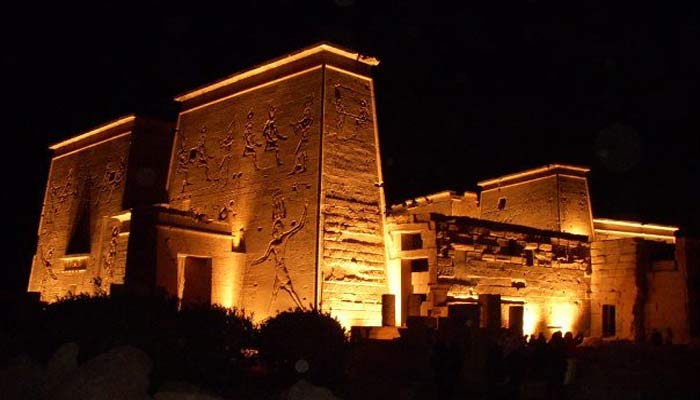
The Temple of Isis
In 1895 and 1896, the world’s newspapers published a strange story about a photograph of the Temple of Isis .
The first time the article appeared was in the Arizona Silver Belt under the title ” Prehistoric Egyptian Giants .”
The article read the following:
In 1881, when Professor Timmerman set out to explore the ruins of an ancient temple of Isis on the banks of the Nile, 16 miles below Najar Djfard, he opened a row of tombs in which some prehistoric race of giants had been buried . The smallest skeleton of about 60, which were examined during the time Timmerman was excavating at Najar Djfard, was seven feet eight inches long and the largest eleven feet one inch . The tombstones were discovered in great numbers, but there was no record that even hinted that they were in the memory of men of extraordinary size. The tombs are believed to date from 1043 BC “
Giant mummified finger
Giant finger found in Egypt revealed in 2002. Courtesy: ancient-origins.net According to the German daily BILD.de, Gregor Spörri , a millionaire who owns a Swiss nightclub, took several photos of a mummified giant finger in the late 1980s.
The owner was a retired grave robber who lived in Bir Hooker, near Sadat City. About 100 kilometers from Cairo.
The finger was 35 centimeters long , so it belonged to someone who easily exceeded 4 meters in height .
However, this finding was barely made public in 2012 , 24 years later and, since then, it has not been made official .
According to Spörri, the finger was found 150 years ago and had been in the family of the owner, who took the trouble to X-ray the finger to confirm that it was real .
The exact place where it was found was never said, but the owner mentioned a hidden room inside the Great Pyramid , where there are supposedly huge tombs , all empty.
The Million Mummies Cemetery and the skeleton of more than 2 meters Skeleton over 2 meters
Fag el-Gamous is a cemetery close to a pyramid that has been explored by archaeologists from Brigham Young University for the past 30 years .
A large number of mummies have been found, especially from the Roman or Byzantine Empire that ruled Egypt from the 1st to the 7th century AD. C.
However, the pyramid may be from 2500 BC. C. , time in which the others were built.
The number of burials in such a small place has raised many questions , especially since the pyramid is older than the cemetery.
Who they were and why they ended up buried there remains a mystery and has led to several hypotheses. Likewise, it is impossible to investigate further since the archaeologists who were working on it had their license revoked for no apparent reason
. Many say that the excavation was stopped because they had discovered the body of a giant and were revealing information .
Giants in Egyptian art
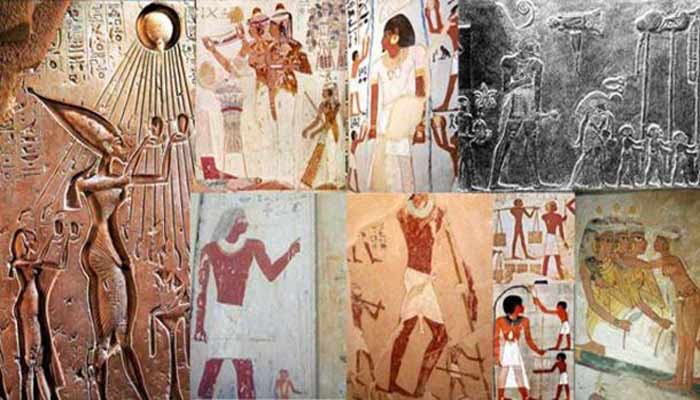
Egyptian art has many references from his day to day ; from wars to simple family meals. That is why it is not surprising that if they represented giants in them, it is because they lived with them.
In addition to art, according to various researchers, giant coffins are the most reliable proof of their existence.
In the Serepeum Saqqara there are 25 coffins made of granite and diorite that weigh up to 70 tons each and in them mummified Apis bulls were sealed as part of some ancient cult.
This has led to speculation that these coffins belonged to giants. Likewise, another huge sarcophagus was found, which is located under the Giza plateau , in a place called the “well of Osiris.”
We zagen ze nog nooit zo veel vliegen: tien opmerkelijke Belgische UFO-meldingen uit 2020 verklaard
MEULEBEKE/ANTWERPEN - Het Belgisch UFO Meldpunt in het West-Vlaamse Meulebeke kreeg vorig jaar 446 meldingen binnen van mensen die iets vreemds in de lucht hadden gezien. Dat is een stijging van 64 procent in vergelijking met 2019. Met dank aan de lockdown, waardoor we plots meer tijd hadden om naar de hemel te turen. En daar zitten enkele opvallende luchtverschijnselen tussen. Wij haalden de tien opmerkelijkste er voor je uit.
Valentijn Dumoulein
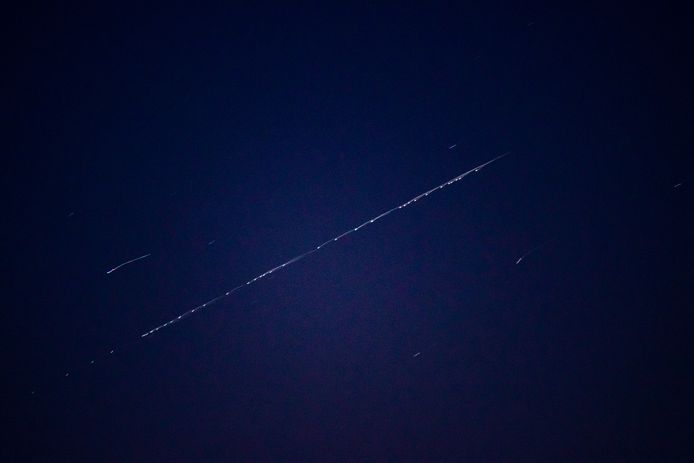
1. De satelliet-treintjes van Elon Musk (maart en april)
Dat er dit jaar een recordaantal meldingen binnenliep bij het Belgisch UFO Meldpunt heeft in grote mate te maken met SpaceX, het commerciële ruimtevaartbedrijf van Elon Musk. “Dertien meldingen bereikten ons op 29 maart. De avond voordien waren het er zelfs 22”, zegt Frederick Delaere van het UFO Meldpunt. “Al deze meldingen gingen over witte lichtstippen die in een lange rij traag langs de hemel bewogen. Het betrof een nieuwe uitzetting van de Starlink-satellieten van SpaceX, die in een ‘treintje’ door de lucht voorbij vlogen. Er kwamen in totaal 191 meldingen binnen over deze satellieten of het ISS-ruimtestation.”
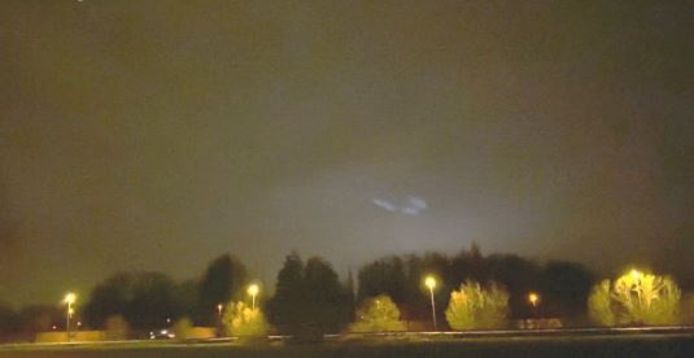
2. Carnaval in het heelal... (omgeving van Aalst, 23 februari)
Paniek op zondagavond 23 februari in de omgeving van Grembergen, Aalst en Lebbeke. Een half uur lang zagen inwoners uit die regio en omgeving schimmige lichtobjecten langs de hemel vliegen. Zes lichtgevende bollen werden geteld, meestal bewegend in formaties van drie. Soms bijna roerloos, dan weer met een enorme snelheid van Aalst wegschietend om kort daarna weer op dezelfde manier terug te keren naar een vast punt boven de stad. “Vijf getuigen hadden video’s van het verschijnsel kunnen maken en die doorgestuurd naar ons”, zegt Frederick. “Het verschijnsel op de beelden is genoegzaam bekend: het gaat om het schijnsel op de wolken van kantelbare hallogeenspots die naar de lucht zijn gericht. De datum is niet toevallig: 23 februari was de dag waarop de 92ste editie van het driedaagse carnavalsfeest van Aalst werd ingeluid.”
Bekijk hier een filmpje van de waarneming:
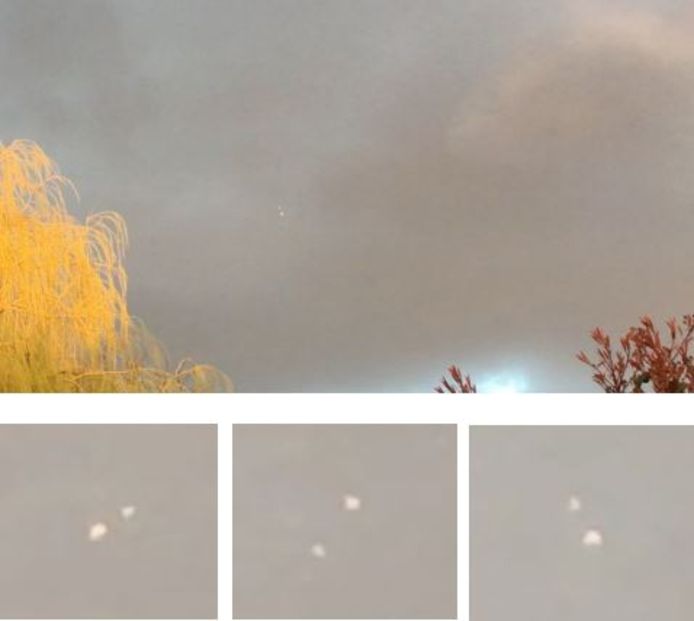
3. Verschillende lichtgevende stippen (Kuurne, 3 maart)
In de late namiddag van 6 maart filmde een politiecommissaris boven de West-Vlaamse gemeente Kuurne verschillende lichtgevende, vreemd bewegende stippen die elkaar leken te volgen. De stippen verdwenen af en toe in de wolken. “Waarschijnlijk werden hier trossen witte ballonnen gefilmd”, legt Frederick uit. “De objecten vlogen langs dichte wolkenflarden. Die ontstaan doordat luchtstromen op die hoogte voortdurend van richting veranderen. Het verklaart waarom de ballonnen geen rechtlijnig traject volgden.”
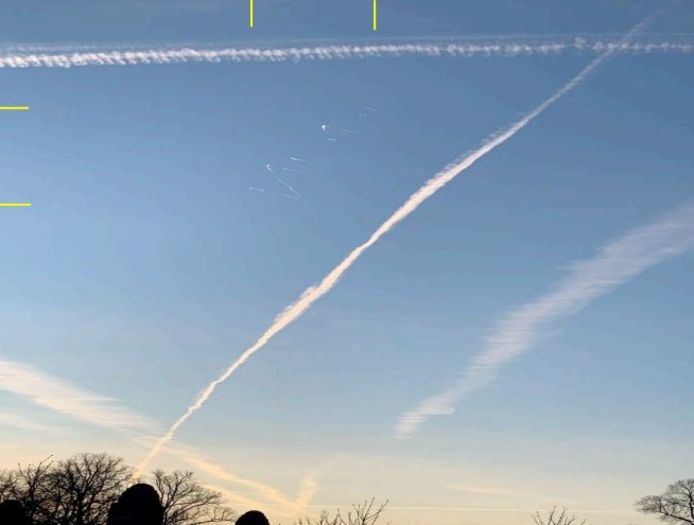
Op 18 maart verscheen rond 7 uur in de hemel “nabij Antwerpen” (een preciezere locatie wordt door de waarnemer niet vermeld, nvdr) een sinusvormige witte sliert tussen de normale condenssporen. Diezelfde dag, maar dan rond 18.30 uur, werd een gelijkaardige langere witte sliert gefotografeerd vanuit Antwerpen-Deurne. Het gaat om een zeldzaam type condensspoor van een vliegtuig.
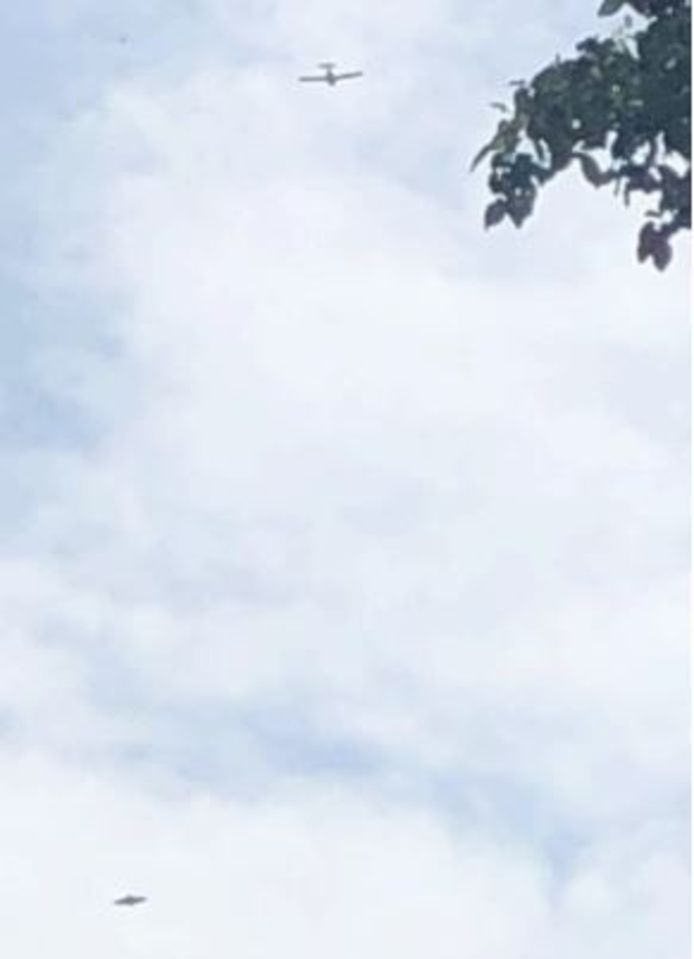
5. Bol met korte vleermuisarmen (Sint-Andries, 16 mei)
Op 16 mei kreeg het UFO Meldpunt deze melding binnen: ”Ik was aan het wandelen met mijn vriendin en onze zoon in het park. Mijn vriendin keek omhoog en zag het object boven ons vliegen. Ik keek ook en stond er versteld van. Het maakte geen lawaai en zweefde soepel.” De melder voegt er nog aan toe dat het object leek op “een bol met korte vleermuisarmen” en kleiner was dan een vliegtuig.
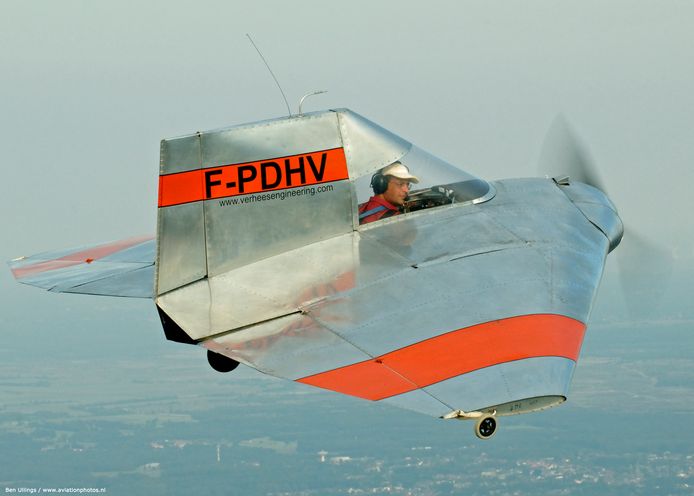
Twee foto’s werden aan het UFO Meldpunt bezorgd. Ze tonen niet alleen het merkwaardige object, maar ook een sportvliegtuig dat achter het object aanvliegt. “Dat laatste detail deed een lampje branden”, zegt Frederick. “Waarschijnlijk hadden de getuigen een Verhees-delta waargenomen. Sinds 2009 heeft dit experimentele vliegtuigtype al tientallen ufo-meldingen opgeleverd. Vaak worden de toestellen begeleid door een tweede vliegtuig. Nazicht op Planefinder bevestigde dat de tweezitsversie van de delta’s die middag langs Brugge was gevlogen. Opmerkelijk is dat de getuigen geen geluid hebben gehoord, terwijl de Verhees-delta’s toch bekend staan als vrij lawaaierige toestellen.”
6. Is het een vliegtuig, is het een vogel? (Overmere, 14 juni)
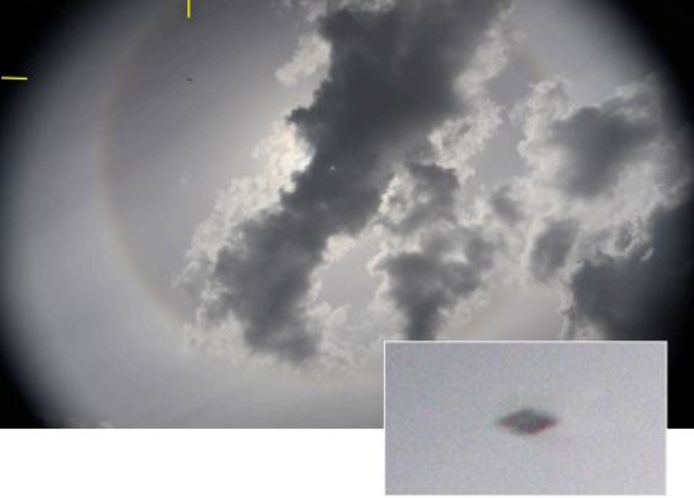
Rond 14 uur werd op 14 juni in het Oost-Vlaamse Overmere een foto van een bijzonnenring gemaakt, een optisch verschijnsel door de vorming van ijskristallen in de lucht. “Deze keer was er in de linker bovenhoek van een van de foto’s een ongewone schotelvorm te zien”, weet Frederick. “Vermoedelijk gaat het om een kleine vogel die tijdens de opname voor de camera zwenkte.”
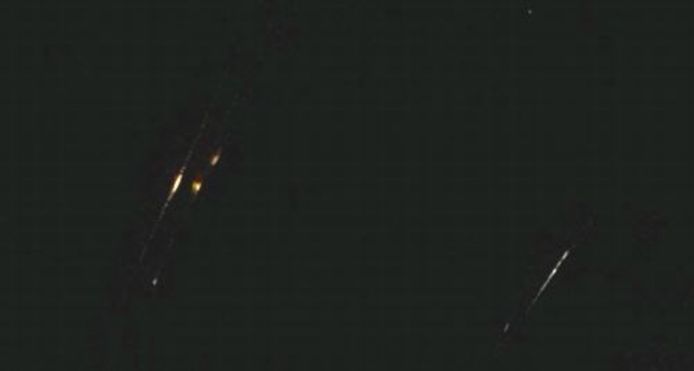
7. Twee evenwijdige lichtgevende lijnen (Lanaken, 3 juli)
Een man uit Lanaken filmde op 3 juli rond 2.50 uur vanuit het dakvenster van zijn slaapkamer drie quasiparallelle ‘lichtlijnen', die ongeveer twintig minuten roerloos in de lucht bleven hangen. Het verschijnsel deed zich voor in zuidoostelijke richting. Op uitgezoomde beelden is boven de lijnen ook een stip te zien. “Het onderzoek, dat werd uitgevoerd met behulp van een hemelkaart en een foto genomen bij daglicht vanuit dezelfde slaapkamer, bracht aan het licht dat de stip de planeet Mars was”, verduidelijkt Frederick. “Daaruit kon ook de positie van de lichtlijnen worden afgeleid. Het bleek te gaan om reflecties van omgevingslicht op het raamkozijn van het dakvenster van de buren.”
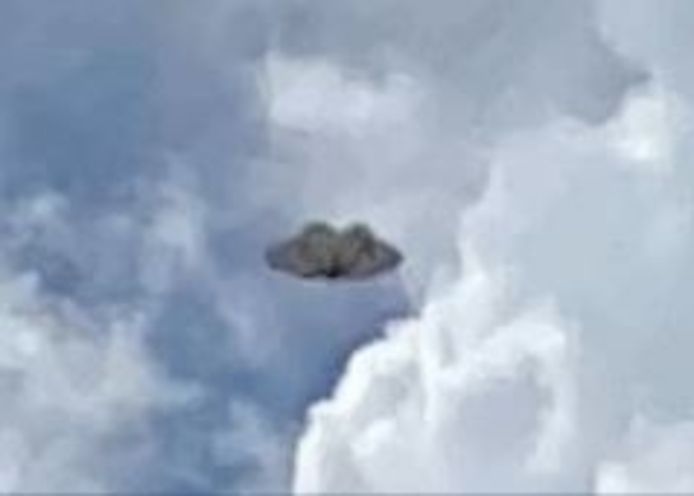
8. De vlinder die te dicht kwam (Wilrijk, 27 juli)
“De vrouw die ons deze melding doorstuurde, ontdekte pas in november dat er zich een merkwaardig object bevond op een foto die ze op 27 juli van een bijzondere wolkenpartij had gemaakt. Ze gelooft zelf niet in UFO’s, maar volgens enkele van haar vrienden kan het alleen maar een UFO geweest zijn. Wij zien echter een vlinder”, glimlacht Frederick.
Op 20 november ontving het meldpunt een merkwaardige foto van een team van architecten, gevestigd in één van de hoogste flatgebouwen op Antwerpen Linkeroever. Volgens de melder was er een UFO op te zien. Meer info werd er niet verstrekt, behalve dan dat de UFO werd opgemerkt tijdens het middageten en ongeveer een half uur lang zichtbaar was geweest. Op 24 november volgden nog achttien foto’s van hetzelfde verschijnsel, nadat een aantal extra vragen naar het architectenteam was verstuurd. “Dat gaf een heel ander plaatje”, vertelt Frederick. “Een van de foto’s bevat een merkwaardig detail: aan de linkerkant van het object zijn twee uitsteeksels te zien. Waarschijnlijkheid zijn het de handvatten van een doorschijnende of witte pedaalemmerzak, zoals op de afbeelding rechts. Dit soort wegwerpzakken vinden we overal. Ze zijn bijzonder licht en worden makkelijk door de wind opgetild en meegevoerd. Dat de zak een half uur boven dezelfde plaats bleef rondcirkelen, verklaart zich doordat de zwakke westelijke wind loodrecht inbeukte op de twee flatgebouwen die de achtergrond van de foto’s uitmaken.”
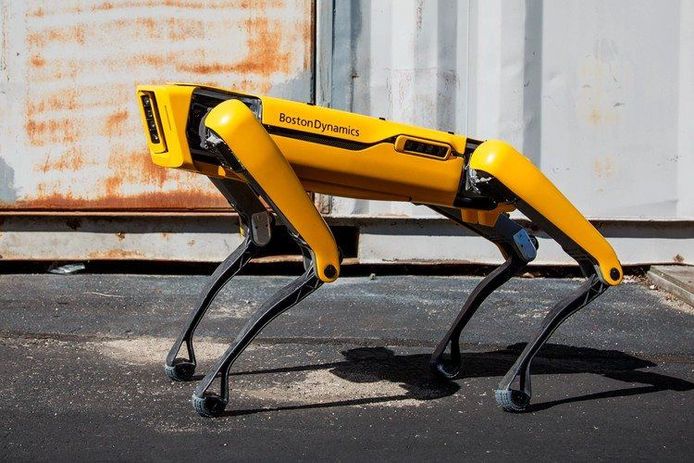
Ontmoet Spot, de robothond die reeds schapen hoedde in Nieuw-Zeeland, wordt ingezet door de New York City Police Department (NYPD) en binnenkort ook Mars zal verkennen.
Spot is van Amerikaanse makelij en werd ontworpen door het bedrijf Boston Dynamics. Hij staat op vier poten en kan dus ook trappen lopen. Hij heeft een 360 gradenzicht waarmee hij hindernissen kan vermijden. Bovendien kan de robot worden ingezet op plaatsen waar robots op wielen niet geraken. En dat maakt het stalen beest net zo interessant voor het Amerikaanse ruimtevaartagentschap NASA.
Tot nu toe werden er vier robots met wielen naar de rode planeet gestuurd, een kleine beperking gezien zulke robots enkel de relatief vlakke delen van Mars kunnen verkennen. Omdat Spot op vier poten loopt, geniet hij een grotere vrijheid en kan hij het nog onbekende terrein in beeld brengen.
Om dat mogelijk te maken, werd de robothond nog uitgerust met een nieuw sensorenpakket, een warmtebeeldcamera en aangepaste software opdat hij gegevens naar de aarde kun sturen.
Doel van de missie
Wat moet Spot nu concreet gaan doen op Mars? Men vermoedt dat er op Mars ondergrondse lavagrotten zijn. Zulke grotten zijn ontstaan door (uitgedoofde) lavastromen en zouden een geschikte verblijfplaats kunnen vormen voor de mens, eenmaal er sprake is van permanente bewoning op Mars.
GERELATEERDE VIDEO'S, selected and posted by peter2011
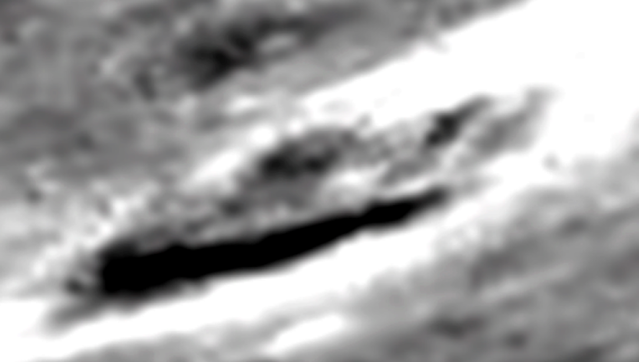
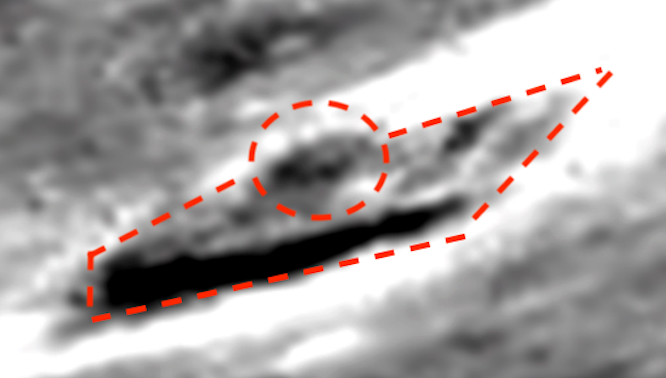
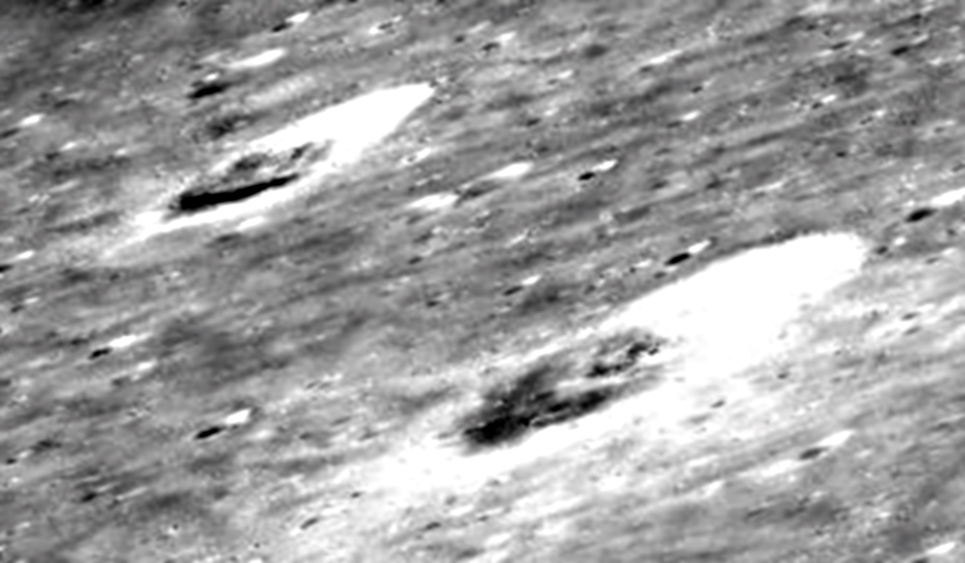
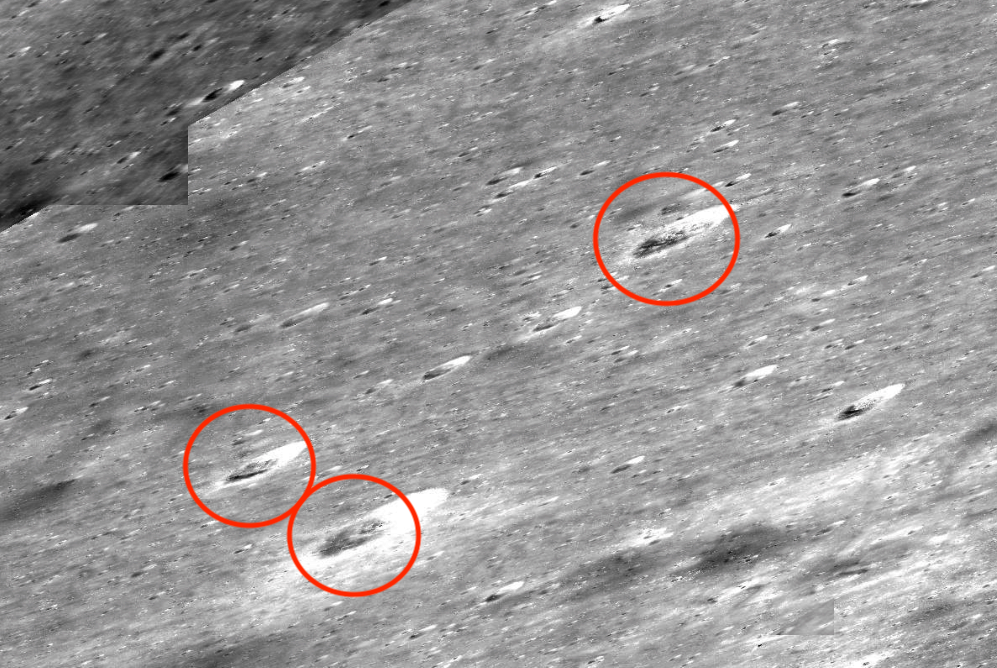
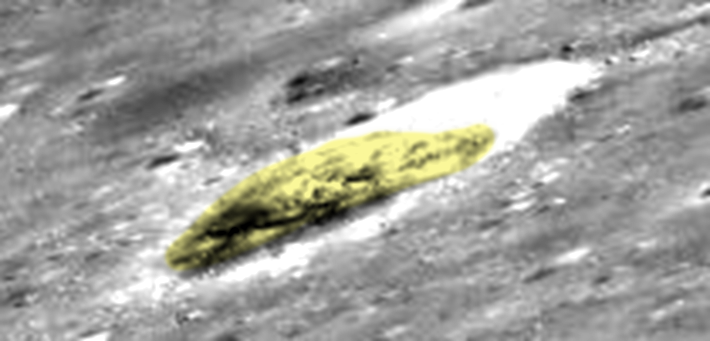
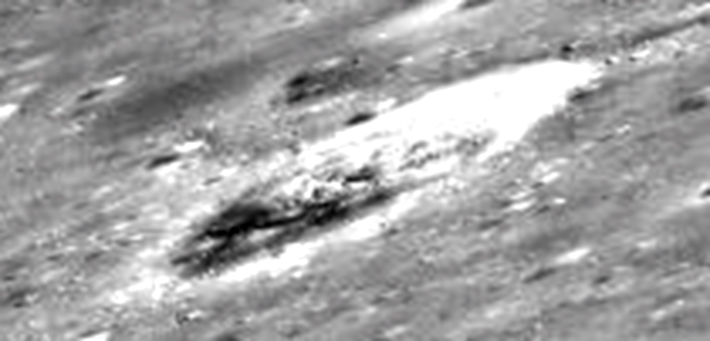
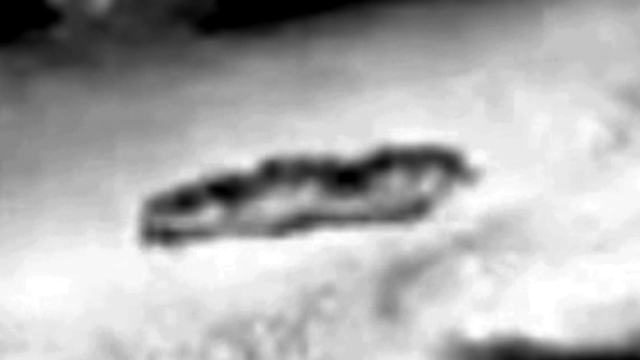
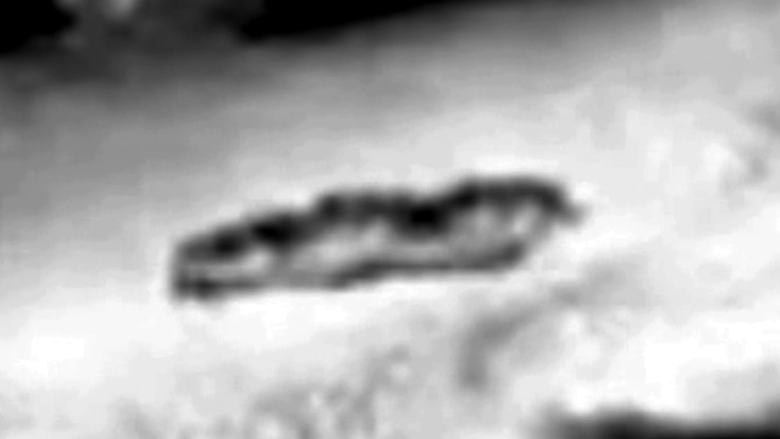
I found a few objects on Earths moon using the NASA LROC moon map. The first object is a diamond shaped grey metal craft with a hump on its upper center. The hump has dark areas going across it that look like windows. Also the hump...when I add extreme focus...has 4 antennae like objects coming out of it. Bob Lazar did say that the classic disk he worked on in Area S4 had a single antenna for balance and controlling direction. This is much larger, so makes sense it has more.
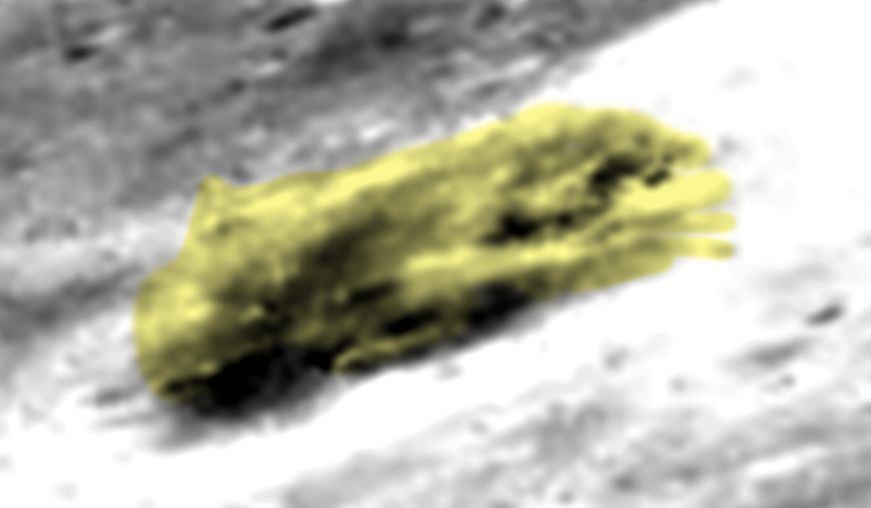
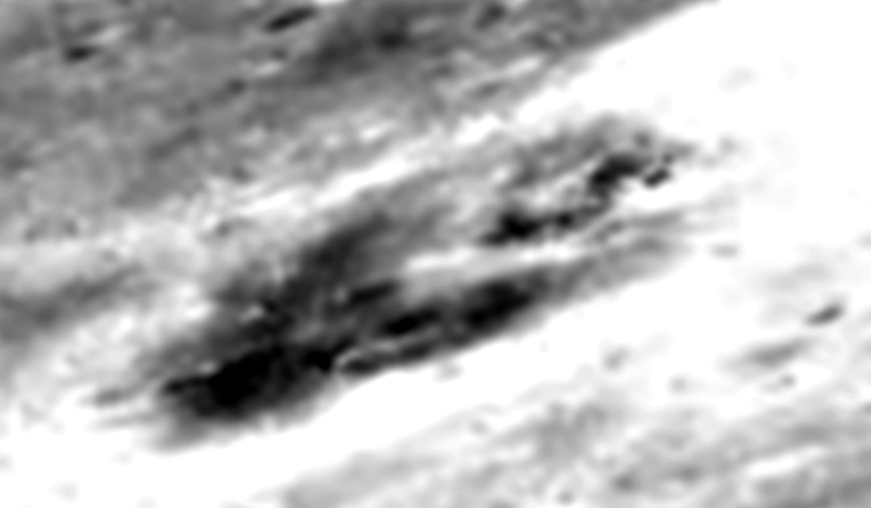
Also found something that looks like a structure, not a built structure but a grown structure. Thats the reason its more fungi in appearance.
NASA deliberately added too much light making these objects almost invisible. However with just a little adjustments of adding sharpening and contrast...the truth stands in front of us.
Also a third craft, fungi like so it must be biomechnical...that means the ship was grown. Aliens are lazy...I can't emphasis that enough. They really don't want to do the work and want things done the easiest way possible. This is 100% proof that humanity is still in the dark about the truth of alien life.
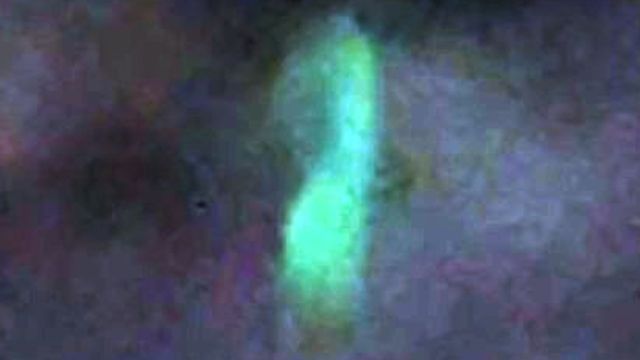
On January 2, 2021, a resident of Pembroke Pine in Florida noticed strange lights in the sky through the clouds yet it was a clear night. While filming the sky phenomenon the lights changed color and shape.
Initially thinking that the sky phenomenon was something natural like an aurora, also called northern lights, a natural light display in the Earth's sky, but after re-viewing the images it turns out that these lights were caused by a cloaked rectangular device. Mufon.
The image above shows a cloaked rectangular device below such a green light.
Boston Dynamics, one of the leading global mobile robot developers, has recently released a video showing their highly popular robot lineup in action. In tackling some of the toughest robotics challenges, the company wanted to show the public just exactly what they’ve been up to lately. In the video below, Atlas, their humanoid robot, Spot, the dog-shaped robot, and Handle, the box-juggling robot, took center stage as The Countours “Do You Love Me” began to play. The dance that happened next needs to be seen to be believed.
BACKGROUND
Initially founded in 1992 after breaking off from the Massachusetts Institute of Technology, Boston Dynamics’ goal is to “combine the principles of dynamic control and balance with sophisticated mechanical designs, cutting-edge electronics, and next-generation software for high-performance robots equipped with perception, navigation, and intelligence.”
Their first major success came with its dog-like quadrupedal robots developed for DARPA, the Defense Department’s research and development organization. This would evolve into the commercialized version of the Spot robot, which is currently on the market.
In 2018, Boston Dynamics showcased the Spot robot attempting to do “The Running Man” dance to the popular song, “Uptown Funk.” The new video shows how far the company has come with all of the mobility issues they may have had in the past and how much the robots have evolved.
ANALYSIS
The purpose of showing off the “dancing robots” is two-fold for Boston Dynamics.
The first highlights the organic quality of stable motion that humans often associate with natural movement but implemented in robots with legs. Unlike wheeled or track robots, these robots can navigate and overcome the challenges of obstacles and rugged terrain with this dynamic mobility.
The second reason for showing off the smooth, perfectly choreographed dance chops of the robots is to bring fun to autonomous robots’ evolution. Many videos of these robots have left people feeling uncomfortable due to their rigid movements and focused tenacity at completing tasks.
Boston Dynamics wanted to go into the New Year with some light-hearted fun in an attempt to show how much their robots have evolved. On their official Twitter account, they stated that “Our whole crew got together to celebrate the start of what we hope will be a happier year.”
OUTLOOK
Currently, the “Dancing Robots” video has racked up over 20 million views on YouTube, showing no signs of slowing down. And neither do the robots or their creators. Boston Dynamics plans on posting more videos of the robots dancing. And while Spot is the only robot currently on the market, the prototypes of both Atlas and Handle are well on their way to becoming the next dance sensations.
With one of the most unusual and tumultuous years behind us, these three robots indeed show that anything is possible as we move forward. That is, of course, before the Terminator-like invasion begins to the soundtrack Dirty Dancing.
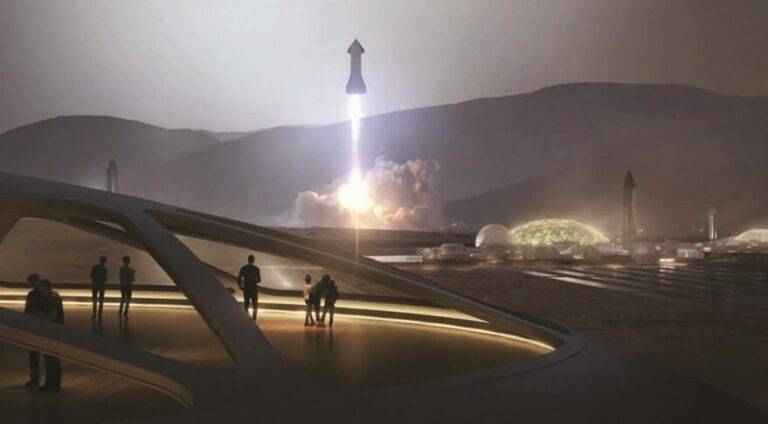
On Tuesday, December 1st, Elon Musk, CEO of SpaceX, said that he is confident that his company will be launching a crew to Mars by 2026 and teased that it could even be sooner.
Musk had been awarded the annual Axel Springer Award, which company representatives explained is “given to outstanding personalities who are particularly innovative, and who generate and change markets, influence culture and at the same time face up to their responsibility to society.” During the discussion, Musk also announced that an unmanned probe is set to head to the red planet by 2022.
Background
Founded in 2002, SpaceX designs, manufactures, and launches advanced rockets and spacecraft. SpaceX rockets and spacecraft were initially built to become reusable launch vehicles. Although a private company, Musk’s SpaceX also launches commercial and government payloads, including the recently launched Dragon spacecraft, to send NASA astronauts to the International Space Station. Now, their sights are set on Mars with a brand new vehicle known as the SpaceX Starship.
Analysis
The SpaceX Starship prototype is about 170 feet tall. It will be attached to a giant rocket known as Super Heavy, both of which will be reusable. Super Heavy will return to Earth, while Starship will fly to Mars and back to Earth by using a powerful launch system built directly into the spacecraft.
While SpaceX continues their development and testing phases for both Starship and Super Heavy, Musk stressed at the award ceremony that his “main focus is to ensure the technology is in place to allow a lot of people to go to Mars and make life interplanetary,” and that he thinks “it’s important that we aspire to have a self-sustaining city on Mars as soon as possible.”
“I want to help humanity become a multi-planet species,” he explained. With the recent SpaceX launch of Crew-1 and their working relationship with NASA firmly established, we may become Martians much sooner than we ever could have dreamed.
John Keel and the Men in Black: The Strange Side of Project Blue Book
During the 1960s, American author and UFO researcher John Keel had a problem: it involved reports of Men in Black, the mysterious strangers in dark suits said to appear after UFO sightings and intimidate witnesses.
Over the years, Keel told of arriving at the homes of UFO witnesses only a short time after they had been visited by these odd individuals, who were often described as having an olive complexion and stiff, almost robotic demeanor. The men were known for asking strange questions, and in some instances, the Men in Black even acted in an angry or threatening manner toward witnesses they approached.
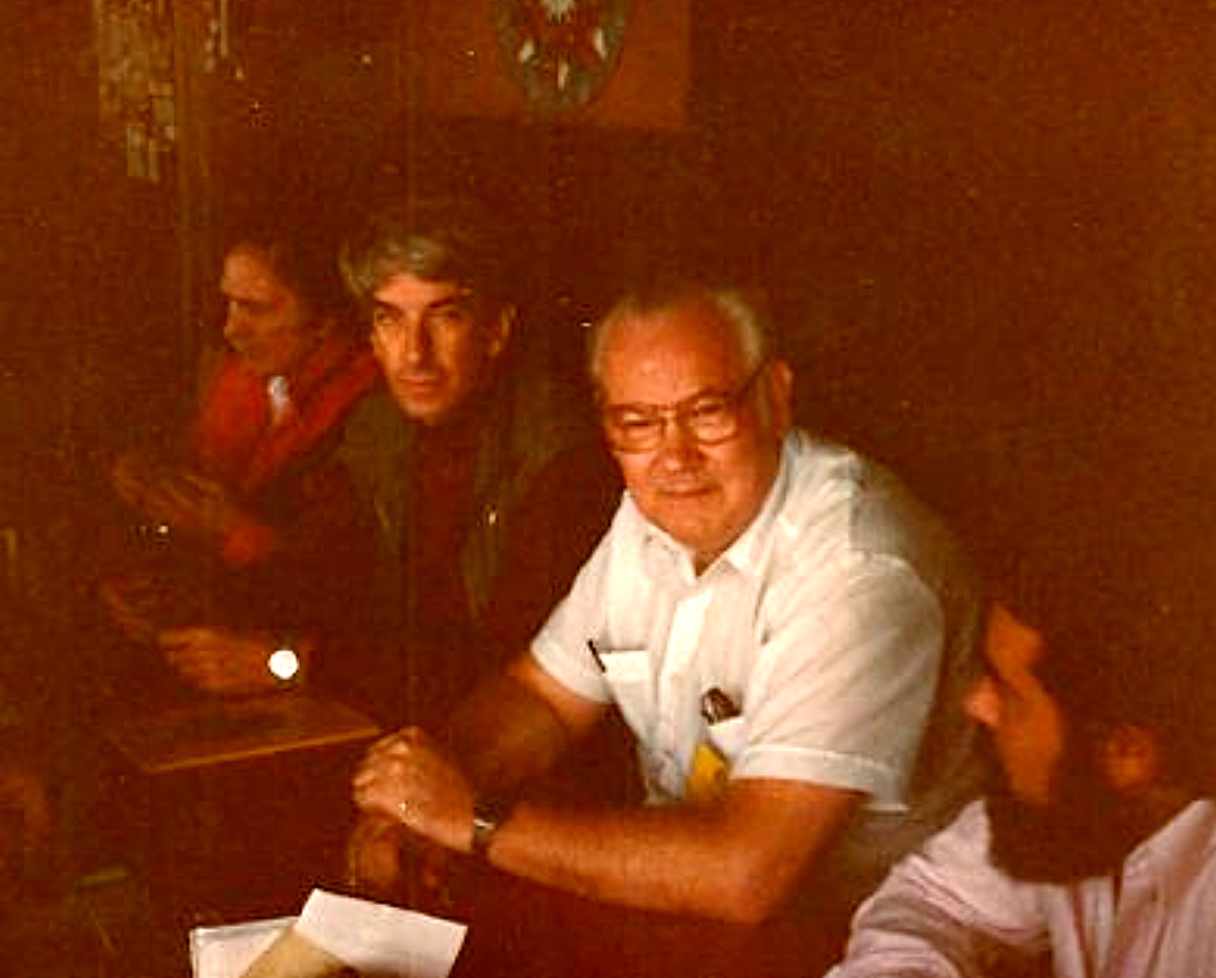
John Keel pictured in 1985 with Jacques Vallee at an event in Costa Rica (Credit: Doug Skinner/JohnKeel.com).
Keel, unable to prove who the Men in Black (MIBs) were, nonetheless viewed these strangers as a focal point of the UFO mystery. “I realized that I would never be able to catch a flying saucer,” Keel wrote in his book The Eighth Tower, “but if the MIB were real, and the testimony of many people indicated they were, I might be able to head them off at some cosmic pass, and force their big black automobile to the side of the road.”
On a few occasions, Keel said he observed the “phantom Cadillacs” that he believed to have belonged to the Men in Black. Once on Long Island, he told of receiving an anonymous phone call he recieved which resulted in him confronting and chasing one of the cars, only to have had it disappear inexplicably on a dead-end road. Keel described these “phantom” automobiles as having “sinister-looking” passengers, who often had a foreign appearance.
So who were these ominous observers of the UFO phenomenon? Are stories of “Men in Black” really just folklore that has been built onto some of the unusual characters that ran in UFO circles throughout the 1960s? Or could some of them have a more down-to-earth explanation, which might even involve investigations by the U.S. Air Force during the years of Project Blue Book?
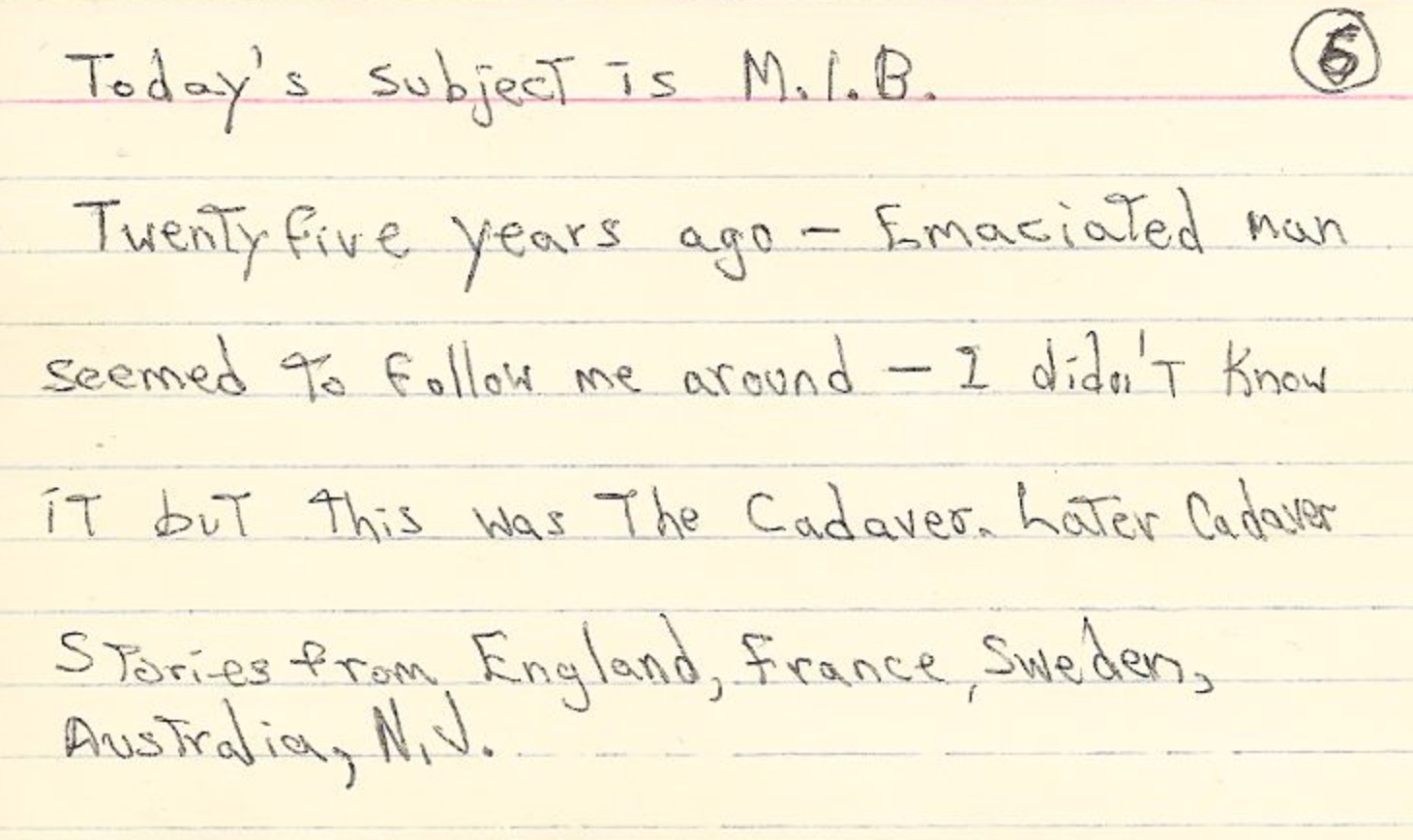
A selection from Keel’s handwritten notes on an MIB talk he gave at the third meeting of the New York Fortean Society on January 23, 1988 (Credit: Doug Skinner/John Keel.com).
In at least a few cases, it appears that some individuals Keel described as Men in Black in his books over the years turned up in other situations and were able to be identified. One notable example is a MIB Keel gave the nickname “Tiny”, who had a penchant for odd mannerisms and wearing a Russian-style fur hat. After Keel wrote about this “MIB” in his book The Mothman Prophecies, Charles Bowen, editor of Flying Saucer Review, wrote to Keel noting that a man possessing the same unmistakable characteristics came to visit him in the United Kingdom. Unlike in previous instances Keel had written about, his name was well known to Bowen. “Tiny” even stayed with the Bowen family during his short stay in England, who Bowen said “regarded him rather as they might do a cobra, and expressed a feeling of repugnance” toward him.
Another instance where Keel wrote about a visit from an alleged MIB appeared in chapter two of The Mothman Prophecies, titled “The Creep Who Came in from the Cold.” In it, Keel describes an incident that took place in May 1967, where a purported MIB visited a Mrs. Ralph Butler of Owatonna, Minnesota. In this famous case, which Keel would refer to many times over the years in his lectures and other appearances, the MIB in question attempted to pick up a bowl of Jell-O and drink it:
“Did you ever hear of anyone—especially an air force officer—trying to drink Jell-O?” [Butler] asked. “Well, that’s what he did. He acted like he had never seen any before. He picked up the bowl and tried to drink it. I had to show him how to eat it with a spoon.”
In this case, the MIB introduced himself as “Major Richard French of the U.S. Air Force,” and was said to have arrived in a white Ford Mustang. He was wearing civilian clothes, described later to John Keel as a “neat gray suit,” and that “everything else he was wearing appeared to be brand-new,” including the un-scuffed soles of his shoes. Mrs. Butler told Keel that French was “about five feet nine inches tall, with an olive complexion and a pointed face. His hair was dark and very long—too long for an air force officer.” Mrs. Butler found him to be a fluent conversationalist until at one point he complained of having stomach trouble. “When Mrs. Butler offered him the Jell-O,” Keel notes of the bizarre visit, “she suspected for the first time that something was out of kilter.”
Keel rather bluntly asserted that “Major Richard French” was not at all who he claimed to be:
Richard French was an imposter. One of the many wandering around the United States in 1967. For years these characters had caused acute paranoia among the flying saucer enthusiasts, convincing them that the air force was investigating them, silencing witnesses and indulging in all kinds of unsavory activities—including murder. When I first began collecting such reports I was naturally suspicious of the people making such reports. It all seemed like a massive put-on. But gradually it became apparent that the same minute details were turning up in widely separated cases, and none of these details had been published anywhere … not even in the little newsletters of the UFO cultists.
So who was Richard French, and is it possible that this MIB “impostor” might have actually been with the U.S. Air Force?
A panel of the comic strip “Our Space Age,” written by Otto Binder and illustrated by Carl Pfeufer, was distributed from 1960 to 1969, and occasionally featured material based on Keel’s work (Credit: Bell-McClure Syndicate/JohnKeel.com).
Decades later, answers to these questions might have turned up unexpectedly at the Citizens Hearing on Disclosure, an event held at the National Press Club in Washington in 2013. According to the event’s website, “Forty researchers along with military/agency/political persons of high rank and station came to the National Press Club in Washington, DC to testify to six former members of the United States Congress.”
A Washington Post article that covered the event noted that a retired Air Force colonel now in his 80s had been one of the men who testified at the event, describing him thusly:
“An Air Force colonel now in his 80s, Richard French, claimed to have been responsible for covering UFOs up. “I’d say it was swamp gas. Anything we could come up with to convince the general public. At that time there was an average of about three a week ufos… I went down there observed ’em just regularly.”
“Why is it now that you’re at the table?” asked former congresswoman Carolyn Kilpatrick.
“PROBABLY IT’S BECAUSE I’M IN MY 80s,” French said.
A Huffington Post article by Lee Spiegel also discussed the testimony French gave at the event in 2013, referring to him as, ”an alleged lead investigator of Project Blue Book in the 1950s.”
As Spiegel wrote at the time:
In Washington, D.C., recently, the 83-year-old retired officer testified at the Citizen Hearing On Disclosure panel of six former members of Congress about his work as a UFO debunker in 1952. French recounted how the Newfoundland incident unfolded decades ago, in the early 1950s, after two UFOs were seen by many people off the coast of St. John’s. French’s superiors ordered him to look into the situation.
Lt. Col. Richard French, pictured in 2016
(Credit: Nadine Y. Barclay/USAF/Public Domain).
Even prior to his appearance at the 2013 Citizen’s Hearing and subsequent media attention he received, a photo which appears to show a young lieutenant French in Air Force uniform was featured in a 2012 OpenMinds article, where writer and editor Antonio Huneeus expressed some skepticism about French’s claims about UFO investigations during the Blue Book era. However, what can be verified about French, according to records that were uncovered by Huneeus, is that he participated in Air Force operations including more than 600 missions during conflicts including the Korean War. French had also worked with the Air Force Office of Special Investigations (OSI), which was later referred to by ufologist Bill Moore as the agency from which many modern urban legends about “Men in Black” may have their origin.
According to Keel, several of the Men in Black had likely been posing as “military officers,” but serving the actual purpose of confusing the public, as well as ridiculing and intimidating UFO witnesses. In light of French’s claims in 2013 that he had once served as a UFO “debunker” for Project Blue Book, perhaps Keel was partially right: French may not have been a full-blown impostor, but if his claims are true, he certainly had been working to cover up the extent that UFO sightings were occurring in America at that time.
In any case, it seems that another of John Keel’s famous “MIBs” from the late 1960s has been positively identified, and very likely had been involved in UFO investigations undertaken by the U.S. Air Force at that time.
For more information about John Keel and his work, visit JohnKeel.com, a website maintained by Keel’s longtime friend Doug Skinner.
This article originally appeared in the TSL Telepath Newsletter.
ALL RELATED VIDEOS, selected and posted by peter2011
In May last year NASA Administrator Jim Bridenstine announced the agency will collaborate with Hollywood action movie actor Tom Cruise to film a movie at the International Space Station (ISS). “NASA is excited to work with Tom Cruise on a film aboard the Space Station! We need popular media to inspire a new generation of engineers and scientists to make NASA’s ambitious plans a reality,” Bridenstine stated via Twitter – “Should be a lot of fun!” the founder of SpaceX Elon Musk said in response. Cruise will launch aboard SpaceX’s Crew Dragon spacecraft, that will be launched into orbit atop the company’s Falcon 9 rocket.
Tom Cruise’s flight is managed by Axiom Space, a start-up from Houston, Texas, founded by Michael Suffredini who served as NASA’s Space Station Program Manager from 2005 to 2015. Axiom offers space tours for civilians to visit ISS. The company also has ambitious plans to build a space station in low Earth orbit to continue operations once NASA retires the ISS program and moves beyond the orbiting laboratory to focus operations on the lunar surface.
Axiom signed a deal with SpaceX to launch a crew of four passengers aboard SpaceX’s Crew Dragon spacecraft. Among the four passengers are Tom Cruise, film producer Doug Liman, and Israeli fighter pilot Eytan Stibbe; They will fly alongside NASA Astronaut Michael Lopez-Alegria, who will be mission commander. During the mission called 'AX-1', they will embark on a 10-day voyage to the Space Station and experience beautiful views of Earth. The AX-1 space tour is currently scheduled for October. “… Thanks to Axiom and their support from NASA, privately crewed missions will have unprecedented access to the space station, furthering the commercialization of space and helping usher in a new era of human exploration,” the President of SpaceX Gwynne Shotwell stated.
Axiom did not release details on how much it will pay SpaceX to fly its four-person crew to the orbiting laboratory this year. However, Dragon has a price-tag of around $55 million per seat, and NASA said last year it opened a path for commercial trips to the Space Station, stating it would charge $35,000 per person per day for private stays.
How life originated on Earth continues to fascinate scientists, but it's not easy peering back billions of years into the past. Now, evidence is growing for a relatively new hypothesis of how life began: with a very precise mix of RNA and DNA.
RNA and DNA both determine the genetic make-up of all biological life, with DNA acting as a genetic blueprint and RNA as a blueprint reader or decoder. For a long time, it was thought that RNA developed on Earth first, with DNA evolving afterwards – but mounting evidence suggests they may have emerged at the same time and both been involved in kickstarting life on the planet.
The latest study to back up this idea explains how the simple compound diamidophosphate (DAP) – which may have predated life on Earth – can knit together DNA building blocks called deoxynucleosides into basic DNA strands.
"This finding is an important step toward the development of a detailed chemical model of how the first life forms originated on Earth," says chemist Ramanarayanan Krishnamurthy form Scripps Research in California.
The findings add credence to the idea that both DNA and RNA developed together from the same sort of chemical reactions at the beginning of life on our planet, and that the first self-replicating molecules could have been mixes of both these nucleic acids – not just RNA, as suggested in the more established 'RNA world' hypothesis.
One of the big issues with the idea that RNA alone gave rise to life on Earth is how RNA was able to go through the necessary self-replication process – RNA usually requires enzymes to split, which evolved after RNA.
From what we know so far, it seems that RNA had some kind of helping hand in engineering life – and the latest experiments show that DNA could well have been it, creating "chimeric" molecular strands that can separate more easily than RNA alone.
The series of lab tests run by the researchers simulated what might have happened before the beginnings of life on Earth, and show how DAP could have feasibly formed basic DNA in much the same way as RNA can come together from chemical building blocks.
"We found, to our surprise, that using DAP to react with deoxynucleosides works better when the deoxynucleosides are not all the same but are instead mixes of different DNA letters such as A and T, or G and C, like real DNA," says chemical biologist Eddy Jiménez, from Scripps Research.
We may never know for sure whether DNA helped RNA to form the first lifeforms on our planet, considering this happened billions of years ago, but our understanding of these processes continues to develop.
The research isn't just useful in terms of how it relates to the origins of life, either – insight into the RNA-DNA relationship can have a whole host of applications in modern chemistry and biology.
"Now that we understand better how a primordial chemistry could have made the first RNAs and DNAs, we can start using it on mixes of ribonucleoside and deoxynucleoside building blocks to see what chimeric molecules are formed – and whether they can self-replicate and evolve," says Krishnamurthy.
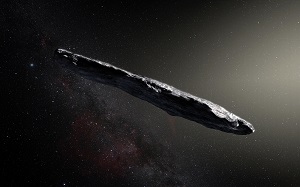
Professor Abraham Loeb and a rendering of 'Oumuamua.
NY Post photo composite
When the first sign of intelligent life first visits us from space, it won’t be a giant saucer hovering over New York. More likely, it will be an alien civilization’s trash.
Avi Loeb, the chair of Harvard’s Department of Astronomy, believes he’s already found some of that garbage.
In his upcoming book, “Extraterrestrial: The First Sign of Intelligent Life Beyond Earth” (Houghton Mifflin Harcourt), out Jan. 26, the professor lays out a compelling case for why an object that recently wandered into our solar system was not just another rock but actually a piece of alien technology.
The object in question traveled toward our solar system from the direction of Vega, a nearby star 25 light-years away, and intercepted our solar system’s orbital plane on Sept. 6, 2017.
On Sept. 9, its trajectory brought it closest to the sun. At the end of September, it blasted at about 58,900 miles per hour past Venus’ orbital distance, and then, on Oct. 7, it shot past Earth’s before “moving swiftly toward the constellation Pegasus and the blackness beyond,” Loeb writes in the book.
The object was first spotted by an observatory in Hawaii containing the Panoramic Survey Telescope and Rapid Response System (Pan-STARRS) — the highest definition telescope on earth.
The space object was dubbed ‘Oumuamua (pronounced “oh moo ah moo ah”), which is Hawaiian for — roughly — “scout.”
As space travelers go, it was relatively small at just about 100 yards long, but it was a big deal in the scientific community.
For starters, it was the first interstellar object ever detected inside our solar system. Judging from the object’s trajectory, astronomers concluded it was not bound by the sun’s gravity — which suggested it was just traveling through.
No crisp photos could be taken, but astronomers were able to train their telescopes on the object for 11 days, collecting reams of other data.
The Observatory on Haleakala, Maui, which contains the world’s most powerful telescope, caught the image of ‘Oumuamua.Rob Ratkowski/PS1SC
At first, scientists thought it was an ordinary comet. But Loeb said that assumption ran the risk of allowing “the familiar to define what we might discover.”
“What would happen if a caveman saw a cellphone?” he asked. “He’s seen rocks all his life, and he would have thought it was just a shiny rock.”
Loeb soon opened his mind to another possibility: It was not a comet but discarded tech from an alien civilization.
A number of unusual properties about the object helped Loeb make this conclusion.
First were ‘Oumuamua’s dimensions.
Astronomers looked at the way the object reflected sunlight. Its brightness varied tenfold every eight hours, suggesting that was the amount of time it took for it to complete a full rotation.
Scientists concluded the object was at least five to ten times longer than it was wide — sort of like the shape of a cigar.
No naturally occurring space body we’ve ever seen has looked like it — or even close.
“This would make ‘Oumuamua’s geometry more extreme by at least a few times in aspect ratio — or its width to its height — than the most extreme asteroids or comets that we have ever seen,” Loeb writes in his book.
What’s more, ‘Oumuamua was unusually bright. It was at least “ten times more reflective than typical solar system [stony] asteroids or comets,” the author writes.
He likens its surface to that of shiny metal.
But the anomaly that really pushed Loeb toward his E.T. hypothesis was the way ‘Oumuamua moved.
“The excess push away from the sun — that was the thing that broke the camel’s back,” he said.
Using physics, scientists can calculate the exact path an object should take and what speed it should travel due to the gravitational force exerted by the sun. The sun’s pull will speed up an object massively as it gets closer, then kick it out the other side, only for the object to slow considerably as it gets farther away.
Combined telescope image of the first interstellar object `Oumuamua, circled in blue as an unresolved point source at the center. It is surrounded by the trails of faint stars, each smeared into a series of dots as the telescope snapshots tracked the moving `Oumuamua.ESO/K. Meech
But ‘Oumuamua didn’t follow this calculated trajectory. The object, in fact, accelerated “slightly, but to a highly statistically significant extent,” Loeb writes, as it moved away from the sun.
In other words, it was clearly being pushed by a force besides the sun’s gravity alone.
At first the explanation seemed simple. Comets show a similar acceleration, because as they approach the sun, their surface is warmed, releasing once-frozen gases, which act like a rocket engine.
Those released materials, however, form a comet’s distinctive tail. Scientists looked carefully for that tail or any sign of gases or dust that might propel ‘Oumuamua and came up empty.
Loeb calculated that with these and other anomalies, the chances that ‘Oumuamua was some random comet was around one in a quadrillion, leading him to his blockbuster hypothesis.
But what was it exactly?
One possibility, weirdly enough, could be found in technology we already have here on earth.
Some 400 years ago, astronomer Johannes Kepler observed comet tails blowing in what looked like a solar breeze and wondered if that same force could propel rocket ships through space like the wind pushes boats through water.
It was a smart idea that scientists now use to develop light sails for probes. Thin, reflective sheeting is unfurled in space to capture the particles streaming off the sun, propelling a ship at great speeds through the empty void. Alternatively, powerful lasers from earth could be aimed at the sail to make it go even faster.
Artist’s impression of possible shapes for `Oumuamua. Some experts believe it’s cigar shaped (above right) but Loeb contends it looks more like a sail (left).Mark Garlick/Science Photo Library
Loeb, who is involved in a light-sail project to send a tiny, unmanned craft to a nearby star, said if we earthlings have thought of this idea, then why couldn’t aliens?
He and a colleague crunched the numbers and hypothesized that ‘Oumuamua was not actually cigar-shaped but possibly a disk less than a millimeter thick, with sail-like proportions that would account for its unusual acceleration as it moved away from the sun.
As to its purpose, Loeb isn’t entirely sure. He speculated it could be “space junk” that once served as a kind of space navigation buoy used by a long-ago civilization.
“The only way to look for [alien civilizations] is to look for their trash, like investigative journalists who look through celebrities’ trash,” Loeb said.
Of course, not everyone in the scientific community agrees with his theory.
In July 2019, the ‘Oumuamua Team of the International Space Science Institute published an article in Nature Astronomy concluding, “We find no compelling evidence to favor an alien explanation for ‘Oumuamua.”
Loeb admits his theories have raised astronomers’ eyebrows, but he is resolute about his findings. “Some people do not want to discuss the possibility that there are other civilizations out there,” he told The Post. “They believe we are special and unique. I think it’s a prejudice that should be abandoned.”
‘Some people do not want to discuss the possibility that there are other civilizations out there.’
Avi Loeb, Harvard astronomer and author of “Extraterrestrial”
Loeb said the skeptics are bending over backwards to assign natural origins to the object and that the explanations they’ve given to explain its weird properties don’t stand up to scrutiny.
For example, some scientists have suggested that ‘Oumuamua’s acceleration was caused by frozen hydrogen on its surface turning to gas and driving it like a comet, and that hydrogen would have been invisible to Earth’s infrared cameras, which is why we didn’t detect it.
But Loeb and a colleague published a paper showing that “a hydrogen iceberg traveling through interstellar space would evaporate long before it reached our solar system.”
Whatever the truth, the stakes are high.
The acceptance that an alien race has made contact — even through its trash — would trigger a serious search for more trash, leading us to scour the moon and Mars, for example, for debris that might have crash-landed thousands or millions of years ago.
And if more evidence is found, we earthlings would have to start building tools to help us grapple with extraterrestrials, such as space treaties and academic fields like astro-linguistics and astro-economics.
But, perhaps more important, any further discoveries could redefine our place in the universe.
“It would put us in perspective,” Loeb said. “If we are not alone, are we the smartest kids on the block? If there was a species that eliminated itself through war or changing the climate, we can get our act together and behave better. Instead, we are wasting a lot of resources on Earth fighting each other and other negative things that are a big waste.”
Since ‘Oumuamua’s appearance, a second interstellar object known as 2I/Borisov was spotted entering the solar system by a Crimean telescope in 2019. But that turned out to be a plain old comet.
Until recently, our instruments have not been sensitive enough to pick up these kinds of visitors. But Loeb said technology will soon make it possible to locate more space travelers, and the only way the mystery of ‘Oumuamua will be settled is if a similar object is spotted and more thoroughly investigated with a probe.
He said his book “should motivate people to collect more data on the next object that looks weird.”
“If we find another and we take a photo and it looks like a light sail, I don’t think anyone will argue with that.”
Harvard-professor: Iets buitenaards bezocht ons in 2017
Een object dat recentelijk door ons zonnestelsel zoefde, was geen ruimterots, maar een stuk buitenaardse technologie. Dat beweert de gerenommeerde Harvard-professor Avi Loeb in een boek dat op 26 januari uitkomt, schrijft de New York Post.
Het object kwam uit de richting van Wega, een ster op 25 lichtjaar afstand, en werd in 2017 ontdekt. Op 7 oktober dat jaar schoot het langs de aarde, om vervolgens met bijna 100.000 kilometer per uur richting het sterrenbeeld Pegasus te verdwijnen.
Het ruimteobject kreeg de naam Oumuamua, wat Hawaiiaans is voor ‘verkenner’. Het betrof het eerste interstellaire object dat ooit in ons zonnestelsel is ontdekt. In eerste instantie dachten wetenschappers dat het een doodgewone komeet was. Professor Loeb had een andere theorie: het was geen komeet, maar een afgedankt stuk schroot van een buitenaardse beschaving.
Loeb kwam tot deze conclusie omdat het object een aantal ongewone eigenschappen heeft. Het veranderde in helderheid, zag eruit als een sigaar en was ongewoon helder. “We hebben nog nooit een ruimtelichaam ontdekt dat er zo uitzag.” De professor kwam ook tot de ontdekking dat het object werd ‘voortgedreven door een bepaalde kracht’.
De kans dat Oumuamua een willekeurige komeet was, is volgens professor Loeb één op een biljard. Hij zegt dat het object in werkelijkheid de vorm heeft van een schijf. Het zou kunnen gaan om een lichtzeil, een onderdeel van een ruimtevaartuig zonder eigen aandrijving. Loeb vermoedt dat het een stuk ‘ruimteafval’ is dat lang geleden door een beschaving is gebruikt om te navigeren in de ruimte.
In 2019 heeft een telescoop op de Krim een tweede interstellair object gespot in ons zonnestelsel. Dat object, 2I/Borisov geheten, bleek wel een komeet te zijn. Tot voor kort waren onze instrumenten niet gevoelig genoeg om dergelijke bezoekers te detecteren. Loeb zei dat het binnenkort mogelijk zal zijn om meer ruimtereizigers te vinden.
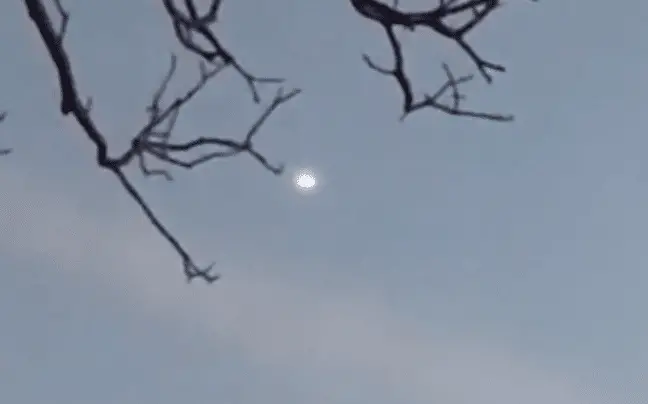
White Disk Over Nairobi, Kenya Jan 3, 2021, UFO Sighting News.
Date of sighting: Jan 3, 2021 Location of sighting: Nairobi, Kenya
I spoke to the eyewitness and he recorded this white craft moving in and out of the clouds above. He thought it might be the Google Loon wifi balloon but said it was a best guess. He also said it could be a UFO or even a shopping bag that got loose. However I dismissed the bag idea right away and the Google Loon project ballon should be carrying a transmitter that is about 1.5 meters across square shaped...I do not see it having from this white object. I believe this is a very large and alien craft that is taking a very close scan and recording the inhabitants of Nairobi. Fantastic and exciting proof that aliens were over Kenya Today!
NOAA is reporting that the weather satellite has caught some rings in the clouds on Nov 20, 2020, but I cant say thats true. As I see it, there are no rings. I see no holes or rings at all, but instead what I see are long grey smooth objects that resemble alien ships. Yes you heard me right. These look like an entire armada of alien ships that are in earths clouds hiding until they get to the perfect location over the ocean to descend and move to an under ocean alien base. These UFOs are several miles across so they are huge, but not the biggest ship ever seen before. I made a close up of one of them at the beginning of the video, then gets further away and last 20 seconds is original untouched for you to compare. 100% proof that alien ships are in our clouds and often get dismissed due to insignificant data of what they really are. It also doesnt help when people give up so easily and assume they are just clouds. Things like that really make us the laughing stock of the universe.
Meer van UFO'S of UAP'S, ASTRONOMIE, RUIMTEVAART, ARCHEOLOGIE, OUDHEIDKUNDE, SF-SNUFJES EN ANDERE ESOTERISCHE WETENSCHAPPEN - DE ALLERLAATSTE NIEUWTJES


 Astronauts Spending Long Time in Space Have Greater Dementia Risk, Claims New Study