Ontdek de Fascinerende Wereld van UFO's en UAP's: Jouw Bron voor Onthullende Informatie!
Ben jij ook gefascineerd door het onbekende? Wil je meer weten over UFO's en UAP's, niet alleen in België, maar over de hele wereld? Dan ben je op de juiste plek!
België: Het Kloppend Hart van UFO-onderzoek
In België is BUFON (Belgisch UFO-Netwerk) dé autoriteit op het gebied van UFO-onderzoek. Voor betrouwbare en objectieve informatie over deze intrigerende fenomenen, bezoek je zeker onze Facebook-pagina en deze blog. Maar dat is nog niet alles! Ontdek ook het Belgisch UFO-meldpunt en Caelestia, twee organisaties die diepgaand onderzoek verrichten, al zijn ze soms kritisch of sceptisch.
Nederland: Een Schat aan Informatie
Voor onze Nederlandse buren is er de schitterende website www.ufowijzer.nl, beheerd door Paul Harmans. Deze site biedt een schat aan informatie en artikelen die je niet wilt missen!
Internationaal: MUFON - De Wereldwijde Autoriteit
Neem ook een kijkje bij MUFON (Mutual UFO Network Inc.), een gerenommeerde Amerikaanse UFO-vereniging met afdelingen in de VS en wereldwijd. MUFON is toegewijd aan de wetenschappelijke en analytische studie van het UFO-fenomeen, en hun maandelijkse tijdschrift, The MUFON UFO-Journal, is een must-read voor elke UFO-enthousiasteling. Bezoek hun website op www.mufon.com voor meer informatie.
Samenwerking en Toekomstvisie
Sinds 1 februari 2020 is Pieter niet alleen ex-president van BUFON, maar ook de voormalige nationale directeur van MUFON in Vlaanderen en Nederland. Dit creëert een sterke samenwerking met de Franse MUFON Reseau MUFON/EUROP, wat ons in staat stelt om nog meer waardevolle inzichten te delen.
Let op: Nepprofielen en Nieuwe Groeperingen
Pas op voor een nieuwe groepering die zich ook BUFON noemt, maar geen enkele connectie heeft met onze gevestigde organisatie. Hoewel zij de naam geregistreerd hebben, kunnen ze het rijke verleden en de expertise van onze groep niet evenaren. We wensen hen veel succes, maar we blijven de autoriteit in UFO-onderzoek!
Blijf Op De Hoogte!
Wil jij de laatste nieuwtjes over UFO's, ruimtevaart, archeologie, en meer? Volg ons dan en duik samen met ons in de fascinerende wereld van het onbekende! Sluit je aan bij de gemeenschap van nieuwsgierige geesten die net als jij verlangen naar antwoorden en avonturen in de sterren!
Heb je vragen of wil je meer weten? Aarzel dan niet om contact met ons op te nemen! Samen ontrafelen we het mysterie van de lucht en daarbuiten.
Woensdag 13 januari 2021
Three huge UFOs recorded while crossing the Orion Nebula
Three huge UFOs recorded while crossing the Orion Nebula
There seems to be a lot of UFO activity in deep space. Last week a sky-watcher captured a huge cigar-shaped craft passing the Orion Nebula and now another sky-watcher, Peter Tiagunov recorded three interstellar craft crossing the Orion Nebula.
The images shows the three UFOs emerging from the center of the Nebula flying further through space in a triangular formation.
The question is whether these UFOs are of alien origin or whether they belong to the secret space program, that includes a fleet of spaceships equipped with a technology far beyond what current aerospace technology is capable of.
Peter captured the UFOs with a Telescope: RC 10" (x.75 reducer) - Mount: EQ6R-Pro - Camera: QHY 163M Cooled (no filters).
How scientists found water on a potentially habitable exoplanet for the first time
By examining starlight as a planet passes in front of its host star, scientists can learn about its history, composition and, ultimately, habitability.
Artist’s impression of planet K2-18 b, its host star and an accompanying planet in this system. ESA/Hubble
With more than 4,000 exoplanets – planets orbiting stars other than our sun – discovered so far, it may seem like we are on the cusp of finding out whether we are alone in the universe. Sadly though, we don’t know much about these planets – in most cases just their mass and their radius.
Understanding whether a planet could host life requires a lot more information. At the moment, one extremely important piece of information that is missing is the presence, composition and structure of their atmospheres. Signs of atmospheric water, oxygen and methane would all be signs that a planet may support life.
Now we have for the first time managed to detect water vapour in the atmosphere of an exoplanet that is potentially habitable. Our results have been published in Nature Astronomy.
A planet’s atmosphere plays a vital role in shaping the conditions inside it – or on its surface if it has one. Its composition, stability and structure all provide important clues about what it is like to be there. Through atmospheric studies, we can, therefore, learn about the history of the planet, investigate its habitability and, ultimately, discover signs of life.
The primary method that we use when examining exoplanets is transit spectroscopy. This involves looking at starlight as a planet passes in front of its host star. As it transits, stellar light is filtered through the planet’s atmosphere – with light being absorbed or deflected based on what compounds the atmosphere consists of.
The atmosphere, therefore, leaves a characteristic footprint in the stellar light that we try to observe. Further analysis can then help us match this footprint to known elements and molecules, such as water or methane.
At the moment, the study of exoplanets atmospheres is limited, as this kind of measurement requires very high precision, which current instruments were not built to deliver. But molecular signatures from water have been found in the atmospheres of gaseous planets, similar to Jupiter or Neptune. It has never before been seen in smaller planets – until now.
K2-18b
K2-18b was discovered in 2015 and is one of the hundreds of super-Earths – planets with a mass between Earth and Neptune – found by NASA’s Kepler spacecraft. It is a planet with eight times the mass of the Earth that orbits a so-called red dwarf star, which is much cooler than the sun.
However, K2-18b is located in the habitable zone of its star which means it has the right temperature to support liquid water. Given its mass and radius, K2-18b is not a gaseous planet but has a high probability of having a rocky surface.
We developed algorithms to analyse the starlight filtered by this planet using transit spectroscopy, with data provided by the Hubble Space Telescope.
Hubble Space Telescope. Credit: NASA
This enabled us to make the first successful detection of an atmosphere with water vapour around a non-gaseous planet, which is also located within the habitable zone of its star.
In order for an exoplanet to be defined as habitable, there is a long list of requirements that need to be satisfied. One is that the planet needs to be in the habitable zone where water can exist in liquid form. It is also necessary that the planet has an atmosphere to protect the planet from any harmful radiation coming from its host star.
Another important element is the presence of water, vital for life as we know it. Although there are many other criteria for habitability, such as the presence of oxygen in the atmosphere, our research has made K2-18b the best candidate to date. It is the only exoplanet to fulfil all three requirements for habitability: the right temperatures, an atmosphere and the presence of water.
However, we cannot say, with current data, exactly how likely the planet is to support life. Our data are limited to an area of the spectrum – this shows how light is broken down by wavelength – where water dominates, so other molecules can unfortunately not be confirmed.
First of many?
With the next generation of telescopes, such as the James Webb Space Telescope and the ARIEL space mission, we will be able to find more information on the chemical composition, cloud coverage and structure of the atmosphere of K2-18b. This will help us understand just how habitable it is.
These missions could also make it easier to make similar detections for other rocky bodies in the habitable zones of their parent stars.
That would certainly be exciting. With K2-18b being 110 light-years away, it is not really a planet we could visit – even with tiny robotic probes – in the foreseeable future.
Excitingly, it is probably just a matter of time before we find similar planets that are closer. So we may be well on our way to answering the age-old question of whether we are alone in the universe after all.
Angelos Tsiaras is Research Associate of Physics and Astronomy at UCL.
In the 1970s, the Cold War was in full bloom. United States military installations that stored weapons of mass destruction pulled out all stops to hide their location from enemy spies and spy planes. Loring Air Force Base, located in the Northeastern part of Maine, fit this pattern, housing their nuclear weapons under camouflaged huts, covered with dirt. This fenced in area was under constant watch by the 42nd Security Police Squadron. At precisely 7:45 P.M. on October 27, 1975, Staff Sergeant Danny K. Lewis was performing his normal duties of keeping a watchful eye on the hidden weapons area. His attention was diverted by the sudden appearance of an unidentified flying craft at an altitude of about 300 feet. The craft was approaching from the North, with a bright red navigation light, and a white strobe light. To Lewis' surprise, the craft entered the official airspace of Loring.
At the same time, Staff Sergeant James P. Sampley of the 2192nd Communications Squadron was on duty in the control tower of the base. Sampley received a radar return from an unidentified craft, which he calculated from his radar screen as being 10-13 miles east-northeast of the base. As per his orders, he made calls via radio through all available communication bands, both military and civilian, hailing the craft. He got no response. As he kept an alert eye on his screen, the craft began to circle the base, and finally came to within 300 yards of the highly restricted nuclear storage area. The craft's altitude was now a mere 150 feet.
By this time, Sergeant Lewis was notifying his Command Post that the unknown craft had penetrated the perimeter of the base, and was closing in on the nuclear storage area. The base was instantaneously put on a Security 3 alert status. Security officials contacted Sampley in the Control tower to verify the sighting via radar. Making his way to the tower, Sergeant Grover K. Eggleston began studiously watching the craft on radar. It had now began circling ten miles east-northeast of the base. The base's Wing Commander ordered a search of the grounds, and requested air support from Hancock Field, New York, and North Bay, Ontario. Neither of the bases would oblige his request at the time. The Maine State Police and airport flight services were contacted in an attempt to identify the unknown object. Again, no identification was forthcoming. The ground search also came up empty handed.
For an additional 40 minutes, the unknown craft circled in the vicinity of the base. Finally it left it's pattern, and headed toward Grand Falls, New Brunswick. Now about 12 miles from Loring, it disappeared from the radar screen. The base was quiet for the rest of the night, but the Stage 3 alert was kept until the next morning. SAC Headquarters was notified of the details of the unknown craft. Unbelievably, the next night at exactly the same time, the craft returned. Lewis was again on duty, along with Sergeants Blakeslee and Long.
The craft was approaching Loring from the North, this time at about 3,000 feet. The craft got as near as 3 miles from the base, again showing flashing lights of orange, red, and white. All three of the men on duty witnessed the craft. Lewis reported his sighting to Command, and this time the Wing Commander came to the storage area to verify the sighting. He confirmed the findings of the three duty officers. Radar again confirmed the unknown craft.
Depiction of the UFO on the radar
The appearance of an other worldly craft would also be confirmed by Sergeant Steven Eickner, and others. A group of military witnesses reported an orange and red object shaped like a stretched out football, which amazingly hovered in midair! It's lights suddenly were darkened, and then the craft reappeared over the runaway, hovering about 150 feet off the ground. They also estimated the length of the craft at about 75-80 feet, solid, with no visible doors or windows, no visible means of propulsion, and totally silent. Again the base was put on full alert, and a security detail searched the base, finding nothing. Finally, the craft turned off it's lights, and vanished from view. Radar picked up the unknown craft heading in the direction of Grand Falls, New Brunswick. A second report was sent to SAC headquarters.
The unsettling events of October 27 and 28 would finally get the attention of military personnel who were in a position to give support to Loring. October 29 would bring a National Guard helicopter for support, just in case. Canadian authorities were given permission to cross the border if needed. Royal Canadian Mounted Police provided an officer to ride along in the helicopter. Those who waited for another visit would not be disappointed. The helicopter was called into action, and immediately responded. Accompanying the RCMP officer were Loring Air Security officers, and an officer from the Maine State Police. The chopper followed the leads sent from radar, but even when approaching within 100 yards, they could see nothing in the skies. The next night brought an Air Force helicopter, and a crew from Plattsburgh AFB. October 30 brought more sightings from the ground, and radar confirmation. There would be more ground sightings of strange lights for the remainder of 1975 in the same area, but investigations by the USA and Canada released no findings for public knowledge. The sightings at Loring Air Force Base were only a part of a full-fledged flap in the northern region of the United States, and southern area of Canada. This sighting flap holds a credible place in UFO history.
ALL RELATED PHOTOS AND VIDEOS, selected and posted by peter2011
Television reproduction of the UFO incident at Loring Air Force Base
Television reproduction of the UFO incident at Loring Air Force Base
On Dec. 5, the probe delivered a capsule containing pristine samples of the carbon-rich asteroid Ryugu to Earth. Now, just a month later, the probe is officially on the move toward another asteroid, in the early stages of an ambitious and protracted extended mission.
"[Ion engine operation begins!] Today on January 5, 2021, at around 12:00 JST, Hayabusa2 started powered navigation with three of the ion engines," mission team members wrote via Twitter. (Japan Standard Time is 10 hours ahead of U.S. Eastern Standard Time, so the milestone occurred around 2 a.m. EST, or 0600 GMT).
Hayabusa2's first extended-mission destination is the roughly 2,300-foot-wide (700 meters) asteroid (98943) 2001 CC21, which the probe will fly by at high speed in 2026, if all goes according to plan. A more in-depth rendezvous with yet another space rock, 1998 KY26, is scheduled to follow in 2031. (Hayabusa2 won't collect any samples from 2001 CC21 or 1998 KY26.)
1998 KY26 is thought to be just 100 feet (30 m) or so wide — much smaller than both 2001 CC21 and Ryugu, which has a diameter of about 3,000 feet (900 m). The mechanical properties and other characteristics of such small asteroids aren't well understood, nor is the role that their collisions with Earth have played in our planet's history. So studying 1998 KY26 up close will yield valuable insights, Hayabusa2 team members said.
"It is expected that the world’s first proximity observation of celestial bodies less than 100m in diameter will provide useful information, not only for elucidating the history of the Earth but also for planetary defense," team members wrote in a Hayabusa2 briefing document this past September.
Hayabusa2 will perform other tasks during this extended mission as well, including observing exoplanets and the zodiacal light — the faint glow in our solar system caused by sunlight bouncing off interplanetary dust. (You can read much more about the extended mission and its goals in the briefing document.)
The next decade-plus won't be just about the extended mission, of course. Hayabusa2 scientists have only just begun to assess and characterize the 0.19 ounces (5.4 grams) of pristine Ryugu material that landed in the Australian Outback last month.
A full investigation of this cosmic dirt and gravel could reveal key insights about the early solar system and, perhaps, the role that carbon-rich asteroids like Ryugu played in the rise of life on Earth, Hayabusa2 team members have said. Such work will involve scientists around the world — the mission team will loan some samples out — and almost certainly take decades. After all, researchers are still studying the 842 lbs. (382 kilograms) of moon material that NASA's Apollo program brought home between 1969 and 1972.
Hayabusa2 — the successor to the original Hayabusa mission, which delivered a few grains of material from the stony asteroid Itokawa to Earth in 2010 — launched in December 2014. It arrived at Ryugu in June 2018 and studied the space rock in depth for nearly a year and a half, dropping several hopping rovers and a microwave-sized lander onto the asteroid over that stretch.
The main Hayabusa2 spacecraft also made two visits of its own to Ryugu's rubbly surface, collecting samples each time. One of those sampling runs snagged subsurface material freshly unearthed by a copper "cannonball" that the probe fired into the asteroid in April 2019.
Hayabusa2 left Ryugu in November 2019, successfully delivering the return capsule a little over a year later. Less than two weeks after that landing, on Dec. 16, China's Chang'e 5 mission aced its own cosmic delivery, returning fresh moon samples to Earth for the first time since the Soviet Union did so in 1976.
And there's even more sample-return action coming in the relatively near future. In October 2019, NASA's OSIRIS-REx mission collected a big sample from the carbon-rich asteroid Bennu. This material will touch down in Utah in September 2023, if all goes according to plan.
Mike Wall is the author of "Out There" (Grand Central Publishing, 2018; illustrated by Karl Tate), a book about the search for alien life. Follow him on Twitter @michaeldwall. Follow us on Twitter @Spacedotcom or Facebook.
A new "transforming" rover in development at NASA will be able to explore rough terrain unlike any rover before it.
DuAxle (short for dual-Axel) gets its name because it’s made of a combination of a pair of two-wheeled Axel rovers. The Axel rover is a simple, two-wheeled rover with a long tether that connects to a larger vehicle and stabilizes the rover as it descends into and explores craters that other rovers would not be able to handle. The Axel is equipped with a robotic arm that can collect samples, as well as stereoscopic cameras to gather imagery.
DuAxel combines two of these innovative rovers, with the back end acting as an anchor and the front end detaching to explore rough terrain. When DuAxel finds a crater, pit, scarp, vent, or other extreme terrains, it can stop, lower its chassis and anchor itself to the ground before separating into two parts. The back half of the rover stays put and the front half separates, using a long tether to stay connected to its anchor and maintain stability while exploring. The front half can then be reeled back in when it's finished.
NASA's new DuAxel rover separates into two single-axled robots so that one can rappel down a slope too steep for conventional rovers. (Image credit: NASA/JPL-Caltech/J.D. Gammell)
Last fall, engineers from NASA’s Jet Propulsion Laboratory put the rover to a test in the Mojave Desert. "DuAxel performed extremely well in the field, successfully demonstrating its ability to approach a challenging terrain, anchor, and then undock its tethered Axel rover," Issa Nesnas, a robotics technologist at JPL, said in a NASA statement.
Axel, the front half of the rover, managed to maneuver around steep and rocky slopes just as the team expected.
The two-wheeled Axel descends the slope while tethered to its counterpart anchored above the slope. (Image credit: NASA/JPL-Caltech/J.D. Gammell)
While the two-wheeled Axel offers greater flexibility in exploration, the traditional four wheels on a space rover are essential for traversing large swatches of land in a short amount of time. And so, Nesnas and his team began developing a version of Axel that could be tethered to a lander. But, they soon learned that tethering to a lander created the great disadvantage of having to be incredibly accurate in landing precision. The Axel rover would have to be within propelling distance from the crater scientists wanted to explore.
And so, DuAxel was born. “The key advantage of DuAxel is made clear when you have landing site uncertainty, such as we do on Mars, or you want to move to a new location to rappel and explore with Axel,” Patrick Mcgarey, a robotic technologist at JPL and DuAxel team member, said in NASA’s statement. Essentially, he said, DuAxel is a transforming robot made for planetary exploration.
NASA's DuAxel rover is seen here participating in field tests in the Mojave Desert. The four-wheeled rover is composed of two Axel robots. One part anchors itself in place while the other uses a tether to explore otherwise inaccessible terrain. (Image credit: NASA/JPL-Caltech/J.D. Gammell)
While DuAxel was mainly created with Mars in mind, the robot opens access to many more extreme terrain that hasn’t yet been explored in the solar system — possibly the moon, Mercury, and even some icy worlds like Jupiter’s moon Europa, Nesnas said.
Laura Kerberr, a planetary geologist at JPL, said she finds the Axel rover to be "quite delightful." Instead of safeguarding itself against dangers like falling or flipping over, as previous rovers have done, DuAxel is designed to withstand them.
The rover hasn’t yet been put to the test in space, but is currently waiting to be assigned a destination. As they wait, the DuAxel team continues to hone and update its technology.
Follow Kasandra Brabaw on Twitter @KassieBrabaw. Follow us on Twitter@Spacedotcom and onFacebook.
In a scenario that sounds like the opening for a “Zombies From Outer Space” movie, the European Space Agency released a photo of a never-before-seen star that was formed when two dead white dwarf stars collided – but instead of destroying each other, the white dwarfs merged into a new kind of zombie star that’s not really alive but still emitting a very bright X-ray light that’s expected to last a brief (in star time) 10,000 years before a ship can arrive and blow the zombie star’s brains out and chase down any zombie space ships it had launched.
This image shows a new type of star that has never been seen before in X-ray light. This strange star formed after two white dwarfs – remnants of stars like our Sun – collided and merged. But instead of destroying each other in the event, the white dwarfs formed a new object that shines bright in X-ray light.
A team of astronomers led by Lidia Oskinova of the University of Potsdam, Germany, used ESA’s XMM-Newton X-ray telescope to study the object that was originally discovered in 2019. Back then, astronomers already reported that the object has very high wind speeds and is too bright, and therefore too massive, to be an ordinary white dwarf. They suggested that the object is a new type of star that survived the merger of two white dwarfs.
Based on new information from XMM-Newton, Lidia and her team now suggest that what we see in the image is a new type of X-ray source powered by the merger of two white dwarfs. The remnant of the clash – the nebula – is also visible in this image, and is mostly made out of the element neon (shown in green). The star is very unstable and will likely collapse into a neutron star within 10 000 years.
Just kidding … it will last until the zombie star collapses into itself, forming a neutron star. Throw those zombie spaceships and the brain-blowing mission back in – is it plot-worthy?
“Recently, a WD merger product, IRAS 00500+6713, was identified. IRAS 00500+6713 consists of a central star embedded in a circular nebula. The analysis of the optical spectrum of the central star revealed that it is hot, hydrogen, and helium free, and it drives an extremely fast wind with a record breaking speed.”
From the journal Astronomy & Astrophysics comes that astronomer-speak analysis of an event that was first discovered in the constellation Cassiopeia (if you think that would be a good name for a band, it’s already taken (minus one ‘s’)) by researchers at the University of Bonn in Germany and the Russian Academy of Sciences using NASA’s Wide-field Infrared Survey Explorer (WISE) space telescope. Lacking both hydrogen and helium, two elements found in white dwarfs, the astronomers speculated that J005311 was something never seen before – the product of a white dwarf collision that became reanimated and started burning again. But how?
“Low-resolution X-ray spectra reveal large neon, magnesium, silicon, and sulfur enrichment of the central star and the nebula. We conclude that IRAS 00500+6713 resulted from a merger of an ONe and a CO WD, which supports earlier suggestion for a super-Chandrasekhar mass of this object. X-ray analysis indicates that the merger was associated with an episode of carbon burning and possibly accompanied by an SN Iax.”
Unfortunately, Google Translate doesn’t work on astronomer-speak. The study reveals that astrophysicist Lidia Oskinova of the University of Potsdam led a team using the ESA’s XMM-Newton X-ray telescope to look at both J005311 and the nebula surrounding it — IRAS 00500+6713. What they determined was that the colliding white dwarfs (that band name isn’t used yet) were distinct – one was primarily oxygen and neon (ONe) while the other was carbon monoxide (CO). The neon explains why the zombie star (photo here) glows green.
“Such an event is extremely rare. There are probably not even half a dozen such objects in the Milky Way, and we have discovered one of them.”
Dr. Götz Gräfener from the Argelander Institute for Astronomy (AIfA) at the University of Bonn explains in the press release what a big deal this zombie star is. Unfortunately, its zombie lifespan is brief. J005311 will turn its elements into iron in just a few thousand years, fading away its glow. It will then collapse under its own gravity while its former electrons and protons fuse into neutrons. The end result will be an incredibly dense neutron star measuring only few kilometers in diameter. However, like all zombies, it will go out with a bang – in this case, a supernova explosion.
A movie-worthy ending for a unique zombie star. Throw in a parting shot of a small object emerging from the explosion and we’ve got the potential for a sequel.
A robot may not injure a human being or, through inaction, allow a human being to come to harm.
A robot must obey the orders given it by human beings except where such orders would conflict with the First Law.
A robot must protect its own existence as long as such protection does not conflict with the First or Second Laws.
Fans of Isaac Asimov will recognize his Three Laws of Robotics, first presented in his 1942 short story “Runaround” and popularized in the 1950 collection “I, Robot.” While they’re generally recognized as rules for robot interactions with humans, the third could apply to robot-to-robot encounters as well. Although “protect” implies aggression or physical contact, it could also pertain to ‘intelligent’ contact. But what about one robot attacking another emotionally, as humans do to each other so frequently? We may soon find out as a new robot developed at Columbia University has learned to predict another robot’s future actions in a way that some are calling “empathy.” Would today’s version of “I, Robot” need to be changed to “I Feel Your Pain, Robot”?
“Our initial results are very exciting. Our findings begin to demonstrate how robots can see the world from another robot’s perspective.”
Are you OK?
Or from in another robot’s steel shoes? That description of robot empathy comes from Boyuan Chen in a Columbia University press release describing his new study, published in the journal Scientific Reports. He and co-authors Carl Vondrick and Hod Lipson built a small robot and programmed it to seek and move towards any green circle it could see in a cage or simulated room it was placed in. Sometimes the robot had a clear view; other times it was blocked by a red box and forced to move around to look for it or another circle. A second robot was placed in a position to observe the actions of the first and predict its moves. After two hours, the observing robot, with just a few visual frames of viewing, was able to predict which green circle the other would pick and the path it would take.
“The ability of the observer to put itself in its partner’s shoes, so to speak, and understand, without being guided, whether its partner could or could not see the green circle from its vantage point, is perhaps a primitive form of empathy.”
Is there anything I can do?
If you’re worried about robots becoming empathetic to other robots, it gets scarier. The authors suggest this is an early step down the path of robots acquiring a “Theory of Mind” where, like human toddlers, they first understand the needs and perspectives of other robots, then develop social interactions as playful and cooperative as hide-and-seek and other games, or as sinister (and human-like) as lying and deception. Ultimately, Hod Lipson predicts robots could develop a “mind’s eye” allowing them to think visually like humans. He doesn’t necessarily see this a good thing.
“We recognize that robots aren’t going to remain passive instruction-following machines for long. Like other forms of advanced AI, we hope that policymakers can help keep this kind of technology in check, so that we can all benefit.”
Unfortunately, we can’t ask Isaac Asimov for Three More Laws of Robotics for Robots. Then again, if robots are capable of becoming emotional, will three be enough?
The list of strange UFO cases is long, and one doesn’t have to look far to find one that raises eyebrows and incites debate. Some of these have toed the line between possible real event and hoax, often falling on neither side and spurring many questions and much discussion. One such case comes to us from the wilds of Canada, involving a strange UFO sighting, a possible crash, and a mysterious package sent by an unknown party containing things that continue to be debated and discussed.
The whole bizarre story starts on August 18, 1991, in the small, rural historic township of West Carleton, Ontario, in Canada, where on this evening a housewife by the name of Diane Labenek was relaxing at her home on an otherwise rather uneventful night. However, at some point her dogs outside began to go nuts, after which she got up to go look outside. That was when she saw what she would describe as red flames and smoke belching up from a nearby field. It was a very bizarre sight to see, but it would get even stranger when she saw an outlandish unidentified object in the sky looming over it all, and she would say of it:
I looked out the window and I saw flames out on the field, extremely red flames and lots of smoke. It didn’t look like a fire. I know what a fire looks like when you start a fire out there when the grass is very dry. If you start a fire, you will see it moving either this way, or closer to the woods. And the fire was on one spot only. I saw a ship coming down close to the flames. Right on top of the ship, I saw a blue flashing light and another light was on the bottom, very bright. I didn’t know what to do. I was looking at it for about 10 minutes or so. And then the ship went a little bit back over the trees and it disappeared and I saw all the flames turn out at the same time. I don’t think I’d like to see it again. It’s very scary. I’ve lived here for many, many years and I have never been so scared in my life.
After the anomalous craft disappeared, she says that not 10 minutes later a helicopter flew over the area, which fully buzzed her home and crisscrossed the location before disappearing into the night. The next day, Diane went out to survey the scene, but could find no evidence of a fire or anything at all really. She began to doubt if she had seen what she thought she had, but nevertheless told her mother and husband about what she had seen. After that she kept it all to herself, even though she claimed that there were often frequent black-, green- or maroon-colored helicopters lurking about the area, which the military would deny having ever been there, but it would appear that this was far from the end of the story.
Six months would pass, and then, in February of 1992, UFO researcher Bob Oechsler and some other ufologists received rather odd packages in the mail from Canada. The packages all contained alleged secret military documents, pictures, a map, and a VHS videotape, labeled “Guardian,” with all of them marked by a thumbprint and claiming to show the very same object that Diane Labenek had seen. The video footage was taken at night, and appeared to show a bright flying object with a blue flashing strobe approach a clump of bright flames on the ground. This tape would soon make it out into the wild, where it was shown on several high-profile news shows and TV shows, including Unsolved Mysteries, which propelled it into the public consciousness, and in the meantime the researchers who had received this were trying to figure out what was going on.
Still from the Guardian UFO footage
The map included in the package was of West Carleton, so Oechsler headed there along with fellow ufologist Graham Lightfoot, where they talked with Diane and came to the conclusion that what she had seen and what was in the video were likely one in the same. As this was going on, the video was sent to be analyzed by Navy physicist Dr. Bruce Maccabee, who came to the conclusion that, while blurry and indistinct, showed something that could not be easily explained. He would say of this:
It’s one of the clearest videos I’ve seen that shows a structured object. There’s the beacon light, blue light evidently, reflecting down on the body of the craft, the outline of the object itself. You can see some sort of dark lines that appear, some brightness structure, indicating something generating light is hanging down below the object. It’s generating green light as well as blue light. The section of the video which shows the object as sort of appearing over a rise is quite convincing to me as what you would expect if somebody were in the field trying to get closer to it and not knowing how close he could get. And so he turns on his camera while he’s walking. He knows he’s going to come up over a rise and see it and you can see in the video he moves further and further down until you see the whole device.
Suddenly, the light coming towards him gets brighter and brighter and you get a great big diffuse reflection or image in the camera, which suggests to me that this object shined a beam, a blue beam right at him. It appeared to be so large that it would not be logical to try to set all this up at night, under darkness. There would’ve been evidence during the day of movement of generators, of somebody hauling cables, maybe a big apparatus or something that they would’ve had to bring in there for that night. Clearly, if there was a hoax involved, Diane would’ve seen evidence of it in advance.
He also pointed out that the video features in the background the sound of dogs barking, presumed to be those of Oechsler. Another person who analyzed the footage was Dr. Robert Nathan of NASA’s Jet Propulsion Laboratory, who reviewed it in a non-official capacity and could not adequately explain what was seen in the video. It was all very exciting, but there were some red flags as well. For one, the mysterious informant “Guardian” had provided documents that not only ranted about UFOs, Red China, and nuclear weapons, but also did not seem to be very official, with multiple errors throughout suggesting that they were forged. Bob Oechsler would say of this:
There’s some question, immediately, with regard to the authenticity of the documentation, that it didn’t look like it was a typical government document. This document is clearly a fabrication. There are way too many errors in the document to make it authentic. Someone with very little effort could have come a lot closer than this.
Not helping the credibility of the footage was that it at one point shows what seem to be alien creatures, which looked decidedly fake and cast it all in a suspicious light. In light of all of this, the Guardian footage was soon being dismissed as a hoax, although it was unclear who Guardian actually was. One idea was that it was being orchestrated by a man named Bobby Charlebois, who just happened to be a UFO nut and who also knew Diane, and making it even more suspicious was that he refused to have his fingerprints taken. This has thrown certain doubt over it all, but Diane Labenek has always insisted that her sighting was real and here are those willing to defend the Guardian footage. For his part, Bob Oechsler has taken a skeptical, yet hopeful view on it all, saying:
This is either an extraordinary top secret flying vehicle of somebody’s government or it is of a non-human origin. Having no contact with Guardian is probably the biggest frustration to an investigation like this. We don’t know who Guardian is, what Guardian represents. We don’t know if Guardian was sent or went on his own. We have no idea what the solution to many of these mysteries are going to be. We may never know.
In recent years, Toronto filmmaker Nick Crowe has been endeavoring to make a documentary on the whole thing, entitled Searching for Guardian. Crowe has taken the approach of looking at the case as a possible hoax, and why anyone would want to carry out such a thing. He has said of his efforts and philosophy on the project:
I guess what we’re most interested in is the idea and belief in UFOs. Whatever happened took on an incredible life of its own. It’s not going to be an Unsolved Mystery type of story. These documentaries tend to be human interest stories. There’s definitely a human angle to this. If it was a hoax, why? Someone took a lot of care putting these video tape packages together. There’s an interesting angle there. There was an RCMP investigation; the low-flying helicopters; the Guardian element. We’re the kind of company that does everything by the book. We’re not trying to create a gotcha moment. We’re not salacious. Our interest is not to harass people to be in the film. I would like to believe but I have skepticism about it. Alien landings are kind of a central mystery. This struck me as having a lot of interesting characters around it. A lot of time and effort and thought went in to it.
So what are we dealing with here? Was this a hoax or something else? What did Diane see and who was the mysterious Guardian? It has mostly been written off as a very clever hoax, but it has also never really been fully resolved. Whatever we are looking at here seems to be evading any concrete understanding, and whether it is a trick or not, we may never know just what is going on, or if it is a hoax who orchestrated it all. One more mystery among many in the UFO field.
Natuurfenomeen boven Noordpool kan voor strenge winterkoude zorgen
Er is iets aan de hand in de atmosfeer boven de Noordpool weliswaar. Een spectaculaire weersverandering voltrekt zich op grote hoogte, in de stratosfeer. Daar kan die ook blijven en dan merken wij er hier niets van. Maar in twee van de drie gevallen doet die verandering zich voelen op leefniveau. En dan zullen wij er wél iets van voelen: stevig winterweer.
De poolwervel is aan de wandel en kan mogelijk splitsen. Dat heeft in verleden gezorgd voor bar winterweer, in Noord-Amerika maar ook in Europa. Het gebeurde bijvoorbeeld in februari 2018 en zorgde voor een koudeperiode die in Noord-Amerika en Groot-Brittannië ‘the Beast from the East’ werd gedoopt.
Het verantwoordelijke fenomeen heet in de meteorologie ‘plotselinge stratosferische opwarming’. Wat verwarrend misschien, maar de bron van die snelle omslag naar winterweer zit in een verwarming. Niet in de opwarming van het klimaat; het gaat hier over een weersverschijnsel dat ongeveer zes keer per decennium voorkomt. En over een verwarming die ver onder nul blijft.
De stratosfeer is de luchtlaag die begint op tien kilometer hoogte. Boven de Noordpool is het daar de hele winter donker, want zonlicht komt er niet. Daardoor bouwt zich een gebied van lage druk op met sterke westenwinden: de poolwervel. Vaak blijft die in stand, maar de poolwervel kan ook opbreken. Meteorologen zien dan op grote hoogte de wind draaien van west naar oost.
“Dat is afgelopen woensdag gebeurd”, zegt Michiel van Weele, meteoroloog bij de Nederlandse meteorlogische dienst KNMI. Het duidt erop dat de temperatuur in de stratosfeer boven de Noordpool flink is gestegen. Er kunnen nu twee dingen gebeuren: de poolwervel verplaatst zich alleen wat in onze richting of hij splitst in twee wervels, zoals het geval was in 2018. “We hebben deze week alleen een verplaatsing kunnen meten”, zegt Van Weele, “maar we houden het in de gaten.”
De kou kan na twee weken al toeslaan
Richard Hallhoudt er ernstig rekening mee dat die splitsing er gaat komen. Hall is hoogleraar aan de universiteit van Bristol (VK) en publiceerde deze week in de Journal of Geophysical Research met collega’s een methode om de gevolgen van zo’n wandel van de poolwervel te voorspellen. Het is geen methode die precies verklaart wat er gebeurt, maar een algoritme dat op basis van alle gevallen uit de afgelopen halve eeuw karakteristieken heeft gedestilleerd die nu kunnen worden gebruikt om te voorspellen.
Want de gevolgen kunnen enorm uiteenlopen. De spectaculaire weersverandering voltrekt zich op grote hoogte, in de stratosfeer. Daar kan die ook blijven en dan merken we er niets van. Maar in twee van de drie gevallen doet die verandering zich voelen op leefniveau. Daar kan dan koude poollucht naar gematigde streken gaan stromen. Winterweer dus.
Vooral een splitsing van de poolwervel kan het weer doen omslaan. Bovendien gaat dat een stuk sneller. In de analyse van Hall blijkt het drie weken te duren voor een verplaatsing van de poolwervel zich laat voelen. Maar als de wervel splitst, slaat de kou al na twee weken toe.
Waar dat gebeurt, hangt af van de gang van de twee nieuwe wervels. Maar de meest waarschijnlijke gebieden, zegt meteoroloog Van Weele, zijn Noord-Amerika en Europa.
GERELATEERDE VIDEO'S, geselecteerd en gepost door peter2011
Simon Parkes & Linda Moulton Howe Talk Reptilians, Blondes, and Greys
Simon Parkes and Linda Moulton Howe Talk Reptilians, Blondes, and Greys
COAST TO COAST AM – Simon Parkes, a former Councilor for the London Borough of Hackney, detailed his long history of alien interactions and encounters with Praying Mantis entities. According to Parkes, the Mantis are extremely ancient beings who were actually born on Earth, and “have been accepted by many other off-planet entities as an arbiter,” or referee between various factions including Reptilians, Blonds, and Greys.
The Reptilians, who are very psychic, seek for humans to develop into machines and AI, while the Blond “Nordics” seem to stand in opposition to them, he indicated.
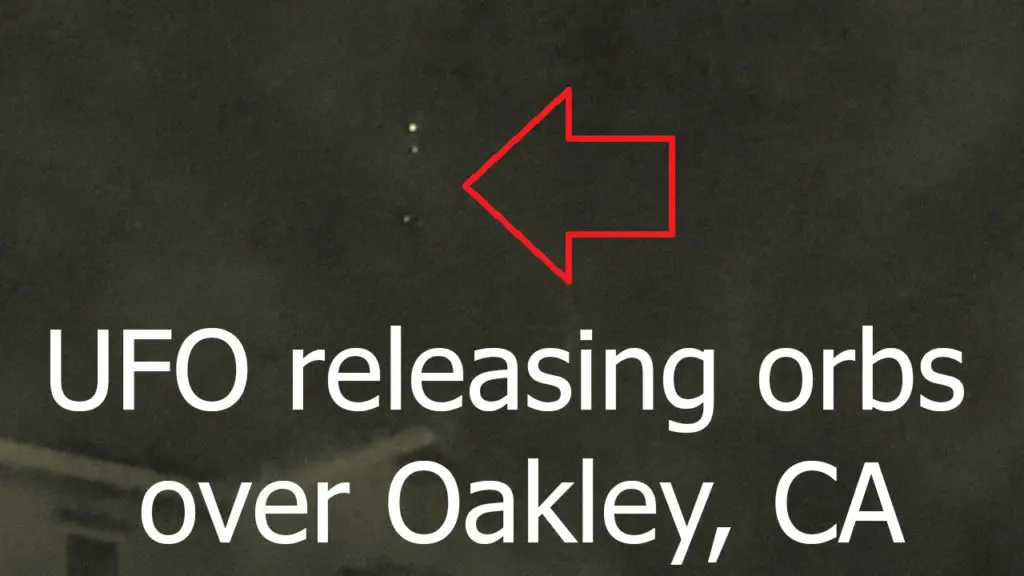
Orb Creates Smaller Orbs, Oakley, California 12-22-2020, UFO Sighting News.
Date of sighting: Dec 22, 2020 Location of sighting: Oakley, California, USA Source: MUFON
This is a really baffling UFO video. It just came from MUFON today and it shows a glowing orange disk moving across the sky and at two different points...it ejects out glowing objects. No this looks a lot like a mother orb...thats an orb that creates duplicate of itself that are almost the same size, but can create a new orb every 3-5 seconds...with hundreds soon created. Never seen this at night before and it looks way too big to be a cloud orb. Orbs are about basketball size...this looks car size. This is truly an alien craft.
Scott C. Waring - Taiwan
Eyewitness states:
It seemed to emit some type of energy around the object with different color. Also light seemed to be pulsating, object started ejecting smaller orbe like pieces that would disappear right after. While this object passed by me two planes are seeing to go near it. I have a 2 minutes vídeo also I screen shot the objec and has no shape. No sign of being a meteorite either.
Black Object Over Royal Palm Beach, Florida, Jan 1, 2021, UFO Sighting News.
Date of sighting: Jan 1, 2021 Location of sighting:Palm Beach, Florida, USA
Source: MUFON
This UFO is unique in that it appears to be flour bowl shaped...you know...the kind of metal bowl in the kitchen for mixing ingredients. Those particular shaped UFOs have been seen before, usually near power lines. This one has a mist around it and appears not to be black but to be a brownish color. It's moving with the flat side down, and the curved dome side up. It's obviously intelligently controlled. The eyewitness things it may be a bag, but doesn't seem convinced of it. His curiosity causes him to drive around to the other side of the stores to a dead end where a pond is seen, but he sees no UFO anywhere. This is a fantastic and rare catch of a bowl UFO.
Scott C. Waring - Taiwan UFO researcher
Eyewitness states:
Black cube shape about 10ft length/width/height with apparent exhaust on one side. On January 3, 2021, I was exiting a department store located in Royal Palm Beach, FL, at 6pm. I had just finished shopping with my 10 year old son when I spotted a dark, cubed-shaped object, moving slowly from the west towards a north/northwest location. I immediately filmed it with a somewhat unsteady hand as my son and I were standing on the edge of the street and we had packages that we were keeping an eye on. Still, I was able to follow it until I lost visual as it seemed to be lowering its altitude and lost it behind the store. It was at around 500ft away, give or take. It had what seemed to be some sort of dim light on one side and it appeared that it was some sort of propulsion and it seemed to show some rotation motion. There was no sound coming from it. As soon as I lost visual I jumped in my car and started driving behind the store but couldn’t see it anymore.
Silver Object Over Homes In Chillicothe, Ohio On 5-17-2019, UFO Sighting News.
Date of sighting: May 17, 2019 Location of sighting: Chillicothe, Ohio, USA
Source: MUFON
This video was just sent into the MUFON today, although it was recorded back in 2019. The object in question is a silver and black object, whose shape cannot be totally defined. In the video the object is seen turning and moving. It also is intelligently controlled. It's not a toy or kite or balloon, but it does appear to be the shape and color of a UFO. This video shows something truly amazing and unexplainable in all terms of the word. 100% alien technology here.
Scott C. Waring
Eyewitness states:
My grandson saw this object far away and asked me what it was? I looked up and saw something in the sky hovering around. I pulled out my camera and started recording what we saw. I zoomed in to see it better, then saw it watching us and it zoomed out, then back in. Then it started changing shapes. We all watched. I didn't get a good look at it until I went inside to watch the video. What we saw was something unexplainable, so I slowed down the video and saw two more black objects around the UFO.
Black cube shaped UFO flying over Royal Palm Beach, Florida 3-Jan-2021
Witness filmed this really amazing UFO sighting from a car while driving on the streets of Royal Palm Beach in Florida. This happened on 3rd January 2021.
Witness report:
Black cube shape about 10ft length/width/height with apparent exhaust on one side. On January 3, 2021, I was exiting a department store located in Royal Palm Beach, FL, at 6pm. I had just finished shopping with my 10 year old son when I spotted a dark, cubed-shaped object, moving slowly from the west towards a north/northwest location. I immediately filmed it with a somewhat unsteady hand as my son and I were standing on the edge of the street and we had packages that we were keeping an eye on. Still, I was able to follow it until I lost visual as it seemed to be lowering its altitude and lost it behind the store. It was at around 500ft away, give or take. It had what seemed to be some sort of dim light on one side and it appeared that it was some sort of propulsion and it seemed to show some rotation motion. There was no sound coming from it. As soon as I lost visual I jumped in my car and started driving behind the store but couldn’t see it anymore.
This interesting UFO video of an unknown orange object that was releasing orbs was filmed in Oakley, California on 22nd December 2020.
Witness report:
seemed to emit some type of energy around the object with different color. Also light seemed to be pulsating, object started ejecting smaller orbe like pieces that would disappear right after. While this object passed by me two planes are seeing to go near it. I have a 2 minutes vídeo also I screen shot the objec and has no shape. No sign of being a meteorite either
Lindley Johnson, NASA's Planetary Defense Officer and program executive of the Planetary Defense Coordination Office. (Image credit: Lonnie Anderson/Sandia National Laboratories)
It's a cosmic roll of the dice. There's no doubt that a major asteroid or comet strike could cause extensive devastation and profoundly affect life on Earth.
The largest hit in recent times was the object that exploded over Tunguska, Siberia, in June 1908 with an energy impact of five to 15 megatons. Then there was that spectacular and destructive airburst in February 2013 over the Russian city of Chelyabinsk. The Chelyabinsk explosion generated a shock wave that shattered windows on the ground, and the resulting flying glass shards injured more than 1,000 people.
While these run-ins are few and far between, those in the know call them wakeup calls.
Thwarting an incoming object that has Earth in its crosshairs will mean deflecting or disrupting the hazardous object. That's a task of planetary defense, an "applied planetary science" to address the near-Earth object (NEO) impact hazard.
Lindley Johnson is NASA's Planetary Defense Officer and program executive of the Planetary Defense Coordination Office. An email from him includes the on-the-job line: "Hic Servare Diem," Latin for "Here to Save the Day."
Space.com caught up with Johnson in late December to discuss recent events and what's on the planetary-defense agenda in 2021.
Space.com: What's the impact of the Dec. 1 loss of the Arecibo Observatory's 305-meter telescope on your planetary radar efforts for NEO observations?
Johnson: The National Science Foundation made the hard decision that it needed to be decommissioned for safety reasons and brought down. But the telescope decided to do it on its own. Its planetary radar observation isn't unique, as we have it at our Goldstone [Solar System Radar in California's Mojave Desert] too. What was unique about Arecibo was the size of the dish and the power it generated, which gave it a longer range than we have at Goldstone.
Johnson: We have lost that capability, but we haven't lost planetary radar capability. But it does make Goldstone a more critical capability for us than it was. We did have some overlap and redundancy prior to loss of Arecibo, but now we have Goldstone. I think not only NASA but other agencies as well will soon engage in a study of what is the future for our planetary radar capability. I think the loss of Arecibo will provide the incentive to get that together, a concerted effort on the part of several agencies.
Damage sustained at the Arecibo Observatory 305-meter telescope. The top section of all three of the telescope's support towers broke off. As the 900-ton instrument platform fell, the telescope's support cables also dropped. (Image credit: NSF/University of Central Florida)
Johnson: It's about two-thirds of the way through its integration and test now at the Applied Physics Laboratory [APL, at Johns Hopkins University in Maryland]. It is beginning to look like a real spacecraft. But there certainly have been challenges with COVID-19 and delivery by suppliers of all the parts. One of the remaining big pieces still to be delivered is the rollout solar arrays. But the integration schedule has been rearranged. Things are looking positive all the way through the testing that's going on. We're in pretty good shape to get DART shipped out to Vandenberg [Air Force Base in California] to meet the end-of-July launch.
Space.com: Any update on the Italian Space Agency's Light Italian Cubesat for Imaging of Asteroid, the LICIACube built to witness DART's impact?
Johnson: They've had their challenges too, maybe even more so. We're hoping they will be able to stay on schedule. LICIACube could be integrated at APL, or it could also be integrated out at Vandenberg if they need to.
Imagery of the asteroid 2014 JO25, generated with radar data collected using NASA's Goldstone Solar System Radar in California's Mojave Desert. (Image credit: NASA/JPL-Caltech/GSSR)
Space.com: As NASA's first planetary defense mission, what do you hope to learn from DART?
Johnson: It will confirm for us what the viability of the kinetic impactor technique is for diverting an asteroid's orbit and determine that it remains a viable option, at least for smaller-sized asteroids, which are the most frequent impact hazard.
Space.com: You have been engaged in a series of "table top" exercises involving the Federal Emergency Management Agency (FEMA) and other organizations about the nature, risk and what to do given an Earth encounter with an asteroid or comet impact. What's their value to your work?
Johnson: There will definitely be more coming, and possibly next year. We do introduce different scenarios, like how much time before impact do you have? Or what's the size of the object? To date, the exercises have been done with a relatively small community. I think in a future exercise, our main objective is to have a broader community of the NEO Impact Threat Emergency Protocols Working Group take part, representation from a number of other agencies that have not been involved in previous exercises. That working group was formed in early 2019 to work on Goal 5 actions in the National NEO Strategy and Action Plan.
Artistic view of NASA's Double Asteroid Redirection Test (DART) spacecraft and the Italian Space Agency's LICIACube watchdog prior to impact at the Didymos binary system. (Image credit: NASA/Johns Hopkins APL/Steve Gribben)
Space.com: The JPL Center for NEO Studies is NASA's center for computing asteroid and comet orbits and their odds of Earth impact. Fireball and bolide data is included on their website, some of which is gleaned from classified military satellites. How is that data exchange between NASA and the military going?
Johnson: The pathways and the capabilities are more straightforward than it used to be. We are still working on making it faster, more automated. Through this last year some of it was somewhat manual, with data delayed longer than we would like it to be. If you check out the website, you'll see a steady addition of events into our database.
Space.com: You would want to obtain that data far sooner?
Johnson: Within hours of the event, if not quicker.
Space.com: Asteroid samples brought back to Earth — be they from Japan's Hayabusa2 spacecraft and NASA's OSIRIS-REx — how valuable are they to your planetary defense office?
Johnson: They certainly do help us understand the nature and composition of these objects. Getting these spacecraft out there to observe them up close is part of a step-by-step approach, from remote sensing of them … and then collecting a sample for lab analysis here on Earth. It confirms what we think we know about an asteroid's composition.
That's of course of great interest to the scientific community. But it's also of value in understanding how mitigation techniques might be more effective. For remote sensing of these objects, you are never sure whether the lines and squiggles are being interpreted correctly. When you get up close, you can confirm a number of things. So it's kind of a bootstrap approach.
This map shows reported fireball events, with approximate total optical radiated energy and calculated total impact energy for each one. (Image credit: Alan B. Chamberlin/JPL-Caltech)
Space.com: Any new words on your proposed NASA Near Earth Object Surveyor spacecraft, a space-based infrared telescope capable of detecting asteroids close to Earth?
Johnson: From a technical standpoint, everybody agrees that this project is ready to move on into phase B, a preliminary design. The uncertainty right now is what the future budget is going to be. Our planetary defense program does not have adequate budget out through the number of years it will take to develop NEO Surveyor as yet.
Space.com: Looking back and eyeing the future, how do you appraise NASA's planetary defense program?
Johnson: The program at NASA continues. Using ground-based capabilities in 2020, it looks like the number of found NEOs is going to hit 2,800 [for the year], a record number for us. Most of those are quite small, much smaller than the 140-meter threshold that we're working toward.
The level of which we're finding the 140-meter and larger asteroids remains pretty stable, at about 500 a year. Our projection of the number of these objects out there is about 25,000, and we've only found a little over one-third of those so far, maybe 38% or so. Our models tell us we've got about 15,000 more to find. At 500 a year, you do the math, that's 30 years that we have to get through with these kind of operations today. We can do it quicker. We know we have the technology to do it faster, and that is what NEO Surveyor is all about.
Leonard David is author of the book "Moon Rush: The New Space Race," which was published by National Geographic in May 2019. A longtime writer for Space.com, David has been reporting on the space industry for more than five decades. Follow us on Twitter @Spacedotcom or on Facebook. This version of the story published on Space.com.
If you're feeling lonely, take solace in remembering that there are countless tiny living things floating tens of thousands of feet above your head.
And as scientists have come to learn more and more about this high-flying life and how it interacts with Earth's surface, they are beginning to question just how implausible it is to wonder whether similar life could theoretically hide out in the clouds of Venus or still more exotic worlds.
"We humans really are bottom-dwellers underneath an ocean of atmosphere above our head, and we really don't know where Earth's biosphere boundary stops at extreme altitudes," David Smith, who studies life in the atmosphere at NASA's Ames Research Center in California, said at a roundtable event held on Dec. 14 at the annual fall meeting of the American Geophysical Union, held virtually this month. "It seems just about anywhere we sample with NASA aircraft and balloons, we find signatures of microbial life."
So far, life in Earth's atmosphere seems to be strictly microbial and a temporary affair, intimately connected to life on Earth's surface rather than an independent ecosystem. Tiny, hardy organisms are swept up from the thin transition where Earth's atmosphere meets the planet and carried into the lower layers of the atmosphere on an epic detour.
"Based on what we know, the things are just moving through the atmosphere," Kevin Dillon, a Ph.D. candidate in microbiology at Rutgers University, said during the panel. "Microbes travel and use the atmosphere almost like a highway, and specifically can hitch a ride in clouds."
Microbes end up in two layers of the atmosphere. In the lower troposphere, microbes mostly have to contend with the risk of drying out, Diana Gentry, a research scientist at Ames, said during the panel. Hence the appeal of clouds.
"If you are picked up and suspended in the atmosphere, you're in danger of losing all of your water pretty quickly," Gentry said. "So clouds in the lower level are great — they're like these mobile water hotspots that can help keep you wet as you're picked up and transported around." In the troposphere, some microbes may survive pretty normally, even.
A map shows the global distribution of clouds over more than a decade, as seen by NASA's Aqua satellite. (Image credit: Jesse Allen/Kevin Ward/MODIS Atmosphere Science Team/NASA Goddard Space Flight Center)
Meanwhile, life one level up, in the harsher stratosphere needs to contend with conditions that are still drier and even acidic. Here, microbes typically at least need to hunker down into a dormant state they can slip out of after returning to the surface. And of course, some die, and some are dead before they are swept up into the atmosphere.
So far, even in the best situation, atmospheric microbes don't seem to be doing much more intriguing than simply surviving, however. "We are really just beginning to understand the dynamics of how microorganisms from Earth's surface get swept up into the atmosphere, how long they stay aloft and whether or not they're doing anything meaningful in terms of activity or growth and reproduction aloft — we still don't know," Smith said. "We have a lot more work to do in Earth's atmosphere."
But just as the discovery of hydrothermal vent communities at hot seams in the ocean floor prompted astrobiological dreams of life deep inside the hidden oceans of icy moons, so scientists now wonder whether the strange extremity of atmospheric life on Earth could be a template for determining whether anything is alive elsewhere in this chain of rocky worlds we call the solar system.
Life in the solar system
Of course, for as many uncertainties as there are when it comes to life in Earth's atmosphere, they only multiply in atmospheres beyond Earth's.
One key constraint is that while we know full well Earth's surface is a paradise from which microbes can take their grand adventure, other planetary surfaces in the solar system are either certainly or likely more hostile to life as we know it, although they may well have been plenty habitable in the distant past. The appeal of someplace like Venus, for example, as a destination in the search for life is in its atmosphere, where some scientists have argued that liquid droplets about 30 to 37 miles (48 to 60 kilometers) up could act as a haven in the acidic, hot environment for which Venus is famous.
That harshness means that on worlds like Venus, life would need to remain in the atmosphere permanently, rather than visiting as it does on Earth. And that permanence means those holes scientists have about whether microbes can, say, reproduce while aloft, would need filling.
And gravity would consistently steal some hypothetical microbes out of the one cozy layer, Gentry noted. "A challenge to life that is unique to life in the atmosphere is that because you're floating, you're constantly losing some of your life that is up there, just to gravitational settling over time," she said. "In order for life to be able to persist long-term in an atmosphere, it has to be able to reproduce fast enough to make up for those losses."
Then there's that water issue. Earth's clouds are special: They are the only modern atmospheric clouds in the solar system built primarily of water vapor, making them uniquely promising for life human scientists are most attuned to recognize. Venus' clouds? Sulfuric acid. Mars has some carbon dioxide wisps. Neptune's moon Triton boasts nitrogen clouds. All of them are intriguing, but no water is a real hurdle.
"One of the major themes in astrobiology tends to be 'follow the water' because, for Earth-like life as we know it, water is a requirement," Gentry said. "Because those are not water-based clouds, they're not interesting for the same reason that water-based clouds are interesting."
And beyond
Just as Earth serves as a template for considering other solar system worlds, our neighborhood offers archetypes to consider for worlds beyond our star — with another step down in how much we know about them, of course. Where Earth is our daily backdrop and the planets are destinations for sophisticated spacecraft, exoplanets are mostly blemishes silhouetted against their stars in astronomical observations.
And it turns out, spotting atmospheric life is tricky, even here on Earth. "Every time we fly through clouds and make cloud water collections, we have this really strong signal of Earth life. And yet, we can't measure it remotely," Smith said. "We know life is in those clouds, but we don't have any instruments that are sensitive enough to detect that without actually collecting the cloud water."
So don't expect scientists to make any announcements about atmospheric life on other worlds any time soon.
"It is extraordinarily difficult to prove or to see whether an exoplanet is a living world," Noam Izenberg, a planetary scientist at Johns Hopkins University Applied Physics Laboratory in Maryland, said.
But don't stop wondering about it either, he said.
"If there's a chance for life on Venus, then yes, there's probably chances for life on Venus-like worlds elsewhere," Izenberg said. "If there's life on Earth, yes, there's probably a chance for life on Earth-like worlds elsewhere."
Email Meghan Bartels at mbartels@space.com or follow her on Twitter @meghanbartels. Follow uson Twitter @Spacedotcom and on Facebook.
Astronomers have discovered a galaxy that is ejecting a massive amout of gas. The outburst could represent the end of star formation in ID2299 and its figurative death.
The process that causes the end of star formation in galaxies, their transition to an inactive phase and thus their figurative ‘death’ has been a puzzle for astronomers and astrophysicist for some time. Many researchers believe that ‘galactic death’ begins with the ejection of a massive quantity of gas, but thus far, researchers have failed to capture evidence of the escape of this star-forming fuel in such volumes. Thus the confirmation of how this transition to galactic quintessence occurs has also proved elusive.
Now an international team of astronomers have used the Atacama Large Millimeter/submillimeter Array (ALMA) located in the desert region of Chile to spot a distant galaxy in which such a massive ejection of gas is progressing.
“Using ALMA we have discovered a distant galaxy, ID2299, which is ejecting about half of its cold gas reservoir out of the galaxy,” Annagrazia Puglisi, Centre for Extragalactic Astronomy, Durham University, lead researcher on the study, tells ZME Science. “This is the first time we have observed a typical massive star-forming galaxy in the distant Universe about to ‘die’ because of a massive cold gas ejection.”
This artist’s impression of ID2299 shows the galaxy, the product of a galactic collision, and some of its gas being ejected by a “tidal tail” as a result of the merger. New observations made with ALMA, in which ESO is a partner, have captured the earliest stages of this ejection before the gas reached the very large scales depicted in this artist’s impression. (ESO/M. Kornmesser)
ID2299 is so distant that the light it emits takes 9 billion years to reach Earth, which means the team were able to observe it at a time when the universe was just 4.5 billion years old.
The rate of gas ejection that ID2299–a galaxy with a similar mass to the Milky way– is experiencing is equivalent to 10,000 Suns per year, removing an extraordinary 48% of its total cold gas content. In addition to this, the galaxy is still forming stars at a rapid rate, hundreds of times faster than the star formation rate of our own galaxy.
Puglisi explains that the gas ejection, together with a large amount of star formation in the nuclear regions of the galaxy, will eventually deprive the galaxy of the fuel need to make new stars.
“This would stop star formation in the object, effectively halting the galaxy’s development.”
Annagrazia Puglisi, Centre for Extragalactic Astronomy, Durham University
The team’s research, published in the latest edition of the journal Nature Astronomy, is significant because it represents three ‘firsts’ for astronomy. “This is the first time we observe a typical massive star-forming galaxy in the distant Universe about to ‘die’ because of a massive cold gas ejection,” explains Puglisi. “Also, for the first time, we were able to tell that massive gas ejection might be frequent enough to cause the cessation of star formation in a large number of massive distant galaxies. Finally, we were able to study the physical properties of the ejected gas in a distant galaxy.”
The researcher goes on to explain that these factors are important in the understanding of the triggering mechanism of the ejection– the galaxy’s distinct tidal tail.
Galactic Collisions and Tidal Tails
The research team that discovered ID2299 believe that it was created during a collision between two galaxies and their eventual merger. Ironically this process seems to have triggered the rapid gas loss that will eventually cause it to become inactive.
Another stunning example of a tidal tail is the ‘Tadpole’s Tail’ emerging from the galaxy Arp 188. This tail stretches a stunning 280 thousand light years and was caused by a gravitational interaction with another galaxy. (Hubble Legacy Archive/ NASA/ ESA)
“ID2299 is a galaxy with a large mass in stars and is forming new stars at a rate 300 times faster than our Galaxy– a result of the collision between two galaxies,” co-author Chiara Circosta, Department of Physics & Astronomy, University College London, tells ZME.
The main clue that points towards ID2299’s creation by collision is the fact its ejected gas has taken the form of a tidal tail. These elongated streams of stars and gas that reach into interstellar space are often too faint to see and are theorised to be the result of galactic mergers.
“Collisions between galaxies are very powerful and spectacular phenomena. During the interaction, tidal forces develop and can trigger ejection of gas through tidal tails,” says Circosta. “Our study suggests that these ejections could be frequent enough to stop the formation of new stars in a large number of massive galaxies in the distant Universe.
“Our research shows that these interactions can have an important role in the life-cycles of galaxies.
Chiara Circosta, Department of Physics & Astronomy, University College London
What makes the team’s findings even more impressive is the fact that it’s a discovery that occurred predominantly through good fortune.
Serendipity and a Series of Firsts
Because tidal tails of gas such as the one that the team observed being ejected from ID2299 are extremely faint and thus, difficult for astronomers to observe. In fact, the team weren’t looking for a galaxy like ID2299 at all.
“The discovery of this object was serendipitous. I was inspecting the spectra of 100 star-forming galaxies from the ALMA telescope,” says Puglisi, who goes on to explain that the spectrum of galaxy ID2299 immediately caught her attention as it displayed an excess of emission near the very prominent emission line from the galaxy. “I was very surprised when I measured the flux of this excess emission because it indicated that the galaxy was expelling a large amount of gas.
“I was thrilled to discover such an exceptional galaxy! I was eager to learn more about this weird object because I was convinced that there was some important lesson to be learned about how distant galaxies evolve.“
Annagrazia Puglisi, Centre for Extragalactic Astronomy, Durham University
The discovery of ID2299 sparked a discussion within the team about the mechanism that is causing the gas ejection of gas at such a rapid rate. They concluded that alternative mechanisms simply couldn’t account for ejection in such large amounts.
“We discussed a lot to understand what could have been the possible cause of this phenomenon. Broad components are fairly common in the spectra of distant galaxies and are typically associated with galactic winds,” says Puglisi. “Nor the active black hole nor the strong star formation hosted in ID2299 were powerful enough to produce this ejection.
“The numbers didn’t just add up.”
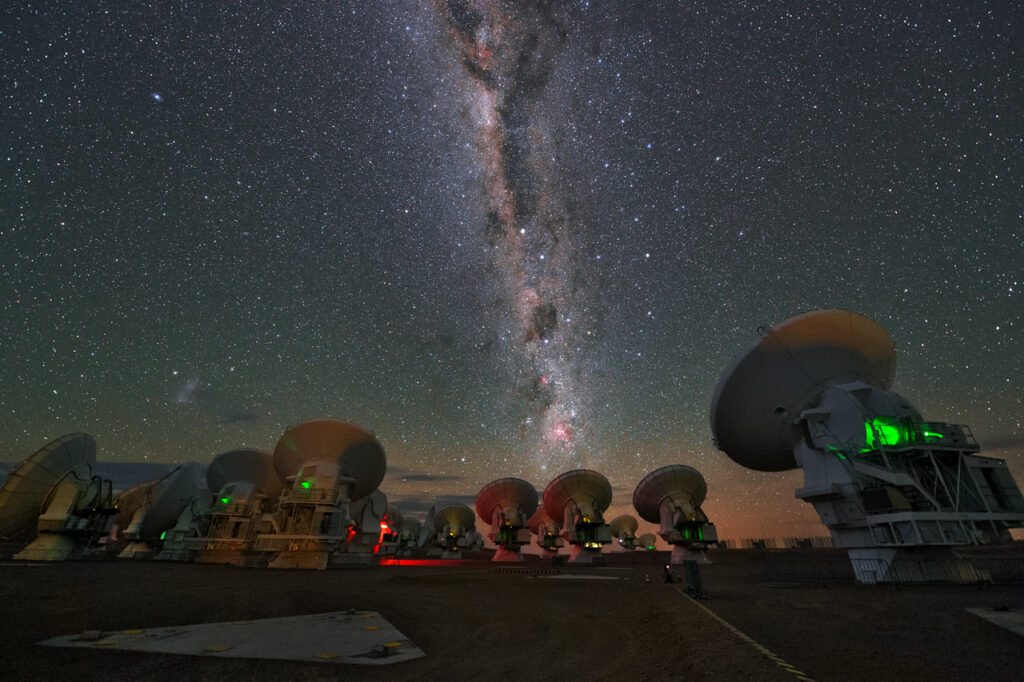
The ALMA antennas at the Llano Chajnantor–above them, the bright Milky Way is visible–played a vital role in the discovery of ID2299 and will now assist in the further investigation of gas movements in the galaxy (ESO/Y. Beletsky)
The next steps for the team are to use ALMA to make high-resolution observations of ID2299 and the motion of gas within it in order to better understand the gas ejection occurring there. Looking beyond this galaxy, Puglisi says she will also look for similar occurrences in other galaxies.
“I personally find quite fascinating the study of galaxy interactions and mergers. These phenomena are visually spectacular,” the researcher adds. “I find quite poetic that galaxies can get close to each other and influence their life and evolution so dramatically.”
The research the team presents could either overturn current theories that suggest star-forming material is actually ejected by the activity of supermassive black holes at the centre of galaxies or could provide another mechanism by which this can occur. Either way, the discovery represents a significant step forward in our understanding of how galaxies develop.
“I see galaxy evolution as a complex puzzle that researchers are trying to complete through their studies,” Circosta concludes. “A crucial part of the puzzle is about the mechanisms that halt the formation of new stars and ‘kill’ galaxies.
“Witnessing such a massive disruption event allowed us to shed new light on one of the possible culprits responsible for the death of distant galaxies. This adds an important piece to the puzzle of galaxy evolution!”
Chiara Circosta, Department of Physics & Astronomy, University College London
Original research:
Puglisi. A., Daddi. E., Brusa. M., et al, ‘A titanic interstellar medium ejection from a massive starburst galaxy at z=1.4,’ Nature Astronomy, [2021], [DOI: 10.1038/s41550-020-01268-x].
De aarde tolde in 2020 in recordtempo om haar as; de dagen waren meetbaar korter
In 2020 draaide de aarde zo snel om haar as, dat de dagen meetbaar korter waren. Mogelijk moeten we de klok binnenkort zelfs een gedwongen tik terug zetten om het rappe getol bij te benen, schrijft de Volkskrant.
Een beetje tegenstrijdig klinkt het wel. Waar 2020 voor de meeste mensen voelde als een jaar dat zich eindeloos voortsleepte van crisis naar lockdown en weer terug, zoefde het jaar in werkelijkheid in recordvaart voorbij.
Of nou ja: tijdmeet-technisch dan toch. Veel zullen u en ik van de milliseconden tijdwinst die we afgelopen jaar boekten immers niet hebben gemerkt. Toch is die kortere draaitijd van de aarde, nauwlettend bijgehouden door de International Earth Rotation Reference Systems Service (IERS), meer dan alleen een grappig borrelfeitje. Hij heeft namelijk invloed op de stand van de ‘universele klok’ waarnaar wij allemaal leven, de wereldwijde standaard waarop alle tijdzones gebaseerd zijn.
Ultragevoelige atoomklokken
Die wereldwijde tijd heet ook wel UTC – overigens geen afkorting, maar een compromis tussen de Engelse term CUT (Coordinated Universal Time) en de Franse term TUC (Temps Universel Coordonné). UTC is op zijn beurt weer gebaseerd op de internationale atoomtijd, die men bijhoudt met 400 ultragevoelige atoomklokken, verspreid over 90 laboratoria over de hele wereld.
“Bij ons staan vier van die klokken”, zegt tijdbeheerder Erik Dierikx van het nationaal metrologisch instituut VSL in Delft. Daar houdt hij de IERS-gegevens nauwlettend in de gaten, op zoek naar het moment dat UTC te veel begint af te wijken van de astronomische tijd.
Waar je bij een dag al snel denkt aan 24 uur, wijkt de werkelijke duur van één rondje om de aardas namelijk elke dag iets af, blijkt uit de IERS-gegevens. Dat heeft overigens een natuurlijke oorzaak: veranderingen in de wind, bijvoorbeeld, of het stromen van de oceanen. Zelfs bewegingen van de aardkern oefenen een minieme invloed uit op hoe snel de aarde tolt.
Te langzaam
“Zodra het verschil tussen de astronomische tijd en UTC te groot wordt, voegt men een schrikkelseconde toe”, zegt Dierikx, die zo’n seconde dan samen met zijn collega’s in de atoomklokken programmeert. “De laatste schrikkelseconde kwam erbij op 1 januari 2017", zegt hij.
Decennialang leek de aarde gemiddeld te langzaam te draaien. Maar het afgelopen jaar ging het juist snel, met opmerkelijk veel korte dagen. Sterker nog: de 28 kortste dagen die sinds 1960 in de boeken staan, komen allemaal uit 2020, zo meldde vakwebsite timeanddate.com onlangs na een eigen analyse van de IERS-gegevens. Het meest bont maakte 19 juli het, door (afgerond) anderhalve milliseconde korter dan 24 uur te duren.
Negatieve schrikkelseconde
En ook dit jaar is de verwachting dat de aarde relatief snel om haar as zal tollen, zo meldt het IERS in een voorspelling, zodat ook in 2021 de astronomische tijd het hele jaar zal blijven achterlopen op de tijd op onze klokken.
Heel voorzichtig beginnen sommige tijdturvers daarom zelfs te denken aan de invoering van een negatieve schrikkelseconde om de klok weer in het gareel te krijgen. Dan zouden we een minuut krijgen van maar 59 in plaats van 60 seconden, waarmee één hele kloktik uit de UTC-boeken verdampt. Dat is nog nooit eerder gedaan.
“Ik denk dat het nog even duurt voordat zoiets nodig is”, zegt Dierikx. “Maar theoretisch is het zeker mogelijk. Onze apparatuur kan seconden toevoegen, maar óók weer uitgummen. Dat zou een leuk unicum zijn.”
Meer van UFO'S of UAP'S, ASTRONOMIE, RUIMTEVAART, ARCHEOLOGIE, OUDHEIDKUNDE, SF-SNUFJES EN ANDERE ESOTERISCHE WETENSCHAPPEN - DE ALLERLAATSTE NIEUWTJES


 Three huge UFOs recorded while crossing the Orion Nebula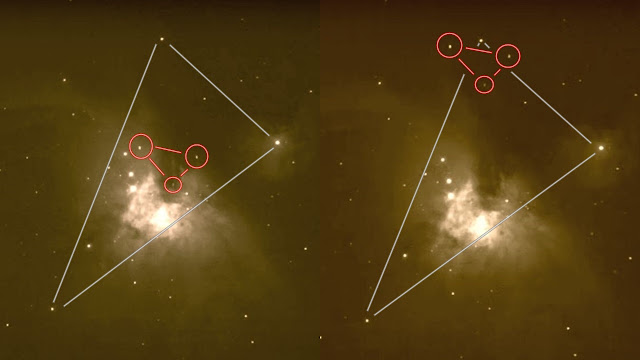
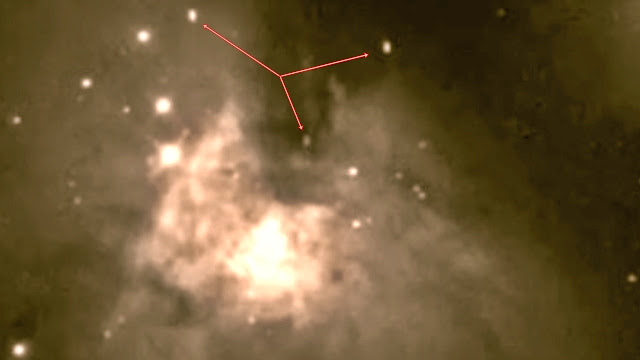

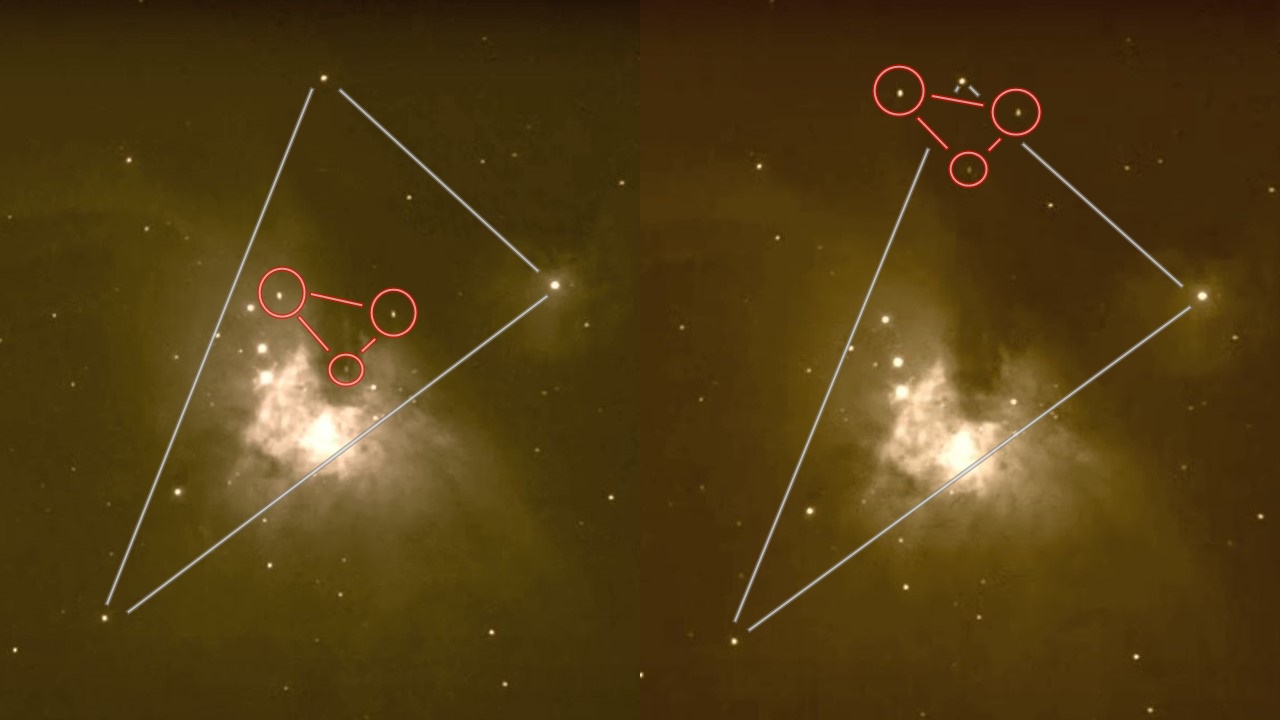
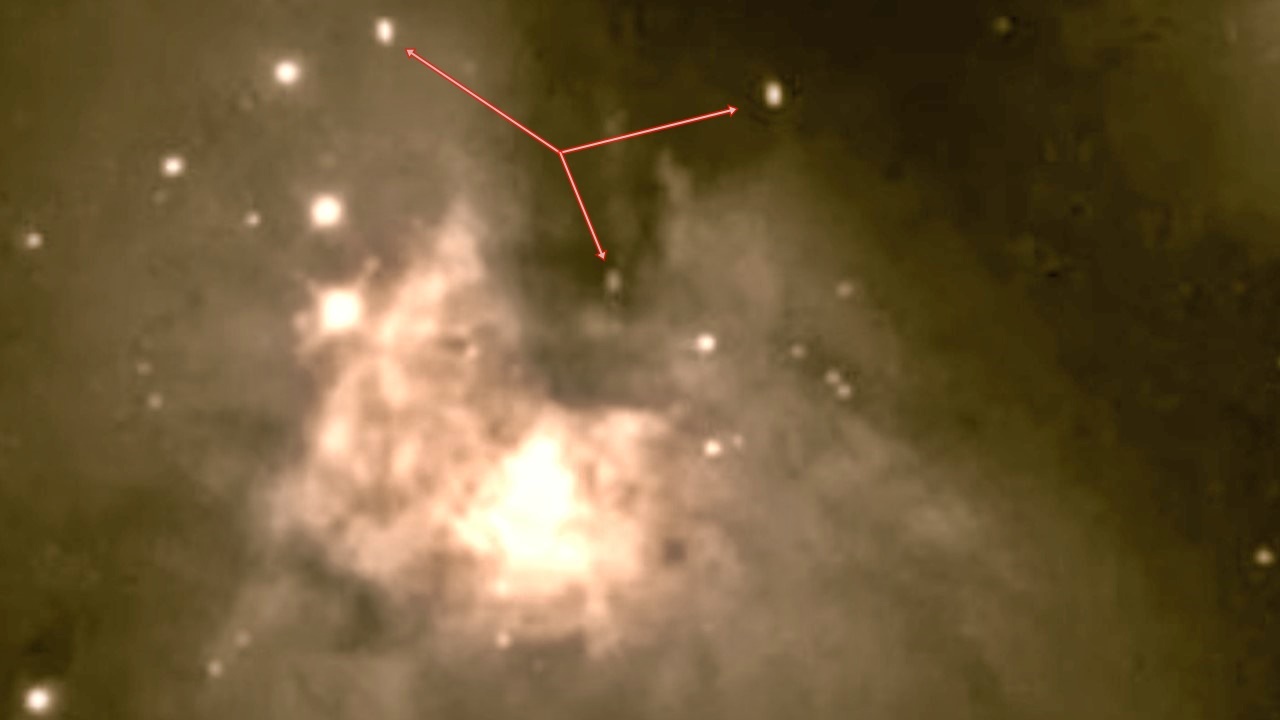
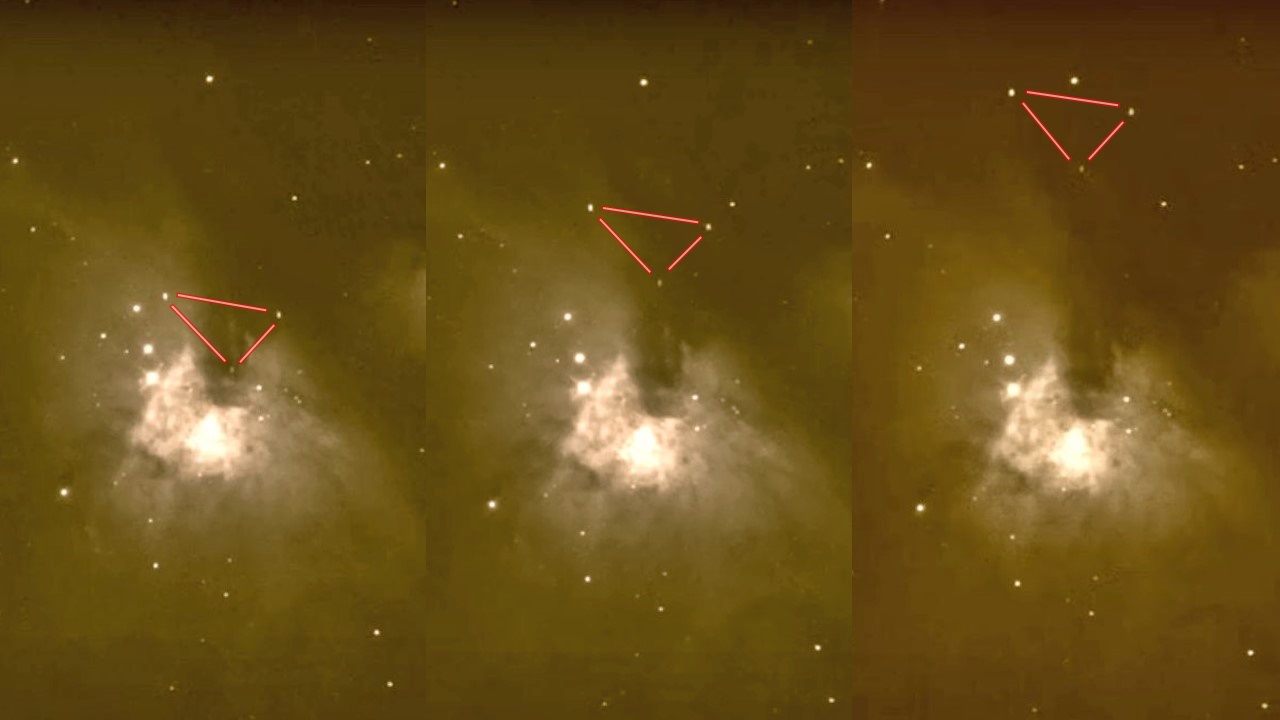


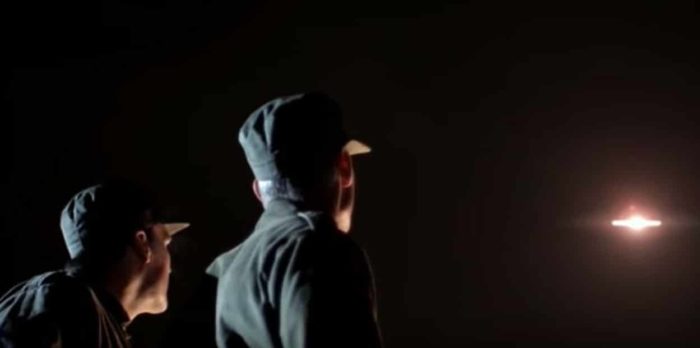
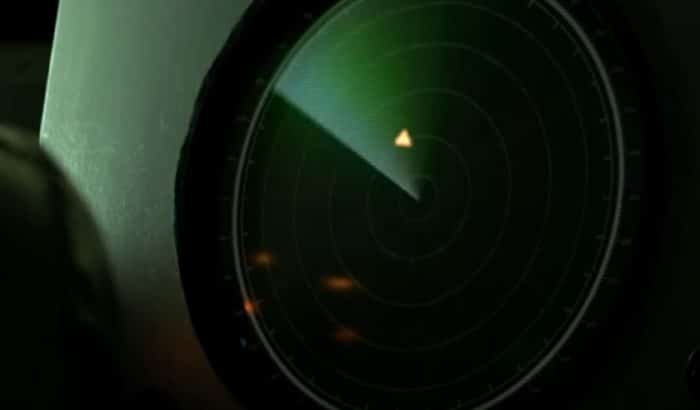
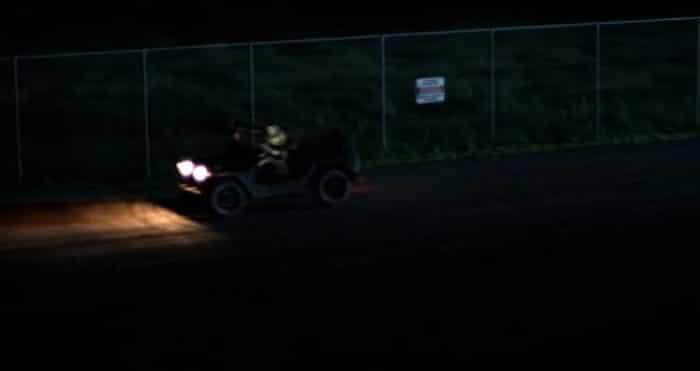
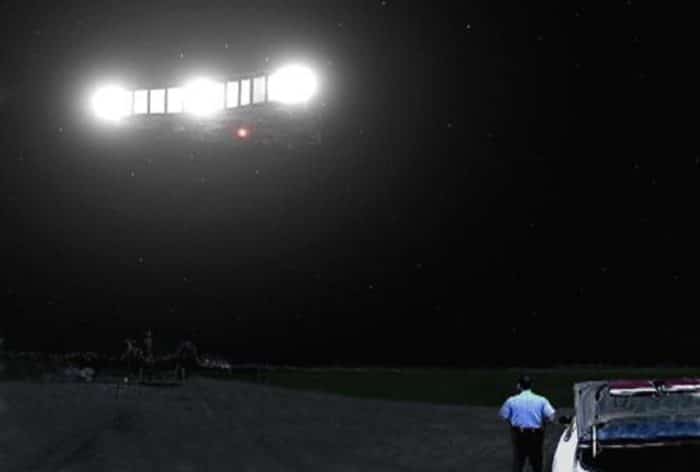
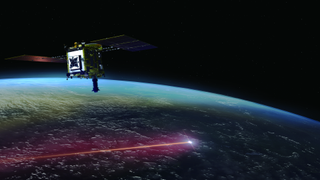







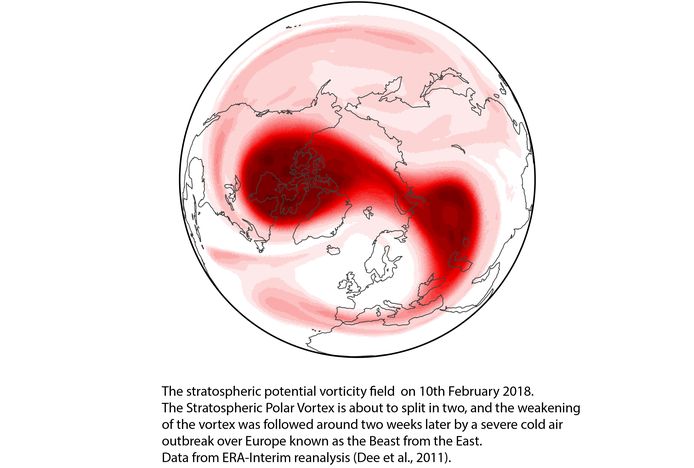
.jpg)