Ontdek de Fascinerende Wereld van UFO's en UAP's: Jouw Bron voor Onthullende Informatie!
Ben jij ook gefascineerd door het onbekende? Wil je meer weten over UFO's en UAP's, niet alleen in België, maar over de hele wereld? Dan ben je op de juiste plek!
België: Het Kloppend Hart van UFO-onderzoek
In België is BUFON (Belgisch UFO-Netwerk) dé autoriteit op het gebied van UFO-onderzoek. Voor betrouwbare en objectieve informatie over deze intrigerende fenomenen, bezoek je zeker onze Facebook-pagina en deze blog. Maar dat is nog niet alles! Ontdek ook het Belgisch UFO-meldpunt en Caelestia, twee organisaties die diepgaand onderzoek verrichten, al zijn ze soms kritisch of sceptisch.
Nederland: Een Schat aan Informatie
Voor onze Nederlandse buren is er de schitterende website www.ufowijzer.nl, beheerd door Paul Harmans. Deze site biedt een schat aan informatie en artikelen die je niet wilt missen!
Internationaal: MUFON - De Wereldwijde Autoriteit
Neem ook een kijkje bij MUFON (Mutual UFO Network Inc.), een gerenommeerde Amerikaanse UFO-vereniging met afdelingen in de VS en wereldwijd. MUFON is toegewijd aan de wetenschappelijke en analytische studie van het UFO-fenomeen, en hun maandelijkse tijdschrift, The MUFON UFO-Journal, is een must-read voor elke UFO-enthousiasteling. Bezoek hun website op www.mufon.com voor meer informatie.
Samenwerking en Toekomstvisie
Sinds 1 februari 2020 is Pieter niet alleen ex-president van BUFON, maar ook de voormalige nationale directeur van MUFON in Vlaanderen en Nederland. Dit creëert een sterke samenwerking met de Franse MUFON Reseau MUFON/EUROP, wat ons in staat stelt om nog meer waardevolle inzichten te delen.
Let op: Nepprofielen en Nieuwe Groeperingen
Pas op voor een nieuwe groepering die zich ook BUFON noemt, maar geen enkele connectie heeft met onze gevestigde organisatie. Hoewel zij de naam geregistreerd hebben, kunnen ze het rijke verleden en de expertise van onze groep niet evenaren. We wensen hen veel succes, maar we blijven de autoriteit in UFO-onderzoek!
Blijf Op De Hoogte!
Wil jij de laatste nieuwtjes over UFO's, ruimtevaart, archeologie, en meer? Volg ons dan en duik samen met ons in de fascinerende wereld van het onbekende! Sluit je aan bij de gemeenschap van nieuwsgierige geesten die net als jij verlangen naar antwoorden en avonturen in de sterren!
Heb je vragen of wil je meer weten? Aarzel dan niet om contact met ons op te nemen! Samen ontrafelen we het mysterie van de lucht en daarbuiten.
Maandag 22 november 2021
A Startup Just Launched A Rocket By Spinning It Really Fast And Then Letting Go
A Startup Just Launched A Rocket By Spinning It Really Fast And Then Letting Go
Why carry tons of fuel to launch out of the earth's atmosphere when you can just be flung?
One of the brutal truths about getting things off the Earth and into space is contained in something called The Tsiolkovsky rocket equation, which, to put it absurdly simply, means that most of the volume of a rocket leaving Earth will be needed for fuel. That’s why the rockets you see are huge towers of fuel and oxidizer with just a little area up top for the payload. A startup company calledSpinLaunchis hoping to work around this grim equation by spinning rockets really, really fast in a circle. That name may have given it away?
The process is known as “kinetic launching” and utilizes a huge electric motor-powered centrifuge called the Suborbital Accelerator, which looks kind of like a turbocharger the size of the Statue of Liberty.
The Suborbital Accelerator is a huge vacuum chamber (i.e. there’s no air to create aerodynamic drag) with a carbon fiber rotating-arm style centrifuge inside it. The arm spins the payload (which can include a second-stage rocket to potentially reach orbit) and then a high-precision mechanical release flings it out of that tube, where it then shoots out into space.
Image: SpinLaunch
The current Suborbital Accelerator is about one-third the scale of the planned final one, and for this test the accelerator was only spun up to about 20 percent of its capacity, which was all that was needed to send the 10 foot test payload up those tens of thousands of feet.
Plans for a much larger Orbital Accelerator show a bigger angled vacuum chamber and release tube:
Image: SpinLaunch
Essentially, the big spinner is taking the place of a conventional rocket’s massive and fuel-thirsty first stage, allowing for much smaller rockets with much better fuel-to-payload ratios to be developed.
Here’s a video SpinLaunch released of their test:
I’m guessing that membrane the rocket bursts through is there to maintain the vacuum chamber integrity, and is not just for dramatic effect?
Image: SpinLaunch
The proposed launch vehicle does have a pleasingly old-school aesthetic about it, looking like a carbon-fiber Buck Rogers kind of deal:
Image: SpinLaunch
The company claims that adapting satellites and other space hardware for the high-G spinning process is no big deal:
This engineering process has been used to develop high-g reaction wheels for 20kg and 200kg-class satellites, deployable solar arrays and electric propulsion modules. Even unmodified smartphones, action cameras, and telescope lenses have survived without damage. In comparison to mechanical systems, electronics are surprisingly simple to ruggedize for kinetic launch. Because of the relatively low mass of resistors, capacitors, and electronic chips, many existing designs can be flown without any substantial modifications.
I suspect that this method wouldn’t be suitable for crewed launches, though.
The company has already raised about $35 million, and they have a Department of Defense launch contract, so maybe we’ll be seeing more things yeeted into earth orbit in this massive mechanical discus style.
An emissions-free space launch system will be popular as the world strives to become more environmentally friendly. SpinLaunch claims that in the future, it will be able to launch complete constellations of satellites into the atmosphere’s most mission-critical layers.
The corporation also notes that in the future, when vast numbers of people are flying into space, structures, equipment, and supplies will need to be launched.
That comment appears to imply that SpinLaunch envisions a future in which it will be able to launch items heavier than 440 pounds satellites. The launch system’s development began in 2015. SpinLaunch’s accelerator achieved a record for the fastest spinning tip speeds two years after the project began. However, the launch last month was the most significant milestone in the project’s history.
It is uncertain how big the orbital-class accelerator should be. The suborbital accelerator is 50.4 metres tall, and the orbital-class accelerator would definitely be far larger. To put things into perspective, the Statue of Liberty is 46 metres tall. SpinLaunch claims that their suborbital technology will be valuable in the long run as a satellite qualifying facility.
The newly-discovered octopus species inhabits the shallow waters off southwest Australia and belongs to the Octopus vulgaris group, according to a new paper published in the journal Zootaxa.
The star octopus (Octopus djinda).
Image credit: Mark Norman / Amor & Hart, doi: 10.11646/zootaxa.5061.1.7.
“Benthic shallow-water species are among the most studied and best understood octopods, and are, therefore, of high interest to researchers and fishers,” said Dr. Michael Amor from the Western Australian Museum and Royal Botanic Gardens Victoria and Dr. Anthony Hart from the Western Australian Fisheries and Marine Research Laboratory.
“This attention can lead to an improved understanding of species boundaries and distributions, including the potential identification of cryptic taxa.”
“Cryptic speciation is common among octopods and examples are prevalent throughout the order Octopoda.”
“Octopuses have few hard body parts or diagnostic taxonomic traits. Further, morphological plasticity that is linked to local environmental conditions and the limited utility of traditional molecular markers have compounded our likely underestimation of species richness among octopods.”
“Within Octopoda, perhaps the most iconic example of this phenomenon is observed among members of the Octopus vulgaris group,” they added.
“This species-group represents one of the greatest octopus fisheries targets, and are of broad scientific interest (e.g., cell biology, environmental science, fisheries research, neuroscience, physiology, robotics).”
The newly-discovered species is conspecific with another member of the Octopus vulgaris group — the common Sydney octopus (Octopus tetricus) from Australia’s east coast and New Zealand — but is morphologically and genetically distinct.
Named the star octopus (Octopus djinda), the marine creature is distributed along the southwest coast of Australia, from Shark Bay to Cape Le Grand.
“This distribution closely reflects the territory of the traditional custodians of this land, the Nyoongar people (‘a person of the southwest of Western Australia’),” the researchers said.
“To recognize their connection to this land, a Nyoongar translation of ‘star’ (djinda) was selected as a species name. This use of ‘star’ (luminous) reflects the shared recent ancestry with, and now-understood distinction from, Octopus tetricus.”
The new species is a medium to large octopus, with a mantle length of 10.9-17.7 cm (4.3-7 inches).
“Octopus djinda supports a highly productive fishery and is currently one of two octopod fisheries worldwide to have received sustainable certification from the Marine Stewardship Council,” the scientists said.
“Its taxonomic description provides formal recognition of the taxonomic status of southwest Australia’s common octopus, Octopus djinda, and facilitates appropriate fisheries catch reporting and management.”
_____
Michael D. Amor & Anthony M. Hart. 2021. Octopus djinda (Cephalopoda: Octopodidae): a new member of the Octopus vulgaris group from southwest Australia. Zootaxa 5061 (1): 145-156; doi: 10.11646/zootaxa.5061.1.7
UFO Shoots Past Saturn, Aug 21, 2021, -VIDEO - UFO Sighting News.
Date of sighting: August 21, 2021
Location of sighting: Saturn
This eyewitness was watching Saturn through his telescope when he caught a strange large object shoot past the northern pole of the planet. The object was huge, about the size of a moon, yet its not in orbit around the planet, but instead skims the polar region and then began to slowly pull up as it passed the pole. The object is thin, about 1/5th the thickness as it is long. What this is...is unknown, but its size, shape and speed all point to this being an alien craft.
Scott C. Waring - Taiwan
Eyewitness states:
This truly is REAL untouched footage of something unidentified captured on camera. most likely something natural within the realm of science. again this is just a video for clickbait meant to reach more people with an interest in authentic astronomical observations.
Scientists Warn of “Alien” Invasions and the Need for Planetary Biosecurity
ByAMERICAN INSTITUTE OF BIOLOGICAL SCIENCES
The danger isn’t from little green men arriving on flying saucers but, rather, from microbiological contamination of Earth from extraterrestrial environments and vice versa.
The era of space exploration brings with it a new risk: invasion. The peril comes not from little green men arriving on flying saucers but, rather, from microbiological contamination of Earth from extraterrestrial environments and vice versa. Writing in BioScience, Anthony Ricciardi, of McGill University, and colleagues describe the dangers posed by such organisms and outline an approach to address the threat.
The authors caution that biological contamination endangers both ecosystems and human well-being. “Owing to their massive costs to resource sectors and human health, biological invasions are a global biosecurity issue requiring rigorous transboundary solutions,” say Ricciardi and colleagues. And that threat may be more immediate than previously anticipated. Despite considerable microbial caution among space agencies, say the authors, “bacterial strains exhibiting extreme resistance to ionizing radiation, desiccation, and disinfectants have been isolated in NASA ‘clean rooms’ used for spacecraft assembly.”
The Earth against a sea of bacteria. Scientists have warned that space agencies must be aware of the potential contamination of our planet with bacteria from space.
However, outlined within the article is a possible approach to addressing this alarming scenario: the emergent field of invasion science, in which practitioners study the causes and consequences of organism introductions beyond their evolved ranges. “Research in invasion science has produced novel insights for epidemiology, rapid evolution, the relationship between biodiversity and community stability, and the dynamics of predator–prey and parasite–host interactions, among many other concepts,” say Ricciardi and colleagues. They go on to explain that “Protocols for early detection, hazard assessment, rapid response, and containment procedures currently employed for invasive species on Earth could be adapted for dealing with potential extraterrestrial contaminants.”
The authors highlight a number of insights from invasion science that could be brought to bear on issues of space biosecurity, such as the fact that insular systems such as islands, lakes, and remote habitats are most vulnerable to invasion threats. Similarly, invasion biology has delivered insights about the difficulty of invasion forecasting and the crucial importance of early detection in managing microbial threats. Ricciardi and colleagues suggest that portable real-time DNA sequencing technologies, coupled with databases of known organismal contaminants, could enable rapid responses.
Despite their value for space biosecurity, the authors state that invasion biologists have yet to be involved in Committee on Space Research planning. This should change soon, they argue, because “greater collaboration between invasion biologists and astrobiologists would enhance existing international protocols for planetary biosecurity—both for Earth and for extraterrestrial bodies that could contain life.”
Reference:
“Planetary Biosecurity: Applying Invasion Science to Prevent Biological Contamination from Space Travel” 17 November 2021, BioScience. DOI: 10.1093/biosci/biab115
Featured Image: Beavers are an invasive species in Tierra del Fuego, where they have a substantial impact on the landscape and local ecology through their dams.
Credit: User:IlyaHaykinson (Wikimedia Commons)
We’re Constantly Battling Invasive Species Here on Earth. What Does That Teach us About Infecting Other Worlds With Earth Life?
When Neil Armstrong, Buzz Aldrin, and Michael Collins returned from the Moon in the summer of 1969, they spent three weeks isolated in quarantine to make sure that they hadn’t brought back any microbial lifeforms from the Moon, which could prove harmful to Earth life. Later, once the Moon had been unequivocally proved to be a dead world, future Apollo missions were allowed to skip quarantine. Elsewhere in the solar system, however, NASA still has to take planetary biosecurity seriously, because life could be out there. If we bring it back to Earth, it could be a danger to us and our ecosystems. Conversely, microbial Earth life could invade a fragile alien ecosystem, destroying a newly discovered lifeform before we have the chance to study it. Imagine discovering life on Mars, only to realize that it was life we had brought there with us.
To prevent these scenarios, planetary protection strategies are employed by NASA and other space agencies worldwide to minimize the risk of interplanetary cross-contamination. Mars rovers, for example, are all meticulously decontaminated before launch, ensuring that no Earth life makes its way to the surface of Mars.
For the moment, these practices are a safeguard against a purely hypothetical risk – no one knows if life exists beyond Earth. But if it does, we need to be ready for the consequences.
Technicians and engineers in clean-room garb monitor the first drive test of NASA’s Curiosity rover, on July 23, 2010. Credit: NASA/JPL-Caltech.
How do you prepare for something that might not exist? By examining something that does. Invasive species are a major problem worldwide. Human trade and travel imports species – often by accident – from one corner of the world to another. The effects can be devastating, wiping out local flora and fauna, reducing biodiversity, and forever altering ecosystems. What lessons can we learn from these very real challenges, to help us prepare for the possibility of an interplanetary equivalent?
A paper published in BioScience on November 17th by Anthony Ricciardi, Phillip Cassey, Stefan Leuko, and Andrew Woolnough examines this question and lays out several takeaways from the battle against invasive species here on Earth that apply to space exploration. Three highlights from the paper stand out:
Insular systems are the most vulnerable: Remote islands, small isolated lakes, or remote habitats are always hit hardest by invasive species. New predators can throw off the balance of these isolated ecosystems, destroying them quickly and ruthlessly. On a planetary scale, this means that we are more of a threat to small microbial ecosystems that might exist on Mars, Europa, or Titan, for example, then they are to us. Earth’s interconnected biodiversity is a safeguard that might protect us from an invasive alien species. But it is all the more important that we take care not to destroy any isolated lifeform we might find elsewhere in the Solar System, because it may not take much.
Invasions are often caused by the least secure human activities, so fix the weak links in our practices: Planetary protection practices (like disinfecting the Mars rovers) kill off less dangerous microbes, but the hardiest one can survive. It is these extremophiles who pose the most risk to alien ecosystems. In our attempt to sterilize the rovers, we put microbes through a life-or-death test. Any that survive sterilization face another test on route, being exposed to deep space radiation. Only the strongest microbes will ever make it to Mars. If we’re not careful, our incomplete attempts to clean the rovers might actually enhance an organism’s tolerance and invasion potential. This is bad news, and means we need to get better at detecting microbes to make sure our sterilization efforts are as rigorous as possible and eliminate even these super-resilient microbes.
Early detection and rapid response are crucial: When invasive species reach a new destination, they are easiest to stop if caught early. A delayed response only makes the problem worse. Research into new detection techniques will be vital to preventing cross-contamination of lifeforms, and to reduce the instances of misidentifying invasive species.
It’s clear that we need to take planetary protection seriously, but how worried about this problem should we be, especially as more and more missions travel to potentially habitable places in the Solar System in the coming years? Are interplanetary invasions likely?
Luckily, the answer is ‘not likely’. But that doesn’t mean we can let our guard down, because if it does happen, the outcome could be devastating. As the paper’s authors put it, “at present, these are considered to be highly improbable events…However, we suggest that these biological invasion scenarios are analogous to extreme natural or technological disasters (e.g., major earthquakes, nuclear meltdowns) that, although typically rare, have potential consequences that are unacceptable and therefore merit unique safeguards.”
If battling invasive species on Earth has taught us anything, its that transporting organisms to new ecosystems can have enormous unintended consequences. But by taking precautions and working together, we can minimize the risk, exploring the Solar System while keeping both ourselves, and any potential alien lifeforms, safe from each other.
ASTRONOMER: HUNT FOR ET CAN UNIFY SCIENCE AND RELIGION
Avi Loeb told The Hill that the Galileo Project, which looks for physical evidence of extraterrestrials, could answer religious questions as well as science ones
Harvard astronomer Avi Loeb, spoke at a recent Ignatius Forum on his differences with “the scientific mainstream” about the evidence for extraterrestrial life. Perhaps in part because the venue was the Washington National Cathedral, Loeb felt motivated to reflect on the religious as well as the science implications of a search for extraterrestrial life.
Avi Loeb
As a member of Harvard University’s Galileo Project which seeks to “bring the search for extraterrestrial technological signatures of Extraterrestrial Technological Civilizations (ETCs) from accidental or anecdotal observations and legends into the mainstream of transparent, validated and systematic scientific research,” he shared his thoughts with The Hill, which covers the U.S. Congress:
In finding advanced extraterrestrial intelligence, religion might simply reflect advanced science with a twist. Traditional religions described God as the creator of the universe and life within it. They also suggested that humans were made in the image of God. But these notions are not necessarily in contradiction with science. A sufficiently advanced scientific civilization might be able to create synthetic life in its laboratories — in fact, some of our terrestrial laboratories almost reached that threshold. And with a good understanding of how to unify quantum-mechanics and gravity, an advanced scientific civilization could potentially create a baby universe in its laboratories. Therefore, an advanced scientific civilization might be a good approximation to God.
Loeb told Cathedral Dean Randy Hollerith that he is not himself a “person of faith.” But one must assume that he means simply that he is not an adherent of a traditional religious belief system. The extraterrestrials he describes are currently as much a belief system as any other; they are not, of course, traditional.
In a proposal that might puncture the dreams of many young space cadets, he recommends sending artificial intelligence (AI) astronauts to explore space because “humans were selected by Darwinian evolution to survive on the surface of Earth and not in space.”
He also hopes that the hunt for ET will unify science and religion:
How can we unify religion and science? By finding AI-astronauts from a scientific civilization that is far more advanced than we are. The Galileo Project aims to search for extraterrestrial equipment near Earth.
The question remains: Did God — in its religious or scientific interpretations — create humans in its image or did humans imagine the concept of God in their mind? The Galileo Project can address the scientific context of this question.
So the Galileo Project, which looks for physical evidence of extraterrestrials, aims to answer religious questions as well as science ones. That’s clearly an alternative to refuting or replacing religious belief.
There seems to be something of a sea change going on in science these days. In neuroscience, we see the growth of panpsychism (everything participates in consciousness). And in cosmology, fewer scientists seem to think we can do without any source of intelligence at all. That would account for the growing popularity of the idea that advanced extraterrestrials created or fine-tuned our universe. As noted here earlier:
Nick Bostrom at Oxford’sFuture of Humanity Instituteis a key proponent of this view, best known to the public from the film The Matrix (1999). The term red pill is from that film.Elon Musk is certainly a supporter but Royal Astronomer Sir Martin Rees is sympathetic, as is Neil deGrasse Tyson At Vulture, a New York culture magazine, we are offered fifteen reasons why it might be true. An article appeared at Scientific American earlier this year, offering supportfor the simulation hypothesis because “here we are generating this product called consciousness that we apparently don’t have a use for, that is an experience and hence must serve as an experience. The only logical next step is to surmise that this product serves someone else.” The article was written by a senior editor at Nature Energy. A number of sources are looking for ways to test the hypothesis. (October 3, 2021)
In this specific area of research, speculation has been fueled by, for example, the recent Pentagon UAP (UFO) report, which acknowledged that conventional explanations could not account for all current observations. Overall, it’s a significant attitude change from the usual promissory skepticism.
At the meeting at which Loeb spoke, we learn that Director of National Intelligence Avril Haines and NASA Administrator Bill Nelson were asked by David Ignatius of the Washington Post,
“What is the most exciting project in your organization?.” They both replied: “It is classified.”
Their projects may have nothing to do with extraterrestrials, of course. But the significance is that 1) they were at such a meeting at all and 2) that it was reported in The Hill with no snark and no slams at traditional religious beliefs. That would be much less likely two decades ago. It will be interesting to see where the new approach takes the researchers.
You may also wish to read: Harvard astronomer: Advanced aliens engineered the Big Bang Avi Loeb writes in Scientific American that when we humans are sufficiently advanced, we will create other universes as well. Avi Loeb’s hypothesis is not logically stranger than the many hypotheses that attempt to account for the Big Bang without underlying information/intelligence.
and
The Pentagon’s UAP (UFO) report signals a sharp attitude change. The brass have committed themselves to going “wherever the data takes us.” No, they didn’t report UFOs. But they reported enough mysteries to stop merely debunking and discrediting… and follow the evidence.
(RNS) — The release of “Dune” as a feature film has sparked again the conversation of Islamic motifs in many sci-fi novels and films. But Islam itself has an intriguing history of UFOs and belief in alien life, according to historian Jörg Matthias Determann.
“Many people think that Muslim cultures have been oriented toward the past,” said Determann, “holding on to old customs and traditions, adhering to the sharia, and nostalgic about a medieval Golden Age. In contrast, I would like to show Muslims who have been highly creative, imaginative, open-minded and future-oriented.”
In the Quran’s first verse, God is referred to as “rab al-Alamin” or the “lord of the worlds,” a phrase repeated by hundreds of millions of Muslims around the world in their daily prayers. Yet, there is more meant by the phrase than a reference to the afterlife, according to Determann.
“The Qur’an uses the plural rather than the dual form,” Determann wrote in an email to RNS, “Rabb al-‘Alamin” (Lord of the three or more Worlds) rather than “Rabb al-‘Alamayn” (Lord of the two worlds). This idea of plurality of worlds was picked up by Islamic writers over the centuries, Determann notes in the book, including Persian-speaking Islamic thinkers and writers such as al-Biruni, Nizami Ganjavi and Ibn Sina, or “Avicenna,” as he is referred to in the West.
Importantly, the Quran also refers to jinn as a parallel but sentient form of life. As Determann points out, the existence of jinn in the Quran has served as another potential theoretical framework for extraterrestrial life — and not only by some Muslims. UFO journals published in the West have highlighted certain sections of the Quran as further signs of the existence of extraterrestrial life.
In the United States, UFOs feature in the beliefs of the Nation of Islam, which the book describes as the “longest-lasting Muslim UFO movement.”
Nation of Islam leader Elijah Muhammad taught his followers about a UFO called the Mother Wheel or Mother Plane, based in part on a biblical passage from the book of Ezekiel. His son and successor attempted to disband many aspects of the Nation of Islam and move its followers toward Sunni Islam. However, influential leader Louis Farrakhan rejected these moves and worked to re-establish the Nation of Islam in the late 1970s. As the new leader of the movement, Farrakhan later claimed he was taken aboard a UFO during a 1985 trip to Mexico, where he met Elijah Muhammad, who had been cured of his past ailments by the aliens on board.
Muslim pilgrims touch the Ka’aba stone, the cubic building at the Grand Mosque, as they pray ahead of the annual Hajj pilgrimage in the Muslim holy city of Mecca, Saudi Arabia, Friday, Aug. 17, 2018.
(AP Photo/Dar Yasin)
Islam may have an even more direct link to the extraterrestrial, according to Determann. Many pilgrims to Mecca make an effort to touch or kiss a black stone encased in silver found in one corner of the Ka’aba. Many Muslim and non-Muslim researchers have long speculated the Black Stone of the Ka’aba may be either a meteorite or an impactite. Turkish UFO researcher Haluk Sarıkaya has gone one step further, suggesting the stone may have been sent to Earth by a spacecraft.
Fictional aliens have also enjoyed popularity in many Muslim cultures, notes Determann in several chapters of the book, including Malaysia, the Middle East, Iran and Turkey. American sci-fi films like “Star Wars” have had a deep cultural impact across the globe. In Malaysia, “Star Wars” was remade in the form of a traditional shadow puppet play. In Egypt, novelist Ahmed Khaled Tawfik used characters armed with lightsabers and even named a character Princess Leia in one of his novels. Tawfik’s universe also includes a spacecraft referred to as the “F-1600,” a reference to the F-16 fighter jets flown by Egyptian and American air forces. Determann points out that the F-16 was named the “Viper” by its early pilots — in reference to a vessel in the sci-fi television series “Battlestar Galactica” (itself partly inspired by Mormon ideas).
“Frank Herbert’s ‘Dune’ series of novels and the ‘Star Wars’ films draw heavily on the Middle East in their building of plausible desert worlds like Arrakis or Tatooine and ideas within Islamic cultures,” Determann said. In both cases, Sufi Islamic religious ideas influenced the portrayal of the protagonists, be they Fremen in the case of “Dune” or Jedi knights in the case of “Star Wars.”
In the Middle East, in particular, science fiction became an outlet for political criticism. The thinly veiled troubled tyrants on distant worlds of many Arabic science fiction novels were stand-ins for the military dictators closer to home. Determann’s book includes one intriguing example of Muslim Brotherhood members, who, while in prison, embraced science fiction as a medium for dissent — even recording portions of a play about a journey of discovery to Mars on cigarette cartons.
“Muslims have been highly creative, imaginative, open-minded and future-oriented, as my book shows,” said Determann. “Whether as scientists probing the edges of what we know (by searching for life on other planets), worldbuilders (by creating science fiction books, films and video games), technology enthusiasts, geeks and, yes, nerds.”
Antarctica’s Secret Bases: UFOs or Ancient Motherships Under the Ice? via Coast to Coast AM
Antarctica’s Secret Bases…. UFOs or Ancient Motherships under the Ice? via Coast to Coast AM
With unusual findings and even more fascinating tales, Antarctica is rousing intrigue across the globe. Brad Olsen has returned from a 26-day expedition through this frozen land in search of evidence of E.T. craft and remnants of antediluvian civilizations. He shares images of anomalous structures that do not appear to be naturally formed.
As the ice melts, evidence will no longer remain hidden, leading to a thawing of disclosure for the world. He also discusses his next mission in search of a portal to the inner earth.
UFOs flying in circle over South Chesterfield, VA 18-Nov-2021
These UFOs were flying in circle in the night sky above South Chesterfield in Virginia. This happened on Thursday, 18th November 2021.
Witness report:
Similar lights were reported 30 miles away. Caught on security camera. First video shows one set of lights coming in from the right joining the set over the houses. The set appears to grow after that.
What began as a ‘missing person’ report in the rural Pampa Province of Argentina has become a teleportation and possible UFO abduction case after the missing woman was found less than a day later, 65 km (40 miles) away, in a state of shock and unable to verbally communicate but explaining in writing that she had seen a bright light in her yard and remembered nothing after that. As investigators questioned her family, they learned the woman had previously witnessed a UFO in the La Palma area – a hotspot of UFO and paranormal activity in Argentina. Is it any wonder why this case is now being treated as a possible alien abduction?
“A woman, about 55 years old, was intensely searched this Tuesday night in the rural area of Jacinto Arauz, by the Police and volunteer firefighters, with trained dogs, after not having heard from her since morning hours, when was last seen.”
“What’s more, a relative consulted said that the missing neighbor had made several calls from her cell phone to relatives, including her children, but a blast was always heard, like when the wind enters the microphone and around 7:00 p.m. he himself no longer responded.” (Google translation)
According to the Argentine media source La Arena, the story of the anonymous woman began on November 16, 2021, in Jacinto Arauz when her husband could not find her. He became more concerned after receiving calls from his wife but hearing nothing but a strange buzz. A police search in Jacinto Arauz was fruitless … and strange. Matías Alvarez, the chief of police in Jacinto Arauz, reported that trained dogs following her trail suddenly lost it about 150 meters (492 feet) from her house.
The search ended when police in Guatraché, a town in La Pampa Province 65 km away, reported finding the woman the next day. La Arena reports she was taken to a nearby hospital where she eventually regained her speech. Her account to the police was given both in writing and verbally and was said to be consistent each time – noise, white light, waking up on a road in Guatraché. Her husband and family told authorities the woman could barely walk a half a mile, so walking overnight was not possible. The police also said her clothing and physical appearance did not show signs of walking or a struggle.
“When I pass by At La Tigra, a strong light appears again on the horizon. I had a somewhat strange sensation, it seized me like a chill, an adrenaline, what do I know, when I do the other bass I no longer see the light. That was the Monday. I was struck by what happened to Arauz’s wife, that’s why I’m telling it. ” (Google translation)
After hearing about the woman, an unnamed carrier told La Arena of his recent experience with unusual lights in the same area. All of this caught the attention of Pampean ufologist Oscar “Quique” Mario, who told Yatequento.com and La Arena he would wait until the police and medical investigations were completed but explained why the case piqued his interest.
“Since 1980 I have been working there because at that time we found very strange footprints. There were mutilations, UFOs and beings with red eyes. It is a hot area because the mutilations of animals during the pandemic also occurred there and had a different behavior. In addition, he confirmed that he will carry out field investigations of this case (he has already conducted interviews with relatives and relatives), indicated that the police did not find Traces of conventional vehicles that could have moved it there, so measurements will be carried out on the place of the absence and the place where it appeared since neighbors indicated that they observed “triangular objects flying over” the rural area.” (Google translation)
In July 2021, cattle mutilations were found in La Palma after UFOs were reported, and La Palma is one of a number of Argentine areas where mysterious hums are heard. However, the most interesting revelation by Mario is that the found no evidence that the woman had been dropped off by a ground vehicle. He compared this to a similar 1983 abduction of a Julio Planter, but searches found nothing on this case. Another interesting revelation comes from Inexplicata — “Some investigation sources determined that the woman had experienced strange incident years ago – one in which she witnessed an odd, low-flying object in the year 2002, a time when many similar events were reported.” It also mentions a 1980 “Dorado Incident” in the same area where a witness reported numerous strange ground markings had been left behind by a giant ‘bucket’ shaped object.
While this could be just a case of a woman suffering from physical or psychological issues, the location, missing tire tracks, dogs losing the scent, loss of memory, her previous UFO encounter and similar incidents in the area make this one worth watching at least until Oscar Mario completes his investigation.
Archeologists know the place to find the best stuff at an ancient dig site is wherever the people who lived there dumped their trash. Police looking for evidence know the best place to look for it is in the trash. If this is such a good way to solve a mystery, why aren’t astronomers looking through the trash to find evidence of extraterrestrials visiting Earth? Before we answer that, ask yourself this question – where would aliens toss their trash? If your answer was someplace on the surface of our planet, move to the back of the line and try again.
“In this paper, we present an overlooked and, in terms of feasibility, simple SETI strategy. It attempts to answer the question whether any space-faring civilization has surveilled the Earth by means of probes at any point in history.”
I knew we should have recycled
In a preprint study, Stockholm University astrophysicist Beatriz Villarroel and her international team assume extraterrestrials think like humans and would send probes to other planets to research them before sending landing parties. Just as Mars has many probes from Earth in its orbit and other planets have a few, Earth could conceivably be circled by alien probes – possibly too small to see or perhaps disguised. Harvard astronomer Avi Loeb suggests interstellar comet ʻOumuamua could be an alien probe. Those probes, like ours, would eventually stop working and become … junk! The big challenge is looking at the tens of thousands of pieces of space junk orbiting Earth and eliminating anything that’s not alien trash. Sounds impossible? It’s actually easier than you think, and you can be a part of the project.
“We show that even the small pieces of reflective debris in orbit around the Earth can be identified through searches for multiple transients in old photographic plate material exposed before the launch of first human satellite in 1957.”
How simple and elegant! Compare old photographs of the sky with current ones and eliminate the new stuff – with the help of artificial intelligence developed by Villarroel and her team. Wait a minute – wouldn’t all of that stuff be moving across the sky? Good question. The team assumes spacefaring civilizations would think like us and put their probes in geosynchronous earth orbits (GEOs) – like our communications satellites – so they would always remain over the same spot on the surface. In addition, dead probes that disintegrate into debris could stay for millions of years in that same GEO spot.
“At higher or GEO altitudes, the presence of satellites or space debris can be detected by fast, transient glints caused by the reflection of the Sun.”
One of those glints just might be alien space junk … and there’s already an operational project whose purpose is to look for fading glints that are signs of vanishing stars. The VASCO citizen science project uses astronomical surveys from the past 70 year. That includes the period before 1959 when Sputnik became the first human-made object in space. Anything with a telltale glint in the sky prior to 1959 just might be alien trash. Villarroel suggests opening the VASCO Project to space trash collectors. The VASCO website gives information on how ‘citizens’ (that’s you) can join the search for transient glints and possibly be the first person to discover a piece of alien trash.
In the meantime, the Transient Glints would be a great name for band.
It is arguably the most talked-about UFO event in history, and undeniably the most famous involving a purported UFO crash: what happened at Roswell, New Mexico, in 1947?
It would be hard to say just how many researchers have weighed in on the case over the years, although a handful rose to prominence for their investigations of it. The time and effort put toward the case are easy to understand, since, at one time, it appeared to be what UFO researchers had long been waiting for.
The “smoking gun,” as it were.
Today, the famous Roswell incident of 1947 appears to have lost at least some of its luster, even for those who once championed it. One doesn’t have to even accept the official explanation offered by the United States Air Force in a pair of reports it published in the 1990s—that the incident stemmed from an incident involving the crash of a once top-secret Project Mogul balloon—to acknowledge another reality about Roswell: that championing this case alone won’t be enough end the culture of dismissals and denials about the topic that have prevailed in government for so many decades.
However, today with new efforts underway that could result in the establishment of an office of unidentified aerial phenomena investigations within government (its name, as outlined in a recently proposed amendment to the Defense Authorization Act for Fiscal Year 2022, will likely be the “Anomaly Surveillance and Resolution Office”), some have begun to wonder if the final word on Roswell might not change again. This, especially if the government’s renewed efforts to resolve issues about the phenomenon revisit historical cases from decades ago and provide any further details about such cases to the public.
Roswell naturally comes to mind here, since it is the case that captured the mind of the public and, especially, those of UFO enthusiasts, following the earliest reinvestigations of the case beginning in the 1970s. Researchers William Moore and Charles Berlitz published the first book to look into the matter, drawing in part from investigations conducted by Stanton Friedman, who would go on to author books of his own on the topic, in addition to becoming a central media personality regarding the case. Researchers Kevin Randle and Don Schmitt would thereafter go in search of additional witnesses, further working to flesh out the sequence of events. It was admirable, and very time-consuming work, and eventually, it was hoped that enough witness testimony would pay off.
Yet for many years, skeptics have been willing to brush aside the witness testimony. This especially became true after the USAF released its reports in the 1990s, which seemed to leave no further doubts about what had actually crashed at Roswell. Yes, something certainly did crash at Roswell, and yes, the USAF was involved in a coverup. The reason, they said, did not have to do with alien bodies, however, and instead dealt with a highly sensitive project that, should information about it become available to the public, could have gravely impacted national security.
This official scenario does still explain at least some of the eyewitness testimony from those who claimed they had observed wreckage, and might even have received threats from members of the military who were busily trying to hide what had actually happened. On account of this fact, for a time I had personally been more willing to accept the determinations offered in the pair of reports published by the USAF in the 1990s. Maybe the incident really wasn’t all that it had been made out to be; if anything, maybe the widespread belief in the crash of an alien vehicle—not a spy balloon—actually would have aided the coverup, and thereby might have been encouraged at times by the USAF.
However, there are still a number of problems with the “official” USAF explanation(s) that must be acknowledged, too. The most obvious one is the fact that a coverup actually did occur, and because of this, the explanations for what happened at Roswell have continually changed over the years. First, it was announced that one of the mysterious “flying discs” had indeed been captured, only to be changed to a “weather balloon” the following day. The explanation changed again once the USAF acknowledged the Mogul scenario decades later. By this time, it was already evident that the government’s position had changed more than once, so what was to keep the newest explanation from being anything different? If they lied to cover up the truth, what would prevent them from doing it again, if Roswell actually did represent something more than a top-secret Cold War-era surveillance balloon?
Jesse Marcel poses with purported wreckage belonging to the “weather balloon” as described in newspaper reports after the incident had been initially cited as a crashed “flying disc.”
Perhaps the most troubling issue with the Roswell story has to do with the witnesses. Although attempts have been made over the years to reconcile the stories about alien wreckage, and even alien bodies purportedly found at the site of the alleged crash, it becomes hard to understand how all of the testimony from these individuals could be entirely wrong. This had especially been the case with mortician Glenn Dennis, who provided lengthy testimony about receiving a call inquiring about small caskets that could be “hermetically sealed,” and thereafter meeting a nurse at the nearby Roswell Army Air Field hospital who had been badly shocked after seeing alien bodies. This, after having had his own run-in with officials at the base, who had threatened that his bones would be picked clean if he talked about what he saw there that day, and that he would make good “dog food.”
Dennis was only one of the individuals who claimed to have seen alien bodies, of course, or at least have knowledge of them. Some accounts even tell that Chaves County Sherriff George Wilcox had learned about the crash prior to rancher Mac Brazel, who discovered the wreckage on his ranch, appearing in town and discussing it. Wilcox’s wife, Inez, later told her granddaughter Barbara Dugger that Wilcox and his deputies had been aware of the crash site location, and that bodies had been found, although she was unsure if Wilcox himself had seen the bodies.
Much like the changing stories about what, precisely, occurred at Roswell in the first place, attempting to reconcile the claims about “alien bodies” has resulted in a variety of different explanations provided by the USAF. Among these include observations of crash test dummies, an injured parachutist whose appearance might have included swelling that resembled the large eyes of purported alien occupants, and even the charred remains of the crew aboard a crashed aircraft (involving an incident which didn’t occur until the following decade). According to the USAF reports published in the 1990s, these separate events were “consolidated” by the witnesses over the years, and misremembered as all having been centered on the incident at Roswell in the summer of 1947.
Of course, each of these various narratives may individually be true. However, the notion that a combination of separate incidents like this could really have been so confusingly misremembered as being part of a single incident–and one involving something so specific as the discovery of exotic aircraft wreckage, and the remains of its occupants–seems dubious. While many accept the USAF explanations at face value (as even I at one time had been more willing to do), it would be fair to say that there are still more than a few problems with the various scenarios that they have attempted to jumble together as a solution for what many witnesses all claimed had been a single event in 1947.
In conclusion, while there is always the possibility that it was not what many popular books, films, and television shows have made it out to be, there does seem to be something deeper to the Roswell mystery that remains wanting of a complete, and more logically consistent resolution than what the public has already been given. Such questions have caused me to step back on several occasions, and attempt to reevaluate and make sense of both the “official” claims, as well as those who maintain the popular version of the story: that the Roswell incident involved a crashed UFO.
It does not, therefore, seem unreasonable to question whether any of the numerous explanations actually solve the mystery of what happened in the New Mexico desert back in 1947. If anything, the official narratives provided by the USAF may really only add mud to the already murky water surrounding one of the most perplexing American mysteries to have occurred since the end of the Second World War.
If you’re looking for a week with more space news than the first human walk on the Moon, this one could be it. If you’re looking for the week when the event that starts Space War I is defined, this may fit the bill there too. And if you’re looking for a week when both the U.S. and Russia were honest and open about their military space programs, interest in UFOs and future space projects, this might be the one. Let’s start with the most discerning news – theRussian destruction of a dead satellite that created so much debris that the Russian and U.S. crews of the ISS had to bail into their respective attached space capsules.
“Russian Defense Minister General of the Army Sergei Shoigu confirmed the successful test of the anti-satellite system, answering journalists’ questions during a working trip to the troops of the Western Military District in the Voronezh Region. We’ve really experienced a successful forward-looking system. She “jewelry” hit the old satellite, “- said the head of the military department. Sergei Shoigu added that the resulting fragments do not pose any threat to space activities.”
After ROSCOSMOS first issued a “no harm, no foul” tweet about the ISS crew evacuation in response to NASA and the U.S. Defense Department issuing strong rebukes, the Russian Ministry of Defense gave some braggadocio details about the incident, pointing out the non-operational spacecraft was a Celina-D (Tselina-D), that had been in orbit since 1982, not a Kosmos-1408 as other media sites had reported. Then it accused the U.S. of causing the test in the first place.
“The United States established a space command in 2020 and officially adopted a new space strategy. One of its main goals is ‘to create a comprehensive military advantage in space’. “With that in mind, the Defense Ministry is carrying out planned activities to strengthen the defense capabilities that exclude the possibility of sudden damage to the country’s security in the space sphere and on the ground at the hands of existing and prospective foreign space technologies.”
The MoD specifically mentioned that the US has been making modifications to its secret Air Force X-37 unmanned spacecraft.
The English version of Pravda then followed up with the revelation that the satellite was destroyed by a Russian S-550 anti-aircraft missile system designed to destroy intercontinental ballistic missiles, and that China’s Sohu website mentioned another target:
“The Chinese website referred to the X-37B orbital fighter, which will be an easy target for the S-550. The anti-missile defense performance of the S-550 will be significantly higher than that of its predecessors, even in comparison with the similar US system Aegis armed with SM-3Block llB missiles.”
The X-37 Orbital Test Vehicle (OTV) is now under the command of the US Space Force, which has continued to keep its missions top secret. Does the Russian MoD know something the American public doesn’t? While half of the focus this week is on known flying objects, the other half is on unknowns. A bipartisan amendment to the National Defense Authorization Act to create an ‘‘Anomaly Surveillance and Resolution Office” with authority to pursue “any resource, capability, asset, or process of the Department and the intelligence community” to study unidentified aerial phenomena (UAPs) presented by Senator Kirsten Gillibrand was pushed to the front burner by Gillibrand in her first interview about it.
X-37
“If it is technology possessed by adversaries or any other entity, we need to know. Burying our heads in the sand is neither a strategy nor an acceptable approach.”
“You’re talking about drone technology, you’re talking about balloon technology, you’re talking about other aerial phenomena, and then you’re talking about the unknown. Regardless of where you fall on the question of the unknown, you have to answer the rest of the questions. That’s why this is urgent. That’s why having no oversight or accountability up until now to me is unacceptable.”
Gillibrand and her bipartisan supporters are concerned about UAPs and UFOs whether they’re from Earth sources or other worlds. The lack of congressional and/or public oversight of these overhead sightings is indeed disconcerting … but perhaps a greater concern is why all of this came to a non-harmonic convergence this week. Is Russia expecting more U.S. aggression in space? Is the U.S. expecting more Russian aggression? Is the fact that that Russia put its own citizens in danger a sign of incompetence or seriousness? Is the fact that it specifically mentions the X-37 a sign it knows the spaceplane’s true purpose? Are Gillibrand and her colleagues concerned about UAPs because they think they’re Russian or Chinese crafts? Are they planting the seeds to attack them under the guise that they were suspected of being alien aggressors?
Something militaristic is happening in space … and it seems to be escalating. What’s next?
Time travelers and Bigfoot spotters aren’t the only people sharing strange stories on TikTok these days – a young woman recently revealed that her eggs were abducted by extraterrestrials, with the eggs being taken away to be used for making alien-human hybrid babies. Is her story more believable than the time travelers or the Bigfoot witnesses? Three million people have downloaded one of her set of egg removal videos … and her story isn’t as farfetched as one might imagine.
“I was laying on my couch in my condo, falling asleep and suddenly feel this paralysis. “I was freezing and my body couldn’t move. I looked over at the door and it opened, there’s a figure, a holographic-looking human figure. It’s essentially grey but with a black lining over it. When they took me, my body came over to where I’m sitting now, I was literally levitating and my legs were open.”
Sheera Lumira Rejoice presents a description of her alien encounter worthy of the opening scene of a sci-fil triller in a series of TikTok videos. She claims the incident occurred in 2018 and explains why it’s taken her so long to reveal it (more on that later). The paralysis is common in alien abduction stories, but the levitation is unusual — especially since she wasn’t taken to a ship. While she doesn’t seem to know what exactly is happening, she knows SOMETHING is going on because she got a “tingly” feeling. And then …
“I was in this state of pure bliss while they were doing it. I didn’t want to wake up from it, but I ended up waking up from it.”
Like others with abduction stories, Sheera claims the experience had a profound effect on her – causing her to give up drinking, smoking and coffee. That could be a warning flag – was this a drunken dream? She also changed her name – her old moniker is not revealed – to Sheera Lumira Rejoice. It appears she tried to tell others about her experience and was met with disbelief or worse – the TikTok video with the most views shows her acting out her frustration (or dancing). Sheera apparently shared her experience with medical personnel – she claims to have an ultrasound showing ovarian scars from the egg removal. She also seems to have tried unconventional means to deal with the experience, and her dealing with a shaman explained what had happened.
“You have three hybrid babies, you have three of your eggs taken.”
That period of dealing with her strange feelings may be why it has taken her so long to reveal what she claims happened in 2018 … unless it’s a hoax to capitalize on the popularity of strange videos on TikTok. Knowing that’s what skeptics will think, she addresses it.
“You can believe me, or you don’t have to, just know that not everybody lives in a scientific reality and some folks live in a very spiritual way and some experiences really do change peoples’ lives.”
“Not everybody lives in a scientific reality.” Ain’t THAT the truth! And she’s right … many people have life-changing experiences that they don’t really understand. If they’re influenced by her video to straighten out their lives and seek help – conventional or otherwise – to try and resolve it, that sounds like what most people hear on Sunday mornings or in their favorite religious book or from TV therapists.
It would have helped her believability if Sheera Lumira Rejoice had shared her actual ultrasound and diagnosis – one commenter said you can’t get ovarian scars from egg removal. Or if she had the shaman explain how he knew she had been abducted. She also shared very little about the aliens. Did she look outside for evidence of a ship? Did any neighbors see anything suspicions? She also doesn’t share her location or the exact date – that would help to determine if anyone saw a UFO in the area that night.
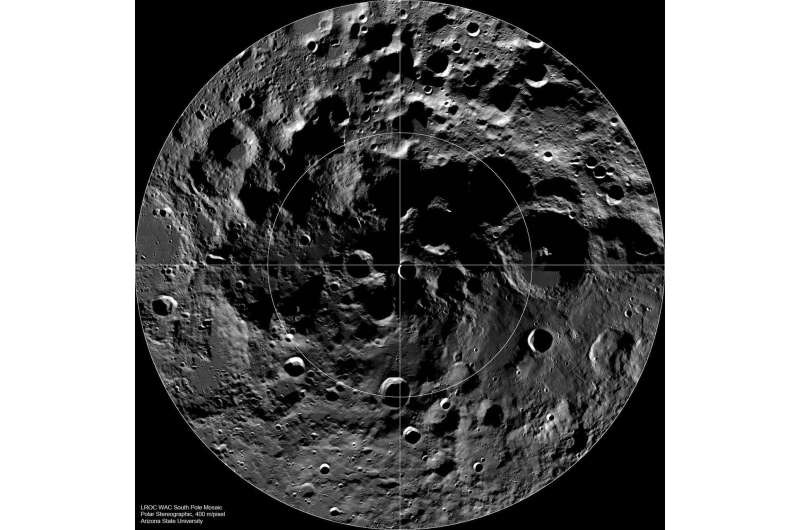
It was believed that there are carbon dioxide cold traps present on the moon but there was never any proof of them – until now. These cold traps may possibly have solid carbon dioxide which would have a major affect on future missions to the moon.
These carbon dioxide cold traps are located at the lunar south pole where there are continuous shadows and extremely cold temperatures. Specifically, there were a total of 204 square kilometers (79 square miles) worth of these cold traps with the biggest area of them being located in the Amundsen Crater – 82 square kilometers (32 square miles) of cold traps were found there. Incredibly, the temperature in this area dips down to a freezing 60 degrees Kelvin (-352 degrees Fahrenheit or -213 degrees Celsius).
Amundsen Crater
(Via Wikipedia)
Since it is so cold, the carbon dioxide molecules could become frozen and stay in solid form continuously, even when the temperatures rise. However, while there are carbon dioxide cold traps on the moon, it’s not certain whether there is solid carbon dioxide.
In order to confirm the presence of carbon dioxide cold traps, experts studied 11 years worth of temperature data collected by the Diviner Lunar Radiometer Experiment that was on board NASA’s Lunar Reconnaissance Orbiter.
Norbert Schörghofer, who is a planetary scientist at the Planetary Science Institute, explained their work in further detail, “I think when I started this, the question was, ‘Can we confidently say there are carbon dioxide cold traps on the moon or not?’” “My surprise was that they’re actually, definitely there. It could have been that we can’t establish their existence, [they might have been] one pixel on a map… so I think the surprise was that we really found contiguous regions which are cold enough, beyond doubt.”
Lunar surface
Since there are carbon dioxide cold traps on the moon, they will affect future missions, such as robots or humans possibly being able to use the cold traps to create numerous materials that would help them to stay there for a longer period of time. For example, the cold traps could be beneficial in creating steel, biomaterials, and rocket fuel.
Additionally, the cold traps may aid experts in learning more about our lunar neighbor’s history like water and other volatiles as noted by Paul Hayne who is a planetary scientist at the University of Colorado, Boulder, but wasn’t part of the study, “These should be high-priority sites to target for future landed missions.” “This sort of pinpoints where you might go on the lunar surface to answer some of these big questions about volatiles on the moon and their delivery from elsewhere in the solar system.” (A map of the carbon dioxide cold traps on the moon can be viewed here.)
A view of the lunar south pole, where newly confirmed carbon dioxide cold traps are located, according to new research in Geophysical Research Letters. Future missions on the Moon may target this region to find out more about the resources that may exist there.
Credit: NASA/GSFC/Arizona State University
A map of carbon dioxide cold traps on the Moon, with likely cold traps marked in purple hues. In these regions, temperatures dip below even the coldest temperatures measured on Pluto.
Nieuwe foto's van buitenste planeten door ruimtetelescoop Hubble
Er zijn weer nieuwe foto’s van het buitenste deel van het zonnestelsel die ruimtetelescoop Hubble heeft gemaakt in september en oktober. Het gaat om prachtige beelden van reuzenplaneten Jupiter, Saturnus, Uranus en Neptunus.
Ruimtetelescoop Hubble is genoemd naar de Amerikaanse astronoom Edwin Hubble en werd in 1990 door NASA en ESA gelanceerd. Sindsdien draait de Hubble rondjes om de aarde en wordt de telescoop gebruikt om in de ruimte scherpe foto’s te maken.
De vier planeten op de foto’s zijn gasreuzen, waardoor ze heel anders zijn dan de rotsachtige planeten Aarde en Mars. De NASA formuleerde het nogal poëtisch: “Deze monsters, die zich uitstrekken van 500 miljoen tot 3 miljard kilometer van de zon, zijn even afgelegen als mysterieus. Ze wonen zo ver van de zon dat water er onmiddellijk bevriest tot vast ijs”.
Elon Musk hoopt in januari zijn ‘Starship’ in baan om de aarde te kunnen lanceren
SpaceX-CEO Elon Musk hoopt dat de grote Starship-raket van zijn ruimtevaartbedrijf in januari 2022 voor het eerst in een baan om de aarde gebracht kan worden. Dat zei hij donderdag tijdens een virtuele bijeenkomst met leden van de National Academy of Sciences. Musk waarschuwt wel voor de risico’s en durft niet te zeggen dat het meteen een succesvolle vlucht zal zijn. Hij hoopt en verwacht na die eerste testvlucht volgens jaar nog meerdere lanceringen te doen.
Het ruimtevaartbedrijf heeft al bij wijze van test Starships gelanceerd tot een hoogte van zo’n 10 kilometer, vanaf de productielocatie in Zuid-Texas. Het ruimteschip bereikte tot nu toe echter nooit een baan om de aarde. Dat is de volgende stap. Voor de eerste ruimtevlucht is het bedrijf van plan één keer rond de aarde te cirkelen en de raket vervolgens in de Stille Oceaan te laten vallen, ongeveer 100 kilometer ten noordwesten van Kauai, een eiland van Hawaï.
Musk zei in de meeting donderdag dat de orbital boosters en het Starship voor de eerste baanvlucht intussen gebouwd zijn. Later deze maand moeten het lanceerplatform en de lanceertoren ook klaar zijn. SpaceX kan dan in december de benodigde tests uitvoeren, waarmee de lancering ‘hopelijk’ in januari plaats kan vinden.
Het is de grootste raket die ooit is ontworpen en we zijn dicht bij onze eerste lancering.
Elon Musk
“Het is de grootste raket die ooit is ontworpen en we zijn dicht bij onze eerste lancering”, aldus Musk. De roestvrijstalen raket en de superzware aandrijvingen eronder zullen “snel en volledig herbruikbaar” zijn, aldus de SpaceX-oprichter, die deze combinatie “de heilige graal van raketten” noemde.
Dat wil niet zeggen dat het meteen een succesvolle lancering gaat zijn. Musk waarschuwt dat er veel risico’s verbonden zijn aan zo’n eerste testvlucht. “Maar ik denk dat we er wel veel vooruitgang mee gaan boeken.” Ook wil hij meerdere lanceringen doen met de Starship-raket volgend jaar, een twaalftal testvluchten in totaal.
Maan en Mars
SpaceX is van plan om een aangepaste versie van de Starship-raket te gebruiken om NASA-astronauten in 2025 of later op de maan te laten landen als onderdeel van het Artemis-programma. SpaceX wil uiteindelijk ook honderden tonnen aan voorraden en mensen naar Mars vervoeren om Musks doel, het bouwen van een bewoonde stad op Mars, te verwezenlijken.
Starship is ontworpen om vracht en mensen in een baan om de aarde te vervoeren tegen een fractie van de kosten van eerdere ontwerpen. Musk zei eerder een fabriek te hebben gebouwd om meer Starships te kunnen maken, waarbij zijn bedrijf mikt op het maken van veel raketten. Uiteindelijk zouden er ‘misschien duizend’ Starships nodig zijn om multiplanetair leven mogelijk te maken, aldus Musk.
Musk herhaalde tijdens de bijeenkomst dat de mensheid in zijn ogen een tweede planeet nodig heeft, gezien de risico’s waarmee de aarde wordt geconfronteerd, zoals kernwapens, grote kometen, pandemieën, dalende geboortecijfers, kunstmatige intelligentie en religieus extremisme.
Glowing Orbs Over Gilbert, Arizona Nov 18, 2021, UFO Sighting News.
Date of sighting:November 18, 2021 Location of sighting: Gilbert, Arizona, USA Source:MUFON
Watching this raw footage of these glowing orbs passing above the eyewitness I just mind-blowing. It really shows how the UFOs move, travel together, colors, glow and shape. Thats a lot of info gathered from one video. Also the UFOs are low...they are flying below the clouds. Arizona is home of the Extraterrestrial highway that goes past Area 51, a place that UFOs are frequently seen, so this is of no surprise since its from a hotbed of UFO activity. Awesome catch, I really like how so many are traveling together following each other.
Scott C. Waring - Taiwan
Eyewitness states:
I Saw and videoed rounds spheres orange in color all going in the same direction. I Witnessed and saw round circles flying through the sky I pulled over and video tapped over 10 of these round circles going from east to west to making no noise really bright and hauling through the sky.
Gigantic Blue Jet filmed from airliner flight deck at 40.000 Feet
An upper atmospheric lightning, called a blue jet, was recorded on November 19th, 2021 at 40 000 feet (12.000 meters) from an airliner flight deck.
The storm was located over the Bay on Bengal off the north Tamil Nadu coast in India.
These gigantic blue jets known as Transient Luminous Events (TLEs) are rare weather phenomena that occur above thunderstorms but till now science does not yet have an explanation where in the cloud this rare phenomenon originate.
Maybe it's not an electrical phenomenon that occurs over thunderstorms at all, but a secret space weapon?
Meer van UFO'S of UAP'S, ASTRONOMIE, RUIMTEVAART, ARCHEOLOGIE, OUDHEIDKUNDE, SF-SNUFJES EN ANDERE ESOTERISCHE WETENSCHAPPEN - DE ALLERLAATSTE NIEUWTJES


 A Startup Just Launched A Rocket By Spinning It Really Fast And Then Letting Go