A video uploaded by Latest UFO Sightings shows a strange UFO formation that was filmed in the sky above Hadera, Israel on 31st March 2022.


 Strange UFO filmed over Hadera, Israel
 TOP 5 UFO SIGHTINGS | The Proof is Out There

These 5 UFO sightings are so out of the ordinary that it’s difficult to make sense of them. Check them out in this The Proof Is Out There compilation.
RELATED VIDEOS, selected and posted by peter2011
“FUSION IS A SOURCE OF NEAR-LIMITLESS, CLEAN POWER.”
“FUSION IS A SOURCE OF NEAR-LIMITLESS, CLEAN POWER.”
Shutterstock
“FUSION IS A SOURCE OF NEAR-LIMITLESS, CLEAN POWER,” NICK HAWKER TELLS INVERSE.
It sounds fantastic — an answer to the dire need to quickly transition to clean and sustainable energy. But is nuclear fusion our way out of the energy crisis?
Nuclear fusion is essentially the opposite of nuclear fission. That process, most commonly known as “nuclear power,” involves splitting atoms to release energy. Fusion instead involves smashing atoms into each other to create larger atoms — theoretically releasing vast amounts of energy. But unlike nuclear fission, this process comes without the same safety concerns over meltdowns or radioactive waste.
Hawker, CEO of First Light Fusion, a company currently developing a fusion energy system, sees the potential — and the money.
“More and more investment is flowing into the industry month-by-month, and this is helping us to help bring this potentially revolutionary technology closer to fruition,” he says.
He’s not wrong: The U.K. Atomic Energy Authority reported in 2021 that 18 companies worldwide had received a total of $1.9 billion in funding — $85 million of which came from official sources. Of all the companies dealing in nuclear fusion surveyed, 15 were founded in the last decade and 12 over the previous five years.
Yet the bounding enthusiasm is tempered by a history of false starts. No public or private organization has yet demonstrated a fusion reaction that generates more energy than went in to the reaction.
Smashing atoms together sounds easy, but their forces repel the other. Fusion energy experiments typically involve smashing two hydrogen isotopes called deuterium and tritium. Mashing them together can release a lot of energy. But these two hydrogen atoms are both positively-charged, which means they repel each other.
Heat gets atoms moving. As the International Atomic Energy Agency explains, the goal is to heat them so much that they can move past their magnetic repulsion. They can collide and let a nuclear force overcome that repulsion.
Peter Norreys, professor of inertial fusion science at the University of Oxford, tells Inverse that recent breakthroughs show great promise. However, that does not mean that fusion energy is just around the corner.
“There are still big challenges remaining,” Norreys says. “I think there is an exciting future ahead for fusion energy, but the energy source will only be realized from mid-21st century onwards.”
In a February 1955 speech, Indian physicist Homi J. Bhabha says that controlled fusion energy would arrive within the next two decades: “When that happens, the energy problems of the world will truly have been solved forever.”
Even British prime minister Boris Johnson alluded to these delays during an October 2019 speech, when he promised £200 million ($262 million) in funding for the technology.
“They are on the verge of creating commercially viable miniature fusion reactors for sale around the world,” Johnson says — although it is unclear what he meant by “miniature” — before adding: “now I know they have been on the verge for some time…it is a pretty spacious kind of verge.”
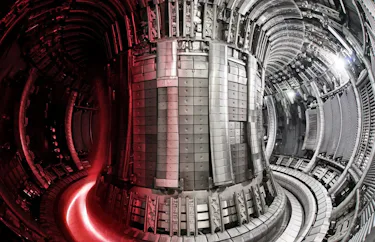
It sounds like a dream for a world aiming to limit global average temperature rises to well below two degrees Celcius, as outlined in the Paris Agreement. In the last year, this permanently coming-soon form of zero-carbon electricity generation has made strides toward becoming a reality that can’t be written off. Here’s a quick timeline of some significant fusion breakthroughs:
Progress is good, but it is not the same as a proven technology that already works well. Wind and solar are proven technologies that exist today. Why invest in fusion?
The fusion energy process is similar to how the Sun burns material and unleashes energy. Elon Musk, whose company Tesla sells solar panels, describes the Sun in a 2020 Twitter post as a “free fusion reactor in the sky.” It may not be enough to solve our energy crisis, however.
Hawker’s company commissioned research into power usage over the coming decades and found that wind and solar could produce 19,900 Terawatt-hours per year. That’s an eight-fold increase from current rates but less than half of what’s needed to meet the 2050 net-zero target set by many countries.

Other analyses have sketched out more ambitious rollouts of renewables, ones that don’t rely on fusion. The International Energy Agency’s “Net Zero by 2050” report, released in 2021, detailed a bold roadmap to meet climate targets. It describes how renewable energy could account for 90 percent of global electricity production by that date, with nuclear power accounting for less than 10 percent. Fusion does not receive a mention in the report — but advocates like Hawker say this is short-sighted.
One benefit of fusion is that it offers electricity generated on-demand, rather than only when the Sun is shining or the wind is blowing — a potential “complement” to renewable energy sources.
“To mitigate the impact of climate change, a large global market for baseload clean power will open up to complement renewables, and that is where fusion energy will play a key role,” he says.
The International Thermonuclear Experimental Reactor (ITER) project, a 35-country consortium that is currently developing the world’s largest fusion energy experiment, cites these major benefits of fusion:
6. Energy: The same amount of fuel as a traditional nuclear reactor generates four times as much energy in a fusion plant
5. Sustainability: Lithium in the ocean — an element necessary for fusion energy — could offer enough fuel for millions of years
4. Emissions: Zero carbon dioxide emissions
3. Waste: Fusion produces zero long-term radioactive waste
2. Risk: Fusion can’t be a precursor to nuclear weapons, and there is no meltdown risk
1. Cost: Fusion costs similar per kilowatt to a traditional nuclear reactor
We shouldn’t depend on fusion to save us — but it is another potential tool in our kit as we adapt to our climate reality.
Ultimately, the U.K.’s Atomic Energy Authority finds most fusion companies operating today in the world believe fusion will not power any grid anywhere in the world until the 2030s at the earliest. For a skeptical public that’s heard “two decades from now” for the past seven decades, it’s now down to the developers to prove that this time it’s different.
Fusion energy involves colliding two, light, extremely hot atoms together to create a heavier atom. The colliding atoms heat beyond 100 million degrees Celsius to become plasma. The energy released when the atoms eventually fuse together is then transferred as heat through a water loop system to produce steam. The steam spins a turbine, and the turbine generates electricity.
There are two main methods that keep the fusion reaction going:
The biggest hurdle to fusion energy actually working is that it is yet to generate more energy than goes into the reaction. Heating atoms up to temperatures similar to the Sun takes a lot of energy.
As we still haven’t gotten there yet, researchers continue to explore multiple avenues to see if we can make a breakthrough anywhere.
Inertial fusion is the less developed of the two. But a recent National Ignition Facility breakthrough — the first demonstration of burning inertial confinement fusion in a laboratory setting — shows it still has promise, Norreys says.
“[The results] are a really big deal, in my opinion,” Norreys says. “They show that the pursuit of an inertial fusion reactor is a realistic possibility for the future, one that is not built upon difficult and insurmountable physics.”
On the magnetic confinement side, the success of the Joint European Torus project bodes well for the upcoming ITER project. ITER, which will use the same fuel mix and wall materials as JET, aims to power the machine for the first time by December 2025.
"For the ITER Project, the JET results are a strong confidence builder that we are on the right track as we move forward toward demonstrating full fusion power," Bernard Bigot, director-general of ITER, said in a statement on the JET announcement.
“They [JET] are at the forefront of culture and are an outstanding example to the next generation on how to selflessly dedicate their energy and talent to the betterment of humankind,” Norreys says.
Mass extinction 359 million years ago may have been caused by 'one or more stars going supernova' just 65 light years from Earth
Exploding stars — or 'supernovae' — a mere 65 light years from Earth may have triggered the devastating mass extinction event around 359 million years ago.
The Late Devonian extinction saw vanish 50 per cent of all genera — groups of species — and 19 per cent of all families, the next largest grouping on the tree of life.
Among the groups to be worst impacted were the jaw-less fish, reef-building 'rugose' corals and the trilobites — iconic marine arthropods that look like woodlice.
This episode mass dying has previously been blamed on asteroid impacts, climate change, sea level changes and large-scale volcanic activity.
Researchers from the US, however, examined the boundary in the rock record between the Devonian and the next period, the Carboniferous.
Here lie hundreds of thousands of generations of plant spores that were sunburnt by ultraviolet light — suggesting a long-term weakening of the ozone layer.
This may have been caused by the impact of one or more nearby supernovae explosions on the solar system — and would have been catastrophic for life.
Exploding stars — or 'supernovae' — a mere 65 light years from Earth may have triggered the devastating mass extinction event around 359 million years ago. Pictured, an artists impression of a local supernova as seen from Earth orbit
'We propose that one or more supernova explosions, about 65 light-years away from Earth, could have been responsible for the protracted loss of ozone, said paper author and astronomer Brian Fields of the University of Illinois at Urbana-Champaign.
'Earth-based catastrophes such as large-scale volcanism and global warming can destroy the ozone layer too, but evidence for those is inconclusive for the time interval in question.'
Professor Fields and his colleagues also ruled out other space-based events that could have potentially caused ozone depletion — such as deadly gamma-ray bursts, meteorite impacts and solar eruptions.
'These events end quickly and are unlikely to cause the long-lasting ozone depletion that happened at the end of the Devonian period, said paper author and astronomer Jesse Miller, also of the University of Illinois.
In contrast, the researchers explained, a supernova has the potential to have a more lasting impact — especially given how they can deliver a 'one-two punch'.
Should a nearby star have gone nova, the Earth would shortly have been bathed in damaging ultra violet, X-ray and gamma ray radiation.
This would have be followed up by the debris blast from the explosion slamming into the solar system and subjecting our planet to irradiation from the cosmic rays accelerated by the supernova.
Together, the damage to the Earth's ozone layer would have likely lasted up to some 100,000 years, the researchers said.
Although this is not as long as the 300,000-year-spanning decline in biodiversity that led up to the end of the Devonian period, the supernova could have occurred in tandem with other catastrophes — or even multiple nova explosions.
'This is entirely possible. Massive stars usually occur in clusters with other massive stars, and other supernovae are likely to occur soon after the first explosion,' explained Mr Miller.

Should a nearby star have gone nova, the Earth would shortly have been bathed in damaging ultra violet, X-ray and gamma ray radiation. This would have be followed up by the debris blast from the explosion slamming into the solar system. Pictured, a simulation of a nearby supernova explosion battering and compressing the solar wind — with the Earth's orbit shown in blue and the Sun itself as the central red dot
Proof for the supernovae hypothesis, however, would need to come from finding evidence of the radioactive isotopes plutonium-244 and samarium-146 within the rocks and fossils deposited during the time of the mass extinction.
'Neither of these isotopes occurs naturally on Earth today and the only way they can get here is via cosmic explosions,' said paper author and astronomer Zhenghai Liu.
Or, as Professor Fields explains it, they are like green bananas.
'When you see green bananas [here] in Illinois, you know they are fresh, and you know they did not grow here.'
'Like bananas, Pu-244 and Sm-146 decay over time. So if we find these radioisotopes on Earth today, we know they are fresh and not from here — the green bananas of the isotope world — and thus the smoking guns of a nearby supernova.'
The search for these metaphorical bananas, however, will be a task for the future, the researchers explained.

'The overarching message of our study is that life on Earth does not exist in isolation,' Professor Fields concluded.
'We are citizens of a larger cosmos, and the cosmos intervenes in our lives — often imperceptibly, but sometimes ferociously.'
The full findings of the study were published in the journal Proceedings of the National Academy of Sciences.
Scientists find ‘smoking gun’ proof of a recent supernova near Earth
If you wanted some more shattering news, we now know that a supernova exploded very close to Earth about 2.5 million years ago. That might sound like a long time ago, but in the life of our 4.5 billion-year-old planet, that’s just yesterday.
Supernovas are amazingly bright explosions of stars at the end of their lives. A recent study found a blast 4.5 million light-years away could release as much as 10 times the amount of energy that a sun can emit in its lifetime. It also spreads a tremendous amount of chemicals all throughout the cosmos. Just-released research looked at such a spread and found that concentrations of particular elements point to a supernova near Earth just 2.5 million years ago.
The scientists found an unusual amount of 53Mn, a radioisotope made by supernovas. Previous studies looked for such traces in concentrations of 60Fe, an isotope of iron.
The scientists, led by Dr. Gunther Korschinek from the Technical University of Munich, focused their study on ferromanganese crusts. These marine sediments, composed mainly of iron and manganese oxides, grow in time and jut out from the water. This makes them great record-keepers of chemicals in the water around them. While examining these ferromanganese crusts from locations in the Pacific Ocean, the team found not only the isotope 60Fe, but also 53Mn. The samples came from 1,589 meters (5,213 feet) down to 5,120 meters (3.18 miles) down.
What does the presence of 60Fe tell the researchers? It’s half-life of 2.6 million years indicates that it was created in a nearby supernova explosion in relatively recently times. Otherwise, 60Fe would have decayed into nickel.
One other explanation for the presence of the isotope is its possible creation in the death throes of asymptotic giant branch (AGB) stars. But the presence of 53Mn, which cannot be produced by such stars, clearly points to supernovae as the origin, think the scientists.

This Manganese crust started to form about 20 million years ago. Growing layer by layer, it resulted in minerals precipitated out of seawater.Elevated concentrations of 60 Fe and 56 Mn in layers from 2.5 million years ago hints at a nearby supernova explosion around that time.
Credit: Dominik Koll/ TUM
“The increased concentrations of manganese-53 can be taken as the ‘smoking gun’ – the ultimate proof that this supernova really did take place,” shared Dr. Korschinek in a press release.
The researchers used accelerator mass spectrometry to locate the 53Mn atoms in the crust that looks like hardened chocolate cake.
“This is investigative ultra-trace analysis,” said Korschinek. “We are talking about merely a few atoms here.” He explained further that the technique is also very useful in figuring out the sizes of the original stars, adding “accelerator mass spectrometry is so sensitive that it even allows us to calculate from our measurements that the star that exploded must have had around 11 to 25 times the size of the sun.”
If there was a supernova in Earth’s relatively recent history, what effect did it have on the planet? The scientists think it likely caused cosmic ray showers and affected the climate. It might have also caused a partial extinction event – the Pliocene marine megafauna extinction
RELATED VIDEOS, selected and posted by peter2011
Dying Star Puffs out six Smoke Rings
Our Sun’s days are numbered. In about 5 billion years the Sun will expand into a red giant, casting off its outer layers before settling down to become a white dwarf. It’s the inevitable fate of most sunlike stars, and the process is well understood. But as a recent study shows, there are still a few things we have to learn about dying Suns.
This recent study looks at a star known as V Hydrae or V Hya for short. It’s a red giant star about 1,300 light-years away with a mass roughly the same as the Sun. It’s what the Sun might look like in a few billion years. There are, however, a couple of things that make it different from our home star.
For one, it has a companion star. The companion is too faint for us to see, but based on the motion of V Hya, we know it is likely a red dwarf star that orbits V Hya once every 8.5 years. For another, V Hya seems to be dying in an unusual way.
In its current state, V Hya is categorized as a Mira variable star. It varies in brightness by about 1 – 2 magnitudes every 530 days, give or take. This is typical for dying red giant stars. As they fuse heavier elements in their core trying to survive, red giants often enter a period of oscillation, driven by the heating and cooling of the core. What’s more unusual is the fact that it is also a carbon star. This means that carbon fused in its core has been dredged up to the atmosphere of the star. So when astronomers look at V Hya’s spectrum, they see a strong presence of carbon. Basically, the star’s atmosphere is very “sooty.”
These two characteristics combined make V Hya an Asymptomatic Giant Branch star or AGB. About 90% of sunlike stars will enter an AGB period toward the end of their life. Astronomers have generally thought that the AGB epoch is a gradual process of stellar death, where the outer layers of the star are cast off over a period of about 100,000 years. After which, the remaining core collapses into a white dwarf. But V Hya shows this is either partly or sometimes incorrect.
If an AGB gradually cast off its outer layers, then we would expect to see an ever-expanding nebula known as a [planetary nebula](/post/cold-embers/) surrounding most white dwarfs. And we do see many planetary nebulae as the remnants of sunlike stars. But observations by the Atacama Large Millimeter/submillimeter Array (ALMA) show that V Hydrae isn’t creating such a nebula. Instead, it has been casting off thick rings rich in carbon. The star has ejected six rings over the course of about 2,100 years. The team also observed jets of gas ejected from the star perpendicular to the rings. This suggests that V Hya undergoes an unusually active period every few hundred years, which is very different from the common AGB model.
This period of active bursts is likely short lived compared to the full AGB epoch, so astronomers are fortunate to capture a dying star in this stage. It isn’t known whether most AGB stars experience such active periods, or whether V Hya is particularly unusual. To solve that mystery, it will take more observations of other dying red giant stars.
Reference:
The post Dying Star Puffs out six Smoke Rings appeared first on Universe Today.
 LATEST UFO SIGHTINGS AND VIDEOS - 09-04-22 BIS
LATEST UFO SIGHTINGS AND VIDEOS - 09-04-22 - BIS
UFO sighting Phoenix Arizona April 2022
UFO sighting from airplane April 2022
UFO Sighting Moscow Russia April 2022
UFO Sighting April 7, 2022
Amazing UFO Sighting 9th April 2022
UFO sighting Reno Nevada April 2022
UFO Sighting April 2, 2022
LATEST UFO SIGHTINGS AND VIDEOS - 09-04-22
LATEST UFO SIGHTINGS AND VIDEOS - 09-04-22
Top 5 UFO Sightings You Might Want To See This
UFO SIGHTING Over The Isle Of Wight ? (April 1st 2022).
Another great UFO Sighting !
Isle of Wight. UK. April 1st 2022.
Credits: Kerry.
MAJOR NEWS!! NAVY PILOTS Come Forward With New UFO Military Footage! 2022
NAVY PILOTS Come Forward With New UFO Military Footage! 2022
UFO sighting Denver Colorado April 2022
UFO sighting Denver Colorado April 2022
It’s Been Three Months in Deep Space, and Webb’s Mid-Infrared Instrument is Still Cooling Down
The James Webb Space Telescope continues to cool down out at its location at Lagrange Point 2, about 1.5 million kilometers from Earth. Since JWST is an infrared telescope, it needs to operate at extremely low temperatures, about 40 k (-223 degrees Celsius, -369.4 degrees Fahrenheit). But one instrument needs to be even colder.
To operate at peak efficiency, Webb’s Mid-Infrared Instrument (MIRI) must be cooled to a chilly 7 K (-266 C). And it will need a little help to reach those frigid temps.
Most of the telescope and its instruments rely on JWST’s massive sunshield as well as passive cooling, taking advantage of the frigid temperatures in deep space. The near-infrared instruments (NIRCam, NIRSpec, FGS-NIRISS) have now reached their target range from 34 to 39 K by cooling passively.
MIRI carries detectors that need to be at less than 7 kelvins to be able to detect longer wavelength photons of infrared light. This temperature is not possible on Webb by passive means alone, so Webb carries an innovative cryocooler, dedicated to the task of cooling MIRI’s detectors so that it can see farther into the infrared than the other instruments.
Previous infrared missions, such as the Spitzer Space Telescope, used a tank of cryogenic liquid helium that acted as a coolant by producing a freezing vapor that cooled the entire telescope assembly. But the vapor was vented to space, and once the supply helium was gone, the ability to cool the telescope was over. Spitzer launched in 2003 and the mission ended in 2020.
But MIRI’s cooler reuses its helium, just like the refrigerator in your kitchen continuously recycles its own coolant.
“Over the last couple weeks, the cryocooler has been circulating cold helium gas past the MIRI optical bench, which will help cool it to about 15 kelvins,” explained Konstantin Penanen and Bret Naylor, cryocooler specialists, NASA JPL, in a JWST blog post. “Soon, the cryocooler is about to experience the most challenging days of its mission. By operating cryogenic valves, the cryocooler will redirect the circulating helium gas and force it through a flow restriction. As the gas expands when exiting the restriction, it becomes colder, and can then bring the MIRI detectors to their cool operating temperature of below 7 kelvins.”
This type of recycling cooler also means the lifetime of MIRI instrument, as well as the entire JWST could be even longer than Spitzer’s 16 years. Webb engineers have mentioned a possible 20-year lifetime, or even longer.
Once MIRI reaches the final temperatures, engineers can begin the final phase of commissioning the telescope.
“Getting this instrument cold is one of the last major challenges faced by Webb before the MIRI team can truly relax,” wrote Alistair Glasse, Webb-MIRI Instrument Scientist, UK Astronomy Technology Centre and and Macarena Garcia Marin, MIRI Instrument and Calibration Scientist, ESA. They said the cryogenic cooler will “pull out almost all of the heat left in MIRI’s 100 kilograms (220 pounds) of metal and glass from that tropical launch day morning, three months ago. MIRI will be the last of Webb’s four instruments to open its eyes on the universe.”
You can read more details about how the cryogenic cooler works here. More information about MIRI is available at this NASA website. You can see the temperatures of all the instruments and progress on Webb’s commissioning at the Where’s Webb site.
The post It’s Been Three Months in Deep Space, and Webb’s Mid-Infrared Instrument is Still Cooling Down appeared first on Universe Today.
Astronauts are Practicing Landing at the Moon's South Pole
The European Space Agency (ESA) is learning how to touch down safely at the South Pole of the Moon, without ever leaving Earth. Actual Moon landings seem to be on the horizon in the next decade via the Artemis program, and astronauts are going to have to learn to handle the unique challenges of landing in the Moon’s polar environment. With low angle sunlight and deep, permanently shadowed craters, the Moon’s South Pole poses difficulties no Apollo mission ever faced. To get hands-on experience with this environment without risking human life, ESA is putting astronauts through their paces on high-tech simulators.
Simulators have long been a part of space exploration. Movie fans probably remember Gary Sinise – playing astronaut Ken Mattingly in the classic 1995 film Apollo 13 – denying himself sleep and rest to run test after test in the simulator, searching for a way to bring the mission’s endangered crew home safe. In real life, NASA used a variety of simulators during the Apollo era to test different aspects of the program.
The most visceral Apollo testbed was the rocket-powered Lunar Lander Research Vehicle (LLRV), designed to simulate landing in a low-gravity environment. The LLRV gave Neil Armstrong and his colleagues valuable practice on Earth before testing the real thing on the Moon. but the LLRV came with its own risks. It crashed several times, forcing Armstrong and other pilots to make use of the built-in ejection seat and parachute to safety. Still, it was better to crash on Earth than on the Moon!
ESA’s new simulator, part of the ‘Human-In-the-Loop’ flight vehicle Engineering study, doesn’t leave the ground or rely on rockets – it’s built onto a large-scale robotic arm, which is able to move and shift at extreme angles to simulate the effects of the commands the astronaut gives the computer. Based at the German Aerospace Center (Deutsches Zentrum für Luft- und Raumfahrt; DLR), the Robotic Motion Simulator is a feat of engineering in its own right.
ESA astronaut Robert Vittori, who has been to space three times before, put the simulator through its paces. “The simulator is an incredible machine, probably one of the best I have experienced,” he said. “This experiment today is for me showing that Europe can play a key role in the future of exploration.”

Vittori tested various scenarios, including overriding the autopilot that was set to land in a field of boulders, and switching to manual control when the computer developed a fault.
The philosophy of ESA’s Human-In-the-Loop program is that hardware engineering and software design choices for spacecraft ought to be made in cooperation with the humans who will be flying the machines. The human-machine interfaces need to be user-friendly and intuitive, so that at critical moments, like landing on the Moon, there are no surprise design flaws or pilot confusion over the controls.
A similar philosophy enabled the success of the early days of spaceflight, when the Mercury astronauts worked closely with the engineering teams building the capsules and systems. Astronaut Wally Schirra, for example, specialized in life support systems and space suit development, while his colleague Scott Carpenter worked with the team building navigational equipment. In the present day, ESA is taking this philosophy to the next level. “We’re establishing a preliminary design and the preliminary requirements for human lunar landing, with astronauts in the loop to improve robustness and reliability of the flight system,” says project manager Luca Ferracina.
ESA has been heavily involved in the Artemis program since the beginning. It designed and built the service module of the Orion capsule, which will take astronauts to lunar orbit, working closely with NASA and other international partners. ESA astronauts will be on board at least three of the Artemis missions to the planned Lunar Gateway space station in the coming decade.
Learn more:
Featured image: the DLR Robotic Motion Simulator. ESA.
The post Astronauts are Practicing Landing at the Moon’s South Pole appeared first on Universe Today.
Source:
UFO Crashes On Alaska’s Lazy Mountain, April 7, 2022, Video, UFO Sighting News.


 Ancient Alien Face Found In Mars Crater, Google Map, UFO Sighting News
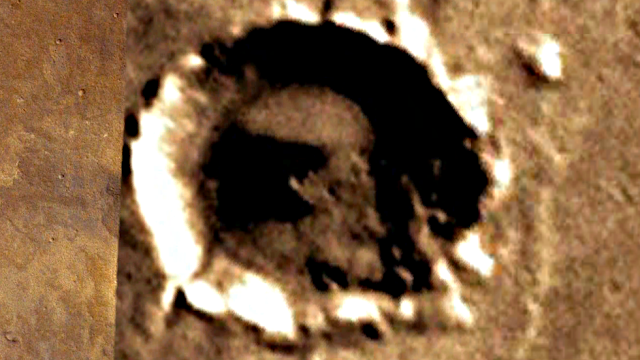

Location of discovery: Mars
Alien Craft Seen Entering Side Vent Of Volcano In Mexico, April 2020, Video, UFO Sighting News.

Date of sighting: April 1, 2022
Dark Disk Over Tokyo, Japan, Creates Ring Of Light, Video, UFO Sighting News.
 Awesome Structures Discovered Near Our SUN! April 2022, Video, UFO Sighting News.

 Shocking UFO Sighting Defies Logic
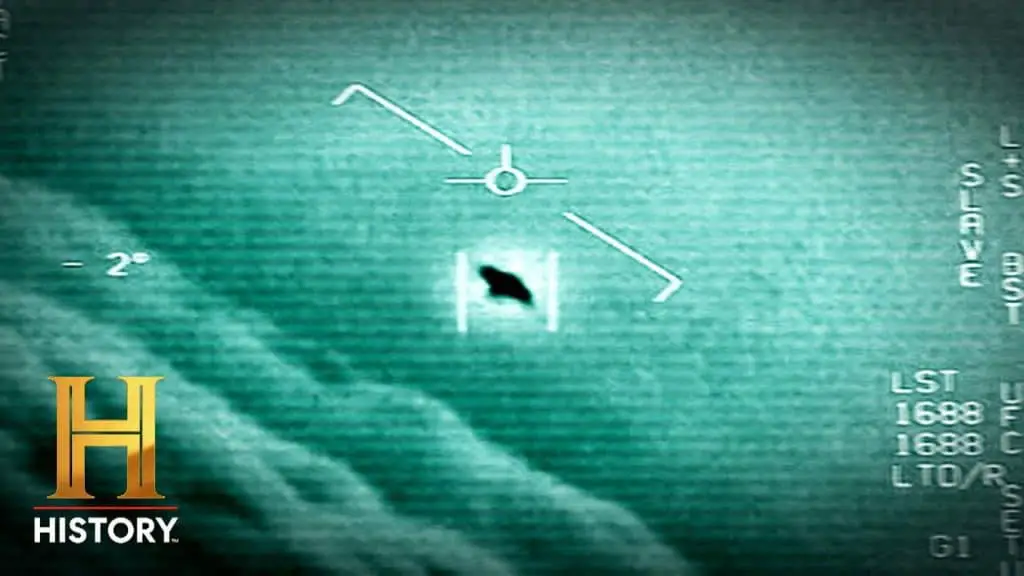
While in restricted airspace, pilots spot an unidentified object performing unusual maneuvers unlike any other military aircraft, in this clip from Season 18, “Alien Air Force.”
RELATED VIDEOS, selectd and posted by peter2011
Rare 'black widow' star system could help unlock the secrets of space-time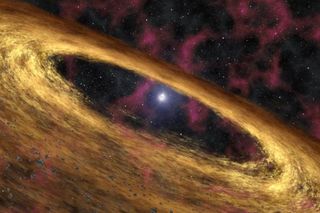
This cannibal star system could be a gravitational wave detecting machine.
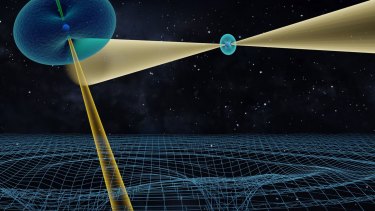
Every 4 milliseconds, a dead star blasts a powerful beam of radiation toward our planet. Don't worry — Earth will be fine. It's the dead star's tiny companion that's in trouble.
In a new study published March 11 on the pre-print database arXiv(opens in new tab), researchers describe this ill-fated binary star system — a rare class of celestial object known as a black widow pulsar(opens in new tab). Just like the cannibal spider from which this type of system takes its name, the larger member of the pair seems intent on devouring and destroying its smaller companion. (In spiders, females are often larger than males.)
However, there will be no quick decapitation for this black widow; the larger star appears to be killing its partner much more slowly. Over hundreds or thousands of years, the larger star has sucked in matter from the smaller star's vicinity, while simultaneously blasting the small star with strobing beams of energy, which push even more matter away into space.
Someday, it's possible that the larger star could devour the smaller one completely, lead study author Emma van der Wateren, a doctoral student at the Netherlands Institute for Radio Astronomy (ASTRON), told Live Science. But, before then, scientists hope to put this strange system to work. By monitoring the larger star's remarkably steady pulses for sudden irregularities, the study authors hope this pulsar could help them detect rare ripples in the fabric of space-time(opens in new tab) known as gravitational waves.
"To detect gravitational waves, you need many, many very stable pulsars," van der Wateren said. "And unlike earlier black widow pulsars that have been discovered, this system is very stable."
Scientists discovered star system J0610−2100 about 10,000 light-years from Earth in 2003, when they noticed its periodic pulsing with a radio telescope. Researchers pegged the system for a pulsar — a type of small, dense, collapsed star that rotates extremely quickly.
These dead stars are highly magnetized, blasting beams of electromagnetic radiation out of their poles as they spin. When one of those beams points toward Earth, the effect is like a lighthouse, with the light blinking on and off as the beam strobes past us. If the light blinks once every 10 milliseconds or less (like J0610−2100, which blinks every 3.8 milliseconds), then the star fits into an even rarer category, called a millisecond pulsar.
Many millisecond pulsars share their orbits with sun-like companion stars, which the pulsars slowly devour. As the pulsars gobble up the spinning disks of matter spewed by the companion star, they glow in X-ray radiation that can be spotted across the galaxy.

And sometimes, a pulsar may take more than its fair share of matter from its companion. If a pulsar's companion star has a mass smaller than one-tenth the mass of Earth's sun, then that star system is called a black widow pulsar.
J0610−2100 was the third black widow pulsar ever detected — and seems to be one of the hungriest. The pulsar's companion star measures just 0.02 solar masses, and completes an orbit around the pulsar every seven hours or so, the study found.
For their new paper, van der Wateren and her colleagues analyzed 16 years' worth of radio telescope data from this cannibal star system. While the system is unmistakably a black widow pulsar, the team was surprised to find that it was missing a few signature quirks.
For example, the star system never showed what's known as a radio eclipse — a nearly universal phenomenon in other black widow pulsars.
"Typically, for a portion of the binary orbit, the radio emissions from the pulsar completely disappear," van der Wateren said. "This occurs when the companion star moves close to the front of the pulsar, and all this irradiated material coming off of the companion eclipses the pulse emission from the pulsar."
Over 16 years, the star system also never showed any timing irregularities — sudden, tiny differences in the timing of a pulsar's pulse compared to astronomers' predictions.
The absence of these two common phenomena is hard to explain, van der Wateren said. It could be that the line of sight on this pulsar is skewed so that radio eclipses just aren't apparent to Earth-based telescopes, or perhaps the pulsar's companion star isn't being irradiated quite as strongly as other known pulsars that show these features. But whatever the case, this black widow system is incredibly stable and predictable — which makes it a perfect candidate for detecting gravitational waves, the researchers said.
These waves (first predicted by Albert Einstein) occur when the universe's most massive objects interact — like when black holes or neutron stars collide. The waves ripple through time and space at light-speed, warping the fabric of the universe as they pass.
Researchers have used a rapidly-spinning double pulsar system to take measurements for 16 years, ultimately proving Einstein right on the way to proving him wrong.
CREDIT:MICHAEL KRAMER/MPIFR
One way that astronomers hope to detect gravitational waves is by monitoring dozens of millisecond pulsars at once using systems called pulsar timing arrays. If every pulsar in the array suddenly experienced a timing irregularity around the same time, that could be evidence that something massive, like a gravitational wave, disrupted their pulses on the way to Earth.
"We have not detected gravitational waves in this way yet," van der Wateren said. "But I think we are coming close.
That's what makes the discovery of highly predictable black widow pulsars like this one so important, van der Wateren added.
Typically too temperamental because of their radio eclipses and timing irregularities, black widow pulsars are rarely good candidates for gravitational wave detection. But J0610−2100 might be an exception — and its mere existence suggests that there could be other suitable exceptions out there too. Like its arachnid namesake, this black widow's cannibal bite may serve a greater purpose in the end.
Scientists Just Found a ‘Significant’ Volume of Water Inside Mars’ Grand Canyon
On December 15, 2021 ESA-Roscosmos ExoMars Trace Gas Orbiter (ESA) published scientific material to declare detection of significant amounts of water at the heart of Mars’ dramatic canyon system, Valles Marineris (Grand Canyon). The newly discovered volume of water is hiding under the surface of Mars, and was detected by the Trace Gas Orbiter, a mission in its first stage under the guidance of the ESA-Roscosmos project dubbed ExoMars. Gas Orbiter revealed an area with an unusually large amount of hydrogen in the colossal Valles Marineris canyon system: assuming the hydrogen we see is bound into water molecules, as much as 40% of the near-surface material in this region appears to be water. Igor Mitrofanov, the Russian Academy of Science’s lead investigator of the Space Research Institute, presented this discovery in the ESA press release.
Mars’ canyon water could be liquid, ice, or a messy mix
“The reservoir is large, not too deep below ground, & could be easily exploitable for future explorers,” read a tweet on the announcement from ExoMars. That sounds basically great! But it’s too soon for Musk to pack up his bags and fly to the site, since much work is left to be done.
A study accompanying the announcement, published in the journal Icarus, shows that neutron detection doesn’t distinguish between ice and water molecules. This means geochemists need to enter the scientific fray to reveal more details. But several features of the canyon, including its topology, have led the researchers to speculate that the water is probably in solid form (ice). But it could also be a mixture of solid and liquid.
( Source : https://interestingengineering.com/ )
Scientists see ‘rarest event ever recorded’ in search for dark matter
Scientists have observed an extremely rare particle physics event using a detector that’s hunting for dark matter, the mysterious material that physicists have yet to observe.
In a paper published in the journal Nature, researchers with the XENON Collaboration said they’d observed the radioactive decay of a substance called xenon-124, an isotope of the element xenon — a colorless and odorless noble gas found in tiny amounts in the atmosphere. The event — a “two-neutrino double electron capture” — has eluded scientists for decades.
It happens when “two protons in a nucleus are simultaneously converted into neutrons by the absorption of two electrons from one of the atomic shells and the emission of two electron neutrinos.” After this occurs, the event shoots out a predictable cascade of X-rays and Auger electrons that scientists look for using an ultra-sensitive detector, buried about 5,000 feet beneath Italy’s Gran Sasso mountain where it’s shielded from cosmic rays.
“We have shown that we can observe the rarest events ever recorded,” Ethan Brown, a professor of physics at Rensselaer Polytechnic Institute and co-author of the study, told Newsweek. “The key finding is that an isotope formerly thought to be completely stable has now been shown to decay on an unimaginably long timescale.”
How long is that timescale? The team estimated that xenon-124’s half-life is about 18 sextillion years — or 18,000,000,000,000,000,000,000 years — which is than one trillion times the age of our universe, according to the team. It’s the slowest process ever measured directly, the team wrote in a statement.
“It’s an amazing to have witnessed this process, and it says that our detector can measure the rarest thing ever recorded,” Brown told The Independent.
We are extremely excited to share with you that we have observed the rarest decay process ever measured! It is the two neutrino double electron capture in Xe-124. The results have been published in @nature: https://www.nature.com/articles/s41586-019-1124-4 … #NotOnlyDM #TenTrillionBillionYears #XENON
“We designed the XENON1T experiment to look for dark matter, a new kind of matter that makes up 85 percent of the mass of the universe, but interacts so rarely that it’s never been observed,” Brown said. “This experiment is so sensitive to very rare events that we can make all kinds of other rare physics measurements. One of those is this decay of xenon-124. Although our primary goal was always the discovery of dark matter, we knew there was a good chance we could see this rare decay, so we set out to do so.”
To get that good chance, the team had to expose their detector to a huge amount of xenon atoms by stocking it with 3.2 tons worth of liquid xenon.
“XENON1T is a giant vat of liquid xenon surrounded by light sensors,” Brown said. “When dark matter collides in the xenon, or when a radioactive decay occurs inside, we get a tiny flash of light and a little bunch of charge out of the xenon. We measure these with the light sensors and reconstruct everything we can about the original event that caused the light and charge.”
Although the team didn’t observe dark matter — which is the primary purpose of the detector — the recent observations could help scientists learn more about neutrinos, one of the least understood fundamental particles in the universe.
“It proves that this XENON detector technology we use for dark matter is much more versatile,” graduate student Christian Wittweg, Ph.D student at the University of Münster in Germany, told Gizmodo. “We get all these cool analyses… for free after having built an experiment sensitive enough to hunt for dark matter.”
The team plans to use its newer XENONnT detector to continue hunting for dark matter, the elusive material that’s estimated to comprise about 26.8 percent of all the content in the universe.
Jupiter’s Origin Story: Intriguing New Details on the Gas Giant’s Formation Journey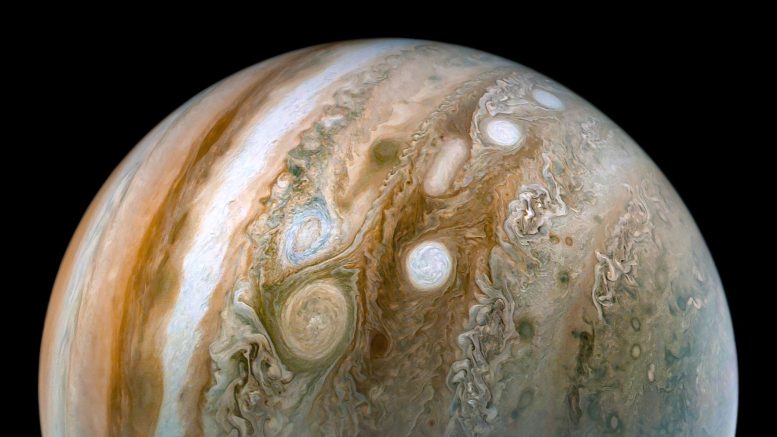
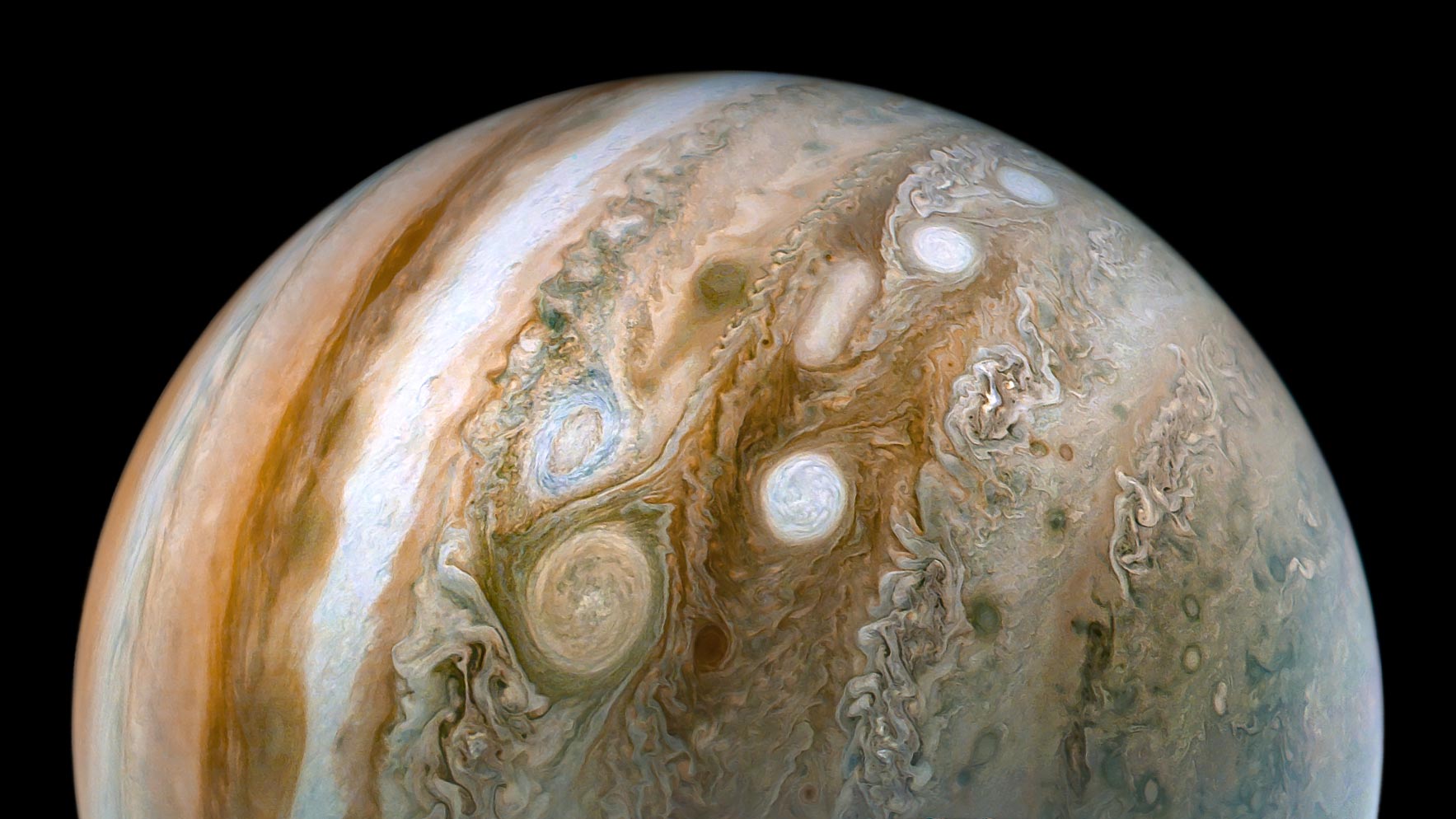
Artist impression based on JunoCam image of Jupiter acquired on July 21, 2021. Enhanced to highlight features, clouds, colors, and the beauty of Jupiter. Credit: NASA/SwRI/MSSS/TanyaOleksuik
© CC NC SA
Researchers of the University of Zurich (UZH) and the National Centre of Competence in Research (NCCR) PlanetS have investigated Jupiter’s formation history in great detail. Their results suggest that the giant planet migrated far from its origin and collected large amounts of material on its journey.
One of the most important open questions in planetary formation theory is the story of Jupiter’s origin. Using sophisticated computer modeling, researchers of the University of Zurich (UZH) and the National Centre of Competence in Research (NCCR) PlanetS now shed new light on Jupiter’s formation history. Their results were published in journal The Astrophysical Journal Letters.

Professor of Theoretical Astrophysics at the University of Zurich and member of the NCCR PlanetS, Ravit Helled.
Credit: Jos Schmid
A curious enrichment of heavy elements
When the Galileo spacecraft released a probe that parachuted into Jupiter’s atmosphere in 1995, it showed among other things that heavy elements (elements heavier than helium) are enriched there. At the same time, recent structure models of Jupiter that are based on gravity field measurements by the Juno spacecraft suggest that Jupiter’s interior is not uniform but has a complex structure.
Since we now know that the interior of Jupiter is not fully mixed, we would expect heavy elements to be in a giant gas planet’s deep interior as heavy elements are mostly accreted during the early stages of the planetary formation,” study co-author, Professor at the University of Zurich and member of the NCCR PlanetS, Ravit Helled begins to explain. “Only in later stages, when the growing planet is sufficiently massive, can it effectively attract large amounts of light element gases like hydrogen and helium. Finding a formation scenario of Jupiter which is consistent with the predicted interior structure as well as with the measured atmospheric enrichment is therefore challenging yet critical for our understanding of giant planets,” Helled says. Of the many theories that have so far been proposed, none could provide a satisfying answer.

Sho Shibata is a postdoctoral researcher at the University of Zurich and a member of the NCCR PlanetS.
Credit: Nana Shibata
“Our idea was that Jupiter had collected these heavy elements in the late stages of its formation by migrating. In doing so, it would have moved through regions filled with so-called planetesimals – small planetary building blocks that are composed of heavy element materials – and accumulated them in its atmosphere,” study lead-author Sho Shibata, who is a postdoctoral researcher at the University of Zurich and a member of the NCCR PlanetS, explains.
Yet, migration by itself is no guarantee for accreting the necessary material. “Because of complex dynamical interactions, the migrating planet does not necessarily accrete the planetesimals in its path. In many cases, the planet actually scatters them instead – not unlike a shepherding dog scattering sheep,” Shibata points out. The team therefore had to run countless simulations to determine if any migration pathways resulted in sufficient material accretion.
“What we found was that a sufficient number of planetesimals could be captured if Jupiter formed in the outer regions of the solar system – about four times further away from the Sun than where it is located now – and then migrated to its current position. In this scenario, it moved through a region where the conditions favored material accretion – an accretion sweet spot, as we call it,” Sho reports.
Combining the constraints introduced by the Galileo probe and Juno data, the researchers have finally come up with a satisfying explanation. “This shows how complex giant gas planets are and how difficult it is to realistically reproduce their characteristics,” Ravit Helled points out.
“It took us a long time in planetary science to get to a stage where we can finally explore these details with updated theoretical models and numerical simulations. This helps us close gaps in our understanding not only of Jupiter and our solar system, but also of the many observed giant planets orbiting far away stars,” Helled concludes.
Reference: “Enrichment of Jupiter’s Atmosphere by Late Planetesimal Bombardment” by Sho Shibata and Ravit Helled, 24 February 2022, The Astrophysical Journal Letters.
DOI: 10.3847/2041-8213/ac54b1
 Woolly rhinos were wiped out by climate change and NOT...
 Global cooling 13,000 years ago that triggered the...
 Asteroid that slammed into Earth 66 million years ago DID...
 Burning coal in Siberia ignited by volcanic eruptions led to...