Ontdek de Fascinerende Wereld van UFO's en UAP's: Jouw Bron voor Onthullende Informatie!
Ben jij ook gefascineerd door het onbekende? Wil je meer weten over UFO's en UAP's, niet alleen in België, maar over de hele wereld? Dan ben je op de juiste plek!
België: Het Kloppend Hart van UFO-onderzoek
In België is BUFON (Belgisch UFO-Netwerk) dé autoriteit op het gebied van UFO-onderzoek. Voor betrouwbare en objectieve informatie over deze intrigerende fenomenen, bezoek je zeker onze Facebook-pagina en deze blog. Maar dat is nog niet alles! Ontdek ook het Belgisch UFO-meldpunt en Caelestia, twee organisaties die diepgaand onderzoek verrichten, al zijn ze soms kritisch of sceptisch.
Nederland: Een Schat aan Informatie
Voor onze Nederlandse buren is er de schitterende website www.ufowijzer.nl, beheerd door Paul Harmans. Deze site biedt een schat aan informatie en artikelen die je niet wilt missen!
Internationaal: MUFON - De Wereldwijde Autoriteit
Neem ook een kijkje bij MUFON (Mutual UFO Network Inc.), een gerenommeerde Amerikaanse UFO-vereniging met afdelingen in de VS en wereldwijd. MUFON is toegewijd aan de wetenschappelijke en analytische studie van het UFO-fenomeen, en hun maandelijkse tijdschrift, The MUFON UFO-Journal, is een must-read voor elke UFO-enthousiasteling. Bezoek hun website op www.mufon.com voor meer informatie.
Samenwerking en Toekomstvisie
Sinds 1 februari 2020 is Pieter niet alleen ex-president van BUFON, maar ook de voormalige nationale directeur van MUFON in Vlaanderen en Nederland. Dit creëert een sterke samenwerking met de Franse MUFON Reseau MUFON/EUROP, wat ons in staat stelt om nog meer waardevolle inzichten te delen.
Let op: Nepprofielen en Nieuwe Groeperingen
Pas op voor een nieuwe groepering die zich ook BUFON noemt, maar geen enkele connectie heeft met onze gevestigde organisatie. Hoewel zij de naam geregistreerd hebben, kunnen ze het rijke verleden en de expertise van onze groep niet evenaren. We wensen hen veel succes, maar we blijven de autoriteit in UFO-onderzoek!
Blijf Op De Hoogte!
Wil jij de laatste nieuwtjes over UFO's, ruimtevaart, archeologie, en meer? Volg ons dan en duik samen met ons in de fascinerende wereld van het onbekende! Sluit je aan bij de gemeenschap van nieuwsgierige geesten die net als jij verlangen naar antwoorden en avonturen in de sterren!
Heb je vragen of wil je meer weten? Aarzel dan niet om contact met ons op te nemen! Samen ontrafelen we het mysterie van de lucht en daarbuiten.
Woensdag 12 april 2023
Scientists Puzzled Because James Webb is Seeing Things that are Unexpected.
Scientists Puzzled Because James Webb is Seeing Things that are Unexpected.
Astronomers have used the James Webb Space Telescope to peer back in time to the early days of the universe — and they spotted something unexpected.
NASA's super-powerful James Webb Telescope has provided the most distant glimpses of the universe ever since its launch.
It has given answers to questions that were still unresolved. But, this raised other questions as well.
Until now, astronomers believed that galaxies arose during the early universe (after the Big Bang) would be small in size and irregular in shape.
But James Webb Telescope disproved this hypothesis of astronomers.
The JWST has revealed these galaxies to be astonishingly massive as are well-balanced and well-shaped.
It is a discovery that challenges existing beliefs about the origin of the universe and stresses the need to change the current understanding of the origin of the infant universe.
"The models just don't predict this" Garth Illingworth, an astronomer at the University of California at Santa Cruz, told Washington Post.
"How do you do this in the universe at such an early time? How do you form so many stars so quickly?"
Old images of the universe taken by the Hubble Telescope, showed that early galaxies were misshapen and chaotic.
But the James Webb Telescope (JWST) debunks this assumption – those findings were an illusion based on the limited capabilities of the Hubble Telescope.
"We thought the infant universe was the chaotic place where there's all these clumps of star formation, and things are all a-jumble" the Space Telescope Science Institute's Dan Coe told WaPo.
Adding later that, before the JWST was launched into the orbit, Hubble Telescope's imagery was "missing all the colder stars and the older stars. We were really only seeing the hot young ones."
Although the findings from James Webb surprised astrophysicists, technological advances have a long history of leading to a period of large-scale scientific research into astronomy or beyond.
Discoveries made today can lay the foundation for future successes.
JWST is doing exactly what astronomers tell it to do.
It is exploring the exciting objects of the vast universe, while simultaneously answering old questions and generating new ones.
Perseverance is Turning Into That Friend That's Always Picking Up Rocks
On Thursday, March 30th, NASA’s Perseverance rover drilled and stored the first rock core sample of its newest science campaign. This is the sixteenth sample the rover has taken as part of the ambitious Mars Sample Return (MSR) mission, a collaborative effort between NASA and the European Space Agency (ESA) to retrieve Perseverance’s samples and bring them back to Earth. Once they arrive (expected to happen by 2033), scientists will analyze them using state-of-the-art machinery too heavy and cumbersome to send to Mars as part of a robotic mission.
Collecting samples as part of the first sample-return mission from Mars is one of the main objectives of NASA’s Mars Science Laboratory (MSL) program. It is hoped that these samples will provide new insight into the planet’s environment and the water cycle that shaped the surface and interior of Mars. Of particular interest is how Mars evolved from a warmer, wetter environment – as it was during the Noachian Era (ca. 4.1 – 3.7 billion years ago) – to the cold and dedicated place we see today. It is theorized that life could have emerged during this period. If true, then the analysis of these core samples could provide the first evidence that life once existed on Mars (and might still be there today).
Perseverance has also collected three witness tubes, similar to sample tubes but designed to capture molecular and particulate contaminants. These tubes are opened close to sample collection sites to “witness” the ambient environment, helping scientists to characterize the location where samples are obtained. Earlier this year, the rover deposited ten tubes as a backup cache on the Martian surface for retrieval by the MSR campaign. For this latest campaign, the rover is exploring a new formation at the top of the delta formation in the Jezero Crater.
Scientists have named this formation “Berea,” which they believe formed from rock sediment carried by a stream that once flowed into the crater. This stream was responsible for forming the fan-delta, which means that the material in this formation could have come from far beyond the Jezero Crater. This is one of the reasons why the science team considers it to be so promising. But as Katie Stack Morgan, the deputy project scientist for Perseverance at NASA’s Jet Propulsion Laboratory (JPL), related in a NASA press release, there is another reason why the spot is attractive.
“The second reason is that the rock is rich in carbonate,” she said. “Carbonate rocks on Earth can be good at preserving fossilized lifeforms. If biosignatures were present in this part of Jezero Crater, it could be a rock like this one that could very well hold their secrets.”
Carbonates are a type of sedimentary rock that forms from chemical interactions between minerals and water. The presence of these and other minerals that form in the presence of water is why the Jezero Crater and the Gale Crater (where Curiosity is currently exploring) were selected as landing sites. Essentially, these mineral deposits could provide scientists with a record of what the climate once looked like, allowing them to create a more complete geological record of Mars. Said Ken Farley, the W.M. Keck Foundation Professor of Geochemistry at Caltech and Perseverance’s project scientist:
“The Berea core highlights the beauty of rover missions. Perseverance’s mobility has allowed us to collect igneous samples from the relatively flat crater floor during the first campaign, and then travel to the base of the crater’s delta, where we found fine-grained sedimentary rocks deposited in a dried lakebed. Now we are sampling from a geologic location where we find coarse-grained sedimentary rocks deposited in a river. With this diversity of environments to observe and collect from, we are confident that these samples will allow us to better understand what occurred here at Jezero Crater billions of years ago.”
This image shows the rocky outcrop the Perseverance science team calls “Berea” after the NASA Mars rover extracted a rock core (right) and abraded a circular patch (left).
Credit: NASA/JPL-Caltech
Now that the Berea sample has been cored and placed into the rover’s internal cache, Perseverance will move to its next drill site along the delta fan – a place the science team has named “Castell Henllys.” In addition to the 16 samples it has collected, Perseverance has also collected rock samples with its wheels. In February of 2022, the science team noticed that the rover’s left front wheel had picked up a “pet rock” and managed to hold onto it for months! The entire sample cache will be retrieved starting in 2030 with the arrival of the NASA MSR elements.
This includes the Sample Retrieval Lander, which Perseverance will deliver all the samples contained in its cache. A pair of Sample Recovery Helicopters (the same design as Ingenuity) will gather the samples the rover left on the surface. Once loaded aboard the Lander, the samples will be sent into orbit via the Mars Ascent Vehicle (MAV) and then collected by the ESA’s Earth Return Orbiter (ERO). This spacecraft will return the sample cache to Earth (by 2033 at the earliest) for analysis. The results will lead to all kinds of scientific breakthroughs and even demonstrate that life did exist on Mars billions of years ago.
Perseverance Cores 'Berea': This animation shows NASA’s Perseverance Mars rover collecting a rock sample from an outcrop the science team calls “Berea” using a coring bit on the end of its robotic arm. Credits: NASA/JPL-Caltech. Download video ›
Fingers crossed, the data could also help resolve where Mars’ water (and any remaining life forms) can be found today!
Cassiopeia A (Cas A) is a supernova remnant. It has been observed many times. This new image uses data from Webb’s Mid-Infrared Instrument (MIRI) to reveal Cas A in a new light. Credits: NASA, ESA, CSA, D. D. Milisavljevic (Purdue), T. Temim (Princeton), I. De Looze (Ghent University). Image Processing: J. DePasquale (STScI)
It’s Time for Supernova Remnant Cassiopeia A to Get the JWST Treatment
Ready for another stunning image from JWST? How about a peek inside a supernova remnant? Not just any stellar debris, but a highly detailed view of the leftovers from the explosion that created Cassiopeia A. The latest image is giving astronomers an up-close and personal look at what happened to a supermassive star some 11,000 light-years away from us. It may also help answer questions about the existence of cosmic dust, particularly in the early Universe.
The Cassiopeia A supernova remnant has been studied a lot. But, the new JWST view shows a great deal more detail that astronomers haven’t seen in other observations. And, that detail is opening up new windows on this stellar event. “Cas A represents our best opportunity to look at the debris field of an exploded star and run a kind of stellar autopsy to understand what type of star was there beforehand and how that star exploded,” said Danny Milisavljevic. He’s the principal investigator of the observing program that captured this view.
Exploring the Damage
This image tells a tale of sequential destruction when the supermassive star at the heart of Cas A died. First, as the aging star began its death process, it consumed heavier and heavier fuels in its core. That heated it up and the star expanded. It also ejected clouds of warm dust. They expanded slowly outward from the event. Then, when the star’s core began to consume iron, it took more energy than the star could supply. Burning stopped and the core collapsed. That brought the rest of the star inward. Then, it all rebounded, sending tendrils of stellar material racing away from the core. Eventually, that material collided with the slower-expanding dust shell.
All the colors in the image indicate the various parts of the explosion. The scene is pretty confusing at first. Astronomers are still working to figure out all the different sources of emissions in the remnant. The orange and red-hued material indicates emission from the warm outer shell. The tendrils are the starstuff rushing away from the collapsed core. They are bright pink and studded with knots and clumps. There’s a mix of elements generated in the star and by the explosion—including oxygen, neon, and argon. There is a collection of wispy star material closer to the center of the explosion site. The most prominent is a giant green loop that the team nicknamed the “Green Monster”. It’s an unexpected feature and nobody’s quite sure how or why it formed.
A closeup of the “Green Monster” (named after Boston’s Fenway Park). The JWST view shows incredible detail in this and other filaments at the heart of Cas A. Credits: NASA, ESA, CSA, D. D. Milisavljevic (Purdue), T. Temim (Princeton), I. De Looze (Ghent University). Image Processing: J. DePasquale (STScI)
The Cas A Supernova Remnant and Cosmic Dust
Supernovae scatter huge amounts of dust in their wakes. So, this raises a question. Since astronomers see dusty galaxies in the early Universe, did supernovae make them that way? The answer is complicated. Certainly, the first supermassive stars existed pretty early in cosmic history. And, they died in supernova explosions. So, it might make sense to assume that they’d scatter dust as they died. Yet, observations of more “modern” supernovae and their dust output don’t always explain the huge amounts of dust in early times. So, where did the early dust come from, if not from supernovae?
The answer may be that they did provide all that dust. We just need the high-resolution infrared views that JWST is able to provide to find the evidence for that. “In Cas A, we can spatially resolve regions that have different gas compositions and look at what types of dust were formed in those regions,” said Temim. That means JWST can “see” what astronomers haven’t been able to detect using many other telescopes in the past.
Exploring supernova remnants like Cas A gives astronomers more than a view of what a dying star does to its environment. Doing it in high-resolution detailed infrared views allows astronomers to “see inside” dusty objects such as Cas A. Not only that, but it provides a window to the past. “By understanding the process of exploding stars, we’re reading our own origin story,” said Milisavljevic. “I’m going to spend the rest of my career trying to understand what’s in this data set.”
Past Views of Supernova Remant of Cas A
Cassiopeia A lies only about 11,000 light-years from us and stretches across 10 light-years of space. It was probably first observed in the late 1600s from Earth. With the advent of modern telescopes, it has been seen in visible light from the ground, as well as through radio observations, and from space by the Hubble Space Telescope, the Chandra X-ray Observatory, NuSTAR, and others.
This Chandra X-ray Observatory image of Cas A shows chemical elements in the supernova remnant. The different colors mostly represent iron (orange), oxygen (purple), and the amount of silicon compared to magnesium (green). Titanium (light blue) detected previously by NASA’s NuSTAR telescope at higher X-ray energies is also shown. These Chandra and NuSTAR X-ray data have been overlaid on an optical-light image from the Hubble Space Telescope (yellow). Credit: Chandra: NASA/CXC/RIKEN/T. Sato et al.; NuSTAR: NASA/NuSTAR; Hubble: NASA/STScI
This lopsided stellar remnant itself is speeding out from the explosion site at a velocity between 4000-6000 kilometers per second. HST images showed knots and other ejecta moving away at up to 14,500 kilometers per second. Spitzer Space Telescope and the Infrared Astronomical Satellite (both predecessors to JWST) detected an infrared echo from the explosion on nearby gas clouds.
All of these observations point to Cas A being a perfect target for further studies of supernova explosions and their role throughout cosmic time.
Inside this geometric structure is a demolished uranium mill and its radioactive tailings. Buried in 1992 by the Department of Energy, this mill near Grants, N.M. is one of about 20 uranium mill tailings sites in the U.S. that were remediated as part of the Uranium Mill Tailings Remedial Action project (UMTRA).
Astronomers have developed a way to cheaply and easily measure the radiation exposure experienced by airline crews over Africa.
Cosmic radiation constantly bombards our atmosphere. Composed of tiny particles traveling at nearly the speed of light, cosmic rays originate from a variety of high energy processes throughout the universe, like quasars and supernovae.
These cosmic rays are a source of cancer in all living beings. The cosmic rays can slip between our cells and snip apart strands of DNA, which can lead to replication errors. We are safest on the ground because our atmosphere acts as an excellent safety blanket, blocking and absorbing all but the highest energy forms of cosmic rays.
But passengers on high-altitude flights suffer a slightly higher level of exposure. While casual passengers face no considerable additional risk, the same is not true for frequent travelers and especially for airline personnel. The governments of the United States and Europe have outlined safety standards for the maximum allowable radiation dose that aircraft crew can receive. Those governments have also set up monitoring systems over their airspaces to ensure that the cosmic ray environment does not pose a significant health hazard.
But the same is not true for Africa. We actually have no idea what the level of radiation risk is over that continent. To fix this, a team of astronomers tested a new idea. They mounted an especially sensitive Geiger counter to aircraft traveling from Germany to South Africa. They monitored the radiation level experienced by the aircraft during the long-haul flight.
Their initial measurements revealed that, thankfully, the radiation environment in the African skies was not unusually high. But this is just a test and the first development of a prototype. The researchers hope to deploy many more such instruments and piggyback on commercial aviation to build a much more robust map of the African radiation environment. This will ensure the health and safety of all the crews and passengers flying over that continent.
Unraveling the Mystery of the Purple Light Beam in Alaska
In a recent video from Anchorage, Alaska, a viewer captured an unusual purple light beam while filming the snow around his house. Although the region is known for its mysterious occurrences and numerous unexplained disappearances within the so-called Alaska Triangle, experts have now shed light on the true cause of the enigmatic purple beam.
Astrophysicist Hakima Lucia initially considered the possibility that the light beam was a spectrum of light captured by the camera sensor but not visible to the human eye. However, upon further examination, she concluded that the effect would likely be different if it were an invisible energy discharge.
Photography expert Andrew McCarthy provided a more plausible explanation, attributing the phenomenon to overexposure on the camera’s digital sensor. He pointed out that when a pixel on a digital camera sensor processes an exceptionally bright part of an image, it can overload and bleed into neighboring pixels, creating a line of light. The camera’s age, dating back to 2004, also played a role, as the sensor technology at that time was less advanced than today’s models.
n conclusion, the purple light beam captured in the video is likely a result of overexposure on the camera’s digital sensor and not directly related to the strange occurrences in the Alaska Triangle. Nonetheless, the region’s high rate of disappearances continues to intrigue and mystify.
Apocalypse 536 AD: The Catastrophic Event That Plunged the World into Darkness (Video)
In the year 536 AD,a mysterious event plunged the world into darkness for a year and a half. Constantinoplewriters of the time described the sun as dimmed and blotted out, causing crop failures, famine, and social upheaval across the globe.
Recent research suggests that a massive volcanic eruption , or series of simultaneous eruptions may have caused the catastrophic event, which created a volcanic winter and drastically changed the Earth's climate. The event is suggested to have been everything from the collapse of empires to the Plague of Justinian. However, the source of the eruption remains unknown, leaving scientists to unravel the mystery of one of the most significant environmental events in human history.
Jupiter is like an ogre, with one arm made of gravity, and the other made of radiation. These metaphorical arms stretch, squeeze, and bathe the menagerie of objects orbiting the giant planet. A pair of missions will soon go towards this planet to study ice-encrusted moons within its grasp that may harbor oceans where life might be huddled away — but will each use different strategies to avoid the ogre arms.
First up is the European Space Agency (ESA) JUICE mission, short for Jupiter Icy Moons Explorer, which launches Thursday. After a seven-year-long trip to the outer Solar System, it will characterize the moons Callisto and Europa, and put its major focus on Ganymede, the largest moon in the Solar System. Then next year, NASA’s Europa Clipper will launch toward the system to learn about Europa, the best Jovian candidate for life.
The missions will be able to complement each other in ways that will help us understand the origins of life on Earth, and if those conditions persist elsewhere.
.
This NASA animation shows the space agency’s Europa Clipper spacecraft performing a flyby of Jupiter's moon Europa. The spacecraft will launch next year.
With the launch of JUICE just days away, Claire Vallat, operations scientist of the soon-to-fly JUICE mission and former scientist on Europe’s unprecedented 2014 comet mission Rosetta, eagerly awaits takeoff.
She describes JUICE’s two big goals. The first is putting Jupiter and its worlds in a broader perspective of the rest of the Milky Way, and, in turn, the Universe at large. Jupiter is a “mini-Solar System” that scientists can use as a laboratory to see how planetary formation works, she says. “With all the exoplanets that have been discovered in the past 20 or 30 years, there are a lot of Jupiter-like planets, so understanding how the Jovian system works will help us also to understand how other exoplanet systems might work,” Vallat tells Inverse.
JUICE’s other objective is related: honing in on “the emergence of habitable worlds” in particular, Vallat says. They’re gathering data on Europa, Ganymede, and Callisto to compare them to one another.
“Despite being born in the same kind of neighborhood, they have evolved completely differently,” Vallat says. Callisto is a battered shell, and Europa is relatively smooth. Ganymede is somewhere in between, meaning it has an intermediate level of activity, which shows in its so-so ability to fix superficial deformities. The surface features correspond, potentially, to the ability of any subsurface ocean to “repair” the surface.
This makes Ganymede valuable to science, according to Vallat. Europa likely has an ocean about 10 to 15 miles under its surface, while Ganymede likely has one 95 miles down. Callisto is believed to either have no ocean or one very, very far down. “Ganymede can give you an open book to the different stages that have taken place from the Jovian system formation to quite recently,” she says.
Ganymede stands out in the planetary rolodex in another major way: It is the only moon in the Solar System with its own magnetic field, capable of making auroras like Earth. But when it comes to resembling Earth for its most exceptional characteristic, the ability to host life, Europa comes closest. It’s why Clipper has dedicated its mission to this moon.
“Europa is super special,” Don Blankenship, senior research scientist at the Institute for Geophysics at the University of Texas, tells Inverse. He is principal investigator of Clipper’s Radar for Europa Assessment and Sounding: Ocean to Near-surface (REASON) instrument, and a science team member of JUICE’s Radar for Icy Moon Exploration (RIME) instrument.
Blankenship says Europa has the right conditions to support anaerobic life, the sort that lives in oxygen-free environments. “What people are not really picking up on is how close Europa really is to things that exist on Earth now,” Blankenship says. According to him, there are ice shelves in Antarctica with pressure, temperature, and salt environments that are similar to what scientists predict exists below Europa’s frozen surface. Ganymede is less likely to harbor life. But it's a robust world that might help explain exoplanets around other stars.
These illustrations offer two possibilities for Europa’s ice thickness. In both, the subsurface ocean is depicted in direct contact with the silicate layer, allowing heat to move through the water through hydrothermal vents, and cause changes to Europa’s icy surface.
To learn about Europa’s possible lifeforms, the spacecraft must survive the most hazardous radiation belts in the Solar System, which are found around Jupiter.
Another way Juno sails as unscathed as possible is that it “threads the needle” just a few thousand kilometers above the gas giant’s clouds, principal Juno mission investigator Scott Bolton tells Inverse. Juno circles Jupiter’s poles rather than its middle section, a beneficial tactic because it evades the strongest radiation blows near Jupiter’s equator, Bolton says.
Juno may help guide both missions. “We're going through the regions now that both of those spacecraft will visit … that may also inform them, help them understand the radiation environment that they're going to experience, and how they might need to adjust science observation strategies or orbits to accommodate radiation as a formidable foe,” Bolton says.
Blankenship says Europa Clipper gets its name from the 50 radiation-defying dives it’ll take past Europa — effectively clipping the moon — as the spacecraft orbits Jupiter. Without this approach, “the radiation at Europa can be pretty dramatic and it's very difficult for spacecraft to survive for long periods,” Blankenship says.
JUICE, however, will endeavor to enter into a Ganymede orbit. Jupiter’s gravity will warp this path over time, according to ESA. But JUICE will make history when it does: the mission will become the first spacecraft to orbit another planet’s moon. JUICE saved the most radiation-intense segments of the trip — when it orbits Ganymede — for the end. It will fly an ambitious mission, and for that reason, the mission will last just four years. Justin Byrne, the head of ESA’s Science Programs at Airbus Defence and Space (which led the consortium building the JUICE spacecraft), told Space.com that JUICE will not survive 10 years like many other missions do.
A family portrait of Jupiter and the four Galilean moons. Distances are not to scale. At the top is the volcanic moon Io. Below it, to the right of Jupiter’s Great Red Spot, is Europa. Bottom right shows Ganymede, the largest moon in the Solar System and where JUICE will orbit next decade. Bottom left shows the battered and unhealed surface of the icy moon Callisto.
Jupiter is harsh, but this could be what makes Europa habitable.
Its gravity, for instance, could be exerting so much damage on a nearby moon — the barren, volcanically active moon Io — that it spouts ingredients for life that reach other moons.
“Tidal forces are responsible for small deformations in the shape of the [moons], particularly for Io, which is so heated by this deformation that it generated interior heat … and multiple sets of sulfur-spewing volcanoes all over Io’s surface,” Glenn Orton, Juno co-investigator at NASA’s Jet Propulsion Laboratory in California, tells Inverse.
After the volcanoes release the sulfur, a chemical element that anaerobic microbes metabolized before Earth’s atmosphere became oxygenated, the particles travel through space and “get pasted all over the surface of Europa,” Blankenship says.
The ice of Europa creates a haven. Not only does it act like a barrier against Jupiter’s radiation, but it might be delivering these nutrients to the ocean below it. Clipper and JUICE may help to characterize the ice and ocean interplay.
Jupiter’s hefty influence could induce hydrothermal vents in Europa's silicate rock below the ocean, too, not unlike the ones found on our planet. “Learning more about oceans on the moons of Jupiter will provide a different perspective on vents here on Earth,” Brendan Smith, a Ph.D. candidate in acoustical oceanography at Dalhousie University in Canada, tells Inverse.
Smith says that Earth’s deep ocean is home to hydrothermal vents. It’s here that bacteria have developed the ability to make energy without sunlight. The process is called chemosynthesis, akin to photosynthesis, but substituting chemicals for light.
“It is hypothesized that these types of chemosynthetic bacteria may have been some of the first life to develop on Earth, and that this could have originated at hydrothermal vents,” Smith says. “As a result, the prospect of hydrothermal vents elsewhere in the Solar System provides an opportunity to investigate whether there could be similar chemosynthetic life outside Earth.”
Imagery from NASA’s Juno spacecraft are put to music and in sequence. This data comes from Juno’s flyby of Ganymede and Jupiter in June 2021.
WHEN THEY LAUNCH
JUICE will fly into space aboard an Ariane 5 rocket from Europe’s Spaceport, which is based near Kourou, French Guiana. The launch is scheduled for 8:15 a.m. Eastern on Thursday, April 13. It will arrive at Jupiter in 2031.
Europa Clipper will leave later, currently set to launch in October 2024, but will reach Jupiter earlier, in 2030. JUICE will cruise past several inner Solar System planets to gain the necessary gravity assists to reach Jupiter. Clipper will do a Mars-Earth gravity assist, skipping JUICE’s Venus flyby, to reach Jupiter.
To watch the JUICE launch, you can tune in to the ESA Web TV YouTube channel. The broadcast begins at 7:15 a.m. Eastern. On Twitter, ESA will share updates using the #ESAJuice hashtag and the @ESA_JUICE @esaoperations @ESA_STS and @esascience accounts, too.
NASA's Perseverance Collects First Mars Sample of New Science Campaign
Perseverance Samples 'Berea': This image shows the rocky outcrop the Perseverance science team calls “Berea” after the NASA Mars rover extracted a rock core (right) and abraded a circular patch (left).
The rover continues its hunt for rocks worthy of bringing to Earth for further study.
NASA’s Perseverance rover cored and stored the first sample of the mission’s newest science campaign on Thursday, March 30. With each campaign, the team explores and studies a new area. On this one, the rover is exploring the top of Jezero Crater’s delta. Perseverance has collected a total of 19 samples and three witness tubes, and it recently deposited 10 tubes as a backup cache on the Martian surface as part of the NASA-ESA (European Space Agency) Mars Sample Return campaign.
Scientists want to study Martian samples with powerful lab equipment on Earth to search for signs of ancient microbial life and to better understand the water cycle that has shaped the surface and interior of Mars.
Perseverance Cores 'Berea': This animation shows NASA’s Perseverance Mars rover collecting a rock sample from an outcrop the science team calls “Berea” using a coring bit on the end of its robotic arm. Credits: NASA/JPL-Caltech. µDownload video ›
Cored from a rock the science team calls “Berea,” this latest sample is the 16th cored rock sample of the mission (there are also samples of regolith – or broken rock and dust – as well as Mars atmosphere; read more about the samples). The science team believes Berea formed from rock deposits that were carried downstream by an ancient river to this location. That would mean the material could have come from an area well beyond the confines of Jezero Crater, and it’s one reason why the team finds the rock so promising.
Perseverance's Rock Core From 'Berea' Outcrop: This image shows the rock core from “Berea” inside inside the drill of NASA’s Perseverance Mars rover. Credits: NASA/JPL-Caltech/ASU/MSSS. Download image ›
“The second reason is that the rock is rich in carbonate,” said Katie Stack Morgan, deputy project scientist for Perseverance at NASA’s Jet Propulsion Laboratory in Southern California. “Carbonate rocks on Earth can be good at preserving fossilized lifeforms. If biosignatures were present in this part of Jezero Crater, it could be a rock like this one that could very well hold their secrets.”
A Climate Puzzle
One big puzzle is how Mars’ climate worked back when this area was covered with liquid water. Because carbonates form due to chemical interactions in liquid water, they can provide scientists a long-term record of changes in the planet’s climate. By studying the carbonate in the Berea sample, the science team could help fill in the gaps.
“The Berea core highlights the beauty of rover missions,” said Perseverance’s project scientist, Ken Farley of Caltech in Pasadena. “Perseverance’s mobility has allowed us to collect igneous samples from the relatively flat crater floor during the first campaign, and then travel to the base of the crater’s delta, where we found fine-grained sedimentary rocks deposited in a dried lakebed. Now we are sampling from a geologic location where we find coarse-grained sedimentary rocks deposited in a river. With this diversity of environments to observe and collect from, we are confident that these samples will allow us to better understand what occurred here at Jezero Crater billions of years ago.”
With this latest sample stored safely in a sample tube in the rover’s belly, the six-wheeler will continue to climb Jezero’s sedimentary fan toward the next bend in the dry riverbed, a location the science team is calling “Castell Henllys.”
More About the Mission
A key objective for Perseverance’s mission on Mars is astrobiology, including caching samples that may contain signs of ancient microbial life. The rover will characterize the planet’s geology and past climate, pave the way for human exploration of the Red Planet, and be the first mission to collect and cache Martian rock and regolith.
Subsequent NASA missions, in cooperation with ESA, would send spacecraft to Mars to collect these sealed samples from the surface and return them to Earth for in-depth analysis.
The Mars 2020 Perseverance mission is part of NASA’s Moon to Mars exploration approach, which includes Artemis missions to the Moon that will help prepare for human exploration of the Red Planet.
JPL, which is managed for NASA by Caltech, built and manages operations of the Perseverance rover.
More highlights of Perseverance’s first two years on Mars:
How Mars Rock Samples Would Make Their Way to Earth
How on Earth will we get rock samples from Mars back to our planet? Find out how multiple spacecraft would work together to get the job done.
New video released today shows how NASA and the European Space Agency (ESA) are planning to bring the first samples of Mars material back to Earth for detailed study. The Mars Perseverance rover is the first leg of this international interplanetary relay team. Its job is to collect and cache samples on Mars. A Sample Return Lander would land near or in Jezero Crater, bringing a small rocket on which the samples collected by Perseverance would be loaded.
Two Ingenuity-like helicopters would provide a secondary capability to retrieve samples on the surface of Mars. Once the sample cache is launched off the Red Planet, another spacecraft would capture it in Mars orbit, and then bring it back to Earth safely and securely in the early to mid 2030s. These first collected and returned samples could answer a key question: did life ever exist on Mars? Only by bringing the samples back can we truly answer the question by using the most sophisticated, state-of-the-art labs, at a time when future generations can study them using techniques yet to be invented.
Who’s at work on the quest to return Mars samples to Earth? Explore this interactive map to see which institutions around the world are teaming up for this enormous challenge.
THIRTY THREE years ago, thousands of Belgian citizens reported mysterious platforms flying silently over rooftops. The Royal Belgian Air Force got involved and cooperated fully with civilian investigators. To this day, however, the origins of these craft remain unknown.
It’s hard to convey the excitement caused by the Belgian UFO wave if you were not following UFO news back in 1989 and the early 1990s. There was no shortage of UFO reports back then, and interest in the phenomenon was at a high. The sightings and photos from Gulf Breeze, Florida, dominated the American scene, wild UFO reports and stories coming out of the old Soviet Union received huge international media attention, and the Mexican video wave took off in 1991. Yet the Belgian wave seemed to top all of these stories for awhile. The reports out of this small country, headquarters of both the European Commission and NATO, received unprecedented coverage, making even the front page of the Wall Street Journal on October 10, 1990, with a story entitled, “Belgium Scientists Seriously Pursue A Triangular UFO.”
The classic triangular-shaped UFO described by hundreds of eyewitnesses during the Belgium wave: sketch by witness used to create reconstruction of the object seen at the top of story.
Credit: SOBEPS
There were many reasons for the interest generated by the Belgian wave. One was the quality of the reports themselves, the bulk of which were registered in the French-speaking region of Wallonia. There were no landings or humanoid sightings but lots of detailed multiple-witness sightings of flying platforms moving slowly and silently above rooftops. Shapes varied, but the predominant form was triangular or delta-shaped crafts. Some of the descriptions were so precise that traditional explanations of misidentified natural phenomena or conventional aircraft were ruled out. Instead, stealth fighters and other U.S. secret military aircraft became the favorite explanations suggested by skeptics, but these were quickly ruled out by the Royal Belgian Air Force (RBAF). Another reason for the wave’s importance was that it was carefully investigated and documented by a local UFO organization called SOBEPS (Belgian society for the study of space phenomena).
SOBEPS was formed in 1971 by Lucien Clerebaut, Michel Bougard, and others, and built a small but highly dedicated cadre of field investigators. By the end of the wave in 1993, SOBEPS had collected over two thousand eyewitness reports comprising twenty thousand pages, four hundred hours of audio tapes, and six hundred full inquiries. Five hundred and forty cases remained unexplained. SOBEPS also had the assistance of top-notch scientists, including Léon Brenig, a nonlinear dynamics theorist at the Free University in Brussels, and Professor Auguste Meessen, a physicist from Catholic University at Louvain. Regarding his work with SOBEPS, Dr. Brenig has said, “here is an opportunity where we can apply the scientific method.” Brenig himself became a witness of the so-called Belgian triangle while driving in the Ardennes on March 18, 1990. The whole dossier was eventually published by SOPEPS in two massive volumes, five hundred pages each, entitled Vague d’OVNI sur la Belgique (UFO Wave ver Belgium), published in 1991 and 1994 respectively. Due to financial difficulties, SOBEPS dissolved on December 31, 2007, but some of its members formed a new, smaller organization called COBEPS (Belgian committee for the study of space phenomena) to preserve the archives and work done for thirty-six years.
The two volumes published by SOBEPS entitled, “UFO Wavever OBelgium.”
Credit: SOBEPS
A final and key element in the credibility of the Belgian UFO wave was the participation and validation by the RBAF, which showed an unusual degree of openness. As the Belgian wave gained steam, the Belgian Ministry of Defence was deluged with queries from the public and the media. The task fell upon the chief of operations of the air force, Col. Wilfried De Brouwer, who was later promoted to major general and deputy chief of the RBAF. Now retired from the service, Gen. De Brouwer has continued to speak about the wave. He was one of the many international officials who spoke at the famous event at the National Press Club (NPC) in Washington, DC, in November 2007, organized by filmmaker James Fox and journalist Leslie Kean. “The Belgian UFO wave was exceptional and the air force could not identify the nature, origin and intentions of the reported phenomena,” said De Brouwer at the NPC. He also gave a detailed presentation on the wave at the MUFON International UFO Symposium in San Jose, California, in July 2008, and was one of five generals to write an essay in Leslie Kean’s new book, UFOs: Generals, Pilots, and Government Officials Go On the Record.
Although the RBAF scrambled jets on three occasions during the wave, Gen. De Brouwer has explained on various occasions that they didn’t have the manpower or resources to mount a full-fledged investigation of their own, so instead they took the unusual route of cooperating fully with SOBEPS. The radar data was turned to Prof. Meessen for analysis, and Gen. De Brouwer agreed to write the postface for SOBEPS’s first volume when he was still in the service. “I must acknowledge that I somewhat hesitated when SOBEPS asked me to contribute my share to this book,” he wrote. “Indeed, I am not a UFO specialist and, moreover, it is quite delicate for somebody who occupies an official function to put on paper his personal ideas on such a disputed issue. However, I estimate that I would not have been honest towards the SOBEPS if I had refused. The air force always played a fair game on this subject and I regard this postface as a complementary element to the exceptional file written by the people of SOBEPS.”
THE EUPEN INCIDENT
Although some sightings were reported in October 1989, the first important incident of the Belgian wave took place a month later on November 29 around the small town of Eupen, which is in a region of Belgium near the German border. This initial case put the so-called “Belgian triangle” on the map and led to the start of the RBAF’s involvement. There were both daytime and nighttime sightings, although the latter were lengthier and more detailed. Gen. De Brouwer explained in his essay for Leslie Kean’s book, “a total of seventy reported sightings made on November 29 were fully investigated and none of these sightings could be explained by conventional technology. The team of investigators and I estimate that approximately fifteen hundred people must have seen the phenomenon at more than seventy different locations from different angles during this afternoon and evening.” There were a total of thirteen gendarmes (policemen) who saw the UFO from eight different locations around Eupen. Prof. Meessen summarized the case in SOBEPS’s book:
On November 29, 1989, a large craft with triangular shape flew over the town of Eupen. The gendarmes von Montigny and Nicol found it near the road linking Aix-la-Chapelle and Eupen. It was stationary in the air, above a field which it illuminated with three powerful beams. The beams emanated from large circular surfaces near the triangle’s corners. In the center of the dark and flat understructure there was some kind of “red gyrating beacon.” The object did not make any noise. When it began to move, the gendarmes headed towards a small road in the area over which they expected the object to fly. Instead, it made a half-turn and continued slowly in the direction of Eupen, following the road at low altitude. It was seen by different witnesses as it flew above houses and near City Hall.
In his 2008 MUFON lecture, Gen. De Brouwer provided additional details on this sighting: “The UAP [Unidentified Aerial Phenomenon] emitted repeatedly and simultaneously two red light beams with a red light ball at the spearhead of the beam. Subsequently, the red balls returned to the craft.” There was also apparently a second triangular craft, which made “a forward tilting maneuver, exposing the upper side of the fuselage,” continued De Brouwer. “They [gendarmes] saw a dome with rectangular windows, lighted up at the inside. It then disappeared to the North.” Two more gendarmes saw one of the craft from a monastery nearby; “one is currently the head of the police in that area, he was scared like hell,” added De Brouwer.
Statistical chart of Belgian sightings between October 1989 and September 1990, showing peaks in the November-December period and a second one in April.
Credit: SOBEPS
The Eupen incident was followed by many other UFO sightings, including several reported on December 11, 1989. One of the witnesses that evening was a personal acquaintance of Gen. De Brouwer, Col. André Amond, a civil engineer in the Belgian Army. Col. Armond worked next door to Gen. De Brouwer and wrote a detailed report for the Ministry of Defence. Col. Armond was driving with his wife around 6:45 p.m., when they noticed a strange object with flashing red lights. They stopped the car and got out to see it better. “Suddenly, they saw a giant spotlight, about twice the size of the full moon, which approached them to an estimated distance of 100 meters,” wrote De Brouwer, adding that “the colonel’s wife was frightened and asked to leave.” In his report to the Ministry, Armond “ascertained that this craft was not a hologram, helicopter, military aircraft, balloon, motorized Ultra Light, or any other known aerial vehicle.”
Various shapes were reported throughout the wave, including round, rectangular, and cigar-shaped, but the majority were triangular objects. Gen. De Brouwer notes that the differences may also be due to the eyewitnesses’ viewing angles. Researcher Marc Valckenaers listed some of the characteristics of the UFOs in SOBEPS’s second volume about the wave, including: irregular displacement (zig-zag, instantaneous change of trajectory, etc.), displacement following the contours of the terrain; varying speeds of displacement (including very slow motion), stationary flight (hovering), overflight of urban and industrial centers, and sound effects (faint humming to total silence).
Reconstruction of the incredible rectangular flying platform seen by two factory workers on April 22, 1990, described as “an aircraft carrier turned upside down.”
Credit: SOBEPS
One of the strangest reports came from two factory workers from the town of Basècles, southwest of Brussels, who saw a huge trapezoid flying platform (330 x 200 feet) just before midnight on April 22, 1990. The object moved slowly and silently, covering the entire factory courtyard. In the SOBEPS report, the factory workers described the UFO as “an aircraft carrier turned upside down.” Despite the science-fiction quality of this sighting, an almost identical report was filed nearly a year later, on March 15, 1991, by an electronic engineer in Auderghem, near Brussels, who woke up in the middle of the night when he “heard a barely audible, high-frequency whistling tone. He looked out the window and saw a large rectangular craft at very low altitude with irregular structures on the bottom,” wrote Gen. De Brouwer.
One characteristic of the Belgian wave was how close the objects were flying above the rooftops, as shown with this flying rectangular platform.
Credit: SOBEPS
Another view of the rectangular flying platform above the rooftop and sketch showing where the witness saw it.
Credit: SOBEPS
THE F-16 SCRAMBLE EPISODE
If the Eupen multiple-witness sightings of November 1989 triggered the Belgian wave, the jet fighter scramble incident during the night of March 30, 1990 marked the peak of public interest and global media coverage. The Belgian Air Force had scrambled jets on two prior occasions without positive results. The December 5, 1989 scramble was unsuccessful; when the jet reached the sky, the UFO was gone. Additionally, the December 16, 1989 case turned out to be a false alarm; the authorities quickly determined that it was a laser projection reflected by a cloud layer. Following these two fiascos, the RBAF implemented a new policy that jets would be scrambled only when a sighting was detected on radar and was visually confirmed on the ground by the police.
The SOBEPS team visiting the Royal Belgian Air Force radar facility at Glons: in the center group, left, the Society’s chairman Lucien Clerebaut and right, physicist Prof. Auguste Meessen, next to military officer.
Credit: SOBEPS
As put in a preliminary report prepared by Major P. Lambrechts of the RBAF, entitled “Report Concerning the Observation of UFOs During the Night of March 30 to 31, 1990,” the incident began at 10:50 p.m. on March 30 when the gendarmerie telephoned the radar “master controller at Glons” to report “three unusual lights forming an equilateral triangle.” More gendarmes confirmed the lights. When the NATO facility at Semmerzake detected an unknown target at 11:49 p.m., a decision to scramble two F-16 fighters was made. The jets took off at 12:05 a.m. from Beauvechain, the nearest air base, and flew for just over an hour. According to Major Lambrechts’s report:
The aircraft had brief radar contacts on several occasions, [but the pilots]…at no time established visual contact with the UFOs…each time the pilots were able to secure a lock on one of the targets for a few seconds, there resulted a drastic change in the behavior of the detected targets…[During the first lock-on at 12:13 a.m.] their speed changed in a minimum of time from 150 to 970 knots [170 to 1,100 mph] and from 9,000 to 5,000 feet, returning then to 11,000 feet in order to change again to close to ground level.
When Col. De Brouwer showed the computerized radar images of the UFO tracked by the F-16 onboard radar system in a heavily attended press conference at the Ministry of Defence on July 11, 1990, the international media went into a frenzy. Transcripts of the radio communications between ace fighter pilots, Capt. Yves Meelbergs, Lt. Rudy Verrijt, and the Glons Control Reporting Center near Liege, were also released and provide some dramatic moments. The transcripts paint a picture of the jets chasing ghost radar echoes that appear and disappear and then reappear again, but at no time are the pilots able to establish visual contact with the supposed objects. Belgium’s Electronic War Center (EWC) eventually undertook a detailed technical analysis of the F-16 computerized radar tapes, completed by Col. Salmon and physicist M. Gilmard in 1992, and later reviewed by Prof. Meessen.
An F-16 jet fighter of the Royal Belgian Air Force like the ones scrambled on the night of March 30-31, 1990.
Credit: Bernard Thouanel
Although some aspects of this case still remain unexplained, Meessen and SOBEPS accepted the Gilmard-Salmon hypothesis that most of the radar contacts were really echoes caused by a rare meteorological phenomenon. This became evident in four lock-ons, explained Meessen, “where the object descended to the ground with calculations showing negative altitude…. It was evidently impossible that an object could penetrate the ground, but it was possible that the ground could act as a mirror.” Meessen explained how the high velocities measured by the Doppler radar of the F-16 fighters might result from interference effects. He pointed out, however, that there was another radar trace for which there is no explanation to date. As for the visual sightings of this event by the gendarmes and others, Meessen suggested that they could possibly have been caused by stars seen under conditions of “exceptional atmospheric refraction.”
One frame from the F-16 onboard radar system showing the UFO lock-on during the March 1990 scramble episode, shown by the RBAF at a famous press conference in July 1990.
Credit: RBAF/ Bernard Thouanel
In a 1995 telephone interview, Gen. De Brouwer summarized his reflections on this complex case: “We always look for possibilities which can cause errors in the radar systems. We can not exclude that there was electromagnetic interference, but of course we can not exclude the possibility that there were objects in the air. On at least one occasion there was a correlation between the radar contacts of one ground radar and one F-16 fighter. This weakens the theory that all radar contacts were caused by electromagnetic interference. If we add all the possibilities, the question is still open, so there is no final answer.” De Brouwer took a more detached view of the F-16 scramble episode, however, in his 2008 MUFON lecture and his 2010 essay included in Kean’s book: “The conclusion of the Air Force, therefore, was that the evidence was insufficient to prove that there were real crafts in the air on that occasion.”
THE PETIT-RECHAIN PHOTO
The famous color slide of the Belgian triangle photographed in Petit-Rechain in early April 1990.
Seldom has the old saying that a picture is worth a thousand words become more true than in the case of the extraordinary photograph of a flying triangle taken in the small town of Petit-Rechain in April 1990. This color slide became the emblematic symbol of the Belgian UFO wave. It has been published and broadcast in television programs all over the world, and it appears on the cover of the two SOBEPS volumes on the Belgian wave. It’s also one of the most analyzed UFO photos in the history of ufology. During my trip to Brussels in 1995, I had the opportunity to talk at length with Patrick Ferryn, the investigator who researched the case initially and wrote the chapter about it in the SOBEPS book. Ferryn gave me copies of the photo and samples of computer enhancements made by Marc Acheroy, professor of electricity at the Royal Military School, where the image was analyzed by the Signal Treatment Center. The details of how the photo was taken are fairly simple and straightforward.
The photographer, P.M. (who wants privacy, but has fully cooperated with SOBEPS), was a twenty-year-old factory worker, who lived in the small community of Petit-Rechain, near Verviers. He was at home with his girlfriend on the night of either April 4 or 7, 1990 (he can’t pin down the exact date), when his girlfriend first noticed the object between 11:00 and 11:30 p.m. as she took the dog to the courtyard. According to P.M.’s statement to Ferryn, he was alerted by his girlfriend, went outside, and “saw the object practically stationary towards the southwest, at about a forty-five-degree elevation. It consisted of three white round lights on a barely perceptible triangular surface. In the center there was a blinking spot of the same color, or maybe a bit more reddish than the other lights.” P.M. grabbed his camera, a Praktica model BX20 with a 55-200 mm zoom and a “Cokin” 1A 52 mm skylight filter. He shot the last two frames of a roll of 36-200 ASA Kodak color slide film. The UFO then moved slowly towards Petit-Rechain, until it was hidden by the roofs in the village. The entire episode took about five minutes.
The roll of film was sent by mail to a development house offering a special discount, and when P.M. received the slides, he noticed only frame #35 had captured the UFO; frame #36 was entirely black. Ferryn estimated that “the photo was probably taken with a focal distance between 55 and 200 mm, and with exposition time ranging from 1 to 2 seconds.” P.M. showed the photo to his factory coworkers (all of whom were later interviewed by Ferryn), but otherwise didn’t do anything to analyze or commercialize the picture. One of his coworkers knew a local photo-journalist from Verviers, Guy Mossay, who immediately saw the image’s potential value. P.M. sold the photo rights to Mossay for a small fee. Mossay then proceeded to copyright it with SOFAM (Belgium’s multimedia society for visual arts authors).
Skeptics have naturally pointed to the possibility of a hoax with profit motive. However, if that is the case, why did P.M. sell the rights to Mossay for a minor fee? Moreover, hoaxers never supply original slides or negatives for scientific analysis, as was done by P.M. Having checked his background, interviewed acquaintances, and so on, Ferryn noted that “the account of the main witnesses was coherent.” Gen. De Brouwer spent quite a bit of time explaining the details of this case during his MUFON lecture, saying of the witness that, “this guy is genuine, he is a guy who would not fake at all, I can assure you of that.” More importantly, the Petit-Rechain photo has been subjected to more scientific analysis than practically any other UFO photo in history.
When the Petit-Rechain photo is overexposed, the triangular outline of the object appears clearly.
The list of experts and institutions that have analyzed this photo include Prof. Acheroy of Belgium’s Royal Military Academy; Prof. François Louange, an expert in photo interpretation of satellite images for the French space agency, CNES; Dr. Richard Haines, a retired senior NASA scientist and respected UFO researcher; Belgium’s Royal Institute of Artistic Patrimony; and André Marion, a nuclear physicist with France’s National Center for Scientific Research (CNRS), who conducted an analysis in 2002 with improved technology. The technical details of these analyses are too numerous for this article, but suffice it to say that evidence of photographic trickery has never been found. Furthermore, of several efforts to duplicate the photo using a dark cardboard triangular model with holes and light bulbs, only one made by members of the Astrophysics Institute at Liege University somewhat resembled the Petit-Rechain photo. But the luminosity of the spots in the replica was uniform, while those in the original exhibited different shapes and spectral effects. The most recent CNRS study by Dr. Marion confirmed the previous analysis and found, as put by Gen. De Brouwer, a “halo around the craft with patterned structure,” which could have been caused by the object’s “propulsion system” of “magnetoplasma dynamic.” Marion also stated that “it would be extremely difficult to fake such a photograph.”
In the end, it’s almost impossible to guarantee the authenticity of a UFO image. There will always be a difference of opinions, but the verdict in the Petit-Rechain case appears highly favorable. Triangular UFOs were seen throughout Belgium during the early 1990s. Dozens of fuzzy videos and grainy photos were taken, but they were generally not impressive. Petit-Rechain was the great exception.
Note: Since the writing of this article, the photo turned out to be an admitted hoax.
NO EVIDENCE OF SECRET AIRCRAFT
Due to the high credibility of most witnesses in the Belgian wave and their descriptions of a silent, triangular craft being so precise, trying to explain the wave in terms of hoaxes, misidentified natural phenomena, or conventional aircraft seemed fruitless. Therefore, a number of skeptics and aviation journalists focused on trying to prove the hypothesis of secret U.S. aircraft flying over Belgium. A series of candidates were proposed, from the Airborne Warning and Control System (AWACS) to secret airships, from the F-117A stealth fighter to some other revolutionary U.S. secret military aircraft such as the alleged TR-3A Black Manta. First, you have to ponder why the U.S. would conduct tests of their most-secret aircraft in such a highly populated area like Wallonia, which is not only a U.S. ally, but also headquarters of the NATO alliance. Gen. De Brouwer put it bluntly in a 1991 interview with the French magazine, OVNI Présence: “Why would the Americans conduct tests here in Europe, without permission and with the risk of having an accident that could create a diplomatic incident on a global scale? This doesn’t involve only Belgium, but NATO, where its concept itself could be put in question. I don’t believe that the Americans could take such a risk, it’s evident.”
Major General (Ret.) Wilfried De Brouwer, who was the Royal Belgian Air Force point man for the UFO wave, during his trip to Washington, DC to participate at the National Press Club event in 2007.
Credit: Bernard Thouanel
Guy Coeme and Leo Delcroix, the two Belgian Ministers of Defence during the wave, denied emphatically the theory that the UFOs were actually U.S. aircraft and based their denial on official inquiries with the U.S. Embassy in Brussels. In a 1993 letter to French researcher Renaud Marhic, Minister Delcroix wrote: “Unfortunately, no explanation has been found to date. The nature and origin of the phenomenon remain unknown. One theory can, however, be definitely dismissed since the Belgian Armed Forces have been positively assured by American authorities that there has never been any sort of American aerial test flight.” A declassified 1990 document from the U.S. Defense Intelligence Agency (DIA) entitled, “Belgium and the UFO Issue,” supports Delcroix’s position. After describing the basic events of the wave that had transpired up to that point, the unnamed U.S. official wrote at the very end of this memo: “The [U.S. Air Force (USAF)] did confirm to the [Belgian Air Force] and Belgian [Ministry of Defence] that no USAF stealth aircraft were operating in the Ardennes area during the periods in question. This was released to the Belgian press and received wide dissemination.”
Thirty years have now passed since the Belgian UFO wave, and no new significant evidence has been produced to prove that the sightings were caused by secret military aircraft. The reported cases remain unexplained. It seems certain that something massive and technologically advanced flew over Belgian territory during the 1989-93 period. Why and who was behind it are questions that remain to be answered. A suitable conclusion, for now, is to repeat what Gen. De Brouwer wrote at the end of his famous postface to the SOBEPS’s first volume: “The day will come undoubtedly when the phenomenon will be observed with technological means of detection and collection that won’t leave a single doubt about its origin. This should lift a part of the veil that has covered the mystery for a long time. A mystery that continues thus present. But it exists, it is real, and that in itself is an important conclusion.”
The author (left) with SOBEPS’ chairman Lucien Clerebaut at the Society’s headquarters in Brussels in 1995. The map in the background shows the locations of sightings in Belgium.
Credit: Antonio Huneeus
A version of this article originally appeared in Issue #5 (December/January 2011) of Open Minds UFO Magazine. Back issues can be found here.
Machine Learning & Artificial Intelligence by mikemacmarketing Credits: Flickr/CC BY 2.0.
Artificial Intelligence (AI) has been making headlines for years as one of the most transformative technologies in the modern era. As AI growth continues to get bigger, its impact on the global economy and the job market is increasingly felt.
An artificial intelligence gold rush has begun over the past few months to extract the predicted business prospects from generative AI models like ChatGPT, whether it is founded on hallucinatory beliefs or not.
In an effort to understand the sensational text-generating bot that OpenAI unveiled last November, app developers, venture-backed companies, and some of the biggest organizations in the world are all frantically trying to understand it.
Although businesses and executives clearly perceive an opportunity to profit, it is much less clear how the technology will affect labor and the economy as a whole. ChatGPT and other recently released generative AI models promise to automate a variety of tasks previously thought to be solely within the realm of human creativity and reasoning, from writing to creating graphics to summarizing and analyzing data. Despite their limitations, chief among which is their propensity for making stuff up, ChatGPT and other recently released generative AI models are not without their own limitations. Because of this, economists are uncertain of how jobs and general productivity may be impacted.
Artificial Intelligence, AI, by mikemacmarketing. Credits: Flickr/CC BY 2.0.
The Global AI Market: Size and Growth
The global AI market has been growing rapidly, driven by advancements in machine learning, deep learning, and natural language processing. According to a report by Grand View Research, the AI market size was valued at USD 62.35 billion in 2020 and is expected to grow at a compound annual growth rate (CAGR) of 40.2% from 2021 to 2028. The current value of the global AI market is $136.6 billion and is expected to reach $1.81 trillion by 2030!
Major Players in the AI Market
The AI market is dominated by several key players, including:
Google: Google’s AI subsidiary, DeepMind, has developed various AI solutions, including the well-known AlphaGo and AlphaFold systems. Google also offers AI services such as TensorFlow, an open-source machine learning framework.
IBM: IBM has been a significant player in AI research and development for decades, with its AI platform Watson being one of the most recognizable AI brands in the world.
Microsoft: Microsoft’s AI efforts include Azure AI, a suite of AI services and tools, as well as investments in AI research and development across various domains.
Amazon: Amazon Web Services (AWS) offers a range of AI services, such as machine learning, computer vision, and natural language processing, catering to businesses and developers alike.
NVIDIA: As a leading provider of GPU hardware, NVIDIA plays a vital role in enabling AI growth through its hardware solutions and software frameworks designed for machine learning and deep learning applications.
The Future of AI: What to Expect
Artificial Intelligence – Resembling Human Brain by deepakiqlect. Credits: Flickr/ CC BY-SA 2.0.
Already, generative AIs are able to converse, produce poetry, develop computer code, and respond to questions. They are initially being introduced in conversational formats like ChatGPT, Bing, and Google’s Bard, as the term “chatbot” suggests.
But that won’t last for very long. These AI technologies will already be present in Microsoft and Google goods, according to plans. These will enable you to accomplish a variety of cool feats, such as automatically summarizing meetings, crafting savvy marketing messages, and writing a rough copy of an email.
Other IT firms can integrate GPT-4 into their applications and products using the A.P.I. that OpenAI also provides. Additionally, it has developed a number of plug-ins that enhance ChatGPT’s functionality from businesses including Instacart, Expedia, and Wolfram Alpha, enabling future users to house a real personal assistant on their devices. AI applications are becoming more widespread across various sectors, such as healthcare, finance, retail, and manufacturing, driving the further market growth.
AI Growth and the Job Market: Opportunities and Threats
AI-Driven Job Opportunities
As AI continues to expand, new job opportunities are emerging in fields such as:
Data Science: Data scientists play a crucial role in training AI algorithms and interpreting the results of AI-driven analyses.
AI Engineering: AI engineers develop and maintain AI systems, ensuring their efficient operation and integration with other technologies.
AI Ethics and Policy: As AI growth raises ethical concerns, there is an increasing demand for professionals who can navigate the complexities of AI ethics and develop policies to ensure responsible AI development and use.
Jobs at Risk of Extinction
While AI growth presents new opportunities, it also threatens some jobs, particularly those that involve repetitive tasks and can be easily automated, like:
Manufacturing and Assembly: With the rise of AI-powered robots, many manual assembly jobs are at risk of being replaced by automated processes.
Over 50 Years of Production – The TMHE Production Line by Toyota Material Handling EU.Credits: Flickr/CC BY-NC-ND 2.0.
Data Entry and Analysis: AI algorithms can process and analyze large amounts of data more quickly and accurately than humans, which may lead to a decline in demand for data entry and analysis positions.
Customer Service: AI-driven chatbots and virtual assistants are increasingly handling customer service tasks, potentially reducing the need for human customer service representatives.
So, where is this going? How will the AI economy be shaped?
Kevin Roose, author of ‘Futureproof: 9 Rules for Humansin the Age of Automation’, discusses how AI is changing the nature of work, pointing out instances like “labor displacement that we traditionally think of when we think about automation, ” though he notes that this is occurring in a wider range of industries than it previously has, including white-collar workplaces. The replacement of management tasks is less well known: ” There’s now a whole industry of worker surveillance and performance tracking software, and in some cases automatically making decisions about hiring and firing.” By 2034, this may result in the replacement of 47% of all job functions.
The two-tiered economy predicted by Mr. Roose will consist of the machine economy and the human economy. The former’s goods will become incredibly affordable. He claims that AI will make it possible for the managers of those businesses to eliminate all waste and inefficiency.
The human economy, in contrast, will be made up of individuals who focus more on creating sensations and experiences than on producing goods and rendering services. Examples of such individuals include healthcare professionals, educators, and artists. Why end there then? Because their job is to make others feel comfortable, even those you wouldn’t consider irreplaceable, like bartenders, baristas, and flight attendants, fall into the category. The human touch is what makes everything so important.
According to Mr. Roose, this will lead to an increase in the creation of higher-touch versions of hyper-scale digital companies’ services, such as premium Netflix where movie curators choose movies for you. According to Mr. Roose, there will be layers within these businesses where customers pay more for human interaction on top of the fundamental layer. He foresees a new wave of businesses that scale human interaction without losing their humanity.
In conclusion, we have new jobs that will be born for AI, some jobs, especially manual ones will become extinct and we also have the ones that are in the middle: lawyers, digital marketers, content writers, journalists, etc.
While AI presents many opportunities for increased efficiency and cost-effectiveness, it also poses challenges and may require professionals to adapt their skills and roles. AI’s ability to analyze vast amounts of data quickly and accurately can be a game-changer for professions such as lawyers and digital marketers. For instance, AI-powered legal tools can streamline document review, case research, and contract analysis, allowing attorneys to focus on more strategic tasks and provide better client service. Similarly, AI algorithms can help digital marketers optimize campaigns, analyze consumer behavior, and predict trends, leading to more targeted and effective marketing strategies.
To stay relevant, professionals in these sectors must focus on developing skills that complement AI, such as creativity, empathy, critical thinking, and emotional intelligence. Moreover, as AI assumes a larger part in decision-making procedures, ethical considerations will become more crucial. To guarantee that AI technologies are used fairly and responsibly, experts will need to keep an eye on concerns like algorithmic bias, transparency, and data privacy.
The emergence of AI in the field of journalism has raised concerns about the future of the profession. AI-driven tools, such as natural language generation systems, can create news articles, summaries, and headlines in a fraction of the time it takes a human journalist. Moreover, these AI-generated articles can be tailored to suit specific audiences, further enhancing their appeal.
Artificial Intelligence & AI & Machine Learning by mikemacmarketing Credits: Flickr/CC BY 2.0.
However, it is essential to recognize that AI-driven journalism has its limitations. While AI can handle repetitive, data-driven reporting tasks, it struggles with more complex aspects of journalism that require critical thinking, empathy, and a deep understanding of context. Human journalists play a vital role in investigating stories, providing nuanced analysis, and holding the powerful accountable. Therefore, it is unlikely that AI will entirely replace journalism; instead, it may serve as a complement to human journalists, enabling them to focus on high-value tasks that AI cannot perform.
In the future, we can expect a more collaborative relationship between AI and journalists, with the technology taking on more mundane tasks and freeing up journalists to focus on in-depth reporting and analysis.
In conclusion, AI has the potential to transform non-manual positions in the service industries by presenting fresh chances for productivity and development. But, in order to succeed in this shifting environment, professionals will need to adapt and acquire new abilities. Professionals may use the power of AI to build a better future for their fields by embracing lifelong learning, emphasizing human-centric skills, and managing ethical dilemmas.
And with the addition of all the following tools, professionals will enjoy a kind of personal butler that does the “boring” tasks for them, so that they will have more time to be creative and develop their businesses.
Microsoft sign outside building 99 by Robert Scoble Credits: Flickr</CC BY 2.0.
Microsoft CoPilot and Google’s AI in Google Workspace
Microsoft CoPilot
Microsoft CoPilot is an AI-driven code completion tool designed to assist developers in writing code more efficiently. Recently Microsoft announced its expansion into its 365 platform, which is bound to revolutionize the way students, home users and professionals work.
In essence, in the near future a user can ask a virtual assistant to compose their emails based on their emailing history, craft pro-grade presentations or gather statistics and create graphs from complex Excel data, just based on natural language prompts; like asking your personal assistant.
Google’s AI in Google Workspace
Google Workspace, formerly known as G Suite, is a suite of cloud-based productivity and collaboration tools that includes applications like Gmail, Google Drive, Google Docs, and Google Meet. Google has been integrating AI into these tools to enhance their functionality and improve user experience.
For example, Google Docs feature AI-driven features like Smart Compose for quite some time, which uses AI to predict and suggest phrases as users type, allowing for faster and more accurate typing. Google Workspace also utilizes AI for grammar and spell-checking, helping users create polished and professional documents.
Additionally, Google’s AI powers the “Explore” feature in Google Sheets, which enables users to ask natural language questions about their data and receive instant insights and visualizations. This feature simplifies data analysis and helps users make data-driven decisions more easily.
These AI-powered features in Microsoft CoPilot and Google Workspace showcase the potential for AI to enhance productivity and streamline tasks across various industries. As AI continues to advance, we can expect to see even more sophisticated AI-driven tools that help users work more efficiently and effectively.
The Jupiter Icy Moons Explorer spacecraft will launch on April 13, 2023. Its mission is to search for alien life on Jupiter’s icy moons. Credit: Jason Major / Flickr / CC BY-NC-SA 2.0
On April 13, 2023, scientists will launch a spacecraft called Jupiter Icy Moons Explorer (Juice) into space.
The mission of this spacecraft is to explore distant Jupiter and its icy moons in the hopes of finding signs of life beyond our planet. The cost of this mission is approximately $1.73 billion, and it will last for eight years.
Juice is unique because it will not explore planets close to Earth, like Mars. Instead, it will fly deep into space to search for water on distant worlds orbiting Jupiter and Saturn. Scientists believe that these worlds have the greatest reserves of water in our solar system, making them promising candidates for finding alien life.
Olivier Witasse, the project scientist for this mission, explained that they hope to find a place with internal energy and liquid water around Jupiter. They believe that the icy moons of Jupiter have more water than Earth, which is why they are a prime target for this mission.
Jupiter’s moons covered in ice
Probes showed that Jupiter’s moons Ganymede, Callisto, and Europa, are covered in ice, hiding vast oceans of water. And in 2005, researchers discovered that Saturn’s moon Enceladus is spewing water and organic material from an underground ocean.
US astronomer Neil deGrasse Tyson says, “If ever there was a next-best place to look for life, it’s here,” referring to these icy moons. But getting there is tough. It takes eight months to get to Mars, while the Juice mission, launching from French Guiana, will take eight years to reach Jupiter, with flybys of Earth and Venus to keep it moving.
Juice to orbit Jupiter by 2031
In July of 2031, Juice will go into orbit around Jupiter. However, before that happens, another probe, Nasa’s Europa Clipper, will surpass Juice. Europa Clipper will take a shorter route, flying by Earth and Mars to reach Jupiter’s moon, Europa, by April of 2030.
As its name implies, Europa Clipper will concentrate on studying Europa. It is planned to make close approaches to the moon on 50 occasions, flying only a few hundred miles above its surface. This will allow scientists to search for areas that could potentially support life.
One of the reasons Europa Clipper is so intriguing is because of the likelihood of an ocean beneath the moon’s surface. This ocean is thought to be in contact with a rocky seafloor. If this is true, then scientists expect to find hydrothermal vents similar to those found in Earth’s oceans.
These vents are known to support a variety of thriving ecosystems, so it’s possible that Europa could host similar life forms. “Hydrothermal vents support thriving ecosystems on Earth, so they might be doing the same on Europa,” said Marshall Styczinski, a Europa Clipper scientist.
A near collision happened when an object passed right between two jets, within 50ft of the lead aircraft, says the former pilot.
Credit: Video screenshot/DoD
A former US Navy fighter pilot has told how his squadron encountered UFOs almost daily for months while training off the American coast.
The sightings included a near collision with an object that appeared like a cube inside a sphere and a close encounter with a fleet of objects moving at 120 knots into the wind.
Lieutenant Ryan Graves, an F/A-18 Super Hornet pilot, is now leading an effort to encourage reporting of sightings, and advocating for a scientific study of what the military calls Unidentified Aerial Phenomena [UAPs].
Lt Graves told the Telegraph how in 2014 his squadron – the VFA-11 “Red Rippers” – was based on the USS Theodore Roosevelt, a nuclear-powered aircraft carrier, preparing for a deployment to the Persian Gulf.
The pilots trained in a sealed-off block of airspace called W-72 off the coast of Virginia, where nothing else was allowed to fly.
After the planes’ radar was upgraded pilots began picking up objects in the training area.
They were initially dismissed as radar errors, but then they flew closer and started seeing them on their FLIR systems, which are infrared cameras that detect heat.
“It was almost as if the sun was shining a flashlight [on the UAPs],” said Lt Graves. “We would have them on a radar, and then we’d have a FLIR. We’d fly by them as low as we could trying to see them.
“We were trying to figure out what the heck these things were. We were seeing them pretty much daily. We’d go out there and they’d be out there in the morning, they’d be out there in the evening.
“These things were pretty much always out there. That would range from two to three of them, to six or seven,” he told the Telegraph.
Pilot says near-collision happened with UFO
Then, the near collision happened when an object passed right between two jets, within 50ft of the lead aircraft.
Lt Graves said the pilot involved was shaken up after landing back on the carrier.
“He said ‘I almost hit one of those damn things!’ and we all knew what he was talking about,” he said.
“It was completely stationary and he described it as a dark grey or black cube inside of a clear sphere.
“He cancelled the flight, not trusting his ability to clear his airspace in front of him.”
The pilots began operating in different parts of their training area to avoid hitting the unidentified objects.
In early 2015 the USS Theodore Roosevelt relocated, as scheduled, from Virginia to Jacksonville, Florida.
But the sightings of UAPs continued near the ship even though it had moved 600 miles south.
That was when an F/A-18 pilot filmed one of the most famous of all UFO videos, showing an object looking like a “spinning top” or “gimbal”.
“It was a unique object that we recorded on one particular night only,” said Lt Graves.
“One aircraft from my squadron, they were returning to the boat, they were east of the ship, about three or four miles off the shore. That’s when they saw the gimbal.”
On the video, which was later declassified, the pilots can be heard shouting “Oh my gosh!” and “Look at that thing dude!” and “It’s rotating!”
Lt Graves was in the post-flight briefing with other pilots and a sizeable group of “intelligence folks”.
He said: “No one thought this was benign. It was very clear that this was unusual and outside the normal.
“What you don’t see [on the declassified footage] is the radar information, which shows a formation of four to six objects that were operating kind of outward of the gimbal.
“They turned very quickly, and they all kind of got jumbled up, and then they rolled out and reformed in the opposite direction. They turned, it was a sharp turn.”
He added: “I don’t know 100 percent if they were the same objects we were seeing before [off Virginia],” the pilot told Telegraph.
This was when the Office of the Director of National Intelligence (ODNI) issued its preliminary assessment on UAPs, according to a report released by ODNI on Thursday.
Only 144 UAP sightings had been reported to the military in the preceding seventeen years.
UFO split into two, seeding Portland, Oregon with ET drones, Dec 6, 2022, UFO Sighting News.
Date of sighting: Dec 6, 2022
Location of sighting: Portland, Oregon, USA
Source: MUFON recieved April 11, 2023
Here is a cool report with a video, although it happened about four months ago, it just came in today. A glowing object with an aura around it was seen dropping out another more powerful glowing object. I have seen cloud orbs do this in the day, with a mother orb (alien drone basketball size) dropping out other orbs as if seeding an area to expand the area it studies and records. These worker orbs will all unite one day in the future at the same location and be taken back into the mother orb which returns to its home world.
Why would aliens use drones? Because not all aliens would survive on our surface, breathing our air. The first time you catch a virus is always the worst effects it has on you. But if you survive, then afterwards it effects are weaker, but aliens don't want to risk their life just to study our world. Smart move on their part. Many alien species breath different gases other than oxygen due to their home planet have different atmospheric gases than our own. So cloud orbs are used for alien research.
Scott C. Waring - Taiwan
Eyewitness states:
It was a red glowing object moving slowly in my direction it seemed to fade in and out as if the color of it would dim and then get brighter red as it approached it seemed to begin to hover and then all of a sudden it split into two and the new red glowing spear went in the opposite direction it was coming from at a high rate of speed. There was an aura or haze around the object.
Approaching UFO filmed from cockpit of a private jet over Colombia
This footage comes with no audio and was captured from the cockpit of a private jet whole flying over the Antioquia region of Colombia last month (March 2023).
Passenger model Valentina Rueda posted a video on her Instagram, which shows an unusual phenomenon. Flying at an altitude of 6 km., she noticed a strange object, which prompted them to maneuver and record the object.
The video shows an object in the shape of a stealth-shaped UFO approaching and then passing the plane.
I think we can rule out that it may have been an alien UFO. Most likely it was a known man-made stealth plane or a craft belonging to a secret project.
Old footage shows unknown ancient devices found during Nazi expeditions in Antarctica and Egypt
This is said to be a rare footage from an unknown private film collection archive, that supposedly shows objects and ancient devices that were discovered and then taken away during the Nazi expeditions in Egypt and Antarctica, which are still secret!
I do know for a fact that many artifacts have been looted in previous wars but I have never seen anything like this before.
It would be great if it could be proven that the ancient artifacts shown in the short film were made by ancient civilizations with advanced technology, extraterrestrial intervention, or other supernatural explanations, but... as long as they keep it a secret and withhold the truth about our history, the origin of these objects will remain a mystery.
It will be interesting to learn how they will explain the discovery of these objects.
UFO Sightings: Stunning Footage Shows Mysterious Craft Soaring Past Model’s Plane at 20,000 Feet
Valentina Rueda Velez (source: Instagram)
UFO sightings have once again captured the public’s attention, as recent crystal-clear footage shows a bizarre object flying past a Colombian model’s airplane at 20,000 feet. Valentina Rueda Velez (Instagram link) captured the stunning footage during a flight, which has since ignited a frenzy among UFO enthusiasts and sparked a new investigation.
Valentina, who boasts over 110,000 followers on Instagram, shared the video in her Instagram story, quickly catching the attention of UFO fans worldwide. The footage shows her aircraft cruising through clear blue skies and sunshine before an unusual object appears on the right side of the screen. The object rapidly grows in size as it zooms past the cockpit window.
Many viewers have commented on the object’s striking “disc-shaped saucer” appearance. The clip was soon picked up by the extra-terrestrial aficionado The Hidden Underbelly, who analyzed the footage on his social media. He concluded, “In this footage, we get a clear view of this object, and this looks damn good. It seems to be a saucer-shaped craft.”
Enthusiasts were quick to suggest that the extraordinary clip could be evidence of aliens making a rare visit to Earth. One YouTube user praised the footage, saying, “That looks so real, great catch whoever took this video.” Another added, “Definitely looks real to me – it’s always difficult to judge the size, possibly the size of a small car.”
Some skeptics, however, dismissed the possibility of aliens flying through the airspace. A few speculated that the object was a drone or merely flying debris. Despite the differing opinions, the video has amassed more than 6,000 views and remains a hot topic in the UFO community.
This sighting comes on the heels of another UFO video under investigation by the Pentagon, which appeared to “defy physics” according to a new study. In Japan, a strange metal ball washed up on a beach, leaving officials puzzled.
As UFO sightings continue to fascinate the public, the debate about the existence of extra-terrestrial life remains ongoing. With the emergence of this new, high-quality footage, the truth may be closer than ever before.
UFO Sightings: Stunning Footage Shows Mysterious Craft Soaring Past Model’s Plane at 20,000 Feet
Valentina Rueda Velez (source: Instagram)
UFO sightings have once again captured the public’s attention, as recent crystal-clear footage shows a bizarre object flying past a Colombian model’s airplane at 20,000 feet. Valentina Rueda Velez (Instagram link) captured the stunning footage during a flight, which has since ignited a frenzy among UFO enthusiasts and sparked a new investigation.
Valentina, who boasts over 110,000 followers on Instagram, shared the video in her Instagram story, quickly catching the attention of UFO fans worldwide. The footage shows her aircraft cruising through clear blue skies and sunshine before an unusual object appears on the right side of the screen. The object rapidly grows in size as it zooms past the cockpit window.
Many viewers have commented on the object’s striking “disc-shaped saucer” appearance. The clip was soon picked up by the extra-terrestrial aficionado The Hidden Underbelly, who analyzed the footage on his social media. He concluded, “In this footage, we get a clear view of this object, and this looks damn good. It seems to be a saucer-shaped craft.”
Enthusiasts were quick to suggest that the extraordinary clip could be evidence of aliens making a rare visit to Earth. One YouTube user praised the footage, saying, “That looks so real, great catch whoever took this video.” Another added, “Definitely looks real to me – it’s always difficult to judge the size, possibly the size of a small car.”
Some skeptics, however, dismissed the possibility of aliens flying through the airspace. A few speculated that the object was a drone or merely flying debris. Despite the differing opinions, the video has amassed more than 6,000 views and remains a hot topic in the UFO community.
This sighting comes on the heels of another UFO video under investigation by the Pentagon, which appeared to “defy physics” according to a new study. In Japan, a strange metal ball washed up on a beach, leaving officials puzzled.
As UFO sightings continue to fascinate the public, the debate about the existence of extra-terrestrial life remains ongoing. With the emergence of this new, high-quality footage, the truth may be closer than ever before.
NASA's James Webb Space Telescope | 60 Minutes Archive
Scott Pelley first reported on Webb, the largest and most expensive instrument ever flown and a hundred times more powerful than the Hubble telescope, just days before it launched in December 2021.
Magnetic Cataclysm 42000 Years Ago May Have Caused Extinction
An Event So EXTREME it Makes Parts of the Galaxy Uninhabitable
Space is a bleak, hostile environment. Asteroid strikes, supernovae and gamma ray bursts could wipe us out at any moment. But could certain parts of the galaxy be more dangerous than others? And could this explain why we live, when and where we live?
Written and presented by Prof David Kipping, guest starring Jackson Kipping and edited by Jorge Casas.
What would we see at the speed of light?
What optical effects appear when we accelerate? Could we reach the speed of light? And what would we see when we try to go faster? All these answers in 15 minutes!
What Happened To This Man Will Shock You! Steve Boucher & Paul Wallis
Paul Wallis is joined by Steve Boucher on the 5thkind tv and reveals his shocking story!
THE ALIEN ABDUCTION OF THE CENTURY : LINDA NAPOLITANO STORY - ORIGINAL V MOVIES SCI-FI DOCUMENTARY
Linda Napolitano was a simple New York housewife, at least until November 30, 1989, when in the middle of the night she was abducted by aliens and made to float above the Manhattan sky until she entered a UFO where she was subjected to mysterious experiments.
RELATED VIDEOS
Hypnosis, aliens, man in black and important political figures, these are the pieces that characterize the alien abduction of Linda Napolitano, what over time was defined by experts as "the alien abduction case of the century".
The Abduction of Betty & Barney Hill - Documentary
In this video, we take a look at the Betty and Barney Hill Incident, which was not only one of the most famous UFO encounters in history, but was the case which popularized the concept of alien abductions.
RELATED
The Kelly-Hopkinsville Encounter | Documentary
One night in August of 1955, a group of 11 people burst into a local police station in rural Kentucky, claiming they had been harassed by strange creatures, impervious to bullets, who had been standing directly outside of their house for hours, looking inside. The investigation that took place in the subsequent days and months revealed this case (which, though the creatures described were silver, gave rise to the term "little green men") to be one of the strangest purported encounters with extraterrestrials ever recorded. In this video, we analyze this incident.
Why Are Governments Hiding About Aliens? | The UFO Conclusion | Absolute Documentaries
What is the alien agenda? Are UFOs real? And why has the government gone to such great lengths to stifle the overwhelming evidence that there is life outside of Earth that exists? Some of our greatest minds on the planet share the truth behind this massive cover-up. Stanton Friedman is one of these people, he is a top nuclear physicist who has appeared in countless documentaries and tv programs talking and sharing his expertise. Jim Mars also speaks on this matter, he is an author of the top-selling non-fiction UFO book in the world, Alien Agenda.
Mufon & UFOs: The Proof is Out There | UFO INVESTIGATIONS
Researchers have been searching for proof of extraterrestrial life for years. Earl Anderson, the head of Investigations of MUFON Los Angeles, and his team search for proof of the existence of UAPs and life on beyond planet Earth. Starring
Earl Grey Anderson Gino Meregillano Benjamin Fields
Directed by
Jeremy Norrie
RELATED
Researchers have been searching for proof of extraterrestrial life for years. Earl Anderson, the head of Investigations of MUFON Los Angeles, and his team search for proof of the existence of UAPs and life on beyond planet Earth. The proof is out there.
There is a UFO/alien controversy surrounding Holloman Air Force Base in New Mexico, where one of three UFOs allegedly landed in May 1971. The incident has been recently discussed by “Moment of Contact” filmmaker James Fox, who says the full video of the UFO landing exists, including the alien entities walking out of the craft.
However, as it is so often in such cases, instead of the government releasing a film of the entire incident to author/filmmaker Robert Emenegger as promised, it only released 8 seconds of this special footage that ultimately made it into the film. Holloman Air Force Base is the United States Air Force base established in 1942 and located six miles southwest of the central business district of Alamogordo, New Mexico.
The story begins in 1971 when Emenegger and producer/director Allan Sandler were invited by US intelligence to Norton Air Force Base in California to discuss the significant UFO phenomenon that had occurred previously and create a documentary film about it.
Apparently, Mr. Fox recalls the Holloman incident on Julian Dorey Podcast, published on February 25, 2023. He says that he interviewed Sandler and Emenegger about it and they as well believe the UFO landing film footage exists. He points out this happened not far from Socorro, where Lonnie Zamora had his famous sighting roughly a year prior of a similarly shaped “tic tac” white craft and beings walking around the UFO.
There is no official record of the reason why the US government allowed giving secret UFO footage for a documentary film. It is believed that the administration of President Nixon did it to look strong in the science field for the upcoming 1972 re-election campaign.
Emenegger said that he was promised by the USAF officials to get the authentic UFO landing footage that happened at Holloman Air Force Base in New Mexico in 1971. It showed the alien visitors emerging out of the craft that met with the US military. Even though Emenegger was skeptical about it, the Air Force assured him that the footage was authentic.
One of the military’s officials named Paul Shartle, who was in charge of the audio-video department, said in a 1988 national television broadcast with Mike Farrell that he had watched the 16mm film of three disc-shaped craft. One of them landed and the others flew away.
“I saw footage of three disc-shaped crafts one of the crafts landed and two of them went away. It appeared to be in trouble because it oscillated all the way down to the ground. However, it did land on three pods, a sliding door open a ramp was extended, and out came three aliens. They were human-sized. They had an odd gray complexion and a pronounced nose. They wore tight-fitting jumpsuits, thin headdresses that appeared to be communication devices, and their hands in their hands they held a translator I was told.”
Robert Emenegger (Right) and Paul Shartle (Left)
Mr. Fox revealed on the podcast that Allan Sandler told him on the phone call that he had seen three discs escorted by a military jet. “He was not sure of the altitude, but he estimated that they were at roughly 10 to 12,000 feet,” Mr. Fox said. He continued: “Paul Shartle (One of the military’s officials at Norton Air Force Base in California who was in charge of the audio-video department) admitted that he had seen it and that it was not of Earth origin.”
Sandler told Mr. Fox that two of the discs peeled away while one wobbled to the ground. He said it was like a leaf floating down from the sky, and it looked like it was in trouble. Mr. Fox said that the wobbling movement was similar to the footage he had seen of a UFO before. He does not think that Allan knew how the UFO hovered. The disc eventually went to the ground.
“He said James, just like in a sci-fi movie, the seamless door opens and out come these beings that had very large noses, slits for mouths, and their eyes were almost like a vertical slit, like a cat’s eye, very, very big. They had… I’m just like… I [Fox] need to make this abundantly clear to your audience. I’m not saying what’s true or what’s not true, or if it happened or if it’s alien or whatever it is. I’m just telling you what I was told by people who saw it, and claimed to have seen it. They came out and they met with the base commanders, and then they either got into a Jeep or were about to get into a Jeep or do something and then the film footage just cuts.”
Emenegger claimed that he personally visited the landing site and inspected the area where the extraterrestrial craft had been stored, and that the US military and the alien visitors had held meetings that lasted for several days.
Additionally, Emenegger’s production team was granted access to highly classified documents at DoD facilities, and they received assistance from military officials who had expertise in UFO-related matters, such as Col. William Coleman of Project Blue Book and Col. George Weinbrenner, who headed Foreign Technology at Wright Patterson Air Force Base.
Paul Shartle, who showed the footage to Allan Sandler, faced some men in dark suits that showed up from an unknown location and warned him not to speak of the incident. They confiscated the footage, stating that it was not supposed to have happened. Sandler did not inform Emenegger for over 40 years.
Emenegger completed extensive research and film production only to feel cheated when the authorization to use real footage was withdrawn. Despite this setback, he went ahead and released his documentary “UFOs: Past, Present, and Future,” which was nominated for a Golden Globe in 1974. The documentary was groundbreaking because it provided information from the Department of Defense (DoD).
High Speed Test Track at Holloman Air Force Base
The United States Air Force (USAF) required Emenegger to add animated footage of the alleged Holloman UFO landing. According to Emenegger, some frames from the original footage were used during the editing stage with USAF authorization, which was not entirely missing from the frames. The viewers spotted a genuine bright disc coming down slowly in the distance against the backdrop of Holloman’s surrounding landscape.
David Cameron, a UFO researcher, shared in an interview that he was involved in confirming that the Pentagon was not covering up UFO sightings. He recounted the story of the Holloman Air Force Base film, where the government allowed producers to use eight seconds of footage of a landed alien ship in a documentary, but the classified part where an alien got out was removed.
Mr. Fox explains that the point of the story is that there is compelling evidence of an event occurring involving an unidentified object and that there may be film footage of the incident. Despite the existence of this evidence, the story has been overshadowed by other sensational claims, such as secret meetings between President Eisenhower and aliens.
While it is unclear what exactly happened, there is substance to the story and it should not be dismissed outright. However, the addition of other claims has muddied the waters and made it difficult to investigate the case of the president making contact with extraterrestrial life.
Meer van UFO'S of UAP'S, ASTRONOMIE, RUIMTEVAART, ARCHEOLOGIE, OUDHEIDKUNDE, SF-SNUFJES EN ANDERE ESOTERISCHE WETENSCHAPPEN - DE ALLERLAATSTE NIEUWTJES


 Scientists Puzzled Because James Webb is Seeing Things that are Unexpected.
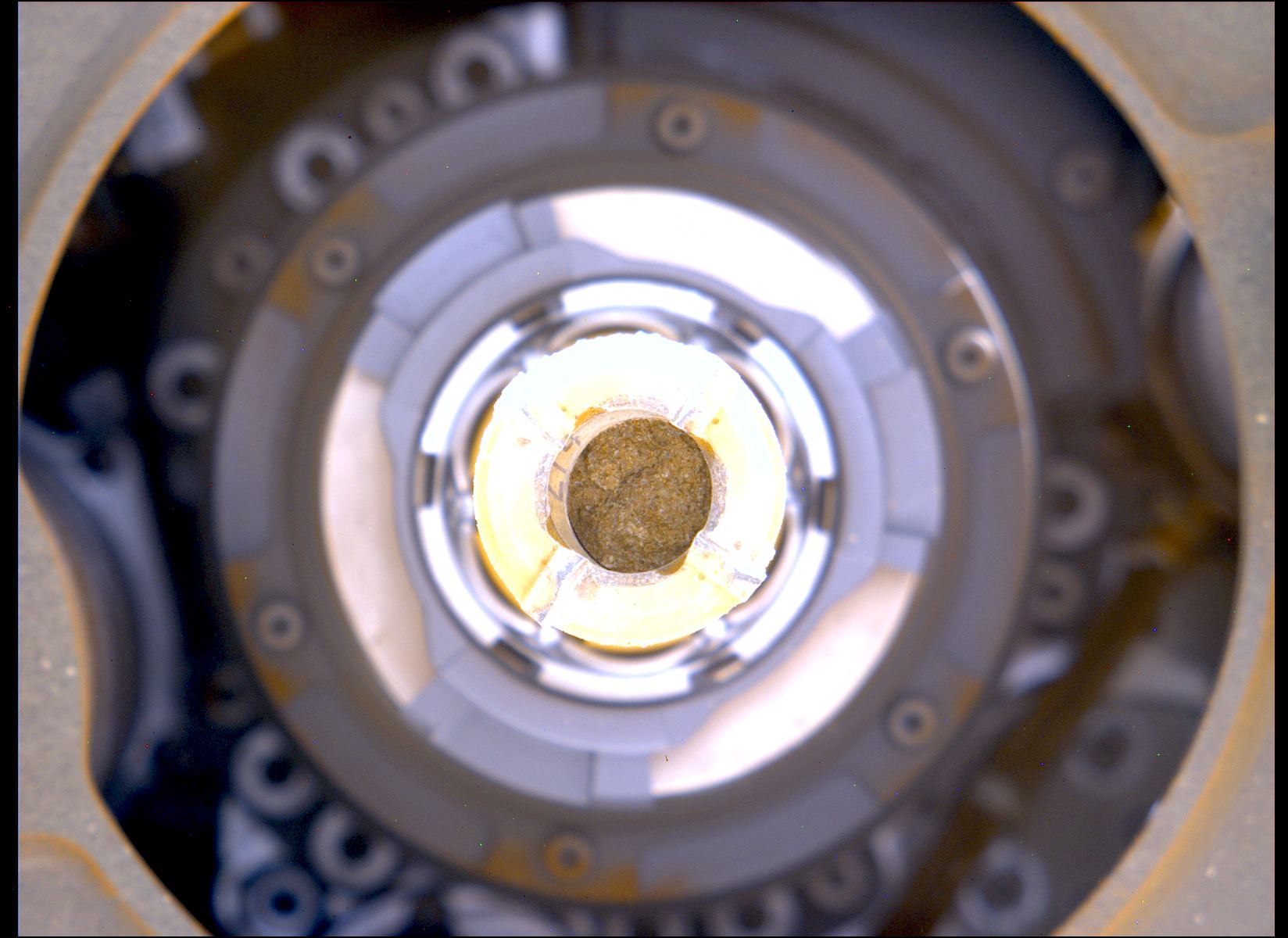


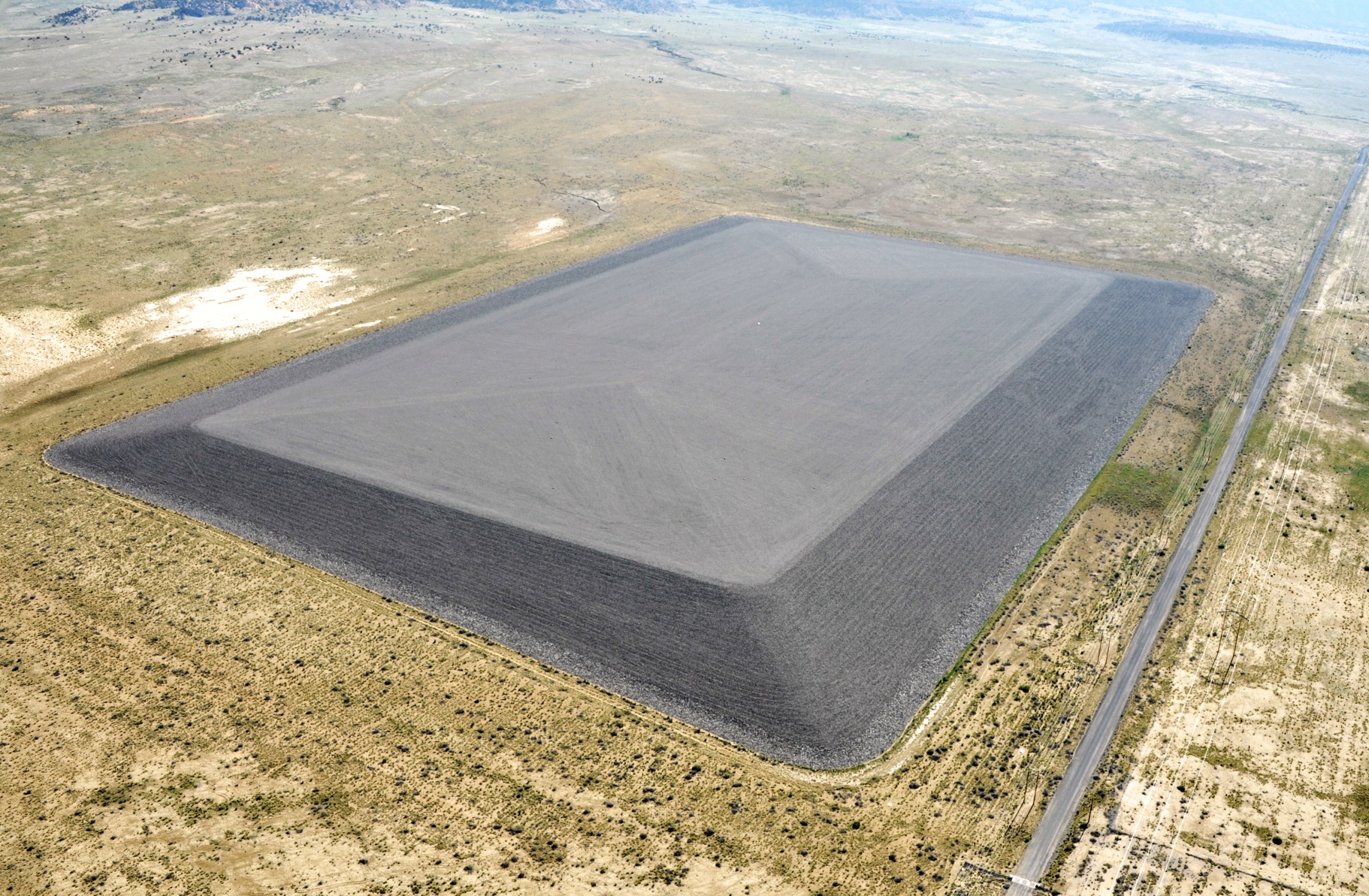
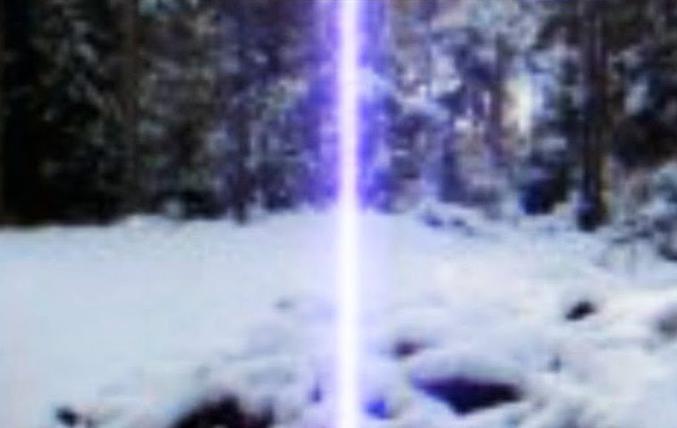

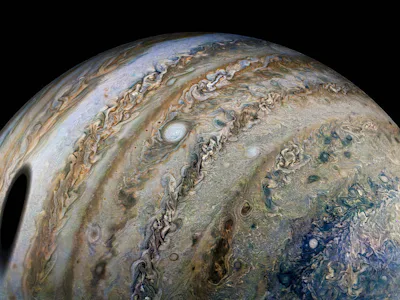
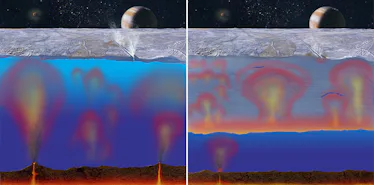
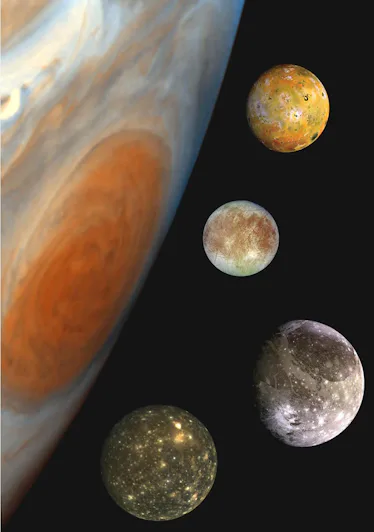
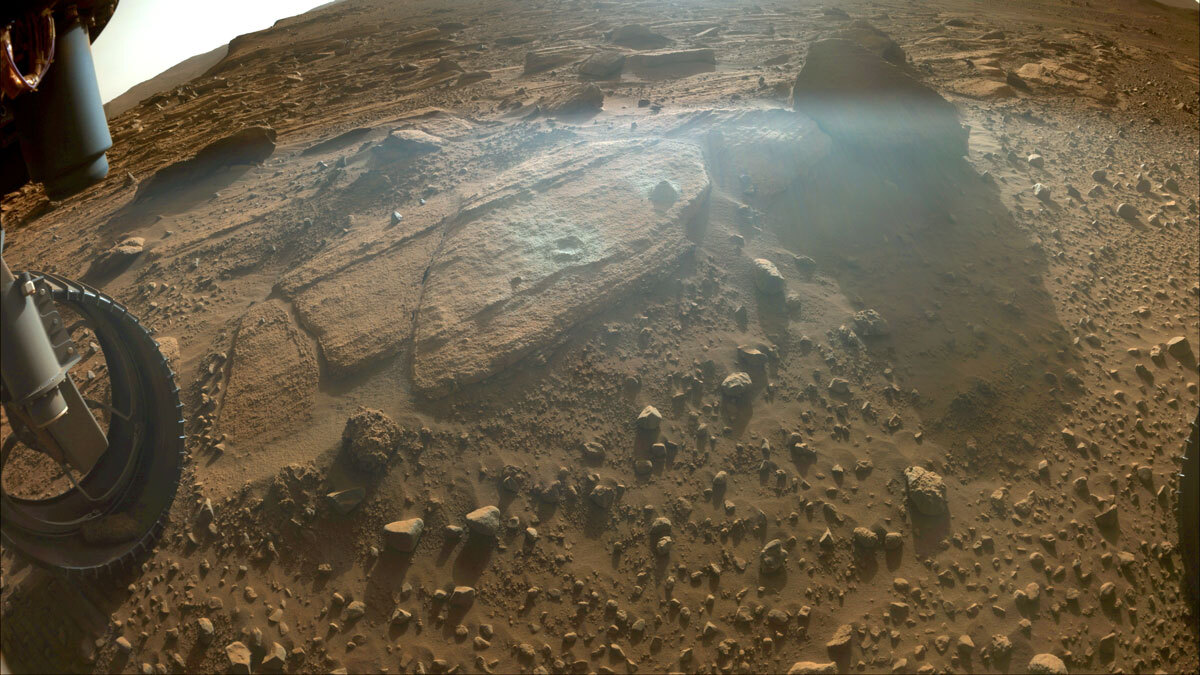
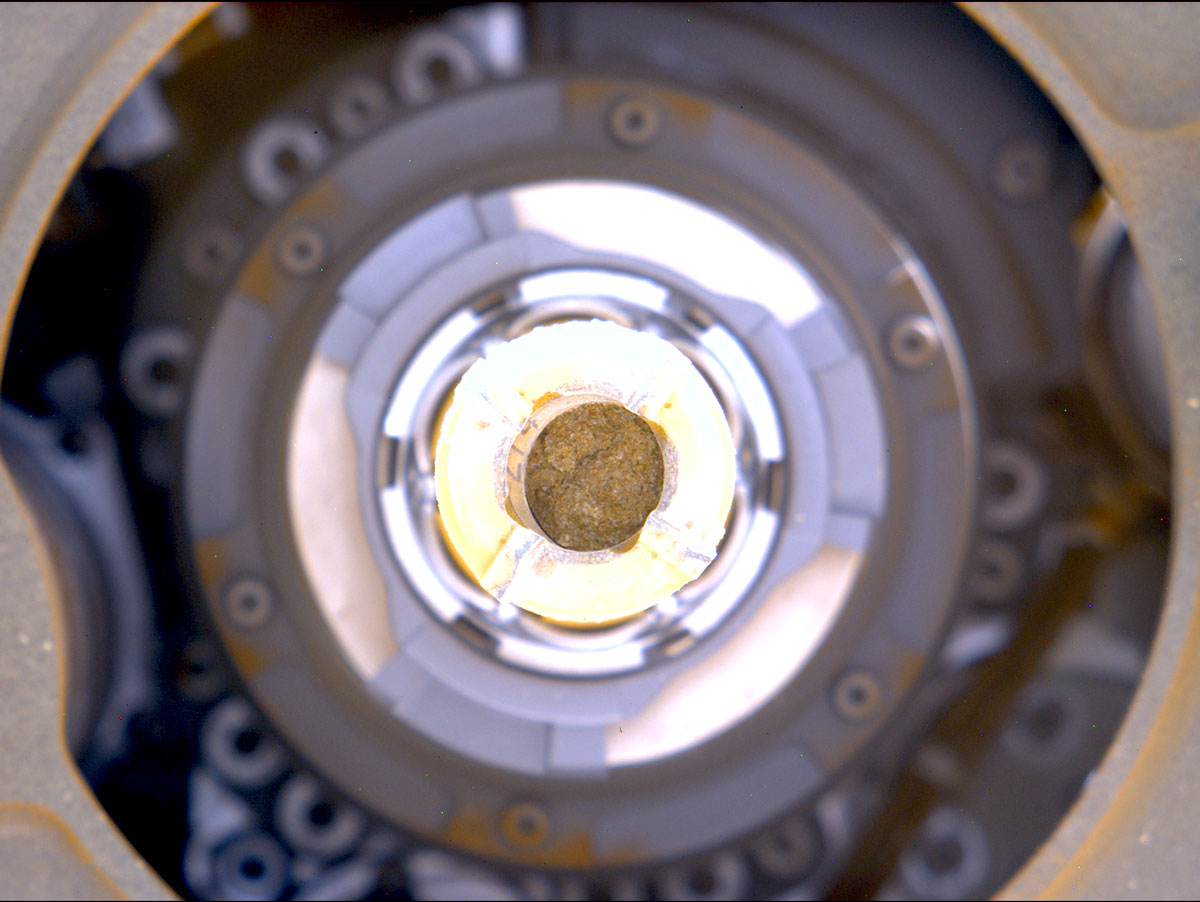
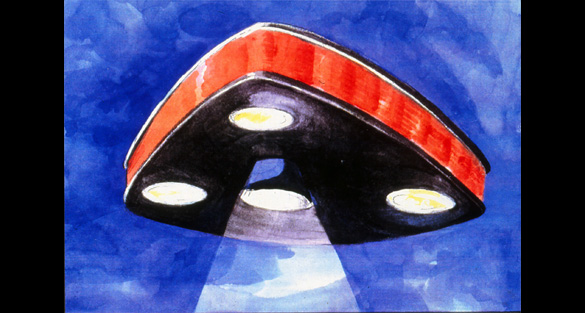
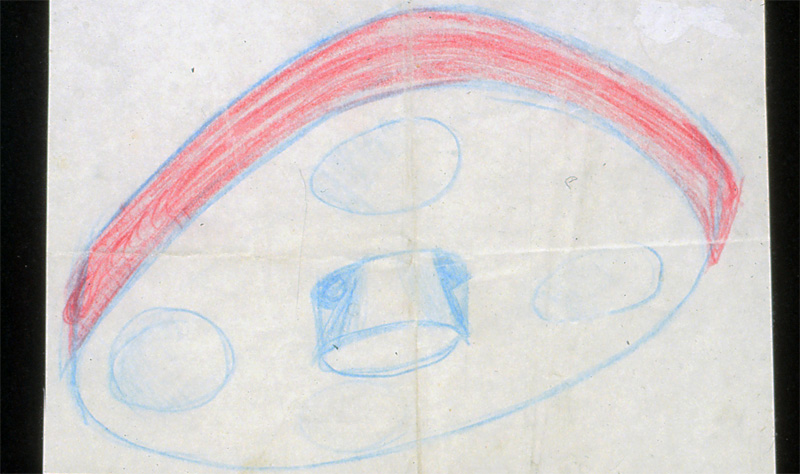

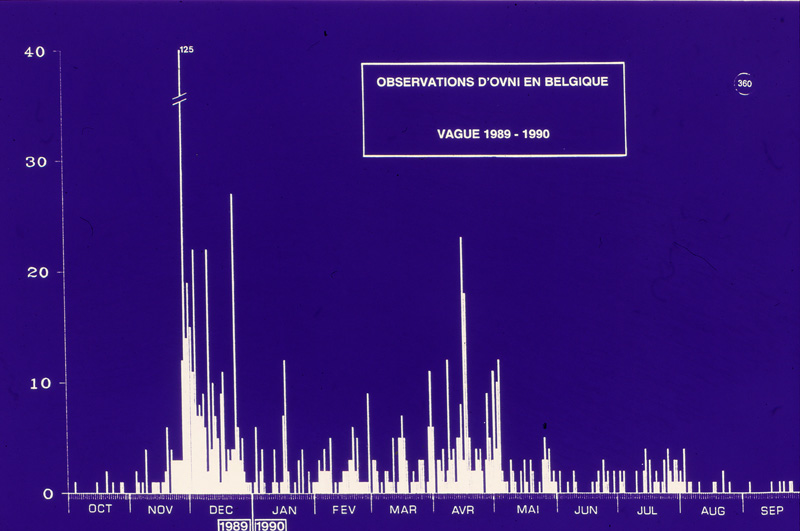
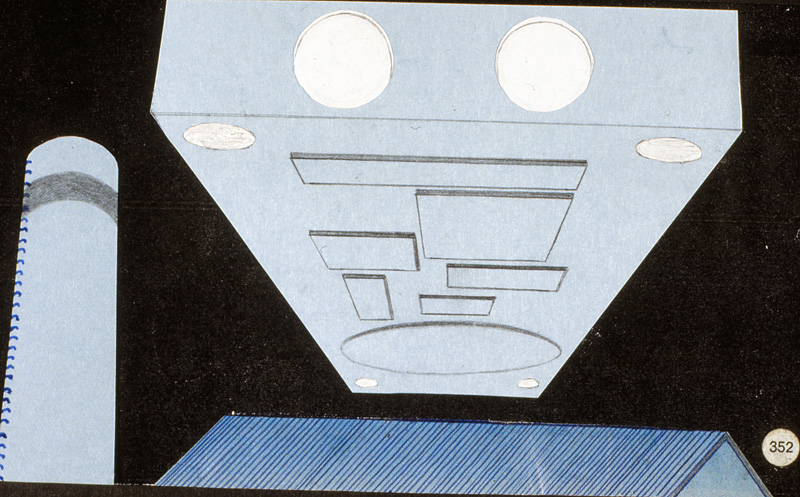

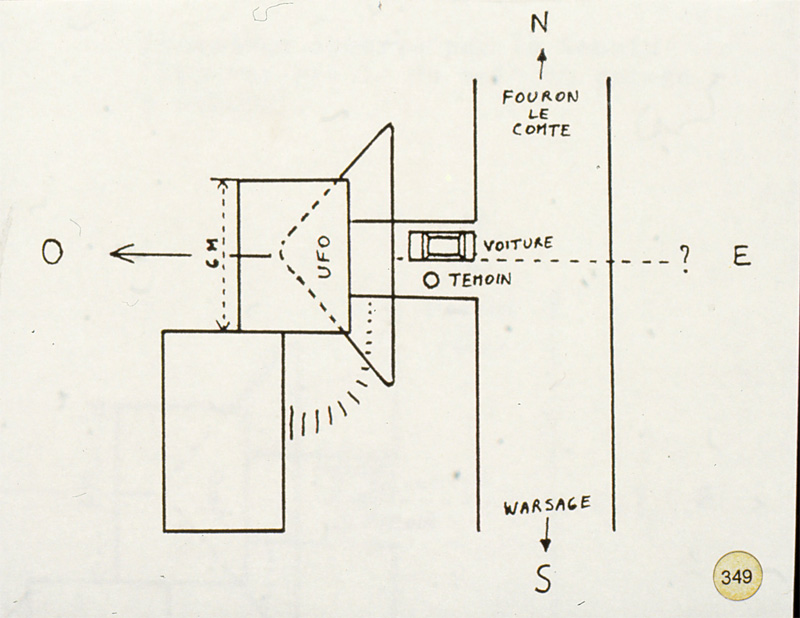

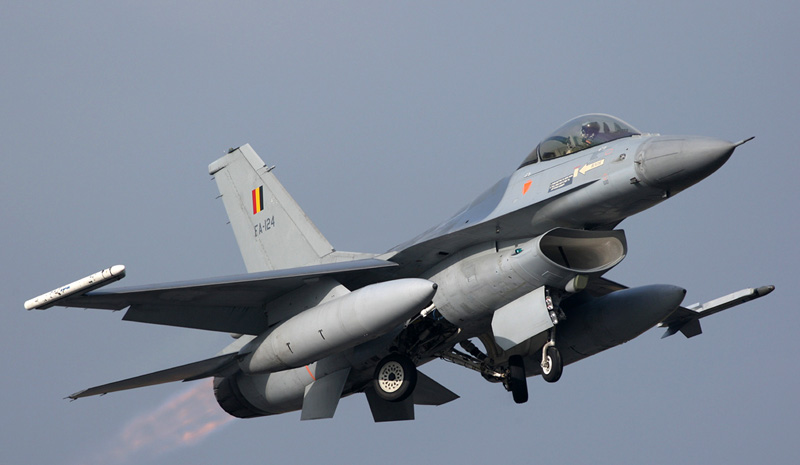
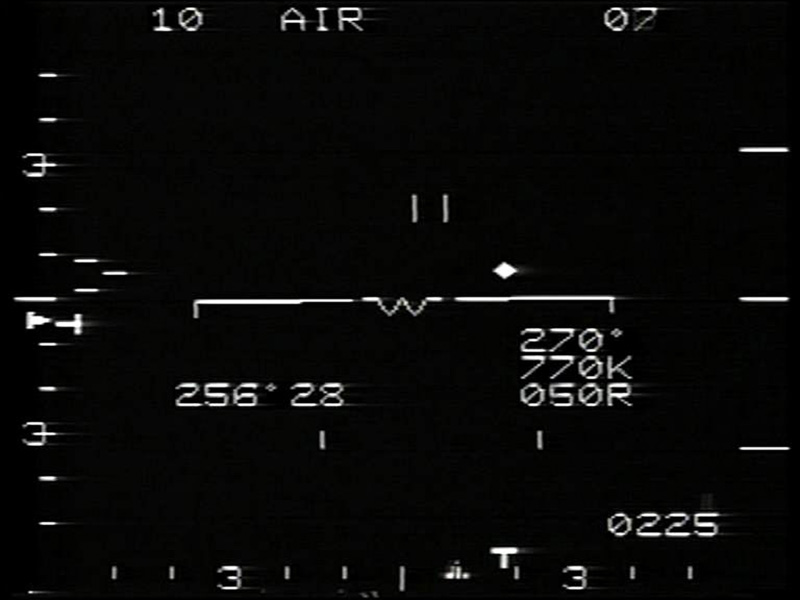
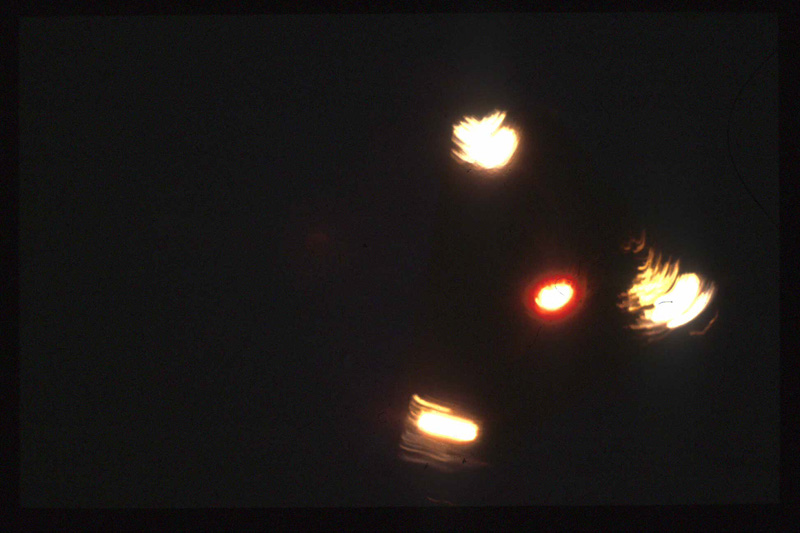
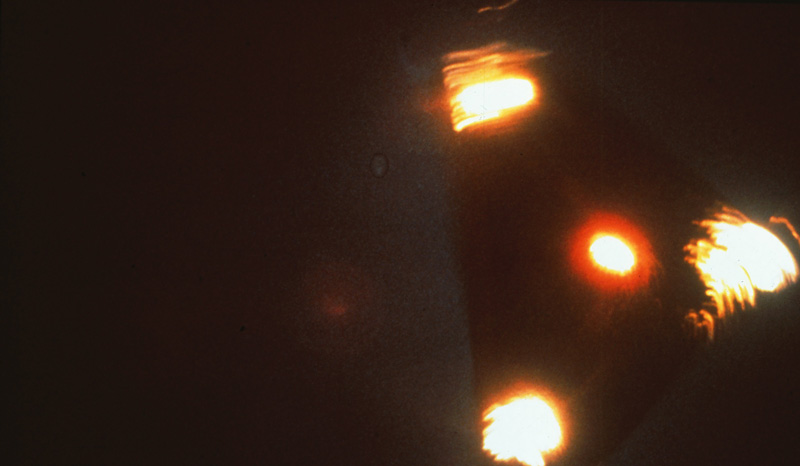

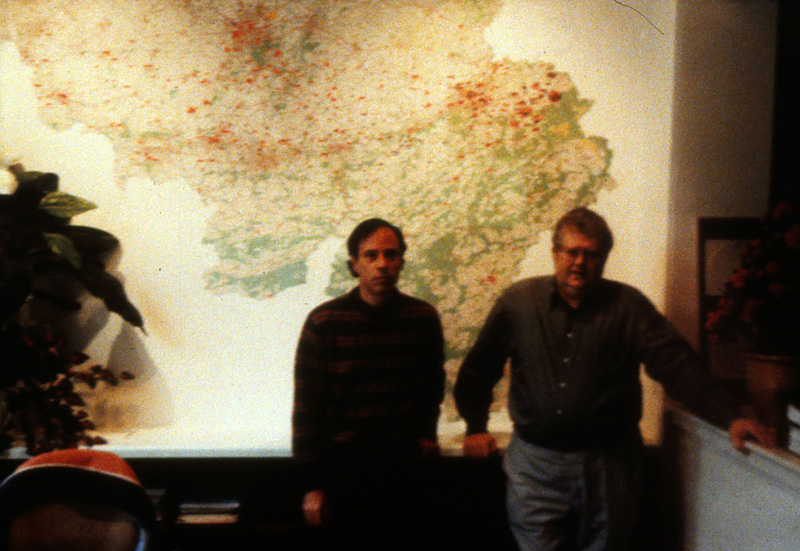







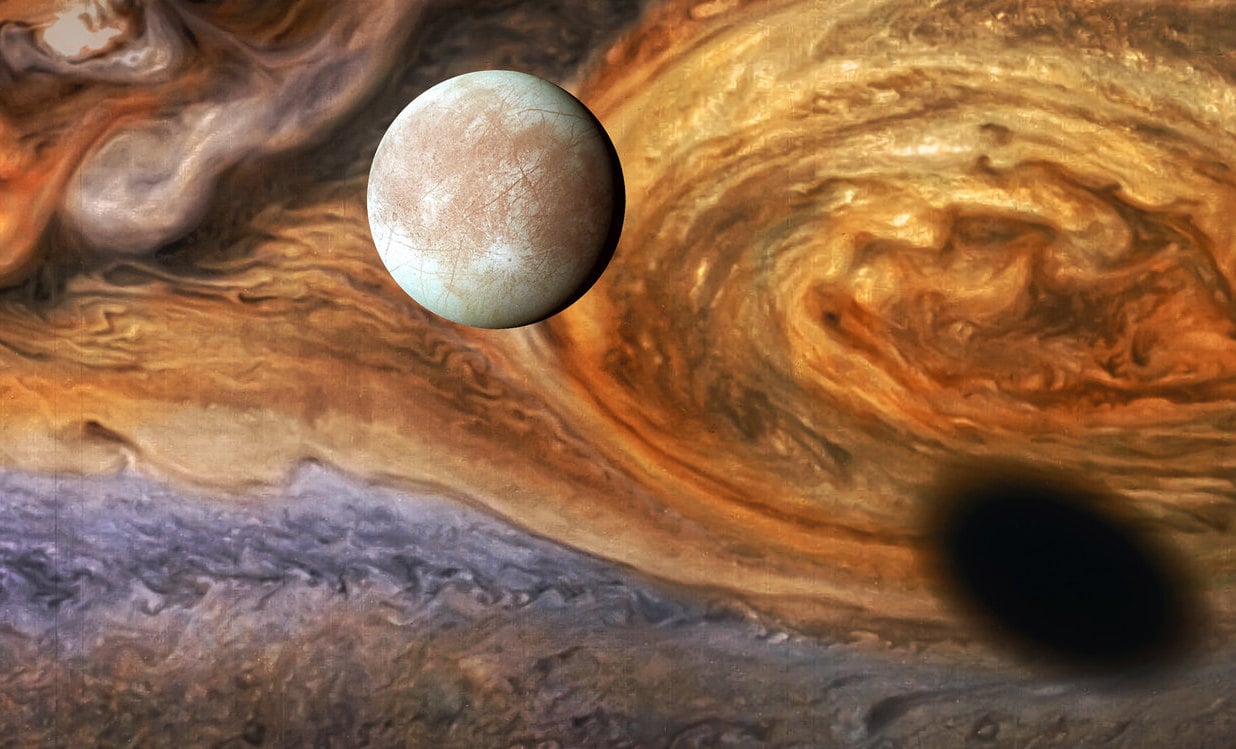
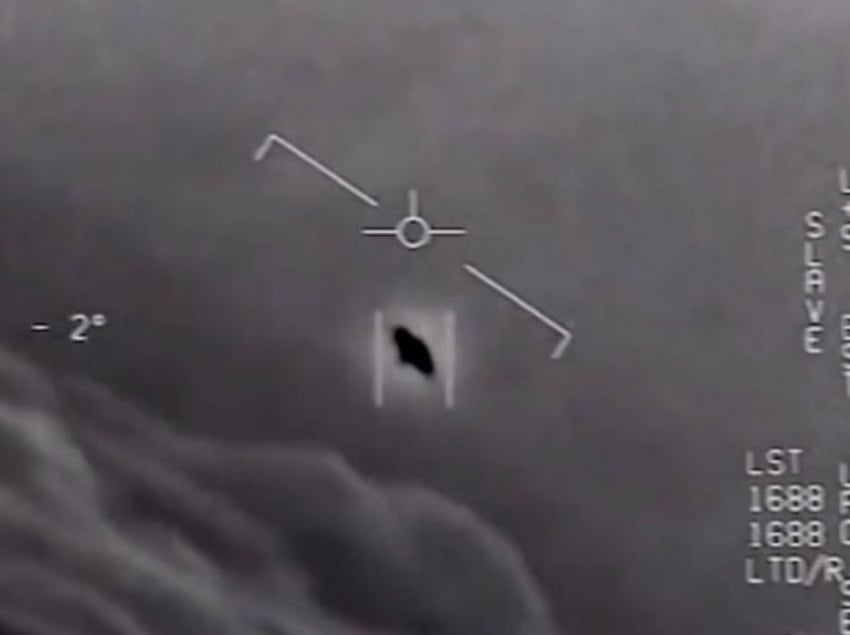


.jpg)
.jpg)
.jpg)