Underwater signals could solve mystery of missing Malaysian MH370 flight
© Provided by Interesting Engineering
It has been ten years since a Malaysian Airlines flight vanished over the South China Sea. On March 8, 2014, flight MH370 disappeared from radar screens 38 minutes after takeoff while traveling from Kuala Lumpur to Beijing.
Several nations have conducted massive search operations in the years since, and several researchers have long tried to find the wreckage of missing aircraft.
A new study by Cardiff University researchers suggests that signals picked up by underwater microphones may be crucial for locating aircraft like MH370 when they crash into the ocean.
The findings have prompted the team to suggest additional research into the aircraft’s last known location and lay the groundwork for handling such situations.
Many people have recently devised theories and strategies to locate the plane. In March, a Texas-based company claimed they possessed scientific evidence pinpointing the ultimate location of the missing flight MH370.
The details of the Cardiff team’s research were published in the journal Scientific Reports.
Hydroacoustic clues for MH370
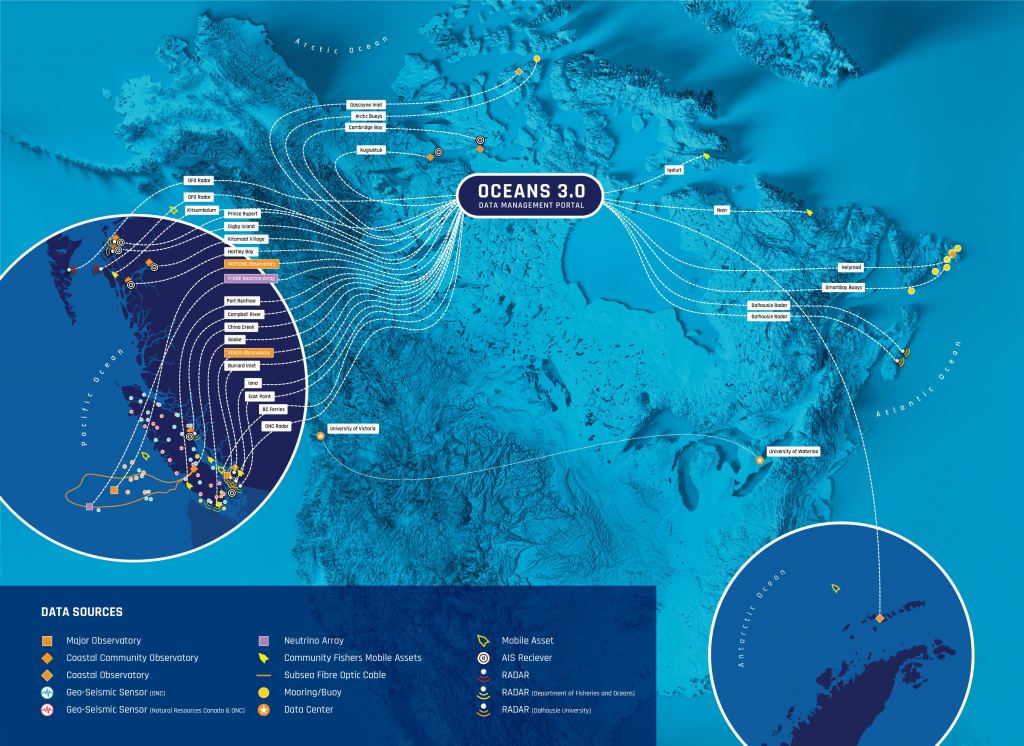
Hydrophone technology records discrete acoustic fingerprints from multiple points on the seabed, which propagate across great distances through the water in the event of violent ocean events like airplane crashes.
Related video:
- MH370: The Plane That Disappeared: 5 Things To Know Before You Watch The Netflix Docuseries (CinemaBlend)
In the case of MH370, official investigations concluded that the aircraft likely crashed near the 7th arc, the location of the last communication between the plane and INMARSAT.
The primary search area along the 7th arc is less than 1,242 miles (2,000 kilometers) from the hydroacoustic station at Cape Leeuwin, Australia, and there are no obstacles to filtering out signals.
However, within the timeframe and location proposed by the official search, only one relatively weak signal was identified. Researchers highlight that other signals might be related, requiring reassessing the official search.
“Further analysis and future research are therefore necessary to fully comprehend the detected signals and their implications for MH370’s disappearance,” said Kadri.
Enhancing signal analysis
Researchers suggest that officials should monitor the signals obtained at nearby hydroacoustic stations while conducting field tests along the 7th arc, such as controlled explosions or airguns.
According to the study, trials of this type, with energy levels comparable to that of MH370, might shed light on the whereabouts of the missing aircraft.
The trials would also contribute to the advancement of hydroacoustic technology as a resource that law enforcement may utilize to identify probable aircraft crash sites in the future.
Similar exercises were conducted during the search and rescue mission for the ARA San Juan, a submarine that disappeared off the coast of Argentina in 2017.
Researchers claim that this demonstrates that such methods are relatively straightforward and feasible. Applying these techniques could help determine the signal’s relevance to MH370 before embarking on another extensive search.
“If found to be related, this would significantly narrow down, almost pinpoint, the aircraft’s location. On the other hand, if the signals are found to be unrelated, it would indicate a need for authorities to reassess the time frame or location established by their official search efforts to date,” said Kadri.
Regrettably, the team has not been able to identify a signal with the certainty required to initiate a new search for the missing aircraft. “However, if the recommendations are followed by the appropriate authorities, we can assess the relevance of the observed signals, potentially shedding light on the location of MH370,” said Kadri.
Abstract
Data analysis from the hydroacoustic stations of the Comprehensive Nuclear-Test-Ban Treaty Organization has unveiled distinctive pressure signals linked to aircraft crashes of varying sizes in the ocean. Notably, these signals were detected at distances ranging from two to five thousand kilometers, highlighting the efficacy of underwater acoustic technology in event identification and classification in marine environments.
In this study, we investigate the plausibility of an aircraft, such as Malaysian Airlines Flight 370 (MH370), crashing into the sea, leaving a discernible pressure signal at distant hydrophones.
Consequently, we focus on recordings obtained from the hydroacoustic monitoring stations located at Cape Leeuwin and Diego Garcia, within a few minutes of the last satellite ping on the 7th arc, associated with the assumed crash time and location.
Among the available data, only one relevant signal has emerged as a potential candidate, albeit recorded at a single station out of the two stations available.
To ensure a comprehensive analysis, we also examine the time frame and location of the airplane along its initial route. However, no corresponding signal was observed. Nevertheless, the findings in this study narrow down the range of possibilities and present a novel scientific approach to investigate such incidents.
These findings contribute to our understanding of acoustic signals associated with aircraft crashes at sea. They emphasize the potential for hydrophones to detect events even when the signal travels long distances through the land.
Ultimately, this research offers recommendations for conducting on-site experiments involving controlled explosions with energy levels similar to the impact of MH370 along the 7th arc. The aim is to encourage pertinent authorities to implement actions that could reveal insights into the destiny of MH370 specifically. Additionally, this initiative seeks to establish a comprehensive framework for addressing comparable incidents in the broader ocean context.
{ https://www.bing.com/ }


 Majority of Egyptian Pyramids Was Built along Long-Lost Branch of Nile, Archaeologists Say