The Significance of Orion in Ancient Civilizations: An In-Depth Analysis
Abstract
The constellation Orion has fascinated humanity for thousands of years, serving as a prominent celestial feature that has inspired myths, legends, and practical applications across various ancient cultures. Its striking pattern of bright stars, including Betelgeuse and Rigel, makes it easily recognizable in the night sky, and its position has held significant astronomical and cultural importance.
This report delves into the complex role Orion played in ancient civilizations by exploring its astronomical characteristics, mythological stories, and cultural relevance. The constellation’s visibility from both the Northern and Southern Hemispheres, along with its seasonal appearances, made it an essential tool for various practical purposes, such as determining the timing of agricultural activities, navigation during long sea voyages, and marking important religious festivals.
Archaeological findings, such as ancient carvings and alignments of monuments, suggest that many cultures, including the Egyptians, Greeks, and Polynesians, attributed symbolic and spiritual meanings to Orion, often associating it with gods, heroes, or divine beings. Its association with the myth of Orion the Hunter in Greek mythology, as well as similar stories in other traditions, highlights its universal significance as a symbol of strength, pursuit, and cosmic order. By synthesizing archaeological, anthropological, and astronomical evidence, this report emphasizes how Orion was more than just a constellation; it was a vital cosmic symbol deeply embedded in the worldview, religious practices, and societal structures of ancient peoples worldwide. Ultimately, Orion’s enduring presence in human history underscores its profound influence on our understanding of the cosmos and our place within it.
Introduction
Throughout human history, the night sky has served as a source of inspiration, guidance, and understanding for countless civilizations. From the earliest times, humans have looked upward to interpret the cosmos, using the stars and constellations as tools to make sense of their environment, timekeeping, and spiritual beliefs. Constellations functioned not only as celestial maps but also as narratives that conveyed myths, legends, and cultural values. Among these, Orion—the "Hunter"—stands out as one of the most recognizable and significant star patterns in the sky. Its brightness, distinctive shape, and prominent position have made it a focal point in many ancient cultures.
The significance of Orion transcends mere visual appeal. Its consistent appearance and predictable movement across the sky made it an invaluable reference point for early astronomers and travelers. For ancient Egyptians, Orion was associated with Osiris, the god of the afterlife, symbolizing rebirth and eternal life. The Greeks mythologized Orion as a mighty hunter, whose story intertwined with other celestial figures, influencing their mythology and art. Similarly, the Babylonians incorporated Orion into their celestial omens, using its position to predict seasonal changes. Indigenous cultures across the Americas and Australia also recognized Orion's shape and incorporated it into their mythologies, rituals, and calendars.
This report aims to explore the many facets of Orion's importance to these diverse civilizations. We will examine the astronomical reasons behind its prominence, such as its visibility and seasonal significance. Additionally, we will delve into the mythological stories and spiritual symbolism associated with Orion, highlighting how it shaped cultural identities and religious beliefs. Furthermore, we will consider the practical applications of Orion’s position, such as its role in agriculture and navigation. By understanding these dimensions, we gain insight into how a single constellation could influence societal development, religious practices, and cultural narratives across different parts of the world. Ultimately, Orion exemplifies the profound connection between the stars and human civilization, serving as a bridge between the cosmos and our collective cultural heritage.
Astronomical Characteristics of Orion
- Visibility and Prominence
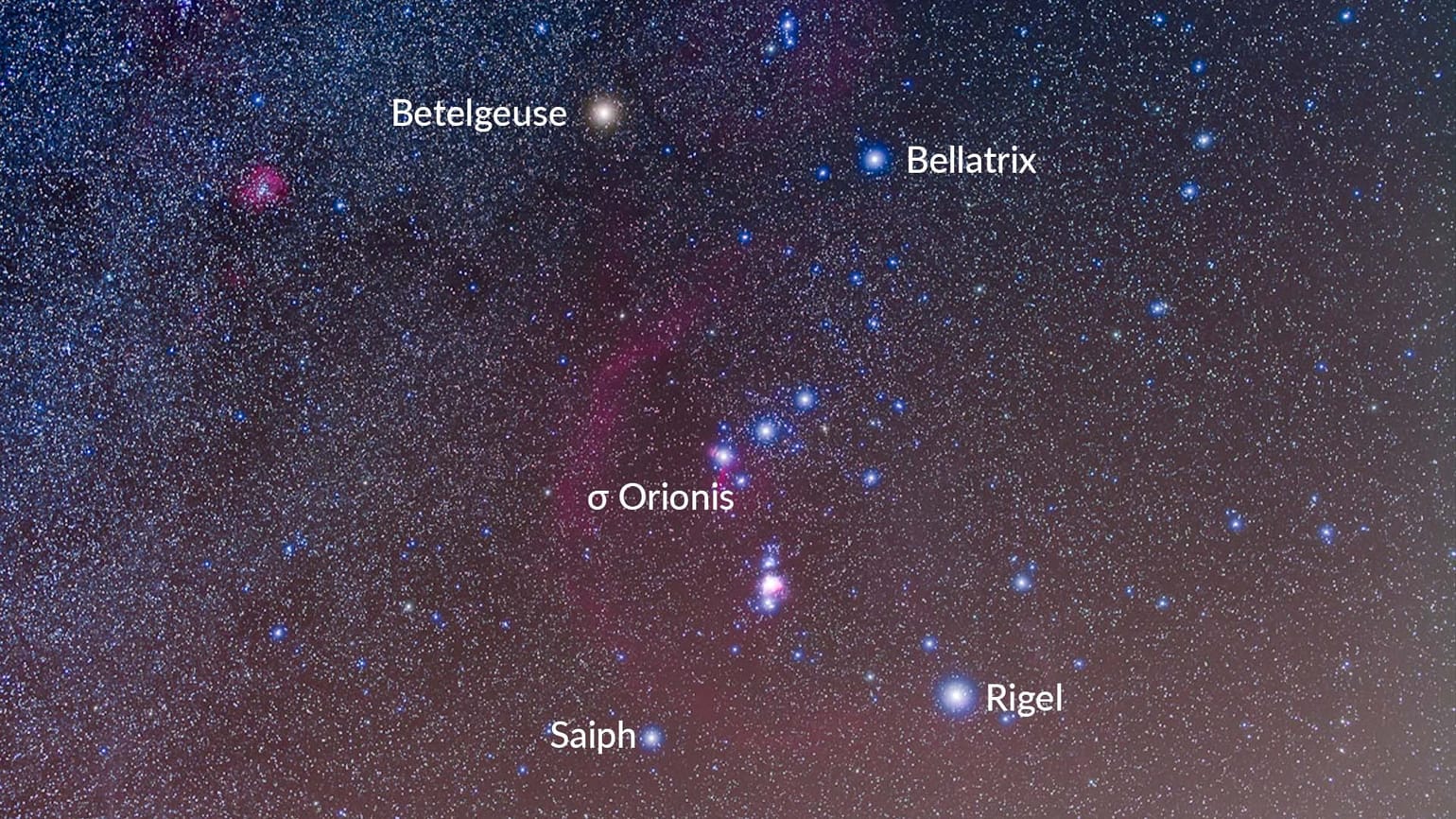
Orion is undoubtedly one of the most conspicuous and easily recognizable constellations in the night sky. Its prominence is due to both its brightness and its distinctive, easily identifiable pattern of stars. The constellation’s layout resembles a hunter, with a striking belt of three aligned stars—Alnitak, Alnilam, and Mintaka—that serve as a visual anchor. Orion's main stars are among the brightest in the entire night sky; for instance, Betelgeuse, a red supergiant marking Orion’s shoulder, and Rigel, a blue supergiant representing the foot, are both luminous and easily spotted. Because Orion straddles the celestial equator, it is visible from almost every part of the world, from the northern to the southern hemisphere, making it a universal feature of the night sky. During the winter months in the northern hemisphere and summer months in the southern hemisphere, Orion stands out prominently, often serving as a celestial landmark for stargazers and astronomers alike. Its bright stars and distinctive shape have made it a key point of reference in the night sky across different cultures and eras.
- Seasonal and Agricultural Significance
Throughout history, many ancient civilizations observed Orion’s movements and positions to mark seasonal changes and agricultural cycles. One notable phenomenon is the heliacal rising of Orion—the first time the constellation becomes visible just before sunrise after a period of being hidden by the Sun’s glare. This event was often associated with seasonal transitions, such as the start of the agricultural planting season or the flood cycle. For example, in ancient Egypt, the heliacal rising of Orion occurred just before the annual flooding of the Nile River, which was essential for fertilizing the land and enabling successful crop cultivation. The Egyptians linked Orion with Osiris, the god of the afterlife and fertility, reinforcing its importance in their religious and agricultural calendars. Similarly, other ancient cultures, including the Babylonians and Greeks, associated Orion with mythological stories and used its position to predict seasonal changes. These observations highlight the crucial role Orion played in the daily lives and survival strategies of ancient peoples, serving as a celestial calendar guiding agricultural activities and societal planning.
- Celestial Mechanics and Precession
The position of Orion in the sky is not fixed over long periods due to the phenomenon known as Earth's precession. Precession is a slow, conical movement of Earth's rotational axis caused by gravitational forces exerted by the Sun and the Moon on Earth's equatorial bulge. Over approximately 26,000 years, this precession causes the apparent position of stars and constellations, including Orion, to shift gradually relative to our vantage point on Earth. As a result, the timing of Orion's heliacal risings and its position in the sky change over millennia. Ancient civilizations, observing these shifts, incorporated Orion into their calendars, mythologies, and cosmological models. For instance, the changing position of Orion has influenced myth stories and religious practices, as societies interpreted its movement as part of celestial cycles. Precession also affects which stars serve as pole stars at different times in history, linking Orion’s position to broader astronomical phenomena and cultural developments. Understanding this celestial mechanics underscores the dynamic nature of the night sky and the long-standing human effort to comprehend the cosmos.
Orion in Ancient Civilizations
1. The Ancient Egyptians
Orion and Osiris
The ancient Egyptians held Orion in high regard, particularly associating it with Osiris, the god of the afterlife, resurrection, and fertility. This connection was deeply embedded in their religious beliefs and cosmology. The star constellation Orion, especially the three prominent stars that form Orion’s Belt — Alnitak, Alnilam, and Mintaka — served as a celestial symbol of Osiris. The Egyptians believed that the heliacal rising of Orion, which occurs just before the annual flooding of the Nile, marked a crucial time for agricultural planning and spiritual renewal. This timing reinforced the idea that Orion was a divine force linked to life, death, and rebirth.
In their mythology, Osiris was the ruler of the underworld and the judge of the dead, overseeing the process of resurrection. The association with Orion reflected a belief that the constellation represented the divine presence guiding souls through the afterlife. The rising of Orion in the night sky symbolized the cycle of death and rebirth, mirroring the annual flooding of the Nile, which brought fertility to the land and ensured the renewal of life. This celestial link further emphasized the importance of Orion in the Egyptian worldview as a symbol of eternal life and spiritual continuity.
The Orion Pyramids
The layout of the iconic Giza pyramids demonstrates the Egyptians' sophisticated understanding of celestial alignments, particularly with Orion’s Belt. The three main pyramids—those of Khufu, Khafre, and Menkaure—are believed to be deliberately aligned with the three stars of Orion’s Belt. This alignment suggests that the pyramids were more than just royal tombs; they were also astronomical monuments designed to encode celestial symbolism into the landscape.
Researchers have observed that the three pyramids mirror the pattern of Orion’s Belt from a specific vantage point, with the positions of the pyramids corresponding to the relative positions of the stars. This alignment not only reflects the Egyptians’ advanced knowledge of astronomy but also indicates their desire to establish a cosmic connection between the pharaohs buried within these structures and the divine realm represented by Orion. The celestial alignment underscores the importance of Orion in religious rituals, royal cosmology, and the belief in an eternal connection between the king’s soul and the stars.
In conclusion,
Orion held a significant place in ancient Egyptian culture, symbolizing divine power, eternal life, and cosmic order. Its association with Osiris and the alignment of the pyramids demonstrate the Egyptians’ intricate integration of astronomy, religion, and architecture, highlighting their profound understanding of the universe and their place within it.
2. The Greeks and Romans
Mythological Significance
In Greek mythology, Orion is renowned as one of the most formidable and legendary hunters. According to myth, Orion was a giant and a mighty hunter, celebrated for his strength, bravery, and hunting skills. His story varies across different sources, but a common theme is that he was the son of Poseidon, the god of the sea, which granted him the ability to walk on water and gave him a divine connection to the ocean. Orion's life was marked by numerous adventures, including his quest to hunt and kill dangerous beasts, and he was often depicted as a symbol of heroism and martial prowess.
A significant aspect of Orion’s myth involves his romantic relationship with the goddess Artemis, the goddess of the hunt, which ultimately led to his tragic demise. Some versions tell that Orion was accidentally killed by Artemis or by a giant scorpion sent by Gaia, the Earth goddess, to punish him. His death marked the end of his earthly adventures but elevated his status in the heavens. Zeus, the king of the gods, placed Orion among the stars as a constellation to honor his heroic deeds, allowing his myth to live on in the night sky. Over time, Orion became a symbol of human mortality and the fleeting nature of life, reminding viewers of the heroic ideals and the inevitable passage of time.
Astronomical Identification
Ancient Greek astronomers quickly recognized Orion as one of the most striking and prominent constellations in the night sky. Its bright stars, including Betelgeuse and Rigel, make Orion easily identifiable and serve as a celestial landmark. The constellation’s distinctive shape, resembling a hunter carrying a shield and a club, helped ancient observers to navigate the night sky and locate other celestial bodies.
Orion’s role extended beyond mythology into practical applications, especially in the realms of navigation and seasonal observation. For example, sailors and farmers used Orion as a celestial guide to determine the time of year and to plan their activities accordingly. In particular, the rising and setting of Orion signaled important seasonal changes, such as the arrival of winter or the start of planting season. The constellation’s position in the sky also served as a seasonal calendar, with its appearance in the evening sky indicating specific agricultural or ceremonial timings.
In summary,
Orion held both mythological and astronomical significance for the ancient Greeks and Romans. As a mythological figure, he embodied heroism, strength, and mortality, while astronomers used his prominent constellation as a navigational tool and seasonal indicator, emphasizing his importance in both cultural stories and practical daily life.
3. The Babylonians
The Babylonians were a highly advanced civilization known for their remarkable contributions to astronomy, mathematics, and mythology. Among their many achievements, their understanding and observation of the night sky played a crucial role in their culture and religious practices. One of the most notable celestial objects they documented and associated with their beliefs was the constellation Orion.
Zodiac and Mythology
Babylonian astronomers recognized Orion as an important part of the zodiac, which is a band of the sky through which the sun, moon, and planets move. They identified Orion as a prominent constellation and linked it to their mythological and religious beliefs. In Babylonian mythology, Orion was associated with the god of war and fertility, often depicted as a mighty hunter. This association reflected the constellation's significance in their cultural narratives, symbolizing strength, fertility, and divine power. The heliacal rising of Orion—when it first becomes visible just before sunrise after a period of being hidden by the sun’s glare—was considered a crucial calendrical event. This event marked the beginning of certain agricultural and religious festivals, guiding their agricultural cycles and rituals. The appearance of Orion in the night sky served as an important celestial signal that influenced their societal activities and ceremonies.
Astronomical Records
The ancient Babylonians meticulously recorded their observations of the night sky on clay tablets inscribed with cuneiform script. These tablets contain some of the earliest known detailed astronomical records, including precise descriptions of Orion’s position and movement throughout the year. These records not only demonstrated their keen interest in tracking celestial phenomena but also underscored Orion’s importance within their religious and cultural frameworks. The detailed data allowed Babylonian astronomers to predict celestial events with remarkable accuracy, which in turn helped them develop complex calendars and astrological systems. Their records of Orion’s heliacal risings and other positional data reveal a sophisticated understanding of the celestial mechanics and a deep connection between astronomy and their spiritual beliefs. For the Babylonians, celestial bodies like Orion were more than mere stars; they were divine symbols that connected the heavens with their earthly existence, guiding both their spiritual practices and daily lives.
In conclusion,
the Babylonians’ recognition of Orion as part of the zodiac and their detailed astronomical records highlight their advanced understanding of the cosmos and the integral role that celestial phenomena played in their mythology, religion, and societal organization.
4. Indigenous Cultures of the Americas and Australia
Many Indigenous Australian groups and Native American tribes have rich oral traditions that include detailed stories and mythologies associated with the constellation Orion. These cultures often interpret Orion not just as a pattern of stars in the night sky but as a powerful symbol embedded with deep spiritual, seasonal, and practical significance.
In Australia, Indigenous groups have long viewed the night sky as a vital part of their cultural landscape. For many Aboriginal Australians, the constellation Orion is linked to ancestral beings and mythological stories passed down through generations. Some communities see Orion as a celestial hunter or ancestral figure engaged in ongoing stories of creation and life. For example, certain groups interpret Orion as a representation of a great hunter or a spiritual figure responsible for guiding the seasons and the availability of resources. These stories often explain natural phenomena, such as animal migrations or the timing of seasonal events, by referencing Orion’s position and movement across the sky. Such narratives serve as an astronomical calendar, helping communities determine the right times for hunting, gathering, and ceremonial activities.
Similarly, in Native American cultures across North and Central America, Orion holds significant mythological importance. Many tribes recognize Orion as a powerful figure, often associated with hunting, war, or spiritual journeying. For example, the Plains tribes sometimes see Orion as a symbol of the Great Hunter, a hero figure who embodies strength and skill. These stories frequently link Orion to seasonal cycles, such as the timing of plant harvests or animal migrations, which are crucial for survival. In some traditions, Orion’s position in the sky signals the changing of seasons, serving as an astronomical guide for planting and harvesting schedules.
Furthermore, both Indigenous Australians and Native American tribes use Orion’s stars as part of their spiritual narratives. The constellation often appears in stories that explain the origins of the world, the actions of ancestral beings, or the moral lessons embedded in their cultural teachings. These narratives reinforce social structures, cultural identity, and spiritual beliefs, demonstrating how the night sky functions as a living map of their worldview.
Overall, for many Indigenous Australian groups and Native American tribes, Orion is not merely a pattern of stars but a vital element of their cultural storytelling—integrating astronomy with spirituality, seasonal change, and survival strategies. Their oral traditions reveal a profound understanding of the cosmos, emphasizing the interconnectedness of natural phenomena, human life, and spiritual existence.
Cultural and Religious Significance

Orion: the Hunter Constellation
Orion as a Cosmic Hunter
The constellation Orion has fascinated humanity for millennia, largely due to its striking pattern of bright stars that resemble a hunter in the night sky. Across numerous cultures and civilizations, Orion has been symbolized as a mighty hunter, embodying qualities such as strength, bravery, and protection. Its figure is often depicted as a formidable figure wielding weapons, with a belt and sword clearly visible among the brightest stars. This visual resemblance has made Orion a natural focal point for myth-making and storytelling, as people sought to interpret and find meaning in the patterns of the stars.
In many ancient societies, Orion was seen as a celestial warrior or protector figure, serving both as a symbol of human strength and as a divine guardian watching over the Earth. The prominent stars—Alnitak, Alnilam, and Mintaka—form Orion’s Belt, which is easily recognizable and has historically served as a navigational aid. The constellation’s commanding presence in the sky often led to its association with heroism and divine authority, reinforcing the human desire to connect their stories with the cosmos.
Furthermore, Orion's depiction as a hunter resonates with the universal human experience of hunting and survival, linking celestial imagery with terrestrial life. This connection underscores the importance of the stars not just for navigation but also for cultural identity and spiritual guidance. Many indigenous cultures, such as those in Africa, Australia, and the Americas, have their unique stories and legends centered on Orion, emphasizing its role as a symbol of protection, strength, and divine power.
Calendar and Agricultural Cycles
Throughout history, many societies have observed the heliacal risings of Orion—its first appearance in the dawn sky after a period of invisibility—and used these celestial events as markers for important agricultural activities. The rising of Orion at specific times of the year often signified the beginning of planting seasons or the time to harvest crops, integrating celestial observations into daily life and survival strategies.
For example, in ancient Egypt, the heliacal rising of Orion coincided with the flooding of the Nile River, which was crucial for agriculture. The Nile flood was essential for fertilizing the land, and its timing was closely linked to the appearance of Orion in the sky. The Egyptians associated this event with the god Osiris, who represented rebirth and fertility, further intertwining celestial phenomena with spiritual beliefs and societal practices.
Similarly, in ancient Greece and Mesopotamia, the appearance of Orion marked key seasonal transitions. The Greeks associated Orion with a heroic figure, and his rising often signaled the start of planting or harvesting periods. These observations allowed for the synchronization of agricultural activities with natural cycles, ensuring food security and societal stability.
In many indigenous cultures around the world, Orion’s position in the sky served as a natural calendar, guiding farmers and shepherds in their daily routines. The consistent timing of Orion's risings provided a reliable framework for organizing seasonal work, festivals, and communal rituals, reinforcing the deep connection between celestial phenomena and terrestrial life.
Mythological Narratives
The stories and legends surrounding Orion are rich and varied, often involving themes of death, rebirth, heroism, and divine intervention. These mythological narratives served to explain the origins of the constellation and to impart moral or spiritual lessons to society.
In Greek mythology, Orion was a giant huntsman known for his extraordinary strength and hunting skills. According to one legend, Orion was the son of Poseidon, the god of the sea, which granted him the ability to walk on water. His stories often depict him as a hero who faced various challenges, including conflicts with other gods and mythological creatures. His death is subject to different versions: one story suggests that he was killed by a scorpion sent by Gaia after he boasted he could kill all animals on Earth, leading to his placement in the sky by Zeus as a constellation—a symbol of heroic achievement and celestial immortality.
Many cultures also saw Orion as a symbol of renewal and rebirth. In some African traditions, Orion’s appearance was associated with the changing of seasons and the cycle of life and death. Its rising signaled times of renewal, planting, and spiritual rebirth. These stories reinforced societal values such as bravery, perseverance, and the importance of aligning human life with natural and divine cycles.
Furthermore, Orion’s constellation often served as a narrative device linking human experiences with the universe. Its stories provided a framework for understanding the cosmos and humanity’s place within it, offering explanations for natural phenomena and guiding moral behavior. These mythologies reinforced societal and spiritual beliefs, creating a shared cultural identity centered around the stars.
In summary,
Orion’s significance extends beyond its stunning visual presence in the sky. It embodies universal themes of strength, protection, renewal, and divine connection. Its role in calendars, mythology, and cultural identity underscores the profound impact celestial observations have had throughout human history, shaping societies’ spiritual, agricultural, and social practices.
Orion’s Role in Navigation and Astronomy
Navigational Aid
In ancient times, Orion played a crucial role for sailors and travelers who relied heavily on the stars to find their way across vast oceans and uncharted lands. Before the invention of modern navigational tools such as compasses, GPS devices, or detailed maps, celestial bodies served as vital reference points. Orion, being one of the most conspicuous and recognizable constellations in the night sky, stood out due to its bright stars and distinctive pattern resembling a hunter. Its consistent appearance in the night sky across different seasons and latitudes made it an invaluable celestial guide. Mariners would observe Orion’s position at specific times of the year to determine their latitude and direction, especially during long sea voyages where land was out of sight. The constellation’s alignment with other stars and its predictable rising and setting times allowed travelers to maintain their course with a higher degree of accuracy, reducing the risks associated with navigation in unfamiliar waters.
Astronomical Education
Beyond its practical use as a navigational tool, Orion also served an important role in the education of early astronomers and priests. Its clear and memorable shape made it an ideal reference point for teaching celestial mechanics—the movements and relationships of celestial bodies. Ancient civilizations, such as the Egyptians and Babylonians, recognized Orion’s significance and incorporated it into their mythologies and religious practices. Priests and astronomers used Orion’s position to explain the cycles of the seasons, the apparent motion of stars, and the complex workings of the cosmos. The constellation’s prominence in the sky helped foster a sense of order, divine purpose, and interconnectedness within the universe, reinforcing cultural and spiritual beliefs. Furthermore, the study of Orion’s position and movement contributed to the development of early astronomical models, laying the foundation for future scientific advancements in understanding the heavens.
The Precession of the Equinoxes and Changing Significance
Over thousands of years, the Earth's axis experiences a slow wobble known as the precession of the equinoxes. This phenomenon causes the position of the stars and constellations, including Orion, to shift gradually relative to the Earth's equinoxes and solstices. As a result, the traditional celestial references associated with specific times of the year have changed over millennia. For example, during ancient times, Orion was prominently positioned in the night sky at certain key points in the calendar, influencing both agricultural practices and mythological stories.
This gradual shift has significant implications for how civilizations interpreted the heavens. As Orion's position relative to Earth's celestial markers moved, its symbolic importance in various cultures also evolved. In some mythologies, Orion was associated with gods, heroes, or seasonal cycles, but these associations diminished or transformed as the constellation's position changed. The precession effectively altered the "cosmic clock," leading to new constellational alignments and meanings over generations.
Furthermore, the changing position of Orion reflects the dynamic relationship between celestial phenomena and human culture. It demonstrates how our understanding of the universe is not static but constantly evolving. The precession underscores the importance of astronomy in shaping mythologies, calendars, and spiritual beliefs across different civilizations. Ultimately, this slow celestial movement highlights the interconnectedness of astronomical events and cultural development throughout history.
Comparative Analysis: Why Orion Was So Important
- Aspect: Cultural Relevance
Orion's prominence in various cultures underscores its deep-rooted significance. Its conspicuous position in the night sky made it a constant presence for ancient peoples, influencing their stories, rituals, and calendars. Its recognition across civilizations highlights its role as a universal symbol connecting humanity with the cosmos.
- Explanation
Throughout history, Orion has served as a cultural touchstone. Its distinctive shape and bright stars made it an easily recognizable constellation, inspiring myths and legends. Societies used Orion to mark time, celebrate events, and understand their place in the universe. Its imagery often appears in art, literature, and oral traditions, cementing its cultural importance.
- Cultural Relevance
Orion's brightness and distinctive pattern made it an iconic feature of the night sky, easily recognizable across different regions and cultures. Its visibility and unique shape facilitated a shared understanding among ancient peoples, fostering the development of mythologies and storytelling traditions that have persisted for millennia. This familiarity helped unify diverse groups through a common celestial reference.
- Brightness & Recognizability
The constellation's luminous stars, especially Betelgeuse and Rigel, stand out vividly against the night sky, serving as navigational beacons for ancient travelers. These bright points of light allowed people to identify Orion quickly, even from great distances, fostering a sense of familiarity and aiding in storytelling and myth creation. Its recognizability made it a natural celestial landmark.
- Facilitated consistent observation and myth-making
The conspicuous brightness of Orion's stars permitted consistent observation over generations, enabling cultures to develop rich mythologies around it. Its predictable appearance at certain times of the year allowed societies to anchor their stories and rituals to a reliable celestial event, reinforcing cultural identity and spiritual beliefs.
- Seasonal Indicator
Orion's heliacal risings, which occur when the constellation first becomes visible just before dawn after a period of invisibility, were crucial in ancient agricultural societies. These risings signaled the start of planting or harvesting seasons, guiding farming activities and ensuring food security, thus directly impacting societal stability.
- Ensured survival and societal stability
By serving as a seasonal calendar marker, Orion's heliacal risings helped ancient communities plan their agricultural cycles accurately. This synchronization of celestial events with farming activities contributed to crop success and societal stability. Such celestial cues were vital for survival, especially before written calendars, fostering societal cohesion and continuity.
- Mythological Associations
In numerous cultures, Orion is linked with gods, heroes, or spiritual principles, symbolizing strength, protection, or divine intervention. These mythological ties reinforced societal values, justified religious practices, and provided moral lessons. The constellation became more than a pattern of stars; it was a divine or heroic archetype embedded in cultural consciousness.
- Reinforced cultural values and religious practices
Myths surrounding Orion often encapsulate virtues like bravery, loyalty, or celestial order. Rituals and festivals centered around Orion's appearance celebrated these qualities, strengthening community bonds and religious devotion. The constellation's mythological stories served as moral guides, shaping societal norms and spiritual beliefs.
- Architectural Alignments
Ancient civilizations, such as the Egyptians, built pyramids and temples aligned with Orion's stars, embedding celestial symbolism into their physical monuments. These alignments reflected a profound spiritual connection to the cosmos, emphasizing the divine nature of their rulers and the universe's order. Such structures demonstrate an advanced understanding of astronomy and religious symbolism.
- Embedded celestial symbolism in physical monuments
The precise alignment of architectural structures with Orion's stars symbolized the divine cosmos on Earth. These monuments functioned as eternal representations of celestial principles, reinforcing the sacred connection between the heavens and the earthly realm. They served as physical manifestations of spiritual beliefs and cosmic order.
- Navigation
Orion's prominent and consistent position in the night sky provided a reliable celestial guide for travelers and explorers. Its distinctive shape and brightness made it an effective navigational point, especially in open landscapes or at sea. This facilitated exploration, trade, and expansion by helping societies traverse unfamiliar territories with confidence.
- Supported exploration and expansion
By acting as a celestial compass, Orion enabled ancient navigators to determine direction and latitude during journeys. Its position relative to other stars helped explorers find their way across vast distances, promoting cultural exchanges and territorial expansion. Orion's role as a cosmic guide was vital in shaping human exploration and connectivity.
The Search for Extraterrestrial Connections
The enduring fascination with Orion has led some to speculate about its possible connections to extraterrestrial life and ancient astronaut theories. The consistency of Orion’s importance across different cultures and epochs raises intriguing questions. Could the myths and architectural marvels associated with Orion be more than mere coincidences or imaginative stories? Might they be ancient records or signals pointing to extraterrestrial origins or visitations? While these theories are speculative, they fuel our imagination and quest for understanding, reminding us that the night sky has always been a source of wonder, inspiration, and perhaps, clues to our own origins.
The constellation of Orion, with its rich tapestry of myths, astronomical significance, and mysterious allure, continues to fascinate and inspire. As we delve into the stories and symbols associated with this celestial giant, we are reminded of humanity’s eternal quest to understand the universe and our place within it. Whether as a hunter in the sky, a symbol of rebirth, or a link to otherworldly realms, Orion’s legacy remains a captivating chapter in our collective exploration of the cosmos. So, keep looking to the stars, maybe one day we will find all of the answers we seek by doing so.
Until the next one, stay curious!
Conclusion
The constellation of Orion held profound importance for ancient civilizations due to a confluence of astronomical, mythological, and practical factors. Its prominence in the night sky, predictability, and cultural symbolism made it a vital marker for seasonal cycles, religious beliefs, and societal cohesion. From the Egyptians' association with Osiris and their pyramid alignments to Greek myths of mighty hunters and navigational uses, Orion exemplifies humanity’s enduring quest to understand and find meaning in the cosmos.
Understanding Orion's historical significance not only illuminates ancient peoples' worldview but also underscores the universal human tendency to seek order, purpose, and connection within the celestial sphere. Its legacy continues to inspire modern astronomy and cultural reflection, reminding us of our shared celestial heritage.


 Future Telescopes Could Detect Life Managing their Planet Atmospheres