The Saas-Fee Picture – A UFO Encounter in the Swiss Alps?
Overview
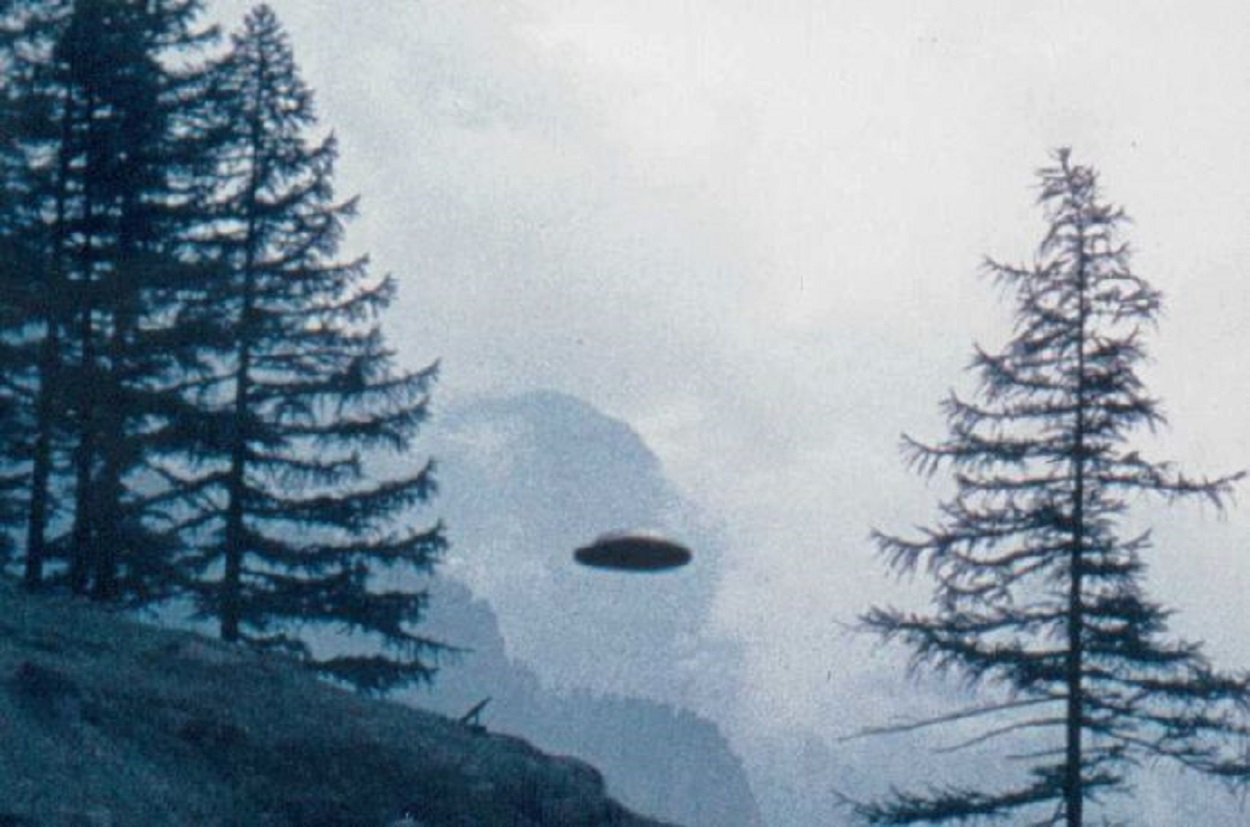
In July 1975, amidst the breathtaking vistas of the Swiss Alps, an intriguing photographic mystery emerged, capturing the imagination of UFO enthusiasts and skeptics alike. A black-and-white photograph, known as the “Saas-Fee picture,” depicts what appears to be a circular, metallic object hovering above the serene Swiss village of Zwischbergen. Decades later, this image has resurfaced on social media platforms such as #ufotwitter, igniting fresh debates about its authenticity and the potential existence of extraterrestrial visitors. The photograph’s provenance, combined with the enduring testimony of its witnesses, has made it a compelling subject in the history of UFO research. While some experts dismiss it as a cleverly staged hoax, others regard it as an authentic sighting that challenges our understanding of the universe. As the debate continues, the Saas-Fee image stands as a symbol of the enduring allure of the unexplained and the ongoing quest for truth in the realm of unidentified flying objects.

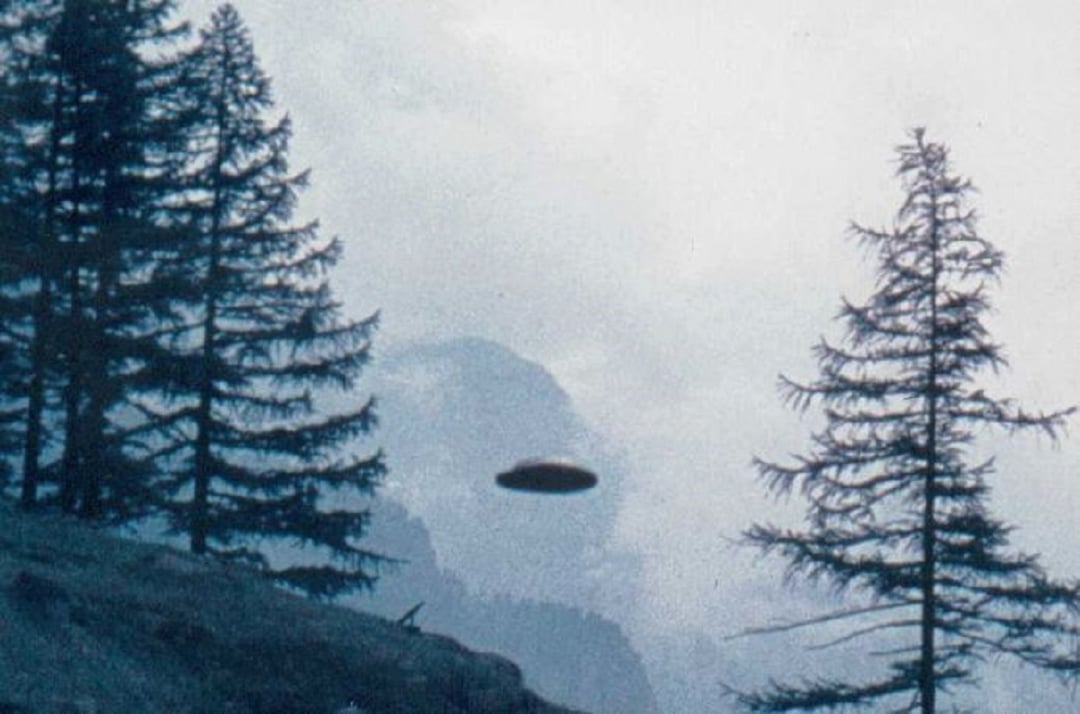
Close-up of the Saas-Fee UFO picture
The much publicized "Saas Fee" photo from 1975. The picture, taken not in Saas Fee but near the village of Zwischbergen, is a stereotype image of a "flying saucer"-type UFO from the seventies.
Incident Details
The origins of the Saas-Fee photograph trace back to a casual hiking adventure undertaken by three young men—two Dutch brothers identified only by the initials B and H, alongside their friend M. According to their accounts, during their second day of trekking in the Swiss Alps, around 3:00 p.m., they encountered an extraordinary phenomenon. The trio reported observing a “circular object” approximately 15 meters across, hovering at a distance estimated between 100 and 500 meters from their vantage point. The object’s description emphasized its dull grey, solid-metal exterior—a striking detail given the typically unpredictable atmospheric conditions of the Alpine region. The witnesses recounted that the craft did not seem to be affected by the wind or temperature fluctuations, adding a layer of mystery to their sighting.
The trio watched the object for several minutes, during which time they observed its movements and appearance before B decided to document the phenomenon with his camera. As B pressed the shutter button, he captured the now-famous black-and-white image. Interestingly, B recalled that immediately after the photograph was taken, the object abruptly moved, disappearing behind the mountain’s treetops. This rapid departure echoes many UFO encounter reports where the act of recording or observing the craft seems to prompt its swift departure. The witnesses have maintained their story steadfastly over the years, asserting that their experience was genuine and unaltered by external pressures or incentives. This consistency has distinguished their account from many other alleged sightings, fostering both intrigue and skepticism.
Several decades later, in multiple interviews, the witnesses reaffirmed their belief that what they saw was not a natural phenomenon, nor a man-made aircraft, but something extraordinary. Their firsthand account remains a cornerstone of the incident’s credibility among certain UFO aficionados. However, skeptics argue that initial impressions alone cannot determine the nature of the event, prompting the need for detailed analysis of the photographic evidence and contextual factors surrounding the sighting.
Photographic Examination
Since its circulation in the late 20th century, the Saas-Fee photograph has been the subject of numerous technical analyses, with researchers attempting to establish its authenticity. The image, taken with a standard 35 mm SLR camera—a common device during the 1970s—shows a clear circular shape with defined borders and uniform shading, suggesting a metallic surface. Experts have scrutinized various aspects, such as grain structure, exposure levels, and shadowing, to determine whether the photograph was manipulated or staged.

A closer view of the unidentified object.
One line of investigation focuses on the ambient lighting conditions and the physical environment captured in the image. The scene appears to have no obvious signs of digital alteration, which is unsurprising given the pre-digital era in which it was taken. Yet, some investigators argue that the background appears somewhat artificial or blurred, lacking the detailed depth expected from a genuine alpine landscape. This observation has led some to posit that the background could be a painted backdrop or a composite image, possibly inserted to lend credibility to the object.
Attempts to replicate the scene using period-appropriate equipment and models have yielded mixed results. In a notable 2005 experiment conducted by a European photographic society, researchers created a replica of the craft using a metal disc mounted on a remotely controlled drone or kite. The resulting images bore a striking resemblance to the original, but they also displayed a luminous halo of light around the replica, a feature not present in the original photograph. This discrepancy highlights the difficulty in conclusively determining whether the original was genuine or a skillful hoax.
Further analysis has involved examining the negative or print quality. High-resolution scans have failed to uncover any signs of digital or manual tampering, but the resolution and aging of the original negatives limit definitive conclusions. The lack of discernible background detail—such as the landscape’s texture or natural features—remains a significant point of debate among forensics experts. Some suggest that the photograph’s consistency with known period-correct film grain and exposure supports its authenticity, while others argue that it could be a carefully crafted model photograph taken under controlled conditions.
Photographers and image analysts continue to debate whether the level of detail, lighting, and composition points toward an authentic extraterrestrial craft or just an elaborate hoax. Without the original negatives or additional supporting evidence, the photograph’s true origin remains shrouded in ambiguity, embodying what Dr. Elena Marquez, a photographic historian at the University of Zurich, describes as “a perfect example of the gray zone in photographic validation—neither wholly convincing nor completely dismissible.”
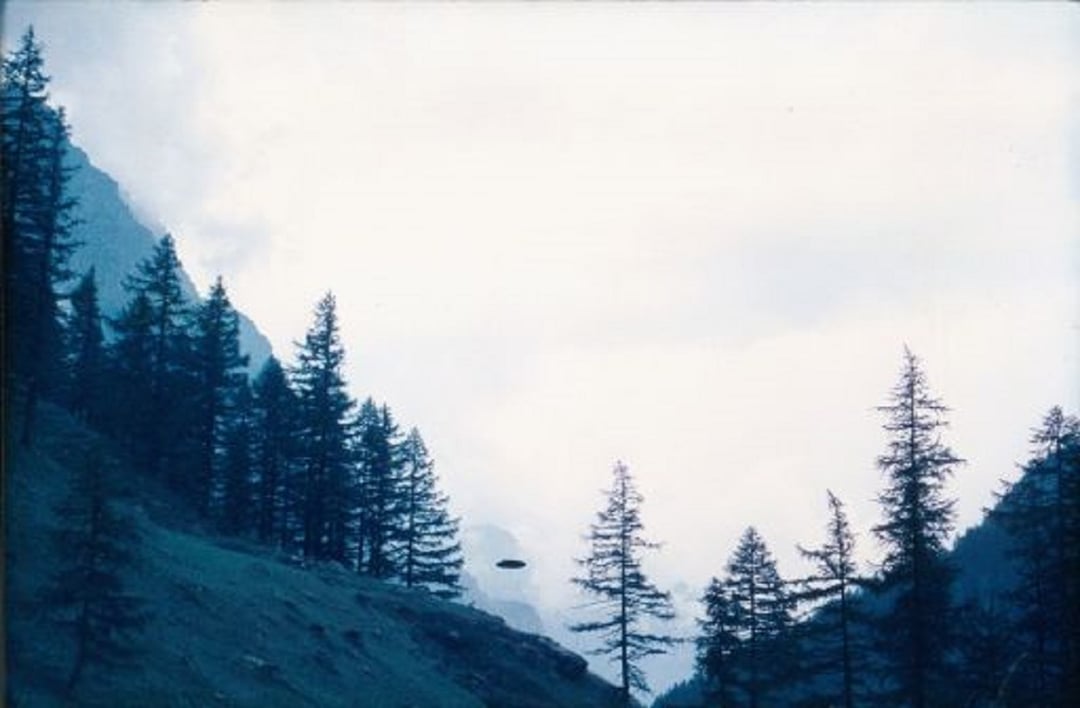

Super clear UFO photo taken in Saas-Fee, Switzerland on July 26, 1975.
by NetOne613
Expert Opinions
The contrasting perspectives surrounding the Saas-Fee photograph highlight the complex interplay between credulity and skepticism in UFO research. On one side, enthusiasts argue that the consistency in witness testimonies—despite the passage of almost fifty years—and the detailed description of the object lend credibility to the sighting. They point out that the witnesses have refused monetary offers to recant or alter their story, suggesting genuine conviction. The fact that these individuals have maintained their account despite public ridicule and the potential social pressures increases their credibility among believers.
Moreover, proponents emphasize the historical context of UFO sightings in the 1970s. The era was rife with media sensationalism, coinciding with a cultural fascination with “flying saucers” fueled by movies, books, and popular science fiction. This environment led some skeptics to argue that such sightings, including the Saas-Fee incident, could be attributable to hoaxes or imaginative interpretations of ordinary objects—such as aircraft, natural phenomena, or optical illusions—amplified by media influence. Nevertheless, proponents counter that the specific details of the sighting—such as the sudden disappearance upon photographing and the metallic symmetry—are atypical of mundane explanations.
Skeptics, including Dr. Hans Keller of the Swiss Institute for Critical Inquiry, stress the importance of applying rigorous scientific standards when evaluating such evidence. Keller points out that the visual style of the Saas-Fee image aligns with the sci-fi media prevalent during the 1970s, raising the risk of deliberate or subconscious mimicry. “The aesthetics of many purported UFO images from that era often resemble science fiction motifs,” Keller notes, “which complicates their authenticity unless corroborated by other data such as radar logs or physical traces.”
In contrast, some experts and investigators champion the credibility of part of the witnesses’ story, especially given their long-standing refusal to profit from their account. The Dutch UFO researcher Jan de Vries echoes this sentiment, stating, “The consistency over decades and their outright rejection of financial gain suggest they truly believed what they saw.” Yet, others caution that eyewitness accounts, no matter how steadfast, are inherently subjective and vulnerable to memory distortions, especially after so many years.
This divergence in expert opinions underscores the central challenge of UFO investigation: distinguishing genuine anomalous phenomena from artifacts of perception, fabrication, or cultural influence. The Saas-Fee case exemplifies this dilemma, illustrating how subjective witness testimony and limited photographic evidence can perpetuate ambiguity. Ultimately, most scientists advocate for a cautious approach, emphasizing the need for corroborative physical data—such as radar recordings, radar-visual matches, or physical traces—to substantiate or refute the sighting’s extraterrestrial nature.
Ongoing Debate
The Saas-Fee photograph remains a focal point in contemporary UFO discourse, serving as a testament to the enduring human fascination with the unknown. Its renewal on social media and in investigative circles has revitalized interest, prompting discussions about the nature of evidence and the limitations of photographic analysis. The core difficulty lies in determining whether this single image, taken with period-appropriate equipment and accompanied by consistent witness accounts, constitutes compelling proof of extraterrestrial visitation or if it is a product of hoax, misinterpretation, or coincidence.
One of the fundamental challenges in evaluating the photograph is the scarcity of supporting data. No original negatives are publicly available, and there are no accompanying radar logs, physical traces, or contextual information to verify the encounter. This absence restricts analysis and leaves open many possibilities. Some researchers have called for a thorough archival review—hoping that original film negatives, if they exist in any private collection, could shed light on the authenticity. Similarly, attempts to locate any physical remnants or traces in the area where the sighting occurred have been inconclusive.
The incident exemplifies a broader issue in UFO research: the reliance on anecdotal evidence and photographs that are prone to manipulation or misinterpretation. As technology advances, digital forensics provide new methods of analysis, but aged materials often lack the resolution or integrity needed for definitive conclusions. Meanwhile, the phenomenon persists—be it extraterrestrial, natural, or man-made—challenging the scientific community’s capacity to differentiate fact from fiction.
As the debate rages on, proponents advocate for a cautious but open-minded approach, emphasizing the importance of transparency, interdisciplinary research, and the search for corroborative physical evidence. Critics argue that without additional data, the photograph remains an intriguing anomaly but cannot be considered proof of an extraterrestrial craft. The debate exemplifies the tension at the heart of UFO investigations: a desire to uncover profound truths versus the necessity of empirical rigor.
Until new evidence surfaces—such as original negatives, radar logs, or possible physical artifacts—the Saas-Fee picture will likely continue to be debated, representing “a case too close to call” in the annals of UFO history. Its enduring mystery encapsulates the human desire to know the unknown and the careful skepticism needed to separate genuine phenomena from illusions or hoaxes. As such, the incident continues to inspire curiosity, investigation, and skepticism, highlighting the complex interplay between human perception, technological limitations, and the pursuit of truth in the cosmic frontier.
CONCLUSION
The Saas Fee photograph, purportedly capturing an unidentified flying object (UFO) in the Swiss Alps, has garnered significant attention both from the public and the scientific community. To analyze this phenomenon scientifically, one must consider various factors including image analysis, atmospheric conditions, natural and human-made objects, and the limitations of photographic evidence.
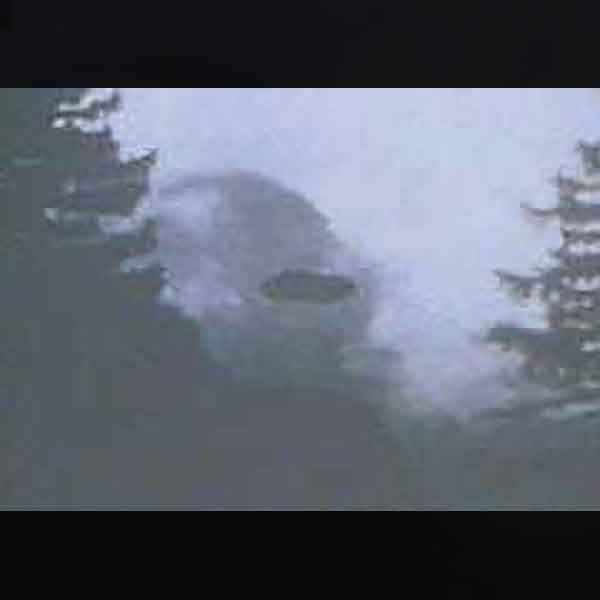
During a hunting expedition, a group of individuals encountered a low-hovering craft that glided quietly among the nearby trees. One member managed to capture a photograph of the object. Skeptic Wim Van Utrecht contended that the image might be fabricated.
Firstly, the object depicted in the photograph can be subjected to rigorous image analysis to determine its physical characteristics, such as shape, size, and movement. Advanced software can help identify anomalies or inconsistencies suggestive of tampering or digital manipulation. If the object appears to have features inconsistent with known aircraft or natural phenomena, further scrutiny is warranted.
Secondly, understanding the environmental context is essential. The Swiss Alps' weather conditions often cause optical illusions, such as lens flares, reflections, or atmospheric phenomena like clouds or ice crystals, which can produce visual artifacts resembling unidentified objects. High-altitude glaciers and snowfields can also reflect sunlight, creating bright spots or unusual shapes in photographs.
Thirdly, human-made objects should be considered. The region is frequented by helicopters, drones, or aircraft which, at certain angles and lighting conditions, can resemble UFOs. Additionally, the presence of military or scientific equipment, such as weather balloons or research balloons, can create similar visual signatures in aerial photographs.
Furthermore, photographic artifacts and camera limitations can generate optical illusions. For instance, lens aberrations, reflections within the camera lens, or digital artifacts arising from the image processing can produce unexpected shapes or anomalies. Such artifacts are often mistaken for genuine unidentified objects.
Evaluation of the original photographic data, including metadata and high-resolution scans, helps determine authenticity and identify possible causes of anomalies. If the image is a composite or has undergone digital editing, this diminishes its credibility as evidence of a UFO encounter.
Importantly, no verifiable physical evidence supports the existence of extraterrestrial craft in this region. The absence of corroborating observations, radar data, or sensor readings further constrains the hypothesis that the object is an extraterrestrial spacecraft.
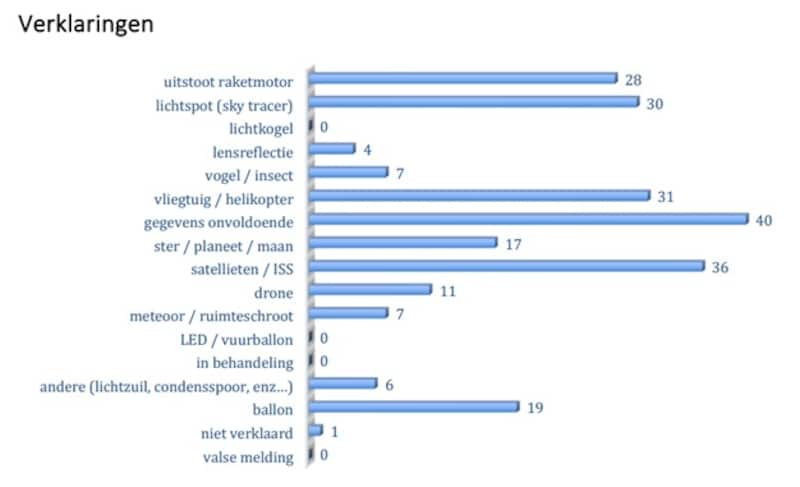
In summary, the "UFO" in the Saas Fee image can most plausibly be attributed to natural atmospheric phenomena, reflections, human-made objects, or photographic artifacts. Without concrete physical evidence or corroborating data, these explanations align with the scientific principle of parsimony, favoring natural or human-related causes over extraordinary ones. Thus, the photograph is best understood as an intriguing optical or photographic artefact rather than definitive proof of extraterrestrial activity.
{ PETER2011 }


 Newly discovered galaxy cluster could rewrite our understanding of the universe, experts say – as it burns five times hotter than expected