Did people report seeing UFOs before the 20th century?
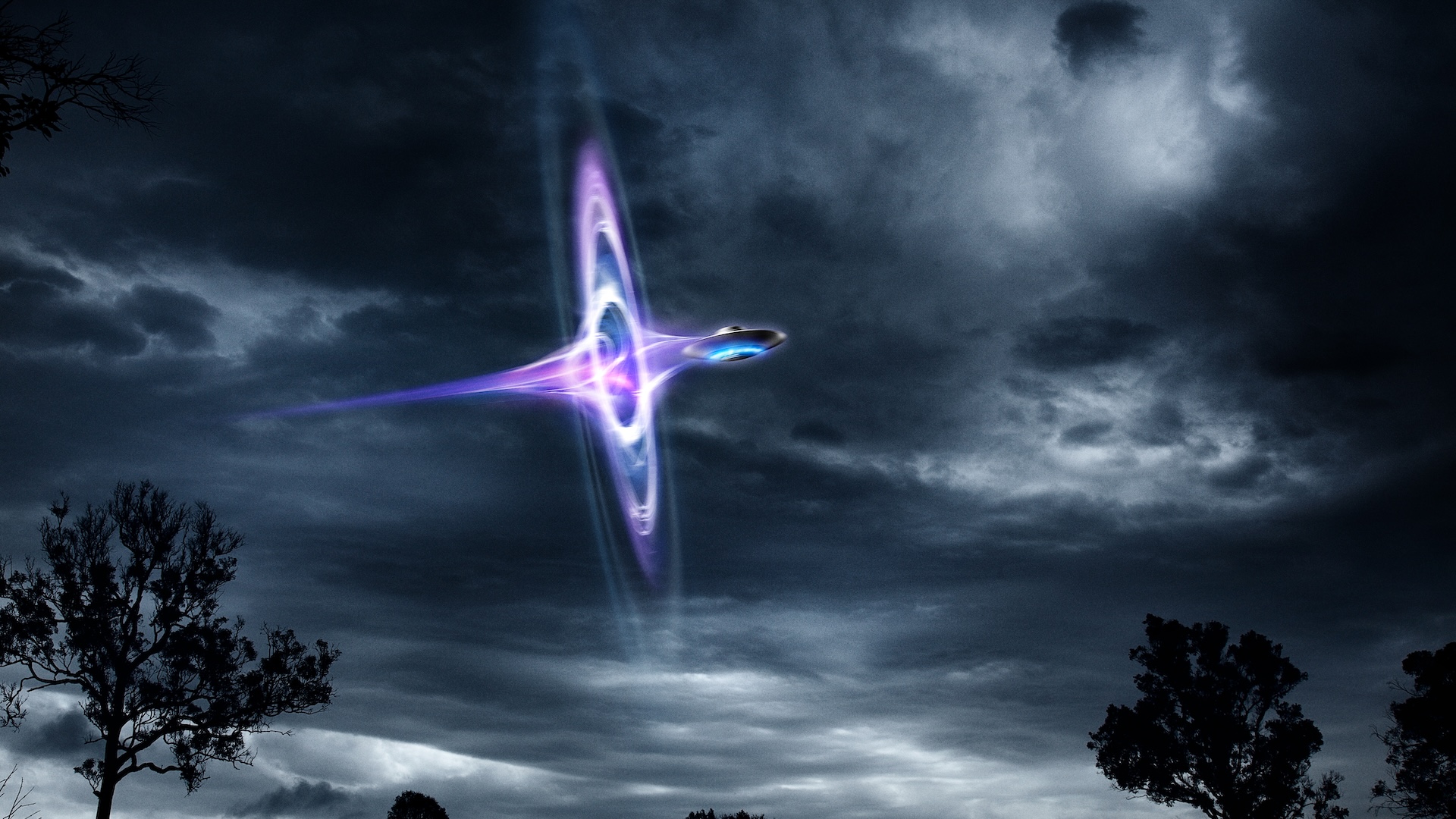
Did people report seeing UFOs before the 20th century?
Did earlier civilizations report seeing UFOs?
(Image credit: Aaron Foster via Getty Images)
The phenomenon of unidentified flying objects, or UFOs, has long fascinated humanity. From ancient times to the modern era, countless individuals across different cultures and eras have reported strange sightings in the sky. While the term "UFO" and the contemporary scientific approach to these phenomena are relatively modern inventions, accounts of mysterious aerial objects and unexplained lights have existed for centuries. This article explores whether people before the 20th century reported seeing UFOs, examining historical records, cultural interpretations, and the evolution of the phenomenon over time.
Ancient and Medieval Accounts of Unexplained Aerial Phenomena
Long before the advent of modern aviation, humans looked up at the sky and interpreted unusual sights through the lens of their cultural, religious, and mythological frameworks. Many ancient texts and artworks contain references that can be interpreted as descriptions of strange aerial phenomena.
Ancient Civilizations and Sky Phenomena
- Mesopotamia:
The cradle of civilization, Mesopotamian cultures such as the Sumerians, Akkadians, Babylonians, and Assyrians, left behind a rich tapestry of mythological texts and cuneiform inscriptions. Some of these writings mention celestial objects and phenomena that appear to be beyond natural explanation. For example, the "Epic of Gilgamesh" references celestial lights and unusual skies, though these are often interpreted symbolically or mythologically rather than as sightings of physical objects. - Ancient Egypt:
Egyptian hieroglyphs and texts frequently depict the sky as populated with gods, stars, and otherworldly entities. Some scholars have suggested that certain images of flying chariots or celestial ships could be interpreted as early UFO sightings. For example, depictions of solar barques and celestial boats in tombs and temples may symbolize divine journeys, but some interpret them as possible representations of aerial phenomena. - Ancient China:
Chinese historical texts from thousands of years ago record numerous accounts of unusual sky phenomena, such as "guest stars" (novae and supernovae), comets, and mysterious lights. The "Book of Han" (2nd century CE) describes strange objects in the sky, which to ancient observers might have appeared as flying crafts or celestial visitors. - Ancient Greece and Rome:
Classical writers such as Pliny the Elder, Cicero, and Lucian of Samosata mention strange lights and flying objects. For example, Pliny’s "Natural History" describes fiery chariots and luminous bodies in the sky. Lucian’s satirical texts mention "chariots of the gods" and "flying shields," which may reflect observations of atmospheric phenomena or mythological allegories.
Medieval and Renaissance Reports
During the Middle Ages, reports of unusual aerial phenomena persisted, often intertwined with religious and superstitious interpretations.
Medieval Europe
- Fireballs and mysterious lights:
Medieval chronicles often mention "fiery disks" or "balls of fire" seen in the sky, sometimes associated with omens or divine signs. For example, the "Annales of Saint-Bertin" (9th century) record sightings of strange lights during battles or significant events. - The "Mysterious Flying Shields":
In 14th-century Europe, some accounts describe "flying shields" or "phantoms" seen in the sky, which contemporary scholars sometimes interpret as atmospheric reflections or natural phenomena, but which could also have been early reports of unidentified aerial objects.
Renaissance and Early Modern Period
The Renaissance brought a renewed interest in astronomy and natural phenomena. However, the period also saw reports of strange lights and craft.
- The Nuremberg Celestial Phenomenon (1561):
One of the most famous pre-20th-century UFO reports is the "Nuremberg Celestial Phenomenon," documented in a broadsheet newspaper published in 1561. It describes a sky filled with numerous orbs, crosses, and other shapes engaging in a celestial battle. Witnesses reported seeing "many globes" moving across the sky, changing colors, and interacting in strange ways. While some interpret this as a natural atmospheric event or a religious allegory, others see it as an early sighting of unidentified flying objects. - The Kepler Incident (1594):
The astronomer Johannes Kepler recorded an unusual sighting involving a "small, bright, and moving star" that appeared in the sky and then disappeared. While likely a meteor or atmospheric phenomenon, such accounts contribute to the long history of strange sky sightings.
The 17th and 18th Centuries
As scientific understanding of the cosmos expanded, so did the recording of unusual sightings, often with more detailed descriptions.
- The Aurora Borealis:
Northern lights have been observed for centuries and often mistaken for mysterious aerial displays. In many historical accounts, the aurora was seen as a divine or supernatural sign, but to modern observers, it is understood as a natural atmospheric phenomenon. - Unidentified Lights and Apparitions:
Throughout the 17th and 18th centuries, reports of strange lights persisted. For instance, in 1719, a report from the English coast described "bright, moving lights" in the sky, which could have been early observations of meteors, atmospheric reflections, or unexplained craft. - Ball Lightning and Other Natural Phenomena:
Many reports of strange aerial phenomena during this period have been attributed to natural causes like ball lightning, meteors, or atmospheric reflections. However, some reports remained unexplained and could be considered early UFO sightings.
19th Century: The Precursors to Modern UFO Sightings
The 19th century saw a surge in reports of strange aerial phenomena, coinciding with advances in scientific instrumentation, increased observations, and a growing public interest in science and exploration.
Early Ballooning and Aerial Experiments
- Hot Air Balloons:
The advent of balloon flight in the late 18th and early 19th centuries introduced new aerial phenomena that observers sometimes misinterpreted. Balloons drifting across the sky appeared strange to those unfamiliar with the technology, leading to reports of mysterious "flying ships" or "aircraft." - Aerial Spectacles and Phenomena:
In 1804, the "Great Moon Hoax" in New York newspapers captivated the public with stories of life on the moon, but also reflected the fascination with celestial and aerial phenomena. Similarly, the rise of aviation experiments, including early gliders and aircraft, led to more reports of unidentified flying objects.
Notable 19th Century Sightings
- The Vevay, Indiana, Sightings (1800s):
Multiple reports from the early 1800s describe strange lights and disks seen over Indiana. Such sightings were often dismissed at the time as natural or atmospheric phenomena. - The Aurora and Unexplained Lights:
Throughout the 19th century, reports of luminous objects in the sky, including the Aurora Borealis and Aurora Australis, were common. While natural, some reports involved shapes and movements that puzzled observers. - The Mount Washington UFO (1800s):
In the late 19th century, there are reports of strange lights and disks over Mount Washington in New Hampshire, which some interpret as early UFOs.
The 20th Century and the Birth of Modern UFO Phenomenon
While the question focuses on whether people reported seeing UFOs before the 20th century, it is impossible to ignore the pivotal role that early 20th-century sightings played in shaping modern perceptions of UFOs. The famous 1947 Kenneth Arnold sighting, which gave rise to the term "flying saucers," was preceded by a long history of similar reports.
- Cultural and Interpretative Variations
Throughout history, interpretations of strange sky phenomena have varied widely depending on cultural context.
- Religious Interpretations:
Many ancient and medieval reports framed mysterious aerial phenomena as divine signs, celestial battles, or messages from gods. These interpretations reflect the worldview of the time, often seeing such phenomena as supernatural or divine rather than unexplained natural or technological events. - Mythological and Allegorical Accounts:
Stories of flying chariots, celestial ships, and divine messengers often served as allegories for spiritual or moral lessons, but they also may encode observations of natural phenomena.
Natural Explanations vs. Unexplained Sightings:
Many historical accounts are now understood as natural phenomena—meteors, atmospheric reflections, planets, or atmospheric optical effects. However, some reports remain unexplained, especially when descriptions are vague or sensational.
Limitations and Challenges in Interpreting Historical Accounts
Interpreting pre-20th-century sky sightings as UFO reports is complicated by several factors:
- Lack of Verification: Many accounts are anecdotal, lacking corroboration or detailed descriptions.
- Cultural Filters: Interpretations are heavily influenced by contemporary beliefs, religious views, and scientific understanding.
- Terminology: The language used in historical texts often differs from modern descriptions, making it challenging to classify sightings accurately.
- Natural Phenomena: Many sightings are likely natural atmospheric or celestial phenomena misinterpreted due to limited scientific knowledge.
Conclusion: Were There Reports of UFOs Before the 20th Century?
Based on historical records, cultural narratives, and scientific analysis, it is clear that humans have reported strange aerial phenomena for millennia. These accounts, spanning from ancient civilizations to the Renaissance, often described lights, craft-like objects, or strange shapes in the sky, which today could be considered early UFO sightings.
While many of these reports can be explained by natural phenomena or mythological symbolism, some remain unexplained or ambiguous, suggesting that the phenomenon of unidentified aerial observations is as old as human civilization itself. The interpretations of these sightings have evolved over time—from divine signs and mythic symbols to potential evidence of extraterrestrial visitation.
In essence, yes, people before the 20th century did report seeing objects or phenomena in the sky that they could not readily explain. Whether these were actual physical objects, atmospheric effects, or cultural expressions, they contribute to the long and complex history of humanity’s fascination with the skies and the mysterious entities that inhabit them.
References & Further Reading:
- Clodd, Edward. The Story of the Heavens. (1913)
- Keel, John. The Mysterious Universe. (1977)
- Ruppelt, Edward. The Report on Unidentified Flying Objects. (1956)
- Hynek, J. Allen. The UFO Experience: A Scientific Inquiry. (1972)
- McNeill, William H. The Shape of the Sky: An Introduction to the History of Astronomy. (1984)
- Historical newspapers and chronicles, including the Nuremberg Celestial Phenomenon (1561)
Final thoughts:
The phenomenon of UFO sightings is deeply rooted in human history. While the context and interpretations have shifted over centuries, the fundamental human curiosity about the unknown in the skies remains unchanged. Recognizing these ancient accounts enriches our understanding of the longstanding human engagement with unexplained aerial phenomena.
{PETER2011 }