Naar de inhoud

UFO'S of UAP'S, ASTRONOMIE, RUIMTEVAART, ARCHEOLOGIE, OUDHEIDKUNDE, SF-SNUFJES EN ANDERE ESOTERISCHE WETENSCHAPPEN - DE ALLERLAATSTE NIEUWTJES

UFO's of UAP'S in België en de rest van de wereld
seniorennet.beseniorennet.be
Ontdek de Fascinerende Wereld van UFO's en UAP's: Jouw Bron voor Onthullende Informatie! Ben jij ook gefascineerd door het onbekende? Wil je meer weten over UFO's en UAP's, niet alleen in België, maar over de hele wereld? Dan ben je op de juiste plek! België: Het Kloppend Hart van UFO-onderzoek In België is BUFON (Belgisch UFO-Netwerk) dé autoriteit op het gebied van UFO-onderzoek. Voor betrouwbare en objectieve informatie over deze intrigerende fenomenen, bezoek je zeker onze Facebook-pagina en deze blog. Maar dat is nog niet alles! Ontdek ook het Belgisch UFO-meldpunt en Caelestia, twee organisaties die diepgaand onderzoek verrichten, al zijn ze soms kritisch of sceptisch. Nederland: Een Schat aan Informatie Voor onze Nederlandse buren is er de schitterende website www.ufowijzer.nl, beheerd door Paul Harmans. Deze site biedt een schat aan informatie en artikelen die je niet wilt missen! Internationaal: MUFON - De Wereldwijde Autoriteit Neem ook een kijkje bij MUFON (Mutual UFO Network Inc.), een gerenommeerde Amerikaanse UFO-vereniging met afdelingen in de VS en wereldwijd. MUFON is toegewijd aan de wetenschappelijke en analytische studie van het UFO-fenomeen, en hun maandelijkse tijdschrift, The MUFON UFO-Journal, is een must-read voor elke UFO-enthousiasteling. Bezoek hun website op www.mufon.com voor meer informatie. Samenwerking en Toekomstvisie Sinds 1 februari 2020 is Pieter niet alleen ex-president van BUFON, maar ook de voormalige nationale directeur van MUFON in Vlaanderen en Nederland. Dit creëert een sterke samenwerking met de Franse MUFON Reseau MUFON/EUROP, wat ons in staat stelt om nog meer waardevolle inzichten te delen. Let op: Nepprofielen en Nieuwe Groeperingen Pas op voor een nieuwe groepering die zich ook BUFON noemt, maar geen enkele connectie heeft met onze gevestigde organisatie. Hoewel zij de naam geregistreerd hebben, kunnen ze het rijke verleden en de expertise van onze groep niet evenaren. We wensen hen veel succes, maar we blijven de autoriteit in UFO-onderzoek! Blijf Op De Hoogte! Wil jij de laatste nieuwtjes over UFO's, ruimtevaart, archeologie, en meer? Volg ons dan en duik samen met ons in de fascinerende wereld van het onbekende! Sluit je aan bij de gemeenschap van nieuwsgierige geesten die net als jij verlangen naar antwoorden en avonturen in de sterren! Heb je vragen of wil je meer weten? Aarzel dan niet om contact met ons op te nemen! Samen ontrafelen we het mysterie van de lucht en daarbuiten.

The 2029 Asteroid threat: how the world is preparing for Apophis’s visit

The 2029 Asteroid threat: how the world is preparing for Apophis’s visit

The asteroid Apophis will pass by Earth in 2029 at a distance closer than some communications satellites—and this flyby is pushing private companies to take on some of the responsibility for planetary defense. A California-based startup has announced the first commercial mission to the asteroid in deep space, which is set to accompany Apophis before and after its close approach to Earth.

Illustration of asteroid Apophis passing by Earth in 2029 at a distance of approximately 32,000 km. Source: ESA Science Office / Earth added in Canva Pro via Space.com

What is the Apophis EX mission?

The startup ExLabs presented the Apophis EX project at the 41st Space Foundation Space Symposium, held in Colorado Springs from April 13–16, 2026. 

The plan is for the spacecraft to intercept Apophis as it approaches Earth, collect scientific data on its dynamics and physical characteristics, and then track it after it passes by. Specifically, this data is intended to be used to refine collision risk models and develop strategies for avoiding hazardous objects.

Why planetary protection needs business

James Orsulak, co-founder of ExLabs and president of the Planetary Protection Foundation, speaks candidly about the limitations of government funding. “NASA’s planetary defense budget is less than one percent of the total space agency. That’s not enough to ever do anything,” he said. 

Former NASA Administrator Jim Bridenstine, who also participated in the symposium, supported the idea that the government should become one of the customers of the commercial market, rather than the sole player. Competition among private suppliers lowers costs and accelerates innovation.

What are our options?

During a panel discussion, Edward Lu—a former NASA astronaut, director of the Asteroid Institute, and co-founder of the B612 Foundation—emphasized that there was no single best technology for deflecting asteroids. On the table are gravitational tugs, ion beams, kinetic impacts, nuclear explosions, and other approaches. 

The choice of method depends on the specific situation, and all of these approaches require practical application, not just theoretical calculations. “High flight frequency ensures safety, reliability, and cost savings. We are approaching the point where we will be able to build a spacecraft in a year. This is entirely feasible,” said Lu.

Apophis Live

The mission’s organizers want to turn the 2029 flyby into an event of global significance—literally. ExLabs is in talks to broadcast the event in IMAX format and live. 

According to him, the audience could exceed that of the Super Bowl. Apophis, by the way, will be visible to the naked eye—a rare occurrence for an object of that size.

We previously wrote about the Chinese mission to Apophis.


The Real Danger of Asteroid Apophis : What You Need to Know

Asteroid Apophis 2029 The REAL Threat You Need to Know About

{ https://universemagazine.com/en/articles-en/ }

Hoe vind je dit bericht?
Geschreven door peter om 22:27 Stuur door

The Structure of the Milky Way: An Examination of Our Galactic Organization

The Structure of the Milky Way: An Examination of Our Galactic Organization

The bright band that stretches across the night sky on a clear night is neither a cloud nor a nebula. There are billions of stars. And all of them, together with our Sun, are part of a single gigantic structure – the Milky Way galaxy. We live inside it. And that is precisely what makes studying it so challenging and so fascinating.

A model image of the Milky Way viewed from above the disk – the spiral arms and the central bulge are visible. Source: ESA / Gaia / DPAC, Stefan Payne-Wardenaar — esa.int

Imagine you were asked to describe the city where you live, but you were not allowed to leave your apartment or look out the window. This is exactly the situation astronomers found themselves in when they first began seriously studying the Milky Way. We are inside the Galaxy, approximately 26,000 light-years from its center, and we have no telescope that could be positioned beyond its boundaries. Everything we know about the structure of our cosmic home is the result of observations from within, mathematical models, and, ultimately, the detective work of several generations of scientists.

How did we even realize that we live in a galaxy?

For a long time, people did not know that the band in the sky was made up of billions of individual stars. Galileo Galilei took the first step in 1610 when he pointed his telescope at the Milky Way and saw countless stars that are invisible to the naked eye. But it is one thing to see the stars, and quite another to understand how they are arranged in space.

The Milky Way above the horizon of Cerro Paranal in Chile, home to the European Southern Observatory’s Very Large Telescope (VLT). Source: ESO

In 1785, British astronomers William Herschel and his sister Caroline attempted to map the Milky Way by counting stars. They pointed their telescope at more than 600 different sections of the sky and counted how many stars were visible in each direction. The logic was simple: where there were more stars, the Milky Way must be wider. The result was the first quantitative map of the Milky Way – and according to it, the entire galaxy was supposed to be only about 6,000 light-years in diameter, whereas its actual size exceeds 100,000. And we found ourselves almost at its center. Herschel simply did not know that there was dust between the stars that absorbs light and prevents us from seeing distant objects. That is precisely why the number of visible stars in all directions was roughly the same – hence the illusion that we are at the center.

William Herschel’s Map of the Milky Way (1785). This was the first attempt to graphically depict the shape of our galaxy based on a count of stars, with the Sun located near the center of the model.
Source: Philosophical Transactions of the Royal Society of London

A true breakthrough occurred at the beginning of the 20th century. American astronomer Harlow Shapley turned his attention to globular clusters – huge groups of tens and hundreds of thousands of stars that are visible much farther away than individual stars. He measured the distances to 93 such clusters and discovered something unexpected: they are all distributed unevenly and concentrated on one side of the sky – in the direction of the constellation Sagittarius. If the clusters surround the center of the Galaxy, then that is where it must be. But the Sun is not there at all. Shapley showed that we are far from the center of our own galactic home.

Radio telescopes helped to finally reveal the structure of the Milky Way. Unlike visible light, radio waves pass through interstellar dust. In the 1950s, astronomers began mapping the Galaxy using the radio emissions of neutral hydrogen, and it was in this way that its spiral structure was first reliably confirmed in 1953.

An image of the center of the Milky Way captured by the MeerKAT radio telescope. Radio waves allow us to see through dense dust clouds, revealing unique magnetic filaments and turbulent processes around the galaxy’s core. Source: SARAO

Construction: bar, disc, and arms

The Milky Way is a spiral galaxy with a bar. At its center lies not just a cluster of stars, but an elongated bar that stretches for tens of thousands of light-years, with spiral arms extending from its ends. This structure is found in about two-thirds of spiral galaxies. The presence of a bar in the Milky Way was confirmed by NASA’s Spitzer Space Telescope in 2005, revealing that it is larger than previously thought.

A disk extends around the bar – a flat, rotating structure where most of the Galaxy’s stars and gas are concentrated. The disk has a diameter of about 100,000 light-years, while its thickness in the region of the spiral arms is only about 1,000 light-years. Astronomers distinguish between the thin disk, where young stars and active star formation are concentrated, and the thick disk, which contains older stars.

The spiral arms rotate along with the Galaxy, but they are not rigid structures. They are more like density waves: regions of concentrated gas and dust where new stars are actively forming, shining very brightly, albeit for a short time. That is why the arms are so bright. There are also a large number of stars between the arms, but they are older and dimmer, so they do not create such a distinct pattern.

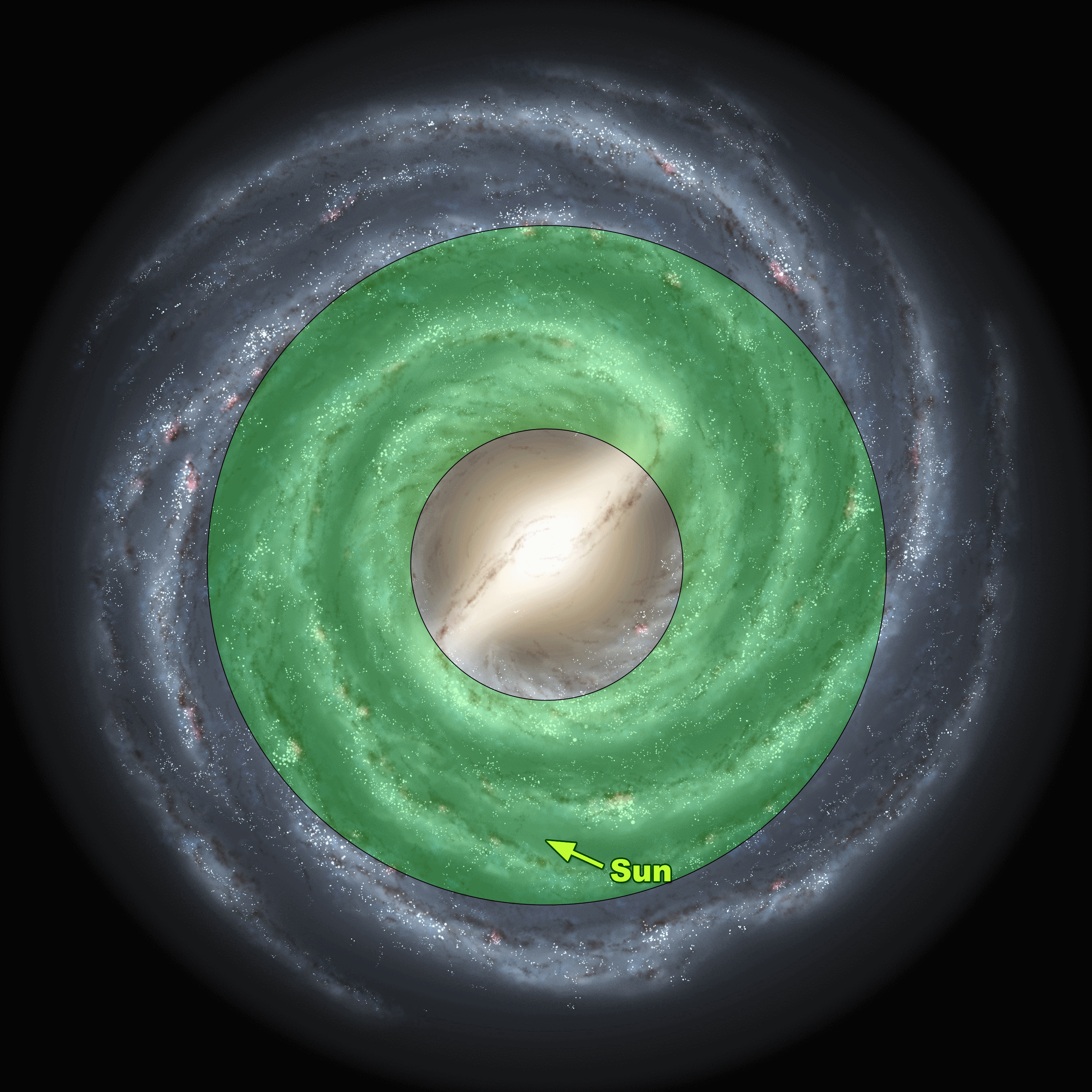
A modern model of the Milky Way’s structure, based on data from the Spitzer Space Telescope. The image shows the main arms, the central bar, and the Sun’s location in the Orion Arm. Source: NASA / JPL-Caltech. Source: Wikipedia

The Milky Way disk is not perfectly flat – at its periphery, it exhibits a distinct S-shaped warp, resembling a warped vinyl record. Astronomers have been aware of this phenomenon since the 1950s. Data from the European Space Agency’s (ESA) Gaia mission has revealed that this warp is not static – it slowly rotates, completing one full rotation every 600-700 million years. The most likely cause is the gravitational influence of a smaller galaxy colliding with ours. One of the candidates is believed to be the Sagittarius Dwarf Galaxy.

But even now, our picture of our own galactic home remains incomplete. The disk plane, filled with dust and gas, blocks our view in visible light – this region is called the zone of avoidance. It covers about 20% of the visible sky, effectively shielding everything beyond it from optical telescopes. What exactly lies there – individual galaxies or colossal structures such as the Great Attractor – can only be determined through radio and infrared observations. The complete picture of this part of the cosmos remains fragmented to this day.

Our galactic address

But before we delve into how the Galaxy is structured, it is worth understanding exactly where we are located within it. To be precise, our address in the Universe is roughly as follows: the Orion Arm, the Milky Way, the Local Group, the Virgo Supercluster, and the Laniakea Supercluster.

Begin with the closer one. The Sun is located in the Orion Arm – a relatively small spiral arm between two larger arms: the Perseus Arm (on the outer edge) and the Sagittarius-Carina Arm (closer to the center). We are about 26,000 light-years from the center of the Galaxy – roughly half the radius of the visible disk. Neither the center nor the periphery.

This is significant not only in an abstract sense. Astronomers identify what is known as the galactic habitable zone – a region at a certain distance from the center where conditions are considered most favorable for the existence of planets rich in complex carbon-based compounds. Too close to the core means intense radiation and a high density of stars with frequent dangerous events. Too far away means a lack of heavy elements necessary for the formation of rocky planets. The Sun is located roughly within this zone.

The galactic habitable zone in the Milky Way. Source: NASA / JPL-Caltech

Our Sun does not stand still – it orbits the center of the Milky Way at a speed of about 828,000 km/h. Despite this speed, a single full orbit takes approximately 230 million years. Astronomers have even given this cycle a name – the galactic year. Over the course of Earth’s existence, our solar system has only managed to circle the center of the Galaxy about 20 times. When our star last completed this cycle, the first dinosaurs had just appeared on Earth, and the supercontinent Pangea had begun to break apart.

The motion of the Solar System within the Milky Way. Our Sun completes one full orbit around the galactic center in approximately 225-250 million years. Source: NASA / JPL-Caltech

The Heart of the Galaxy: Sagittarius A*

Hidden at the very center of the Milky Way is an object that cannot be seen directly – a thick cloud of gas and dust, opaque to visible light, stands between us and it. But astronomers have determined what lies there by other means.

A new view of the supermassive black hole at the center of our galaxy, showing the structure of the magnetic fields around its “shadow.” Source: EHT Collaboration, via eso.org

Since the 1990s, telescopes have been tracking the movements of stars in the immediate vicinity of the galactic center. We call them S-stars, and they move extremely fast. One of them, S2, completes a full orbit in 16 years, accelerating at its closest point to nearly 3% of the speed of light. Another, S4714, reached 8% of the speed of light at its closest approach to Sagittarius A* – at a distance comparable to that between the Sun and Saturn. It was these observations that convinced the scientific community: a supermassive compact object is located at the center of the Galaxy. For this discovery, Reinhard Genzel and Andrea Ghez were awarded the 2020 Nobel Prize in Physics.

Calculations have shown that to keep S-stars on such trajectories, there must be an object at the center with a mass of about 4 million solar masses, compressed into a very small volume. This is Sagittarius A*– a supermassive black hole. In May 2022, the international Event Horizon Telescope collaboration published the first direct image: a ring of light surrounding a dark shadow – the shadow of the black hole itself.

The center of the Galaxy is an extremely dynamic place. In addition to Sagittarius A*, it contains dense molecular clouds, clusters of young massive stars, and, according to researchers, black holes formed from individual massive stars. A detailed picture of this region is still being refined.

Halos and absorption lines

The Milky Way is not just a disk with spiral arms. Encircling this entire structure is a galactic halo – a sparse spherical region containing old, isolated stars and globular clusters – that extends far beyond the visible disk.

An artist’s illustration depicting the external structure of the Milky Way: from the central bulge to the stellar streams in the halo. The image is based on scientific data from NASA/ESA

It is within the halo that traces of the galaxy’s past have been preserved. The Gaia mission helped reveal that approximately 10 billion years ago, the Milky Way absorbed a smaller galaxy, which researchers have named Gaia-Enceladus. Traces of this merger – the characteristic motion of large groups of stars within the halo – can still be detected in observational data. This is not the only such absorption in the history of the Galaxy, as it gradually accumulated its mass by incorporating smaller neighbors.

The Milky Way also contains about 150 known globular clusters – dense spherical groups of hundreds of thousands of old stars orbiting the Galaxy in elongated orbits. It is these clusters that have been key to understanding the true size of the Milky Way – astronomer Harlow Shapley used their distribution to determine the location of the Galaxy’s center.

Today, several satellite galaxies orbit the Milky Way. The most prominent of these are the Large and Small Magellanic Clouds, which are visible to the naked eye from the Southern Hemisphere. These are small structures gravitationally bound to us. The Sagittarius Dwarf System is also part of this family, and, according to research, has crossed our disk several times, leaving behind stellar streams – long chains of stars stretched out by gravity. Gaia has detected over a hundred such structures – silent witnesses to billions of years of accretion.

Age and place, among others

The Milky Way is one of the oldest members of the Local Group. The oldest stars in it are about 13.6 billion years old – almost as old as the universe itself. Yet its formation is still not complete.

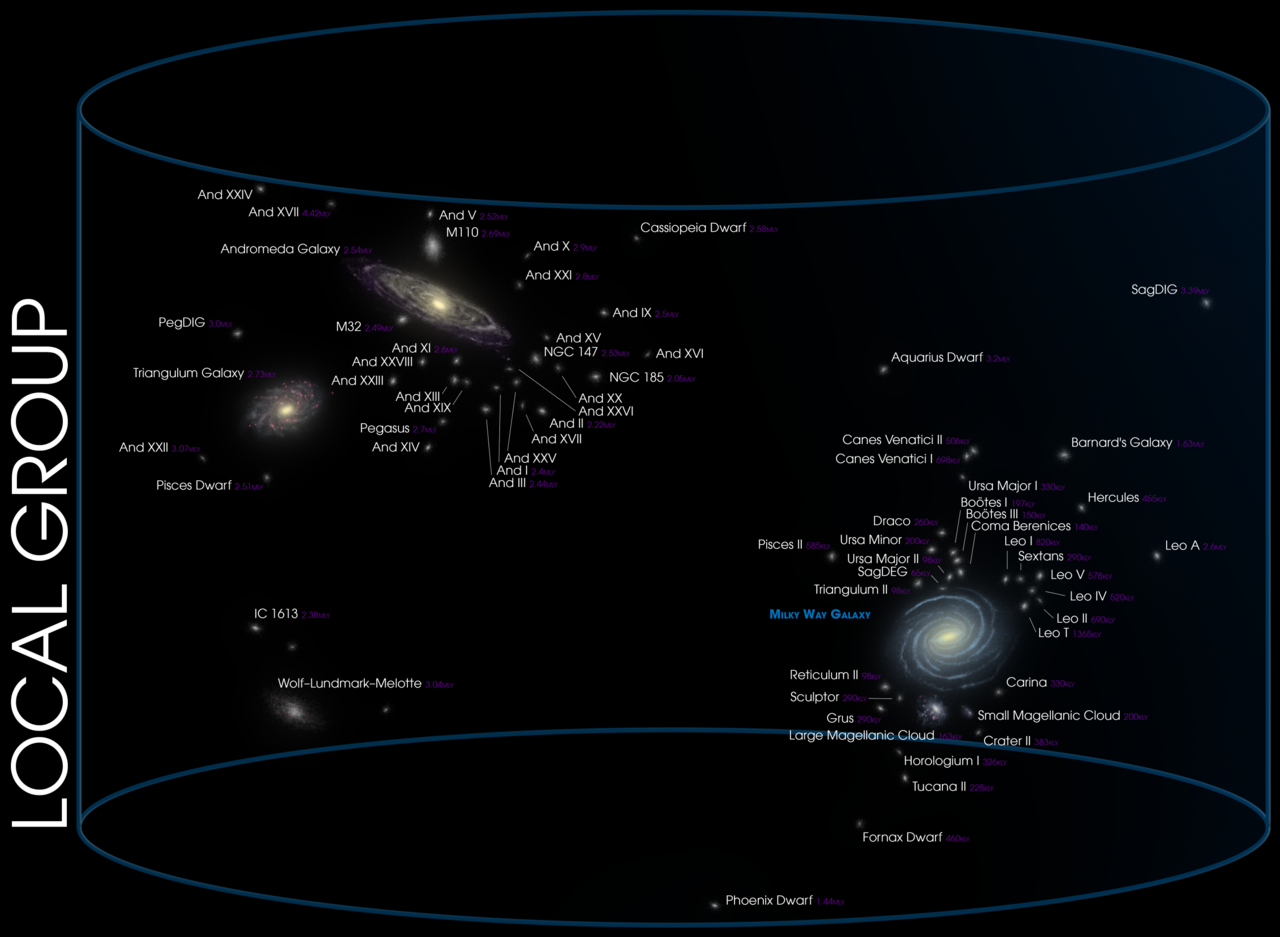
In terms of size, the Milky Way is a large galaxy containing, according to various estimates, between 100 and 400 billion stars. We are the second-largest member of the Local Group – a gravitationally bound family of more than fifty predominantly dwarf galaxies. The largest galaxy in this group is Andromeda, and it is steadily approaching us. Our group is part of the Virgo Supercluster, which in turn is part of an even larger structure – the Laniakea Supercluster, with a diameter of about 500 million light-years.

Layout and composition of the Local Group of galaxies. Source: NASA / Andrew Z. Colvin.
English version: uk.wikipedia.org

The Andromeda Galaxy and the Milky Way are approaching each other at a speed of about 110 km/s, or 396,000 km/h. Every hour, they cover a distance nearly equal to the distance from Earth to the Moon. It was long believed that a collision was almost inevitable and would occur in about 4-4.5 billion years. However, a 2025 study combining data from the Hubble and Gaia telescopes showed that the probability of a direct collision within this timeframe is only about 2%. In roughly half of the computer simulations, the two giants fly past each other and may only gradually merge under the influence of gravity. The future of our galactic home remains an open question.

An artist’s illustration of the early stages of interaction between the Milky Way and the Andromeda Galaxy. The image is based on scientific models from NASA/ESA

The invisible skeleton

Astronomers have long noticed something strange: stars at the edges of the Milky Way move just as fast as those much closer to the center. According to Newton’s law of universal gravitation and Kepler’s laws, velocity should decrease as the distance from the center of mass increases.

In planetary systems, it makes perfect sense: the farther a planet is from its central star, the slower it moves. This is exactly how Neptune moves compared to Mercury. For a galaxy where most of the visible mass is concentrated at the center, the same rule should apply – stars at the edges should rotate more slowly than those closer to the core.

But they aren’t slowing down. In the 1970s, American astronomer Vera Rubin, along with her colleague Kent Ford, measured the velocities of stars in spiral galaxies and discovered something unexpected: stars on the outskirts were moving at the same speed as those in the center. The graph of these speeds should have dropped toward the edges, but it remained flat. Rubin checked dozens of galaxies. The pattern repeated itself. “What you see in a spiral galaxy,” she said, “is not what you get.”

There is one explanation: in addition to visible matter, galaxies contain a vast amount of invisible mass – dark matter. It neither emits nor reflects light, but it has mass and, therefore, gravity. It is dark matter that keeps the stars from flying apart and produces the flat rotation curve that Rubin discovered.

An artist’s rendering of a dark matter halo forming a structure (“skeleton”) around the Milky Way

According to current estimates, dark matter accounts for about 85% of a galaxy’s total mass. It forms a gigantic invisible halo around the visible disk – a dark matter halo – which, according to calculations, can extend for nearly 2 million light-years. This is approximately 20 times larger than the diameter of the visible disk.

Exactly what dark matter is remains unknown. No one has yet managed to directly detect any of the particles that make it up. This is one of the biggest unresolved questions in modern physics.

The map is not yet complete

In 2025, the Gaia satellite completed its active phase of surveying the sky. Over the course of eleven years of operation, it recorded more than three trillion measurements of approximately two billion stars – the most accurate three-dimensional map of the Milky Way ever created. The next major data release, Gaia DR4, is expected in 2026.

A view of the entire sky from the Gaia mission, showing the brightness and color of stars. Credit: ESA / Gaia / DPAC. Acknowledgment: A. Moitinho. License: CC BY-SA IGO 3.0, available at esa.int

And yet, even now, the picture is far from complete. The exact number of spiral arms, the detailed structure of the central region, and the full distribution of dark matter – all of these are still being refined. As one of the mission’s scientific visualizers noted: “Distant parts of the Milky Way remain educated guesses based on incomplete data.”

The Milky Way has been studied from the inside for several hundred years. Each new generation of instruments reveals details that their predecessors could not see. The next release of Gaia data will change some of what we currently believe to be known.


The Milky Way Explained: A Short Tour of Our Galaxy

The Dynamic Structure of the Milky Way 🌟

{ https://universemagazine.com/en/articles-en/ }

Hoe vind je dit bericht?
Geschreven door peter om 21:56 Stuur door

Something Deep in the Ocean is Causing Global Sea Levels to Rise—Now Scientists Reveal What’s Driving the Anomaly

sea level rise

(Image Credit: C. Palmer/Unsplash)

Something Deep in the Ocean is Causing Global Sea Levels to Rise—Now Scientists Reveal What’s Driving the Anomaly

Scientists tracking factors driving a global rise in sea levels in recent years say a key missing piece of the puzzle has finally been revealed.

For many years, climate scientists have worked to balance what they call the “global mean sea level (GMSL) budget,” which describes a range of contributors to global sea level rise. Among these factors are melting ice sheets, glacier loss, and the expansion of seawater as it warms.

Until around a decade ago, it was believed that all the factors that govern such processes were known. That changed in recent years, as an apparent discrepancy surfaced: the real-world sea level observations appeared to be outpacing what known factors by themselves could explain. So what could be driving the anomaly?

Now, an answer to this lingering mystery may finally be at hand, according to new research that appeared in the journal Earth’s Future, which identifies what could be the lynchpin in this mystery: warming that is occurring deep within the ocean.

Heat from Deep Below

The new research, led by Anny Cazenave of the Laboratory of Space Geophysical and Oceanographic Studies in France, and undertaken by an international team of colleagues, revealed that heat absorption in ocean layers at depths greater than 2,000 meters plays a significant role in rising sea levels.

Incorporating this deep ocean warming into current models, the previously unexplained aspects of recent global sea level rise that scientists have observed since 2016 can largely be accounted for, the researchers say.

According to new estimates, deep ocean heating likely contributes to nearly 0.4 millimeters of sea level rise that occurred annually between 2005 and 2022, which amounts to almost ten percent of the total increase recorded during that period.

That may seem like a small amount, but in the broader context of sea level changes scientists have observed, it is significant enough that the imbalance was initially deemed an anomaly, and a concerning one.

However, understanding the role of this newly recognized factor presented a challenge, since the majority of direct measurements of ocean conditions appear to arise from the global network of more than 4,000 Argo floats, which are instruments that measure factors including salinity, pressure, and temperature as they make their way through the uppermost 2000 meters of the Earth’s oceans.

Through their movement, the Argo floats capture data that is transferred to satellites, offering a game-changing ability for scientists to collect information about our oceans, including their heat content. However, due to the depths at which they operate, these devices do not collect data from some of the ocean’s deepest waters.

This is significant, as the ocean’s deepest volumes lie in the regions where the scientific capabilities of Argo floats cannot reach.

A New Approach to Gathering Deep Ocean Data

To overcome this, Cazenave and the research team employed reanalysis, a method that combines existing observations with advanced computer models to estimate conditions under circumstances that cannot be directly measured, such as those occurring within the deepest regions of the ocean.

This approach was employed with a new reanalysis system called CIGAR, which reconstructed temperature changes in the deep ocean and integrated the results with existing data compiled in various other datasets. Among these were satellite data that included information on ocean mass obtained by the GRACE satellite program, as well as glacier and ice sheet mass loss, and changes in land water storage.

With the combined data, Cazenave and her international collaborators successfully generated a more complete image of the broader forces that are currently driving sea level rise.

Deep Ocean Climate Mysteries

A significant finding from the new research involves the deep ocean climate system, the dynamics of which remain somewhat mysterious. Although upper layers of Earth’s oceans are well-known reservoirs for heat, the team’s new work reveals that the same can be said of deeper ocean waters, which also absorb large amounts of energy.

Fundamentally, this heat absorption contributes to the greater expansion of the ocean and, of key importance to the new research, also the anomalous sea level rise observed in recent years.

Along with the new light it sheds on this phenomenon, the team’s discovery also raises some new questions, including what the broader causes are that drive the warming observed in the deep ocean. One possibility is that natural climate variability could be at play, although anthropogenic factors could also be responsible, if not a combination of both.

Future research using advanced climate models will aim to better understand these processes, and ultimately, the team’s new work highlights the complexity of our planet’s climate, as well as the importance of studying the processes that often require the most challenging measurement.

The team’s study, “Evidence of Increased Deep Ocean Warming From a Sea Level Budget Approach,” was published in Earth’s Future.

  • Micah Hanks is the Editor-in-Chief and Co-Founder of The Debrief. A longtime reporter on science, defense, and technology with a focus on space and astronomy, he can be reached at micah@thedebrief.org. Follow him on X @MicahHanks, and at micahhanks.com.

Sea Level Rise 1993 to 2025 Through a Porthole View

What Causes Sea Level Rise?

{ https://thedebrief.org/category/science/ }

Hoe vind je dit bericht?
Geschreven door peter om 21:18 Stuur door

This Man Claims His CIA‑Funded Father Discovered “The Nine” – A Group of Cosmic Entities Guiding Earth and Overseeing the Universe

The Nine

This Man Claims His CIA‑Funded Father Discovered “The Nine” – A Group of Cosmic Entities Guiding Earth and Overseeing the Universe

This Man, whose father was a CIA-funded physician, claims that a group of high-level entities called “The Nine” oversee the universe and guide what happens on Earth as part of a bigger cosmic plan. On the Danny Jones Podcast, Andy Puharich, the son of Andrija Puharich, and filmmaker Greg Mallozzi shared a bizarre story about entities called “The Nine.”

Andrija Puharich was a medical doctor from Northwestern Medical School who became a pioneer in ESP and psychic research in the 1940s and 1950s, long before it was popular. He was deeply interested in the brain, the human mind, and what hidden abilities people might have. He worked with famous figures like Itzhak Bentov, helped “discover” Uri Geller, and was involved with the Stanford Research Institute (SRI), Hal Puthoff, and other big names in remote viewing and psychic studies, but he stayed mostly in the shadows and never became a famous public figure.

Andy talks about how his father worked with different psychics and healers before Uri Geller. One example is the Brazilian healer Zé Arigó, whose sudden death ended that line of research and pushed Puharich to look for a new subject. Later, he heard about Uri Geller in Israel and went there, either on his own curiosity or possibly on a mission connected to the CIA, depending on which story you believe.

In Israel, he watched Uri’s shows, ran simple tests in a hotel room, and became convinced that at least some of Uri’s abilities were real. He then brought Uri to the United States to be tested under strict lab conditions at Stanford, where cameras and controls tried to rule out cheating. This is where Uri’s international career as a psychic “superstar” began, although Puharich himself cared more about science than show business.


According to them, researchers like New York Times bestselling author Annie Jacobsen suggested that Israeli scientists and officials were more open to spiritual and mystical ideas linked to psychic research, while American institutions were more closed and materialistic. In Israel, Puharich felt he could explore channeling, “The Nine,” and more “far out” ideas with open‑minded people like Itzhak Bentov, who was almost an Israeli version of Puharich. Bentov was both a scientist and an intelligence asset, part of a group of Israeli scientists in the 1960s closely tied to intelligence services.

Greg said these beings are described more like divine spirits or cosmic minds than classic aliens in spaceships, because they are never described as having a body, a planet, or a star system, such as “we come from Zeta Reticuli.” Instead, they present themselves as a kind of council of minds that can be contacted through trance and channeling.

The story begins in 1953, when an Indian doctor named Dr. Dhundiraj G. Vinod walked into Andrija Puharich’s lab and showed psychic abilities to convince Puharich he was genuine. He then went into a trance and started channeling a collective entity that called itself “The Nine,” speaking as if they were “nine principles of nature” or forces that govern reality.

This was the first time The Nine appeared in Puharich’s work, and this happened while he was already doing psychic research with funding and interest from the U.S. military and intelligence circles.

Many years later, in the early 1970s, The Nine “came back through other people. Uri Geller, in the 1970s, claimed he had contact with The Nine or with a related controlling entity called Spectra, and said he had channeled The Nine, though the filmmaker is not sure whether that part is true. Then a powerful medium named Phyllis Schlemmer began to channel The Nine very clearly and often, giving long messages about Earth’s history and the role of alien civilizations and higher beings in guiding humanity.

Puharich was convinced these channels were real and built a whole project around them. He helped create a group sometimes known as “Lab Nine,” bringing together Phyllis and others, organizing meditations, trips, and group trance sessions to strengthen the connection with The Nine. From these sessions came the material that later appeared in the book “Briefing for the Landing on Planet Earth,” which describes The Nine as extraterrestrial or extra‑dimensional intelligences managing Earth as part of a larger cosmic program.

In the interview, they explain that The Nine are said to be “above” all the other entities that sometimes come through channels. There are many smaller spirits or beings mentioned in the material, but the Nine are described as the top level, the head controllers who oversee the universe, watch what happens on this planet, and “make sure” some events do or do not happen according to a bigger plan. They communicate only through special psychics in trance, and in this story, they have used just a few main human channels over the decades: first,t Dr. Vinod in the 1950s, then apparently Uri Geller in the early 1970s, and then Phyllis Schlemmer in the late 1970s

The “nine forces of nature” idea comes from how The Nine first described themselves through Dr. Vinod, calling themselves the nine principles or forces behind nature. Later channeling, especially through Phyllis, added more detail: they talked about the early history of Earth, how alien or higher civilizations influenced human development, and how new knowledge and “higher physics” could be given through special people.

Read also:

Puharich believed that equations and technical information coming through some of these channels were pieces of a new, higher science from another world, and he hoped to collect enough of it to build a new understanding of the universe.

The intelligence agencies were tightly woven around Puharich’s work, which makes the whole thing feel like a spooky intelligence–occult mix. The filmmaker shows that in the 1950s,s Puharich’s psychic lab was funded by the U.S. Army and visited by people linked to the CIA, and there are actual letters between Puharich and the office of CIA director Allen Dulles. Later in life, after his house burned down when he was warned not to publish certain information, Puharich himself became convinced the CIA was trying to shut him up, and he developed a deep hatred and fear of them.

Because of this overlap, researchers and conspiracy writers now ask why, in a lab financed by the military and intelligence, a psychic suddenly starts to contact a group of universe‑controlling entities while very rich and powerful people sit in on the sessions.

They also point out that Gene Roddenberry, the creator of Star Trek, attended some nine sessions at Puharich’s place and even tried channeling them, which later fed claims that parts of Star Trek, like “Deep Space Nine,” were inspired by these beings.

This mix of cosmic beings, occult channeling, high‑level guests, and intelligence funding gives rise to the conspiracy that agencies might secretly fear or at least take very seriously what The Nine represent, or might try to use the myth of The Nine for psychological experiments and spiritual manipulation.

For years, Andy remained skeptical, even as he heard his father’s stories and met Uri Gelle,r who was living in their house. Two things shifted him: first reading the book “Briefing for the Landing on Planet Earth,” which describes his father’s later work with Phyllis and Sir John Whitmore (a British aristocrat, and key collaborator with Andrija Puharich in channeling “The Nine”)and presents The Nine as real extraterrestrial or extra‑dimensional entities in contact with his father; and second, his own UFO sighting in 1985 at his father’s North Carolina house, when a predicted craft appeared as a silent, multicolored array of lights moving slowly over the treetops. That experience made him feel the whole story, including his father’s contact with The Nine, had real weight.

Andy and Greg stress how unresolved the whole topic remains. As they sit today, after going through tapes, documents, and archives, they still cannot say what The Nine really were: genuine cosmic intelligences, an intelligence‑community manipulation, a group psychodrama, or some mix of these. They find it strange that no one now seems to be openly channeling The Nine in the same way, and that their story is tightly tied to that one period, with those few people around Puharich. For them, The Nine remain both a mystical “council of intelligences” overseeing the universe and a deep rabbit hole of Cold War psychic research, spies, and high‑society spiritual experiments that have never been fully explained.

RELATED VIDEOS

Dr. Andrija Puharich, The Nine & UFO Disclosure's darkest and stigmatized reality - Psicoactivo #995

How Did Puharich Really Die? His Son Reveals the Truth | Andy Puharich & Greg Mallozzi

Someone Burned Down His Lab to Hide THIS Research | Andy Puharich & Greg Mallozzi

{ https://howandwhys.com/ }

Hoe vind je dit bericht?
Geschreven door peter om 20:28 Stuur door

Trump gives hints of what's coming in a new batch of UFO files

Trump gives hints of what's coming in a new batch of UFO files


Trump Signals Major UFO Reveal Soon | Secret Files To Be Released
By COLLIN BINKLEY - Associated Press AP logo

WASHINGTON -- President Donald Trump says the Pentagon is preparing to release some "very interesting" UFO files uncovered by his administration, generating a mix of buzz and skepticism as he hints at new revelations around questions of alien life.

Trump started stoking interest in the extraterrestrial in February, directing federal agencies to release their records related to extraterrestrial life and UFOs. Since then, he has built suspense with tantalizing updates, teasing an imminent release of documents never before shared by the U.S. government.

"We're going to be releasing a lot of things that we haven't," Trump said Wednesday at a White House event celebrating NASA astronauts. "I think some of it's going to be very interesting to people."

Trump has relished in portraying himself as the president who spills the secrets. In the first week returning to office, he ordered the release of records related to the assassinations of President John F. Kennedy, Sen. Robert F. Kennedy and Martin Luther King Jr. The disclosures revealed little beyond what was already known.

In the buildup to that release, Trump said "the American people deserve transparency and truth." Now, as he turns to the sky, the president has struck a similar tone, suggesting answers to decades-old questions may be on the way. His February directive on social media called for transparency around "alien and extraterrestrial life, unidentified aerial phenomena (UAP), and unidentified flying objects (UFOs)."

"The first releases will begin very, very soon," he told supporters in April at a Turning Point USA event in Phoenix. "So you can go out and see if that phenomena is correct. You'll figure it out."

An expert cautions against raising expectations

Even before Trump's directive, the Pentagon was years into a process to declassify and release government documents related to UFOs, now often referred to as unexplained anomalous phenomena, or UAP.

Citing concerns over national security, Congress created an office in 2022 to investigate UAP and declassify as much material as possible. The office's 2024 debut report revealed hundreds of new UAP incidents but found no evidence that the U.S. government had ever confirmed a sighting of alien technology. A second report covering more recent sightings is expected to come soon.

That agency, the All-domain Anomaly Resolution Office, is now working with the White House to release "never-before-seen UAP information," according to a Pentagon statement.

The office's previous director, however, said Trump's promises were bluster, a "shiny object" to distract Americans from the war with Iran. Sean Kirkpatrick, a physicist and former career intelligence officer who led the office until 2023, said he has seen the government's records and believes there are no bombshell revelations to be found.

"Readers should not get their hopes up that there's going to be some document with photos, interviewing the aliens when they came down," he said. "Because that just doesn't exist."

Videos purporting to show alien technology tend to have mundane explanations, he said. Modern infrared cameras used by the U.S. military often capture jet engines and other hot objects in a long thermal bloom, which, Kirkpatrick said, explains viral videos of speedy, pill-shaped objects.

Pentagon not forthcoming on UAP reports, GOP-led panel says

On Capitol Hill, those types of videos have caught the attention of a small group of Trump-aligned Republicans who insist the Pentagon is holding back secrets.

The Task Force on the Declassification of Federal Secrets has been conducting its own investigation into reports of mysterious aircraft near U.S. military installations, which the panel says pose a threat to national security and the armed forces.

Last fall, the task force heard testimony from current and former service members who described UAP encounters. In one case, a senior Navy officer said he was off the coast of California in 2023 when he saw a glowing "Tic Tac" shaped object emerge from the ocean and link up with three similar objects. They sped away in an instant, he said.

Trump's interest in the subject has energized congressional Republicans, including Florida Rep. Anna Paulina Luna, an Air Force veteran who co-chairs the task force. Luna has criticized what she calls "less than adequate" transparency from the Pentagon.

In a March letter to Defense Secretary Pete Hegseth, Luna demanded dozens of UAP videos identified by whistleblowers and labeled with names such as "Spherical UAP in clouds." Her deadline for Hegseth came and went, and no videos were produced.

Trump's entry to the UFO fray drew applause from Luna, who last year told podcaster Joe Rogan that she has seen evidence of "interdimensional beings." The Pentagon "can't hide from our docs request anymore!" Luna said on social media after Trump's directive.

Vance professes to be 'obsessed' with UFO files

Trump appears skeptical about the existence of extraterrestrial life. Addressing the Turning Point USA crowd in Phoenix, he said, "I figured this was a good crowd because I know you people, you're really into that. I don't know if I am."

Why he made the revelation at that event, held at a megachurch, is unclear. A day earlier, Trump had spoken in Las Vegas, not far from Area 51, a top-secret Cold War test site that has fueled UFO conspiracy theories.

Vice President JD Vance has described himself as "obsessed" with UFO files. In March, he said he has been trying to find time to investigate Area 51 since he took office.

"I've still got three more years as vice president," Vance told conservative podcaster Benny Johnson. "I will get to the bottom of the UFO files." Invoking his Christian faith, Vance said he believes sightings reported to be aliens are actually the work of spiritual demons.

Even before Trump tackled the topic, alien buzz was already in the air.

It's back in Hollywood with an upcoming Steven Spielberg movie, "Disclosure Day." Former President Barack Obama made a splash in February when he declared on a podcast that aliens are real. He later clarified that he had seen no evidence but that "the odds are good there's life out there."

Trump is hardly the first president drawn to UFO mysteries. President Bill Clinton has said he once ordered a review of the Roswell Incident - something had crashed in 1947 at a New Mexico ranch and officials later said the debris was the remnants of a high-altitude weather balloon - around its 50th anniversary in 1997. Presidents Jimmy Carter and Ronald Reagan claimed to have seen UFOs before their time in the White House.

The U.S. government has been investigating UFO reports since the 1940s, in part to determine if they represent advanced technology from competing nations or "evidence of off-world technology," according to the Defense Department's 2024 report.

In online communities devoted to UFOs, some see Trump's promise as a step in the right direction; others believe it will come to nothing. For people who follow the topic closely, promises of big revelations have never lived up to the hype, said Greg Eghigian, a Pennsylvania State University professor who wrote a book on the history of UFO sightings.

"There is almost no satisfaction that is possible for many of the really die-hard folks," he said. "So in a sense, I think disappointment can almost be guaranteed to be expected no matter what comes out of this."

RELATED


Political Distraction? Trump orders release of classified UFO files!

"Saw Things You Wouldn't Believe...": Trump On Releasing 'UFO' Files
Hoe vind je dit bericht?
Geschreven door peter om 18:30 Stuur door

Loeb to Newsmax: UFO Releases May Come in Waves

Loeb to Newsmax: UFO Releases May Come in Waves

By Solange Reyner 

Pentagon plans to release UFO files soon | Wake Up America

Astrophysicist Avi Loeb said President Donald Trump's pledge to release government information on unidentified flying objects will likely occur in phases, beginning with the publication of additional video evidence, while raising the possibility of major scientific and national security implications.

Speaking on Newsmax's "Saturday Agenda," Loeb said, "there probably will be several waves of release," with "the first one" likely to involve "videos, video files."

He noted that previous footage made public has often been "blurry" and "not very informative," adding, "my hope is that we will see something more consequential, interesting, intriguing."

Trump has promised to expand public access to information on unidentified aerial phenomena, an issue that has gained increased attention in Washington in recent years.

Loeb said the importance of any new material will depend on whether it can be explained by known technologies. "If we see objects in the sky that we cannot fully understand, the members of the Pentagon intelligence agencies cannot figure out," he said, "there are two possibilities.

"Either adversarial nations are using technologies that we are not aware of, or maybe we're dealing with something beyond this Earth, or non-human made objects."

Loeb to Newsmax: UFO Releases May Come in Waves

Loeb to Newsmax: UFO Releases May Come in Waves

He said either outcome would be significant, calling it "a learning experience" with implications for both national security and scientific advancement.

"At the very minimum, it's important for national security if it's produced by humans," he said, but added that even a single confirmed case of non-human technology would be transformative.

"If we happen to find even one out of a million objects that was not produced by humans and is technological, it would be the biggest discovery of human history," Loeb said, adding that Trump "will go down in history as the person who allowed the scientific community to learn that."

Loeb also pointed to the potential for such discoveries to unlock new technological possibilities, suggesting there may be methods of propulsion or maneuvering beyond current capabilities.

However, he cautioned that the most sensitive data may not be immediately released.

"There must be some data from satellites and other sources that we cannot release because it was obtained by classified sensors," he said, noting concerns about exposing U.S. capabilities to adversaries.

"It's unclear whether the most intriguing data will be released in the first wave," Loeb said, but added, "if there is something there, we should all know about it."

{ https://www.newsmax.com/newsmax-tv/ }

Hoe vind je dit bericht?
Geschreven door peter om 18:16 Stuur door

Mysterious deaths of UFO researchers stretch back decades as chilling pattern emerges

Mysterious deaths of UFO researchers stretch back decades as chilling pattern emerges

The recent probe into a collection of missing scientists has reignited the debate over a decades-old string of deaths among those researching UFOs. 

There have been at least 11 deaths and disappearances among prominent scientists, nuclear officials and experts linked to UFOs, such as retired Major General William Neil McCasland, since 2022.

Federal investigators have been looking into the cases, with FBI Director Kash Patel saying that the bureau is 'spearheading the effort' to uncover any possible links between cases.

However, UFO researcher Timothy Hood and others have alleged that there was a much older series of deaths, including mysterious 'suicides,' stretching back to the late 1940s - also known as the dawn of the UFO era.

Conspiracy theorists have suggested that hundreds of deaths could be linked to exotic research, including staged plane crashes and incidents made to look as if researchers took their own lives.

Nigel Watson, author of Portraits of Alien Encounters Revisited, told the Daily Mail that many of these suspicious events took place shortly after early civilian researchers and even military officers investigated witness reports of UFO sightings.

To this point, the US government has maintained that there has never been any evidence of UFOs or extraterrestrials, dismissing many incidents as explainable phenomena such as weather balloons or bird sightings.

However, many of the incidents researched by Hood and written about by Watson involved physical encounters with strange aircraft - including one incident which sent deadly debris raining down from the sky.

Kenneth Arnold (Pictured) was one of several people who spotted flying saucers over the US in 1947

Kenneth Arnold (Pictured) was one of several people who spotted flying saucers over the US in 1947

One of the most notorious cases allegedly took place at the start of the 'flying saucer' era in 1947.

Harold A Dahl, along with his son Charles and two crewmen, was in a tugboat off Maury Island in Puget Sound between Washington State's Seattle and Tacoma.

The men said they saw six golden and silver doughnut-shaped objects flying above them, with one 'wobbling' before releasing a rain of thin metallic strips and black lumps.

One struck the boy's arm, burning him, while others killed their dog. Dahl's boss, Fred Lee Crisman, visited the site and recovered some of the debris.

Dahl was then confronted by a dark-suited man driving a black sedan, who drove him to a diner in Tacoma and warned him to keep silent about the entire incident.

Kenneth Arnold, who had spotted flying saucers just days earlier, asked for help from Air Force Intelligence.

On July 31, 1947, Captain William Davidson and Lieutenant Frank M Brown were dispatched to Tacoma, but found no evidence of a rain of molten lead, and thought the sample fragments were slag from a smelting plant.

Davidson and Brown died when their B-25 crashed on their way back to base. Many of the samples and photographs associated with the case have vanished.

In 1947, a group of doughnut-shaped objects allegedly dropped burning debris down on Harold Dahl and his son. The incident ended up killing their dog (Stock Image)

In 1947, a group of doughnut-shaped objects allegedly dropped burning debris down on Harold Dahl and his son. The incident ended up killing their dog (Stock Image)

article image

Watson said: 'As they were returning to their base at Hamilton Field, California, the port engine of their B-25 aircraft caught fire and they were killed when [they] crashed near Kelso, Washington State.'

'An anonymous caller to the local newspaper, named the victims before the crash was made public and claimed the aircraft was shot down by a 20mm cannon because it was carrying fragments of a flying saucer,' the author continued.

'Two men and a dog had been killed, and Kenneth Arnold was nearly added to the list. When he took off from Tacoma, his engine failed, and he had to make a crash landing. On checking his aircraft, he found that his fuel valve had been switched off. Paul Lance, a reporter for the Tacoma Times, who covered this story, died suddenly two weeks later of meningitis.'

Watson said that many ufologists have suspected the case was an elaborate hoax that got out of hand, and may have been instigated by US intelligence agencies to discredit Kenneth Arnold's original sighting.

To further stoke the conspiracy fires, Crisman was later investigated in a case related to the assassination of President Kennedy.

A district attorney writing in a press release said: 'Mr. Crisman has been engaged in undercover activity for a part of the industrial warfare complex for years.'

Other UFO researchers have died under extremely mysterious circumstances, with relatives refusing to accept the 'official explanation.'

New York-based UFO researcher Jennifer Stevens said she was contacted by two boys in February 1968 who claimed to have seen a 'glowing fireball' over the Mohawk River.

Crisman was later investigated in a case related to the John F Kennedy assassination after allegedly recovering UFO debris

Crisman was later investigated in a case related to the John F Kennedy assassination after allegedly recovering UFO debris

The boys' friend thought he saw a white-suited humanoid in the bushes, highlighting a series of similar sightings in that area at the time.

Another 16-year-old boy's body was found nearby after leaving a note with his grandparents to say he was going for a walk.

Watson wrote: 'The coroner's verdict was death from exposure, but Stevens was convinced that his death was connected to UFO activity in the area.'

'She noted that the boy's tracks in the snow indicated he had been running at first, then it seemed as if something had dragged him from above.'

After the sighting, Stevens' husband, Peter, was accosted by a man who allegedly said: 'People who look for UFOs should be very careful.'

The 'saturnine' man contacted Mr Stevens in a store in downtown Schenectady and reportedly claimed: 'There have been people watching the sky every night down by the river in Scotia.'

Max Spiers (Pictured) claimed to have survived a secret government 'super soldier' program

Max Spiers (Pictured) claimed to have survived a secret government 'super soldier' program

Shortly afterwards, Peter Stevens, a healthy man in his 30s, died suddenly, and Jennifer Stevens 'retired' from UFO investigations.

Watson said: 'Many of these cases could be coincidences or people trying to make something out of nothing. There are certainly some strange incidents.'

In 1971, researcher Otto Binder claimed that 137 UFO investigators had died in mysterious circumstances during the 1960s. 

These strange incidents include multiple reported 'suicides' among the UFO community, which have been met with suspicion over the decades.

UFO researcher Philip Schneider claimed that he was being followed by 'government vans' and attempts had been made to run him off the road.

In January 1996, a friend broke into Schneider's apartment in Wilsonville, Oregon, where his dead body had been rotting for several days.

Initially, it was presumed he had died from a stroke, but then rubber tubing was reportedly found wrapped and knotted around his neck.

Watson revealed that the 'official verdict was suicide but his former wife, Cynthia, and several friends could not accept this.'

In 1996, UFO researcher Philip Schneider claimed that he was being followed by 'government vans' and attempts had been made to run him off the road

In 1996, UFO researcher Philip Schneider claimed that he was being followed by 'government vans' and attempts had been made to run him off the road

'He was found with his legs under his bed and his head resting on the seat of his wheelchair - an unusual position for a suicide - and there was blood nearby that did not seem to be Schneider's. His lecture material and UFO writings were missing from the apartment, yet valuables had gone untouched.'

Watson said that many of the cases were murkier than they seem, with UFO experts claiming that deaths which have been ruled accidents or suicides were in fact murders.

There is also a hotspot in South America, where 'UFO deaths' may actually have been related to military operations.

Other deaths seized on by conspiracy theorists have turned out to have natural explanations.

In 2016, conspiracy theorist and UFO hunter Max Spiers feared he would be murdered and told his mother to 'investigate' if anything happened to him shortly before his death.

Spiers, who claimed to have survived a secret government 'super soldier' program, was found dead at the house of friend Monika Duval in Poland, allegedly after 'vomiting black fluid.'

Conspiracy fans were convinced Spiers was killed to silence him, with his own cryptic writings about conspiracies stirring the pot.

However, an inquest found he died from taking a combination of powerful prescription drugs, including Oxycodone and Xanax, while suffering from pneumonia.

Local police were heavily criticized for their initial investigation, which allowed rumors about the incident to flourish.

Coroner Christopher Sutton-Mattocks said: 'Max was a conspiracy theorist and a well-known one at that.'

'If there was anything that was bound to excite the interest of other conspiracy theorists, it was the wholly incompetent initial investigation into his death.'

In fact, officials determined that Spiers fell asleep on Duval's sofa after taking about 10 tablets of a Turkish form of Xanax, after reportedly purchasing a pharmacy's 'entire stock' while on holiday.

A post-mortem examination also found deadly levels of oxycodone, an opioid, in his system.

Watson said: 'Many of these stories sound outlandish and many of these deaths do have credible explanations.'

'So they don't go much beyond the UFO community and they only get reported as individual incidents, when you collect the information together, there are a surprising number of ufologists who have died in strange ways and circumstances since the 1950s.'

RELATED VIDEOS

Mysterious Deaths in UFO Research: Scientists & Investigators Who Died Under Strange Circumstances

Dead Men Tell No Tales: The UFO Hitlist

{ https://www.dailymail.com/sciencetech/index.html }

Hoe vind je dit bericht?
Geschreven door peter om 17:55 Stuur door

Three key forces driving UFO disclosure as Trump prepares file release

Three key forces driving UFO disclosure as Trump prepares file release

The long-awaited moment of UFO disclosure may finally be approaching,  and one veteran lobbyist believes three powerful forces are driving it forward.

President Donald Trump said on Wednesday that 'it is going to be interesting' when the UFOs are released 'in the near future.'

Stephen Bassett, one of America's longest-serving UFO disclosure advocates, told the Daily Mail that mounting pressure from the public, political turmoil and growing fears of global conflict are pushing the United States toward what he believes could be a historic revelation.

According to Bassett, those forces have converged at a moment of rising international tension that he fears could spiral into catastrophic conflict.

Nearly 80 years after the first flying saucer reports stunned the world, he believes the momentum behind disclosure is now impossible to ignore.

Public fascination with UFOs has surged into the mainstream, while political crises and global instability have intensified scrutiny of government secrecy.

Bassett argued that these combined pressures are creating conditions unlike anything seen before in modern history.

If disclosure happens, he believes it could become what he described as the most significant revelation in human history.   

Donald Trump has promised to release UFO files, saying, 

Donald Trump has promised to release UFO files, saying, 'This process is well under way, and we found many very interesting documents, I must say.'

Trump reignited the debate about UFO disclosure earlier this year when he announced plans to release classified files tied to alien life and unidentified aerial phenomena.

In February, Trump wrote on Truth Social:'Based on the tremendous interest shown, I will be directing the Secretary of War, and other relevant Departments and Agencies, to begin the process of identifying and releasing Government files related to alien and extraterrestrial life, unidentified aerial phenomena (UAP), and unidentified flying objects (UFOs).'

For Bassett, those statements represented the culmination of nearly three decades of advocacy aimed at forcing the federal government to acknowledge what he believes is long-standing evidence of extraterrestrial contact.

Such an announcement, he believes, would surpass nearly every other historical moment in significance.

Revealing the truth about UFOs would be 'the single most important act of any head of state in the history of the human race,' according to B

The second force, Bassett argued, involves political turmoil and scandals that dominate the public conversation.

Republican representative Thomas Massie described the push to release UFO files in starkly different terms, calling it 'the ultimate weapon of mass distraction.'

'The Epstein files aren't going away... even for aliens,' Massie shared in a statement.

Bassett, however, insisted that disclosure momentum has been building across administrations for decades, regardless of shifting political controversies.

Multiple presidents were aware of extraterrestrial activity but chose not to publicly acknowledge it.

Jimmy Carter reported seeing a UFO in 1969, and as a candidate, he promised to release all US information on UFOs, but once in office, he refused, citing potential defense implications. 

Former President Jimmy Carter, he claimed, was tempted to reveal the truth but was ultimately prevented from doing so.

Then came former President Barack Obama, who said that when he took office, he asked about the existence of aliens and was told there was no evidence of extraterrestrial contact, later clarifying on a podcast that unidentified aerial phenomena are real but that he had not seen proof of a government cover-up. 

Trump himself, according to Bassett, may not have initially been drawn to the UFO issue, but growing pressure from within government has made it increasingly difficult to ignore.

The third and most alarming force, Bassett believes, is rising global instability and the growing threat of nuclear conflict.

He argued that humanity's long history with nuclear weapons may be closely tied to the extraterrestrial phenomenon itself.

Bassett said: 'It's not a coincidence that the engagement of this planet by these non-humans and their technology, which may have happened in the past various times, literally explodes after the bombs are dropped on Hiroshima and Nagasaki.

'They have hovered over bases and turned off ICBMs on a number of occasions in the US and in Russia. The evidence for that is finally coming.'

'I have concluded, not casually, that that is at the centre of the engagement right now. We've been heading for another nuclear weapons use that will probably trigger an absolute cataclysm.

The growing risk of nuclear weapons use, he said, appears to be at the center of what he views as current activity, warning that another detonation could trigger catastrophic consequences. 

That looming possibility, he argued, is closely tied to what he believes is motivating extraterrestrial involvement, with disclosure seen as a crucial step toward potential open contact and, ultimately, eliminating nuclear weapons before civilization suffers irreversible damage. 

Bassett believes these forces are converging at a uniquely dangerous moment in history, creating what he views as the perfect conditions for disclosure.

The push toward transparency, he suggested, may not be driven solely by human forces.

'It will be the greatest paradigm shift in world view, in human history. It is not an accident that, as we approach disclosure, which I believe the extraterrestrials have been leaning towards for some time,' Bassett said.

'In other words, they're not opposing it. They've been kind of helping to advance it under their own agenda.'

The potential impact of disclosure, he believes, would unfold gradually but with enormous consequences.

To illustrate the scale of change, Bassett compared the revelation to a ripple spreading across water, growing larger and more powerful over time.

'This is the equivalent of dropping a pebble into that pond, and the waves that start are small, not large, but as they get further and further from the impact point, they get larger and larger and larger until they're almost synonymic proportion at some point down the line, that is how disclosure is going to impact the world,' he said.

RELATED 


US NEWS LIVE: What's Hidden in the Government's UFO Files? Trump Orders Full Declassification
‘Saw things you wouldn't believe’: Trump promises UFO files coming soon

{ https://www.dailymail.com/sciencetech/index.html }

Hoe vind je dit bericht?
Geschreven door peter om 17:29 Stuur door

The Serpo Mission: Inside One of the Most Controversial UFO Conspiracy Stories Ever Told

The Serpo Mission: Inside One of the Most Controversial UFO Conspiracy Stories Ever Told

ufos-2-1024x576.jpg

Few alleged UFO narratives have generated as much fascination, skepticism, and debate as the story of Project Serpo, sometimes referred to as Project Crystal Knight. Presented by former Air Force Office of Special Investigations agent Richard Doty, this extraordinary account claims that the United States secretly participated in an interstellar exchange program with extraterrestrial beings from the Zeta Reticuli star system.

According to the story, the origins of Project Serpo trace back to the infamous 1947 Roswell incident. Doty describes not one but two alleged UFO crashes near Corona, New Mexico. In this version, U.S. military forces recovered advanced alien craft technology and, more significantly, a surviving extraterrestrial biological entity, nicknamed “Ebe.”

The Roswell Survivor and Alleged Contact

Doty claims the surviving alien was transported to Los Alamos National Laboratory, where communication was eventually established. Through Ebe, U.S. intelligence reportedly gained access to advanced technologies, including an extraordinary faster-than-light communication system capable of sending signals to Ebe’s home planet in roughly nine months rather than decades.

This planet was allegedly designated “Serpo,” a name Doty claims stood for “Secret Extraterrestrial Remote Planet Operations.” Communication stations were supposedly built in New Mexico, Australia, Peru, and Chile to maintain contact with Serpo’s civilization.

While these assertions remain unsupported by mainstream evidence, they form the backbone of one of modern ufology’s most controversial legends.

The Human-Alien Exchange Program

Perhaps the most remarkable claim is that, during the 1960s, the U.S. government organized a highly classified mission in which carefully selected American military personnel traveled to Serpo aboard alien spacecraft.

The mission allegedly involved:

  • A team of specially trained astronauts
  • 42 months of secret preparation
  • Identity erasure through intelligence “sheep dipping”
  • A projected 10-year stay on Serpo
  • Approximately 90,000 pounds of supplies and equipment

In exchange, extraterrestrial visitors were reportedly sent to Earth as diplomatic representatives.

According to anonymous intelligence insiders, the astronauts spent over a decade on Serpo, documenting alien society, biology, culture, and technology. Mission logs allegedly included 1,800 pages of notes and more than 600 cassette recordings detailing their experiences.

The Missing Tapes and Classified Logs

One of the story’s most intriguing aspects is the alleged existence of detailed mission evidence.

Doty references:

  • Hundreds of recorded audio tapes
  • Extensive written mission logs
  • Interviews with supposed surviving crew members
  • Testimony from retired Defense Intelligence Agency officials

These materials were reportedly circulated through UFO researcher Victor Martinez’s website in the mid-2000s before disappearing. The original tapes are said to have vanished, possibly recovered by intelligence agencies.

The absence of verifiable physical evidence remains one of the strongest arguments against the story’s credibility.

Fact, Fiction, or Cold War Disinformation?

Even Doty acknowledges the possibility that Project Serpo may have been an elaborate disinformation campaign designed during the Cold War.

If true, the objective may have been psychological warfare:

  • Convincing the Soviet Union that the U.S. possessed extraterrestrial alliances
  • Suggesting access to advanced propulsion or weapons systems
  • Deterring potential aggression through technological intimidation

This theory aligns with known intelligence strategies used throughout the Cold War, when deception operations were routinely employed to manipulate adversaries.

Scientific Challenges

A major weakness in the Serpo narrative lies in the scientific inconsistencies.

Doty himself questions:

  • Faster-than-light travel feasibility
  • Different reported physics on Serpo
  • Biological survivability during prolonged interstellar travel
  • Lack of reproducible technological proof

Given that Serpo is allegedly located within the Milky Way, conventional scientific understanding suggests the laws of physics should remain constant, raising serious doubts about many claims.

Why the Serpo Story Endures

Despite its questionable evidence, Project Serpo continues to captivate UFO enthusiasts because it combines:

  • Roswell mythology
  • Government secrecy
  • Alien diplomacy
  • Space exploration
  • Cold War intrigue

Its blend of intelligence insiders, anonymous leaks, and missing classified materials makes it one of the most enduring conspiracy theories in UFO culture.

The Serpo Mission remains suspended between extraordinary possibility and elaborate deception. Supporters see it as hidden proof of human contact with extraterrestrial civilizations, while critics view it as a carefully constructed intelligence myth.

Without definitive evidence, Project Serpo remains what it has always been: one of the most provocative and controversial stories in UFO history.

Whether it represents suppressed truth or strategic fiction, the legend of Serpo continues to fuel speculation about humanity’s place in the cosmos.

RELATED VIDEOS

Project Serpo: The Alien Exchange Program They Tried to Bury

PROJECT SERPO: 12 US MILITARY PERSONNEL SENT TO AN ALIEN PLANET! DISINFORMATION OR REVELATION?

UFOs Revisited: Project Serpo | Episode 13 | The Secret Human Exchange with Aliens

{ https://www.latest-ufo-sightings.net/ }

Hoe vind je dit bericht?
Geschreven door peter om 17:03 Stuur door

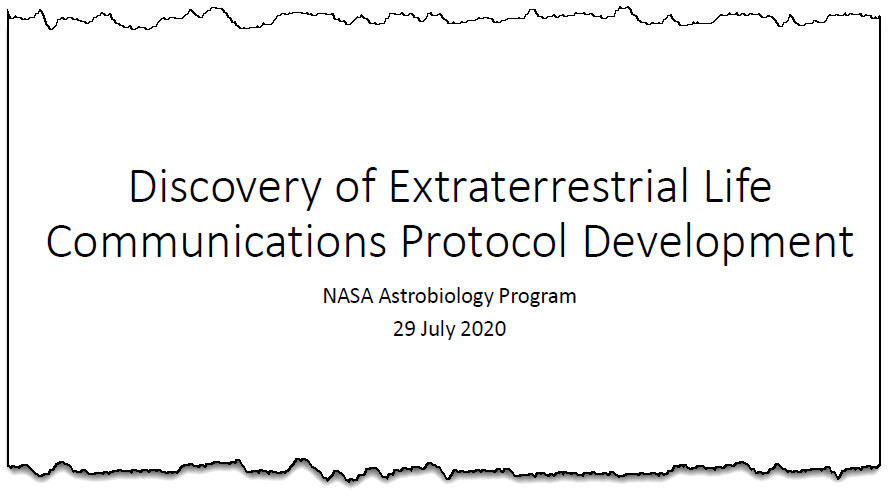
NASA Documents Show Renewed Internal Planning on How to Announce Discovery of Extraterrestrial Life

NASA Documents Show Renewed Internal Planning on How to Announce Discovery of Extraterrestrial Life

Hoe vind je dit bericht?
Geschreven door peter om 00:00 Stuur door

Is the Large Magellanic Cloud a First-Time Visitor?

Is the Large Magellanic Cloud a First-Time Visitor?

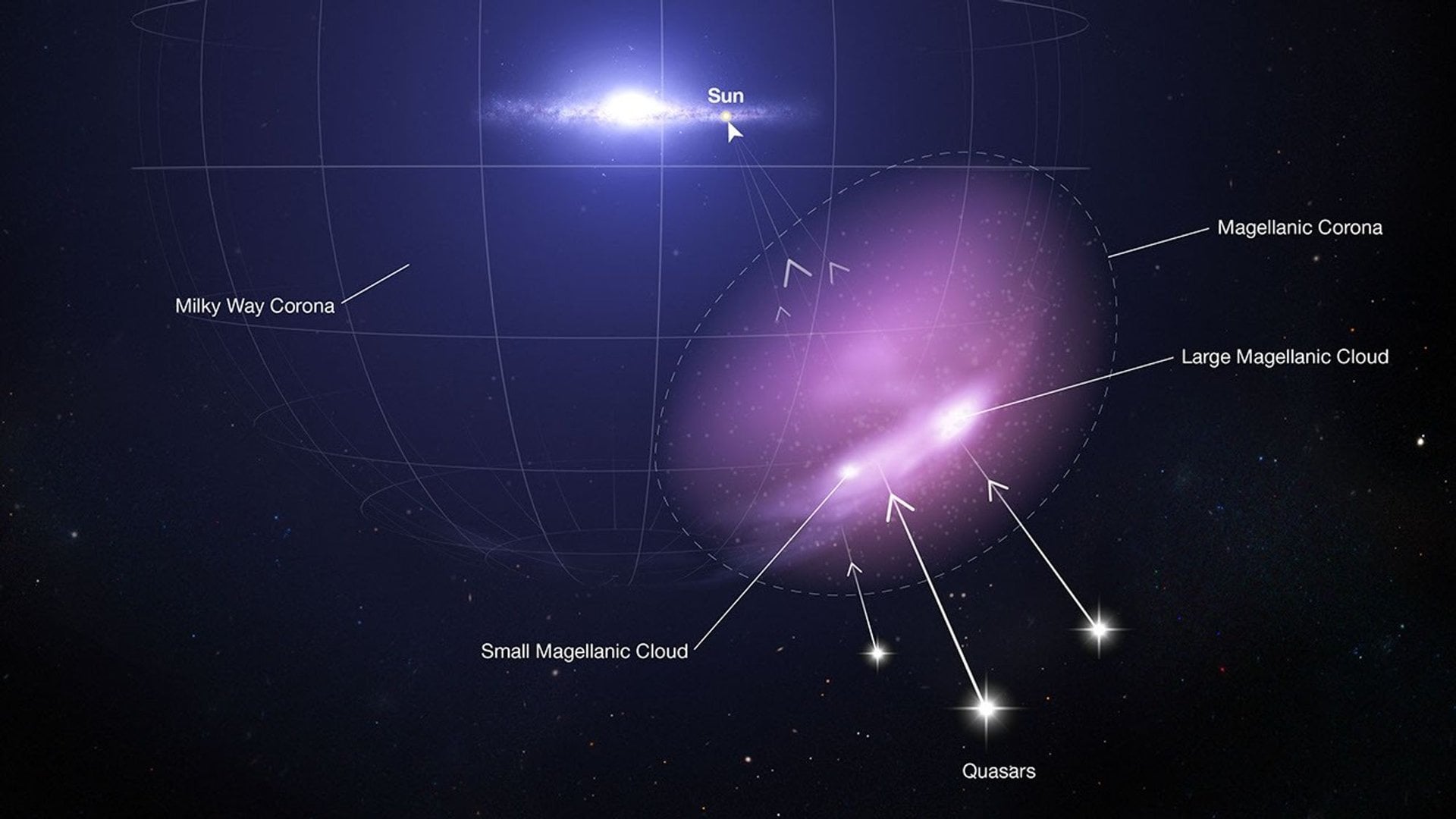
Artist's image of the LMC and Milky way and their assocaited coronas. Credit - NASA, ESA, Leah Hustak (STScI) Artist's image of the LMC and Milky way and their assocaited coronas. Credit - NASA, ESA, Leah Hustak (STScI)

Our most massive satellite galaxy, the Large Magellanic Cloud (LMC), has been the center of a heated debate in the astrophysics community over the last few years. That debate centers on whether this is the LMC’s first or second “pass” by the Milky Way itself - and it has huge implications for the evolution of our galaxy given the disruption such a large grouping of stars has. A new paper from Scott Lucchini, Jiwon Jesse Han, Sapna Mishra, and Andrew J. Fox and his co-authors, currently available in pre-print on arXiv, provides what they claim to be definitive evidence that this is, in fact, the first time LMC has encountered the Milky Way.

To understand the debate, it’s best to look at its history. For decades, there was an ongoing debate about the orbital path of the LMC. The discussion centered around a collisionless N-body dynamics model that tracked stars and their gravity. But back in 2024, physicist Eugene Vasiliev released a stunning paper that presented an argument that the LMC might have first passed the Milky Way 6-8 billion years ago at a distance of roughly 100 kiloparsecs.

Upon release of that paper, the debate was reignited. Vasiliev posited that, if the Milky Way’s dark energy halo was anisotropic (meaning the velocities of dark matter particles are skewed in certain directions), the current speed and position of the LMC would align perfectly with a “second pass” orbit. Dr. Lucchini and his co-authors are firmly on the other side of that argument.

Anton Petrov discusses the Large Magellanic cloud and what it means for the future of our own galaxy.
Credit - Anton Petrov YouTube Channel

They released two papers directly tackling the idea. First was paper tracing trajectories of “hypervelocity stars” that had been previously ejected by the LMC’s central black hole. They found that the stellar dynamics of these fast-moving stellar objects aligned with both a first pass and second pass model. In other words, it did nothing to settle the argument.

So they began looking for a second, more definitive option. That option presented itself through an unexpected avenue - hydrodynamics. Using a software simulation package known as GIZMO, they combined rigid, analytical dark matter models of both the LMC and Milky way with “live” gas particles representing the mediums surrounding the two galaxies. Once they ran the simulations, they used another software package called Trident to generate mocked up data that would be expected in the ultraviolet spectroscopic observations of the simulated gas.

After they had their simulated data, they began to compare it to observational data - specifically Carbon IV and Hydrogen II absorption data from background quasars, located past the LMC itself. The results were conclusive - the simulation beautifully reproduced the observed velocity and column density profiles of the modern LMC. Just as conclusively, the model of a second-pass does not fit as well. Specifically, the LMC’s time spent “swimming” through the Milky Way’s gas in this scenario results in a much smaller “corona” - the massive halo of warm, ionizing gas surrounding the galaxy.

Video describing how the LMC could survive a collision with the Milky Way’s halo.
Credit - European Space Agency YouTube Channel

While those results seem very cut and dry, there are a few simplifications the authors took in the interest of saving computing capacity. The Small Magellanic Cloud (SMC) was completely excluded from the simulation, and it actually contributes a majority of the neutral gas in the Magellanic Streams that both galaxies trail. Ignoring this could significantly alter the gas profile, the authors note. Also, the simulations massively simplified the Corona itself, using a warm-hot, single-phase model instead of the massively complicated multi-phase reality - largely in a nod to saving computational power.

Ultimately, these two papers together offer a brilliant tie-breaker in this debate. However, they weren’t the only ones contributing to the debate. A few weeks before these two papers were released, an independent team utilizing the Subaru Hyper Suprime-Cam published a paper that showcased stars sitting around 30kpc out in the Milky Way’s halo. This tidal debris aligns well with Vasiliev’s second-passage model, and is recent enough that the other side of the debate hasn’t yet had time to process counter arguments.

In other words, it's still not clear whether or not this is our first rodeo with the Large Magellanic Cloud. Hopefully upcoming missions, such as NASA’s Aspera mission, will allow us to look directly at the morphology and distribution of the Magellanic gas more closely. But until then, the debate will continue in the pages of academic journals.

Learn More:

RELATED VIDEOS

A Journey Through the Large Magellanic Cloud | Documentary for Sleep

The Magellanic Clouds: Our Sky's Least-Seen Landmarks

{ https://www.universetoday.com/ }

Hoe vind je dit bericht?
Geschreven door peter om 23:30 Stuur door

Avi Loeb talks UFO disclosure, interstellar objects and the search for alien life |

Avi Loeb talks UFO disclosure, interstellar objects and the search for alien life | ChicagoLIVE

Harvard astronomer Avi Loeb joined ChicagoLIVE to discuss new developments in the search for extraterrestrial life, including potential UFO data releases and his Galileo Project research. He also explained how new telescopes, better data and future space missions could help answer whether we’re alone in the universe.

Avi Loeb talks UFO disclosure, interstellar objects and the search for alien life | ChicagoLIVE

{ https://www.fox32chicago.com/ }

Hoe vind je dit bericht?
Geschreven door peter om 23:06 Stuur door

Remembering Nick Pope: 1965 - 2026

Nick Pope

Remembering Nick Pope: 1965 - 2026

The late Nick Pope made his name as a top UFO expert on Sky HISTORY’s Ancient Aliens. Here’s how he went from the UK’s Ministry of Defence to TV fame.

Is extraterrestrial life really out there? It’s a question that has flummoxed generations of UFOlogists, but some have come much closer than others to solving the mystery. There’s one particular voice many of our viewers will have heard quite often when the possibility of alien existence is discussed on TV…

It’s Nick Pope, the author and former civil servant who recently passed away at the age of 60 on 6th April 2026. The British-born media commentator was a regular on TV screens, appearing on a wealth of Sky HISTORY and BLAZE shows, most famously Ancient Aliens.

What made Nick especially watchable was his inside knowledge from years of manning the UFO desk at the UK’s Ministry of Defence (MoD). So, how did Nick develop his passion for exploring the unexplained, and cement his reputation as the UK’s leading UFO expert?

Meet the real-life Fox Mulder: Nick Pope talks UFOs, cliches and busts ...

Nick Pope joins the Ministry of Defence

Nick Pope was born on 19th September 1965 to aeronautical engineer George Pope and his wife Rosemary. It seems like a future at the MoD was in the young Nick’s blood, as his father worked at the Farnborough base of the ministry’s Royal Aircraft Establishment.

Nick started his own MoD career in 1985, working as a civil servant. He was transferred between several positions during his time at the MoD, eventually boarding its UFO programme in 1991.

Nick later recalled that this programme lacked its own formal, catchy name, unlike its equivalent in the United States, ‘Project Blue Book’. This is reportedly because the UK government wanted to play down the true extent of its own interest in investigating UFO sightings.

In secret, though, ministers feared that UFOs (or UAPs – ‘Unidentified Aerial Phenomena’) could actually have major implications for British national security. Nick stayed at the UFO desk for three years, scrutinising UFO reports to identify potential defence risks to the UK.

Interview with Nick Pope: The man who investigated Aurora for the UK ...

Nick’s rise as a media personality

In 1996, Nick brought out the ufology book Open Spies, Closed Minds. Even long after leaving the UFO desk, Nick remained keenly interested in the subject. When the MoD decided to declassify and release its UFO files in the Noughties, Nick was even approached to help with the publicity drive.

By doing interviews with the media, Nick essentially became the face of the MoD’s new-found transparency concerning its UFO projects. The MoD eventually closed its UFO desk in 2009, having deemed it surplus to the UK’s defence requirements.

Possible UFOs seen swarming US Navy ship | Fox News Video

Nick Pope finds new fame on TV

Since it started airing in 2010, the Sky HISTORY series Ancient Aliens has extensively explored the ‘ancient astronaut’ theory. Have aliens really been among us for millennia? Nick Pope has had his say on that question as one of the show’s frequent guests.

One fan-favourite moment came in the 12th season, when Nick accompanied fellow series regular Giorgio A Tsoukalos on a trip to see Rudloe Manor. This Wiltshire site has been dubbed ‘Britain’s Area 51’, as it is alleged to have held downed alien spacecraft.

Nick has also contributed to many other UFO shows. He has spoken about the Rendlesham Forest incident, ‘Britain’s Roswell’, on Sky HISTORY’s History’s Greatest Mysteries. Nick has also appeared on the BLAZE shows UFO Encounters UK and Indistinguishable From Magic.

MoD won't investigate UFOs but admits not seeing classified US report ...

MoD won't investigate UFOs but admits not seeing classified US report

Nick Pope dies after cancer diagnosis

In February 2026, Nick broke some devastating news on social media. ‘A while ago, following some digestive issues, I was diagnosed with oesophageal cancer. Unfortunately, it’s Stage 4 and has metastasized to my liver.’ The sadly meant that the cancer was incurable.

Nick took the opportunity to reflect fondly on his ‘amazing’ life and career. ‘The things I’ve done; the places I’ve been; the people I’ve met; and the secrets I’ve been privy to. I wouldn’t have swapped it for the world.’

The following 6th April, Nick’s wife Elizabeth Weiss revealed on social media: ‘My heart is breaking. Nick passed away this afternoon at our home.’ Noting that Nick had been doing interviews even in the last few weeks of his life, she enthused: ‘I was so lucky to have met and to have married Nick. He was a wonderful husband.’

RELATED VIDEOS

A Brief Nick Pope Tribute (Live) | Remembering a UFO Icon

Remembrance of Nick Pope (1965 -2026)

Remembering Nick Pope Memorial Video 09/19/1965 to 04/06 2026 by Melanie Aguirre

{ https://www.history.co.uk/articles }

Hoe vind je dit bericht?
Geschreven door peter om 22:55 Stuur door

Interdimensional Beings exist - proof is coming, congresswoman claims

Interdimensional Beings exist - proof is coming, congresswoman claims

Recently U.S. President Donald Trump stated that the process of identifying and declassifying government files related to alien and extraterrestrial life, as well as unidentified flying objects (UFOs), is underway. He described the upcoming release of these secret UFO files as containing “very interesting documents.” 
interdimensional%20beings%20paralell%20universe.png

Meanwhile, some government insiders have already begun speaking about information that remains hidden from the public. 
Among them is U.S. Representative Anna Paulina Luna, who recently made striking remarks about the possibility of “interdimensional beings.” Luna has been a vocal advocate for UFO transparency and continues to push, alongside other lawmakers, for the declassification of government held information related to UAPs and their possible origins. 
Luna stated she is “very confident” that interdimensional beings exist, claiming she has reviewed non-public evidence supporting this view. She said credible witnesses, including military personnel, have reported encounters with UAPs (Unidentified Anomalous Phenomena) that appear to operate outside known space-time dimensions. She also claimed to have seen classified images of UAPs that she believes were not created by humans. 
According to Luna, these entities may not travel through space in the conventional sense but instead move through or manipulate space-time itself. She suggested the possibility that the U.S. government has engaged in reverse-engineering related technologies, while also “gatekeeping” information through what she described as a protective system that limits public awareness. 
The concept of interdimensional beings is rooted in both advanced physics and ancient traditions. In modern science, String Theory proposes the existence of up to 10 dimensions, allowing for the possibility of hidden spatial realms beyond human perception. This has led to speculation that some unexplained phenomena may originate not from distant planets, but from entirely different dimensions.
  
RELATED VIDEOS

Rep. Anna Paulina Luna Says She's Seen Evidence of Interdimensional Beings

Interdimensional Beings have visited us, Congresswoman Claims – What might it mean?

FL Rep Paulina-Luna Drops INTERDIMENSIONAL BOMBSHELL On Rogan: Items 'NOT MADE by MANKIND' | RISING

{ http://ufosightingshotspot.blogspot.com/ }

Hoe vind je dit bericht?
Geschreven door peter om 22:27 Stuur door

How time travel could work: Scientists have uncovered a way to send messages into the PAST

How time travel could work: Scientists have uncovered a way to send messages into the PAST

Time machines may seem better suited to science fiction than the physics lab, but experts say this futuristic technology could become a reality.

Researchers have revealed how time travel could really work by using the laws of quantum physics.

While their method won't let you hop back to the time of the dinosaurs, scientists say it could be possible to send messages into the past.

The researchers even say this mind–bending technique would work just like in Christopher Nolan's sci–fi epic, Interstellar.

In the movie, an astronaut played by Matthew McConaughey sends a message to his daughter in the past by moving the hands on her watch.

Although the reality wouldn't be so cinematic, the researchers argue that this 'causal loop' resembles the way real time travel would work.

Co–author Dr Kaiyuan Ji, a researcher at Cornell University, told New Scientist: 'The father remembers how the daughter decodes his future message.

'So he can instruct himself on what is the best way to encode the message.'

Scientists have uncovered a way to send messages backwards in time, and they say it works just like a scene from Christopher Nolan's sci-fi epic Interstellar

Scientists have uncovered a way to send messages backwards in time, and they say it works just like a scene from Christopher Nolan's sci–fi epic Interstellar 

It might seem surprising, but there is actually nothing in the laws of physics as we understand them that makes time travel impossible.

According to the laws of general relativity, which are the best description of the universe we have, everything moves through the fabric of space and time on a set path.

One possible path that something can follow is known as a closed time–like curve (CTC).

Something travelling on a CTC moves into the future before looping back on itself via the past to end up exactly where it started.

The laws of physics allow for these loops to form, but actually making one on a large scale requires twisting spacetime with a literally infinite amount of energy.

However, on the very, very small scale, structures like CTCs might form naturally through the laws of quantum physics.

On the quantum level, two particles can become 'entangled', which means that what happens to one particle affects the other even if they are light–years apart.

One possible way to explain this effect, which Einstein called 'spooky action at a distance', is to say that one particle is actually sending messages backwards in time to the other.

The laws of physics allow for the creation of 'closed time-like curves', structures in spacetime like wormholes that loop backwards in time. On the quantum scale, scientists say these can be created using entangled particles

The laws of physics allow for the creation of 'closed time–like curves', structures in spacetime like wormholes that loop backwards in time. On the quantum scale, scientists say these can be created using entangled particles

How to send a message back in time

Create a quantum system with two entangled particles.

These particles form a closed time–like curve.

Altering one particle creates a change in the other, sending information backwards through time.

If you remember how the message was decoded in the past, you can use this to change how you encode the message in the future.

That allows you to send legible messages, no matter how noisy the connection is.

Rather than assuming that they are part of one massive system or that they are sending information faster than light speed, the particles' 'sensitivity' is explained by their receiving messages in the past that tell them how to react later.

That might sound absolutely mad, but in 2010, scientists actually came up with a way of mimicking closed time–like curves using entangled particles.

Professor Seth Lloyd, a quantum physicist from the Massachusetts Institute of Technology, says: 'It was the equivalent of sending a photon a few nanoseconds backwards in time, and having it try to kill its former self.'

What this creates is a bit like a telephone with a direct connection to another device a few moments earlier.

In theory, you could use something like this to pass messages back to yourself in the past.

Just like a real phone line, the connection on a CTC isn't always going to be perfect, and noise or disruption will make it hard to pass information with 100 per cent accuracy.

Professor Lloyd says: 'Nobody's built an actual physical, closed time–like curve, and there are reasons to think it's very hard to make one. But all channels are noisy.'

This is where an insight from Matthew McConaughey in Interstellar comes in handy.

In Interstellar, an astronaut played by Matthew McConaughey sends a message to his daughter in the past by moving the hands on her watch. Since he knows how his daughter decodes the message, he can encode it in a way that makes the information legible

In Interstellar, an astronaut played by Matthew McConaughey sends a message to his daughter in the past by moving the hands on her watch. Since he knows how his daughter decodes the message, he can encode it in a way that makes the information legible

In their new paper, accepted for publication in Physical Review Letters, Professor Lloyd and his co–authors write: 'The father, who is in the future, may retrieve his memory of past events he has witnessed, even including the daughter's decoding of the message which he is about to send!

'It would thus not be surprising that he will consult his memory of the daughter's decoding when encoding his message, so as to maximize the efficiency of the communication.'

Essentially, if you've already watched someone struggle to piece together your garbled message, you should know how to send it so that it's easier for them to decode.

article image

Even if the connection is very noisy, a backwards time–travelling message would still be legible.

The slightly weird conclusion of this is that sending messages backwards in time is likely to be clearer than sending a message in normal time.

Although no one has built a real closed time–like curve, Professor Lloyd says it should be fairly easy to turn this new idea into an experiment on the quantum level.

That could let scientists investigate how information is transmitted through 'noisy channels' and even improve real–life communication methods.

WHAT IS QUANTUM ENTANGLEMENT?

In quantum physics, entangled particles remain connected so that actions performed by one affects the behaviour of the other, even if they are separated by huge distances.

This means if you measure, 'up' for the spin of one photon from an entangled pair, the spin of the other, measured an instant later, will be 'down' - even if the two are on opposite sides of the world.

Entanglement takes place when a part of particles interact physically. 

A breakthrough in testing Einstein’s ‘spooky action at a distance’ could pave the way for ultra-secure quantum communication. Scientists have been investigating how pairs of photons can be used to form a link across great distances, in quantum entanglement. Artist's impression

In quantum physics, entangled particles remain connected so that actions performed by one affects the behaviour of the other, even if they are separated by huge distances (artist's impression) 

For instance, a laser beam fired through a certain type of crystal can cause individual light particles to be split into pairs of entangled photons.

The theory that so riled Einstein is also referred to as 'spooky action at a distance'. 

Einstein wasn't happy with theory, because it suggested that information could travel faster than light

RELATED VIDEOS

Time Travel Breakthrough: New Technique Revolutionizes Communication!

The Mystery of Time | Through the Wormhole | Science Channel

What If Time Travel Could Really Happen? | Documentary For Night

{ https://www.dailymail.com/sciencetech/index.html }

Hoe vind je dit bericht?
Geschreven door peter om 21:26 Stuur door

CIA's mind-control program in turmoil after scientist's mysterious death

CIA's mind-control program in turmoil after scientist's mysterious death

A congressional hearing to examine the CIA's secretive mind-control program has been set for this month.

Florida Rep Anna Paulina Luna announced on Wednesday that the Task Force on the Declassification of Federal Secrets will hold a hearing on the Cold War-era MKUltra program on May 13.

The CIA's MKUltra program, conducted from 1953 to 1964, aimed to develop procedures and drugs for interrogations, weakening individuals and forcing confessions through brainwashing and psychological torture.

Luna had pushed to restart congressional hearings on the matter in February, citing a Daily Mail article that reported a newly surfaced document on mind-control experiments had been placed in the CIA’s reading room the year before.

The renewed focus has placed the CIA’s MKUltra program back under the microscope, particularly its use of drugs, hypnosis and psychological testing on human subjects, as well as the death of one of its scientists. 

Dr Frank Olson, a biological warfare scientist, was covertly dosed with LSD at a meeting and died nine days later after falling out of his hotel room in New York City, which was declared a suicide - although some people, including family members, believe he was murdered.

A total of 144 projects were carried out under MKUltra during that period, highlighting the vast scale of the CIA's secret experimentation program.

One such document from 1956 detailed how the CIA considered testing the substances on foreign nationals, but ultimately concluded that 'unwitting testing on American citizens must be continued.' 

Anna Paulina Luna had pushed to restart congressional hearings on the matter, citing a February Daily Mail article that reported a newly surfaced document on mind-control experiments had been placed in the CIA’s reading room the year before

Anna Paulina Luna had pushed to restart congressional hearings on the matter, citing a February Daily Mail article that reported a newly surfaced document on mind-control experiments had been placed in the CIA’s reading room the year before

Pictured is Dr Frank Olson with his wife Alice and their children (L-R) Eric, Lisa and Nils

Pictured is Dr Frank Olson with his wife Alice and their children (L-R) Eric, Lisa and Nils

A CIA spokesperson previously told DailyMail.com: 'The MKULTRA program ran from 1953 until the lack of productive results and ethical concerns about unwitting testing led to its cessation in 1963.

'CIA is committed to transparency regarding this chapter of its history, including by declassifying information on the programs and making it publicly available on CIA.gov.' The Daily Mail has contacted the CIA for comment regarding the hearing announcement.

MKUltra has become a renewed focus on Capitol Hill, with lawmakers raising concerns about the program's controversial past.

Tennessee Congressman Tim Burchett raised the experiments with the Daily Mail this week, comparing them to what he believes is unfolding within the US scientific community as the White House investigates cases of missing and dead scientists.

'I just go back to the whole concept of MKUltra. They kidnapped people and loaded them up with acid or other mind-altering drugs. They tried to erase their memories,' he said.

'They were sued in court. Then they claimed it didn't exist. In 1975, they ordered records destroyed, and later admitted it had existed but no longer did. Which lies are we supposed to believe?'

Olson was one of at least eight men given LSD on November 19, 1953, as part of an MKUltra experiment, Paul Vidich, Olson's nephew, previously told the Daily Mail.

In statements made during a 1977 hearing about the activities of the CIA, according to Gottlieb, a 'very small dose' of LSD was added to the bottle of Cointreau, which was served after dinner. 

The CIA was testing drugs and other techniques on American citizens during the 1950s and 60s to develop new interrogation processes, such as mind control. Former US Deputy Director of the CIA Allen Dulles (pictured) ordered the agency to develop mind-controlling drugs

The CIA was testing drugs and other techniques on American citizens during the 1950s and 60s to develop new interrogation processes, such as mind control. Former US Deputy Director of the CIA Allen Dulles (pictured) ordered the agency to develop mind-controlling drugs 

In the days that followed, Olson became paranoid, barely ate and even threw away his wallet, identification badge and money after believing his boss, Vincent Ruwet, had instructed him to do so.

Olson was scheduled to travel to a mental health facility on November 27. At approximately 2.45am on November 28, 1953, Ruwet received a call from Dr Sidney Gottlieb reporting that Olson had died.

Olson's body was later found outside the Statler Hotel, where he had been staying on the 13th floor.

Vidich said his uncle had 'moral qualms about the nature of the work he was doing' and was eventually seen as a security risk.

'Getting thrown out the window was a very convenient way of disposing of a national security risk,' he added. 'To summarize my view, he was murdered.'

His family was not allowed to see his body and was told he had suffered severe facial injuries in the fall and had taken his own life.

Later reports confirmed that Olson had LSD in his system at the time of his death.

The National Security Archive published more than 1,200 pages of MKUltra documents in 2025, detailing the scope of the experiments.

Subjects included criminals, mental patients, drug addicts, Army soldiers and ordinary citizens who were given drugs without their knowledge.

Gangster James 'Whitey' Bulger, a former organized crime boss, was used as a test subject in 1957 while an inmate at the Atlanta penitentiary. He explained he was one of eight convicts in a panic and paranoid state while in MKUltra

Gangster James 'Whitey' Bulger, a former organized crime boss, was used as a test subject in 1957 while an inmate at the Atlanta penitentiary. He explained he was one of eight convicts in a panic and paranoid state while in MKUltra

Gangster James 'Whitey' Bulger was among those used as a test subject in 1957 while imprisoned at the Atlanta penitentiary.

He later described experiencing paranoia and hallucinations during the experiments.

'Total loss of appetite. Hallucinating. The room would change shape. Hours of paranoia and feeling violent,' Bulger wrote.

The NSA said in a statement: 'The CIA conducted terrifying experiments using drugs, hypnosis, isolation, sensory deprivation and other extreme techniques on human subjects, often US citizens, who frequently had no idea what was being done to them.'

While most documents were destroyed in 1973, a 1975 investigation led by Senator Frank Church exposed the existence of the MKUltra program.

That investigation sparked widespread public outrage and criticism of the CIA's practices.

It also led to the creation of permanent congressional oversight committees for intelligence agencies.

RELATED VIDEOS
CIA Scientist Murdered After Secret LSD Mind Control Experiments

MKUltra: The CIA's Horrifying Mind Control Experiments

Mind Control Hidden Behind a “Suicide” Case | Peter Turnbull | Stephen Mulrine | BBC RADIO

{ https://www.dailymail.com/sciencetech/index.html }

Hoe vind je dit bericht?
Geschreven door peter om 21:00 Stuur door

Top scientist shares unsettling theory about what happens after death

One of America's most popular scientists has revealed what happens after we die - and why it led him to choose a burial over being cremated.

Neil deGrasse Tyson, the famed astrophysicist, writer and podcast host, recently explained the science of what happens after death, revealing how the human body breaks down and is consumed by microbes and bacteria, feeding on a person's leftover chemical energy.

Since scientists believe energy cannot be created or destroyed, Tyson noted that a person's body is still full of energy, mostly from the food they took in over the years, even after the heart and brain stop functioning.

That leaves two options people have for releasing this energy. One is cremation, which sees a person's remaining energy converted to heat after the body is burned, which then travels out into space.

The other choice is a traditional burial, which lets the body decompose naturally, allowing the Earth's microscopic organisms to absorb all of your remaining energy in the endless cycle of renewal between humans and nature. 

Tyson said: 'That's my choice. So that the energy content of my body, which is still there when you die, your molecules were built up from your lifetime of eating and exercising and the building of your organs and your muscles and other tissue.'

'In death, those molecules still contain energy. If I'm buried and I decompose, all that energy gets absorbed by microbes, by flora and fauna dining upon my body the way I have dined upon flora and fauna my whole life. In that way, giving back to the Earth.'

While the astrophysicist chose a burial for himself, he revealed that cremation did not mean people were wasting their energy, and even said their final journey would have more far-reaching consequences.

Neil deGrasse Tyson (Pictured) revealed that the human body is still full of energy that is not destroyed when the body dies

Neil deGrasse Tyson (Pictured) revealed that the human body is still full of energy that is not destroyed when the body dies

Tyson declared his intention to be buried in order to return his energy to nature and 'give back' to the environment (Stock Image)

Tyson declared his intention to be buried in order to return his energy to nature and 'give back' to the environment

(Stock Image)

Tyson explained that the heat produced by cremating a body does not stay on Earth. Instead, that radiation is capable of reaching other planets within our galaxy.

'The energy content of those molecules, it doesn't go away. It gets transferred to heat that then radiates infrared energy that was once the energy content of the molecules of your body, radiates it out into space, moving at the speed of light,' the scientist detailed on his StarTalk podcast on March 31.

From the moment someone is cremated, Tyson said their loved ones could actually keep a timeline of where their radiant energy had traveled to in the Milky Way.

'If they were cremated four years ago, they would have reached the nearest star system, Alpha Centauri. So that in a way you're still a part of the universe just in a different form.'

Tyson's thoughts on what happens after death were more than just a theory. The scientist's comments were grounded in some of the most fundamental laws of science.

It all begins with the first law of thermodynamics, also known as the law of conservation of energy. The law states that energy cannot be created or destroyed; it can only be changed from one form to another.

In this case, the chemical energy, which had been stored in a person's molecules mostly from everything they ate or drank, will transform either through decomposition or cremation.

In a natural burial, decomposition is carried out by bacteria, fungi and other microbes that break down the body’s proteins, fats and carbohydrates after death.

Tyson noted that cremation releases the energy of a deceased person into space in the form of radiation, which then moves through the cosmos (Stock Image)

Tyson noted that cremation releases the energy of a deceased person into space in the form of radiation, which then moves through the cosmos

(Stock Image)

article image

This process converts most of the original chemical energy into heat that warms the soil. However, a small portion of a person's remains becomes new chemical energy stored in the microbes and is then passed up the food chain to more complex plants and animals.

Tyson's comments have been viewed more than a million times and sparked a public conversation about how people want their remains handled once they die.

However, many of his followers disagreed with his funeral plans and chose cremation for themselves.

'I will return to the stars,' one person replied.

'That travelling to Alpha Centauri at the speed of light sounds much more romantic and appealing than being eaten by bugs,' another commenter said.

'Being eaten by bugs and microbes, the particles you're composed of get recycled on Earth and stay a useful resource for long past your passing. One day you'll be a tiny but functional part of billions of creatures and plants,' one person countered.

Some of the replies to the StarTalk YouTube channel claimed that modern coffins would make it much harder for a person's microbes to actually reach the soil and contribute to Earth's ecosystem.

Others suggested opting for a 'green burial,' where people request their remains to be placed directly in the ground without embalming chemicals, metal caskets or concrete vaults.

Families or burial grounds often plant a tree right above the grave. As the body decomposes, it releases nutrients such as nitrogen, phosphorus and potassium into the soil - exactly what a young tree needs to grow strong.

RELATED VIDEOS

Top 10 Theories About What Happens After We Die

8 Disturbing Scientific Theories About What Happens After Death

{ https://www.dailymail.com/sciencetech/index.html }

Hoe vind je dit bericht?
Geschreven door peter om 20:32 Stuur door

NASA Tests Prototype ‘Magnetoplasmadynamic’ Electric Propulsion Thruster Designed to Power Future Trips to Mars

magnetoplasmadynamic electric propulsion thruster

Image Credit: NASA Space Nuclear Propulsion (SNP) Program.

NASA Tests Prototype ‘Magnetoplasmadynamic’ Electric Propulsion Thruster Designed to Power Future Trips to Mars

A team from NASA’s Jet Propulsion Laboratory (JPL), in collaboration with researchers from Princeton University and NASA’s Glenn Research Center in Cleveland, has announced the successful test of a prototype advanced electric thruster propulsion system 25 times more powerful than the electric thruster powering NASA’s Psyche mission.

According to a JPL statement announcing the achievement, “for the first time in years and at power levels exceeding any previous test in the United States,” the team successfully engaged a magnetoplasmadynamic (MPD) thruster that uses lithium metal vapor as a propellant. The JPL team said that the prototype electric thruster, which could one day carry humans to Mars, achieved power levels “beyond the highest-power electric thrusters on any of the agency’s current spacecraft,” while also providing researchers with valuable data on the sci-fi-sounding technology.

This marks the first time in the United States that an electric propulsion system has operated at power levels this high,” said NASA Administrator Jared Isaacman of the successful test, which is part of the agency’s Space Nuclear Propulsion (SNP) program. “We will continue to make strategic investments that will propel that next giant leap.”

magnetoplasmadynamic electric thruster propulsion The prototype thruster is enclosed in JPL’s condensable metal propellant (CoMeT) vacuum facility, a unique national asset designed to safely test thrusters using metal-vapor propellants as part of potential megawatt-class electric propulsion systems. Image Credit: NASA/JPL-Caltech.

NASA JPL’s Prototype Electric Thruster Propulsion System 25X More Powerful Than Psyche

During a series of five ignitions at JPL’s Electric Propulsion Lab, which houses the condensable metal propellant vacuum facility where electric thrusters that use metal propellants can be tested safely, the MPD thruster’s tungsten electrode reached over 5,000 degrees Fahrenheit (2,800 degrees Celsius).

Thanks to the facility’s high-energy capacity, the team achieved power levels of “up to 120 kilowatts.” As noted, that exceeds the highest power output of any electric thrusters of any NASA spacecraft, including the advanced propulsion system currently powering Psyche past 124,000 mph via a small yet steady force.

“Designing and building these thrusters over the last couple of years has been a long lead-up to this first test,” said James Polk, senior research scientist at JPL. “It’s a huge moment for us because we not only showed the thruster works, but we also hit the power levels we were targeting. And we know we have a good testbed to begin addressing the challenges to scaling up.”

magnetoplasmadynamic thruster electric propulsion thruster technology JPL senior research scientist James Polk peers into the condensable metal propellant (CoMeT) vacuum facility at JPL’s Electric Propulsion Lab, where a high-power electric thruster prototype his team developed was being put to the test in February 2026. Image Credit: NASA/JPL-Caltech

Magnetoplasmadynamic Thruster Accelerates Liquid Metal Lithium Plasma

The current crop of electric propulsion thrusters uses energy collected from the Sun to accelerate small amounts of propellant. This small but steady expulsion of ionized gas produces a low, continuous thrust that can reach speeds well beyond those of conventional chemical rockets, given enough time.

The MPD technology featured in the latest tests has been researched since the 1960s. According to the JPL team’s statement, the MPD thrusters differ from existing thrusters by using high currents to interact with a magnetic field and electromagnetically accelerate lithium plasma, resulting in a minute yet significant thrust. Still, according to the JPL statement, the lithium-fed thruster has “never flown operationally.”

NASA is exploring electric propulsion, including MPD technology, due to its significant cost savings over conventional rockets. The JPL team said that these devices can use “up to 90% less propellant” than traditional, high-thrust chemical rockets used to escape Earth’s gravitational pull. As part of the agency’s original Dawn and Deep Space-1 missions. Polk has translated that experience in electric propulsion into the development of lithium-fed MOD thrusters.

“Lithium-fed MPD thrusters have the potential to operate at high power levels, use propellant efficiently, and provide significantly greater thrust than currently flying electric thrusters,” the team explained. “Fully developed and paired with a nuclear power source, they could reduce launch mass and support payloads required for human Mars missions.”

“We Haven’t Lost Sight of Mars”

Moving forward, the JPL-led team said the high temperatures emitted by MPD thrusters during their tests will make providing ruggedized components capable of withstanding them “a key challenge.” They will also use the coming years to pursue power levels “between 500 kilowatts and 1 megawatt per thruster.”

Because engineers have projected that a Mars mission could require anywhere from two to four megawatts of power to reach the planet in a proper time, a final spacecraft design may incorporate multiple MPD thrusters capable of operating “for more than 23,000 hours” straight.

When discussing the successful electric propulsion thruster test, Isaacman said it demonstrates “real progress” toward the agency’s long-term goal of sending an American astronaut to the Red Planet.

“At NASA, we work on many things at once, and we haven’t lost sight of Mars,” The NASA administrator said.

To learn about NASA’s current nuclear efforts, visit: https://www.nasa.gov/ignition/

  • Christopher Plain is a Science Fiction and Fantasy novelist and Head Science Writer at The Debrief. Follow and connect with him on X, learn about his books at plainfiction.com, or email him directly at christopher@thedebrief.org.

JPL Tests Next-Generation Electric Thruster

{ https://thedebrief.org/category/space/ }

Hoe vind je dit bericht?
Geschreven door peter om 23:37 Stuur door

Occam’s Robot? Harvard Researchers Build a Swarm of Simple Robots Called ‘RAnts’ That Can Collectively Build and Destroy Complex Structures

RAnts ants complex structures

Image Credit: L. Mahadevan / Harvard SEAS.

Occam’s Robot? Harvard Researchers Build a Swarm of Simple Robots Called ‘RAnts’ That Can Collectively Build and Destroy Complex Structures

Instead of building increasingly complex robotic systems to carry out even more complex tasks, Harvard University researchers have developed a fleet of ant-inspired simple robots called “RAnts” that can use environmental cues and minimal physical rules to carry out complex activities, including spontaneously organizing to build or dismantle complex structures without detailed instructions or a team leader.

The team behind the robotic ants said the work shows how a decentralized swarm of insects or robots can coordinate activities to complete tasks without a detailed plan or centralized control, using simple cues and rules.

Along with offering potentially invaluable insights into how both biological systems and future autonomous robotic systems work together and helping refine experimental models used to study animal behavior, the team suggested that simplified bio-inspired robotic swarms could be designed to carry out complex tasks in hazardous or hard-to-reach environments that pose challenges for human technicians, including applications in planetary exploration.

Rants Replace Pheromones with ‘Photormones’ to Coordinate Activities

Many animals work together to achieve a common goal, but ants have continued to fascinate scientists for their ability to build massive, intricate, climate-controlled structures despite their comparatively simple neurological system. As the Harvard team noted, ants also complete these complex structures without a blueprint or “worksite foreman” directing the process.

Instead of using a complex, pre-planned approach, insects like termites and ants that work together to build entire structures employ a technique called stigmergy. According to the Harvard team, stigmergy is a process in which individual members “modify” their environments and respond to those modifications. For ants, this process involves the emission of pheromones that other ants detect and respond to.


To replicate stigmergy for Rants, team leader Professor L. Mahadevan, whose lab has studied social insect communities for several years, also showed that robotic ants could achieve similar coordinated tasks, essentially replacing chemical pheromones with visible, light-based “photormones.” According to the professor, photormones are light fields that operate as “digital stand-ins” for insect pheromone fields.

In practical terms, each individual RAnt is designed to sense gradients in the photormone field the same way an ant would sense gradients in the pheromone field and leave behind similar signals as it moves. The team said this process creates a “feedback loop between robots and their environment,” enabling coordinated activities across the entire swarm.

The Three Simple Rules That Trigger ‘Sophisticated’ Behaviors

Eerily reminiscent of Isaac Asimov’s “Three Laws of Robotics” from the ‘I, Robot‘ series, the Harvard robotics team programmed the RAnts with three basic rules. The first rule is to always follow the gradients in the photormone signal. The second rule is to pick up and transport building blocks in response to the photormone cues, and the third rule is to deposit materials when “signal thresholds” are met.

Although they sound basic, the team noted that these simple rules “nonetheless trigger sophisticated behaviors.” For example, they noted that robots programmed with these three rules “spontaneously cluster to form nucleation sites,” where the first phases of individual structures begin to emerge.

RAnts complex structures

An illustration of how the collective, decentralized behavior of ants has inspired experiments with cooperative robots that can complete tasks without central control.

Image Credit: L. Mahadevan / Harvard SEAS.

According to the researchers, these collective nucleation sites arise through a mechanism termed “trapping instability.” When robots enter this area, they are temporarily confined by the photormone signals they are actively generating.

Over time, more Rants converge on the nucleation sites, accelerating the construction process. The team says that this seemingly simple set of rules results in “organized aggregates of building material.”

After some experimentation, the researchers discovered that the robot swarm’s behavior could be ‘tuned’ by adjusting two parameters. The first parameter, called “cooperation strength,” governs how strongly a robot follows the signal gradient. The second parameter, called “deposition rate,” dictates whether a robot deposits or removes material. Depending on the setting of these two parameters, the team could switch the RAnt swarm between structure construction and demolition.

Kilobots_570.gif

Borrowing a page out of nature's handbook, a team of researchers at Harvard University have developed a fleet of miniscule robots that can arrange themselves into complex configurations without the use of a core artificial intelligence. Equal parts automaton and swarming hive, each of the Kilobots the team used to demonstrate their research are a little larger than a penny.

Potential SOlutions in Hazardous Environment COnstruction and Planetary Exploration

When discussing the implications of their RAnt swarm capable of creating complex structures, Professor Mahadevan and colleagues highlighted the refreshingly basic nature of their approach.

“Our new study shows how simple, local rules can lead to the emergence of complex task completion that is self-organized and thus robust and adaptive,” he explained.

The Lola England de Valpine Professor of Applied Mathematics, Organismic and Evolutionary Biology, and Physics at SEAS and FAS also noted that his team’s work introduced the concept of ‘exbodied intelligence,’ “where collective cognition arises not solely from individual agents, but from their ongoing interaction with an evolving environment.”

Although the RAnts are still confined to the lab setting, the research teams’ findings could lead to applications in autonomous construction in hazardous environments, planetary exploration, and experimental models for studying animal behavior.

The study “Robotectonics: Emergent Phototactic Aggregation-Disaggregation in Swarms” was published in PRX Life.

  • Christopher Plain is a Science Fiction and Fantasy novelist and Head Science Writer at The Debrief. Follow and connect with him on X, learn about his books at plainfiction.com, or email him directly at christopher@thedebrief.org.

{ https://thedebrief.org/category/science/ }

Hoe vind je dit bericht?
Geschreven door peter om 22:31 Stuur door

Kunnen NASA en SpaceX binnen tien jaar een maanbasis bouwen?

Kunnen NASA en SpaceX binnen tien jaar een maanbasis bouwen?

Experts zeggen dat het bouwen van een maanbasis binnen het volgende decennium, zoals NASA en Elon Musk willen, vereist dat we oplossingen vinden voor problemen die we nog niet volledig begrijpen.

An illustration of two astronauts boarding a rocket on the moon

Een illustratie van twee astronauten die een raket op de maan betreden. NASA en Elon Musk hebben beiden interesse getoond in het opbouwen van een permanente menselijke aanwezigheid op de maan in het volgende decennium. Maar wat zegt de wetenschap?
(Beeldcredit: Getty Images)

De menselijke verkenning van de ruimte heeft altijd de verbeelding van velen gewekt. Sinds de eerste maanlanding in 1969 is de maan een symbool geworden van menselijke ambitie en technologische vooruitgang. Tegenwoordig, in het tijdperk van hernieuwde interesse in de maan en de ruimte, vragen velen zich af: kunnen NASA en SpaceX binnen tien jaar een werkende maanbasis bouwen? In dit artikel onderzoeken we de technologische, logistieke en beleidsmatige factoren die hierbij een rol spelen, en evalueren we de haalbaarheid van zo’n ambitieuze doelstelling.

1. De huidige stand van de maanprogramma's

1.1 NASA's Artemis-programma

NASA heeft met haar ambitieuze Artemis-programma grote plannen om tegen het einde van dit decennium opnieuw mensen op de maan te laten landen. Het Artemis-programma vertegenwoordigt een nieuwe fase in de menselijke ruimtevaart, gericht op het herstellen van de menselijke aanwezigheid op de maan en het leggen van de basis voor toekomstige interplanetaire reizen. Een van de eerste belangrijke mijlpalen was de succesvolle uitvoering van Artemis I in 2022, een onbemande testvlucht waarbij de nieuwe Space Launch System (SLS) en de Orion-ruimtevaartuig werden ingezet. Deze missie had als doel om de werking van de krachtigste lanceerinfrastructuur ooit ontwikkeld te testen, evenals de systemen van de Orion-ruimtevaartuig die bedoeld zijn voor bemande missies. De vlucht bracht Orion rond de maan en keerde veilig terug naar aarde, wat een belangrijke stap was in het valideren van de technologieën die nodig zijn voor toekomstige bemande missies.

Na Artemis I volgt Artemis II, een bemande testvlucht die gepland staat om de crew-capaciteit en de levensonderhoudssystemen van Orion verder te testen. Hierbij zullen astronauten voor de eerste keer sinds de Apollo-missies opnieuw naar de maan reizen, zij het zonder landingsactiviteiten. Vervolgens staat Artemis III op de planning, die bedoeld is om de eerste bemande maanlanding sinds 1972 te realiseren. Tijdens deze missie zal een team van astronauten naar de zuidpool van de maan reizen, een locatie die bijzonder interessant is vanwege de aanwezigheid van ijs en andere hulpbronnen die mogelijk kunnen worden gebruikt voor verdere exploratie en toekomstige missies. Het uiteindelijke doel van het Artemis-programma is niet alleen het landen op de maan, maar ook het opzetten van een duurzame aanwezigheid. Dit omvat de ontwikkeling van een permanente basis, vaak aangeduid als de Lunar Gateway en een maanbasis, die als uitvalsbasis kunnen dienen voor verdere verkenningen, wetenschappelijk onderzoek en mogelijk zelfs voor het testen van technologieën die nodig zijn voor reizen naar Mars.

Hoe NASA van plan is een maanbasis te bouwen (Artemis uitgelegd)

De plannen omvatten ook het samenwerken met internationale partners en commerciële ruimtevaartbedrijven om een robuust ecosysteem te creëren dat de menselijke aanwezigheid op de maan kan ondersteunen en uitbreiden. Door middel van deze aanpak hoopt NASA niet alleen de technologische en wetenschappelijke kennis te vergroten, maar ook de economische en strategische belangen in de ruimte te versterken. Het Artemis-programma symboliseert een hernieuwde ambitie om de menselijke aanwezigheid in de ruimte uit te breiden en nieuwe grenzen te verkennen, met een lange termijn visie op het mogelijk maken van een permanente menselijke aanwezigheid buiten de aarde.

1.2 SpaceX en de Starship

SpaceX, het ruimtevaartbedrijf opgericht door Elon Musk, ontwikkelt momenteel de Starship, een volledig herbruikbaar ruimtevaartuig dat ontworpen is voor interplanetaire reizen. Starship wordt gezien als een revolutionaire technologie die de manier waarop mensen en materialen naar de maan, Mars en verder kunnen worden vervoerd aanzienlijk zal veranderen. Het ontwerp van Starship omvat een grote, krachtige capsule die in staat is om grote hoeveelheden vracht en passagiers te vervoeren, en die na elke missie weer kan worden teruggevlogen en hergebruikt. Dit herbruikbare aspect is essentieel om de kosten van ruimtereizen aanzienlijk te verlagen en de frequentie van missies te verhogen.

Elon Musk heeft herhaaldelijk aangegeven dat hij binnen enkele jaren een maan- en Mars-missie met Starship wil uitvoeren. Volgens zijn plannen moet Starship in staat zijn om grote aantallen mensen en grote hoeveelheden materialen te vervoeren, waardoor het mogelijk wordt om niet alleen wetenschappelijke missies uit te voeren, maar ook toekomstige kolonies op andere planeten te ondersteunen. De ontwikkeling van Starship is echter niet zonder uitdagingen. Technisch gezien is het een zeer complex project, dat onderhevig is aan talrijke regelgevende en veiligheidsvraagstukken. Testvluchten worden voortvarend uitgevoerd, maar er blijven nog veel technische problemen die moeten worden opgelost, zoals het verbeteren van de betrouwbaarheid, het verminderen van gewicht en het verhogen van de veiligheid voor de bemanning. Daarnaast moet SpaceX samenwerken met nationale en internationale regelgevende instanties om de goedkeuringen te verkrijgen die nodig zijn voor bemande en commerciële ruimtemissies.

De vooruitgang die SpaceX boekt met Starship wordt nauwlettend gevolgd door de ruimtevaartgemeenschap en potentiële klanten. Verschillende landen en bedrijven tonen belangstelling voor de mogelijkheden die Starship biedt, vooral vanwege de lage kosten en de grote capaciteit. Musk’s visie is dat Starship niet alleen een voertuig is voor verkenning, maar ook een platform voor het opbouwen van een permanent menselijk presence op andere planeten. De ontwikkeling van deze technologische mijlpaal zou de deur openen naar een nieuw tijdperk van ruimtevaart, waarin interplanetaire reizen mogelijk worden en de menselijke soort zich kan vestigen buiten de aarde.

Kortom, zowel NASA’s Artemis-programma als de ontwikkeling van SpaceX’s Starship vertegenwoordigen de nieuwste hoofdstukken in de menselijke ruimtevaart. Terwijl NASA zich richt op het herstellen van de menselijke aanwezigheid op de maan en het opzetten van een duurzame basis, streeft SpaceX ernaar om technologieën te ontwikkelen die reizen naar andere planeten haalbaar maken. Samen vormen deze initiatieven de basis voor een toekomst waarin de mensheid haar grenzen in de ruimte verder zal verleggen en nieuwe werelden zal ontdekken

2. Technologische uitdagingen

De bouw en het onderhouden van een maanbasis vereisen een grote hoeveelheid geavanceerde technologieën en infrastructuur. Deze technologische uitdagingen zijn complex en vereisen uitgebreide research, ontwikkeling en testen. In dit hoofdstuk worden de belangrijkste aspecten van deze uitdagingen nader toegelicht, waaronder de ontwikkeling van de benodigde infrastructuur, de materialen en bouwtechnieken, en de gezondheids- en veiligheidsaspecten voor astronauten.

Hoe SpaceX de eerste maanbasis zal bouwen

2.1 Ontwikkeling van de benodigde infrastructuur

Het fundament voor een succesvolle maanbasis ligt in het creëren van een robuuste en betrouwbare infrastructuur die onder de extreme omstandigheden op de maan functioneert. Dit omvat verschillende kerncomponenten:

  • Landedoes:

Het landingsysteem moet veilig en efficiënt grote hoeveelheden materieel, wetenschappelijke instrumenten en leefvoorzieningen op de maan kunnen afleveren. Dit vereist precisie in de landingslocatie, zodat de basis niet wordt getroffen door maanbevingen of stofwolken die het landingsproces kunnen verstoren. Daarnaast moeten deze systemen herbruikbaar of herbruikbaar zijn, om kosten te besparen en logistieke efficiëntie te vergroten. Innovaties zoals gerobotiseerde landingsmodules en automatische landingshulpsystemen worden volop ontwikkeld om de veiligheid te verhogen.

  • Levensondersteuning:

Voor een langdurige aanwezigheid op de maan zijn robuuste systemen voor zuurstofproductie, waterhergebruik, voedselvoorziening en afvalbeheer noodzakelijk. Zuurstof kan bijvoorbeeld worden geproduceerd uit maanregolith of door elektrolyse van water dat door de missie wordt meegebracht of lokaal wordt gewonnen. Waterhergebruikssystemen moeten efficiënt omgaan met afvalwater en condensaat, terwijl voedselvoorziening mogelijk wordt gemaakt door geavanceerde kweekmethoden zoals hydrocultuur en aeroponics. Het ontwikkelen van gesloten levensondersteuningssystemen die autonoom functioneren, is cruciaal voor het minimaliseren van afhankelijkheid van de aarde.

  • Energievoorziening:

Een stabiele energievoorziening is essentieel voor het functioneren van de basis. Zonnepanelen vormen de voornaamste duurzame energiebron, aangezien de maan lange perioden van zonlicht kent. Echter, tijdens de donkere maanden of 'maannachten' van ongeveer 14 aardse dagen, is er behoefte aan alternatieve energiebronnen. Nucleaire generators, zoals radio-isotoop-thermo-elektrische generators (RTG’s), bieden betrouwbare energie gedurende deze perioden. Het ontwikkelen van efficiënte opslagtechnologieën voor energie, zoals batterijen en condensatoren, zorgt ervoor dat de basis 24/7 operationeel kan blijven.

  • Communicatie:

Een betrouwbare communicatie-infrastructuur met de aarde en tussen verschillende onderdelen van de maanbasis is onmisbaar voor operationeel beheer, wetenschappelijk onderzoek en veiligheid. Dit omvat het gebruik van hoge-snelheid satellietverbindingen, redundante systemen en geavanceerde databeveiliging. Omdat de afstand tussen de maan en de aarde enige vertraging oplevert (ongeveer 1,3 seconden), moeten communicatiesystemen ook autonoom kunnen functioneren om snel te kunnen reageren op noodgevallen.

Het ontwikkelen, testen en perfectioneren van deze systemen op aarde en op de maan zelf vormt een enorme technische uitdaging. Het vereist nauwkeurige simulaties en uitgebreide veldtesten, wat jaren kan duren voordat alles betrouwbaar is en klaar voor langdurige menselijke aanwezigheid.

How SpaceX Will Build The First Moon Base | The Futurist Space ...

2.2 Materialen en bouwtechnieken

De bouw van een maanbasis stelt hoge eisen aan de gebruikte materialen en technieken. De extreme temperaturen variëren van wel 127°C tijdens de dag tot -173°C tijdens de nacht. Daarnaast wordt de structuur blootgesteld aan schadelijke straling, krachtige maanbevingen en stof dat zich in alle richtingen verspreidt. Om deze omstandigheden het hoofd te bieden, moeten materialen bijzonder bestendig en lichtgewicht zijn.

Een veelbelovende aanpak is het gebruik van lokale materialen, zoals maanregolith, dat de basismaterialen kan vervangen of aanvullen. Onderzoek richt zich op de mogelijkheden van 3D-printen met regolith, waardoor structuren direct op de maan kunnen worden gebouwd zonder dat alles vanaf aarde moet worden aangevoerd. Dit vermindert de kosten aanzienlijk en maakt de bouw efficiënter. Experimentele prototypes van 3D-geprinte structuren laten zien dat het mogelijk is om stevige en isolerende muren te maken met maanmateriaal. Echter, het opschalen van deze technologie tot volledige basisstructuren is nog in een experimenteel stadium en vereist verdere ontwikkeling.

Naast de toepassing van lokale materialen worden ook composieten en metalen getest die bestand zijn tegen de harde omstandigheden op de maan. Onderzoek naar nieuwe bouwtechnieken, zoals het gebruik van robotarmen en autonome bouwrobots, speelt een sleutelrol in het versnellen van de bouwprocessen en het verminderen van risico’s voor menselijke arbeiders.

Door deze innovaties kunnen toekomstige maanbases niet alleen sneller worden gebouwd, maar ook duurzamer en beter bestand tegen de omgeving.

2.3 Gezondheid en veiligheid van astronauten

Het langdurig verblijf op de maan brengt aanzienlijke gezondheidsrisico’s met zich mee. Een van de grootste bedreigingen is de blootstelling aan straling. De maan heeft geen magnetisch veld of dikke atmosfeer zoals de aarde, waardoor kosmische straling en zonne-energiereizen direct op de astronauten kunnen inwerken. Deze straling verhoogt het risico op kanker, beschadigt cellen en kan leiden tot andere gezondheidsproblemen. Daarom worden er speciale schuilplaatsen of 'stralingsschuilplaatsen' gebouwd, die onder de grond of met extra beschermlagen worden uitgerust.

Daarnaast is gewichtloosheid of microzwaartekracht een andere uitdaging. Langdurige gewichtloosheid kan leiden tot spierverlies, botdichtheidsafname, verminderde cardiovasculaire functies en andere gezondheidsproblemen. Om dit tegen te gaan, worden regelmatige lichaamsbewegingen en technologische hulpmiddelen ingezet, zoals loopbanden en weerstandstrainers die speciaal voor de maanbasis worden ontwikkeld.

Medische voorzieningen aan boord van de basis moeten in staat zijn om basisziekten te behandelen, verwondingen te verzorgen en eerste hulp te bieden. Ook wordt onderzoek gedaan naar het gebruik van telemedicine, waarbij artsen op aarde medische begeleiding kunnen bieden via geavanceerde communicatietechnologieën. Voor ernstigere medische problemen wordt gewerkt aan het ontwikkelen van robotchirurgie en autonome medische systemen die snel kunnen ingrijpen.

Tot slot is het psychologisch welzijn van astronauten van groot belang. Een lange missie in een geïsoleerde en beperkte omgeving kan leiden tot gevoelens van eenzaamheid, stress en conflicten. Daarom worden er speciale programma’s ontwikkeld om de mentale gezondheid te ondersteunen, zoals virtuele realiteit voor ontspanning en communicatie met familie en vrienden op aarde.
Lunar base: How NASA's moon water discovery could support human habitats

Kortom, het waarborgen van de gezondheid en veiligheid van astronauten op de maan vereist een multidisciplinaire aanpak, waarin technologische innovaties hand in hand gaan met medische en psychologische ondersteuning. Alleen door deze uitdagingen effectief aan te pakken, kan een duurzame en veilige menselijke aanwezigheid op de maan worden gerealiseerd.

3. Logistieke en financiële overwegingen

3.1 Kostenramingen

Het bouwen van een maanbasis is een project van uitzonderlijke omvang dat enorme financiële middelen vereist. Volgens schattingen wordt de totale kostprijs voor zo’n initiatief vaak op tientallen miljarden dollars geschat. Dit bedrag omvat niet alleen de bouw en inrichting van de basis zelf, maar ook de ontwikkeling van de benodigde technologieën, de logistieke ondersteuning, en de operationele kosten gedurende de eerste jaren van gebruik.

NASA heeft voor haar Artemis-programma, dat gericht is op het terugbrengen van mensen naar de maan en het opzetten van een duurzame aanwezigheid, een budget van ongeveer 35 miljard dollar uitgetrokken tot 2024. Dit bedrag dekt onder andere de ontwikkeling van nieuwe lanceermiddelen, de bouw van landingsmodules, en het testen van technologieën die nodig zijn voor langdurig verblijf op de maan. Echter, dit is slechts een deel van de totale kosten die gemoeid zullen zijn met het oprichten van een volledige maanbasis. Naarmate het project vordert en meer complexe systemen worden ontwikkeld, zullen de kosten waarschijnlijk verder toenemen.

Privébedrijven zoals SpaceX investeren miljarden in de ontwikkeling van hun ruimtevaartuigen, zoals de Starship. Hoewel de exacte kosten voor het construeren van een maanbasis met behulp van deze systemen nog niet volledig bekend zijn, wordt algemeen aangenomen dat de inzet van herbruikbare lanceersystemen en geavanceerde technologieën de kosten op de lange termijn kunnen verlagen. Toch blijft de financiële investering immens, en het vinden van voldoende financiering en investeerders is een grote uitdaging.

Bovendien spelen factoren zoals kostenstijgingen door technologische complexiteit, onvoorziene technische problemen en de behoefte aan langdurige operationele ondersteuning een grote rol bij het bepalen van het totale budget. Het is dus duidelijk dat het realiseren van een maanbasis een van de meest kostbare en complexe projecten in de geschiedenis van de ruimtevaart zal zijn.

3.2 Logistieke keten en bevoorrading

De logistiek rondom het opzetten en onderhouden van een maanbasis vormt een van de grootste uitdagingen. Het transporteren van grote hoeveelheden materiaal, zoals bouwmaterialen, voedsel, water, brandstof en reserveonderdelen, vereist een uiterst efficiënte en betrouwbare logistieke keten. De frequentie en betrouwbaarheid van lanceringen en landingen zullen hierbij cruciaal zijn.

SpaceX’s Starship en vergelijkbare lanceersystemen worden vaak genoemd als belangrijke middelen om deze logistieke keten te ondersteunen. Dankzij hun grote laadvermogen en herbruikbaarheid kunnen ze grote hoeveelheden materiaal in één keer naar de maan brengen, wat de kosten en de complexiteit aanzienlijk kan verminderen. Daarnaast moet er ook rekening gehouden worden met de planning en timing van leveringen, zodat de basis continu operationeel kan blijven.

Een andere belangrijke overweging is de afhankelijkheid van aardse bevoorrading. Om de kosten te drukken en de zelfvoorzienendheid te vergroten, wordt er gekeken naar het gebruik van lokale hulpbronnen op de maan zelf. Denk hierbij aan het winnen van water uit ijslagen in de poolgebieden, het produceren van zuurstof en brandstof uit maanmateriaal, en het recyclen van afvalstoffen. Het ontwikkelen van technologieën voor in-situ resource utilization (ISRU) is essentieel om de zelfvoorzienendheid te vergroten en de logistieke last vanuit de aarde te verminderen.

Het opzetten van een robuust logistiek systeem dat zowel de levering van benodigdheden als het beheer van afval en reserveonderdelen mogelijk maakt, vereist nauwkeurige planning en geavanceerde technologieën. De logistieke keten moet bestand zijn tegen de extreme omstandigheden op de maan, zoals grote temperatuurschommelingen, stralingsniveaus en de trillingen tijdens lanceringen en landing.

3.3 Samenwerking en internationale partnerschappen

Gezien de enorme kosten en technische complexiteit van het bouwen en onderhouden van een maanbasis, is internationale samenwerking onontbeerlijk. Geen enkele ruimtevaartorganisatie of private partij kan dit omvangrijke project alleen realiseren. Daarom werken NASA, ESA (European Space Agency), Roscosmos (Russische ruimtevaartorganisatie), en andere landen en organisaties nauw samen om kennis, technologie en middelen te delen.

De samenwerking brengt verschillende voordelen met zich mee. Zo kunnen kosten worden gedeeld, waardoor de financiële last voor individuele partijen wordt verminderd. Daarnaast kunnen technologische expertise en ervaring worden uitgewisseld, wat de kwaliteit en veiligheid van het project ten goede komt. Internationale partners kunnen ook bijdragen aan de ontwikkeling van infrastructuur, zoals communicatie- en navigatiesystemen, en het opzetten van onderzoeksfaciliteiten op de maan.

Private partners zoals SpaceX spelen hierbij een belangrijke rol door innovatieve oplossingen en kosteneffectieve lanceermiddelen te bieden. Ze brengen flexibiliteit en technologische vooruitgang in het project, maar moeten daarbij ook voldoen aan strenge veiligheids- en kwaliteitsnormen die gelden voor overheidsinitiatieven.

Een goede samenwerking vereist daarom duidelijke afspraken over verantwoordelijkheden, financiën, technologische standaarden en veiligheidsprotocollen. Het opzetten van een internationaal consortium dat gezamenlijk de doelen en strategieën bepaalt, is essentieel om de complexiteit van het project te beheren en het succesvol te laten verlopen.

Hoe NASA van plan is een permanente Artemis-moonbasis te bouwen voor menselijk overleven

Wetenschapsdocumentaire

Kortom, de logistieke en financiële overwegingen vormen de kern van het succes van een maanbasis. Door een zorgvuldig uitgewerkte kostenraming, een betrouwbare logistieke keten en sterke internationale partnerschappen, wordt de weg geëffend voor een duurzame menselijke aanwezigheid op de maan. Het realiseren van zo’n basis zal niet alleen technische uitdagingen vergen, maar ook internationale samenwerking en strategisch financieel beleid dat gericht is op lange termijn succes.

4. Beleidsmatige en regelgevende aspecten

4.1 Internationale verdragen en regelgeving
De ruimtevaart wordt gereguleerd door een reeks internationale verdragen en overeenkomsten die het gebruik en de exploitatie van de ruimte en hemellichamen regelen. Eén van de belangrijkste documenten is het Verdrag inzake het gebruik van het Verkeersruimte, de maan en andere hemellichamen uit 1967, ook wel het Ruimterechtverdrag genoemd. Dit verdrag stelt dat de maan en andere hemellichamen voor iedereen vrij toegankelijk zijn, en verbiedt het claims van soevereiniteit door landen of particuliere entiteiten. Tegelijkertijd benadrukt het belang van het voorkomen van milieuschade en het beschermen van het ruimte- en maanmilieu. Bij het opzetten van een maanbasis moeten landen en particuliere organisaties voldoen aan deze internationale regels en mogelijk nieuwe afspraken maken om praktische en juridische obstakels weg te nemen. Daarnaast bestaan er andere verdragen en richtlijnen, zoals het Verdrag inzake ruimtemissies (1986), dat de aansprakelijkheid regelt bij schade veroorzaakt door ruimteactiviteiten, en de principes voor milieubescherming in de ruimte. Het is cruciaal dat deze regelgeving wordt bijgewerkt en aangevuld om de complexe realiteit van een permanente aanwezigheid op de maan te ondersteunen, inclusief kwesties rondom eigendomsrechten, resource-extractie en milieubescherming.

4.2 Veiligheid en aansprakelijkheid
Een van de grootste beleidsmatige uitdagingen bij het bouwen en onderhouden van een maanbasis is het waarborgen van de veiligheid van astronauten en het voorkomen van conflicten over gebruiksrechten en hulpbronnen. De risico’s van ruimtevaart zijn groot, variërend van stralingsrisico’s tot technische storingen en ongelukken. Daarom worden er door NASA en andere ruimtevaartorganisaties uitgebreide protocollen en veiligheidsmaatregelen ontwikkeld voor ruimte-missies. Deze protocollen moeten niet alleen de fysieke veiligheid van de bemanning waarborgen, maar ook de operationele integriteit van de maanbasis. Daarnaast is de aansprakelijkheid bij schade een complex aspect; wie is verantwoordelijk als bijvoorbeeld een ruimtevaartuig schade veroorzaakt aan de maanbasis of derden? Het internationale recht voorziet hierin in bepaalde regels, maar de praktische toepassing op lange termijn vereist vaak bilaterale of multilaterale overeenkomsten. Het opstellen van duidelijke aansprakelijkheidsregels en het verzekeren van de veiligheid blijven daarom prioriteiten voor beleidsmakers.

De Ruimterace (Terug) naar de Maan: Artemis, Maanbases en Concurrentie Buiten de Omloopbaan

4.3 Politieke wil en publieke steun
De ambitie om binnen tien jaar een operationele maanbasis te bouwen, is afhankelijk van politieke wil en publieke steun. Politiek leiders moeten besluiten nemen over de benodigde investeringen, regelgeving en internationale samenwerking. Veranderingen in beleidsprioriteiten, bijvoorbeeld door nieuwe regeringen of geopolitieke spanningen, kunnen de voortgang vertragen of zelfs blokkeren. Daarnaast speelt publieke interesse en steun een essentiële rol. Een breed draagvlak onder de bevolking en de betrokkenheid van het publiek kunnen de politieke besluitvorming versterken en financiering veiligstellen. Het is daarom belangrijk dat regeringen en ruimtevaartorganisaties transparant zijn over de plannen, de voordelen benadrukken en inspelen op publieke zorgen en verwachtingen. Daarnaast moeten internationale samenwerkingen en publiek-private partnerschappen worden versterkt om de benodigde middelen en expertise te bundelen. Alleen door een combinatie van politieke vastberadenheid, maatschappelijke betrokkenheid en internationale diplomatie kan de realisatie van een maanbasis binnen de gestelde termijn worden gerealiseerd.

5. Tijdslijn en haalbaarheid

5.1 Technische tijdslijn

De komende jaren worden cruciaal voor de ontwikkeling van maanmissies en de bouw van een permanente aanwezigheid op de maan. In 2024 en 2025 ligt de focus op het afronden van de Artemis II- en Artemis III-missies, die respectievelijk de eerste bemande vlucht rond de maan en de eerste landing van een mens op de maan in decennia vertegenwoordigen. Deze missies vormen de fundering voor verdere exploratie en infrastructuurontwikkeling. Daarnaast wordt in deze periode ook gewerkt aan de verdere ontwikkeling van de SpaceX Starship, een herbruikbare raket die mogelijk de belangrijkste tool wordt voor het transport van mensen en materialen naar de maan.

  • Van 2025 tot 2027 verschuift de aandacht naar het opzetten van testfaciliteiten en het uitvoeren van eerste landingen en proefopstellingen op de maan. Tijdens deze periode zullen verschillende landingen plaatsvinden om de technische en logistieke aspecten te testen, zoals het veilig landen en opstijgen, het installeren van basisvoorzieningen en het testen van duurzame systemen voor levensonderhoud en energie. Het opzetten van basisfaciliteiten, zoals tijdelijke habitats, energieopslag en communicatie-infrastructuur, vormt hierbij een prioriteit. Dit is essentieel om de technologische en operationele uitdagingen te begrijpen en op te lossen.
  • In de periode van 2027 tot 2029 wordt gewerkt aan de uitbreiding en verfijning van de infrastructuur. De focus ligt op het versterken van basisfaciliteiten en het implementeren van duurzame systemen die langdurige menselijke aanwezigheid mogelijk maken. Denk hierbij aan het ontwikkelen van geavanceerdere habitats, recycling- en energiesystemen, en het verbeteren van transportmogelijkheden op en rond de maan. Het doel is om een functionele en semi-permanente basis te creëren die kan dienen als uitvalsbasis voor verdere verkenning en wetenschappelijk onderzoek.
  • Het jaar 2030 wordt vaak genoemd als het moment waarop een volledige, functionele maanbasis mogelijk gerealiseerd kan worden. Hoewel dit een ambitieuze doelstelling is, zou het betekenen dat de basis operationeel en zelfvoorzienend is, met voldoende infrastructuur om langdurige bewoning en wetenschappelijke activiteiten te ondersteunen. Hoewel het realistisch is dat de eerste basis nog klein en eenvoudig zal zijn, vormt dit jaar een belangrijke mijlpaal in de mensheid’s ruimtevaartgeschiedenis.

5.2 Kritische factoren voor succes

Het succesvol realiseren van de geplande tijdslijn hangt af van verschillende kritische factoren. Allereerst zijn technologische doorbraken essentieel. Vooral op het gebied van bouwmaterialen die bestand zijn tegen de extreme omstandigheden op de maan, systemen voor levensonderhoud die betrouwbaar en efficiënt zijn, en energievoorziening die zowel duurzaam als krachtig is. Innovaties zoals 3D-printen van bouwmaterialen uit lokale grondstoffen kunnen hierbij een grote rol spelen.

Daarnaast is financiering en beleid van groot belang. Een stabiel, toereikend budget moet continu beschikbaar blijven om de lange termijnprojecten te ondersteunen. Politieke steun op nationaal en internationaal niveau is noodzakelijk om de benodigde middelen en regelgeving te garanderen. Zonder voldoende financiële middelen kunnen plannen vertragen of zelfs stilvallen.

Internationale samenwerking speelt eveneens een sleutelrol. Door gedeelde middelen, kennis en expertise kunnen de kosten worden gedeeld en de technologische ontwikkeling versneld. Samenwerking tussen landen, ruimtevaartorganisaties en commerciële partijen biedt de beste kansen op succes en het vermijden van dubbele inspanningen.

Tot slot is de ervaring die wordt opgedaan uit eerdere missies en proefprojecten cruciaal. Elke missie biedt waardevolle lessen over technische uitdagingen, operationele procedures en menselijke factoren. Deze kennis kan worden gebruikt om toekomstige missies efficiënter en veiliger te maken.

5.3 Realistische inschatting

Hoewel de plannen voor een maanbasis binnen tien jaar ambitieus en uitdagend zijn, is het niet onmogelijk. Technologische, logistieke en beleidsmatige obstakels maken het realiseren van een volledige en uitgebreide basis wel complex. Toch is een haalbare strategie het starten met een kleine en functionele basis die in de loop der jaren kan worden uitgebreid en verfijnd.

In eerste instantie zal de basis waarschijnlijk bestaan uit eenvoudige habitats, basisvoorzieningen en energievoorzieningen die voldoende zijn voor korte verblijven en wetenschappelijk onderzoek. Naarmate de technologie vordert en meer ervaring wordt opgedaan, kunnen deze faciliteiten worden uitgebreid en verbeterd, waardoor een duurzame en langdurige menselijke aanwezigheid mogelijk wordt. Het proces van ontwikkeling zal waarschijnlijk gefaseerd verlopen, waarbij elk succes en elke leermoment wordt benut om verdere stappen te zetten.

Kortom, hoewel er grote uitdagingen liggen, maken technologische innovaties, internationale samenwerking en een strategische aanpak het mogelijk om binnen tien jaar een basis op de maan te realiseren. Het blijft echter een project dat voortdurende inzet, financiering en innovatie vereist om uiteindelijk te leiden tot een volwaardige menselijke aanwezigheid op de maan.

NASA's plan om een permanente maanbasis te bouwen in de donkerste krater
RUIMTEDOCUMENTAIRE

6. Conclusie

Kunnen NASA en SpaceX binnen tien jaar een maanbasis bouwen?

Kortom, hoewel zowel NASA als SpaceX beschikken over de technologische expertise en financiële middelen om de eerste stappen te zetten richting een maanbasis, zijn er aanzienlijke uitdagingen die de realisatie binnen tien jaar in de weg staan. De ontwikkeling van de benodigde infrastructuur, het overwinnen van technische obstakels, het waarborgen van astronautveiligheid, en het navigeren door politieke en regelgevingstechnische kwesties maken dat het bouwen van een volledige, duurzame maanbasis binnen tien jaar een zeer ambitieus doel blijft.

Echter, met de huidige ontwikkelingen en de vastberadenheid van de betrokken organisaties, is het mogelijk dat in deze periode een eerste basis of proefopstellingen gerealiseerd worden, die later kunnen uitgroeien tot een volwaardige maanbasis. Het is belangrijk te beseffen dat ruimteverkenning altijd gepaard gaat met onzekerheden en dat de reis naar een maanbasis een proces is van voortdurende innovatie en samenwerking.

In samenvatting: Het is uiterst uitdagend, maar niet onmogelijk, dat NASA en SpaceX binnen tien jaar een functionerende maanbasis kunnen realiseren. Het vereist een combinatie van technologische doorbraken, stevige financiering, internationale samenwerking en een duidelijke beleidsrichting. Wat zeker is, is dat deze ambitie de komende jaren de ruimtevaartwereld zal blijven stimuleren en inspireren, en dat de weg naar de maan een belangrijk hoofdstuk zal blijven in de menselijke verkenning van het heelal.

  • NOTA PETER2011: Dit artikel is gebaseerd op de stand van de techniek en beleidsmatige ontwikkelingen tot oktober 2023. De ruimtevaartsector evolueert snel, en toekomstige doorbraken kunnen de haalbaarheid van een maanbasis binnen tien jaar beïnvloeden.


Hoe NASA Een Stad Op De Maan Zal Bouwen

{ PETER2011 }

Hoe vind je dit bericht?
Geschreven door peter om 22:02 Stuur door

Meer van UFO'S of UAP'S, ASTRONOMIE, RUIMTEVAART, ARCHEOLOGIE, OUDHEIDKUNDE, SF-SNUFJES EN ANDERE ESOTERISCHE WETENSCHAPPEN - DE ALLERLAATSTE NIEUWTJES

↑ Terug naar de berichten