Naar de inhoud

UFO'S of UAP'S, ASTRONOMIE, RUIMTEVAART, ARCHEOLOGIE, OUDHEIDKUNDE, SF-SNUFJES EN ANDERE ESOTERISCHE WETENSCHAPPEN - DE ALLERLAATSTE NIEUWTJES

UFO's of UAP'S in België en de rest van de wereld
seniorennet.beseniorennet.be
Ontdek de Fascinerende Wereld van UFO's en UAP's: Jouw Bron voor Onthullende Informatie! Ben jij ook gefascineerd door het onbekende? Wil je meer weten over UFO's en UAP's, niet alleen in België, maar over de hele wereld? Dan ben je op de juiste plek! België: Het Kloppend Hart van UFO-onderzoek In België is BUFON (Belgisch UFO-Netwerk) dé autoriteit op het gebied van UFO-onderzoek. Voor betrouwbare en objectieve informatie over deze intrigerende fenomenen, bezoek je zeker onze Facebook-pagina en deze blog. Maar dat is nog niet alles! Ontdek ook het Belgisch UFO-meldpunt en Caelestia, twee organisaties die diepgaand onderzoek verrichten, al zijn ze soms kritisch of sceptisch. Nederland: Een Schat aan Informatie Voor onze Nederlandse buren is er de schitterende website www.ufowijzer.nl, beheerd door Paul Harmans. Deze site biedt een schat aan informatie en artikelen die je niet wilt missen! Internationaal: MUFON - De Wereldwijde Autoriteit Neem ook een kijkje bij MUFON (Mutual UFO Network Inc.), een gerenommeerde Amerikaanse UFO-vereniging met afdelingen in de VS en wereldwijd. MUFON is toegewijd aan de wetenschappelijke en analytische studie van het UFO-fenomeen, en hun maandelijkse tijdschrift, The MUFON UFO-Journal, is een must-read voor elke UFO-enthousiasteling. Bezoek hun website op www.mufon.com voor meer informatie. Samenwerking en Toekomstvisie Sinds 1 februari 2020 is Pieter niet alleen ex-president van BUFON, maar ook de voormalige nationale directeur van MUFON in Vlaanderen en Nederland. Dit creëert een sterke samenwerking met de Franse MUFON Reseau MUFON/EUROP, wat ons in staat stelt om nog meer waardevolle inzichten te delen. Let op: Nepprofielen en Nieuwe Groeperingen Pas op voor een nieuwe groepering die zich ook BUFON noemt, maar geen enkele connectie heeft met onze gevestigde organisatie. Hoewel zij de naam geregistreerd hebben, kunnen ze het rijke verleden en de expertise van onze groep niet evenaren. We wensen hen veel succes, maar we blijven de autoriteit in UFO-onderzoek! Blijf Op De Hoogte! Wil jij de laatste nieuwtjes over UFO's, ruimtevaart, archeologie, en meer? Volg ons dan en duik samen met ons in de fascinerende wereld van het onbekende! Sluit je aan bij de gemeenschap van nieuwsgierige geesten die net als jij verlangen naar antwoorden en avonturen in de sterren! Heb je vragen of wil je meer weten? Aarzel dan niet om contact met ons op te nemen! Samen ontrafelen we het mysterie van de lucht en daarbuiten.

New science advisory council forms to help US government ‘resolve the UAP mystery’

New science advisory council forms to help US government ‘resolve the UAP mystery’

Theoretical physicist and Harvard University Professor Avi Loeb shared early details about the new UAP Science Advisory Council.
Abraham (Avi) Loeb is the Frank B. Baird, Jr., Professor of Science at Harvard University. (Photo by: Lotem Loeb, May 22, 2026; shared by Avi Loeb.)

Anew multidisciplinary team of expert researchers is assembling to supply scientific guidance to the U.S. government’s unidentified anomalous phenomena investigations and help agencies determine whether unexplained sightings pose national security threats or represent major new discoveries.  

Well-known theoretical physicist and Harvard University Professor of Science Avi Loeb announced he would be leading this new UAP Science Advisory Council, which he unveiled in a post online this week. 

Loeb and other officials involved in this work shared early details with DefenseScoop about the council’s vision and how it came together to support the Trump Administration’s new interagency UAP Governance Board.

“The [board], which will get advice from the science council as well as other committees, will assist in the timely coordination of declassification of UAP-related information, in accordance with Executive Order 13526, Classified National Security Information,” Loeb said, pointing to a presidential directive that establishes the uniform system for classifying, safeguarding, and declassifying NatSec records. “The goal of the council is to advise the U.S. government on how to resolve the nature of [UAP].” 

Federal agencies and the military have a long and complicated legacy dealing with technologies and craft that personnel have reported performing in ways that seem to defy or transcend modern capabilities. 

At a high level, the Defense Department’s teams set up to study UAP — the modern term for UFOs and transmedium objects — have taken different shapes over the years. The All-domain Anomaly Resolution Office (AARO) is the latest version. It was set up under the Biden administration in 2022 to fulfill a requirement in that year’s National Defense Authorization Act, following concerns from lawmakers that some UAP could be high-tech drones or other platforms developed by America’s enemies.

The office has issued multiple reports spotlighting the ever-expanding DOD portfolio of UAP investigations, and its insiders have maintained that they have found no evidence to confirm that any UAP cases involve extraterrestrial activity or technology to date. 

In February, President Donald Trump indicated that he would be directing Defense Secretary Pete Hegseth and other relevant departments and agencies to “begin the process of identifying and releasing Government files related to alien and extraterrestrial life, [UAP], and unidentified flying objects (UFOs), and any and all other information connected to these highly complex, but extremely interesting and important, matters.”

So far, there were three batches of UAP files released on May 8, May 22, and June 12, 2026, via this initiative.

Loeb noted that the latest collection includes a new report that’s dated June 5, 2026, and signed by AARO’s Director Jon Kosloski. 

“The report mentions that during two days in October 2023 law enforcement officials noticed anomalous phenomena including an orange ‘mother’ orb launching smaller red orbs. About 40% of the reported phenomena lack a reasonable explanation and remain unresolved,” Loeb told DefenseScoop. “The civil duty of scientists like myself is to serve the U.S. government by interpreting existing data or recommending how to get new data that would resolve the nature of UAPs. This is a detective story that can be resolved with better data.”

The scientist confirmed that all of the data shared with the newly installed team will be unclassified. 

The UAP Science Advisory Council will report to a higher-level UAP Governance Board, which Loeb said will serve as an interagency body that can use each of its members’ capabilities and unique authorities to cohesively address national security threats posed by unexplained phenomena.

An ODNI official told DefenseScoop that the agency — alongside the FBI and DOD — established that new board “to provide guidance, recommendations and coordination at the interagency level, bringing together military, law enforcement, the intelligence community, and other civilian agencies,” in support of Trump’s recent directive on UAP transparency.

“The UAP Governance Board met for the first time yesterday,” the ODNI official said on Wednesday, without sharing the identities of the original participants.

The board’s mission statement includes that members will “integrate and optimize interagency processes involved in the investigation of UAP incidents and collection procedures used to analyze UAP data to ensure more effective support to” AARO. 

The ODNI official also confirmed that the board is supported by several advisory groups with expertise and work outside the U.S. government, including the UAP Science Advisory Council. 

Loeb supplied a list of other experts joining him on the new science council in its earliest days, as well as their focus areas in this forthcoming work to, as he put it, “help AARO resolve the UAP mystery.” 

He said they are: Prof. Carol Cleland, anomaly identification; Dr. Richard Cloete, data analysis and AI tools; Dr. Omer Eldadi, data management, AI, and human psychology; Dr. Tim Gallaudet, oceanography; Ross Howard, communication; Ben Lamm, oceanography and biology; Dr. Devesh Nandal, numerical analysis and astrophysics; Prof. Garry Nolan, molecular biology and materials science; Dr. Michael Shermer, the study of anomalies; Dr. Peter Skafish, anthropology; Prof. Matthew Szydagis, instrumentation and data collection; and Dr. Jennice Vilhauer, quantitative psychology. 

“Since UAPs are physical objects that interact with humans, the council includes members with expertise in physical sciences as well as psychology and biology,” Loeb explained. “All members had an intense interest in the scientific study of UAPs for many years.” 

Among them is Tim Gallaudet, a retired U.S. Navy admiral who previously served as commander of the Naval Meteorology and Oceanography Command, assistant secretary of Commerce for Oceans and Atmosphere and in other senior roles. 

Gallaudet told DefenseScoop that he hopes to apply his expertise and experience in ocean science, as well as government leadership, to help the council “most effectively accomplish its mission and support the new UAP Governance Board.”

During his own decades-long career, Loeb has advised lawmakers and U.S. government leaders on science and space matters, and also held many leadership positions in academia.

Over the past five years, he’s led the Galileo Project at Harvard University in search for extraterrestrial technological artifacts near Earth. At this point, the research team operates three observatories that collect and analyze data on millions of objects as they hustle to discover outliers that fall outside the performance envelope of human-made technologies.

“My leadership style promotes transparency and trust. This is why I was the longest serving chair, for three terms of 3 years, in the history of Harvard’s Astronomy department,” Loeb said.

In his view, if the orbs in AARO’s recent report represent unknown technologies employed by adversarial nations, then they would mark a serious breach of national security. 

That’s why he believes that resolving their nature should be a high priority for the U.S. government, requiring the development of better sensors and AI algorithms to collect and interpret new data. 

“The down-to-Earth interpretation of UAP is that we are dealing with human-made technologies. In this case, the defense system of the U.S. against espionage on strategic assets is being compromised,” Loeb told DefenseScoop. “We know about the Chinese spy balloon that was shot down in 2023. When finding an ant on the kitchen cabinet, we get alarmed because we realize that there must be many more ants hiding elsewhere in the kitchen.” 

The frequency of the new science council’s meeting cadence has not been decided.

“We will make the best lemonade out of the lemons we are given,” Loeb said. “The best is yet to come. Stay tuned to future updates.”

RELATED


Avi Loeb: The New UAP Board Could Change Everything

Harvard's Avi Loeb Confirms New Government UAP Science Council | Good Trouble Show

{ https://defensescoop.com/2026/06/17/ }

Hoe vind je dit bericht?
Geschreven door peter om 22:57 Stuur door

Pentagon investigating mysterious UAP event reported by the Navy near Virginia’s coast

Pentagon investigating mysterious UAP event reported by the Navy near Virginia’s coast

The department’s All-domain Anomaly Resolution Office released its latest, annual UAP caseload analysis this week.
Hoe vind je dit bericht?
Geschreven door peter om 22:32 Stuur door

Latest Pentagon report on aerial phenomena has sighting off Virginia Beach coast

Latest Pentagon report on aerial phenomena has sighting off Virginia Beach coast

Chris Horne

Pentagon report on UAPs has sighting off VB coast

526ba0fa-e192-4469-bf9a-d31bd05c8e1b.jpg

WASHINGTON (WAVY) — A report released this week from the All-Domain Anomaly Resolution Office cites an extensive sighting of unexplained aerial phenomena off the coast of Virginia Beach.

The AARO is the agency within the Defense Department that investigates unidentified anomalous phenomena. Its report mentions more than 300 sightings nationwide in the 12 months ending May 31, 2025.

The only sighting classified as maritime “involved a report from U.S. Navy assets operating off the coast of Virginia. The report described approximately 100 airborne UAP and two, likely uncrewed, surface systems.” No further detail on this or any other sightings was included in the 14-page report.

“We’re doing better on the protection against aerial unmanned systems that we are with systems that could be deployed by land or water,” said Sen. Tim Kaine (D-Va.), a member of the Armed Services Committee, in a Thursday call with reporters.

The report of unidentified phenomena over the water calls to mind congressional testimony three years ago from a Navy pilot attached to NAS Oceana. He described phenomena observed and detected by instruments flying about 10 miles off Virginia Beach.

Later in 2023, repeated drone sightings came from neighbors for more than two weeks over Langley Air Force Base.

Those sightings were never fully explained.

“We still don’t have good answers about where they came from, whose drones they were, and this was night after night after night,” Kaine said.

The Pentagon said in this week’s report that if the recent claims of unidentified phenomena are real — they’d represent an unmitigated threat.

Kaine had no further details on the claims of aerial phenomena off the coast. Of the more than 300 cases nationwide, the Pentagon has only been able to explain fewer than half.

{ https://www.aol.com/ }

Hoe vind je dit bericht?
Geschreven door peter om 22:18 Stuur door

Mokulele passenger claims ‘white something’ approached plane mid-flight

Mokulele passenger claims ‘white something’ approached plane mid-flight


Mokulele passenger claims ‘white something’ approached plane mid-flight

On a recent Mokulele Airlines flight from Molokai to Maui, a passenger said she saw “a white something,” approach the aircraft that she believed was not a bird, nor another plane.

On a recent Mokulele Airlines flight from Molokai to Maui, a passenger said she saw “a white something,” approach the aircraft that she believed was not a bird, nor another plane.
© Hawaii News Now

HONOLULU (HawaiiNewsNow) - On a recent Mokulele Airlines flight from Molokai to Maui, a passenger said she saw “a white something” approach the aircraft that she believed was not a bird, nor another plane.

Molokai resident Tami Dixon said the sight “scared that out of me. Literally scared the **** out of me.”

Already anxious in the air while traveling to the Valley Isle for eye surgery, Dixon said last Thursday’s turbulent flight added to her nerves.

“When you’re in the clouds, you see nothing,” Dixon said.

But when the plane approached Kahului Airport, Dixon saw the “white something” she described after the aircraft “popped through the cloud.”

Because of how the object looked to her, Dixon believes it was a drone.

Mokulele told Hawaii News Now it has no record of any near misses in this case, but Dixon said its pilots acted quickly.

“Both pilots looked at each other and veered to the right,” Dixon described, commending the pilot’s immediate reaction. “Oh, fabulous. They both looked at each other and boom, instantly they just turned.”

While a drone is not confirmed as the cause of the scare, the encounter has experienced operators urging others to fly responsibly.

“The FAA establishes very clear guidelines of where aircraft can fly. Kind of like on a highway, you have your own driving lane, right? So if everyone follows the rules and it’s pono, they should never actually interact or you should never have one car or aircraft entering another car’s lane,” said Timo Sullivan of Aloha Aina Drones.

Gabe Hanohano of Hawaii Pacific Drone Solutions echoed Sullivan’s sentiment: “We are very fortunate to fly in Hawaii, considering how unique our airspace is with military bases and airports. We’re lucky that I believe our people here are very cognizant of our environment and surroundings... I feel like our flyers are a bit different in the sense.”

{ https://www.hawaiinewsnow.com/ }

Hoe vind je dit bericht?
Geschreven door peter om 21:51 Stuur door

The 364-day Qumran calendar may solve an ancient Dead Sea Scrolls mystery

The 364-day Qumran calendar may solve an ancient Dead Sea Scrolls mystery

A new reconstruction explains how Qumran’s sacred calendar shifted from a working system into a lasting religious ideal.

Written By: Rebecca Shavit - Edited By: Joseph Shavit

The Qumran 364-day calendar may have divided the sect from Jerusalem before seasonal drift and political change ended its use.

The Qumran 364-day calendar may have divided the sect from Jerusalem before seasonal drift and political change ended its use.

(CREDIT: Wikimedia / AI-Generated / CC BY-SA 4.0)

The calendar at the center of Qumran life offered something rare: a year that never changed its weekly rhythm. Every festival returned on the same weekday, every priestly cycle followed a fixed order, and the entire system appeared to reflect divine precision.

But the same design carried a serious flaw.

A 364-day year falls about one day and a quarter short of the astronomical year. Over time, that gap would push spring festivals into winter and agricultural observances away from the seasons they were meant to mark.

A study from Tel Aviv University now proposes that this contradiction explains one of the most persistent questions surrounding the Dead Sea Scrolls. The calendar was probably used during the Qumran community’s early period, then gradually abandoned as its seasonal drift worsened and relations with Hasmonean King Alexander Jannaeus improved.

The Dead Sea Scrolls are ancient manuscripts that were discovered between 1947 and 1956 in eleven caves near Khirbet Qumran, on the northwestern shores of the Dead Sea.

The Dead Sea Scrolls are ancient manuscripts that were discovered between 1947 and 1956 in eleven caves near Khirbet Qumran, on the northwestern shores of the Dead Sea. (CREDIT: Jewish National and University Library)

Prof. Eshbal Ratzon of Tel Aviv University developed the historical reconstruction. She works in the Department of Jewish Philosophy and the Cohn Institute for the History and Philosophy of Science and Ideas. The paper appeared in the Tarbiz Quarterly for Jewish Studies.

A calendar built around sacred order

Jewish life during the Second Temple period generally followed a lunisolar calendar. The Qumran system instead contained exactly 364 days, divided into 52 complete weeks.

Because 364 is divisible by seven, holidays always fell on the same weekday. That regularity reflected more than convenience. For the Qumran sect, it represented a perfect order established by God at Creation.

The calendar also challenged the political and religious leadership in Jerusalem. Temple authorities determined the dates governing Jewish worship and communal life.

The Qumran community rejected that authority. Its members believed God had already fixed those dates and that humans should not interfere.

Nearly 20 scrolls found at Qumran discuss calendars and astronomy. That unusually large collection shows how deeply the subject shaped the community’s religious identity.

Prof. Eshbal Ratzon of Tel Aviv University developed the historical reconstruction.

Prof. Eshbal Ratzon of Tel Aviv University developed the historical reconstruction. (CREDIT: Tel Aviv University)

The Book of Jubilees, a central work in the Qumran library, fiercely criticizes the prevailing lunar calendar. It presents the 364-day system as the original calendar received by Moses on Mount Sinai.

Other writings, including MMT, the Community Rule and Pesher Habakkuk, place calendrical ideas within broader disputes over religious law, worship and Temple authority.

Mathematical perfection meets the seasons

The calendar’s neat structure could not solve its astronomical problem. A solar year lasts roughly 365 and one-quarter days, leaving the Qumran year about 30 hours short.

After 20 years, festivals would shift by almost four weeks relative to the seasons. After several decades, a spring celebration could occur in winter or fall.

That drift mattered because many festivals were tied to harvests, first fruits and agricultural cycles. A calendar separating those observances from the natural year would become increasingly difficult to use.

The problem resembles a clock that loses one minute every day. Its error seems minor at first, but eventually the clock no longer reflects the actual time.

Pesher Habakkuk Scroll. Other writings, including the Pesher Habakkuk, place calendrical ideas within broader disputes over religious law, worship and Temple authority.

Pesher Habakkuk Scroll. Other writings, including the Pesher Habakkuk, place calendrical ideas within broader disputes over religious law, worship and Temple authority. (CREDIT: Wikimedia / CC BY-SA 4.0)

Researchers have long debated how the Qumran community handled this growing discrepancy. Some proposed that the sect periodically added days or weeks to keep the system aligned.

Others argued that the calendar never functioned in daily life and existed only as a theoretical model.

Ratzon contends that neither explanation fits the available writings. The Dead Sea Scrolls provide no compelling evidence that the community regularly inserted additional time into the calendar.

At the same time, the system appears too central and too controversial to dismiss as an abstract idea. It structured festivals, priestly rotations and long chronological schemes throughout the Qumran library.

A dispute that helped shape the sect

The reconstruction places the calendar within the political struggles of the second century BCE. Ratzon proposes that it emerged in pre-sectarian intellectual circles and became a working system during the Qumran movement’s formative years.

In that period, disagreements over the calendar may have deepened the community’s conflict with Jerusalem’s religious leadership.

Control over festival dates also meant control over Temple worship, priestly service and communal practice. The disagreement concerned not only how people counted days, but who possessed the authority to define sacred time.

The calendar therefore served two connected purposes. It organized religious life while marking the community’s separation from the authorities it opposed.

That practical role may not have lasted. As the seasonal error accumulated, the calendar became harder to reconcile with the agricultural year.

Political conditions also changed.

Alexander Jannaeus altered the equation

Alexander Jannaeus ruled from 103 to 76 BCE. According to the study, his religious legal positions resembled some of the Qumran sect’s own views, while he opposed the Pharisaic leadership.

That alignment may have eased hostility between the sect and the Hasmonean state. A calendar that had symbolized resistance to Jerusalem may have become less necessary as relations improved.

The community could then adopt the more practical calendar used at the Temple without entirely surrendering its older beliefs.

Under this reconstruction, the 364-day system remained authoritative in Qumran literature after losing its everyday function. It still represented the ideal calendar established during Creation and one that might return in the End of Days.

This shift could explain why the system occupies such a prominent place in the scrolls yet gradually disappeared from historical practice.

“The Qumran calendar has long been regarded as one of the Qumran sect's defining features, but also as one of the most baffling mysteries of the Dead Sea Scrolls,” Ratzon said. “This study proposes an alternative for the seeming contradiction between a functional calendar and a theoretical one.”

“It is quite possible that the calendar was in fact used for a certain period of time, but then, losing its practical role due to both inherent problems and political changes, became a religious ideal and a symbol of identity. This would explain both its centrality in the Qumran scrolls and its gradual disappearance from historical reality.”

Practical implications of the research

The reconstruction offers scholars a way to reconcile two interpretations that have often seemed incompatible. The calendar could have been both practical and theoretical, but at different stages of Qumran history.

That approach may help researchers understand how religious communities respond when sacred ideals collide with astronomy, agriculture and political change.

It also provides a framework for reading calendrical writings alongside legal and historical evidence. Rather than treating the calendar as an unchanging feature, the study presents it as part of a developing community.

Its adoption and abandonment may clarify how the Qumran movement negotiated Temple authority, group identity and political survival during a turbulent period of Jewish history.

Related Stories

RELATED


If the Qumran Sect's 364-Day Calendar Was a Divine Ideal, Why Did They Actually Use It for Decades

Chapter 9: Qumran, the Zadokite Calendar, and True Israel's Biblical Year of 364 days.

{ https://www.thebrighterside.news/ }

Hoe vind je dit bericht?
Geschreven door peter om 21:35 Stuur door

Deciphering the 364-Day Calendar: New Study Solves a Dead Sea Scrolls Mystery

Deciphering the 364-Day Calendar: New Study Solves a Dead Sea Scrolls Mystery

dss-war-scroll

Gary Manners

A decades-long enigma about the Dead Sea Scrolls has been solved by a new study, which finally explains the strange 364-day calendar found among these ancient texts. The academic community has long debated whether or not the Qumran sect used this flawed (i.e., one-quarter day short per year relative to the solar cycle) as their actual calendar or if it served only as a theoretical model. The new study indicates that, in fact, the Qumran sect used this unique calendar during its early period of development and that this very difference is probably the basis for the Qumran sect's break with the Jerusalem religious establishment.

According to the study conducted by Professor Eshbal Ratzon in the Department of Jewish Philosophy at Tel Aviv University, the 364-day calendar was not simply an abstract concept; it was a viable system that had been part of the ongoing dispute between Qumran and mainstream Pharisaic leadership. The findings of Professor Ratzon's study, published in Tarbiz Quarterly for Jewish Studies, show that the 364-day calendar was eventually abandoned both because of its inherent mathematical flaws and because of the ever-changing socio-political landscape during the time of the development of the Qumran community.

The Perfection of the 364-Day Year

In terms of structural differences, the calendar of the Qumran sect differed significantly from the lunisolar calendar which governed all aspects of Jewish life during the Second Temple Period. Like the Julian/Gregorian Calendar, the Qumran sect used a calendar that was precisely 364 days long and capable of being divided by seven without losing a remainder. Therefore, there would be exactly 52 weeks in every year, and the holidays of the Qumran sect would always fall upon the same days of the week every year. For the Qumran community, this mathematical precision reflected a perfect divine order established by God during Creation.

Additionally, the Qumran sect viewed their use of the 364-day calendar as an important act of rebellion against the Temple leadership in Jerusalem — the group which determined the exact dates upon which festivals should occur and, thus, infringed upon the divine privilege of God. The significance of the 364-day calendar can be demonstrated by the large volume of the scrolls that address the topic of astronomy and calendar systems. Almost twenty of the Dead Sea Scrolls discuss astronomy and calendar systems, and this number is quite extraordinary and indicates the topic of calendars would have held great importance for the Qumran community.

One of the most central works located within the Qumran Library is the Book of Jubilees. This book strongly attacks the common use of the lunar calendar, proclaiming the 364-day calendar as the original calendar received by Moses on Mt. Sinai. A representation of the strong animosity between the Qumran sect and the Temple authorities is demonstrated with an episode from the Pesher Habakkuk Scroll, which reveals that a "wicked priest" from the Temple attempted to arrange for the early leader of the Qumran sect to be exiled from the Qumran community because he observed Yom Kippur on a date that differed from the commonly accepted date within the Temple establishment.

The Essenes and the Dead Sea Scrolls – Compassionate Spirit

The cave at Qumran where the Dead Sea Scrolls were discovered.

(Effi Schweizer/Public domain)

The Flaw in the Divine Order

Despite its conceptual perfection, the 364-day calendar contained a fatal flaw: it diverged from the actual astronomical year by 1.25 days annually. While this might seem insignificant initially, the difference accumulates rapidly. As Professor Ratzon explains, within twenty years, festivals would shift by almost four weeks relative to the seasons. After a few decades, agricultural festivals like the spring harvest would end up being celebrated in the winter or even in the autumn. For an ancient agricultural society whose religious life was intimately tied to the seasons, first fruits, and harvest cycles, this drift would eventually make the calendar entirely impracticable.

Over the past decades, researchers had proposed two main theories to explain this enigma. The first, advanced by Hebrew University professor Shemaryahu Talmon, argued that the calendar was a radical and intentional rejection of the Jerusalem Temple's timetable, giving the sect's leaders immense political and theological power. The second, put forward by University College London professor Sacha Stern, suggested that the 364-day year served purely as a theoretical framework and was never actually used. Professor Ratzon argues that neither approach is fully supported by the evidence in the scrolls, and instead proposes a third path: the calendar was used, but then abandoned.

Political Shifts and the Abandonment of the Calendar

The study hypothesizes that the Qumran sect did use this calendar during their formative years in the second century BC, exacerbating their conflict with Jerusalem. However, as the years passed and the seasonal drift became impossible to ignore, a political shift provided an opportunity for change. During the reign of the Hasmonean King Alexander Jannaeus (103 to 76 BC), relations between the sect and the ruling dynasty warmed considerably. Jannaeus opposed the Pharisaic leadership and supported religious laws closer to those of the Qumran community, and there is even a Qumran hymn that praises the king.

This rapprochement likely enabled the sect to quietly relinquish their flawed calendar and adopt the more practical one used at the Temple, while retaining the 364-day version as a theoretical ideal meant for the "End of Days." As Professor Ratzon concludes:

"The Qumran calendar has long been regarded as one of the Qumran sect's defining features, but also as one of the most baffling mysteries of the Dead Sea Scrolls. This study proposes an alternative for the seeming contradiction between a functional calendar and a theoretical one. It is quite possible that the calendar was in fact used for a certain period of time, but then, losing its practical role due to both inherent problems and political changes, became a religious ideal and a symbol of identity."

Professor Ratzon also notes that her research has broader implications. She points out that two different approaches to the calendar seem to have evolved in the period after the 364-day calendar was abandoned: one based on a lunar calendar resembling the biblical one, and another using a solar calendar with additional new festivals. The study thus sheds light not only on the Qumran community's internal evolution, but on the wider diversity of ancient Jewish religious practice during the Second Temple period.

  • Top image: A fragment of the Dead Sea Scrolls.
  • Source: Ken and Nyetta / CC BY 2.0 Source

By Gary Manners

References

{ https://www.ancient-origins.net/news-history-archaeology }

Hoe vind je dit bericht?
Geschreven door peter om 21:09 Stuur door

The Man Who Inspired Steven Spielberg’s UFO Obsession

The Man Who Inspired Steven Spielberg’s UFO Obsession

 J. Allen Hynek was the government’s real UFO chaser who changed alien investigation, and Steven Spielberg, forever…

J Allen Hynek in Den of Geek Magazine

Photo: Getty Images / Universal

What if I told you that one man might be (technically) responsible for the existence of both Close Encounters of the Third Kind and E.T. the Extra-Terrestrial… and it is not Steven Spielberg? While the Disclosure Day filmmaker has had a yen for UFOs since his dad first took him to a New Jersey meteor shower as a child, astronomer J. Allen Hynek had already been examining the phenomenon for the government since 1948… the year after the term “flying saucer” was coined by pilot Kenneth Arnold. 

In my upcoming book Stranded on Earth: How Night Skies Became E.T. the Extra-Terrestrial, I trace the evolution of how Spielberg’s 1982 classic came to be. And it truly begins with Professor Hynek, a civilian scientist who, after aiding the U.S. Navy during the Second World War, would see his life changed forever by the government and questions about inexplicable lights in the sky.

Following the war, Hynek found himself teaching in the Department of Physics and Astronomy at Ohio State University when the Air Force first approached him about Project Sign, a new study tasked with examining various sightings of unidentified flying objects. While the stated intent was to use the scientific method to determine whether or not there was a known/mundane explanation for any given case, his real job was to debunk first and ask questions later. 

“Dr. J. Allen Hynek was initially a UFO skeptic when they enlisted him,” says Dan Harary, a co-founder of Hollywood Disclosure Alliance. “He’s like, ‘Oh, this is silly. This is nonsense.’ Then the more he researched it, the more he spoke to people on the ground who had remarkable encounters, he realized it was a real phenomenon, not people who are batshit crazy.” 

Although he did not prefer the term “believer,” the logical astronomer certainly expanded his horizons as to what he accepted was within the realm of possibility. 

Explains Harley Peyton, a writer and executive producer on History Channel’s fictional Project Blue Book series, “Hynek was bringing a scientific method to something that not a lot of people believed in, but when you read those stories it’s hard to ignore it. That’s clearly what happened to him. Over time, it was just impossible for him to not enter into certain belief systems based on what you’re seeing with your eyes and hearing with your ears.”

For Hynek, the line between scientific truth and convenient theories began to blur. As he became a more prominent mouthpiece for the Air Force in debunking sightings for Sign—which evolved into Project Grudge, then the infamous Project Blue Book—the explanations got more far-fetched. When Air National Guard pilot Thomas F. Mantell died chasing down an unidentified object above the Franklin, Kentucky skies in 1948, Hynek chalked it up to Mantell seeing light from Venus. In 1957, a bright hovering craft reportedly shut down the engines of at least 10 vehicles in Levelland, Texas, and Hynek told the press it was “ball lightning.” He was mocked in political cartoons by explaining away a 1966 mass sighting in Dexter, Michigan as resulting from will-o-the-wisp, or “swamp gas.” 

“The turning point was when he had to tell the world a UFO sighting was swamp gas,” says Harary. “He got incredibly criticized for it. He knew it wasn’t swamp gas, but the Air Force told him, ‘You have to debunk it, that’s your job.’ He became very, very conflicted.”

“For my father, I think there was an accumulated frustration at his role of tamping down hysteria as a PR exercise,” son Paul Hynek says. “In 1952, they started the Air Intelligence Service Squadrons. They would have been the ones dispatched to crash retrieval sites; that was their charter. It wasn’t originally for UFOs, but for any kind of crash landing. They had Russian speakers and all that, probably got the pick of the litter for cases, and Project Blue Book got the ones they thought they could explain easily enough.”

Even by 1958, over a decade before Blue Book was finally shut down, Hynek expressed his resentment at the “completely negative and unyielding attitude of the Air Force. They wouldn’t give UFOs the chance of existing, even if they were flying up and down the street in broad daylight. Everything had to have an explanation.” He also was startled by “the caliber of the witnesses… quite a few instances were reported by military pilots.” He began to think maybe there was something to all this.

A few years after Blue Book was officially shuttered, all while the space program was in full swing, Hynek would publish his 1972 tome The UFO Experience: A Scientific Inquiry. This was a Divine Comedy-esque settling of scores with the Air Force’s bad faith endeavor to rubber-stamp dismissals of any experiencer’s possible close encounter. Deriding government efforts as “totally inadequate,” Hynek founded his own investigative group in 1973 called the Center for UFO Studies (CUFOS) in Evanston, Illinois. It was intended as a place where people could report their sightings without fear. Hynek became a beacon for destigmatizing the phenomenon.

As journalist Leslie Kean says in the documentary UFOs: Investigating the Unknown, “He would go on lots of TV shows and radio interviews. He was a public figure advocating for official recognition and study of UFOs.” And as luck would have it, CUFOS came about at the same time a hot young filmmaker named Steven Spielberg was hatching a big screen take on UFOs at Columbia Pictures.

Produced by the Oscar-winning team behind The Sting, Michael and Julia Phillips, the film was initially scripted by Taxi Driver’s Paul Schrader from Spielberg’s own story. It was about a government debunker not unlike Hynek. In the first draft, the fictional government coat was named J. Paul VanOwen, a skeptic who becomes a true believer in the UFO phenomenon. After this dark and unwieldy take, Schrader was shown the door, and focus shifted to the everyman Roy Neary, played by Richard Dreyfuss in the finished film. 

The project was at various times titled Watch the Skies, Kingdom Come, and eventually Close Encounters of the Third Kind. The final title is derived from The UFO Experience, where what became known as the Hynek Scale was introduced to classify the intensity of any given report. It goes as follows:

1. Nocturnal lights
2. Daylight discs
3. Radar-visual
4. Close encounters of the first kind (CE1, aka “Sightings”)
5. Close encounters of the second kind (CE2, aka “Physical Evidence”)
6. Close encounters of the third kind (CE3, aka “Contact”)

After adopting that latter name, Spielberg bought the rights to use it from Hynek for $1,000. He then brought the scientist on board as the project’s official UFO consultant. Hynek also had a cameo as a pipe-smoking scientist during the 1977 movie’s finale. 

Explains son Paul Hynek, “He had a lot of calls with Spielberg, met several times, and my father gave him accounts of real reports. A lot of things in the movie came from reports, like that toll booth on the border of Ohio and Pennsylvania, or the sunburned face.”

As Dr. Hynek himself explained in 1978’s Starlog #12, “Anyone who has investigated the UFO phenomenon will realize that Steve Spielberg did his homework, indeed very well. There isn’t anything in the picture that isn’t rooted or based on actual reports. The public is going to look at this as a science fiction movie, and it really is not. The various effects, the sunburn, the physical effects of the vibrations and so forth, the precognition, have all been reported. At the Center for UFO Studies, we have a computerized data bank with over 60,000 reports… going on 2,000 reports of encounters of the third kind.” 

Nearly half a century later, the impact of the film is still tangible. Pointing to Contact in the Desert, an annual conference for UAP enthusiasts, Harary tells us, “If you asked 3,000 people there, most of them would say Close Encounters was their favorite movie, including myself.”

While many of the case files in The UFO Experience were translated directly to the screen, a few did not match up to CE3K’s depiction of the extraterrestrials as essentially benign. One such case in August 1955 involved a group of hostile aliens reportedly attacking the Sutton family at their Kentucky farm. The clan apparently huddled in fear throughout one long night as they warded off the invaders with shotguns and rifles. Known as the “Kelly-Hopkinsville” or “Hopkinsville Goblins” incident, Hynek described the event in The UFO Experience as “another classic Close Encounter of the Third Kind.”

Though his boots were not on the ground at the Kelly farm, Hynek coordinated a Blue Book investigation with two associates, a local Kentucky radio man named Bud Ledwith and New York-based UFO investigator Isabel Davis. Both conducted extensive interviews with the witnesses, primarily the Sutton family, and found their sketched descriptions and testimonies did not waver. 

Spielberg contemplated including a terrifying alien invasion scene at a remote farmhouse for a CE3K scene involving Melinda Dillon and Cary Guffey, then decided the dramatic encounter at Kelly-Hopkinsville would make an ideal follow-up to his 1977 hit. A script was developed with writer John Sayles, initially titled Watch the Skies. 

As Spielberg told Entertainment Weekly in 2011, “It’s a story that’s well-known in the world of ufology, and we based our script on that story, and Rick Baker actually started developing some of the grays.”

The project, later called Night Skies, took the essential elements of the Kelly Goblins while modernizing the family, as well as making the aliens more active and terrifying. They invade the outside and inside of the home, all while perpetrating several animal mutilations. Even with renowned production designer Ron Cobb set to direct, a young Kathleen Kennedy coordinating, and Baker already building the creatures with incredible detail, Spielberg eventually got cold feet. He cherrypicked elements of Sayles’ script, including a nice alien’s friendship with a small boy, and wildly reimagined it from a horror movie to a kid flick called A Boy’s Life, then E.T. and Me, and finally E.T. the Extra-Terrestrial. In 1982 it became the most financially successful movie ever made up to that point. 

In 2009, Paul Hynek was working for Giant Studios as it did motion capture on The Adventures of Tintin when he was summoned by Spielberg to come by and reminisce about his father:

“Kathy Kennedy said it was Close Encounters that got her into movies, and then they both told me that Spielberg had been working with her for a year trying to do a movie about Kelly-Hopkinsville. He was very friendly, very complimentary about my dad.”

Night Skies remains one of Hollywood’s most enticing unmade films, and the myriad ways it influenced E.T., along with other projects, makes for a fascinating story. If not for the efforts of J. Allen Hynek to legitimize the study of UFOs, we might never have had Close Encounters, E.T., or even Disclosure Day—a movie where Spielberg plays with famous cases like the crash in Roswell, the fireball in Kecksburg, and the abduction of Betty Andreasson.

Building off the public’s awareness of the work of Hynek, the Hollywood Disclosure Alliance seeks these days to provide “a more unified voice in the media leading up to, and following, the impending revelation of the presence of extraterrestrial life—disclosure—through storytelling in feature films, documentaries, and TV programming.” It was founded by Harary, alongside Washington D.C.-based disclosure advocate Stephen Bassett.

Says Harary, “In May 2023, Stephen came to L.A., and we had lunch. At the end he said, ‘Dan, I’m a disclosure guy. You’re a Hollywood guy. What can we do together?’ Now we are a 501(c)(3)  nonprofit with 250 members around the world, including some famous people. It’s a group where UAP and ET experiencers, researchers, and disclosure advocates can network with Hollywood writers, producers, directors, and performers to share ideas and story pitches.”

One of the founding members was writer/producer David O’Leary, who in 2018 created the two-season TV drama Project Blue Book. The original pitch was “Ufology meets Mad Men.” It centered on a highly fictionalized version of J. Allen Hynek played by Game of Thrones’ Aidan Gillen. It is appropriate that Hynek was transformed from the full-time professor/part-time UFO guy he was in real life into a Carl Kolchak-type paranoid supernatural investigator. After all, executive producer Robert Zemeckis got his start writing Kolchak: The Night Stalker. 

“Kolchak is a great reference, one we talked about in the writer’s room,” says Harley Peyton, a Twin Peaks vet who served as a writer on the show. “Aidan’s such a good actor and he did the usual research one does when you’re portraying a real person, whether that’s certain habits or the pipe he smokes. Aidan’s bringing some of himself to that as well, particularly when the character is a little more active in the world than the real person was, so you try to find a good middle ground. You’ve got family members looking at your work. Paul would sometimes say, ‘Yeah, my dad would never do that.’”

Paul looks back fondly on the experience of consulting on the series, along with his brother Joel.

“We talked with our family and said, ‘Look, this is going to be most likely a positive portrayal of our parents,’” Paul says. “We got all the scripts and had a good relationship. Both actors who played my mom and dad talked to us quite a lot about what they were like so they could get a sense of their real emotional core. I think my dad would have thought, ‘Oh, it’s a damn good yarn.’ My mom would have said something like, ‘Oh, it’s a waste of time.’”

The TV version of Hynek’s adventuring even extended to a Project Blue Book episode in which he is actually in Kentucky uncovering Kelly-Hopkinsville conspiracies, while wife Mimi Hynek (Laura Mennell) does her own investigation, standing in for real-life Isabel Davis. As the episode’s writer Peyton says, “Close Encounters was fairly benign, even beautiful, but the fun thing about Hopkinsville was you were doing a horror story. That was one of the things I brought to the episode, looking for that tension.” He adds that Hopkinsville and all the other real cases explored in the show exist within the sphere of folklore that “has become a consistent part of our culture.”

While folks like Harary speak adoringly of Hynek, framing him as a pioneer in ufology, Paul views his father as a scientist first and foremost. Now a professor in his own right at Pepperdine University, Paul has been developing an offshoot of the Hynek Scale, a classification system to characterize evidence from close encounters.

“Our father was an astronomer; that’s how we thought of him,” Paul says. “He had a side gig of UFOs. He wasn’t a UFO guy to us, so I’m very comfortable with the scientific method. I’m a grant reviewer for the National Science Foundation, and I’m very comfortable with scientists. To me, it is an effort to help experiencers have better conversations with scientists so we don’t have to worry about the table scraps the government gives us.”

J. Allen Hynek’s ultimate legacy was to show that not only does science have a place in ufology, but it is also unscientific to dismiss the possibility of other life in the universe so long as there is a fragment left for us to explore. 

  • Max Evry’s Stranded on Earth: How Night Skies Became E.T. the Extra-Terrestrial publishes in October. 

{ https://www.denofgeek.com/ }

Hoe vind je dit bericht?
Geschreven door peter om 20:21 Stuur door

Scientists develop a 'ghost font' that only humans can read – and it leaves even the most advanced AI bots baffled

Scientists develop a 'ghost font' that only humans can read – and it leaves even the most advanced AI bots baffled

With AI now ingrained in everything from fitness trackers to dating apps, knowing who – or what – can access your private messages is becoming increasingly difficult. 

But help is at hand, as scientists have developed a new anti–AI font. 

Dubbed the 'Ghost Font', the font writes messages using motion.

'Using a combination of motion, video, noise, and decoys, it's a unique way to share a message with other real humans,' explained its developer, Eric Lu.

'I suppose technically, it's not a font in the traditional sense of a TTF font file. 

'But, Ghost Font is an experiment of a way to graphically communicate in writing in a format that AI cannot easily understand. 

'While it's not as legible as regular text, the letters are still immediately readable to a human eye, but even leading AI models can't decipher it easily.'

To put it to the test, Mr Lu fed leading AI models videos of the font – and found that even the most recent agents struggled to decode the moving messages. 

Scientists have developed a new anti¿AI font. Dubbed the 'Ghost Font', the font writes messages using motion

Scientists have developed a new anti–AI font. Dubbed the 'Ghost Font', the font writes messages using motion

Mr Lu says his inspiration for the font was ZXX – a typeface created back in 2013 by designer Sang Mun. 

ZXX included four fonts that were designed to be readable by humans, but not by optical character recognition software. 

'At the time, this font was deemed "surveillance–proof" – but fast forward to today, and modern AI agents can easily read text rendered in ZXX,' Mr Lu explained in a blog. 

To get around modern AI bots however, Mr Lu had to use motion. 

To try it yourself, you can visit his blog here, and write your own personalised message. 

'Type a few words and the letters appear but only because the motion of the dots is visible to a human eye,' he said.

'When the video is paused, the static dots blend together, and it becomes impossible to tell just from looking at a single frame what message is embedded in the image. 

'That means that screenshotting the page won't reveal the message.'

Mr Lu says his inspiration for the font was ZXX - a typeface created back in 2013 by designer Sang Mun. ZXX included four fonts that were designed to be readable by humans, but not by optical character recognition software

Mr Lu says his inspiration for the font was ZXX – a typeface created back in 2013 by designer Sang Mun. ZXX included four fonts that were designed to be readable by humans, but not by optical character recognition software

To add an extra layer of protection, the Ghost Font even features a sneaky decoy message, which throws most AI bots off the scent. 

Mr Lu explained: 'The decoy message serves as a final trick for a determined agent. 

'When looking for a hidden message, it might first find the decoy message and think that that is the real embedded message in the video. 

'That's how Ghost Font is able to hide a message even from the strongest thinking models like Fable and GPT Sol 5.6 Ultra.'

Beyond being fun to play with, Mr Lu believes the Ghost Font could have import applications – including in CAPTCHA systems. 

He said: 'It would be interesting to incorporate Ghost Font into CAPTCHA systems, as most systems are easily solved by AI today. 

'Using motion in a video would be a way to make it much more difficult for an automated bot to decipher but still relatively easy for a human to read.'

However, as AI bots receive more technical updates, it's likely only a matter of time before they can crack the code. 

Mr Lu concluded: 'AI is certainly getting really good. 

'While Ghost Font is hard for AI to read, it's also pretty hard for humans to read! The gap continues to close. 

article image

'It will be interesting to see what the future holds when it comes to AI perception and multimodal models.'

Several social media users tested the font out this week – with mixed reviews. 

Taking to X, one asked: 'Is this the ultimate CAPTCHA?'

Another added: 'I don't see the point of such efforts, even in the short run before AIs catch up.'

And one joked: 'The only downside is that it drives all who look upon it INSANE.' 

RELATED 


Someone created a font that AI can’t read.It’s called Ghost Font, an experimental project by Eri

Did you know there's a font that only humans can read?

{ https://www.dailymail.com/sciencetech/index.html }

Hoe vind je dit bericht?
Geschreven door peter om 19:39 Stuur door

I found a UFO In a NASA photo of Comet Tempel 1, its half as big as Manhattan, NY, UAP Sighting News.

I found a UFO In a NASA photo of Comet Tempel 1, its half as big as Manhattan, NY, UAP Sighting News.

Comet_UFO.png
Date of discovery: July 27, 2026
Location of discovery: In orbit between Jupiter and Mars
Source: 
 
I found a comet in the NASA index and I wanted to take a better look at it so I adjusted its contrast, deepening and clarity. I didn't use ai, I did it by hand using Photoscape X on mac. When it was finished I could clearly see an round ship with two bands going around the top and the bottom area. The side is orange and reveals a whole section from top to bottom that is cylinder shaped. A UFO this big could house thousands of people. The comet is now in an elliptical (figure 8) orbit with Jupiter and Mars. Probably to study those planets and visit some alien bases there. NASA says the UFO is 6km across or 3.73 miles...thats half the physical size of the city of Manhattan, New York, USA. 
Scott C Waring - UFO Sightings Daily 
UAP_Comet.jpg

{ https://www.ufosightingsdaily.com/ }

Hoe vind je dit bericht?
Geschreven door peter om 19:19 Stuur door

I found a black hole that destroyed a supernova...a scientific first in the world! NASA didn't see it! So you see it here first! UFO Sighting News.

I found a black hole that destroyed a supernova...a scientific first in the world! NASA didn't see it! So you see it here first! UFO Sighting News.

Black_hole_supernova.png

Date of discovery: July 26, 2026
Location of discovery: Constellation Cassiopeia
Source photo: 
Hey all, I was searching through some NASA photos and came across a scientifically significant anomaly that is a first in the scientific world. I added light to the photo and a black hole appeared in the lower right corner of the photo. 
 
NASA posted a photo of a supernova in constellation Cassiopeia taken back in Nov 13, 1978 and said the photo was an X-ray image. But something perplexed the astronomers. NASA states, "no central pulsar or other collapsed object can be seen." Thats not correct. I found several UFOs...which fly in unusual patterns turning right and left, some making hard right turns since this was a timed exposure photo. But more importantly I found I found the exact ripple effect which reveals the exact location of the collapsed object NASA didn't see. Now it appears to me to be a black hole...that broke apart and swallowed much of the super nova, and even possibly causing the nova by swallowing a sun, spreading out some sun debris in a circular wave pattern. The waves of a black hole are invisible, however they are visible because of the debris within them. Thats another thing never recorded by science before this. If I am correct, then its a scientific first...in many ways. 
 
I asked AI...if I am correct what...what scientific firsts would I have discovered? 
 
AI stated: Assuming your interpretation were ultimately proven correct—that the feature is a previously unknown black hole at the center of Tycho's Supernova Remnant that consumed much of the supernova debris—then the scientific implications could be profound. Under that assumption, possible "firsts" might include: 
 
1. First discovery of a central black hole in Tycho's Supernova Remnant. 
2. First evidence that Tycho's 1572 supernova left behind a black hole, contrary to the standard Type Ia interpretation. 
3. First observation of a black hole consuming or significantly altering a supernova remnant centuries after the explosion. 
4. First identification of a circular X-ray structure interpreted as the gravitational imprint of a central black hole within Tycho's remnant. 5. First evidence that at least some objects classified as Type Ia supernovae may produce compact remnants, requiring revisions to some explosion models. 
6. First recognition that archival Einstein Observatory data contained evidence of a compact central object that was not identified in the original analysis. 
7. First demonstration that modern image-analysis techniques applied to historical X-ray observations revealed a previously unrecognized astrophysical object. 
8. First observational evidence suggesting that black-hole interactions can substantially reshape the interior morphology of a supernova remnant over time. 
9. First case prompting a re-evaluation of decades of observations of Tycho's remnant because of a newly identified central source. 
10. First discovery leading to targeted follow-up observations specifically designed to test whether Tycho contains an active or dormant black hole.
 
Scott C. Waring - UFO Sightings Daily
 
Screenshot%202026-07-26%20at%2010.09.06%E2%80%AFPM.png

Screenshot%202026-07-26%20at%2010.09.36%E2%80%AFPM.png

Screenshot%202026-07-26%20at%2010.09.20%E2%80%AFPM.png

Black%20Hole,%20Astronomy.jpg

supernova_black_hole.jpg

{ https://www.ufosightingsdaily.com/ }

Hoe vind je dit bericht?
Geschreven door peter om 19:14 Stuur door

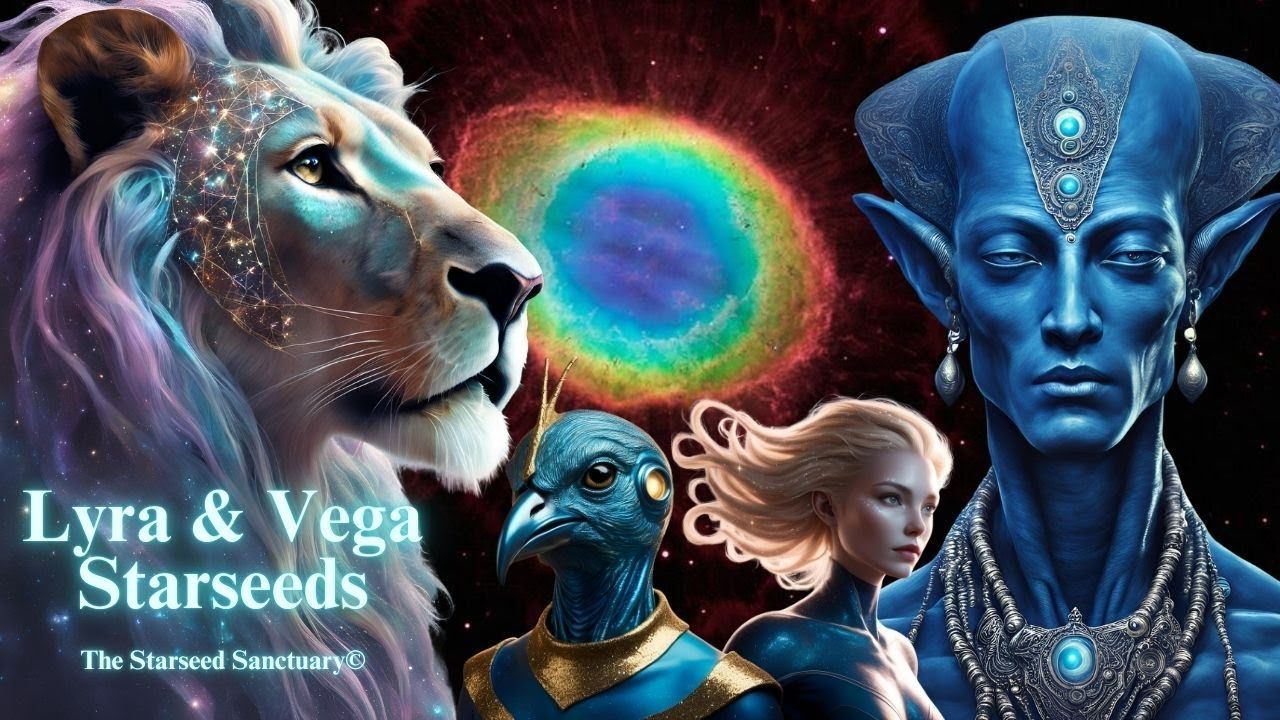
Lyra & Vega Starseeds, The Origins of Galactic Civilization, Feline, Avian, & Human Star Families

Lyra & Vega Starseeds, The Origins of Galactic Civilization, Feline, Avian, & Human Star Families

1ed86af-2a50-41a8-62e-6245d5e275_LYRA_youtube.jpg


Lyra & Vega Starseeds, The Origins of Galactic Civilization, Feline, Avian, & Human Star Families

Our Lyran Origins? The Truth About Humanity | Extraterrestrial Documentaries

The Lyrans Alien Race: Origins, Agenda & Hidden Mysteries Explained

LYRA Galactic History pt 1: Our True Ancestry #lyra

LYRA Galactic History Part 2: Draco Wars #galacticfederation

{ https://thestarseedsanctuary.mykajabi.com/  }

Hoe vind je dit bericht?
Geschreven door peter om 22:59 Stuur door

Dr. Phil claims Trump recruited him to review UFO files and found government cover-up

Dr. Phil claims Trump recruited him to review UFO files and found government cover-up

Dr. Phil said the White House recruited him to analyze how people might react to learning humans are "somewhere different in the food chain."

By Jerry Lawton

Two individuals dressed in formal attire are engaged in a conversation, possibly at a formal event. The person on the left is we

Dr. Phil says he was recruited by the White House to assess how Americans would respond to the existence of UFOs 
(Image: AP Photo/Phelan M. Ebenhack)

TV personality Dr. Phil said the Trump administration enlisted him to examine classified UFO files before their public release and claims that he discovered evidence of a "cover up."

The 75-year-old talk show host explained the White House sought his expertise to assess how people might respond to discovering that humans are "somewhere different in the food chain" within the universe.

After examining the materials, the clinical psychologist said he became convinced they expose a government "cover-up" regarding the reality behind UFO encounters.

He claimed government officials had treated President Donald Trump like a "temp employee" and withheld their complete knowledge from him.

"That infuriates me," he said, reports the Daily Star.

WASHINGTON, DC - JUNE 26: Texas Lt. Gov. Dan Patrick (C) speaks alongside Dr. Ben Carson (L) and Dr. Phil McGraw during an event

Dr. Phil said officials have treated Trump like a "temp employee 

(Image: Anna Moneymaker, Getty Images)

"How dare they do that? I don't think that's right and I think we deserve better."

He expressed worry about the ethical and psychological consequences of disclosing UFO information to the public, which could trigger everything from spiritual crises to doomsday scams.

"I think it needs to be provided with context and I think that the American public is prepared to handle that," he said.

"I think we as a government need to be prepared to help those that have a difficult time with it."

Dr Phil, a presidential ally and member of the administration's religious liberty committee, suggested he was selected due to his "independence."

DON'T MISS...

During Trump's administration, the U.S. government has disclosed four batches of UFO material. The documents, obtained from organizations including the Pentagon, NASA and the CIA, chronicle incidents spanning several decades.

They encompassed puzzling observations ranging from the Apollo astronauts' experiences on the Moon to a 2025 incident in which a military sensor detected "an area of contrast resembling a six-pointed star" over the Yellow Sea near China.

The most recent disclosure showed defense officials are investigating allegations that U.S. Navy vessels were approached by 100 UFOs.

UFO investigators have argued the X-File disclosures thus far have fallen short of complete transparency.

Donald Schmitt, an investigator at Roswell, New Mexico's International UFO Museum and Research Center, said "It's nothing new."

"It's the same game that they have played all these years. Once again, we're getting the carrot dangled in front of us," he said.

RELATED VIDEOS

Dr. Phil STUNS Piers Morgan With Explosive UFO Government Cover-Up Claims

Dr. Phil read the UAP files before the public, here's what he found | Reality Check

UFO Files: All of the videos from latest Defense Department release

{ https://www.the-express.com/ }

Hoe vind je dit bericht?
Geschreven door peter om 22:19 Stuur door

New UFO files describe spinning discs, glowing orbs and one object shaped like a potato

New UFO files describe spinning discs, glowing orbs and one object shaped like a potato

WASHINGTON (AP) — One was a rotating disc that sent out beams of light. Another was a shining red orb of a hue the observer had never seen before. Then there was the one compared to a potato, and also a bean, but with a coat of shimmering, fish-like scales.

Harvard professor with polarizing alien theories is picked to lead new White House UFO council

FILE - A patron passes a painting inside the International UFO Museum and Research Center in Roswell, N.M., on June 10, 1997. (AP Photo/Eric Draper, File)

DVR KSD ED

WASHINGTON (AP) — One was a rotating disc that sent out beams of light. Another was a shining red orb of a hue the observer had never seen before. Then there was the one compared to a potato, and also a bean, but with a coat of shimmering, fish-like scales.

Those were some of the UFOs described in documents released Friday by the Pentagon, the third release since President Donald Trump directed his administration to give the public full disclosure around what it knows about alien life and mysterious objects in the sky.

The 72 files released on Friday don’t include the kind of blockbuster revelation that Trump has teased. There’s no conclusive evidence of alien life or government cover-ups. But the files reveal new details about some recent sightings, along with the government’s efforts to explain what many find inexplicable.


New UFO files describe spinning discs, glowing orbs and one object shaped like a potato

Take, for instance, the potato.

It happened in 2022, on a brisk February morning in Colorado Springs, Colorado. Five U.S. Army members at Fort Carson walked out of an office building and saw something strange hovering over Cheyenne Mountain, a few miles to the west.

“The object was ‘potato’ shaped with distinct edges and appeared to look painted in a creamy/whitish opalescent color,” according to an account in an FBI document. It was made up of “articulating fish scales or panels that were non-symmetrical, non-overlapping and irregular shaped.”

It stayed motionless, shimmering, for about two minutes, the men recounted to the FBI. Then it vanished in the blink of an eye. None of the men had phones on them. There’s no video, no photos.

Report says ‘potato’ could have been a trick of light

Authorities tasked with investigating the episode said they couldn’t explain it easily. Their report found — with “low confidence” — that it may have been “backscattering of sunlight.” Low light from the rising sun could have reflected off the mountain’s snow and illuminated low clouds above, it said.

The men insisted it was a clear, cloudless day. No aircraft or balloons were believed to be in the area. The four-page report, heavily redacted and attributed only to an “intelligence community partner,” said it didn’t appear to be technology from a foreign adversary. An FBI rendering looks just like one might imagine — like a scaly, pale potato above a low mountain.

The case remains unsolved.

A similarly inclusive report examined a series of sightings in October 2023, this time by six federal law enforcement agents. Multiple times, the agents said, they saw a bright orange orb appear above a ridgeline and spawn two to four smaller red orbs.

The orbs disappeared quickly most of the time, but in one instance, the agents said an orb hovered motionless in the sky for several hours. There’s no video or photo evidence of the sightings, the report said.

An analysis dated this month goes through a series of possible explanations. Military aircraft were conducting exercises in the area, and some deployed flares. There could have been other testing of developmental U.S. technology nearby, the report said. It listed those as “plausible” but not conclusive explanations.

Yet it didn’t rule out the possibility that it was some “unrecognized technology.” With relatively little evidence to work from, it called for more investigation into the case.

White House boosts video of red orb

The analysis was conducted by the Pentagon’s All-domain Anomaly Resolution Office, which Congress created in 2022 to investigate reports of unidentified anomalous phenomena, also known as UAP. Previous reports from the agency say it has not found any evidence of extraterrestrial life.

Among the most recent files is an FBI report from February detailing a sighting in an undisclosed part of the Northeast United States. A person whose name is blacked out reported coming home and seeing an intense light hovering below the trees in their backyard. It was described as a sphere of a “brilliant and beautiful” red, which the person had never seen.

“Inside the red sphere, at the center, there appeared to be what (redacted) described as a ‘white plasma sun’ about the size of a basketball,” according to the FBI file.

A second sphere appeared, and both silently flew out of sight, the file says. Cellphone footage shows two glowing red orbs floating across the sky. The White House shared the video on social media on Friday with no message beyond the file’s name: “‘NORTHEASTERN ORB SIGHTING,’ 2025.”

Zimbabwe sighting included ‘beams’ from a disc

So far, the Trump administration’s transparency campaign has led to the release of about 300 files dating to the 1940s, some brand-new to the public and some adding detail on previously known cases.

The newest batch includes a 2008 CIA report from Zimbabwe labeled as “never before released.” On a July day above the country’s main airport, observers reportedly saw something straight out of a Hollywood movie: It was “disc-like in shape with a hollow center, and had a series of rotating lights on the underside of the airframe.”

“At one point during observation, ‘beams’ were observed emanating from the object,” the CIA report said.

The lights changed colors, and the aircraft ascended high out of view, the report says. There was debate about where it came from, according to the report, with some suggesting a foreign government and some positing “extraterrestrial origins.”

The Associated Press


‘Potato UFO’ Over Secret US Sites? Pentagon’s New Dump EXPOSES Strange Sightings Caught On Cam

Third batch of Pentagon UFO files released: See all 6 videos

{ https://www.thestar.com/ }

Hoe vind je dit bericht?
Geschreven door peter om 21:36 Stuur door

From stellar engines to Dyson bubbles, alien megastructures could hold themselves together under the right conditions

From stellar engines to Dyson bubbles, alien megastructures could hold themselves together under the right conditions

{ https://phys.org/space-news/ }

Hoe vind je dit bericht?
Geschreven door peter om 20:52 Stuur door

Are Aliens Harvesting the Spin of Stars?

Are Aliens Harvesting the Spin of Stars?

Artist's impression of a star that might eventually become a magnetar. Credit - ESO/L. Calçada Artist's impression of a star that might eventually become a magnetar. Credit - ESO/L. Calçada

One of the challenges of searching for “technosignatures” (i.e. signs that intelligent life somewhere in the universe has created technology) is understanding what to look for. Technology is a very broad area, and different types would show up as different features. One of the most commonly cited is a Dyson sphere, which attempts to encapsulate a star and capture it’s outgoing light to produce energy. But while we’ve looked for the mid-infrared waste heat these structures would produce for decades, we haven’t found a definitive instance of one. According to a new paper, available in pre-print on arXiv by Turkish high school student Sahin Torlakcik, that might be because we are looking for the wrong type of energy all together.

In his paper, Torlakcik introduces the concept of Stellar J-Harvesting - building a system that could deliberately extract a star’s rotational angular momentum. To be clear, this solution wouldn’t capture the same energy output of a full Dyson sphere (or, more accurately, swarm), but it does have two massive advantages - it requires much less physical material to build, and it would generate waste heat that was millions of times lower than the stars luminosity, essentially making it “invisible” to most infrared surveys.

So how would this work in practice? You can’t simply set up a frictional braking system on a star. Instead, you would have to sap its energy by using one of a few different electromagnetic coupling techniques.

Fraser talks about how we can search for technosignatures.

According to the paper, one technique would be to build a massive conducting structure that is embedded in the solar wind, and extracts angular momentum using Alfvén-wave coupling. These low-frequency oscillations of magnetic fields can interact with the tether, transferring some of the stars angular momentum into the tether itself.

An alternative approach is to create what is essentially a giant orbital flywheel. Building a massive ring at approximately 1 AU (the distance from the Sun to the Earth) could capture angular momentum from the star via Lorentz-force coupling. Using the Lorentz force, the fundamental force exerted on a charged particule by a magnetic field, this megastructure could scavenge angular momentum from the star by using its magnetic field to push on a massive electrically conductive ring.

Another interesting alternative is a synchrotron spindown array. Synchrotron radiation is a form of radiation that occurs when a particle, such as an electron, travels a curved path near the speed of light. When these particles travel along a magnetic field line, they lose energy by emitting highly directional beams of radiation, known as synchrotron radiation.

Fraser talks about what happens if we do find one of these megastructures out in the galaxy.

By placing an array of extremely strong electrically conductive structures in the flow of the solar wind, this technosignature would accelerate those charged particles to near relativistic speeds, and thereby emit synchrotron radiation. Since Newton’s Third Law holds that every action has an equal and opposite reaction, this radiation has a reactive torque that pushes the array, which, since it is coupled to the star’s stellar wind, thereby opposes and slows down the star’s rotation. Crucially, this technique would also emit a specific technosignature of its own, in the form of radio or X-rays, depending on the speed and field strength of the system.

Some of these techniques are similar to those seen in another technosignature idea - starlifting - whereby an advanced civilization intentionally harvests material from a star, either to use that material to build megastructures or to artificially extend the star’s life by lowering its mass. However, this particular use case has a very distinct pattern that we can easily search for - stars that are rotating more slowly than their peers.

So Torlakcik began that search himself. He selected the Kepler field of stars for a first look, and sorted the stars by color and surface gravity, while also applying strict filters to eliminate natural false positively (like subgiants and pre-main-sequence stars). He was left with a dataset of 6,725 FGK main-sequence stars. Out of this group, two interesting candidates emerged - KIC 67606183 and KIC 9834255. Both are G-type main sequence stars, but spin at a relatively slow 61 and 65 days respectively, in comparison to the 5 to 10 days stars their age normally take.

To be clear, Torlakcik does not claim to have found a rotational sapping megastructure at these two locations. In fact, their slow rotation rates are likely due to some other mundane astrophysical phenomena such as an unresolved binary or low metallicity. But at the very least, maybe it's worth a look at these two stars in particular to see if we can figure out why, exactly, they are rotating so much slower than their peers.

Time for more observations, then, and Torlakcik has several ideas of follow up studies that could help narrow the search for hints of these types of megastructures in the future. Luckily, he will have a long time to continue that search. After all, he’s only in high school, and already starting to make a name for himself in the search for technosignatures.

Learn More:

{ https://www.universetoday.com/ }

Hoe vind je dit bericht?
Geschreven door peter om 20:30 Stuur door

Noordwest-Europa stond ooit tienduizenden jaren in brand

afbeelding

Illustratie van hoe varenvelden van 201 miljoen jaar geleden eruit kunnen hebben gezien.

Bron Illustratie: Mark Garlick

Noordwest-Europa stond ooit tienduizenden jaren in brand

Zo’n 200 miljoen jaar geleden stond het gebied dat nu Noordwest-Europa heet tienduizenden jaren lang in brand. De planten die in dit helse landschap leefden, bleken daarbij niet helemaal onschuldig.

Onderzoekers aan de Universiteit Utrecht hebben gereconstrueerd hoe het er in Noordwest-Europa aan toeging tijdens de zogeheten eind-Triasextinctie. Deze ramp begon toen het supercontinent Pangea uiteenbrak. Bij die breuk kwamen gigantische hoeveelheden lava en broeikasgassen vrij, die de temperatuur met vijf tot tien graden omhoog joegen. Dat was genoeg om ecosystemen wereldwijd te ontwrichten. De bossen die het landschap domineerden, verdwenen tijdens deze periode. Op de kale bodem kregen varens daarna vrij spel.

Die varens waren hun eigen ergste vijand. Omdat ze overleefden waar andere planten stierven, werden ze extreem dominant. Diezelfde eigenschap speelde hen parten. Wanneer dichte varenmatten uitdrogen, vormen ze namelijk een dikke laag brandstof. Tegelijkertijd verstikken ze andere planten.

En anders dan bomen laten varens zich door brand niet zomaar wegvagen. Bovengronds branden ze af, maar vanuit hun ondergrondse wortelstelsel schieten ze snel weer omhoog. Zo ontstaat een vicieuze cirkel, een helse kringloop die volgens de auteurs van de studie tussen de 40.000 en 300.000 jaar aanhield.

Een natuurlijke brandmelder

De onderzoekers konden dit achterhalen door te kijken naar boorkernen uit vier locaties. Naast de gebruikelijke sporen van brand, zoals houtskool en moleculen uit rook, vonden ze daarin iets onverwachts.

Normaal verkleuren fossiele stuifmeelkorrels en plantensporen naarmate ze dieper begraven raken. Hoe dieper, hoe warmer en hoe donkerder ze worden. Maar in deze kernen zagen de wetenschappers een heel ander patroon. Tijdens de onderzochte periode werden de korrels ineens diep donkerbruin. Daarna lichtten ze weer op tot geel.

De donkere zone verscheen in alle vier de boorkernen op exact hetzelfde moment. Dat is opvallend, want alle onderzochte plekken hebben elk een heel andere geologische geschiedenis. Er moest dus een kracht van buitenaf aan het werk zijn geweest.

De onderzoekers gebruikten daarvoor een simpele maatstaf: de zogeheten Palynomorph Darkness Index. Met een camera op een microscoop maten ze de precieze kleur van elke korrel, in totaal zo’n 15.000 keer. Vervolgens vergeleken ze stuifmeel van bomen met sporen van varens om uit te sluiten dat het om een eigenschap van een bepaalde plantengroep ging. Alle groepen vertoonden dezelfde verkleuring. Dat is bewijs voor een oorzaak van buitenaf. De donkere zone viel bovendien precies samen met de piek in houtskool en rookmoleculen. De verkleurde korrels toonden met andere woorden aan dat er in een bepaalde periode langdurig grootschalige branden plaatsvonden.

Een waarschuwing voor het heden

Deze varenexplosie ontstond door een samenloop van omstandigheden, waaronder ontbossing, bodemerosie, de opwarming van de aarde en de branden zelf. Dat maakt het verhaal actueel. Ook vandaag verandert het klimaat namelijk in sneltempo. Dat betekent niet per se dat we binnenkort in een vuurzee moeten overleven. Het toont vooral aan dat klimaatverandering onverwachte effecten kan hebben die duizenden tot honderdduizenden jaren aanhouden.

Bronmateriaal

{ https://scientias.nl/nieuws/natuur-klimaat/ }

Hoe vind je dit bericht?
Geschreven door peter om 20:13 Stuur door

Een asteroïde maakte een einde aan de dinosaurussen, maar klopt het wel dat andere soorten juist floreerden?

Nieuwe hypothesen over het uitsterven van de dinosauriërs

Een asteroïde maakte een einde aan de dinosaurussen, maar klopt het wel dat andere soorten juist floreerden?

Jeannette Kras - Redacteur

Bij de laatste grote massa-extinctie, ongeveer 66 miljoen jaar geleden, legden de dinosaurussen het loodje, net als veel andere dieren. Er zou echter één soort zijn geweest die juist een snelle evolutie doormaakte: de tonijn en aanverwanten. Maar dat blijkt nu niet te kloppen.

Volgens de hypothese vulden tonijnen en andere grote roofvissen de ecologische niche op die was achtergelaten door hun enorme roofzuchtige voorgangers, vergelijkbaar met de manier waarop zoogdieren na de massa-extinctie de plaats innamen van de niet-vliegende dinosauriërs.

Ontwikkeling kwam veel later

Onderzoekers van Yale stellen echter dat die theorie geen standhoudt. Ze werpen nieuw licht op de manier waarop deze economisch belangrijke vissen hun indrukwekkende lichaamsgrootte, snelheid en vermogen ontwikkelden om hun lichaamstemperatuur te reguleren (endothermie) in koude zeeën.

Voor de studie zijn genetische gegevens met fossiele vondsten gecombineerd om de meest complete evolutionaire stamboom van de Scombridae, of makreelachtigen, samen te stellen. Deze vissenfamilie omvat tonijnen en makrelen, evenals ongeveer de helft van alle nog levende warmbloedige straalvinnige vissoorten.

De oorsprong van de makreelachtigen gaat terug tot ongeveer de periode van de asteroïde-inslag. Tegelijkertijd blijkt dat tonijnen, makrelen en verwante roofvissen pas veel later, onafhankelijk van elkaar, een groot lichaamsformaat en temperatuurregulatie ontwikkelden.

Drie evolutionaire ontwikkelingen

“Onze resultaten tonen aan dat de massa-extinctie niet de aanleiding vormde voor de evolutie van tonijnen en andere grote, endotherme roofdieren”, zegt hoofdonderzoeker Chase Brownstein van Yale. “We laten zien dat de lichaamsbouw van deze roofdieren zich over tientallen miljoenen jaren heeft ontwikkeld en dat er geen verband bestaat tussen het ontstaan van endothermie en een groot lichaamsformaat binnen deze afstammingslijnen. Meer in het algemeen onderstreept dit onderzoek dat voorzichtigheid geboden is bij het rechtstreeks afleiden van de evolutie van lichaamsbouw uit evolutionaire stambomen.”

Leestip:

De verschillende vormen van endothermie – een eigenschap die tonijnen en andere roofvissen ook helpt om snel te zwemmen – zijn onafhankelijk van elkaar drie keer binnen de verschillende afstammingslijnen van de Scombridae ontstaan. Minstens twee van deze drie evolutionaire ontwikkelingen vonden pas 10 tot 15 miljoen jaar na de asteroïde-inslag plaats. Tot nu toe werd aangenomen dat endothermie nauw samenhing met een groot lichaamsformaat, maar het onderzoek levert daar weinig bewijs voor. In plaats daarvan nam de lichaamsgrootte op verschillende momenten tijdens de evolutie van tonijnen en andere makreelachtigen toe. Alles bij elkaar ontwikkelden de lichaamsvormen van de huidige tonijnen en makrelen zich over een periode van ongeveer 50 miljoen jaar, aldus de onderzoekers.

Meer inzicht helpt soort beschermen

Een beter inzicht in de evolutionaire biologie van tonijnen, wereldwijd belangrijk voedsel voor de mens, kan bijdragen aan de bescherming van de soort. De populaties van de economisch belangrijke Atlantische blauwvintonijn zijn de afgelopen decennia sterk afgenomen als gevolg van overbevissing.

Daarnaast is de studie van belang voor de menselijke gezondheid. “Het inzicht dat endothermie zich meerdere keren onafhankelijk heeft ontwikkeld bij tonijnen en makrelen, geeft ons meer kennis over de fundamentele mechanismen achter stofwisseling en warmteregulatie”, klinkt het. “Juist deze systemen spelen een centrale rol bij ziekten en gezondheidsproblemen bij mensen, zoals obesitas, diabetes en het metabool syndroom.”

De K-Pg-massa-extinctie
Ongeveer 66 miljoen jaar geleden werd de aarde getroffen door een enorme asteroïde met een doorsnede van ongeveer 10 kilometer. De inslag vond plaats op de plek van het huidige Mexicaanse schiereiland Yucatán en vormde de Chicxulub-krater. De klap veroorzaakte gigantische bosbranden, aardbevingen en tsunami’s. Miljarden tonnen stof, roet en zwavel kwamen in de atmosfeer terecht, waardoor het zonlicht maanden tot jaren werd geblokkeerd. Hierdoor daalde de temperatuur wereldwijd sterk en stortten voedselketens in. Planten stierven af, waarna ook planteneters en hun roofdieren verdwenen. Naar schatting stierf ongeveer 75 procent van alle dier- en plantensoorten uit, waaronder alle niet-vliegende dinosauriërs, veel zeereptielen en talloze andere organismen. Deze gebeurtenis markeert de overgang van het Krijt naar het Paleogeen en staat bekend als de Krijt-Paleogeen- of K-Pg-massa-extinctie. Hoewel het een wereldwijde ramp was, creëerde de uitsterving ook ruimte voor de evolutie van nieuwe groepen dieren, waaronder zoogdieren en moderne vogels.

Bronmateriaal


The Day Dinosaurs Disappeared Forever

De meest angstaanjagende dag in de geschiedenis van de aarde: de asteroïde die de dinosaurussen uitr

{ https://scientias.nl/ }

Hoe vind je dit bericht?
Geschreven door peter om 19:34 Stuur door

Is Earth entering a sixth mass extinction? Scientists reveal the warning signs

Is Earth entering a sixth mass extinction? Scientists reveal the warning signs

A single nuclear bomb could wipe out a city

©Provided by The Daily Digest

Concern among experts

Approximately 66 million years ago, a massive asteroid impact brought an end to the age of the dinosaurs and triggered Earth’s fifth mass extinction. Today, scientists warn that the planet may be entering a sixth mass extinction event, driven not by a cosmic collision but by accelerating human-driven changes to the natural world.

An understudied field

©Provided by The Daily Digest

A new mass extinction
A team led by Prof. Robert Cowie, from the University of Hawaii, argues in a study published by Biological Reviews that it “seems increasingly likely” that we’re in the early stages of a new mass extinction.

It is happening

©The Daily Digest

It is happening
“Denying it is simply flying in the face of the mountain of data that is rapidly accumulating, and there is no longer room for skepticism, wondering whether it really is happening,” argues Cowie, as quoted by news website Vice.

Malawi is an excellent location to go on a safari

©Provided by Showbizz Daily (English)

What is a mass extinction?
A mass extinction occurs when around 70% of animal and plant life cease to exist. In other words, it’s a global catastrophe where biodiversity and the ecosystem are up for grabs.

Mollusks

©Provided by The Daily Digest

Mollusks
Cowie’s study focuses on invertebrate animals, specifically mollusks. The team behind the study considers that the International Union for Conservation of Nature provides disproportionate attention given to vertebrates, such as birds and mammals.

Animal diversity

©Provided by The Daily Digest

Image: Ed van Duijin / Unsplash

Animal diversity
“The International Union for Conservation of Nature has not evaluated any but a tiny, tiny fraction of invertebrates such as insects and snails and spiders and crustaceans, which constitute 95 percent of animal diversity,” Cowie told Vice.

A tiger with a pouch

©Provided by Showbizz Daily (English)

Pictured: A Tasmanian tiger (Thylacine), which was declared extinct in 1936, is displayed at the Australian Museum in Sydney.

Since 1500
The study made by Cowie and his team indicates that something around 7.5% to 13% of species has disappeared since 1500, which suggests that we’re heading towards mass extinction.

 It's our fault

©Provided by The Daily Digest

It's our fault
If we’re indeed heading towards the sixth mass extinction, it would be the first that we know of caused by the intervention of a species. In this case, humans.

The biggest polluter

©Provided by The Daily Digest

The Anthropocene
In fact, the human effect on the environment is so intense that many scientists posit that we live in a new geological epoch: The Anthropocene, which began when humans started to meaningfully impact Earth’s geology and ecosystems

Agriculture

©Provided by The Daily Digest

Agriculture
The Anthropocene so far remains hypothetical. Some claim that it began when humans developed agriculture, 12,000-15,000 years ago.

The Great Acceleration

©Provided by The Daily Digest

The Great Acceleration
Other experts place The Anthropocene hand in hand with The Great Acceleration, the astounding rate of human growth and resource consumption that took off after World War 2.

Brave new world

©Provided by The Daily Digest

Brave new world
In other words, the world in which our grandparents were born is completely different from the world we live in now.

Bees and butterflies

©Provided by The Daily Digest

Image: Dmitry Grigoriev / Unsplash

Bees and butterflies
A good example of the incoming sixth mass extinction is the disappearance of bees and butterflies around the globe.

Within a single generation

©Provided by The Daily Digest

Image: Annie Spratt / Unsplash

Within a single generation
According to The Guardian, the bumblebee population in Europe and North America has declined over 30% in the span of a single generation, which points to mass extinction.

More than honey

©Provided by The Daily Digest

More than honey
The collapse of the bumblebee population also affects humans. The bees are not only responsible for honey, but also pollinate crops such as tomatoes or berries. Without them, less food is produced

The butterfly effect

©Provided by The Daily Digest

Image: Ed van Dujin / Unsplash

The butterfly effect
Meanwhile, National Geographic reports that over 450 species of butterflies in the US Southwest are also disappearing.

Crucial for pollination

©Provided by The Daily Digest

Crucial for pollination
Butterflies are also crucial to pollinate many plants and flowers, affecting the food chain and the entire ecosystem.

An inconvenient truth

©Provided by The Daily Digest

An inconvenient truth
The main culprit for the decline of bees and butterflies is warmer environments, caused by climate change. The rising temperatures turn the previous home of these species into something inhospitable.

More violent crimes in deforestation areas

©Provided by The Daily Digest

Pictured: The effects of deforestation in the Amazon Jungle

Land and raw materials.
That's not even taking into account the inordinate use of land and raw materials, affecting or outright destroying whole ecosystems.

We did start the fire

©Provided by The Daily Digest

We did start the fire
The damage humans have made to the planet has proven to be irreversible. The most worrying part is that, despite endless initiatives and summits with the best intentions, it continues to this day.

Time's running out

©Provided by The Daily Digest 

Time's running out
Meanwhile, time is running out to still maintain the precious balance that has enabled humanity to live for thousands of years. Once we have lost that balance, who knows what challenges will face the next generation.

RELATED

The Sixth Mass Extinction

{ The Daily Digest }

Hoe vind je dit bericht?
Geschreven door peter om 18:21 Stuur door

Rare blue optical transient points to possible new class of cosmic explosion

Rare blue optical transient points to possible new class of cosmic explosion

Chinese astronomers discover a peculiar optical transient displaying unique emission properties

Artist's conception illustrating the aftermath of an intermediate-mass black hole tearing apart a passing star, resulting in an accretion disk and narrow relativistic jet (top left). The dotted line indicates our line of sight from Earth. The jet's off-axis afterglow only became visible once the expanding radio emission (bottom right) had grown wide enough to sweep into our line of sight, causing that emission to brighten dramatically years after the initial event.

Credit: NSF/AUI/NSF NRAO/M.Weiss

Chinese astronomers report the detection of a peculiar optical transient event that occurred in the center of a dwarf galaxy. The newly discovered event, designated AT2019ijn, is a fast-rising, slow-decaying blue optical transient with exceptionally bright radio emission. The finding was detailed in a paper published July 6 in The Astrophysical Journal Letters.

One of the rarest transients

Among astronomical transients are events with extreme parameters, such as fast-evolving blue optical transients (FBOTs). They are extremely rare and characterized by a rapid rise to peak brightness within 10 days and blue colors near the peak, followed by an exponential decay to the post-flare level within a month.

AT2019ijn was first identified on May 31, 2019, by the Zwicky Transient Facility (ZTF) as an optical transient in the nucleus of a dwarf galaxy at a redshift of 0.27. New observations of this source conducted by a team of astronomers led by Hucheng Ding of Anhui Normal University in China indicate that AT2019ijn is a peculiar FBOT.

"In this Letter, we present the discovery and results from the multi-wavelength analysis of AT2019ijn, a peculiar optical transient that occurred in the center of a dwarf galaxy," the researchers write.

Chinese astronomers discover a peculiar optical transient displaying unique emission properties

The host-subtracted optical light curves of AT2019ijn. Credit: The Astrophysical Journal Letters (2026). DOI: 10.3847/2041-8213/ae732c

What do the new observations reveal?

The observations found that AT2019ijn rapidly rose in the optical band to a peak luminosity of −21.05 mag in 5.26 days, followed by a slow decline over more than a month. Moreover, the transient has a persistently blue color. These properties generally resemble those of typical luminous FBOTs, with the exception of the slow decline, which is more consistent with superluminous supernovae (SLSNe) or tidal disruption events (TDEs).

In the radio band, the emission from AT2019ijn was found to be luminous and long-lasting, peaking 641 days after its optical discovery. The peak radio luminosity of AT2019ijn was more than one order of magnitude higher than that of any other known LFBOT or SLSN, but comparable to that of jetted TDEs.

The astronomers noted that the radio emission from AT2019ijn can be explained by an off-axis relativistic jet that spreads into our line of sight at late times, giving rise to the delayed peak in the light curve. They estimate that the jet's kinetic energy is 700 sexdecillion ergs, which, together with the luminous optical emission, suggests the presence of an active central engine.

The nature and classification

The authors of the paper assume that the results favor the TDE scenario as an explanation for the nature of AT2019ijn. Therefore, this transient is most likely a jetted TDE involving an intermediate-mass black hole with a mass of around 132,000 solar masses. However, they do not completely rule out the hypothesis that AT2019ijn may be a jetted magnetar.

The researchers concluded that the peculiar properties of AT2019ijn may mean that it belongs to a new class of optical transients.

"Our results suggest that AT2019ijn may represent a new class of relativistic optical transients, paving a new way for their statistical studies by combining optical and radio time-domain surveys," the scientists conclude.

RELATED VIDEOS

New Cosmic Explosion Class Discovered

The Cosmic Explosion Scientists Can't Explain 😱

{ https://phys.org/space-news/astronomy/ }

Hoe vind je dit bericht?
Geschreven door peter om 17:26 Stuur door

Mysterious white object that 'popped through the clouds' forces pilots to swerve midair: 'It scared the hell out of me'

Mysterious white object that 'popped through the clouds' forces pilots to swerve midair: 'It scared the hell out of me'

A mysterious unidentified flying object described as a 'white something' panicked both passengers and pilots after an alleged near-miss over Hawaii.

A woman on board a Mokulele Airlines flight between Molokai to Maui said she spotted the object which forced the plane to swerve to avoid a collision as they exited a cloud bank on July 9.

Molokai resident Tami Dixon said the incident: 'Literally scared the hell out of me. Both pilots looked at each other and veered to the right.'

The FAA and National Transportation Safety Board both could not confirm that another plane or craft was in the area.

Dixon suspected that the object may have been a drone, but drone experts have stated that, if everyone was following US air safety rules, plane and drones should never get that close.

The incident came just a day before the latest batch of declassified UFO files were released by the Pentagon, including video evidence of another strange white object nearly colliding with a US military aircraft at extreme speed.

While Hawaii is not the biggest hotbed for UFO activity, there have already been nine other sightings submitted to the National UFO Reporting Center this year.

While the US government has maintained for decades that there is no physical proof UFOs and alien life exist, the public disclosure of once-classified sightings has now revealed many similar incidents to the one reported between Molokai and Maui this month.

Pictured: A Mokulele Airlines flight similar to the plane that swerved to avoid an unidentified flying object over Hawaii

Pictured: A Mokulele Airlines flight similar to the plane that swerved to avoid an unidentified flying object over Hawaii

Tami Dixon, a passenger on the July 9 flight, suggested that the object may have been a drone

Tami Dixon, a passenger on the July 9 flight, suggested that the object may have been a drone

Timo Sullivan of Aloha Aina Drones said after the incident that, if the UFO was a drone, it would have had its own flight lane over Hawaii, making a collision unlikely.

'The FAA establishes very clear guidelines of where aircraft can fly. Kind of like on a highway, you have your own driving lane,' Sullivan told Hawaii News Now.

'They should never actually interact or you should never have one car or aircraft entering another car’s lane.'

Dixon had said that the mystery object did not appear to be a bird and was too small to have been another plane in the Mokulele Airlines' path.

According to the passenger, who was reportedly headed to undergo eye surgery, the small commuter plane had been passing through clouds which brought visibility down to zero.

Once the plane left the clouds, however, Dixon claims the UFO suddenly appeared and was seen by both pilots, who took action to avoid a collision.

A spokesperson for Mokulele Airlines told the Daily Mail they have no record of a near-miss involving one of their planes that day.

Meanwhile, the fourth tranche of UFO released on July 10 captured a similar encounter over the eastern US in 2015.

UFO files released on July 10 revealed a near-miss with an object over the eastern US in 2015

UFO files released on July 10 revealed a near-miss with an object over the eastern US in 2015

Like multiple military videos released before it, cameras caught a small object moving at the speed of a missile, jet aircraft or something even faster than human technology is capable of achieving.

In Hawaii, NUFORC, an independent website where everyday people can report and read about UFO sightings worldwide, there have been over 700 incidents made public since 1960.

These have ranged from Americans seeing strange lights in the sky to objects described as orbs, triangles, diamonds and rectangles hovering over the islands.

The son of music star Willie Nelson revealed last year that he has had multiple encounters with UFOs while visiting the state.

Singer and songwriter Lukas Nelson revealed on the Joe Rogan Experience podcast in July 2025 that he and several other people watched as orb-shaped UFOs streaked over Hawaii in 2006.

The group watched as an orange orb floated less than 200 yards over Maui, which seemed to be observing the onlookers below.

'Then I swear it seemed like as soon as enough people saw it, it went whoosh. And then it went whoosh. And it moved like nothing else I thought possible at the time. It went out of the atmosphere. And it was crazy. Faster than any drone,' the performer said.

{ https://www.dailymail.com/sciencetech/index.html }

Hoe vind je dit bericht?
Geschreven door peter om 00:18 Stuur door

Meer van UFO'S of UAP'S, ASTRONOMIE, RUIMTEVAART, ARCHEOLOGIE, OUDHEIDKUNDE, SF-SNUFJES EN ANDERE ESOTERISCHE WETENSCHAPPEN - DE ALLERLAATSTE NIEUWTJES

↑ Terug naar de berichten