Naar de inhoud

UFO'S of UAP'S, ASTRONOMIE, RUIMTEVAART, ARCHEOLOGIE, OUDHEIDKUNDE, SF-SNUFJES EN ANDERE ESOTERISCHE WETENSCHAPPEN - DE ALLERLAATSTE NIEUWTJES

UFO's of UAP'S in België en de rest van de wereld
seniorennet.beseniorennet.be
Ontdek de Fascinerende Wereld van UFO's en UAP's: Jouw Bron voor Onthullende Informatie! Ben jij ook gefascineerd door het onbekende? Wil je meer weten over UFO's en UAP's, niet alleen in België, maar over de hele wereld? Dan ben je op de juiste plek! België: Het Kloppend Hart van UFO-onderzoek In België is BUFON (Belgisch UFO-Netwerk) dé autoriteit op het gebied van UFO-onderzoek. Voor betrouwbare en objectieve informatie over deze intrigerende fenomenen, bezoek je zeker onze Facebook-pagina en deze blog. Maar dat is nog niet alles! Ontdek ook het Belgisch UFO-meldpunt en Caelestia, twee organisaties die diepgaand onderzoek verrichten, al zijn ze soms kritisch of sceptisch. Nederland: Een Schat aan Informatie Voor onze Nederlandse buren is er de schitterende website www.ufowijzer.nl, beheerd door Paul Harmans. Deze site biedt een schat aan informatie en artikelen die je niet wilt missen! Internationaal: MUFON - De Wereldwijde Autoriteit Neem ook een kijkje bij MUFON (Mutual UFO Network Inc.), een gerenommeerde Amerikaanse UFO-vereniging met afdelingen in de VS en wereldwijd. MUFON is toegewijd aan de wetenschappelijke en analytische studie van het UFO-fenomeen, en hun maandelijkse tijdschrift, The MUFON UFO-Journal, is een must-read voor elke UFO-enthousiasteling. Bezoek hun website op www.mufon.com voor meer informatie. Samenwerking en Toekomstvisie Sinds 1 februari 2020 is Pieter niet alleen ex-president van BUFON, maar ook de voormalige nationale directeur van MUFON in Vlaanderen en Nederland. Dit creëert een sterke samenwerking met de Franse MUFON Reseau MUFON/EUROP, wat ons in staat stelt om nog meer waardevolle inzichten te delen. Let op: Nepprofielen en Nieuwe Groeperingen Pas op voor een nieuwe groepering die zich ook BUFON noemt, maar geen enkele connectie heeft met onze gevestigde organisatie. Hoewel zij de naam geregistreerd hebben, kunnen ze het rijke verleden en de expertise van onze groep niet evenaren. We wensen hen veel succes, maar we blijven de autoriteit in UFO-onderzoek! Blijf Op De Hoogte! Wil jij de laatste nieuwtjes over UFO's, ruimtevaart, archeologie, en meer? Volg ons dan en duik samen met ons in de fascinerende wereld van het onbekende! Sluit je aan bij de gemeenschap van nieuwsgierige geesten die net als jij verlangen naar antwoorden en avonturen in de sterren! Heb je vragen of wil je meer weten? Aarzel dan niet om contact met ons op te nemen! Samen ontrafelen we het mysterie van de lucht en daarbuiten.

Oxygen on Mars is proposed to be extracted from carbon dioxide using cold plasma

Oxygen on Mars is proposed to be extracted from carbon dioxide using cold plasma

To bring astronauts back from Mars, the oxidizer needed for the return launch will have to be produced directly on the planet. At the Massachusetts Institute of Technology, researchers have developed a small plasma reactor for this purpose that splits carbon dioxide from the Martian atmosphere. That part of the process is already working well. The harder task is capturing the oxygen before it recombines with the other reaction products.

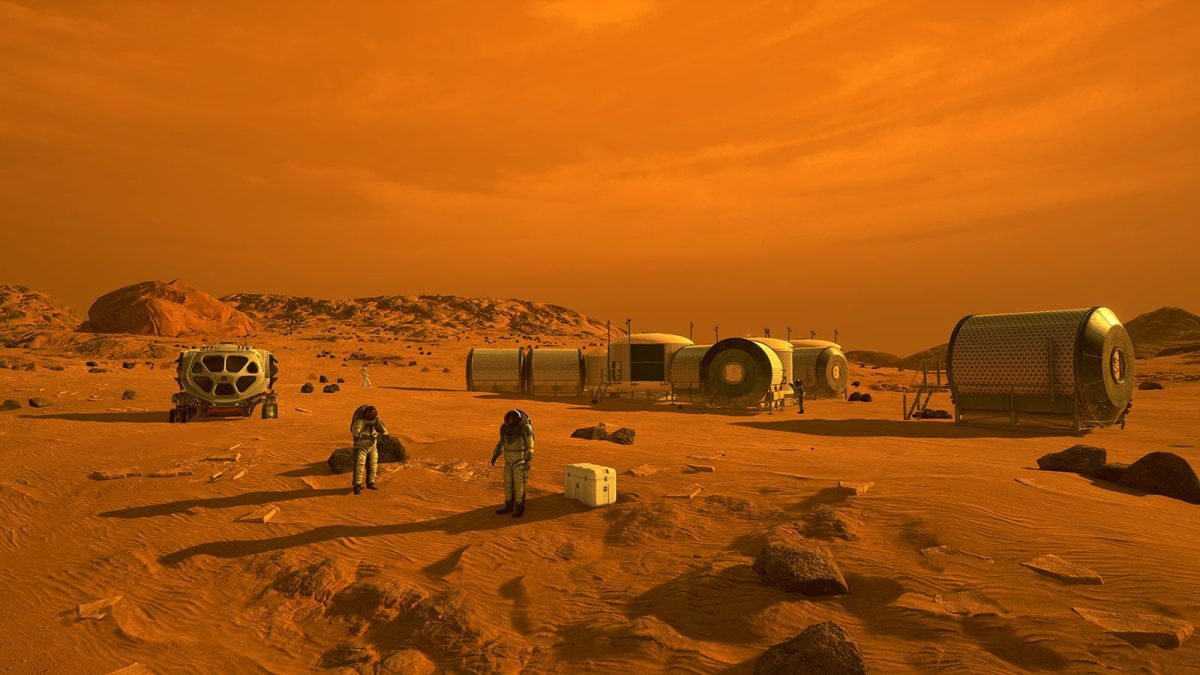
Artist’s illustration of a possible residential base on Mars together with other surface facilities. Credit: NASA

Tons of Oxidizer

Crewed missions to Mars are planned in the coming decades by NASA and China, Universe Today notes. In rockets that use liquid oxygen, the oxidizer accounts for most of the mass loaded into the tanks. According to agency estimates, launching an ascent vehicle carrying four astronauts from the Martian surface would require about 25 tons of oxygen. Transporting that much from Earth would significantly increase the mass of the entire mission.

Real-world experience so far has been far more modest. Using the MOXIE instrument aboard the Perseverance rover, 16 runs were carried out between 2021 and 2023, producing a total of 122 grams of oxygen. The amount required is roughly two hundred thousand times greater.

Cold Plasma

MIT graduate student Lanie McKinney led the development under the supervision of Associate Professor Carmen Guerra-García, according to MIT News. In her small reactor, CO2 molecules, which make up almost the entire Martian atmosphere, were split by cold plasma into oxygen and carbon monoxide.

In this state of matter, energy is transferred mainly to the electrons, while the remaining particles stay relatively cool. This makes it possible to break chemical bonds without heating the system to about 800°C, as is required by the MOXIE instrument.

The device is a nanosecond repetitively pulsed dielectric barrier discharge system, or NRP-DBD. Its tube is filled with beads. Lanie McKinney studied how the material used for this packing affects the splitting process. A description of the work has not yet appeared in a peer-reviewed journal; the results are currently known only from the researcher’s university profile.

Separating the Oxygen

According to Lanie McKinney, the splitting stage has been made to work very well. The challenge begins afterward. The output is a mixture. As long as oxygen remains close to carbon monoxide, some of it recombines with it to form CO2 again.

To prevent this, the researcher combined the reactor with a membrane that selectively allows oxygen to pass through. Such a membrane is intended to remove the gas from the reaction zone faster than it can react again.

It is still unclear how the chemically active plasma environment will affect the membrane itself, because the combination of the two systems has not yet been studied in depth. Lanie McKinney acknowledged that the team does not know for certain what result to expect.

Recycling Waste and Lunar Bricks

Outside her dissertation work, Lanie McKinney participated in NASA competitions as part of the student Space Resources Workshop group. The CERBERUZ team, which she co-led, won the second phase of the LunaRecycle Challenge and received $775,000. The award was given for a system that grinds mixed waste into powder for casting spare parts and producing filament for 3D printing.

Another project carried out as part of an academic course brought engineers and architects together. They looked for a way to protect lunar habitats from radiation using only local resources. Their solution was regolith bricks that could be cast and stacked without mortar or any other binding material.

RELATED

NASA's Miracle: Breathable OXYGEN on Mars! 🔴🌬️ #NASA #MarsMission #Shorts

MarsOxygen | This Machine Makes Air on Mars 🪐

{ https://universemagazine.com/en/articles-en/ }

Hoe vind je dit bericht?
Geschreven door peter om 16:52 Stuur door

Organic matter from meteorites preserves traces of ancient water from the Solar System

Organic matter from meteorites preserves traces of ancient water from the Solar System

The oldest meteorites still contain organic matter with oxygen that it acquired before asteroids had even formed. The source of the oxygen was most likely water in the young Solar System. In the most primitive samples, interaction with liquid inside these bodies over billions of years barely changed its isotopic composition. Geochemists at Harvard University reached this conclusion after measuring the ratio of the three oxygen isotopes in the organic material with high precision. The result helps determine where this material formed and also sheds light on the origin of the reference line scientists use to compare the composition of primitive minerals.

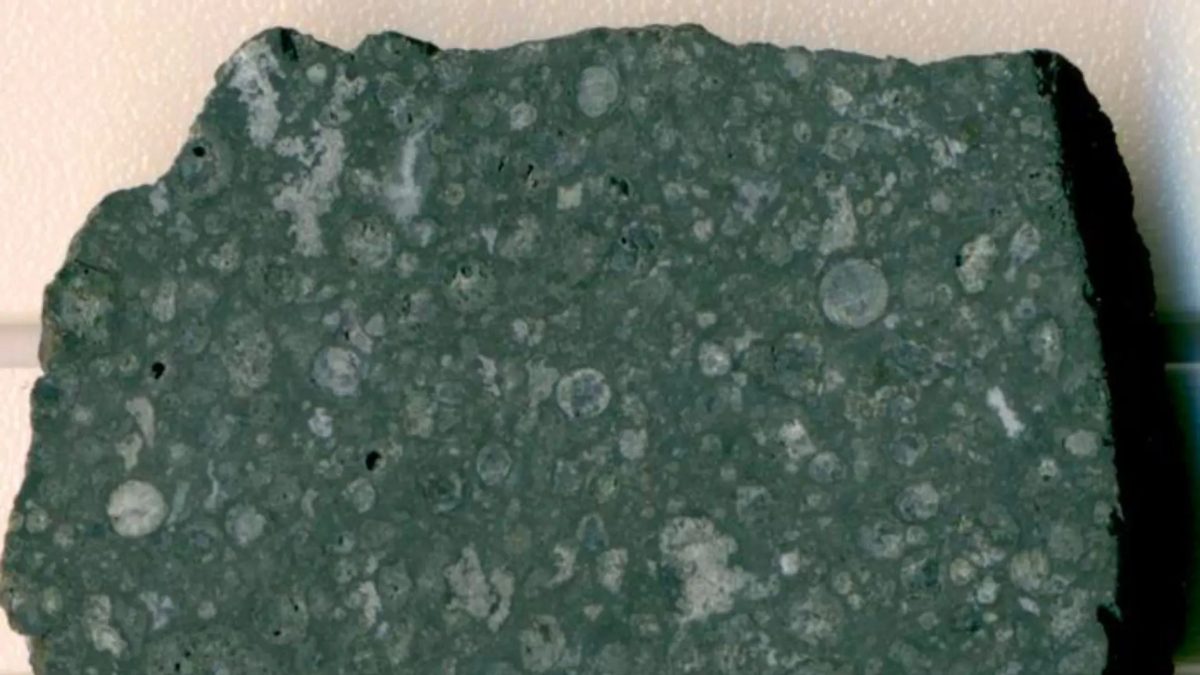
Interior section of a carbonaceous chondrite containing organic matter from the early Solar System. Credit: Mikhail Petaev (Harvard University). Source: EurekAlert

Seven Meteorites with the Same Signature

The isotopic composition of the organic matter turned out to be almost identical in seven carbonaceous chondrites from different chemical groups. These are stony meteorites that have not melted since the formation of the Solar System and contain up to 4% carbon by mass. The studied samples included members of the CI, CM, and CR classes, as well as the rare Bells and Tarda meteorites.

The deviation in the proportion of oxygen-18 from the terrestrial standard fell within a narrow range of 10.4 to 12.3 per mille. If the organic matter had exchanged atoms with water inside asteroids for a long time, the authors calculated that this value would have ranged from 27 to 58 per mille.

The results were published in the peer-reviewed journal Proceedings of the National Academy of Sciences. The first author, Daniel Crocker, and co-author David Johnston work in Harvard University’s Department of Earth and Planetary Sciences.

A Reference Line Called into Question

Oxygen atoms occur in three forms with masses of 16, 17, and 18, known as isotopes. On Earth, the ratios between them change according to a constant rule, so all terrestrial samples line up along a single line on a graph. The oldest minerals in meteorites fall along a different trend. This difference is explained by the mixing of two oxygen reservoirs with different proportions of the lightest isotope in the young Solar System.

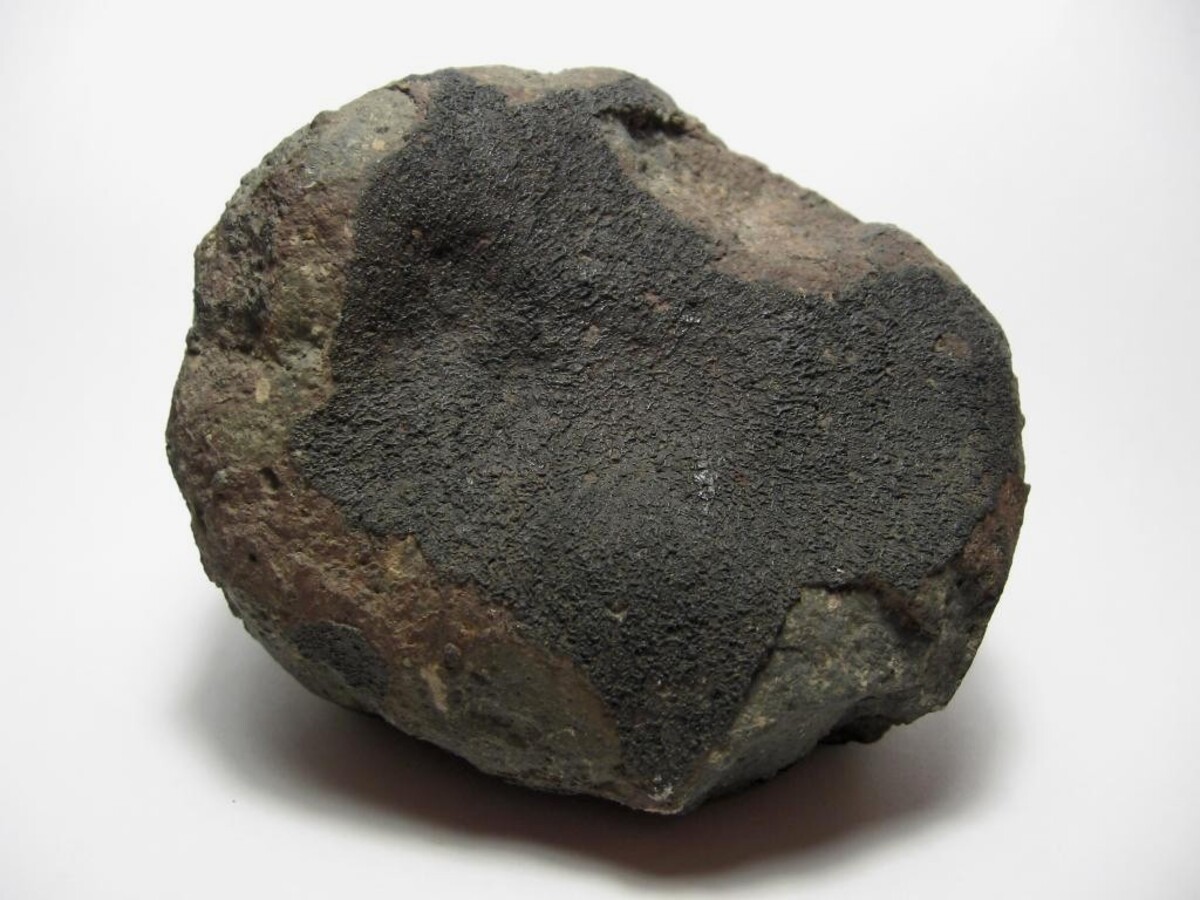
A 520-gram fragment of the Allende meteorite. This carbonaceous chondrite fell in Mexico on February 8, 1969. Credit: H. Raab. Source: Wikipedia

This pattern was first described in 1977 using samples from the Allende meteorite and was called the Carbonaceous Chondrite Anhydrous Mineral line, or CCAM. Other variants were proposed later. Some scientists considered CCAM merely a copy of the original line that had later been shifted by secondary processes, such as exchange with water. The organic matter from all seven samples studied fell on or near this line. If secondary processes had really shifted the line, the minerals and organic matter would have had to end up by chance in the same place on the graph, which the authors consider unlikely.

An Unexpected Effect of Heating

Organic matter from six meteorites that had experienced thermal effects inside their parent bodies or during impacts showed a different isotopic composition. The proportions of oxygen-17 and oxygen-18 decreased, even though the loss of volatile substances and exchange of atoms with the surrounding environment usually increase them.

To test this, organic matter from the Mighei meteorite was kept in a vacuum for one hour at 500 and 600°C. This chondrite fell in 1889 near the village of Migiia in what is now Mykolaiv Region. In the study, it served as a sample of primitive organic matter that had not previously undergone strong heating.

After the experiment, the composition of the sample shifted in the same way as in naturally heated chondrites. It is likely that before thermal alteration, the organic matter in all of the meteorites studied had the same heavy-oxygen content.

The Cold Outskirts of the Protoplanetary Disk

The authors concluded that the organic matter acquired its oxygen during its own synthesis, before it became incorporated into asteroids. The source was probably water depleted in the lightest isotope. Enrichment in nitrogen-15 and deuterium, or heavy hydrogen, points to a cold environment exposed to intense radiation. Such conditions, as Interesting Engineering writes, existed in the icy outskirts of the young Solar System.

Artist’s illustration of a protoplanetary disk

The authors explain the identical composition of samples from different meteorites in two possible ways. Either a single reservoir of organic matter spread throughout the outer part of the disk, or the same chemical process occurred everywhere within it.

An Answer Through Models

If carbonaceous chondrites delivered most of Earth’s volatile substances, then this organic matter became a major source of carbon and nitrogen for the young planet, the authors argue. These elements later helped make Earth suitable for life.

The two possible origins of the organic matter will now be tested using models of protoplanetary-disk chemistry. Scientists will also need to explain why the oxygen in meteoritic material is compositionally close to terrestrial oxygen, while our star, according to solar-wind measurements, is enriched in oxygen-16.

{ https://universemagazine.com/en/articles-en/ }

Hoe vind je dit bericht?
Geschreven door peter om 16:29 Stuur door

UFO or drone? Strange object lights up Tehran sky 50 years after famous sighting

UFO or drone? Strange object lights up Tehran sky 50 years after famous sighting

Tehran UFO sighting

Videos circulating on social media appear to show a brightly lit object hovering or moving slowly over Tehran.

Tehran is once again looking up at a mysterious object in the night sky — almost 50 years after the Iranian capital became the centre of one of the world's most talked-about UFO sightings.

Videos circulating on social media appear to show a brightly lit object hovering or moving slowly over Tehran.

The footage has triggered a familiar question: UFO, drone, aircraft — or something far less mysterious? For now, there is no clear answer.

Iranian authorities have not publicly identified what was captured in the videos.

TEHRAN'S 1976 UFO MYSTERY

The timing has added another layer to the intrigue. The new footage appeared almost 50 years after a documented aerial incident over Tehran on September 19, 1976.

That case began with reports from residents in the Shemiran area who said they had seen a strange, bright object in the sky.

A declassified US government report later recorded the account of the Imperial Iranian Air Force and the response by two F-4 Phantom fighter jets.

According to the report, the first F-4 lost its instrumentation and communications as it approached the object. The systems reportedly returned after the pilot turned away. A second F-4 was then sent to investigate and acquired the object on radar.

The second crew reported another unusual development when a smaller object appeared to separate from the main one. The pilot attempted to engage it, but the aircraft's weapons-control system and communications reportedly failed at that moment.

The 1976 encounter was subsequently documented in US government records and remains one of the better-known historical UFO cases involving military aircraft.

SOCIAL MEDIA THEORIES

Some social media users suggested that the lights could be from a military drone or multiple drones flying together, while others speculated that the object could be an aircraft or some form of unidentified aerial phenomenon. None of these theories has been independently confirmed.

The footage also prompted a wave of humorous reactions online, with suggestions ranging from Aladdin's flying carpet to Chinese LED lights.

screenshot_2026-09-22_085558.png?VersionId=AYdqyuVaFCcZz9WP4kgvduPwrX8_w71C&h=aadd9380

“From the colours of this UFO, I think this must be a flying object of a female Alien. Just see, how beautifully she has decorated her interstellar spaceship with amazingly colourful lights,” one person wrote.

Another joked, “The aliens are here to broker peace between Trump and Iran.”

A third commenter had a more practical question: “Why are aliens using cheap RGB lights?”

RELATED


UFO-Like Object Spotted Over Iran? Strange Lights Over Tehran Spark Mystery Amid U.S War

UFO flying over Tehran 50 years after infamous 1976 sighting

Mysterious UFO Over Tehran? Strange Lights Seen in Iran | 50 Years Later

{ https://www.indiatoday.in/ }

Hoe vind je dit bericht?
Geschreven door peter om 16:06 Stuur door

Mystery object spotted over Iran sparks buzz over US 'Black Manta' spy jet

Mystery object spotted over Iran sparks buzz over US 'Black Manta' spy jet

Was it a UFO, drone or something else entirely? A mysterious object spotted over Iran amid its conflict with the US has sparked fresh speculation about America's shadowy aircraft - the 'Black Manta'.

US Black Manta Iran

US Black Manta Iran

Written By: Abhishek De

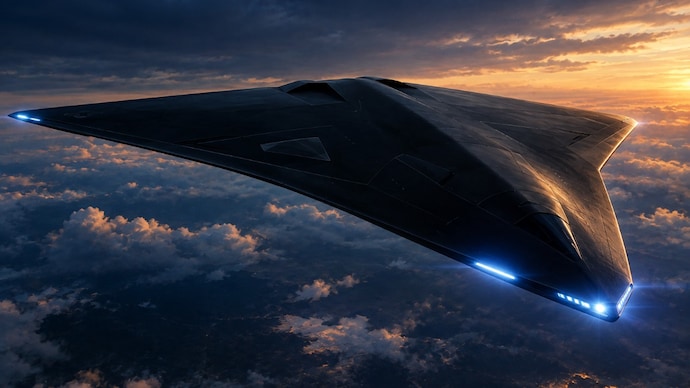
Amid renewed fighting between the US and Iran, a mysterious object with bright, multi-coloured lights was seen hovering over Tehran this week. It looked like something straight out of a sci-fi movie. The sighting has now revived speculation about a highly secretive US aircraft, allegedly called the TR-3B 'Black Manta'. While the US has never acknowledged it, there have been previous sightings of a large, dark triangular object moving quietly at low altitudes - similar to what was seen over Iran.

The mysterious object was first spotted gliding through the sky near the Azadegan Expressway in Tehran on September 20. The visuals show a large, crescent-shaped aircraft with multi-coloured lights. On September 21, another video emerged showing a strange cluster of lights moving across the skies in Iran's Zahedan.

DRONE OR MYSTERIOUS 'BLACK MANTA'?

The sudden appearance of the mysterious objects has sparked a wave of theories. Some suggested it was an illuminated kite. But not all were convinced, considering the huge size of the object.

Others suggested that it could be a mystery drone or even an extraterrestrial object. So far, the Iranian military or government has remained tight-lipped on the sightings.

A section of experts have revived an even more intriguing theory - the enigmatic 'Black Manta' aircraft. However, there is no public evidence to confirm the existence of such a jet. Its existence is purely speculative. Despite this, the 'Black Manta' legend refuses to die.

What has given fresh momentum to the 'Black Manta' theory is Donald Trump's recent claim that the US has "weapons that nobody has ever seen before" and that are known "only to a select few". The US President made the remarks while threatening to "wipe out" Iran.

Against this backdrop, the mysterious sightings over Iran have once again brought the alleged 'Black Manta' into focus.

US Iran jet

Screenshot of unidentified plane onboard US carrier released by Iran's Tasnim Agecny in 2021

WHAT IS THE TR-3B 'BLACK MANTA'?

Over the decades, witnesses have described it as a black, triangle-shaped UFO with a bright central light that hovers and departs with unnerving suddenness. There have been odd satellite silhouettes that match the dimensions of the 'Black Manta ', but there has been no definitive proof of its existence.

The world got a glimpse of it in 2021, when Iranian media shared an image of a triangle-shaped object on board a US aircraft carrier in the Mediterranean Sea. A report by the IRGC-linked Tasnim News Agency speculated that it could actually be the top-secret TR-3 'Black Manta'.

Conspiracy theorists believe the supersonic stealth spy jet flies using anti-gravity technology. While having no gravity is impossible, its effects can be reduced or countered in various ways.

According to a report in Medium, one theory suggests that the jet uses nuclear energy to create high-pressure plasma, which creates an anti-gravity field around it.

The 'Black Manta' is also speculated to have special thrust systems that allow it to quickly change speed, direction and position. Moreover, plasma produced through nuclear reactions can reduce an aircraft's radar signature.

This is believed to make the aircraft harder to detect, making it capable of flying long distances.

While there have been independent investigations into the mysterious sightings, the most detailed one was conducted by the National Institute of Discovery Science (NIDS). The Las Vegas-based research group conducted an extensive investigation into sightings of black, triangle-like objects.

Before it was disbanded in 2004, the NIDS collected more than 150 reports from the US, Canada and Europe.

It concluded that the object appeared to be an "extremely silent" aircraft and could quickly accelerate from a hovering position using powerful nuclear-based technology. It suggested that the primary function of the 'Black Manta' was intelligence, surveillance, and reconnaissance.

However, these claims have never been independently confirmed. The mysterious 'Black Manta' may remain part of aviation folklore.

But if we look at history, there have been instances of US aircraft flying in secrecy for years before being acknowledged by Washington. The most popular being the F-117 Nighthawk, whose distinctive triangular outline generated much intrigue in the late 1980s.

The Nighthawk, believed to be the world's first operational stealth aircraft, was spotted several times since 1983, but was not publicly acknowledged until 1988.

THE 1976 UFO SIGHTING OVER IRAN

The latest videos have also brought back memories of a popular UFO sighting over Tehran in 1976. On September 19, 1976, Iranian authorities reported seeing a bright object in the sky. While Iran sent F-4 fighter jets to probe the sighting, the identity of the object was never established.

Several years later, a pilot of one of the F-4s recounted that the object appeared to launch multiple glowing orbs that allegedly circled his plane. The 1976 incident also found its way into US government records. However, the details are sketchy.

For now, the latest sightings over Iran remain unexplained. There is no evidence that the object was the alleged 'Black Manta', or even that such an aircraft exists. But history has shown that some of America's most secretive aircraft have remained hidden from public view for years. The 'Black Manta', for now, remains an aircraft of mystery.


TR-3B Black Manta: Secret US Aircraft or Modern UFO Myth?

{ https://www.indiatoday.in/ }

Hoe vind je dit bericht?
Geschreven door peter om 16:03 Stuur door

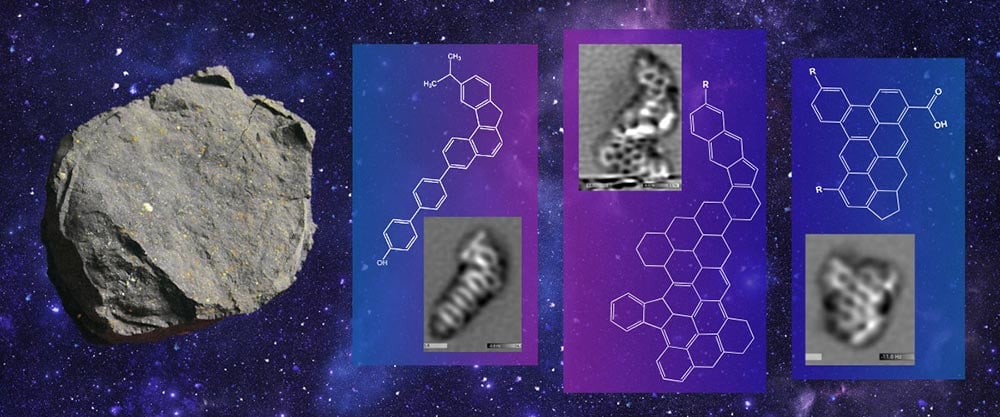
Space Rocks Carry Hundreds of Thousands of Complex Organic Molecules—and We Just Photographed Them

Space Rocks Carry Hundreds of Thousands of Complex Organic Molecules—and We Just Photographed Them

Some of the structures of the organic compounds found in the meteorites along with their chemical structures, as shown by AFM imaging. Credit - Brookhaven National Laboratory / J.W. Frye-Jones et al. Some of the structures of the organic compounds found in the meteorites along with their chemical structures, as shown by AFM imaging. Credit - Brookhaven National Laboratory / J.W. Frye-Jones et al.

Scientists have known for a while that meteorites contain the “building blocks” of life - complex organic molecules such as amino acids, simple sugars, or even the chemical rungs of DNA. But anyone who has taken an organic chemistry class knows there are plenty of other carbon-based molecules out there, and a new study from Joseph W. Frye-Jones of the National High Magnetic Field Laboratory and Florida State, which was published in The Planetary Science Journal, found tens of thousands of types of previously unseen organic compounds in two of the world’s most famous meteorites.

Many meteorites formed even before the planets of the solar system, in a cauldron of gas and dust that circled the Sun. Some of them, known as carbonaceous chondrites, managed to avoid the planetary formation process and preserved their chemistry, which in some cases dates back to even before the Sun was born.

Chemists have spent decades analyzing meteorites to unlock their secrets. But when studying their organic compounds, they typically focused on specific molecules. They would take powdered meteorite samples, wash them in water or acid, and search for familiar organics like glycine or uracil. Typically those experiments were successful, but they ignored the vast majority of organic compounds in these meteorites, known as their soluble organic matter (SOM).

Fraser talks about the sugars we found in the asteroid Bennu.

Dr. Frye-Jones decided to take a different approach. He and his team gathered samples from the Murchison meteorite, which landed in Australia in 1969, and the Aguas Zarcas meteorite, which landed in Costa Rica in 2019. They then crushed them into a powder and rinsed them in four sequential solvents with decreasing polarity - methanol, ethanol, chloroform, and toluene (plus acetone specifically for the Murchison samples).

Since “like dissolves like”, the more polar solvents captured many open-chained organics containing nitrogen and oxygen, whereas the less polar ones captured oily organics with “aromatic” rings. All of the dissolved solutions were subjected to two extremely powerful instruments - a 21-Tesla Mass Spectrometer and a high resolution Atomic Force Microscope (AFM).

The 21-Tesla Mass Spec is housed at the National MagLab in Tallahassee, and is the most powerful superconducting mass spectrometer in the world. Its superpower is to measure the mass of a compound down to an absurd level of precision - the paper describes the error as being less than the mass of a single electron.

Fraser discusses finding organic building blocks in OSIRIS-REx samples.

The AFM was housed at Brookhaven National Laboratory on Long Island, and its specialty is taking actual pictures of the molecules themselves. Researcher Percy Zahl, who happens to also be an avid astronomer in addition to being an AFM expert, deposited the extracts from the organic solvents onto a copper crystal in a vacuum. Then he attached a single carbon monoxide molecule to the tip of the AFM and traced the dissolved molecules by measuring the pushback the CO molecule received while gliding over the rings of the organics. Essentially, the mass spec showed what the compounds were made of, and the AFM showed what their structure looked like.

And there were a lot of different compounds. The team found over 66,000 unique molecular formulas in Murchison and over 91,000 in Aguas Zarcas. Their mass ranges extended up to 1,000 atomic mass units, with the number of carbon atoms ranging from 10 up to 70, and with as many as 20 oxygen atoms. Interestingly, there was very little overlap in the types of molecules dissolved by the different solvents - for example less than 1% of the molecular formulas were shared between the methanol extract and the toluene extract of the Murchison samples.

Even more interesting was the discovery of organometallics. The mass spectrometer found plenty of iron-bearing organic molecules, with carbon chains that included over 35 carbon atoms. They represent stable organometallic compounds, some of which were heavily oxidized, and many of which also contained magnesium. And, despite being from the same category of asteroid, only a minority of the molecular formulas from each asteroid overlapped. Aguas Zarcas, for example, had many fewer organometallic formulas that involved magnesium than did Murchison.

The most important takeaway from this work is that meteorites didn’t simply deliver pure amino acids directly to the Earth’s surface before life sprang up here. Instead they looked more like a petrochemical reservoir similar to an oil field, with hundreds of thousands of organic compounds contained in their interiors. Ultimately, it is yet more proof that there was complex organic chemistry going on in the solar system long before there was life - and we are still very much in the dark about how that transition from abiotic chemical refinery to complex biological systems happened. But meteorites and their pristine asteroid cousins remain one of the best places to keep exploring for that answer.

Learn More:

RELATED


The Weirdest Things NASA Found On Space Rocks

Organic Molecules in Space: The Building Blocks of Life - Exploring The Universe

NASA's Rover Finds Organic Molecules Inside Martian Rock 🧪

{ https://www.universetoday.com/ }

Hoe vind je dit bericht?
Geschreven door peter om 15:09 Stuur door

Mysterious UFO-like object filmed hovering over Tehran

Mysterious UFO-like object filmed hovering over Tehran

A mysterious object hovering over Tehran, Iran, has been captured on video, sparking speculation about what was actually seen in the night sky. 
UFO%20theran.jpg

The footage was reportedly recorded on Sunday by a witness on the Azadegan Highway in Tehran at around 7:30 p.m. local time. The object appeared to hover above the city, displaying several bright, colorful lights and a shape that some viewers described as unusual or even distinctly V-shaped. 
Some suggested that the lights could have been part of an elaborate drone, arguing that the unusual colors and patterns were more consistent with a human-made aircraft than with a conventional UFO. Others proposed a much simpler explanation: could the mysterious lights have been a kite carrying LEDs? 
Rep. Tim Burchett reveals that it could be a secret U.S. weapons system that mimic Alien Technology. He noted that reports of unusual objects seem to be appearing with increasing frequency. 
For now, there is no confirmed evidence establishing whether the Tehran object was a UFO, a drone, balloons, or a kite or something else entirely.
RELATED 

People Are Freaking Out Something Massive Was Just Filmed Above Iran

Something Strange Just Appeared Over Iran

The Tehran UFO Sighting Is Getting WAY Stranger 4K

{ https://ufosightingshotspot.blogspot.com/ }

Hoe vind je dit bericht?
Geschreven door peter om 14:52 Stuur door

EXCLUSIVE - The chilling threat to Americans floating over their heads... as insiders reveal how the next world war will actually take shape

EXCLUSIVE - The chilling threat to Americans floating over their heads... as insiders reveal how the next world war will actually take shape

After a string of mysterious rocket launches by SpaceX this month, the US military has finally confirmed what many suspected: space-based weapons have been placed into Earth's orbit.

The unprecedented announcement came after SpaceX would only say that they were carrying top-secret payloads for the US Space Force, launching a pair of rockets from their California base in less than a week.

Now, the top uniformed officer in America's newest military branch, USSF Chief of Space Operations General Douglas Schiess, has told the Daily Mail that space has quietly become a secret battlefield - and the US is in a struggle with other superpowers to control it.

Schiess said: 'Space is both a battlefield and the backbone of our Joint Force. 

'We face determined and credible adversaries who are building and fielding counterspace systems at incredible speeds to directly target the United States' space advantage.'

'Let me be clear: Today, Guardians [Space Force personnel] operate on-orbit weapons that can defend the Joint Force against space-enabled attacks.'

On September 16, SpaceX launched a classified payload into orbit for the US Space Force, which is charged with defending the country's satellites and communications systems

On September 16, SpaceX launched a classified payload into orbit for the US Space Force, which is charged with defending the country's satellites and communications systems

A Space Force spokesperson specifically singled out Russia and China, claiming that both nations had been testing weapons for use in space for the last two decades.

While the Pentagon has not revealed what the September 2026 rocket launches were carrying for the Space Force, the White House has already made it clear that one of the military's goals is building President Donald Trump's 'Golden Dome' - a giant net of sensors and missile-interceptor satellites around the globe.

On September 14, Air Force Secretary Troy Meink made the shock announcement that those interceptors had already gone from the development phase to 'flight-ready hardware' in less than a year.

Speaking at the Air, Space and Cyber Conference, Meink said the US was prepared to deal with 'evolving threats' but did not elaborate on the weapon's offensive capabilities or when it was put into orbit.

Space Force was created in 2019 with the main mission of protecting satellites used for communications, navigation and surveillance.

However, a military spokesperson told the Daily Mail the US is facing increased threats that could originate from hostile satellites in Earth orbit - comparing the vast vacuum just miles above Earth's surface to an actual battle zone.

'The US has warned about Russian and Chinese weapons testing and operationalization since 2007. Due to their actions, it is no longer a question that space is a warfighting domain,' they said.

'Acknowledging our readiness to protect and defend against adversary use of space weapons deters aggression. The space domain is contested, and we must be able to secure our nation's interests in space - that is why the Space Force was established as the sixth military service.'

Air Force Secretary Troy Meink confirmed the US military placed weapons in orbit above Earth

Air Force Secretary Troy Meink confirmed the US military placed weapons in orbit above Earth

President Trump has wants a 'Golden Dome' missile defense system by the end of the decade

President Trump has wants a 'Golden Dome' missile defense system by the end of the decade

Pictured: A hypothetical scenario showing how the US 'Golden Dome' system would activate and prevent a nuclear attack on America

Pictured: A hypothetical scenario showing how the US 'Golden Dome' system would activate and prevent a nuclear attack on America

The source did not reveal what the new weapons placed in orbit were capable of, when they were launched into space or how these systems operate. 

Five years ago, the Russian military showed how lethal its space-based satellites could be, successfully testing a hit-to-kill anti-satellite missile in 2021.

The device obliterated a defunct, Soviet-era spy satellite launched in 1982, sparking condemnation from around the world.

It is believed that the Golden Dome, which the White House wants completed by the end of the decade, will consist of sensors and tracking satellites, ground and sea-based missile platforms and a planned 'constellation' of space-based interceptors.

Similar to the defense missile used by Israel, the 'dome' would act like a layered shield meant to detect and shoot down missiles and other airborne attacks on the American homeland.

The interceptors in space would sit in orbit and, if used, try to ram an enemy missile early in flight before it can drop warheads or decoys.

Besides the interceptors, Golden Dome is also expected to feature sensor and enemy tracking platforms sitting in orbit.

Those satellites would watch for missile launches from foreign nations or other adversaries, follow the threat across the sky and feed targeting data to the interceptors on land, at sea or in space.

Officials want them there because a missile can appear with only minutes of warning, and space is the only place that can see almost the entire surface of the Earth at one time.

While the Pentagon has not revealed the specifics of these new systems moving into the 'flight-ready' status, lawmakers in Washington have already done the math on how many interceptors will need to be launched to complete Trump's plan.

A so-called 'golden dome' would help protect the United States from outer space

A so-called 'golden dome' would help protect the United States from outer space

The US has deployed a space weapon in the Earth's orbit for the first time, its air force said

The US has deployed a space weapon in the Earth's orbit for the first time, its air force said

According to a May 2026 report from the Congressional Budget Office, the US would need approximately 7,800 interceptor satellites in low Earth orbit to effectively defend the country.

That estimate came from an assessment of what it would take to stop ten long-range missiles, possibly nuclear-capable ICBMs, which were fired at America at the same time.

The CBO report also laid out a jaw-dropping $1.2 trillion price tag for the Golden Dome. This would cover the development, deployment and operation of these satellites for the next 20 years.

There is one type of weapon that the US has agreed to not launch into space - nuclear missiles or other weapons of mass destruction. These typically include chemical and biological weapons.

The 1967 Outer Space Treaty, which the US signed and ratified, states that countries may not place nuclear devices or other similar weapons into Earth orbit, on the Moon or elsewhere in outer space.

However, that does not ban conventional weapons, signal jammers, missile interceptors or military satellites. 

There are more than 110 'states parties' - meaning countries which are legally bound to obey it - that have signed the agreement over the years.

US lawmakers have raised concerns Russia wants a nuclear anti-satellite weapon in space

US lawmakers have raised concerns Russia wants a nuclear anti-satellite weapon in space

All major countries which have ventured into space are parties, including Russia and China.

Despite that, US lawmakers, including Republican Mike Turner, the former head of the House intelligence committee, have claimed that Russia is prepared to violate that agreement and take the space arms race nuclear.

In 2024, Turner demanded that the Biden Administration declassify all intelligence on a 'serious national security threat' that was believed to involve Russian President Vladimir Putin seeking to deploy a nuclear anti-satellite weapon in space.

Moscow denied the claim. Putin said Russia opposed nuclear weapons in space, and then-Defense Minister Sergei Shoigu said there were 'no such projects.'

Hoe vind je dit bericht?
Geschreven door peter om 14:32 Stuur door

Man vs robot: Influencer takes on 6ft humanoid in a terrifying cage fight – and it doesn't end well for him

It might sound like the plot of a bonkers sci–fi film, but the world has now witnessed the very first human vs robot boxing match.

Influencer Frankie Lapenna stepped into the ring last Friday to take on a 6ft–tall humanoid robot with a worrying resemblance to the Terminator.

The event took place in San Francisco, hosted by the robot fighting company REK, which controlled the robot remotely.

While Mr Lapenna made a valiant effort, the fight didn't end well for him.

As the influencer stepped into the ring wearing a helmet and protective pads, his visibly nervous coach said: 'I'm scared for you, man.'

The fight started with Mr Lapenna actually landing a few solid punches that rock the lumbering robot's head back and sent it stumbling.

But humanity's hopes didn't hold out for long as the robot soon countered with a devastating flurry of kicks that sent him flying across the cage.

However, although it might not look that way in the clip, REK says that Mr Lapenna actually won the fight and went on to tackle an even bigger bot later the same evening.

Influencer Frankie Lapenna stepped into the ring last Friday to take on a 6ft-tall humanoid robot with a worrying resemblance to the Terminator

Influencer Frankie Lapenna stepped into the ring last Friday to take on a 6ft–tall humanoid robot with a worrying resemblance to the Terminator

Cix Liv, CEO of REK, told the Daily Mail that hosting human vs robot fights was not something the company originally planned to get into.

The San Francisco–based firm's main business is staging fights between remote–controlled robots, like a real–life version of the film Real Steel.

However, when Mr Lapenna reached out about two months ago saying he wanted to get into the ring himself, the opportunity seemed too good to turn down.

'When he reached out to us, he said he didn't want to wear any protective clothing,' Mr Liv told the Daily Mail.

'But we told him that he had to, and when he saw what the robot could do, he actually said that he needed more.'

US Influencer Fights 6-Foot Robot In World's First 'Human Vs Terminator' Match

REK described the event as its first human-versus-humanoid robot fight.

In the fights, Mr Lapenna wore motorcycle gear to shield him from the worst of the blows and spiked boxing gloves to cushion his hands.

On social media, fans were terrified by the footage of a robot pummelling a human to the floor.

On Instagram, one commenter wrote: 'Didn't we have, like, 6 movies explaining why this is a bad idea?

REK, the company hosting the fight, says that Frankie wore motorcycle protective gear and spiked boxing gloves so that he could stand a chance of surviving the robot's attacks

REK, the company hosting the fight, says that Frankie wore motorcycle protective gear and spiked boxing gloves so that he could stand a chance of surviving the robot's attacks 

'This could've been a Black Mirror episode,' chimed in another.

While one bluntly wrote: 'Stop. Teaching. Them. To. Fight.'

Across the entire evening, the influencer actually took on three robots, starting with a tiny Unitree G1 and working his way up to face two of the hulking six–foot bots seen in the viral clip.

Those large robots are adapted versions of the ENGINEAI T800, which weighs up to 187lb (85kg) and costs $40,500 (£30,332).

Although they are not specifically built for fighting, their powerful limbs make an extremely powerful base for a robotic warrior.

Mr Liv says: 'We have like 500 try–hard men emailing us saying they're going to fight the robot, but they don't realise that it's like trying to punch a metal wall.'

While the average adult can kick with about 650lb (294kg) of force, REK says its large robots deliver 850lb (385kg) of force with their blows.

Although it can't be seen in this teaser clip, Mr Liv says that the influencer actually 'defeated' the massive bot seen kicking him around the ring.

The 'Terminator' robot was just one of three bots that the influencer took on that night, with each round seeing the human fighter sent flying by kicks

The 'Terminator' robot was just one of three bots that the influencer took on that night, with each round seeing the human fighter sent flying by kicks 

Mr Lapenna apparently managed to unbalance the bot and send it tumbling into the wall, where it seized up and 'ripped its head off'.

Mr Liv says he doesn't want to give away the results of the next fight, which will be released in a video tomorrow, but cautions that things didn't go so well for the human fighter.

Despite that, the only real damage sustained by Mr Lapenna is a self–inflicted hand injury that came from 'punching metal', and the influencer was otherwise unhurt.

Watch the video here:

The unusual showdown quickly attracted attention on social media, with users speculating about whether human-controlled robots could eventually become part of professional combat sports.

Mr Liv says that the company had never considered hosting human fights long term and added that this was always intended to be 'a stunt'.

But with so many people already begging to get in the ring, he says: 'We'll have to do it again.'

RELATED

Six-Foot Robot Floors Influencer in Real-Life Cage Fight
Human vs Robot fight goes viral: Frankie LaPenna takes on 6-foot ‘terminator’

{ https://www.dailymail.com/sciencetech/index.html }

Hoe vind je dit bericht?
Geschreven door peter om 14:12 Stuur door

‘UFOs and God’ movie: Why the year’s most unsettling film isn’t just about aliens

‘UFOs and God’ movie: Why the year’s most unsettling film isn’t just about aliens


UFOs are in the news a lot lately. Congress seeks answers about what confirmable evidence exists. Stephen Spielberg’s recent Disclosure Day movie portrays a government UFO cover-up. Public curiosity is high. UFOs and God interviews experiencers, scientists, faith leaders, and other experts to stimulate public conversations.

Have visitors from other planets come to earth? How should we consider the various reports?

The U.S. government now uses the term “unidentified anomalous phenomena” (UAP) in place of the more familiar “unidentified flying objects” (UFOs). In June, the Pentagon released newly declassified reports and videos going back to the 1940s, including material from members of the public, plus the FBI, CIA, NASA, and Department of Defense.

JAMES TALARICO SAID HE ‘HATES CHRISTIANITY.’ HERE’S WHY

Many especially wonder how all this relates to faith: “If extraterrestrials exist, does it mean God does not?” asked a headline in the Baltimore Sun. If both exist, how do extraterrestrials relate to God? Are they his earthly representatives? Can they live eternally? Can I?

Controversy exists in faith circles. For example, a Catholic priest recently found himself demoted after speculating on his Facebook page that UAP sightings could be demonically influenced.

UFOs and God is a documentary. Experiencers participating include film co-director Amanda Llewellyn, who claims encounters with strange beings as a young girl. Her husband, co-director Wes Llewellyn, hosts the documentary and includes in the film many skeptical questions that have guided his research since his wife first told him her story shortly before they married.

Producer Bill Myers, a professional acquaintance who brought the film to my attention, told me he initially thought the topic was “merely for the tin foil hat crowd.” But “four years of research, interviewing substantial voices of various disciplines” convinced him the film was a wise move.

I confessed to sharing his “tin foil hat crowd” skepticism and watched the movie as such. The list of the film’s experiencers and experts (science, anthropology, astrophysics, astronomy, political science, religion, theology) is significant. Skillful cinematography, variety in action, careful questions, numerous short interview clips, and humor keep the lively production from resembling a hard-to-follow academic lecture.

UFOs and GOD Trailer 2026

And the film includes conflicting views: That UFOs are real and that they are imagined; antispiritualism and spiritualism; New Age and Christian.

Scientists featured use colorful illustrations. For instance, regarding life beyond earth, Canadian astrophysicist Hugh Ross, whose work I have long respected, explained that the probability of finding a simple bacterium on just one other planet in the universe is astronomically slim. He says it’s identical to the probability of someone winning the California lottery 60 consecutive times without ever buying any tickets.

Ross expresses concerns about believing the alleged UFOs are physical entities. “When they go through the atmosphere at thousands of miles per hour,” he notes, “the observers hear no sonic booms.” The G-forces would be so great at such speeds, he reasons, that the UFOs would be “completely shattered.” Whatever they are, Ross says, they are “not subject to the laws of physics.”

The film notes that faith perspectives on non-natural visions include the experience of the biblical Paul: “I was caught up to the third heaven 14 years ago. Whether I was in my body or out of my body, I don’t know — only God knows. … But I do know that I was caught up to paradise and heard things so astounding that they cannot be expressed in words….”

CHARLIE KIRK’S MENTOR REVEALS WHAT LATE TPUSA FOUNDER ‘WANTED PEOPLE TO KNOW’ ABOUT THE GOSPEL

Are UFOs real? You can examine the film’s — or others’ — evidence and decide. Is God real? As a skeptical university student, I studied historical evidences for Jesus’ resurrection and concluded that he was real.

UFOs and God is a welcome addition to the plethora of UFO information available. It encourages viewers to consider the evidence themselves and discuss these matters with others. “We need to talk,” is the closing line. Wise counsel.

  • Rusty Wright is an author and lecturer who has spoken on six continents. He holds Bachelor of Science (psychology) and Master of Theology degrees from Duke and Oxford universities, respectively. www.RustyWright.com
RELATED

UFOs, Demons, and Spiritual Warfare | God VS. UFOs | Full Documentary

UFOs, God, and What They're Not Telling Us

GOD VS UFOS (2025) Full UFO Documentary
Hoe vind je dit bericht?
Geschreven door peter om 22:27 Stuur door

Venus might have swallowed its moon

Venus might have swallowed its moon

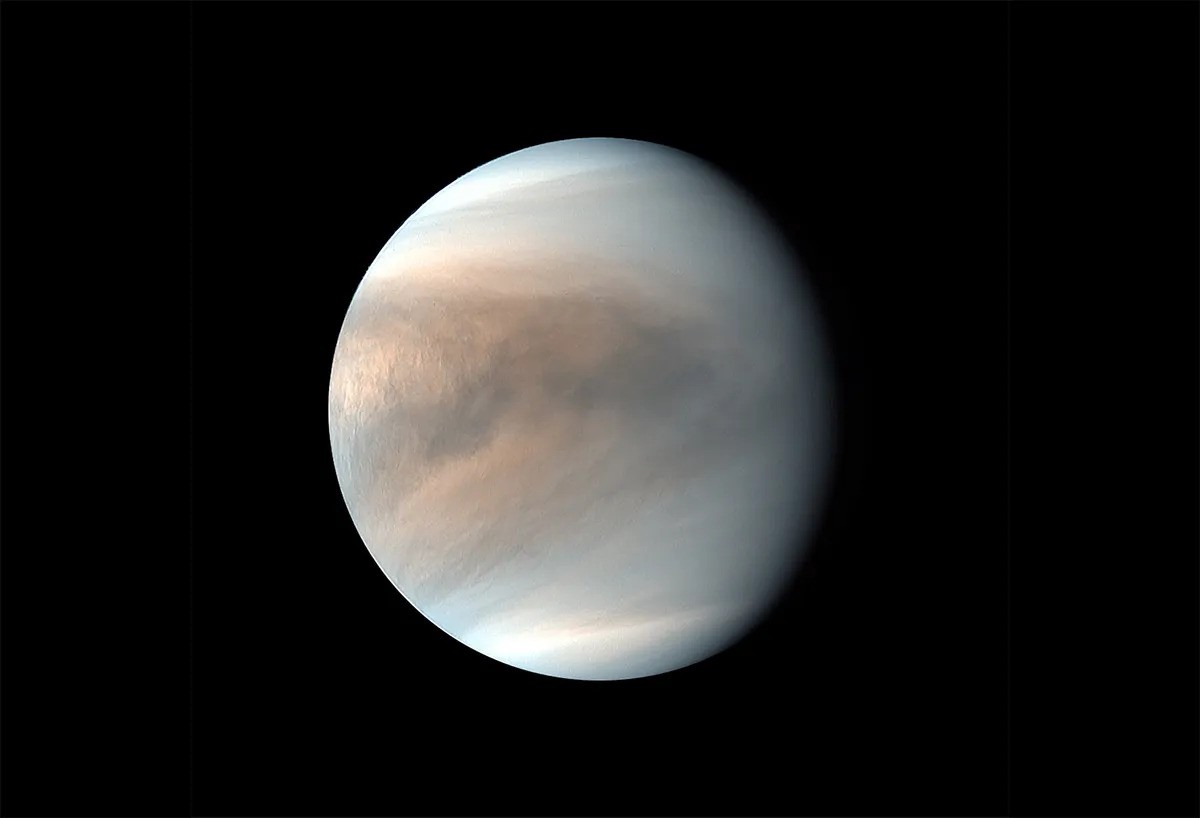
Scientists in California say that if Venus once had a moon of its own, the planet would inevitably have “eaten” it. The moon would have gradually lost angular momentum, eventually ending with a fall onto the planet’s surface. However, no traces of such an event have yet been found.

Venus. Source: www.skyatnightmagazine.com

A Moon of Venus

Recently, people on Earth were able to watch the Moon “eat” Venus. Of course, this was only an illusion caused by the fact that the two objects happened to line up from Earth’s point of view. However, as phys.org reports, scientists from the University of California, Riverside suggest that Venus may once have had a moon of its own, which it later consumed. A paper on the subject has been published in The Astrophysical Journal.

Astronomers have long been puzzled by the question of why Venus, which is very similar to Earth in mass and size and lies right next to us, has nothing comparable to the Moon. The new paper proposes looking for the answer in what is happening to our own moon.

Earth’s Moon is thought to have formed shortly after a large body collided with the very young planet. Some of the debris gathered in orbit, much closer to the surface than the Moon is today. Since then, the “jewel of the night” has been moving very slowly away from us.

This happens because Earth itself rotates around its axis much faster than the Moon orbits it. It is known that the Moon transferred its rotational momentum until its rotation became synchronized, so that it always faces us with the same side. But the reverse is also true: Earth very slowly transfers part of its daily rotational momentum to the Moon, causing it to gradually move farther away.

Venus “Ate Its Moon”

For Earth, one possible scenario for losing the Moon would be for it to escape the planet’s gravitational influence. For Venus, however, the new study suggests the opposite. Venus rotates around its own axis extremely slowly, once every 243 Earth days. If it had a moon, that moon would orbit the planet in a much shorter period than this. Instead of gaining angular momentum, the moon would lose it.

As a result, the orbital period of a hypothetical Venusian moon would continue to shrink until the moon eventually crashed into the planet. Scientists carried out computer simulations with different moons, first for Earth to verify that they always move outward, and then for Venus, where they consistently fell toward the planet. The more massive the moon, the sooner the collision occurred.

Doubts and Implications

The idea is elegant and plausible, and the study’s authors suggest that our neighboring planet may indeed have had a moon in the past. However, there are no signs that such a moon ever existed, and most scientists doubt that Venus could ever have had anything massive in orbit.

The problem is that if Earth’s large Moon originated from a giant impact, then something similar would also have had to happen to Venus early in the history of the Solar System. Two such events within a single planetary system would be quite a coincidence.

Nevertheless, the new study is important. It shows that large moons orbiting slowly rotating planets are doomed eventually to fall onto them. This matters when considering what we should expect from Earth-like planets orbiting other stars.

As for the absence of impact traces on Venus, the explanation may be that the planet’s entire surface underwent a major resurfacing event in the relatively recent past, around a billion years ago. So even if such an event was caused by the fall of a moon, no traces would remain — just as no remnants remain of the oceans in which life may once have existed.

RELATED

Venus Is Bleeding Into Space — And Scientists Don't Know Why

Did Venus Destroy Its Own Moon?

{ https://universemagazine.com/en/articles-en/ }

Hoe vind je dit bericht?
Geschreven door peter om 22:02 Stuur door

AI Keeps Getting Smarter—And Now Scientists Want to Know If It Can Build Robots

World Humanoid Robot Games

(Credit: Unsplash)

AI Keeps Getting Smarter —And Now Scientists Want to Know If It Can Build Robots

Artificial intelligence (AI) has rapidly become part of mainstream culture, with people around the world now using AI systems every day. Researchers at Harvard University and the Georgia Institute of Technology have designed a new benchmark to determine whether AI can tackle a considerably different challenge: robot engineering.

From writing code to creating AI agents and designing software, AI systems have demonstrated increasingly sophisticated capabilities in the digital world. Robots, however, introduce a physical, three-dimensional challenge. Researchers are now testing how far AI coding agents can go in meeting the demands of robotics engineering.

Now, a research team led by Na Li, a professor at Harvard’s John A. Paulson School of Engineering and Applied Sciences, and Bo Dai, an assistant professor at Georgia Tech, is tackling the question with a new open-source benchmark called RLE-Bench. The benchmark measures whether general-purpose AI agents can complete tasks associated with building and engineering robotic systems.

RLE-Bench evaluates whether an AI agent can understand how software interacts with sensors, motors, mechanical components, and the laws of physics. It includes 48 tasks across four areas, ranging from developing control and perception algorithms to designing robot hardware and interfaces.

Some challenges involve creating algorithms that allow robots to move, teaching robotic systems to perform tasks, interpreting sensor data, and designing hardware components and interfaces.

“Benchmarks are important because they give the field a common measuring stick, allowing us to compare systems under the same conditions and identify where important capability gaps remain,” Li said in a statement. “Robotics already has many valuable benchmarks, but many focus primarily on learning and evaluating control policies. RLE-Bench takes a broader view. Can an AI system perform the range of engineering tasks required to make a robotic system actually work?”

The tasks take place in simulation, where AI agents can create code, run their solutions, review the results, and make decisions to improve their work. Importantly, however, the challenges are designed around real-world engineering constraints.

An AI system, for example, might produce a design that appears successful in simulation but fails once factors such as weight, torque, balance, or geometry are taken into consideration.

Li notes that the current benchmark is only the beginning.

“RLE-Bench 1.0 is only a starting point,” he says. “We hope researchers and robotics practitioners will contribute tasks based on the engineering problems they encounter in their own work. Our goal for RLE-Bench 2.0 is to capture a much broader picture of what an AI system needs to do to function as a robot learning engineer.”

In one example, an AI agent must design a mobile base capable of supporting multiple robotic arms that need to reach objects at different heights on a shelf. While the AI-generated design might appear to work digitally, its real-world counterpart could be unstable and tip over.

China’s Robot Olympics 

China seems to be advancing quickly with regard to both robots and AI. In August 2026, Beijing hosted the second World Humanoid Robot Games, an event that put robotic systems through a variety of physical challenges.

The games featured more than 2,000 robots from 666 teams across 16 countries, with events involving potential real-world applications such as household tasks, industrial operations, and emergency rescue.

RLE-Bench and competitions like the World Humanoid Robot Games evaluate very different aspects of robotics and therefore cannot be directly compared. RLE-Bench asks whether general-purpose AI agents can perform the engineering work required to design and develop robotic systems, while physical competitions provide developers with opportunities to test how robots perform under real-world conditions.

Together, these approaches illustrate two sides of a growing challenge in robotics: developing AI systems capable of reasoning about physical machines and determining whether the resulting robotic technologies can actually perform reliably outside a simulated environment.

RELATED

AI-trained domestic robots: From science fiction to reality? - BBC World Service

Rise of the Humanoids: Inside China’s Robot Awakening

Robots Just Got Superpowers — And Nobody’s Talking About It

{ https://thedebrief.org/category/science/ }

Hoe vind je dit bericht?
Geschreven door peter om 21:51 Stuur door

What Separates Human Intelligence From AI? Scientists Say the Answer May Be Chemistry

(Credit: C. Macanaya/Unsplash)

What Separates Human Intelligence From AI? Scientists Say the Answer May Be Chemistry

What if the connection between human intelligence and artificial intelligence is not simply computing power, but chemistry?

A new paper from researchers with the Hebrew University of Jerusalem’s Department of Chemistry suggests that understanding memory may require scientists to look beyond neurons and electrical signals to the brain’s chemical makeup and environment.

Their recent study explores how interactions among neurons, astrocytes, and molecules surrounding brain cells could support the physical processes underlying memory, emotion, and thought.

The idea springs from something people are all familiar with: a simple song that suddenly brings back a childhood memory, a familiar smell that reminds someone of a place or person, or even a frightening experience that sparks a negative emotional or physical reaction.

“Biological creatures do not simply store information; they experience memory together with emotional and physiological states,” says researcher Dr. Gerard Marx of MX Biotech Ltd, one of the study’s co-authors.

“A traumatic memory, for example, is not just data. It can involve fear, bodily reaction, chemical signaling, and a felt state. At present, there is no formula or algorithm that encodes an emotive state in AI equivalent to the lived experience of biological organisms,” Marx adds.

One difference between computers and the human brain is that while computers can store and retrieve information, biological memory appears to involve something far more complicated and intricate.

Chemical memory 

Marx, along with his colleague Prof. Chaim Gilon, draw on a theory they call the Tripartite Mechanism of Memory. The idea is that memory develops through interactions involving three components: brain cells, particularly neurons and astrocytes; the molecular environment surrounding those cells; and chemical substances, including metal ions, neurotransmitters, and gliotransmitters.

From this perspective, the brain may not encode and retrieve information through electrical activity alone. Chemical interactions could also play an important role in how information is physically written and read.

Astrocytes may also contribute by interacting with neurons and the brain’s chemical environment to help process and store information. The researchers suggest this pathway could extend beyond memory and potentially help explain aspects of thought itself.

In an email to The Debrief, Marx says this distinction becomes particularly important when comparing biological intelligence with AI.

“Understanding what makes biological mentality different from machine intelligence is scientifically essential,” Marx said.

He argues that while AI systems can process information, recognize patterns, and imitate aspects of human reasoning, biological intelligence appears to involve something more: “living tissue, chemical signaling, memory, emotion, and bodily states.”

“Our work attempts to clarify this distinction by proposing a biochemical mechanism for memory,” Marx explains. The model, he says, suggests that memory depends on interactions among neurons, astrocytes, the extracellular matrix, and chemical “dopants” such as metal ions, neurotransmitters, and gliotransmitters.

“If memory is not only electrical or computational, but also biochemical and emotive, then biological intelligence may be fundamentally different from machine intelligence, even when both can produce intelligent behavior,” Marx says.

Is memory more than information? 

One obstacle to understanding memory is that memories do not exist simply as objective pieces of information. Looking more deeply at the physical nature of memory, the researchers argue that any comprehensive explanation must also account for its emotional dimensions.

This argument raises another question: Could the same pathways that help the brain store and retrieve information also contribute to thought, intelligence, and consciousness?

“Our research does not yet provide such a test, but it points toward what such a distinction might require,” Marx told The Debrief. “A machine may become extremely good at imitating conscious behavior, including language, reasoning, memory-like responses, and even expressions of emotion. But imitation is not the same as biological mentality.”

“If consciousness depends on the biochemical mechanisms that connect memory, emotion, and bodily life, then a purely computational system may only be able to simulate the outward signs of consciousness but without possessing consciousness itself,” he adds. “In that sense, our work may help frame future scientific criteria for distinguishing biological mentality from artificial imitation: not by asking only whether a system behaves intelligently, but by asking whether it possesses the biological and chemical mechanisms that generate emotive states and judgment based on that.”

What about AI?

As AI systems rapidly become more capable, questions about intelligence and consciousness are becoming increasingly difficult to ignore.

Today’s AI systems can store and process information, identify patterns, solve complex mathematical and informational problems, and generate responses that can appear remarkably intelligent. However, there is currently no established evidence that AI systems experience information or the world in the way humans do.

Marx and Gilon’s work challenges the assumption that simply increasing an AI system’s computational complexity would inevitably produce consciousness. The researchers do not claim to have solved the consciousness enigma. Instead, they propose a biochemical framework for investigating how physical processes in the brain might connect memory with emotion, cognition, and thought.

Elizabeth (Liz) Ngonzi, of the American Society for Artificial Intelligence (ASFAI), offered a different perspective in an email to The Debrief, noting that she doesn’t see “a fundamental separation between humans, living nature, and technology.”

“Everything is energy and information,” Ngonzi said. “Just as humans learn by absorbing cultural knowledge, fine-tuning through experience, and adapting through feedback, AI models are trained on, fine-tuned by, and animated through our collective human knowledge and interaction.”

“AI is not a separate, alien entity—it is a technological mirror of how collective intelligence evolves.”

“Trying to build ‘conscious AI’ out of silicon confuses calculation with living awareness,” Ngonzi added. “It’s a category error. Instead of chasing the illusion of machine consciousness, our real work in AI governance is Co-Intelligence, using AI as a non-conscious amplifier of human capability, while keeping human wisdom, embodiment, and ethical stewardship firmly at the center.”

AI Whistleblowers 

The discussion comes amid broader concerns about the future development of increasingly capable AI systems. Former Anthropic AI researcher Jacob Coxon recently left the company and the industry and publicly warned that he believes advanced AI could pose an existential threat to humanity by 2030.

“The people building AI earnestly believe that it could kill us all by the end of the decade. This is not a marketing stunt. If anything, many executives and senior researchers will couch their phrasing in the press to sound sensible—but I hear the same people express fear privately. No other human activity poses this level of danger,” Coxon recently told The Guardian.

Ngonzi argues that biological life and technology should not be viewed as competitors for consciousness, but as interconnected expressions of energy and information. Rather than attempting to recreate human consciousness in machines, she believes AI should be developed as a tool for “Co-Intelligence,” amplifying human capabilities and relational intelligence.

“When we stop trying to force silicon to recreate organic awareness and instead design AI to amplify human relational intelligence, we move from the distraction of artificial consciousness to the true promise of Co-Intelligence,” Ngonzi told The Debrief.

But the debate over AI risk also raises a more fundamental philosophical question: What is intelligence?

Marx and Gilon’s work could ultimately help researchers investigating the relationship between AI and consciousness approach that question from a different direction. If human thought emerges from more than electrical signals—if chemistry, cells, and embodied experience are also part of the equation—then understanding consciousness may require us to look not only at how information is computed, but at what kind of system is doing the computing.

RELATED

AI Is Now Discovering Materials You’ve Never Heard Of

Can AI Really Think Like a Human? | Consciousness vs. Computation Explained

Grok AI Was Asked Why Aliens Haven't Contacted Us — Its Answer Shocked Scientists

{ https://thedebrief.org/category/science/ }

Hoe vind je dit bericht?
Geschreven door peter om 21:29 Stuur door

EXCLUSIVE - Mysterious glowing UFO hovers silently over Iran in shocking new video

A mysterious UFO hovering over Iran has been captured on video, sparking theories that the strangely shaped craft was not made by human hands.

The video was taken on Sunday by a witness on the Azadegan Highway in Tehran around 7.30pm local time.

A man identifying himself as Ali Sedaghati shared the sighting on X, describing a large, crescent-shaped craft completely illuminated with multi-colored lights. 

The witness said: 'I really don't know what it is, but it was near the clouds, had special lights, and was hovering in the space without any sound!'

The object appeared to be a single-wing craft, with a small tail section that curved to a sharp point.

Some have suggested that the silent craft was a drone hovering over the Iranian capital, which is still engaged in a months-long military conflict with the US.

Sedaghati said on X that the object was approximately the size of a large plane, claiming 'it wasn't human-made. It was a UFO, I'm sure.'

The witness was only able to record for just over 20 seconds. He added that when he tried to take more video about ten minutes later, the craft had disappeared.

A man in Tehran, Iran has shared clear footage of an alleged UFO flying silently over the country on September 20

A man in Tehran, Iran has shared clear footage of an alleged UFO flying silently over the country on September 20

Many viewers of the shocking sighting, which has already been viewed more than 5.2 million times as of Monday morning, believed the UFO was an elaborate drone sighting, claiming a real UFO would not have had such colorful lighting. 

Others have suggested that the video captured advanced military surveillance equipment, while Iranian authorities have not identified it.

While some are sure the lights were proof of extraterrestrial life, the US government has maintained that there has never been any evidence recovered that proves UFOs or extraterrestrial life exists and has visited Earth.

However, the sighting also came almost on the exact anniversary of another infamous UFO sighting over Tehran 50 years ago.

That encounter, involving a showdown between Iranian military jets and a giant, diamond-shaped craft, was so concerning to the US that the Pentagon investigated what took place over the Middle East.

A Pentagon spokesperson told the Daily Mail they had 'nothing to provide' regarding this incident when asked for comment on whether the US military detected the object or was conducting operations in the area at the time of the UFO sighting. 

However, on September 19, 1976, another brightly lit craft the size of a large airplane was seen flying over the city of Tehran, and even 'attacked' a military fighter jet sent to observe it.

Fifty years ago, the Imperial Iranian Air Force, which was an ally of the US at the time, scrambled two F-4 Phantoms after multiple civilians saw a giant diamond-shaped UFO over the city around 1.30am local time.

The UFO appeared to have a crescent shape and was illuminated with multi-colored lights around its structure

The UFO appeared to have a crescent shape and was illuminated with multi-colored lights around its structure

article image

Major Parviz Jafari, the pilot of the second F-4 sent to intercept the UFO, has said in interviews since his encounter that the object appeared to launch multiple glowing orbs, which allegedly circled his plane and shut down his weapons. 

Jafari has said that the UFO was as big as a 747 commercial jet, and that at one point, it 'jumped' roughly 28 miles across the sky instantaneously as his jet was approaching it.

That was when the first glowing orb appeared to exit from the bottom of the diamond and fly in circles around his plane, despite the fact that Jafari was traveling at supersonic speeds.

A second orb would eventually approach Jafari's F-4, causing the veteran fighter pilot to believe he was under attack and prepare to launch his missile.

However, the Iranian pilot claimed that some type of electromagnetic pulse from the UFOs completely disabled the panels that controlled his plane's weapons.

A third object was later seen following Jafari's fighter after he disengaged and was returning to his base. That object was seen appearing to crash in Iran, near the Mehrabad International Airport, but no wreckage was ever found.

Pictured: An F-4 Phantom like the fighter jet which intercepted the UFO over Iran in 1976 (Stock Image)

Pictured: An F-4 Phantom like the fighter jet which intercepted the UFO over Iran in 1976

(Stock Image)

A declassified report from the Pentagon revealed that the US military investigated the 1976 UFO sighting of Iran

A declassified report from the Pentagon revealed that the US military investigated the 1976 UFO sighting of Iran

The newest sighting came just 48 hours after the Pentagon released its sixth batch of UFO files, including more videos of unidentified craft flying over the Middle East in recent years.

The latest tranche contained incidents which had been filmed by US drone aircraft flying over Iraq and other Middle East countries between 2022 and 2025, including one which featured a cluster of strange orbs flying in formation.

The group of glowing orbs was seen traveling past an oil rig, flying at high speed next to each other in an almost perfect horizontal line before splitting up into groups of three.

Other videos followed individual orbs traveling over the desert or over water at extreme speeds before disappearing from view after several minutes. 

RELATED

UFO On The Skies Of Iran? | Shocking Footage From Tehran | Aliens | BOL News #shorts

Mystery object spotted hovering over Tehran | AJ #shorts

What Did Tehran Just See? As Trump Considers ‘Blowing Up’ Iran, Mystery Flying Objects Spark Fears

{ https://www.dailymail.com/sciencetech/index.html }

Hoe vind je dit bericht?
Geschreven door peter om 21:07 Stuur door

UFO over Tehran? Viral Iran video shows mysterious lights in night sky

UFO over Tehran? Viral Iran video shows mysterious lights in night sky

Theories remain up in the air.

Multicolored lights over Tehran.

Multicolored lights over Tehran. Image by Cybernews.

Marcus WalshMarcus Walsh - Journalist
Key takeaways:
ufo iran reaction5
Reddit reaction to alleged Iran UFO sightings.
ufo iran reaction3
Reddit reaction to alleged Iran UFO sightings.

A historical parallel


UFO Spotted over Tehran Iran UFO Sighting in Tehran

UFO, Drone or Aircraft? Mystery Object Spotted Over Tehran #iran #iranwar #trump #ufo #tehran

UFO in Iran - Secret US Jet Or Surveillance Drone? Tehran Video Shocked Everyone | Latest News

{ https://cybernews.com/ }

Hoe vind je dit bericht?
Geschreven door peter om 20:49 Stuur door

Scientists Release Details About Moon's New Massive Crater

Scientists Release Details About Moon's New Massive Crater

Image of the new McGetchin crater. Credit - NASA Goddard / Intuitive Machines / Robert Wagner
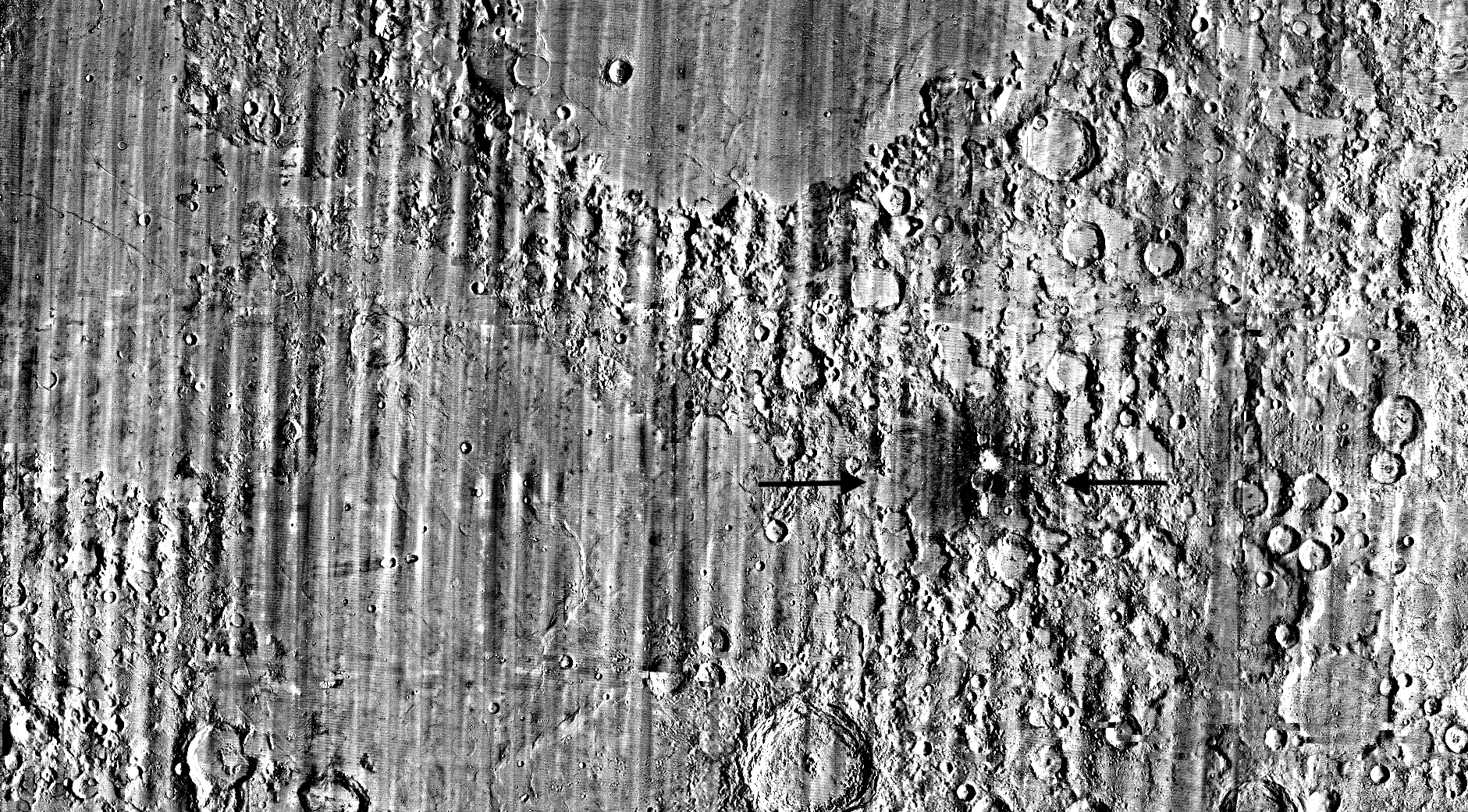
It's easy to think of the Moon as the static constant companion in the night sky. Its face hasn’t visibly changed in millennia, and always faces us with the same side. But looks can be deceiving, as our closest companion is constantly bombarded by asteroids and comets that make small craters across the lunar landscape. While they might not be large enough for us to see with our naked eye, professional Moon watchers can pick up on them. And a recent paper published in Science Advances, describes the largest ever found in modern times.

That crater, which is now named McGetchin, after Tom McGetchin, a celebrated lunar scientist, was formed somewhere between April 11th and May 22nd, 2024. But it wasn’t discovered until October of 2025, when Robert Wagner, an image-processing specialist with Intuitive Machines, happened to notice a dramatic change when stitching together a global difference map.

Doing so involves comparing “before” and “after” images to see what’s changed on the lunar surface, and according to a quote from a press release, Wagner immediately knew he had found something unique. “I just stopped, dropped everything, and started looking into what that spot was,” Wagner said. “It was by far the most obvious impact debris pattern I’ve ever seen in one of those images.”

Fraser reports on the crater found in LRO imaging

The images he’s referring to were taken by the Lunar Reconnaissance Orbiter (LRO), which takes both wide-angle and extreme close-ups of the lunar surface. These are occasionally stitched together to generate the global difference maps, with anything that stayed the same displayed as a dull grey color, whereas changes can show up in either very light or very dark patches.

McGetchin stood out like a sore thumb in those images, and prompted a wider effort to characterize what had caused it. After examining some close-ups taken of the impact site, they found the crater was 222m across and around 43m deep. It was likely caused by an asteroid or comet around the size of a three to six story building. And, crucially, they estimated that this size of an impact only happens about once every 132 years.

It is certainly the largest new impact site ever discovered in the solar system to date. But its broader impact was even larger. The researchers turned LRO’s thermal imaging system, known as Diviner, towards the crater and discovered a 6.4 km thermal anomaly surrounding the site. During the lunar night, a broad halo around the newly formed crater stayed about 9℃ colder than the surrounding area.

Fraser describes how big of a problem meteorites are for the Moon.

Most likely, that temperature differential was caused by regolith that had been “fluffed” by the impact. That’s a very nice way of saying that it had been blasted loose from its more compacted counterparts nearby and ended up much less dense than the surrounding area, allowing it to hold on to less heat during the lunar night cycle.

Ultimately, studying this larger crater in detail will allow scientists to better understand both how impacts themselves shape the lunar terrain and also the mechanical properties of that terrain itself. As we move towards more intensive lunar exploration, understanding both of those features of lunar life will be critical for everything from designing wheels that grip the ground to habitats that can withstand a direct meteorite hit. It’s really lucky that we got a once in a century chance to look at a big one before all of those design choices were finalized.

Learn More:

RELATED

NASA spacecraft discovers a huge new crater on the moon

NASA Just Found a New Crater on the Moon

NASA Just Discovered a Brand-New Crater on the Moon! 🌕🚀| #BrainBridge

{ https://www.universetoday.com/ }

Hoe vind je dit bericht?
Geschreven door peter om 20:27 Stuur door

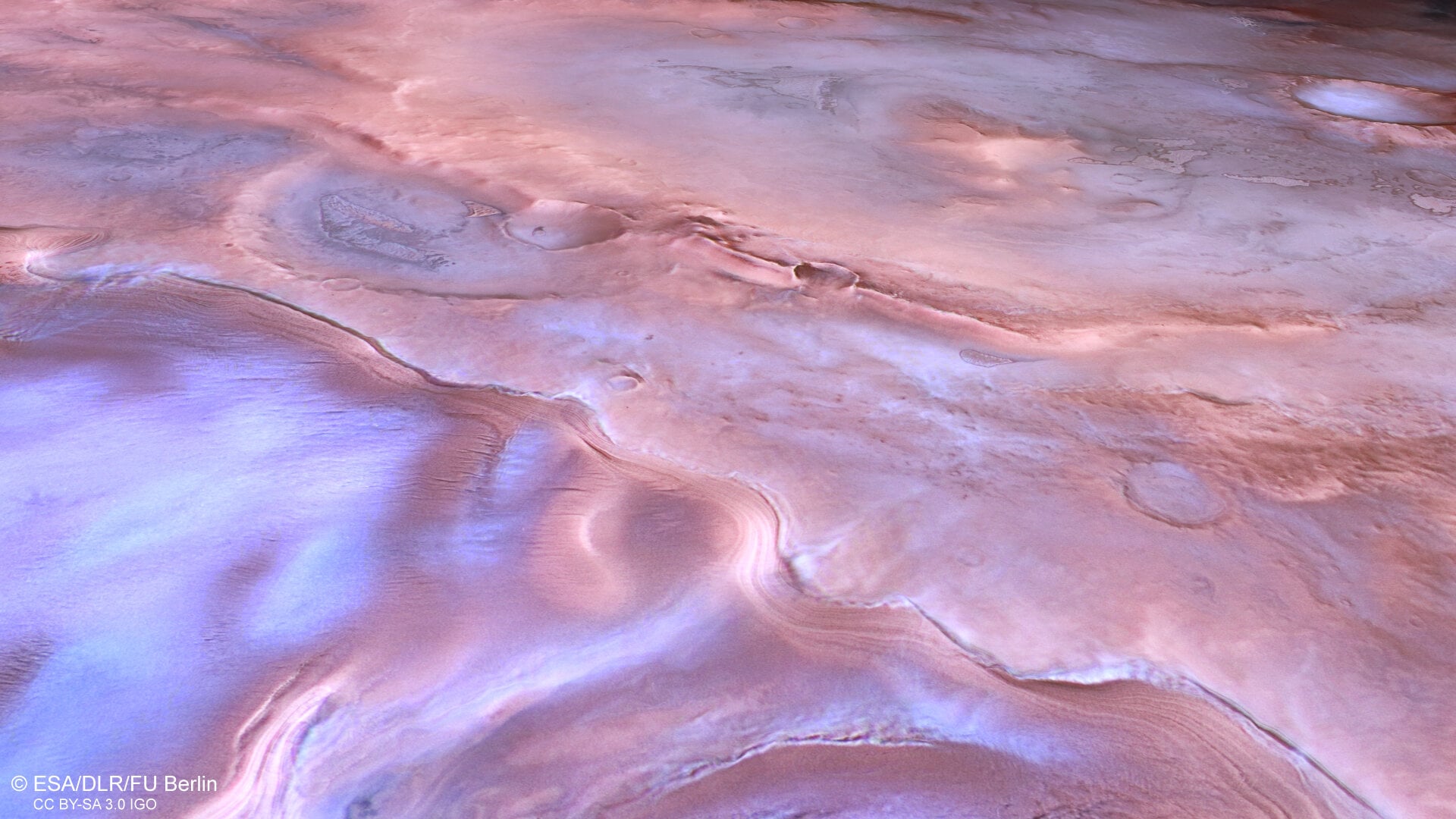
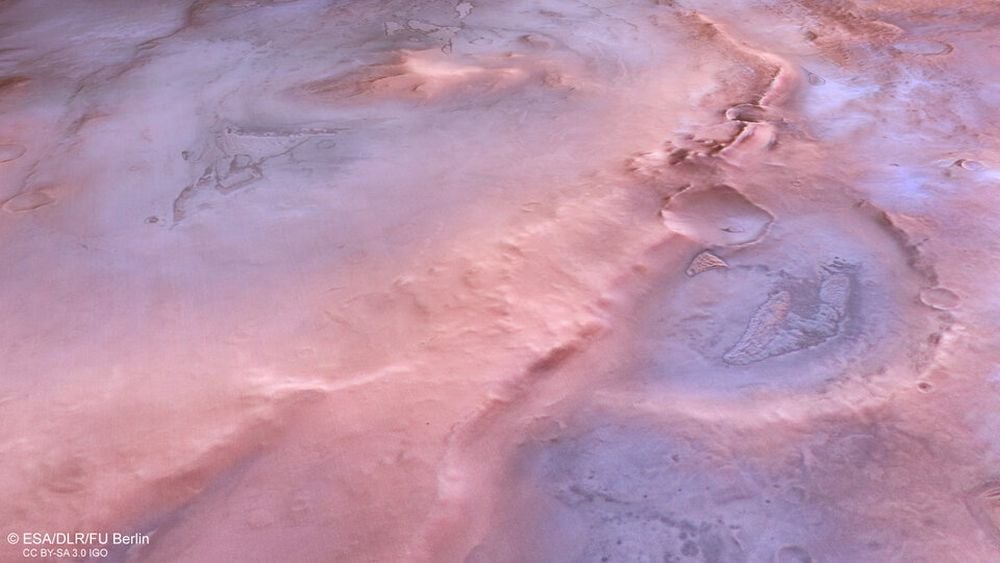
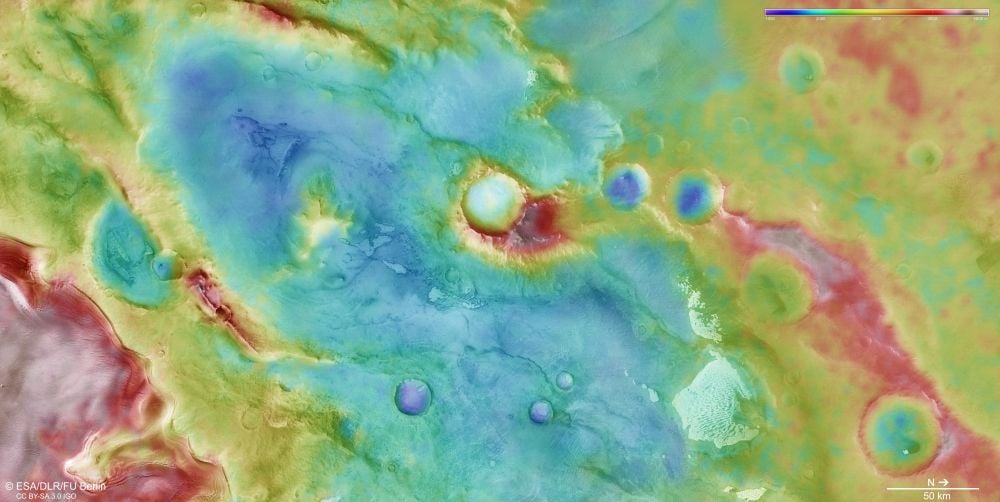
Mars Was Supposed to Be Red, But ESA Just Revealed a Purple Landscape Hidden at the Planet’s South Pole

Mars Was Supposed to Be Red, But ESA Just Revealed a Purple Landscape Hidden at the Planet’s South Pole

Scientists uncover the unexpected colours of Mars after a spacecraft reveals a rare purple ice world hidden near the planet’s southern pole.

Mars Was Supposed To Be Red, But Esa Just Revealed A Purple Landscape Hidden At The Planet’s South Pole

© Credit: ESA/DLR/FU Berlin

Mars has revealed a side of itself rarely seen from space. A new image captured by the European Space Agency’s Mars Express shows an icy landscape near the south pole covered in purple, pink and red shades.

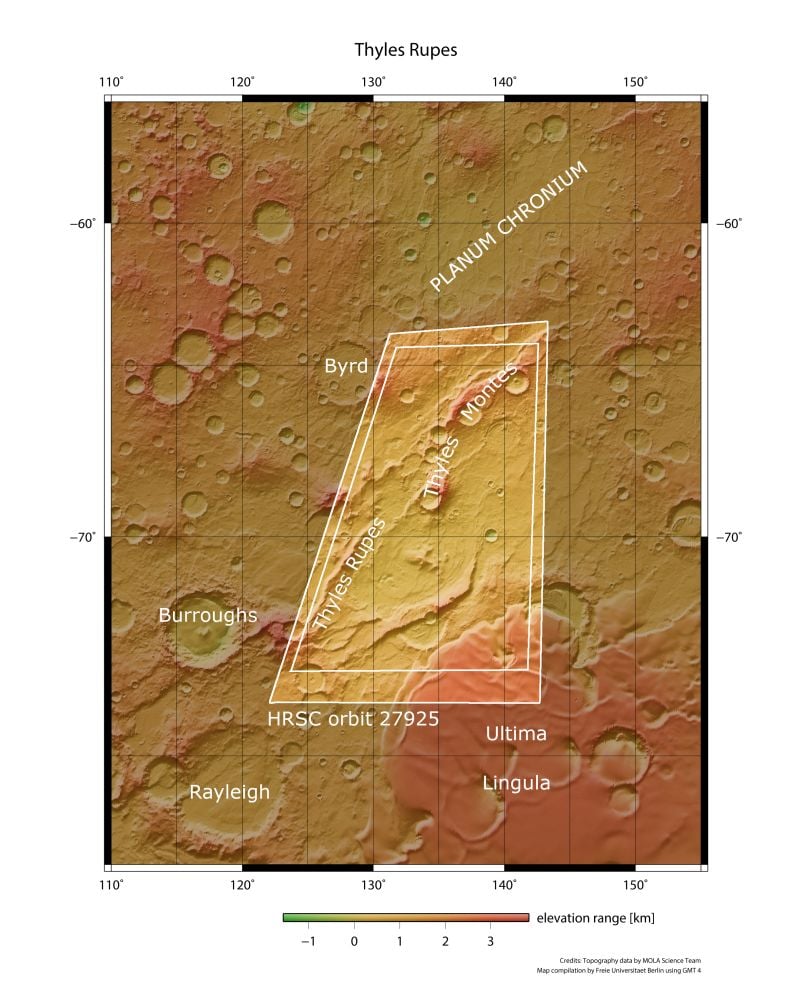
The image focuses on Thyles Rupes, a cliff formation located in the southern highlands of Mars. Taken by the spacecraft’s High Resolution Stereo Camera (HRSC), the view offers an unusual perspective of a planet usually associated with rusty deserts.

The European Space Agency (ESA) explains that Mars owes its famous red appearance to oxidised iron spread across its surface. However, detailed observations from Mars Express have repeatedly shown that the planet contains a much wider range of materials, from volcanic minerals to frozen deposits.

A Hidden Colour Palette

The purple and pink tones visible in the new image are not produced by a single substance. They come from the interaction of several elements across the Martian surface, including ice, dust, frost and sunlight.

ESA scientists attribute the unusual appearance of Thyles Rupes to a combination of soft morning light, dust particles suspended in the atmosphere and frost covering large areas of the terrain. Patches where ice and dust have mixed together also contribute to the berry-like colours captured by Mars Express.

The darker regions of the image reveal another part of Mars’s geological story. These areas contain volcanic material rich in mafic minerals such as olivine and pyroxene. On Earth, these minerals are commonly found in the mantle, the layer of rock beneath the planet’s crust.

Aerial View Of Thyles Rupes And Mars’s Craters

Aerial view of Thyles Rupes and Mars’s craters.

Credit: ESA/DLR/FU Berlin

The lighter sections are linked to frozen carbon dioxide deposits that remain visible during Martian spring, the season when this region was photographed. These icy layers appear across sand dunes and inside craters, while a section of glacier connected to Mars’s south polar ice cap can be seen as a pale area near the bottom of the image.

The colours captured by the HRSC also demonstrate how different conditions can transform the appearance of the Martian surface. Changes in lighting, atmospheric dust and frost coverage can create views of Mars that look completely different from the traditional red landscapes seen in many images.

Thyles Rupes Preserves Evidence Of Ancient Mars

Beneath the purple surface lies a geological structure that records major changes in Mars’s distant past. The cliff system extends across the southern highlands, a region heavily marked by impact craters. In some areas, the cliffs rise more than 1 km above the surrounding terrain.

Scientists studying the formation believe the cliffs were created by tectonic processes that occurred billions of years ago. As its interior cooled, the planet contracted, putting pressure on its crust and forcing some blocks of surface material upward. Unlike Earth, the Red Planet no longer experiences active tectonic movements. However, structures such as Thyles Rupes preserve evidence of the forces that once shaped its surface.

A Detailed Topographic View Of Mars’s Thyles Rupes Region
A detailed topographic view of Mars’s Thyles Rupes region.
Credit: ESA/DLR/FU Berlin

The surrounding craters provide additional information about the order of events in the region. Some craters are interrupted by the cliffs, meaning they existed before Thyles Rupes formed. Others appear on top of the structure, showing that they developed afterwards.

Mars Express Continues To Map A More Complex Planet

The new image comes from Mars Express’s High Resolution Stereo Camera, one of eight instruments aboard the spacecraft. Since its launch in 2003, the mission has been studying the planet in colour and three dimensions, producing detailed maps of the planet’s surface.

The observation also reveals a variety of dunes surrounding Thyles Rupes. Wind activity has moved sand across the region, creating several dune forms, including longitudinal dunes, transverse dunes and curved barchanoid ridges

Topographic Map Of Thyles Rupes On Mars, Showing The Region’s Terrain, Elevation Changes And Nearby Geological Formations.
Topographic map of Thyles Rupes on Mars, showing the region’s terrain, elevation changes and nearby geological formations.
Credit: NASA/USGS
The European Space Agency highlights that Mars Express has transformed scientists’ understanding of the planet by documenting landscapes that were previously impossible to study in such detail. Earlier HRSC images have shown strong contrasts between dark volcanic sands and lighter areas containing clays and sulphates.

Mars Express Found Purple Swirls Near the Red Planet’s South Pole

{ https://dailygalaxy.com/category/space/ }

Hoe vind je dit bericht?
Geschreven door peter om 18:48 Stuur door

The Red Planet Has a Purple Side

The Red Planet Has a Purple Side

Mars is known for its reddish colour palette, a result of ancient iron oxides. But these striking pinks and purples are much different from the rest of the red planet. This orbital image shows Thyles Rupes, its cliff face, and a nearby glacier, where the atypical colours come from a mix of dust and frost. The image is from the High-Resolution Stereo Camera on the ESA's Mars Express orbiter. Image Credit: ESA/DLR/FU Berlin. Licence: CC BY-SA 3.0 IGO or ESA Standard Licence

Mars is known for its reddish colour palette, a result of ancient iron oxides. But these striking pinks and purples are much different from the rest of the red planet. This orbital image shows Thyles Rupes, its cliff face, and a nearby glacier, where the atypical colours come from a mix of dust and frost. The image is from the High-Resolution Stereo Camera on the ESA's Mars Express orbiter.

Image Credit: ESA/DLR/FU Berlin. Licence: CC BY-SA 3.0 IGO or ESA Standard Licence

Oxidized iron dominates the Martian colour palette. The dusty reds, ochres, browns, and tans give the planet its nickname: the Red Planet. But new images of Mars' south pole region show something different. Swirls of pink, purple, and red highlight the region and a feature named Thyles Rupes, an icy crag with cliffs higher than 1 km. Rupes means cliff in Latin, while Thyles is a mythical northern land spoken about in the ancient world.

All of the different colored materials in this region have different sources. Volcanoes both created and spread the darker material. That means that material is rich in minerals like olivine and pyroxene, both of which are also plentiful in Earth's mantle. Olivine is made of magnesium, iron, and silicate. Pyroxenes are a group of silicate minerals made mostly of silicon and oxygen, also common in Earth's upper mantle.

The pale bluish areas, like in the crater, are covered in frozen carbon dioxide. Near the south pole, this material persists, even in springtime when this image was captured. The pale patch on the lower left is actually part of the south polar cap. The main cap never melts, but a seasonal CO2 frost cap expands and contracts with the seasons.

The overall blueberry/purple hue of the region is from a combination of dust and frost. But the region doesn't always look like this and changes throughout the day. Dust in the air, soft morning light, frost covering the ground, and patches of ice and dust mixed together combine to create the purplish scene.

This image shows Thyles Rupes in context. Ultima Lingula, in the lower right, is about 550 km in diameter. Lingula means 'little tongue' in Latin, and in astrogeology, it classifies a plateau-like structures that ends in rounded, lobed shapes. Burroughs crater is named after author Edgar Rice Burroughs and is about 100 km in diameter. Image Credit: NASA/USGS. Licence: ESA Standard Licence

This image shows Thyles Rupes in context. Ultima Lingula, in the lower right, is about 550 km in diameter. Lingula means 'little tongue' in Latin, and in astrogeology, it classifies a plateau-like structures that ends in rounded, lobed shapes. Burroughs crater is named after author Edgar Rice Burroughs and is about 100 km in diameter.

Image Credit: NASA/USGS. Licence: ESA Standard Licence

Different types of dunes are also visible in the image. Due to mixed up winds, there are no finely sculpted dunes like the ones found elsewhere on Mars. There are even what are called barchanoid ridges, arc-shaped dunes common on Earth's sandy deserts that have two downwind facing "horns."

This image shows Thyles Rupes from directly above. It sits above some craters and under others, with older ones being under it. The crater on the right, the largest in the image, is older than Thyles Rupes and has been cut in half by it. Two smaller craters are visible, and they're from impacts that happened after the feature formed. Image Credit: ESA/DLR/FU Berlin. Licence: ESA Standard Licence

This image shows Thyles Rupes from directly above. It sits above some craters and under others, with older ones being under it. The crater on the right, the largest in the image, is older than Thyles Rupes and has been cut in half by it. Two smaller craters are visible, and they're from impacts that happened after the feature formed.

Image Credit: ESA/DLR/FU Berlin. Licence: ESA Standard Licence

Thyles Rupes, which extends for hundreds of kilometers, formed in a similar way as mountains do on Earth, when two plates push against one another. On Earth, tectonic plate movement is ongoing, forming new mountains on geological timescales. But not on Mars; it has no tectonics. It's a single-plate, stagnant lid planet. So Thyles Rupes mostly likely formed when the planet's interior was cooling. As the crust contracted, some parts were thrust upwards.

This topographic map of the region shows how tall Thyles Rupes is, more than 1 km high. Image Credit: ESA/DLR/FU Berlin. Licence: CC BY-SA 3.0 IGO or ESA Standard Licence

This topographic map of the region shows how tall Thyles Rupes is, more than 1 km high.

Image Credit: ESA/DLR/FU Berlin. Licence: CC BY-SA 3.0 IGO or ESA Standard Licence

Orbiters like Mars Express, featuring powerful cameras, have opened a window onto the Martian surface. Over the last couple of decades, Mars Express (and NASA's Mars Reconnaissance Orbiter) have delivered a steady stream of images of the planet's various regions. Though the planet may be dead, its surface is still intriguing, and holds many lessons about how different rocky planets can be.

{ https://www.universetoday.com/ }

Hoe vind je dit bericht?
Geschreven door peter om 18:35 Stuur door

Tower structure with gold orb hovering over it, in crater on Moon, UFO UAP Sighting News.

Tower structure with gold orb hovering over it, in crater on Moon, UFO UAP Sighting News.

UFO,%20UFOs,%20UAP,%20UAPs,%20UFO%20sighting,%20UFO%20files,%20UFO%20video%20UAP%20files,%20UAP%20video,%20department%20of%20war,%20alien,%20aliens,%20infrared%20UFO,%20IR%20UFO,%20official%20UFO,%20Gov%20UFO,%20USA%20UFO%20copy%202.png
Date of discovery: Sept 20, 2026
Location of discovery: Dark side of moon Lobachevskiy crater
NASA photo:
I was looking through the nasa index of photos from Apollo 11 mission and came across this anomaly that was just amazing. There is a tower structure coming out of the darkness of a crater floor and near the top of the tower and not connected is a golden orb. This really reminds me of The Shard from 1996 that Richard Hoagland discovered, except his was on the opposite side of the moon. The one I found is on the dark side of the moon. I found the anomaly in both the NASA index and on Google moon map. Its does appear to be a docking area for some types of ships and may even act as a transmitting tower for intergalactic communication. 
Scott C. Waring - UFO Sightings Daily 

{ https://www.ufosightingsdaily.com/ }

Hoe vind je dit bericht?
Geschreven door peter om 18:16 Stuur door

Orb Suddenly makes 180 turn, then hard right turn shooting away! Louisiana, UFO Sightings Daily News.

Orb Suddenly makes 180 turn, then hard right turn shooting away! Louisiana, UFO Sightings Daily News.

UFO_2.png

UFO_1.png
Date of sighting: Sept 16, 2026
Location of sighting: Central, Louisiana, USA
Source: NUFORC site 200979
 
This one is special folk. It literally gave me chills down my back when I saw the video the first time. Not because of the glowing orbs passing over the persons house, but because the last orb suddenly changed directions, did a 180 decree turn, going back from where it came, then suddenly after 10 seconds, made a hard right turn and disappeared in the horizon moving incredibly fast. Right there...I knew...this is an alien craft we were seeing. 
 
Please leave a comment under the video on Youtube to let me know your thoughts on this and if you have ever seen anything like it. Thanks friends. 
Scott C. Waring - UFO Sightings Daily
 
Eyewitness states: 
On my phone looked up and saw them approaching over my neighborhood as the first two disappeared quickly the third trailed behind. Were round, reddish orange orbs moving in slow motion low to the tree tops they made no sound at all. After flying past my house they all disappeared quickly into the sky. No cloud formation just clear skies that night.
 

Orb Suddenly makes 180 turn, then hard right turn shooting away! Louisiana, UFO UAP Sighting News.

{ https://www.ufosightingsdaily.com/ }

Hoe vind je dit bericht?
Geschreven door peter om 18:11 Stuur door

EXCLUSIVE - CIA's top psychic spy saw an ancient city on Mars... then something terrible happened to the beings living there

EXCLUSIVE - CIA's top psychic spy saw an ancient city on Mars... then something terrible happened to the beings living there

In May 1984, a CIA psychic spy claimed he traveled through space and time to see the end of a thriving civilization on Mars. Now, more people who claim they have seen the same vision are sharing the horrific ending of the Martian race.

A man who identified himself only as 'Brady' told the Daily Mail he possessed the ability to practice astral projection - where your awareness leaves your physical body and travels elsewhere while you remain connected to it.

Using this technique, Brady claimed he found himself in a terrifying vision on Mars, but a Mars that was inhabited by alien creatures in the distant past.

The man claimed the experience was 'heartbreaking and drastic' as an apocalyptic blue wave wiped out the Martian civilization.

Brady said: 'Everyone suddenly panicked, most looked up, others ran. There were screams and panic echoing off the side of buildings, I stared up and pierced my eyes through the bright daylight and there was a celestial body hurling towards the planet.'

'It was circular in shape, profoundly large, I felt a sigh of desperation and acceptance of fate,' he continued.

At this point, Brady claimed he watched in horror as the ground shook and a giant wave emerged from the horizon, swallowing up everything in its path.

Brady and others over the years have claimed they saw this destruction on Mars, describing the apocalypse with almost the exact same details as CIA remote reviewer Joe McMoneagle - who was tasked with seeing life on Mars one million years ago.

Remote viewers and others with psychic visions have claimed that a thriving civilization once lived on Mars (Stock Image)

Remote viewers and others with psychic visions have claimed that a thriving civilization once lived on Mars

(Stock Image)

In the 1970s and 1980s, the CIA carried out repeated experiments with individuals who had allegedly been trained to perceive information about distant places, locations or people - calling these operatives 'remote viewers.'

The Cold War effort mainly targeted Russia's Soviet Union, and McMoneagle has widely been regarded as the agency's best remote viewer, using his ability to see inside top-secret facilities - like a Soviet hangar building a new type of submarine in 1979.

During the 1984 experiment, which was part of the CIA's Project Stargate, the secretive US military program to weaponize remote viewing abilities, McMoneagle was handed a paper card with a new target printed on it.

This time, his target to psychically visit was: 'The planet Mars. Time of interest, approximately one million years BC.'

McMoneagle has said in interviews since the operation that he was not told what he would be looking at, adding that his visions of a civilized Mars came spontaneously.

Guided by coordinates on the Martian surface given to him by intelligence officials, McMoneagle 'visited' the Cydonia Mensae region - the location of the 'Face on Mars' photo taken by the Viking orbiter.

McMoneagle told his supervisor in a now-declassified report: 'I kind of got an oblique view of a pyramid or pyramid form. It's very high. It's kind of sitting in a large, depressed area. It's yellowish, okra colored.'

Instructed to 'move in time,' McMoneagle then encountered visions of what seemed to be a dying alien race on the Red Planet.

Pictured: Joe McMoneagle, a former CIA remote viewer during the Cold War

Pictured: Joe McMoneagle, a former CIA remote viewer during the Cold War

article image

McMoneagle added in his remote viewing transcript: 'I'm seeing... it's like a perception of a shadow of people, very tall... thin. It's only a shadow. It's as if they were there and they're not, not there anymore.'

The psychic spy described pyramid structures, carved canyons and obelisks, dust storms and atmospheric breakdown - suggesting that the inhabitants of Mars may have been ready to move to another world.

In the decades since McMoneagle’s vision, others have claimed they visited the planet, with Brady describing how he 'chased the experience' by attempting to project his consciousness over and over again onto the Red Planet.

He told the Daily Mail that addiction reached a point where all he cared about was returning to his vision of Mars.

Brady described the city that was destroyed as looking similar to Dubai. 'However, the atmosphere and environment seemed to look like England on a summer's day,' he added.

'Where I was it was bustling, vibrant and active with people everywhere. Everyone was around six to seven feet tall, really slim, with pale white blueish skin tone.'

The unusual stone mesas of the Cydonia region on Mars where McMoneagle allegedly visited in a remote viewing session in 1984

The unusual stone mesas of the Cydonia region on Mars where McMoneagle allegedly visited in a remote viewing session in 1984

Brady is not the only person who claimed to have visited something resembling McMoneagle’s Mars remote vision.

Remote viewer Courtney Brown described his own visions of Mars in two books, Cosmic Voyage and Cosmic Explorers.

Brown, an associate professor of political science at Emory University, claimed to have conducted large-scale experiments with multiple remote viewers examining the surface of Mars.

Brown said he 'visited' the Cydonia region McMoneagle visited and saw a civilization of ancient Martians with prominent eyes and delicate bone structure.

Like McMoneagle, he claimed that the Martian civilization was subjected to a catastrophic event, but suggested that survivors may have found homes elsewhere in the solar system.

Brown wrote: 'At its peak, Martian society compared technologically to that of ancient Egypt. They were people who lived under harsh conditions. But they could feed their families, live in towns and participate in community life. Martian society experienced some major catastrophe. Many Martians died.'

McMoneagle’s strange vision has attracted attention for decades in part because some of his other remote viewing experiments were so accurate.

The 1979 incident with the Soviet submarine is among his most famous sessions, as McMoneagle claimed to have 'seen' a large warehouse 100 yards from the White Sea in northern Russia.

He described a never-before-seen type of submarine with slanted missile tubes and a unique double-hull structure.

His claims were dismissed by the intelligence community, but defense officials later confirmed the Soviet Union was building a new class of submarine, the Typhoon, which was unveiled in 1980.

RELATED

The CIA Sent a Psychic to Mars in 1984... What He Found Is Terrifying

In 1984 a Military Psychic Was Sent to Mars a Million Years Ago and Found Them Dying

{ https://www.dailymail.com/sciencetech/index.html }

Hoe vind je dit bericht?
Geschreven door peter om 17:59 Stuur door

Meer van UFO'S of UAP'S, ASTRONOMIE, RUIMTEVAART, ARCHEOLOGIE, OUDHEIDKUNDE, SF-SNUFJES EN ANDERE ESOTERISCHE WETENSCHAPPEN - DE ALLERLAATSTE NIEUWTJES

↑ Terug naar de berichten